Vancouver Coffee Marathon—Four Coffee Shops in Four Hours

First Hour: Nusa Coffee

asian-palm-civet3

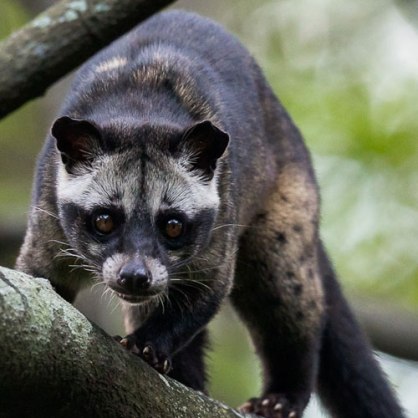
The Asian Palm Civet

I started my coffee marathon at Nusa Coffee, on 4th Avenue in Kitsilano. Nusa means “islands” and, indeed, Marcus, one of the partners, told me that most of their coffee comes from Indonesia, an archipelago of over 17,000 islands stretching an expanse the length of Canada.

Nusa features coffee from beans grown in the Ngada region of Flores, the Toraja Highlands of central Sulawesi, the Kintamani Highlands of Bali and the Gayo Highlands in Sumatra Gayo.

Asian-Palm-Civet

Asian Palm Civet

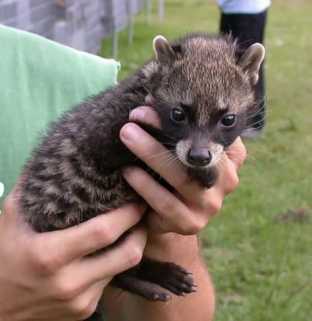
But I’d come for kopi luwak—otherwise known as cat poop coffee—made from coffee beans that have been digested by a small Indonesian cat called an Asian Palm Civet (Paradosorus hermaphroditus)—a small viverrid native to South and Southeast Asia. They help maintain tropical forest ecosystems through seed dispersal as they feed on pulpy fruits such as mango, rambutan and coffee.

Why was I doing this? Well, since I’d heard about it, I just had to try it out for myself. According to The Vancouver Coffee Snob the civets feast on ripe coffee cherries, which start to digest and ferment in their stomachs.

Nusa-coffee pour

Marcus does the pour over

The enzymes allegedly remove the acidic tastes from the coffee, imparting new flavours. The cat then poops what’s left and farmers collect the poop, clean them, process and roast the beans. Civet coffee beans are harder and more brittle because they have been modified by the digestive juices of the civet.

Because of the new trend for Kopi Luwak, civets are being increasingly captured from the wild and fed coffee beans to mass-produce this blend. Many of the captured civets are housed and treated unethically. The impact of all these captures on the wild population and consequent ecosystems they live in, is not yet known. The lesson here is: do your research to ensure that the product you’re buying has been ethically collected from wild Civet poop. Nusa Coffee is one of them.

NUSA-Catpoo Coffee

Kopi Luwak at Nusa Coffee in Vancouver

Marcus let me smell the beans before grinding them. The aroma was deep, pleasant and nutty. That carried into the coffee pour over (which is more gentle than using an espresso machine). Then it came to tasting it: I found it unpretentious, earthy with subtle tones that lingered in the back of the throat. As I breathed in the kopi luwak, I thought of the jungle where the civet lives…and poos. Nusa Coffee is also unpretentious; a cozy café with wood benches and tables and no overbearing music.

Second Hour: Platform 7

Platform7 cafe

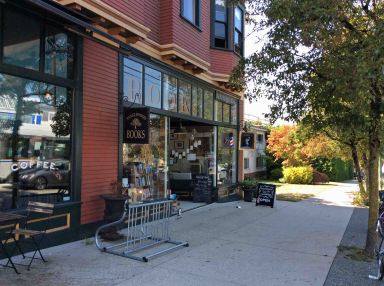
Platform 7 and bookstore in Kits (photo by Nina Munteanu)

My second stop was Platform 7, on Broadway and Vine, where I stopped for lunch. Located in an old house next to a character-book store (a great combination for a writer!), Platform 7 is a creative take on a bustling “Victorian London train station in East Vancouver and a Belle-Époque Parisienne train station in Kits.”

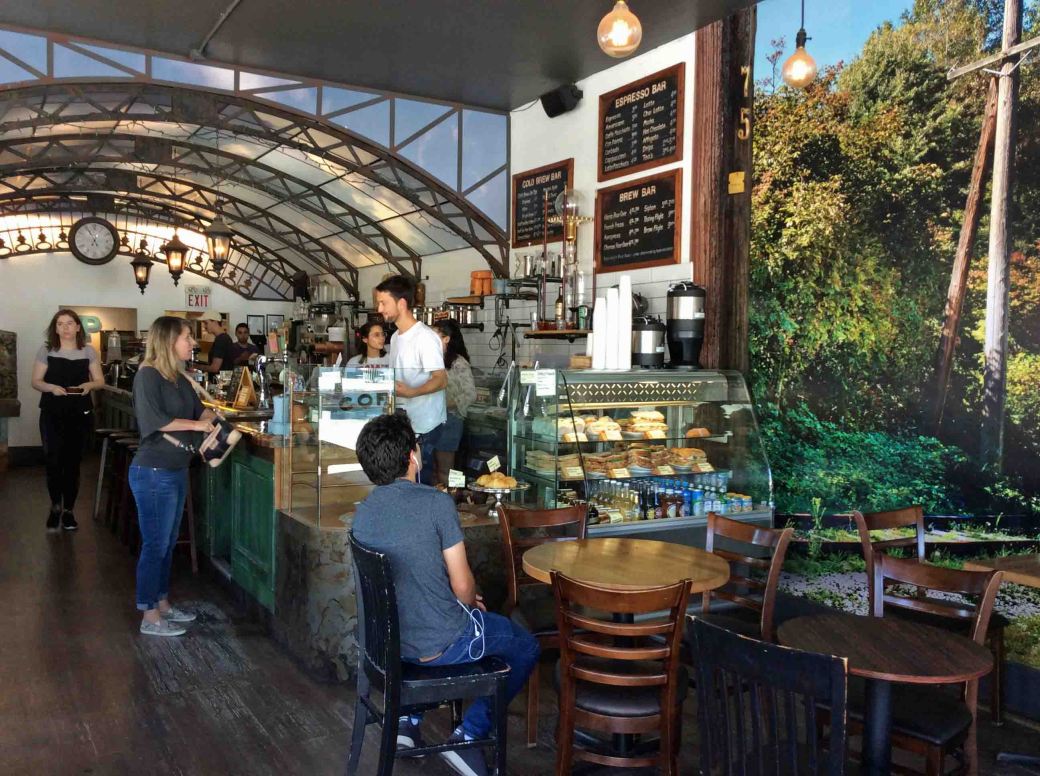
The café offers a large variety of coffees from their espresso bar, cold bar and brew bar. I enjoyed friendly service and pleasant jazz-fusion music as I ate lunch, a deliciously grilled turkey with cranberry sandwich.

Platform7-interior

Inside Platform 7 Coffee (photo by Nina Munteanu)

Third Hour: Federal Store

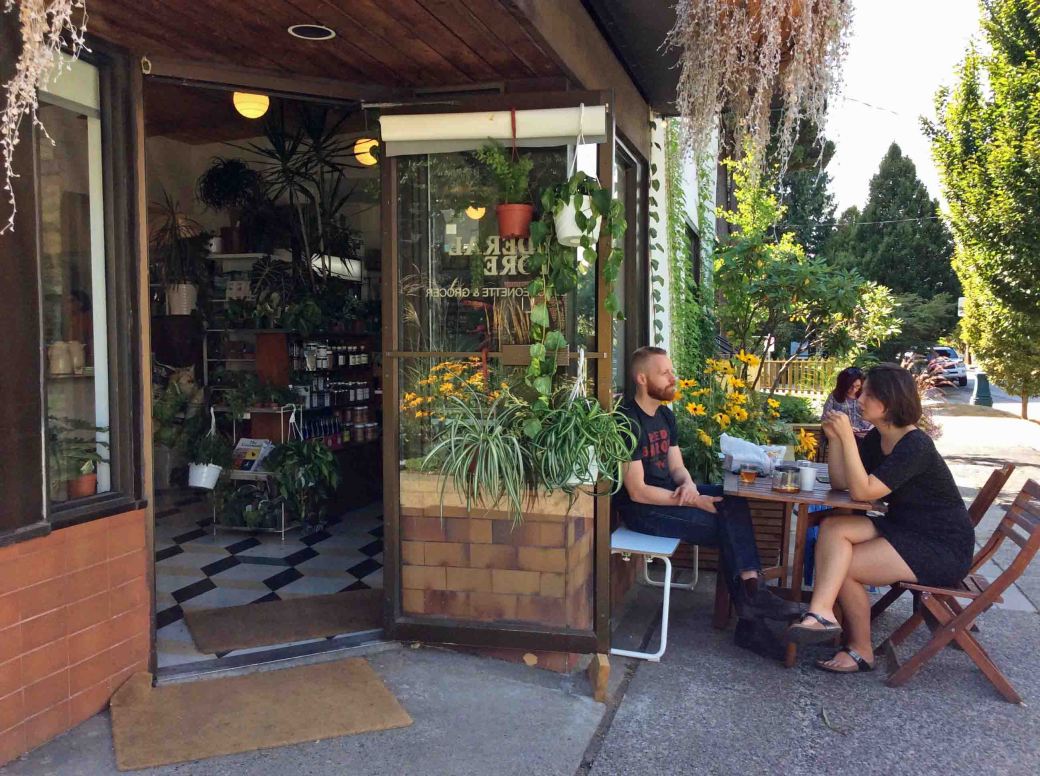
Federal Store outside3

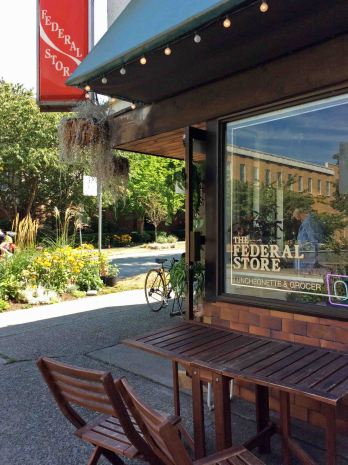
The Federal Store (photo by Nina Munteanu)

I continued east across town along Broadway into Mount Pleasant and walked south along Quebec Street toward 10th Avenue, where the Federal Store greeted me on the corner. Surrounded with cheerful flowers on all sides and a vegetable garden in the back, the café-grocer beckons me inside. I enter and feel like I’ve entered an alternative past: an integration of ’50s trompe l’oeil 3-D checker floor, plants, and homemade baking in the display with the avant-garde chic of wood and white.

I ordered an Earl Grey tea (for a change from coffee) and sat outside, where I enjoyed the loose tea as birds sang around me and bees buzzed among the flowers.

Mia Stainsby of the Vancouver Sun writes, “One block away, Main Street hyperventilates and cars exhale carbon monoxide. But here at Federal Store, it’s quiet and I’m caught in a time warp. The vintage room stirs up romantic notions of simpler times.”

Federal Store entrance2

The Federal Store (photo by Nina Munteanu)

Fourth Hour: Le Marché St. George

It grew hot as the day progressed, but I kept cool under the thick canopy of maples, chestnuts and ash trees as I proceeded southeast to my next destination. Once I’d topped the hill, I turned east on 28th and as I neared my next destination, I realized that I’d saved the best for last.

Le Marche St George-outside

Le Marche St. George (photo by Nina Munteanu)

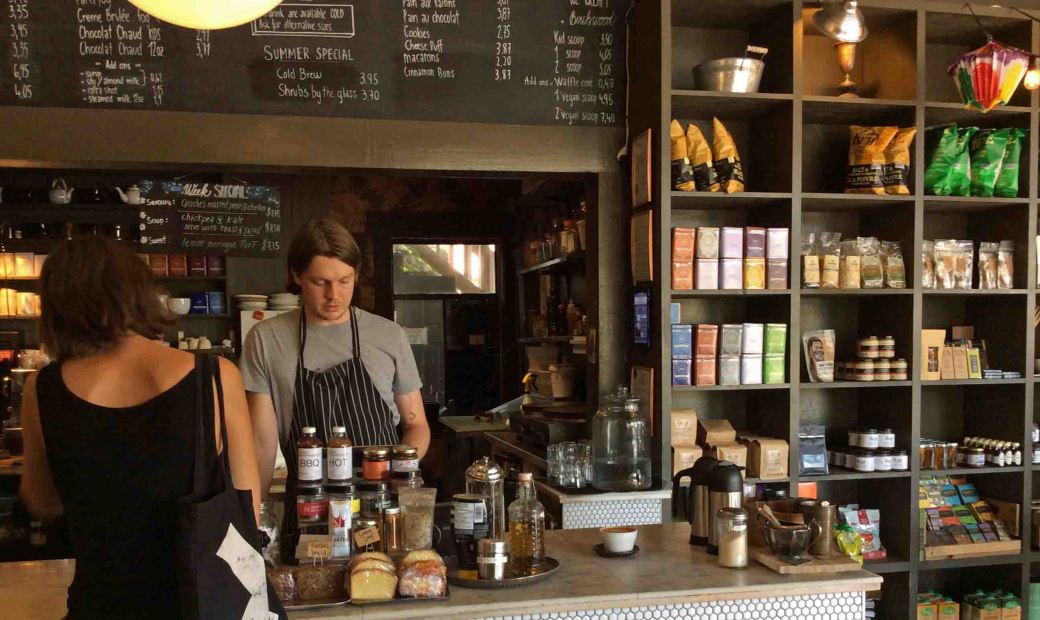
When I caught sight of Le Marché St. George, tucked behind several large poplar trees on the residential corner of 28th and St. George, I had to smile like a pilgrim finding a rest stop. Edith Piaff’s sultry voice sang through the open door of the large old house as cyclists and locals sat outside, drinking coffee and discussing their day. I entered the café-general store, walls high with diverse produce. It was no ordinary general store. This was the kind of place—I recalled my son telling me earlier—where you could buy your next Christmas gift. A cornucopia of interesting flotsam beckoned: from Woodlot candles and Maison Orphée mustard to black cyprus flake sea salt, flat breads, gourmet honey and pasta.

LeMarche StGeorge-inside

Inside Le Marche St. George (photo by Nina Munteanu)

I ordered a flat white, which turned into a cappuccino. The barista—let’s call him Etienne—apologized and was ready to start over but I accepted the drink with a smile; I’d noted that he’d really made a European cappuccino, which is essentially a flat white (a cappuccino with no dry foam). I took the coffee and sat outside under the shade of a poplar tree and opened my book, “Barkskins” by Annie Proulx.

Beside me, two young Asian men were discussing an article they’d read about how men get into and out of a bathtub. I realized I’d read the same line of my book several times when one fellow confided to the other that he thought he had sleep apnea and was slowly dying from oxygen deprivation over nights of not quite sleeping.

All in a summer’s day, I thought, and closed the book and my eyes, then put my feet up on the planter and smiled the smile of pure contentment.

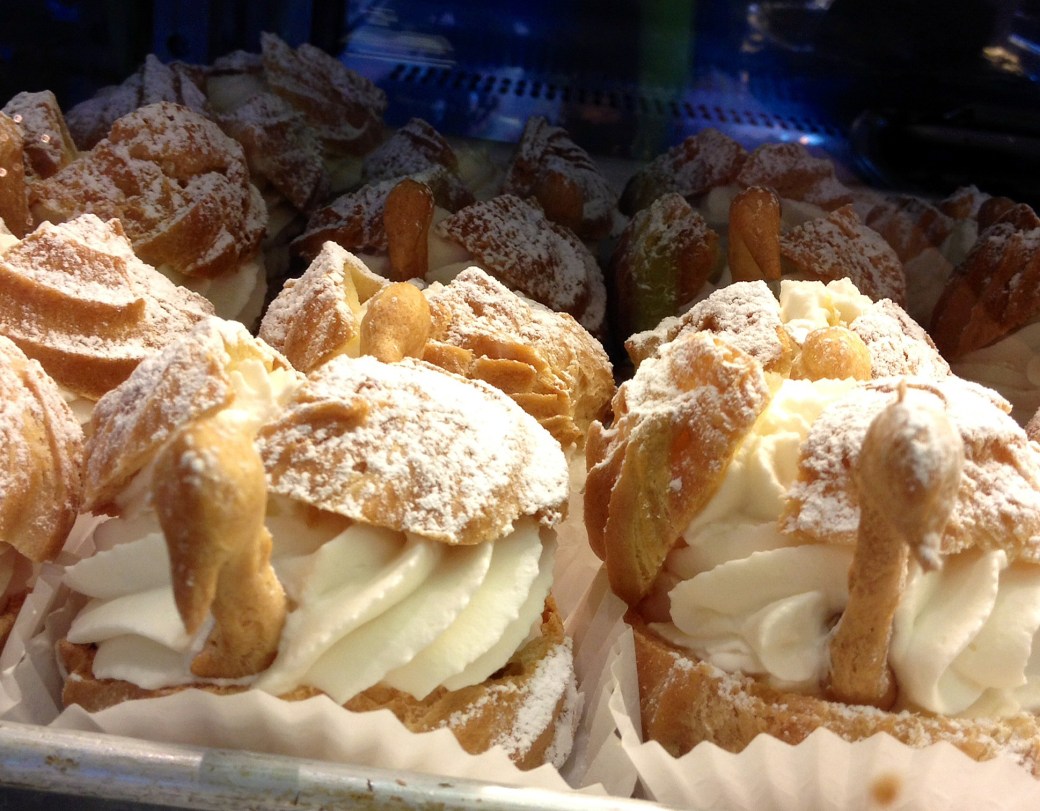
mercurio-swanpuffs

Swan cream puffs (at Mercuro L’Espresso Bar) (photo by Nina Munteanu)

p.s. No good sojourn is without its conclusion and mine began with the bus ride home as it neared the supper hour … It seems that by then all that caffein in my system was truly kicking in; I could hardly sit still during the forty minute ride and if I’d had a computer or pen and paper, surely would have speed written a tome the size of War and Peace by the end of my journey.

But I didn’t. So, I didn’t (tiny smile).

nina-munteanuNina Munteanu is an ecologist, limnologist and internationally published author of award-nominated speculative novels, short stories and non-fiction. She is co-editor of Europa SF and currently teaches writing courses at George Brown College and the University of Toronto. Visit www.ninamunteanu.ca for the latest on her books.

Amazing Cover Art, Part 2: Anne Moody and Costi Gurgu

MockUpEcology-2

The cover for Nina’s upcoming writing guide: illustration by Anne Moody; typology & design by Costi Gurgu

In my article “Should You Judge a Book by its Cover”, I wrote about the importance of cover art for book sales and to maintain integrity and satisfaction with the story inside. In the article, I pointed out that, “If you don’t know the author of the book, the nature—and implied promise—of the cover becomes even more important. If the book does not deliver on the promise of the cover, it will fail with many readers despite its intrinsic value. A broken promise is still a broken promise. I say cover—not necessarily the back jacket blurb—because the front cover is our first and most potent introduction to the quality of the story inside. How many of us have picked up a book—intrigued by its alluring front cover—read the blurb that seemed to resonate with the title and image, then upon reading our cherished purchase been disillusioned with the story and decided we disliked it and its author?”

Cover art provides an important aspect of writer and publisher branding. Cover artists understand this and address the finer nuances of the type and genre of the story to resonate with the reader and their expectations of story. This includes the image/illustration, typography, and overall design of the cover. A cover for a work of literary fiction will look quite different from a work of fantasy or romance. Within a genre, subtle qualities provide more clues—all of which the cover artist grasps with acute expertise.

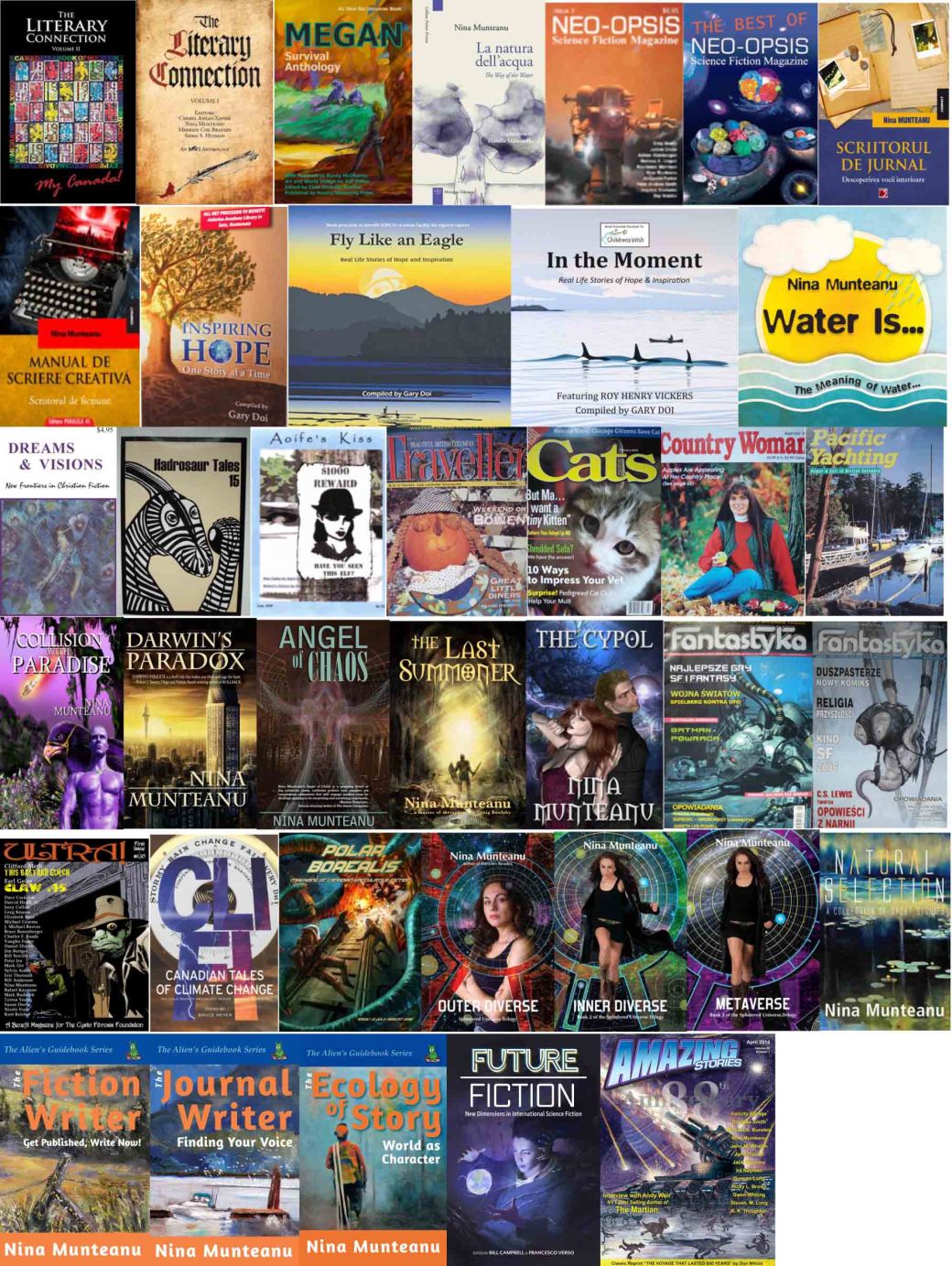
I’ve been fortunate in my history as a professional writer to have had exceptional art work on the books I’ve written or collections and anthologies I’ve participated in (see the mosaic below of many but not all the covers my work has been associated with).

For most of my books, my publisher provided me with a direct link to the cover artist (e.g., Dragon Moon Press, Edge Publishing, eXtasy Books, Liquid Silver Books, Starfire, Pixl Press) and I retained some creative control. I even found and brought in the cover artist for projects I had with Pixl Press.

Anne Moody and Pixl Press

Anne-Studio01 copy

Anne Moody working on her next painting

I met Anne Moody at the environmental consulting firm where I worked after leaving the University of Victoria. I’d taught limnology (the study of freshwater) for several years at UVic, then I joined the Vancouver firm as an aquatic ecologist and environmental consultant. That’s where I met fellow ecologist, Anne. Anne is a plant ecologist who has worked with federal and provincial governments on reclamation and restoration projects. She’s designed and planted marshes throughout the world and has taught at university in her field of expertise.

Anne wasn’t painting then. She started long after we parted our ways—she to a government job and I to a teaching job at The University of Toronto. However, as she mentions in her short bio, Anne has been drawing and painting since childhood—just like me. The difference is that she has come back to the fine arts with an eye for compelling imagery. Using her science knowledge and discipline to work with light, texture and form, Anne creates works of stunning originality that resonate with rugged landscape and with those who belong to it. Her work is, needless to say, fetching for a book cover!

FictionWriter-front cover-2nd ed-web copyWhen Pixl Press started looking for suitable cover artists to rebrand my writing craft series, I showed some of Anne’s work to the director Anne Voute. Pixl Press had already worked with Costi Gurgu and we liked his work. The result of Anne’s illustrations and Costi’s typography and design was a series of stunning covers that branded my books with just the right voice.

Journal Writer-FRONT-cover-WEB copyThe Alien Guidebook Series, of which two books are out so far (The Fiction Writer: Get Published, Write Now! and The Journal Writer: Finding Your Voice) was designed by Costi with a guidebook brand that would stand out, yet showcase the natural British Columbia landscape art by Anne that I felt strongly connected to. Anne’s cover art for The Journal Writer is one of several studies of Toquart Bay, BC.

FictionWriterCoverWeb copy 2Anne’s illustration for The Fiction Writer (a painting of Knutsford, BC) actually represents the second cover. The Fiction Writer was originally released in May 2009 and the cover portrayed a spiral galaxy—beautifully designed by Virginia O’Dine. The cover overly stressed my science fiction background and did not give a balanced portrayal of the guidebook, which addresses any fiction—not just science fiction. Anne’s portrayal of a field in Knutsford was deemed better suited to a new branding for the series.

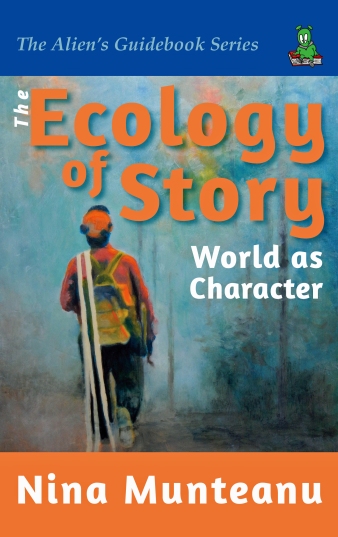
MockUpEcology-2I am currently researching and writing the third guidebook in the series—a reference on world building and use of ecology in story—The Ecology of Story: World as Character.

I visited Anne at her ranch near Vanderhoof, B.C., to discuss a cover. Between chores on the 100-acre ranch, gourmet meals from local produce, and lively political discussions over generous amounts of wine—we spent the entire weekend looking over and evaluating Anne’s pieces as potential cover art. Anne had so many good pieces, I became confused with what would work best.

Nina-sedgefield at Annes-closest2 copy 2

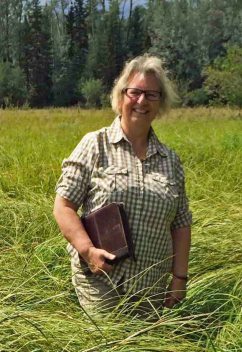
Nina stands in Anne’s sedge marsh

Finally on the last day, we stumbled on the perfect one: a painting Anne had done of a photograph her daughter had taken during a wildfire in northern British Columbia. Anne had stylized the photo into its own narrative that was compelling. My publisher was excited by it. We expect Pixl Press to release The Ecology of Story in late 2019.

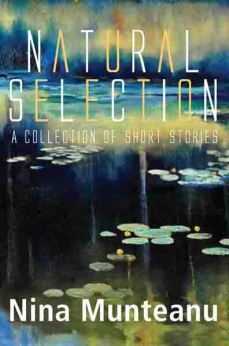
NaturalSelection-front-web copyAnne’s art work for the cover of Natural Selection: A collection of short stories had originally resonated with me when she had first shown me the original painting at an art show on Vancouver Island. Called Mere Tranquility, her acrylic and oil painting uses shades of aqua, green, blue and yellow to convey a small pond during a quiet summer day. She’d captured the elusive dance of light and water perfectly. I was reminded of the genius of Monet. Anne was delighted to let us use it. Pixl Press commissioned Gurgu to design the cover; his minimalist clean design was pure genius.

The cover for Natural Selection remains one of my favourite covers of all time. And it just so happens that the cover art and design solidly portray the tone and content of the stories within. Bellisima!


anne-moody-plein-air-painting

Anne Moody painting en plein-air

Anne Moody is a celebrated Canadian artist and plant ecologist. She worked with the British Columbia provincial government in their Department of Environment and now consults for her own company. She has been drawing and painting since childhood and won her first award at a “Painting in the Parks Program” when she was nine.

“I consider myself a realist, strongly tempted by abstract elements wrapped in story,” says Anne. “The images that speak to me are scenes that convey meaning beyond superficial beauty. My compulsion to paint takes charge when an image embedded in my memory will not allow me to rest until I promote it to canvas. My choice of medium, water-colour, acrylics or oil, is dictated by the nature of the image.”

All Nina Munteanu books can be found on most Amazon sites.

Microsoft Word - Publication-COVERS-all-2018.docx

nina-2014aaaNina Munteanu is an ecologist and internationally published author of award-nominated speculative novels, short stories and non-fiction. She is co-editor of Europa SF and currently teaches writing courses at George Brown College and the University of Toronto. Visit www.ninamunteanu.ca for the latest on her books. Nina’s recent book is the bilingual “La natura dell’acqua / The Way of Water” (Mincione Edizioni, Rome). Her latest “Water Is…” is currently an Amazon Bestseller and NY Times ‘year in reading’ choice of Margaret Atwood.
Nina Delivers Words and Worlds at WWC

SmokeSun-Rockies2

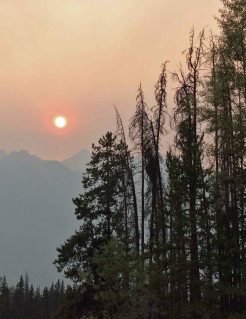
Smoky sun overlooking Rockies (photo by Nina Munteanu)

I recently travelled from Vancouver with Pixl Press director Anne Voute through the smoky Rockies to the 8th ‘When Words Collide’ writers festival in Calgary. The festival was held August 10-12, 2018 and brought together just under a thousand readers and writers in multi-genres to attend presentations and panels on writing and publishing.

The three-day writers’ festival ran a 10-track program that included informative panels, Blue Pencil Café, Editors Speed Mingle, pitch sessions with agents and publishers, and challenging workshops.

MythHawker table-WWC2018

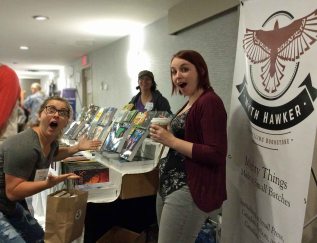
Selling books at Myth Hawker

My books were on sale in the Merchant’s room at Sentry Box (a local Calgary bookstore) and Myth Hawker Travelling Bookstore. By the third day, Myth Hawker sold all available copies of Water Is…

I participated in panels, Blue Pencil Café, Editors speed mingle and several presentations and workshops:

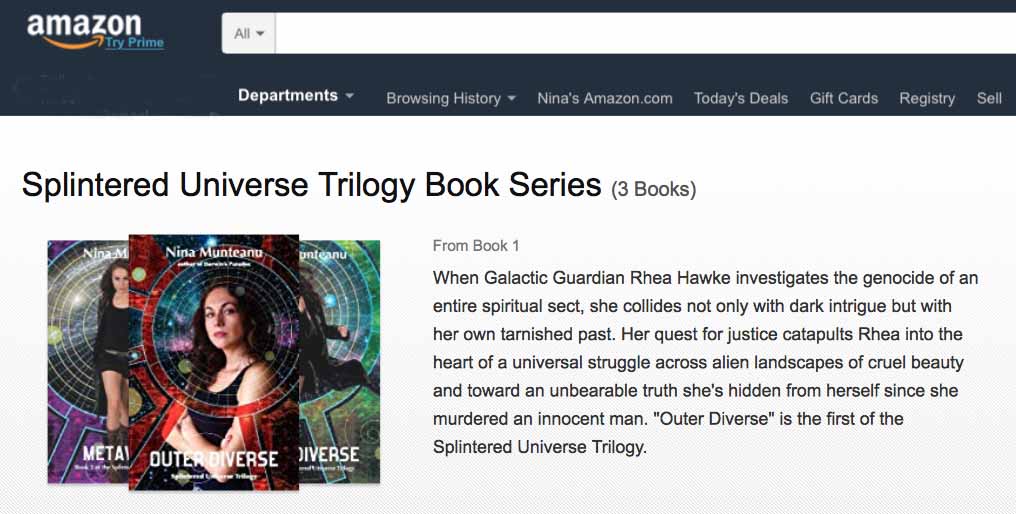
  • You Oughta Be in Audio: a discussion between me and audiobook narrator and producer Dawn Harvey on the making of the audiobooks for The Splintered Universe—now available in three formats, print, ebook, and audiobook. While paper sales dwindle, audiobooks continue to be the fastest growing segment of the publishing world with sales increasing by 30% year over year for the past decade.

Amazon-SplinteredUniverseTrilogy

  • World As Character: a presentation on creating a world with meaning. In most science fiction and fantasy, the world that we create is often very different from our own; in speculative fiction it’s often very similar; in contemporary fiction it is virtually the same. In all cases the world you build should embed in your story with layered metaphoric meaning. Nina Munteanu will discuss how to build a world that interacts with character to inform greater meaning in story.

FictionWriter-front cover-2nd ed-web copyJournal Writer-FRONT-cover-WEB copyI also networked my writing community for world examples to use in my Alien Guidebook on world building: The Ecology of Story: World as Character. Anticipated release by Pixl Press of this third guidebook in the Alien Guidebook series is Summer of 2019. In keeping with the branding of the series, artist Anne Moody is providing the cover illustration and Costi Gurgu the cover design for The Ecology of Story. Covers for the previous two books were also done by Anne and Costi.

Cover-everyday hero

‘Everyday Hero’ by Anne Moody

Earlier in the month, I travelled north with the Pixl Press director to Anne’s ranch in Vanderhoof to requisition a cover from her for the guidebook. After days of discussion and “show and tell” and after several pieces of art were tentatively selected, Anne pulled out a piece that stopped our search dead. ‘Everyday Hero’ depicts a lonely firefighter, trudging in the burning forest, tired gaze to the burning crown of a tree. Considering the subject matter and our world today, we thought this was perfect for my book.

MockUpEcology-2

cover design by Costi Gurgu, illustration by Anne Moody

Depicted in shades of blue, charcoal and brilliant red, the cover contrasts and harmonizes well with the brand typology and cover design by Toronto graphic artist Costi Gurgu.

.


nina-munteanuNina Munteanu is an ecologist, limnologist and internationally published author of award-nominated speculative novels, short stories and non-fiction. She is co-editor of Europa SF and currently teaches writing courses at George Brown College and the University of Toronto. Visit www.ninamunteanu.ca for the latest on her books.

Amazing Cover Art, Part 1: Tomislav Tikulin and Costi Gurgu

In my article “Should You Judge a Book by its Cover”, I wrote about the importance of cover art for book sales and to maintain integrity and satisfaction with the story inside. In the article, I pointed out that, “If you don’t know the author of the book, the nature—and implied promise—of the cover becomes even more important. If the book does not deliver on the promise of the cover, it will fail with many readers despite its intrinsic value. A broken promise is still a broken promise. I say cover—not necessarily the back jacket blurb—because the front cover is our first and most potent introduction to the quality of the story inside. How many of us have picked up a book, intrigued by its alluring front cover, read the blurb that seemed to resonate with the title and image, then upon reading our cherished purchase been disillusioned with the story and decided we disliked it and its author?”

Collision With Paradise Small

Liquid Silver’s romance / SF cover

Cover art provides an important aspect of writer and publisher branding. Cover artists understand this and address the finer nuances of the type and genre of the story to resonate with the reader and their expectations of story. This includes the image/illustration, typology, and overall design of the cover. A cover for a work of literary fiction will look quite different from a work of fantasy or romance. Within a genre, subtle qualities provide more clues—all of which the cover artist grasps with expertise.

I’ve been fortunate in my history as a professional writer to have had exceptional art work on the books I’ve written or collections and anthologies I’ve participated in (see the mosaic below of many but not all the covers my work has been associated with).

For most of my books, my publisher provided me with a direct link to the cover artist (e.g., Dragon Moon Press, Edge Publishing, eXtasy Books, Liquid Silver Books, Starfire, Pixl Press) and I retained some creative control. I even found and brought in the cover artist for two projects I had with Starfire.


Tomislav Tikulin and “The Last Summoner

DarwinsParadox-Cover-FINALsmall

Dragon Moon’s SF cover

Croation artist Tomislav Tikulin was the artist my Dragon Moon publisher had found for my 2007 book “Darwin’s Paradox”. For Darwin, I worked closely with Tikulin, who created the compelling hard science fiction cover of “future Toronto” that has attracted readers to the book for years. Tikulin has done cover designs for many publishers and bestselling writers from Ray Bradbury’s Dandelion Wine and Arthur C. Clarke’s Rendezvous with Rama to Amazing Stories Magazine.

Cover1_LastSummoner-frontcover

Starfire’s fantasy cover

In perusing Tikulin’s website one day, I was transported by one of his illustrations—of an awestruck knight standing knee deep in a mire within a huge drowned cathedral. Shafts of golden light from the vaulted ceiling angled across, bathing the mire and the bemused knight beneath. There was a powerful story in that image, I thought, and wrote a whole book based on it: “The Last Summoner”. Imagine the feeling when I approached Tikulin to licence the image and then my Starfire publisher to use it—and both agreed! You’ll have to read the book to find out why the image was so important to the overall story. Graphic artist Costi Gurgu took Tikulin’s image and used his typology and design skills to create an extraordinary front and back cover and spine. You can learn more about Tikulin in my interview with him on The Alien Next Door.


Costi Gurgu and “The Splintered Universe Trilogy

Front Cover ONLY-web

Starfire’s SF cover

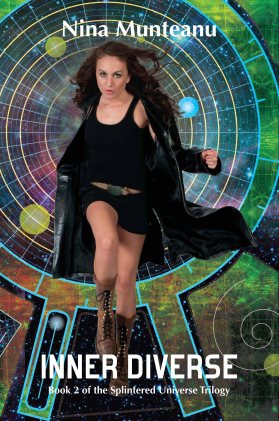
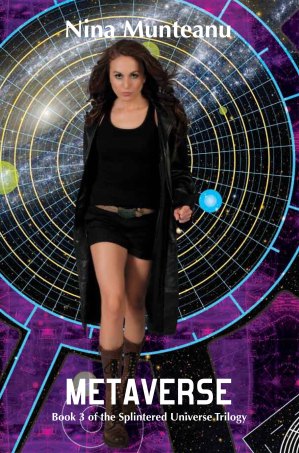
I met Costi Gurgu and his wife Vali Gurgu at a science fiction convention in Montreal in 2009. Costi and Vali were successful graphic artists working on magazine covers and interiors for top magazines in Toronto. When I eventually moved there to teach at the University of Toronto, I discussed cover design with Costi. I was working on a detective thriller in space with kick-ass female detective and Galactic Guardian, Rhea Hawke. I’d initially envisioned the book as one entire novel with three parts, but it very soon became apparent to me that it was three actual books in a trilogy. The Splintered Universe Trilogy consists of Outer Diverse, Inner Diverse, and Metaverse.

I was intrigued by what Costi designed: a “Triptych” for the three books of The Splintered Universe Trilogy. In an interview I did on The Alien Next Door, I asked him what inspired him to come up with it and what did he like about it? Costi replied:

“Your main character, Rhea, undergoes a certain evolution from a regular human being to… let’s just say something else. And that evolution has three parts, one for each book of the trilogy and it also has a touch of divine. So, the triptych design, so often used for religious paintings, fits like a glove on the entire concept.”

Inner-diverse-front-cover-WEB

Starfire’s SF cover

I was very taken by how the design for the triptych carried a powerful image that conjures a portal or gateway into another world (which is what the trilogy is about). The reader is drawn into an infinite landscape, looking in, and Rhea is looking out from within in Outer Diverse, bursting through in Inner Diverse, and walking outside with confidence in Metaverse. Costi explained the meaning behind the symbols and colours he used: “The initial idea was for the red ring to be a sort of mapping device and a radar combined into one, since Rhea travels great distances in her quest. Then I realized it might as well be a portal device on top of everything else and serve all her travelling needs.

There were two options —either we would look with her outside, to whatever target she had, or look towards her. I thought that it would be more powerful if we could look towards her and see her determined face, see the unflinching resolution in her eyes, while she’s pondering her next move and readying herself to use the device once again. But to look towards her and see her in a confining room of a space ship, or such, would have defeated the purpose. So, I needed to have her against the infinite landscape as the backdrop. She is in a continuous journey to discover herself and this journey takes her literally through the infinite spaces of not just one universe.”

Costi also shared some of the process in creating a cover design:

Metaverse-FRONT-web

Starfire’s SF cover

“Technically speaking, I always start with sketches on paper, which I later scan. I mainly use Adobe Photoshop, but for this illustration I had to use Adobe Illustrator as well. Obviously, the layout and the typography were done in Adobe InDesign.”

Costi’s wife, Vali, was the model for Rhea Hawke. Some of the additional shoots can be seen in the Youtube book trailer). Costi shared that, “I had to decide how to treat her image. I could have gone towards a more glamorous, shiny look, like in a fashion image, or I could just simply keep it more realistic… I chose to keep it that way, because I wanted to offer a realistic image of an ex-police officer: a woman who was used to fighting and chasing criminals, rather than taking care of her appearance.”

You can read the complete interview with Costi on The Alien Next Door.

All Nina Munteanu books can be found on most Amazon sites.

Microsoft Word - Publication-COVERS-all-2017.docx

Sampling of publication cover art for works by Nina Munteanu (to 2017)

nina-2014aaaNina Munteanu is an ecologist and internationally published author of award-nominated speculative novels, short stories and non-fiction. She is co-editor of Europa SF and currently teaches writing courses at George Brown College and the University of Toronto. Visit www.ninamunteanu.ca for the latest on her books. Nina’s recent book is the bilingual “La natura dell’acqua / The Way of Water” (Mincione Edizioni, Rome). Her latest “Water Is…” is currently an Amazon Bestseller and NY Times ‘year in reading’ choice of Margaret Atwood.

When Water Entangles: An Interview with Claudiu Murgan About Water

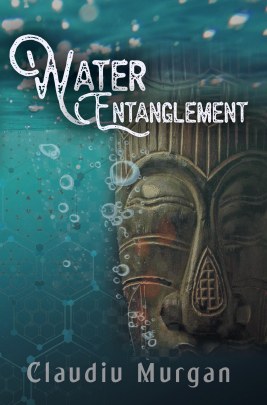
Adobe Photoshop PDFI recently attended Claudiu Murgan’s signing of his science fiction book Water Entanglement at Indigo in Yorkdale Mall and had a chance to ask him some questions about the book that intrigued me.

There are several reasons why I found Claudiu’s book particularly intriguing. Apart from the obvious fact that it has two of my favourite words in the title—Water and Entanglement—there were other intriguing aspects about Claudiu’s book, which takes place in near-future Toronto and features a limnologist as main protagonist.

My just finished novel—A Diary in the Age of Water—is also set in near-future Toronto and features a limnologist—which is what I am—as main protagonist. As we compared more and more notes, I had to laugh at how our two novels were also entangled!

Nina-Claudiu-Indigo2

Nina and Claudiu at Indigo

The time-period and the issues of both novels were very similar: growing tensions and politics surrounding a crisis of water scarcity in the 2050s and the continued short-sightedness of climate-denying politicians and corporate Earth. Both novels read like seamless slipstream between fiction and reality (mine is written partially as a memoir, which increases this experience); both explore humanity’s potential evolution linked to our relationship with an entity that remains as mysterious as it is common and life-giving. An entity that most indigenous peoples call alive.

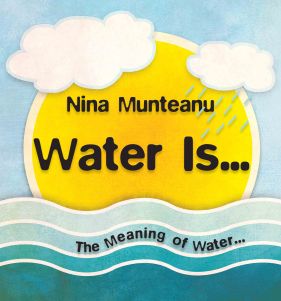
Both Claudiu and I embrace concepts of controversial metaphysical characteristics of water. I wrote about much of this in my book Water Is…The Meaning of Water, which Claudiu references in his novel. “Memory”, quantum coherence, the liquid-crystal state, and polarity express through water’s over 70 anomalous properties: phase, density, thermodynamic, material and physical anomalous properties that include adhesion, cohesion, high specific heat, thermal density, viscosity, and surface tension—just to name some.Water Is-COVER-web

“Water is the most extraordinary substance. Practically all its properties are anomalous,” writes Nobel laureate and physiologist Albert Szent-Gyorgyi.

Water Entanglement’s book jacket blurb provides an intriguing premise:

Adobe Photoshop PDF“…Since the creation of Earth, water and crystals have woven their paths into a billion-year-long tapestry that has captured the cycles of nature’s evolution. They have observed the appearance of humans and their troubled, but fascinating development, and the energies and vibrations of everything that is part of this amazing eco-system . . . In 2055 water activists fight against irresponsible corporations that pillage the Earth. Hayyin, the hidden identity of Cherry Mortinger, a limnologist, leads the movement. Will she be able to prove that water has memory and is alive and that we could awaken to the possibility of facing a fierce battle against the primordial element that gave us life: WATER?”


INTERVIEW

Nina:  What inspired you to write Water Entanglement and why did you set it in Toronto in the near-future?

Claudiu: At the end of the TV interview I gave back in September 2017 when I launched my first novel, The Decadence of Our Souls, the host asked me about my next project. I had an impulse to say that I’m going to write about water. At that time I had no idea about the potential plot and how powerful the message would be. I also think that spending time with you, Nina, and reading Water Is… influenced my subconscious. The Matrix is choosing several authors that are allowed to flow the right messages about water and create the critical point of awareness. I personally know a handful of them that write about water from a deeper level of understanding.

Why Toronto? Because I would like to see Toronto make a firmer stand on various issues that are not ‘politically correct’. The city’s multi-cultural background has created the notion of niceness about us, which is good to have; but at the same time, we can’t allow the big corporations to dictate how to use Canadian fresh-water resources. If the book is read by the right people, then they might get an idea of what could be done.


Nina:  Who should read Water Entanglement and why?

Claudiu: I like to believe that WE is a manifesto written as a Sci-Fi novel. A teenager will find things about water that are not taught in school; properties of water that science can’t deny anymore, but also can’t explain. A Sci-Fi reader will enjoy the geo-political scenarios I imagined along with the fact that water is becoming an active participant in the story, a character that is elusive, unpredictable and creates so much havoc. For an environmentalist and for a water activist, reading about the length corporations are willing to go for a profit will only compell them to continue their fight against greed and disrespect for nature. I didn’t write the book with a specific age bracket in mind, nevertheless, there is a nugget of knowledge for any type of reader willing to accept that the way we treat water is wrong, and that access to clean, potable water is a human right, not a luxury.


Nina: Two of your main POV characters are scientists; one is a limnologist (a freshwater scientist) and another a neurosurgeon. Another character is a Cherokee chief; yet another a UN representative. How did you research your characters to realistically express them in your novel?

Claudiu: The more I write the better I get at doing research. And I have to admit how grateful I am for your advice on my first book, The Decadence of Our Souls, that have elephants as main characters. You said: read more about elephants. So I did. I went to the library and borrowed thirteen books about elephants. For WE I read several books on water, but also interacted with you, Nina, a limnologist, helped me see the world from your point of view. As for my other characters, I had the chance to visit UN HQ and interact with some policy makers. In WE there is less red tape and the UN representative has some liberty when making decisions, ignoring some of the political clutches that currently strangle any decent decision with worldwide implications.


Nina: Your protagonist disguises her subversive activist identity beneath a masked being called Hayyin. Hayyin is an Islamic name that means “without obstacles”, “lenient” or “forgiving.” What was your intention in this name and does it play a role in the theme of your book?

Claudiu: I searched for the word water in Aramaic, which is Jesus’s tribe language. There are historic records that mention Aramaic as being the primordial language. Hayyin, the water activist, had to represent a symbol powerful enough to ignite in his followers the desire to fight for water. We all like to identify ourselves with a symbol that is worth fighting or dying for. Without enough water to sustain our growing population, humanity will fade away in a matter of centuries or less, so I thought that a symbol attached to a hidden identity makes the plot more interesting.


Nina: You cover several subjects of hard—and controversial—science in this book (e.g., homeopathy, epitaxy, polywater, etc.). How did you balance these to create a plausible reality in your novel? What did you have to consider?

Claudiu: I’m not a scientist. As an author I took the liberty of pushing the limits of what is known about water. I consider my research based on data that doesn’t need peer-review validation. I trust the scientists and the authors listed under the bibliography page at the end of the book. There are so many intangible things that touch us daily and most of us are not willing to accept them. The way water behaves in Water Entanglement is an intangible concept for ‘non-believers’ … until it happens. Along with a friend scientist, I’m planning to challenge students to start experiments involving water. They have to engage with their surroundings, ask questions and get their own results.


Nina: A pivotal aspect of your story hinges on the concept of structured water and intention. Can you share a little about it?

Claudiu: When doing my research I learned things about water that I couldn’t believe, but finding the same information from multiple sources convinced me that there is truth to it. I’m a strong believer now that water absorbs our intentions, our thoughts, carries them further until the next ‘shore’. Water that was blessed heals people or sickens them if water transports negative energies and harmful thoughts. Our body cells float in structured water and if the quality / properties of such liquid would be able to be maintained, well … we could live forever.


Nina: the tagline for Water Entanglement challenges: “When will we understand that water has memory, water is alive and the time for her to awaken is NOW?” Your book paints a compelling and terrifying awakening: edible seaweeds turning toxic; sacred rivers losing their healing properties; springs diurnally retreating; raging sinkholes, water turning thick. Tell us a little about these choices for water’s reactions.

Claudiu: What characterizes us as human beings is that we don’t take any potential catastrophic event seriously unless it happens. We would rather deal with the repercussions than prevent the cause. See the levies that broke because of the force of Katrina. The government was well aware of what could happen, but invoked lack of funds. In truth it was lack of government will, the political infighting that is common these days.

In WE I had to give water a radical behavior. Water has intuition and she knows human beings so well. She can predict any of our actions and there is no solution other than offering ‘peace’ – a selfless conduct.


Nina: Your book showcases some of the major challenges humanity faces in how we treat water—scarcity, contamination, diversion, commodification and misappropriation through disrespect of water and Nature, generally. There is an obvious need to alter how we treat water and this must ultimately arise from attitude and knowledge. How do you see us changing our attitude to water when most of us live in cities and don’t even know—or care—where our water comes from or what watershed we live in?

Claudiu: Changing attitude could be a generational approach. To become part of the education at all stages from kindergarten to university. We hear in the news that in Las Vegas the fountains and watering the lawns have been banned. In Africa children and their mothers walk kilometers daily to gather water for drinking and cooking; most of the time it is polluted water. Again, the leaders lack the determination to impose stricter rules or allow technologies that could replace some of the daily activities that require water. Over the years, politicians have enforced the idea that any decision of significance has to go through a lengthy process. It shouldn’t be that way if the greater good is paramount and not petty, personal interest.


Nina:  Your novel touches on global economic and military pressures by corporations and governments in aggressive water acquisition. In your novel this occurs mostly via American interests overseas. Closer to home, Maude Barlow of the Council of Canadians tells us that water abundance in Canada is a myth and we are too complacent. Her recent book Boiling Point exposes Canada’s long-outdated water regulations, unprotected groundwater reserves, agricultural pollution, industrial waste dumping, water advisories and effects of deforestation and climate change. As stewards of 20% of the world’s freshwater, our precious water is being coveted by many entities—from corporations to governments—and holding our own will be a tricky balancing act. What do you think is Canada’s main challenge in keeping its water protected?

Claudiu: Yes, in my book I mention that we are down to 13% of world’s freshwater resources. I also mention that only smart policy could keep the sharks away. We are not a third-world, tiny, easy-to-intimidate country. We should stand our ground and push back on any such attempt. The government should protect both private and public freshwater sources and even offer support regardless of ownership.


Nina: Your book touches upon corrupt government officials and corporate CEOs in terms of water issues. Various anonymous organizations such as WikiLeaks, Anonymous Group, and individuals—including your main character who uses a mask to maintain her anonymity—play a major role as activists in your book. Do you see this as the most effective way to expose wrongdoing and affect change?

Claudiu: It was already proven that revelations through WikiLeaks have affected the political environment, revealing corruption at high levels of government, secret documents mishandling, transaction from which a handful of people benefited, etc. As far as I know no one has dug deeper into these documents for nuggets of shady deals about commodities such as water (as water is considered a commodity to lessen her important role in our lives). But they are happening in the shadows, overseen by easily bribed politicians that only find happiness in short-term gratification. Hacking corporations that claim they are responsible when it comes to environment and human health, is a civic duty. It reveals the gangrene that affects our world.


Nina: In your novel, you created Water For All (WFA) as a global NGO organization devoted to protecting water by exposing heinous wrongdoings and helping to correct them by helping to pass legislature; what do you see as the largest challenges faced by NGOs today?

Claudiu: In my opinion the water movement is fractured in too many pieces. They all want to do good, but there is no scalability to their initiatives. Funding is somehow scarce and not enough to have a significant impact when divided among so many entities. In Water Entanglement I put forward two concepts that might solve this issue. First, WFA is the unique entity that consolidates as many of the water activists and water-related organizations as possible. So funding for selected projects comes from one source. Second, there is a worldwide strategy addressing sensitive areas and the source of pollution is addressed first. Leaders should come together for such a noble goal, give up their egos and create the critical mass that can overpower the influence of the multi-nationals in the water industry.


Nina: Your novel invokes Mother Nature and repeats the Indigenous peoples’ tautology “protect your mother.” You reiterate that for most Aboriginal nations, women are considered the “Water Keepers.” Your main characters—mostly activists—are women. Your main character, Cherry, is a limnologist and water activist; Romana is the UNWater chair; Ilanda is an enlightened neurosurgeon experimenting with crystal technology to help raise awareness and cognition (her husband runs Vivus Water Inc. that uses desalinization plants to further secure their water business). You also reiterate that water carries a female gender as Chief Landing Eagle says: “Fear the day when water remembers what we have done to her.” Do you see a significant role for women in changing how we view and treat water in the world?

Claudiu: Women in general are more empathic and it is a known fact that a world dominated by a matriarch society is a peaceful one. Seems that women care more about the life they nurture inside them for nine months. They are less egotistic and more willing to forgive. It’s an attitude water needs to survive the ordeal we are putting her through. We need more women as decision makers when it comes to water usage and water preservation. It might be easier for a woman to find and keep the balance on the right side of the thin line we are walking as a species. Crossing it could mean the end of the world.


claudiu murganClaudiu Murgan was born in Romania and has called Canada his home since 1997. He started writing science fiction when he was 11 years old. Since then he met remarkable writers who helped him improve his own trade. His first novel, The Decadence of Our Souls highlights his belief in a potentially better world if the meanings of Love, Gratitude and Empathy could be understood by all of our brothers and sisters. www.ClaudiuMurgan.com.


Nina MunteanuNina Munteanu is an ecologist, limnologist and internationally published author of award-nominated speculative novels, short stories and non-fiction. She is co-editor of Europa SF and currently teaches writing courses at George Brown College and the University of Toronto. Visit www.ninamunteanu.ca for the latest on her books.

Nina Munteanu Interviewed by Simon Rose on Fantasy Fiction Focus

On Fantasy Fiction Focus Nina Munteanu discusses with author Simon Rose about the writing process, the emerging hybrid publishing industry, the importance of branding yourself as an author, and what can authors do to successfully market themselves and their writing. She and Simon discuss the writing community and the importance of conventions and festivals for aspiring writers.

The interview was done in 2015 but what Simon and Nina discuss remains topical and germane.

Nina Munteanu

Nina Munteanu is an ecologist, limnologist and internationally published author of award-nominated speculative novels, short stories and non-fiction. She is co-editor of Europa SF and currently teaches writing courses at George Brown College and the University of Toronto. Visit www.ninamunteanu.ca for the latest on her books.

My Writing Retreat in Niagara-on-the-Lake

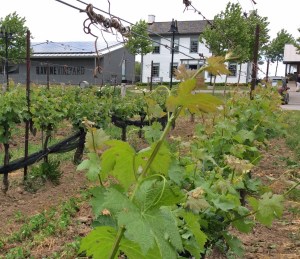
Ravine-house

Ravine Vineyard Estate Winery

When I’m not teaching writing at UofT in Toronto, I’m often writing at home. And if I’m not writing at home, I’m often traveling to where I will write. You get the picture: I’m a writer. My website mantra reads: “I live to write; I write to live.”

I’m always looking for great places to write, to synthesize observations and experiences for an article or to plot my next novel. As writers, we are constantly studying the nature of our surroundings, how people interact, what they do, how events affect us and more. Writing is as much about experiencing life as writing about it. But we need both to flourish: something to write about and a place to write about it.

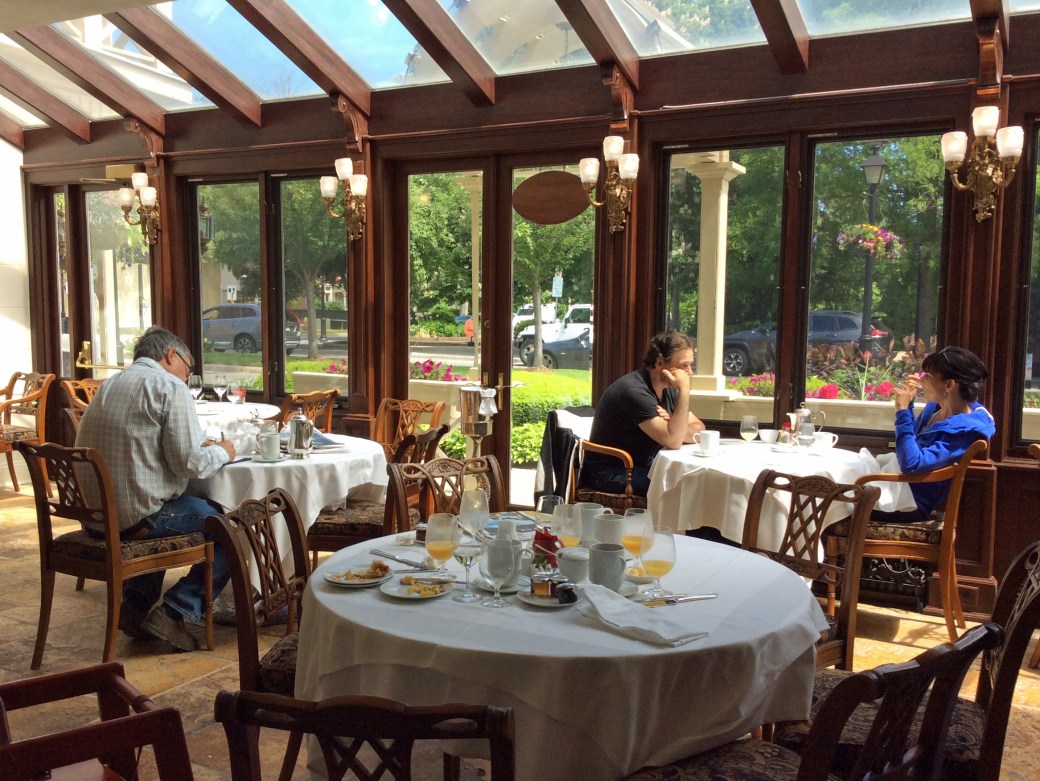
Breakfast Room

Noble Restaurant, Prince of Wales Hotel

Horse carriage01

Horse and carriage on King Street

Recently a good friend of mine lured me out of town on a trip to Niagara-on-the-Lake. She didn’t blink an eye when I grabbed my computer and happily accompanied her on our wonderful adventure. We started at the Prince of Wales Hotel, named in honour of the 1901 visit of the Duke and Duchess of York, who were later crowned King George V and Queen Mary.

FredGamula

Fred Gamula

We got there just in time for supper in the elegant and panoramic Noble restaurant. Of course, we had to order the divine “Grand Hotel Tasting Menu”, a four-course meal, paired with several fine wines. Sommelier Fred Gamula guided us through the “Grand Hotel Tasting Menu” of crisp romaine hearts, grilled chili marinated quail, pan seared trout and Grand Hotel Opera cake. Each course was paired with a wine that brought out the best in each; from an Inniskillin Chardonnay Reserve to a Flat Rock Twisted, to a Cave Spring Gamay and finally a Taylor Fladgate port. Gamula and I got into a diverting conversation about looking after the environment and water (I later gave him a copy of my book “Water Is…”).

PrinceOfWales-patio

Patio of Prince of Wales Hotel

Gamula grew up on a small fruit farm in Niagara-on-the-Lake and has seen some changes in the area due to development. Some not so good. We agreed that the trick is to embrace influx while preserving the very reason for that influx—to enjoy and preserve the wonderful country, vineyards and wineries in the area.

I found a wonderful place to write on the Churchill Room patio facing King Street, where the horses and carriages waited for customers. As the sun set, I drank my Campari and orange juice and wrote my novel to the cheerful sounds of birds, rustling trees and exploring people.

Nina-ottoman store

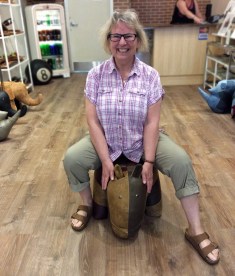
Nina and her favourite hippo

The next morning we wandered Queen Street before heading out to explore wine country. Curious about Reiner’s window display, I wandered into what I thought was a leather shop—expecting the usual fare such as purses, satchels, belts and the like; but it turned out to be a speciality leather ottoman store.

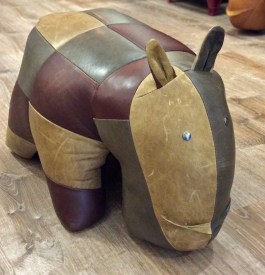
HippoOttomanThese weren’t ordinary ottomans—they were all animals! Hippos, bears, moose, elephants and pigs stood on stout legs, begging for a nice home to live in.

The store is named after leather crafter Reiner Henneveld who came to Canada in 1950 from Germany and created his first animal-shaped ottoman in the shape of a pig—after his pet pig, Wilbur. Reiner’s two sons have taken up the craft with a commitment to individual design and workmanship that includes hand sewing, cutting and stuffing and using the finest upholstery leather. I found them comfortable and very attractive.

wayne-gretzky-whisky

Wayne Gretzky with his “99”

After lunch we visited old favourites and explored new vineyards and wineries. Wayne Gretzky Estates recently opened its winery and distillery on Old Stone Road. The estate is getting known for its No. 99 Red Cask Canadian Whisky; “the same soils that produce great grapes also grow grains that are used to produce whisky,” they write. The whisky is made in small batches from rye, malted rye and corn that has been individually mashed, fermented and distilled. After aging, the whisky is finished with red wine casks from the Wayne Gretzky winery.

IMG_0865

General store of Ravine Vineyard Estate Winery

PorkWithSangria

Pork chop, sea-salted bread and Sangria at the Ravine restaurant

The Ravine Vineyard Estate Winery is an old haunt for its charming and diversely stocked general store and its rustic-style restaurant with imaginative and surprising menus. Both inside and outside seating offer vistas of undulating countryside and the sounds of a working vineyard. Another great place to write!

Ravine-birdhouses

A sparrow sings his heart out on his very own house in Ravine vineyard

Ravine-chickens

Free range chickens roam the vineyard at Ravine

I’m half-inclined to shift over to writing a murder-mystery series about a young recent George Brown graduate who comes to Niagara-on-the-Lake to work as a Sommelier in one of the hotels—only to find intrigue and—of course—a murder to solve. What do you think?…


nina-2014aaa

Nina Munteanu is an ecologist, limnologist and internationally published author of award-nominated speculative novels, short stories and non-fiction. She is co-editor of Europa SF and currently teaches writing courses at George Brown College and the University of Toronto. Visit www.ninamunteanu.ca for the latest on her books.


On Being a Canadian Writer in the Age of Water

Canada is the only country in the world that knows how to live without an identity.”—Marshal McLuhan 

nina-child01

Nina  “reading” in Granby, Quebec

I was born some sixty+ years ago, in the small town of Granby in the Eastern Townships to German-Romanian parents. Besides its zoo—which my brother, sister and I used to visit to collect bottles for a finder’s fee at the local treat shop—the town had no particular features. It typified French-Canada of that era. So did I. I went to school in Quebec then migrated across to the west coast to practice and teach limnology. Given that Canada holds at any one time a fifth of the Earth’s freshwater, that also made sense.

Canada is a vast country with a climate and environment that spans from the boreal forests of the Canadian Shield, muskegs of northern BC, and tundras of the Arctic Circle to the grasslands of the Prairies and southern woodlands of Ontario and Quebec. Canada’s environment is vast and diverse. Like its people.     

Ecologist vs Nationalist

Ecology is the study of “home” (oikos means ‘home’ in Greek). Ecology studies the relationships that make one’s home functional. It is, in my opinion, the most holistic and natural way to assess where we live. My home is currently Toronto, Ontario, Canada and ultimately the planet Earth.

Country_road_Stephane_Lemire

The Eastern Townships in autumn are a cornucopia of festive colours.

Growing up in the Eastern Townships of Quebec, I’d always felt an abiding sense of belonging and I resonated with Canada’s national symbols—mostly based on Nature and found on our currency, our flag, and various sovereign images: the loon, the beaver, the maple tree, our mountains and lakes and boreal forests. Why not? Canadians are custodians of a quarter of the world’s wetlands, longest river systems and most expansive lakes. Most of us recognize this; many of us live, play and work in or near these natural environments.

I have long considered myself a global citizen with no political ties. I saw my country through the lens of an ecologist—I assessed my community and my surroundings in terms of ecosystems that supported all life, not just humanity. Was a community looking after its trees? Was my family recycling? Was a corporation using ‘green’ technology? Was a municipality daylighting its streams and recognizing important riparian zones? I joined environmental movements when I was a teenager. I shifted my studies from art to science because I wanted to make a difference in how we treated our environment. After university, I joined an environmental consulting firm, hoping to educate corporations and individuals as environmental stewards. I brought that philosophy into a teaching career and began writing eco-fiction, science fiction and essays to help promote an awareness and a connection with our natural world. My hope was to illuminate how important Nature and water is to our planet and to our own well-being through an understanding of ecology and how everything is interconnected.

US-tour and Desolation Sound 260 copy

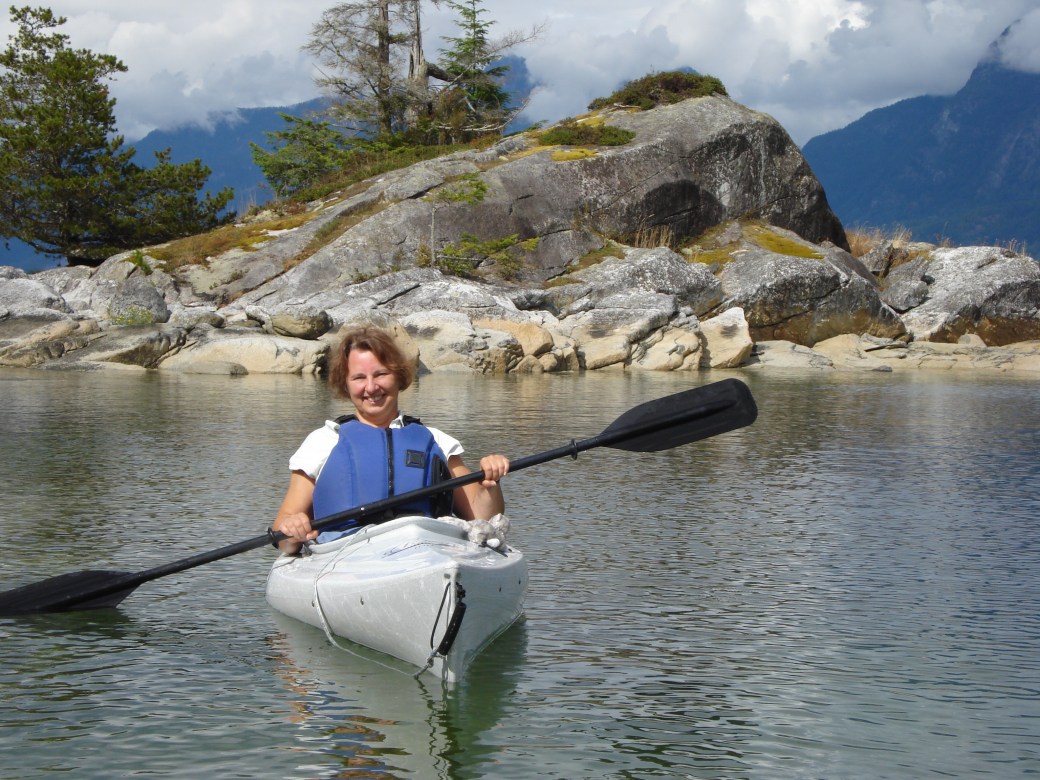
Nina kayaking Desolation Sound in British Columbia

When I think of Canada, I think of my “home”, where I live; my community and my environment. I have traveled the world and I feel a strong sense of “home” and belonging every time I return. Canada is my home. I was born and grew up in Quebec. I lived in British Columbia, Ontario, and Nova Scotia; each of these places engendered a feeling of “home”.

lunenburg-keel-laying

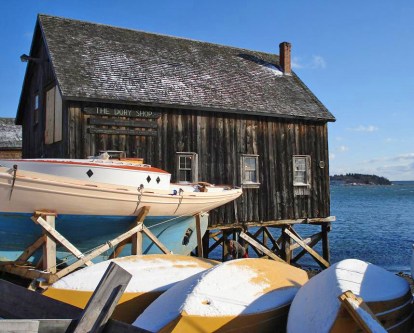
The Dory Shop in Lunenburg, Nova Scotia

I think that part of being a Canadian is related to this sense of belonging (and pride) in a country that is not tied to some core political identity or melting-pot mainstream.

Historian and writer Charlotte Gray wrote:

“we live in a country that has a weak national culture and strong regional identities …Two brands of psychological glue bind Canada together: political culture and love of landscape…[in] a loose federation perched on a magnificent and inhospitable landscape—[we are] a nation that sees survival as a collective enterprise.”—Charlotte Gray

barkerville marsh 9

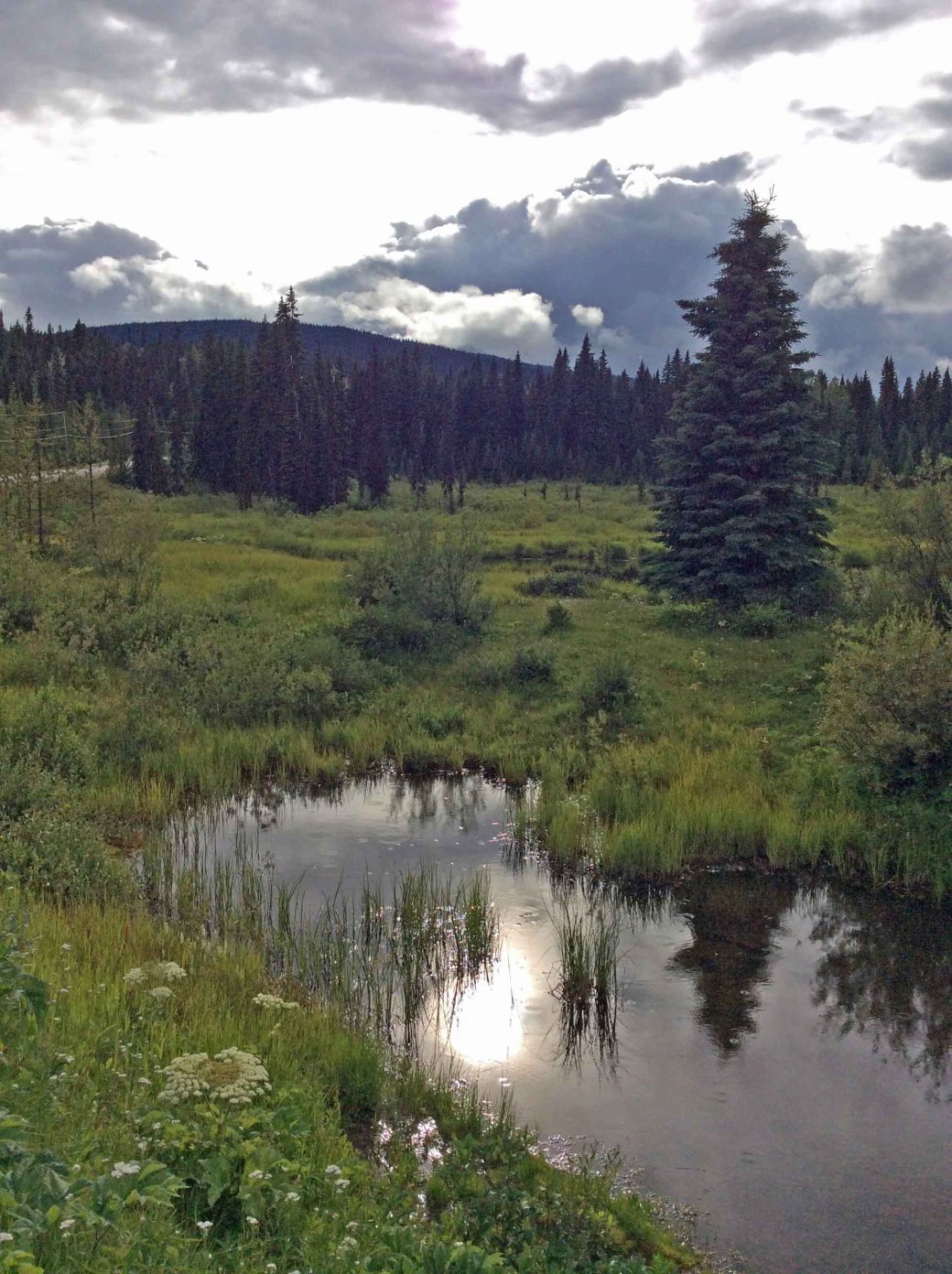
Marsh near Barkerville, BC (photo by Nina Munteanu)

Canada as Postnational State

In October 2015, Canada’s Prime Minister Justin Trudeau told the New York Times that Canada may be the “first postnational state,” adding that “there is no core identity, no mainstream in Canada.” This is largely because Canadians, writes Charles Forman in the Guardian, are “philosophically predisposed to an openness that others find bewildering, even reckless.”

Trudeau-RollingStoneTo anyone but a Canadian, Trudeau’s remark would rankle, particularly in a time when many western countries are fearfully and angrily turning against immigration through nativism and exclusionary narratives. A time when the United States elected an authoritarian intent on making “America great again” by building walls. A time when populist right-wing political parties hostile to diversity are gaining momentum in other parts of the world. “Canada’s almost cheerful commitment to inclusion might at first appear almost naive,” writes Forman. It isn’t, he adds. There are practical reasons for keeping our doors open.

We are who we are because of what we are: a vast country the size of Europe. A country dominated by boreal forest, a vital and diverse wilderness that helps maintain the well-being of our entire planet. A land that encompasses over a fifth of the freshwater in the world, and a quarter of the world’s wetlands. Canadians are ultimately the world’s Natural stewards. That is who and what we are.

Eramosa River 3

Eramosa River, Ontario (photo by Nina Munteanu)

According to Forman, postnationalism frames how “to understand our ongoing experiment in filling a vast yet unified geographic space with the diversity of the world” and a “half-century old intellectual project, born of the country’s awakening from colonial slumber.” As the first Europeans arrived in North America, the Indigenous people welcomed them, taught them how to survive and thrive amid multiple identities and allegiances, writes Forman. “That welcome was often betrayed, particularly in the 19th and 20th centuries, when settlers did profound harm to Indigenous people.” But, says Forman, if the imbalance remains, so does the influence: a model of another way of belonging. One I think many Canadians are embracing. We are learning from the natural wisdom of our Indigenous peoples. Even our fiction reflects how we value our environment and embrace diversity. “Diversity fuels, not undermines, prosperity,” writes Forman.

As efforts are made to reconcile the previous wrongs to Indigenous peoples within Canada and as empowering stories about environment are created and shared, Canada carries on the open and welcoming nature of our Indigenous peoples in encouraging immigration. In 2016, the same year the American government announced a ban on refugees, Canada took in 300,000 immigrants, which included 48,000 refuges. Canada encourages citizenship and around 85% of permanent residents typically become citizens. Greater Toronto is currently the most diverse city in the world; half of its residents were born outside the country. Vancouver, Calgary, Ottawa and Montreal are not far behind.

kevin-nina-close

Mom and son explore BC wilderness

Canadian author and visionary Marshal McLuhan wrote in 1963 that, “Canada is the only country in the world that knows how to live without an identity.” This is an incredible accomplishment, particularly given our own colonial history and the current jingoistic influence of the behemoth south of us.

Writer and essayist Ralston Saul suggests that Canada has taken to heart the Indigenous concept of ‘welcome’ to provide,

“Space for multiple identities and multiple loyalties…[based on] an idea of belonging which is comfortable with contradictions.”

Of this Forman writes: “According to poet and scholar BW Powe, McLuhan saw in Canada the raw materials for a dynamic new conception of nationhood, one unshackled from the state’s ‘demarcated borderlines and walls, its connection to blood and soil,’ its obsession with ‘cohesion based on a melting pot, on nativist fervor, the idea of the promised land’. Instead, the weakness of the established Canadian identity encouraged a plurality of them—not to mention a healthy flexibility and receptivity to change. Once Canada moved away from privileging denizens of the former empire to practicing multiculturalism, it could become a place where ‘many faiths and histories and visions would co-exist.”

NaturalSelection-front-webAnd that’s exactly what is happening. We are not a “melting pot” stew of mashed up cultures absorbed into a greater homogeneity of nationalism, no longer recognizable for their unique qualities. Canada isn’t trying to “make Canada great again.”

Canada is a true multi-cultural nation that celebrates its diversity: the wholes that make up the wholes.

Confident and comfortable with our ‘incomplete identity’—recognizing it for what it is—is according to Forman, “a positive, a spur to move forward without spilling blood, to keep thinking and evolving—perhaps, in the end, simply to respond to newness without fear.”

This resonates with me as an ecologist. What I envision is a Canada transcending the political to embrace the environment that both defines us and provides us with our very lives; a view that knows no boundaries, and recognizes the importance of diversity, relationship and inclusion, interaction, movement, and discovery.

So, am I proud of Canada? Definitely. We have much to be proud of. Canada is the 8th highest ranking nation in the Human Development Index. Canada ranks among the highest in international measurements of government transparency, civil liberties, quality of life, economic freedom, and education. It stands among the world’s most educated countries—ranking first worldwide in the number of adults having tertiary education with 51% of adults holding at least an undergraduate college or university degree. With two official languages, Canada practices an open cultural pluralism toward creating a cultural mosaic of racial, religious and cultural practices. Canada’s symbols are influenced by natural, historical and Aboriginal sources. Prominent symbols include the maple leaf, the beaver, Canada Goose, Common Loon, the Royal Canadian Mounted Police, the polar bear, the totem pole, and Inuksuk.

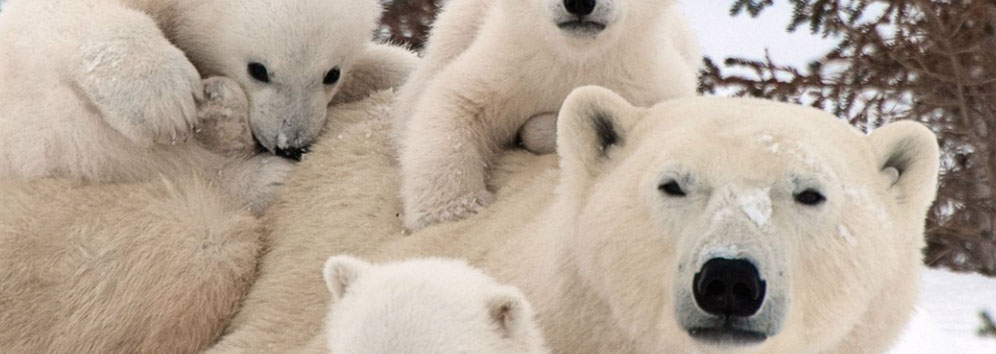
PolarBearMum-pups

Water Is-COVER-webWe are a northern country with a healthy awareness of our environment—our weather, climate and natural world. This awareness—particularly of climate change—is more and more being reflected in our literature—from Margaret Atwood’s “Maddaddam” trilogy and Kim Stanley Robinson’s “2041” to my short story collection “Natural Selection” and non-fiction book Water Is… .

Water AnthologyCanadians are writing more eco-fiction, climate fiction, and fiction in which environment somehow plays a key role.

Water has become one of those key players: I recently was editor of the Reality Skimming Press anthology “Water”, a collection of six speculative Canadian stories that optimistically explore near-future scenarios with water as principle agent.

The Way of Water-COVERMy short story “The Way of Water” is a near-future vision of Canada that explores the nuances of corporate and government corruption and deceit together with resource warfare.

First published as a bilingual print book by Mincione Edizioni (Rome)  (“La natura dell’acqua”), the short story also appears in several anthologies including Exile EditionsCli Fi: Canadian Tales of Climate Change” and “Future Fiction: New Dimensions in International Science Fiction“.  My upcoming “A Diary in the Age of Water” continues the story.

Adobe Photoshop PDFCanadian writer and good friend Claudiu Murgan recently released his book “Water Entanglement“, which also addresses a near-future Canada premise in which water plays a major role.

In a recent interview with Mary Woodbury on Eco-Fiction, I reflected on a trend over the years that I noticed in the science fiction writing course I teach at George Brown College: “It’s a workshop-style course I teach and students are encouraged to bring in their current work in progress. More and more students are bringing in a WIP with strong ecological overtones. I’d say the percentage now is over 70%. This is definitely coming from the students—it’s before I even open my mouth about ecology and eco-fiction—and what it suggests to me is that the welfare of our planet and our ecosystems is on many people’s minds and this is coming through in our most metaphoric writing: science fiction.”

It is healthy to celebrate our accomplishments while remembering where we came from and what we still need to accomplish. This provides direction and motivation.

tree water deer lake

Deer Lake, BC (photo by Nina Munteanu)

Canadians are custodians of a quarter of the world’s wetlands, longest river systems and most expansive lakes. Canada is all about water… And so are we.

We are water; what we do to water we do to ourselves.

Happy Canada Day!


References:

Dechene, Paul. 2015. “Sci-Fi Writers Discuss Climate Catastrophe: Nina Munteanu, Author of Darwin’s Paradox.” Prairie Dog, December 11, 2015.

Forman, Charles. 2017. “The Canada Experiment: Is this the World’s First Postnational Country?” The Guardian, January 4, 2017.

Gray, Charlotte. 2017. “Heroes and Symbols” The Globe and Mail.

Moorhouse, Emilie. 2018. “New ‘cli-fi’ anthology brings Canadian visions of future climate crisis.” National Observer, March 9, 2018.

Munteanu, Nina. 2016. “Crossing into the Ecotone to Write Meaningful Eco-Fiction.” In: NinaMunteanu.me, December 18, 2016.

Newman-Stille, Derek. 2017. “The Climate Around Eco-Fiction.” In: Speculating Canada, May 24, 2017.

Woodbury, Mary. 2016. “Part XV. Women Working in Nature and the Arts: Interview with Nina Munteanu, Ecologist and Author.” Eco-Fiction.com, October 31, 2016.

SONY DSC

Nina Munteanu on the Credit River, Ontario (photo by Merridy Cox)


nina-2014aaaNina Munteanu is an ecologist and internationally published author of award-nominated speculative novels, short stories and non-fiction. She is co-editor of Europa SF and currently teaches writing courses at George Brown College and the University of Toronto. Visit www.ninamunteanu.ca for the latest on her books. Nina’s recent book is the bilingual “La natura dell’acqua / The Way of Water” (Mincione Edizioni, Rome). Her latest “Water Is…” is currently an Amazon Bestseller and NY Times ‘year in reading’ choice of Margaret Atwood.


Limestone Genre Expo—May 2018

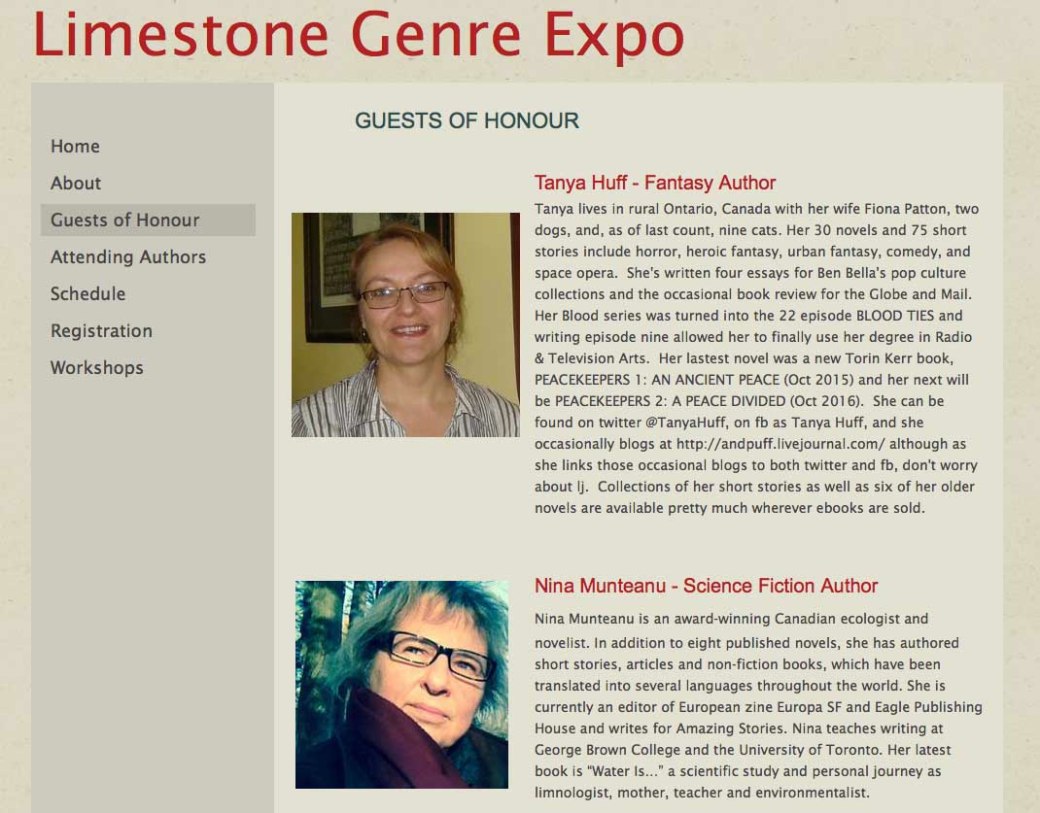
2018 was the fourth year for Limestone Genre Expo, Kingston’s only genre writing festival. I’ve been to the expo each year from its inaugural festival in 2015. The festival gets its name from the city’s moniker, based on the many heritage buildings constructed there using the local limestone.

In 2016 I was delighted to be the science fiction guest of honour. In 2017, the expo was held at the Saint Lawrence College campus.


Nina-SF GOH-Limestone Genre Expo 2016

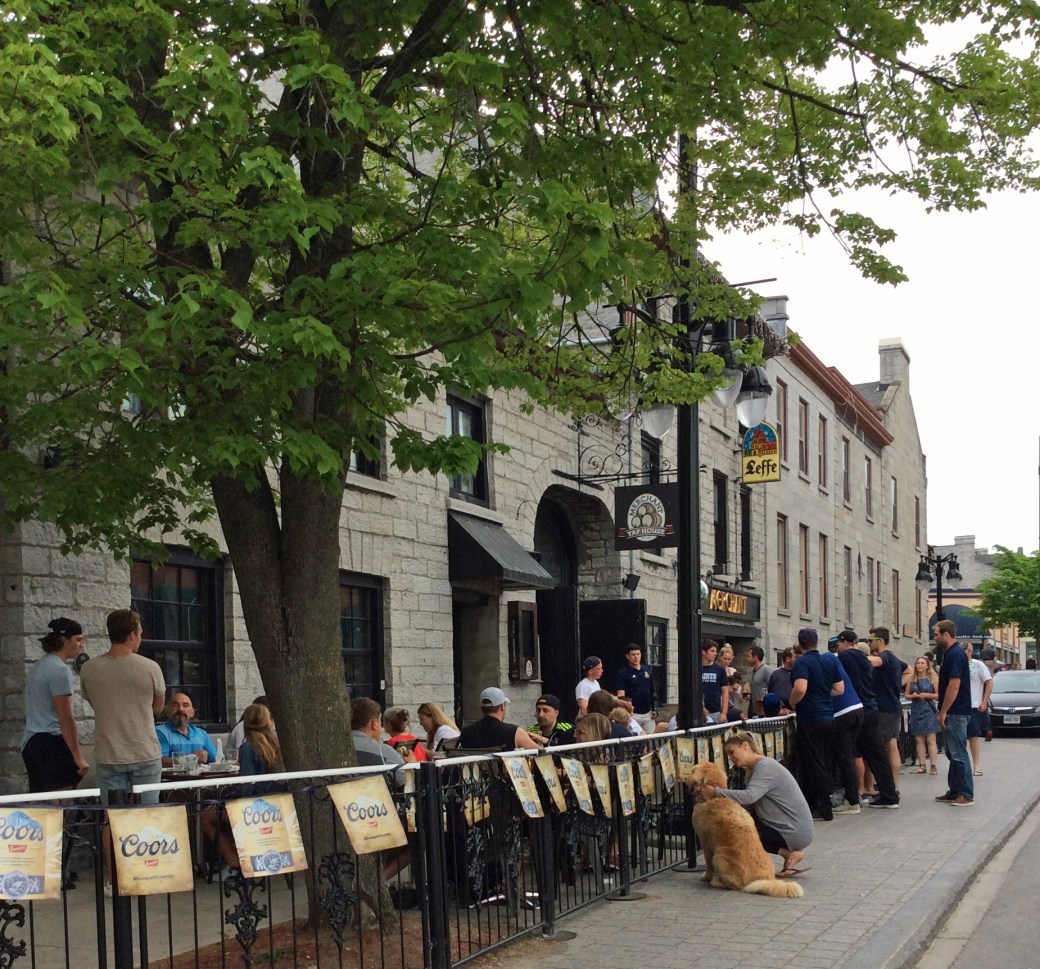
This year, the expo was held at the Holiday Inn, right on the waterfront and literally a staggering distance from the Merchant Tap House, one of the greatest pubs and eateries of the town.

MerchantTapHouse-Limestone2018

Merchant Tap House, Kingston (photo by Nina Munteanu)

As before, the festival covered several of the major genres such as fantasy, science fiction, horror, romance and mystery, with representation by well-known authors in each. Organizers offered a triple track program from 10 am to 5 pm that included panels, informative workshops, readings, book launches, and novel pitch sessions with Bundoran Press.

Liz Strange and programming organizers had me in several panels throughout the two-day expo.

Panels I participated in and in some cases moderated included:

“Mental Health Representation in Fiction: More than Villains” with Michael Slade, Therese Greenwood, Ada Hoffmann, Matt Moore and Madona Skaff. I really enjoyed this panel discussion that explored our evolving perception and representation of mental health in story and in our real lives.

Nina-MentalHealthPanel

Matt Moore, Nina Munteanu, Madona Skaff, Michael Slade, Theresa Greenwood (photo by Marlene Smith)

“Why Do We Love a Good Whodunit?” with Michael Slade, M. H. Callway, Katherine Prairie, Jim Napier, Melissa Yi, and Rosemary McCracken.  The panel and I had fun with this discussion as bizarre real-life stories were thrown into this mix.

Nina-Whodunit Panel

Katherine Prairie, Michael Slade, Melissa Yi, M.H. Callway, Rosemary McCracken, Nina Munteanu

“What Makes a Great Hero?” with Kate Heartfield, Tobin Elliott, Theresa Greenwood, Kris Jacen, Donna Warner, and Douglas Smith. The panel debated what makes a hero, then anti-hero, then sad and terrible hero, then non-hero…and ultimately to the journey of our at times miserable but great hero.

Nina-HeroPanel-LIMESTONE 2018

Douglas Smith, Theresa Greenwood, Nina Munteanu, Donna Warner, Tobin Elliott, Kate Heartfield

“Dystopian Fiction: How to write when the world is falling apart” with Una Verdandi, Robin Timmerman, Brad Baker, Tapanga Koe, Hayden Trenholm and Ursula Pflug. In this rather passionate discussion, we debated the state and shape of dystopia in both the real world and the fiction world and how they inevitably bleed together for the writer.

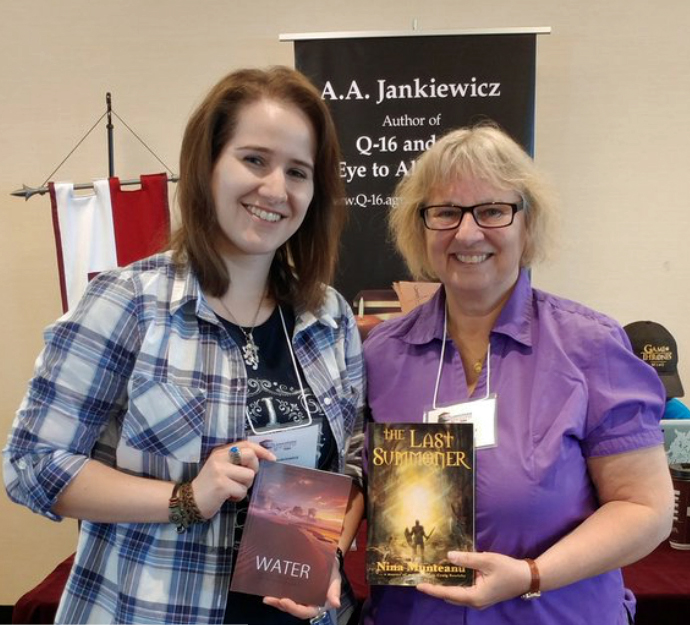
Nina-signingLastSummoner

Nina signs “The Last Summoner” for colleague and reader Agnes

“Women of Science Fiction” with Hayden Trenholm, Laura Baumbach, Ada Hoffmann, Tanya Huff, Tapanaga Koe, and Nancy Baker.  Hayden emerged amid his female colleagues to astutely discuss the reason we are still discussing this topic.

I also sold a number of books, including Water Is… (a Margaret Atwood favourite), my journal and fiction writing guidebooks (The Journal Writer and The Fiction Writer), Reality Skimming’s Water Anthology, for which I was editor, and The Last Summoner.

Nina-Agnes-LIMESTONE

authors Agnes Jankiewicz and Nina Munteanu

One of the key charms of this small venue is that it still provides an intimate setting for great networking. I had a chance to meet many of my old friends and to make new ones. Thanks to Liz, Marlene and wonderful volunteers for another great writing festival!


Nina Munteanu

Nina Munteanu is an ecologist, limnologist and internationally published author of award-nominated speculative novels, short stories and non-fiction. She is co-editor of Europa SF and currently teaches writing courses at George Brown College and the University of Toronto. Visit www.ninamunteanu.ca for the latest on her books.
 

“Absolutism” in the Time of Climate Change

AboutAbsolutism-webOnce upon a time, there will be one absolute ruler who we, the people, call the Supreme Leader (May He Rule Forever). The Supreme Leader will hate immigrants, writers, scientists, environment and extinct species. We, the people under his rule, will be proud to live in our pure and glorious Motherland. Because we’ll have little to eat, no entertainment, no self-respect, no freedom, no rights, and no access to the outside world, we’ll be happy.

This is the ridiculously sublime scenario that underlies Absolutism, the dystopian card game developed by science fiction author Costi Gurgu and game developer/designer Vali Gurgu about surviving dictatorship.

A week ago, I invited Costi to my science fiction writing class at George Brown College to share his experience in writing and releasing his recent book RecipeArium (now on the short list for an Aurora Award). Costi also brought his new game, Absolutism, based on his latest novel Servitude—a near future dystopia.

PlaytestGB2

Playing the game at George Brown

“Play unfathomable scenarios of daily life in a totalitarian society. A funny game for people without shame.”—Absolutism


Emerging Dictatorships & “Servitude”—the novel

Costi described how he and Vali came to develop the game: “Based on current global political trends, some could safely assume that in the next 5 to 10 years some present democracies will turn into dictatorships. In Europe for instance, one third of the European countries have nationalistic parties winning their elections—UK, Italy, Poland, Hungary, Slovakia. France and Germany came very close. The United States is slowly sliding into dictatorship. Russia and China are no longer communist countries, like North Korea, but they’re dictatorships. They opened their markets to international trades because they saw the wisdom in making profits, but that was as far as they went with the openness. They still rule their people with an iron fist.”

We are now 7.5 billion people on the planet. As climate change (the ultimate dictator) exacerbates tensions over the unbalanced resource scarcities of our over-populated world, fear-mongering and absolute control of the masses through nationalism, isolationism, trade-wars, etc. will logically follow.

Costi and Vali first conceived a card game entirely based on Costi’s dystopian novel Servitude. But, they soon discovered that the game was too grim.

PlaytestGB3

Life under a Dictatorship—Ceaușescu

Costi and Vali had experienced a dictatorship first hand. They’d grown up in Romania under Communist rule, first by Gheorghe Gheorghiu-Dej, then under the communist dictatorship of Nicolae Ceaușescu. The dictator ruled for over twenty years before a coup d’etat overthrew him in 1989. Ceaușescu had ordered his military to open fire on hundreds of protesters in Timișoara, setting off the Romanian Revolution and ultimately his own execution by firing squad.

Ceaușescu’s totalitarian regime is still considered one of the most repressive in Eastern Europe. His Securitate (secret police) controlled the population through mass surveillance; they enacted many human rights abuses, censorship and relocation, and suppression of the media and press. Political propaganda infected all forms of education, art, entertainment and media. Non-compliant intellectuals were punished, arrested, or simply disappeared.

Inspired by the personality cult surrounding Supreme Leader Kim Il-sung in North Korea, Ceaușescu started his own cult in the Eastern Bloc by imposing a severe nationalist ideology. His policy of economic collectivization destroyed an already fragile economy and oppressed culture. Under the communist regime, thousands of books and magazines were banned and removed from public libraries and schools; intellectuals’ links to the West were severed; long-standing professional organizations were dissolved; and intellectuals, writers, and teachers were imprisoned and put into labor camps.

In Ceaușescu’s Systematisation program of urban planning—based on North Korea’s Juche ideology—whole settlements were demolished and reconstructed in the image of the state.

Ceaușescu made contraception and abortion illegal under Decree 770, and created incentives for high numbers of births—his idea was to increase the country’s population from 22 million to 30 million by the end of the century. By 1977, Romanians were taxed for being childless in a country already unable to house and feed its children. Sadly, this led to an increasing number of orphans, the highest infant mortality rate in Europe and the deaths of thousands of women who attempted illegal abortions. Orphanages were neglected and developed appalling conditions—most were concrete barracks in slums where many children suffered from frostbite, malnutrition and abuse.


“Absolutism”—the game

“Humor is your main weapon in fighting the victorious party and its minions,” say Costi and Vali. “Humor is the one thing that gives people hope and keeps the mental sanity of the masses in the face of oppression.”

And so “Absolutism” was born—a game of twisted strategies, irony and chance. Costi shared that with this game those who have never experienced dictatorship will have a taste of what it is like; the game will also remind those who have escaped oppression by dictatorship what they left behind and why their current freedoms are so precious and important to maintain.

PlaytestGeorgeBrown

players absolutely succumb to the game…

“Maybe after playing Absolutism, people will see that Russia, China, and North Korea are not exceptions,” says Costi. They may realize that “absolutism is not something that can happen only there. It is already knocking on our door.”

Do you have what it takes to survive a totalitarian dictator with a twisted sense of humor? Or to be a successful dictator in the time of climate change?

Having played the game and lost—there is only one winner, of course—I can add that having a twisted sense of humor—is an absolute advantage in the game (along with an absolutely great set of bribe cards!). Thanks to my twisted humor, I was way ahead of everyone and well on my way to becoming the Absolute Ruler, when Costi charged in with a coup d’etat card and I lost all my cards; then the Secret Police rallied behind him and crushed any chance of subversive take over. Maybe next time…

“Absolutism” recently launched on Kickstarter and is still looking for pledges. Make a pledge and help make the game happen—we may never have a better chance at staring unscathed at the face of despotism.


nina-2014aaa

Nina Munteanu is an ecologist, limnologist and internationally published author of award-nominated speculative novels, short stories and non-fiction. She is co-editor of Europa SF and currently teaches writing courses at George Brown College and the University of Toronto. Visit www.ninamunteanu.ca for the latest on her books.