Places to Write: My Secret Places at The University of Toronto

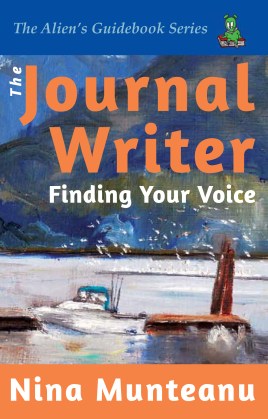
notebook01In my writing guidebook The Journal Writer: Finding Your Voice I write a section on finding the right time and place to write. I call them “sacred”, because that’s what they are. Without them, we struggle to write. In Chapter Two of The Journal Writer I write about the need for a sacred place in journal writing, particularly. The advice is equally important to any form of writing.

Journal Writer-FRONT-cover-WEBFinding the perfect place(s) to write … is important to creating meaningful entries. Journal writing is a reflective activity that requires the right environment for you. The best environment is a quiet one with no interruptions and where you are alone. A reflective environment will let you relax, find a connection with yourself and your feelings. You need a place where you can relax and not worry about someone barging in or other things distracting you from your thoughts. You should also feel physically comfortable and the place should meet your time requirements.

Because the suitability of a place can change with the time of day, learn the rhythms that affect the place you wish to write in. For example, the kitchen may be the centre of activity during the day but an oasis of quietude during the evening. Similarly, learn what kind of environment stimulates and nurtures your writing. Does music help or do you need complete quiet? Do you respond to nature’s soft breezes and sounds or do you prefer to surround yourself with the anonymous murmur of a crowded café for company?

Places that work for me include the local coffee shop, a park near my house, a library or other quiet place where I can enjoy uninterrupted anonymity. Where you write may reflect what you’re writing and vice versa. To some extent, you are environment and environment is you. You might try a few places first and see what happens to the content of your entries. Entries you make while sitting under an apple tree in the breeze hearing the birds singing may differ from entries you make while sitting in your living room by the crackling fireplace with music playing or sitting at your desk in your bedroom in total silence or in a crowded café surrounded by cheerful bustle. I give more details on how to feed the muse in Chapter 4.

Nina-computer-Krave

Sitting in Krave’s outside patio

Some of my favourite places to write are indie cafés that express unique character and rich ambience. Amid the desultory chatter and laughter of people and sipping my flat white, I find myself deep in writing. These days you can most likely find me somewhere on the University of Toronto campus where I teach engineering students, social science students, and health science students how to write.

It’s been four years since I came to UofT and I still feel a glow every time I walk through campus. Whether it’s past a century-old stone building, beneath a canopied archway of chestnuts, into a well-treed enclave, or through a high-ceilinged glass building; I am both home and on an adventure.

ConvocationHall-web

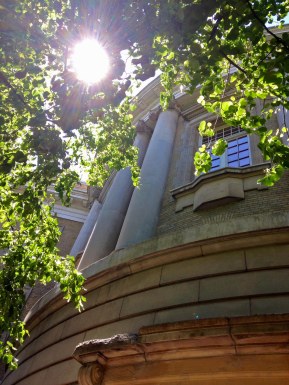
Convocation Hall, UofT

UofT is a place of learning—erudite, splendid, lofty yet humble—and beautifully epitomizing “new embracing old”. When new embraces old, we get magic. Wizard-magic. Harry Potter kind of magic. The kind of magic that only someone who is open, faithful, and confident can wield. This is ancient magic. The magic that lurks like Reznikoff’s ghost in the ancient halls of University College, or the magic currently wielded at 1 Spadina. A magic borne of wisdom, lore, and story.

Established in 1827, the University of Toronto is snugly located in the centre of downtown Toronto; yet, it’s not so much a part of the city as the city is a part of it.  UofT’s campus probes into the city’s infrastructure like a creative amoeba: interacting, absorbing and expressing. The UofT downtown campus sprawls dozens of blocks in all directions; embedding itself in the city with a blend of century-old buildings and avant-garde modern chic. It’s not so much re-inventing itself at every turn as morphing and co-evolving with the city.

UofT-clocktower-sicamortrees

Clock tower, UofT

The UofT campus represents for me the very best the city—any city—has to offer: a vibrant, well-connected place of learning and activity, supported by original and tasteful landscape architecture: healthy trees and parkland full of songbirds, tasteful new and old architecture and alluring courtyards and doorways that beckon my creative soul. The UofT campus provides a myriad of possibilities and historic depth for the adventurous soul. Did you know, for instance, that Canada’s first electric computer was installed at UofT? Or that UofT is haunted? Or that much of UofT’s architecture was inspired by structures at Oxford and Cambridge? Or that an old nuclear accelerator sits fallow in the McLennan Physical Labs building?

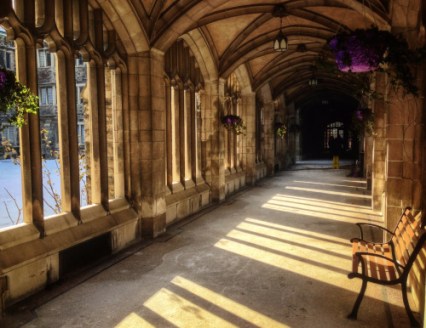
My creative soul appreciates UofT’s integration of nature into its architecture and grounds. Its natural enclaves provide ideal settings for quiet contemplation and reflection. They’ve become my “secret places,” destinations along my journeys across campus to my various writing appointments. Places where I can sit, reflect and write. Here are just a few:

  1. Terrence Donnelly’s Bamboo Garden in Terrence Donnelly Centre:
BambooGarden01

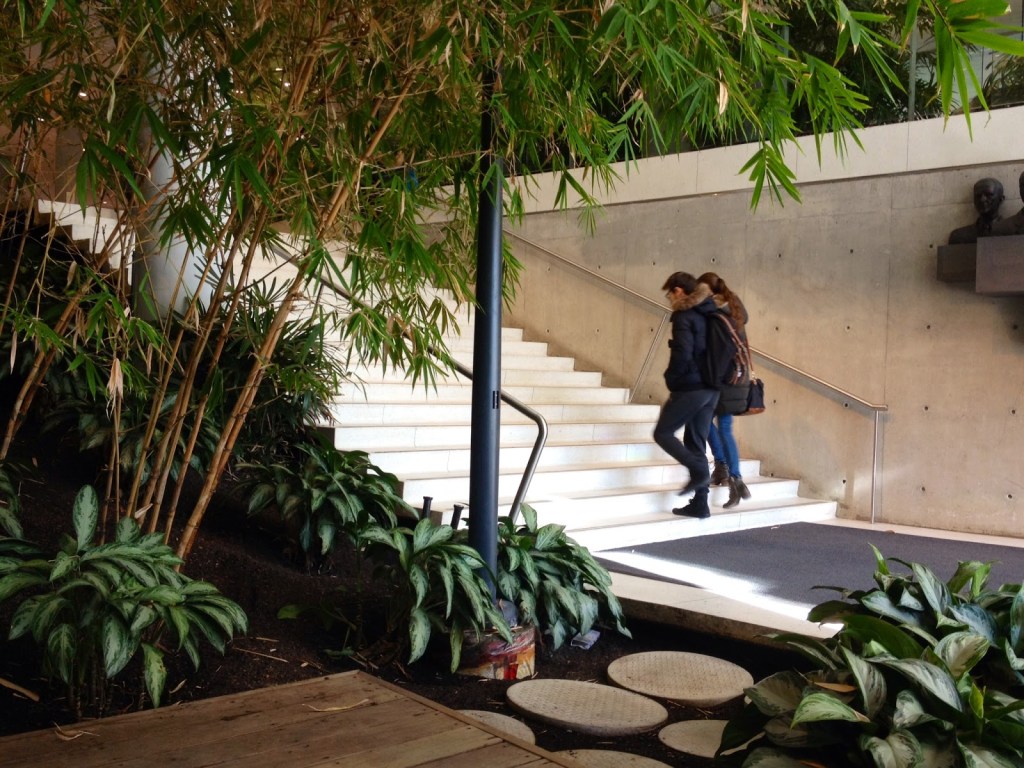
Steps leading up past bamboo garden of Terrence Donnelly Centre

The Terrence Donnelly Centre for Cellular & Biomolecular Research (CCBR) is where some of the coolest research and discoveries in biomolecular and cellular research are being made. Benjamin Blencowe and his team’s recent uncovering a protein’s sweeping influence on autism last December using introverted mice, for instance. Named after the philanthropist Terrence J. Donnelly, the centre was the vision of UofT Professors Cecil Yip and James Friesen.

BambooGarden-lookingdown

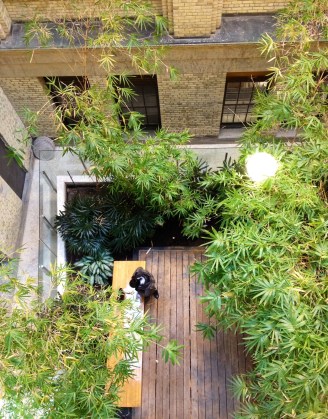
View of garden resting area from above

In the 1990s they foresaw that new genomic technologies would open-up progress in biomedical research in a time when there was no human genome sequence or stem cell technologies and DNA sequencing was slow and inexpensive. Yip and Friesen envisioned a collaborative and interdisciplinary research facility that, when it opened in 2005, brought together over 500 specialists—biologists, computer scientists, physicians, pharmacists and engineers—to advance the university’s groundbreaking research in molecular biology.

BambooGarden-RosebrughWall

View of Rosebrugh wall from the garden

The centre is located on what was previously Taddle Creek Road. The CCBR building—which from College Street resembles two colourful stacked cubes—is set back by a gradually sloping plaza with granite benches and groves of white paper birch. The building and plaza are flanked by several historic buildings (80-year old Fitzgerald Medical Building to the east; the 1919 Rosebrugh Institute of Biomaterials and 100-year old Lassonde Mining building to the west; and the Medical Sciences Building to the north).


The bamboo garden in Donnelly’s spacious atrium is meditative and calming; a lush forest of bamboo and shrubs amidst wooden floors, benches and steps. Created by landscape architect Diana Gerrard, the garden offers several “picnic” sites of wooden platforms and benches, which I learned had come from the ash, tulip and cherry trees that had occupied the original lane way.

BambooGarden-entrance

Entranceway with bamboo garden of Terrence Donnelly Centre

Upon entering the complex from College Street, the granite plaza gives way to white terrazzo flooring in an expansive multi-story atrium. The top lit glass-ceilinged atrium connects the adjacent heritage Rosebrugh building to the CCBR in a counterpoint of techno-minimalism with Romanesque tradition. As I walk up the shallow wide steps lined by pillars that reach skyward, the tall bamboo forest to my left beckons. I’ve had many lunches there. I also spend many moments sitting there with a book, reading or just daydreaming beneath a texture of greens.

  1. Breezeway of Knox College Quad:
knox college breezeway04 copy

Knox College breezeway in winter

I usually enter the perpendicular gothic style building from St. George Street; though, you can also come in via Kings College Circle, past the chapel—known for its Hellmuth Wolff organ. Once I pass through the heavy doors of the St. George entrance, I enter a dark foyer and instantly feel like I’m in a church. The chapel is on the other side, yet the deep quiet and surrounding dark wood of the floors, walls and stairways to the right and left of me, enclose me with a sense of sacred holiness. I walk the echoing foyer to the stained-glass doorway of the breezeway ahead. As I open the glass door, the complex scent of tulips and pine greets me with the warm breeze. I have entered another magic place.

The gothic archway that connects the Knox College Quad is an open breezeway that looks out onto the interior gardens of the quad. Tables and chairs along each side provide a peaceful place to read and write with a quiet view of the outside courtyard of flowers, shrubs, trees and benches. Hanging vines provide additional greenery in the archway.

knox breezeway01 copy

Knox College breezeway through courtyard

Whenever I come here, the hustle and bustle of the city just fades away. Busy St. George Street is nearby; yet I don’t feel its influence within this quiet haven, where the soft sounds of Nature embrace me with their songs and stories. I often come here to read and write. I listen to the birds and other natural sounds, letting them lull me into a meditative quietude of bliss. Life slows to a philosopher’s pace and my creative muse awakens. Sometimes I bring one of my indulgences—a poutine from one of the chip trucks on St. George—and feast in my secret place as Nature’s melodies feed my soul. On a warm day, the breezeway also provides a cool respite.

  1. The Laidlaw Quadrangle behind University College
Gate to UC courtyard

West gate into University College courtyard

When I first discovered this hidden quadrangle, I felt goosebumps of pure magic course through me. My discovery visit was through the west arched entranceway off the west green, past Bissell House. I passed the gateway into the Courtyard Colonnade, and faced a sunken courtyard shaded by large ironwood and maple trees and surrounded by gothic brick and stone. I’d entered an enchanting world of quiet reflection.

A paved walkway—supported by retaining walls and planted with flowering shrubs—runs on three sides of the quadrangle. The walkway broadens into a terrace to the north, forming an extension of the new Library colonnade. Mature maple and ironwood trees overhang the cloisters and the walkway.

WestCollonade-looking west

West colonnade of quadrangle

Designed by Canadian landscape architect Michael Hough, the quadrangle evokes the courtyards of medieval monasteries and old English universities. Built in 1964, when the Laidlaw wing (and library) separated the college from back campus, Hough’s design translates the essential feature of a monastery or college courtyard—access from inside the building to a covered walk around an open centre—from architecture to landscape.


UniversityCollege-WestCollonade

View of courtyard (to left) from west cloister of University College

I’ve since discovered other ways to enter and leave the quadrangle, each one presenting a new perspective to this peaceful place. Each time I come here, I feel my soul sigh with joy. Birds sing the poetry of Nature. Leaves rustle as the wind plays on them. When I’m here, I feel at peace in the city.

photo-24

UofT Faculty Club

UofT Faculty Club: Every journey requires repast—a place to relax, eat and drink—and my feet naturally direct me to one of my new favourite haunts: the UofT Faculty Club. Located close to the hub of the campus, on Willcocks Street just east of Spadina, the club is open to members who include faculty, staff, graduate alumni and their guests. I enter the 1896 heritage building, built in a Georgian Revival-style, and passed the elegant first floor lounge to the pub below. The pub welcomes me with excellent food, drink and a relaxing ambience. Bathed in rich tones of wood and comfortable chairs and warmed by a cozy fireplace, it reminds me of a Dorset pub I’d visited years ago; full of colourful characters and a well-stocked bar.

UniversityCollege-windows

Windows of University College

I feel both at home and like a traveler. Like I’d walked into history with modern comfort. I order the beet salad from my friendly waitress; it provides a refreshing and attractive light meal for a mid-day travelling writer.

Nina Munteanu

Nina Munteanu is an ecologist, limnologist and internationally published author of award-nominated speculative novels, short stories and non-fiction. She is co-editor of Europa SF and currently teaches writing courses at George Brown College and the University of Toronto. Visit www.ninamunteanu.ca for the latest on her books.


Pictures by Nina Munteanu


What Did You Do Before You Were Famous…?

Vanc Library-Atrium2

Vancouver Central Library (photo by Nina Munteanu)

So, you’re a famous author now…

You’ve published several books and they sold more than a dozen copies each. In fact, a few have been translated and are in second printings. You’ve received some recognition and awards and a bazillion nominations. You’ve landed some speaking engagements with writing and reader groups and a movie producer is soliciting a treatment from you. You have a following…Fans who “stalk” you at the writer conventions you participate in. Fans who want to co-write the sequel to your current bestseller with you, because they understand your universe—and your characters—so well. You discover that some fans have gone ahead and written fan-fic about your main character and universe on the Internet—a sign of adoration. Really.

But you weren’t always famous…

Neither was John Steinbeck, Ursula Le Guin, J.D. Salinger, Harper Lee or J.K. Rowling…

When did the transition occur for them? It’s not that easy to peg and it isn’t that obvious. This is partly because, it depends on each writer’s own criteria for success and fame. Particularly given that many writers aren’t, in fact, seeking fame, per se.

However, what every career writer wants, which often comes alongside fame is this: autonomy and the ability to write for a living without having to sneak it in at midnight after you’re finished your “real” job.

No one is “born” a writer; most of us start out doing something else to make a living. In the meantime, we work hard on what we love and what feeds our souls and our passion for storytelling. We assiduously write on stolen time and submit queries and letters. We do research and marketing. We write drafts, do revisions, attend classes and read books. All hoping to eventually write full time.

Let’s look at the humble roots of some famed writers and what key moment signified their move into the light of career novelist:

JK RowlingJ.K. Rowling was an unemployed single mother on public assistance when she wrote the first book. The book was rejected by over a dozen publishers before a small British publisher, Bloomsbury, said yes.

JohnSteinbeckJohn Steinbeck worked through many odd jobs before earning enough to work as a full time writer. His day jobs included: apprentice painter, fruit picker, estate caretaker and Madison Square Garden construction worker. He also ran a fish hatchery in Lake Tahoe and did guided tours there.

MargaretAtwoodMargaret Atwood worked in a coffee shop. She says her first job experience was NOT ideal: She had to deal with a difficult cash register, a rude ex-boyfriend who would come by just to stare at her and barely tip, and fellow employees who were definitely not friendship material.

WilliamFaulknerBefore his writing career blossomed, William Faulkner worked for the postal service, as postmaster at the University of Mississippi. In his resignation note, he summarized the struggle of art and commerce faced by most authors: “As long as I live under the capitalist system I expect to have my life influenced by the demands of moneyed people. But I will be damned if I propose to be at the beck and call of every itinerant scoundrel who has two cents to invest in a postage stamp. This, sir, is my resignation.”

JD SallingerIn a 1953 interview, J.D. Salinger shared that he had served as entertainment director on the HMS Kungsholm, a Swedish luxury liner. He drew on the experience for his short story “Teddy”, which takes place on a liner.

Ursula_Le_GuinUrsula Le Guin struggled initially to be published in the mainstream fiction world, but her first three novels, Rocannon’s World, Planet of Exile and City of Illusions, put her on the sci-fi map.

JamesJoyceAn accomplished tenor, James Joyce made money singing for his supper before his work was published.
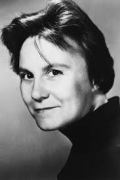
HarperLeeHarper Lee worked as a reservation clerk for Eastern Air Lines for several years, writing stories in her spare time. A windfall came when a friend offered her a Chirsmas gift of one year’s wages and one year off to write whatever she pleased; she wrote the first draft of “To Kill a Mockingbird”.

stephen kingStephen King was a janitor for a high school as he struggled to get his fiction published. His time wheeling the cart through the halls inspired him to write the opening girl’s locker room scene in “Carrie”, his breakout novel.

KurtVonnegutKurt Vonnegut managed Americas first Saab dealership in Cape Cod during the late 1950s, a job he joked about in a 2004 essay, “I now believe my failure as a dealer … explains what would otherwise remain a deep mystery: why the Swedes have never given me a Nobel prize for literature.”

Virginia_WoolfWhen Virginia Woolf’s brilliant novels failed to find a publisher, she and her husband Leonard bought a printing press and set up their own publishing compay Hogarth Press in their living room. They published Woolf’s masterful novels, such as Orlando and To The Lighthouse, as well as T.S. Eliot’s The Waste Land, among other classics of the era.

TS EliotT.S. Eliot worked as a clerk for Lloyds Bank of London. During that time, he composed “The Waste Land”.
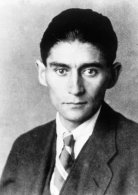
Franz KafkaFranz Kafka served as the Chief Legal Secretary of the Workmen’s Accident Insurance Institute. Obviously.

Douglas Adams was a bodyguard. Even published authors often have to work other jobs to make ends meet, Douglas Adamsand The Hitchhiker’s Guide to the Galaxy author Douglas Adams was no exception: At one point, he served as a bodyguard for a wealthy Arabian family while he wrote for radio shows and Monty Python. Good writers are good multitaskers!

James_michenerJames A. Michener was a teacher before writing only at age 40. He Michener is notable more for his output than his age. The Tales of the South Pacific author (whose Pulitzer Prize-winning book would later be adapted into a Broadway musical) wrote a staggering 40 books after the age of 40—nearly a George_Orwellbook a year—after spending much of his life as a teacher.
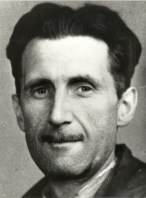
Before he wrote 1984, George Orwell served as an officer of the Indian Imperial Police in Burma, where he was known for his “sense of utter fairness.”


nina-2014-BWNina Munteanu is an ecologist, limnologist and internationally published author of award-nominated speculative novels, short stories and non-fiction. She is co-editor of Europa SF and currently teaches writing courses at George Brown College and the University of Toronto. Visit www.ninamunteanu.ca for the latest on her books.
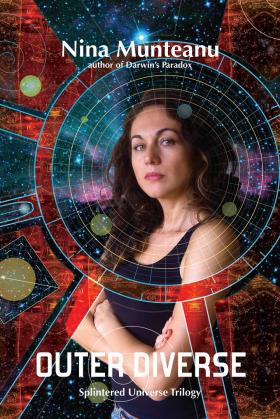
 

Nina Munteanu Interviewed on Splintered Universe Trilogy

I was recently interviewed by writer Simon Rose on my space detective thriller trilogy Splintered Universe, now available in all three formats: print, ebook, and audiobook. 


Below is the interview:

My guest today is Nina Munteanu, author of science fiction and fantasy novels, non-fiction books and essays on writing and science. Her latest in a series of prolific works is the recent completion of the audiobook of her science fiction space-thriller trilogy, Splintered Universe.

Can you tell us a little about the Splintered Universe Trilogy?

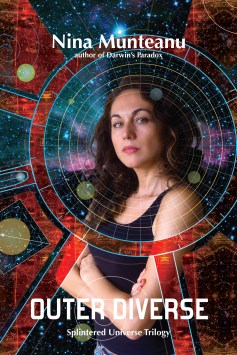
OuterDiverse-cover-web copy

Book 1 of Splintered Universe

The Splintered Universe Trilogy is a detective mystery-thriller that explores metaphysical and existential questions through a high-test space adventure. The three books include Outer Diverse, Inner Diverse and Metaverse.

The main character Rhea Hawke is a Galactic Guardian and the only human in an otherwise alien race of 7-foot tall purple-skinned Eosians—who she actually despises (for reasons you find out later). She’s a loner and a misfit in an elite police force tasked with keeping order in the galaxy; Rhea’s unruly tactics grate on them—particularly her boss. In Outer Diverse, Rhea investigates the genocide of an entire spiritual sect; but instead she kills her only lead.

Following the scent of Glitter Dust, Rhea connects the massacre to the murders of several prominent galactic citizens and finally to the deadly Vos, who invaded our galaxy, then disappeared. She realizes that the Vos have quietly returned, infiltrating every aspect of the civilized world—with dark menace in mind. But no one believes her—particularly her boss, who fires her instead for incompetence: badge, Great Coat and MEC weapon confiscated and her sentient ship Benny put in storage. Compelled by an urgency she herself doesn’t understand, she goes rogue and enlists the aid of surprising allies to save the galaxy.

You mention that Splintered Universe explores issues of existentialism and metaphysics. Can you speak to them?


Inner-diverse-front-cover-WEB copy

Book 2 of Splintered Universe

The Splintered Universe Trilogy explores the fractal fabric of paradox, where the flow of particle, energy, wave and intention embrace: black holes, quasars, neutrinos, intuition, déjà vu, clairvoyance, altruism, faith…

The prediction by Gnostic priest Raphael Martinez (The coming of the Suntelia Aeon will be signified by the joining of twin souls) weaves many disparate threads of existence to Atlantis and the Eosian alien race (who resemble the Bible’s Nephilim), the sacred vishna tree (part of L’Ordre de l’Arbre Sacré in Quebec) and the precious mythical metal Orichalcum used by the Eosians. The prediction ties to an ancient knowledge that describes our very existence through déjà vu, synchronicity, sacred geometry, phi and the golden mean and the notion that “diverses” are mirror universes linked through dreams. The key is Rhea herself—who discovers that she is not who or what she thinks.

You’re a bit known for your world building. Tell us a little about that in this trilogy.

Metaverse-FRONT-web copy

Book 3 of Splintered Universe

I’m an ecologist, so world building with realistic ecosystems is more than fun for me. I enjoy doing the research to create realistic and meaningful worlds. I consulted authorities in the areas of space exploration and habitable zones, AI, biotechnology, sleep biology, neuroscience, and ecology to design alien worlds and systems, populated with extremophiles.

In her pursuit of justice, Rhea travels to all parts of the galaxy and encounters some very strange worlds. In Book 1, Rhea pursues dust trafficker V’mer to the sulphurous AI-run water planet (Mar Delena), located inside the hole of the gaseous “donut” of Fomalhaut; it’s always raining acid. That’s where Book 1 starts: acid rain painfully spattering Rhea’s face as she lies injured and waiting to be dusted (with a lethal dose) by V’mer, surrounded by the oily fur-covered rodent-like Delenians—all dust addicts.

Rhea almost drowns in a high-speed skipboat chase of the murderer of a spiritual sect on the icy moon, Uma 1, (orbiting 47 Uma b of 47 Ursae Majoris b). The moon is mostly ocean beneath a thick layer of ice with thermal vents that provide the inhabitants—a spiritual sect called the Schiss—a home.

NinaMunteanuHalfPage-AD-Astra47 Uma a (also called Horus) was colonized in ancient times by the Khonsus, a raptor-like biped race with mind-probing capability. It is also the home of the ancient migrating trees, ammuts (giant flying insects), and the weeping mountains with their narcotic boiling seas used by the giant apophus to attack and set its millions of babies to devour Rhea in Book 1.

Virgil 9 is a tidally locked moon that orbits the gas giant 70 Virginis b; day and night last for weeks while water swings the extreme from deluge flood to desert conditions. In Virgil City, Rhea does commerce with information broker Shlsh Shle She, a moody amoeba-like photosynthetic Ngu who is just a pseudopod of a larger hive-entity.

Sekmet is a bog planet, where the raw materials of dust are harvested by the Rill, bulbous short smelly bog creatures with tube eyes, webbed limbs and large sexual organs; and who Rhea pretty much wipes out with her MEC weapon. Sekmet is also the location of a galactic penal colony (Hades) where Rhea is sent in Book 2. When she tries to escape, she must contend with other native creatures of Sekmet such as the giant crocodile-like sobeks and the terrifying kepry—giant flying crustaceans.

In Book 3, Rhea returns to Earth, transformed by Eosian settlers from its former polluted state dominated by urban concrete cities to an entirely natural world, now unpolluted and featuring the ancient purple vishna tree and a crystal symbiotic organic technology.


Rhea on Iota Hor

Rhea on Iota Hor-2

Worlds always have cool bling associated with them. What technologies or devices are featured in Splintered Universe?

I created an entire fleet of ships, all run on various technologies, from crystals, to wave-energy to dreams. That was fun to create. Two main ship builders include: Zeta Corp from Earth and Tangent Shipping run by the Fauche from Sigma Draconis. Rhea’s own ship, Benny, is an old ray class Fauche-built corvette, a two-man hybrid organic/nano-tech vehicle with folding wings and fuel scoops (so it can mine energy fuel from gas giants). Benny is a sentient ship that jacks the particle-stream and with whom Rhea has an interesting relationship. The ship serves essentially as butler, administrator, companion, and rescuer.

I also created a wide range of weapons, based on which alien race created them and for what purpose. Rhea gained some notoriety with her own created weapon, the MEC (short for Magnetic-Electro Concussion) pistol, a versatile wave-weapon that can target DNA signatures and do almost anything you want with a single sweep. Her proprietary MEC design is coveted by many groups—from shady crime syndicates such as Eclipse to her own Guardians.

I hear that the last audiobook (the third book) in the trilogy is finally out this January. That means that all three books of the Splintered Universe are now available in print, ebook and audiobook format. How does it feel to have a trilogy available in three complete formats?

It feels great! I’m so excited that readers can now obtain my trilogy in those different ways. It speaks to our different ways of consuming story. Some prefer to settle back by the fire or our favourite place to read with a “real” book; others like a mobile ebook so we can read while we travel and play; and then some like to lean back in the car and listen to a great story.

What was your experience with the narrator of the three books?

Dawn-Harvey

Dawn Harvey of “Dawn of Voice”

The experience was truly cosmic. When Iambik took on the books as audiobooks, they provided me with three voice artists to audition. I chose Dawn Harvey because I could visualize my main character through her voice, and given that the entire trilogy is told in the first person, the narrator’s voice had to be just right. Dawn’s voice is dark and sultry like coffee. It is sexy and irreverent with a hidden vulnerability and sensitivity that perfectly captured the main character Rhea Hawke. What I didn’t realize then was how well Harvey would represent the 30-odd other characters, mostly aliens—one who spoke through several mouths.

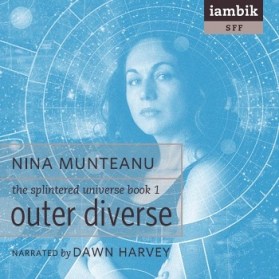
OuterDiverse-audiobook-Iambik

Audiobook of Outer Diverse

Working with Dawn was a pleasure. Dawn is a dedicated professional; she created unique and consistent voices for the book’s thirty-odd mostly alien characters. She ensured that each character had the appropriate vernacular, tone, accent and cadence. Then she did proofs and confirmed them with me. She also tackled the “alien” vocabulary; Rhea’s universe is full of strange and foreign terms (I have a comprehensive glossary at the back of each book). Dawn sent me a list to make sure she was pronouncing everything correctly—mostly made-up words. Dawn is a professional dedicated to her craft and her art. She literally breathed life into Rhea Hawke and all the other characters. The result is three audiobooks that will blow your socks off. I mean it. If you like audiobooks, get the first one and tell me different. When I first listened to Outer Diverse in the car on my way to Nova Scotia, I lost myself in her storytelling and forgot that I’d written it.

Where can people find the Splintered Universe Trilogy?

The best place, of course is Amazon (Amazon.ca or Amazon.com). All three formats are available through Amazon. The Audiobooks are currently available for free through Audible on Amazon. The books are also available through Barnes & Noble, Chapters/Indigo, Kobo, and many other book selling sites and brick and mortar stores.

When you’re not writing what do you do?

These days I’m mostly on the University of Toronto campus, teaching health science and engineering students how to write. When the students find out that I write science fiction, they get all excited. It’s a lot of fun. I also teach a science fiction writing coarse at George Brown College. When I’m not teaching or writing, I’m doing something in Nature, usually by the water. I’ve always had an interest in water. I studied and researched freshwater ecology as a limnologist for three decades. I’m a bit of an environmentalist these days, hoping to raise awareness and action for water. My latest novel—hopefully coming out next year—arose from my nature walks and my research in water. The story chronicles the lives of four generations of women and their relationship with water.

TALKING-AUDIOBOOKS2 copyYou can also listen to the Podcast interview of Dawn Harvey and Nina Munteanu by Casey Trowbridge of Talking Audiobooks on the process of their collaboration. Learn more about the process between writer and voice artist narrator:

The trilogy has received a fair bit of acclaim from reviewers and readers:

Martha’s Bookshelf
Speculating Canada
Dab of Darkness
Goodreads
Amazon
Amazon Canada

“Rhea Hawke is a Galactic Guardian, and I love to say her name. Her name alone let’s you know that there is a bad ass super hero of a woman on site. I can picture her boots, her great coat, and her side arms. I want to be her when I grow up. Obviously, you can tell I developed some hero worship for her by the end of this book. I really got wrapped up in this novel.”–Goodreads Review of Outer Diverse


“Ms. Harvey manages to enthuse the personality of the characters into each voice. The wise, gentle Ka has a soft, strong sound that reminds you of a wise old bird. Shlsh She She, a slippery, slimy creature has a slurry, garbled voice like a mouthful of mushy, wet food. Dawn’s reading conveys the loneliness in Rhea, the sexiness of Serge, the frustrated friendliness of Bas, and the faithful coziness of Benny. She is able to bring emphasis to the action or romance, weariness or fear elements of the story. The narration never takes over the story; but rather enhances it.”–Martha’s Bookshelf on Outer Diverse Audiobook

The excellent cover art for all three books is done by Toronto graphic artist and SF author Costi Gurgu (author of RecipeArium). People keep asking me who the model for the covers is; you’ll have to corner Costi at the next spec fiction con and ask him yourself.

nina-2014aaaNina Munteanu is an ecologist, limnologist and internationally published author of award-nominated speculative novels, short stories and non-fiction. She is co-editor of Europa SF and currently teaches writing courses at George Brown College and the University of Toronto. Visit www.ninamunteanu.ca for the latest on her books.


On Censorship and Intellectual Freedom…

 “He that would make his own liberty secure, must guard even his enemy from opposition: for if he violates this duty he establishes a precedent that will reach to himself. ”— Thomas Paine, Dissertation On First Principles Of Government

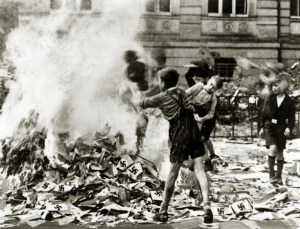
What Is Intellectual Freedom?book burning nazi boys

Intellectual freedom is the right of every individual to both seek and receive information from all points of view without restriction. It provides for free access to all expressions of ideas through which any and all sides of a question, cause or movement may be explored.

Why Is Intellectual Freedom Important?

Intellectual freedom is the basis for our democratic system. We expect our people to be self-governors. But to do so responsibly, our citizenry must be well-informed. Libraries provide the ideas and information, in a variety of formats, to allow people to inform themselves.

Intellectual freedom encompasses the freedom to hold, receive and disseminate ideas.

What Is Censorship?

Censorship is the suppression of ideas and information that certain persons—individuals, groups or government officials—find objectionable or dangerous. It is no more complicated than someone saying, “Don’t let anyone read this book, or buy that magazine, or view that film, because I object to it! ” Censors try to use the power of the state to impose their view of what is truthful and appropriate, or offensive and objectionable, on everyone else. Censors pressure public institutions, like libraries, to suppress and remove from public access information they judge inappropriate or dangerous, so that no one else has the chance to read or view the material and make up their own minds about it. The censor wants to prejudge materials for everyone.

How Does Censorship Happen?

Censorship occurs when expressive materials, like books, magazines, films and videos, or works of art, are removed or kept from public access. Individuals and pressure groups identify materials to which they object. Sometimes they succeed in pressuring schools not to use them, libraries not to shelve them, book and video stores not to carry them, publishers not to publish them, or art galleries not to display them. Censorship also occurs when materials are restricted to particular audiences, based on their age or other characteristics.


nina-2014aaNina Munteanu is an ecologist and internationally published author of award-nominated speculative novels, short stories and non-fiction. She is co-editor of Europa SF and currently teaches writing courses at George Brown College and the University of Toronto. Visit www.ninamunteanu.ca for the latest on her books.

Resonating with the Universe

Eramosa River 3

Eramosa River, Guelph (photo by Nina Munteanu)

Does art imitate life or does life imitate art? Which came first? Story or reality? Do we dream about our past or of another reality? What is déjà vu…really?  What came BEFORE the Big Bang? Did time even exist before we defined it?

The most frequent question asked of writers is “where do you get your ideas?” to which we often bumble some inadequate reply and evoke that indefinable abstruse term MUSE. But what is muse…really? Intuition? Divine inspiration?

In a quote from his autobiographical essay, Philip Pullman says, “It’s important to put it like that: not ‘I am a writer’ but rather ‘I write stories’. If you put the emphasis on yourself rather than your work, you’re in danger of thinking that you’re the most important thing. But you’re not. The story is what matters and you’re only the servant, and your job is to get it out on time and in good order.” But where do they come from, Philip?

In my 2012 historical fantasy “The Last Summoner” (Starfire), the young Baroness Vivianne discovered that she could alter History. Having travelled into the future (e.g., 2010 from 1410 Poland), she used hindsight to recreate a new path for humanity, one devoid of two world wars and the evils consequently unleashed. Vivianne traveled back in time and tried to subvert critical events (time/space nodes) involving Emperor Wilhelm II, Annie Oakley, Nikola Tesla and others. In each case, her interference failed to alter the event in the way she had hoped. In fact, while the details of History differed, the end result remained pretty much the same. For instance, it seemed that no matter what she did to prevent World War I, it happened anyway.

Vivianne discovered that she was unable to alter History the way she’d intended. She found to her dismay that every time she set out to alter a crucial event, quirky consequences ensued and events did not yield to her clever manipulations—as though History had an uncooperative conscience and a predetermined destiny to fulfill.

OK… That’s just me being the writer, subverting the protagonist with obstacles played out in ever-twisting plots and subplots. But, what if…

What if… History (as in any realized reality) is predetermined through its harmonic relationship with other realizable realities? Given that all mass and energy is governed and expressed through frequency, and given that in physics (and music) frequencies exist as multiples of some fundamental frequency; then does it not follow that threads of realizable realities, intertwined around a fundamental path (of history), would move inexorably toward a common destiny?

A recent article I ran across on a writer’s forum discussed how artists tend to mimic each other’s ideas, or come up with the same ideas at the same time. Aside from outright stealing (which happens a lot less than people think), multiple and independent formulation of same ideas is also more common than people think. And it’s increasing. Multiple-independent discoveries (and inventions) have increased in society a thousand-fold since the nineteenth century. Some followers of Jungian thought suggest that this is because the fabric of our society is acting more and more like a neural network, learning, interacting and sharing toward the achievement of a common zeitgeist.

What if… the whole of our society behaves like an autopoietic system, self-organized, adaptive, evolving and tapping into—and possibly influencing—a common super consciousness? One related to a fundamental frequency?

Ray Tomes of the Alexandria City Meeting in 1996 suggested that “the pattern of cycles found in every field of study on earth, in astronomy and also in music are all explained by a simple rule that says that a single initial frequency will generate harmonics and each of these will do the same.”

Why do galaxies and stars form where they do? Toss a handful of sand on a drum and then beat it (not at the centre); you will find that the sand moves to certain places and congregates into predetermined patterns. These are the nodes of the standing waves in the drum. The standing waves are electromagnetic waves (e.g., radio waves, light and x-rays etc). Consider the “predetermined” beauty of natural phenomena. Consider the Fibonacci numbers and the golden mean in nature. Consider fractals and the Mandelbrot Set, quantum entanglement, and Schumann Resonance. Consider synchronicity, autopoiesis and self-organization…

Einstein tells us that, “everything in life is vibration.” Schroedinger’s wave function describes us as vibrating waves.

The normal standing wave created in the Schumann Cavity (the cavity formed by the Earth’s conducting surface and the ionosphere) occurs at a wavelength equal to the circumference of the Earth, and at a base frequency (and highest intensity) of between 6-8 Hz (7.83 Hz). This is called Schumann Resonance Frequency, after the man who formulated it mathematically in 1954 (after Nikola Tesla described it in the late 1800s). Some call this basic frequency the Earth’s “heartbeat” or the “tuning fork” of the planet, suggesting that it generates natural healing properties when living things are entrained to its rhythm. It turns out that all biological systems resonate at this same frequency range. The electrical resonance of the Earth lies between 6-8 Hz. This coincides with alpha rhythms produced by the human brain during meditation, relaxation and creativity.

“Vibrations are dynamic things not unlike living things,” John Keely, researcher in harmonics, adds. “They are active and prolific in their dynamics as are their harmonic offspring. These discrete tones of the harmonics interact with each other… They will in a very natural way mix, merge and divide among themselves just like living cells.”

Get-Rhea-Hawke01 copyIn “Outer Diverse”, the first book of “The Splintered Universe Trilogy” (Starfire), Galactic Guardian Rhea Hawke speaks with Ka, an alien mystic, about music, frequency and harmony. And something called “the music of the spheres”. Says Ka:

“…The particular tone of the planet’s song is dependent upon the ratio of its orbit, just like the relationship of a keynote to its octave. The cosmic beauty of the octave is that it divides wholeness into two audibly distinguishable parts, yet remains recognizable as the same musical note…We, of course, now know that ratios in frequencies of spectra of elements compare to intervals in a musical chord,” Ka went on, leaning forward on his massive feathered arms. “Given that a pitch of sound is analogous to the color of light, both being caused by the frequencies of their waves, we can characterize entire worlds based on these properties,” he ended, beak-mouth breaking into a beaming grin that showed his round little teeth.  “It was your Kepler—a scientist I believe—who suggested that when planets formed angles equivalent to particular harmonic ratios, a resonance was created both in the archetypal ‘Earth soul’ and in the souls of individuals born under those configurations…He called it a celestial Front Cover ONLY-webimprint,” Ka continued, now leaning forward with his cup in both hands, “and said that in the vital power of the human being, ignited at birth, that remembered image glows. That geometric-harmonic imprint is the music that impels each listener to dance … from the particle to the cosmic. Your own heart finds its shifting harmony between excessive order and complete randomness, encompassing complex variability—a symphony—in its beating pattern. Sound—vibration—is the language of the mind and the secret to creation.”

We are creatures of this planet, co-evolved with Earth’s environment through the helix structure of our DNA and the water coursing through us; this is reflected in our behavior, culture, intelligence and beliefs. Our entire bodies resonate with all other life at a similar frequency as the planet Earth. Our brains in their most “divine” state of creativity, prayer or meditation reflect the same frequency. We are a gestalt culmination of light, wave-pulse, matter and motion resonating with this beloved planet Earth. Our minds, bodies and souls “sing” its choral aria. What is muse if not this wonderful “intent”?

So, which came first? Story or reality?


nina-2014aaNina Munteanu is an ecologist and internationally published author of award-nominated speculative novels, short stories and non-fiction. She is co-editor of Europa SF and currently teaches writing courses at George Brown College and the University of Toronto. Visit www.ninamunteanu.ca for the latest on her books.
 

Nina Talks Writing on Dragon Page

michael-stackpoleSome years ago, I was interviewed by Michael Stackpole (New York Times bestselling author of over 40 novels, including “I, Jedi” and “Rogue Squadron”) and Michael Mennenga (CEO of “Slice of Sci-Fi”) on Dragon Page Cover to Cover.

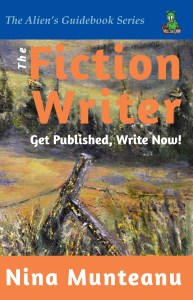
michael mennengaWe talked about my book “The Fiction Writer: Get Published, Write Now!” and what new writers fret over. A lot of the discussion focused on how to handle rejection and I shared my “bus terminal” model (also in my book), which worked very well. For details on our discussion about the industry and craft of writing, listen below:


DragonPage-FictionWriter

The Bus Terminal Model:

FictionWriter-front cover-2nd ed-webHere is an excerpt from The Fiction Writer, Chapter R:

One way to see your way through rejection is to find ways to distance yourself from your story once you’ve sent it off and to see the whole process of submission-rejection-acceptance as a business. The very best way to do this is to submit lots of stories and to keep submitting them. With novels, this is a little harder to do but you can certainly be working on the next one once you’ve submitted the first.

When I was writing short stories, I kept a list of what and where I submitted, along with the most important item: where to submit NEXT. At any given time, I made sure that I had at least x-number of submissions out there and each story had a designated place to go if it returned. As soon as a story came back from magazine A, I simply re-packaged it and sent it to magazine B. The critical part of the list was to have a contingency for each story: the next place where I would send the story once it returned. I was planning on the story being rejected with the hope that it would be accepted; that way, a rejection became part of a story’s journey rather than a final comment.

I ran my submissions like a bus terminal. A story was in and out so fast it never had a chance to cool off. And, since I had five other pieces out there, I could do this with little emotion. I was running a fast-paced “story depot”, after all. All my stories had to be out there as soon as possible; if they were sitting in the terminal, they were doing nothing for me.


nina-2014aaNina Munteanu is an ecologist and internationally published author of award-nominated speculative novels, short stories and non-fiction. She is co-editor of Europa SF and currently teaches writing courses at George Brown College and the University of Toronto. Visit www.ninamunteanu.ca for the latest on her books.

Story and Metaphor in Art Form: How Writing and Painting Whisper or Shout Their Truths

God whispers to us in our pleasures, speaks in our conscience, but shouts in our pains; it is His megaphone to rouse a deaf world—C.S. Lewis

Prospect Point-fog

Prospect Point in the fog, NS (photo by Nina Munteanu)

A short while ago I painted on a canvas for the first time in over twenty years…okay, thirty years. It was a thrilling experience but also refreshing and freeing to use a different medium to express myself and tap into that place—that force—that resides inside us and speaks to us.

Part of the thrill was that I was being coached by a good friend of mine who is a master painter and teacher. What’s interesting is that while she instructed me on some of the painting methods, it struck us both how many similarities existed in composition, technique and structure between visual art and storytelling.

Take direction, for instance. A writer uses plot and subplots to move a story and its characters through a textured and colored tapestry of theme. According to my friend, every painting flows, often directionally (like many photographs) from the lower left to upper right, leading the eye from one place to another, exploring a theme, idea or emotion. Plot is motion. So is the paint brush.

You think only writers tell stories. Well, look again at visual art. Every work of art expresses an artist’s feelings, thoughts and emotions; an artist’s story. We are all stories, after all, and we all have many stories inside us. The writer’s medium is the word; the painter’s is the visual image. Isn’t it a truism that a picture is worth a thousand words? The range and type of story varies equally in both media. For instance, writing ranges from poetry or poetic prose (e.g., Ulysses by James Joyce) that requires substantial interpretation to allegory (obvious symbols) or creative non-fiction (like this blog post) whose artistry lies mostly in its composition and reporting style. Paintings also display a range from the poetry of abstract or surrealistic art (e.g., the surrealism of Salvadore Dali), which requires more interpretation, to realistic “photographic” art whose interpretation lies more in its composition (e.g., the detailed realism of Tomislav Tikulin).

The “language” that writers and painters use finds its parallels in form, structure and intent.

For example, let’s take metaphor. The writer uses one concept or image to evoke the feeling of another; “raining cats and dogs” for instance. The painter can evoke the feeling of one medium with another, achieving the same effect through metaphor—producing a stronger more compelling image through oblique metaphor and another perspective. For instance, a painter using acrylics may evoke the tone and emotion of a watercolor by using soft brushstrokes or another medium (e.g., using a sponge or cloth to apply the paint) and lighter softer colors to achieve that signature wash.

A story’s depth is achieved through animating three-dimensional characters that reflect a multi-layered theme. A painting’s depth works through the dance of light, shadows and textures and the use of techniques like fading and detail. Chiaroscuro in story and in painting play on contrast, perspective and the interplay of light and color to pull the viewer and reader deep into the artwork.

Painters echo elements from one part of a painting to another to make it cohesive and provide a “complete” piece that is ultimately satisfying to the viewer. Painters do this by using repeated elements like shapes, curves, and color schemes to get the same flow, or using a faded version of a similar image elsewhere. Techniques that writers use to achieve the same echoing effects for a satisfying story include parallel plotting, mirrored plots, framing (particularly of story promise with climax and dénouement), and themed beginnings and endings.

You’ve heard of writer’s block? There’s also painter’s block; the painter staring at the white canvas, paint brush poised to make that first stroke. Luckily, there’s something called painting-over the dry; not unlike editing a paragraph using the control-shift “x” and “v” key on the computer. Writers continually revise their first drafts, cutting out extraneous exposition and adding thematic details. The writer’s revision process is all about fine-tuning, simplifying and polishing. Painters also “edit” their art through similar means. We even use similar language for both media: “polishing”, “adding color”, “making it flow”, “adding texture”, etc.

Every artist is a reporter of life and truth; every artist chooses the medium that best expresses his or her art. I started out in the visual arts. I was all ready to pursue a fine arts degree in university to become a commercial artist. Then, right on registration day, I opted out of art altogether and went into the science program. Heck, I went all the way to getting a Masters of Science degree, taught university science courses and consulted in the environment. Now, here I am writing science fiction and eco-fiction and teaching writing to engineers and scientists and science fiction writers. Cool, how we choose our path…


nina-2014aaNina Munteanu is an ecologist and internationally published author of award-nominated speculative novels, short stories and non-fiction. She is co-editor of Europa SF and currently teaches writing courses at George Brown College and the University of Toronto. Visit www.ninamunteanu.ca for the latest on her books.

The Fifteenth International Writers’ and Artists’ Festival / Le XVe Festival International des écrivains et artistes–Quebec

best best group shotOn Friday, June 9th, I drove with friend, songwriter and poet Honey Novick, to the 15th International Writers’ and Artists’ Festival in Val-David, Quebec (June 10th and 11th, 2017). Celebrated artists, poets, writers and singers with an international heritage that included France, Chile, Argentina, Romania, Canada and the USA would congregate at the festival, set in a large house nestled deep in the Maple Laurentian forest.

The mixed Laurentian forest is called the “eastern forest-boreal transition” and includes a varied tapestry of broadleaf (aspen, oak, paper birch, mountain ash and maple) and conifer (pine, spruce and fir) trees.

Nina-fest-close-web

Nina Munteanu

When we reached our destination—a large three-story house surrounded by forest—I took in the aroma of fresh pine and “sweet fern” and spotted Bunchberry (soon to be designated Canada’s national flower), forget-me-nots and lupine carpeting the ground near the house. A young deer, foraging on a shrub’s new leaves beside the house, glanced at us without fear then slipped back into the forest.

I thought the setting ideal for an international festival celebrating the expression of the arts. I was scheduled to talk about my latest book Water Is…”, a personal and scientific journey with water, and to give a lecture on eco-fiction.

Outside-view-web

View outside my bedroom

Flavia Cosma, the originator and organizer of the festival for over a decade, greeted us at the door and in true Romanian-fashion immediately sat us down to eat and drink. After a seven-hour drive (we somehow ended up in Charlamagne, Celine Dion’s birthplace), I was hungry and enjoyed some of Flavia’s signature dishes, varză a la Cluj (cabbage a la Cluj) and salată boeuf (beef salad), made with carrots, parsley roots, eggs, potatoes, beef, pickles and peas mixed with mayonnaise. The view outside my bedroom on the third floor peered through tall firs to a mountain valley and the small village of Val-David. I looked forward to meeting poets, writers, musicians and artists the next day…


Day 1: Saturday

HoneyNovickBC-web

Honey Novick

Honey Novick (Toronto, Ontario), poet laureate of the Summer of Love Project 2007 Luminato Festival and winner of the Bobbi Nahwegahbow Memorial Award, opened the festival with an inspirational song.

Composers and singers Brian Campbell (Montréal, Quebec) and Ivan-Denis Dupuis (Sainte Adele, QC) provided additional and stirring song performance.

Louis Hebert

Louis-Philippe Hebert

Quebec author Louis-Philippe Hébert (Saint Sauveur, QC), winner of the Grand Prix Québecor du Festival de Poésie de Trois-Rivières and the Prix du Festival de Poésie de Montréal, read from his novel Un homme discret (Lévesque, 2017). Poet Julie de Belle read several poems, including When the sea subsides, finalist in the Malahat Review. Brian Campbell, finalist in the 2006 CBC Literary Award for Poetry, read from his book Shimmer Report (Ekstasis Editions, 2015).

FlaviaCosma-EarlyYears

Flavia Cosma

Poet and award-winning TV documentarist Flavia Cosma, who received the gold medal as an honorary member by the Casa del Poeta Peruano, Lima, Peru in 2010, nominated for the Pushcart Prize, and whose work has been used in University of Toronto literature courses, read from her collection of poems, The Latin Quarter (MadHat Press, 2015) and Plumas de Angeles (Editorial Dunken, 2008).

Felicia Mihali

Felicia Mihali

Romanian writer Felicia Mihali read from her novel La bien-aimée de Kandahar, nominated for Canada Reads 2013. Romanian author Melania Rusi Caragioiu, member of the Canadian Association of Romanian Writers, read from her book of poems Basm în versuri și poeme pentru copii in Romanian.

Nicole Davidson, the mayor of Val-David, read some of her poetry. Jeanine Pioger, French author of Permanence de l’instant, read a selection of her poetry. Jocelyne Dubois showed her artwork and Romanian artists Carmen Doreal and Eva Halus discussed their artwork and poetry.

water-is-cover-web“Water Is…”: I shared the inspiration and making of my latest book, “Water Is…”, a scientific study and personal journey as limnologist, mother, teacher and environmentalist, which was recently picked by Margaret Atwood in the NY Times as 2016 ‘Year in Reading’ and recommended by Water Canada as ‘Summer Reading’. I discussed how I first conceived the book as a textbook early in my career as a freshwater biologist and how it morphed from one idea into something completely different and why it is my most cherished work to date.

Day 2: Sunday

French poet David Brême gave a workshop on poetry and the cultural hybridization of franco-québécoise (atelier sur la poésie et l’hybridation culturelle franco québécoise), which he had given earlier in Toronto.

couzier_nane

Nane Couzier

Montreal poet from France and Senegal, Nane Couzier, read from her collection Commencements, honorable mention in le Prix de poésie 2016 des Écrivains francophones d’Amerique.

JocelyneDubois

Jocelyne Dubois

Novelist and short story writer Jocelyne Dubois read from her novel World of Glass, finalist for the 2013 QWF Paragraphe Hugh MaLennan Prize for fiction. Laurentian poet John Monette, author of the collection Occupons Montréal (Editions Louise Courteau, 2012) read several poems and Eva Halus, Romanian poet, read from her book Pour tous les Voyages. Chilean poet Tito Alvarado also read his poetry.

NasulTV-claudiuScrieciu

Claudiu Scrieciu of Nasul.TV Canada

Claudiu Scrieciu and Felicia Popa of Nasul.TV CanadaTeleviziunea Libera—the Canadian chapter of Romanian TV in St. Laurent, Quebec, televised aspects of the festival and the closing ceremony. Felicia, who interviewed me for their show, talked with me about “Water Is…”.

naturalselectionEco-Fiction: I discussed how eco-fiction evolved as a genre and its importance, both metaphorically and literally, in the literature of the Anthropocene (with a nod to Margaret Atwood’s 2016 challenge to a college audience in Barrie, Ontario, to write the stories that focus on our current global environmental crisis). I provided examples of ecological metaphor such as Barbara Kingsolver’s Flight Behavior, Michael Ondaadje’s The English Patient, Frank Hebert’s Dune, and Thomas Hardy’s The Return of the Native. Astute questions, initiated by Flavia, led to an animated discussion on our ultimate participation in Nature, co-evolution, cooperation vs competition, soft-inheritance, DNA repair and the role and place of water in virtually all things.

The festival concluded at the Centre d’Exposition (art centre) of Val David with “Les Mots du Monde”, where poets, songwriters and writers performed readings and song to the community. The cultural setting and perfect acoustics provided a true inspiration for Honey Novick’s stirring opening songs—angelic in nature and in voice. I asked colleague Jeanine Pioger to read my essay “Why I Write,” which I had translated into French with help from colleague Betty Ing. The French version appears below.

toast02

Toasting the international festival

After the closing ceremony, Flavia invited participants to a grand dinner party at the festival house featuring authentic Romanian dishes, good wine and stimulating conversation.

The festival was a great success on many levels. Honey Novick astutely thanked Flavia in a Facebook post, “thanks for the wonderful memories, great inspiration, generous hearts and a tremendous weekend.”  I felt a great resonance and synchronicity throughout the weekend. It was as though we all embarked on a dimensional ride together, orchestrated by Flavia, that challenged, fulfilled and enlightened…I spoke English, French and puțin limba română. Foarte puțin… …And the food… OOHLALA!

Mulțumesc, Flavia! A fost minunat!

BrianCambell-ShimmerReportEva Halus-Pour tous les VoyagesLatinQuarter-flavia cosmaun homme discret


La raison pour laquelle j’écris

L’écriture est le souffle et la lumière de mon âme et la source de mon essence. Quand j’écris, je vis le moment présent. Je suis dans le moment de la création, connecté au Soi Divin, embrassant la nature et l’ensemble de l’univers fractal.

Je fais quelque chose d’important.

Je me connecte avec vous.

Isaac Asimov a dit : « j’écris pour la même raison que je respire — parce que si je ne le faisais pas, je mourrirais ». C’était aussi vrai quand il était auteur inconnu qu’après qu’il est devenu grand écrivain. Il parlait métaphoriquement, spirituellement et littéralement. Je sais que si je n’écrivais pas, je me priverais mon âme de sa respiration de vie. Il représente plus que la vérité métaphorique ; il est scientifiquement prouvé. L’écriture expressive — que ce soit sous la forme de l’écriture d’un journal, de blogging, de l’écriture de lettres, de mémoires ou de fiction — améliore la santé.

Que vous publiiez ou non, votre écriture est importante et utile. Prenez possession de celle-ci, nourrissez-la et considérez-la comme sacrée. Inspirez le respect des autres et respectez tous les écrivains à leur tour ; ne laissez pas l’ignorance vous intimider et vous faire taire.

L’écriture, comme toute forme de créativité, exige un acte de foi ; tant en nous-mêmes qu’en les autres. Et c’est effrayant. C’est effrayant, parce qu’il faut que nous renoncions au contrôle. Il est d’autant plus préférable d’écrire. La résistance est une forme d’autodestruction, dit Julia Cameron, auteur de The Artist’s Way.

Nous résistons afin de maintenir une vague idée de contrôle, mais au contraire, nous augmentons nos chances de développer la dépression, l’anxiété et la confusion. Booth et al. (1997) ont conclu que la divulgation écrite réduit sensiblement le stress physiologique du corps causé par une inhibition. Nous sommes nés pour créer. Pourquoi hésitons-nous et résistons-nous? Parce que, dit Cameron, « nous avons accepté le message de notre culture… [que] nous sommes censés faire notre devoir et puis mourir. La vérité est que nous sommes censés être prospères et vivre ».

Joseph Campbell a écrit : « suivez votre bonheur et les portes s’ouvriront là où il n’y avait pas de portes avant. » Cameron ajoute : « c’est l’engagement interne pour être fidèle à nous-mêmes et de suivre nos rêves qui déclenche le soutien de l’univers. Alors que nous sommes ambivalents, l’univers nous semblera également être ambivalent et erratique. » Quand j’écris, je vis le moment présent, en harmonie avec le moment divin de la création.

En pleine joie.

nina-2014aaNina Munteanu is an ecologist and internationally published author of award-nominated speculative novels, short stories and non-fiction. She is co-editor of Europa SF and currently teaches writing courses at George Brown College and the University of Toronto. Visit www.ninamunteanu.ca for the latest on her books.

The Writer-Editor Relationship, Part 2: Five Things Writers Wish Editors Knew—and Followed

patterns-Cedar log moss2-LR

Cedar log (photo by Nina Munteanu)

In my previous article, “The Writer-Editor Relationship, Part 1: Editors Preparing Writers,” I focused on clarifying expectations between editors and writers from the editor’s point of view. Part 2, this article, focuses on this same relationship from the writer’s point of view.

Clarity of expectation, honesty, and mutual respect are key features in a productive and successful writer-editor relationship. Writers expect editors to inform them if their expectations are out of line, and writers rely on editors’ honesty and transparency to let them know if they are comfortable with the task being asked of them. This, of course, is predicated on the editor’s full understanding of what that task is; again, it is the responsibility of the editor to determine the scope of work from the author—just as a doctor will ask key questions to diagnose a patient. If an editor has reservations, caveats, or limitations with the project, these should be shared upfront. Honesty is always best, and it should start right from the beginning so that mutual respect is cemented.

Below is a list of five things that writers wish editors knew—and followed.

  1. Edit to preserve the writer’s voice through open and respectful dialogue

Losing your voice to the “hackings of an editor” is perhaps a beginner writer’s greatest fear. This makes sense, given that a novice writer’s voice is still in its infancy; it is tentative, evolving, and striving for an identity. While a professional editor is not likely to “hack,” the fear may remain well-founded.

A novice’s voice is often tangled and enmeshed in a chaos of poor narrative style, grammatical errors, and a general misunderstanding of the English language. Editors trying to improve a novice writer’s narrative flow without interfering with voice are faced with a challenge. Teasing out the nuances of creative intent amid the turbulent flow of awkward and obscure expression requires finesse—and consideration. Good editors recognize that every writer has a voice, no matter how weak or ill-formed, and that voice is the culmination of a writer’s culture, beliefs, and experiences. Editing to preserve a writer’s voice—particularly when it is weak and not fully formed—needs a “soft touch” that invites more back-and-forth than usual, uses more coaching-style language, and relies on good feedback.

An editor colleague of mine consistently accompanies her edits with the question, “Does this change preserve your meaning?” This prompt both focuses on “voice” and reminds the writer that the editor is considering it, which fosters a nurturing environment of mutual respect. Editors who are not familiar with working with writers in the early stage of their careers may wish to defer to one who is more experienced.

Editors also need to consider how the author’s narrative voice harmonizes with the standard in the author’s targeted genre and niche market. Pursuing respectful and open dialogue about how the author’s voice fits or doesn’t fit that standard is another responsibility of a good editor and one an author will come to rely on—particularly early on in their career.

  1. Understand—and embrace—the market and genre of your writer

Writers are often told to write what they know. This edict applies equally to editors: edit what you “know” and understand. Each form of writing—from literary and genre fiction to journalism, the memoir, and technical writing—encompasses an overall style, culture and vision, associated language, and even “jargon” that is important to understand to succeed with readers. Even writers who subvert the trope need to first understand what they are subverting, and so does the editor.

I write and edit science fiction and fantasy. I do it very well, because I have a passion for it and I intimately understand its world and language, including where the boundaries lie and where the risks—and sublime nuances of originality—also lie. I worked as a scientist for over 20 years and have published papers in peer-reviewed journals, so I am comfortable editing technical and scientific papers. I live that world. On the other hand, I do not read, nor do I understand or care for, the horror fiction genre. Not only would I do a lousy job editing a work of horror, but I wouldn’t provide the discerning editorial advice to best place that work in the horror market. It is in the area of market niche that one editor will shine over another based on their familiarity with, and current activity in, that industry sector. This is ultimately what writers are paying for: the multi-layered understanding of the editor that comes with a full embrace of that world.

Editors should ensure a good fit and the best chance for success by not taking on work in a genre with which they are neither familiar nor comfortable. Think of the author. Which leads me to the next point:

  1. Be honest and practice moral integrity: Don’t take on a writer’s work unless you like and believe in it

 When I was starting out as a writer with my first novel, I shopped it around to many agents, hoping for representation. While the book was eventually published with great success, many agents had rejected it. Literary agents take on clients and shop their books to publishing houses. They usually charge a percentage of the take and are not paid (if they are good agents) until the book is sold to a publishing house. Payment, therefore, is predicated on success. In many cases, an agent would respond with good things to say about my first manuscript but would not take it on, citing this common phrase: “It just didn’t excite me enough.” I was initially puzzled by this response. If they liked it, why didn’t they take it on? But “I like” isn’t the same as “I’m excited.” I soon realized the importance that excitement played in the agent’s business. They were my advocate, after all. If they weren’t eager about the book, how could they sell it to someone else? And if they couldn’t sell it to someone else, how could they get paid?

While the editor is usually paid up front and/or upon deliverable, they fulfill a similar role: that of advocate. If an editor takes on a writer’s work without enjoying it or believing in it, they are much less likely to do a good job. And both lose when that happens.

When we just do a job for the money and not for the passion of doing something well, we run the risk of losing on all fronts. We run the risk of being dishonest in our assessments and then doing a shabby job. And then losing our reputation. Be an advocate and be honest; sometimes, that means saying “no” to a project and explaining why. The writer will benefit and will thank you for it—if not right away, then eventually.

  1. Edit professionally and appropriately to promised deliverable

In my capacity as writing coach, I have met with several writers who have complained that their work had been insufficiently or inappropriately edited. This can occur for several reasons: (a) lack of time; (b) incompetence; or (c) inappropriate match-up.

  • Lack of time 

As a writer, I once experienced an insufficient copy edit by a freelance professional editor. In fact, this particular editor was a good editor and had impeccably edited a previous work of mine. When I submitted my “edited” work to a beta reader, he pointed out many places that my copy editor had missed. A few is OK, but she’d missed many. From subsequent correspondence, I deduced that my editor had been overrun with other projects and had skimmed mine a little too fast. Unfortunately, this was unacceptable, given that I’d agreed to pay her a professional rate for a specific deliverable: a copy-edited, proofed, and publication-ready manuscript.

The ultimate message here for editors is, don’t take on a writer’s work and make promises of delivering until you know what you’re getting into and know that you can do it in the time you suggested. Honesty is best here. If you are too busy to meet the specified deadline, say so and refer the writer to another respected editor if they can’t wait. And don’t worry about “losing” the client—you haven’t. But that editor I mentioned in the previous paragraph did.

  • Incompetence 

Unfortunately, most editors who are incompetent are unaware of it. One of my professional writer-editor colleagues at SF Canada invoked the Dunning-Kruger Effect (“at a certain point, people who really don’t know something don’t know that they don’t know it”) to share her story of what passes for editorial input in “an age of homonym errors.” She suggested that some self-appointed editors are convinced they have significant skills but allow a large error rate.

This is where organizations like Editors Canada become invaluable. Editors Canada certifies editors for skills in various editing fields and forms (that is, structural-, stylistic-, and copy editing and proofreading). If you are a professional editor with certification, ensure that you make this known to the writer; many writers not only don’t understand the various editing forms (for example, copy editing vs. structural editing), they also don’t necessarily recognize competence until after the job is done—when it’s too late.

  • Inappropriate match-up 

This is similar to point 2, which talks about matching writer and editor through genre and market. A good fit also includes temperament, schedules, communication style, and other considerations that will affect the editor-writer relationship and the natural progress of the project. As editor, I have encountered a few clients whose communications with me created tension and misunderstanding. We mutually agreed to terminate our arrangement early on, which saved much tension and grief. The transparency of the relationship allowed us to recognize the mismatch early on and attend to it before it became problematic and wasted both our time and efforts.

  1. Keep the relationship—and language—professional and respectful 

Without necessarily expressing this, the majority of writers—particularly beginning writers and, by default, indie/self-published writers—seek a professional editor who will treat them with respect. What this translates into is the use of professional language, tone, and behaviour. Writers aren’t looking for an editor to be their “friend.” Writers are also not looking for a professional editor to validate their work or them as people. Writers seek professional editors to give them honest and helpful advice that will help them create the very best work they can for eventual publication.

Simple. Not so simple.

As an editor who is also a writer (who gets edited a lot), I provide rationale as much as I can for the suggestions I make to writers. This helps establish and maintain a respectful and collaborative relationship between author and editor through the use of professional language, tone, and behaviour. Think of it as a doctor-patient relationship; I’ve dropped doctors like hot potatoes who are not willing to sit with me as an equal and discuss their prognoses. I want to know why, and ultimately, it’s my decision. The editor is an expert, but so is the writer.

The writer-editor relationship is foremost a professional one. As an editor, I feel it is my duty to promote integrity and respect with the writer, and this hopefully within a safe and nurturing environment for the achievement of mutual excellence.

This article was copy edited by Nicole North.


Nina MunteanuNina Munteanu is an ecologist and internationally published author of award-nominated speculative novels, short stories and non-fiction. She is co-editor of Europa SF and currently teaches writing courses at George Brown College and the University of Toronto. Visit www.ninamunteanu.ca for the latest on her books.

Summoning the Slow Train To Find “The Last Summoner”

Atonement_(novel)In her book The Art of Slow Writing, Louise DeSalvo tells the story of how Ian McEwan composed his book Atonement.

McEwan had shared that the novel “grew out of many months of sketches and doodling.” Then one morning, he wrote “six hundred words or so describing a young woman entering a drawing room with some wild flowers in her hand, searching for a vase,” and “aware of a young man outside gardening whom she wishes both to see and avoid.”

He knew he had at last started a novel, says DeSalvo. But beyond that, he knew nothing. Slowly, McEwan pieced together a chapter, the one in which “Cecilia and Robbie go to the fountain, the vase breaks, she strips off and plunges into the water to retrieve the pieces, she walks away from him without a word.”

McEwan then languished for six weeks with questions: who was the woman? Who was the young man? What was their relationship? When and where did this event take place? And what was its significance to the story? What was the story about?

McEwan went on to write the chapter in which Briony attempts to put on a play with her cousins. Upon completing that chapter, he finally realized what the story was about. He realized that he would write about Dunkirk and St. Thomas’s hospital. He also knew that Briony was the main protagonist and POV character; that “she was going to commit a terrible error, and that writing…throughout her life would be her form of atonement.” Briony is in fact, what we call a displaced narrator. While the focus of the story is on the tragic journeys of Ceclia and Robbie—resulting largely from Briony’s eventful action—the deeper tragedy is Briony’s who must live the remainder of her life with what she has done.

“McEwan’s remarks illustrate how a successful writer sometimes begins without knowing the work’s subject,” writes DeSalvo. This process of creative problem solving can take on many forms. McEwan sketched and wrote what Diana Gabaldon calls “kernel scenes”, muse-inspired scenes—usually character-based—that represent major emotional turning points or events: important moments in forming a larger set piece toward a larger story. McEwan wrote a scene that required for him to solve some creative problems. Each solution provided him with another piece to the creative puzzle and the blurry meaning of the story slowly came into focus.

According to DeSalvo, McEwan swapped his first two chapters and rewrote them several times before he realized that the novel should begin with Briony. Once that watershed moment came to him, the rest of the process fell into place and practically wrote itself.

This type of “organic” writing can be very exciting and revealing to an author; it can also be chaotic and time-consuming. That’s OK. You need the time for the story to reveal itself to you. As DeSalvo says, “we can’t force a resolution too quickly.” She adds that “creative solutions often take us into unexpected territory—the introduction of Briony’s narrative, for example—and often these swerves take us into exciting solutions we hadn’t anticipated—Briony as narrator, for example—and push our work in an altogether different direction.”

If McEwan had kept the first narrative that emerged—Cecilia and Robbie at the fountain—and if he hadn’t been open to the potential in Briony’s narrative, he would no doubt have written a less complex but still successful novel about love, class, and war. But in deciding to give Briony a voice and combine both narratives, McEwan introduced another more metaphoric layer of meaning to the more literal one—that of personal betrayal and the impact of knowing you have destroyed two people’s lives.

The Last Summoner … Summoned

Cover1_LastSummoner-frontcover

cover art by Tomislav Tikulin

My historical fantasy The Last Summoner came to me in a single image. I’d run across a spectacular image by Croation artist Tomislav Tikulin (he’d done the cover art for Darwin’s Paradox, my previous book published by Dragon Moon Press). When I checked his website, there it was: this incredibly evocative image of a knight, standing in the war-littered mire of a drowned cathedral. The knight gazed up, questioning, at the vaulted ceiling from which shone streams of white gold. It sent my imagination soaring with thoughts of chivalry, adventure and intrigue.

Who was this knight? Where was he and why? What were the circumstances?

At that point I only had an image and many questions. I knew I wanted to write about this knight and this setting. Since I can remember, I’ve been fascinated by Europe during the medieval ages and I had been thinking of writing outside the science fiction genre for a while.

The image remained imprinted inside me for weeks, months, until the next nexus moment came. I stumbled across a significant but little-known battle in the medieval Baltic, the Battle of Grunwald. It would turn out to be the defining battle for what are now the countries of Poland and Lithuania. On June 14th 1410, they were still part of Prussia and tyrannized by the Teutonic Order, who were Christianizing the pagan Baltic on behalf of the Pope. In truth, the Order had been for centuries gathering wealth and land for colonizing Germans in their drang nach osten; they built sturdy castles (many of which still stand today) and a force of monk warriors, feared for their cunning strategy and treacherous combat abilities.

chateau-chillon-lake-geneva

Chilean castle, Switzerland (photo by Nina Munteanu)

The Battle of Grunwald was, in fact, an upset in history. The Teutonic Order was powerful, intimidating and extremely capable. They should have won; but the peasant armies of Prussia slaughtered the Order, killing most of its knights. Historians debate that the hochmeister’s arrogance—indeed, the arrogance of the entire Order—precipitated their downfall. They underestimated their adversaries and got sloppy. After the Polish and Lithuanian armies outsmarted the Order and slayed their hochmeister, along with most of their knights, the Order’s own peasant slaves finished the job using clubs, pitchforks and stones.

chillon-inner courtyard

Courtyard at Chillon Castle, Switzerland (photo by Nina Munteanu)

Intrigued by this lessor known order of religious crusaders, I pursued the premise of an alternative consequence: what if the Teutonic Knights had NOT underestimated their enemy and won the Battle of Grunwald? Would they have continued their catastrophic sweep of Northeast Europe into Russia and beyond? Would they have claimed the whole for Germany’s expansionist lebensraum movement, fueled by its sonderweg, a dialectic that would ultimately lead to the killing fields of the Holocaust? What if the success of the Teutonic Order helped consolidate a united fascist elite, ambitious to conquer the world?

And what if, as a result, Nazism sprang up 100 years earlier? The Last Summoner, arose from this premise.

I’d already conceived a heroine: a self-centered romantic noblewoman who has a vision of a knight in a drowned cathedral. Fourteen-year old Vivianne Schoen, Baroness von Grunwald, dreams that her ritter will rescue her from the drudgeries of her duties and an arranged marriage to some foreign warrior. When she discovers that her intended is a cruel and abusive mercenary, Vivianne makes a bold and impetuous choice that results in a startling discovery that she can alter history—but not before she’s branded a witch and must flee through a time-space tear into a alternate present-day Paris, now ruled by fascists. There, in present-day Paris she learns that every choice has its price. She meets François, a self-serving street kid who tries to monetize her and her gear but then falls for her anachronistic charm.

knight-cameoI originally wrote the Paris section in Vivianne’s point of view, but it seemed flat with too obvious fish-out-of-water observations. I let the book sit, while I conducted more research on Paris, and then it came to me: give the narrative to François. This part of the book was his story. By giving François the only POV, I also gave his character agency to react and change to Vivianne’s role as “catalyst hero.” I rewrote this section, starting with François fleeing from a street crime he’d committed, when Vivianne literally appears and knocks him down. She then sweeps him up in a high-stakes chase that will change his worldview. When Vivianne returns to 1410 Poland in the last section of the book, her great journey of self-discovery and atonement begins.

Spanning from medieval Poland to present day Paris, France, The Last Summoner explores the sweeping consequences of our “subtle” choices. From the smallest grab to the most sweeping gesture, we are accountable for the world we’ve made. During her 600-year journey to save the world and undo the history she authored, Vivianne learns wisdom and humility. Through the paradox of history, she learns that what might have seemed the right choice for an immediate future, turns out to be disastrous for a distant future. To win is also to lose; to save oneself one must surrender oneself; and to save the world one need only save a single soul.

The knight standing in the drowned cathedral is Vivianne.


 The Last Summoner, published by Starfire World Syndicate, was released in Cover1_LastSummoner-frontcover2012 and remained a Canadian bestseller on Amazon for several months. It represents my first historical fantasy in an otherwise repertoire of hard science fiction. The cover of the book is indeed the original image that had inspired the book in the first place; and was kindly acquired by my publisher. The Polish and Lithuanians celebrate June 14th with pride, erecting mock-ups of the battle annually. Some day I hope to participate.


References:

DeSalvo, Louise. 2014.”The Art of Slow Writing”. St. Martin’s Griffin. New York, NY. 306pp.

Munteanu, Nina. 2012. “The Last Summoner”. Starfire World Syndicate.

nina-2014aaNina Munteanu is a Canadian ecologist and internationally published author of award-nominated speculative novels, short stories and non-fiction. She is co-editor of Europa SF and currently teaches writing courses at George Brown College and the University of Toronto. Visit www.ninamunteanu.ca for the latest on her books.