
Joshua Creek Art Centre (photo by Nina Munteanu)
In late May, I was invited to read from my short story “The Way of Water” and my recent book “Water Is…” at the Oakville Literary Café, held at the Joshua Creek Art Centre.
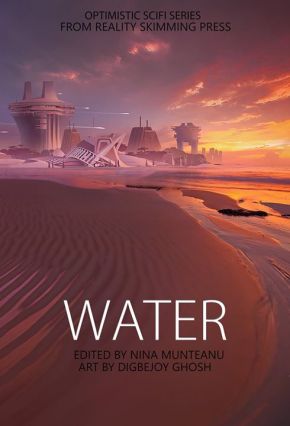
The Way of Water
“The Way of Water” has appeared in several collections and anthologies in Europe and North America and received praise from around the world, including: The National Observer, Prism International Magazine, Speculating Canada, SoloLibri in Italy, and most recently in Orson Scott Card’s The Intergalactic Medicine Show.
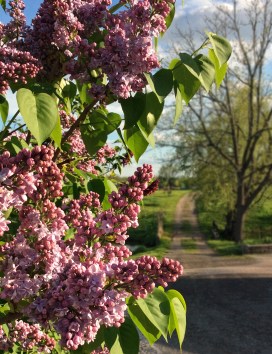
Joshua Creek Art Centre (photo by Nina Munteanu)
“The Chinese multinationals have exchanged the public debt of other states with their water reserves with which, now, they can control the climate, deciding when and where it will rain.Who understands this dirty game has been silenced, like Hilda’s mother, a limnologist, inexplicably arrested and never returned; like the daughter of two water vendors, mysteriously disappeared, after having decided not to bow to economic powers: Hanna, who now prefers secure virtual identities to evanescent real appearances. Water. The two, like the covalent bond of a complex molecule, develop a relationship of attraction and repulsion that will first make them meet and then, little by little, will change into a tormented love but, at the same time, so pure as to cause Hilda at great risk, to make an extreme decision that will allow Hanna to realize the strange prophecy that the internal voice, perhaps the consciousness of water, had resonated in the two women for a long time.” —Simone Casavecchia, SoloLibri.net
She imagines its coolness gliding down her throat. Wet with a lingering aftertaste of fish and mud. She imagines its deep voice resonating through her in primal notes; echoes from when the dinosaurs quenched their throats in the Triassic swamps.
Water is a shape shifter.
It changes yet stays the same, shifting its face with the climate. It wanders the earth like a gypsy, stealing from where it is needed and giving whimsically where it isn’t wanted.
Dizzy and shivering in the blistering heat, Hilda shuffles forward with the snaking line of people in the dusty square in front of University College where her mother used to teach. The sun beats down, crawling on her skin like an insect. She’s been standing for an hour in the queue for the public water tap.
 Emilie Moorhouse of Prism International wrote: “Soon after I finished reading the book, Cape Town—known in precolonial times as “the place where clouds gather”—announced that it was only a few months away from what it called “Day Zero,” the day the city would officially run out of water, making the similarities between fiction and reality more than unsettling. Munteanu’s story is set in a futuristic Canada that has been mined of all its water by thirsty corporations who have taken over control of the resource. Rain has not fallen on Canadian soil in years due to advances in geoengineering and weather manipulation preventing rain clouds from going anywhere north of the Canada-US border.”
“In ‘The Way of Water’, Nina Munteanu pens her love letter to water, exulting it as a liquid that has semi-magical properties…’The Way of Water’ evokes a sense of awareness about issues of access to water and about the dangers of imbalances in that access.”—Derek Newman-Stille, Speculating Canada
“…In an interesting scarcity future in which we follow the fate of a character abandoned by her mother, water itself becomes a character. In the second paragraph we’re told that “Water is a shape shifter,” and in the next page we encounter the following description: “Water was paradox. Aggressive yet yielding. Life-giving yet dangerous. Floods. Droughts. Mudslides. Tsunamis. Water cut recursive patterns of creative destruction through the landscape, an ouroboros remembering.” These descriptive musings cleverly turn out to be more than metaphors and tie in directly to the tale’s surprising ending.”—Alvaro Zinos-Amaro, IntergalacticMedicineShow.com
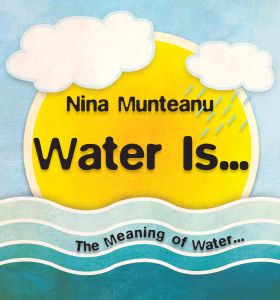
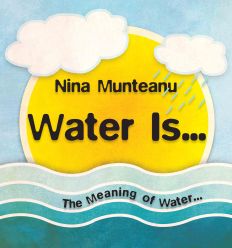
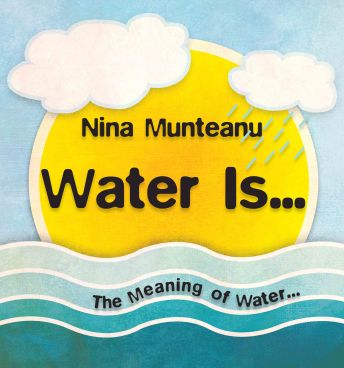
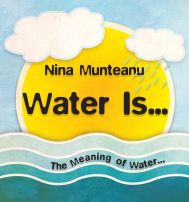 Water Is… The Meaning of Water
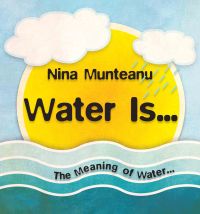
I also read from my non-fiction book “Water Is… The Meaning of Water.” I read several quotes from “Water Is…”. The water quotes had earlier been displayed at a photographic art exhibition in the Great Hall of the Mississauga Civic Centre. The art exhibition celebrated the Waterfront Connection wetland construction, a realized vision of the late Jim Tovey.

Photo Art in the Great Hall of the Mississauga Civic Centre

Quote from Nina Munteanu’s “Water Is…” displayed alongside photo art

Quote from “Water Is…” displayed at the Civic Centre in Mississauga
Joshua Creek Heritage Art Centre

Back patio of Joshua Creek Art Centre (photo by Nina Munteanu)
Envisioned by Sybil Rampen as a place to meet, collaborate and cultivate relationships, the Joshua Creek Heritage Art Centre was established at the 1827 heritage house on Rampen’s family farm on Burnhamthorpe Road in Oakville. The art centre serves the community as a gathering place—creative media workshops, films, musical events, lectures and weddings. The facility promotes local heritage and accessibility. Ecological integrity remains central to its activities.
Joshua Creek
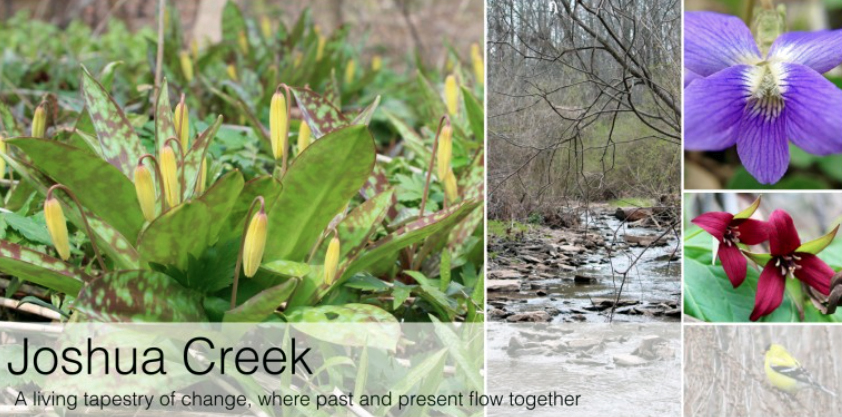
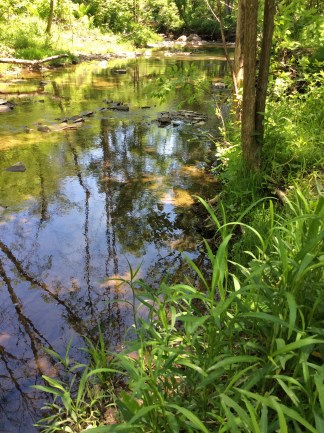
Joshua Creek (photo by Nina Munteanu)
Joshua Creek originates near the art centre north of Burnhamthorpe Road and flows about 6 km south through the farm then mostly forest, eventually emptying into Lake Ontario. I was told that the creek has good water quality, apparently the best in the county. Oakvillegreen.org provides some history on Joshua Creek:
“Joshua Creek exists as a patchwork of past glories and present changes on a very dynamic and human-controlled landscape… many of its lands were cleared and altered beyond recognition, with only certain key areas left mostly to nature. In spite of these influences, Joshua Creek is home to 3 small Environmentally Sensitive Areas (ESAs), although two of these – Joshua Creek Valley and Wildflower Woods – have declined since they were highlighted in the 1970’s, and while still valuable, may no longer qualify as ESAs in the future. In only a handful of decades, development has quickly covered most of the lower two thirds of the creek’s land base, including important parts of its ESAs. In several areas, Joshua’s natural winding “meander” has been artificially straightened in order to efficiently use the land on either side. And in many places, foreign species have invaded the natural areas of the creek, changing the ecosystem in a big way.
But Joshua is a spirited creek – in spite of all it has been through, Joshua Creek is among the top two urban creeks for healthy water quality, and is still inhabited by a variety of aquatic animals like small fish and insects. Joshua Creek is home to forests, wetlands and thickets with around 150 plant species, and provides an important natural habitat corridor for the movement of birds and other animals, including migratory species. Rather than exclusively shrinking, there are also areas of Joshua Creek that are actually in the middle of regrowing their forests, and in spite of everything, Joshua still retains some beautiful gems of natural areas.”

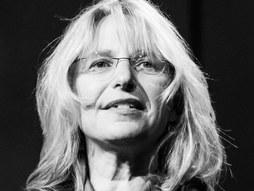
Nina Munteanu is an ecologist, limnologist and internationally published author of award-nominated speculative novels, short stories and non-fiction. She is co-editor of Europa SF and currently teaches writing courses at George Brown College and the University of Toronto. Visit www.ninamunteanu.ca for the latest on her books.

 Saryn and Nina discuss some of water’s controversial properties and the claims about water and how geopolitics plays a role in this. She brings in her own career as a limnologist and how she broke away from her traditional role of scientist to create a biography of water that anyone can understand—at the risk of being ostracized by her own scientific community (just as Carl Sagan and David Suzuki were in the past).
 Nina responded with, “The why of things and hence the subtitle: the Meaning of Water. What does it mean to you… That’s what’s missing a lot of the time. We are bombarded with information, knowledge and prescriptions but the subliminal argument underneath—the why—why should it matter to me—is often missing. That becomes the sub-text. And it’s nice when it comes to the surface.”
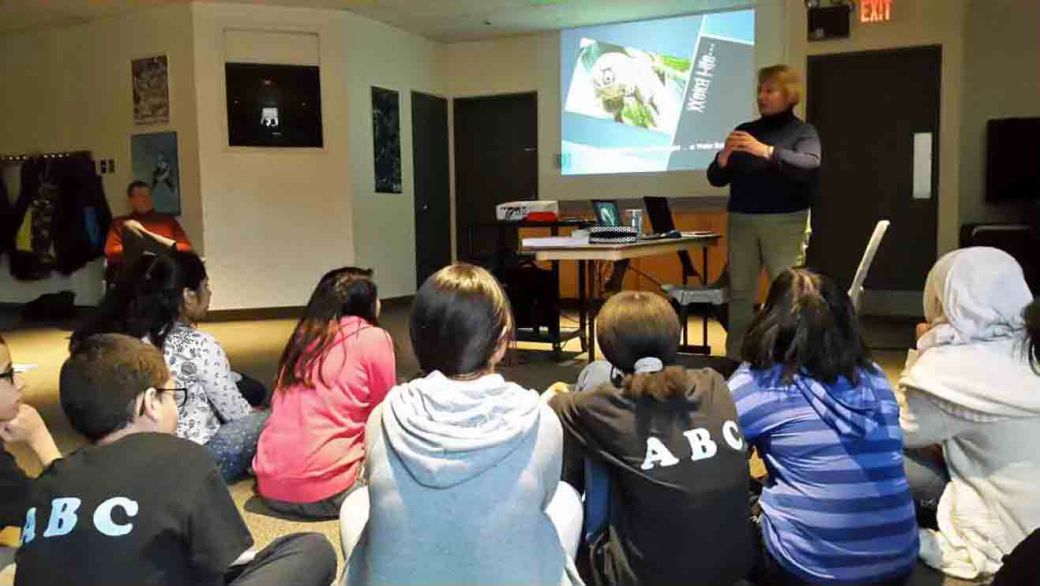
 I started the talk by explaining that I’m a limnologist—someone who studies freshwater—and that water is still a mysterious substance, even for those who make it their profession to study. After informing them of water’s ubiquity in the universe—it’s virtually everywhere from quasars to planets in our solar system—I reminded them that the water that dinosaurs drank during the Paleozoic Era is the same water that you and I are drinking.
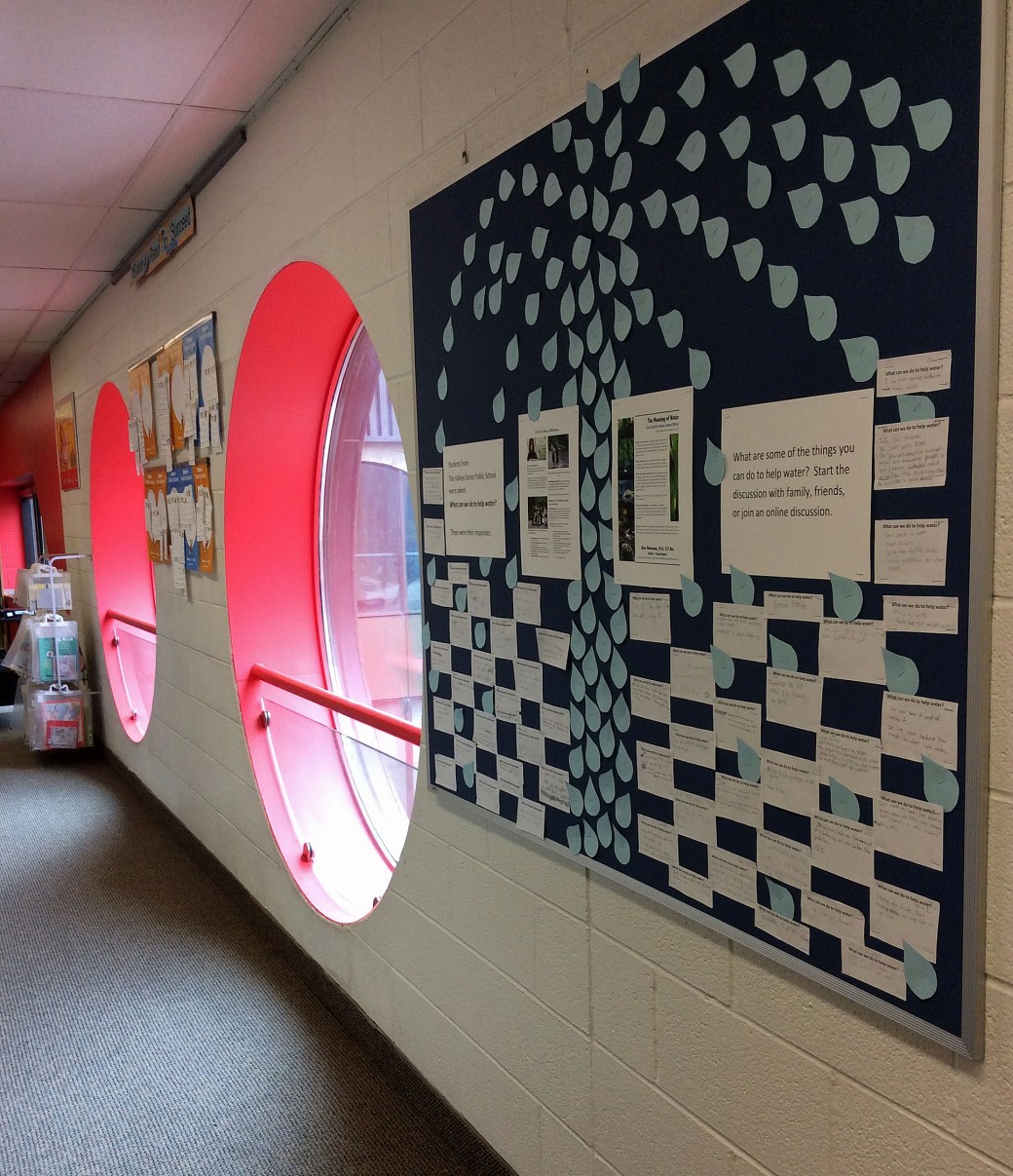



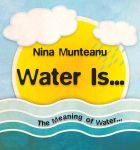 You can read so much more about water in my book
 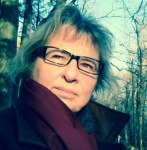 Nina Munteanu is an ecologist, limnologist and internationally published author of award-nominated speculative novels, short stories and non-fiction. She is co-editor of Europa SF and currently teaches writing courses at George Brown College and the University of Toronto. Visit
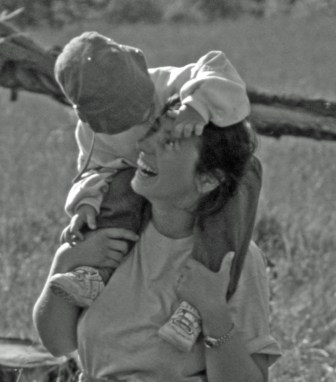
  I was born on this day, some sixty+ years ago, in the small town of Granby in the Eastern Townships to German-Romanian parents. Besides its zoo—which my brother, sister and I used to visit to collect bottles for a finder’s fee at the local treat shop—the town had no particular features. It typified French-Canada of that era.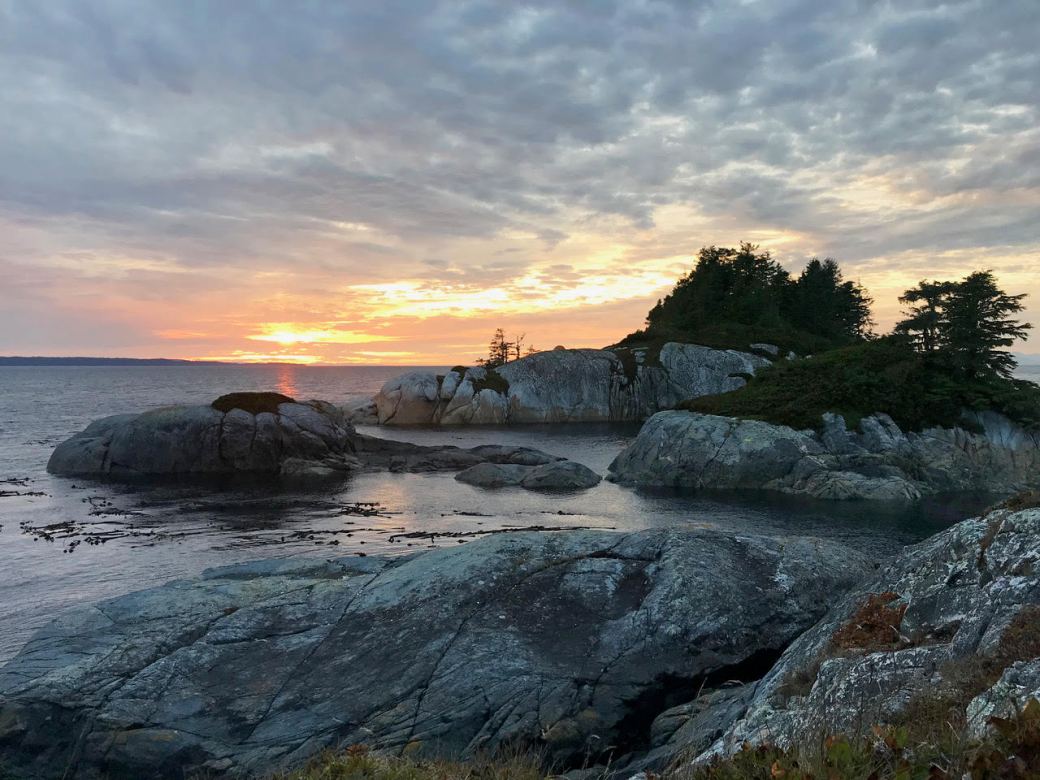


 As efforts are made to reconcile the previous wrongs to Indigenous peoples within Canada and as empowering stories about environment are created and shared, Canada carries on the open and welcoming nature of our Indigenous peoples in encouraging immigration. In 2016, the same year the American government announced a ban on refugees, Canada took in 300,000 immigrants, which included 48,000 refuges. Canada encourages citizenship and around 85% of permanent residents typically become citizens. Greater Toronto is currently the most diverse city in the world; half of its residents were born outside the country. Vancouver, Calgary, Ottawa and Montreal are not far behind.
 Writer and essayist Ralston Saul suggests that Canada has taken to heart the Indigenous concept of ‘welcome’ to provide, “Space for multiple identities and multiple loyalties…[based on] an idea of belonging which is comfortable with contradictions.” Of this Forman writes:
 And that’s exactly what is happening. We are not a “melting pot” stew of mashed up cultures absorbed into a greater homogeneity of nationalism, no longer recognizable for their unique qualities. Canada isn’t trying to “make Canada great again.” Canada is a true multi-cultural nation that celebrates its diversity: the wholes that make up the wholes.
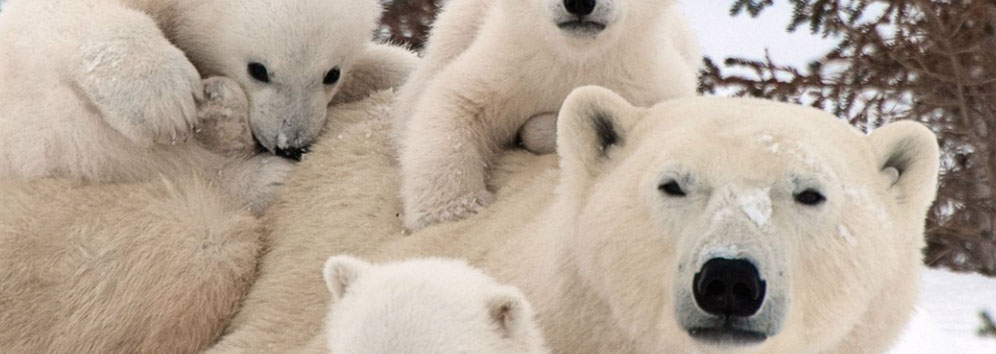 So, am I still proud of Canada? Definitely. We have much to be proud of. We live in one of the wealthiest countries in the world and the 8th highest ranking in the Human Development Index. Canada ranks among the highest in international measurements of government transparency, civil liberties, quality of life, economic freedom, and education. It stands among the world’s most educated countries—ranking first worldwide in the number of adults having tertiary education with 51% of adults holding at least an undergraduate college or university degree. With two official languages, Canada practices an open cultural pluralism toward creating a cultural mosaic of racial, religious and cultural practices. Canada’s symbols are influenced by natural, historical and Aboriginal sources. Prominent symbols include the maple leaf, the beaver, Canada Goose, Common Loon, the Royal Canadian Mounted Police, the polar bear, the totem pole, and Inuksuk.
 We are a northern country with a healthy awareness of our environment—our weather, climate and natural world. This awareness—
 Nina Munteanu is an ecologist and internationally published author of award-nominated speculative novels, short stories and non-fiction. She is co-editor of Europa SF and currently teaches writing courses at George Brown College and the University of Toronto. Visit
  Arizona State University’s Imagination and Climate Futures Initiative is again hosting a Climate Fiction Short Story Contest. In years past they invited writers from around the world to submit speculative fiction stories that explore climate change to narrate a world in flux. Previous contests received submissions from 67 different countries and 12 finalists were published in a digital anthology “Everything Change”.


 Every year, near Christmas,
  Margaret Atwood is a winner of the Arthur C. Clarke Award and the Prince of Asturias Award for Literature as well as the Booker Prize (several times) and the Governor General’s Award. Animals and the environment feature in many of her books, particularly her speculative fiction, which reflects a strong view on environmental issues.
 “
“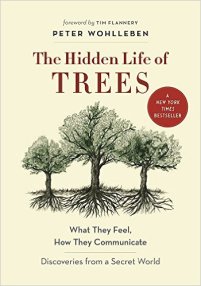 “The Hidden Life of Trees: What They Feel, How They Communicate—Discoveries From a Secret World” (Greystone Books) by Peter Wohlleben. In The Hidden Life of Trees, Peter Wohlleben shares his deep love of woods and forests and explains the amazing processes of life, death, and regeneration he has observed in the woodland and the amazing scientific processes behind the wonders of which we are blissfully unaware. Much like human families, tree parents live together with their children, communicate with them, and support them as they grow, sharing nutrients with those who are sick or struggling and creating an ecosystem that mitigates the impact of extremes of heat and cold for the whole group. As a result of such interactions, trees in a family or community are protected and can live to be very old. In contrast, solitary trees, like street kids, have a tough time of it and in most cases die much earlier than those in a group. Drawing on groundbreaking new discoveries, Wohlleben presents the science behind the secret and previously unknown life of trees and their communication abilities; he describes how these discoveries have informed his own practices in the forest around him. As he says, a happy forest is a healthy forest, and he believes that eco-friendly practices not only are economically sustainable but also benefit the health of our planet and the mental and physical health of all who live on Earth.
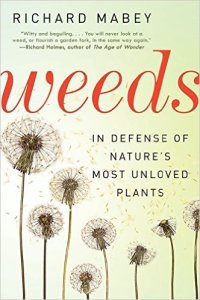 “Weeds: In Defense of Nature’s Most Unloved Plants” (Ecco) by Richard Mabey. “They’re better for you than you think,” says Atwood. “They hold the waste spaces of the world in place, and you can eat some of them.” Ever since the first human settlements 10,000 years ago, weeds have dogged our footsteps. They are there as the punishment of ‘thorns and thistles’ in Genesis and , two millennia later, as a symbol of Flanders Field. They are civilisations’ familiars, invading farmland and building-sites, war-zones and flower-beds across the globe. Yet living so intimately with us, they have been a blessing too. Weeds were the first crops, the first medicines. Burdock was the inspiration for Velcro. Cow parsley has become the fashionable adornment of Spring weddings. Weaving together the insights of botanists, gardeners, artists and poets with his own life-long fascination, Richard Mabey examines how we have tried to define them, explain their persistence, and draw moral lessons from them. One persons weed is another’s wild beauty.
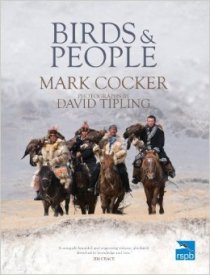 “Birds and People” (Jonathan Cape) by Mark Cocker. “Vast, historical, contemporary, many-levelled,” says Atwood. “We’ve been inseparable from birds for millenniums. They’re crucial to our imaginative life and our human heritage, and part of our economic realities.” Vast in both scope and scale, the book draws upon Mark Cocker’s forty years of observing and thinking about birds. Part natural history and part cultural study, it describes and maps the entire spectrum of our engagements with birds, drawing in themes of history, literature, art, cuisine, language, lore, politics and the environment. In the end, this is a book as much about us as it is about birds.

 Early on in the recent science fiction movie Interstellar, NASA astronaut Cooper declares that “the world’s a treasure, but it’s been telling us to leave for a while now. Mankind was born on Earth; it was never meant to die here.” After showing Cooper how their last corn crops will eventually fail like the okra and wheat before them, NASA Professor Brand answers Cooper’s question of, “So, how do you plan on saving the world?” with: “We’re not meant to save the world…We’re meant to leave it.” Cooper rejoins: “I’ve got kids.” To which Brand answers: “Then go save them.”
 “Scientists are telling us that the whole territory of modern history, from the end of World War II to the present, forms the threshold to a new geological epoch,” adds Jonsson. This epoch succeeded the relatively stable natural variability of the Holocene Epoch that had endured for 11,700 years. Scientists Paul Crutzen and Eugene Stoermer call it the Anthropocene Epoch. Suggestions for its inception vary from the time of the Industrial Revolution in the late 1700s with the advent of the steam engine and a fossil fuel economy to the time of the Great Acceleration—the economic boom following World War II.
 The Great Acceleration describes a kind of tipping point in planetary change and succession resulting from a rising market society.
 The Great Acceleration encompasses the notion of “planetary boundaries,” thresholds of environmental risks beyond which we can expect nonlinear and irreversible change on a planetary level. A well known one is that of carbon emissions. Emissions above 350 ppm represent unacceptable danger to the welfare of the planet in its current state; and humanity—adapted to this current state. This threshold has already been surpassed during the postwar capitalism period decades ago.
 In Amitav Ghosh’s diagnosis of the condition of literature and culture in the Age of the Anthropocene (The Great Derangement: Climate Change and the Unthinkable), he observes that the literary world has responded to climate change with almost complete silence. “How can we explain the fact that writers of fiction have overwhelmingly failed to grapple with the ongoing planetary crisis in their works?” continues Jonsson, who observes that, “for Ghosh, this silence is part of a broader pattern of indifference and misrepresentation. Contemporary arts and literature are characterized by ‘modes of concealment that [prevent] people from recognizing the realities of their plight.’”
 Jonsson tells us that bourgeois reason takes many forms, showing affinities with classical political economy, and—I would add—in classical physics and Cartesian philosophy. From Adam Smith’s 18th Century economic vision to the conceit of bankers who drove the 2008 American housing bubble, humanity’s men have consistently espoused the myth of a constant natural world capable of absorbing infinite abuse without oscillation. When James Lovelock and Lynn Margulis proposed the Gaia Hypothesis in the 1970s, many saw its basis in a homeostatic balance of the natural order as confirmation of Nature’s infinite resilience to abuse. They failed to recognize that we are Nature and abuse of Nature is really self-abuse.
 Louise Fabiani of Pacific Standard suggests that novels are still the best way for us to clarify planetary issues and prepare for change—even play a meaningful part in that change. In her article “The Literature of Climate Change” she points to science fiction as helping “us prepare for radical change, just when things may be getting too comfortable.” Referring to our overwhelming reliance on technology and outsourced knowledge, Fabiani suggests that “our privileged lives (particularly in consumer-based North America) are built on unconscious trust in the mostly invisible others who make this illusion of domestic independence possible—the faith that they will never stop being there for us. And we have no back-ups in place should they let us down.” Which they will—given their short-term thinking.
 In my interview with Mary Woodbury on
  My own works of
  Nina Munteanu is an ecologist and internationally published author of award-nominated speculative novels, short stories and non-fiction. She is co-editor of Europa SF and currently teaches writing courses at George Brown College and the University of Toronto. Visit
 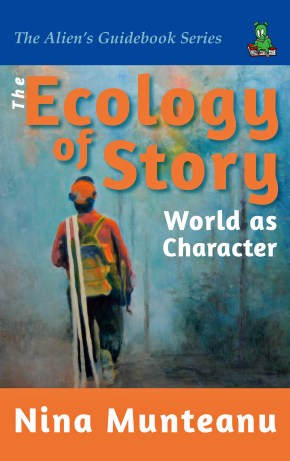 One of the lectures I give to my science fiction writing students is called “Ecology in Storytelling”. It’s usually well attended by writers hoping to gain better insight into world-building and how to master the layering-in of metaphoric connections between setting and character.1
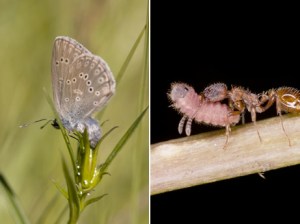 for its larvae. They do this by secreting a chemical that mimics how ants communicate; the ants in turn adopt the newly hatched caterpillars for two years. There’s a terrible side to this story of deception. The Ichneumon wasp, upon finding an Alcon caterpillar inside an ant colony, secretes a pheromone that drives the ants into confused chaos; allowing it to slip through the confusion and lay its eggs inside the poor caterpillar. When the caterpillar turns into a chrysalis, the wasp eggs hatch and consume it from inside.

 You can read more about this in my book “
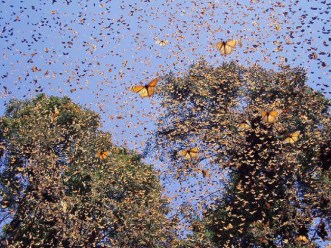
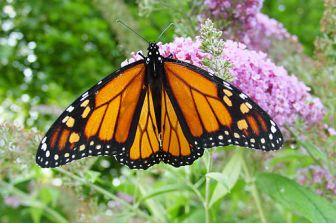
 Barbara Kingsolver’s 2012 novel Flight Behavior was, according to


 Kathleen Byrne of The Globe and Mail
 We—humanity—may not be around here for much longer. Nature will endure without us. Planet Earth will continue, in some form and Nature and life will endure, evolve, and flourish—in its own way. It will change, perhaps grow more unruly than it is already, but Gaia will continue after she has kicked us off. Ecologists have long recognized the pattern of colonization, exploitation, decadence and succession. How hubristic of humanity not to include itself in that cycle. The cycle of continuing change. We grasp—we clamor—for the world we knew—even as we senselessly impose irreparable change. Shaving forests to the ground so water has no where else to go but down and in a torrent. Creating hot deserts by diverting great rivers somewhere else. Mining vast oil and mineral reserves by scraping the earth until it “bleeds” from unhealable wounds.
 Nina Munteanu is an ecologist and internationally published author of award-nominated speculative novels, short stories and non-fiction. She is co-editor of Europa SF and currently teaches writing courses at George Brown College and the University of Toronto. Visit
