National Observer Praises Nina Munteanu’s “The Way of Water”

Exile-CanTales ClimateChange copyNina Munteanu’s “The Way of Water” and the anthology in which it appears was recently praised by Emilie Moorhouse in Prism International Magazine, in a review entitled “Courage and Imagination in Cli-Fi: Canadian Tales of Climate Change”. The review was also carried by the National Observer:

“The seventeen stories in this book edited by Bruce Meyer examine how humankind might struggle with the potential devastation of climate change in the near or distant future. Soon after I finished reading the book, Cape Town—known in precolonial times as “the place where clouds gather”—announced that it was only a few months away from what it called “Day Zero,” the day the city would officially run out of water, making the similarities between fiction and reality more than unsettling.

Munteanu’s story is set in a futuristic Canada that has been mined of all its water by thirsty corporations who have taken over control of the resource. Rain has not fallen on Canadian soil in years due to advances in geoengineering and weather manipulation preventing rain clouds from going anywhere north of the Canada-US border. . . I believe that fiction offers up two much-needed ingredients in the fight to prevent climate change: courage and imagination. It is my hope that more fiction writers will take up the task of writing in this promising new genre and use their imagination to inspire readers to collectively work towards a more sustainable future.”—Emilie Moorhouse, Prism International

La natura dell'acqua copy 3The Way of Water” (La natura dell’acqua) was translated by Fiorella Smoscatello for Mincione Edizioni. Simone Casavecchia of SoloLibri.net, describes “The Way of Water” in her review of the Italian version:

” ‘The Way of Water’ is to be ‘a shapeshifter,’ says Nina Munteanu in her dystopian narrative, where she draws a dark scenario and, unfortunately, not too improbable in the near future. In the universe of the story water has become a very precious commodity: rationed consumption, credits (always of water) accounted for and debts collected…The Chinese multinationals have exchanged the public debt of other states with their water reserves with which, now, they can control the climate, deciding when and where it will rain. Who understands this dirty game has been silenced, like Hilda’s mother, a limnologist, inexplicably arrested and never returned; like the daughter of two water vendors, mysteriously disappeared, after having decided not to bow to economic powers: Hanna, who now prefers secure virtual identities to evanescent real appearances. Water. The two, like the covalent bond of a complex molecule, develop a relationship of attraction and repulsion that will first make them meet and then, little by little, will change into a tormented love but, at the same time, so pure as to cause Hilda at great risk, to make an extreme decision that will allow Hanna to realize the strange prophecy that the internal voice, perhaps the consciousness of water, had resonated in the two women for a long time.

Nina Munteanu recounts that this element is also a form of love; a story to read, not only to deal with the possible but, above all, to understand that the time still available to “love” may be less than what we believe.”—Simone Casavecchia, SoloLibri.net

Derek Newman-Stille of Speculating Canada, offers the following insight on “The Way of Water”:

WayOfWater-SpecCanada-REVIEW-pg2

FF - Rosarium Cover copyThe Way of Water” will also appear alongside a collection of international works (including authors from Greece, Nigeria, China, India, Russia, Mexico, USA, UK, Italy, Canada (yours truly), Cuba, and Zimbabwe) in Bill Campbell and Francesco Verso’s Rosarium Publishing / Future Fiction’s anthology “New Dimensions in International Science Fiction” in April 2018.


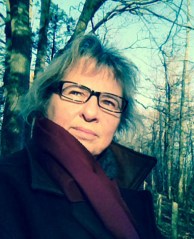
nina-2014aaaNina Munteanu is an ecologist, limnologist and internationally published author of award-nominated speculative novels, short stories and non-fiction. She is co-editor of Europa SF and currently teaches writing courses at George Brown College and the University of Toronto. Visit www.ninamunteanu.ca for the latest on her books. 

On Being a Canadian in The Age of Water

Do I contradict myself? Very well, then I contradict myself; I am large, I contain multitudes.”—Walt Whitman

nina-child01I was born on this day, some sixty+ years ago, in the small town of Granby in the Eastern Townships to German-Romanian parents. Besides its zoo—which my brother, sister and I used to visit to collect bottles for a finder’s fee at the local treat shop—the town had no particular features. It typified French-Canada of that era.

So did I.

I went to school in Quebec then migrated across to the west coast to practice and teach limnology. Given that Canada holds a fifth of the Earth’s freshwater, that also made sense.

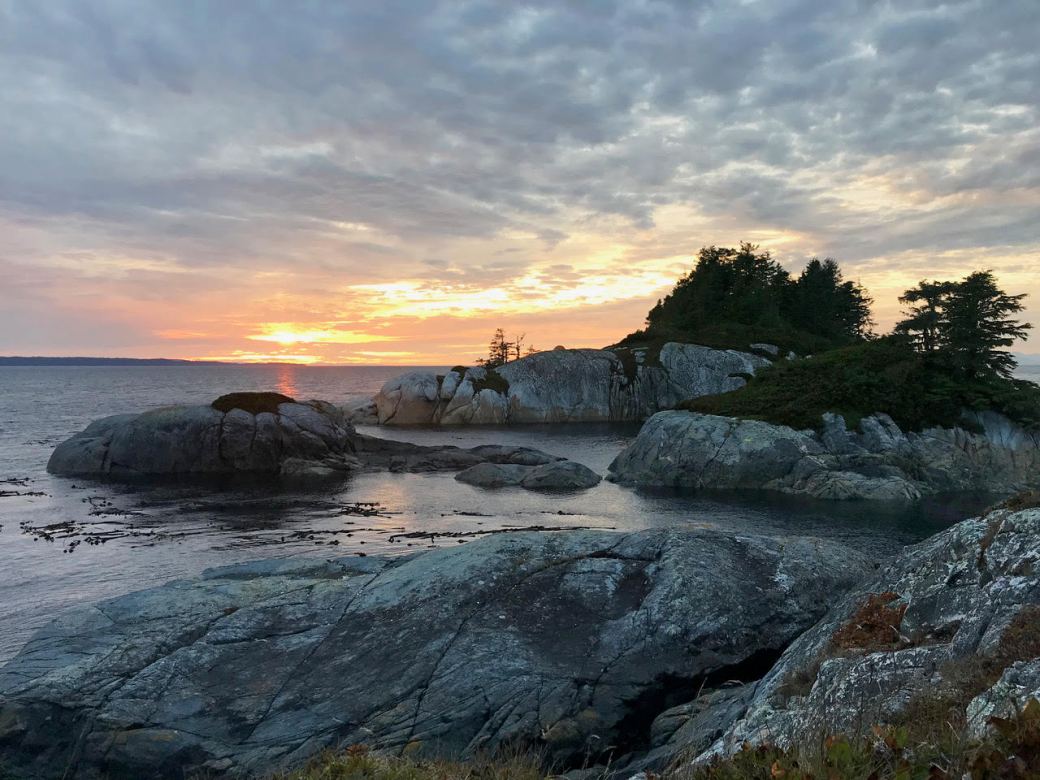
Broughton-sunset-kev

Sunset off Broughton, BC (photo by Nina Munteanu)

Canada is a vast country with a climate and environment that spans from the boreal forests of the Canadian Shield, muskegs of northern BC, and tundras of the Arctic Circle to the grasslands of the Prairies and southern woodlands of Ontario and Quebec. Canada’s environment is vast and diverse. Like its people.

kevin-nina-close

Nina and son Kevin explore Nature

In December of 2017 I participated in a discussion on the subject and role of water in literature in Toronto. I came to the event as a limnologist/ecologist, mother and environmentalist prepared to share how water—its meaning and our relationship with it—is used in my writing and how writing about water can help nurture a future of awareness and action.

But, as the discussion slid into the slippery subject of colonialism, I made the apparent mistake of sharing that—as a Canadian—I was proud of Canada. I was later schooled that “celebrating the nation” was considered anathema to an audience with strong anti-colonialist sentiments and a hatred for neoliberalist corporate Canada (something I share but do not obsess over); I’d obviously crossed some invisible line and I made a mental note to better assess my audience in future).

I also got to thinking about what it means for me to be a Canadian and what my pride in Canada really means. Was I being a “white-toast” nationalist in sharing a pride in my country?

Ecologist vs Nationalist

Ecology is the study of “home” (oikos means ‘home’ in Greek). Ecology studies the relationships that make one’s home functional. It is, in my opinion, the most holistic and natural way to assess where we live. My home is currently Toronto, Ontario, Canada and ultimately the planet Earth.

Country_road_Stephane_Lemire

country road in Eastern Townships of Quebec

Growing up in the Eastern Townships of Quebec, I’d always felt an abiding sense of belonging and I resonated with Canada’s national symbols—mostly based on Nature and found on our currency, our flag, and various sovereign images: the loon, the beaver, the maple tree, our mountains and lakes and boreal forests. Why not? Over 80% of Canada lies in the boreal zone with much of that boreal forest and wilderness (that’s some 552 million hectares). Canadians are custodians of a quarter of the world’s wetlands, longest river systems and most expansive lakes. Most of us recognize this; many of us live, play and work in or near these natural environments.

I have long considered myself a global citizen with no political ties. I saw my country through the lens of an ecologist—I assessed my community and my surroundings in terms of ecosystems that supported all life, not just humanity. Was a community looking after its trees? Was my family recycling? Was a corporation using ‘green’ technology? Was a municipality daylighting its streams and recognizing important riparian zones? I joined environmental movements when I was a teenager. I shifted my studies from art to science because I wanted to make a difference in how we treated our environment. After university, I joined an environmental consulting firm, hoping to educate corporations and individuals as environmental stewards. I brought that philosophy into a teaching career and began writing eco-fiction, science fiction and essays to help promote an awareness and a connection with our natural world. My hope was to illuminate how important Nature and water is to our planet and to our own well-being through an understanding of ecology and how everything is interconnected.

US-tour and Desolation Sound 260 copy

Nina kayaking in Desolation Sound, British Columbia (photo by H. Klassen)

Merriam-Webster defines “nationalism” as: “loyalty and devotion to a nation, especially a sense of national consciousness.” This is not the same as patriotism. Nor does it describe what many think of the word, which is an extreme form of nationalism, in which one nation is exalted above all others (I can think of one nation that is overtly doing that now) and placing primary emphasis on promoting its culture and interests over others—often through isolationism, xenophobia, chauvinism and jingoism. When I think of Canada, I think of my “home”, where I live; my community and my environment. I have traveled the world and I feel a strong sense of “home” and belonging every time I return. Canada is my home. I was born and grew up in Quebec; I raised a family in British Columbia, and I lived in Ontario and Nova Scotia. Each of these places engendered a feeling of “home”. If a strong sense of “home” and belonging is nationalistic, then that is what I am.

lunenburg-keel-laying

The Dory Shop in Lunenburg, Nova Scotia (photo by Nina Munteanu)

Or am I something else? Perhaps, we need to redefine our sense of belonging (and pride) in a country that is not tied to some core political identity or melting-pot mainstream. Historian and writer Charlotte Gray wrote:

“we live in a country that has a weak national culture and strong regional identities …Two brands of psychological glue bind Canada together: political culture and love of landscape…[in] a loose federation perched on a magnificent and inhospitable landscape—[we are] a nation that sees survival as a collective enterprise.”—Charlotte Gray

Canada as Postnational State

Trudeau-RollingStone

Justin Trudeau on the cover of “Rolling Stone”

In October 2015, Canada’s Prime Minister Justin Trudeau told the New York Times that Canada may be the “first postnational state,” adding that “there is no core identity, no mainstream in Canada.” This is largely because Canadians, writes Charles Forman in the Guardian, are “philosophically predisposed to an openness that others find bewildering, even reckless.”

To anyone but a Canadian, Trudeau’s remark would rankle, particularly in a time when many western countries are fearfully and angrily turning against immigration through nativism and exclusionary narratives. A time when the United States elected an authoritarian intent on making “America great again” by building walls. A time when populist right-wing political parties hostile to diversity are gaining momentum in other parts of the world. “Canada’s almost cheerful commitment to inclusion might at first appear almost naive,” writes Forman. It isn’t, he adds. There are practical reasons for keeping our doors open.

We are who we are because of what we are: a vast country the size of Europe. A country dominated by boreal forest, a vital and diverse wilderness that helps maintain the well-being of our entire planet. A land that encompasses over a fifth of the freshwater in the world, and a quarter of the world’s wetlands. Canadians are ultimately the world’s Natural stewards. That is who and what we are.

According to Forman, postnationalism frames how “to understand our ongoing experiment in filling a vast yet unified geographic space with the diversity of the world” and a “half-century old intellectual project, born of the country’s awakening from colonial slumber.” As the first Europeans arrived in North America, the Indigenous people welcomed them, taught them how to survive and thrive amid multiple identities and allegiances, writes Forman. “That welcome was often betrayed, particularly in the 19th and 20th centuries, when settlers did profound harm to Indigenous people.” But, says Forman, if the imbalance remains, so does the influence: a model of another way of belonging. One I think many Canadians are embracing. We are learning from the natural wisdom of our Indigenous peoples. Even our fiction reflects how we value our environment and embrace diversity. “Diversity fuels, not undermines, prosperity,” writes Forman.

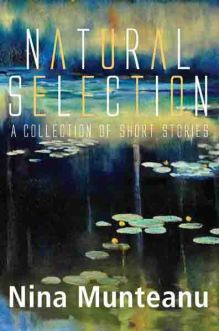
naturalselectionAs efforts are made to reconcile the previous wrongs to Indigenous peoples within Canada and as empowering stories about environment are created and shared, Canada carries on the open and welcoming nature of our Indigenous peoples in encouraging immigration. In 2016, the same year the American government announced a ban on refugees, Canada took in 300,000 immigrants, which included 48,000 refuges. Canada encourages citizenship and around 85% of permanent residents typically become citizens. Greater Toronto is currently the most diverse city in the world; half of its residents were born outside the country. Vancouver, Calgary, Ottawa and Montreal are not far behind.

Canadian author and visionary Marshal McLuhan wrote in 1963 that, “Canada is the only country in the world that knows how to live without an identity.” This is an incredible accomplishment, particularly given our own colonial history and the current jingoistic influence of the behemoth south of us.

The Way of Water-COVERWriter and essayist Ralston Saul suggests that Canada has taken to heart the Indigenous concept of ‘welcome’ to provide, “Space for multiple identities and multiple loyalties…[based on] an idea of belonging which is comfortable with contradictions.” Of this Forman writes:

“According to poet and scholar BW Powe, McLuhan saw in Canada the raw materials for a dynamic new conception of nationhood, one unshackled from the state’s ‘demarcated borderlines and walls, its connection to blood and soil,’ its obsession with ‘cohesion based on a melting pot, on nativist fervor, the idea of the promised land’. Instead, the weakness of the established Canadian identity encouraged a plurality of them—not to mention a healthy flexibility and receptivity to change. Once Canada moved away from privileging denizens of the former empire to practicing multiculturalism, it could become a place where ‘many faiths and histories and visions would co-exist.”

Water Is-COVER-webAnd that’s exactly what is happening. We are not a “melting pot” stew of mashed up cultures absorbed into a greater homogeneity of nationalism, no longer recognizable for their unique qualities. Canada isn’t trying to “make Canada great again.” Canada is a true multi-cultural nation that celebrates its diversity: the wholes that make up the wholes.

Confident and comfortable with our ‘incomplete identity’—recognizing it for what it is—is  according to Forman, “a positive, a spur to move forward without spilling blood, to keep thinking and evolving—perhaps, in the end, simply to respond to newness without fear.”

This resonates with me as an ecologist. What I envision is a Canada transcending the political to embrace the environment that both defines us and provides us with our very lives; a view that knows no boundaries, and recognizes the importance of diversity, relationship and inclusion, interaction, movement, and discovery.


PolarBearMum-pupsSo, am I still proud of Canada? Definitely. We have much to be proud of. We live in one of the wealthiest countries in the world and the 8th highest ranking in the Human Development Index. Canada ranks among the highest in international measurements of government transparency, civil liberties, quality of life, economic freedom, and education. It stands among the world’s most educated countries—ranking first worldwide in the number of adults having tertiary education with 51% of adults holding at least an undergraduate college or university degree. With two official languages, Canada practices an open cultural pluralism toward creating a cultural mosaic of racial, religious and cultural practices. Canada’s symbols are influenced by natural, historical and Aboriginal sources. Prominent symbols include the maple leaf, the beaver, Canada Goose, Common Loon, the Royal Canadian Mounted Police, the polar bear, the totem pole, and Inuksuk.

WaterAnthology-RealitySkimmingPressWe are a northern country with a healthy awareness of our environment—our weather, climate and natural world. This awareness—particularly of climate change—is more and more being reflected in our literature—from Margaret Atwood’s “Maddaddam” trilogy and Kim Stanley Robinson’s “New York 2140” to my own book “Water Is…”. Canadians are writing more eco-fiction, climate fiction, and fiction in which environment somehow plays a key role. Water has become one of those key players: I recently was editor of the Reality Skimming Press anthology “Water”, a collection of six speculative Canadian stories that explore near-future scenarios with water as principle agent.

In a recent interview with Mary Woodbury on Eco-Fiction, I reflected on a trend over the years that I noticed in the science fiction writing course I teach at George Brown College: “It’s a workshop-style course I teach and students are encouraged to bring in their current work in progress. More and more students are bringing in a WIP with strong ecological overtones. I’d say the percentage now is over 70%. This is definitely coming from the students—it’s before I even open my mouth about ecology and eco-fiction—and what it suggests to me is that the welfare of our planet and our ecosystems is on many people’s minds and this is coming through in our most metaphoric writing: science fiction.”

It is healthy to celebrate our accomplishments while remembering where we came from and what we still need to accomplish. This provides direction and motivation.


References:

Dechene, Paul. 2015. “Sci-Fi Writers Discuss Climate Catastrophe: Nina Munteanu, Author of Darwin’s Paradox.” Prairie Dog, December 11, 2015.

Forman, Charles. 2017. “The Canada Experiment: Is this the World’s First Postnational Country?” The Guardian, January 4, 2017.

Gray, Charlotte. 2017. “Heroes and Symbols” The Globe and Mail.

Moorhouse, Emilie. 2018. “New ‘cli-fi’ anthology brings Canadian visions of future climate crisis.” National Observer, March 9, 2018.

Munteanu, Nina. 2016. “Crossing into the Ecotone to Write Meaningful Eco-Fiction.” In: NinaMunteanu.me, December 18, 2016.

Newman-Stille, Derek. 2017. “The Climate Around Eco-Fiction.” In: Speculating Canada, May 24, 2017.

Woodbury, Mary. 2016. “Part XV. Women Working in Nature and the Arts: Interview with Nina Munteanu, Ecologist and Author.” Eco-Fiction.com, October 31, 2016.


nina-2014aaaNina Munteanu is an ecologist and internationally published author of award-nominated speculative novels, short stories and non-fiction. She is co-editor of Europa SF and currently teaches writing courses at George Brown College and the University of Toronto. Visit www.ninamunteanu.ca for the latest on her books. Nina’s recent book is the bilingual “La natura dell’acqua / The Way of Water” (Mincione Edizioni, Rome). Her latest “Water Is…” is currently an Amazon Bestseller and NY Times ‘year in reading’ choice of Margaret Atwood.
How the Women of “The Expanse” Are Expanding Our Worldview

Expanse-5 Badass women

Something is changing for women—and for men too. I’m talking about storytelling, both in literature and in film. Only a few years ago, no one would have predicted the success of Wonder Woman, which portrays a well-rounded (gylanic) female hero as both “badass” warrior (strong, determined and violent) and kind (compassionate, nurturing, empathetic and inclusive). Sadly, its release in 2017 stirred a backlash of mysogynist censure from some males who support—like strident insecure Trump-ets—a male-dominated androcratic world where a submissive demure woman is admired as “feminine” and a determined mindful woman considered as betraying her gender. The film was a box office hit. Wonder Woman grossed $822 million (highest-grossing superhero origin film of all time). And a significant number of viewers were women.

The Androcratic Hero

The male hero stereotype in literature and films of western neoliberal-corporate culture—and science fiction particularly—has often been characterized by strength, courage, integrity & honor, intelligence, assertiveness, single-mindedness, faith in his quest, and boundless determination: he is the altruist warrior, often acting alone against an unfair society through his conscience: all traits honored, respected and esteemed in men. In a woman, these Boadicean qualities often taint her as “bitch” “bossy” or “cold”. She may be considered unwomanly, unlady-like, intimidating, and untouchable (as in lesbian).

MATRIXIn the androcratic model, a woman “hero” often presupposes she shed her feminine nurturing qualities of compassion, kindness, tenderness, and inclusion, to express those hero-defining qualities that are typically considered “male”. I have seen too many 2-dimensional female characters limited by their own stereotype in the science fiction genre—particularly in the adventure/thriller sub-genre. If they aren’t untouchable goddesses or “witches” in a gynocratic paradigm, they are often delegated to the role of enabling the “real hero” on his journey through their belief in him: as Trinity enables Neo; Hermione enables Harry; Mary Jane enables Spiderman; Lois enables Superman; etc. etc. etc.

In so many androcratic storylines, the female—no matter how complex, interesting and tough she starts out being—demures to the male lead. This returns us to the clichéd role of the woman supporting the leading man to complete his hero’s journey—without considering her own. And this often means serving as the prize for his chivalry. We see this in so many action thrillers and action adventures today that promote the “hero’s journey” story trope. There’s even a name for it: the Trinity Syndrome.

Just four years ago, in a post on women heroes in literature, movies and pop culture, I quoted Gitesh Pandya, editor of a box office analyst site, who argued that this is because female-driven action movies have a hard time selling. “Most of the action films that have become huge hits are either male-driven or ensemble.” According to Pandy, “The (SF action) film industry has been male-dominated for so long, the people who are creating and financing these films typically put men in there as heroes.”

The Expanse Challenges the Androcratic Trope

miller-expanse

Miller and Octavia Muss

In 2015, Syfy released Season 1 of The Expanse, a stylish and intelligent science fiction (SF) TV series set 200 years in the future when humanity has colonized the moon, Mars and the Asteroid Belt to mine minerals and water. The series is based on the novel series by James S.A. Corey with first novel in 2011 being “Leviathan Wakes”. Humanity has split three ways culturally, ethnically and even biologically: Earth is currently run by the United Nations; Mars is an independent state, devoted to terraforming with high technology; and the Belt contains a diverse mix of mining colonies, settlers, workers and entrepreneurs. Belters’ physiology differ from their Earth or Mars cousins, given their existence in low gravity.

The Expanse is a sophisticated SF film noir thriller that elevates the space opera sub-genre with a meaningful metaphoric exploration of issues relevant in today’s world—issues of resource allocation, domination & power struggle, values, prejudice, and racism. Critic Maureen Ryan of Variety says, “It’s to the show’s credit that it is openly political, and takes on issues of class, representation and exploitation.”

Women of “The Expanse” as Heroic Agents of Change

These issues are explored well through its female protagonists with subtle nuances of multi-layered social commentary sewn into virtually every interaction.

Julie Mao the expanse

Julie Mao (Florence Faivre)

Julie Mao (Florence Faivre) is an Earther and “the richest bachelorette in the system” according to Detective Miller, who is contracted by his boss to “kidnap” the “spoiled” wayward daughter of corporate magnate Jules Pierre Mao and return her home before she embarrasses him further. Julie joined the hard core faction of the OPA (Outer Planet Association, led by Anderson Dawes as an activist organization that sells itself as a Julie in vacuum the expanseliberator for Belters but is really a terrorist revolutionary group, looking to shift the balance of power); she naively joined to help the lowly belters achieve justice and a voice in the oppressive squeeze by Martian and Earth corporate interests. In “Back to the Butcher”, a colleague of Julie’s relates how she selflessly helped injured minors on Calisto in a tunnel collapse with cadmium poisoning: “I never saw her shed a tear over the fact that she’d have to take anti-cancer meds for the rest of her life.” The only time she cried, he shares, was when she was acknowledged as being a true “beltalowda.”


ChrisjenAvasarala-TheExpanse

Chrisjen Avasarala (Shohreh Aghdashloo)

Chrisjen Avasarala (Shohreh Aghdashloo) is the U.N. Deputy Undersecretary on Earth and a brilliant 23rd-century Machiavelli. She will stop at nothing in her search for the truth, including gravity torturing a Belter or playing her friends and contacts like chess pieces to find answers. What makes Chrisjen far more interesting than, say a Circe or Claire Underwood, is that her scheming—as reprehensible as it may be at times—comes expanse-chrisjen3from a higher calling, not from lust for power or self-serving greed. She’s seeks the truth. And, like Miller, she struggles with a conscience. Chrisjen is a complex and paradoxical character. Her passionate and unrelenting search for the truth together with unscrupulous methods, make her one of the most interesting characters in the growing intrigue of The Expanse. Avasarala is a powerful character on many levels—none the least in her potent presence (thanks to Shohreh Aghdashloo’s powerful performance); when Avasarala walks into a scene, all eyes turn to her.


Naomi Nagata

Naomi Nagata (Dominique Tipper)

Naomi Nagata (Dominique Tipper) is a Belter who grew up on prospecting ships in the Belt and Outer Planets. An extremely talented engineer with a mysterious past of regret and secret pain, Naomi uses arcane abilities to save the ship and her crew. “I have no resentments,” she tells her Martian interrogator. “I don’t believe in causes.” While she makes a point of expressing no allegiances, the Martians accuse her of being an OPA Naomi the expanseoperative and she finds herself ironically defending the Belt and Belters in the struggle between Earth and Mars. “We need to stick together,” she tells fellow Belter Miller and helps Fred Johnson’s team. Driven to help those in need, Naomi selflessly puts herself in harm’s way to save Belters used as lab rats on Eros or those left to die on Ganymede after a Mars and Earth skirmish. In an intimate moment with Holden after the atrocity on Eros with the proto-molecule experiment, Naomi reminds him: “We did not choose this but this is our fight now. We’re the only ones who know what’s going on down there; we’re the only ones with a chance to stop it.”


Drummer

Camina Drummer (Cara Gee)

Camina Drummer (Cara Gee) is a hard-calculating Belter who used to work for Anderson Dawes and is currently second in command for Fred Johnson (a previous U.N. officer and ‘the butcher of Anderson Station’ currently helping the OPA) on Tycho drummer-with-gunStation. A complex character with mysterious connections and intuitive skills for people, Drummer gives one the impression that she can nimbly navigate between hard-line OPA and Fred’s Earther-version of OPA justice for Belters. In “Pyre”, she shows her mettle when—after being shot and held hostage by a militant faction on Tycho—she finds the strength to summarily execute them.


bobbie-draper-the-expanse

Bobbie Draper (Frankie Adams)

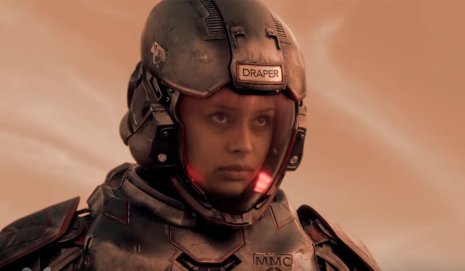
Bobbie-DraperBobbie Draper (Frankie Adams) is a staunch hard-fighting Martian marine who dreams of a terraformed Mars with lakes and vegetation and breathable atmosphere. Because of Earth’s Vesta blockade, Draper realizes that she will not realize her childhood dream of seeing Mars “turned from a lifeless rock into a garden.” The blockade forced Mars to ramp up its military at the expense of terraforming. Draper laments that, “with all those resources moved to the military, none of us will live to see an atmosphere over Mars” and bears a strong resentment against Earth. However, when Bobbie discovers her own government’s culpability with an Earth weapons manufacturer that used her own marines as guinea pigs, she chooses honour over loyalty and defects to seek justice.


The Expanse - Season 3

Anna Volovodov (Elizabeth Mitchell)

Reverend Doctor Annushka (Anna) Volovodov (Elizabeth Mitchell) is a gay Methodist doctor (married to a woman and with a daughter) who is introduced in Season 3 as she struggles through a mob of anti-war protestors to enter the United Nations building on Earth. When a young man collapses through the barricade and breaks his wrist, Anna asks him, “Is this your first protest?” then calmly and firmly directs a surly guard to help him, handling the situation with firm grace–even after being injured in the confrontation.

The Expanse - Season 3The Secretary General (who she had a previous friendship that soured over some dubious event) has called Anna in to write a stirring speech to unite Earth behind the war erupting between Earth and Mars. Anna enters the political intrigue with naive hope and is badly used; but her inner strength, keen intelligence and courage propels her on an amazing trajectory of influence to the outer reaches of the solar system where first contact is imminent. Like a quiet summer rainstorm, Anna brings a fresh perspective on heroism through faith, hope and inclusion.

Women as Gylanic Heroes

The gylanic hero is gaining momentum in science fiction and action-thrillers; the gylanic hero—embraced mostly by women—teaches us what humanity needs now more than ever: the heroic gifts of altruism, compassion, faith, courage, passion, and endurance. She is already there, in movies and TV shows like Lucy, Edge of Tomorrow, Hunger Games, Divergence, Orphan Black, FarscapeBattlestar Galactica and The Expanse: fighting the dragons of prejudice, ignorance, cruelty, greed and intolerance–in partnership with her male counterpart.

expanse-cast

When we dispense with gender-bias in defining heroism in story, we display maturity as a species. I think of my favorite stories in literature, peopled by men and women; all heroes: Tess of the d’UrbervillesFahrenheit 451King LearSolarisThe Grapes of Wrath1984Doctor ZhivagoBrave New WorldMartian Chronicles, and To Kill a Mockingbird — miller shows octavia mussto name just a few. The gender of the hero I empathized with was irrelevant. What remained important was their sensibilities and their actions of respect and integrity on behalf of humanity, all life and the planet.

Gylany: a social system based on equality of men and women
Androcracy: a form of governing system in which rulers are male (patriarchal rule)
Gynocracy: as with androcracy, an authoritarian rule by women over men (matriarchal rule)

A list of SF books and films with whole and relevant female heroes–gylanic heroes– follows below. There are many more. I’ve listed these because they are ones I enjoyed and know, several being my own. Please add yours:

GYLANIC HEROES (portraying women as agents of change equal with men)

  • Contact by Carl Sagan (Simon and Schuster) 1985. A woman’s quest into the unknown for benevolent intelligence in the universe.
  • Beggars in Spain by Nancy Kress (Harper Collins). 1993. A story that examines social consequences to transhumanist generic engineering.
  • A Handmaid’s Tale by Margaret Atwood (Anchor). 1998. A chilling fable of the near future, about a monotheocratic government where women are strictly controlled and assigned roles.
  • Cordelia’s Honor by Lois McMaster Bujold (Baen). 1999. A woman’s journey through deception and betrayal to find honour.
  • His Dark Materials Trilogy by Philip Pullman (Laurel Leaf). 2003. A fantasy alternate world adventure about a young girl who discovers that the fate of the universe lies in her hands.
  • Battlestar Galactica TV series by Ronald D. Moore. 2004. This second iteration of space “noah’s arc” is largely steered by key female agents of change in a gender-blind universe from complex pugilistic fighter jock and sly but intuitive politician, to love-seeking humanistic robot—all on a significant hero’s journey.
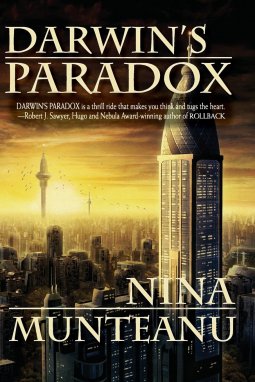
  • Darwin’s Paradox by Nina Munteanu (Dragon Moon Press). 2007. An eco-thriller about a woman unjustly exiled for murder and her quest for justice in a world ruled by technology and scientists.
  • The Hunger Games by Suzanne Collins (Scholastic Press). 2008. A series of books about teens forced to fight to the death on television.
  • The Year of the Flood by Margaret Atwood (McClelland and Stewart). 2009. Toby and Ren must survive the apocalypse described in the previous novel, each reminiscing about their time in the God’s Gardeners religious movement and the events that led to their current situations.
  • The Steel Seraglio by Mike Carey, Linda Carey, Louise Carey and Nimit Malavia (Chizine Publications). 2012. A novel about the women of a harem in an ancient Middle Eastern kingdom, who forge themselves into an army after they’re exiled from the city of their birth — and then return to claim the city for themselves.
  • The Splintered Universe Trilogy by Nina Munteanu (Starfire). 2011-2014. This trilogy, starting with Outer Diverse, follows the quest of Galactic Guardian Rhea Hawke, who must solve the massacre of a spiritual sect that takes her on her own metaphoric journey of self-discovery to realize power in compassion and forgiveness.
  • Divergent by Veronica Roth (Katherine Tegen Books). 2012. a young girl overcomes her assigned caste in a dystopian Chicago to realize her true self-identity, revealed to be dangerous to the very existence of her ordered society
  • The Last Summoner by Nina Munteanu (Starfire). 2012. A young baroness discovers that her strange powers enable her to change history—but at a cost. Vivianne begins her journey in the year 1410, on the eve of a great battle. She dreams of her Ritter (knight), who will save her from her ill-fated marriage and the strange events that follow. But early on, she realizes that she is the Ritter she dreams about.
  • Leviathan Wakes & series by James S.A. Corey (Orbit Books). 2011. A high-stakes near-future space-colonizing conflict that brings strong female protagonists of varying cultural, ethnic and political influence into key roles as agents of change.
  • The 100 TV series by Jason Tothenberg. 2014. In this post-apocalyptic Earth adventure, several women protagonists share key roles in determining the fate of humanity in violent change.
  • The Expanse TV series by Mark Fergus and Hawk Ostby, Syfy. 2015. The exemplary TV series based on the James S.A. Corey 7-book series.
  • Missions TV series by Julien Lacombe, Ami Cohen, and Henri Debeurme. 2017. The protagonist of this space race to Mars is a psychologist, who discovers her bizarre and personal connection to Mars, which promises to affect humanity’s destiny.
  • The Beyond film by Hasraf Dulull. 2018. This near-future thriller about first contact, features several women in key positions as scientists and mission administrators who must solve a key mystery that explores the consequences of humanity’s fearful tendencies.

Other Relevant Articles of Interest from The Alien Next Door:


Riane Eisler (in The Chalice and the Blade) provides examples of sociobiologists who draw on nineteenth-century Darwinism by citing insect societies to support their androcratic (social and political rule by men) theories. If humanity is to truly rise victorious over the scourge of climate change—a function of our current lifestyle and paradigms—we will need to adopt a cultural evolution that embraces a partnership society heralded by new and renewed symbology, language and “myth”: It starts with embracing gylanic heroes in literature and movies. Watching them, reading about them, writing and sharing these stories for the future they speak to.


JamesSACorey-tweetToMyExpanse

nina-2014aaaNina Munteanu is an ecologist and internationally published author of award-nominated speculative novels, short stories and non-fiction. She is co-editor of Europa SF and currently teaches writing courses at George Brown College and the University of Toronto. Visit www.ninamunteanu.ca for the latest on her books. Nina’s recent book is the bilingual “La natura dell’acqua / The Way of Water” (Mincione Edizioni, Rome). Her latest “Water Is…” is currently an Amazon Bestseller and NY Times ‘year in reading’ choice of Margaret Atwood.
Publishers Weekly Praises Cli-Fi: Canadian Tales of Climate Change & “The Way of Water”

Publishers Weekly writes:

cli-fi-exile anthology2017“In his introduction to this all-original set of (at times barely) futuristic tales, Meyer warns readers, “[The] imaginings of today could well become the cold, hard facts of tomorrow.” Meyer (Testing the Elements) has gathered an eclectic variety of eco-fictions from some of Canada’s top genre writers, each of which, he writes, reminds readers that “the world is speaking to us and that it is our duty, if not a covenant, to listen to what it has to say.” In these pages, scientists work desperately against human ignorance, pockets of civilization fight to balance morality and survival, and corporations cruelly control access to basic needs such as water. The most affecting tale, Wendy Bone’s “Abdul,” is also the least futuristic, an emotional story that touchingly contrasts Western guilt against the life of a captive orangutan. The anthology may be inescapably dark, but it is a necessary read, a clarion call to take action rather than, as a character in Seán Virgo’s “My Atlantis” describes it, “waiting unknowingly for the plague, the hive collapse, the entropic thunderbolt.” Luckily, it’s also vastly entertaining. It appears there’s nothing like catastrophe to bring the best out in authors in describing the worst of humankind.”

My story The Way of Water is one of 17 stories in Exile’s anthology, published in May 2017. It was originally published in English and Italian [La natura dell’acqua] by Mincione Edizioni [print] and Future Fiction [ebook] in Rome in early 2016. The Way of Water is a near-future vision that explores the nuances of corporate and government corruption and deceit together with resource warfare. An ecologist and technologist, Nina Munteanu uses both fiction and non-fiction to examine our humanity in the face of climate change and our changing relationship with technology and Nature … through water.

la natura dell'acquaShe imagines its coolness gliding down her throat. Wet with a lingering aftertaste of fish and mud. She imagines its deep voice resonating through her in primal notes; echoes from when the dinosaurs quenched their throats in the Triassic swamps.

Water is a shape shifter.

It changes yet stays the same, shifting its face with the climate. It wanders the earth like a gypsy, stealing from where it is needed and giving whimsically where it isn’t wanted.

Dizzy and shivering in the blistering heat, Hilda shuffles forward with the snaking line of people in the dusty square in front of University College where her mother used to teach. The sun beats down, crawling on her skin like an insect. She’s been standing for an hour in the queue for the public water tap.

The Way of Water takes place in Toronto, Ontario in Canada, mostly on or near the campus of the University of Toronto.

In The Way of Water, Nina Munteanu pens her love letter to water, exulting it as a liquid that has semi-magical properties. Munteanu recognizes the chimerical quality of water, its unique ability to shift and change, to purify and taint, and the incredible way that it makes up most of our body mass and therefore shapes us as well.

nina-TV-nov2015A limnologist (lake ecosystem biologist) by trade, Munteanu recognizes the incredible way that water shapes life and brings attention to the fact that water connects us to each other just as water connects with other water, forming bonds. She evokes in the reader a sense of reverence for water and an awareness that the same water that flows through our bodies have flowed through the bodies of our ancestors, cycling through life since the first life forms coalesced.

In recognizing the preciousness of water, she also recognizes its precarity and the danger that capitalist systems pose when they lay claim to water and seek to own it. “The Way of Water” evokes a sense of awareness about issues of access to water and about the dangers of imbalances in that access.”—Derek Newman-Stille, Speculating Canada


book-patio2 copy“Water covers every aspect of this science fiction story that pits the vulnerable citizen against the evil multinational corporation in a dystopian Canada sometime in our future. Water is presented in its multiplicity of facets: in the science behind its composition, in its history, in it’s symbolic nature and different physical states; water is a giver and taker of life, and is the form in which the friendship of protagonists Hilda and Hanna functions. Water is also magic and the ultimate righter of wrongs committed to it and to a humanity it gives life to. Within this framework, Munteanu spins a thought-provoking tale that projects where our headlong pursuit of profit may one day lead us to, and how nature will ultimately, with a little human coaxing, be the only one to correct the balance.”—Shane Joseph, Canadian author of Fringe Dwellers

“Nina Munteanu with The Way of Water suggests that this element is also a form of laNaturaDell'Acqua-coverlove; a story to read, not only to deal with the possible but, above all, to understand that the time still available for “love” might be less than what you believe.”—Simone Casavecchia, SoloLibri.net (read the original Italian review here)

The Way of Water is a story of the kind you hope is science fiction but you fear is not.”—Massimo Luciani, NetMassimo (read the original Italian review here)


nina-2014aaNina Munteanu is an ecologist and internationally published author of award-nominated speculative novels, short stories and non-fiction. She is co-editor of Europa SF and currently teaches writing courses at George Brown College and the University of Toronto. Visit www.ninamunteanu.ca for the latest on her books.


Canadian Tales of Climate Change–Launch in Toronto, May 7th 2017

Launching CLI-FI: Canadian Tales of Climate Change (anthology)

CliFiAnthologyLaunch-Exile
Sunday, May 7, at the SUPERMARKET Restaurant & Bar
268 Augusta Avenue (Kennsington Market) 3:00–5:30

Toronto, ON

Readings start at 3:30

Featuring:

Geoffrey W. Cole, Rati Mehrotra

Peter Timmerman, Leslie Goodreid, Halli Villegas

John Oughton, Nina Munteanu, Lynn Hutchinson-Lee

“With the world facing the greatest global crisis of all time – climate change – personal and political indifference has wrought a series of unfolding complications that are altering our planet, and threatening our very existence. These stories of Climate Fiction (Cli-Fi) feature perspectives by culturally diverse Canadian writers of short fiction, science fiction, fantasy, and futurist works, and transcend traditional doomsday stories by inspiring us to overcome the bleak forecasted results of our current indifference.”
amazing-picture-of-earth-as-seen-from-space

Atwood, Water & The New York Times

“Water Is…” leads Atwood’s Pick for Books of 2016

Microsoft Word - Atwoods Picks-NYTimes.docx

ny-times-theyearinreaingEvery year, near Christmas, The New York Times puts out “The Year in Reading” in which they ask notably avid readers—who also happen to be poets, musicians, diplomats, filmmakers, novelists, actors and artists—to share the books that accompanied them through that year.

For the 2016 Year In Reading, The Times asked a prestigious and diverse readership, including Junot Diaz, Paul Simon, Carl Bernstein, Kareem Abdul-Jabbar, Elizabeth Banks, Samantha Power, Philip Pullman, Ann Pratchett, Orhan Pamuk, Drew Gilpin Fause, Anne Tyler, and many others to share their books of 2016.

There was also Booker Prize-winning and celebrated Canadian author and poet Margaret Atwood.

atwood-margaretMargaret Atwood is a winner of the Arthur C. Clarke Award and the Prince of Asturias Award for Literature as well as the Booker Prize (several times) and the Governor General’s Award. Animals and the environment feature in many of her books, particularly her speculative fiction, which reflects a strong view on environmental issues.atwood-angel-catbird

Several of her latest works (e.g., Oryx and Crake, Year of the Flood, MaddAddam) are eco-fiction and may be considered climate fiction. Atwood and partner, novelist Graeme Gibson, are the joint honorary presidents of the Rare Bird Club within BirdLife International. Atwood’s highly popular graphic novel Angel Catbird reflects an environmental sensitivity to the balance between wildlife and humans and their pets in urban settings.

Atwood’s choice for 2016 books came from her active, astute and compassionate environmentalism. Suggesting that many of her ‘The Year in Reading’ co-readers would emphasize fiction, history and politics, Atwood chose her books “instead from a still-neglected sector. All hail, elemental spirits! You’re making a comeback!”

Here are the four books Atwood recommends and why:

  1. water-is-cover-webWater Is…: The Meaning of Water” (Pixl Press) by Nina Munteanu. “We can’t live without it, so maybe we should start respecting it,” says Atwood. “This beautifully designed book by a limnologist looks at water from 12 different angles, from life and motion and vibration to beauty and prayer.” Water is emerging as one of the single most important resources of Planet Earth. Already scarce in some areas, it has become the new “gold” to be bought, traded, coveted, cherished, hoarded, and abused worldwide. It is currently traded on the Stock Exchange…Some see water as a commodity like everything else that can make them rich; they will claim it as their own to sell. Yet it cannot be “owned” or kept. Ultimately, water will do its job to energize you and give you life then quietly take its leave; it will move mountains particle by particle with a subtle hand; it will paint the world with beauty then return to its fold and rejoice; it will travel through the universe and transform worlds; it will transcend time and space to share and teach.
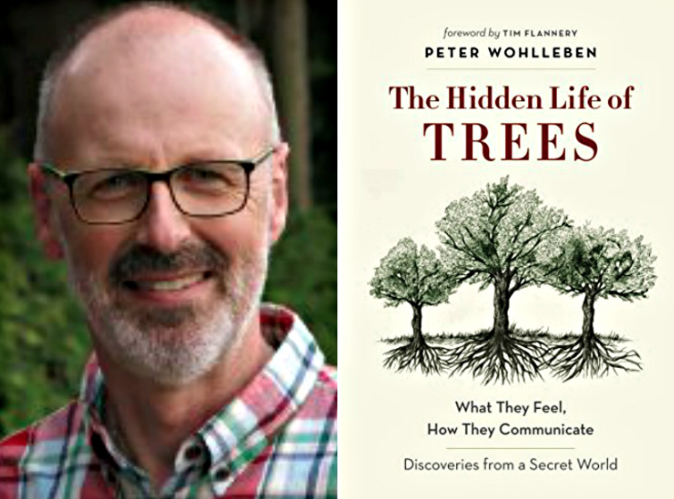
  1. hiddenlifeoftreesThe Hidden Life of Trees: What They Feel, How They Communicate—Discoveries From a Secret World” (Greystone Books) by Peter Wohlleben. In The Hidden Life of Trees, Peter Wohlleben shares his deep love of woods and forests and explains the amazing processes of life, death, and regeneration he has observed in the woodland and the amazing scientific processes behind the wonders of which we are blissfully unaware. Much like human families, tree parents live together with their children, communicate with them, and support them as they grow, sharing nutrients with those who are sick or struggling and creating an ecosystem that mitigates the impact of extremes of heat and cold for the whole group. As a result of such interactions, trees in a family or community are protected and can live to be very old. In contrast, solitary trees, like street kids, have a tough time of it and in most cases die much earlier than those in a group. Drawing on groundbreaking new discoveries, Wohlleben presents the science behind the secret and previously unknown life of trees and their communication abilities; he describes how these discoveries have informed his own practices in the forest around him. As he says, a happy forest is a healthy forest, and he believes that eco-friendly practices not only are economically sustainable but also benefit the health of our planet and the mental and physical health of all who live on Earth.
  1. weeds-mabeyWeeds: In Defense of Nature’s Most Unloved Plants” (Ecco) by Richard Mabey. “They’re better for you than you think,” says Atwood. “They hold the waste spaces of the world in place, and you can eat some of them.” Ever since the first human settlements 10,000 years ago, weeds have dogged our footsteps. They are there as the punishment of ‘thorns and thistles’ in Genesis and , two millennia later, as a symbol of Flanders Field. They are civilisations’ familiars, invading farmland and building-sites, war-zones and flower-beds across the globe. Yet living so intimately with us, they have been a blessing too. Weeds were the first crops, the first medicines. Burdock was the inspiration for Velcro. Cow parsley has become the fashionable adornment of Spring weddings. Weaving together the insights of botanists, gardeners, artists and poets with his own life-long fascination, Richard Mabey examines how we have tried to define them, explain their persistence, and draw moral lessons from them. One persons weed is another’s wild beauty.
  1. birds-and-peopleBirds and People” (Jonathan Cape) by Mark Cocker. “Vast, historical, contemporary, many-levelled,” says Atwood. “We’ve been inseparable from birds for millenniums. They’re crucial to our imaginative life and our human heritage, and part of our economic realities.” Vast in both scope and scale, the book draws upon Mark Cocker’s forty years of observing and thinking about birds. Part natural history and part cultural study, it describes and maps the entire spectrum of our engagements with birds, drawing in themes of history, literature, art, cuisine, language, lore, politics and the environment. In the end, this is a book as much about us as it is about birds.

“Time to pay attention to the nonhuman life around us, without which human life would fail,” Atwood concludes.

As we enter a new year of great uncertainty, particularly on how we and our environment will fare in a shifting political wind, these books offer diverse insight, a fresh and needed perspective and critical connection with our natural world–and each other through it.

Buy them, discuss them, share them. And save this planet.

Happy New Year!

jungfrau04

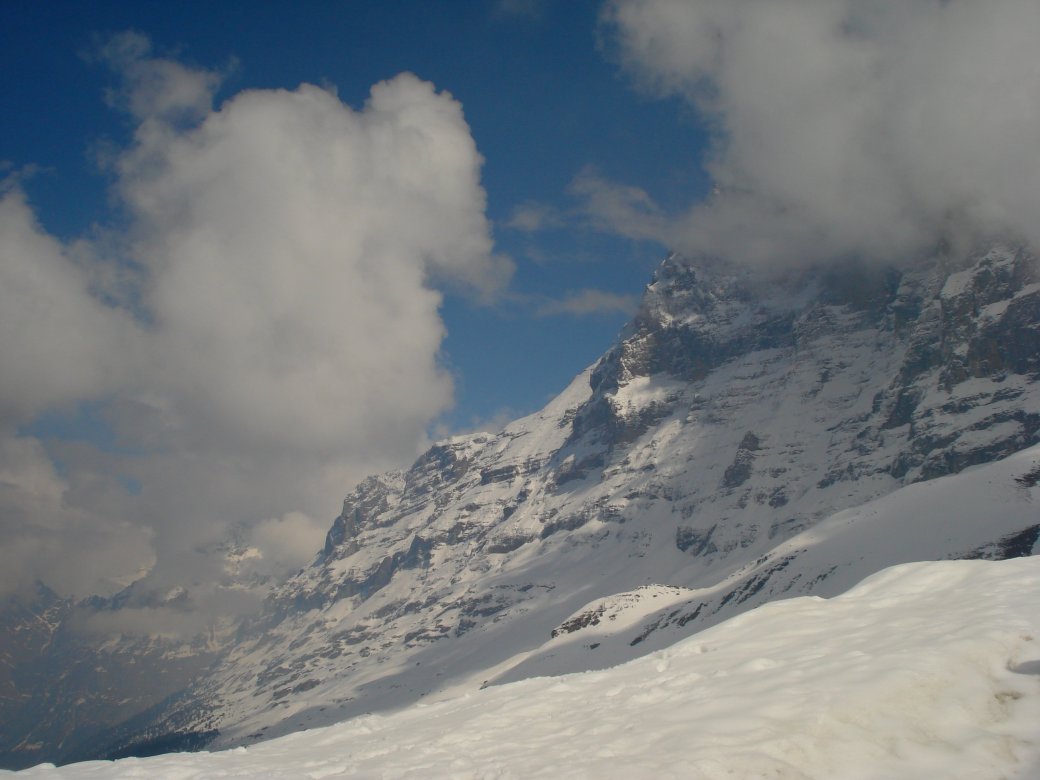
Jungfrau, Switzerland (photo by Nina Munteanu)

Nina Munteanu is an ecologist and internationally published author of award-nominated speculative novels, short stories and non-fiction. She is co-editor of Europa SF and currently teaches writing courses at George Brown College and the University of Toronto. Visit www.ninamunteanu.ca for the latest on her books.
Where Is the Literature of the Anthropocene?

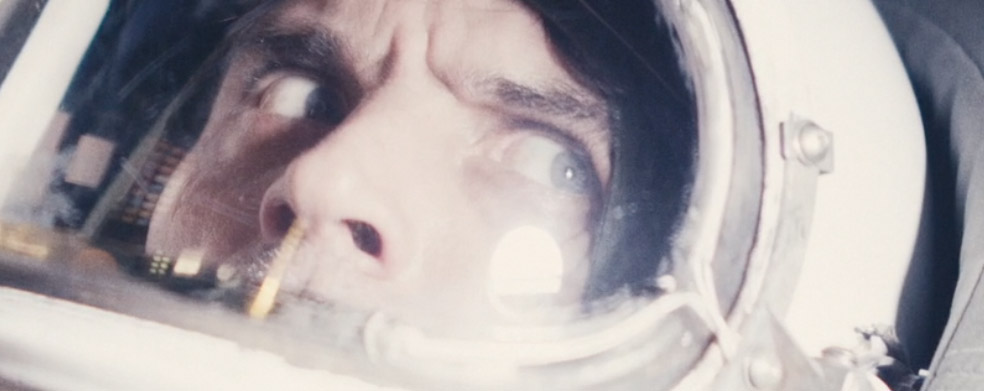
interstellar-cooper-ice-planet2Early on in the recent science fiction movie Interstellar, NASA astronaut Cooper declares that “the world’s a treasure, but it’s been telling us to leave for a while now. Mankind was born on Earth; it was never meant to die here.” After showing Cooper how their last corn crops will eventually fail like the okra and wheat before them, NASA Professor Brand answers Cooper’s question of, “So, how do you plan on saving the world?” with: “We’re not meant to save the world…We’re meant to leave it.” Cooper rejoins: “I’ve got kids.” To which Brand answers: “Then go save them.”

In a 1976 NBC interview on the significance of the Viking 1 landing on Mars, astronomer Carl Sagan likened our space program to watching a dandelion gone to seed: “I can’t help but think of this as an epochal moment in planetary exploration. If you can imagine, a sort of a very patient observer, observing the earth for its four and half billion-year lifetime: for all of that period, lots of things came onto the earth, but nothing left it. And now just in the last 10 years, things are spewing off the earth.”

NewYork-Soho01

Apartments in Soho, New York City (photo by Nina Munteanu)

The Onset of the Anthropocene & the Great Acceleration

In a Guardian article entitled “The Holocene hangover: it is time for humanity to make fundamental changes”, Fredrick Albritton Jonsson examines Amitav Ghosh’s interpretation of climate change and considers the need to acknowledge Earth’s own powerful and changing identity—particularly through the face of climate change.

Is climate change the planet’s way of telling us that we no longer belong—like Cooper was suggesting in the movie Interstellar?

That we’ve largely orchestrated these changes may be considered ironic—or is it simply inevitable? For me, as an ecologist, this is not a new concept. Ecological succession is the process of ecosystem change and development over time (usually following a disturbance) as an establishing species impacts and alters its environment to eventually make the environment less suited to it and more to another species, which will replace it. Succession only stops when a climax community—which is in equilibrium with a stable environment—establishes. This climax stage can persist indefinitely—until the next environmental disturbance, that is. Succession occurs everywhere in Nature; examples include the recolonization of Mount St. Helen following the volcanic eruption. Natural succession occurs in human society as well. A good example can be found in any city. My landscape architect son described the natural process of “gentrification” in a large city: a process of renovation and revival of deteriorated urban areas through an influx of more affluent residents, resulting in increased property values and a displacement of lower-income families and businesses. Inherent in succession is movement and flow—something Nature is very familiar with and uses well.

“Our planet is changing into a strange and unstable new environment, in a process seemingly outside technological control,” writes Jonsson, who laments in a disillusioned patriarchal voice: “The fossil fuels that once promised mastery over nature have turned out to be tools of destruction, disturbing the basic biogeochemical processes that make our world habitable [for us]. Even the recent past is no longer what we thought it was.”

Jonsson then unleashes a litany of examples where humanity has imposed global change, including: climate change; reduced biodiversity of ecosystems; acidification of marine life and oceans capacity to absorb carbon dioxide; fresh water scarcity; ozone depletion, which threatens atmospheric stability; and disruption of global nitrogen and phosphorus cycles—to mention a few. “Indeed,” says Jonsson, “the planet’s biosphere bears so many marks of anthropogenic influence that it is no longer possible to [distinguish] between the realm of wilderness and the world of human habitation.”

world-war-2-goosestep“Scientists are telling us that the whole territory of modern history, from the end of World War II to the present, forms the threshold to a new geological epoch,” adds Jonsson. This epoch succeeded the relatively stable natural variability of the Holocene Epoch that had endured for 11,700 years. Scientists Paul Crutzen and Eugene Stoermer call it the Anthropocene Epoch. Suggestions for its inception vary from the time of the Industrial Revolution in the late 1700s with the advent of the steam engine and a fossil fuel economy to the time of the Great Acceleration—the economic boom following World War II.

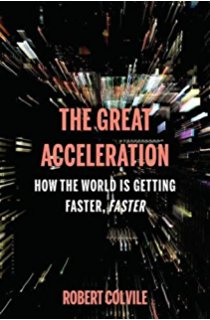
the-great-accelerationThe Great Acceleration describes a kind of tipping point in planetary change and succession resulting from a rising market society.

From the devices we carry to the lives we lead, everything is getting faster, faster.  The International Geosphere-Bioshpere Programme writes that “the last 60 years have without doubt seen the most profound transformation of the human relationship with the natural world in the history of humankind.” They suggest that the second half of the 20th Century is unique in the history of human existence. “Many key indicators of the functioning of the Earth system are now showing responses that are, at least in part, driven by the changing human imprint on the planet. The human imprint influences all components of the global environment – oceans, coastal zone, atmosphere, and land.”

While this notion rings hubristic, there is no question that humanity is now a major driver of planetary change: from tipping the Earth’s axis through the creation of massive water reservoirs and diverting a third of Earth’s available fresh water to increasing carbon dioxide to a levels found 800,000 years ago—changing global climate.

Geologists and historians discussed how the Anthropocene Epoch would best be identified by observers in a distant future. “Among the plausible candidates proposed are micro-plastics, metal alloys, and artificial isotopes,” writes Jonsson. “Such stratigraphic markers must be placed in their historical context. The scientific identification of the Anthropocene with the year 1945 gives us not just a plausible geological end to the Holocene, but also a watershed that fits comfortably with a great body of scholarly work about the historical consequences of World War II.”

great-acceleration-chartThe Great Acceleration encompasses the notion of “planetary boundaries,” thresholds of environmental risks beyond which we can expect nonlinear and irreversible change on a planetary level. A well known one is that of carbon emissions. Emissions above 350 ppm represent unacceptable danger to the welfare of the planet in its current state; and humanity—adapted to this current state. This threshold has already been surpassed during the postwar capitalism period decades ago.

Our Literature in the Anthropocene

greatderangement-climatechangeIn Amitav Ghosh’s diagnosis of the condition of literature and culture in the Age of the Anthropocene (The Great Derangement: Climate Change and the Unthinkable), he observes that the literary world has responded to climate change with almost complete silence. “How can we explain the fact that writers of fiction have overwhelmingly failed to grapple with the ongoing planetary crisis in their works?” continues Jonsson, who observes that, “for Ghosh, this silence is part of a broader pattern of indifference and misrepresentation. Contemporary arts and literature are characterized by ‘modes of concealment that [prevent] people from recognizing the realities of their plight.’”

“By failing to engage with climate change, artists and writers are contributing to an impoverished sense of the world, right at the moment when art and literature are most needed to galvanize a grassroots movement in favor of climate justice and carbon mitigation.”

According to Ghosh, the “great derangement” stemmed from a certain kind of rationality. Plots and characters of bourgeois novelists reflected the regularity of middle-class life and the worldview of the Victorian natural sciences, one that depended on a principle of uniformity. Change in Nature was gradual and never catastrophic. Extraordinary or bizarre happenings were left to marginal genres like the Gothic tale, romance novel, and—of course—science fiction. The strange and unlikely were externalized: hence the failure of modern novels and art to recognize anthropogenic climate change.

flight-behaviorJonsson tells us that bourgeois reason takes many forms, showing affinities with classical political economy, and—I would add—in classical physics and Cartesian philosophy. From Adam Smith’s 18th Century economic vision to the conceit of bankers who drove the 2008 American housing bubble, humanity’s men have consistently espoused the myth of a constant natural world capable of absorbing infinite abuse without oscillation. When James Lovelock and Lynn Margulis proposed the Gaia Hypothesis in the 1970s, many saw its basis in a homeostatic balance of the natural order as confirmation of Nature’s infinite resilience to abuse. They failed to recognize that we are Nature and abuse of Nature is really self-abuse.

Jonsson suggests that these Enlightenment ideas are essentially ideological manifestations of Holocene stability, remnants from 11,000 years of small variability in temperature and carbon dioxide levels, giving rise to deep-seated habits and ideas about the resilience of the natural world. “The commitment to indefinite economic growth espoused by the economics profession in the postwar era is perhaps its most triumphant [and dangerous] expression.”

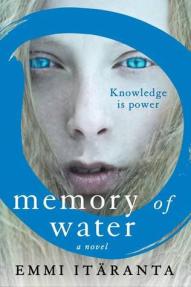
memory-of-water-emmi-itarantaLouise Fabiani of Pacific Standard suggests that novels are still the best way for us to clarify planetary issues and prepare for change—even play a meaningful part in that change. In her article “The Literature of Climate Change” she points to science fiction as helping “us prepare for radical change, just when things may be getting too comfortable.” Referring to our overwhelming reliance on technology and outsourced knowledge, Fabiani suggests that “our privileged lives (particularly in consumer-based North America) are built on unconscious trust in the mostly invisible others who make this illusion of domestic independence possible—the faith that they will never stop being there for us. And we have no back-ups in place should they let us down.” Which they will—given their short-term thinking.

“To counteract this epidemic of short-term thinking,” says Fabiani, “it might be a good idea for more of us to read science fiction, specifically the post-apocalyptic sub-genre: that is, fiction dealing with the aftermath of major societal collapse, whether due to a pandemic, nuclear fallout, or climate change.”

year-of-the-flood-atwoodIn my interview with Mary Woodbury on Eco-Fiction I remind readers that “science fiction is a powerful literature of allegory and metaphor and deeply embedded in culture. By its very nature, SF is a symbolic meditation on history itself and ultimately a literature of great vision. Some of the very best of fiction falls under the category of science fiction, given the great scope of its platform. More and more literary fiction writers are embracing the science fiction genre (e.g., Margaret Atwood, Kuzuo Ishiguro, Michael Chabon, Philip Roth, Iain Banks, David Mitchell); these writers recognize its immense scope and powerful metaphoric possibilities. From science fiction to eco-fiction is a natural process. Exploring large societal and planetary issues is the purview of both.”

Let’s see more. We need it.

You can find an excellent databank of eco-fiction books on Mary Woodbury’s site Eco-Fiction. Mary Woodbury also includes “12 works of climate fiction everyone should read.” Midge Raymond of Literary Hub lists “5 important works of eco-fiction you need to read.” And then there is the Goodreads Listopia for “Best eco-fiction

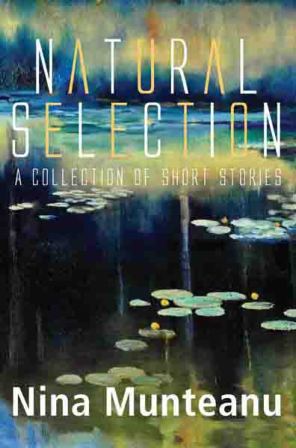
naturalselectionMy own works of eco science fiction can be found on my author’s website, Nina Muneanu Writer and at a quality bookstore near you.

Why not find a work of eco-fiction and share it with someone you care about this Christmas.

nina-2014aaNina Munteanu is an ecologist and internationally published author of award-nominated speculative novels, short stories and non-fiction. She is co-editor of Europa SF and currently teaches writing courses at George Brown College and the University of Toronto. Visit www.ninamunteanu.ca for the latest on her books.
On Ecology, Women and Science Fiction: Part 2, Praxis

montreux-road from b&b

Montreux, Switzerland (photo by Nina Munteanu)

In Part 1, Gnosis, I explored the nature of our current worldview, its shifting face and how literature and women writers have both contributed and enlightened this shift.

I talked with four women, all in the science fiction or eco-fiction genres; two are writers, and two are publishers. We discussed this shift, what it looks like, what the “feminine archetype” means and the nature of “Optimistic SF.”

When asked to describe SF today, Lynda Williams, author of the Okal Rel series, argued that, “SF is mainstream now … It has grown up, emotionally, from being about wish-fulfilling technologies … to embracing the social implications of change.” Stephanie Johanson, editor and co-publisher of Neo-opsis Science Fiction Magazine, notes that, “Science fiction often reflects the views of the day, following and expanding on newer technologies.” Williams adds that SF fiction has gained a literary presence, but at some expense: “now there’s a sordid fascination, in a lot of self-consciously dark SF, with self-interested cynicism and extended analogies to drug addiction as a means of coping with reality.” Johanson provided a different perspective. “Stories that predict doom have been around since the beginning of SF,” she argued. “But lately perhaps there might be more stories with a glimmer of hope … perhaps it won’t be science that destroys us … the right sciences might actually save us.” Editor and Publisher of On Spec Magazine, Diane Walton shares that she is seeing a lot of Post-Apocalyptic submissions, “mainly because it’s interesting to put your characters in a setting where the rules don’t apply any more. They have to try to rebuild the life and security and order they used to have, or else revert to savagery, or else adapt to a whole new set of circumstances—the choices are endless. Except zombies. I don’t want to see any more zombies.”

When asked if SF had a role in literature, Johanson suggested that, “SF has fewer limitations and more frontiers to explore than other genres.” Both Johanson and Walton suggest that its main role is to challenge our preconceived notions of the world and “open up the mind to new possibilities.” Walton and Williams agree that SF is recognized more today as “real” literature rather than being dismissed as “escapism.” Williams shares that SF’s roots are as old as myth. “Like myths and bible stories, SF is an instructive literature, pointing out how things can go wrong (or right) and why. The growing up SF has done since the 1950s lies in an increasing recognition that [humanity is its] own worst enemy and a better understanding of human nature is crucial to the problems we face, not just the hard sciences.”

I shared that I had witnessed (at least in my classrooms and writing workshops) a rising ecological awareness, reflected in a higher percentage of new writers bringing in works-in-progress (WIPs) that were decidedly “eco-fiction” or “climate fiction.”

“I have always gravitated towards, and often found, literature with ecological components,” Sarah Kades, author of Claiming Love confides. She then adds, “But I do agree with you that ecological awareness is not only gaining momentum, it is front and centre for many, and as such, we are naturally finding it more and more in literature.”

“I never thought of my own work as ecological,” shares Williams. “But it’s true: the underlying issue in it is how does, or can, the collective will prevent groups or individuals from destroying what is irreplaceably precious…Yes, I think SF has graduated from a fascination with building bigger death rays to tackling questions of how we avoid committing the unthinkable while still indulging in lots of entertaining conflict. Because conflict must exist in any story. We wouldn’t be human without it. There’s plenty of conflict in an ecosystem, too, but it stays balanced. SF used to be optimistic about scientific discoveries shifting the system out of balance in the direction of net gain for humankind. And this has happened. Even today’s poor are richer than yesterday’s. What worries us, increasingly, is whether some sudden imbalance could tip us into irreversible catastrophe because unlike 1950s readers we don’t trust smart and powerful people to act sanely in their quest for power.”

“I think that authors have come to a realization that the setting of a book can be just as strong a character (and character-builder) as the people in it,” says Walton. “Humans are so vulnerable, and must depend on their brains and skills at manipulating the environment to be able to adapt to harsh and potentially life-threatening situations…We don’t have fur, for example, or the ability to burrow under the sand to find shelter from a hot sun. So the books that embrace the environment, and that use it to present character-building challenges to the protagonists, can be more interesting than just a ‘good guys against bad guys’ story in any genre.”

Johanson provokes with the concept of awareness-guided perception—itself a valid cultural metric: “Perhaps there is an increase of ecological awareness in literature, or perhaps we are just noticing stories that have always been there.” This notion was discussed in a recent panel on Eco-Fiction in which I participated with Susan Forrest, Michael J. Martineck, Hayden Trenholm, and Sarah Kades at the writer’s festival When Words Collide in Calgary. One author pointed out that environmental fiction has been written for years and it is only now—partly with the genesis of the term eco-fiction—that the “character” and significance of environment is being acknowledged beyond its metaphor; for its actual value. It may also be that the metaphoric symbols of environment in certain classics are being “retooled” through our current awareness much in the same way that Aldous Huxley’s Brave New World or George Orwell’s Nineteen Eighty Four are being re-interpreted—and newly appreciated— in today’s world of pervasive surveillance and bio-engineering. Johanson cites Brian Aldiss’ Helliconia trilogy, John Varley’s Titan trilogy, Joan D. Vinge’s The Snow Queen, and the works of Jules Verne. Classic titles Walton remembers from her younger days include John Brunner’s Stand on Zanzibar and Ursula K. LeGuin’s The Word for World is Forest; and more recently, The Windup Girl by Paolo Bacigalupi. Walton includes the 1965 Dune series by Frank Herbert, given that the environment of the desert and how humanity has adapted to it plays a major role in the series.

I proposed that an awakening to the feminine archetype (cooperation, compassion, relationship, altruism) is occurring and currently reflected in literature. Johanson suggested that, “If [cooperation, compassion, relationship, and altruism] are used in balance with science and logic, there can be an optimistic future.” Had she seen this increasing in literature? “I don’t think so, but perhaps I have been reading the wrong stories,” Johanson admits. Kades shares a different perception. “I would definitely agree there is an awakening to the feminine archetype in our culture as a whole, and literature is reflecting this,” she argues. “The books that resonate most strongly for me are the ones that honour and celebrate both the feminine and masculine, stories that demonstrate mutual respect and successful collaboration between men and women. Throw humour and romance in there, too, and it’s irresistible.”

Walton observes that, “It’s definitely something that drives a story in a different direction from the more “male” pursuits of taking everything by force, or the lone-wolf hero solving problems without any collaboration with others.” She confides, “I loved the new Mad Max film, where compassion and collaboration made the story come alive. And yet, it has been accused, by some, of being a feminist propaganda film.”

Williams answers with a tale of two characters. “Amel, my prince-raised-as-pauper, is a hero of the pol virtues. Loosely speaking, we could call the pol virtues feminine. Horth Nersal, on the other hand, is an alpha male—a hero of the rel variety in Okal Rel theology. There are important female characters in my saga, but I have to confess my teenage self was simply more fascinated with heroic males for reasons inaccessible to my older, sager self. So, in my own work I could make the case that Amel’s problem-solving and character development is absolutely an example of an awakening to the feminine archetype. And he does wind up in power. But even as Amel gets his act together, after book six, and learns to use his more subtle kind of influence to make the world behave, Horth Nersal starts stealing the spotlight. I don’t quite know how this happened. And maybe Amel’s central, anchoring role throughout the series argues in favor of the feminine principle dominating. But I think the Amel/Horth dilemma isn’t unique to my own work. I see it crop up in other SF where, on the face of things, one might say the feminine archetype is in ascendance.”

Can we (as writers and editors and otherwise) foster such a change in worldview and gain a sense of place, purpose and meaning in our lives through it?

“If writers are writing stories to change the world, and I hope some are, then they should write stories that first entertain,” Johanson advises writers. “It doesn’t matter how great a theory, or how good an idea, if it doesn’t entertain, fewer people will read it. This also applies to editors. Karl and I decided early on that we wanted to teach people with the stories we published in Neo-opsis Science Fiction Magazine. We wanted our readers so entertained that they wouldn’t necessarily realize that their views had just been broadened.”

“As a writer I feel a rather persuasive responsibility to help foster positive social change,” says Kades. “For me it is considerable motivation of the stories that take turns between calming, weaving, and banging around in my head, eager to get out. And stories don’t have to tackle epic social issues to be a conduit of positive social change. Stories that create new ‘normals’ of compassion, respect and tolerance are just as important and interesting as stories that address specific social issues. To create change, first we must imagine it. Writers can help with that.”

“I’ve been reading and thinking a lot about meaning and purpose these days,” Williams confides. “First, we need to foster creativity in others and respect it in ourselves. But in both cases we must challenge our creative cravings to do work. I personally believe the richest entertainment comes not just from simple wish-fulfillment narratives – although these are fun and perfectly at home in epic literature – but from touching a raw nerve here and there, and making sure the ‘bad guys’ are at least as realistic as the heroes, not just straw men defeated by a better ray guy. Best of all, can a resolution be found in which the bad guys co-exist with their conquerors? At least think about it, and how your society might avoid problems cropping up again, and make that part of the fabric of your tale.”

“I’m not sure I agree with this being part of my role as an editor,” Walton shared. “It may be that I am drawn more to the kinds of books and stories that espouse this concept, and thus more likely to buy them to publish. We are all gatekeepers of some kind or another. One thing that is interesting is the recent brouhaha over the Hugo awards, where, I think, the various ‘puppy’ slates would look on any sort of eco-fiction that embraced the feminine archetype as being something only a Social Justice Warrior would like. Some people just don’t want their worldview changed, I guess.”

…Which brings me to “Optimistic SF” and what it represents. In a recent discussion with Lynda Williams over several Schofferhofers at Sharkey’s Pub in Vancouver, we shared our thoughts on how the evolution of the science fiction genre and the place that optimism holds in literature and art, generally. Is “saving the world” and “The Hero’s Journey” still viable in literature today? And how many Schofferhofers does it take to get there?

“I’ve asked people to help me define ‘Optimistic SF’ on my blog,” Lynda shares. “Check out what we’ve got so far at http://realityskimming.com/2015/09/10/fall2015optimisticsf/ and leave your own suggestions if something springs to mind. My own definition has to do with how a story makes me feel. If I’m entertained and emerge feeling there’s some point to living another day rather than convinced human beings are a bad idea best eliminated quickly before they do more harm, it’s optimistic SF. I want to encourage the notion that it’s not dumb or simple minded to strive for improving the world or defending moral behavior when feasible.”

Johanson adds that, “I became a fan of SF, because of stories that I might now classify as ‘Optimistic SF’, stories that made me look forward to the future, characters that I would love to have as friends, and places I wanted to explore. Optimistic literature to me isn’t free from problems. It wouldn’t be a story if everything was splendid. It is conflict that makes a story, but optimistic SF solves problems, and by the end of the story things are looking that much brighter. Anne McCaffrey wrote a lot of ‘Optimistic SF’. I was very fond of her Dragons of Pern series, though the later books by her son Todd McCaffrey seem far less optimistic in nature. I found many of Larry Niven’s novels to be optimistic, like the Ringworld books. Lynda Williams’ Okal Rel novels have a lot of suffering in them, but her series has always seemed like ‘Optimistic SF’.” For Johanson, optimistic SF has at least one optimistic character, one positive goal achieved and a positive [resolved as opposed to ‘happy’] ending, not “leaving evil posed to strike.” She suggests that this includes “overcoming adversity, exploring, discovering, and/or self-growth.”

Walton submits that optimistic SF is, in fact, a challenge to write, “because you still need to have some kind of antagonist (be it human, alien or environment) to make the protagonist want or need something enough to take risks and go on that literary journey. Maybe the optimism comes from stories that are ‘less dark’ than others?”

Lynda Williams openly shared her ambitions for her recent publishing venture, Reality Skimming Press: “Reality Skimming Press is my answer to how to continue being creative now I’m post-published. Not just to keep the Okal Rel Saga in print, although that’s my core motivation for even considering becoming a publisher. But to be brazen enough to talk about ideas and art and what it means to be optimistic, for example, instead of bowing to the demands of commercial success and elusive, fickle fame. Arguably, Reality Skimming Press is the ultimate feminine solution where the meaningfulness of the work and quality of the relationships, on and off the page, trump the call to do battle for the big prizes. Success is lovely, of course. And showers of gold and fame wouldn’t be scornfully rejected. It’s more a case of asking the question: ‘Would I do this even if I never got rich or famous?’ And if the answer is ‘yes’ to have the courage to keep enjoying the journey.”martian_chronicles

Sarah Kades echoed my initial discovery in “responsibility and connection,” noted in my first article, with her admission: “It was rather startling [to] first realize [that] the responsibility I feel [in writing] socially relevant stories is not universally held among writers. It is not, which is of course just fine; it just surprised me because of how [strong] it is in me. The knowledge brought my writing and my voice into sharper focus for me.”


nina-LL-interviewe-closerNina Munteanu is an award-winning Canadian ecologist and novelist. In addition to eight published novels, she has authored short stories, articles and non-fiction books, which have been translated into several languages throughout the world. She is currently an editor of European zine Europa SF and writes for Amazing Stories. Nina teaches writing at George Brown College and the University of Toronto. Her latest book “Water Is…” (release May 10 2016 by Pixl Press; available for pre-order April 12) is a non-fiction examination of the meaning of water.

Lynda WilliamsLynda Williams is the author of the ten-novel Okal Rel Saga and editor of the growing collection of works by Hal Friesen, Craig Bowlsby, Krysia Anderson, Elizabeth Woods, Nina Munteanu, Randy McCharles and others writing works set in the ORU. As a publisher, she is working with Kyle Davidson, Jeff Doten, Sarah Trick, Jennifer Lott, Paula Johanson, Lynn Perkins and Yukari Yamamoto in re-inventing publishing through Reality Skimming Press. Lynda holds three degrees and works as Learning Technology Analyst and manager of the Learn Tech support team at Simon Fraser University. She teaches part-time at BCIT.

Sarah KadesSarah Kades hung up her archaeology trowel and bid adieu to Traditional Knowledge facilitation to share her love of the natural world and happily-ever-afters. She writes literary romantic eco-fiction where nature, humour and love meet. She lives in Calgary, Canada with her family. Connect with Sarah on Facebook, Twitter and www.sarahkades.com.


Stephanie and IsaacStephanie Johanson is the art director, assistant editor, and co-owner of Neo-opsis Science Fiction Magazine, publishing since 2003. She is an artist who has worked in a variety of media, though painting and soapstone carving are her passions. Stephanie paints realism with a hint of fantasy, often preferring landscapes as her subjects. Examples of her work can be viewed on the Neo-opsis Science Fiction Magazine website at www.neo-opsis.ca/art.

.

Diane-Walton02Diane Walton is currently serving a life sentence as Managing Editor of On Spec Magazine, and loving every minute of it. She and her lovely and talented husband, Rick LeBlanc, share their rural Alberta home with three very entitled cats. 


On Ecology, Women and Science Fiction: Part 1, Gnosis

montreux-panorama

Montreux, Switzerland (photo by Nina Munteanu)

I’m an ecologist. We look at why things happen and work, and—perhaps most importantly—how they affect one another. Ecology is the science of relationships and consequence. I taught at the University of Victoria for several years then conducted environmental assessments as a limnologist (aquatic ecologist) for environmental consulting firms in British Columbia.

Nina looking up dougfir-LHP

Nina next to giant Douglas fir, Vancouver (photo by Margaret Ross)

My short stories and novels are—no big surprise—mostly eco-fiction. It’s been that way since I started high school in Quebec, in fact. That first year, when I fervently expressed exhortations for global environmental action, a well-meaning, but myopic teacher chided me for my extravagant worldview. “Stick to little things and your community—like recycling,” he’d suggested patronizingly.

I remember the shock of realizing that not everyone felt the planet like I did. Perhaps it was a teenage-thing, or a girl-thing, or a nina-thing. I prayed it wasn’t just a nina-thing

For the past few years I’ve been teaching writing at the University of Toronto and George Brown College in Ontario. I teach a workshop-style class that involves students bringing in and working on their current Work-In-Progress (WIP). And I’ve been noticing an interesting trend. Something cool is happening in my classes. More and more students are bringing in WIPs on ecological and global environmental issues. Many of the stories involve a premise of environmental calamity, but not in the same vain as previous environmental disasters that depict “man” against Nature. These works give the Earth, Nature or Water an actual voice (as a character). And a protagonist who learns to interact with it cooperatively.

EcologyOfStoryFor me this represents a palpable and gestalt cultural awakening in the realm of the “feminine archetype”.

The history of storytelling and of humanity’s evolution—how we relate to each other and our environment—are inextricably tied. The stories we tell—whether fiction or non-fiction—reflect who we are, what we value, and what we will become. Good stories are about relationships and their consequences.

Our capacity—and need—to share stories is as old as our ancient beginnings. From the Paleolithic cave paintings of Lascaux to our blogs on the Internet, humanity has left a grand legacy of ‘story’ sharing. Evolutionary biologist and futurist Elisabet Sahtouris tells us that, “whether we create our stories from the revelations of religions or the researches of science, or the inspirations of great artists and writers or the experiences of our own lives, we live by the stories we believe and tell to ourselves and others.”

Front Cover ONLY-webI mentioned that the majority of my stories are science fiction (SF). SF is a literature of allegory and metaphor and deeply embedded in culture. It draws me because it is the literature of consequence exploring large issues faced by humankind. In a February 2013 interview in The Globe and Mail I described how by its very nature SF is a symbolic meditation on history itself and ultimately a literature of great vision: “Speaking for myself, and for the other women I know who read science fiction, the need is for good stories featuring intelligent women who are directed in some way to make a difference in the world…The heroism [of women] may manifest itself through co-operation and leadership in community, which is [often] different from their die-hard male counterparts who want to tackle the world on their own. Science fiction provides a new paradigm for heroism and a new definition of hero as it balances technology and science with human issues and needs.”

Author Marie Bilodeau in the same interview added that, “the best part about writing science fiction is showing different ways of being without having your characters struggle to gain rights. Invented worlds can host a social landscape where debated rights in this world – such as gay marriage, abortion and euthanasia – are just a fact of life.”

Once the almost exclusive domain of male writers and readers, SF has been steadily changing, attracting more women writers and women readers. It is no coincidence that mainstream literary fiction writer Margaret Atwood began to write science fiction (which she still calls speculative fiction) in the 1980s with Handmaid’s Tale, and that her last five books are pure science fiction, mostly dystopias that explore the evolution of humanity.

Science fiction is maturing.

NaturalSelection-front-webWe’ve progressed from the biological to the mechanical to the purely mental, from the natural world to a manufactured world to a virtual world, writes philosopher and writer Charles Eisenstein. According to Carolyn Merchant, professor at UC Berkley, early scientists of the 1600s used metaphor, rhetoric, and myth to develop a new method of interrogating nature as “part of a larger project to create a new method that would allow humanity to control and dominate the natural world.”

“The modern self,” writes Eisenstein, has become, “a discrete and separate subject in a universe that is other [something SF writers know and write about]. It is the economic man of Adam Smith; it is the skin-encapsulated ego of Alan Watts; it is the embodied soul of religion; it is the selfish gene [of Richard Dawkins].”

Darwins Paradox-2nd coverCompetition is a natural reaction based on distrust—of both the environment and of the “other”—both aspects of “self” (as part) separated from “self” (as whole). The greed for more than is sustainable reflects an urgent fear of failure and a sense of being separate. It ultimately perpetuates actions dominated by self-interest and is the harbinger of “the Tragedy of the Commons”.

According to Elisabet Sahtoutis, humanity is currently poised on a tipping point. Thousands of years of national and corporate empire-building have reached a tipping point in planetary exploitation, says Sahtouris, “where enmities are more expensive in all respects than friendly collaboration.”

Competition naturally gives way to creative cooperation as trust in both “self” and the “other” develops and is encouraged. “Communities with many cooperators and altruists do better than groups dominated by narrow and selfish thinking,” writes Alain Ruche, strategist for the Secretary General of the EU External Service. Ruche adds that a biological predisposition to cooperate appears to be independent of culture.

Water Is-COVERExamples of creative cooperatives exist throughout the world, offering an alternative to the traditional model of competition. Cultural creatives are changing the world, Ruche tells us. These creatives, while being community-oriented with an awareness of planet-wide issues, honor and embody feminine values, such as empathy, solidarity, spiritual and personal development, and relationships. Mechanisms include reciprocity, trust, communication, fairness, and a group-sense of belonging. I give examples in my upcoming book “Water Is…” by Pixl Press, due in Spring 2016.

In the September 2009 Peace Summit in Vancouver B.C., the Dalai Lama shared that “the world will be saved by the western woman.” This “call to adventure” by His Holiness reflects the hero’s journey steps suggested by Richard Tarnas in the epilogue of his book The Passion of the Western Mind: “the driving impulse of the West’s masculine consciousness has been its dialectical quest not only to realize itself, to forge its own autonomy, but also, finally, to recover its connection with the whole, to come to terms with the great feminine principle in life…to reunite with the mystery of life, of nature, of soul.”

Log over water forest-DeasPark

Deas park, BC (photo by Nina Munteanu)

Poised and ready, rising from its previous dualistic perception, the soul finds Home in Wholeness, and returns to the intrinsic truth of the world. The world realizes itself within and through the human mind, projecting a fractal vision of a holonomic universe.

To return to science fiction, my point is that the stories I’m seeing more and more—whether by established writers or by my own students—are reflecting this emerging worldview. It is the worldview of Jung and synchronicity; of David Bohm and “implicate order”; of Rudolf Steiner and “cosmic intelligence”, of biochemist Mae-Wan Ho and “quantum entanglement”, of Frans de Waal and “empathy”, and of Matt Ridley and “altruism”.

In Part 2 (Praxis), I provide examples and interviews with other writers.


nina-2014aaNina Munteanu is an ecologist and internationally published author of award-nominated speculative novels, short stories and non-fiction. She is co-editor of Europa SF and currently teaches writing courses at George Brown College and the University of Toronto. Visit www.ninamunteanu.ca for the latest on her books.