Climate Change: What We Can Do—Nina talks to the Toronto Star

Nina Munteanu

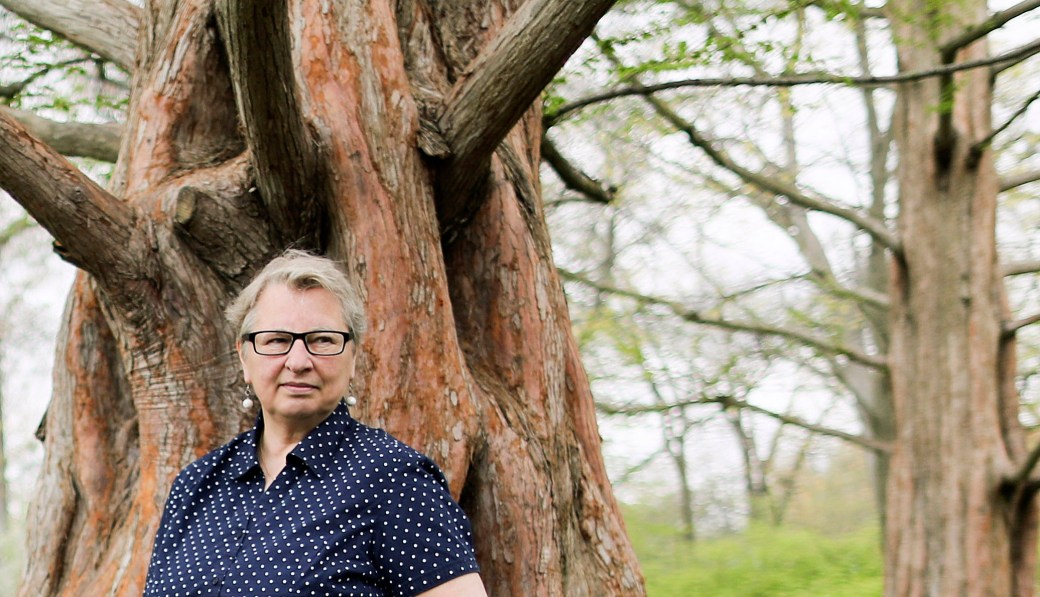
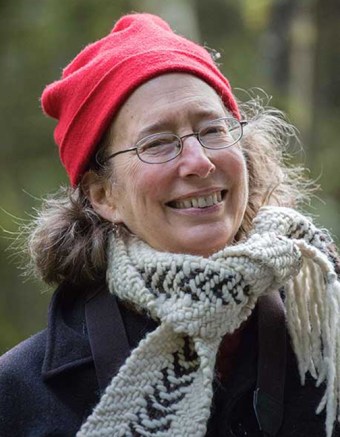
Nina Munteanu (photo by Richard Lautens)

The Toronto Star recently spoke to Nina Munteanu with two questions about climate change. These were included in a recent handbook published by the Star entitled “Undeniable: Canada’s Changing Climate—What We Can Do Now.” In it, The Star showed how the majority of Canadians place climate change as a top priority. In “Let’s Talk” The Star interviews computer scientist and head of UofT’s School of the Environment Steve Easterbrook. Questions involving local community action and the importance of hope.

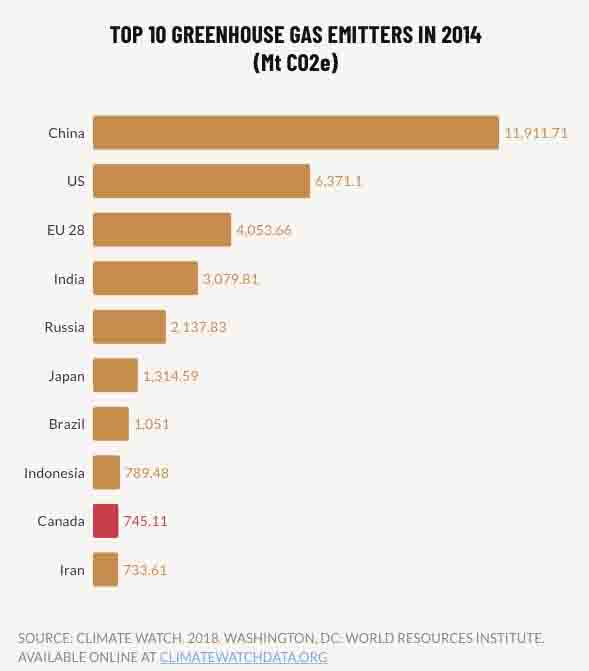
In “Your Carbon Footprint” The Star showed how China and the US together produce over half of the entire greenhouse gases emitted annually by the top ten countries that include EU 28, India, Russia, Japan, Brazil, Indonesia, Canada, and Iran. These ten countries currently emit seventy percent of the world’s greenhouse gases. China (11.912 Mt CO2) continues to lead in greenhouse gas emissions, being over twice the US, the next large emitter (6.371 Mt CO2).

Top Ten GreenhouseGas Countries

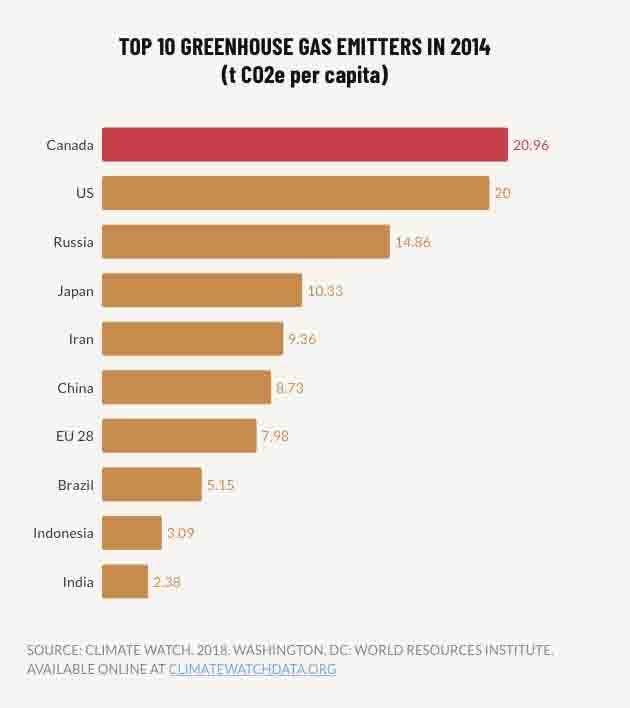
However, when The Star looked at per capita greenhouse emissions, Canada jumped to the top rank at 21 tonnes per person annually, followed by the US (20 tonnes/person). By comparison, China—ranked the highest for total emissions—measured only 8.73 tonnes per person annually. And Bangladesh measured 1.1 tonnes/person.

GreenhouseGases-PerCapita

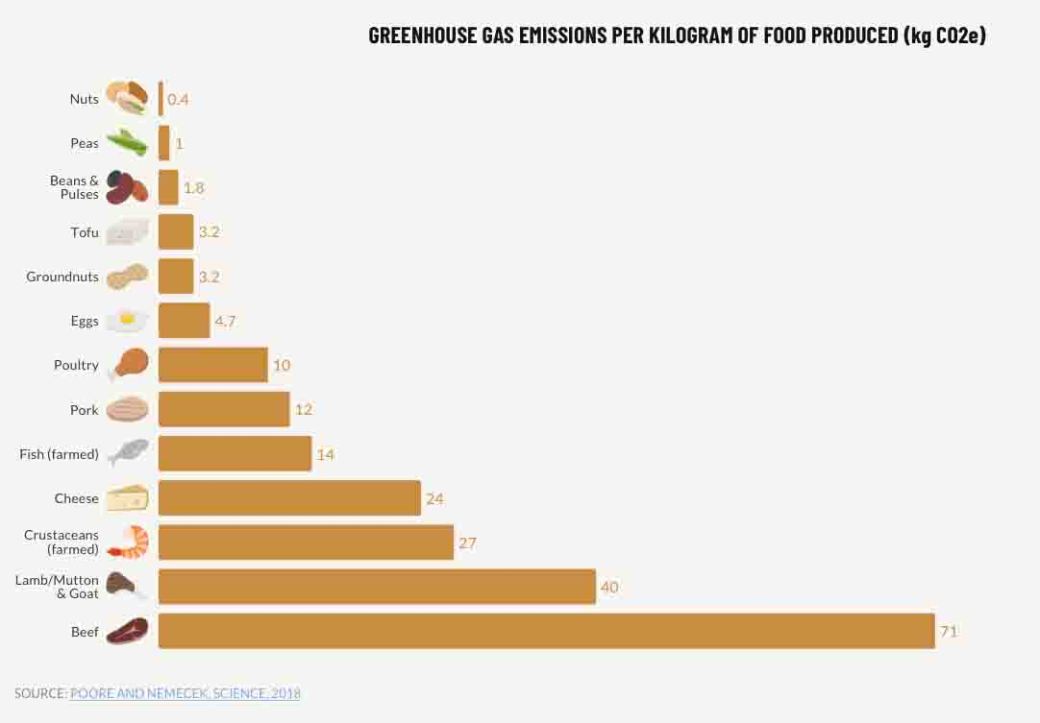
“Most scientists agree that in the coming decades we need to limit our individual annual carbon footprint to 1-2 tons,” says The Star. This entails making personal changes to cut our carbon output. One example is driving less or converting to a hybrid or electric car. “Our behaviours, whether good or bad, are contagious,” says The Star. I agree. It is important to not only do what we can but to share with others and provide our reasons. Seth Wynes, a geographer at the University of British Columbia concurs: “It’s not just about what you do, it’s about setting an example for others.” Research suggests, for example that homeowners are more likely to install solar panels when someone else does it first in their neighbourhood. Wynes in 2017 co-authored a study that ranks the most effective lifestyle changes to curb an individual’s carbon footprint.

In “Four Things You Can Do”, The Star suggests the following key initiatives:

  1. Eat less beef
  2. Live car-free or go hybrid / electric
  3. Invest in green infrastructure
  4. Reduce air travel

Greenhouse Gases-FOOD

The Star also provided good advice on how to talk to children about our changing climate. They provide excellent examples of children empowering themselves by making a difference—instead of becoming depressed with what they are inheriting. In “Political Checkup” The Star discusses with experts how we can best interact with our political leaders to engage and ensure positive change. In “Faith and Community” The Star showcases examples of faith communities addressing our waste stream.

In “The ChangeMakers” The Star asked the same two questions of five Canadians who are making climate change a top priority. They included:

  • Franny Ladell Yakelashek: 12-year old environmental rights activist from Victoria, BC
  • Jocelyn Joe-Strack: Indigenous scientist and storyteller, Whitehorse, Yukon
  • Kathy Bardswick: director of the Institute for Clean Growth and Climate Change, Guelph, ON
  • Gordon McBean: climatologist and professor emeritus at Western University, London, ON
  • Nina Munteanu: ecologist, instructor at The University of Toronto and author of eco-fiction and climate fiction, Toronto, ON.

Q1: What is the one thing about climate change that keeps you up at night?

Nina: I worry that my son and his kids will end up experiencing one of my dystopias from one of my books. My son lives in Vancouver, and my main concern is that he and his kids won’t have the chance to live safely and enjoy a stable and beautiful planet because we have wrecked it for them.

That leads me to the second thing that keeps me up at night, which is that nobody cares. Or that they are scared to care. We’re still going about our business like nothing is happening.

That really frustrates me. I’m a scientist and we’ve been talking about this for a long time; for me it’s been decades. My frustration is that we are still debating climate change, and we should be acting on it.

Q2: What is the one thing Canadians can do to act on climate change?

Nina: I think it has to be three things. First, plant a tree; make an actual difference through action. By doing that, we get out from hiding under the bed and face the monster of climate change and show that we care and that we are not alone. And that — taking direct action — will give us courage and hope.

Second, vote for green politicians. Politicians need to hear directly from their communities, they need you to push them to act on climate change.

Third, find your tribe and create a movement. Everyone says that people have the power, but that power comes best through numbers and solidarity. Find your tribe, and you’ll find yourself more motivated.

For answers to these two questions by the other changemakers, please go to the Toronto Star’s “What You Can Do About Climate Change” site.


nina-2014aaa

Nina Munteanu is a Canadian ecologist / limnologist and novelist. She is co-editor of Europa SF and currently teaches writing courses at George Brown College and the University of Toronto. Visit www.ninamunteanu.ca for the latest on her books. Nina’s bilingual “La natura dell’acqua / The Way of Water” was published by Mincione Edizioni in Rome. Her non-fiction book “Water Is…” by Pixl Press (Vancouver) was selected by Margaret Atwood in the New York Times ‘Year in Reading’ and was chosen as the 2017 Summer Read by Water Canada. Nina’s short story collection of eco-fiction can be found in “Natural Selection” published by Pixl Press. Her novel “A Diary in the Age of Water” will be released by Inanna Publications (Toronto) in 2020.

How Trees Can Save Us…Five Perspectives on Humanity’s Relationship with Our Forests

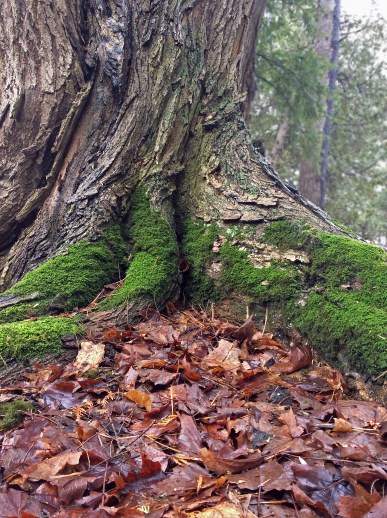
Cedar trunk base-LR

Cedar tree in Little Rouge Forest, Ontario (Nina Munteanu)

Alick Bartholomew, author of The Spiritual Life of Water, describes four geologic periods when forests thrived on this planet. The first was the Carboniferous, 350 million years ago, when land vertebrates established. The second was the Jurassic, 170 million years ago, when dinosaurs dominated the planet. The third, the Eocene epoch, 60 million years ago, witnessed the first primitive mammals. The last, the Holocene epoch, which began some 500,000 years ago, ushered in modern humanity. Bartholomew suggests that perhaps, “in each case the forests delivered a boost in the oxygen content of the atmosphere, which may have been a trigger for an evolutionary explosion of life forms.”

Ten thousand years ago, the land along the Mediterranean was covered in mixed forests of conifers and oak. Lebanon’s forests provided timber for the exploring ships of the Phoenician empire in third century BCE. North Africa, a fertile forest two thousand years ago, is now a desert. A thousand years ago, three quarters of the world was forest. Today forest and woodland cover only a third of the world. The UK is currently the least wooded area of Europe with 13% woodland cover; its ancient woodland is being removed at a faster rate than the Amazon rainforest. Humanity is currently cutting down trees at a rate of 15 billion a year. We are losing forests the size of New York City daily; every 100 days we lose forests the size of Scotland; within a single year we lose forest ecosystems the size of Italy.

Since humanity arrived, we have cut down trees for timber, agriculture and development. Our impact is a matter of scale. When humanity was a mere 300 million in pre-medieval times, forest ecosystems remained intact. We are now over 7 billion, doing essentially the same thing we did thousands of years ago. What may have been sustainable then is now extirpating entire complex ecosystems, along with species we may never know existed. Deforestation releases a massive carbon sink into the atmosphere, driving global warming. It is largely responsible for reducing populations of wildlife by half in the last 40 years, and for starting the sixth massive extinction event.

Clearcut gordon valley copy 2

Clearcut in Gordon Valley, Vancouver Island, BC (photo by T.J. Watts)

While too many of us do not understand or appreciate the global consequences of deforestation, we remain intimately and personally connected with trees: in ways we don’t realize or have forgotten.

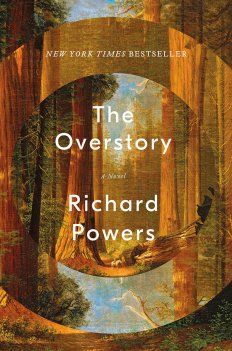
This article overviews the perspectives of five writers on the role and history of trees in global planetary health and our journey with climate change. I explore three non-fiction books and two fiction books. The non-fiction books include Witness Tree (2017) by Lynda Mapes, The Global Forest (2011) by Diana Beresford-Kroeger, and The Songs of Trees (2018) by David George Haskell. The two fiction books include The Overstory (2018) by Richard Powers and Barkskins (2016) by Annie Proulx. Each work is a compelling testament of humanity’s connection with trees, both historically and in the present. All provide powerful and evocative optimism in different ways.

SONY DSC

Ash tree, Little Rouge River forest, Ontario (photo by Nina Munteanu)


The Philosophical OPTIMISM of Lynda Mapes

LyndaMapes

Lynda V. Vapes

Seattle Times environmental reporter and author of Witness Tree, Lynda V. Mapes explores a changing natural world and humanity’s relationship with it through a single Century-old red oak tree over four seasons. Mapes brings in elements of physics, ecology, biology and sociology and philosophy to probe her witness tree and reveal a colourful history of aboriginal life, colonialism, commodification and human-caused climate change.

In describing her oak tree, journalist and author of Witness Tree, Lynda V. Mapes writes, “The big oak dominates its space…but it also supports a vast web of life and relies in turn on a menagerie of helpers, aboveground and below. With its crown in the wind and its roots in the teeming soil, the big oak connects earth and sky, and many millions of beings, and is home to each and to all. It is just one tree, and yet a whole world unto itself.”

WitnessTreeMapes reveals that her witness tree overcame a 1 in 500 chance of taking root from tiny acorn to seedling to become a thirteen-storey tall giant. Mapes considered her oak a living timeline that revealed through its phenology how climate change is resetting the seasonal clock. Mapes sought “the quiet testimony of living things.” Through an “intimate exploration” in which she dug below, climbed up and lay beneath her oak, Mapes found vulnerability, loss, renewal, and hope.

“No matter what else the future may bring, in an uncertain world forests are a repository of only good verbs:  Forests shelter. Nurture. Moderate. Cleanse. Regenerate. Provide. Connect. Sustain…Trees can be our wellspring of inspiration. More than building material, fuel, and carbon-storage utilities, forests are foundational to life on the earth, refugia for countless animals, and an endless source of human joy, renewal, and refreshment.”

“People and trees are meant to be together, and if we work at it, that’s how we will stay,” writes Mapes at the end of her book. It is both hope and warning. A quiet clarion for us to “remember” our place in the world and to embrace our relationship with trees as wisdom guide.

Mapes invites us to connect with the forest.

Fallen log stream-2012

Old growth forest on Vancouver Island, British Columbia (photo by Kevin Klassen)

The Practical OPTIMISM of Diana Beresford-Kroeger

Diana-and-the-tree3

Diana Beresford-Kroeger

In her book The Global Forest: 40 Ways Trees Can Save Us, botanist and medical biochemist Diana Beresford-Kroeger tells us that:

“A functioning forest is a complex form of life. It is interconnected by its own flora and driven by the mammals, the amphibians and insects in it. It is kept in place by fungi, algae, lichens, bacteria, viruses, and bacteriophages. The primogenitors of the forests are trees. They communicate by carbon-coded calls and mass-market themselves by infrasound. The atmosphere links forests into the heavens and the great oceans. The human family is both caught and held in that web of life.”

TheGlobalForestWritten with passionate lyricism and a mother’s nurturing spirit, Irish storyteller Beresford-Kroeger weaves a compelling tapestry of ancient forest lore with modern science to promote the global forest. Tapping into aboriginal wisdom and ancient pagan legend, Beresford-Kroeger invites you into the forest to explore the many beneficial and pharmaceutical properties of trees—from leaves that filter the air of particulate pollution, the cardiotonic property of hawthorn, fatty acids in hickory nuts and walnuts that promote brain development, to the aerosols in pine trees that calm nerves.

The titles of her chapters reveal an overarching agenda: “The Global Forest Has Within Itself a Master Plan for Sustainability”; “Climate Change Can Be Reversed: Simplicity, Sustainability, and Sanity”.

“This [global] forest is the environment that drives and fulfills the dream of each leaf in a vast rhythmic cycle called life. Nothing is outside. We are all of it in a unity that transcends the whole. Maybe, just maybe, this resonates of God. If that is so, then we are all His children, every earthworm, every virus, mammal, fish and whale, every fern, every tree, man, woman and child. One equal to another. Again and again.”

Beresford-Kroeger compels us to interact with and learn from the forest.


gnarly cedar tree

Gnarly “feet” of cedar tree in Little Rouge River forest, Ontario (photo by Nina Munteanu)


The Existential OPTIMISM of David George Haskell  

DavidGeorgeHaskell

David George Haskell

In The Songs of Trees: Stories from Nature’s Great Connectors, biologist David George Haskell pens an existentialist poem to life’s interconnected network. Haskell’s notion of ‘listening to trees’ arises not from metaphor or metaphysics but from a spiritual understanding of the woven tapestry of life.

 “For the Homeric Greeks, kleos, fame, was made of song. Vibrations in air contained the measure and memory of a person’s life. To listen was therefore to learn what endures. I turned my ear to trees, seeking ecological kleos. I found no heroes, no individuals around whom history pivots. Instead, living memories of trees, manifest in their songs, tell of life’s community, a net of relations. We humans belong within this conversation, as blood kin and incarnate members. To listen is therefore to hear our voices and those of our family…To listen is therefore to touch a stethoscope to the skin of a landscape, to hear what stirs below.”

SongsOfTreesIn his travels to visit iconic trees around the world, Haskell draws on the wisdom and moral ethics of “ecological aesthetics” to describe a natural beauty—not as individual property but as a world within a world of interactive life to which we belong and serve but do not own:
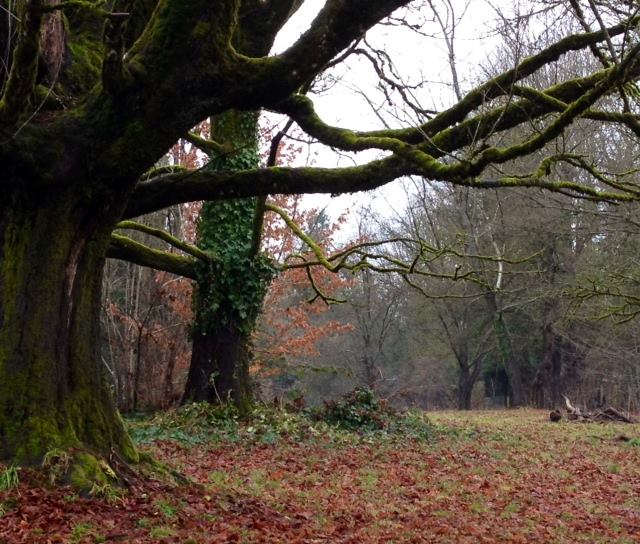
“We’re all — trees, humans, insects, birds, bacteria — pluralities. Life is embodied network…where ecological and evolutionary tensions between cooperation and conflict are negotiated and resolved…Because life is network, there is no ‘nature’ or ‘environment,’ separate and apart from humans. We are part of the community of life, composed of relationships with ‘others,’ so the human/nature duality that lives near the heart of many philosophies is, from a biological perspective, illusory…We cannot step outside life’s songs. This music made us; it is our nature…To listen to trees, nature’s great connectors, is therefore to learn how to inhabit the relationships that give life its source, substance, and beauty.”

In the vein of the naturphilosophie of Goethe and Schelling—and later of Carson, Thoreau, Eisely and Dillard—Haskell invites us to cultivate a strong sense of place and being, one that extends beyond “self” to the existential nature of experience. Glancing up a magnificent oak or beech tree reveals wood as “an embodied conversation between plant life, shudder of ground and yaw of wind.”

Haskell exhorts us to be the forest.

Old tree deer lake park

Old tree in Deer Lake Park, Burnaby, BC (photo by Nina Munteanu)

The Fierce OPTIMISM of Richard Powers  

RichardPowers

Richard Powers

At the heart of Richard Powers’s The Overstory are the pivotal lives of two women, botanist Patricia Westerford and college student Olivia Vandergriff. Both will inspire a movement against the destruction of forests.

Patricia Westerford—whose work resembles that of UBC’s Suzanne Simard—is a shy introvert who discovers that trees communicate, learn, trade goods and services, and have intelligence. When she shares her discovery, she is ridiculed by her peers and loses her position.  But, just as with Lynn Margulis and her theory of endosymbiosis, Westerford is finally validated. She is the archetypal ‘mother tree’, the metaphoric Tachigali versicolor, who ultimately brings the tangle of narratives together through meaning. Westerford writes in her book The Secret Forest:

mossy tree copy

Moss-covered cedar, Alberta (photo by Nina Munteanu)

“There are no individuals in a forest, no separable events. The bird and the branch it sits on are a joint thing. A third or more of the food a big tree makes may go to feed other organisms. Even different kinds of trees form partnerships. Cut down a birch, and a nearby Douglas fir may suffer…Fungi mine stone to supply their trees with minerals. They hunt springtails, which they feed to their hosts. Trees, for their part, store extra sugar in their fungi’s synapses, to dole out to the sick and shaded and wounded. A forest takes care of itself, even as it builds the local climate it needs to survive…A tree is a wondrous thing that shelters, feeds, and protects all living things. It even offers shade to the axmen who destroy it.”

TheOverstoryOlivia Vandergriff miraculously survives an electrocution to become an ecowarrior after she begins to hear the voices of the trees. She rallies others to embrace the urgency of activism in fighting the destruction of California’s redwoods and even camps in the canopy of one of the trees to deter the logging. When the ancient tree she has unsuccessfully protected is felled, the sound is “like an artillery shell hitting a cathedral.” Vandergriff weeps for this magnificent thousand-year old tree. So do I. Perhaps the real heroes of this novel are the ancient trees.
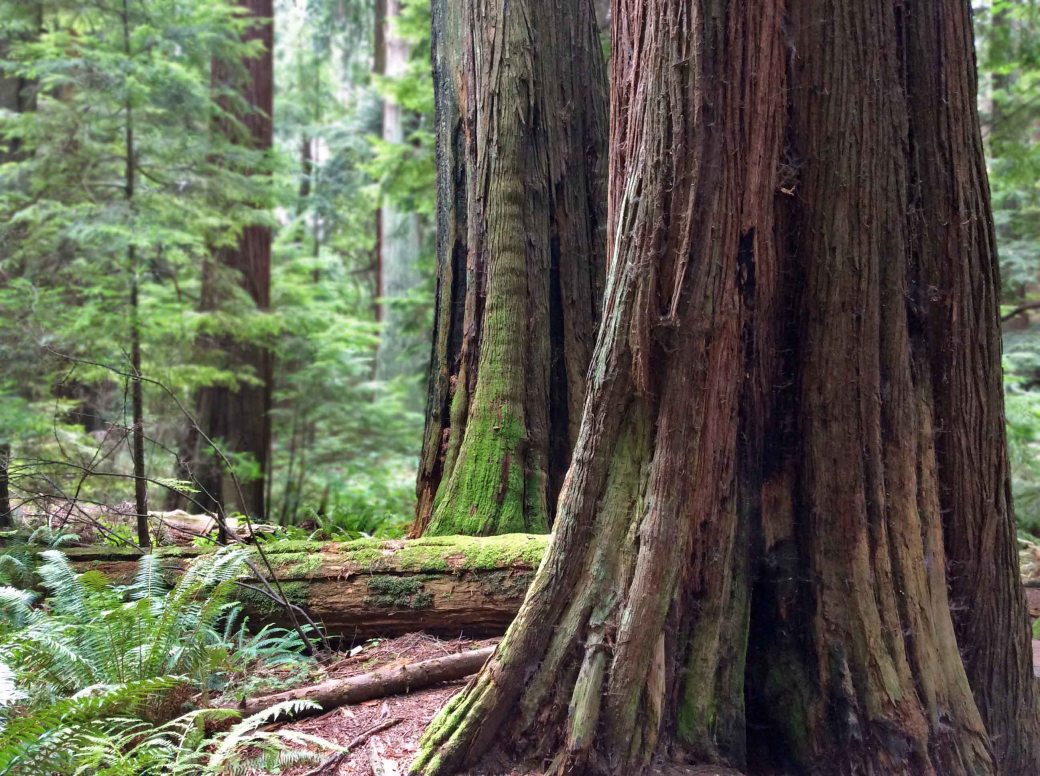
In his review of Overstory in The Guardian, Banjamin Markovits wrote, “ There is something exhilarating…in reading a novel whose context is wider than human life. Like Moby-DickThe Overstory leaves you with a slightly adjusted frame of reference… And I found, while reading, that some of what was happening to his characters passed into my conscience, like alcohol into the bloodstream, and left a feeling behind of grief or guilt, even after I put it down.”

Powers challenges us to champion the forest.

Cedar Giants-LHP

Ancient cedars in Lighthouse Park, West Vancouver, BC (photo by Nina Munteanu)

The Intellectual OPTIMISM of Annie Proulx  

AnnieProulx

Annie Proulx

Annie Proulx’s Barkskins chronicles two immigrants who arrive in Canada in 1693 (Rene Sel and Charles Duquet) and their descendants over 300 years of deforestation of North America starting with the arrival of the Europeans to contemporary global warming. “Barkskins” (woodcutters) are, in fact indentured servants who were brought from the Paris slums to the wilds of New France “to clear the land, to subdue this evil wilderness,” says their seigneur. Sel is forced to marry a native woman and their descendants live trapped between two cultures; Duquet runs away to become a fur trader and build a timber empire.

barkskinsProulx immerses the reader in rich sensory detail of a place and time, equally comfortable describing a white pine stand in Michigan and logging camp in Upper Gatineau to a Mi’kmaq village on the Nova Scotia coast or the stately Boston home of Charles Duquet. The foreshadowing of doom for the magnificent forests is cast by the shadow of how settlers treat the Mi’kmaq people. The fate of the forests and the Mi’kmaq are inextricably linked through settler disrespect and a fierce hunger for “more.”

The novel rolls out events in a relentless stream of life and death; no character is safe from the ravages of nature or the notions of that time period. While most of the book flows like a great amoral river—filled with feckless, unheroic and at times miserable characters—there are moments of emotional shoring. They act like exclamation marks for their rarity. By the 1830s, the character, German forester Armenius Breitsprecher, expresses anger and frustration with his colleagues:

LittleRougeRiver-TreeUp copy

White pine, Little Rouge River forest, Ontario

“Not for the first time he saw that the acquisitive hunger of Duke & Sons was so great they intended to clear the continent. And he was helping them. He hated the [lumber companies] clear-cut despoliation, the insane wastage of sound valuable wood, the destruction of soil, the gullying and erosion, the ruin of the forest world with no thought for the future—the choppers considered the supply to be endless—there was always another forest.”

Proulx’s unsentimental narrative and grand historic set-pieces lure the reader first to passively observe humanity’s struggles with the grand forest; then, once immersed, we are nudged to participate along with the awakening of the human consciousness over the generations of her 300-year long saga—first in the early 1900s through Conrad and Charley who recognize the importance of a functional forest ecosystem then through current day ecologist Sapatisia Sel (descendant of Rene), who responds to a scientist’s claim of  “A great crisis is just ahead” with “The forests, the trees, they can change everything!”

Cedar-boardwalk copy

Giant Cedars boardwalk, Alberta (photo by Nina Munteanu)

The suggestion is that, while we remain inextricably embedded in time and place—we are also progenitors of change to our future generations. Three hundred years ago, our beliefs and knowledge prevented us from acting sustainably. We know better now. The time to save our forests and let them save us is now.

“The reader comes to realize that the novel isn’t really about the human characters so much as it is about the forests,” Gus Powell of The National Post concludes of Barkskins. “As [the forests] disappear, the narrative seems to recede in importance, revealing a crucial interdependence between the human and the natural world previously handled almost entirely as subtext. This is especially true in the novel’s closing, where the anger and despair that have characterized the novel shift into an outspoken environmental advocacy.” This is the essence of optimism…

Proulx dares us to believe in the forest.

*****

Forest conifers Metchosin

Forest in Metchosin, BC (photo by Nina Munteanu)

Whether philosophical, pragmatic, existentialist, fierce or intellectual, “Optimism is the faith that leads to achievement…No pessimist ever discovered the secret of the stars, or sailed to an uncharted land, or opened a new doorway for the human spirit,” wrote Helen Keller. In her recent book Breaking Murphy’s Law, Suzanne Segerstrom demonstrates the connection between optimists and their investment in goal setting and achievement. The trick to avoiding the cynicism that may come with complacent optimism (thinking, hoping and wishing for good things to happen) is through the simple action of engagement. “Optimists,” says Segerstrom, “are happy and healthy not because of who they are but because of how they act. Optimism is more what we do than what we are, and thereby can be learned.”

I hope so. If we connect, interact and learn, and be the forest, we may find the strength and passion to champion the forest we believe in.


nina-2014aaa

Nina Munteanu is a Canadian ecologist / limnologist and novelist. She is co-editor of Europa SF and currently teaches writing courses at George Brown College and the University of Toronto. Visit www.ninamunteanu.ca for the latest on her books. Nina’s bilingual “La natura dell’acqua / The Way of Water” was published by Mincione Edizioni in Rome. Her non-fiction book “Water Is…” by Pixl Press (Vancouver) was selected by Margaret Atwood in the New York Times ‘Year in Reading’ and was chosen as the 2017 Summer Read by Water Canada. Her novel “A Diary in the Age of Water” will be released by Inanna Publications (Toronto) in 2020.


Investing in The Future by Embracing (Climate) Change

Wir müssen uns immer verändern, erneuern, verjüngen; sonst verhärten wir.—Goethe


Nina-reading-Ward Is

Nina reading “How to Read Water” on Algonquin Island, Ontario (photo by Nina Munteanu)

In his book, How to Read Water, Tristan Gooley describes a phenomenon called clapotis gaufre. Also known as “waffled clapotis”, the term comes from the French word (clapotis) for “lapping” and describes a standing wave phenomenon created by the troughs and crests of waves as they hit and reflect back from a barrier. The incoming and reflected outgoing waves, in passing each other, form a waffle-pattern that bobs up and down but otherwise appears stationary.

In fact, it is far from stationary.

But we like “stationary.” So much so that, despite the magnitude of planetary-scale change, everything appears stationary to us. People go on with their daily lives as they have for generations: driving cars; living profligately; wastefully consuming energy, disposables and water; bickering about fuel taxes and job security. But this is an illusion, a very dangerous one. Surface inertia hides a depth of motion. In a river, where high-velocity water roars over a steep river-bottom depression, a frothy stationary breaker forms; it is the most dangerous part of the river. What we can’t see, we think won’t hurt us. But what if we could see the ominous dark cloud of carbon dioxide and methane blotting more and more of our sky? What if we could see the fumes billowing out of our cars and the heat radiating from our homes? Or smell the toxins spilling into our rivers and lakes? Or the quiet extinctions happening by the minute in the wilderness?

oneyearbeijing

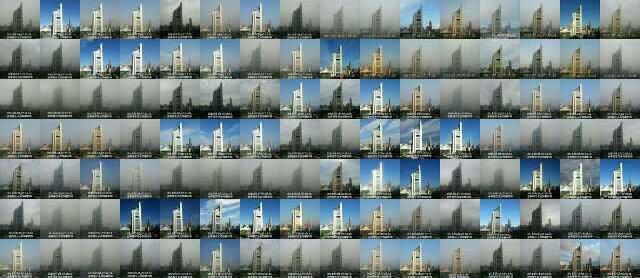
Photographs of same Beijing location over a year showing smog days


Old tree deer lake park

Old oak tree in Deer Lake Park, BC

What if we could see the fractal signs of change?

Nothing in nature stays the same. If it does, that’s because change has brought it back to what it once was. Trees move. They grow wider and taller; they just do it at a pace beyond our impatient lifestyle. Because their motion is invisible, they are invisible. We think of trees as stationary objects, not living beings. Like a standing wave of frozen time. We observe through the hurried lens of human impatience and self-preoccupation. A quick glance takes in a scene. We forget that we can “see” with other senses. Smell. Touch. Taste. Hearing. As hyposmia and disinterest dulls our senses, we grow less able to recognize the verisimilitudes of Nature’s trompe l’oeils. Trapped by our preordained notions, we no longer see the changes we’re not prepared to see. And that’s the change that kills us.

In witnessing the collapse of fish populations on the west coast in the ‘90s, UBC fisheries biologist Daniel Pauly noticed that people just went on fishing ever smaller fish. The collapse occurred through what he called “creeping disappearance.” Pauly named this impaired vision “shifting baseline syndrome,” a willing ignorance of consequence based on short-term gain.

One could argue that the inability to feel and connect beyond our immediate line of sight can be a good thing—a kind of selective memory that allows us to adapt to each “new normal.” Mothers of several children can testify to the benefits of “forgetting” their hours of labour to give birth. Hence the ability and willingness to repeat this very painful experience. Is this part of successful biological adaptation in all of us? The ability to reset?

Nina-Kevin playing

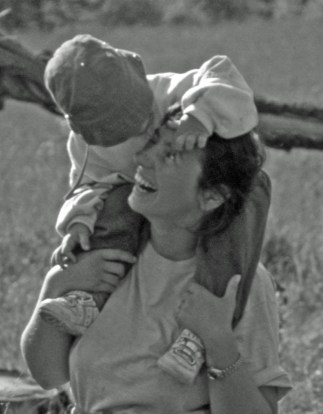
Author and her son enjoy an outing

Or is it rather that our mother chooses not to forget but to relegate her memory of the previous birth behind something far more beautiful and wondrous to remember and something she is deeply connected to: the miraculous birth of her child—her investment in the future. Shifting baseline syndrome is part of a larger amnesia, one that encompasses many generations; a selective memory driven by short-sightedness that comes mostly from lack of connection. But to successfully invest in our future, that is precisely what we must do: connect.

If only we could see the fractal signs of change…

Bill McKibben wrote in The New Yorker, “Climate change isn’t just a threat. It’s an opportunity for us to live happier, more fulfilling lives.” True happiness comes with long-term fulfillment, not short-term material wealth and comfort. When we focus from ourselves to embrace the changing world—to connect—we discover a well-spring of altruistic happiness. When we embrace, we transcend. When we transcend, we become fluid with change. That is when we succeed.

quote by Goethe: “We must always change, renew, rejuvenate ourselves; otherwise we harden.”


nina-2014aaa

Nina Munteanu is a Canadian ecologist / limnologist and novelist. She is co-editor of Europa SF and currently teaches writing courses at George Brown College and the University of Toronto. Visit www.ninamunteanu.ca for the latest on her books. Nina’s bilingual “La natura dell’acqua / The Way of Water” was published by Mincione Edizioni in Rome. Her non-fiction book “Water Is…” by Pixl Press (Vancouver) was selected by Margaret Atwood in the New York Times ‘Year in Reading’ and was chosen as the 2017 Summer Read by Water Canada. Her novel “A Diary in the Age of Water” will be released by Inanna Publications (Toronto) in 2020.


Nina Munteanu’s Short Story “Natural Selection” features in Eagle Literary Magazine Issue #1

NaturalSelection-IonutiBanuta

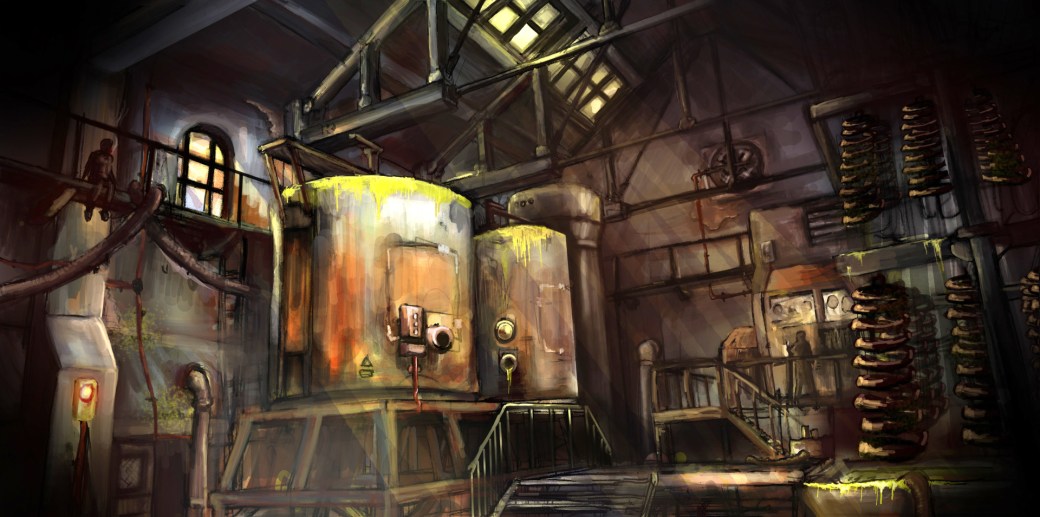
Illustration by Ionuț Bănuță

Sarah reached the summit, panting for breath, and grinned at her prize. She’d just caught the sun trembling over the horizon, before it dipped out of sight and left a glowing sky under pewter clouds. She glanced behind her, where the towers of Icaria blazed like embers catching fire. Struck by their beauty, Sarah admired their smooth, clean surfaces. When she looked back toward the path, the sanguine images burnt into her eyes.

Which way should she go? The deer path she’d followed now diverged into two smaller ones. She shifted her mind to veemeld with her AI, DEX. Which way should we go, DEX?

Her AI answered in her head: Sarah, shouldn’t you be returning inside? It’s dangerous to stay out this long. Statistics are now against you for getting caught—

Just a few more minutes, DEX. How about to the right?

“Natural Selection” tells the story of Sarah, an unruly veemeld who can speak to the machine world that runs Icaria. Given her immunity to the environmental disease ravaging the enclosed city, Sarah—at least her genetic material—is sought after by the Ecologist government in a bid to maintain order and reshape humanity through “selection”; but Sarah fraternizes with unsavory friends and her truant behaviour poses a great risk to her freedom and survival.

Eagle-1issue-summer2019_Cover_1600“Natural Selection” first appeared in 2013 in my short story collection of the same name by Pixl Press. The story returns in Issue #1 of Eagle Literary Magazine, Pan European Science Fiction & Fantasy Collection (Summer 2019; Nexus Project) edited by Mugur Cornilă and featuring the impeccable artwork of Ionuț Bănuță.

In the 2013 Pixl Press short story collection my introduction describes the theme that embraces the nine stories in the collection:

How do we define today a concept that Darwin originated 200 years ago in a time without bio-engineering, nano-technology, chaos theory, quantum mechanics and the internet? We live in an exciting era of complicated change, where science based on the limitation of traditional biology is being challenged and stretched by pioneers into areas some scientists might call heretical. Endosymbiosis, synchronicity, autopoiesis & self-organization, morphic resonance, Gaia Hypothesis and planetary intelligence. Some of these might more aptly be described through the language of meta physics. But should they be so confined? It comes down to language and how we communicate.

Is it possible for an individual to evolve in one’s own lifetime? To become more than oneself? And then pass on one’s personal experience irrevocably to others—laterally and vertically?

On the vertical argument, the French naturalist Jean-Baptiste Lamark developed a theory of biological evolution in the early 19th century considered so ridiculous that it spawned a name: Lamarkism. His notion — that acquired traits could be passed along to offspring—was ridiculed for over two hundred years. Until he was proven right. Evolutionary biologists at Tel Aviv University in Israel showed that all sorts of cellular machinery — an intelligence of sorts — played a vital role in how DNA sequences were inherited. When researchers inserted foreign genes into the DNA of lab animals and plants, something strange happened. The genes worked at first; then they were “silenced”. Generation after generation. The host cells had tagged the foreign genes with an “off switch” that made the gene inoperable. And although the new gene was passed onto offspring, so was the off switch. It was Larmarkism in action: the parent’s experience had influenced its offspring’s inheritance. Evolutionists gave it a new name. They called it soft inheritance [also known as epigenetics].

NaturalSelection-IonutBanua2

Illustration by Ionuț Bănuță

Horizontal gene transfer (HGT) is the movement of genetic material between organisms other than by vertical transmission of DNA from parent to offspring. Jumping genes (transposons) are mobile segments of DNA that may pick up a gene and insert it into a plastic or chromosome. Pieces of DNA move from one locus to another of a genome without parent-to-offspring by horizontal transposon transfer (HTT). Epigenetics describes the modification of DNA expression through DNA methylation—and results in “Lamarkism.” Transgenerational epigenetic inheritance is the new black: genes and environments interacting. Where do we end and where does environment begin? Researchers have proven the significant role of environmental feedback through HGT in evolutionary success. Researchers showed that up to 20% of a bdelloid rotifer’s genome is made of foreign genes that they stole from the environment through horizontal gene transfer and gene conversion. This compares to about 1% for humans and a fifth for tardigrades.

—excerpts from “A Diary in the Age of Water” due for release in 2020 by Inanna Publications.

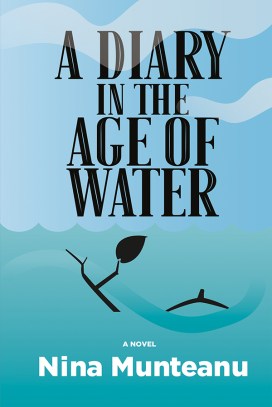
Diary Water cover finalAs for passing on one’s experience and acquisitions to others laterally, education in all its facets surely provides a mechanism. This may run the gamut from wise mentors, spiritual leaders, storytellers, courageous heroes to our kindergarten teacher.  Who’s to say that these too are not irrevocable? This relies, after all, on how we learn, and how we “remember”.
Evolution is choice. It is a choice made on many levels, from the intuitive mind to the intelligent cell. The controversial British botanist Rupert Sheldrake proposed that the physical forms we take on are not necessarily contained inside our genes, which he suggested may be more analogous to transistors tuned in to the proper frequencies for translating invisible information into visible form. According to Sheldrake’s morphic resonance, any form always looks alike because it ‘remembers’ its form through repetition and that any new form having similar characteristics will use the pattern of already existing forms as a guide for its appearance.  This notion is conveyed through other phenomena, which truly lie in the realm of metaphysics and lateral evolution; concepts like bilocation, psychic telegraphing, telekinesis and manifestation. Critics condemn these as crazy notions. Or is it just limited vision again? Our future cannot be foretold in our present language; that has yet to be written. Shakespeare knew this…

There are more things in heaven and earth , Horatio, than are dreamt of in your philosophy—Shakespeare

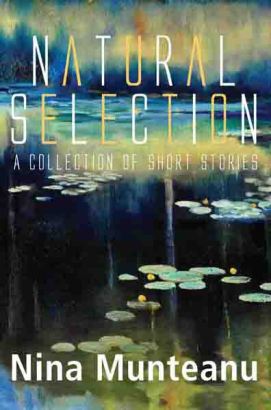
NaturalSelection-front-webEach story in the “Natural Selection” short story collection reflects a perspective on what it means to be human and evolve in a world that is rapidly changing technologically and environmentally. How we relate to our rapidly changing fractal environments—from our cells to our ecosystems, our planet and ultimately our universe—will determine our path and our destiny and those we touch in some way.

My friend Heidi Lampietti, publisher of Redjack Books, expressed it eloquently, “For me, one of the most important themes that came through in the collection is the incredible difficulty, complexity, and importance of making conscious choices — and how these choices, large and small, impact our survival, either as individual humans, as a community, a species, or a world.”

DarwinsParadox-Cover-FINALsmall“Natural Selection” also features the sprawling semi-underground AI-run city of Icaria (a post-industrial plague Toronto) that was first introduced in my novel “Darwin’s Paradox” and is a character itself. Sarah is a “gifted” and troubled misfit—not in sync with the rest of the population. Yet her choices—and how she is treated by her community— will influence an entire species and world.


You can purchase Issue #1 of Eagle Literary Magazine in the United Kingdom, United States, Spain, Italy, France, Germany, Japan, Canada.


nina-2014aaaNina is a Canadian scientist and novelist. She worked for 25 years as an environmental consultant in the field of aquatic ecology and limnology, publishing papers and technical reports on water quality and impacts to aquatic systems. Nina has written over a dozen eco-fiction, science fiction and fantasy novels. An award-winning short story writer, and essayist, Nina currently lives in Toronto where she teaches writing at the University of Toronto and George Brown College. Her non-fiction book “Water Is…”—a scientific study and personal journey as limnologist, mother, teacher and environmentalist—was picked by Margaret Atwood in the New York Times as 2016 ‘The Year in Reading’. Nina’s most recent novel “A Diary in the Age of Water”— about four generations of women and their relationship to water in a rapidly changing world—will be released in 2020 by Inanna Publications.

Writing About the Truth…and Other Lies: Monsanto’s Big Cheat

The June 2019 issue of Walrus Magazine addresses a current publishing crisis in academia. In his article “Fake Science Is the New Fake News,” reporter Alex Gillis reveals the alarming rise of fake and bogus professional journals and how scientists are both duped and drawn to publish with them.

The lure came from frustrations of scientists with the very gate-keeping devices that ensure good science is being conducted and accurately reported: high standards for acceptance; long wait times for peer review and publication; and high expense to the scientist. With the advent of online journals and the open-access model (that allowed free access), many scientists flocked to them, claiming more timely and less expensive publication. Unfortunately, the open-access model that made reporting of and access to science more easy, also permitted its exploitation by unscrupulous entrepreneurs who set up predatory (fake) journals. This allowed scientists with less integrity to publish material of lower standard. Even more insidious, the model and its fake journals also supports fake science with an agenda. Essentially, science as propaganda.

1984Nineteen Eighty-Four kind of science.

An example of the publication of Nineteen Eighty-Four kind of science with corporate motive was revealed in 2018 with the lawsuit against Monsanto (now part of Bayer) in which evidence showed that Monsanto had been funding junk studies to discredit legitimate research about its cancer-causing herbicide, Roundup. A terrible example in 2015 is the fake studies that underplayed risks to children exposed to lead from improperly maintained pipes in the drinking water service lines in Flint, Michigan.

So, what is it to write about the truth?

Here’s a bit of truth from seven years ago: New York Times reporter Stephanie Strom in an article on September 19th, 2012, entitled Uneasy Allies in the Grocery Aisle: “Giant bioengineering companies like Monsanto and DuPont are spending millions of dollars to fight a California ballot initiative aimed at requiring the labeling of genetically modified foods. That surprises no one, least of all the proponents of the law, which if approved by voters would become the first of its kind in the nation.”

Let’s dig a bit deeper into this truth: “companies behind some of the biggest organic brands in the country—Kashi, Cascadian Farm, Horizon Organic—also joined the anti-labeling effort, adding millions of dollars to defeat the initiative, known as Proposition 37.”

Strom revealed even deeper truths when she disclosed that these well-known “organic” companies are owned by larger conglomerates like Kellogg, General Mills, Dean Foods, Smucker’s and Coca-Cola. Other food companies who had thrown in funds to help defeat the bill for transparency include PepsiCo., Neslé, and ConAgra Foods.

Strom reported that those who support the bill to label GMO products include Whole Foods, Nature’s Path (a Canadian company) Organic Valley, Cliff Bar and Amy’s Kitchen.

Whenever an issue of importance arises, the truth reveals itself. And sometimes in the oddest way. It often slides in through a back door. I’m not just talking about factual truth; I’m talking about resonating hair-standing gut-grabbing truth.

The kind of truth that resonates through you in a scintillating frisson. The kind of truth that stops you mid-stride, like someone shouting your name. Subversive truth. The kind of truth that vibrates deep inside and radiates out in a flood of epiphany.  The kind of truth that stirs your heart in a relentless wave of flaming light.

The kind of truth that “changes” you.

At first glance it’s rather obvious why those fighting the bill were against it: they had something to lose in transparency. The question is, why do they think that way? These giant biotech food companies are feeding the entire world, after all, with revolutionary strains of super-plants. They are doing a great good, surely. Could it simply be a concern that they may lose some customers who do not wish to consume GE products but who are unwittingly doing so now? That is being dishonestly self-serving as well as short-sighted (the European Union has required biotech labeling since 1997—it’s just a matter of time).

Could it be the bad publicity from findings of the long-term effects of GMO products and Roundup on test animals? (See the incendiary paper by French and Italian scientists in Food Chem. Toxicol., referenced below, that started it all).  Despite the barrage of bad press, the paper’s results could not be refuted entirely or ignored (if only from the basis of scientific inquiry and professional due diligence to do with Type II Error).

Or is it more insidious?

Far more insidious than a lie is to dissemble with a half-lie—or half-truth—a truth that veils a festering lie beneath its candy-coated mantle of equivocation. A “truth” so delicious that we want to believe it, even when we see the lie lurking beneath. Little lies always hide bigger lies.

For more than a decade, consumers in North America have purchased cereals, snack foods, and salad dressings, among other products, blithely unaware that these products contained ingredients from plants whose DNA was manipulated in a laboratory.

Here’s my witnessed truth: The aggressive multi-million dollar campaign waged by multi-national corporations against transparency in food labeling in the USA is the culmination of self-serving protectionism in a most heinous way. Their decade-long silence and current reluctance to label their products (and all this before the Seralini et al. study) points to a far greater lie.

Since the long-term toxicity study by Seralini et al. was released in Food & Chemical Toxicology, a massive campaign to discredit the study was waged on the Internet. This despite the soundness of the 2-year study, its glaringly obvious results (e.g. test animals died 2-3 times more quickly than controls among many other findings) and the fact that it sets precedent by being the longest and most detailed study ever conducted on a herbicide and a GMO to date; all previous studies by Monsanto labs and others were only 90-day trials (and we now know that these studies were fake studies).

So, what is it to write about the truth?

I’ve been a practicing scientist for over twenty years. I did research and wrote papers that were published in scientific peer-reviewed journals. I diligently used the scientific method, hypothesis-testing, objective observation and appropriate statistics to back up my work. I also write articles for magazines, blogs and places like this site. I write short stories and novels. I write how-to books and guidebooks. And I write letters. Lots of letters. In all this, I have made a point to do my research. I try always to go to the source and verify my information through cross-checking, and various other quality assurance procedures I learned over the years to best represent and communicate the truth.

For instance, in writing this article, I perused many articles that presented both sides of the several issues I covered, including the source paper by Seralini et al.

Science is the rational tool for the pursuit of truth. This is why scientists are burdened to proceed under an objective protocol in their premise presentation, experimental design, methodology and interpretation and conclusions drawn. Because the introduction of error and bias is possible in each of these areas, researchers with integrity ensure through design and quality assurance protocol that these errors and biases are minimized. This includes the use of contols, sufficient sample size and statistical power, blind or even double-blind experiments and more. Experiments are reported with sufficient transparency to be replicated (an icon of good science).

Once they are reported in a paper, results transform from science into politics. Objectivity gives way to agenda. That is inevitable. However, what has changed in the last decade is that science itself has become seconded for agenda. Science by agenda to fulfill a propaganda is flooding in as assuredly as the rising seas of climate change.

Gillis writes: “Fake and flawed studies are so pervasive that the presumed authority of an expert or researcher in a scholarly journal is no longer what it used to be…the traditional knowledge-sharing process has been corrupted.”

america-missouri02

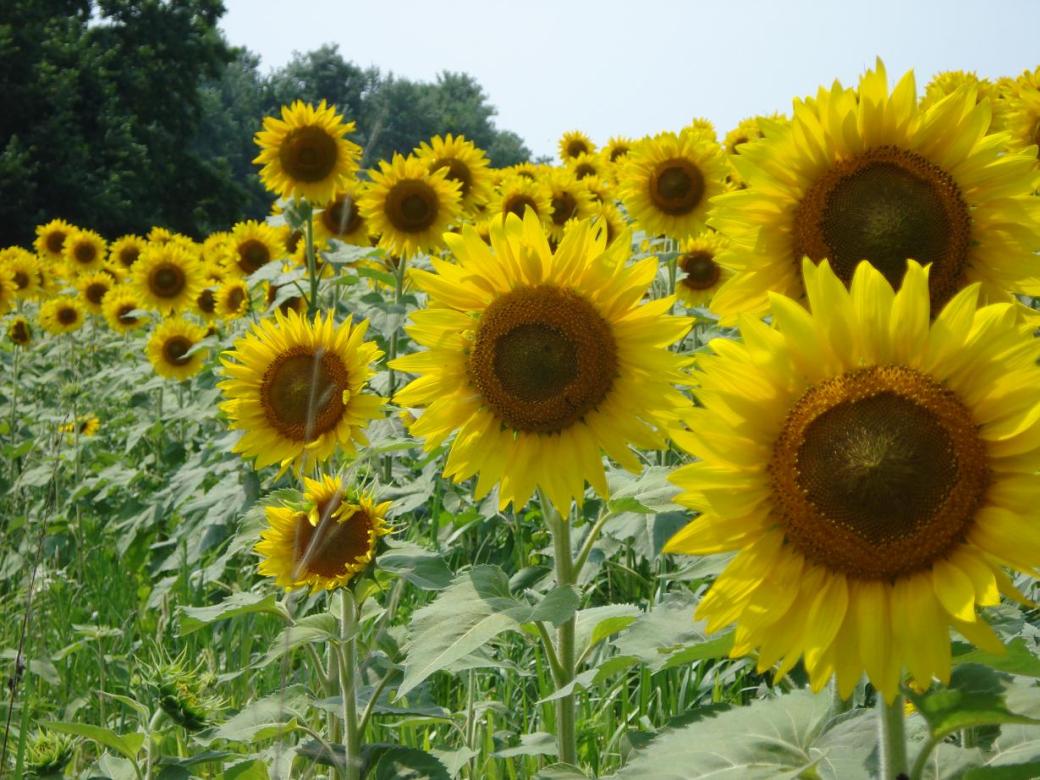
Sunflowers in Missouri (photo by Nina Munteanu)

Who are the politicians behind the “soldiers” of science and what are their motives? That is where the truth lies.

In the end, I have found that listening to the conviction of my heart, to my inner “soul wisdom”, best serves the truth. Then again I prefer the resonating hair-standing gut-grabbing truth.

Reference:

Gillis, Alex. 2019. “The Rise of Junk Science.” Walrus Magazine, Toronto, ON. June 2019.

Seralini, G.-E., et al. 2012. “Long term toxicity of a Roundup herbicide and a Roundup-tolerant genetically modified maize.” Food Chem. Toxicolhttp://www.sciencedirect.com/science/article/pii/S0278691512005637

Strom, Stephanie. 2012. “Uneasy Allies in the Grocery Aisle.” New York Times, New York, September 19, 2012.

nina-2014aaa

Nina Munteanu is a Canadian ecologist / limnologist and novelist. She is co-editor of Europa SF and currently teaches writing courses at George Brown College and the University of Toronto. Visit www.ninamunteanu.ca for the latest on her books. Nina’s bilingual “La natura dell’acqua / The Way of Water” was published by Mincione Edizioni in Rome. Her non-fiction book “Water Is…” by Pixl Press (Vancouver) was selected by Margaret Atwood in the New York Times ‘Year in Reading’ and was chosen as the 2017 Summer Read by Water Canada. Her novel “A Diary in the Age of Water” will be released by Inanna Publications (Toronto) in 2020.

Book Review: “The Windup Girl” When Monsanto Gets Its Way…

Windup GirlPaolo Bacigalupi’s 2015 biopunk science fiction novel The Windup Girl occurs in 23rd century post-food crash Thailand after global warming has raised sea levels and carbon fuel sources are depleted. Thailand struggles under the tyrannical boot of ag-biotech multinational giants such as AgriGen, RedStar, and PurCal—predatory companies who have fomented corruption and political strife through their plague-inducing and sterilizing genetic manipulations. The story’s premise could very easily be described as “what would happen if Monsanto got its way?”
Bacigalupi’s story opens in Bangkok, “City of Angels”, now below sea level and precariously protected by a giant sea wall and pumps that run on bio-power:

Windup Girl-closeIt’s difficult not to always be aware of those high walls and the pressure of the water beyond. Difficult not to think of the City of Divine Beings as anything other than a disaster waiting to happen. But the Thais are stubborn and have fought to keep their revered city of Krung Thep from drowning. With coal-burning pumps and leveed labor and a deep faith in the visionary leadership of their Chakri Dynasty they have so far kept at bay that thing which has swallowed New York and Rangoon, Mumbai and New Orleans.

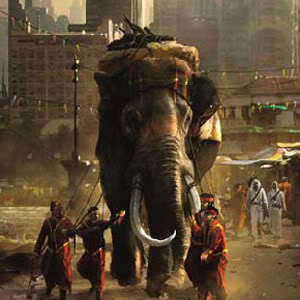
Energy storage in this post-oil society is provided by manually-wound springs using cruelly mistreated genehacked megodonts—elephant-slave labor. Biotechnology dominates via international mega-corporations—called calorie companies—that control food production through genehacked seeds. The companies use bioterrorism and economic hitmen to secure markets for their products—just as Monsanto is currently doing. Plagues (some they created, others unintended mutations) have wiped out the natural seed stock, now virtually supplanted by genetically engineered sterile plants and mutant pests such as cibiscosis, blister rust, and genehack weevil. Thailand—one of the economically disadvantaged—has avoided economic subjugation by the foreign calorie companies through some ingenuity—a hidden seedbank of diverse natural seeds—and is now targeted by the agri-corporations.

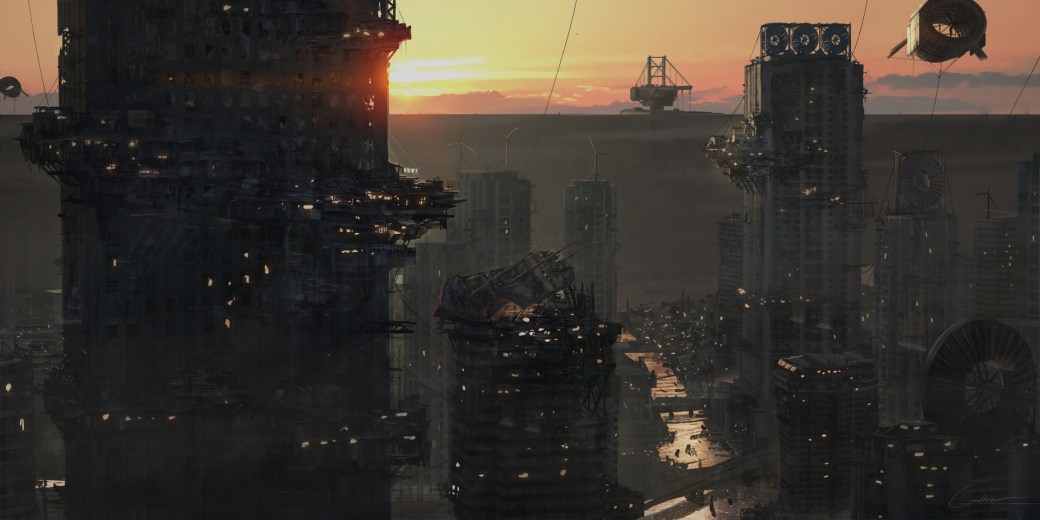
julien-gauthier-bangkok

future Bangkok envisioned by Julien Gauthier

Bacigalupi’s opening entwines the clogged and crumbling city of Bangkok and its swarming beggars, slaves and laborers in a microcosm of a world spinning out of control:

Overhead, the towers of Bangkok’s old Expansion loom, robed in vines and mold, windows long ago blown out, great bones picked clean. Without air conditioning or elevators to make them habitable, they stand and blister in the sun. The black smoke of illegal dung fires wafts from their pores, marking where Malayan refugees hurriedly scald chapatis and boil kopi before the white shirts can storm the sweltering heights and beat them for their infringements.

Anderson Lake is a farang (of white race) who owns an AgriGen factory trying to mass-produce kink-springs—successors to the internal combustion engine) to store energy. The factory is in fact a cover for his real mission: to find and exploit the secret Thai seedbank with its wealth of genetic material. We later discover that Lake is an economic hitman and spy whose previous missions have destroyed entire countries for the sake of monopoly.

Emiko is an illegal Japanese “windup” (genetically modified human), owned by a Thai sex club owner, and treated as a sub-human slave. When she meets Lake, he cavalierly shares that a refuge in the remnant forests of northern Thailand exists for people like her (the “New People”); Emiko dreams of escaping her bonds to find her own people in the north. But like Bangkok itself, both protected and trapped by the wall against a sea poised to claim it—a bustling city of squalor caught up in the clash of new and old—Emiko cannot escape who and what she is: a gifted modified human—and possible herald of a sustainable future—vilified and feared by the very humanity that created her.

Bangkok-floating market

Bangkok’s floating market

Bangkok emerges as a central character in a story that explores the paradox of conflicting dialectics battling for survival in a violently changing world. Anyone who has spent time in Bangkok will recognize the connective tissue that holds together its crumbling remnants with ambitious chic. Just like the novel’s cheshires: genetically created “cats” (made by an agri-giant as a “toy”) that wiped out the regular cat Felis domesticus.

cheshire-cat

Cheshire Cat of “Alice in Wonderland”

Named after Alice in Wonderland’s Cheshire Cat, these crafty creatures have adapted well to Bangkok’s unstable environment. The cheshires exemplify the cost of unintended consequence (a major theme in the novel); the cheshires also reflect the paradoxical nature of a shape-shifting city of Thais, Chinese and Malaya refuges who struggle to survive in a place that is both haven and danger:

Cheshire cat-disappearing

Cheshire cat disappearing

The flicker-shimmer shapes of cheshires twine, yowling and hoping for scraps … The old man’s flinch is as hallucinogenic as a cheshire’s fade—one moment there, the next gone and doubted … The devil cats flicker closer. Calico and ginger, black as night—all of them fading in and out of view as their bodies take on the colors of their surroundings.

Captain Jaidee Rojjanasukchai is a righteous white shirt—the strong arm of the Ministry of the Environment. He is a faithful Thai Buddhist, whose only weakness is his sense of invincibility borne from a mistaken sense of government integrity. Revered by fellow white shirts as the “Tiger of Bangkok,” he is incorruptible—we find out that he may be the only person in the entire place who refuses to be swayed by bribes. A true and passionate believer in the cause he is fighting for—the very survival of the environment and his people by association—Jaidee is ruthless in his raids and attacks on those who wish to open the markets of globalization and potential contamination. Early in the novel, Jaidee reflects on humanity’s impact on the ecological cycle:

All life produces waste. The act of living produces costs, hazards, and disposal questions, and so the Ministry has found itself in the centre of all life, mitigating, guiding and policing the detritus of the average person along with investigating the infractions of the greedy and short-sighted, the ones who wish to make quick profits and trade on others’ lives for it.

Bacigalupi astutely identifies the tenuous role of any government’s environment ministry—to protect and champion the environment—within a government that values its economy more highly and when, in fact, most of the time its members operate quietly in the pocket of short-sighted politicians and business men who focus myopically on short-term gain. “The symbol for the Environment Ministry is the eye of the tortoise, for the long view—the understanding that nothing comes cheap or quickly without a hidden cost,” Jaidee thinks. The United States EPA is a prime example of such paradox—in which the agency’s top executive is in fact a former industrialist who lobbied for deregulation. The current EPA no longer fulfills its role as guardian of the environment. In Canada, I have witnessed terrible conflict between one ministry with another in a game of greed vs. protection. Bacigalupi showcases this diametric with his characters Pracha (Environment) and Akkarat (Trade).

Abandoned Shopping Mall now Koi Pond

Abandoned supermarket now a giant koi pond, Bangkok

The rivalry between Thailand’s Minister of Trade and Minister of the Environment represent the central conflict of the novel, reflecting the current conflict of neo-liberal promotion of globalization and its senseless exploitation (Akkarat) with the forces of sustainability, fierce environmental protection and (in some cases) isolationism (Pracha). Given the setting and the two men vying for power, both scenarios are extreme and there appears no middle ground for a balanced existence using responsible and sustainable means. Emiko, who represents a possible future, is precariously poised; Jaidee, the single individual who refuses to succumb to the bribes of a dying civilization—is sacrificed: just as integrity and righteousness are violently destroyed when chaos threatens and engulfs.

Bangkok dam

“Windup Girl” Bangkok dam

Various reviewers of the novel identify the gaijin (foreigner) Anderson Lake as the closest thing to a protagonist. In fact, Lake never manages to rise from his avatar as the human face to the behemoth of ruthless globalization, the face of a Monsanto-look-alike. He is an unsympathetic and weak character, who—despite showing some feelings for the windup girl—connives and lacks human compassion to the end. Not a protagonist. During a meeting with the Minister of Trade, in which Lake hubristically offers “aid”, Akkarat confronts Lake on the destruction of his greedy corporation: “Ever since your first missionaries landed on our shores, you have always sought to destroy us. During the old Expansion your kind tried to take every part of us. Chopping off the arms and legs of our country…With the Contraction, your worshipped global economy left us starving and over-specialized. And then your calorie plagues came.” Lake shrugs this off and continues his aggressive exchange with the minister—sealing his fate beneath Nature’s relentless tsunami.

rob-davies-WIndupGirl-twug-tank

Twug tank, imagined by Rob Davies

Jaidee—who is brutally killed on page 197 of the novel with another 200 pages to go—remains Bacigalupi’s only character of agency worth following. The Tiger of Bangkok represents the Ministry of Environment’s hard policy of environmental protection—the only thing that kept Thailand from falling to the global mega-corporation’s plagues. With Jaidee’s demise, we tumble in free fall into a “Game of Thrones” miasma of “who goes next—I don’t care.” While I continued to read, it was more from post-traumatic shock than from eager interest. It was as though I’d lost a good friend—my safety anchor in a horrid place—and was now set adrift. I drifted, alone, amid the remaining characters—each pathetic in their own way—on a slow slide into the wrathful hell of a vengeful Nature. I found myself rooting for the cheshires and windups, experiments-turned victims-turned adapted survivors of a vast unintended consequence in human greed.

Perhaps that is what Bacigalupi intended.

WindupGirl-megadonts

Concept of megadonts in “Windup Girl”

And yet, there is unsmiling monosyllabic Kanya, Jaidee’s not-so-pure lieutenant, now promoted to his position and eager to atone for her former betrayal—we learn that she was planted as a Trade mole in Environment. Struggling to do the right thing after Jaidee’s murder, Kanya emerges as the true protagonist in the novel. As we learn more of her unfortunate history and gain a clear understanding of her complex motivations (we get no such insight into Lake), Kanya’s journey unfolds through heartbreak and redemption. Kanya picks up Jaidee’s spirit—literally—and, accompanied by his phii (his ghost), tries to settle the warring factions to gain peace for a rioting city. Of course, it doesn’t work and the gaiji devils return in full force as Akkarat hands over Thailand and its precious seedbank to the American corporations.

Happy with Akkarat’s coup, corporate mogul Carlyle says to Lake: “The first thing we do is go find some whiskey and a rooftop, and watch the damn sun rise over the country we just bought.”

Instructed to take the AgriGen gaigi to the vault and hand over the seedbank to them, “Kanya studies the people who used to be called calorie demons and who now walk so brazenly in Krung Thep, the City of Divine Beings.” Jeering and laughing with no respect, the gaiji behave like they own the place. In a sudden moment of clarity—inspired by Jaidee’s phii—Kanya then singlehandedly creates her own coup by executing the AgriGen gaigi and instructing the monks to dispatch Thailand’s precious seedbank safely to the jungle wilderness. Husked of its precious treasure, the city implodes.  Floodwater pumps and locks fail to sabotage. Then the monsoons arrive. The City of Angels gives in to the sea that chases refugees into the genehack-destroyed outer forests.

paolo-bacigalupi

Paolo Bacigalupi

While Kanya triumphs in her own personal battle, she remains less agent of change than feckless witness to Nature’s powerful force as it unfurls like a giant cheshire and sends dominoes crashing into one another.

Fittingly, Bacigalupi’s Epilogue belongs to the windup girl and the cheshires. And an uncertain future with promise of change.

And that is certainly what Bacigalupi intended.

julien-gauthier-bangkoksunset

Bangkok sunset by Julien Gauthier

nina-2014aaa

Nina Munteanu is a Canadian ecologist / limnologist and novelist. She is co-editor of Europa SF and currently teaches writing courses at George Brown College and the University of Toronto. Visit www.ninamunteanu.ca for the latest on her books. Nina’s bilingual “La natura dell’acqua / The Way of Water” was published by Mincione Edizioni in Rome. Her non-fiction book “Water Is…” by Pixl Press (Vancouver) was selected by Margaret Atwood in the New York Times ‘Year in Reading’ and was chosen as the 2017 Summer Read by Water Canada. Her novel “A Diary in the Age of Water” will be released by Inanna Publications (Toronto) in 2020.

On This Day … Water Is…

Today is World Water Day. All around the world, people are celebrating water–without which we would simply not exist. We celebrate this day (and all days) that water has blessed us with its life-giving properties so freely given.

I gladly offer my poem to water…


Broughton-sunset-kev

Sunset off Broughton coast, British Columbia (photo by Kevin Klassen)

Magic surges with power and mystery. Magic hides in clear view; it ripples with intrigue. When you look at magic, you see only your reflection; while its depths veil immeasurable possibility. Magic is water.

Life is sacred and flows with holy expression. Energetic, invigorating, and bracing, life fertilizes all Being to become more than Itself. Life is water.

water pattern01-credit

Water patterns (photo by Nina Munteanu)

Motion is the demon and angel of change. Motion flows endlessly on a tangent with time, destroying and creating. Motion carves sinuous patterns of stable chaos. In its turbulent wake or gliding caress, motion heralds transcendence. Motion is water.

Communication is the dance of singularity in a sea of Unity. It is the river of connection, uniting and expressing the fractal whole. Communication collides in a waterfall of notion and surprise. Informing. Transforming. Evolving. Communication floods the iconic dam, surging through conformity toward its own imaginings. Communication is water.

Memory streams in a braided and recursive path, meandering Ouroboros-like toward itself. Memory stirs up sediments that have lain for eons; re-suspending, re-examining, as if new. Then cascading toward the abyss of truth and paradox. The collective. The great ocean of thought. Memory is water.

FinCreek3-RockyM

Fin Creek, Rocky Mountains (photo by Nina Munteanu)

Rhythm undulates—at once turbulent and calm—signaling its fractal presence. Rhythm scours and builds its music with infinite patience and precision. Spiralling. Oscillating in successive rushes, glides, surges and trickles. Self-organizing. Coherent. Viscous. Rhythm is water.

Vibration hides and reveals its entangled energy. Vibration drifts on the tidal tapestry of the soul. Resonating in synchronous tones as it courses down gravity waves, vibration writes its unique sound and story. Vibration is water.

Beauty reflects Nature’s flowing embrace. Deep and quiet, beauty captures divine radiance—refracting, magnifying, rejoicing—and bursts into a sparkling sea of serenity. Light personified. Beauty is water.

Story meanders through varied landscape; cutting jagged rock and stirring fertile soils to release their messages; then joining in the great sea of the plenum. Story springs from the depths, bubbling forth with fresh bracing news of a new land. Story is water.

Bubbles under ice-LR

Bubbles under ice in Little Rouge River (photo by Nina Munteanu)

Prayer ripples out in circular waves of coherence from its source and back. Gestalt self-actualization. Prayer is a rainbow, revealing the reflected soul. Prayer scours, cleanses, refreshes and renews in a cycle of creation and connection. Prayer is water.

Wisdom does not stand still. Wisdom flows. It doesn’t flow in a straight line. Wisdom winds. Wisdom is wily. It transforms and transcends matter and energy with a subtle and patient hand. It erodes and deposits, from idea to emotion to philosophy. Wisdom tolerates. It forgives. It embraces and encompasses and—in changing—stays the same. Wisdom is water.


Ultimately, water will travel through the Universe and transform worlds; it will transcend time and space to share and teach; water will do its job to energize you and give you life, then quietly take its leave; it will move mountains particle by particle with a subtle hand; it will paint the world with beauty, then return to its fold and rejoice.

I am water. I am joy.

snow-scene-road-to-Wolfville-stream2a

Creek in Nova Scotia (photo by Nina Munteanu)


This poem was created using excerpts from “Water Is…The Meaning of Water” (Pixl Press, 2016) by Nina Munteanu.


nina-2014aaaNina Munteanu is an ecologist and internationally published author of award-nominated speculative novels, short stories and non-fiction. She is co-editor of Europa SF and currently teaches writing courses at George Brown College and the University of Toronto. Visit www.ninamunteanu.ca for the latest on her books. Nina’s recent book is the bilingual “La natura dell’acqua / The Way of Water” (Mincione Edizioni, Rome). Her latest “Water Is…” is currently an Amazon Bestseller and NY Times ‘year in reading’ choice of Margaret Atwood.

Surfing Schumann’s Wave and Catching the Ion Spray: Everything in Life is Vibration

hokusai-wave

The Wave by Hokusai

Sometime ago, on another writing site that I used to post for, a reader/writer made an interesting comment to my article ” Stoking the Scintillation of Inspiration.” She said, “I feel energized and challenged to see where my mind takes me in the midst of my mommy days.  Often it’s when my four young children are home the ideas long to push through the clutter of multiple voices and feverish activity.

It made me think about what it is in those “repetitive tasks” that stoke our muse and how we as writers can benefit from them. Is it simply God’s ironic sense of humor (e.g., “You’re too busy to do anything about it now, so I will give you a genius moment to ponder….Good luck remembering it!”). Or have we inadvertently caught the universal wave? Einstein once said, “everything in life is vibration.”

We are creatures of rhythm: circadian, diurnal, and seasonal. Let’s face it; our environment—light especially—affects our behavior, psychologically, physiologically and even socially. For instance, mood-altering chemicals generated in the pineal gland in our brain, are partially affected by the light received from our retina. Our world is composed of energy, light, sound and matter, all expressed at different frequencies. Music—which is all frequency—can heal the body, strengthen the mind and unlock the creative spirit. For instance, music with a pulse of about sixty beats per minute can shift consciousness from the beta wave (ordinary consciousness at 14-20 Hz) toward enhanced alertness and general well-being at the alpha range (heightened awareness at 8-13 Hz, and essentially the standing wave in Schumann’s Cavity).

water pattern01-credit

wave patterns (photo by Nina Munteanu)

The study of cymatics, coined in 1967 by Swiss doctor Hans Jenny from the Greek word kyma (wave), explores how sound affects gases, liquids, plasmas and solids and how vibrations, in the broad sense, generate and influence patterns, shapes and moving processes. When sound travels through non-solids it moves in longitudinal waves called compression waves. In matter, the medium is displaced by sound waves, causing it to oscillate at a frequency relative to the sound, and visible patterns emerge.

Using crystal oscillators and a “tonoscope” to set plates and membranes vibrating, Jenny controlled frequency and amplitude/volume to demonstrate that simple frequencies and songs could rearrange the essential molecular structure of water and other materials.

water-pattern03-credit

Wave patterns (photo by Nina Munteanu)

Jenny was convinced that biological evolution resulted from vibrations in a kind of fractal progression, and that their nature determined the ultimate outcome. He speculated that every cell has its own frequency and that a number of cells with the same frequency create a new frequency, which is harmonious with the original, which in its turn possibly forms an organ that also creates a new frequency in harmony with the two preceding ones. Jenny was saying that the key to understanding how we can heal the body with the help of tones lies in our understanding of how different frequencies influence genes, cells and various structures in the body (think of how you feel when you listen to Mozart’s Divertimento No. 15 vs. when you’re listening to Mick Jagger belt out Ruby Tuesday).

Boldly extending his tonoscope research into voice and language, Jenny discovered that when the vowels of ancient Hebrew and Sanskrit were pronounced, the sand took the shape of the written symbols for these vowels, while modern languages didn’t generate the same result. This has led spiritual philosophers to ponder if “sacred languages” (including Tibetan and Egyptian) have the power to influence and transform physical reality, to create things through their inherent power, or through the recitation or singing of sacred texts, to heal a person who has gone “out of tune”?…

This is an exceptional concept…

In a controversial movie called “Water”, Rustum Roy, professor at the State University of Pennsylvania and member of the International Academy of Sciences, posited that water has “memory”, based on the structure it takes on as a result of electromagnetic fields and various frequencies to which it is exposed.

water-pattern-06-credit

Wave patterns (photo by Nina Munteanu)

I’m a practicing aquatic scientist and I’m compelled to note that the human brain is 75% water; it is not surprising that we can be affected by the shape and form of water itself—and, in turn, may shape water with our minds. This is in itself a startling admission and opens up a myriad of controversial topics, which many scientists find hard to reconcile and refuse to investigate, let alone entertain. And, yes, I am edging into the area of metaphysics, “science fiction”, and “fanciful thinking”. A place populated by heretics who do “questionable science”, those rogue mavericks who dare step outside the realm of traditional science to imagine, to dare pursue a truth using unconventional means.

Here’s my point: water is important to us in ways science can’t even begin to explain. Because science can’t yet explain it, should we abandon the potential and its investigation? All good science was once perceived as magic before it was understood.

Let me take it one step further:

water-pattern-07-credit

Water patterns (photo by Nina Munteanu)

I posit that our entire bodies are sending and receiving vibrations at different frequencies with our environment, other people and other animals around us, inanimate objects, even the seemingly ‘empty’ space. It has permeated our culture more than you may realize, including the metaphors we have seamlessly adopted in our common language: terms like “bad vibes”, “you can feel the tension”, and “you could cut the air in here with a knife”.

If you think this is all too weird, consider the weirdness of quantum mechanics, which shows us that not only is “solid” matter made up mostly of energy and “empty” space but what makes a solid a chair vs. you sitting on it is the vibration of its energy. Quantum science has demonstrated that light and matter are made of both particles and waves (New Scientist, May 6, 2010) and can exist in two simultaneous states (heard of Schrodinger’s Cat?). Let’s consider, for instance, “entanglement” (quantum non-local connection), the notion that particles can be linked in such a way that changing the quantum state of one instantaneously affects the other, even if they are light years apart. And what does it mean when solid flows, ghost-like, through itself under certain conditions? Or parallel universes are created by splitting realities? (You’ll have to check out my historical fantasy “The Last Summoner” for a unique take on this popular notion).

Nobel prize-winning physicist Richard Feyman says of the paradoxes presented by quantum mechanics, “the ‘paradox’ is only a conflict between reality and your feeling of what reality ought to be.”

So, what does all of this have to do with “writing”, scintillating or otherwise, some of you may be asking… Well, nothing … Everything …


Reference:
Munteanu, Nina. 2016. “Water Is…The Meaning of Water” Pixl Press, Vancouver, BC. 585pp.


nina-2014aaaNina Munteanu is an ecologist and internationally published author of award-nominated speculative novels, short stories and non-fiction. She is co-editor of Europa SF and currently teaches writing courses at George Brown College and the University of Toronto. Visit www.ninamunteanu.ca for the latest on her books. Nina’s recent book is the bilingual “La natura dell’acqua / The Way of Water” (Mincione Edizioni, Rome). Her latest “Water Is…” is currently an Amazon Bestseller and NY Times ‘year in reading’ choice of Margaret Atwood.

Stoking the Scintillation of Inspiration

Forest conifers Metchosin

Forest in Metchosin, BC (photo by Nina Munteanu)

“Many of us wish we were more creative,” Julia Cameron, author of The Artist’s Way, shares. “Many of us sense we are more creative, but unable to effectively tap that creativity. Our dreams elude us. Our lives feel somehow flat. Often, we have great ideas, wonderful dreams, but are unable to actualize them for ourselves. Sometimes we have specific creative longings we would love to be able to fulfill … we hunger for what might be called creative living.”

Many of us are, in fact, creatively blocked. How would you know if you were? Jealousy is an excellent clue. Are there creative people you resent? Do you tell yourself, ‘I could do that, if only…’ An old friend of mine used to constantly share that he would “start living and settle down” once he had enough money. It never happened; and he never did—twenty years later. That was sad; because he was waiting for life to begin, when it was already happening—and he was missing it.

YellowCreek-3

Stairway to Yellow River, Ontario (photo by Nina Munteanu)

Creative recovery (or discovery) is something you can learn. It is something you can enhance and direct. “As you learn to recognize, nurture, and protect your inner artist,” says Cameron, “you will be able to move beyond pain and creative constriction. You will learn ways to recognize and resolve fear, remove emotional scar tissue, and strengthen your confidence.”

Stoking the creative artist inside you may be as simple as giving your mind the chance to wander—and taking the time to pay attention. Rhythm and regular, repetitive actions play a role in priming the artistic well. Cameron lightheartedly describes how the “s” activities work so well for this: showering, swimming, scrubbing, shaving, steering a car. I can testify to the latter—how many great plot ideas have I cooked up while driving to work! Filmmaker Steven Spielberg claimed that his best ideas came to him while he was driving the freeway. Negotiating through the flow of traffic triggered the artist-brain with images that translated into ideas. “Why do I get my best ideas in the shower?” Einstein was known to have remarked. Scientists tell us that this is because showering is an artist-brain activity.

Anne-walking-Cedars

Giant Cedar forest, Revelstoke Park, BC (photo by Nina Munteanu)

The magical part in this is to pay attention. Pay attention to your life experiences; don’t ignore them. Sit up in the bus and watch people, play with the images, sounds and smells. Get sensual and let your eyes, ears, nose and limbs delight in the world. It’s amazing how interesting the world becomes once you start paying attention.

Henry Miller tells us to develop interest in your daily life; in people, things, literature, and music: “the world is … simply throbbing with rich treasures, beautiful souls and interesting people. Forget yourself,” he says.

Looking outward as well as inward allows us to explore different angles and facets of the same thing. When we see the same thing through different perspectives we rediscover something new in ourselves. We create interest and connect the world to ourselves.

GairlochGardens-LakeOntario

Lake Ontario at Gairloch Gardens, Ontario (photo by Nina Munteanu)

Julia Cameron shares that “art may seem to spring from pain, but perhaps that is because pain serves to focus our attention onto details (for instance, the excruciatingly beautiful curve of a lost lover’s neck). Art may seem to involve broad strokes, grand schemes, great plans. But it is the attention to detail that stays with us; the singular image is what haunts us and becomes art. Even in the midst of pain, this singular image brings delight. The artist who tells you different is lying.”


Brenda Ueland tells us why we should all use our creative power: “Because there is nothing that makes people so generous, joyful, lively, bold and compassionate, so indifferent to fighting and the accumulation of objects and money.”

References:

Julia Cameron. 2002. “The Artist’s Way”. Tarcher. 272pp.
Nina Munteanu. In Press. “The Journal Writer:  Finding Your Voice”. Pixl Press. 132pp.


nina-2014aaaNina Munteanu is an ecologist and internationally published author of award-nominated speculative novels, short stories and non-fiction. She is co-editor of Europa SF and currently teaches writing courses at George Brown College and the University of Toronto. Visit www.ninamunteanu.ca for the latest on her books. Nina’s recent book is the bilingual “La natura dell’acqua / The Way of Water” (Mincione Edizioni, Rome). Her latest “Water Is…” is currently an Amazon Bestseller and NY Times ‘year in reading’ choice of Margaret Atwood.

Eco-Artist Roundtable with Frank Horvat on Green Majority Radio

On December 8th on Green Majority Radio, artist and composer Frank Horvat hosted the second Eco-Artist Roundtable featuring visual artist Mark Adair, theatre artist Kevin Matthew Wong, and author Nina Munteanu.

In this hour-long thoughtful and insightful discussion, artists covered a range of topics pertinent to the environment from the role of the artist in raising eco-awareness to activism in art and human rights. Nina also read from her book “Water Is…”

Go have a listen.

CIUT-eco-art panel show

Kevin, Nina, Mark and Frank at the studio

nina-2014aaaNina Munteanu is an ecologist and internationally published author of award-nominated speculative novels, short stories and non-fiction. She is co-editor of Europa SF and currently teaches writing courses at George Brown College and the University of Toronto. Visit www.ninamunteanu.ca for the latest on her books. Nina’s recent book is the bilingual “La natura dell’acqua / The Way of Water” (Mincione Edizioni, Rome). Her latest “Water Is…” is currently an Amazon Bestseller and NY Times ‘year in reading’ choice of Margaret Atwood.