Coming Home to Water at Stir Coffee House

Nina-LadnerPier copy

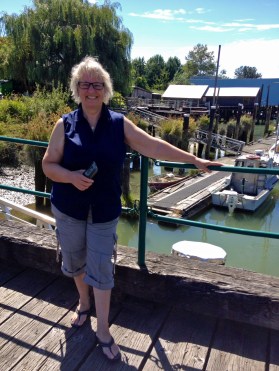
Nina on Ladner pier

For several years I’ve been returning from Toronto—where I teach at The University of Toronto and George Brown College—to Ladner, BC to spend my summers.

I cherish the time as a chance to see family and friends and to enjoy a different pace of life—one I enjoyed when I used to live and work here and where I brought up my family. We lived in a comfortable house on a quiet street and our back yard faced one of Ladner’s sloughs and beyond that a vast tract of farmland, most often scored with rows of potato plants. My son Kevin had grown up swimming in the slough and jumping off the rope swing his dad had constructed. Pilgrims from close and far came to use that swing and enjoy the murky waters of our back slough.

Rope swing copy

Kevin on the rope swing

Parties at our place always involved water and getting wet. We even had a fleet of kayaks and canoes that we took on paddling adventures through farmland and under highways, with the occasional siting of muskrat, carp, heron, or eagle. Coyotes whined and barked at night as bats dipped through the night air, foraging for food. My female cat poised for the hunt and sometimes brought in her “catch of the day.”

Cathleen-Nina-Ladner1 copy

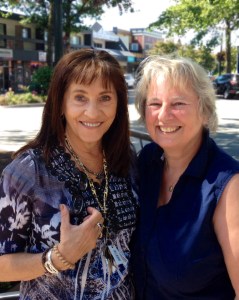
Cathleen and Nina at Stir

This summer, good friend and writer Cathleen Chance Vecchiato decided I should give a talk to my old community on Water Is… my recent bestselling book on water. With that, she immediately made it happen. The venue was already decided: the best café in Ladner, Stir Coffee House. I’d taken Cathleen there the previous year as part of a tour of the old farming and fishing village. Cathleen was charmed by the village atmosphere.

Stir Coffee House was happy to host a talk and Robert and Cathleen proceeded to plan it. Ian Jacques at The Delta Optimist wrote a wonderful piece on my journey, the talk and the book.

Nina-WaterIs-OPTIMIST2018 copy

On the evening of August 16th a growing crowd of people, eager for more on this precious substance flowed into the café until there was hardly a seat left in the cozy venue. I recognized some locals as well as colleagues from my environmental consulting days in Vancouver. It was a good crowd.

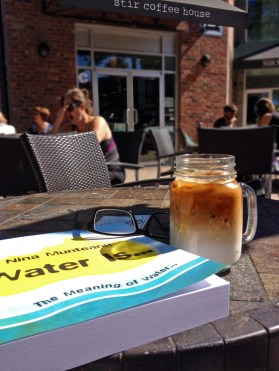
Coffee-Water-StirCoffeeHouse copy

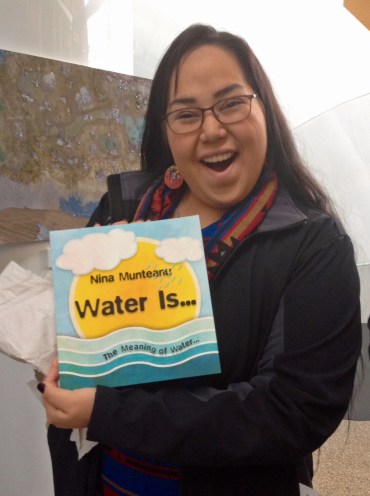
Water Is… snug against an iced latte

I shared the story of how I came to write this book—not a limnology book for non-scientists, as I thought I was going to write—but something that was more than science. Something that encompassed so much more about water: what it means to each of us and how we still don’t understand its many magical anomalous properties. I confided my discovery that the synchronicity of important moments in my life were all connected to water, which compelled the book to evolve into a study of “what water means to us.” Good friend Emmi Itäranta, author of Memory of Water, called Water Is… a biography of water.

Travelling the world has helped me realize that I was blessed with an abundance of water. I lived my entire life in a country of plentiful and healthy water. And for most of that time I didn’t even realize it. Canada holds one fifth of the world’s fresh water in lakes, rivers, and wetlands, as well as in our underground aquifers and glaciers. Canada’s wetlands, which cover more than 1.2 million square kilometres, makes Canada the largest wetland area in the world.

Nina-Hope-Trevor Stir copy

Nina with hosts Hope and Trevor

Perhaps it is no coincidence that Canada is steward of the world’s largest wetlands. Wetlands include marshes, swamps, fens, and bogs, all irreplaceable habitat for a huge diversity of nesting, feeding and staging waterfowl, reptiles, amphibians and mammals—many at risk. Wetlands provide a major filtration system, removing contaminants, improving water quality and renewing water’s vitality; wetlands serve as reservoirs, controlling and reducing flooding toward a more balanced hydrological cycle. Wetlands are a source of oxygen and water vapour, serving a vital role in our global atmospheric and climatic cycles. As ecotones— transitional areas—wetlands protect coasts from erosion and provide exceptional opportunity for boundary interaction and the emergence of vitality. Like a good metaphor, wetlands “recognize” and encompass similarities between dissimilarities. Wetlands powerfully connect. Canada’s strong multi-cultural policies and its open tolerance in embracing and celebrating diversity makes it the “wetland” of the world.

When I turn on the water tap in my house in Canada, it is pure drinking water. I don’t need to boil it or filter it or test it for impurities and toxins. I am confident that it will nourish and hydrate me like water should. I can bathe without restriction. I can play with it.

My water hasn’t changed; but I have. I do not take it for granted. I know that I am blessed.

I am home and I am so grateful.


In the Moment-anthology copyPart of this article is an excerpt from Nina Munteanu’s “Coming Home to Water” first published in “In the Moment” (A Hopeful Sign) edited by Gary Doi, September 2016; reprinted in “The Earth We Love” (Mississauga Writers) edited by Elizabeth Banfalvi, September 2018; and “The Literary Connection IV: Then and Now” (IOWI) edited by Cheryl Antao Xavier, upcoming 2018.


nina-munteanuNina Munteanu is an ecologist, limnologist and internationally published author of award-nominated speculative novels, short stories and non-fiction. She is co-editor of Europa SF and currently teaches writing courses at George Brown College and the University of Toronto. Visit www.ninamunteanu.ca for the latest on her books.


“Water Is…” at The Bookshelf Book Fair in Newmarket

Newmarket-farmers market

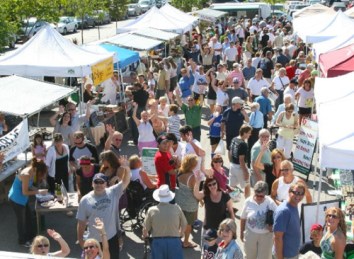
Newmarket farmer’s market

Every summer, the Writers’ Community of York Region (WYRC) holds a book fair (The Bookshelf) at the Newmarket Community Centre & Lions Hall, next to the farmer’s market. The fair showcases over 40 local authors, publishers and artisans through readings, discussions and a tradeshow that features writers’ works in a variety of genres from science fiction and fantasy to mystery, inspiration, science, history, self-help and children’s literature. I participated in this year’s festival on July 7, 2018.

Reading from “Water Is…The Meaning of Water

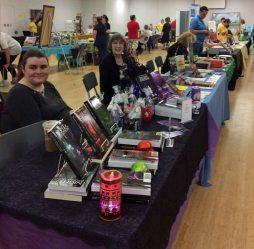
Nina-Bookshelf booksale1

Nina at her book table

At the Reading Lounge onstage in the adjoining Farmers’ Market, I read from my Amazon-bestselling “science-for-lay public” book Water Is…The Meaning of Water. As children and their parents played in the main water feature behind me, I introduced the term “limnology” (someone who studies freshwater) and talked briefly about the meaning of water with an audience eager to learn.

“We can’t live without it, so maybe we should start respecting it; this beautifully designed book by a limnologist looks at water from 12 different angles, from life and motion and vibration to beauty and prayer,” said Canadian author Margaret Atwood when she selected Water Is… as her first pick in the New York Times ‘Year in Reading.’

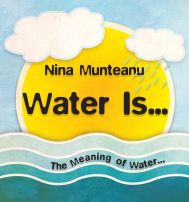
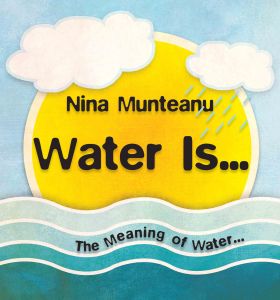
Water Is-COVER-webEach of the 12 chapters completes the phrase “Water is…” with terms that evolve from science into philosophy and spirituality; terms such as “magic”, “life”, “motion”, “communication”, “memory”, “rhythm”, “vibration”, “beauty”, “story”, “wisdom”, “prayer”, and finally “joy”.

The book is, after all, a celebration of water.

I first shared some history on the making of the book. I shared that the pursuit of this book was oddly serendipitous and “entangled.”

kevin-nina-close

Nina and son go hiking

“Early on, during the research and writing of this book, I discovered that this project on water had become a gestalt watershed for all the important moments in my life. Places I’ve been. Things I’ve learned. People I’ve met and with whom I’d had surprising discussions and realizations. All spanning many years. And many of them totally unrelated. And yet, now, with a sudden flood of context, their significance has transcended into a new fabric of meaning through surprising connection. Like puzzle pieces cooperatively arranging themselves into a symbiotic pattern of synchronicity.”

Writer and philosopher Jake Kotze suggests that, “Synchronicity happens when we notice the bleed-through from one seemingly separate thing into another—or when we for a brief moment move beyond the mind’s divisions of the world.” Synchronicity and serendipitous discovery, like metaphor, appear when we change the way we look at things.

“Serendipitous discovery comes to us through peripheral vision. Like our muse, it doesn’t happen by chasing after it; it sneaks up on us when we’re not looking. It comes to us when we focus outward and embrace our wonder for this world. When we quiet our minds and nurture our souls with beauty. It is then that what we had been seeking naturally comes to us. Like a gift.”

For my reading, I chose several summary quotes that appear at the end of each chapter of the book. These quotes were also featured earlier this year in “Morphology”, an art exhibit in Mississauga that honored the creation of a marsh park as part of Jim Tovey’s vision for the Lakeview Site and the Waterfront Connection:

Water-travel

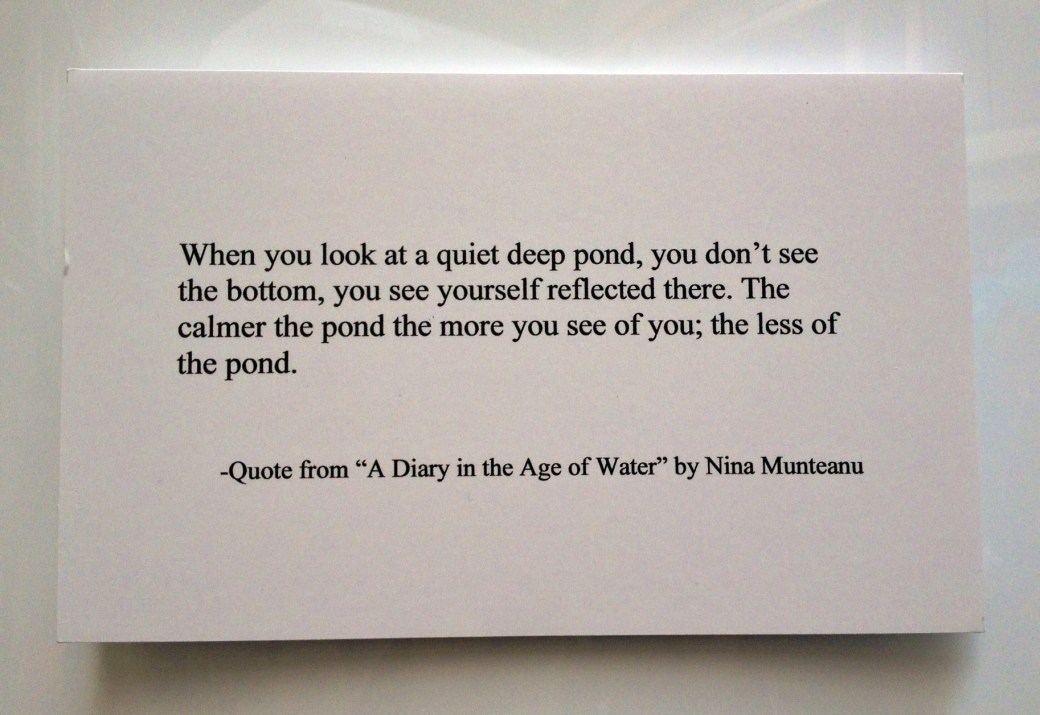
Quote from “Water Is…” on display at Mississauga Civic Centre

Wonder Woman Respects Water

“Respect water!” says Wonder Woman (aka cosplayer Jes Tongio). Wonder Woman was careful to point out with her wise Amazonian sword of Athena (goddess of wisdom)—forged by Hephaestus—that “Water Is…” provides a doorway to wonder and responsible action.

WonderWoman-WaterIs2a

Wonder Woman (Yes Tongio) with “Water Is…”

Other Authors at The Bookshelf

Bookshelf-venue2

Clair McIntyre and Merridy Cox

I met and visited with other fellow writers, including Clair McIntyre, author of YA/fantasy, and crime writer Joan O’Callaghan.

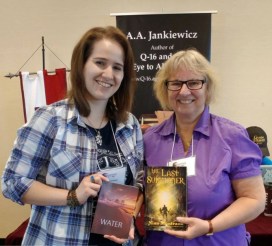
Fellow authors who read at Reading Lounge included Douglas Smith, award-winning author of “Wolf at the End of the World”; and A.A. Jankewicz,

Nina-Agnes-LIMESTONE

A.A. Jankewicz with Nina Munteanu

fantasy author of Q16, and who’s short story appears in the Water Anthology I edited for Reality Skimming Press; and Gabriela Casineanu read from her bestselling book Introverts: Leverage Your Strengths for an Effective Job Search.

Claudiu Murgan read from Decadence of the Soul; he is launching his recent science fiction novel Water Entanglement next month.

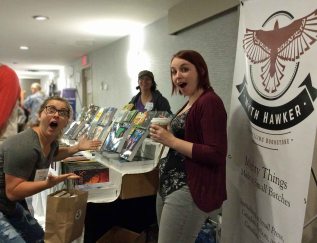
Myth Hawker Travelling Bookstore was also at the festival. Specializing in Canadian authors, Canadian content, and Canadian small press, they  carry an extensive list of local Canadian authors wherever they go across Canada.

The Immigrant Writers Association (IWA)

Nina-IWA-BookshelfinNewcastle

Gabriela, the two Andreeas, Nina and Claudiu

Nina IWA memberThe IWA was also represented, along with member-writers Gabriela Casineanu, Andreea Munteanu, Claudiu Murgan and Andreea Demirgian.

The Immigrant Writers Association provides programs, activities, and services that empower and support immigrant writers in their journeys. According to their website, the goal of the IWA is to  “encourage immigrants to express themselves through writing, to bring more awareness, compassion, and peace into the world.”

As second-generation immigrant daughter to German and Romanian parents, I recently joined the IWA. I look forward to mentoring new writers and providing workshops and lectures to share my experience as a writer, editor, and teacher of fiction and non-fiction.


MJ Moores-Bookshelf

M.J. Moores, chair of the board and founder of Bookshelf

nina-munteanuNina Munteanu is an ecologist, limnologist and internationally published author of award-nominated speculative novels, short stories and non-fiction. She is co-editor of Europa SF and currently teaches writing courses at George Brown College and the University of Toronto. Visit www.ninamunteanu.ca for the latest on her books.

Amazing Cover Art, Part 1: Tomislav Tikulin and Costi Gurgu

In my article “Should You Judge a Book by its Cover”, I wrote about the importance of cover art for book sales and to maintain integrity and satisfaction with the story inside. In the article, I pointed out that, “If you don’t know the author of the book, the nature—and implied promise—of the cover becomes even more important. If the book does not deliver on the promise of the cover, it will fail with many readers despite its intrinsic value. A broken promise is still a broken promise. I say cover—not necessarily the back jacket blurb—because the front cover is our first and most potent introduction to the quality of the story inside. How many of us have picked up a book, intrigued by its alluring front cover, read the blurb that seemed to resonate with the title and image, then upon reading our cherished purchase been disillusioned with the story and decided we disliked it and its author?”

Collision With Paradise Small

Liquid Silver’s romance / SF cover

Cover art provides an important aspect of writer and publisher branding. Cover artists understand this and address the finer nuances of the type and genre of the story to resonate with the reader and their expectations of story. This includes the image/illustration, typology, and overall design of the cover. A cover for a work of literary fiction will look quite different from a work of fantasy or romance. Within a genre, subtle qualities provide more clues—all of which the cover artist grasps with expertise.

I’ve been fortunate in my history as a professional writer to have had exceptional art work on the books I’ve written or collections and anthologies I’ve participated in (see the mosaic below of many but not all the covers my work has been associated with).

For most of my books, my publisher provided me with a direct link to the cover artist (e.g., Dragon Moon Press, Edge Publishing, eXtasy Books, Liquid Silver Books, Starfire, Pixl Press) and I retained some creative control. I even found and brought in the cover artist for two projects I had with Starfire.


Tomislav Tikulin and “The Last Summoner

DarwinsParadox-Cover-FINALsmall

Dragon Moon’s SF cover

Croation artist Tomislav Tikulin was the artist my Dragon Moon publisher had found for my 2007 book “Darwin’s Paradox”. For Darwin, I worked closely with Tikulin, who created the compelling hard science fiction cover of “future Toronto” that has attracted readers to the book for years. Tikulin has done cover designs for many publishers and bestselling writers from Ray Bradbury’s Dandelion Wine and Arthur C. Clarke’s Rendezvous with Rama to Amazing Stories Magazine.

Cover1_LastSummoner-frontcover

Starfire’s fantasy cover

In perusing Tikulin’s website one day, I was transported by one of his illustrations—of an awestruck knight standing knee deep in a mire within a huge drowned cathedral. Shafts of golden light from the vaulted ceiling angled across, bathing the mire and the bemused knight beneath. There was a powerful story in that image, I thought, and wrote a whole book based on it: “The Last Summoner”. Imagine the feeling when I approached Tikulin to licence the image and then my Starfire publisher to use it—and both agreed! You’ll have to read the book to find out why the image was so important to the overall story. Graphic artist Costi Gurgu took Tikulin’s image and used his typology and design skills to create an extraordinary front and back cover and spine. You can learn more about Tikulin in my interview with him on The Alien Next Door.


Costi Gurgu and “The Splintered Universe Trilogy

Front Cover ONLY-web

Starfire’s SF cover

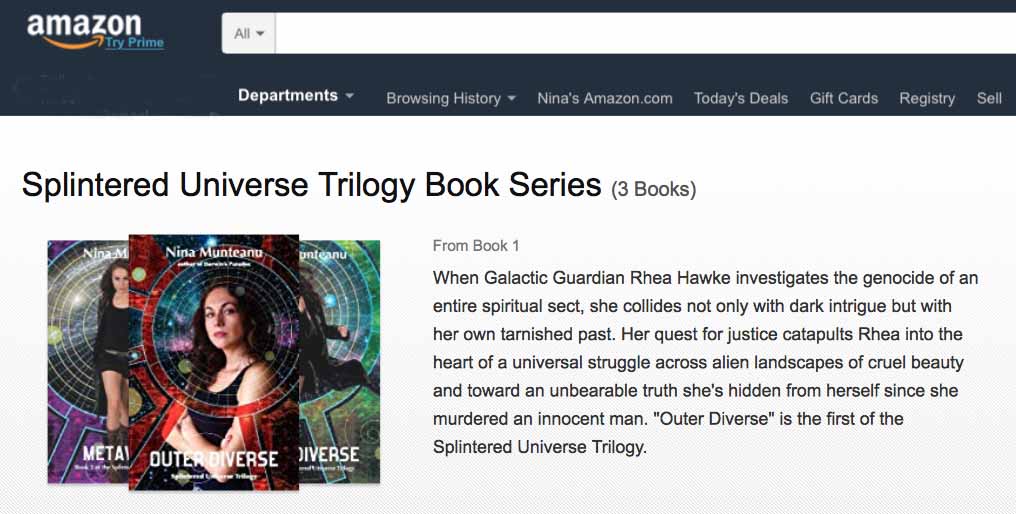
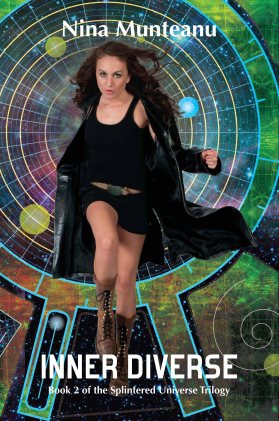
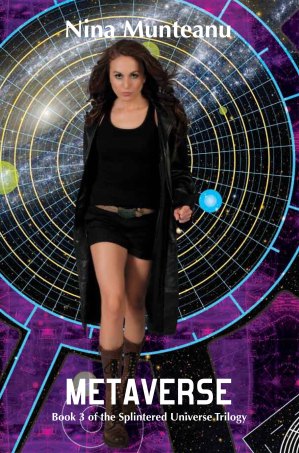
I met Costi Gurgu and his wife Vali Gurgu at a science fiction convention in Montreal in 2009. Costi and Vali were successful graphic artists working on magazine covers and interiors for top magazines in Toronto. When I eventually moved there to teach at the University of Toronto, I discussed cover design with Costi. I was working on a detective thriller in space with kick-ass female detective and Galactic Guardian, Rhea Hawke. I’d initially envisioned the book as one entire novel with three parts, but it very soon became apparent to me that it was three actual books in a trilogy. The Splintered Universe Trilogy consists of Outer Diverse, Inner Diverse, and Metaverse.

I was intrigued by what Costi designed: a “Triptych” for the three books of The Splintered Universe Trilogy. In an interview I did on The Alien Next Door, I asked him what inspired him to come up with it and what did he like about it? Costi replied:

“Your main character, Rhea, undergoes a certain evolution from a regular human being to… let’s just say something else. And that evolution has three parts, one for each book of the trilogy and it also has a touch of divine. So, the triptych design, so often used for religious paintings, fits like a glove on the entire concept.”

Inner-diverse-front-cover-WEB

Starfire’s SF cover

I was very taken by how the design for the triptych carried a powerful image that conjures a portal or gateway into another world (which is what the trilogy is about). The reader is drawn into an infinite landscape, looking in, and Rhea is looking out from within in Outer Diverse, bursting through in Inner Diverse, and walking outside with confidence in Metaverse. Costi explained the meaning behind the symbols and colours he used: “The initial idea was for the red ring to be a sort of mapping device and a radar combined into one, since Rhea travels great distances in her quest. Then I realized it might as well be a portal device on top of everything else and serve all her travelling needs.

There were two options —either we would look with her outside, to whatever target she had, or look towards her. I thought that it would be more powerful if we could look towards her and see her determined face, see the unflinching resolution in her eyes, while she’s pondering her next move and readying herself to use the device once again. But to look towards her and see her in a confining room of a space ship, or such, would have defeated the purpose. So, I needed to have her against the infinite landscape as the backdrop. She is in a continuous journey to discover herself and this journey takes her literally through the infinite spaces of not just one universe.”

Costi also shared some of the process in creating a cover design:

Metaverse-FRONT-web

Starfire’s SF cover

“Technically speaking, I always start with sketches on paper, which I later scan. I mainly use Adobe Photoshop, but for this illustration I had to use Adobe Illustrator as well. Obviously, the layout and the typography were done in Adobe InDesign.”

Costi’s wife, Vali, was the model for Rhea Hawke. Some of the additional shoots can be seen in the Youtube book trailer). Costi shared that, “I had to decide how to treat her image. I could have gone towards a more glamorous, shiny look, like in a fashion image, or I could just simply keep it more realistic… I chose to keep it that way, because I wanted to offer a realistic image of an ex-police officer: a woman who was used to fighting and chasing criminals, rather than taking care of her appearance.”

You can read the complete interview with Costi on The Alien Next Door.

All Nina Munteanu books can be found on most Amazon sites.

Microsoft Word - Publication-COVERS-all-2017.docx

Sampling of publication cover art for works by Nina Munteanu (to 2017)

nina-2014aaaNina Munteanu is an ecologist and internationally published author of award-nominated speculative novels, short stories and non-fiction. She is co-editor of Europa SF and currently teaches writing courses at George Brown College and the University of Toronto. Visit www.ninamunteanu.ca for the latest on her books. Nina’s recent book is the bilingual “La natura dell’acqua / The Way of Water” (Mincione Edizioni, Rome). Her latest “Water Is…” is currently an Amazon Bestseller and NY Times ‘year in reading’ choice of Margaret Atwood.

On Being a Canadian Writer in the Age of Water

Canada is the only country in the world that knows how to live without an identity.”—Marshal McLuhan 

nina-child01

Nina  “reading” in Granby, Quebec

I was born some sixty+ years ago, in the small town of Granby in the Eastern Townships to German-Romanian parents. Besides its zoo—which my brother, sister and I used to visit to collect bottles for a finder’s fee at the local treat shop—the town had no particular features. It typified French-Canada of that era. So did I. I went to school in Quebec then migrated across to the west coast to practice and teach limnology. Given that Canada holds at any one time a fifth of the Earth’s freshwater, that also made sense.

Canada is a vast country with a climate and environment that spans from the boreal forests of the Canadian Shield, muskegs of northern BC, and tundras of the Arctic Circle to the grasslands of the Prairies and southern woodlands of Ontario and Quebec. Canada’s environment is vast and diverse. Like its people.     

Ecologist vs Nationalist

Ecology is the study of “home” (oikos means ‘home’ in Greek). Ecology studies the relationships that make one’s home functional. It is, in my opinion, the most holistic and natural way to assess where we live. My home is currently Toronto, Ontario, Canada and ultimately the planet Earth.

Country_road_Stephane_Lemire

The Eastern Townships in autumn are a cornucopia of festive colours.

Growing up in the Eastern Townships of Quebec, I’d always felt an abiding sense of belonging and I resonated with Canada’s national symbols—mostly based on Nature and found on our currency, our flag, and various sovereign images: the loon, the beaver, the maple tree, our mountains and lakes and boreal forests. Why not? Canadians are custodians of a quarter of the world’s wetlands, longest river systems and most expansive lakes. Most of us recognize this; many of us live, play and work in or near these natural environments.

I have long considered myself a global citizen with no political ties. I saw my country through the lens of an ecologist—I assessed my community and my surroundings in terms of ecosystems that supported all life, not just humanity. Was a community looking after its trees? Was my family recycling? Was a corporation using ‘green’ technology? Was a municipality daylighting its streams and recognizing important riparian zones? I joined environmental movements when I was a teenager. I shifted my studies from art to science because I wanted to make a difference in how we treated our environment. After university, I joined an environmental consulting firm, hoping to educate corporations and individuals as environmental stewards. I brought that philosophy into a teaching career and began writing eco-fiction, science fiction and essays to help promote an awareness and a connection with our natural world. My hope was to illuminate how important Nature and water is to our planet and to our own well-being through an understanding of ecology and how everything is interconnected.
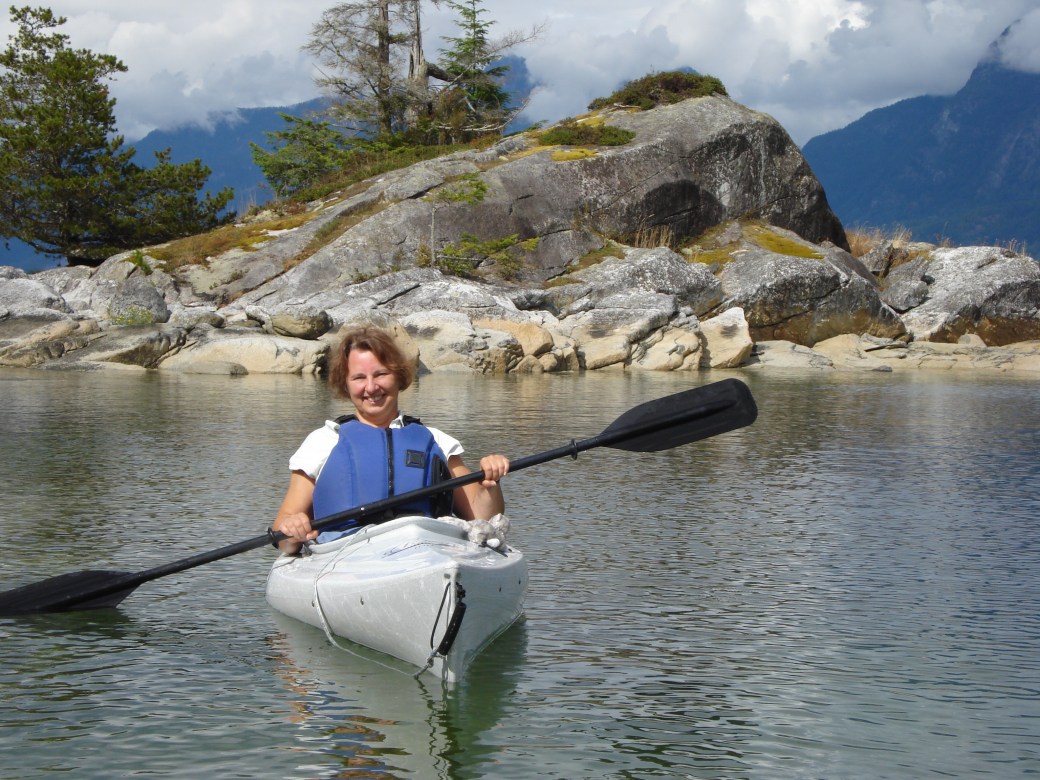
US-tour and Desolation Sound 260 copy

Nina kayaking Desolation Sound in British Columbia

When I think of Canada, I think of my “home”, where I live; my community and my environment. I have traveled the world and I feel a strong sense of “home” and belonging every time I return. Canada is my home. I was born and grew up in Quebec. I lived in British Columbia, Ontario, and Nova Scotia; each of these places engendered a feeling of “home”.
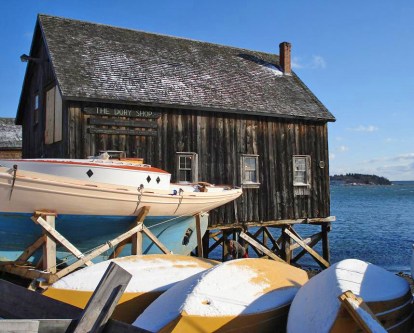
lunenburg-keel-laying

The Dory Shop in Lunenburg, Nova Scotia

I think that part of being a Canadian is related to this sense of belonging (and pride) in a country that is not tied to some core political identity or melting-pot mainstream.

Historian and writer Charlotte Gray wrote:

“we live in a country that has a weak national culture and strong regional identities …Two brands of psychological glue bind Canada together: political culture and love of landscape…[in] a loose federation perched on a magnificent and inhospitable landscape—[we are] a nation that sees survival as a collective enterprise.”—Charlotte Gray
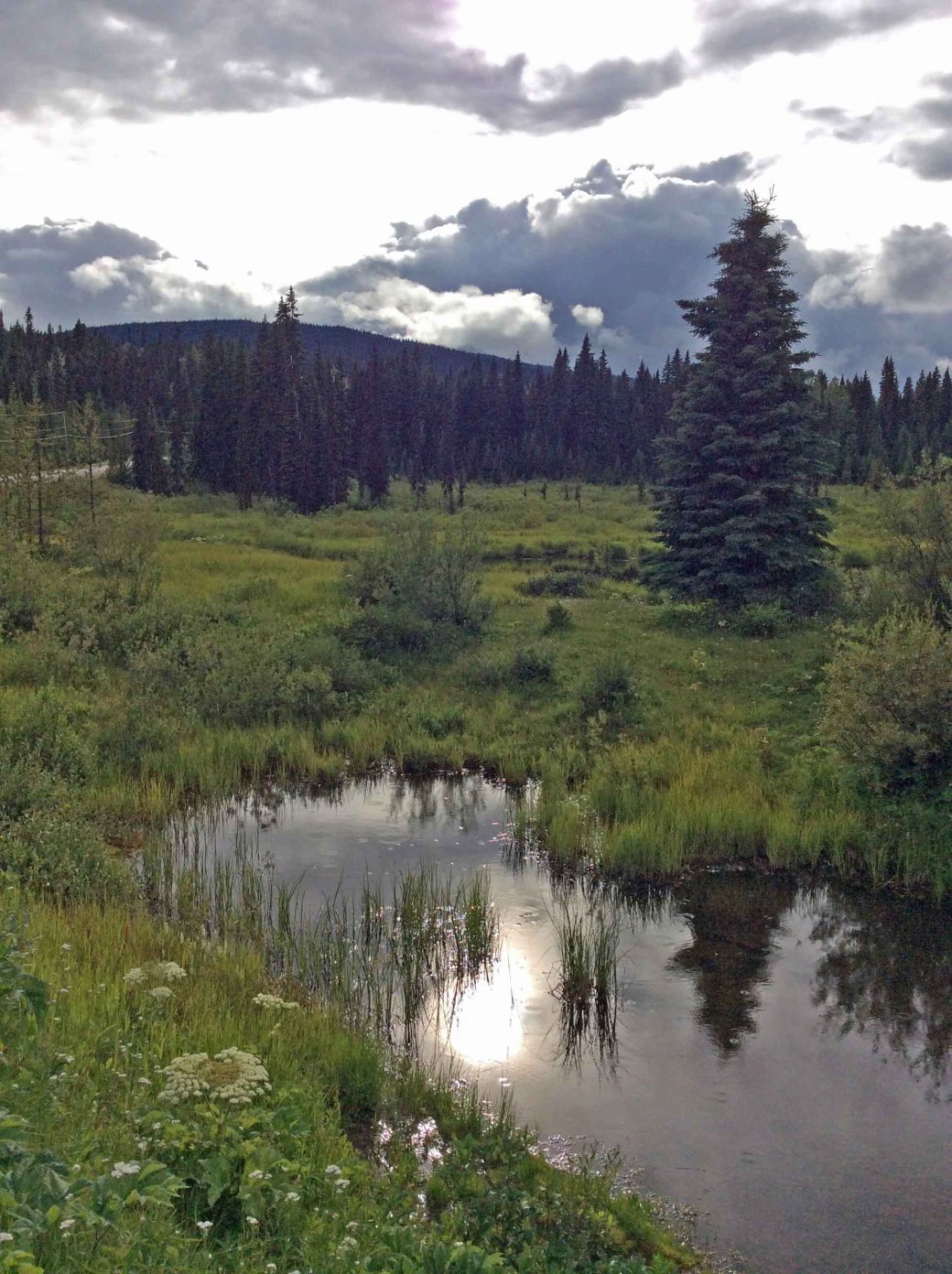
barkerville marsh 9

Marsh near Barkerville, BC (photo by Nina Munteanu)

Canada as Postnational State

In October 2015, Canada’s Prime Minister Justin Trudeau told the New York Times that Canada may be the “first postnational state,” adding that “there is no core identity, no mainstream in Canada.” This is largely because Canadians, writes Charles Forman in the Guardian, are “philosophically predisposed to an openness that others find bewildering, even reckless.”

Trudeau-RollingStoneTo anyone but a Canadian, Trudeau’s remark would rankle, particularly in a time when many western countries are fearfully and angrily turning against immigration through nativism and exclusionary narratives. A time when the United States elected an authoritarian intent on making “America great again” by building walls. A time when populist right-wing political parties hostile to diversity are gaining momentum in other parts of the world. “Canada’s almost cheerful commitment to inclusion might at first appear almost naive,” writes Forman. It isn’t, he adds. There are practical reasons for keeping our doors open.

We are who we are because of what we are: a vast country the size of Europe. A country dominated by boreal forest, a vital and diverse wilderness that helps maintain the well-being of our entire planet. A land that encompasses over a fifth of the freshwater in the world, and a quarter of the world’s wetlands. Canadians are ultimately the world’s Natural stewards. That is who and what we are.

Eramosa River 3

Eramosa River, Ontario (photo by Nina Munteanu)

According to Forman, postnationalism frames how “to understand our ongoing experiment in filling a vast yet unified geographic space with the diversity of the world” and a “half-century old intellectual project, born of the country’s awakening from colonial slumber.” As the first Europeans arrived in North America, the Indigenous people welcomed them, taught them how to survive and thrive amid multiple identities and allegiances, writes Forman. “That welcome was often betrayed, particularly in the 19th and 20th centuries, when settlers did profound harm to Indigenous people.” But, says Forman, if the imbalance remains, so does the influence: a model of another way of belonging. One I think many Canadians are embracing. We are learning from the natural wisdom of our Indigenous peoples. Even our fiction reflects how we value our environment and embrace diversity. “Diversity fuels, not undermines, prosperity,” writes Forman.

As efforts are made to reconcile the previous wrongs to Indigenous peoples within Canada and as empowering stories about environment are created and shared, Canada carries on the open and welcoming nature of our Indigenous peoples in encouraging immigration. In 2016, the same year the American government announced a ban on refugees, Canada took in 300,000 immigrants, which included 48,000 refuges. Canada encourages citizenship and around 85% of permanent residents typically become citizens. Greater Toronto is currently the most diverse city in the world; half of its residents were born outside the country. Vancouver, Calgary, Ottawa and Montreal are not far behind.

kevin-nina-close

Mom and son explore BC wilderness

Canadian author and visionary Marshal McLuhan wrote in 1963 that, “Canada is the only country in the world that knows how to live without an identity.” This is an incredible accomplishment, particularly given our own colonial history and the current jingoistic influence of the behemoth south of us.

Writer and essayist Ralston Saul suggests that Canada has taken to heart the Indigenous concept of ‘welcome’ to provide,

“Space for multiple identities and multiple loyalties…[based on] an idea of belonging which is comfortable with contradictions.”

Of this Forman writes: “According to poet and scholar BW Powe, McLuhan saw in Canada the raw materials for a dynamic new conception of nationhood, one unshackled from the state’s ‘demarcated borderlines and walls, its connection to blood and soil,’ its obsession with ‘cohesion based on a melting pot, on nativist fervor, the idea of the promised land’. Instead, the weakness of the established Canadian identity encouraged a plurality of them—not to mention a healthy flexibility and receptivity to change. Once Canada moved away from privileging denizens of the former empire to practicing multiculturalism, it could become a place where ‘many faiths and histories and visions would co-exist.”

NaturalSelection-front-webAnd that’s exactly what is happening. We are not a “melting pot” stew of mashed up cultures absorbed into a greater homogeneity of nationalism, no longer recognizable for their unique qualities. Canada isn’t trying to “make Canada great again.”

Canada is a true multi-cultural nation that celebrates its diversity: the wholes that make up the wholes.

Confident and comfortable with our ‘incomplete identity’—recognizing it for what it is—is according to Forman, “a positive, a spur to move forward without spilling blood, to keep thinking and evolving—perhaps, in the end, simply to respond to newness without fear.”

This resonates with me as an ecologist. What I envision is a Canada transcending the political to embrace the environment that both defines us and provides us with our very lives; a view that knows no boundaries, and recognizes the importance of diversity, relationship and inclusion, interaction, movement, and discovery.

So, am I proud of Canada? Definitely. We have much to be proud of. Canada is the 8th highest ranking nation in the Human Development Index. Canada ranks among the highest in international measurements of government transparency, civil liberties, quality of life, economic freedom, and education. It stands among the world’s most educated countries—ranking first worldwide in the number of adults having tertiary education with 51% of adults holding at least an undergraduate college or university degree. With two official languages, Canada practices an open cultural pluralism toward creating a cultural mosaic of racial, religious and cultural practices. Canada’s symbols are influenced by natural, historical and Aboriginal sources. Prominent symbols include the maple leaf, the beaver, Canada Goose, Common Loon, the Royal Canadian Mounted Police, the polar bear, the totem pole, and Inuksuk.
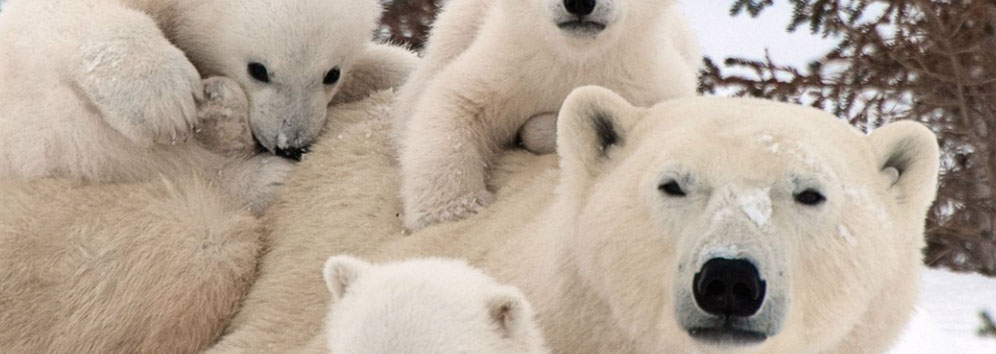
PolarBearMum-pups

Water Is-COVER-webWe are a northern country with a healthy awareness of our environment—our weather, climate and natural world. This awareness—particularly of climate change—is more and more being reflected in our literature—from Margaret Atwood’s “Maddaddam” trilogy and Kim Stanley Robinson’s “2041” to my short story collection “Natural Selection” and non-fiction book Water Is… .

Water AnthologyCanadians are writing more eco-fiction, climate fiction, and fiction in which environment somehow plays a key role.

Water has become one of those key players: I recently was editor of the Reality Skimming Press anthology “Water”, a collection of six speculative Canadian stories that optimistically explore near-future scenarios with water as principle agent.

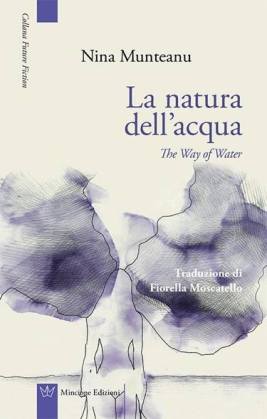
The Way of Water-COVERMy short story “The Way of Water” is a near-future vision of Canada that explores the nuances of corporate and government corruption and deceit together with resource warfare.

First published as a bilingual print book by Mincione Edizioni (Rome)  (“La natura dell’acqua”), the short story also appears in several anthologies including Exile EditionsCli Fi: Canadian Tales of Climate Change” and “Future Fiction: New Dimensions in International Science Fiction“.  My upcoming “A Diary in the Age of Water” continues the story.

Adobe Photoshop PDFCanadian writer and good friend Claudiu Murgan recently released his book “Water Entanglement“, which also addresses a near-future Canada premise in which water plays a major role.

In a recent interview with Mary Woodbury on Eco-Fiction, I reflected on a trend over the years that I noticed in the science fiction writing course I teach at George Brown College: “It’s a workshop-style course I teach and students are encouraged to bring in their current work in progress. More and more students are bringing in a WIP with strong ecological overtones. I’d say the percentage now is over 70%. This is definitely coming from the students—it’s before I even open my mouth about ecology and eco-fiction—and what it suggests to me is that the welfare of our planet and our ecosystems is on many people’s minds and this is coming through in our most metaphoric writing: science fiction.”

It is healthy to celebrate our accomplishments while remembering where we came from and what we still need to accomplish. This provides direction and motivation.

tree water deer lake

Deer Lake, BC (photo by Nina Munteanu)

Canadians are custodians of a quarter of the world’s wetlands, longest river systems and most expansive lakes. Canada is all about water… And so are we.

We are water; what we do to water we do to ourselves.

Happy Canada Day!


References:

Dechene, Paul. 2015. “Sci-Fi Writers Discuss Climate Catastrophe: Nina Munteanu, Author of Darwin’s Paradox.” Prairie Dog, December 11, 2015.

Forman, Charles. 2017. “The Canada Experiment: Is this the World’s First Postnational Country?” The Guardian, January 4, 2017.

Gray, Charlotte. 2017. “Heroes and Symbols” The Globe and Mail.

Moorhouse, Emilie. 2018. “New ‘cli-fi’ anthology brings Canadian visions of future climate crisis.” National Observer, March 9, 2018.

Munteanu, Nina. 2016. “Crossing into the Ecotone to Write Meaningful Eco-Fiction.” In: NinaMunteanu.me, December 18, 2016.

Newman-Stille, Derek. 2017. “The Climate Around Eco-Fiction.” In: Speculating Canada, May 24, 2017.

Woodbury, Mary. 2016. “Part XV. Women Working in Nature and the Arts: Interview with Nina Munteanu, Ecologist and Author.” Eco-Fiction.com, October 31, 2016.

SONY DSC

Nina Munteanu on the Credit River, Ontario (photo by Merridy Cox)


nina-2014aaaNina Munteanu is an ecologist and internationally published author of award-nominated speculative novels, short stories and non-fiction. She is co-editor of Europa SF and currently teaches writing courses at George Brown College and the University of Toronto. Visit www.ninamunteanu.ca for the latest on her books. Nina’s recent book is the bilingual “La natura dell’acqua / The Way of Water” (Mincione Edizioni, Rome). Her latest “Water Is…” is currently an Amazon Bestseller and NY Times ‘year in reading’ choice of Margaret Atwood.
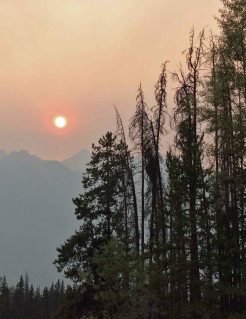
 

Nina Reads About Water at Oakville Literary Café in Joshua Creek Art Centre

House-road copy

Joshua Creek Art Centre (photo by Nina Munteanu)

In late May, I was invited to read from my short story “The Way of Water” and my recent book “Water Is…” at the Oakville Literary Café, held at the Joshua Creek Art Centre.


The Way of Water

“The Way of Water” has appeared in several collections and anthologies in Europe and North America and received praise from around the world, including: The National Observer, Prism International Magazine, Speculating Canada, SoloLibri in Italy, and most recently in Orson Scott Card’s The Intergalactic Medicine Show.

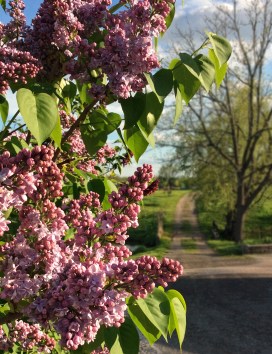
Lilac2-JoshuaCreekArtCentre

Joshua Creek Art Centre (photo by Nina Munteanu)

“The Chinese multinationals have exchanged the public debt of other states with their water reserves with which, now, they can control the climate, deciding when and where it will rain.Who understands this dirty game has been silenced, like Hilda’s mother, a limnologist, inexplicably arrested and never returned; like the daughter of two water vendors, mysteriously disappeared, after having decided not to bow to economic powers: Hanna, who now prefers secure virtual identities to evanescent real appearances. Water. The two, like the covalent bond of a complex molecule, develop a relationship of attraction and repulsion that will first make them meet and then, little by little, will change into a tormented love but, at the same time, so pure as to cause Hilda at great risk, to make an extreme decision that will allow Hanna to realize the strange prophecy that the internal voice, perhaps the consciousness of water, had resonated in the two women for a long time.” —Simone Casavecchia, SoloLibri.net

The Way of Water-COVERShe imagines its coolness gliding down her throat. Wet with a lingering aftertaste of fish and mud. She imagines its deep voice resonating through her in primal notes; echoes from when the dinosaurs quenched their throats in the Triassic swamps.

Water is a shape shifter.

It changes yet stays the same, shifting its face with the climate. It wanders the earth like a gypsy, stealing from where it is needed and giving whimsically where it isn’t wanted.

Dizzy and shivering in the blistering heat, Hilda shuffles forward with the snaking line of people in the dusty square in front of University College where her mother used to teach. The sun beats down, crawling on her skin like an insect. She’s been standing for an hour in the queue for the public water tap.

Exile-CanTales ClimateChange copyEmilie Moorhouse of Prism International wrote: “Soon after I finished reading the book, Cape Town—known in precolonial times as “the place where clouds gather”—announced that it was only a few months away from what it called “Day Zero,” the day the city would officially run out of water, making the similarities between fiction and reality more than unsettling. Munteanu’s story is set in a futuristic Canada that has been mined of all its water by thirsty corporations who have taken over control of the resource. Rain has not fallen on Canadian soil in years due to advances in geoengineering and weather manipulation preventing rain clouds from going anywhere north of the Canada-US border.”

“In ‘The Way of Water’, Nina Munteanu pens her love letter to water, exulting it as a liquid that has semi-magical properties…’The Way of Water’ evokes a sense of awareness about issues of access to water and about the dangers of imbalances in that access.”—Derek Newman-Stille, Speculating Canada

FF - Rosarium Cover copy“…In an interesting scarcity future in which we follow the fate of a character abandoned by her mother, water itself becomes a character. In the second paragraph we’re told that “Water is a shape shifter,” and in the next page we encounter the following description: “Water was paradox. Aggressive yet yielding. Life-giving yet dangerous. Floods. Droughts. Mudslides. Tsunamis. Water cut recursive patterns of creative destruction through the landscape, an ouroboros remembering.” These descriptive musings cleverly turn out to be more than metaphors and tie in directly to the tale’s surprising ending.”—Alvaro Zinos-Amaro, IntergalacticMedicineShow.com


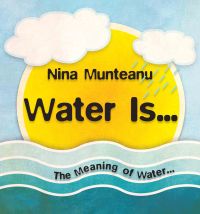
Water Is-COVER-webWater Is… The Meaning of Water

I also read from my non-fiction book “Water Is… The Meaning of Water.” I read several quotes from “Water Is…”. The water quotes had earlier been displayed at a photographic art exhibition in the Great Hall of the Mississauga Civic Centre. The art exhibition celebrated the Waterfront Connection wetland construction, a realized vision of the late Jim Tovey.

Morphology-Looking Up

Photo Art in the Great Hall of the Mississauga Civic Centre

WaterIs story-photo

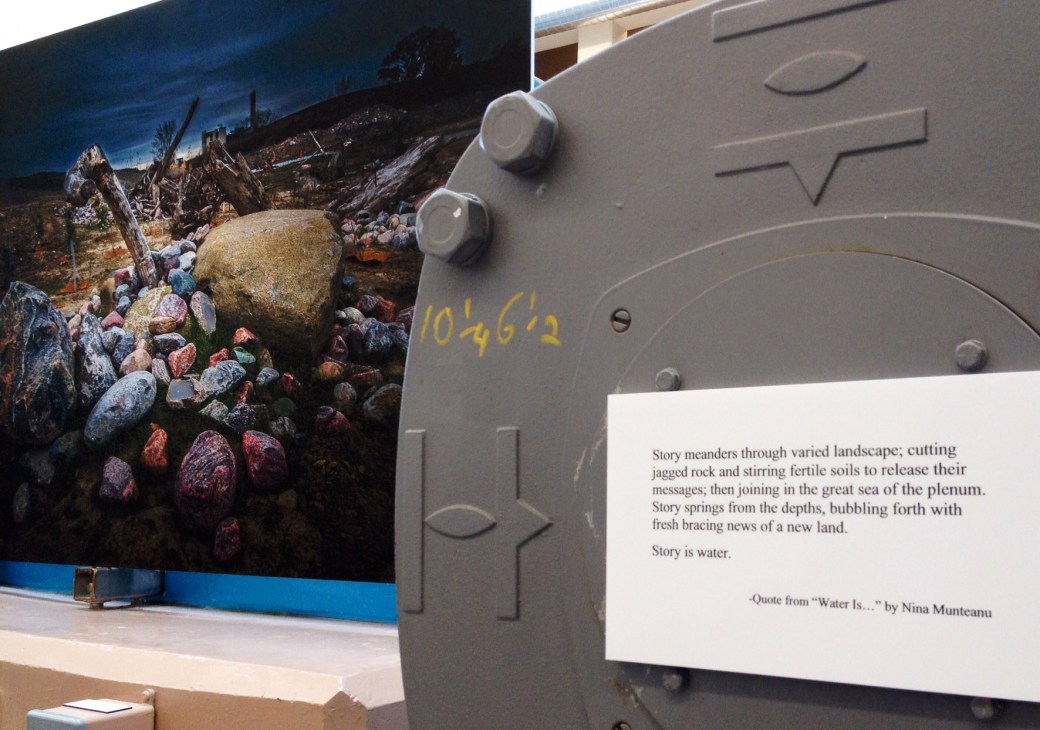
Quote from Nina Munteanu’s “Water Is…” displayed alongside photo art

Water-travel

Quote from “Water Is…” displayed at the Civic Centre in Mississauga


Joshua Creek Heritage Art Centre

JoshuaCreekArtCentre

Back patio of Joshua Creek Art Centre (photo by Nina Munteanu)

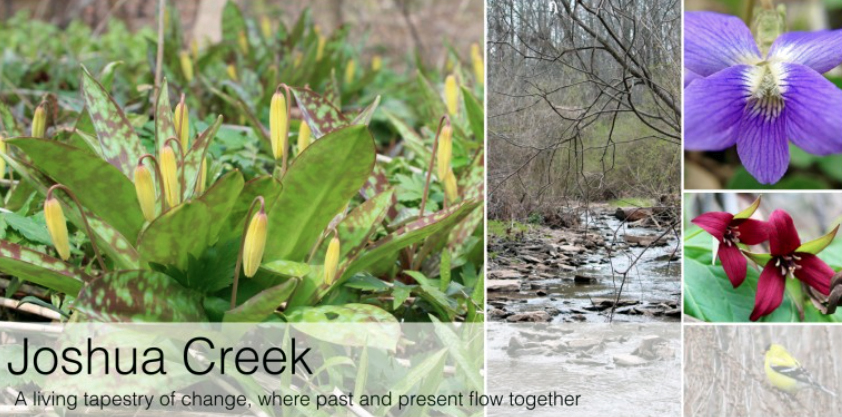
Envisioned by Sybil Rampen as a place to meet, collaborate and cultivate relationships, the Joshua Creek Heritage Art Centre was established at the 1827 heritage house on Rampen’s family farm on Burnhamthorpe Road in Oakville. The art centre serves the community as a gathering place—creative media workshops, films, musical events, lectures and weddings. The facility promotes local heritage and accessibility. Ecological integrity remains central to its activities.

Joshua Creek

JoshuaCreek

JoshuaCk05

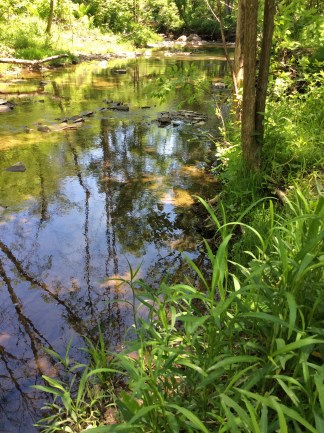
Joshua Creek (photo by Nina Munteanu)

Joshua Creek originates near the art centre north of Burnhamthorpe Road and flows about 6 km south through the farm then mostly forest, eventually emptying into Lake Ontario. I was told that the creek has good water quality, apparently the best in the county. Oakvillegreen.org provides some history on Joshua Creek:

“Joshua Creek exists as a patchwork of past glories and present changes on a very dynamic and human-controlled landscape… many of its lands were cleared and altered beyond recognition, with only certain key areas left mostly to nature. In spite of these influences, Joshua Creek is home to 3 small Environmentally Sensitive Areas (ESAs), although two of these – Joshua Creek Valley and Wildflower Woods – have declined since they were highlighted in the 1970’s, and while still valuable, may no longer qualify as ESAs in the future. In only a handful of decades, development has quickly covered most of the lower two thirds of the creek’s land base, including important parts of its ESAs. In several areas, Joshua’s natural winding “meander” has been artificially straightened in order to efficiently use the land on either side. And in many places, foreign species have invaded the natural areas of the creek, changing the ecosystem in a big way.

JoshuaCk03But Joshua is a spirited creek – in spite of all it has been through, Joshua Creek is among the top two urban creeks for healthy water quality, and is still inhabited by a variety of aquatic animals like small fish and insects. Joshua Creek is home to forests, wetlands and thickets with around 150 plant species, and provides an important natural habitat corridor for the movement of birds and other animals, including migratory species. Rather than exclusively shrinking, there are also areas of Joshua Creek that are actually in the middle of regrowing their forests, and in spite of everything, Joshua still retains some beautiful gems of natural areas.”

nina-2014aaa

Nina Munteanu is an ecologist, limnologist and internationally published author of award-nominated speculative novels, short stories and non-fiction. She is co-editor of Europa SF and currently teaches writing courses at George Brown College and the University of Toronto. Visit www.ninamunteanu.ca for the latest on her books.
JoshuaCreek-WaterBanner


Nina Munteanu Talks About “Water Is…” on Green Majority CIUT Radio

Nina-Saryn-CIUT booth

Nina with Saryn Caister of Green Majority CIUT Radio

Host Saryn Caister of The Green Majority CIUT Radio 89.5 FM discusses “Water Is…” with Nina Munteanu and her philosophy to learning and knowledge.

The interview covers some of water’s anomalous properties and why Nina decided to write a book that spans and integrates such a wide variety of angles and subjects from traditional science to spirituality.

CIUT-radioLOGOSaryn and Nina discuss some of water’s controversial properties and the claims about water and how geopolitics plays a role in this. She brings in her own career as a limnologist and how she broke away from her traditional role of scientist to create a biography of water that anyone can understand—at the risk of being ostracized by her own scientific community (just as Carl Sagan and David Suzuki were in the past).

Saryn shared how Ray John Jr., an Indigenous teacher, on a previous show reminded us why these things matter.

Water Is-COVER-webNina responded with, “The why of things and hence the subtitle: the Meaning of Water. What does it mean to you… That’s what’s missing a lot of the time. We are bombarded with information, knowledge and prescriptions but the subliminal argument underneath—the why—why should it matter to me—is often missing. That becomes the sub-text. And it’s nice when it comes to the surface.”


HartHouse-CIUT Radio

Hart House, University of Toronto


nina-2014aaaNina Munteanu is an ecologist, limnologist and internationally published author of award-nominated speculative novels, short stories and non-fiction. She is co-editor of Europa SF and currently teaches writing courses at George Brown College and the University of Toronto. Visit www.ninamunteanu.ca for the latest on her books.
 

Nina Talks Water with Grade 8 Students on World Water Day

Nina-Grade 8 on Water-March22-2018 copy

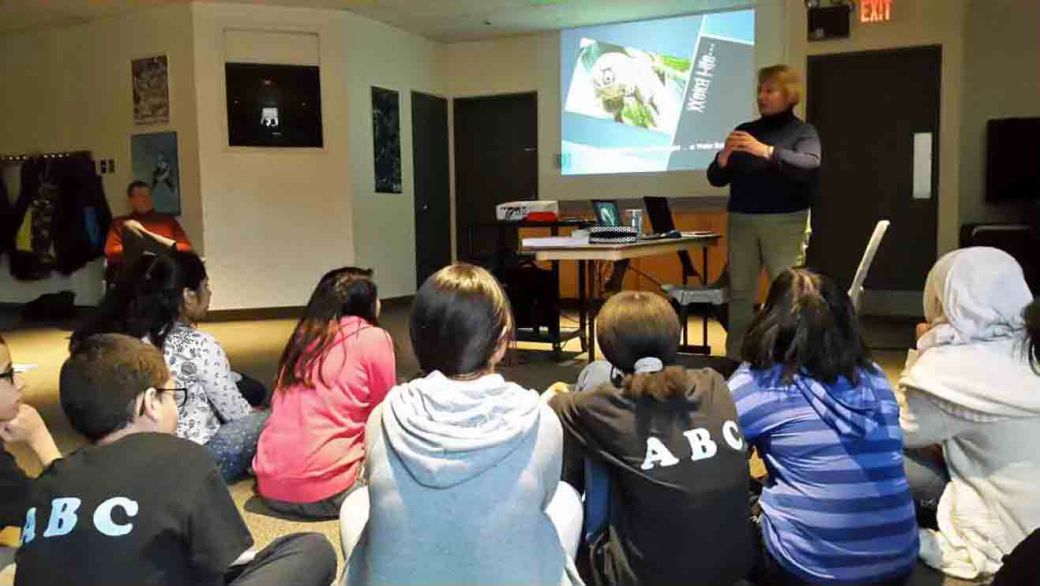
Nina talks with Valleys Senior Public School Grade 8 students about water

On World Water Day, at the kind invitation of Alene Sen (supervisor and coordinator for the City of Mississauga at the Mississauga Valley Library) I talked to some 100 Grade 8 students of Valleys Senior Public School about water. Several classes, in groups of about fifty students each, came at tandem to the library to learn something about water.

I had about half an hour to prime them with something that would spark their interest and which they could take home and think about—and possibly apply in stewardship.

carboniferous-paleozoic eraI started the talk by explaining that I’m a limnologist—someone who studies freshwater—and that water is still a mysterious substance, even for those who make it their profession to study.  After informing them of water’s ubiquity in the universe—it’s virtually everywhere from quasars to planets in our solar system—I reminded them that the water that dinosaurs drank during the Paleozoic Era is the same water that you and I are drinking.

We briefly reviewed some of water’s most interesting anomalous and life-giving properties such as cohesion and adhesion—responsible for surface tension and water’s capillary movement up trees. Below is an excellent 4-minute YouTube video “The Properties of Water” that describes these properties well.

I reviewed the circle of life and energy in an aquatic ecosystem and used the grey whale as an example to study trophic cascades and the balanced trophic cycle—with an endnote on the whale’s significant role in influencing climate.

I introduced each class to the incredible and very tiny Tardigrade, also known as the water bear or moss piglet, with magical properties of its own. The 4-minute TED video by Thomas Boothby is particularly instructive and entertaining.

I then showed the class an image of the Three Gorges Dam in China and reported how as a result of so much dam-building and retention of water—and because most dams are located in the northern hemisphere—we have slightly changed how the Earth spins on its axis. We’ve sped its rotation and shortened the day by 8 millionths of a second in the last forty years.

3-gorges dam

Water needs to constantly move. The Water cycle moves through the planet in all three forms (vapour, liquid and ice), over land and sea and through the earth, but also through all life. We are part of that cycle. We drink it and get immersed in it; we also breathe water in with every breath we take and breathe it out with every breath we exhale.

We are water; what we do to water, we do to ourselves.

I invited the class to discuss things we could do to help water as it moves through the planet. We talked about things we could do at home, with our friends, in our school and community to help water. Things like planting a tree in your back yard; adopting a nearby stream and taking care of it; organizing a beach clean-up; deciding to do something at home to waste water less.

Each action is a small thing. But that is how large things happen, through the accumulation of small things. And with every “small” action is a small shift in thinking, which leads to the kind of leadership that will change the world and make it a better place—for water and everything that depends on it.

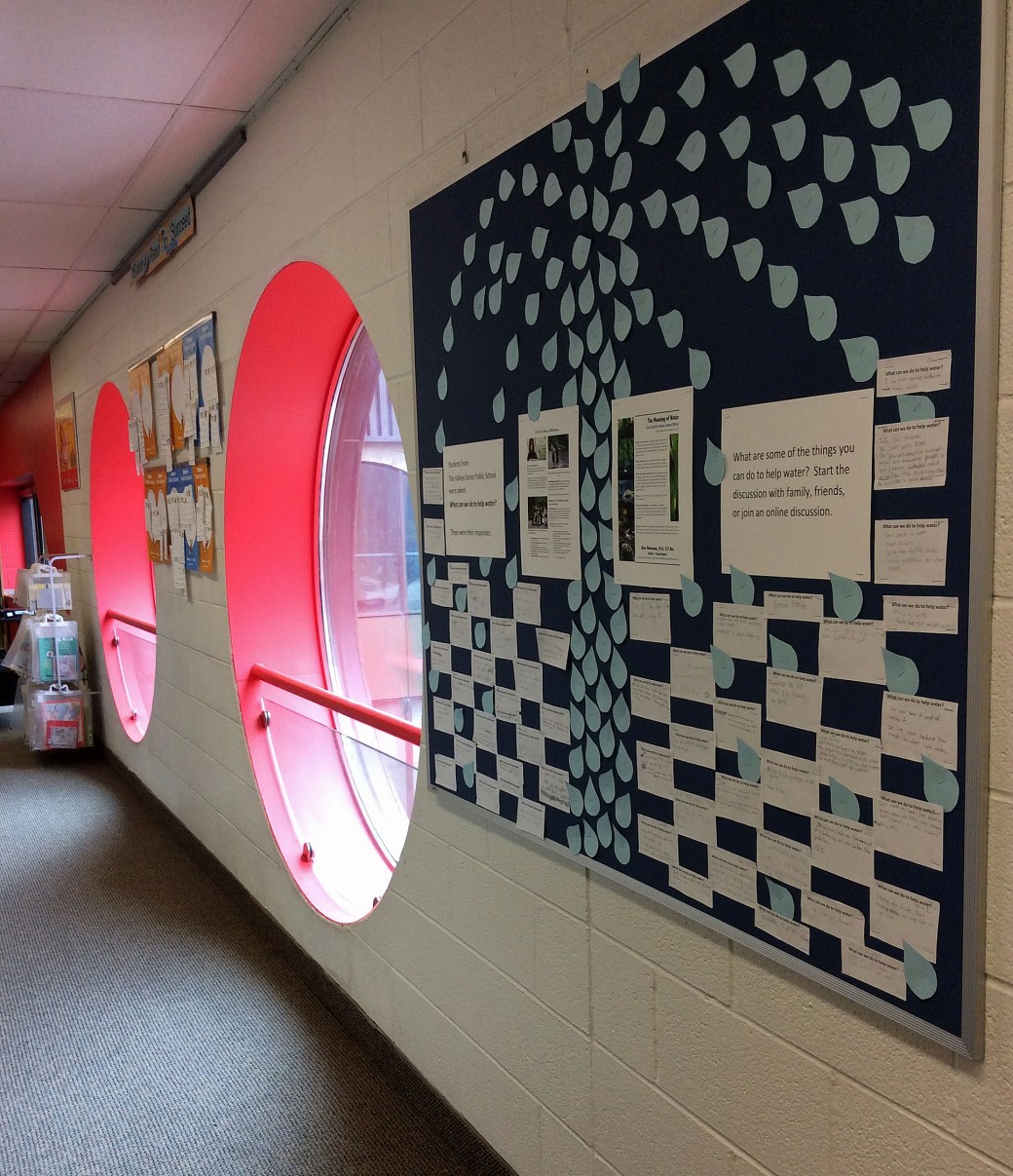
After a discussion of the problems now facing water on the planet, we asked the students from The Valleys Senior Public School to answer the question “What can we do to help water?” on a small sheet of paper, which we then collected. Their responses showed great thought and a willingness to do something concrete. Alene created a billboard at the Mississauga Valley Library with the Valleys Senior Public School student responses to the question.

Water-students-13

Water Tree Display with student responses to the question: “What can we do to help water?”

Below are some examples of responses by students…

Water-students-11

Water-students06

Water-students-Alenelibrary

Alene Sen and co-worker at the Mississauga Valley Library

Water Is-COVER-webYou can read so much more about water in my book “Water Is…”. Go see what people are saying about “Water Is…”


nina-2014aaaNina Munteanu is an ecologist, limnologist and internationally published author of award-nominated speculative novels, short stories and non-fiction. She is co-editor of Europa SF and currently teaches writing courses at George Brown College and the University of Toronto. Visit www.ninamunteanu.ca for the latest on her books. 

Nina Munteanu’s Writing Featured in “Morphology” Art Exhibit

“We are water, what we do to water, we do to ourselves”—Nina Munteanu

WaterIs-story-quote2

“Story” quote by Nina Munteanu from “Water Is…”

On Sunday January 14, “Morphology”, an art/writing exhibit and gala located in the world-class Lakeview Water Treatment Plant celebrated the new Waterfront Connection through the eyes of eleven photographers and writer/limnologist Nina Munteanu.

The show documented the initial stages of the newly created wetlands in Lakeview, Mississauga, on the shores of Lake Ontario. This revitalization project was the realized dream of visionary Ward 1 Councillor Jim Tovey, and was spearheaded by various organizations, including Credit Valley Conservation Foundation, The Region of Peel and the TRCA.

WaterIs-beauty-JulieKnox

Photo Art by Julie Knox, “Beauty” quote by Nina Munteanu from “Water Is…”

The Lakeview Waterfront Connection reclamation project will extend from the old Lakeview generating station to Marie Curtis Park in Toronto When completed, the 64-acre site will provide 1.5 km of beach, meadow, forest, wetland and islands—providing excellent habitat for migratory birds, fish and other aquatic life. Clean rubble from demolition projects are being used to build new land.

“It is the first ecosystem that’s ever been built in Lake Ontario in the GTA—ever,” said Councillor Tovey.


MarceloPazan-photo

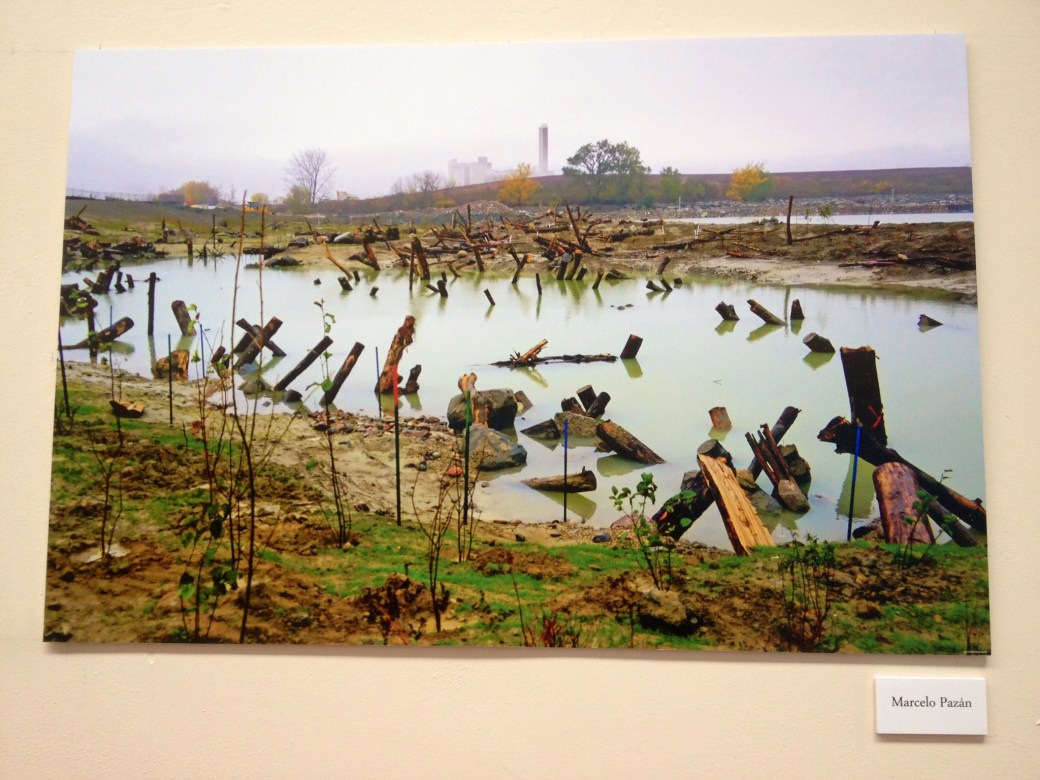
Photo Art by Marcelo Pazan

The art of eleven photographers documented the early stages of the wetland construction. “It sort of looks like a Salvador Dali surrealistic sculpture garden…and what an interesting way to really celebrate all of this,” said Councillor Tovey to the Mississauga News. Nina Munteanu was invited to provide water-related literature to augment the photography; quotes from Munteanu’s “Water Is…” and her upcoming novel “A Diary in the Age of Water” appeared in key locations with the photo art.

DiaryAgeOfWater-quoteReiterating Jim Tovey’s earlier comment on the water treatment plant as its own sculpture-art, Munteanu celebrated the location and the nature of the exhibit: “When technology, art and ecology are celebrated together, you get magic.”

JimTovey-ElizabethDowdeswell

Councillor Jim Tovey and The Honourable Elisabeth Dowdeswell tour the exhibit

The Honourable Elisabeth Dowdeswell (Lieutenant Governor of Ontario) was present for the exhibit: “The Great Lakes … face certain challenges,” said The Honourable Dowdeswell. “Threats such as increased pollution, habitat destruction and climate change are all having negative effects on much of our natural world.” We need strong stewardship, she added.

CathieJamieson-WaterIs-happy

Councillor Cathie Jamieson with her copy of “Water Is…”

Cathie Jamieson, Councillor of the New Credit First Nation gave a stirring speech. “We are the water carriers and it’s in our best interest to respect and take care of our natural surroundings for the next seven generations,” she said.

Councillor Jamieson was presented with a copy of “Water Is…” during the exhibit.

The exhibit will be moved and on public display at Mississauga’s Great Hall in March 2018. It is a must see!


Featured this year is the photo art by: Gabriella Bank, Sandor Bank, PJ Bell, Darren Clarke, Julie Knox, Lachlan McVie, Marcelo Leonardo Pazán, Martin Pinker, Annette Seip, Stephen Uhraney and Bob Warren; and written quotes by Nina Munteanu from “Water Is…” and upcoming “A Diary in the Age of Water”.


LWTP-blue-green-red pipes

Lakeview Water Treatment Plant

nina-2014aaaNina Munteanu is an ecologist, limnologist and internationally published author of award-nominated speculative novels, short stories and non-fiction. She is co-editor of Europa SF and currently teaches writing courses at George Brown College and the University of Toronto. Visit www.ninamunteanu.ca for the latest on her books.


LWTP-catwalk-close

“Water Is…” Recommended Summer Read by Water Canada Magazine

water-is-cover-web“Water Is…” (Pixl Press) by Nina Munteanu was among several books recommended by Water Canada as a good summer read for 2017.

One of Canada’s premiere magazines on issues of water and water management, Water Canada suggested recharging this summer with “the latest selection of winning water management fiction and non-fiction.” The list comprised mostly of 2017 publications, but included a few late arrivals from 2016.

Recommendations included:

schmidt comps.indd“Water, Abundance, Scarcity, and Security in the Age of Humanity” (NYU Press) by Jeremy Schmidt is an intellectual history of America’s water management philosophy. Debates over how human impacts on the planet, writes Water Canada, are connected to a new geological epoch—“the Anthropocene”—tend to focus on either the social causes of environmental crises or scientific assessments of the Earth system. Schmidt shows how, when it comes to water, the two are one and the same. The very way we think about managing water resources validates putting ever more water to use for some human purposes at the expense of others.


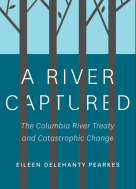
ARiverCaptured“A River Captured: The Columbia River Treaty and Catastrophic Change” (RMB Books) By Eileen Delehanty Pearkes reviews key historical events that preceded the Treaty, including the Depression-era construction of Grand Coulee Dam in central Washington, a project that resulted in the extirpation of prolific runs of chinook, coho and sockeye into B.C. Prompted by concerns over the 1948 flood, American and Canadian political leaders began to focus their policy energy on governing the flow of the snow-charged Columbia to suit agricultural and industrial interests. Water Canada writes, “Referring to national and provincial politics, First Nations history, and ecology, the narrative weaves from the present day to the past and back again in an engaging and unflinching examination of how and why Canada decided to sell water storage rights to American interests. The resulting Treaty flooded three major river valleys with four dams, all constructed in a single decade.”


borderflows“Border Flows: A Century of the Canadian-American Water Relationship” (University of Calgary Press), Lynne Heasley and Daniel Macfarlane, editors, explore and discuss Canada-U.S. governance. Water Canada writes, “Ranging across the continent, from the Great Lakes to the Northwest Passage to the Salish Sea, the histories in Border Flows offer critical insights into the historical struggle to care for these vital waters. From multiple perspectives, the book reveals alternative paradigms in water history, law, and policy at scales from the local to the transnational. Students, concerned citizens, and policymakers alike will benefit from the lessons to be found along this critical international border.”


NewYork2140“New York 2140” (Orbit) by Kim Stanley Robinson is a novel set in New York City following major sea level rises due to climate change. Water Canada writes, “The book explores a full eight separate narratives: the market trader, who finds opportunities where others find trouble; the detective, whose work will never disappear, along with the lawyers, of course; an Internet star; a building’s manager; and two boys who don’t live there, but have no other home—and who are more important to its future than anyone might imagine. Lastly there are the coders, temporary residents on the roof, whose disappearance triggers a sequence of events that threatens the existence of all– and even the long-hidden foundations on which the city rests.”


Death and Life of Great Lakes_FINAL 1129.indd“The Death and Life of the Great Lakes” (WW Norton & Company Inc. Press) by Dan Egan is a frank discussion of the threat under which the five Great Lakes currently suffer. This book, writes Water Canada is “prize-winning reporter Dan Egan’s compulsively readable portrait of an ecological catastrophe happening right before our eyes, blending the epic story of the lakes with an examination of the perils they face and the ways we can restore and preserve them for generations to come…Egan explores why outbreaks of toxic algae stemming from the over-application of farm fertilizer have left massive biological “dead zones” that threaten the supply of fresh water. He examines fluctuations in the levels of the lakes caused by manmade climate change and overzealous dredging of shipping channels. And he reports on the chronic threats to siphon off Great Lakes water to slake drier regions of America or to be sold abroad.”


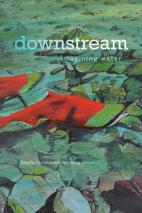
downstream“Downstream: reimagining water” (Wilfred Laurier University Press) by Dorothy Christian & Rita Wong “brings together artists, writers, scientists, scholars, environmentalists, and activists who understand that our shared human need for clean water is crucial to building peace and good relationships with one another and the planet. This book explores the key roles that culture, arts, and the humanities play in supporting healthy water-based ecology and provides local, global, and Indigenous perspectives on water that help to guide our societies in a time of global warming. The contributions range from practical to visionary, and each of the four sections closes with a poem to encourage personal freedom along with collective care,” writes Water Canada.


water-is-cover-webWater Is…The Meaning of Water (Pixl Press) by Nina Munteanu “explores the many dimension of H2O—the practical, the physical, and the magical. Water Is… represents the culmination of over twenty-five years of her study of water. During her consulting career for industry and government, Munteanu discovered a great disparity between humanity’s use, appreciation, and understanding of water. This set in motion a quest to further explore our most incredible yet largely misunderstood and undervalued substance. Part history, part science and part philosophy and spirituality, Water Is… combines personal journey with scientific discovery that explores water’s many “identities” and ultimately our own,” writes Water CanadaWater Is…  was recommended by Margaret Atwood as her premiere choice in the New York Times ‘The Year in Reading‘ for 2016.


WaterCanada-LOGO

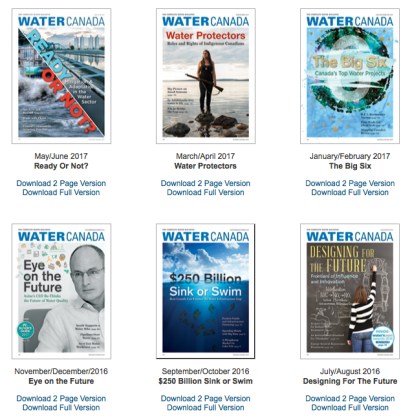
WaterCanada-coversWater Canada is a Canadian magazine that provides news and feature articles on water and water management. They currently co-host the Canadian Water Summit, a gathering of professionals from the water industry including academia, NGOs, local communities, cleantech, industry associations, manufacturing and government. “Delegates will explore opportunities to collaborate on water technology and infrastructure finance, ‘blue economy’ growth and climate change resilience through progressive policies, smart business and bold investment leadership.” This year’s summit will occur June 22, 2017 at the Sheraton Centre Hotel in Toronto.

DS-2008-16 copy

Nina Munteanu kayaking Desolation Sound on the west coast of British Columbia


#CanadaReads #Canada150 #WhatIsWATER #TheMeaningOfWater #WaterCanada


Sharing Nature’s Secrets And When Trees Share the Dirt…

EcologyOfStoryOne of the lectures I give to my science fiction writing students is called “Ecology in Storytelling”. It’s usually well attended by writers hoping to gain better insight into world-building and how to master the layering-in of metaphoric connections between setting and character.1

I talk about the adaptations of organisms to their changing environments. I describe the trophic (energy) relationships from producers to consumers and destroyers in a complex cycle of creative destruction. Students perk up when I discuss some of the more strange and interesting adaptations of organisms to their environment: twisted stories of adaptations and strategies that involve feeding, locomotion, reproduction and shelter.

Purposeful Miscommunication & Other Lies

For instance, the Alcon blue butterfly hoodwinks ants into caring alconbluebutterfly-antsfor its larvae. They do this by secreting a chemical that mimics how ants communicate; the ants in turn adopt the newly hatched caterpillars for two years. There’s a terrible side to this story of deception. The Ichneumon wasp, upon finding an Alcon caterpillar inside an ant colony, secretes a pheromone that drives the ants into confused chaos; allowing it to slip through the confusion and lay its eggs inside the poor caterpillar. When the caterpillar turns into a chrysalis, the wasp eggs hatch and consume it from inside.

This reads like something out of a noir thriller. Or better yet, a horror story. Nature is large, profligate, complex and paradoxical. She is by turns gentle and cruel. Creative and destructive. Competitive and cooperative. Idle and nurturing.

When I bring in extremophiles, who thrive in places you and I would cringe to set foot in, students’ imaginations run wild with ideas. I describe a panoply of weird adaptations in Nature—involving poisons, mimicry and deception, phototaxis and something called anhydrobiosis, which permits the tiny tardigrade to shrivel into a tun in the absence of water then revive after a 100 years with just a drop of water.

water-bear03

Tardigrade

All this adaptation hinges on communication. How an organism or population communicates with its environment and among its own. Examples of “strange” communication are the purview of the science fiction writer … and already the nature of our current world—if you only know where to look. The scope of how Nature communicates—her devices and intentions—embraces the strange to the astonishing. From using infrasound to chemical receptors and sensing magnetic fields. To allelopathy. Aggressive symbiosis. And so much more.

When Trees Share the Dirt

“Trees are the foundation of a forest, but a forest is much more than what you see,” says University of British Columbia forest ecologist Suzanne Simard.

suzanne-simard-portrait

Suzanne Simard

Simard, who has published hundreds of papers over 30 years of research, suggests a kind of “intelligence” when she describes the underground world “of infinite biological pathways that connect trees and allow them to communicate” In a forest. This communication allows the forest to behave as if it was a single organism, says Simard. Her early in situ experiments showed solid evidence that tree species, such as Paper Birch and Douglas Fir communicated in a cooperative manner underground through an underground mutualistic-symbiosis involving mycorrhizae (e.g., fungus-root). These trees were conversing in the language of carbon and nitrogen, phosphorus, water, defense signals, allelo-chemicals, and hormones via a network of mycelia. Fungal threads form a mycelium that infects and colonizes the roots of all the trees and plants. Simard compares this dense network to the Internet, which also has nodes and links—just as the forest.

forest-conversing

Myccorhyzae and fungal highways

Fungal highways link each tree and plant to its community, with busiest nodes called hub trees or mother trees. Calling them mother trees is appropriate, given that they nurture their young in the understory; sending excess carbon to the understory trees, which receive less light for photosynthesis. “In a single forest,” says Simard, “a mother tree can be connected to hundreds of other trees.” These mature trees act as nodal anchors—like major hub sites on the Internet—for tree groupings; according to Simard, they look after their families, nurture seedlings and even share wisdom—information—when they are injured or dying.

Simard made another incredible discovery: that mother trees “recognize their kin.” In experiments her team ran using related and unrelated seedlings, the mother tree preferentially sent its excess carbon to kin over non-kin seedlings.

These discoveries pose some serious implications in how we do and should manage our forests. “You can take out one or two hub trees, but there’s a tipping point,” says Simard. “You take out one too many and the whole system collapses.”

Simard shared that “in 2014 the World Resources Institute reported that Canada in the past decade has had the highest forest disturbance rate of any country worldwide…In Canada it’s 3.6% per year…about four times the rate that is sustainable.”

“Massive disturbance at this scale is known to affect hydrological cycles, degrade wildlife habitat and emit greenhouse gases back to the atmosphere, which creates more disturbance and more tree die-backs,” says Simard. She adds that the practice of planting commercially valued species at the expense of the indigenous aspens and birches lacks complexity and promotes vulnerability to disease. It’s creating “a perfect storm,” Simard concludes.

Trees & Climate Change

A major international report on climate change shows that wildlife habitats will be dramatically impacted around the world. In Canada, this could fundamentally alter 65 per cent of its existing natural habitat in the boreal and Arctic regions, where warming will be the greatest. The report says that seven Canadian provinces – Ontario, Quebec, Alberta, British Columbia, the Yukon, Newfoundland and Labrador and Manitoba – will have more than half of their natural habitat at risk.

Simard asks: “Instead of weakening our forests, how can we reinforce them and help them deal with climate change?” She suggests four simple solutions:

  1. Get out into the forest and re-establish local involvement in our forests, using management techniques based on local knowledge
  2. Save our old-growth forests, the repositories of genetic material, mother trees and micorhizal networks
  3. Save the mother trees when cutting trees
  4. Regenerate our forests with a diversity of species types and structures

“Forests aren’t just a bunch of trees competing with each other; they are super-cooperators,” Simard points out. “The great thing about forests,” she reminds us, “is that as complex systems, they have an enormous capacity to self-heal.”

How Healing Trees Can Heal Us

Aside from being highly evolved water management specialists, trees are chemical factories that broadcast a host of aerosols into the atmosphere around them. Researchers have found over 120 substances, of which only half could be identified. These aerosols are part of a sophisticated survival strategy, writes botanist and biochemist Diana Beresford-Kroeger. Studies have shown that willows, poplars and maples warn each other about insect attacks; undamaged trees then pump bug-repelling chemicals to ward off the attack. Black walnut trees emit juglone, an aerosol that repels competing nearby plants and some insects. Scientists demonstrated that airborne communication between individual sagebrush plants (called “eavesdropping”) helped neighbouring plants resist attacks. The monoterpenes like pinene and linene can relieve asthma and even fight cancer.

Water Is-COVERYou can read more about this in my book “Water Is… (Pixl Press).

1I give several lectures based on this general topic of world building for writers. One I gave recently, at CanCon2016 in Ottawa, focused on aquatic worlds, my scientific area of expertise. These lectures are based on my upcoming guidebook “The Ecology of Story: World as Character”

.

.

nina-2014aaNina Munteanu is an ecologist and internationally published author of award-nominated speculative novels, short stories and non-fiction. She is co-editor of Europa SF and currently teaches writing courses at George Brown College and the University of Toronto. Visit www.ninamunteanu.ca for the latest on her books. Read Nina’s climate/eco-fiction Darwin’s ParadoxAngel of Chaos and Natural Selection.