Places to Write: My Secret Places at The University of Toronto

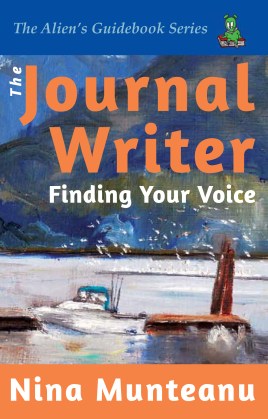
notebook01In my writing guidebook The Journal Writer: Finding Your Voice I write a section on finding the right time and place to write. I call them “sacred”, because that’s what they are. Without them, we struggle to write. In Chapter Two of The Journal Writer I write about the need for a sacred place in journal writing, particularly. The advice is equally important to any form of writing.

Journal Writer-FRONT-cover-WEBFinding the perfect place(s) to write … is important to creating meaningful entries. Journal writing is a reflective activity that requires the right environment for you. The best environment is a quiet one with no interruptions and where you are alone. A reflective environment will let you relax, find a connection with yourself and your feelings. You need a place where you can relax and not worry about someone barging in or other things distracting you from your thoughts. You should also feel physically comfortable and the place should meet your time requirements.

Because the suitability of a place can change with the time of day, learn the rhythms that affect the place you wish to write in. For example, the kitchen may be the centre of activity during the day but an oasis of quietude during the evening. Similarly, learn what kind of environment stimulates and nurtures your writing. Does music help or do you need complete quiet? Do you respond to nature’s soft breezes and sounds or do you prefer to surround yourself with the anonymous murmur of a crowded café for company?

Places that work for me include the local coffee shop, a park near my house, a library or other quiet place where I can enjoy uninterrupted anonymity. Where you write may reflect what you’re writing and vice versa. To some extent, you are environment and environment is you. You might try a few places first and see what happens to the content of your entries. Entries you make while sitting under an apple tree in the breeze hearing the birds singing may differ from entries you make while sitting in your living room by the crackling fireplace with music playing or sitting at your desk in your bedroom in total silence or in a crowded café surrounded by cheerful bustle. I give more details on how to feed the muse in Chapter 4.

Nina-computer-Krave

Sitting in Krave’s outside patio

Some of my favourite places to write are indie cafés that express unique character and rich ambience. Amid the desultory chatter and laughter of people and sipping my flat white, I find myself deep in writing. These days you can most likely find me somewhere on the University of Toronto campus where I teach engineering students, social science students, and health science students how to write.

It’s been four years since I came to UofT and I still feel a glow every time I walk through campus. Whether it’s past a century-old stone building, beneath a canopied archway of chestnuts, into a well-treed enclave, or through a high-ceilinged glass building; I am both home and on an adventure.

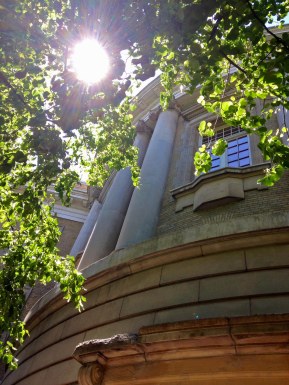
ConvocationHall-web

Convocation Hall, UofT

UofT is a place of learning—erudite, splendid, lofty yet humble—and beautifully epitomizing “new embracing old”. When new embraces old, we get magic. Wizard-magic. Harry Potter kind of magic. The kind of magic that only someone who is open, faithful, and confident can wield. This is ancient magic. The magic that lurks like Reznikoff’s ghost in the ancient halls of University College, or the magic currently wielded at 1 Spadina. A magic borne of wisdom, lore, and story.

Established in 1827, the University of Toronto is snugly located in the centre of downtown Toronto; yet, it’s not so much a part of the city as the city is a part of it.  UofT’s campus probes into the city’s infrastructure like a creative amoeba: interacting, absorbing and expressing. The UofT downtown campus sprawls dozens of blocks in all directions; embedding itself in the city with a blend of century-old buildings and avant-garde modern chic. It’s not so much re-inventing itself at every turn as morphing and co-evolving with the city.

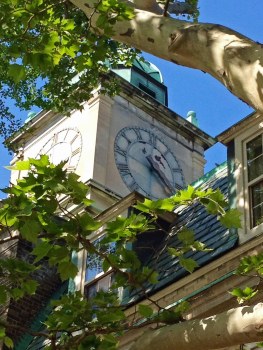
UofT-clocktower-sicamortrees

Clock tower, UofT

The UofT campus represents for me the very best the city—any city—has to offer: a vibrant, well-connected place of learning and activity, supported by original and tasteful landscape architecture: healthy trees and parkland full of songbirds, tasteful new and old architecture and alluring courtyards and doorways that beckon my creative soul. The UofT campus provides a myriad of possibilities and historic depth for the adventurous soul. Did you know, for instance, that Canada’s first electric computer was installed at UofT? Or that UofT is haunted? Or that much of UofT’s architecture was inspired by structures at Oxford and Cambridge? Or that an old nuclear accelerator sits fallow in the McLennan Physical Labs building?

My creative soul appreciates UofT’s integration of nature into its architecture and grounds. Its natural enclaves provide ideal settings for quiet contemplation and reflection. They’ve become my “secret places,” destinations along my journeys across campus to my various writing appointments. Places where I can sit, reflect and write. Here are just a few:

  1. Terrence Donnelly’s Bamboo Garden in Terrence Donnelly Centre:
BambooGarden01

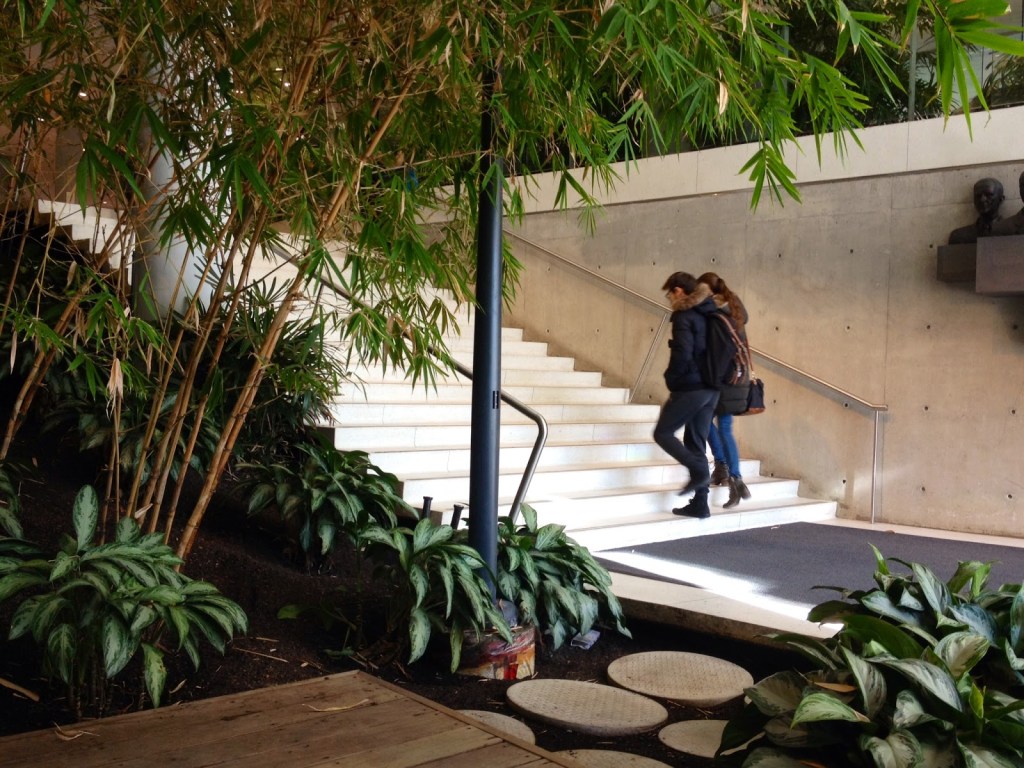
Steps leading up past bamboo garden of Terrence Donnelly Centre

The Terrence Donnelly Centre for Cellular & Biomolecular Research (CCBR) is where some of the coolest research and discoveries in biomolecular and cellular research are being made. Benjamin Blencowe and his team’s recent uncovering a protein’s sweeping influence on autism last December using introverted mice, for instance. Named after the philanthropist Terrence J. Donnelly, the centre was the vision of UofT Professors Cecil Yip and James Friesen.

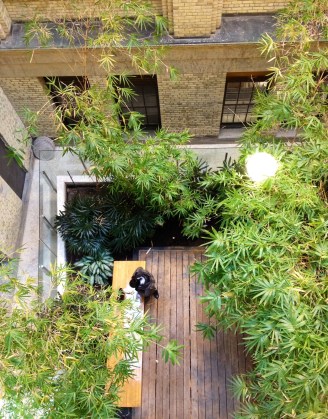
BambooGarden-lookingdown

View of garden resting area from above

In the 1990s they foresaw that new genomic technologies would open-up progress in biomedical research in a time when there was no human genome sequence or stem cell technologies and DNA sequencing was slow and inexpensive. Yip and Friesen envisioned a collaborative and interdisciplinary research facility that, when it opened in 2005, brought together over 500 specialists—biologists, computer scientists, physicians, pharmacists and engineers—to advance the university’s groundbreaking research in molecular biology.

BambooGarden-RosebrughWall

View of Rosebrugh wall from the garden

The centre is located on what was previously Taddle Creek Road. The CCBR building—which from College Street resembles two colourful stacked cubes—is set back by a gradually sloping plaza with granite benches and groves of white paper birch. The building and plaza are flanked by several historic buildings (80-year old Fitzgerald Medical Building to the east; the 1919 Rosebrugh Institute of Biomaterials and 100-year old Lassonde Mining building to the west; and the Medical Sciences Building to the north).


The bamboo garden in Donnelly’s spacious atrium is meditative and calming; a lush forest of bamboo and shrubs amidst wooden floors, benches and steps. Created by landscape architect Diana Gerrard, the garden offers several “picnic” sites of wooden platforms and benches, which I learned had come from the ash, tulip and cherry trees that had occupied the original lane way.

BambooGarden-entrance

Entranceway with bamboo garden of Terrence Donnelly Centre

Upon entering the complex from College Street, the granite plaza gives way to white terrazzo flooring in an expansive multi-story atrium. The top lit glass-ceilinged atrium connects the adjacent heritage Rosebrugh building to the CCBR in a counterpoint of techno-minimalism with Romanesque tradition. As I walk up the shallow wide steps lined by pillars that reach skyward, the tall bamboo forest to my left beckons. I’ve had many lunches there. I also spend many moments sitting there with a book, reading or just daydreaming beneath a texture of greens.

  1. Breezeway of Knox College Quad:
knox college breezeway04 copy

Knox College breezeway in winter

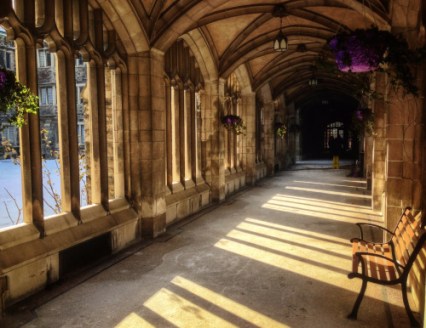
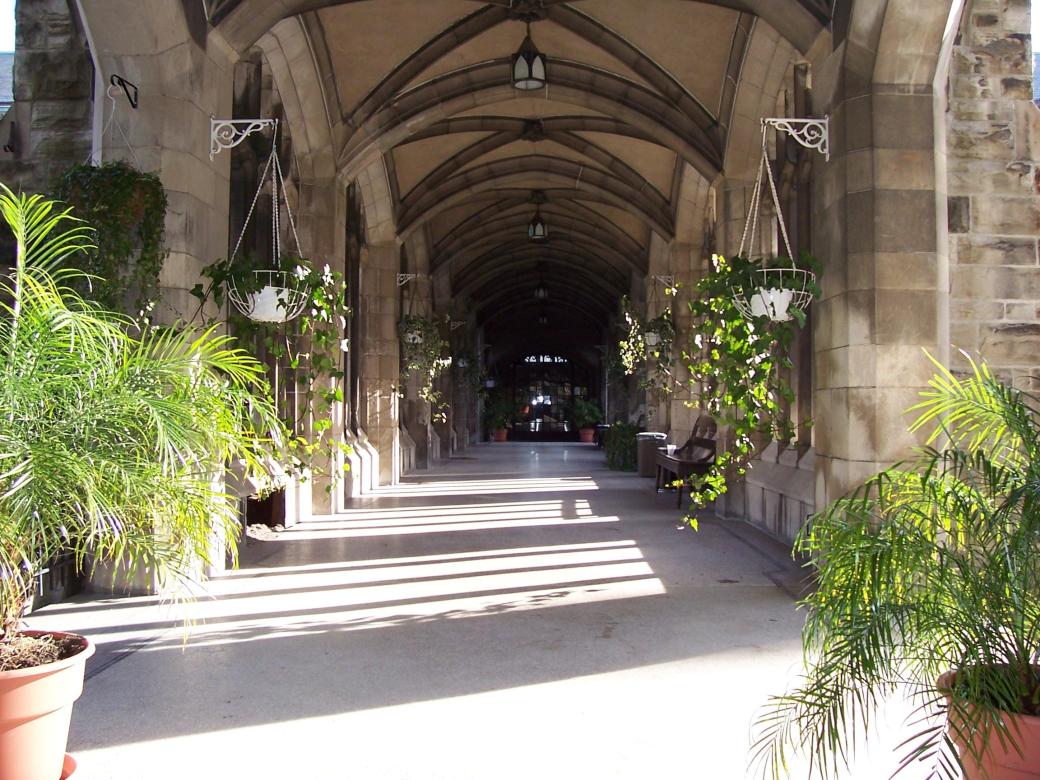
I usually enter the perpendicular gothic style building from St. George Street; though, you can also come in via Kings College Circle, past the chapel—known for its Hellmuth Wolff organ. Once I pass through the heavy doors of the St. George entrance, I enter a dark foyer and instantly feel like I’m in a church. The chapel is on the other side, yet the deep quiet and surrounding dark wood of the floors, walls and stairways to the right and left of me, enclose me with a sense of sacred holiness. I walk the echoing foyer to the stained-glass doorway of the breezeway ahead. As I open the glass door, the complex scent of tulips and pine greets me with the warm breeze. I have entered another magic place.

The gothic archway that connects the Knox College Quad is an open breezeway that looks out onto the interior gardens of the quad. Tables and chairs along each side provide a peaceful place to read and write with a quiet view of the outside courtyard of flowers, shrubs, trees and benches. Hanging vines provide additional greenery in the archway.

knox breezeway01 copy

Knox College breezeway through courtyard

Whenever I come here, the hustle and bustle of the city just fades away. Busy St. George Street is nearby; yet I don’t feel its influence within this quiet haven, where the soft sounds of Nature embrace me with their songs and stories. I often come here to read and write. I listen to the birds and other natural sounds, letting them lull me into a meditative quietude of bliss. Life slows to a philosopher’s pace and my creative muse awakens. Sometimes I bring one of my indulgences—a poutine from one of the chip trucks on St. George—and feast in my secret place as Nature’s melodies feed my soul. On a warm day, the breezeway also provides a cool respite.

  1. The Laidlaw Quadrangle behind University College
Gate to UC courtyard

West gate into University College courtyard

When I first discovered this hidden quadrangle, I felt goosebumps of pure magic course through me. My discovery visit was through the west arched entranceway off the west green, past Bissell House. I passed the gateway into the Courtyard Colonnade, and faced a sunken courtyard shaded by large ironwood and maple trees and surrounded by gothic brick and stone. I’d entered an enchanting world of quiet reflection.

A paved walkway—supported by retaining walls and planted with flowering shrubs—runs on three sides of the quadrangle. The walkway broadens into a terrace to the north, forming an extension of the new Library colonnade. Mature maple and ironwood trees overhang the cloisters and the walkway.

WestCollonade-looking west

West colonnade of quadrangle

Designed by Canadian landscape architect Michael Hough, the quadrangle evokes the courtyards of medieval monasteries and old English universities. Built in 1964, when the Laidlaw wing (and library) separated the college from back campus, Hough’s design translates the essential feature of a monastery or college courtyard—access from inside the building to a covered walk around an open centre—from architecture to landscape.


UniversityCollege-WestCollonade

View of courtyard (to left) from west cloister of University College

I’ve since discovered other ways to enter and leave the quadrangle, each one presenting a new perspective to this peaceful place. Each time I come here, I feel my soul sigh with joy. Birds sing the poetry of Nature. Leaves rustle as the wind plays on them. When I’m here, I feel at peace in the city.

photo-24

UofT Faculty Club

UofT Faculty Club: Every journey requires repast—a place to relax, eat and drink—and my feet naturally direct me to one of my new favourite haunts: the UofT Faculty Club. Located close to the hub of the campus, on Willcocks Street just east of Spadina, the club is open to members who include faculty, staff, graduate alumni and their guests. I enter the 1896 heritage building, built in a Georgian Revival-style, and passed the elegant first floor lounge to the pub below. The pub welcomes me with excellent food, drink and a relaxing ambience. Bathed in rich tones of wood and comfortable chairs and warmed by a cozy fireplace, it reminds me of a Dorset pub I’d visited years ago; full of colourful characters and a well-stocked bar.

UniversityCollege-windows

Windows of University College

I feel both at home and like a traveler. Like I’d walked into history with modern comfort. I order the beet salad from my friendly waitress; it provides a refreshing and attractive light meal for a mid-day travelling writer.

Nina Munteanu

Nina Munteanu is an ecologist, limnologist and internationally published author of award-nominated speculative novels, short stories and non-fiction. She is co-editor of Europa SF and currently teaches writing courses at George Brown College and the University of Toronto. Visit www.ninamunteanu.ca for the latest on her books.


Pictures by Nina Munteanu


What Did You Do Before You Were Famous…?

Vanc Library-Atrium2

Vancouver Central Library (photo by Nina Munteanu)

So, you’re a famous author now…

You’ve published several books and they sold more than a dozen copies each. In fact, a few have been translated and are in second printings. You’ve received some recognition and awards and a bazillion nominations. You’ve landed some speaking engagements with writing and reader groups and a movie producer is soliciting a treatment from you. You have a following…Fans who “stalk” you at the writer conventions you participate in. Fans who want to co-write the sequel to your current bestseller with you, because they understand your universe—and your characters—so well. You discover that some fans have gone ahead and written fan-fic about your main character and universe on the Internet—a sign of adoration. Really.

But you weren’t always famous…

Neither was John Steinbeck, Ursula Le Guin, J.D. Salinger, Harper Lee or J.K. Rowling…

When did the transition occur for them? It’s not that easy to peg and it isn’t that obvious. This is partly because, it depends on each writer’s own criteria for success and fame. Particularly given that many writers aren’t, in fact, seeking fame, per se.

However, what every career writer wants, which often comes alongside fame is this: autonomy and the ability to write for a living without having to sneak it in at midnight after you’re finished your “real” job.

No one is “born” a writer; most of us start out doing something else to make a living. In the meantime, we work hard on what we love and what feeds our souls and our passion for storytelling. We assiduously write on stolen time and submit queries and letters. We do research and marketing. We write drafts, do revisions, attend classes and read books. All hoping to eventually write full time.

Let’s look at the humble roots of some famed writers and what key moment signified their move into the light of career novelist:

JK RowlingJ.K. Rowling was an unemployed single mother on public assistance when she wrote the first book. The book was rejected by over a dozen publishers before a small British publisher, Bloomsbury, said yes.

JohnSteinbeckJohn Steinbeck worked through many odd jobs before earning enough to work as a full time writer. His day jobs included: apprentice painter, fruit picker, estate caretaker and Madison Square Garden construction worker. He also ran a fish hatchery in Lake Tahoe and did guided tours there.

MargaretAtwoodMargaret Atwood worked in a coffee shop. She says her first job experience was NOT ideal: She had to deal with a difficult cash register, a rude ex-boyfriend who would come by just to stare at her and barely tip, and fellow employees who were definitely not friendship material.

WilliamFaulknerBefore his writing career blossomed, William Faulkner worked for the postal service, as postmaster at the University of Mississippi. In his resignation note, he summarized the struggle of art and commerce faced by most authors: “As long as I live under the capitalist system I expect to have my life influenced by the demands of moneyed people. But I will be damned if I propose to be at the beck and call of every itinerant scoundrel who has two cents to invest in a postage stamp. This, sir, is my resignation.”

JD SallingerIn a 1953 interview, J.D. Salinger shared that he had served as entertainment director on the HMS Kungsholm, a Swedish luxury liner. He drew on the experience for his short story “Teddy”, which takes place on a liner.

Ursula_Le_GuinUrsula Le Guin struggled initially to be published in the mainstream fiction world, but her first three novels, Rocannon’s World, Planet of Exile and City of Illusions, put her on the sci-fi map.

JamesJoyceAn accomplished tenor, James Joyce made money singing for his supper before his work was published.

HarperLeeHarper Lee worked as a reservation clerk for Eastern Air Lines for several years, writing stories in her spare time. A windfall came when a friend offered her a Chirsmas gift of one year’s wages and one year off to write whatever she pleased; she wrote the first draft of “To Kill a Mockingbird”.

stephen kingStephen King was a janitor for a high school as he struggled to get his fiction published. His time wheeling the cart through the halls inspired him to write the opening girl’s locker room scene in “Carrie”, his breakout novel.

KurtVonnegutKurt Vonnegut managed Americas first Saab dealership in Cape Cod during the late 1950s, a job he joked about in a 2004 essay, “I now believe my failure as a dealer … explains what would otherwise remain a deep mystery: why the Swedes have never given me a Nobel prize for literature.”

Virginia_WoolfWhen Virginia Woolf’s brilliant novels failed to find a publisher, she and her husband Leonard bought a printing press and set up their own publishing compay Hogarth Press in their living room. They published Woolf’s masterful novels, such as Orlando and To The Lighthouse, as well as T.S. Eliot’s The Waste Land, among other classics of the era.

TS EliotT.S. Eliot worked as a clerk for Lloyds Bank of London. During that time, he composed “The Waste Land”.

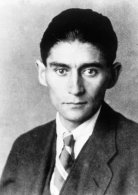
Franz KafkaFranz Kafka served as the Chief Legal Secretary of the Workmen’s Accident Insurance Institute. Obviously.

Douglas Adams was a bodyguard. Even published authors often have to work other jobs to make ends meet, Douglas Adamsand The Hitchhiker’s Guide to the Galaxy author Douglas Adams was no exception: At one point, he served as a bodyguard for a wealthy Arabian family while he wrote for radio shows and Monty Python. Good writers are good multitaskers!

James_michenerJames A. Michener was a teacher before writing only at age 40. He Michener is notable more for his output than his age. The Tales of the South Pacific author (whose Pulitzer Prize-winning book would later be adapted into a Broadway musical) wrote a staggering 40 books after the age of 40—nearly a George_Orwellbook a year—after spending much of his life as a teacher.

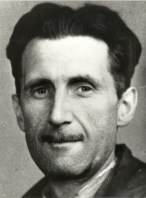
Before he wrote 1984, George Orwell served as an officer of the Indian Imperial Police in Burma, where he was known for his “sense of utter fairness.”


nina-2014-BWNina Munteanu is an ecologist, limnologist and internationally published author of award-nominated speculative novels, short stories and non-fiction. She is co-editor of Europa SF and currently teaches writing courses at George Brown College and the University of Toronto. Visit www.ninamunteanu.ca for the latest on her books.


Nina Talks Water with Grade 8 Students on World Water Day

Nina-Grade 8 on Water-March22-2018 copy

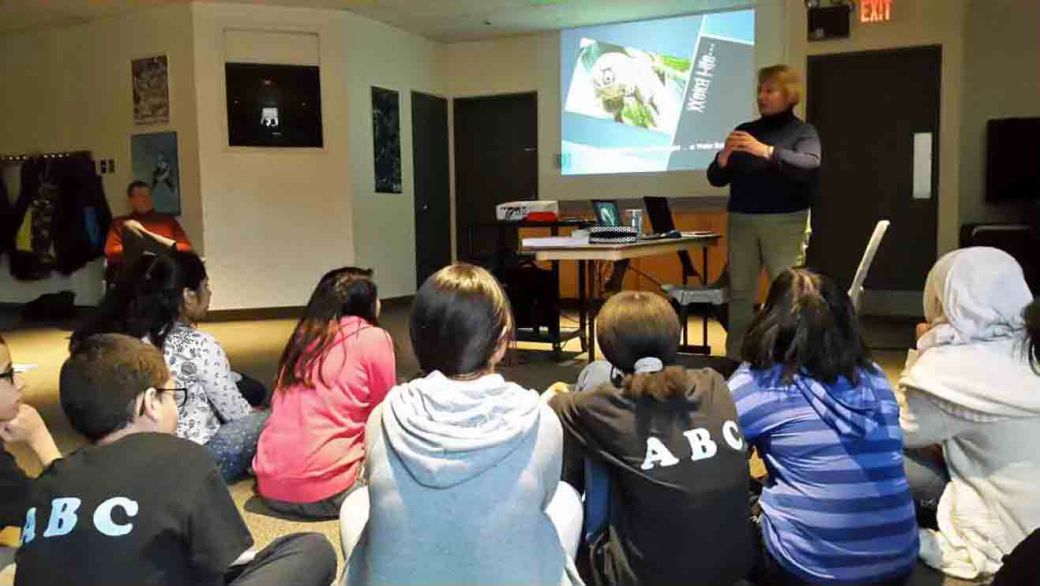
Nina talks with Valleys Senior Public School Grade 8 students about water

On World Water Day, at the kind invitation of Alene Sen (supervisor and coordinator for the City of Mississauga at the Mississauga Valley Library) I talked to some 100 Grade 8 students of Valleys Senior Public School about water. Several classes, in groups of about fifty students each, came at tandem to the library to learn something about water.

I had about half an hour to prime them with something that would spark their interest and which they could take home and think about—and possibly apply in stewardship.

carboniferous-paleozoic eraI started the talk by explaining that I’m a limnologist—someone who studies freshwater—and that water is still a mysterious substance, even for those who make it their profession to study.  After informing them of water’s ubiquity in the universe—it’s virtually everywhere from quasars to planets in our solar system—I reminded them that the water that dinosaurs drank during the Paleozoic Era is the same water that you and I are drinking.

We briefly reviewed some of water’s most interesting anomalous and life-giving properties such as cohesion and adhesion—responsible for surface tension and water’s capillary movement up trees. Below is an excellent 4-minute YouTube video “The Properties of Water” that describes these properties well.

I reviewed the circle of life and energy in an aquatic ecosystem and used the grey whale as an example to study trophic cascades and the balanced trophic cycle—with an endnote on the whale’s significant role in influencing climate.

I introduced each class to the incredible and very tiny Tardigrade, also known as the water bear or moss piglet, with magical properties of its own. The 4-minute TED video by Thomas Boothby is particularly instructive and entertaining.

I then showed the class an image of the Three Gorges Dam in China and reported how as a result of so much dam-building and retention of water—and because most dams are located in the northern hemisphere—we have slightly changed how the Earth spins on its axis. We’ve sped its rotation and shortened the day by 8 millionths of a second in the last forty years.

3-gorges dam

Water needs to constantly move. The Water cycle moves through the planet in all three forms (vapour, liquid and ice), over land and sea and through the earth, but also through all life. We are part of that cycle. We drink it and get immersed in it; we also breathe water in with every breath we take and breathe it out with every breath we exhale.

We are water; what we do to water, we do to ourselves.

I invited the class to discuss things we could do to help water as it moves through the planet. We talked about things we could do at home, with our friends, in our school and community to help water. Things like planting a tree in your back yard; adopting a nearby stream and taking care of it; organizing a beach clean-up; deciding to do something at home to waste water less.

Each action is a small thing. But that is how large things happen, through the accumulation of small things. And with every “small” action is a small shift in thinking, which leads to the kind of leadership that will change the world and make it a better place—for water and everything that depends on it.

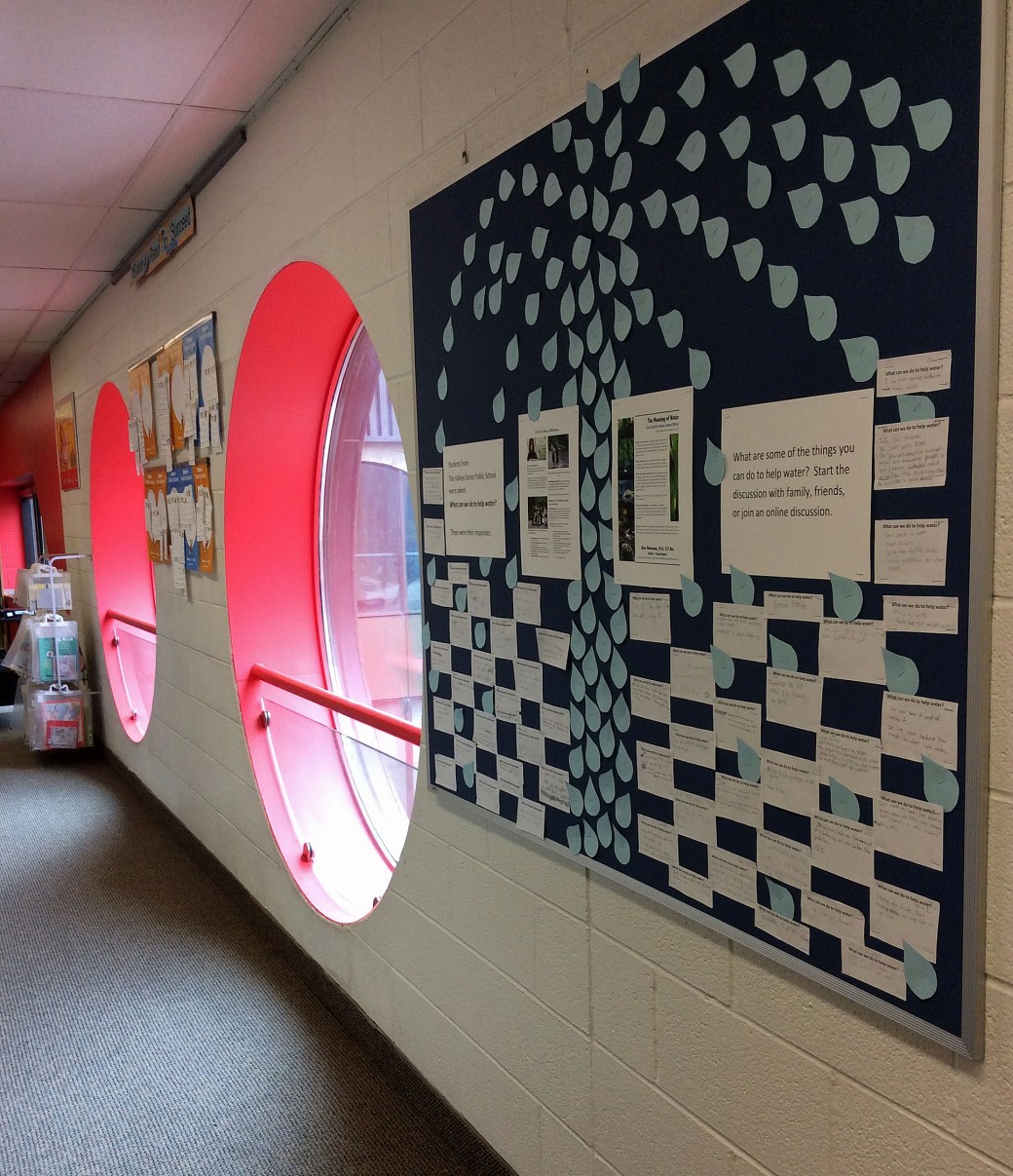
After a discussion of the problems now facing water on the planet, we asked the students from The Valleys Senior Public School to answer the question “What can we do to help water?” on a small sheet of paper, which we then collected. Their responses showed great thought and a willingness to do something concrete. Alene created a billboard at the Mississauga Valley Library with the Valleys Senior Public School student responses to the question.

Water-students-13

Water Tree Display with student responses to the question: “What can we do to help water?”

Below are some examples of responses by students…

Water-students-11

Water-students06

Water-students-Alenelibrary

Alene Sen and co-worker at the Mississauga Valley Library

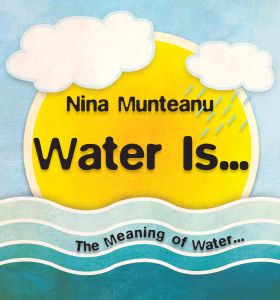
Water Is-COVER-webYou can read so much more about water in my book “Water Is…”. Go see what people are saying about “Water Is…”


nina-2014aaaNina Munteanu is an ecologist, limnologist and internationally published author of award-nominated speculative novels, short stories and non-fiction. She is co-editor of Europa SF and currently teaches writing courses at George Brown College and the University of Toronto. Visit www.ninamunteanu.ca for the latest on her books. 

On Being a Canadian in The Age of Water

Do I contradict myself? Very well, then I contradict myself; I am large, I contain multitudes.”—Walt Whitman

nina-child01I was born on this day, some sixty+ years ago, in the small town of Granby in the Eastern Townships to German-Romanian parents. Besides its zoo—which my brother, sister and I used to visit to collect bottles for a finder’s fee at the local treat shop—the town had no particular features. It typified French-Canada of that era.

So did I.

I went to school in Quebec then migrated across to the west coast to practice and teach limnology. Given that Canada holds a fifth of the Earth’s freshwater, that also made sense.

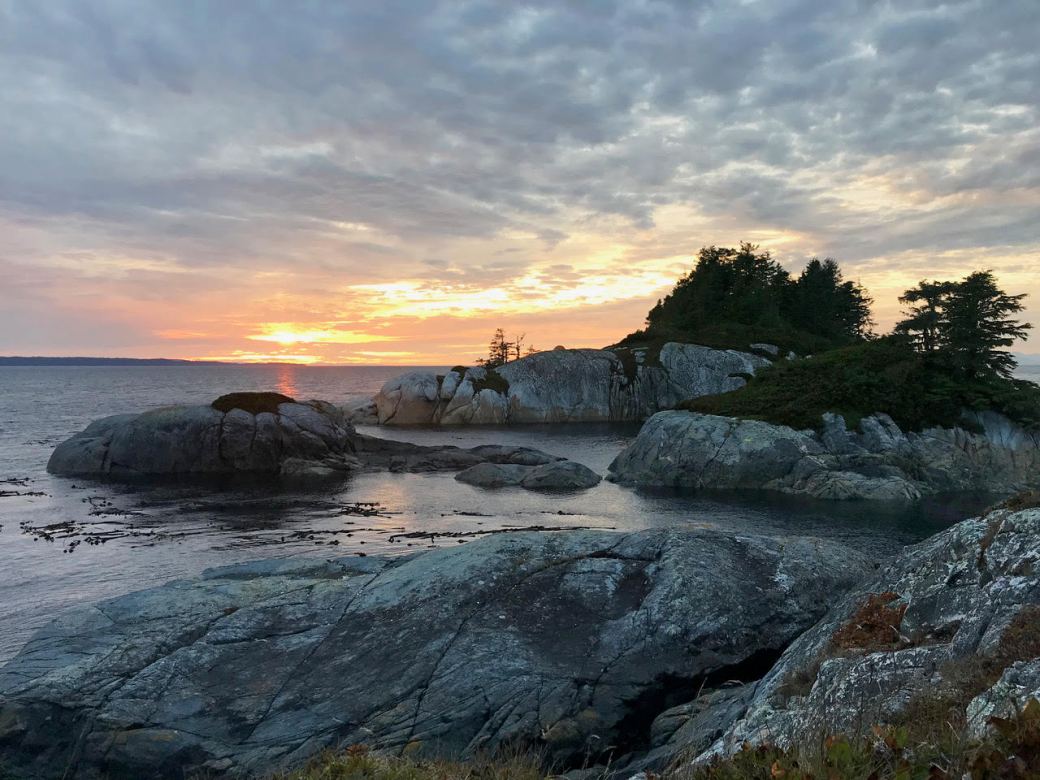
Broughton-sunset-kev

Sunset off Broughton, BC (photo by Nina Munteanu)

Canada is a vast country with a climate and environment that spans from the boreal forests of the Canadian Shield, muskegs of northern BC, and tundras of the Arctic Circle to the grasslands of the Prairies and southern woodlands of Ontario and Quebec. Canada’s environment is vast and diverse. Like its people.

kevin-nina-close

Nina and son Kevin explore Nature

In December of 2017 I participated in a discussion on the subject and role of water in literature in Toronto. I came to the event as a limnologist/ecologist, mother and environmentalist prepared to share how water—its meaning and our relationship with it—is used in my writing and how writing about water can help nurture a future of awareness and action.

But, as the discussion slid into the slippery subject of colonialism, I made the apparent mistake of sharing that—as a Canadian—I was proud of Canada. I was later schooled that “celebrating the nation” was considered anathema to an audience with strong anti-colonialist sentiments and a hatred for neoliberalist corporate Canada (something I share but do not obsess over); I’d obviously crossed some invisible line and I made a mental note to better assess my audience in future).

I also got to thinking about what it means for me to be a Canadian and what my pride in Canada really means. Was I being a “white-toast” nationalist in sharing a pride in my country?

Ecologist vs Nationalist

Ecology is the study of “home” (oikos means ‘home’ in Greek). Ecology studies the relationships that make one’s home functional. It is, in my opinion, the most holistic and natural way to assess where we live. My home is currently Toronto, Ontario, Canada and ultimately the planet Earth.

Country_road_Stephane_Lemire

country road in Eastern Townships of Quebec

Growing up in the Eastern Townships of Quebec, I’d always felt an abiding sense of belonging and I resonated with Canada’s national symbols—mostly based on Nature and found on our currency, our flag, and various sovereign images: the loon, the beaver, the maple tree, our mountains and lakes and boreal forests. Why not? Over 80% of Canada lies in the boreal zone with much of that boreal forest and wilderness (that’s some 552 million hectares). Canadians are custodians of a quarter of the world’s wetlands, longest river systems and most expansive lakes. Most of us recognize this; many of us live, play and work in or near these natural environments.

I have long considered myself a global citizen with no political ties. I saw my country through the lens of an ecologist—I assessed my community and my surroundings in terms of ecosystems that supported all life, not just humanity. Was a community looking after its trees? Was my family recycling? Was a corporation using ‘green’ technology? Was a municipality daylighting its streams and recognizing important riparian zones? I joined environmental movements when I was a teenager. I shifted my studies from art to science because I wanted to make a difference in how we treated our environment. After university, I joined an environmental consulting firm, hoping to educate corporations and individuals as environmental stewards. I brought that philosophy into a teaching career and began writing eco-fiction, science fiction and essays to help promote an awareness and a connection with our natural world. My hope was to illuminate how important Nature and water is to our planet and to our own well-being through an understanding of ecology and how everything is interconnected.

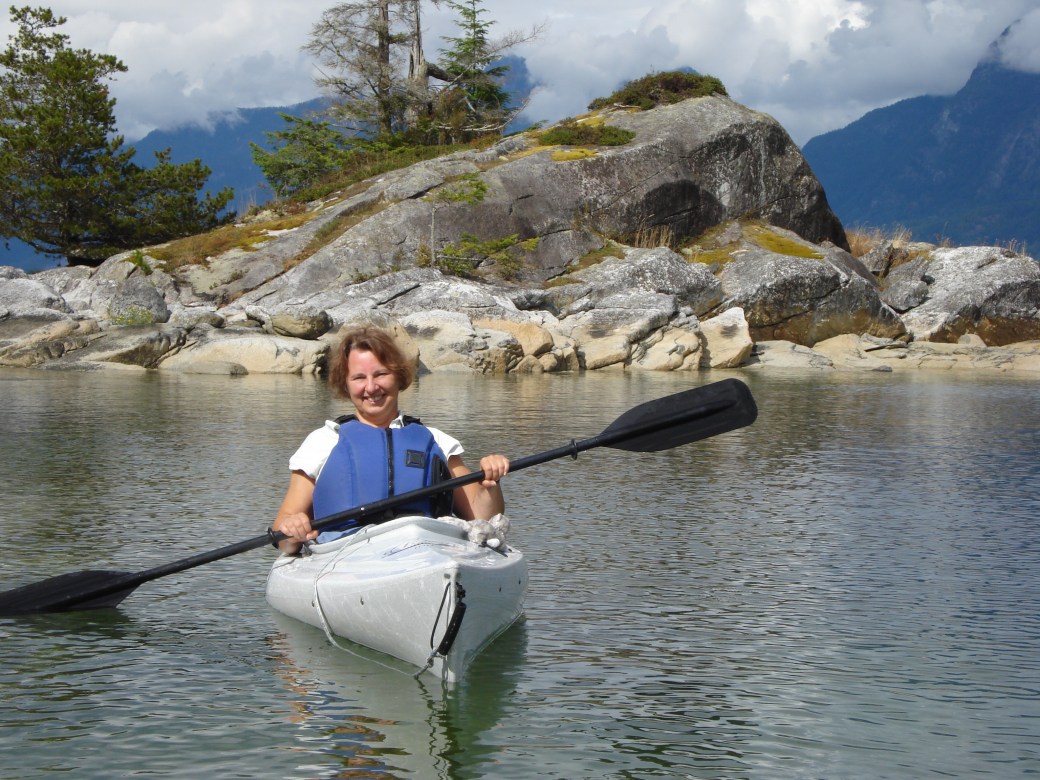
US-tour and Desolation Sound 260 copy

Nina kayaking in Desolation Sound, British Columbia (photo by H. Klassen)

Merriam-Webster defines “nationalism” as: “loyalty and devotion to a nation, especially a sense of national consciousness.” This is not the same as patriotism. Nor does it describe what many think of the word, which is an extreme form of nationalism, in which one nation is exalted above all others (I can think of one nation that is overtly doing that now) and placing primary emphasis on promoting its culture and interests over others—often through isolationism, xenophobia, chauvinism and jingoism. When I think of Canada, I think of my “home”, where I live; my community and my environment. I have traveled the world and I feel a strong sense of “home” and belonging every time I return. Canada is my home. I was born and grew up in Quebec; I raised a family in British Columbia, and I lived in Ontario and Nova Scotia. Each of these places engendered a feeling of “home”. If a strong sense of “home” and belonging is nationalistic, then that is what I am.

lunenburg-keel-laying

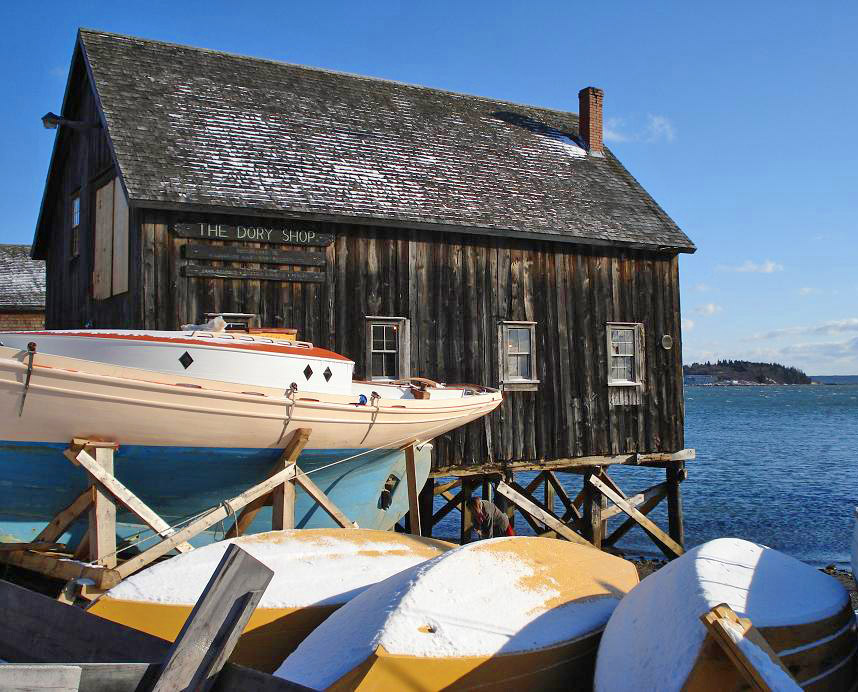
The Dory Shop in Lunenburg, Nova Scotia (photo by Nina Munteanu)

Or am I something else? Perhaps, we need to redefine our sense of belonging (and pride) in a country that is not tied to some core political identity or melting-pot mainstream. Historian and writer Charlotte Gray wrote:

“we live in a country that has a weak national culture and strong regional identities …Two brands of psychological glue bind Canada together: political culture and love of landscape…[in] a loose federation perched on a magnificent and inhospitable landscape—[we are] a nation that sees survival as a collective enterprise.”—Charlotte Gray

Canada as Postnational State

Trudeau-RollingStone

Justin Trudeau on the cover of “Rolling Stone”

In October 2015, Canada’s Prime Minister Justin Trudeau told the New York Times that Canada may be the “first postnational state,” adding that “there is no core identity, no mainstream in Canada.” This is largely because Canadians, writes Charles Forman in the Guardian, are “philosophically predisposed to an openness that others find bewildering, even reckless.”

To anyone but a Canadian, Trudeau’s remark would rankle, particularly in a time when many western countries are fearfully and angrily turning against immigration through nativism and exclusionary narratives. A time when the United States elected an authoritarian intent on making “America great again” by building walls. A time when populist right-wing political parties hostile to diversity are gaining momentum in other parts of the world. “Canada’s almost cheerful commitment to inclusion might at first appear almost naive,” writes Forman. It isn’t, he adds. There are practical reasons for keeping our doors open.

We are who we are because of what we are: a vast country the size of Europe. A country dominated by boreal forest, a vital and diverse wilderness that helps maintain the well-being of our entire planet. A land that encompasses over a fifth of the freshwater in the world, and a quarter of the world’s wetlands. Canadians are ultimately the world’s Natural stewards. That is who and what we are.

According to Forman, postnationalism frames how “to understand our ongoing experiment in filling a vast yet unified geographic space with the diversity of the world” and a “half-century old intellectual project, born of the country’s awakening from colonial slumber.” As the first Europeans arrived in North America, the Indigenous people welcomed them, taught them how to survive and thrive amid multiple identities and allegiances, writes Forman. “That welcome was often betrayed, particularly in the 19th and 20th centuries, when settlers did profound harm to Indigenous people.” But, says Forman, if the imbalance remains, so does the influence: a model of another way of belonging. One I think many Canadians are embracing. We are learning from the natural wisdom of our Indigenous peoples. Even our fiction reflects how we value our environment and embrace diversity. “Diversity fuels, not undermines, prosperity,” writes Forman.

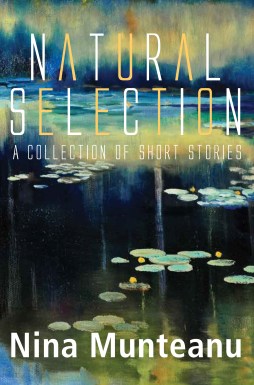
naturalselectionAs efforts are made to reconcile the previous wrongs to Indigenous peoples within Canada and as empowering stories about environment are created and shared, Canada carries on the open and welcoming nature of our Indigenous peoples in encouraging immigration. In 2016, the same year the American government announced a ban on refugees, Canada took in 300,000 immigrants, which included 48,000 refuges. Canada encourages citizenship and around 85% of permanent residents typically become citizens. Greater Toronto is currently the most diverse city in the world; half of its residents were born outside the country. Vancouver, Calgary, Ottawa and Montreal are not far behind.

Canadian author and visionary Marshal McLuhan wrote in 1963 that, “Canada is the only country in the world that knows how to live without an identity.” This is an incredible accomplishment, particularly given our own colonial history and the current jingoistic influence of the behemoth south of us.

The Way of Water-COVERWriter and essayist Ralston Saul suggests that Canada has taken to heart the Indigenous concept of ‘welcome’ to provide, “Space for multiple identities and multiple loyalties…[based on] an idea of belonging which is comfortable with contradictions.” Of this Forman writes:

“According to poet and scholar BW Powe, McLuhan saw in Canada the raw materials for a dynamic new conception of nationhood, one unshackled from the state’s ‘demarcated borderlines and walls, its connection to blood and soil,’ its obsession with ‘cohesion based on a melting pot, on nativist fervor, the idea of the promised land’. Instead, the weakness of the established Canadian identity encouraged a plurality of them—not to mention a healthy flexibility and receptivity to change. Once Canada moved away from privileging denizens of the former empire to practicing multiculturalism, it could become a place where ‘many faiths and histories and visions would co-exist.”

Water Is-COVER-webAnd that’s exactly what is happening. We are not a “melting pot” stew of mashed up cultures absorbed into a greater homogeneity of nationalism, no longer recognizable for their unique qualities. Canada isn’t trying to “make Canada great again.” Canada is a true multi-cultural nation that celebrates its diversity: the wholes that make up the wholes.

Confident and comfortable with our ‘incomplete identity’—recognizing it for what it is—is  according to Forman, “a positive, a spur to move forward without spilling blood, to keep thinking and evolving—perhaps, in the end, simply to respond to newness without fear.”

This resonates with me as an ecologist. What I envision is a Canada transcending the political to embrace the environment that both defines us and provides us with our very lives; a view that knows no boundaries, and recognizes the importance of diversity, relationship and inclusion, interaction, movement, and discovery.


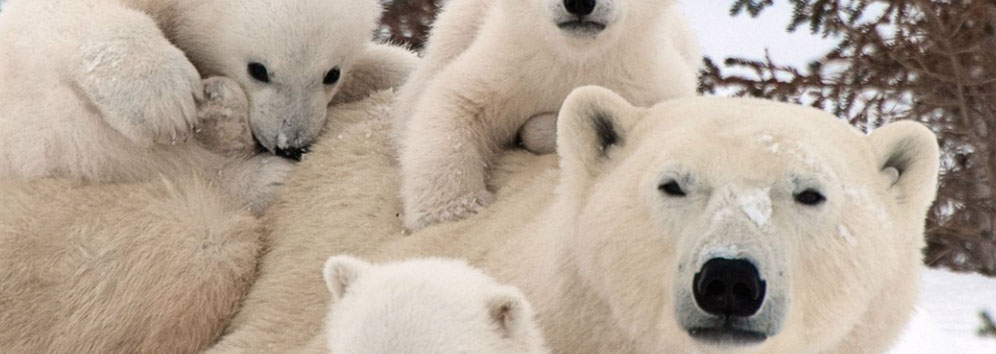
PolarBearMum-pupsSo, am I still proud of Canada? Definitely. We have much to be proud of. We live in one of the wealthiest countries in the world and the 8th highest ranking in the Human Development Index. Canada ranks among the highest in international measurements of government transparency, civil liberties, quality of life, economic freedom, and education. It stands among the world’s most educated countries—ranking first worldwide in the number of adults having tertiary education with 51% of adults holding at least an undergraduate college or university degree. With two official languages, Canada practices an open cultural pluralism toward creating a cultural mosaic of racial, religious and cultural practices. Canada’s symbols are influenced by natural, historical and Aboriginal sources. Prominent symbols include the maple leaf, the beaver, Canada Goose, Common Loon, the Royal Canadian Mounted Police, the polar bear, the totem pole, and Inuksuk.

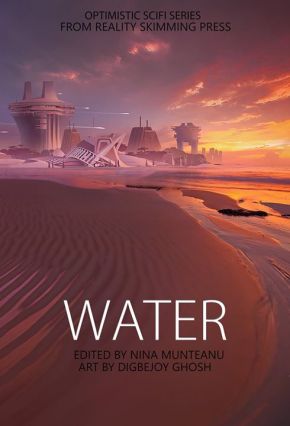
WaterAnthology-RealitySkimmingPressWe are a northern country with a healthy awareness of our environment—our weather, climate and natural world. This awareness—particularly of climate change—is more and more being reflected in our literature—from Margaret Atwood’s “Maddaddam” trilogy and Kim Stanley Robinson’s “New York 2140” to my own book “Water Is…”. Canadians are writing more eco-fiction, climate fiction, and fiction in which environment somehow plays a key role. Water has become one of those key players: I recently was editor of the Reality Skimming Press anthology “Water”, a collection of six speculative Canadian stories that explore near-future scenarios with water as principle agent.

In a recent interview with Mary Woodbury on Eco-Fiction, I reflected on a trend over the years that I noticed in the science fiction writing course I teach at George Brown College: “It’s a workshop-style course I teach and students are encouraged to bring in their current work in progress. More and more students are bringing in a WIP with strong ecological overtones. I’d say the percentage now is over 70%. This is definitely coming from the students—it’s before I even open my mouth about ecology and eco-fiction—and what it suggests to me is that the welfare of our planet and our ecosystems is on many people’s minds and this is coming through in our most metaphoric writing: science fiction.”

It is healthy to celebrate our accomplishments while remembering where we came from and what we still need to accomplish. This provides direction and motivation.


References:

Dechene, Paul. 2015. “Sci-Fi Writers Discuss Climate Catastrophe: Nina Munteanu, Author of Darwin’s Paradox.” Prairie Dog, December 11, 2015.

Forman, Charles. 2017. “The Canada Experiment: Is this the World’s First Postnational Country?” The Guardian, January 4, 2017.

Gray, Charlotte. 2017. “Heroes and Symbols” The Globe and Mail.

Moorhouse, Emilie. 2018. “New ‘cli-fi’ anthology brings Canadian visions of future climate crisis.” National Observer, March 9, 2018.

Munteanu, Nina. 2016. “Crossing into the Ecotone to Write Meaningful Eco-Fiction.” In: NinaMunteanu.me, December 18, 2016.

Newman-Stille, Derek. 2017. “The Climate Around Eco-Fiction.” In: Speculating Canada, May 24, 2017.

Woodbury, Mary. 2016. “Part XV. Women Working in Nature and the Arts: Interview with Nina Munteanu, Ecologist and Author.” Eco-Fiction.com, October 31, 2016.


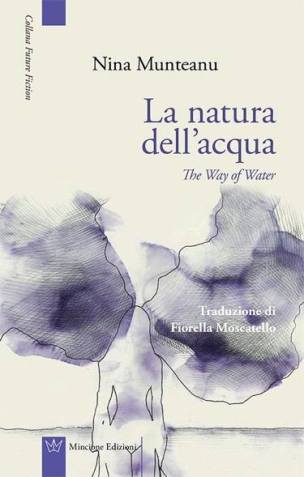
nina-2014aaaNina Munteanu is an ecologist and internationally published author of award-nominated speculative novels, short stories and non-fiction. She is co-editor of Europa SF and currently teaches writing courses at George Brown College and the University of Toronto. Visit www.ninamunteanu.ca for the latest on her books. Nina’s recent book is the bilingual “La natura dell’acqua / The Way of Water” (Mincione Edizioni, Rome). Her latest “Water Is…” is currently an Amazon Bestseller and NY Times ‘year in reading’ choice of Margaret Atwood.

Nina Munteanu’s “The Way of Water” Receives More Praise

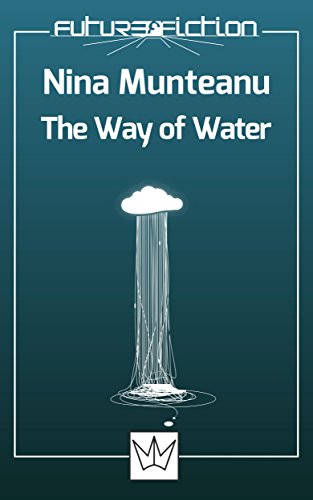
Exile-CanTales ClimateChange copyNina Munteanu’s near-future speculative short story “The Way of Water” in Bruce Meyer’s (editor) “Cli Fi: Canadian Tales of Climate Change”, published by Exile Editions in 2017, will appear again in Rosarium Publishing / Future Fiction’s anthology “New Dimensions in International Science Fiction in April 2018.

She imagines its coolness gliding down her throat. Wet with a lingering aftertaste of fish and mud. She imagines its deep voice resonating through her in primal notes; echoes from when the dinosaurs quenched their throats in the Triassic swamps.

Water is a shape shifter.

It changes yet stays the same, shifting its face with the climate. It wanders the earth like a gypsy, stealing from where it is needed and giving whimsically where it isn’t wanted.

Dizzy and shivering in the blistering heat, Hilda shuffles forward with the snaking line of people in the dusty square in front of University College where her mother used to teach. The sun beats down, crawling on her skin like an insect. She’s been standing for an hour in the queue for the public water tap.

“The Way of Water” is a near-future vision that explores the nuances of corporate and government corruption and deceit together with resource warfare. An ecologist and technologist, Nina Munteanu uses both fiction and non-fiction to examine our humanity in the face of climate change and our changing relationship with technology and Nature.

A recent review of the anthology by Emilie Moorhouse in Prism International Magazine, entitled “Courage and Imagination in Cli-Fi: Canadian Tales of Climate Change” and carried by the National Observer, describes it this way:

“The seventeen stories in this book edited by Bruce Meyer examine how humankind might struggle with the potential devastation of climate change in the near or distant future. Soon after I finished reading the book, Cape Town—known in precolonial times as “the place where clouds gather”—announced that it was only a few months away from what it called “Day Zero,” the day the city would officially run out of water, making the similarities between fiction and reality more than unsettling. Munteanu’s story is set in a futuristic Canada that has been mined of all its water by thirsty corporations who have taken over control of the resource. Rain has not fallen on Canadian soil in years due to advances in geoengineering and weather manipulation preventing rain clouds from going anywhere north of the Canada-US border…I believe that fiction offers up two much-needed ingredients in the fight to prevent climate change: courage and imagination. It is my hope that more fiction writers will take up the task of writing in this promising new genre and use their imagination to inspire readers to collectively work towards a more sustainable future.”—Emilie Moorhouse, Prism International


The Way of Water-COVERA bilingual print book by Mincione Edizioni (Rome) showcased “The Way of Water” in Italian (“La natura dell’acqua”, translated by Fiorella Moscatello) and English along with a recounting of what inspired it: “The Story of Water” (“La storia dell’acqua”) in 2016.

“In ‘The Way of Water’, Nina Munteanu pens her love letter to water, exulting it as a liquid that has semi-magical properties…’The Way of Water’ evokes a sense of awareness about issues of access to water and about the dangers of imbalances in that access.”—Derek Newman-Stille, Speculating Canada


“In a short story in which every word has its weight, Nina Munteanu manages to describe a dystopia with ecological, political, social and economic elements and Hilda’s reactions to her situation with a great emotional intensity. To avoid thirst, Hilda ends up embracing an extreme idea, a last hope linked to water.

‘The Way of Water’ is a story of the kind you hope is science fiction but you fear is not.”—Massimo Luciani


FF-TheWayOfWater” ‘The Way of Water’ is to be ‘a shapeshifter,’ says Nina Munteanu in her dystopian narrative, where she draws a dark scenario and, unfortunately, not too improbable in the near future. In the universe of the story water has become a very precious commodity: rationed consumption, credits (always of water) accounted for and debts collected…The Chinese multinationals have exchanged the public debt of other states with their water reserves with which, now, they can control the climate, deciding when and where it will rain. Who understands this dirty game has been silenced, like Hilda’s mother, a limnologist, inexplicably arrested and never returned; like the daughter of two water vendors, mysteriously disappeared, after having decided not to bow to economic powers: Hanna, who now prefers secure virtual identities to evanescent real appearances. Water. The two, like the covalent bond of a complex molecule, develop a relationship of attraction and repulsion that will first make them meet and then, little by little, will change into a tormented love but, at the same time, so pure as to cause Hilda at great risk, to make an extreme decision that will allow Hanna to realize the strange prophecy that the internal voice, perhaps the consciousness of water, had resonated in the two women for a long time.

Nina Munteanu recounts that this element is also a form of love; a story to read, not only to deal with the possible but, above all, to understand that the time still available to “love” may be less than what we believe.”—Simone Casavecchia, SoloLibri.net

FF - Rosarium Cover copy“The Way of Water” will also appear alongside a collection of international works (including authors from Greece, Nigeria, China, India, Russia, Mexico, USA, UK, Italy, Canada (yours truly), Cuba, and Zimbabwe) in Bill Campbell and Francesco Verso’s Rosarium Publishing / Future Fiction’s anthology “New Dimensions in International Science Fiction” in April 2018.

“Nina Munteanu’s “The Way of Water” is perhaps more esoteric in its focus and more abstract in its approach, but I likewise found it to be a strong story. In an interesting scarcity future in which we follow the fate of a character abandoned by her mother, water itself becomes a character. In the second paragraph we’re told that “Water is a shape shifter,” and in the next page we encounter the following description: “Water was paradox. Aggressive yet yielding. Life-giving yet dangerous. Floods. Droughts. Mudslides. Tsunamis. Water cut recursive patterns of creative destruction through the landscape, an ouroboros remembering.” These descriptive musings cleverly turn out to be more than metaphors and tie in directly to the tale’s surprising ending.”—Alvaro Zinos-Amaro, IntergalacticMedicineShow.com


Nina MunteanuNina Munteanu is an ecologist, limnologist and internationally published author of award-nominated speculative novels, short stories and non-fiction. She is co-editor of Europa SF and currently teaches writing courses at George Brown College and the University of Toronto. Visit www.ninamunteanu.ca for the latest on her books.


The Gestalt Nature of Passion & Success

What is to give light must endure burning —Victor Frankl


Tree Deer Lake

Deer Lake Park, BC (photo by Nina Munteanu)

“Any writing lays the writer open to judgment about the quality of his work and thought,” writes Ralph Keyes, author of The Courage to Write. “The closer [the writer] gets to painful personal truths, the more fear mounts—not just about what he might reveal, but about what he might discover should he venture too deeply inside. But to write well, that’s exactly where we must venture.”

So, why do it, then? Why bother? Is it worth it to make yourself totally vulnerable to the possible censure and ridicule of your peers, friends, and relatives? To serve up your heart on a platter to just have them drag it around as Stevie Nicks would say?…

Welcome to the threshold of your career as a writer. This is where many aspiring writers stop: in abject fear, not just of failure but of success. The only difference between those that don’t and those that do, is that the former come to terms with their fears, in fact learn to use them as a barometer to what is important.

“Everyone is afraid to write,” says Keyes. “They should be. Writing is dangerous…To love writing, fear writing and pray for the courage to write is no contradiction. It’s the essence of what we do.”

Unravelling the Secret…

How do you get past the fear of being exposed, past the anticipated disappointment of peers, past the terror of success?

The answer is passion. If you are writing about something you are passionate about, you will find the courage to see it through. “The more I read, and write,” says Keyes:

The more convinced I am that the best writing flows less from acquired skill than conviction expressed with courage. By this I don’t mean moral convictions, but the sense that what one has to say is something others need to know.—Ralph Keyes

This is ultimately what drives a writer to not just write but to publish: the need to share one’s story, over and over again. To prevail, persist, and ultimately succeed, a writer must have conviction and believe in his or her writing. You must believe that you have something to say that others want to read. Ask yourself why you are a writer. Your answer might surprise you.

Every writer is an artist. And every artist is a cultural reporter. One who sometimes holds the world accountable. “Real art,” says Susan Sontag, “makes us nervous.”

The first step, then, is to acknowledge your passion and own it. Flaunt it, even. Find your conviction, define what matters and explore it to the fullest. You will find that such an acknowledgement will give you the strength and fortitude to persist and persevere, particularly in the face of those fears. Use the fears to guide you into that journey of personal truths. Frederick Busch described it this way: “You go to dark places so that you can get there, steal the trophy and get out.”

John Steinbeck, author of Grapes of Wrath, said:

If there is a magic in story writing, and I am convinced that there is, no one has ever been able to reduce it to a recipe that can be passed from one person to another. The formula seems to lie solely in the aching urge of the writer to convey something he feels important to the reader.—John Steinbeck

Finding Success Through Meaning

Victor Frankl survived Auschwitz to become an important neurologist and psychiatrist of our time and to write Man’s Search for Meaning.

Blogger Gavin Ortlund wrote: “What gripped me most about [Frankl’s] book, and has stayed with me to this day, is not the horror and barbarity of his experiences in concentration camps—when you pick up a book about the holocaust, you expect that. What really struck me was Frankl’s repeated insistence that even there, in the most inhumane and horrific conditions imaginable, the greatest struggle is not mere survival. The greatest struggle is finding meaning. As I was reading, I was struck with this thought: going to a concentration camp is not the worst thing that can happen to a person. The worst that can happen to a person is not having a transcendent reason to live. Life is about more than finding comfort and avoiding suffering: it’s about finding what is ultimate, whatever the cost.”

Victor Frankl wisely said:

The more you aim at success and make it a target, the more you are going to miss it. Success, like happiness, cannot be pursued; it must ensue, and it only does so as the unintended side effect of one’s personal dedication to a cause greater than oneself or as the by-product of one’s surrender to a person other than oneself. Happiness must happen, and the same holds for success: you have to let it happen by not caring about it. I want you to listen to what your conscience commands you to do and go on to carry it out to the best of your knowledge. Then you will live to see that in the long-run—in the long-run, I say!—success will follow you precisely because you had forgotten to think about it.—Victor Frankl

Frankl is talking about passion. “If you long to excel as a writer,” says Margot Finke, author of How to Keep Your Passion and Survive as a Writer, “treasure the passion that is unique within yourself. Take the irreplaceable elements of your life and craft them into your own personal contribution to the world.” It’s what has you up to 2 am, pounding the keys. It follows you down the street and to work with thoughts of another world. It puts a notebook and pen in your hand as you drive to the store, ready to record thoughts about a character, scene or place. “For the passionate, writing is not a choice; it’s a force that cannot be denied.”

tree water deer lake

Deer Lake, BC (photo by Nina Munteanu)

Finke says it astutely: You need to be passionate about everything to do with your book—the writing and rewriting, your critique group, your research, your search for the best agent/editor, plus your query letter. Not to mention the passion that goes into promoting your book. Nothing less will assure your survival—and success—as a writer.

Follow your inner moonlight, don’t hide the madness—Allen Ginsberg, American poet

This article is an excerpt from The Fiction Writer: Get Published, Write Now! by Nina Munteanu

References:

Finke, Margot. 2008. “How to Keep Your Passion and Survive as a Writer.” In: The Purple Crayonhttp://www.underdown.org/mf_ writing_passion

Frankl, Victor. (1946) 1997. Man’s Search for Meaning. Pocket Books. 224 pp.

Keyes, Ralph. 1999. The Writer’s Guide to Creativity. Writer’s Digest, 1999.

Munteanu, Nina. 2009. The Fiction Writer: Get Published, Write Now. Starfire World Syndicate. 294pp

Ortlund, Gavin. 2008. “Frankl, the holocaust and meaning.” In: Let Us Hold Fast. http://gro1983.blogspot.com/2008/02/frankl-holocaust-and-meaning.html

Slonim Aronie, Nancy. 1998. Writing from the Heart: Tapping the Power of Your Inner Voice. Hyperion. 256pp.


nina-2014aaaNina Munteanu is an ecologist, limnologist and internationally published author of award-nominated speculative novels, short stories and non-fiction. She is co-editor of Europa SF and currently teaches writing courses at George Brown College and the University of Toronto. Visit www.ninamunteanu.ca for the latest on her books.
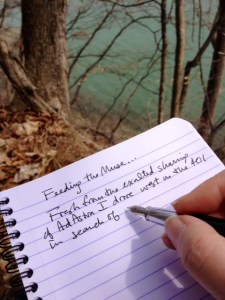
 

Write About What You Know

Cedar trunk base-LR

Base of cedar tree, Little Rouge woodland (photo by Nina Munteanu)

How many times have you been told to write about what you know? And how many times have you trusted that advice? Well, how interesting is that?!? We think our lives are dull, boring, and mundane. We write – and read – to get away from it, don’t we?

Well, yes…and no…

In the final analysis, even good “escapist” writing, like some science fiction, despite its alien settings and creatures of imagination, is grounded in the realities of our every-day lives, which form the basis of human nature. Love, ambition, trust, hate, envy, honor, courage. All these are universal human traits which the writer taps into and ultimately writes about.

“In the 19th century, John Keats wrote to a nightingale, an urn, a season. Simple, everyday things that he knew,” say Kim Addonizio and Dorianne Laux in The Writer’s Guide to Creativity. “Walt Whitman described the stars, a live oak, a field. They began with what they knew, what was at hand, what shimmered around them in the ordinary world.”

The advice, “write what you know” isn’t about literal truths; it’s about what you know inside. As SF author Marg Gilks says, “You know more than you think.”

Twisted Truths & Inner Knowledge

In an article in Writing World, Gilks discusses how a writer can use her own knowledge and experiences in everyday life and translate them into something far from ordinary. You start with universal experiences.

Get Emotional

What excites you; what frightens you; what angers you, makes you sad, happy. These are emotions we all feel. When we give our characters experiences similar to our own, we breathe life into both character and experience and provide the reader an anchor for her heart.

Get Sensational

You know how it feels when the sun shines on your face or the rain drenches you. You know how it feels to have your knees shake with fatigue after a long climb on a hot day or the invigorating freshness of a cool lake in summer.

Get People Around You

My neighbor has a funny way of focusing his gaze slightly off me when he talks, like he can’t look me directly in the eyes. When he approaches my house to deliver the paper, Dennis strides with a lilting gait as he listens to hip-hop on his ipod.

Drawing from what you observe and know of the people around you is one of a writer’s most treasured resources for character description. I always carry a notebook with me no matter where I go, even if it’s only to the grocery store.

The Magic of Storytelling

A writer is like a magician. You play upon what readers all “know” then surprise them with the unexpected.

Unleashing your imagination and letting it soar while grounding yourself in the realities of universal truths is the stuff of which stories are made. This is what most of us mean when we say “write what you know.”

“Unless you are writing about a personal tragedy,” says Tina Morgan of Fiction Factor, “you will have to use your imagination. Use the creativity that drives you to write in the first place. Take those feelings you have every day and amplify them. Make them more intense, more vivid. Before you know it, you will be ‘writing what you know’.”

“Next time you hear ‘write what you know,’ ” says Gilks, “you’ll realize that you know an awful lot about what matters most in a story’s success. It’s waiting only to be shaped by your imagination.”

Write Real

Literary Agent, Rachelle Gardner, provided a great definition of “write what you know” on her blog. Here’s an excerpt:

Most people think “write what you know” means you have to put characters in situations you’re personally familiar with. If you’re a mom with five kids, you should write a mom story. If you’ve fought cancer and won, you should write about that. But in my opinion, that’s not what it means.

Write what you know means write with authenticity about thoughts, feelings, experiences of life. Be honest. Write from a deep place. Don’t write from the surface. Whether you’re writing about parenthood or cancer or anything else… be real.

Don’t reflect what you know from other people or the media… write what you know from your own inner life.

Nina MunteanuNina Munteanu is an ecologist, limnologist and internationally published author of award-nominated speculative novels, short stories and non-fiction. She is co-editor of Europa SF and currently teaches writing courses at George Brown College and the University of Toronto. Visit www.ninamunteanu.ca for the latest on her books.
 

How Art Reveals Truth in Science

It is quite possible … that we will always learn more about human life and personality from novels than from scientific psychology —Naom Chomsky

niels bohr

Niels Bohr

In the 1920s, physicist Niels Bohr struggled to re-imagine the structure of matter. He rejected the current hegemony of a fractal “solar system” model and sought a new metaphor.

“When it comes to atoms,” said Bohr, “language can only be used as poetry.”

Bohr compared the invisible world of atoms and electrons to cubist art because, according to Jonah Lehrer in an article in SeedMagazine.com, it “revealed the fissures in everything, turning the solidity of matter into a surreal blur.” In 1923 deBroglie had determined that electrons could exist as particles or waves. Bohr maintained that the form they took depended on how you looked at them: by simply observing, you determined their nature.

Many of us believe that while art can be profound, it does not solve practical challenges of reality; only scientific knowledge, which progresses on a linear ascent toward greater understanding, resolves the serious challenges of our world and will one day solve everything.

This is, of course a matter of belief. Novelist Vladimir Nabokov once wrote, “the greater one’s science, the deeper the sense of mystery.” The traditional elements of science have used a reductionist approach to understand the whole, looking at the parts and reconstructing the causal pathways. Take the synapse, for instance. Neuroscientists now know that 100 billion electrical cells occupy a human brain, that every cubic millimeter of the cerebral cortex contains a billion synapses involved in the neurotransmission of electrical impulses in perception and thought. Yet, as Novelist Richard Powers challenged, ‘If we knew the world only through synapses, how could we know the synapse?”

“The paradox of neuroscience,” said Lehrer, “is that its astonishing progress has exposed the limitations of its paradigm … Neuroscience has yet to capture [the] first-person perspective. Artists … distill the details of real life into prose and plot … They capture a layer of reality that reductionism cannot … and provide science with a glimpse into its blind spots … Sometimes the whole is better understood in terms of the whole … No scientific model of the mind will be complete unless it includes what can’t be reduced.”

Logical minds will reject art as too incoherent and imprecise to contribute to the knowledge base provided by scientific process. They will maintain that Beauty isn’t Truth, that the novel is just a work of fiction, and abstract art the arcane expression of a micro-culture.

But what of paradox? Critic Randall Jarrell contended that, “it is the contradictions of works of art which make them able to represent us — as logical and methodical generalizations cannot — our world and our selves, which are also full of contradictions.” The cultural hypotheses of artists can inspire the questions that stimulate important new scientific answers, adds Lehrer.

The irony of modern physics is that it seeks reality in its most fundamental form, and yet we are incapable of comprehending these fundamentals beyond the math we use to represent them. The only way to know the universe is through analogy.

Richard Feyman

Richard Feynman

Richard Feynman said, “Our imagination is stretched to the utmost, not, as in fiction, to imagine things which are not really there, but just to comprehend those things which are there.” While artists rely on imagination, much of modern physics exceeds the imagination: dark matter, quarks and neutrinos, black holes, multiple dimensions and folded space. To venture beyond the regular confines of our “ordinary world” where matter is certain, time flows forward and there are only three dimensions, we must resort to metaphor. “Metaphor in science serves not just as a pedagogical device,” wrote physicist and novelist Alan Lightman, “but also as an aid to scientific discovery.” Einstein came up with relativity while thinking about moving trains; Arthur Eddington compared the expansion of the universe to an inflated balloon; James Clerk Maxwell visualized magnetic fields as little whirlpools in space. String theory is often imagined as garden hoses.

Pablo Picasso bullfight,1934

Pablo Picasso’s Bull Fight, 1934

The greatest physicists of the 20th century thought metaphorically. String theorist Brian Greene wrote that the arts have the ability to “give a vigorous shake to our sense of what’s real.” Picasso never understood the equations, says Lehrer: “he picked up the non-Euclidian geometry via the zeitgeist.” A century later some scientists still use his fragmented images to symbolize their ideas.  “Novelists can stimulate the latest theories of consciousness through their fiction … Painters can explore new theories about the visual cortex … Dancers can help untangle the mysterious connection between the body and emotion.”

Both science and art benefit from exchange. By inviting art to participate in its conversation, science provides art with the opportunity to add science to its repertoire. And through its interpretation of scientific ideas and theories, art offers science a new lens through which to see itself.

Karl Popper exhorts us to “give up the idea of ultimate sources of knowledge, and admit that all knowledge is human; that it is mixed with our errors, our prejudices, our dreams, and our hopes.”

And that is the stuff of fiction after all…


Nina MunteanuNina Munteanu is an ecologist, limnologist and internationally published author of award-nominated speculative novels, short stories and non-fiction. She is co-editor of Europa SF and currently teaches writing courses at George Brown College and the University of Toronto. Visit www.ninamunteanu.ca for the latest on her books.


Snow Is…


MontclairSt-winterFeb2018

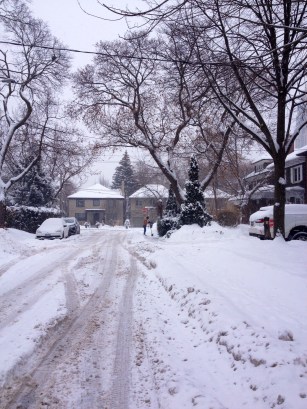
Montclair Street, Toronto (photo by Nina Munteanu)

I grew up in southern Quebec, where the first snow of the season often came from the sky in a thick passion. Huge flakes of unique beauty settled on my coat sleeves and within minutes I was covered in snow. I would stand enraptured and study each one as I could.

Snow wraps everything in a blanket of soft acceptance. It creates a dazzling face on a dark Earth. It refuses to distinguish between artificial and natural. It covers everything—decorated house, shabby old car, willowy trees, manicured lawn—beneath its white mantle. It quiets the Earth.

Have you ever gone for an evening walk in the fresh crisp snow, boots crunching, snow glistening in the moonlight? Each step is its own symphony of textured sound. A kind of collaboration with the deep of the night and Nature’s own whisperings.

Beaches-snow06

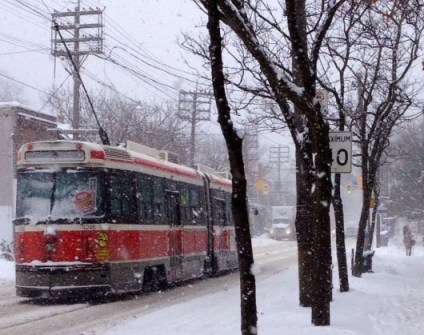
Street car on Queen St (photo by Nina Munteanu)

Snow is a shape shifter, charging down in a fierce blizzard and as hoarfrost that forms as water vapour migrates up through the snow base on cold, clear nights. Snow is a gypsy, conspiring with the clever wind to form mini-tornadoes and swirling on the cold pavement like misbehaving fairies. It drifts like a vagabond and piles up, cresting over the most impressive structure, creating phantoms out of icons. Some people, fearful of the chaos and confusion that snow brings, hide indoors out of the cold. Others embrace its many forms, punching holes through the snow crust to find the treasure of powder beneath or ploughing through its softness, leaving behind an ivory trail of adventure.

snow-christmas2008-3

Red barn, Ladner, BC

Snow is magic. It reveals as it cloaks. Animals leave their telltale tracks behind their silent sleuthing. No two snowflakes are alike. Yet every non-aggregated snowflake forms a six-fold radial symmetry, based on the hexagonal alignment of water molecules when they form ice. Tiny perfectly shaped ice-flowers drift down like world peace and settle in a gentle carpet of white. Oddly, a snowflake is really clear and colourless. It only looks white because the whole spectrum of light bounces off the crystal facets in diffuse reflection (i.e., at many angles). My son, who skies, extols “champagne powder”—very smooth and dry snow ideal for gliding on. On powder days, after a fresh snowfall, mountain trees form glabrous Henry Moore-like sculptures. Skiers wind their way between the “snow ghosts,” leaving meandering double-helix tracks behind them.


Chr-2-2008

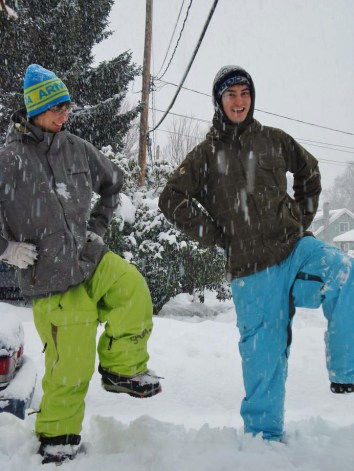
Author’s son and friend do a snow dance, Ladner, BC (photo by Nina Munteanu)

Snow is playful. It beckons you to stick out your tongue and taste the clouds. Snow is like an unruly child. Snow is the trickster. It stirs things up. Makes a mess. It is the herald of change, invigorating, fresh and wondrous. Cars skid in it and squeal with objection. Grumpy drivers honk their horns, impatient to get home; while others sigh in their angry wake. Brown slush flies in a chaotic fit behind a bus and splatters your new coat. Boys and girls (of all ages) venture outside, mischief glinting in their eyes, and throw snowballs. Great battles are fought in backyards where children build awesome forts and defend them with fierce determination.


nina-2014aaaNina Munteanu is an ecologist, limnologist and internationally published author of award-nominated speculative novels, short stories and non-fiction. She is co-editor of Europa SF and currently teaches writing courses at George Brown College and the University of Toronto. Visit www.ninamunteanu.ca for the latest on her books.

Ursula K. Le Guin: Her Name is Freedom

Amid the sadness of the passing of Ursula K. Le Guin, we offer her wise advice on art and literature, given in 2014. In receiving her lifetime achievement award in 2014, Ursula delivered a speech that was prescient, timely and necessary:

Neil Gaiman presents lifetime achievement award to Ursula K. Le Guin at 2014 National Book Awards from National Book Foundation on Vimeo.

Ursula K. Le Guin first told her audience that she wanted to share her award with her fellow-fantasy and science fiction writers, who have for so long watched “the beautiful awards” like the one she’d just received, go to the “so-called realists”. She then went on to

ursula le guin

Ursula K. Le Guin

say:

“I think hard times are coming, when we will be wanting the voices of writers who can see alternatives to how we live now, and can see through our fear-stricken society and its obsessive technologies, to other ways of being. And even imagine some real grounds for hope. We will need writers who can remember freedom: poets, visionaries–the realists of a larger reality. Right now, I think we need writers who know the difference between production of a market commodity and the practice of an art…The profit motive is often in conflict with the aims of art…We live in capitalism. Its power seems inescapable; so did the divine right of kings… Power can be resisted and changed by human beings; resistance and change often begin in art, and very often in our art–the art of words. I’ve had a long career and a good one, in good company, and here, at the end of it, I really don’t want to watch American literature get sold down the river… The name of our beautiful reward is not profit. Its name is freedom.”

nina-2014aaaNina Munteanu is an ecologist and internationally published author of novels, short stories and essays. She coaches writers and teaches writing at George Brown College and the University of Toronto. For more about Nina’s coaching & workshops visit www.ninamunteanu.me. Visit www.ninamunteanu.ca for more about her writing.