Christ-Figure in Movies & Books: Grace or Redemption?

ChildrenOfMenIn an article I’d written some time ago on my blog The Alien Next Door (“Fertility — Infertility & the Environment”, with commentary on the film “Children of Men”) I got into a rather lively discussion with a fellow blogger (Erik) about the tendency in Western Culture mythos (in literature and in movies, particularly) to portray the main character in fiction as Christ figure and the ramifications of this choice. Erik lamented the separation that has occurred between “Jesus the Teacher” and “Christ the Redeemer”. I hadn’t really given this much thought until he brought it up. But his examples (e.g., Matrix and Harry Potter) and his discourse were so compelling, I had to ponder. So, here are my ponderings.

aeon-flux-posterToday’s Christ-like hero suffers for the sins of the world and prepares himself (often struggling with this considerably) to deliver salvation, usually through fighting or violent confrontation and often with an incredible arsenal of weapons. I was swiftly brought to mind of the many action shoot-em up films whose tortured hero redeems him(her)self through some selfless, though violent action (e.g., Omega Man, V for Vendetta, Ultra Violet, Aeon Flux — all sci-fi movies, by the way, and ones I enjoyed immensely. And what about all those superhero movies, like Spiderman, X-Men, Green Lantern, etc. These films represent one version of Joseph Campbell’s “Hero’s Journey”, where the original hero leaves his ‘ordinary world’ wherein he/she has some major flaw to overcome (like apathy, greed, distrust, anger, fear of strawberries…etc.) to answer ‘the call’ to be the hero he/she was destined to become. This is a very familiar trope. Erik suggested that Western culture’s “concept of Redemption has invariably separated from the Grace that created it.” Jesus the Teacher had somehow fallen to the wayside to make room for Christ the Redeemer. According to Erik: “Jesus the Teacher said to ‘turn the other cheek’, but today’s Redeemers kick ass. Jesus the Teacher told us that what is done in love is blessed, but today’s Redeemers have more personal and interior motivations.” The two have simply become two different people, says Erik and “the latter is a superstar” compared to the former.” He ends his post with these compelling thoughts:

“The Beatitudes have become rather old fashioned, it seems, as has the idea of Grace. That is what seems to be the problem with today’s Redeemers: theirs is a personal battle with evil, and not a social one. ‘Love thy neighbor as thyself’ is an alien concept in a world that is perfectly self centered. All that’s left to do is kick ass on those who disagr — er, behave in an evil way, yeah, that’s it! If popular fiction really is a mirror being held up against us, the image we see is not a pretty one. The heritage of Western Culture has turned into a strange kind of cartoon — exaggerated, repetitious, vain, slapstick, and ultimately too silly to watch. For some reason, very few people seem to understand this. They are too busy fixing their own hair in the mirror.”

pay it forwardIf you still don’t get what Erik and I are talking about, go watch the poignant film Pay It Forward and then contrast its main character with the one in Ultra Violet or The Matrix.

The definition for grace occupies almost half a page in the dictionary. When I think of grace I think of selfless compassion, humility, gentleness, kindness, mercy and forgiveness and both inner and outer beauty. So, why does grace languish in the shadows of redemption? Why do we watch — and more importantly, totally enjoy — these latter movies at the expense of the former? Why do we long for a strong but flawed hero with personal issues as our icon? One who is often tough, independent, and ‘kicks ass’ at the expense of gentleness, humility, cooperation and selflessness? If, as Erik suggests, we are seeking heroes who reflect our own self-image or at least the traits we strive to have, then what does popular fiction say about our choices in life? Is Erik right about this dichotomy? I’d say definitely yes…but also no…

MATRIXWhile I agree with Erik on the apparent separation of Christ figure in today’s popular fiction, perhaps there is another way to look at these tales that resolves this apparent dichotomy to some degree. My suggestion is to view them more as allegories with traits and values represented in several characters woven together in a complete and whole tapestry. To do so is to include the secondary character as being equally important. Let’s take Matrix, for instance. In fact, Neo isn’t the only Jesus-figure. His two female opposites (Trinity/Oracle) demonstrate Christ-like traits that embody grace, mercy, love (the holy spirit) and wisdom. Okay, so Trinity kicks major ass too; but her character also provides the chief motivation for our main ‘kick-ass’ hero through her selfless love and humility.

I assert that these two aspects of Christ (merciful teacher and redeemer) are indeed both represented (albeit in separate individuals) in films today: two individuals, one Christ the redeemer and the other Jesus the savior, often joined through a bond of selfless love; two halves of a whole.

The Gnostics have a word for this divine male/female pair: they call them syzygies, aeons (beings of light and emanations of God) that exist as complimentary pairs or twins. The aeon pair of Caen (which represents power, the redeemer) and Akhana (truth, love and grace, the teacher) are complimentary and inseparable. The yin/yang of a whole. The paradoxical oxymoron of order in chaos.

In Gnostic belief, aeons are emanations of God. According to one version, an aeon named Sophia (wisdom) emanated without her partner aeon, creating a Demiurge (responsible for the creation of the physical universe; Ialdaboth in Gnostic texts). Ialdaboth was not part of the Pleroma (fullness and the region of light) and apart from the divine totality [a metaphor possibly for humanity]). God then emanated two savior aeons, Christ and the Holy Spirit to save humanity from the Demiurge. Christ then took the form of the human, Jesus, to teach humanity how to achieve Gnosis (and know God).

So, for every Neo there is a Trinity/Oracle; for Violet there is Six; for Aeon Flux there is Trevor Goodchild; for Harry there is Dumbledore, and so on. In this way, the two complimentary aspects of Christ are reconciled. And in cases where such complimentary pairing is achieved (e.g., Neo would not have succeeded without both Trinity and the Oracle) we are taught that selfless cooperation is the highest form of heroism.

nina-2014aaaNina Munteanu is an ecologist and internationally published author of award-nominated speculative novels, short stories and non-fiction. She is co-editor of Europa SF and currently teaches writing courses at George Brown College and the University of Toronto. Visit www.ninamunteanu.ca for the latest on her books. Nina’s recent book is the bilingual “La natura dell’acqua / The Way of Water” (Mincione Edizioni, Rome). Her latest “Water Is…” is currently an Amazon Bestseller and NY Times ‘year in reading’ choice of Margaret Atwood.


On This Day … Water Is…

Today is World Water Day. All around the world, people are celebrating water–without which we would simply not exist. We celebrate this day (and all days) that water has blessed us with its life-giving properties so freely given.

I gladly offer my poem to water…


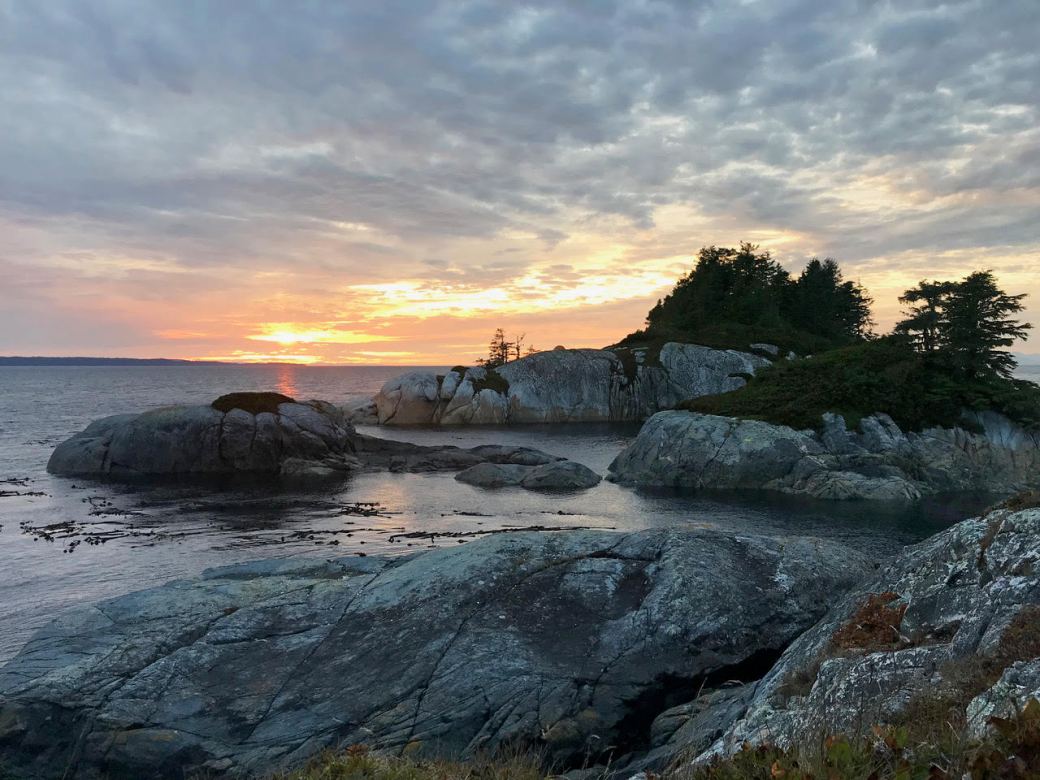
Broughton-sunset-kev

Sunset off Broughton coast, British Columbia (photo by Kevin Klassen)

Magic surges with power and mystery. Magic hides in clear view; it ripples with intrigue. When you look at magic, you see only your reflection; while its depths veil immeasurable possibility. Magic is water.

Life is sacred and flows with holy expression. Energetic, invigorating, and bracing, life fertilizes all Being to become more than Itself. Life is water.

water pattern01-credit

Water patterns (photo by Nina Munteanu)

Motion is the demon and angel of change. Motion flows endlessly on a tangent with time, destroying and creating. Motion carves sinuous patterns of stable chaos. In its turbulent wake or gliding caress, motion heralds transcendence. Motion is water.

Communication is the dance of singularity in a sea of Unity. It is the river of connection, uniting and expressing the fractal whole. Communication collides in a waterfall of notion and surprise. Informing. Transforming. Evolving. Communication floods the iconic dam, surging through conformity toward its own imaginings. Communication is water.

Memory streams in a braided and recursive path, meandering Ouroboros-like toward itself. Memory stirs up sediments that have lain for eons; re-suspending, re-examining, as if new. Then cascading toward the abyss of truth and paradox. The collective. The great ocean of thought. Memory is water.

FinCreek3-RockyM

Fin Creek, Rocky Mountains (photo by Nina Munteanu)

Rhythm undulates—at once turbulent and calm—signaling its fractal presence. Rhythm scours and builds its music with infinite patience and precision. Spiralling. Oscillating in successive rushes, glides, surges and trickles. Self-organizing. Coherent. Viscous. Rhythm is water.

Vibration hides and reveals its entangled energy. Vibration drifts on the tidal tapestry of the soul. Resonating in synchronous tones as it courses down gravity waves, vibration writes its unique sound and story. Vibration is water.

Beauty reflects Nature’s flowing embrace. Deep and quiet, beauty captures divine radiance—refracting, magnifying, rejoicing—and bursts into a sparkling sea of serenity. Light personified. Beauty is water.

Story meanders through varied landscape; cutting jagged rock and stirring fertile soils to release their messages; then joining in the great sea of the plenum. Story springs from the depths, bubbling forth with fresh bracing news of a new land. Story is water.

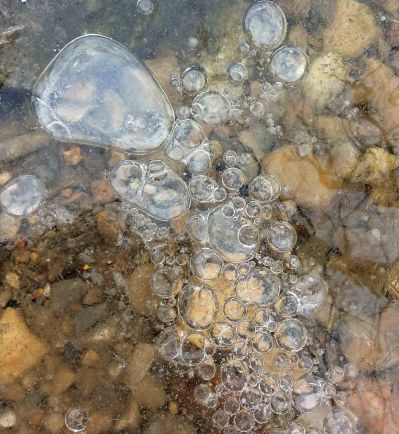
Bubbles under ice-LR

Bubbles under ice in Little Rouge River (photo by Nina Munteanu)

Prayer ripples out in circular waves of coherence from its source and back. Gestalt self-actualization. Prayer is a rainbow, revealing the reflected soul. Prayer scours, cleanses, refreshes and renews in a cycle of creation and connection. Prayer is water.

Wisdom does not stand still. Wisdom flows. It doesn’t flow in a straight line. Wisdom winds. Wisdom is wily. It transforms and transcends matter and energy with a subtle and patient hand. It erodes and deposits, from idea to emotion to philosophy. Wisdom tolerates. It forgives. It embraces and encompasses and—in changing—stays the same. Wisdom is water.


Ultimately, water will travel through the Universe and transform worlds; it will transcend time and space to share and teach; water will do its job to energize you and give you life, then quietly take its leave; it will move mountains particle by particle with a subtle hand; it will paint the world with beauty, then return to its fold and rejoice.

I am water. I am joy.

snow-scene-road-to-Wolfville-stream2a

Creek in Nova Scotia (photo by Nina Munteanu)


This poem was created using excerpts from “Water Is…The Meaning of Water” (Pixl Press, 2016) by Nina Munteanu.


nina-2014aaaNina Munteanu is an ecologist and internationally published author of award-nominated speculative novels, short stories and non-fiction. She is co-editor of Europa SF and currently teaches writing courses at George Brown College and the University of Toronto. Visit www.ninamunteanu.ca for the latest on her books. Nina’s recent book is the bilingual “La natura dell’acqua / The Way of Water” (Mincione Edizioni, Rome). Her latest “Water Is…” is currently an Amazon Bestseller and NY Times ‘year in reading’ choice of Margaret Atwood.

The Ontario Climate Symposium: Adaptive Urban Habitats by Design

SONY DSC

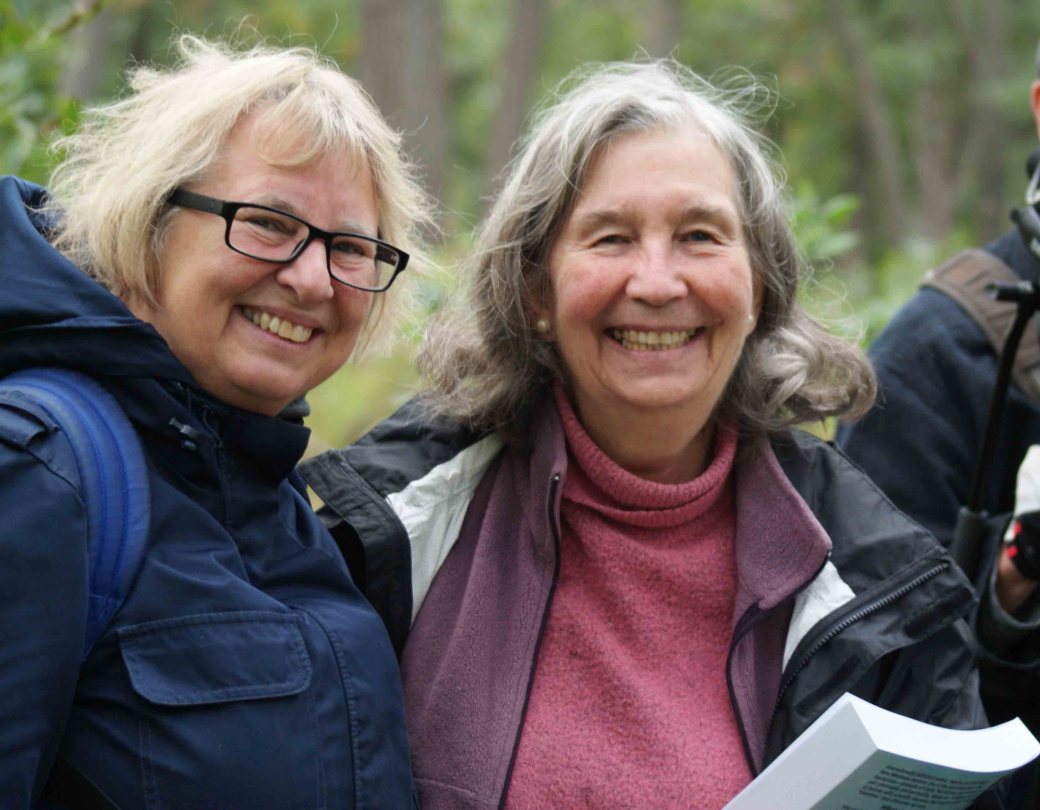
Nina presents Diana Beresford-Kroeger with a copy of “Water Is…”

I recently participated in the 2018 Ontario Climate Symposium “Adaptive Urban Habitats by Design” at OCAD University in Toronto, hosted by the Ontario Climate Consortium and the Toronto and Region Conservation Authority.

Day 1 opened with a ceremony by Chief R. Stacey Laforme of the Mississauga of the New Credit First Nation, followed by keynote address by Dr. Faisal Moola, associate professor of the University of Guelph.

A three-track panel stream provided diverse and comprehensive programming that helped further the goal to foster important discussions for how art and design can play a role in developing adaptive, low carbon cities. Panels sparked much networking among a diverse group of participants, who clustered around the refreshments in the Great Hall, where my “Water Is…” exhibit was located.

OCS-venue

The Great Hall, where participants networked over refreshments

WaterIs...at OCS2

one participant clutches “Water Is…”

Water Is… was also there for sale, as part of my exhibit on water, along with Environment and Climate Change Canada, Green Roofs, Waste, and the Environmental Commissioner of Ontario. I had several lively and insightful conversations with participants and I’m glad to say that Water Is… made it into several people’s hands at the symposium. Water is, after all, a key component of climate and climate action.

The film “Call of the Forest: The Forgotten Wisdom of Trees” was screened and scientist Diana Beresford-Kroeger participated in a question and answer period then signed her latest book.

diana_and_the_tree_

Call of the Forest” was called “a folksy and educational documentary with a poetic sort of alarmism about disappearing forests,” by the Globe and Mail. The film “takes us on a journey to the ancient forests of the northern hemisphere, revealing the profound connection that exists between trees and human life and the vital ways that trees sustain all life on this planet.” The movie describes the numerous health-giving aerosols that trees use to communicate. Diana’s genuine and earnest concern illuminates her simple yet powerful narrative, such as when she says that the forests are “haunted by silence and a certain quality of mercy.” Featuring forests from Japan and Germany’s Black Forest to Canada’s boreal forest, this documentary is a powerful manifesto for sustainability.

DianaBeresfordKroeger

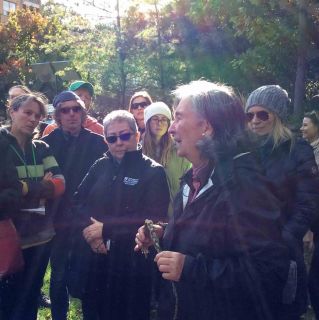
Diana lecturing in High Park

On Day 2, I toured the Black Oak savanna in High Park with Diana Beresford-Kroeger (author of The Global Forest). The tour was refreshing and enlightening. Diana is a genuine advocate for the forest and showed some of the medicinal properties of forest plants. An example is the common weed, Goldenrod; its astringent and antiseptic qualities tighten and tone the urinary system and bladder, making goldenrod useful for UTI infections; Its kidney tropho-restorative abilities both nourishe and restore balance to the kidneys.

Diana spoke from the heart and brought a wealth of scientific knowledge to us in ways easy to understand—like the biochemistry of photosynthesis or quantum coherence. Diana shared how over 200 tree aerosols help combat anything from asthma to cancer. I also talk about this in the “Water Is Life” chapter of my book, Water Is…, which I gave a copy to Diana.

lunenburg-shop01

Shops in Lunenburg, NS (photo by Nina Munteanu)


nina-munteanuNina Munteanu is an ecologist, limnologist and internationally published author of award-nominated speculative novels, short stories and non-fiction. She is co-editor of Europa SF and currently teaches writing courses at George Brown College and the University of Toronto. Visit www.ninamunteanu.ca for the latest on her books.

Ecology, Story & Stranger Things

MockUpEcology-2

Illustration by Anne Moody, typology & design by Costi Gurgu

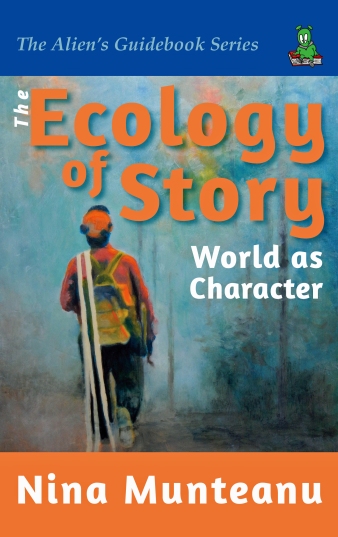
One of the lectures I give in my science fiction writing course and conference workshops is called “Ecology in Storytelling”. It’s usually well attended by writers hoping to gain better insight into world-building and how to master the layering-in of metaphoric connections between setting and character. My upcoming writing guidebook “Ecology of Story: World as Character” addresses this subject with examples from a wide range of published fiction. The book will be released in June/July of 2019 by Pixl Press.

In my lecture (and book) I talk about the adaptations of organisms to their changing environments. I describe the trophic (energy) relationships from producers to consumers and destroyers in a complex cycle of creative destruction.

Students perk up when I bring up some of the more strange and interesting adaptations of organisms to their environment: twisted stories of adaptations and strategies that involve feeding, locomotion, reproduction and shelter.

Purposeful Miscommunication & Other Lies

alconbluebutterfly-ants

Alcon blue butterfly and caterpillar with ant

For instance, the Alcon blue butterfly hoodwinks ants into caring for its larvae. They do this by secreting a chemical that mimics how ants communicate; the ants in turn adopt the newly hatched caterpillars for two years. There’s a terrible side to this story of deception. The Ichneumon wasp, upon finding an Alcon caterpillar inside an ant colony, secretes a pheromone that drives the ants into confused chaos; allowing it to slip through the confusion and lay its eggs inside the poor caterpillar. When the caterpillar turns into a chrysalis, the wasp eggs hatch and consume it from inside.

This reads like something out of a noir thriller. Or better yet, a horror story. Nature is large, profligate, complex and paradoxical. She is by turns gentle and cruel. Creative and destructive. Competitive and cooperative. Idle and nurturing.

Extremophiles & Anhydrobiosis

water-bear03

Tardigrade on moss

When I bring in the subject of extremophiles, who thrive in places you and I would cringe to set foot in, students’ imaginations run wild with ideas.

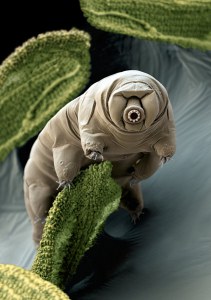
I describe a panoply of weird adaptations in Nature—involving poisons, mimicry and deception, phototaxis and something called anhydrobiosis, which permits the tiny tardigrade to shrivel into a tun in the absence of water then revive after a 100 years with just a drop of water.

All this adaptation hinges on communication. How an organism or population communicates with its environment and among its own.

Examples of “strange” communication are the purview of the science fiction writer … and already the nature of our current world—if you only know where to look. The scope of how Nature communicates—her devices and intentions—embraces the strange to the astonishing. From using infrasound to chemical receptors and sensing magnetic fields. To allelopathy. Aggressive symbiosis. And so much more.

Talking Trees

suzanne-simard-portrait

Dr. Suzanne Simard

UBC researcher Suzanne Simard, who has published hundreds of papers over 30 years of research, suggests a kind of “intelligence” when she describes the underground world “of infinite biological pathways that connect trees and allow them to communicate” In a forest.

This communication allows the forest to behave as if it was a single organism, says Simard. Her early in situ experiments showed solid evidence that tree species, such as Paper Birch and Douglas Fir communicated in a cooperative manner underground through an underground mutualistic-symbiosis involving mycorrhizae (e.g., fungus-root).

forest-conversing

mycelium connects trees underground

These trees were conversing in the language of carbon and nitrogen, phosphorus, water, defense signals, allelo-chemicals, and hormones via a network of mycelia. Fungal threads form a mycelium that infects and colonizes the roots of all the trees and plants. Simard compares this dense network to the Internet, which also has nodes and links—just as the forest.

Fungal highways link each tree and plant to its community, with busiest nodes called hub trees or mother trees. Calling them mother trees is appropriate, given that they nurture their young in the understory; sending excess carbon to the understory trees, which receive less light for photosynthesis. “In a single forest,” says Simard, “a mother tree can be connected to hundreds of other trees.” These mature trees act as nodal anchors—like major hub sites on the Internet—for tree groupings; according to Simard, they look after their families, nurture seedlings and even share wisdom—information—when they are injured or dying.

Fatal Attractions & Natural Bullies

bracken fern copy

Bracken fern fronds

The “ordinary” Bracken fern thrives in a wide range of conditions on virtually every continent (except Antarctica). That’s because it plays the “long game” by having several strategies to outlive and outcompete its surrounding nemeses.

ant on bracken copy

The symbiosis of Bracken fern and ant

Strategies include a loose lifestyle such as several ways to reproduce and grow to accommodate seasons, drought and burning; a shady arrangement with the local thugs (aggressive ants) who protect it for its tasty nectar; use of cyanide and ecdysones by its young shoots; and tough carcinogenic fronds that contain glass-like silicates.

Despite its many uses by humans (e.g., used for potash fertilizer, heating fuel, roofing, bedding for animals), the Bracken fern is considered a pest. In truth, it is a hardy versatile adapter to changing environments. And that is what our climate changing world is fast becoming.

I highly recommend the works of Annie Dillard and Loren Eiseley for wonderful and bizarre examples of natural wonders that resonate with metaphor.

Fallen log stream-2012

Stream in coastal rainforest on Vancouver Island, BC (photo by Kevin Klassen)

I also recommend my upcoming book “Ecology of Story” (Pixl Press), which will showcase a diverse set of examples from the literature of metaphoric environment and creatures. “Ecology of Story” is due for release in Summer of 2019. Look for it on Amazon, Kobo, and a fine bookstore near you. Two other books in my writing guide series include: “The Fiction Writer” and “The Journal Writer“.

Microsoft Word - Three Writing Guides.docx

nina-2014aaaNina Munteanu is an ecologist and internationally published author of award-nominated speculative novels, short stories and non-fiction. She is co-editor of Europa SF and currently teaches writing courses at George Brown College and the University of Toronto. Visit www.ninamunteanu.ca for the latest on her books. Nina’s recent book is the bilingual “La natura dell’acqua / The Way of Water” (Mincione Edizioni, Rome). Her latest “Water Is…” is currently an Amazon Bestseller and NY Times ‘year in reading’ choice of Margaret Atwood.


How Creative Destruction Embraces Paradox…

“Very well, then, I contradict myself; I am large—I contain multitudes.”—Walt Whitman

OuterDiverse-cover-webCreative destruction … sounds like a paradox, doesn’t it? Nature—and God— is full of contradiction and paradox. There is so much that we do not understand (at least on the surface)… and apparent contradiction proves that to me. In Outer Diverse, Book One of The Splintered Universe Trilogy, my character Serge says:

“… somewhere between the infinities of [worlds] you would experience paradox: black holes, quasars; intuition, déjà vu, clairvoyance… order in chaos…darkness at the heart of all beauty… beauty in the heart of all darkness…a mathematician with faith …the strength of surrender…loving your enemy…dying to live…”

Paradox lies undeniably at the heart of the clash of two realms.

I understand something of paradox. As an ecologist, I deal with it all the time.

Destruction in creation and creation in destruction is ingrained in the life-cycles of everything on this planet, indeed in this universe. A forest fire can destroy life but in so doing creates a more vibrant, healthier forest.

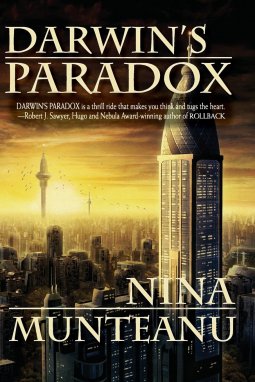
Darwins Paradox-2nd coverIn my speculative fiction novel, Darwin’s Paradox, Julie applies her father’s ecological precept to describe her observations on the rise and fall of a civilization, an ecosystem and an entire world. The precept was based on C.S. Holling’s 1987 ecological model of creative destruction:

Fire was a constant hazard in the heath. Yet, fire served the heath by discouraging invasive shrubs and halting succession. The grazing deer populations completed the job of keeping the heath from reverting to woodland. So, fire had its place as creative destroyer in the natural cycle of ecosystem behavior. Stable chaos, according to her father. It was a harsh and rude environment, Julie concluded. Like thieves in the night, bell heather, gorse and purple loosestrife snatched everything for themselves, leaving nothing for the others. Like many things in nature, the heath plants, though beautiful and fragrant, were ruthlessly greedy. . .

Creative destruction was first introduced as a term in 1942 by the economist, Joseph Schumpeter to describe the process of industrial transformation that accompanies radical innovation. According to Schumpeter’s view of capitalism, innovative entry by entrepreneurs sustained long-term economic growth, even as it destroyed the value of established companies that enjoyed some degree of monopoly power. An example is Xerox, who has seen its profits fall and its dominance vanish as rivals launched improved designs or cut manufacturing costs, drawing customers away.

The Science of Creative Destruction

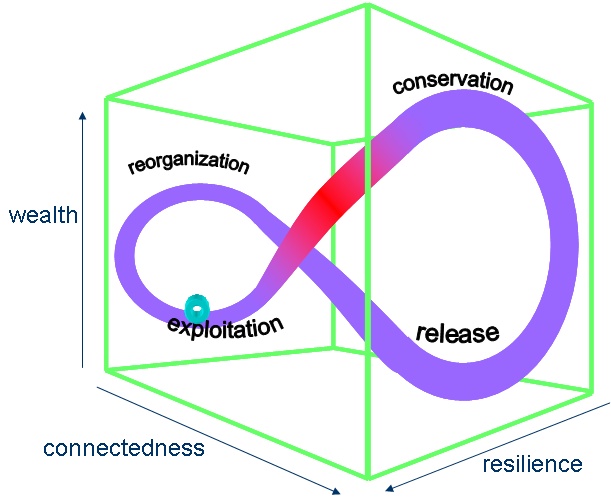
In his classic paper, entitled: “Simplifying the complex: the paradigms of ecological function and structure” (1987) C.S. Holling applied Schumpeter’s term to ecology. Holling’s model of ecosystem behaviour recognized ecosystems as non-linear, self-organizing and continually adapting through cycles of change from expansion and prosperity to creative destruction and reorganization.

creative-destruction-model

Holling presented several paradigms that ecologists use to describe the causes and behaviour (and management) of ecosystems, including an equilibrium-centred view (based on the constancy of behaviour over time), which Simon Forge described as “driving using the rear-view mirror”—trying to judge the road ahead by what went on behind. Holling advocated a “nature evolving” view, which describes ecosystems as undergoing sharp, discontinuous changes that are internally organized and balanced (I like his mobius loop to describe the closed ouroborus-like cycle of creation and destruction in nature). Holling described four phases of natural ecosystem succession within his “nature evolving” paradigm. It starts out with the exploitation phase, in which new opportunities are realized through rapid colonization and competition. Natural forces of conservation (e.g., nurturing, consolidation) lead to vulnerable systems (e.g., old growth forests), as stabilizing factors lose strength and the system evolves from having few interrelationships to having many. The result is often an abrupt change that both destroys systems and creates opportunity (creative destruction) through fire, storms, pests, senescence. Mobilization of bound, stored “capital” (e.g., carbon, nutrients and energy) through physicochemical and biological processes like decomposition and mineralization completes the dynamic cycle of functional ecosystems.

What this means for the ecosystem manager is that efforts to detect responses to changes, including human interventions like restoration activities, are confounded. Traditional (equilibrium-centred) ecosystem management may be misdirected, resulting in pathological “surprises” of ecosystem response and a spiralling vigilance and cost in control measures. Examples of traditional equilibrium-centred management of forests, fish and other organisms of terrestrial and aquatic environments with devastating consequences include:

  • firecycle copySuppression of spruce budworm populations in eastern Canada using insecticides partially protected the forest but left it vulnerable to an outbreak covering an area and of an intensity never experienced before;
  • Forest fire suppression reduced the probability of fire in the national parks of the United States but the consequence has been the accumulation of fuel to produce fires of an extent and cost never experienced before;
  • Semi-arid savanna ecosystems have been turned into productive cattle grazing systems in the Sahel zone of Africa, southern and east Africa, and other parts of the world. However, changes in grass composition have promoted an irreversible switch to woody vegetation and the systems have become highly susceptible to collapse, often triggered by drought; and,
  • Protection and enhancement of salmon spawning on the west coast of North America may have led to some success regarding enhanced stocks (e.g., hatchery-grown fish), but fishing industry is left precariously dependent on a few enhanced stocks which are vulnerable to collapse.

In each of these examples, the policy succeeded in its immediate objective. But in each case the system evolved into something with different properties and each “solution” led to a larger problem. In short, the biophysical environment had evolved into one that was more fragile, more dependent on vigilance and error-free management. Something Holling called “Nature Engineered.”

In his classic 1987 paper, Holling suggests that ecosystems be viewed—and managed—as “Resilient Nature”, where the experience of instability maintains the structure and general patterns of ecosystem behaviour; in other words, that Nature ‘learns’ and accommodates with time. In the final analysis, it is a matter of scale.

We are seeing that now as global warming takes force and we step solidly into the depths of the Anthropocene Age where green is the colour of resilience.

The Narrative of Creative Destruction

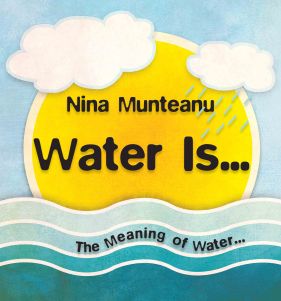
Water Is-COVER-webIn my book Water Is… I write: “Destruction in creation and creation in destruction are ingrained in the life cycles of everything on this planet and in the universe. A forest fire can destroy life but in so doing creates a more vibrant, healthier forest. Holling and I, in our separate studies, were really drawing on the ancient knowledge of polarity and cycles in nature. The opposing forces of polarity generate ongoing cycles of creation and destruction. The Ouroboros, remembering.”

The Ouroboros is an ancient symbol that depicts a serpent or dragon swallowing its own tail to form a circle. As a serpent devouring its own tail, the Ouroboros symbolizes the cyclic nature of the Universe: creation out of destruction, Life out of Death. The Ouroboros eats its own tail to sustain its life, in an eternal cycle of renewal. In the Gnosis scriptures, it symbolizes eternity and the soul of the world.

“in the Chinese I Ching, the hexagram for “crisis” also represents “opportunity.” This is because when we are in stasis (which represents lack of movement), we do not recognize our path; perspective only comes with movement. In this way, calamity, initially seen as disaster, may be viewed as unexpected opportunity for creative change. The unpredictable nature of water provides the opportunity to teach and learn.” The “crisis” of change and “destruction” provides opportunity, just as collision of viewpoints bring new ideas.”

Tree-YellowBirch winter-LR

Yellow birch tree in Little Rouge woodland (photo by Nina Munteanu)


Recommended Reading:

Holling, C.S. 1987. Simplifying the complex: the paradigms of ecological function and structure. Eur. J. Oper. Rel. 30: 139-146.

Holling, C.S. 1973. Resilience and stability of ecological systems. Annual Rev. Ecol. Syst. 4: 1-23.

Holling, C.S. 1977. Myths of ecology and energy. In: Proceedings Symposium on Future Strategies for Energy Development, Oak Ridge, Tenn., 20-21 October, 1976. Oxford University Press, New York, N.Y.

Munteanu, N. 2016. Water Is… The Meaning of Water. Pixl Press, Vancouver. 586pp.


nina-2014aaaNina Munteanu is an ecologist and internationally published author of award-nominated speculative novels, short stories and non-fiction. She is co-editor of Europa SF and currently teaches writing courses at George Brown College and the University of Toronto. Visit www.ninamunteanu.ca for the latest on her books. Nina’s recent book is the bilingual “La natura dell’acqua / The Way of Water” (Mincione Edizioni, Rome). Her latest “Water Is…” is currently an Amazon Bestseller and NY Times ‘year in reading’ choice of Margaret Atwood.


Amazing Cover Art, Part 2: Anne Moody and Costi Gurgu

MockUpEcology-2

The cover for Nina’s upcoming writing guide: illustration by Anne Moody; typology & design by Costi Gurgu

In my article “Should You Judge a Book by its Cover”, I wrote about the importance of cover art for book sales and to maintain integrity and satisfaction with the story inside. In the article, I pointed out that, “If you don’t know the author of the book, the nature—and implied promise—of the cover becomes even more important. If the book does not deliver on the promise of the cover, it will fail with many readers despite its intrinsic value. A broken promise is still a broken promise. I say cover—not necessarily the back jacket blurb—because the front cover is our first and most potent introduction to the quality of the story inside. How many of us have picked up a book—intrigued by its alluring front cover—read the blurb that seemed to resonate with the title and image, then upon reading our cherished purchase been disillusioned with the story and decided we disliked it and its author?”

Cover art provides an important aspect of writer and publisher branding. Cover artists understand this and address the finer nuances of the type and genre of the story to resonate with the reader and their expectations of story. This includes the image/illustration, typography, and overall design of the cover. A cover for a work of literary fiction will look quite different from a work of fantasy or romance. Within a genre, subtle qualities provide more clues—all of which the cover artist grasps with acute expertise.

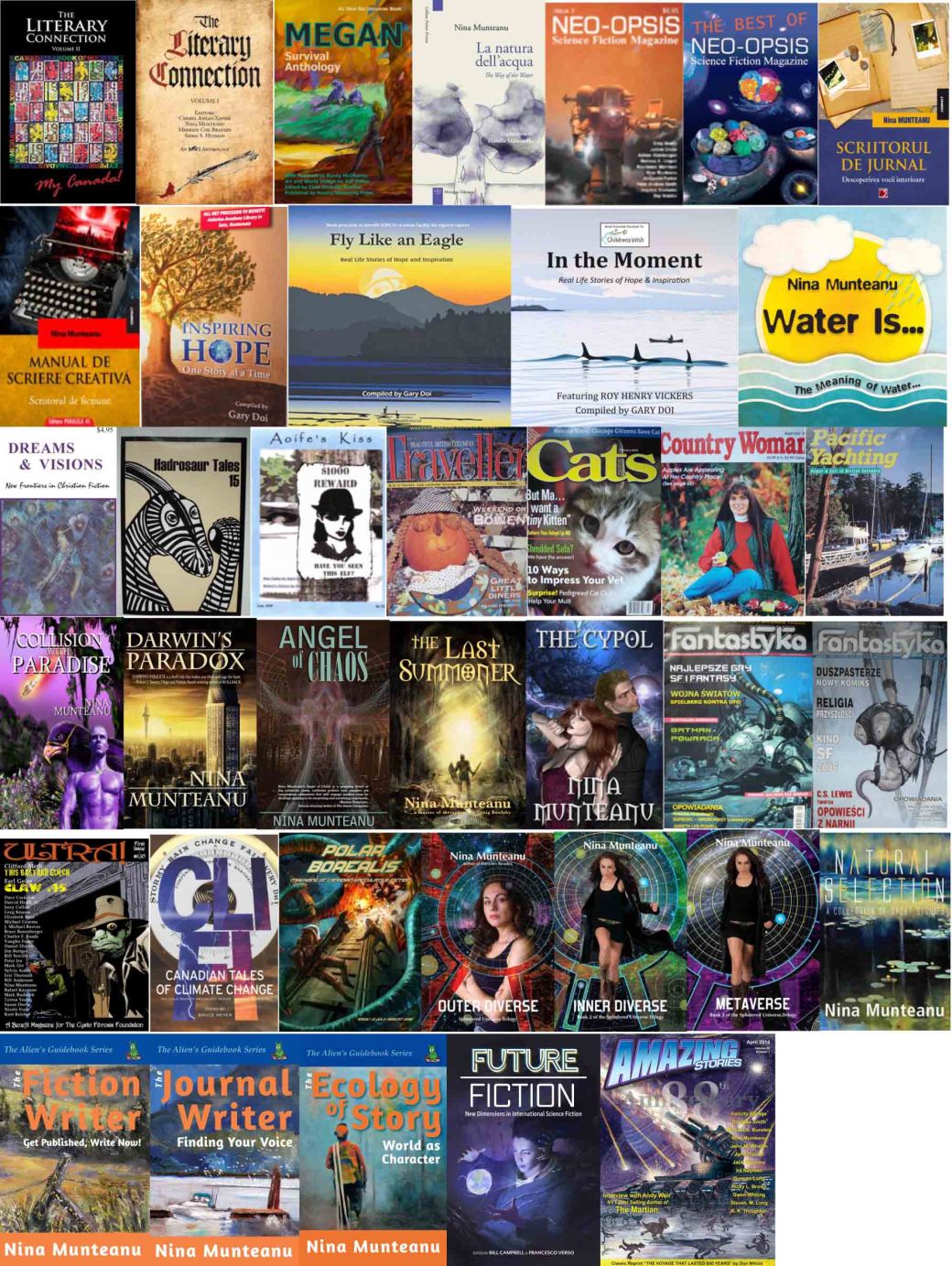
I’ve been fortunate in my history as a professional writer to have had exceptional art work on the books I’ve written or collections and anthologies I’ve participated in (see the mosaic below of many but not all the covers my work has been associated with).

For most of my books, my publisher provided me with a direct link to the cover artist (e.g., Dragon Moon Press, Edge Publishing, eXtasy Books, Liquid Silver Books, Starfire, Pixl Press) and I retained some creative control. I even found and brought in the cover artist for projects I had with Pixl Press.

Anne Moody and Pixl Press

Anne-Studio01 copy

Anne Moody working on her next painting

I met Anne Moody at the environmental consulting firm where I worked after leaving the University of Victoria. I’d taught limnology (the study of freshwater) for several years at UVic, then I joined the Vancouver firm as an aquatic ecologist and environmental consultant. That’s where I met fellow ecologist, Anne. Anne is a plant ecologist who has worked with federal and provincial governments on reclamation and restoration projects. She’s designed and planted marshes throughout the world and has taught at university in her field of expertise.

Anne wasn’t painting then. She started long after we parted our ways—she to a government job and I to a teaching job at The University of Toronto. However, as she mentions in her short bio, Anne has been drawing and painting since childhood—just like me. The difference is that she has come back to the fine arts with an eye for compelling imagery. Using her science knowledge and discipline to work with light, texture and form, Anne creates works of stunning originality that resonate with rugged landscape and with those who belong to it. Her work is, needless to say, fetching for a book cover!

FictionWriter-front cover-2nd ed-web copyWhen Pixl Press started looking for suitable cover artists to rebrand my writing craft series, I showed some of Anne’s work to the director Anne Voute. Pixl Press had already worked with Costi Gurgu and we liked his work. The result of Anne’s illustrations and Costi’s typography and design was a series of stunning covers that branded my books with just the right voice.

Journal Writer-FRONT-cover-WEB copyThe Alien Guidebook Series, of which two books are out so far (The Fiction Writer: Get Published, Write Now! and The Journal Writer: Finding Your Voice) was designed by Costi with a guidebook brand that would stand out, yet showcase the natural British Columbia landscape art by Anne that I felt strongly connected to. Anne’s cover art for The Journal Writer is one of several studies of Toquart Bay, BC.

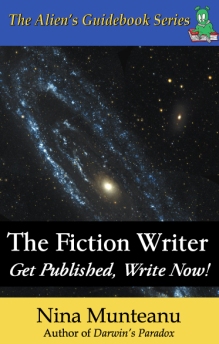
FictionWriterCoverWeb copy 2Anne’s illustration for The Fiction Writer (a painting of Knutsford, BC) actually represents the second cover. The Fiction Writer was originally released in May 2009 and the cover portrayed a spiral galaxy—beautifully designed by Virginia O’Dine. The cover overly stressed my science fiction background and did not give a balanced portrayal of the guidebook, which addresses any fiction—not just science fiction. Anne’s portrayal of a field in Knutsford was deemed better suited to a new branding for the series.

MockUpEcology-2I am currently researching and writing the third guidebook in the series—a reference on world building and use of ecology in story—The Ecology of Story: World as Character.

I visited Anne at her ranch near Vanderhoof, B.C., to discuss a cover. Between chores on the 100-acre ranch, gourmet meals from local produce, and lively political discussions over generous amounts of wine—we spent the entire weekend looking over and evaluating Anne’s pieces as potential cover art. Anne had so many good pieces, I became confused with what would work best.

Nina-sedgefield at Annes-closest2 copy 2

Nina stands in Anne’s sedge marsh

Finally on the last day, we stumbled on the perfect one: a painting Anne had done of a photograph her daughter had taken during a wildfire in northern British Columbia. Anne had stylized the photo into its own narrative that was compelling. My publisher was excited by it. We expect Pixl Press to release The Ecology of Story in late 2019.

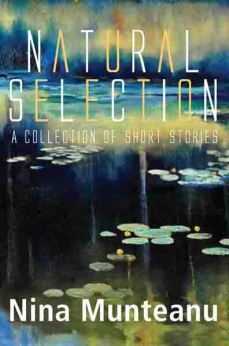
NaturalSelection-front-web copyAnne’s art work for the cover of Natural Selection: A collection of short stories had originally resonated with me when she had first shown me the original painting at an art show on Vancouver Island. Called Mere Tranquility, her acrylic and oil painting uses shades of aqua, green, blue and yellow to convey a small pond during a quiet summer day. She’d captured the elusive dance of light and water perfectly. I was reminded of the genius of Monet. Anne was delighted to let us use it. Pixl Press commissioned Gurgu to design the cover; his minimalist clean design was pure genius.

The cover for Natural Selection remains one of my favourite covers of all time. And it just so happens that the cover art and design solidly portray the tone and content of the stories within. Bellisima!


anne-moody-plein-air-painting

Anne Moody painting en plein-air

Anne Moody is a celebrated Canadian artist and plant ecologist. She worked with the British Columbia provincial government in their Department of Environment and now consults for her own company. She has been drawing and painting since childhood and won her first award at a “Painting in the Parks Program” when she was nine.

“I consider myself a realist, strongly tempted by abstract elements wrapped in story,” says Anne. “The images that speak to me are scenes that convey meaning beyond superficial beauty. My compulsion to paint takes charge when an image embedded in my memory will not allow me to rest until I promote it to canvas. My choice of medium, water-colour, acrylics or oil, is dictated by the nature of the image.”

All Nina Munteanu books can be found on most Amazon sites.

Microsoft Word - Publication-COVERS-all-2018.docx

nina-2014aaaNina Munteanu is an ecologist and internationally published author of award-nominated speculative novels, short stories and non-fiction. She is co-editor of Europa SF and currently teaches writing courses at George Brown College and the University of Toronto. Visit www.ninamunteanu.ca for the latest on her books. Nina’s recent book is the bilingual “La natura dell’acqua / The Way of Water” (Mincione Edizioni, Rome). Her latest “Water Is…” is currently an Amazon Bestseller and NY Times ‘year in reading’ choice of Margaret Atwood.

Wonder and Reason in The Age of Water

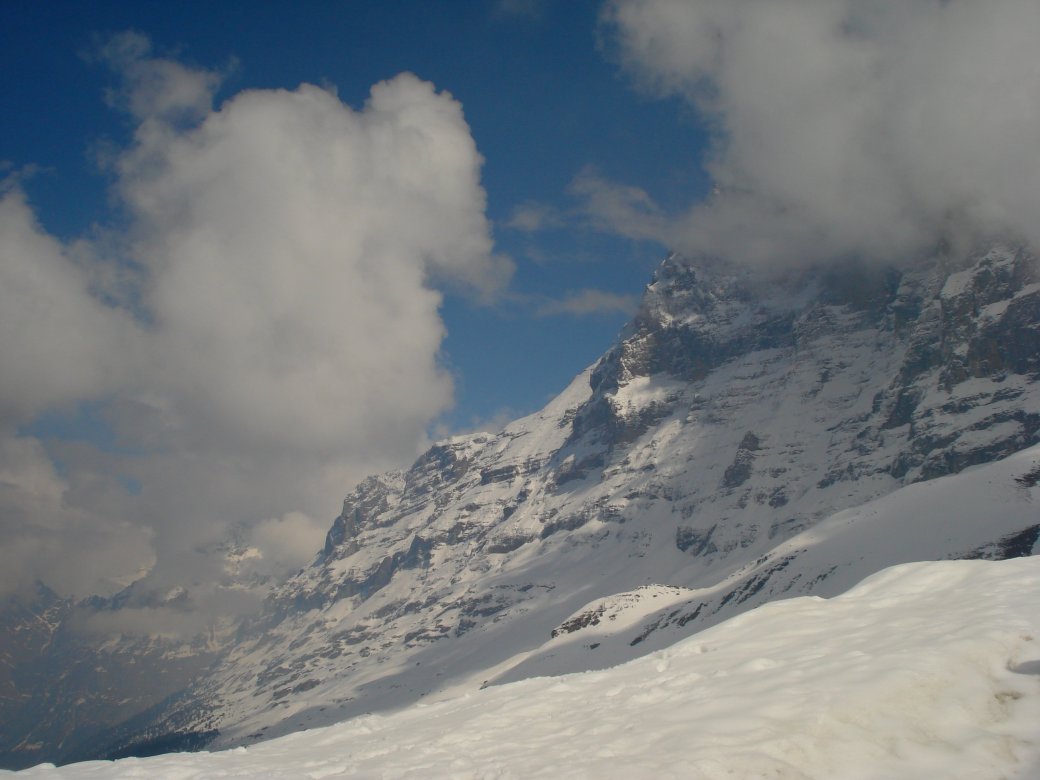
Jungfrau-peak

Mountain peaks at Zermatt, Switzerland (photo by Nina Munteanu)

Writer and essayist Annis Pratt begins her compelling essay “World of Wonder, World of Reason” in Impakter, with the question: “Do we live in a world of wonder where Nature ultimately calls the shots or a world of reason where Homo Sapiens are in control?”

Invoking the now vogue term “Anthropocene”, she puts it another way: “Is Nature dependent upon our definitions of it, or does it both precede and transcend human consciousness?  Does the term “Anthropocene” signal an apocalyptic shift that places us at the center of the Universe and if so, is the death of Nature upon us, or are we mistaken?”

Pratt examined and synthesized four works of different perspectives on nature and humanity to answer these questions. My book “Water Is…” was among them:

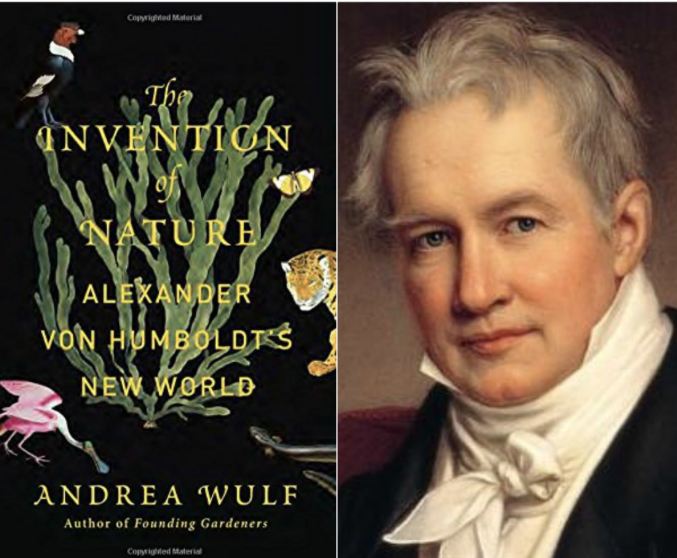
  1. The Invention of Nature: Alexander von Humboldt’s New World” by Andrea Wulf (Knoff, 2015)
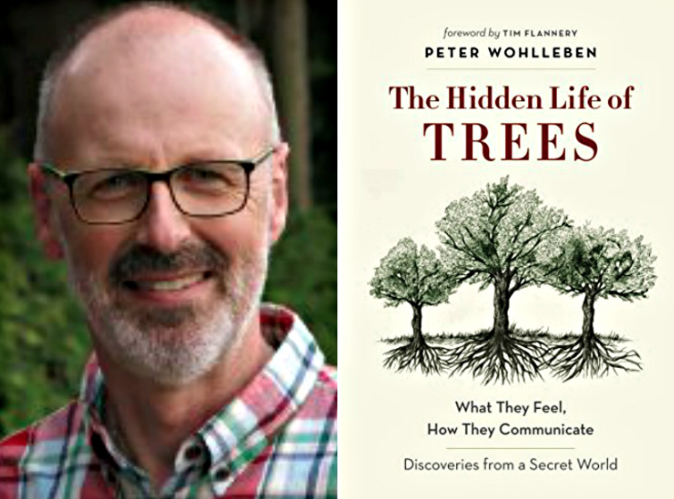
  2. The Hidden Life of Trees: What They Feel, How They Communicate” by Peter Wohlleben, translated by Jane Billinghurst (Greystone Books, 2016)
  3. Water Is…The Meaning of Water” by Nina Munteanu (Pixl Press, 2016)
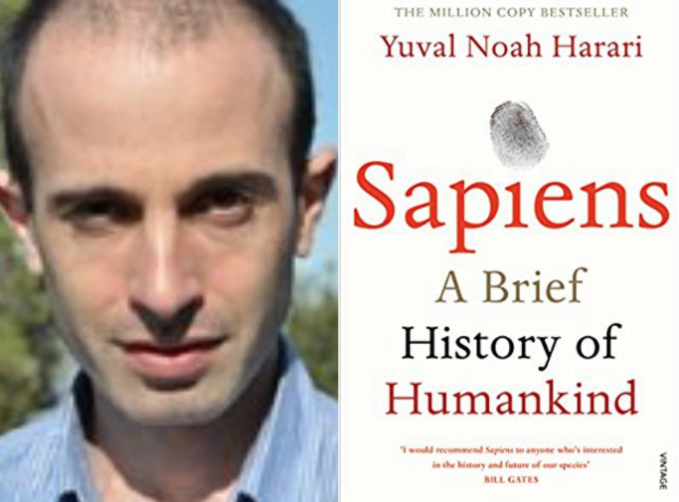
  4. Sapiens: A Brief History of Humankind” by Yuval Noah Harari (Harper Collins, 2015)

The first three, says Pratt, are scientists who made close observations of nature that filled them with wonder at the complexity of its processes: “Alexander von Humboldt, an 18th century Prussian scientist, the father of ecology; Peter Wohlleben, an ecologist who worked over twenty years for the forestry commission in Germany and Nina Munteanu, a limnologist, university teacher and award-winning ecologist.” The fourth, an Israeli historian, Yuval Noah Harari took a dramatically different stance, says Pratt. “He deplores our epoch when human egos have run amuck, putting Nature itself in peril.”

Wonder: Alexander von Humboldt

AlexVonHumboldt

Alexander von Humboldt lived from 1769-1859 (when Darwin published Origin of Species) and considered a genius, polymath, explorer and keen observer of botanical phenomena. In a world and time when Enlightenment thinkers and scientists predicated their observations on a premise of a static unchanging Nature (recall this was prior to Darwin’s controversial theory of evolution), von Humboldt discovered that nature’s one constant was change. As with von Goethe and von Schelling, von Humboldt embraced Naturphilosophie to comprehend nature in its totality and to outline its general theoretical structure. Naturphilosophie espoused an organic and dynamic worldview as an alternative to the atomist and mechanist outlook prevailing at the time.

Von Humboldt succeeded in proving that species change according to their circumstances, such as altitude or climate. According to Wulf, Bildungsreich was a force that shaped the formation of bodies, with every living organism, from humans to mould, having this formative drive. Von Humboldt’s “discovery that natural phenomena are inter-influencing elements of an interdependent whole, connected and interacting along an ‘invisible web of life,’ made Humboldt the first ecologist,” writes Pratt.

Wonder: Peter Wohlleben

Wohlleben

“Contemporary German forest ranger Peter Wohlleben belongs to the same school of Naturalphilosophie as Humboldt, bringing a similar sense of curiosity and wonder to his botanical observations,” says Pratt, who suggests that criticism aimed at his work arose in response to the anthropomorphic “voice” he uses—despite validation through the work of Dr. Suzanne Simard, Professor of Forest Ecology at the University of British Columbia.

Simard showed that trees “talk” to each other through electrical impulses as part of an underground network of fungi: “like fiber-optic internet cables.”

Pratt describes the events that led to Wohlleben’s path as an ecologist and his series of “hidden life of” books: he had become uncomfortable chopping down trees and spraying the forest with chemicals and became depressed when his superiors refused to consider his alternative methods. Wohlleben had decided to quit his job and emigrate to Sweden, when the town of Hummel decided to annul its state contract, reconstitute itself as a private preserve, and hire him to implement his innovations.

Wohlleben uses the findings of Simard and other scientists that trees communicate, nourish and heal each other. “It appears that the nutrient exchange and helping neighbors in times of need is the rule, and this leads to the conclusion that forests are superorganisms with interconnections much like ant colonies,” writes Wohlleben.

Wonder: Nina Munteanu

NinaWaterIs-Impakter

“In the same way that Peter Wohlleben approaches the hidden life of trees with a combination of scientific observation and enthusiastic wonder, in Water Is…The Meaning of Water,  Canadian limnologist Nina Munteanu observes the hidden properties of water with a scientist’s eye for detailed processes and a sense of amazement at their intricacies,” writes Pratt. “Echoing Humboldt’s discovery of the interwoven multiplicities of nature, [Munteanu] “transcends ‘Newtonian Physics and Cartesian reductionism aimed at dominating and controlling Nature’”:

“Science is beginning to understand that coherence, which exists on all levels—cellular, molecular, atomic and organic—governs all life processes. Life and all that informs it is a gestalt process. The flow of information is fractal and multidirectional, forming a complex network of paths created by resonance interactions in a self-organizing framework. It’s stable chaos. And water drives the process”—Nina Munteanu, Water Is…

“In addition to providing a gripping analysis of water science,” says Pratt, Nina Munteanu’s Water Is… “provides an encyclopedic trove of quirky observations, like how Galileo understood water flow, the Chinese character for water, Leonardo da Vinci’s water drawings, the Gaia Hypothesis, and David Bohm’s theory of flux.”

“the Gaia Hypothesis proposes that living and non-living parts of our planet interact in a complex network like a super-organism. The hypothesis postulates that all living things exert a regulatory effect on the Earth’s environment that promotes life overall…Much of nature – if not all of it – embraces this hidden order, which I describe as ‘‘stable chaos’”—Nina Munteanu, Water Is…

Reason: Yuval Noah Harari

YuvalNoahHarari

Israeli Historian, Harari sees Homo Sapiens as destructively self-serving. “Even in our earliest history,” Pratt tells us, “he suspects we were responsible for the extirpation of the Neanderthals. Everywhere we settled, mammoths and other megafauna suffered mass extinction. “The historical record,” he concludes, “makes Homo Sapiens look like an ecological serial killer.”

We are like the bully elbowing his way at school. And our casualties—such as the extinction of a dozen species a day—are innocence lost.

According to Harari, while the industrial revolution “liberated humankind from dependence on the surrounding ecosystem,” it provided no lasting benefit to the human race: “Many are convinced that science and technology hold the answers to all our problems…” but, “Like all other parts of our culture, it is shaped by economic, political and religious interests…We constantly wreak havoc on the surrounding ecosystem, seeking little more than our own comfort and amusement, yet never finding satisfaction.”

Human-Centred or Nature-Centred?

To answer Pratt’s first question: “Do we live in a world of wonder where Nature ultimately calls the shots or a world of reason where Homo Sapiens are in control?” she invokes global warming to suggest that we don’t have the last say in the planet’s welfare: “Aren’t these tumultuous catastrophes demonstrative of nature’s ability to rise over and against what we throw at it? Global warming may end civilization and perhaps the human species along with so many others we have destroyed, but are human beings really capable of engineering the destruction of the planet?  I doubt it.”

I concur. While humanity is capable of extensive natural destruction, Gaia will not only accommodate—it will prevail. Very soon—some think now already—Nature may no longer resemble that “friendly” and stable Holocene environment that we’ve come to rely on and exploit so heedlessly. Species will die out. Others will take their place in a shifting world.

As the first swell of the climate change tidal wave laps at our feet, we are beginning to see the planetary results of what humanity has helped create and exacerbate. Humanity has in many ways reached a planetary tipping point; a threshold that will be felt by all aspects of our planet—both animate and inanimate—as the planet’s very identity shifts.

One thing is certain: environments will cease to be hospitable for humanity. Compared with many other life forms, we actually have very narrow tolerances to stay healthy and survive:

  1. We need lots of water (70%)
  2. We freeze or cook beyond the 40-100 degree F range in a galaxy that goes from minus 400 at the moon’s south pole to 25 million degrees inside the sun
  3. We faint from lack of oxygen on our tallest mountains
  4. We need a pH balance of 6.5 to 7.5 to stay alive
  5. Ionizing radiation kills us at low concentrations
  6. Many compounds in the wrong amounts are toxic to us

But something will benefit. For every perturbation imposed there is adaptation and exploitation, stitched into the flowing tapestry of evolution. That is ecology.

Ecology studies relationships and change in our environment: how we interact, impact one another, change one another. Ecology studies individuals, communities and ecosystems and provides insight into the dynamics that cause and result from these interactions.

Diary Water cover finalIn my upcoming novel “A Diary in the Age of Water” (due in May 2020) a journaling limnologist in the near-future reflects on the acidified oceans in her current world: flagellates (microscopic plankton with flagella) have outcompeted diatoms (food for many species) and are mainstay of the box jellyfish—the top marine predator from the Proterozoic Era—that has overrun the entire ocean. The box jellyfish is currently overrunning Tokyo Bay. The story proceeds into the future when dead zones—currently found in the Gulf of Mexico, the mouth of the Mississippi River, Chesapeake Bay, Kattegat Strait, and Baltic Sea—occur on virtually every marine and freshwater coast; the AMOC eventually fails and the oceans grow toxic; sea level immerses Florida, the Pudong District, the entire Maldives, and dozens of coastal cities; and global temperature has triggered a heat-related epidemic involving heat shock proteins. This is a world very different from the one we have grown accustomed to; it is a harsh, hostile world that no longer treats us well; but it is a world, none the less.

Living with Natural Succession

One of the first things we learn in Ecology 101 is that change is the one constant in biology; systems endure by striking dynamic equilibria within a shifting tapestry. Succession—the natural procession of one community to another—lies at the core of a dynamic and functional ecosystem, itself evolving to another system through succession.

“Still immature and undeveloped, an oligotrophic lake often displays a rugged untamed beauty. An oligotrophic lake hungers for the stuff of life. Sediments from incoming rivers slowly feed it with dissolved nutrients and particulate organic matter. Detritus and associated microbes slowly seed the lake. Phytoplankton eventually flourish, food for zooplankton and fish. The shores then gradually slide and fill, as does the very bottom. Deltas form and macrophytes colonize the shallows. Birds bring in more creatures. And so on. As Nature tames the unruly lake over time, one thing replaces another. As a lake undergoes its natural succession from oligotrophic to highly productive eutrophic lake, its beauty mellows and it surrenders to the complexities of destiny. Minimalism yields to a baroque richness that, in turn, heralds extinction. The lake shrinks to a swamp then buries itself under a meadow.”—Nina Munteanu A Diary in the Age of Water

Ecology and Story

NaturalSelection-front-webIn a talk I give at conferences on “Ecology and Story”, I provide examples of extremophiles that have adapted to and thrive in extreme conditions on Earth.  The brine shrimp of Mono Lake—an endorheic lake that is extremely salty, anaerobic and alkaline—happily hatch in the trillions every year. The bacteria of Rio Tinto—toxic with heavy metals—thrive on the iron through a biofilm that protects them. Radiotrophic fungi feed on gamma radiation at the Chernobyl nuclear power plant. Life on Earth will endure and prevail—not despite but alongside humanity’s imposed ecological succession.

The question is, will we survive our own succession?

Literature of the Anthropocene

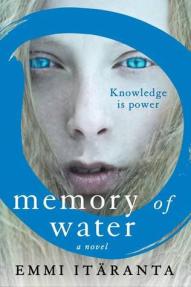
Memory of waterTerms such as eco-fiction, climate fiction and its odd cousin “cli-fi”, have embedded themselves in science fiction and literary fiction terminology; this fiction has attracted a host of impressive authors who write to its calling: Margaret Atwood, Emmi Itäranta, Jeff VanderMeer, Richard Powers, Barbara Kingsolver, Upton Sinclair, Ursula Le Guin, JoeAnn Hart, Frank Herbert, John Yunker, Kim Stanley Robinson, James Bradley, Paolo Bacigalupi, Nathaniel Rich, David Mitchell, Junot Diaz, Claire Vaye Watkins, J.G. Ballard, Marcel Theroux, Thomas Wharton—just to name a few. The list is growing. Of course, I’m on it too. Many of these works explore and illuminate environmental degradation and ecosystem collapse at the hands of humanity.

.

Nina MunteanuNina Munteanu is an ecologist, limnologist and internationally published author of award-nominated speculative novels, short stories and non-fiction. She is co-editor of Europa SF and currently teaches writing courses at George Brown College and the University of Toronto. Visit www.ninamunteanu.ca for the latest on her books.

When Water Entangles: An Interview with Claudiu Murgan About Water

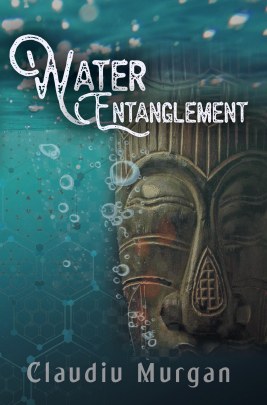
Adobe Photoshop PDFI recently attended Claudiu Murgan’s signing of his science fiction book Water Entanglement at Indigo in Yorkdale Mall and had a chance to ask him some questions about the book that intrigued me.

There are several reasons why I found Claudiu’s book particularly intriguing. Apart from the obvious fact that it has two of my favourite words in the title—Water and Entanglement—there were other intriguing aspects about Claudiu’s book, which takes place in near-future Toronto and features a limnologist as main protagonist.

My just finished novel—A Diary in the Age of Water—is also set in near-future Toronto and features a limnologist—which is what I am—as main protagonist. As we compared more and more notes, I had to laugh at how our two novels were also entangled!

Nina-Claudiu-Indigo2

Nina and Claudiu at Indigo

The time-period and the issues of both novels were very similar: growing tensions and politics surrounding a crisis of water scarcity in the 2050s and the continued short-sightedness of climate-denying politicians and corporate Earth. Both novels read like seamless slipstream between fiction and reality (mine is written partially as a memoir, which increases this experience); both explore humanity’s potential evolution linked to our relationship with an entity that remains as mysterious as it is common and life-giving. An entity that most indigenous peoples call alive.

Both Claudiu and I embrace concepts of controversial metaphysical characteristics of water. I wrote about much of this in my book Water Is…The Meaning of Water, which Claudiu references in his novel. “Memory”, quantum coherence, the liquid-crystal state, and polarity express through water’s over 70 anomalous properties: phase, density, thermodynamic, material and physical anomalous properties that include adhesion, cohesion, high specific heat, thermal density, viscosity, and surface tension—just to name some.Water Is-COVER-web

“Water is the most extraordinary substance. Practically all its properties are anomalous,” writes Nobel laureate and physiologist Albert Szent-Gyorgyi.

Water Entanglement’s book jacket blurb provides an intriguing premise:

Adobe Photoshop PDF“…Since the creation of Earth, water and crystals have woven their paths into a billion-year-long tapestry that has captured the cycles of nature’s evolution. They have observed the appearance of humans and their troubled, but fascinating development, and the energies and vibrations of everything that is part of this amazing eco-system . . . In 2055 water activists fight against irresponsible corporations that pillage the Earth. Hayyin, the hidden identity of Cherry Mortinger, a limnologist, leads the movement. Will she be able to prove that water has memory and is alive and that we could awaken to the possibility of facing a fierce battle against the primordial element that gave us life: WATER?”


INTERVIEW

Nina:  What inspired you to write Water Entanglement and why did you set it in Toronto in the near-future?

Claudiu: At the end of the TV interview I gave back in September 2017 when I launched my first novel, The Decadence of Our Souls, the host asked me about my next project. I had an impulse to say that I’m going to write about water. At that time I had no idea about the potential plot and how powerful the message would be. I also think that spending time with you, Nina, and reading Water Is… influenced my subconscious. The Matrix is choosing several authors that are allowed to flow the right messages about water and create the critical point of awareness. I personally know a handful of them that write about water from a deeper level of understanding.

Why Toronto? Because I would like to see Toronto make a firmer stand on various issues that are not ‘politically correct’. The city’s multi-cultural background has created the notion of niceness about us, which is good to have; but at the same time, we can’t allow the big corporations to dictate how to use Canadian fresh-water resources. If the book is read by the right people, then they might get an idea of what could be done.


Nina:  Who should read Water Entanglement and why?

Claudiu: I like to believe that WE is a manifesto written as a Sci-Fi novel. A teenager will find things about water that are not taught in school; properties of water that science can’t deny anymore, but also can’t explain. A Sci-Fi reader will enjoy the geo-political scenarios I imagined along with the fact that water is becoming an active participant in the story, a character that is elusive, unpredictable and creates so much havoc. For an environmentalist and for a water activist, reading about the length corporations are willing to go for a profit will only compell them to continue their fight against greed and disrespect for nature. I didn’t write the book with a specific age bracket in mind, nevertheless, there is a nugget of knowledge for any type of reader willing to accept that the way we treat water is wrong, and that access to clean, potable water is a human right, not a luxury.


Nina: Two of your main POV characters are scientists; one is a limnologist (a freshwater scientist) and another a neurosurgeon. Another character is a Cherokee chief; yet another a UN representative. How did you research your characters to realistically express them in your novel?

Claudiu: The more I write the better I get at doing research. And I have to admit how grateful I am for your advice on my first book, The Decadence of Our Souls, that have elephants as main characters. You said: read more about elephants. So I did. I went to the library and borrowed thirteen books about elephants. For WE I read several books on water, but also interacted with you, Nina, a limnologist, helped me see the world from your point of view. As for my other characters, I had the chance to visit UN HQ and interact with some policy makers. In WE there is less red tape and the UN representative has some liberty when making decisions, ignoring some of the political clutches that currently strangle any decent decision with worldwide implications.


Nina: Your protagonist disguises her subversive activist identity beneath a masked being called Hayyin. Hayyin is an Islamic name that means “without obstacles”, “lenient” or “forgiving.” What was your intention in this name and does it play a role in the theme of your book?

Claudiu: I searched for the word water in Aramaic, which is Jesus’s tribe language. There are historic records that mention Aramaic as being the primordial language. Hayyin, the water activist, had to represent a symbol powerful enough to ignite in his followers the desire to fight for water. We all like to identify ourselves with a symbol that is worth fighting or dying for. Without enough water to sustain our growing population, humanity will fade away in a matter of centuries or less, so I thought that a symbol attached to a hidden identity makes the plot more interesting.


Nina: You cover several subjects of hard—and controversial—science in this book (e.g., homeopathy, epitaxy, polywater, etc.). How did you balance these to create a plausible reality in your novel? What did you have to consider?

Claudiu: I’m not a scientist. As an author I took the liberty of pushing the limits of what is known about water. I consider my research based on data that doesn’t need peer-review validation. I trust the scientists and the authors listed under the bibliography page at the end of the book. There are so many intangible things that touch us daily and most of us are not willing to accept them. The way water behaves in Water Entanglement is an intangible concept for ‘non-believers’ … until it happens. Along with a friend scientist, I’m planning to challenge students to start experiments involving water. They have to engage with their surroundings, ask questions and get their own results.


Nina: A pivotal aspect of your story hinges on the concept of structured water and intention. Can you share a little about it?

Claudiu: When doing my research I learned things about water that I couldn’t believe, but finding the same information from multiple sources convinced me that there is truth to it. I’m a strong believer now that water absorbs our intentions, our thoughts, carries them further until the next ‘shore’. Water that was blessed heals people or sickens them if water transports negative energies and harmful thoughts. Our body cells float in structured water and if the quality / properties of such liquid would be able to be maintained, well … we could live forever.


Nina: the tagline for Water Entanglement challenges: “When will we understand that water has memory, water is alive and the time for her to awaken is NOW?” Your book paints a compelling and terrifying awakening: edible seaweeds turning toxic; sacred rivers losing their healing properties; springs diurnally retreating; raging sinkholes, water turning thick. Tell us a little about these choices for water’s reactions.

Claudiu: What characterizes us as human beings is that we don’t take any potential catastrophic event seriously unless it happens. We would rather deal with the repercussions than prevent the cause. See the levies that broke because of the force of Katrina. The government was well aware of what could happen, but invoked lack of funds. In truth it was lack of government will, the political infighting that is common these days.

In WE I had to give water a radical behavior. Water has intuition and she knows human beings so well. She can predict any of our actions and there is no solution other than offering ‘peace’ – a selfless conduct.


Nina: Your book showcases some of the major challenges humanity faces in how we treat water—scarcity, contamination, diversion, commodification and misappropriation through disrespect of water and Nature, generally. There is an obvious need to alter how we treat water and this must ultimately arise from attitude and knowledge. How do you see us changing our attitude to water when most of us live in cities and don’t even know—or care—where our water comes from or what watershed we live in?

Claudiu: Changing attitude could be a generational approach. To become part of the education at all stages from kindergarten to university. We hear in the news that in Las Vegas the fountains and watering the lawns have been banned. In Africa children and their mothers walk kilometers daily to gather water for drinking and cooking; most of the time it is polluted water. Again, the leaders lack the determination to impose stricter rules or allow technologies that could replace some of the daily activities that require water. Over the years, politicians have enforced the idea that any decision of significance has to go through a lengthy process. It shouldn’t be that way if the greater good is paramount and not petty, personal interest.


Nina:  Your novel touches on global economic and military pressures by corporations and governments in aggressive water acquisition. In your novel this occurs mostly via American interests overseas. Closer to home, Maude Barlow of the Council of Canadians tells us that water abundance in Canada is a myth and we are too complacent. Her recent book Boiling Point exposes Canada’s long-outdated water regulations, unprotected groundwater reserves, agricultural pollution, industrial waste dumping, water advisories and effects of deforestation and climate change. As stewards of 20% of the world’s freshwater, our precious water is being coveted by many entities—from corporations to governments—and holding our own will be a tricky balancing act. What do you think is Canada’s main challenge in keeping its water protected?

Claudiu: Yes, in my book I mention that we are down to 13% of world’s freshwater resources. I also mention that only smart policy could keep the sharks away. We are not a third-world, tiny, easy-to-intimidate country. We should stand our ground and push back on any such attempt. The government should protect both private and public freshwater sources and even offer support regardless of ownership.


Nina: Your book touches upon corrupt government officials and corporate CEOs in terms of water issues. Various anonymous organizations such as WikiLeaks, Anonymous Group, and individuals—including your main character who uses a mask to maintain her anonymity—play a major role as activists in your book. Do you see this as the most effective way to expose wrongdoing and affect change?

Claudiu: It was already proven that revelations through WikiLeaks have affected the political environment, revealing corruption at high levels of government, secret documents mishandling, transaction from which a handful of people benefited, etc. As far as I know no one has dug deeper into these documents for nuggets of shady deals about commodities such as water (as water is considered a commodity to lessen her important role in our lives). But they are happening in the shadows, overseen by easily bribed politicians that only find happiness in short-term gratification. Hacking corporations that claim they are responsible when it comes to environment and human health, is a civic duty. It reveals the gangrene that affects our world.


Nina: In your novel, you created Water For All (WFA) as a global NGO organization devoted to protecting water by exposing heinous wrongdoings and helping to correct them by helping to pass legislature; what do you see as the largest challenges faced by NGOs today?

Claudiu: In my opinion the water movement is fractured in too many pieces. They all want to do good, but there is no scalability to their initiatives. Funding is somehow scarce and not enough to have a significant impact when divided among so many entities. In Water Entanglement I put forward two concepts that might solve this issue. First, WFA is the unique entity that consolidates as many of the water activists and water-related organizations as possible. So funding for selected projects comes from one source. Second, there is a worldwide strategy addressing sensitive areas and the source of pollution is addressed first. Leaders should come together for such a noble goal, give up their egos and create the critical mass that can overpower the influence of the multi-nationals in the water industry.


Nina: Your novel invokes Mother Nature and repeats the Indigenous peoples’ tautology “protect your mother.” You reiterate that for most Aboriginal nations, women are considered the “Water Keepers.” Your main characters—mostly activists—are women. Your main character, Cherry, is a limnologist and water activist; Romana is the UNWater chair; Ilanda is an enlightened neurosurgeon experimenting with crystal technology to help raise awareness and cognition (her husband runs Vivus Water Inc. that uses desalinization plants to further secure their water business). You also reiterate that water carries a female gender as Chief Landing Eagle says: “Fear the day when water remembers what we have done to her.” Do you see a significant role for women in changing how we view and treat water in the world?

Claudiu: Women in general are more empathic and it is a known fact that a world dominated by a matriarch society is a peaceful one. Seems that women care more about the life they nurture inside them for nine months. They are less egotistic and more willing to forgive. It’s an attitude water needs to survive the ordeal we are putting her through. We need more women as decision makers when it comes to water usage and water preservation. It might be easier for a woman to find and keep the balance on the right side of the thin line we are walking as a species. Crossing it could mean the end of the world.


claudiu murganClaudiu Murgan was born in Romania and has called Canada his home since 1997. He started writing science fiction when he was 11 years old. Since then he met remarkable writers who helped him improve his own trade. His first novel, The Decadence of Our Souls highlights his belief in a potentially better world if the meanings of Love, Gratitude and Empathy could be understood by all of our brothers and sisters. www.ClaudiuMurgan.com.


Nina MunteanuNina Munteanu is an ecologist, limnologist and internationally published author of award-nominated speculative novels, short stories and non-fiction. She is co-editor of Europa SF and currently teaches writing courses at George Brown College and the University of Toronto. Visit www.ninamunteanu.ca for the latest on her books.

On Being a Canadian Writer in the Age of Water

Canada is the only country in the world that knows how to live without an identity.”—Marshal McLuhan 

nina-child01

Nina  “reading” in Granby, Quebec

I was born some sixty+ years ago, in the small town of Granby in the Eastern Townships to German-Romanian parents. Besides its zoo—which my brother, sister and I used to visit to collect bottles for a finder’s fee at the local treat shop—the town had no particular features. It typified French-Canada of that era. So did I. I went to school in Quebec then migrated across to the west coast to practice and teach limnology. Given that Canada holds at any one time a fifth of the Earth’s freshwater, that also made sense.

Canada is a vast country with a climate and environment that spans from the boreal forests of the Canadian Shield, muskegs of northern BC, and tundras of the Arctic Circle to the grasslands of the Prairies and southern woodlands of Ontario and Quebec. Canada’s environment is vast and diverse. Like its people.     

Ecologist vs Nationalist

Ecology is the study of “home” (oikos means ‘home’ in Greek). Ecology studies the relationships that make one’s home functional. It is, in my opinion, the most holistic and natural way to assess where we live. My home is currently Toronto, Ontario, Canada and ultimately the planet Earth.

Country_road_Stephane_Lemire

The Eastern Townships in autumn are a cornucopia of festive colours.

Growing up in the Eastern Townships of Quebec, I’d always felt an abiding sense of belonging and I resonated with Canada’s national symbols—mostly based on Nature and found on our currency, our flag, and various sovereign images: the loon, the beaver, the maple tree, our mountains and lakes and boreal forests. Why not? Canadians are custodians of a quarter of the world’s wetlands, longest river systems and most expansive lakes. Most of us recognize this; many of us live, play and work in or near these natural environments.

I have long considered myself a global citizen with no political ties. I saw my country through the lens of an ecologist—I assessed my community and my surroundings in terms of ecosystems that supported all life, not just humanity. Was a community looking after its trees? Was my family recycling? Was a corporation using ‘green’ technology? Was a municipality daylighting its streams and recognizing important riparian zones? I joined environmental movements when I was a teenager. I shifted my studies from art to science because I wanted to make a difference in how we treated our environment. After university, I joined an environmental consulting firm, hoping to educate corporations and individuals as environmental stewards. I brought that philosophy into a teaching career and began writing eco-fiction, science fiction and essays to help promote an awareness and a connection with our natural world. My hope was to illuminate how important Nature and water is to our planet and to our own well-being through an understanding of ecology and how everything is interconnected.
US-tour and Desolation Sound 260 copy

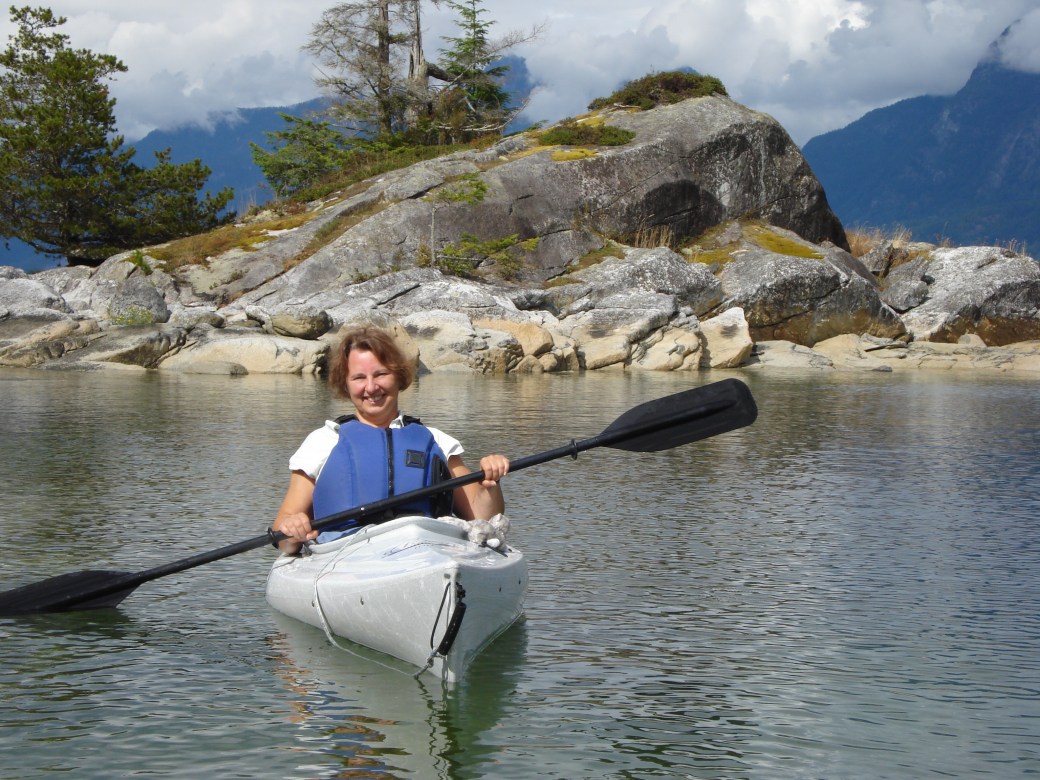
Nina kayaking Desolation Sound in British Columbia

When I think of Canada, I think of my “home”, where I live; my community and my environment. I have traveled the world and I feel a strong sense of “home” and belonging every time I return. Canada is my home. I was born and grew up in Quebec. I lived in British Columbia, Ontario, and Nova Scotia; each of these places engendered a feeling of “home”.
lunenburg-keel-laying

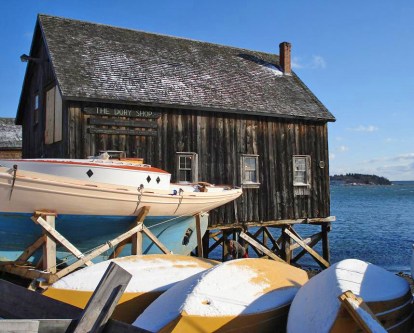
The Dory Shop in Lunenburg, Nova Scotia

I think that part of being a Canadian is related to this sense of belonging (and pride) in a country that is not tied to some core political identity or melting-pot mainstream.

Historian and writer Charlotte Gray wrote:

“we live in a country that has a weak national culture and strong regional identities …Two brands of psychological glue bind Canada together: political culture and love of landscape…[in] a loose federation perched on a magnificent and inhospitable landscape—[we are] a nation that sees survival as a collective enterprise.”—Charlotte Gray
barkerville marsh 9

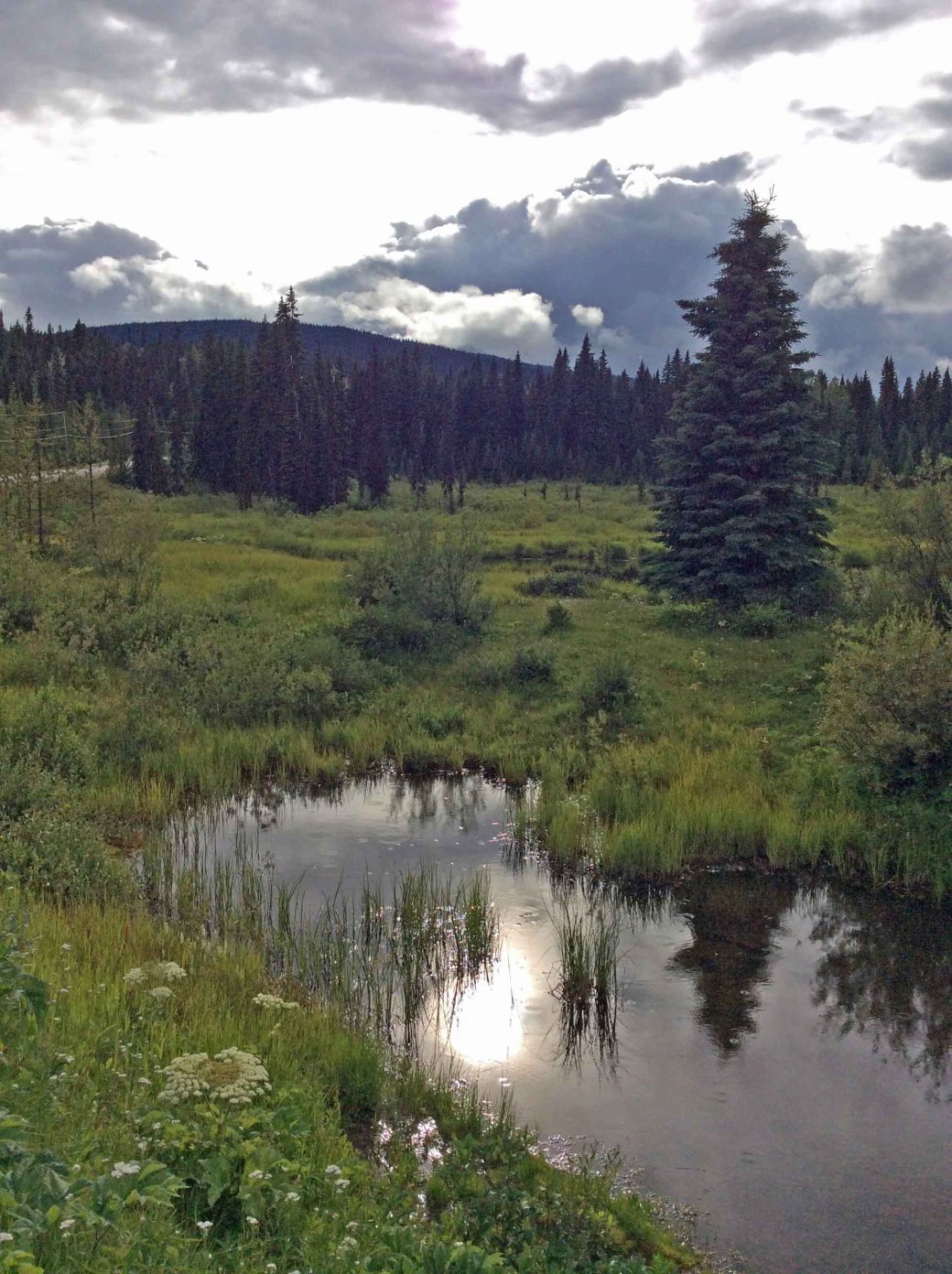
Marsh near Barkerville, BC (photo by Nina Munteanu)

Canada as Postnational State

In October 2015, Canada’s Prime Minister Justin Trudeau told the New York Times that Canada may be the “first postnational state,” adding that “there is no core identity, no mainstream in Canada.” This is largely because Canadians, writes Charles Forman in the Guardian, are “philosophically predisposed to an openness that others find bewildering, even reckless.”

Trudeau-RollingStoneTo anyone but a Canadian, Trudeau’s remark would rankle, particularly in a time when many western countries are fearfully and angrily turning against immigration through nativism and exclusionary narratives. A time when the United States elected an authoritarian intent on making “America great again” by building walls. A time when populist right-wing political parties hostile to diversity are gaining momentum in other parts of the world. “Canada’s almost cheerful commitment to inclusion might at first appear almost naive,” writes Forman. It isn’t, he adds. There are practical reasons for keeping our doors open.

We are who we are because of what we are: a vast country the size of Europe. A country dominated by boreal forest, a vital and diverse wilderness that helps maintain the well-being of our entire planet. A land that encompasses over a fifth of the freshwater in the world, and a quarter of the world’s wetlands. Canadians are ultimately the world’s Natural stewards. That is who and what we are.

Eramosa River 3

Eramosa River, Ontario (photo by Nina Munteanu)

According to Forman, postnationalism frames how “to understand our ongoing experiment in filling a vast yet unified geographic space with the diversity of the world” and a “half-century old intellectual project, born of the country’s awakening from colonial slumber.” As the first Europeans arrived in North America, the Indigenous people welcomed them, taught them how to survive and thrive amid multiple identities and allegiances, writes Forman. “That welcome was often betrayed, particularly in the 19th and 20th centuries, when settlers did profound harm to Indigenous people.” But, says Forman, if the imbalance remains, so does the influence: a model of another way of belonging. One I think many Canadians are embracing. We are learning from the natural wisdom of our Indigenous peoples. Even our fiction reflects how we value our environment and embrace diversity. “Diversity fuels, not undermines, prosperity,” writes Forman.

As efforts are made to reconcile the previous wrongs to Indigenous peoples within Canada and as empowering stories about environment are created and shared, Canada carries on the open and welcoming nature of our Indigenous peoples in encouraging immigration. In 2016, the same year the American government announced a ban on refugees, Canada took in 300,000 immigrants, which included 48,000 refuges. Canada encourages citizenship and around 85% of permanent residents typically become citizens. Greater Toronto is currently the most diverse city in the world; half of its residents were born outside the country. Vancouver, Calgary, Ottawa and Montreal are not far behind.

kevin-nina-close

Mom and son explore BC wilderness

Canadian author and visionary Marshal McLuhan wrote in 1963 that, “Canada is the only country in the world that knows how to live without an identity.” This is an incredible accomplishment, particularly given our own colonial history and the current jingoistic influence of the behemoth south of us.

Writer and essayist Ralston Saul suggests that Canada has taken to heart the Indigenous concept of ‘welcome’ to provide,

“Space for multiple identities and multiple loyalties…[based on] an idea of belonging which is comfortable with contradictions.”

Of this Forman writes: “According to poet and scholar BW Powe, McLuhan saw in Canada the raw materials for a dynamic new conception of nationhood, one unshackled from the state’s ‘demarcated borderlines and walls, its connection to blood and soil,’ its obsession with ‘cohesion based on a melting pot, on nativist fervor, the idea of the promised land’. Instead, the weakness of the established Canadian identity encouraged a plurality of them—not to mention a healthy flexibility and receptivity to change. Once Canada moved away from privileging denizens of the former empire to practicing multiculturalism, it could become a place where ‘many faiths and histories and visions would co-exist.”

NaturalSelection-front-webAnd that’s exactly what is happening. We are not a “melting pot” stew of mashed up cultures absorbed into a greater homogeneity of nationalism, no longer recognizable for their unique qualities. Canada isn’t trying to “make Canada great again.”

Canada is a true multi-cultural nation that celebrates its diversity: the wholes that make up the wholes.

Confident and comfortable with our ‘incomplete identity’—recognizing it for what it is—is according to Forman, “a positive, a spur to move forward without spilling blood, to keep thinking and evolving—perhaps, in the end, simply to respond to newness without fear.”

This resonates with me as an ecologist. What I envision is a Canada transcending the political to embrace the environment that both defines us and provides us with our very lives; a view that knows no boundaries, and recognizes the importance of diversity, relationship and inclusion, interaction, movement, and discovery.

So, am I proud of Canada? Definitely. We have much to be proud of. Canada is the 8th highest ranking nation in the Human Development Index. Canada ranks among the highest in international measurements of government transparency, civil liberties, quality of life, economic freedom, and education. It stands among the world’s most educated countries—ranking first worldwide in the number of adults having tertiary education with 51% of adults holding at least an undergraduate college or university degree. With two official languages, Canada practices an open cultural pluralism toward creating a cultural mosaic of racial, religious and cultural practices. Canada’s symbols are influenced by natural, historical and Aboriginal sources. Prominent symbols include the maple leaf, the beaver, Canada Goose, Common Loon, the Royal Canadian Mounted Police, the polar bear, the totem pole, and Inuksuk.
PolarBearMum-pups

Water Is-COVER-webWe are a northern country with a healthy awareness of our environment—our weather, climate and natural world. This awareness—particularly of climate change—is more and more being reflected in our literature—from Margaret Atwood’s “Maddaddam” trilogy and Kim Stanley Robinson’s “2041” to my short story collection “Natural Selection” and non-fiction book Water Is… .

Water AnthologyCanadians are writing more eco-fiction, climate fiction, and fiction in which environment somehow plays a key role.

Water has become one of those key players: I recently was editor of the Reality Skimming Press anthology “Water”, a collection of six speculative Canadian stories that optimistically explore near-future scenarios with water as principle agent.

The Way of Water-COVERMy short story “The Way of Water” is a near-future vision of Canada that explores the nuances of corporate and government corruption and deceit together with resource warfare.

First published as a bilingual print book by Mincione Edizioni (Rome)  (“La natura dell’acqua”), the short story also appears in several anthologies including Exile EditionsCli Fi: Canadian Tales of Climate Change” and “Future Fiction: New Dimensions in International Science Fiction“.  My upcoming “A Diary in the Age of Water” continues the story.

Adobe Photoshop PDFCanadian writer and good friend Claudiu Murgan recently released his book “Water Entanglement“, which also addresses a near-future Canada premise in which water plays a major role.

In a recent interview with Mary Woodbury on Eco-Fiction, I reflected on a trend over the years that I noticed in the science fiction writing course I teach at George Brown College: “It’s a workshop-style course I teach and students are encouraged to bring in their current work in progress. More and more students are bringing in a WIP with strong ecological overtones. I’d say the percentage now is over 70%. This is definitely coming from the students—it’s before I even open my mouth about ecology and eco-fiction—and what it suggests to me is that the welfare of our planet and our ecosystems is on many people’s minds and this is coming through in our most metaphoric writing: science fiction.”

It is healthy to celebrate our accomplishments while remembering where we came from and what we still need to accomplish. This provides direction and motivation.

tree water deer lake

Deer Lake, BC (photo by Nina Munteanu)

Canadians are custodians of a quarter of the world’s wetlands, longest river systems and most expansive lakes. Canada is all about water… And so are we.

We are water; what we do to water we do to ourselves.

Happy Canada Day!


References:

Dechene, Paul. 2015. “Sci-Fi Writers Discuss Climate Catastrophe: Nina Munteanu, Author of Darwin’s Paradox.” Prairie Dog, December 11, 2015.

Forman, Charles. 2017. “The Canada Experiment: Is this the World’s First Postnational Country?” The Guardian, January 4, 2017.

Gray, Charlotte. 2017. “Heroes and Symbols” The Globe and Mail.

Moorhouse, Emilie. 2018. “New ‘cli-fi’ anthology brings Canadian visions of future climate crisis.” National Observer, March 9, 2018.

Munteanu, Nina. 2016. “Crossing into the Ecotone to Write Meaningful Eco-Fiction.” In: NinaMunteanu.me, December 18, 2016.

Newman-Stille, Derek. 2017. “The Climate Around Eco-Fiction.” In: Speculating Canada, May 24, 2017.

Woodbury, Mary. 2016. “Part XV. Women Working in Nature and the Arts: Interview with Nina Munteanu, Ecologist and Author.” Eco-Fiction.com, October 31, 2016.

SONY DSC

Nina Munteanu on the Credit River, Ontario (photo by Merridy Cox)


nina-2014aaaNina Munteanu is an ecologist and internationally published author of award-nominated speculative novels, short stories and non-fiction. She is co-editor of Europa SF and currently teaches writing courses at George Brown College and the University of Toronto. Visit www.ninamunteanu.ca for the latest on her books. Nina’s recent book is the bilingual “La natura dell’acqua / The Way of Water” (Mincione Edizioni, Rome). Her latest “Water Is…” is currently an Amazon Bestseller and NY Times ‘year in reading’ choice of Margaret Atwood.