“Do I contradict myself? Very well, then I contradict myself; I am large, I contain multitudes.”—Walt Whitman
 I was born on this day, some sixty+ years ago, in the small town of Granby in the Eastern Townships to German-Romanian parents. Besides its zoo—which my brother, sister and I used to visit to collect bottles for a finder’s fee at the local treat shop—the town had no particular features. It typified French-Canada of that era.
So did I.
I went to school in Quebec then migrated across to the west coast to practice and teach limnology. Given that Canada holds a fifth of the Earth’s freshwater, that also made sense.
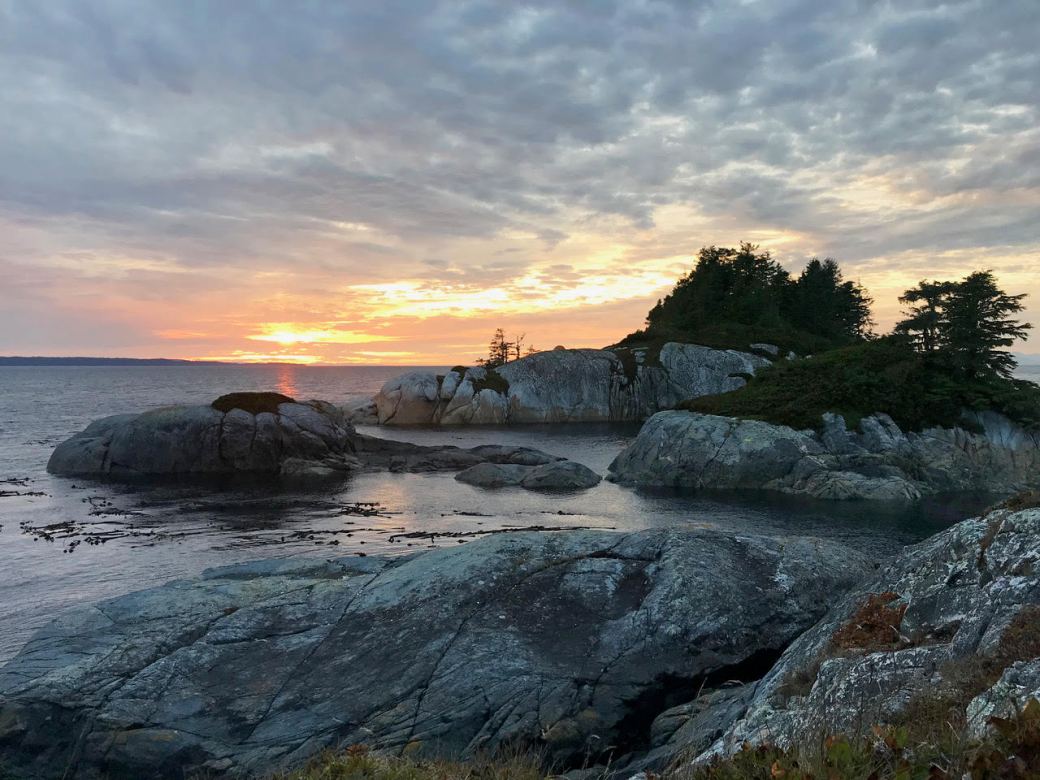
Sunset off Broughton, BC (photo by Nina Munteanu)
Canada is a vast country with a climate and environment that spans from the boreal forests of the Canadian Shield, muskegs of northern BC, and tundras of the Arctic Circle to the grasslands of the Prairies and southern woodlands of Ontario and Quebec. Canada’s environment is vast and diverse. Like its people.
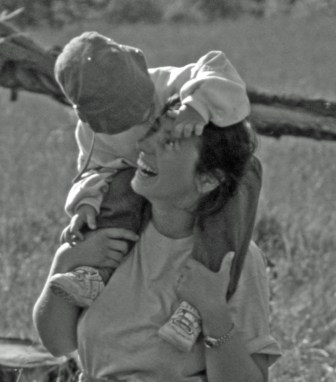
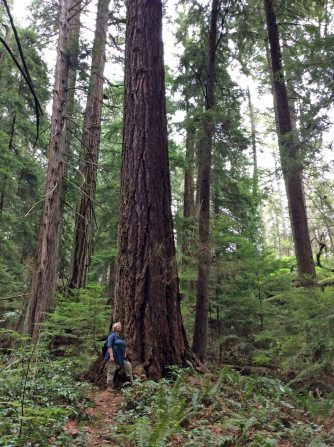
Nina and son Kevin explore Nature
In December of 2017 I participated in a discussion on the subject and role of water in literature in Toronto. I came to the event as a limnologist/ecologist, mother and environmentalist prepared to share how water—its meaning and our relationship with it—is used in my writing and how writing about water can help nurture a future of awareness and action.
But, as the discussion slid into the slippery subject of colonialism, I made the apparent mistake of sharing that—as a Canadian—I was proud of Canada. I was later schooled that “celebrating the nation” was considered anathema to an audience with strong anti-colonialist sentiments and a hatred for neoliberalist corporate Canada (something I share but do not obsess over); I’d obviously crossed some invisible line and I made a mental note to better assess my audience in future).
I also got to thinking about what it means for me to be a Canadian and what my pride in Canada really means. Was I being a “white-toast” nationalist in sharing a pride in my country?
Ecologist vs Nationalist
Ecology is the study of “home” (oikos means ‘home’ in Greek). Ecology studies the relationships that make one’s home functional. It is, in my opinion, the most holistic and natural way to assess where we live. My home is currently Toronto, Ontario, Canada and ultimately the planet Earth.

country road in Eastern Townships of Quebec
Growing up in the Eastern Townships of Quebec, I’d always felt an abiding sense of belonging and I resonated with Canada’s national symbols—mostly based on Nature and found on our currency, our flag, and various sovereign images: the loon, the beaver, the maple tree, our mountains and lakes and boreal forests. Why not? Over 80% of Canada lies in the boreal zone with much of that boreal forest and wilderness (that’s some 552 million hectares). Canadians are custodians of a quarter of the world’s wetlands, longest river systems and most expansive lakes. Most of us recognize this; many of us live, play and work in or near these natural environments.
I have long considered myself a global citizen with no political ties. I saw my country through the lens of an ecologist—I assessed my community and my surroundings in terms of ecosystems that supported all life, not just humanity. Was a community looking after its trees? Was my family recycling? Was a corporation using ‘green’ technology? Was a municipality daylighting its streams and recognizing important riparian zones? I joined environmental movements when I was a teenager. I shifted my studies from art to science because I wanted to make a difference in how we treated our environment. After university, I joined an environmental consulting firm, hoping to educate corporations and individuals as environmental stewards. I brought that philosophy into a teaching career and began writing eco-fiction, science fiction and essays to help promote an awareness and a connection with our natural world. My hope was to illuminate how important Nature and water is to our planet and to our own well-being through an understanding of ecology and how everything is interconnected.
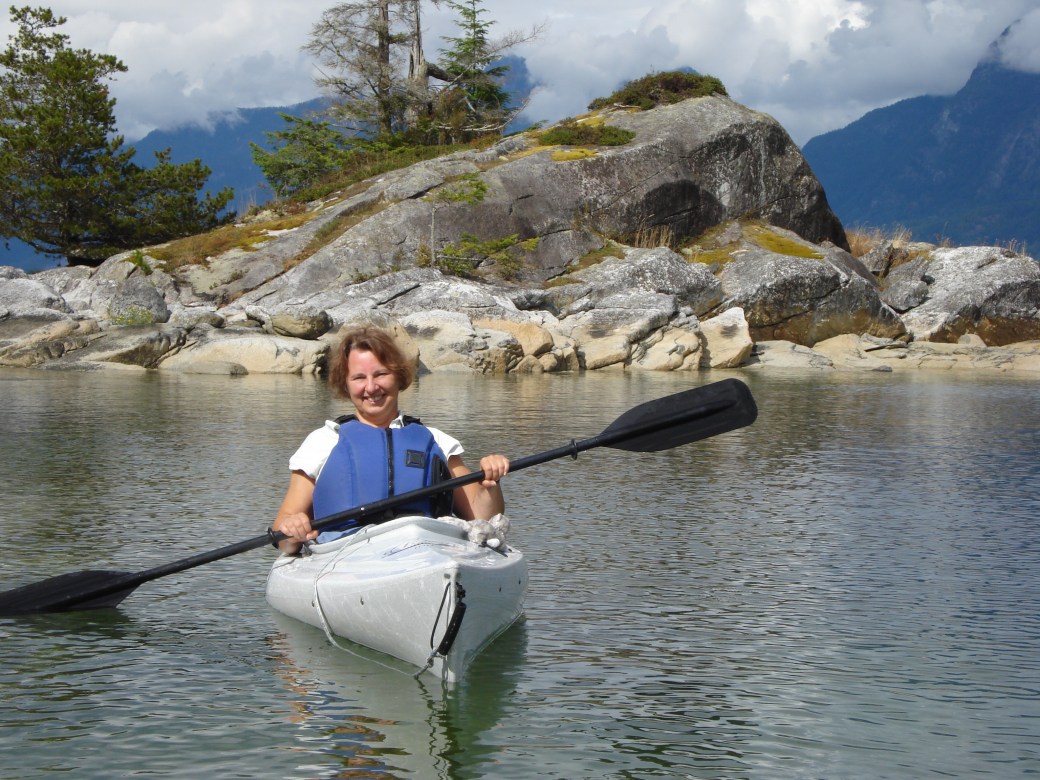
Nina kayaking in Desolation Sound, British Columbia (photo by H. Klassen)
Merriam-Webster defines “nationalism” as: “loyalty and devotion to a nation, especially a sense of national consciousness.” This is not the same as patriotism. Nor does it describe what many think of the word, which is an extreme form of nationalism, in which one nation is exalted above all others (I can think of one nation that is overtly doing that now) and placing primary emphasis on promoting its culture and interests over others—often through isolationism, xenophobia, chauvinism and jingoism. When I think of Canada, I think of my “home”, where I live; my community and my environment. I have traveled the world and I feel a strong sense of “home” and belonging every time I return. Canada is my home. I was born and grew up in Quebec; I raised a family in British Columbia, and I lived in Ontario and Nova Scotia. Each of these places engendered a feeling of “home”. If a strong sense of “home” and belonging is nationalistic, then that is what I am.
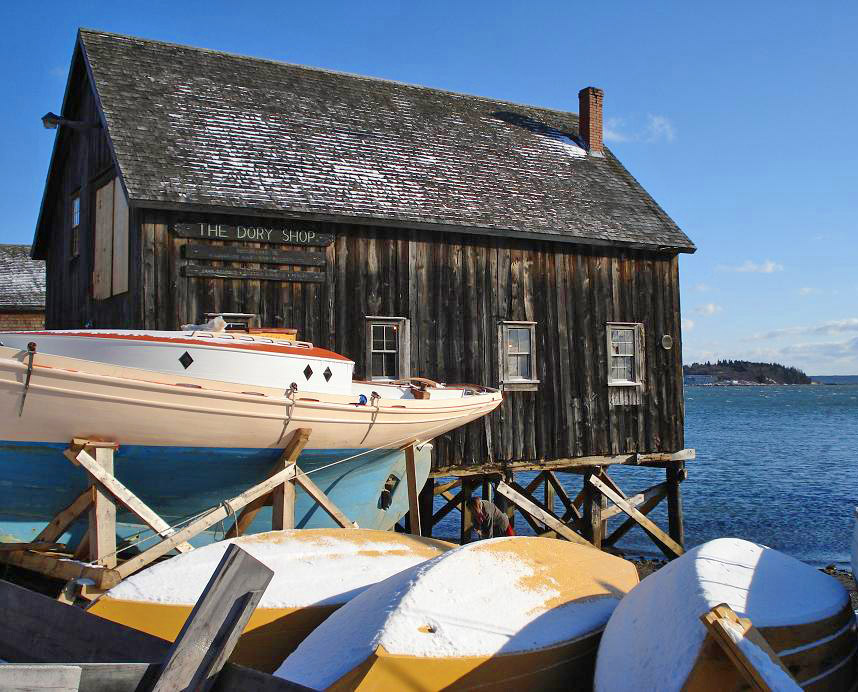
The Dory Shop in Lunenburg, Nova Scotia (photo by Nina Munteanu)
Or am I something else? Perhaps, we need to redefine our sense of belonging (and pride) in a country that is not tied to some core political identity or melting-pot mainstream. Historian and writer Charlotte Gray wrote:
“we live in a country that has a weak national culture and strong regional identities …Two brands of psychological glue bind Canada together: political culture and love of landscape…[in] a loose federation perched on a magnificent and inhospitable landscape—[we are] a nation that sees survival as a collective enterprise.”—Charlotte Gray
Canada as Postnational State

Justin Trudeau on the cover of “Rolling Stone”
In October 2015, Canada’s Prime Minister Justin Trudeau told the New York Times that Canada may be the “first postnational state,” adding that “there is no core identity, no mainstream in Canada.” This is largely because Canadians, writes Charles Forman in the Guardian, are “philosophically predisposed to an openness that others find bewildering, even reckless.”
To anyone but a Canadian, Trudeau’s remark would rankle, particularly in a time when many western countries are fearfully and angrily turning against immigration through nativism and exclusionary narratives. A time when the United States elected an authoritarian intent on making “America great again” by building walls. A time when populist right-wing political parties hostile to diversity are gaining momentum in other parts of the world. “Canada’s almost cheerful commitment to inclusion might at first appear almost naive,” writes Forman. It isn’t, he adds. There are practical reasons for keeping our doors open.
We are who we are because of what we are: a vast country the size of Europe. A country dominated by boreal forest, a vital and diverse wilderness that helps maintain the well-being of our entire planet. A land that encompasses over a fifth of the freshwater in the world, and a quarter of the world’s wetlands. Canadians are ultimately the world’s Natural stewards. That is who and what we are.
According to Forman, postnationalism frames how “to understand our ongoing experiment in filling a vast yet unified geographic space with the diversity of the world” and a “half-century old intellectual project, born of the country’s awakening from colonial slumber.” As the first Europeans arrived in North America, the Indigenous people welcomed them, taught them how to survive and thrive amid multiple identities and allegiances, writes Forman. “That welcome was often betrayed, particularly in the 19th and 20th centuries, when settlers did profound harm to Indigenous people.” But, says Forman, if the imbalance remains, so does the influence: a model of another way of belonging. One I think many Canadians are embracing. We are learning from the natural wisdom of our Indigenous peoples. Even our fiction reflects how we value our environment and embrace diversity. “Diversity fuels, not undermines, prosperity,” writes Forman.
 As efforts are made to reconcile the previous wrongs to Indigenous peoples within Canada and as empowering stories about environment are created and shared, Canada carries on the open and welcoming nature of our Indigenous peoples in encouraging immigration. In 2016, the same year the American government announced a ban on refugees, Canada took in 300,000 immigrants, which included 48,000 refuges. Canada encourages citizenship and around 85% of permanent residents typically become citizens. Greater Toronto is currently the most diverse city in the world; half of its residents were born outside the country. Vancouver, Calgary, Ottawa and Montreal are not far behind.
Canadian author and visionary Marshal McLuhan wrote in 1963 that, “Canada is the only country in the world that knows how to live without an identity.” This is an incredible accomplishment, particularly given our own colonial history and the current jingoistic influence of the behemoth south of us.
 Writer and essayist Ralston Saul suggests that Canada has taken to heart the Indigenous concept of ‘welcome’ to provide, “Space for multiple identities and multiple loyalties…[based on] an idea of belonging which is comfortable with contradictions.” Of this Forman writes:
“According to poet and scholar BW Powe, McLuhan saw in Canada the raw materials for a dynamic new conception of nationhood, one unshackled from the state’s ‘demarcated borderlines and walls, its connection to blood and soil,’ its obsession with ‘cohesion based on a melting pot, on nativist fervor, the idea of the promised land’. Instead, the weakness of the established Canadian identity encouraged a plurality of them—not to mention a healthy flexibility and receptivity to change. Once Canada moved away from privileging denizens of the former empire to practicing multiculturalism, it could become a place where ‘many faiths and histories and visions would co-exist.”
 And that’s exactly what is happening. We are not a “melting pot” stew of mashed up cultures absorbed into a greater homogeneity of nationalism, no longer recognizable for their unique qualities. Canada isn’t trying to “make Canada great again.” Canada is a true multi-cultural nation that celebrates its diversity: the wholes that make up the wholes.
Confident and comfortable with our ‘incomplete identity’—recognizing it for what it is—is according to Forman, “a positive, a spur to move forward without spilling blood, to keep thinking and evolving—perhaps, in the end, simply to respond to newness without fear.”
This resonates with me as an ecologist. What I envision is a Canada transcending the political to embrace the environment that both defines us and provides us with our very lives; a view that knows no boundaries, and recognizes the importance of diversity, relationship and inclusion, interaction, movement, and discovery.
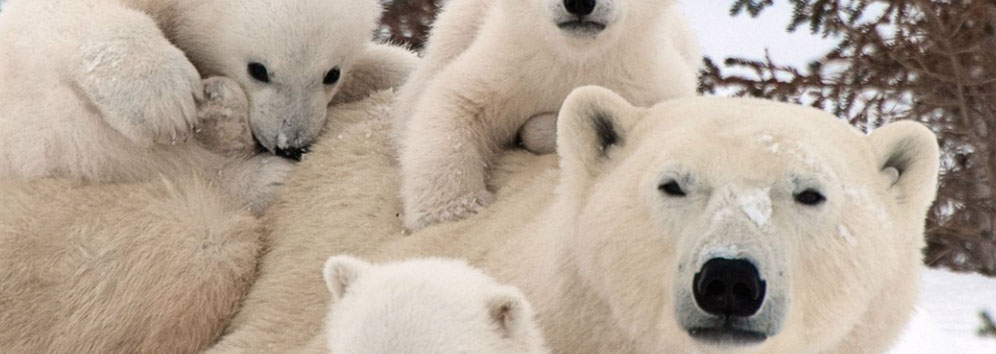 So, am I still proud of Canada? Definitely. We have much to be proud of. We live in one of the wealthiest countries in the world and the 8th highest ranking in the Human Development Index. Canada ranks among the highest in international measurements of government transparency, civil liberties, quality of life, economic freedom, and education. It stands among the world’s most educated countries—ranking first worldwide in the number of adults having tertiary education with 51% of adults holding at least an undergraduate college or university degree. With two official languages, Canada practices an open cultural pluralism toward creating a cultural mosaic of racial, religious and cultural practices. Canada’s symbols are influenced by natural, historical and Aboriginal sources. Prominent symbols include the maple leaf, the beaver, Canada Goose, Common Loon, the Royal Canadian Mounted Police, the polar bear, the totem pole, and Inuksuk.
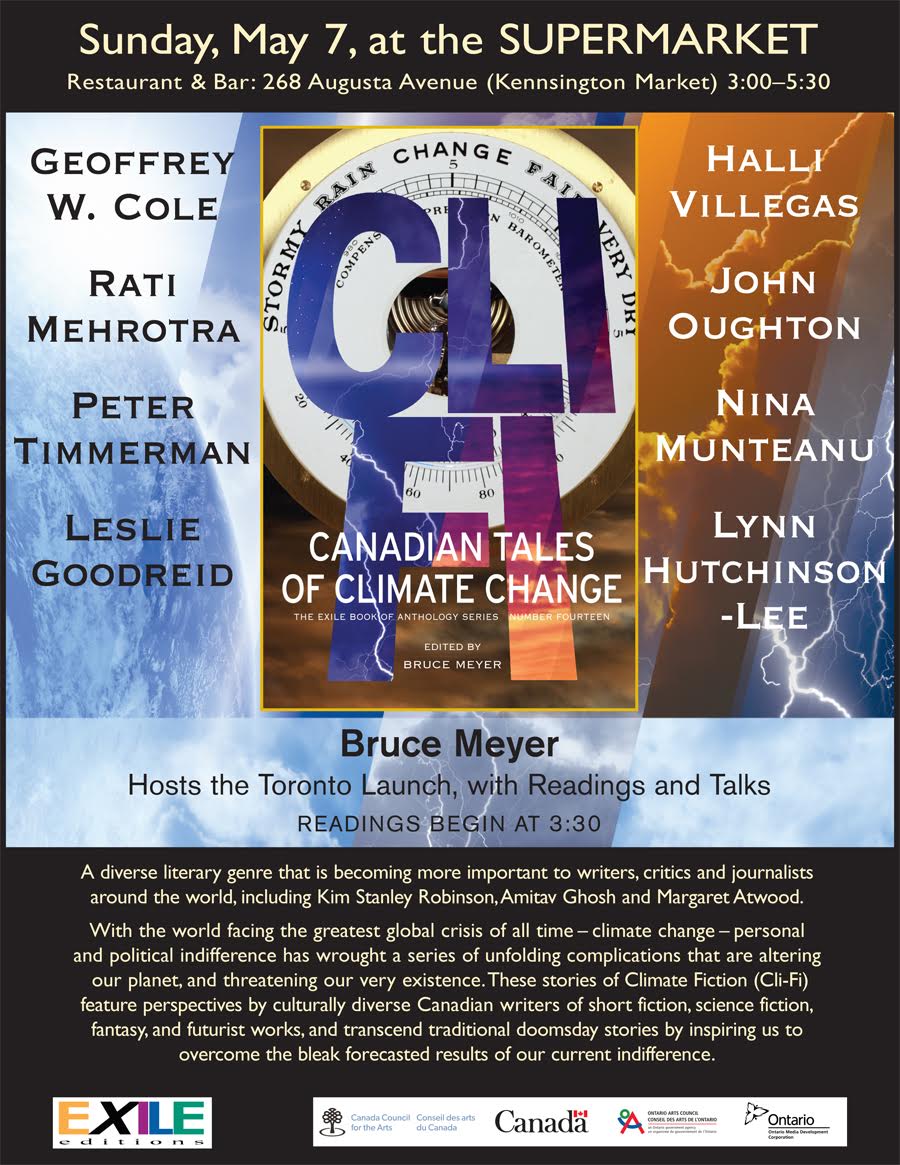
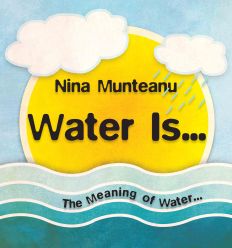
 We are a northern country with a healthy awareness of our environment—our weather, climate and natural world. This awareness—particularly of climate change—is more and more being reflected in our literature—from Margaret Atwood’s “Maddaddam” trilogy and Kim Stanley Robinson’s “New York 2140” to my own book “Water Is…”. Canadians are writing more eco-fiction, climate fiction, and fiction in which environment somehow plays a key role. Water has become one of those key players: I recently was editor of the Reality Skimming Press anthology “Water”, a collection of six speculative Canadian stories that explore near-future scenarios with water as principle agent.
In a recent interview with Mary Woodbury on Eco-Fiction, I reflected on a trend over the years that I noticed in the science fiction writing course I teach at George Brown College: “It’s a workshop-style course I teach and students are encouraged to bring in their current work in progress. More and more students are bringing in a WIP with strong ecological overtones. I’d say the percentage now is over 70%. This is definitely coming from the students—it’s before I even open my mouth about ecology and eco-fiction—and what it suggests to me is that the welfare of our planet and our ecosystems is on many people’s minds and this is coming through in our most metaphoric writing: science fiction.”
It is healthy to celebrate our accomplishments while remembering where we came from and what we still need to accomplish. This provides direction and motivation.
References:
Dechene, Paul. 2015. “Sci-Fi Writers Discuss Climate Catastrophe: Nina Munteanu, Author of Darwin’s Paradox.” Prairie Dog, December 11, 2015.
Forman, Charles. 2017. “The Canada Experiment: Is this the World’s First Postnational Country?” The Guardian, January 4, 2017.
Gray, Charlotte. 2017. “Heroes and Symbols” The Globe and Mail.
Moorhouse, Emilie. 2018. “New ‘cli-fi’ anthology brings Canadian visions of future climate crisis.” National Observer, March 9, 2018.
Munteanu, Nina. 2016. “Crossing into the Ecotone to Write Meaningful Eco-Fiction.” In: NinaMunteanu.me, December 18, 2016.
Newman-Stille, Derek. 2017. “The Climate Around Eco-Fiction.” In: Speculating Canada, May 24, 2017.
Woodbury, Mary. 2016. “Part XV. Women Working in Nature and the Arts: Interview with Nina Munteanu, Ecologist and Author.” Eco-Fiction.com, October 31, 2016.
 Nina Munteanu is an ecologist and internationally published author of award-nominated speculative novels, short stories and non-fiction. She is co-editor of Europa SF and currently teaches writing courses at George Brown College and the University of Toronto. Visit www.ninamunteanu.ca for the latest on her books. Nina’s recent book is the bilingual “La natura dell’acqua / The Way of Water” (Mincione Edizioni, Rome). Her latest “Water Is…” is currently an Amazon Bestseller and NY Times ‘year in reading’ choice of Margaret Atwood.
 Arizona State University’s Imagination and Climate Futures Initiative is again hosting a Climate Fiction Short Story Contest. In years past they invited writers from around the world to submit speculative fiction stories that explore climate change to narrate a world in flux. Previous contests received submissions from 67 different countries and 12 finalists were published in a digital anthology “Everything Change”.


 Every year, near Christmas,
  Margaret Atwood is a winner of the Arthur C. Clarke Award and the Prince of Asturias Award for Literature as well as the Booker Prize (several times) and the Governor General’s Award. Animals and the environment feature in many of her books, particularly her speculative fiction, which reflects a strong view on environmental issues.
 “
“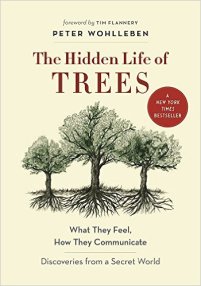 “The Hidden Life of Trees: What They Feel, How They Communicate—Discoveries From a Secret World” (Greystone Books) by Peter Wohlleben. In The Hidden Life of Trees, Peter Wohlleben shares his deep love of woods and forests and explains the amazing processes of life, death, and regeneration he has observed in the woodland and the amazing scientific processes behind the wonders of which we are blissfully unaware. Much like human families, tree parents live together with their children, communicate with them, and support them as they grow, sharing nutrients with those who are sick or struggling and creating an ecosystem that mitigates the impact of extremes of heat and cold for the whole group. As a result of such interactions, trees in a family or community are protected and can live to be very old. In contrast, solitary trees, like street kids, have a tough time of it and in most cases die much earlier than those in a group. Drawing on groundbreaking new discoveries, Wohlleben presents the science behind the secret and previously unknown life of trees and their communication abilities; he describes how these discoveries have informed his own practices in the forest around him. As he says, a happy forest is a healthy forest, and he believes that eco-friendly practices not only are economically sustainable but also benefit the health of our planet and the mental and physical health of all who live on Earth.
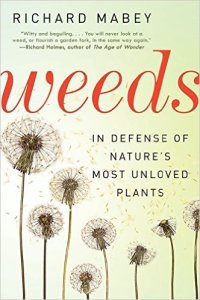 “Weeds: In Defense of Nature’s Most Unloved Plants” (Ecco) by Richard Mabey. “They’re better for you than you think,” says Atwood. “They hold the waste spaces of the world in place, and you can eat some of them.” Ever since the first human settlements 10,000 years ago, weeds have dogged our footsteps. They are there as the punishment of ‘thorns and thistles’ in Genesis and , two millennia later, as a symbol of Flanders Field. They are civilisations’ familiars, invading farmland and building-sites, war-zones and flower-beds across the globe. Yet living so intimately with us, they have been a blessing too. Weeds were the first crops, the first medicines. Burdock was the inspiration for Velcro. Cow parsley has become the fashionable adornment of Spring weddings. Weaving together the insights of botanists, gardeners, artists and poets with his own life-long fascination, Richard Mabey examines how we have tried to define them, explain their persistence, and draw moral lessons from them. One persons weed is another’s wild beauty.
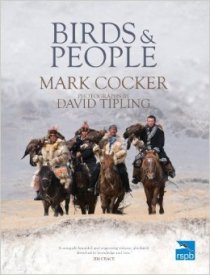 “Birds and People” (Jonathan Cape) by Mark Cocker. “Vast, historical, contemporary, many-levelled,” says Atwood. “We’ve been inseparable from birds for millenniums. They’re crucial to our imaginative life and our human heritage, and part of our economic realities.” Vast in both scope and scale, the book draws upon Mark Cocker’s forty years of observing and thinking about birds. Part natural history and part cultural study, it describes and maps the entire spectrum of our engagements with birds, drawing in themes of history, literature, art, cuisine, language, lore, politics and the environment. In the end, this is a book as much about us as it is about birds.

 Early on in the recent science fiction movie Interstellar, NASA astronaut Cooper declares that “the world’s a treasure, but it’s been telling us to leave for a while now. Mankind was born on Earth; it was never meant to die here.” After showing Cooper how their last corn crops will eventually fail like the okra and wheat before them, NASA Professor Brand answers Cooper’s question of, “So, how do you plan on saving the world?” with: “We’re not meant to save the world…We’re meant to leave it.” Cooper rejoins: “I’ve got kids.” To which Brand answers: “Then go save them.”
 “Scientists are telling us that the whole territory of modern history, from the end of World War II to the present, forms the threshold to a new geological epoch,” adds Jonsson. This epoch succeeded the relatively stable natural variability of the Holocene Epoch that had endured for 11,700 years. Scientists Paul Crutzen and Eugene Stoermer call it the Anthropocene Epoch. Suggestions for its inception vary from the time of the Industrial Revolution in the late 1700s with the advent of the steam engine and a fossil fuel economy to the time of the Great Acceleration—the economic boom following World War II.
 The Great Acceleration describes a kind of tipping point in planetary change and succession resulting from a rising market society.
 The Great Acceleration encompasses the notion of “planetary boundaries,” thresholds of environmental risks beyond which we can expect nonlinear and irreversible change on a planetary level. A well known one is that of carbon emissions. Emissions above 350 ppm represent unacceptable danger to the welfare of the planet in its current state; and humanity—adapted to this current state. This threshold has already been surpassed during the postwar capitalism period decades ago.
 In Amitav Ghosh’s diagnosis of the condition of literature and culture in the Age of the Anthropocene (The Great Derangement: Climate Change and the Unthinkable), he observes that the literary world has responded to climate change with almost complete silence. “How can we explain the fact that writers of fiction have overwhelmingly failed to grapple with the ongoing planetary crisis in their works?” continues Jonsson, who observes that, “for Ghosh, this silence is part of a broader pattern of indifference and misrepresentation. Contemporary arts and literature are characterized by ‘modes of concealment that [prevent] people from recognizing the realities of their plight.’”
 Jonsson tells us that bourgeois reason takes many forms, showing affinities with classical political economy, and—I would add—in classical physics and Cartesian philosophy. From Adam Smith’s 18th Century economic vision to the conceit of bankers who drove the 2008 American housing bubble, humanity’s men have consistently espoused the myth of a constant natural world capable of absorbing infinite abuse without oscillation. When James Lovelock and Lynn Margulis proposed the Gaia Hypothesis in the 1970s, many saw its basis in a homeostatic balance of the natural order as confirmation of Nature’s infinite resilience to abuse. They failed to recognize that we are Nature and abuse of Nature is really self-abuse.
 Louise Fabiani of Pacific Standard suggests that novels are still the best way for us to clarify planetary issues and prepare for change—even play a meaningful part in that change. In her article “The Literature of Climate Change” she points to science fiction as helping “us prepare for radical change, just when things may be getting too comfortable.” Referring to our overwhelming reliance on technology and outsourced knowledge, Fabiani suggests that “our privileged lives (particularly in consumer-based North America) are built on unconscious trust in the mostly invisible others who make this illusion of domestic independence possible—the faith that they will never stop being there for us. And we have no back-ups in place should they let us down.” Which they will—given their short-term thinking.
 In my interview with Mary Woodbury on
  My own works of
  Nina Munteanu is an ecologist and internationally published author of award-nominated speculative novels, short stories and non-fiction. She is co-editor of Europa SF and currently teaches writing courses at George Brown College and the University of Toronto. Visit
  One of the lectures I give to my science fiction writing students is called “Ecology in Storytelling”. It’s usually well attended by writers hoping to gain better insight into world-building and how to master the layering-in of metaphoric connections between setting and character.1
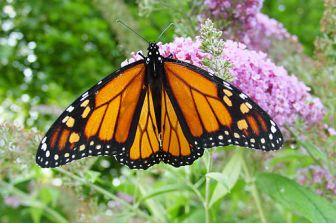
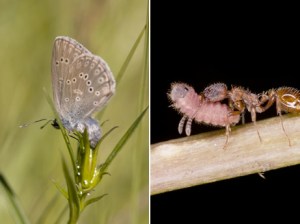 for its larvae. They do this by secreting a chemical that mimics how ants communicate; the ants in turn adopt the newly hatched caterpillars for two years. There’s a terrible side to this story of deception. The Ichneumon wasp, upon finding an Alcon caterpillar inside an ant colony, secretes a pheromone that drives the ants into confused chaos; allowing it to slip through the confusion and lay its eggs inside the poor caterpillar. When the caterpillar turns into a chrysalis, the wasp eggs hatch and consume it from inside.

 You can read more about this in my book “
 Barbara Kingsolver’s 2012 novel Flight Behavior was, according to


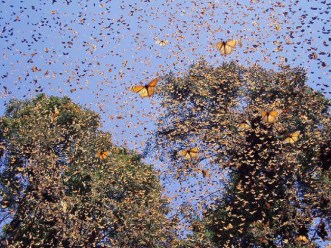 Kathleen Byrne of The Globe and Mail
 We—humanity—may not be around here for much longer. Nature will endure without us. Planet Earth will continue, in some form and Nature and life will endure, evolve, and flourish—in its own way. It will change, perhaps grow more unruly than it is already, but Gaia will continue after she has kicked us off. Ecologists have long recognized the pattern of colonization, exploitation, decadence and succession. How hubristic of humanity not to include itself in that cycle. The cycle of continuing change. We grasp—we clamor—for the world we knew—even as we senselessly impose irreparable change. Shaving forests to the ground so water has no where else to go but down and in a torrent. Creating hot deserts by diverting great rivers somewhere else. Mining vast oil and mineral reserves by scraping the earth until it “bleeds” from unhealable wounds.
 Nina Munteanu is an ecologist and internationally published author of award-nominated speculative novels, short stories and non-fiction. She is co-editor of Europa SF and currently teaches writing courses at George Brown College and the University of Toronto. Visit
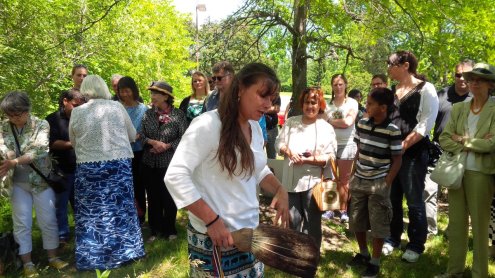


 For me this represents a palpable and gestalt cultural awakening in the realm of the “feminine archetype”.
 I mentioned that the majority of my stories are science fiction (SF). SF is a literature of allegory and metaphor and deeply embedded in culture. It draws me because it is the literature of consequence exploring large issues faced by humankind. In a February 2013 interview in The Globe and Mail I described how by its very nature SF is a symbolic meditation on history itself and ultimately a literature of great vision: “Speaking for myself, and for the other women I know who read science fiction, the need is for good stories featuring intelligent women who are directed in some way to make a difference in the world…The heroism [of women] may manifest itself through co-operation and leadership in community, which is [often] different from their die-hard male counterparts who want to tackle the world on their own. Science fiction provides a new paradigm for heroism and a new definition of hero as it balances technology and science with human issues and needs.”
 We’ve progressed from the biological to the mechanical to the purely mental, from the natural world to a manufactured world to a virtual world, writes philosopher and writer Charles Eisenstein. According to Carolyn Merchant, professor at UC Berkley, early scientists of the 1600s used metaphor, rhetoric, and myth to develop a new method of interrogating nature as “part of a larger project to create a new method that would allow humanity to control and dominate the natural world.”
 Competition is a natural reaction based on distrust—of both the environment and of the “other”—both aspects of “self” (as part) separated from “self” (as whole). The greed for more than is sustainable reflects an urgent fear of failure and a sense of being separate. It ultimately perpetuates actions dominated by self-interest and is the harbinger of “the Tragedy of the Commons”.
 Examples of creative cooperatives exist throughout the world, offering an alternative to the traditional model of competition. Cultural creatives are changing the world, Ruche tells us. These creatives, while being community-oriented with an awareness of planet-wide issues, honor and embody feminine values, such as empathy, solidarity, spiritual and personal development, and relationships. Mechanisms include reciprocity, trust, communication, fairness, and a group-sense of belonging. I give examples in my upcoming book “Water Is…” by Pixl Press, due in Spring 2016.
 Nina Munteanu Writing Coach