“A Day in the Life” of Nina Munteanu in The Toronto Guardian

Cat WaterIs-3

Felix loves water!

On October 20, 2018, the Toronto Guardian presented “A Day in the Life” of Nina Munteanu, Toronto writer. The series previously profiled writer Charles de Lint, dance artist Natasha Powell, choreographer Maria Shalvarova, dancer Lori Duncan, author Claudiu Murgan and many others.

Editor Merridy Cox (who edited Nina’s latest book “Water Is…”) introduced the “Day”, followed by eight photos that marked Nina’s “typical” day, then a short interview by the Guardian.

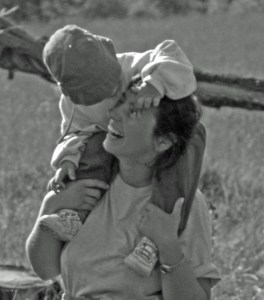
Photo 1-Nina-Oli

Nina’s early morning walk with Oli

Photo 2-Nina-cafe

Nina writes her next novel at a local indie coffee shop

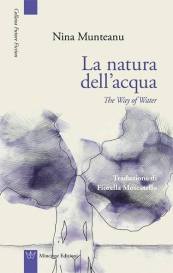
nina-2014aaaNina Munteanu is an ecologist and internationally published author of award-nominated speculative novels, short stories and non-fiction. She is co-editor of Europa SF and currently teaches writing courses at George Brown College and the University of Toronto. Visit www.ninamunteanu.ca for the latest on her books. Nina’s recent book is the bilingual “La natura dell’acqua / The Way of Water” (Mincione Edizioni, Rome). Her latest “Water Is…” is currently an Amazon Bestseller and NY Times ‘year in reading’ choice of Margaret Atwood.


Hybrid Publishing: Understanding the Writing and Publishing Landscape

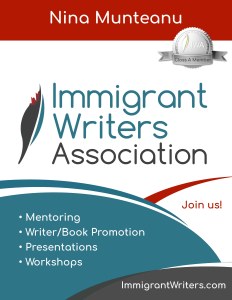
Cafe on Baldwin-TorontoOn Friday evening of October 26th Nina will be giving the first in a series of 10 writing workshops through the Immigrant Writers Association Writing and Publishing workshop series for members and non-members. Workshops are free for Class A members, $10 for Class B members, and $15 for non-members.

WORKSHOP: Hybrid Publishing: Understanding the Landscape 

DESCRIPTION: The workshop is structured as an hour-long lecture followed by discussions pertinent to the topic, such as various publishing models, self-publishing, indie publishing, the traditional and the hybrid model with the pros and cons of each model.

The workshop will cover:

  • An overview of the publishing industry, spanning from traditional to indie and self-publishing and everything in-between.
  • Advantages and disadvantages of each option discussed based on needs and perspectives. These include marketing, distribution, creative control, revenue, timing, branding, and reputation.
  • An exploration of emerging directions, models, collaborations and structures in the publishing industry and what this means for the writer.

TIME: 7pm to 9pm

PLACE: Toronto City Hall, Committee Room #2
100 Queen Street West
Toronto, ON

COST: Free for IWA Member type A; $10 for IWA Member type B; $15 for non-members

REGISTER/PAY HERE

Learn with IWA is an initiative of the Immigrant Writers Association, which helps its members enhance their writing skills, gain knowledge about the Canadian publishing landscape, and advance their careers. IWA also encourages its members and other immigrants to share the expertise they brought along, their culture, and thoughts to enrich the society they live in.

Nina’s IWA Writing and Publishing workshops series include:
(C: on craft; P: on publishing, promotion, marketing)

1 (P): Hybrid Publishing: Understanding the Landscape (Oct 26, 2018)
2 (C): World as Character (Nov 30, 2018)
3 (P): How to Promote Your Book and Increase Your Visibility (Jan, 2019)
4 (C): Storyboarding: creating “story” from scenes to worlds
5 (P): Getting Started and Finishing
6 (C): Things to Consider in Fiction Writing
7 (C): Genre-Specific Writing
8 (P): Cover Design / Interior Layout
9 (C): Self-Editing: Ways to Improve Your Language in Writing
10 (P): Getting Feedback: what to do with it

NinaOct26

_________________________

To find out more about IWA’s membership type A and B, please visit immigrantwriters.com/join-us


nina-2014aaaNina Munteanu is an ecologist and internationally published author of award-nominated speculative novels, short stories and non-fiction. She is co-editor of Europa SF and currently teaches writing courses at George Brown College and the University of Toronto. Visit www.ninamunteanu.ca for the latest on her books. Nina’s recent book is the bilingual “La natura dell’acqua / The Way of Water” (Mincione Edizioni, Rome). Her latest “Water Is…” is currently an Amazon Bestseller and NY Times ‘year in reading’ choice of Margaret Atwood.


Nina Munteanu Interviewed in Canadian Romanian Newspaper “Observatorul”

Claudiu Murgan (author of “Water Entanglement”) recently interviewed me in the Canadian Romanian newspaper Observatorul.

gaudeamus-book-fair-crowd copy

Gaudeamus Book Fair in Bucharest, Romania

nina-paralela45-gaudeamus-web copy

Nina Munteanu at Gaudeamus

In the interview, I talked about my involvement with the Toronto Romanian community through the Immigrant Writers Association and my visit several years ago to Bucharest Romania to launch my two writing guidebooks with Editura Paralela 45 at the Gaudeamus Book Fair at the Rome Expo Exhibition Centre:

“In 2011 I attended the launch of my writing guide Manual de Scriere Creativa. Scriitorul de fictiune (The Fiction Writer) in Bucharest, hosted by Editura Paralela 45 at the Gaudeamus Book Fair. Dr. Florin Munteanu, respected scientist in Complexity Theory, kindly picked me up at the airport and took me to the Phoenicia Grand Hotel where we relaxed in the lounge and discussed fractal geometry and the Fibonacci Golden Ratio over café cremes. It was a very civilized introduction to this eclectic “city of joy” and I felt strangely at home.

It was a wonderful experience, which included drinking copious amounts of Tuica with my publisher and touring the Lipscani District with George Kudor, a student of Florin’s. Florin calls Romania “the corpus callosum of the world” where east and west converge, mingle and learn. It’s no wonder that Romania is one of the leading countries in the world on complexity theory, a science that embraces the “collision” of different “worlds” to create more than the sum of its parts.”

scriitorul_de_fictiune_Munteanu_coperta1 copyFictionWriter-front cover-2nd ed-webThe Fiction Writer (Scriitorul de fictiune) was very well received by the Romanian writing community. Romanian poet and English instructor Lucia Gorea calls The Fiction Writer “the most practical book on publishing that I’ve ever read, and I’ve read them all!”


In the Observatorul interview, Claudiu asked me if I was pursuing other projects in Romania. I am currently corresponding with a Romanian distributor to get some of my other books translated and published in Romania. I also co-edit Europa SF, a European ezine on speculative fiction from around the world, with a focus on European science fiction, fantasy and horror.

The Way of Water-COVER copyI hope to collaborate more with colleague and friend Cristian Tamas, who introduced me to editor/publisher Francesco Verso (of Future Fiction) and Mincione Edizioni, who published my short story “The Way of Water.” I later developed “The Way of Water” in novel form and I anticipate its release next year.

I hope to do more with Dr. Florin Munteanu and Claudiu Murgan on projects to do with water—particularly on entanglement, intention, subtle energies and memory. I would be delighted if a Romanian publisher chose to translate my book “Water Is…The Meaning of Water” and publish it for Romanians.

OLYMPUS DIGITAL CAMERA

Gaudeamus Book Fair in Rome Expo Exhibition Centre, Bucharest

bucharest-old-downtown01-web copy

Lipscani District in Bucharest

nina-gaudeamus-close-web copy

Nina enjoying the book fair

nina-2014aaaNina Munteanu is an ecologist and internationally published author of award-nominated speculative novels, short stories and non-fiction. She is co-editor of Europa SF and currently teaches writing courses at George Brown College and the University of Toronto. Visit www.ninamunteanu.ca for the latest on her books. Nina’s recent book is the bilingual “La natura dell’acqua / The Way of Water” (Mincione Edizioni, Rome). Her latest “Water Is…” is currently an Amazon Bestseller and NY Times ‘year in reading’ choice of Margaret Atwood.

Nina Delivers Words and Worlds at WWC

SmokeSun-Rockies2

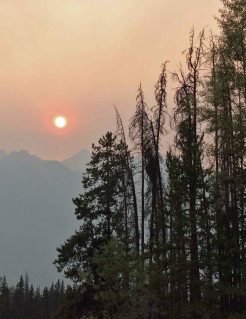
Smoky sun overlooking Rockies (photo by Nina Munteanu)

I recently travelled from Vancouver with Pixl Press director Anne Voute through the smoky Rockies to the 8th ‘When Words Collide’ writers festival in Calgary. The festival was held August 10-12, 2018 and brought together just under a thousand readers and writers in multi-genres to attend presentations and panels on writing and publishing.

The three-day writers’ festival ran a 10-track program that included informative panels, Blue Pencil Café, Editors Speed Mingle, pitch sessions with agents and publishers, and challenging workshops.

MythHawker table-WWC2018

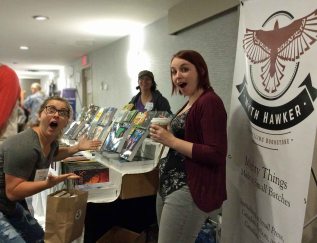
Selling books at Myth Hawker

My books were on sale in the Merchant’s room at Sentry Box (a local Calgary bookstore) and Myth Hawker Travelling Bookstore. By the third day, Myth Hawker sold all available copies of Water Is…

I participated in panels, Blue Pencil Café, Editors speed mingle and several presentations and workshops:

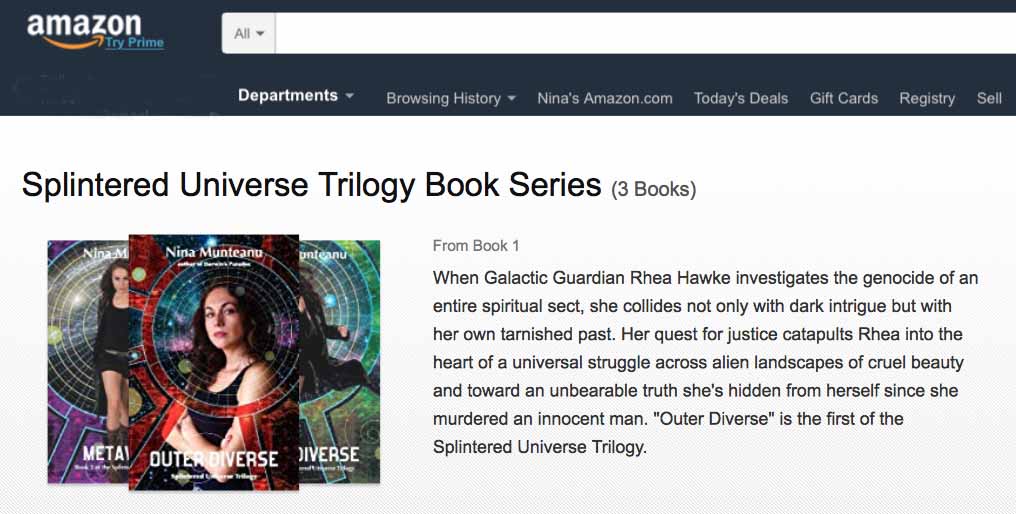
  • You Oughta Be in Audio: a discussion between me and audiobook narrator and producer Dawn Harvey on the making of the audiobooks for The Splintered Universe—now available in three formats, print, ebook, and audiobook. While paper sales dwindle, audiobooks continue to be the fastest growing segment of the publishing world with sales increasing by 30% year over year for the past decade.

Amazon-SplinteredUniverseTrilogy

  • World As Character: a presentation on creating a world with meaning. In most science fiction and fantasy, the world that we create is often very different from our own; in speculative fiction it’s often very similar; in contemporary fiction it is virtually the same. In all cases the world you build should embed in your story with layered metaphoric meaning. Nina Munteanu will discuss how to build a world that interacts with character to inform greater meaning in story.

FictionWriter-front cover-2nd ed-web copyJournal Writer-FRONT-cover-WEB copyI also networked my writing community for world examples to use in my Alien Guidebook on world building: The Ecology of Story: World as Character. Anticipated release by Pixl Press of this third guidebook in the Alien Guidebook series is Summer of 2019. In keeping with the branding of the series, artist Anne Moody is providing the cover illustration and Costi Gurgu the cover design for The Ecology of Story. Covers for the previous two books were also done by Anne and Costi.

Cover-everyday hero

‘Everyday Hero’ by Anne Moody

Earlier in the month, I travelled north with the Pixl Press director to Anne’s ranch in Vanderhoof to requisition a cover from her for the guidebook. After days of discussion and “show and tell” and after several pieces of art were tentatively selected, Anne pulled out a piece that stopped our search dead. ‘Everyday Hero’ depicts a lonely firefighter, trudging in the burning forest, tired gaze to the burning crown of a tree. Considering the subject matter and our world today, we thought this was perfect for my book.

MockUpEcology-2

cover design by Costi Gurgu, illustration by Anne Moody

Depicted in shades of blue, charcoal and brilliant red, the cover contrasts and harmonizes well with the brand typology and cover design by Toronto graphic artist Costi Gurgu.

.


nina-munteanuNina Munteanu is an ecologist, limnologist and internationally published author of award-nominated speculative novels, short stories and non-fiction. She is co-editor of Europa SF and currently teaches writing courses at George Brown College and the University of Toronto. Visit www.ninamunteanu.ca for the latest on her books.

Coming Home to Water at Stir Coffee House

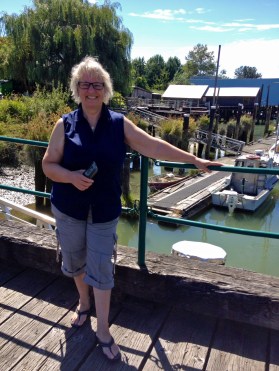
Nina-LadnerPier copy

Nina on Ladner pier

For several years I’ve been returning from Toronto—where I teach at The University of Toronto and George Brown College—to Ladner, BC to spend my summers.

I cherish the time as a chance to see family and friends and to enjoy a different pace of life—one I enjoyed when I used to live and work here and where I brought up my family. We lived in a comfortable house on a quiet street and our back yard faced one of Ladner’s sloughs and beyond that a vast tract of farmland, most often scored with rows of potato plants. My son Kevin had grown up swimming in the slough and jumping off the rope swing his dad had constructed. Pilgrims from close and far came to use that swing and enjoy the murky waters of our back slough.

Rope swing copy

Kevin on the rope swing

Parties at our place always involved water and getting wet. We even had a fleet of kayaks and canoes that we took on paddling adventures through farmland and under highways, with the occasional siting of muskrat, carp, heron, or eagle. Coyotes whined and barked at night as bats dipped through the night air, foraging for food. My female cat poised for the hunt and sometimes brought in her “catch of the day.”

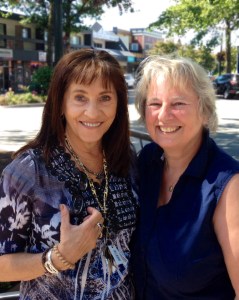
Cathleen-Nina-Ladner1 copy

Cathleen and Nina at Stir

This summer, good friend and writer Cathleen Chance Vecchiato decided I should give a talk to my old community on Water Is… my recent bestselling book on water. With that, she immediately made it happen. The venue was already decided: the best café in Ladner, Stir Coffee House. I’d taken Cathleen there the previous year as part of a tour of the old farming and fishing village. Cathleen was charmed by the village atmosphere.

Stir Coffee House was happy to host a talk and Robert and Cathleen proceeded to plan it. Ian Jacques at The Delta Optimist wrote a wonderful piece on my journey, the talk and the book.

Nina-WaterIs-OPTIMIST2018 copy

On the evening of August 16th a growing crowd of people, eager for more on this precious substance flowed into the café until there was hardly a seat left in the cozy venue. I recognized some locals as well as colleagues from my environmental consulting days in Vancouver. It was a good crowd.

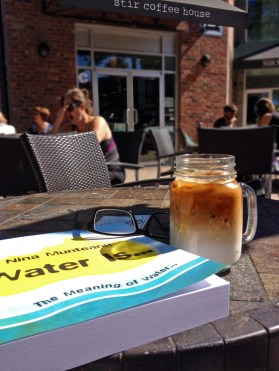
Coffee-Water-StirCoffeeHouse copy

Water Is… snug against an iced latte

I shared the story of how I came to write this book—not a limnology book for non-scientists, as I thought I was going to write—but something that was more than science. Something that encompassed so much more about water: what it means to each of us and how we still don’t understand its many magical anomalous properties. I confided my discovery that the synchronicity of important moments in my life were all connected to water, which compelled the book to evolve into a study of “what water means to us.” Good friend Emmi Itäranta, author of Memory of Water, called Water Is… a biography of water.

Travelling the world has helped me realize that I was blessed with an abundance of water. I lived my entire life in a country of plentiful and healthy water. And for most of that time I didn’t even realize it. Canada holds one fifth of the world’s fresh water in lakes, rivers, and wetlands, as well as in our underground aquifers and glaciers. Canada’s wetlands, which cover more than 1.2 million square kilometres, makes Canada the largest wetland area in the world.

Nina-Hope-Trevor Stir copy

Nina with hosts Hope and Trevor

Perhaps it is no coincidence that Canada is steward of the world’s largest wetlands. Wetlands include marshes, swamps, fens, and bogs, all irreplaceable habitat for a huge diversity of nesting, feeding and staging waterfowl, reptiles, amphibians and mammals—many at risk. Wetlands provide a major filtration system, removing contaminants, improving water quality and renewing water’s vitality; wetlands serve as reservoirs, controlling and reducing flooding toward a more balanced hydrological cycle. Wetlands are a source of oxygen and water vapour, serving a vital role in our global atmospheric and climatic cycles. As ecotones— transitional areas—wetlands protect coasts from erosion and provide exceptional opportunity for boundary interaction and the emergence of vitality. Like a good metaphor, wetlands “recognize” and encompass similarities between dissimilarities. Wetlands powerfully connect. Canada’s strong multi-cultural policies and its open tolerance in embracing and celebrating diversity makes it the “wetland” of the world.

When I turn on the water tap in my house in Canada, it is pure drinking water. I don’t need to boil it or filter it or test it for impurities and toxins. I am confident that it will nourish and hydrate me like water should. I can bathe without restriction. I can play with it.

My water hasn’t changed; but I have. I do not take it for granted. I know that I am blessed.

I am home and I am so grateful.


In the Moment-anthology copyPart of this article is an excerpt from Nina Munteanu’s “Coming Home to Water” first published in “In the Moment” (A Hopeful Sign) edited by Gary Doi, September 2016; reprinted in “The Earth We Love” (Mississauga Writers) edited by Elizabeth Banfalvi, September 2018; and “The Literary Connection IV: Then and Now” (IOWI) edited by Cheryl Antao Xavier, upcoming 2018.


nina-munteanuNina Munteanu is an ecologist, limnologist and internationally published author of award-nominated speculative novels, short stories and non-fiction. She is co-editor of Europa SF and currently teaches writing courses at George Brown College and the University of Toronto. Visit www.ninamunteanu.ca for the latest on her books.


“Water Is…” at The Bookshelf Book Fair in Newmarket

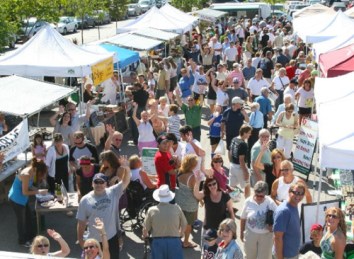
Newmarket-farmers market

Newmarket farmer’s market

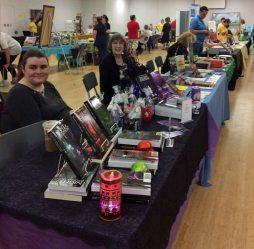
Every summer, the Writers’ Community of York Region (WYRC) holds a book fair (The Bookshelf) at the Newmarket Community Centre & Lions Hall, next to the farmer’s market. The fair showcases over 40 local authors, publishers and artisans through readings, discussions and a tradeshow that features writers’ works in a variety of genres from science fiction and fantasy to mystery, inspiration, science, history, self-help and children’s literature. I participated in this year’s festival on July 7, 2018.

Reading from “Water Is…The Meaning of Water

Nina-Bookshelf booksale1

Nina at her book table

At the Reading Lounge onstage in the adjoining Farmers’ Market, I read from my Amazon-bestselling “science-for-lay public” book Water Is…The Meaning of Water. As children and their parents played in the main water feature behind me, I introduced the term “limnology” (someone who studies freshwater) and talked briefly about the meaning of water with an audience eager to learn.

“We can’t live without it, so maybe we should start respecting it; this beautifully designed book by a limnologist looks at water from 12 different angles, from life and motion and vibration to beauty and prayer,” said Canadian author Margaret Atwood when she selected Water Is… as her first pick in the New York Times ‘Year in Reading.’

Water Is-COVER-webEach of the 12 chapters completes the phrase “Water is…” with terms that evolve from science into philosophy and spirituality; terms such as “magic”, “life”, “motion”, “communication”, “memory”, “rhythm”, “vibration”, “beauty”, “story”, “wisdom”, “prayer”, and finally “joy”.

The book is, after all, a celebration of water.

I first shared some history on the making of the book. I shared that the pursuit of this book was oddly serendipitous and “entangled.”

kevin-nina-close

Nina and son go hiking

“Early on, during the research and writing of this book, I discovered that this project on water had become a gestalt watershed for all the important moments in my life. Places I’ve been. Things I’ve learned. People I’ve met and with whom I’d had surprising discussions and realizations. All spanning many years. And many of them totally unrelated. And yet, now, with a sudden flood of context, their significance has transcended into a new fabric of meaning through surprising connection. Like puzzle pieces cooperatively arranging themselves into a symbiotic pattern of synchronicity.”

Writer and philosopher Jake Kotze suggests that, “Synchronicity happens when we notice the bleed-through from one seemingly separate thing into another—or when we for a brief moment move beyond the mind’s divisions of the world.” Synchronicity and serendipitous discovery, like metaphor, appear when we change the way we look at things.

“Serendipitous discovery comes to us through peripheral vision. Like our muse, it doesn’t happen by chasing after it; it sneaks up on us when we’re not looking. It comes to us when we focus outward and embrace our wonder for this world. When we quiet our minds and nurture our souls with beauty. It is then that what we had been seeking naturally comes to us. Like a gift.”

For my reading, I chose several summary quotes that appear at the end of each chapter of the book. These quotes were also featured earlier this year in “Morphology”, an art exhibit in Mississauga that honored the creation of a marsh park as part of Jim Tovey’s vision for the Lakeview Site and the Waterfront Connection:

Water-travel

Quote from “Water Is…” on display at Mississauga Civic Centre

Wonder Woman Respects Water

“Respect water!” says Wonder Woman (aka cosplayer Jes Tongio). Wonder Woman was careful to point out with her wise Amazonian sword of Athena (goddess of wisdom)—forged by Hephaestus—that “Water Is…” provides a doorway to wonder and responsible action.

WonderWoman-WaterIs2a

Wonder Woman (Yes Tongio) with “Water Is…”

Other Authors at The Bookshelf

Bookshelf-venue2

Clair McIntyre and Merridy Cox

I met and visited with other fellow writers, including Clair McIntyre, author of YA/fantasy, and crime writer Joan O’Callaghan.

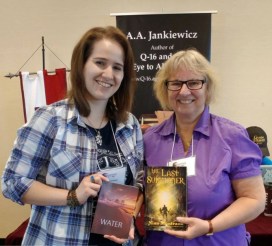
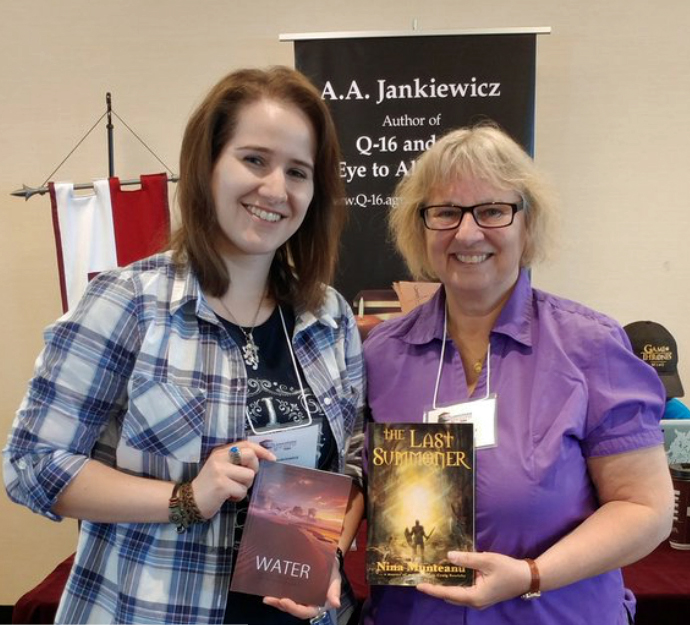
Fellow authors who read at Reading Lounge included Douglas Smith, award-winning author of “Wolf at the End of the World”; and A.A. Jankewicz,

Nina-Agnes-LIMESTONE

A.A. Jankewicz with Nina Munteanu

fantasy author of Q16, and who’s short story appears in the Water Anthology I edited for Reality Skimming Press; and Gabriela Casineanu read from her bestselling book Introverts: Leverage Your Strengths for an Effective Job Search.

Claudiu Murgan read from Decadence of the Soul; he is launching his recent science fiction novel Water Entanglement next month.

Myth Hawker Travelling Bookstore was also at the festival. Specializing in Canadian authors, Canadian content, and Canadian small press, they  carry an extensive list of local Canadian authors wherever they go across Canada.

The Immigrant Writers Association (IWA)

Nina-IWA-BookshelfinNewcastle

Gabriela, the two Andreeas, Nina and Claudiu

Nina IWA memberThe IWA was also represented, along with member-writers Gabriela Casineanu, Andreea Munteanu, Claudiu Murgan and Andreea Demirgian.

The Immigrant Writers Association provides programs, activities, and services that empower and support immigrant writers in their journeys. According to their website, the goal of the IWA is to  “encourage immigrants to express themselves through writing, to bring more awareness, compassion, and peace into the world.”

As second-generation immigrant daughter to German and Romanian parents, I recently joined the IWA. I look forward to mentoring new writers and providing workshops and lectures to share my experience as a writer, editor, and teacher of fiction and non-fiction.


MJ Moores-Bookshelf

M.J. Moores, chair of the board and founder of Bookshelf

nina-munteanuNina Munteanu is an ecologist, limnologist and internationally published author of award-nominated speculative novels, short stories and non-fiction. She is co-editor of Europa SF and currently teaches writing courses at George Brown College and the University of Toronto. Visit www.ninamunteanu.ca for the latest on her books.

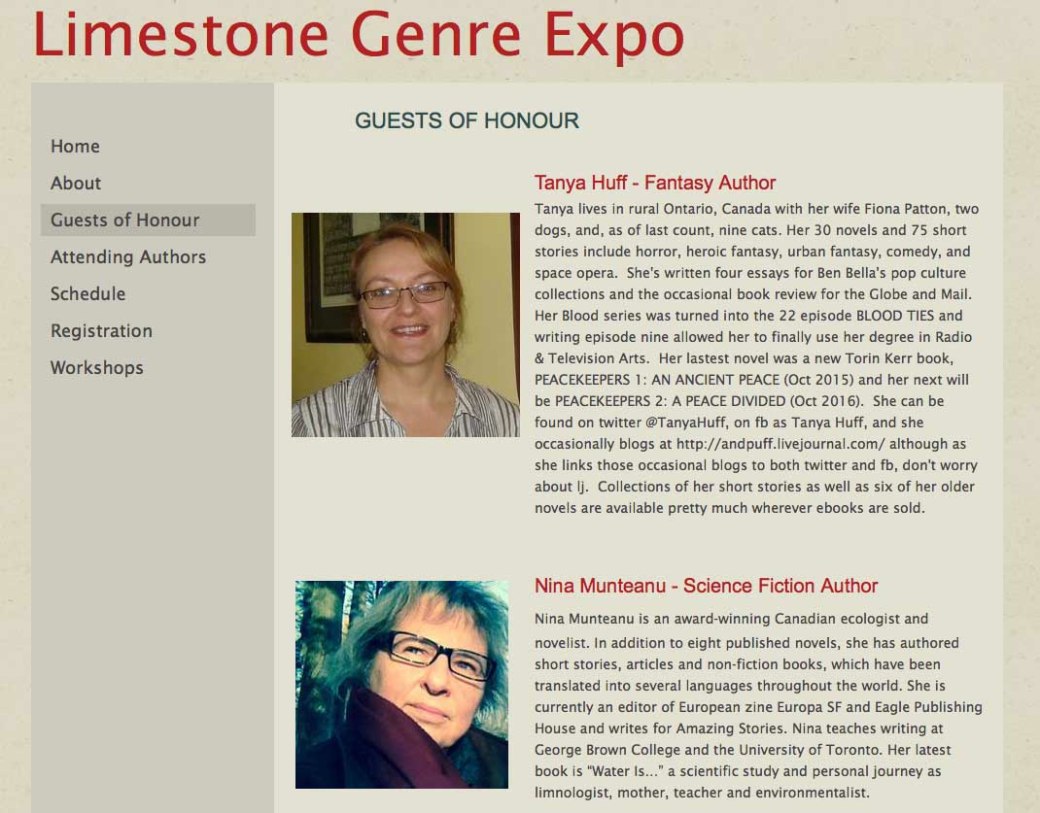
Limestone Genre Expo—May 2018

2018 was the fourth year for Limestone Genre Expo, Kingston’s only genre writing festival. I’ve been to the expo each year from its inaugural festival in 2015. The festival gets its name from the city’s moniker, based on the many heritage buildings constructed there using the local limestone.

In 2016 I was delighted to be the science fiction guest of honour. In 2017, the expo was held at the Saint Lawrence College campus.


Nina-SF GOH-Limestone Genre Expo 2016

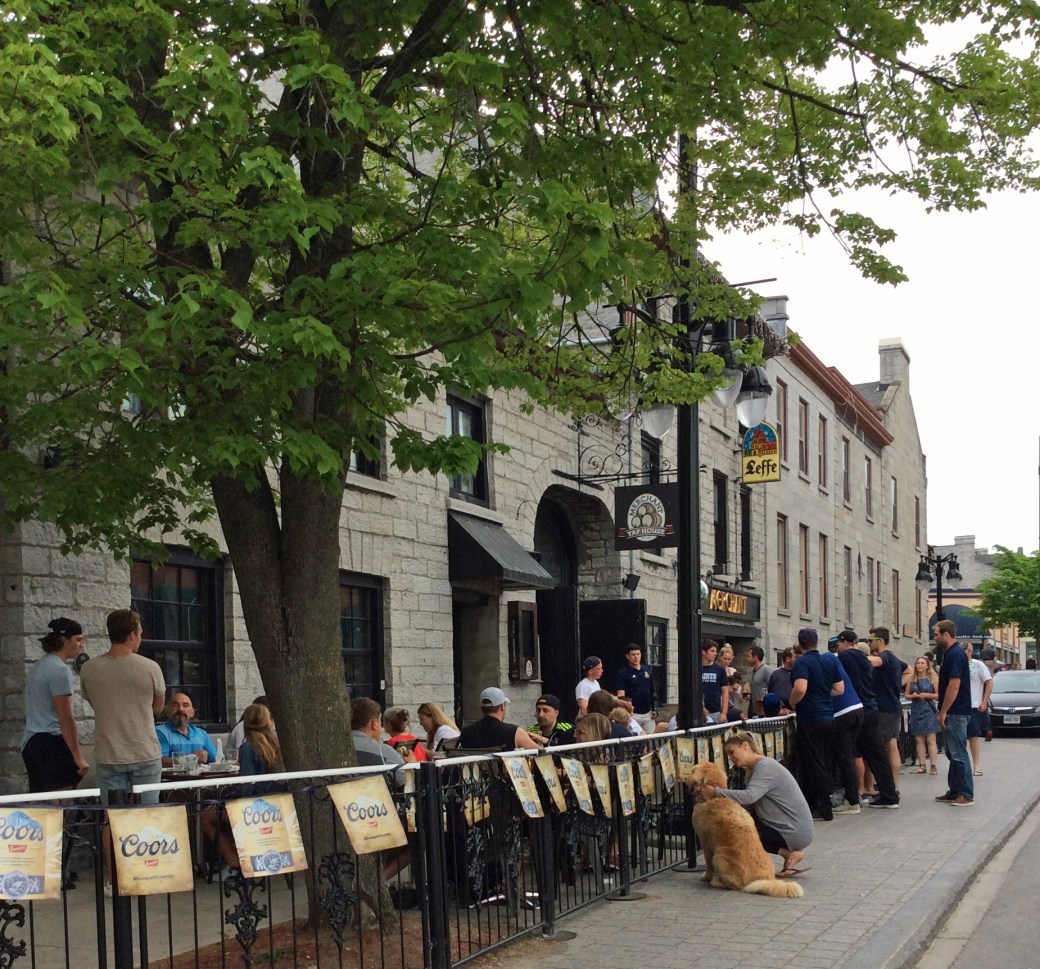
This year, the expo was held at the Holiday Inn, right on the waterfront and literally a staggering distance from the Merchant Tap House, one of the greatest pubs and eateries of the town.

MerchantTapHouse-Limestone2018

Merchant Tap House, Kingston (photo by Nina Munteanu)

As before, the festival covered several of the major genres such as fantasy, science fiction, horror, romance and mystery, with representation by well-known authors in each. Organizers offered a triple track program from 10 am to 5 pm that included panels, informative workshops, readings, book launches, and novel pitch sessions with Bundoran Press.

Liz Strange and programming organizers had me in several panels throughout the two-day expo.

Panels I participated in and in some cases moderated included:

“Mental Health Representation in Fiction: More than Villains” with Michael Slade, Therese Greenwood, Ada Hoffmann, Matt Moore and Madona Skaff. I really enjoyed this panel discussion that explored our evolving perception and representation of mental health in story and in our real lives.

Nina-MentalHealthPanel

Matt Moore, Nina Munteanu, Madona Skaff, Michael Slade, Theresa Greenwood (photo by Marlene Smith)

“Why Do We Love a Good Whodunit?” with Michael Slade, M. H. Callway, Katherine Prairie, Jim Napier, Melissa Yi, and Rosemary McCracken.  The panel and I had fun with this discussion as bizarre real-life stories were thrown into this mix.

Nina-Whodunit Panel

Katherine Prairie, Michael Slade, Melissa Yi, M.H. Callway, Rosemary McCracken, Nina Munteanu

“What Makes a Great Hero?” with Kate Heartfield, Tobin Elliott, Theresa Greenwood, Kris Jacen, Donna Warner, and Douglas Smith. The panel debated what makes a hero, then anti-hero, then sad and terrible hero, then non-hero…and ultimately to the journey of our at times miserable but great hero.

Nina-HeroPanel-LIMESTONE 2018

Douglas Smith, Theresa Greenwood, Nina Munteanu, Donna Warner, Tobin Elliott, Kate Heartfield

“Dystopian Fiction: How to write when the world is falling apart” with Una Verdandi, Robin Timmerman, Brad Baker, Tapanga Koe, Hayden Trenholm and Ursula Pflug. In this rather passionate discussion, we debated the state and shape of dystopia in both the real world and the fiction world and how they inevitably bleed together for the writer.

Nina-signingLastSummoner

Nina signs “The Last Summoner” for colleague and reader Agnes

“Women of Science Fiction” with Hayden Trenholm, Laura Baumbach, Ada Hoffmann, Tanya Huff, Tapanaga Koe, and Nancy Baker.  Hayden emerged amid his female colleagues to astutely discuss the reason we are still discussing this topic.

I also sold a number of books, including Water Is… (a Margaret Atwood favourite), my journal and fiction writing guidebooks (The Journal Writer and The Fiction Writer), Reality Skimming’s Water Anthology, for which I was editor, and The Last Summoner.

Nina-Agnes-LIMESTONE

authors Agnes Jankiewicz and Nina Munteanu

One of the key charms of this small venue is that it still provides an intimate setting for great networking. I had a chance to meet many of my old friends and to make new ones. Thanks to Liz, Marlene and wonderful volunteers for another great writing festival!


Nina Munteanu

Nina Munteanu is an ecologist, limnologist and internationally published author of award-nominated speculative novels, short stories and non-fiction. She is co-editor of Europa SF and currently teaches writing courses at George Brown College and the University of Toronto. Visit www.ninamunteanu.ca for the latest on her books.


“Natural Selection”: Fascinating Dramas Set in a World Too Close to Our Own

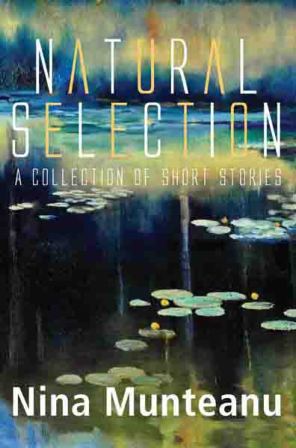
NaturalSelection-front-web“I write SF about a near future ‘Gaian’ world too, and at times felt I was reading a prequel to my own novels, but that’s not why I rated this collection so highly. I did so for two reasons. First, because the science was so interesting, combining visionary metaphysical speculation with AI corporate tech in scenarios that often seemed chillingly possible. Second, because of the author’s focus on the effects of these developments on human beings with complex pasts and desires. Jealousy, lust, loneliness, grief and love are all drivers of these taut and fascinating narratives…”–Amazon Review


Author’s Introduction to Natural Selection
leaves02croppedEvolution is the language of destiny. What is destiny, after all, but self-actualization and synchronicity? If evolution is the language of destiny, then choice and selection are the words of evolution and “fractal ecology” is its plot.

How do we define today a concept that Darwin originated 200 years ago in a time without bio-engineering, nano-technology, chaos theory, quantum mechanics and the Internet? We live in an exciting era of complicated change, where science based on the limitation of traditional biology is being challenged and stretched by pioneers into areas some scientists might call heretical. Endosymbiosis, synchronicity, autopoiesis & self-organization, morphic resonance, Gaia Hypothesis and planetary intelligence. Some of these might more aptly be described through the language of meta-physics. But should they be so confined? It comes down to language and how we communicate.

Is it possible for an individual to evolve in one’s own lifetime? To become more than oneself? And then pass on one’s personal experience irrevocably to others—laterally and vertically?
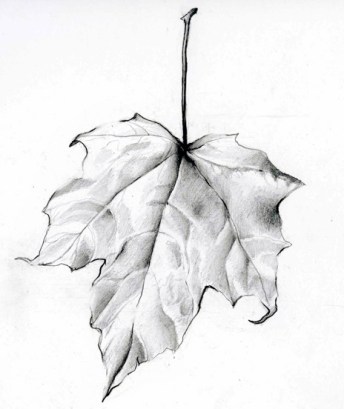
leaf-sketchOn the vertical argument, the French naturalist Jean-Baptiste Lamark developed a theory of biological evolution in the early 19th century considered so ridiculous that it spawned a name: Lamarkism. His notion—that acquired traits could be passed along to offspring—was ridiculed for over two hundred years. Until he was proven right. Evolutionary biologists at Tel Aviv University in Israel showed that all sorts of cellular machinery—an intelligence of sorts—played a vital role in how DNA sequences were inherited. When researchers inserted foreign genes into the DNA of lab animals and plants, something strange happened. The genes worked at first; then they were “silenced”. Generation after generation. The host cells had tagged the foreign genes with an “off switch” that made the gene inoperable. And although the new gene was passed onto offspring, so was the off switch. It was Larmarkism in action: the parent’s experience had influenced its offspring’s inheritance. Evolutionists gave it a new name. They called it soft inheritance.

As for passing on one’s experience and acquisitions to others laterally, education in all its facets surely provides a mechanism. This may run the gamut from wise mentors, spiritual leaders, storytellers, courageous heroes to our kindergarten teacher.  Who’s to say that these too are not irrevocable? This relies, after all, on how we learn, and how we “remember”.

Evolution is choice. It is a choice made on many levels, from the intuitive mind to the intelligent cell. The controversial British botanist Rupert Sheldrake proposed that the physical forms we take on are not necessarily contained inside our genes, which he suggested may be more analogous to transistors tuned in to the proper frequencies for translating invisible information into visible form. According to Sheldrake’s morphic resonance, any form always looks alike because it ‘remembers’ its form through repetition and that any new form having similar characteristics will use the pattern of already existing forms as a guide for its appearance.  This notion is conveyed through other phenomena, which truly lie in the realm of metaphysics and lateral evolution; concepts like bilocation, psychic telegraphing, telekinesis and manifestation. Critics condemn these as crazy notions. Or is it just limited vision again? Our future cannot be foretold in our present language; that has yet to be written. Shakespeare knew this…

There are more things in heaven and earth, Horatio, than are dreamt of in your philosophy—Shakespeare

The nine stories contained herein touch on many of these concepts, spanning a 20-year writing period starting in the 1980s from “Arc of Time”, first published by The Armchair Aesthete in 2002, to “Julia’s Gift”, written in 2007, a year that marks a significant nexus in my personal evolution. That’s when I met someone who changed my life and defined my life path, my evolution, and ultimately, I suspect, my destiny.

Each story reflects a perspective on what it means to be human and evolve in a world that is rapidly changing technologically and environmentally. How we relate to our rapidly changing fractal environments—from our cells to our ecosystems, our planet and ultimately our universe—will determine our path and our destiny and those we touch in some way. My friend Heidi Lampietti, publisher of Redjack Books, expressed it eloquently, “For me, one of the most important themes that came through in the collection is the incredible difficulty, complexity, and importance of making conscious choices—and how these choices, large and small, impact our survival, either as individual humans, as a community, a species, or a world.”

Each story touches on a focal point, a nexus in someone’s personal evolution, where a decision—or an indecision—will define one’s entire later path in life. Several stories (e.g., “Butterfly in Peking”, “Frames” and “Julia’s Gift” all set in the same universe as my “Darwin’s Paradox” duology) explore this through war: a paradoxical struggle between those who follow the technological path and those who embrace nature’s intelligence. War is itself a paradox. It is both tragedy and opportunity. The very action of being at war seems to galvanize us and polarize us. War heightens contrast, increases pitch, and resonates through us in ways we have no inkling. It brings out the very worst but also the very best in us; for, as some of us sink into despair and self-serving debauchery, others heroically rise in altruistic service and humble sacrifice to help others. War defines us, perhaps like no other phenomenon.

Several stories are quirky adapted excerpts from my two books, “Darwin’s Paradox” (2007 by Dragon Moon Press) and its prequel “Angel of Chaos” (2010 by Dragon Moon Press). You will find some of the same characters there, though names have been changed to protect the innocent. You will also find the sprawling semi-underground AI-run city of Icaria (a post-industrial plague Toronto) and a character itself. Several of the characters portray “gifted” and troubled misfits—outcasts, anti-heroes, artists not in sync with the rest of the population. Yet how that person’s choices—and how s/he is treated by their community—would influence an entire species or world (“Mark of a Genius”, “Neither Here Nor There”, “Angel’s Promises”, and “Natural Selection”).

Lastly, I explore how humanity evolves, communicates and relates through forces larger than itself, either produced through its own making via technology (in “Virtually Yours”) or through timeless universal intervention (in “Arc of Time”). The last story (in fact the first written) provides a very different interpretation of an old biblical myth about new beginnings and our cyclical destiny of “creative destruction”.

I hope you enjoy reading them all. I enjoyed writing them.

“The Arc of Time” was first published in the Summer/Fall 2002 issue of The Armchair Aesthete. It was reprinted in Imagikon (2003) then scheduled for the premiere issue of Ultra! A charity issue dedicated to cystic fibrosis (Aardwolf Publications), Fall/Winter, 2004. Sadly, Lari Davidson, the editor and visionary behind the project passed away suddenly and the issue never came to fruition.

“Virtually Yours” first appeared in Issue 15 (December 2002) of Hadrosaur Tales.  It was reprinted in Neo-Opsis Science Fiction Magazine (Issue 3, Spring 2004) then translated into Polish and reprinted in the January 2006 issue of Nowa Fantastika (Poland). It was translated into Hebrew and reprinted in Bli-Panika (Israel) in 2006. “Virtually Yours” was selected for the 2006 “The Best of Neo-Opsis Science Fiction Magazine” anthology (Bundoran Press) and was nominated for the Canadian Aurora Prix and the Speculative Literature Foundation Fountain Award.

“Angel’s Promises” was published in Issue #30 (March, 2003) of Dreams & Visions then selected for the anthology “Skysongs II: Spiritual SF” (2005). It was nominated for the SLF Fountain Award.

“A Butterfly in Peking” was first published in Issue #17 (2003) of Chiaroscuro. It was translated into Polish and reprinted in the Summer 2005 issue of Nowa Fantastika (Poland) then translated and reprinted in The Dramaturges of Yann (Greece) in 2006.

“Mark of a Genius” first appeared in Scifidimensions (August 2004 issue) and “Neither Here Nor There” first appeared in Another Realm (September 2005).  “Frames”, “Julia’s Gift” and “Natural Selection” make their first appearance here.

Amazon description of Natural SelectionNaturalSelection-front-web
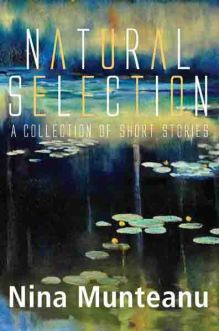
A man uses cyber-eavedropping to make love. A technocratic government uses gifted people as tools to recast humanity. The ruins of a city serve as battleground between pro-technologists and pro-naturalists. From time-space guardians to cybersex, GMO, and biotech implants, this short story collection by science fiction novelist Nina Munteanu promises a journey of great scope, imagination and vision.


nina-2014aaa

Nina Munteanu is an ecologist, limnologist and internationally published author of award-nominated speculative novels, short stories and non-fiction. She is co-editor of Europa SF and currently teaches writing courses at George Brown College and the University of Toronto. Visit www.ninamunteanu.ca for the latest on her books.


The Battle of Grunwald and the Fate of the Teutonic Knights

400px-Grunwald_Wojciech_Kossak copy

Battle of Grunwald

On this day, June 14th, every year, the Polish and Lithuanians celebrate the Battle of Grunwald; they celebrate with pride, erecting mock-ups of the battle to honour this important—yet largely unknown moment—in history: when the proud Teutonic Order fell to its knees and Poland became a nation.

Which brings me to my book The Last Summoner and how I get my ideas for stories…

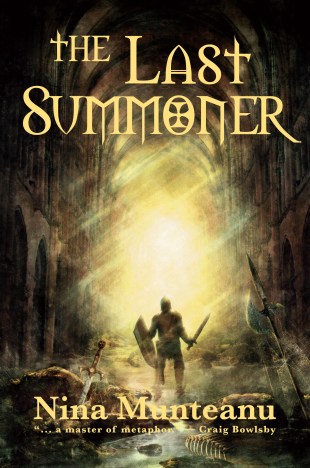
Cover1_LastSummoner-frontcoverI teach writing at the University of Toronto and fiction writing at George Brown College in Toronto. A question I’m often asked is how I get my story ideas. I always start by sharing my favourite example of how I came to write my historical fantasy The Last Summoner:

It started in 2008, when I saw the most incredible image by Croation artist Tomislav Tikulin as I was browsing sites on the Internet. The image was of a magnificent knight, standing in a war-littered mire and gazing up, questioning, at the vaulted ceiling of a drowned cathedral. A great light shone upon the knight in streams of white gold–as if a message from heaven. It sent my imagination soaring with thoughts of chivalry, adventure and intrigue.

Who was this knight?

teutonic_knight_by_flipation

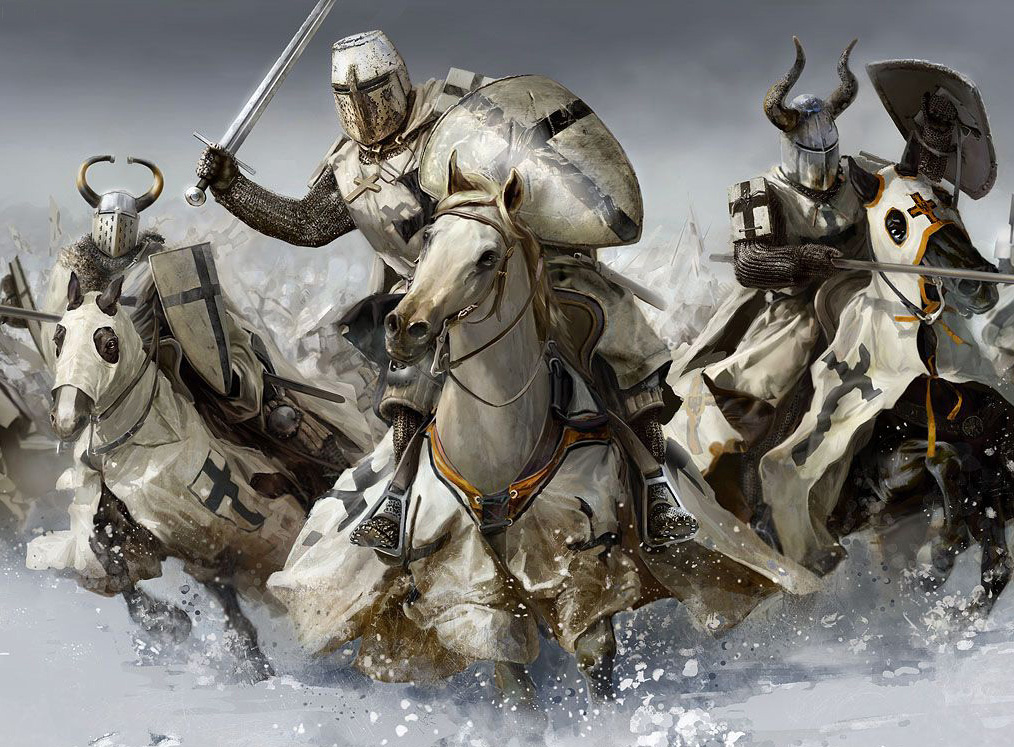
Teutonic knight

With that image imprinted inside me, the next nexus moment came when I stumbled across a significant but little-known battle in the medieval Baltic, the Battle of Grunwald. It would turn out to be the defining battle for what are now the countries of Poland and Lithuania. On June 14, 1410, they were still part of Prussia and tyrannized by the Teutonic Order, who were Christianizing the pagan Baltic on behalf of the Pope. In truth, the Order had been for centuries gathering wealth and land for colonizing Germans in their drang nach osten; they built sturdy castles (many of which still stand today) and grew into a force of monk warriors, feared for their cunning strategy and treacherous combat abilities.

The Battle of Grunwald was, in fact, an upset in history. The Teutonic Order was powerful, intimidating and extremely capable. They should have won; but the peasant armies of Prussia slaughtered the Order, killing most of its knights. Historians debate that the hochmeister’s arrogance—indeed the arrogance of the entire Order—precipitated their downfall. They underestimated their adversaries and got sloppy.

After the Polish and Lithuanian armies outsmarted the Order and slayed the Order’s hochmeister, along with many of their knights, the Order’s own peasant slaves finished the job using clubs, pitchforks and stones.

Every year, the Polish and Lithuanians celebrate June 14th with pride, erecting mock-ups of the battle.

vivianne-medieval-fighterIntrigued by this little known order of religious crusaders, I pursued the premise of an alternative consequence: what if the Teutonic Knights had NOT underestimated their enemy and won the Battle of Grunwald? Would they have continued their catastrophic sweep of Northeast Europe into Russia and beyond? Would they have claimed the whole for Germany’s expansionist lebensraum movement, fueled by its sonderweg—a dialectic that would ultimately lead to the killing fields of the Holocaust?  What if the success of the Teutonic Order helped consolidate a united fascist elite, ambitious to conquer the world? What if Nazism sprang up 100 years earlier than it did in our current reality?

The Last Summoner arose from this premise. Enter our hero, young 14-year old Vivianne Schoen, Baroness von Grunwald, a self-centred romantic who dreams that her ritter will rescue her from an arranged marriage to some foreign warrior. As a result of an impetuous choice, she makes the startling discovery that she can alter history—but not before she’s branded a witch and must flee through a time-space tear into an alternate present-day France—now ruled by fascists. There, she learns that every choice has its price.

knight-cameo copySpanning from medieval Poland to present day Paris, The Last Summoner explores the sweeping consequences of our “subtle” choices. From the smallest grab to the most sweeping gesture, we are accountable for the world we’ve made. During her 600-year journey to save the world and undo the history she authored, Vivianne learns wisdom and humility. Through the paradox of history, she learns that what might have seemed the right choice for an immediate future, turns out to be disastrous for a distant future. To win is also to lose; to save oneself one must surrender oneself; and to save the world one need only save a single soul.

The knight standing in the drowned cathedral is none other than Vivianne.

Inspired by Tikulin’s knight depiction, I managed to convince my publisher at Starfire World Syndicate to purchase rights to the image; Tikulin’s image–Vivianne’s dream–became the actual cover of my book. I was overjoyed! When The Last Summoner hit the shelves in 2012, it quickly soared into an Amazon Canadian bestseller and remained in the top 10 for several months in the category of fantasy, historical fantasy and science fiction. The book continues to find new readers who enjoy the thrilling time-travelling journey of its 15th century heroine and its surprising plot.

LastSummoner-scifi-fantasy

“The Last Summoner” sandwiched nicely between Ray Bradbury and George R.R. Martin

The Last Summoner is a blend of fantasy, history, and alternate history,” writes Canadian author Kristene Perron. “Fourteen year old Vivianne , the story’s hero, discovers that she has strange powers on the eve of the legendary Battle of Grunwald.  Marked as a witch, Vivianne escapes through time and space, but her actions change history and threaten to destroy the world.”

Kristene had chosen the book to review based on a description I had provided of the painting that inspired the novel created by artist Tomislav Tikulin.

Cover1_LastSummoner-frontcover

Illustration by Tomislav Tikulin. Cover design and typology by Costi Gurgu

The Last Summoner fascinated Kristene. “Ordinarily, historical fiction doesn’t excite me,” writes Kristene. “But the premise of this novel—which included a good dash of fantasy and time travel—was an exception. There is history aplenty and Munteanu has obviously done her homework. The world of 15th century Germany is authentically realized and the little touches of fantasy blend seamlessly.” She was pleased with Vivianne as a hero and how I had “endowed [my] protagonist with the skills and knowledge necessary for the plot without stretching plausibility.”

teutons3-close1

Kristene then added, “What I most enjoyed about this story was that for the majority of it I genuinely didn’t know where the plot was going or what would happen next. I’m one of those annoying people who can usually figure out the entire plot of a book or movie within the first few scenes (watching movies with me can be challenging), so to come teutons3-close02across a story that stumped my super CSI powers of deduction was a real treat.”

“For those in love with science fiction at its best, The Last Summoner is a complex story of ignored responsibilities and their dire consequences, of love and betrayal that span centuries and multiple worlds. Time travel, multiverse travel, immortality, alternate history in which the Nazis have won, not in the twentieth century but way earlier, in the Teutonic age. Angels and mutants, utopias and dystopias, even a Tesla occurrence— everything a science fiction reader could ever desire in a book. A masterfully told story with great characters. Nina Munteanu moves flawlessly from a medieval story to a modern one and everything in between.”—Costi Gurgu, author of RecipeArium

Jonathan, history buff and author of Sci-Fi & Fantasy Reviews , writes: “The Last Summoner is a unique story melding Germany of the 15th century and modern France, even if a different France from what we would recognize. The story centered around the very real and pivotal Battle of Grunwald in which a coalition of Polish and Lithuanian forces defeated the monastic Teutonic Knights. The book takes a look at the young 14-year-old baroness of Grunwald, someone not quite human, and how she attempts to right a wrong and get history back on track…The author is a good writer, and her wordsmithing is excellent…The historical research was outstanding…Given that this is fiction, and that two settings did not follow history as we know it, never-the-less, each event was either very accurate to our known history or made logical sense in the other settings. I am not a huge fan of alternative history books, but in this one, I was extremely caught up in the final section of the book, and I had to contemplate how the world might be different with only a few changes to our history.”

vivianne-dark-medieval-knight copy

Jonathan adds, “While I was familiar with most of the historical background of the book, I was unaware of some facts, such as the Tartars taking part in the Battle of Grunwald. I thought this was a mistake made on the part of the author and went to confirm that, but in fact, the author was correct…a clever, well-written book. I would recommend it without hesitation.” The reviewer did have one quibble: my liberal use of French and German in the book.

Professional photographer and science fiction/fantasy reader, Rick LeBlanc shared that he’d “read The Last Summoner on the flight back from World Fantasy Con: could hardly put it down. Just loved the historical references of gear, place and events. The characters red-leaves-in-pond-vicki horton-botwere incredibly strong and involved you in their lives. The flow was fun & fast-paced. Merci, Nina. Great book!”

“I loved, loved, loved the metaphors. A page-turner that left me wanting to be Vivianne when I grew up.”—Carina Burns, author of The Syrian Jewelry Box

knight-cameo copyThe Last Summoner is an enticing fantasy exploring the Knightly order and adding many new perspectives.”—John Taylor, The Midwest Book Review

nina-2014aaaNina Munteanu is an ecologist, limnologist and internationally published author of award-nominated speculative novels, short stories and non-fiction. She is co-editor of Europa SF and currently teaches writing courses at George Brown College and the University of Toronto. Visit www.ninamunteanu.ca for the latest on her books.