Today is Bastille Day, France’s national day that commemorates the 1789 storming of the Bastille prison by an angry revolutionary mob. The event was a major flashpoint that ignited the French Revolution that eventually ended the oppressive Bourbon monarchy.
.
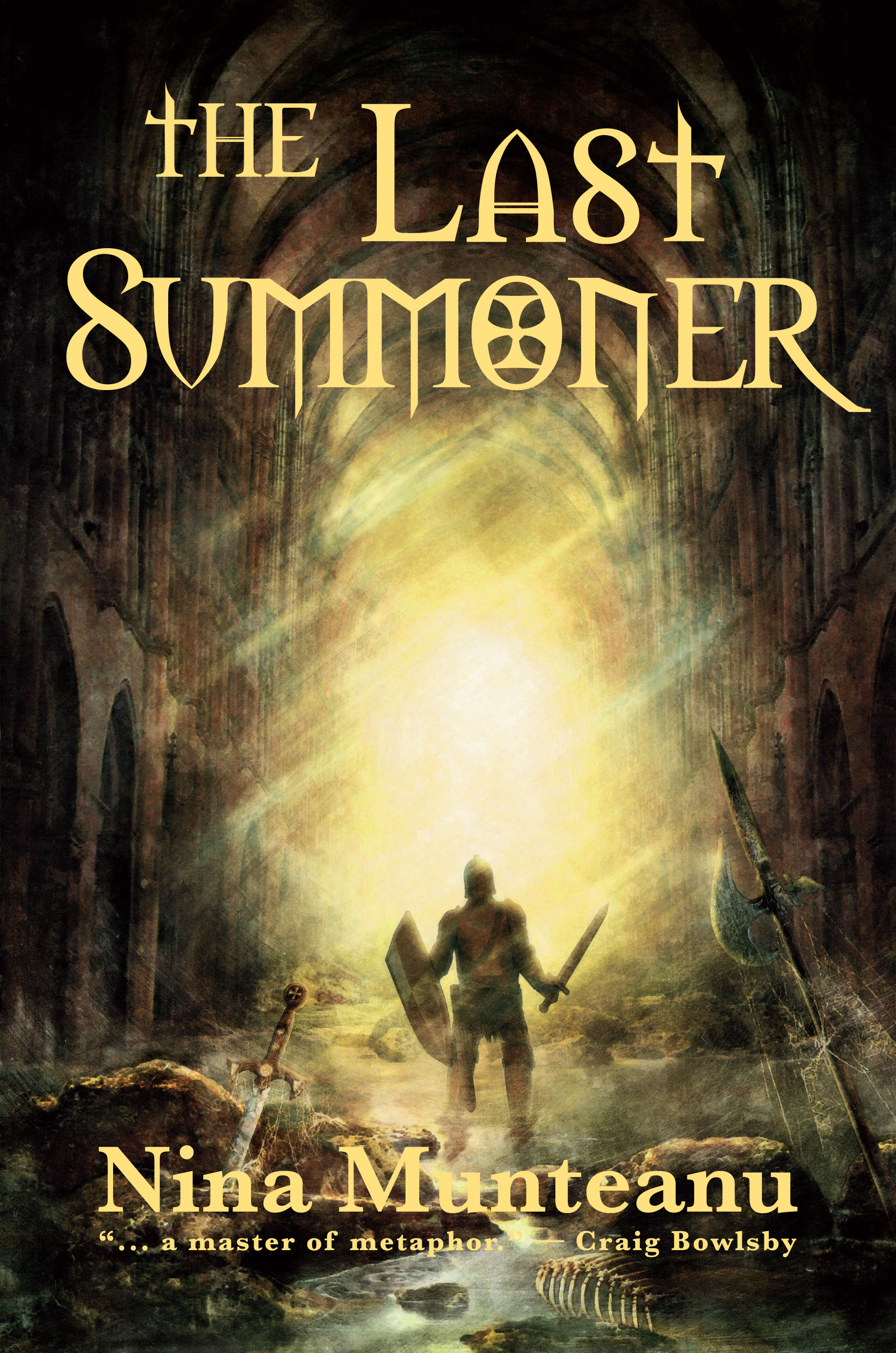
This day is also significant in my historical fantasy The Last Summoner. July 14, 1410, is the birthday of main character Vivianne Schoen, the Baroness von Grunwald, who has just turned fourteen and is promised in marriage to a cruel foreigner. It is the eve of the Battle of Grunwald. Fought on July 15, 1410, this conflict was one of the largest and most decisive battles in medieval European history, where the Kingdom of Poland and the Grand Duchy of Lithuania gathered a ragtag allied army of peasant warriors to defeat the powerful knights of the Teutonic Order in what is now northeastern Poland. Their surprising victory crippled the Teutonic Knights’ dominance in the Baltic region and shifted the balance of power in Central and Eastern Europe.
.
In an early scene, Vivianne contemplates her fate:
“It’s my birthday today, Fritz,” she announced to her cat. July 14, 1410. She was fourteen years old. Her father and now deceased mother had pledged her since her birth to a stranger from a foreign land on her fourteenth birthday. Today—if the rumor was true, that is. Though she’d overheard the entire von Grunwald Ordensburgen gossip of it for years, her father had never mentioned it to her. Surely, he would have told her of such an important thing in her life if he’d meant it in earnest. Vivianne sighed and stroked Fritz. Then again, perhaps not, she reflected, summoning the stern image of her taciturn father. He never told her anything. If her mother was alive it might have been different….
The young baroness soon makes the startling discovery that she can alter history – but not before she is branded a witch and must flee through a time-space tear, landing in Paris on July 14, 2010, Bastille Day. Now in an alternate France ruled by Teutonic Black Knights, she must decide how to remake history.
Below is an excerpt from The Last Summoner, a scene in that alternate Nazi-ruled Paris on that fateful day:
Paris, France, 2010FRANÇOIS thrust his way through the thick crowd in Place de la Bastille. He craned to see the parade of greycoats and several blackcoats goose-stepping down the Boulevard de la Bastille and Rue Saint Antoine to converge at la Place. They were followed by heavy artillery that had begun its trek all the way from the Arc de Triumph and Avenue des Champs-Élysées. It was a great show of military power for the Nazis. Today was July the fourteenth, 2010: Bastille Day. In earlier times, the Porte St. Antoine was defended by a drawbridge and the Bastille. All that remained was a gilded statue of liberté in the center of the square to commemorate the culmination of France’s long struggle to establish democracy with its final ‘liberation’ by the Nazis in the mid 1800s.
A clammy wind stirred up tiny dust tornadoes in the square and people flung up their hands to protect their faces from the flying grit. François watched them, like the pocket thief he was. There would be a few easily taken today.
He caught the eye of Philip, one of his neighbours on Rue des Rosiers and the best pick-pocket François knew. The lanky boy nodded to him with a look of surprised delight; he hadn’t expected François to come. There were several dozen kids like he and Philip, scattered throughout la Place, poised to wreak havoc on the crowd at just the right moment. They were only a diversion for the real crime. François glanced briefly at the Banque de France on the corner of Rue St. Antoine, then checked his watch. It was ten minutes to the hour. At 1800 the artillery would give its booming show; and at precisely that moment, masked under the cacophony of the blasting artillery, his anarchist friends inside the bank would blow the safe. They would make their getaway once chaos set in as people realized that they’d been robbed. T’is a godlike thing to lend; to owe is a heroic virtue, he thought with a smirk.
François’s role in all this was very profitable though actually quite dangerous; he and Philip and the other pick pockets were placing themselves in the direct line of attention—and fire of the flics. Their safety lay in their scattered numbers, in their nimble feet, and their ability to negotiate the crowd and blend in when they wanted to. They were all kids, like him; mostly ten to sixteen year olds. They’d all lost their parents and other adult relatives to the Nazis.
Many of the middle class workers had lost their jobs and the will to live when the Nazis introduced efficient city bots and turfed people out of their rich homes. Left behind by dead, imprisoned, or conscripted mothers and fathers or simply abandoned by overworked uncaring parents, most children lived on their own in the streets of Paris with whole district slums devoted to the ‘street brats’. François’s parents had been killed in the Latin Quarter uprising of 2007. There were at least half a million “homeless” children, fending for themselves in the city, according to his uncle; all finding shelter in derelict huts and bivouacs. They were the discarded refuse of a series of purges by the fascist government.
Purges were not new to the empire. They’d begun hundreds of years ago with the Jews, who were pretty well extinct now, François considered. During the early development of the empire, Jews were massacred by the Teutonic Knights, who later became the strong arm of the new Reich as the feared Black Knights. But the purges weren’t enough. Like an old building, the empire was crumbling from within through its own debauchery, and from the outside pressure of war and rebellion. The empire was at war with the Chinese and rebelling Muslims to the east and dealing with the unruly British and upstart North Americans to the north and west. The two English-speaking countries had allied in rebellion against the Reich and were causing Fuhrer Hitler III no end of grief. It was eroding his empire, sucking it of funds, men, arms and resources. And bleeding it of morale as well as the pitifully little humor the Germans might have had in the first place. François saw its effect in the uncalled for cruelty meted out by the Black Knights and greycoats to his fellow Parisians.
Grand Marshal von Eisenreich seemed to call a purge almost weekly. First it was the restless students of the Sorbonne, then it was complaining workers in Nanterre. Then the school teachers of Lyon. Or transit workers in the Mont Parnasse area. No group or person was immune to their indiscriminate wrath. One day you were scorned for dressing in black; the next day for dressing in white. Something drastic would have to happen for it to right itself, his uncle kept saying. Luckily for some, von Eisenreich talked in his sleep and his light-sleeping wife, Lizette, listened. She, in turn, gossiped to François during their pillow talk and François then warned those intended victims through his uncle of the coming purge.
But all that was largely Antoine’s concern and those in the Résistance, like Philip and André and most of the other children assembled here and poised to do mischief. They had a right to be skeptical of François’s presence here. He did what he could, but only if it suited him. His motives weren’t with the liberation of France. His motive was with the liberation of François.
Each for himself, he figured. I come first. That was the rule by which the government operated, he reasoned. Why should I be any different? Now take Sylvie, for instance, he thought, mind recollecting the thirteen-year old girl from the 12ème Arrondissement he’d left only moments ago; she gladly spread her legs for him anytime, anywhere for a cigarette or an apple.
He was a regular Valentino, François figured, and felt something stirring below. He grabbed his crotch and scratched his unruly penis with a leering smile. “Down, boy,” he whispered with a grin. Lizette cooed over François like he was a doll and called him her sweet putain. Baisses moi, mon putain…Tu as un beau cul….He was her little darling peasant to dress…and undress. He didn’t care; he could eat, and live half-comfortably on Rue des Rosiers because of her and other patrons like her. He had a running Pal with naughty vids of all his clients that he rented out to his street friends. And the girls on the street, like Sylvie, thought he was hot.
He jammed his hand in his jeans pocket and smirked at the silver Pal in his palm before re-pocketing it and pulling out a small innocuous-looking black package of rapture. They also called it the black rabbit because of the package and where it took you: through a fantastic black “rabbit” hole.
When his Oncle Antoine finally found him, he tried to get François away from all that. But Antoine was no better off, having been recently chased out of his own house by Black Knights who accused him of helping the anarchists. Antoine wasn’t helping them…he was one, François thought with scathing humor. Antoine was always trying to recruit François to join the Résistance by berating him: “Why do you keep whoring? You’re worth more than that. You’re selling yourself, François. And for what? Half the time you don’t even get money; just that stinking rapture…”
François rubbed the small black package of rapture between his fingers and felt his nose flare with desire. Stinking rapture, indeed. You wouldn’t think it was stinking if you tried it, l’Oncle! He ripped the package open and threw his head back to pour the slightly acrid white powder in his mouth, then flung the wrapper onto the street. Within an instant, the street burst into sharper contrast and he knew his eyes dilated. A grin split his face open and he laughed, feeling invincible. Everything was all right now. Even those stinking Nazis with their swastikas, high-stepping black boots and batons…and whoring wives….
“You’re the Nazi’s putain. They’ve turned you into an addict and they’ve got you on a leash, François,” his uncle had gone on. “Honestly, you should stop all that whoring.”
“Why? And for what?” François had retorted, thinking he made a pretty good living by it; better than his destitute uncle. “Besides, I like it!” he’d ended maliciously. Antoine had lost all that he owned and now had less cash than François. “If I stop, what do I gain?”
“Something you’ve lost, François. Your dignity.”
“My parents lost it for me when they joined la Societé Secrêt and got themselves killed for some lost cause,” François said bitterly. To which his uncle had nothing to say. François knew it was cruel to say that; Antoine loved his brother, Marcel, and his wife, Angeline. Heck, Antoine had even dated François’s mother before François’s dad stole her heart. It had been Angeline, in fact, who’d brought the two brothers into the Résistance in the first place. She was the original anarchist. She’d apparently been one of the founding members of the SSLF. Until joining the SSLF, Antoine had just been an unruly student, one of millions in France. Antoine never married and, judging from the pictures he’d seen, François thought that he’d shriveled up like a prune when Marcel married the only girl that Antoine had courted.
Gunshots exploded inside the bank. François caught Collete’s stricken expression and Alain’s confusion in the crowd. That wasn’t supposed to happen. They were early—it wasn’t time yet! Then the doors of Banque de France burst open and two of their colleagues spilled out, followed by flic who opened fire on them. They fell and the crowd scattered like flies. More flics emerged, aiming their weapons into the crowd.
François bolted.
.

Nina Munteanu is a Canadian ecologist / limnologist and novelist. She is co-editor of Europa SF and currently teaches writing courses at George Brown College and the University of Toronto. For the latest on her books, visit www.ninamunteanu.ca. Nina’s bilingual “La natura dell’acqua / The Way of Water” was published by Mincione Edizioni in Rome. Her non-fiction book “Water Is…” by Pixl Press (Vancouver) was selected by Margaret Atwood in the New York Times ‘Year in Reading’ and was chosen as the 2017 Summer Read by Water Canada. Her novel “A Diary in the Age of Water” was released by Inanna Publications (Toronto) in June 2020. You can read her just released eco-fiction thriller Gaia’s Revolution by Dragon Moon Press.
.

