Bastille Day & The Battle of Grunwald…

Today is Bastille Day, France’s national day that commemorates the 1789 storming of the Bastille prison by an angry revolutionary mob. The event was a major flashpoint that ignited the French Revolution that eventually ended the oppressive Bourbon monarchy.

This day is also significant in my historical fantasy The Last Summoner. July 14, 1410, is the birthday of main character Vivianne Schoen, the Baroness von Grunwald, who has just turned fourteen and is promised in marriage to a cruel foreigner. It is the eve of the Battle of Grunwald. Fought on July 15, 1410, this conflict was one of the largest and most decisive battles in medieval European history, where the Kingdom of Poland and the Grand Duchy of Lithuania gathered a ragtag allied army of peasant warriors to defeat the powerful knights of the Teutonic Order in what is now northeastern Poland. Their surprising victory crippled the Teutonic Knights’ dominance in the Baltic region and shifted the balance of power in Central and Eastern Europe.

In an early scene, Vivianne contemplates her fate:

“It’s my birthday today, Fritz,” she announced to her cat. July 14, 1410. She was fourteen years old. Her father and now deceased mother had pledged her since her birth to a stranger from a foreign land on her fourteenth birthday. Today—if the rumor was true, that is. Though she’d overheard the entire von Grunwald Ordensburgen gossip of it for years, her father had never mentioned it to her. Surely, he would have told her of such an important thing in her life if he’d meant it in earnest. Vivianne sighed and stroked Fritz. Then again, perhaps not, she reflected, summoning the stern image of her taciturn father. He never told her anything. If her mother was alive it might have been different….

The young baroness soon makes the startling discovery that she can alter history – but not before she is branded a witch and must flee through a time-space tear, landing in Paris on July 14, 2010, Bastille Day. Now in an alternate France ruled by Teutonic Black Knights, she must decide how to remake history.

Below is an excerpt from The Last Summoner, a scene in that alternate Nazi-ruled Paris on that fateful day:


Paris, France, 2010

FRANÇOIS thrust his way through the thick crowd in Place de la Bastille. He craned to see the parade of greycoats and several blackcoats goose-stepping down the Boulevard de la Bastille and Rue Saint Antoine to converge at la Place. They were followed by heavy artillery that had begun its trek all the way from the Arc de Triumph and Avenue des Champs-Élysées. It was a great show of military power for the Nazis. Today was July the fourteenth, 2010: Bastille Day. In earlier times, the Porte St. Antoine was defended by a drawbridge and the Bastille. All that remained was a gilded statue of liberté in the center of the square to commemorate the culmination of France’s long struggle to establish democracy with its final ‘liberation’ by the Nazis in the mid 1800s.

A clammy wind stirred up tiny dust tornadoes in the square and people flung up their hands to protect their faces from the flying grit. François watched them, like the pocket thief he was. There would be a few easily taken today.

He caught the eye of Philip, one of his neighbours on Rue des Rosiers and the best pick-pocket François knew. The lanky boy nodded to him with a look of surprised delight; he hadn’t expected François to come. There were several dozen kids like he and Philip, scattered throughout la Place, poised to wreak havoc on the crowd at just the right moment. They were only a diversion for the real crime. François glanced briefly at the Banque de France on the corner of Rue St. Antoine, then checked his watch. It was ten minutes to the hour. At 1800 the artillery would give its booming show; and at precisely that moment, masked under the cacophony of the blasting artillery, his anarchist friends inside the bank would blow the safe. They would make their getaway once chaos set in as people realized that they’d been robbed. T’is a godlike thing to lend; to owe is a heroic virtue, he thought with a smirk.

François’s role in all this was very profitable though actually quite dangerous; he and Philip and the other pick pockets were placing themselves in the direct line of attention—and fire of the flics. Their safety lay in their scattered numbers, in their nimble feet, and their ability to negotiate the crowd and blend in when they wanted to. They were all kids, like him; mostly ten to sixteen year olds. They’d all lost their parents and other adult relatives to the Nazis.

Many of the middle class workers had lost their jobs and the will to live when the Nazis introduced efficient city bots and turfed people out of their rich homes. Left behind by dead, imprisoned, or conscripted mothers and fathers or simply abandoned by overworked uncaring parents, most children lived on their own in the streets of Paris with whole district slums devoted to the ‘street brats’. François’s parents had been killed in the Latin Quarter uprising of 2007. There were at least half a million “homeless” children, fending for themselves in the city, according to his uncle; all finding shelter in derelict huts and bivouacs. They were the discarded refuse of a series of purges by the fascist government.

Purges were not new to the empire. They’d begun hundreds of years ago with the Jews, who were pretty well extinct now, François considered. During the early development of the empire, Jews were massacred by the Teutonic Knights, who later became the strong arm of the new Reich as the feared Black Knights. But the purges weren’t enough. Like an old building, the empire was crumbling from within through its own debauchery, and from the outside pressure of war and rebellion. The empire was at war with the Chinese and rebelling Muslims to the east and dealing with the unruly British and upstart North Americans to the north and west. The two English-speaking countries had allied in rebellion against the Reich and were causing Fuhrer Hitler III no end of grief. It was eroding his empire, sucking it of funds, men, arms and resources. And bleeding it of morale as well as the pitifully little humor the Germans might have had in the first place. François saw its effect in the uncalled for cruelty meted out by the Black Knights and greycoats to his fellow Parisians.

Grand Marshal von Eisenreich seemed to call a purge almost weekly. First it was the restless students of the Sorbonne, then it was complaining workers in Nanterre. Then the school teachers of Lyon. Or transit workers in the Mont Parnasse area. No group or person was immune to their indiscriminate wrath. One day you were scorned for dressing in black; the next day for dressing in white. Something drastic would have to happen for it to right itself, his uncle kept saying. Luckily for some, von Eisenreich talked in his sleep and his light-sleeping wife, Lizette, listened. She, in turn, gossiped to François during their pillow talk and François then warned those intended victims through his uncle of the coming purge.

But all that was largely Antoine’s concern and those in the Résistance, like Philip and André and most of the other children assembled here and poised to do mischief. They had a right to be skeptical of François’s presence here. He did what he could, but only if it suited him. His motives weren’t with the liberation of France. His motive was with the liberation of François.

Each for himself, he figured. I come first. That was the rule by which the government operated, he reasoned. Why should I be any different? Now take Sylvie, for instance, he thought, mind recollecting the thirteen-year old girl from the 12ème Arrondissement he’d left only moments ago; she gladly spread her legs for him anytime, anywhere for a cigarette or an apple.

He was a regular Valentino, François figured, and felt something stirring below. He grabbed his crotch and scratched his unruly penis with a leering smile. “Down, boy,” he whispered with a grin. Lizette cooed over François like he was a doll and called him her sweet putainBaisses moi, mon putainTu as un beau cul….He was her little darling peasant to dress…and undress. He didn’t care; he could eat, and live half-comfortably on Rue des Rosiers because of her and other patrons like her. He had a running Pal with naughty vids of all his clients that he rented out to his street friends. And the girls on the street, like Sylvie, thought he was hot.

He jammed his hand in his jeans pocket and smirked at the silver Pal in his palm before re-pocketing it and pulling out a small innocuous-looking black package of rapture. They also called it the black rabbit because of the package and where it took you: through a fantastic black “rabbit” hole.

When his Oncle Antoine finally found him, he tried to get François away from all that. But Antoine was no better off, having been recently chased out of his own house by Black Knights who accused him of helping the anarchists. Antoine wasn’t helping them…he was one, François thought with scathing humor. Antoine was always trying to recruit François to join the Résistance by berating him: “Why do you keep whoring? You’re worth more than that. You’re selling yourself, François. And for what? Half the time you don’t even get money; just that stinking rapture…”

François rubbed the small black package of rapture between his fingers and felt his nose flare with desire. Stinking rapture, indeed. You wouldn’t think it was stinking if you tried it, l’Oncle! He ripped the package open and threw his head back to pour the slightly acrid white powder in his mouth, then flung the wrapper onto the street. Within an instant, the street burst into sharper contrast and he knew his eyes dilated. A grin split his face open and he laughed, feeling invincible. Everything was all right now. Even those stinking Nazis with their swastikas, high-stepping black boots and batons…and whoring wives….

“You’re the Nazi’s putain. They’ve turned you into an addict and they’ve got you on a leash, François,” his uncle had gone on. “Honestly, you should stop all that whoring.”

“Why? And for what?” François had retorted, thinking he made a pretty good living by it; better than his destitute uncle. “Besides, I like it!” he’d ended maliciously. Antoine had lost all that he owned and now had less cash than François. “If I stop, what do I gain?”

“Something you’ve lost, François. Your dignity.”

“My parents lost it for me when they joined la Societé Secrêt and got themselves killed for some lost cause,” François said bitterly. To which his uncle had nothing to say. François knew it was cruel to say that; Antoine loved his brother, Marcel, and his wife, Angeline. Heck, Antoine had even dated François’s mother before François’s dad stole her heart. It had been Angeline, in fact, who’d brought the two brothers into the Résistance in the first place. She was the original anarchist. She’d apparently been one of the founding members of the SSLF. Until joining the SSLF, Antoine had just been an unruly student, one of millions in France. Antoine never married and, judging from the pictures he’d seen, François thought that he’d shriveled up like a prune when Marcel married the only girl that Antoine had courted.

Gunshots exploded inside the bank. François caught Collete’s stricken expression and Alain’s confusion in the crowd. That wasn’t supposed to happen. They were early—it wasn’t time yet! Then the doors of Banque de France burst open and two of their colleagues spilled out, followed by flic who opened fire on them. They fell and the crowd scattered like flies. More flics emerged, aiming their weapons into the crowd.  

François bolted.  

Nina Munteanu is a Canadian ecologist / limnologist and novelist. She is co-editor of Europa SF and currently teaches writing courses at George Brown College and the University of Toronto. For the lates on her books, visit www.ninamunteanu.ca. Nina’s bilingual “La natura dell’acqua / The Way of Water” was published by Mincione Edizioni in Rome. Her non-fiction book “Water Is…” by Pixl Press (Vancouver) was selected by Margaret Atwood in the New York Times ‘Year in Reading’ and was chosen as the 2017 Summer Read by Water Canada. Her novel “A Diary in the Age of Water” was released by Inanna Publications (Toronto) in June 2020. You can read her just released eco-fiction thriller Gaia’s Revolution by Dragon Moon Press.

The Last Summoner & “The History with Magic” Book Bundle

The History with Magic Book Bundle

“The Last Summoner”by Nina Munteanu is now available as part of “The History with Magic”Book Bundle, curated by Athena Andreadis. The Bundle includes eleven books, each described here. Here’s what Athena writes:

The History with Magic bundle offers eleven riveting works that occupy a vital nexus in the dense, labyrinthine metropolis that is fantasy: the crossroads of alternate history and secondary world fiction. Both are venerable subgenres in speculative fiction. Alternate history has been with us at least since Titus Livius, better known as Livy, contemplated a world in which Alexander the Great survived to turn his energies westward; and humans have invented secondary universes ever since they wove and spun stories around their gatherer-hunter campfires.

As the astrogator and lead editor of acclaimed small indie press Candlemark & Gleam, I’ve had the honor and pleasure of helping to create and release some of the best new works in this mode. And now I get to share such fusions of history with magic in this spectacular bundle, whose every entry deserves to become a visual spectacle as atmospheric and studded with larger-than-life events and charismatic characters as the serialization of Bernard Cornwell’s Last Kingdom or Philip K. Dick’s Man in the High Castle… Full of rousing, sweeping derring-do and jeopardies, risky missions and fraught choices, intricate alliances and jarring betrayals, it’s all here—with the layers of real history, and its very concrete consequences, glimmering like fata morganas through the gauze of fiction.”

This bundle is available for a limited time only (from October 28 through November 19) via http://www.storybundle.com. The bundle allows easy reading on computers, smartphones, and tablets as well as Kindle and other ereaders via file transfer, email, and other methods. You get multiple DRM-free formats (.epub, .mobi) for all books.

The Last Summoner by Nina Munteanu is a fresh twist on chaos theory and observer-induced collapse of quantum entanglement. It’s June 14th, 1410, on the eve of the Battle of Grunwald when history records that a ragtag peasant army will slaughter the arrogant monk knights of the imperialistic Teutonic Order…or will they? Because of an impetuous choice, 14-year old Vivianne Schoen, Baroness von Grunwald, makes the startling discovery that she can alter history—but not before she’s branded a witch and must flee through a time-space tear. Now in an alternate present-day France ruled by fascist Black Knights of the ancient Teutonic Order, she must decide how to remake history.

For those in love with science fiction at its best, The Last Summoner is a complex story of ignored responsibilities and their dire consequences, of love and betrayal that span centuries and multiple worlds. Time travel, multiverse travel, immortality, alternate history in which the Nazis have won, not in the twentieth century but way earlier, in the Teutonic age. Angels and mutants, utopias and dystopias, even a Tesla occurrence— everything a science fiction reader could ever desire in a book. A masterfully told story with great characters. Nina Munteanu moves flawlessly from a medieval story to a modern one and everything in between.”—COSTI GURGU, author of RecipeArium

“A good, clever read and I think that history buffs would really enjoy it…You should read this book if you love fantasy, history or a combination  of the two, you’re a fan of time travel and its many twists and turns, the concept of influencing historical events to create a better world intrigues you.”—THE COCONUT CHRONICLES

“A hard book to put down. Loved the historical references of gear, place and events. The characters involved you in their lives. Fast-paced”
— AMAZON REVIEW

Exquisite! … A wonderful and skillful historical time traveler full to the brim of colourful characters intertwined with chicanery and loved, loved, loved the metaphors.  A page -turner.”— AMAZON REVIEW

For more on the writing of this book, go to:

“The Art and Magic of Storytelling: Part 1, Sparking the Premise”

“Defining Moments and the Last Summoner”

“The Battle of Grunwald and the Fate of the Teutonic Knights”

“Cymatics: How Frequency Changes the Very Nature of Matter and Energy”

Nina Munteanu is a Canadian ecologist / limnologist and novelist. She is co-editor of Europa SF and currently teaches writing courses at George Brown College and the University of Toronto. Visit www.ninamunteanu.ca for the latest on her books. Nina’s bilingual “La natura dell’acqua / The Way of Water” was published by Mincione Edizioni in Rome. Her non-fiction book “Water Is…” by Pixl Press (Vancouver) was selected by Margaret Atwood in the New York Times ‘Year in Reading’ and was chosen as the 2017 Summer Read by Water Canada. Her novel “A Diary in the Age of Water” was released by Inanna Publications (Toronto) in June 2020.

The Battle of Grunwald and the Fate of the Teutonic Knights

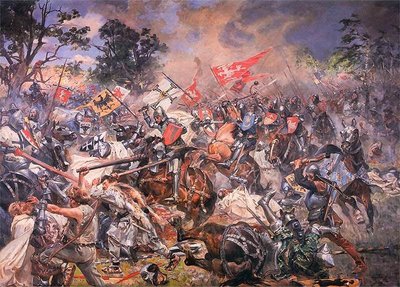
400px-Grunwald_Wojciech_Kossak copy

Battle of Grunwald

On this day, June 14th, every year, the Polish and Lithuanians celebrate the Battle of Grunwald; they celebrate with pride, erecting mock-ups of the battle to honour this important—yet largely unknown moment—in history: when the proud Teutonic Order fell to its knees and Poland became a nation.

Which brings me to my book The Last Summoner and how I get my ideas for stories…

Cover1_LastSummoner-frontcoverI teach writing at the University of Toronto and fiction writing at George Brown College in Toronto. A question I’m often asked is how I get my story ideas. I always start by sharing my favourite example of how I came to write my historical fantasy The Last Summoner:
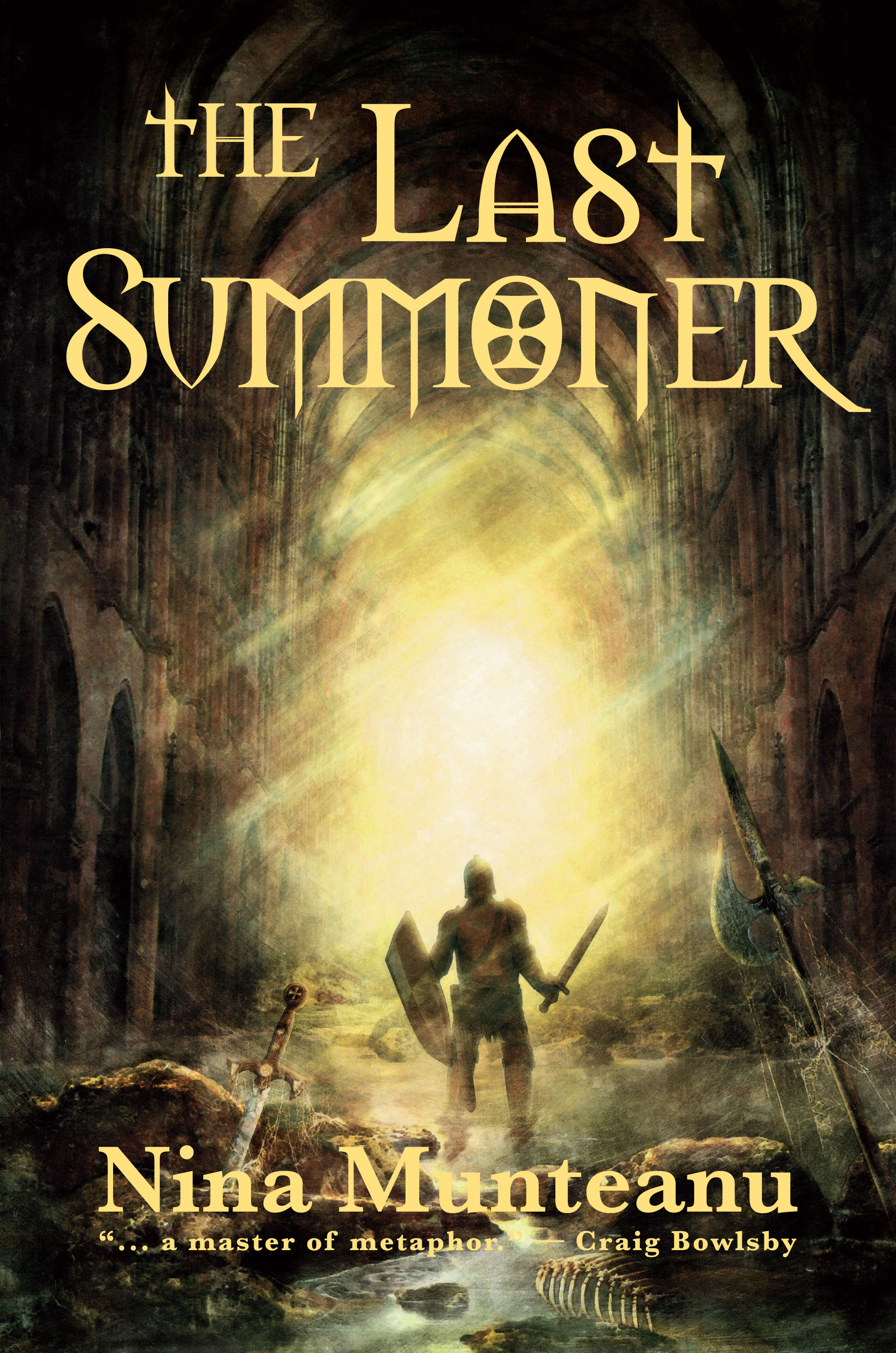
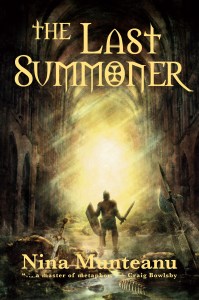
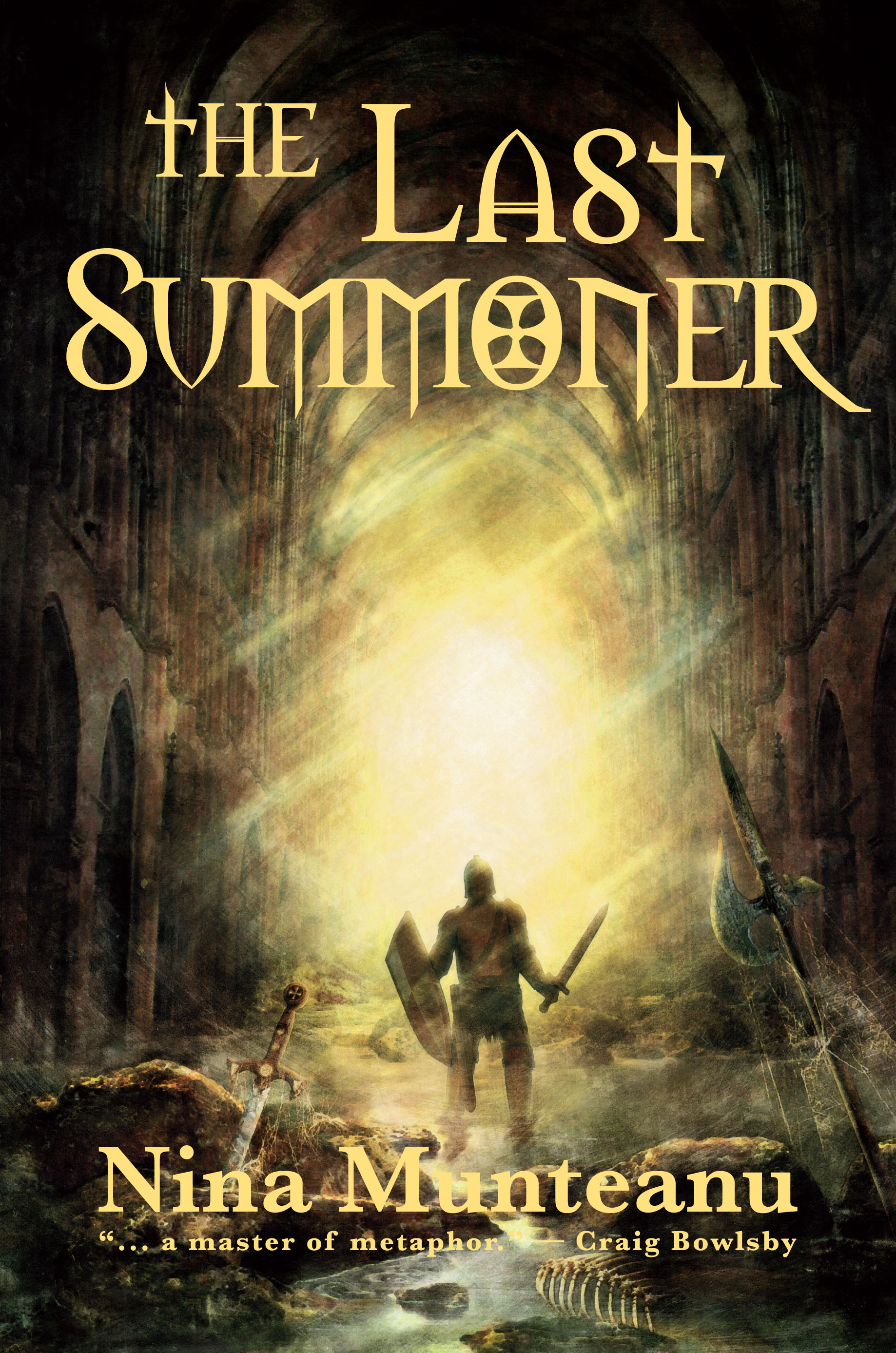
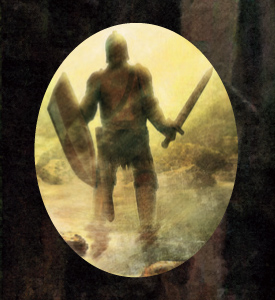
It started in 2008, when I saw the most incredible image by Croation artist Tomislav Tikulin as I was browsing sites on the Internet. The image was of a magnificent knight, standing in a war-littered mire and gazing up, questioning, at the vaulted ceiling of a drowned cathedral. A great light shone upon the knight in streams of white gold–as if a message from heaven. It sent my imagination soaring with thoughts of chivalry, adventure and intrigue.

Who was this knight?

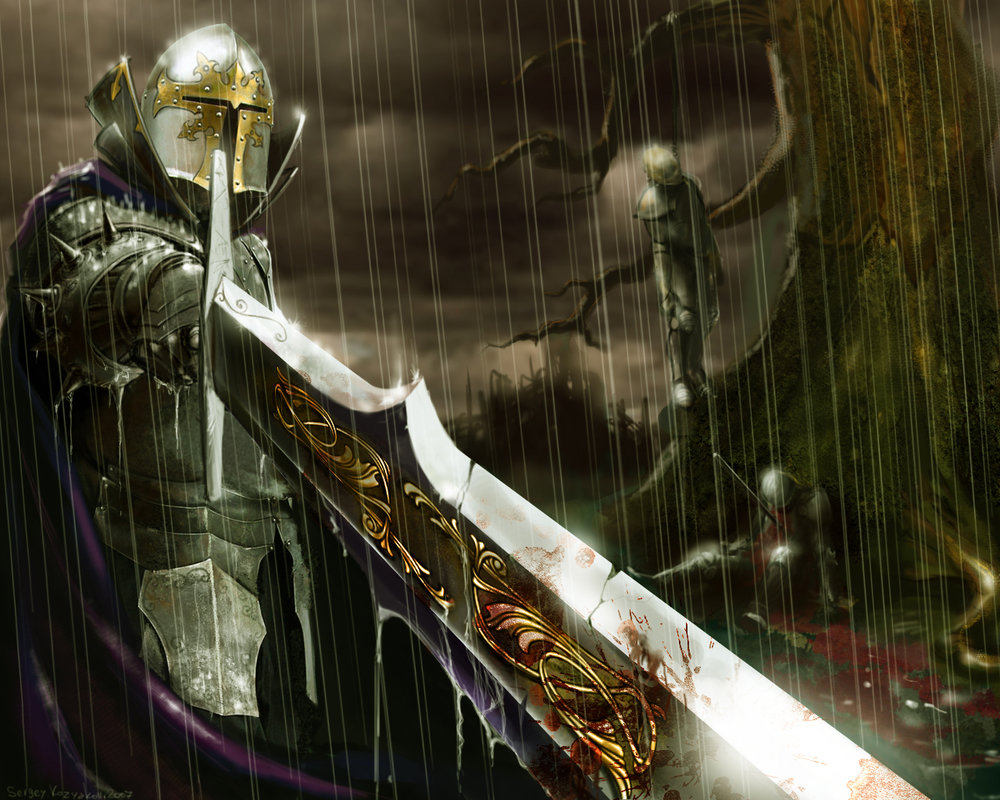
teutonic_knight_by_flipation

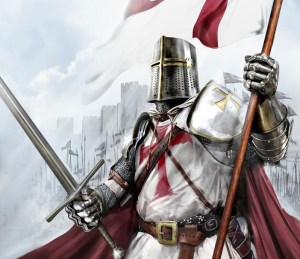
Teutonic knight

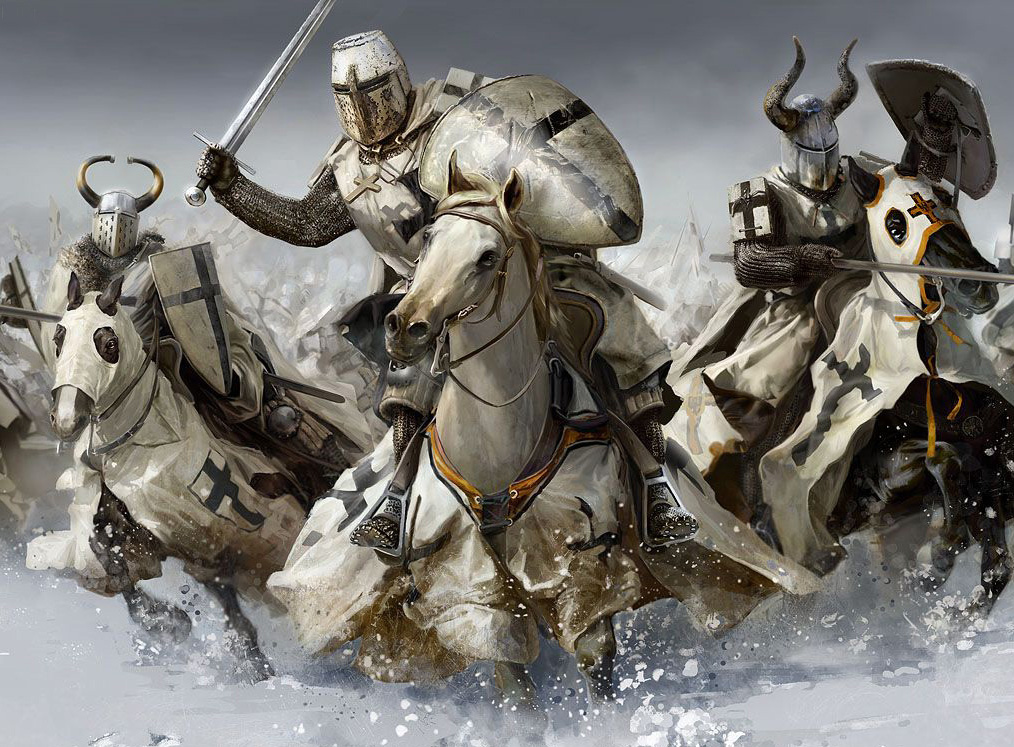
With that image imprinted inside me, the next nexus moment came when I stumbled across a significant but little-known battle in the medieval Baltic, the Battle of Grunwald. It would turn out to be the defining battle for what are now the countries of Poland and Lithuania. On June 14, 1410, they were still part of Prussia and tyrannized by the Teutonic Order, who were Christianizing the pagan Baltic on behalf of the Pope. In truth, the Order had been for centuries gathering wealth and land for colonizing Germans in their drang nach osten; they built sturdy castles (many of which still stand today) and grew into a force of monk warriors, feared for their cunning strategy and treacherous combat abilities.

The Battle of Grunwald was, in fact, an upset in history. The Teutonic Order was powerful, intimidating and extremely capable. They should have won; but the peasant armies of Prussia slaughtered the Order, killing most of its knights. Historians debate that the hochmeister’s arrogance—indeed the arrogance of the entire Order—precipitated their downfall. They underestimated their adversaries and got sloppy.

After the Polish and Lithuanian armies outsmarted the Order and slayed the Order’s hochmeister, along with many of their knights, the Order’s own peasant slaves finished the job using clubs, pitchforks and stones.

Every year, the Polish and Lithuanians celebrate June 14th with pride, erecting mock-ups of the battle.

vivianne-medieval-fighterIntrigued by this little known order of religious crusaders, I pursued the premise of an alternative consequence: what if the Teutonic Knights had NOT underestimated their enemy and won the Battle of Grunwald? Would they have continued their catastrophic sweep of Northeast Europe into Russia and beyond? Would they have claimed the whole for Germany’s expansionist lebensraum movement, fueled by its sonderweg—a dialectic that would ultimately lead to the killing fields of the Holocaust?  What if the success of the Teutonic Order helped consolidate a united fascist elite, ambitious to conquer the world? What if Nazism sprang up 100 years earlier than it did in our current reality?

The Last Summoner arose from this premise. Enter our hero, young 14-year old Vivianne Schoen, Baroness von Grunwald, a self-centred romantic who dreams that her ritter will rescue her from an arranged marriage to some foreign warrior. As a result of an impetuous choice, she makes the startling discovery that she can alter history—but not before she’s branded a witch and must flee through a time-space tear into an alternate present-day France—now ruled by fascists. There, she learns that every choice has its price.

knight-cameo copySpanning from medieval Poland to present day Paris, The Last Summoner explores the sweeping consequences of our “subtle” choices. From the smallest grab to the most sweeping gesture, we are accountable for the world we’ve made. During her 600-year journey to save the world and undo the history she authored, Vivianne learns wisdom and humility. Through the paradox of history, she learns that what might have seemed the right choice for an immediate future, turns out to be disastrous for a distant future. To win is also to lose; to save oneself one must surrender oneself; and to save the world one need only save a single soul.

The knight standing in the drowned cathedral is none other than Vivianne.

Inspired by Tikulin’s knight depiction, I managed to convince my publisher at Starfire World Syndicate to purchase rights to the image; Tikulin’s image–Vivianne’s dream–became the actual cover of my book. I was overjoyed! When The Last Summoner hit the shelves in 2012, it quickly soared into an Amazon Canadian bestseller and remained in the top 10 for several months in the category of fantasy, historical fantasy and science fiction. The book continues to find new readers who enjoy the thrilling time-travelling journey of its 15th century heroine and its surprising plot.

LastSummoner-scifi-fantasy

“The Last Summoner” sandwiched nicely between Ray Bradbury and George R.R. Martin

The Last Summoner is a blend of fantasy, history, and alternate history,” writes Canadian author Kristene Perron. “Fourteen year old Vivianne , the story’s hero, discovers that she has strange powers on the eve of the legendary Battle of Grunwald.  Marked as a witch, Vivianne escapes through time and space, but her actions change history and threaten to destroy the world.”

Kristene had chosen the book to review based on a description I had provided of the painting that inspired the novel created by artist Tomislav Tikulin.

Cover1_LastSummoner-frontcover

Illustration by Tomislav Tikulin. Cover design and typology by Costi Gurgu

The Last Summoner fascinated Kristene. “Ordinarily, historical fiction doesn’t excite me,” writes Kristene. “But the premise of this novel—which included a good dash of fantasy and time travel—was an exception. There is history aplenty and Munteanu has obviously done her homework. The world of 15th century Germany is authentically realized and the little touches of fantasy blend seamlessly.” She was pleased with Vivianne as a hero and how I had “endowed [my] protagonist with the skills and knowledge necessary for the plot without stretching plausibility.”

teutons3-close1

Kristene then added, “What I most enjoyed about this story was that for the majority of it I genuinely didn’t know where the plot was going or what would happen next. I’m one of those annoying people who can usually figure out the entire plot of a book or movie within the first few scenes (watching movies with me can be challenging), so to come teutons3-close02across a story that stumped my super CSI powers of deduction was a real treat.”

“For those in love with science fiction at its best, The Last Summoner is a complex story of ignored responsibilities and their dire consequences, of love and betrayal that span centuries and multiple worlds. Time travel, multiverse travel, immortality, alternate history in which the Nazis have won, not in the twentieth century but way earlier, in the Teutonic age. Angels and mutants, utopias and dystopias, even a Tesla occurrence— everything a science fiction reader could ever desire in a book. A masterfully told story with great characters. Nina Munteanu moves flawlessly from a medieval story to a modern one and everything in between.”—Costi Gurgu, author of RecipeArium

Jonathan, history buff and author of Sci-Fi & Fantasy Reviews , writes: “The Last Summoner is a unique story melding Germany of the 15th century and modern France, even if a different France from what we would recognize. The story centered around the very real and pivotal Battle of Grunwald in which a coalition of Polish and Lithuanian forces defeated the monastic Teutonic Knights. The book takes a look at the young 14-year-old baroness of Grunwald, someone not quite human, and how she attempts to right a wrong and get history back on track…The author is a good writer, and her wordsmithing is excellent…The historical research was outstanding…Given that this is fiction, and that two settings did not follow history as we know it, never-the-less, each event was either very accurate to our known history or made logical sense in the other settings. I am not a huge fan of alternative history books, but in this one, I was extremely caught up in the final section of the book, and I had to contemplate how the world might be different with only a few changes to our history.”

vivianne-dark-medieval-knight copy

Jonathan adds, “While I was familiar with most of the historical background of the book, I was unaware of some facts, such as the Tartars taking part in the Battle of Grunwald. I thought this was a mistake made on the part of the author and went to confirm that, but in fact, the author was correct…a clever, well-written book. I would recommend it without hesitation.” The reviewer did have one quibble: my liberal use of French and German in the book.

Professional photographer and science fiction/fantasy reader, Rick LeBlanc shared that he’d “read The Last Summoner on the flight back from World Fantasy Con: could hardly put it down. Just loved the historical references of gear, place and events. The characters red-leaves-in-pond-vicki horton-botwere incredibly strong and involved you in their lives. The flow was fun & fast-paced. Merci, Nina. Great book!”

“I loved, loved, loved the metaphors. A page-turner that left me wanting to be Vivianne when I grew up.”—Carina Burns, author of The Syrian Jewelry Box

knight-cameo copyThe Last Summoner is an enticing fantasy exploring the Knightly order and adding many new perspectives.”—John Taylor, The Midwest Book Review

nina-2014aaaNina Munteanu is an ecologist, limnologist and internationally published author of award-nominated speculative novels, short stories and non-fiction. She is co-editor of Europa SF and currently teaches writing courses at George Brown College and the University of Toronto. Visit www.ninamunteanu.ca for the latest on her books. 

Summoning the Slow Train To Find “The Last Summoner”

Atonement_(novel)In her book The Art of Slow Writing, Louise DeSalvo tells the story of how Ian McEwan composed his book Atonement.

McEwan had shared that the novel “grew out of many months of sketches and doodling.” Then one morning, he wrote “six hundred words or so describing a young woman entering a drawing room with some wild flowers in her hand, searching for a vase,” and “aware of a young man outside gardening whom she wishes both to see and avoid.”

He knew he had at last started a novel, says DeSalvo. But beyond that, he knew nothing. Slowly, McEwan pieced together a chapter, the one in which “Cecilia and Robbie go to the fountain, the vase breaks, she strips off and plunges into the water to retrieve the pieces, she walks away from him without a word.”

McEwan then languished for six weeks with questions: who was the woman? Who was the young man? What was their relationship? When and where did this event take place? And what was its significance to the story? What was the story about?

McEwan went on to write the chapter in which Briony attempts to put on a play with her cousins. Upon completing that chapter, he finally realized what the story was about. He realized that he would write about Dunkirk and St. Thomas’s hospital. He also knew that Briony was the main protagonist and POV character; that “she was going to commit a terrible error, and that writing…throughout her life would be her form of atonement.” Briony is in fact, what we call a displaced narrator. While the focus of the story is on the tragic journeys of Ceclia and Robbie—resulting largely from Briony’s eventful action—the deeper tragedy is Briony’s who must live the remainder of her life with what she has done.

“McEwan’s remarks illustrate how a successful writer sometimes begins without knowing the work’s subject,” writes DeSalvo. This process of creative problem solving can take on many forms. McEwan sketched and wrote what Diana Gabaldon calls “kernel scenes”, muse-inspired scenes—usually character-based—that represent major emotional turning points or events: important moments in forming a larger set piece toward a larger story. McEwan wrote a scene that required for him to solve some creative problems. Each solution provided him with another piece to the creative puzzle and the blurry meaning of the story slowly came into focus.

According to DeSalvo, McEwan swapped his first two chapters and rewrote them several times before he realized that the novel should begin with Briony. Once that watershed moment came to him, the rest of the process fell into place and practically wrote itself.

This type of “organic” writing can be very exciting and revealing to an author; it can also be chaotic and time-consuming. That’s OK. You need the time for the story to reveal itself to you. As DeSalvo says, “we can’t force a resolution too quickly.” She adds that “creative solutions often take us into unexpected territory—the introduction of Briony’s narrative, for example—and often these swerves take us into exciting solutions we hadn’t anticipated—Briony as narrator, for example—and push our work in an altogether different direction.”

If McEwan had kept the first narrative that emerged—Cecilia and Robbie at the fountain—and if he hadn’t been open to the potential in Briony’s narrative, he would no doubt have written a less complex but still successful novel about love, class, and war. But in deciding to give Briony a voice and combine both narratives, McEwan introduced another more metaphoric layer of meaning to the more literal one—that of personal betrayal and the impact of knowing you have destroyed two people’s lives.

The Last Summoner … Summoned

Cover1_LastSummoner-frontcover

cover art by Tomislav Tikulin

My historical fantasy The Last Summoner came to me in a single image. I’d run across a spectacular image by Croation artist Tomislav Tikulin (he’d done the cover art for Darwin’s Paradox, my previous book published by Dragon Moon Press). When I checked his website, there it was: this incredibly evocative image of a knight, standing in the war-littered mire of a drowned cathedral. The knight gazed up, questioning, at the vaulted ceiling from which shone streams of white gold. It sent my imagination soaring with thoughts of chivalry, adventure and intrigue.

Who was this knight? Where was he and why? What were the circumstances?

At that point I only had an image and many questions. I knew I wanted to write about this knight and this setting. Since I can remember, I’ve been fascinated by Europe during the medieval ages and I had been thinking of writing outside the science fiction genre for a while.

The image remained imprinted inside me for weeks, months, until the next nexus moment came. I stumbled across a significant but little-known battle in the medieval Baltic, the Battle of Grunwald. It would turn out to be the defining battle for what are now the countries of Poland and Lithuania. On June 14th 1410, they were still part of Prussia and tyrannized by the Teutonic Order, who were Christianizing the pagan Baltic on behalf of the Pope. In truth, the Order had been for centuries gathering wealth and land for colonizing Germans in their drang nach osten; they built sturdy castles (many of which still stand today) and a force of monk warriors, feared for their cunning strategy and treacherous combat abilities.

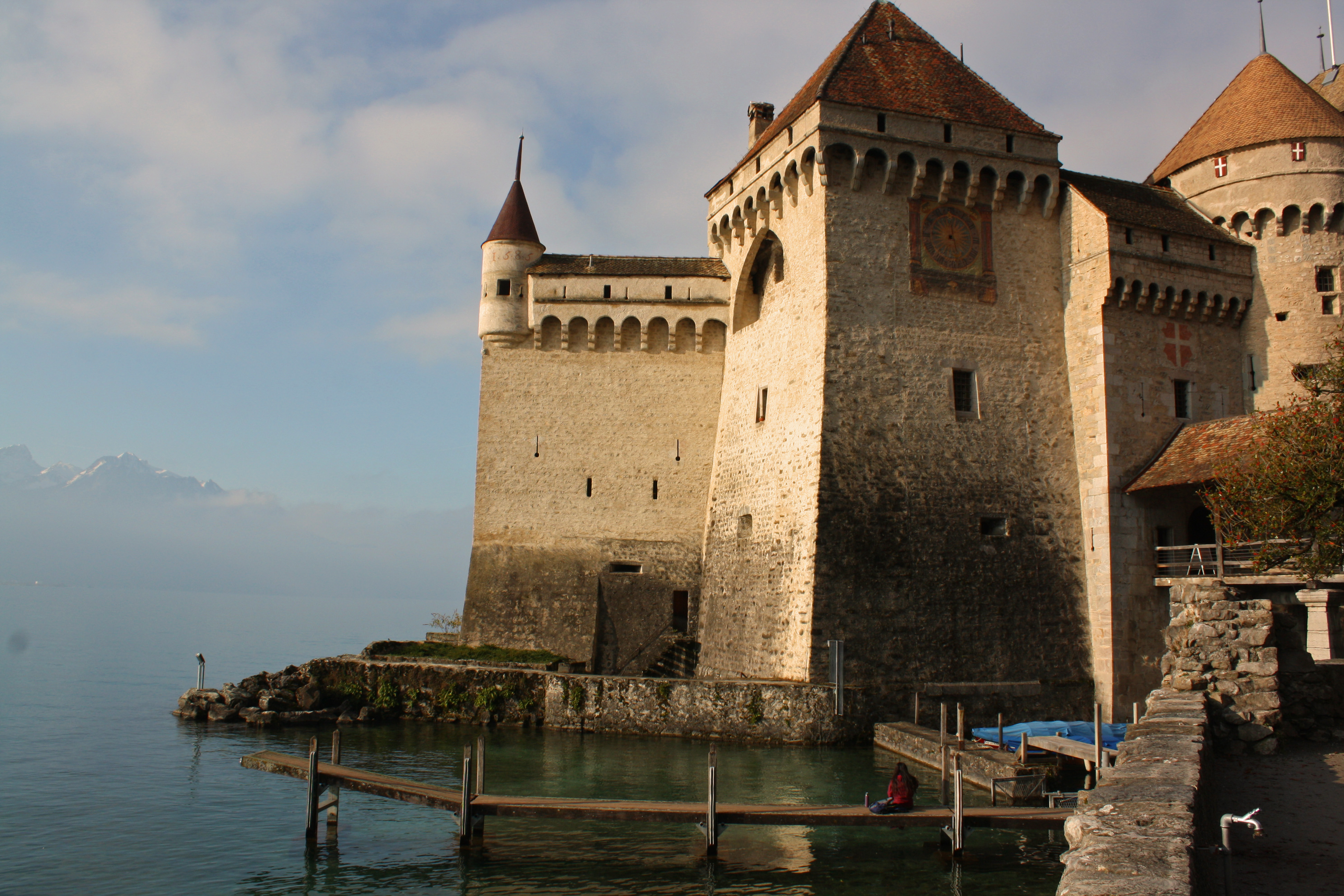
chateau-chillon-lake-geneva

Chilean castle, Switzerland (photo by Nina Munteanu)

The Battle of Grunwald was, in fact, an upset in history. The Teutonic Order was powerful, intimidating and extremely capable. They should have won; but the peasant armies of Prussia slaughtered the Order, killing most of its knights. Historians debate that the hochmeister’s arrogance—indeed, the arrogance of the entire Order—precipitated their downfall. They underestimated their adversaries and got sloppy. After the Polish and Lithuanian armies outsmarted the Order and slayed their hochmeister, along with most of their knights, the Order’s own peasant slaves finished the job using clubs, pitchforks and stones.

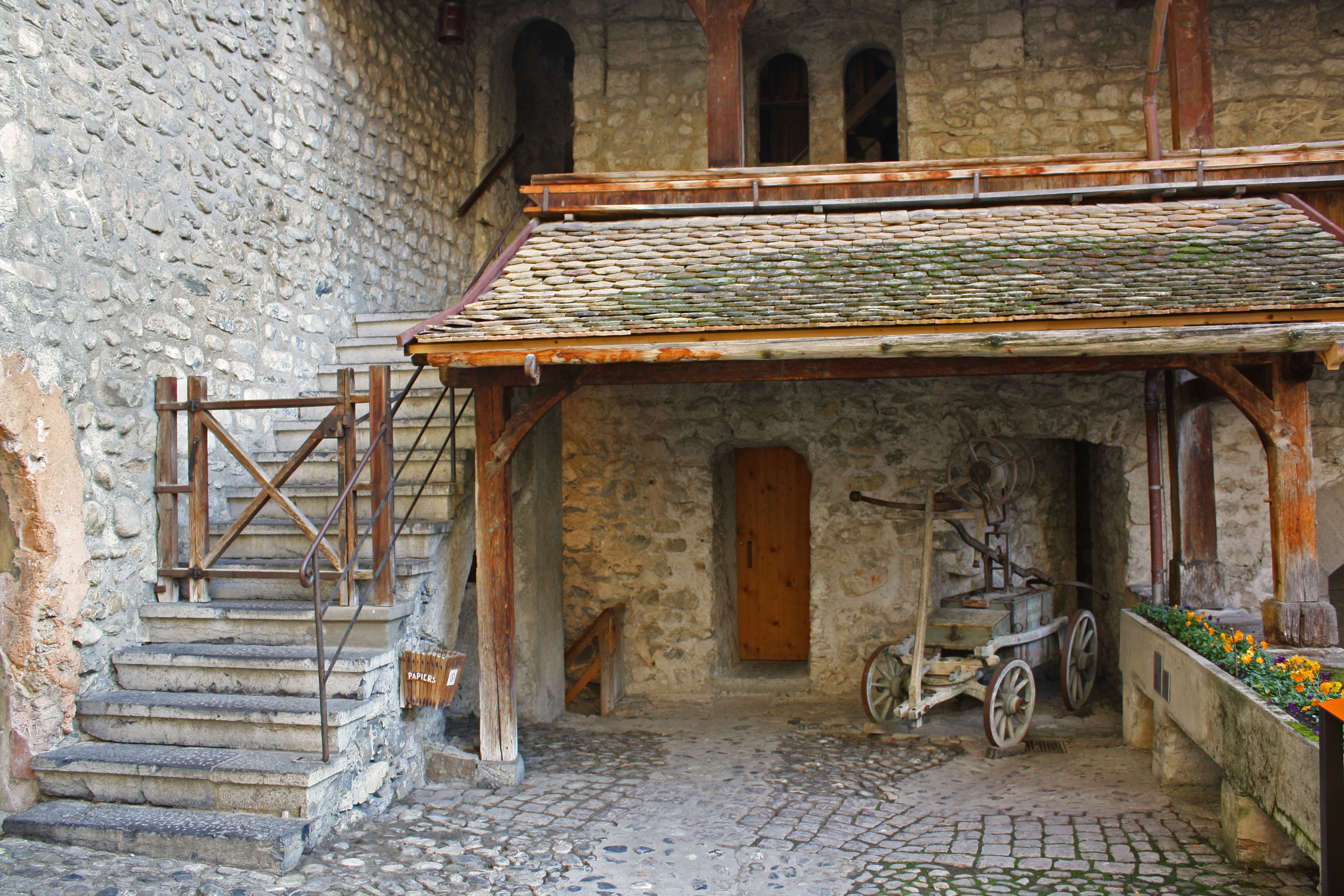
chillon-inner courtyard

Courtyard at Chillon Castle, Switzerland (photo by Nina Munteanu)

Intrigued by this lessor known order of religious crusaders, I pursued the premise of an alternative consequence: what if the Teutonic Knights had NOT underestimated their enemy and won the Battle of Grunwald? Would they have continued their catastrophic sweep of Northeast Europe into Russia and beyond? Would they have claimed the whole for Germany’s expansionist lebensraum movement, fueled by its sonderweg, a dialectic that would ultimately lead to the killing fields of the Holocaust? What if the success of the Teutonic Order helped consolidate a united fascist elite, ambitious to conquer the world?

And what if, as a result, Nazism sprang up 100 years earlier? The Last Summoner, arose from this premise.

I’d already conceived a heroine: a self-centered romantic noblewoman who has a vision of a knight in a drowned cathedral. Fourteen-year old Vivianne Schoen, Baroness von Grunwald, dreams that her ritter will rescue her from the drudgeries of her duties and an arranged marriage to some foreign warrior. When she discovers that her intended is a cruel and abusive mercenary, Vivianne makes a bold and impetuous choice that results in a startling discovery that she can alter history—but not before she’s branded a witch and must flee through a time-space tear into a alternate present-day Paris, now ruled by fascists. There, in present-day Paris she learns that every choice has its price. She meets François, a self-serving street kid who tries to monetize her and her gear but then falls for her anachronistic charm.

knight-cameoI originally wrote the Paris section in Vivianne’s point of view, but it seemed flat with too obvious fish-out-of-water observations. I let the book sit, while I conducted more research on Paris, and then it came to me: give the narrative to François. This part of the book was his story. By giving François the only POV, I also gave his character agency to react and change to Vivianne’s role as “catalyst hero.” I rewrote this section, starting with François fleeing from a street crime he’d committed, when Vivianne literally appears and knocks him down. She then sweeps him up in a high-stakes chase that will change his worldview. When Vivianne returns to 1410 Poland in the last section of the book, her great journey of self-discovery and atonement begins.

Spanning from medieval Poland to present day Paris, France, The Last Summoner explores the sweeping consequences of our “subtle” choices. From the smallest grab to the most sweeping gesture, we are accountable for the world we’ve made. During her 600-year journey to save the world and undo the history she authored, Vivianne learns wisdom and humility. Through the paradox of history, she learns that what might have seemed the right choice for an immediate future, turns out to be disastrous for a distant future. To win is also to lose; to save oneself one must surrender oneself; and to save the world one need only save a single soul.

The knight standing in the drowned cathedral is Vivianne.


 The Last Summoner, published by Starfire World Syndicate, was released in Cover1_LastSummoner-frontcover2012 and remained a Canadian bestseller on Amazon for several months. It represents my first historical fantasy in an otherwise repertoire of hard science fiction. The cover of the book is indeed the original image that had inspired the book in the first place; and was kindly acquired by my publisher. The Polish and Lithuanians celebrate June 14th with pride, erecting mock-ups of the battle annually. Some day I hope to participate.


References:

DeSalvo, Louise. 2014.”The Art of Slow Writing”. St. Martin’s Griffin. New York, NY. 306pp.

Munteanu, Nina. 2012. “The Last Summoner”. Starfire World Syndicate.

nina-2014aaNina Munteanu is a Canadian ecologist and internationally published author of award-nominated speculative novels, short stories and non-fiction. She is co-editor of Europa SF and currently teaches writing courses at George Brown College and the University of Toronto. Visit www.ninamunteanu.ca for the latest on her books.

The Art and Magic of Storytelling: Part 1, Sparking the Premise

Cover1_LastSummoner-frontcover copyFrom where do we get our stories?

This is a question I am asked time and again. My readers, friends and colleagues alike marvel at my imagination, and ask me how I create these fantastical worlds and situations. Cornered in a moment of inarticulate bliss (this often happens to me), I shrug and blather off some ridiculously obscure tale of luciferous logolepsy.

The simple of it is that it always comes as a spark. Followed by inspiration. And from there, a story emerges. Premise to dramatization. So, let me tell you a story about how my 2012 historical fantasy The Last Summoner —about a medieval time traveler who must save the past from the future—came to be.

It all began with the Battle of Grunwald and the Fate of the Teutonic Knights—that is, when I stumbled upon it during an Internet ramble. But, in fact, it started before that—the spark, that is.

My part in this piece of history really began sometime in 2008 with the vision of an incredible image by Croatian artist Tomislav Tikulin (who had done the cover art for a previous novel Darwin’s Paradox). On Tikulin’s website I glimpsed the image of a magnificent knight, standing in a war-littered mire and gazing up, questioning, at the vaulted ceiling of a drowned cathedral. A great light shone upon the knight in streams of white gold. It sent my imagination soaring with thoughts of chivalry, adventure and intrigue.

Who was this knight standing in the mire?…

teutons3-close1

With that image imprinted inside me, the next nexus moment came when I stumbled across a significant but little-known battle in the medieval Baltic, the Battle of Grunwald. It would turn out to be the defining battle for what are now the countries of Poland and Lithuania. On June 14th 1410, they were still part of Prussia and tyrannized by the Teutonic Order, who were Christianizing the pagan Baltic on behalf of the Pope. In truth, the Order had been for centuries gathering wealth and land for colonizing Germans in their drang nach osten; they built sturdy castles (many of which still stand today) and a force of monk warriors, feared for their cunning strategy and treacherous combat abilities.

The Battle of Grunwald was, in fact, an upset in history. The Teutonic Order was powerful, intimidating and extremely capable. They should have won; but the peasant armies of Prussia slaughtered the Order, killing most of its knights. Historians debate that the hochmeister’s arrogance—indeed, the arrogance of the entire Order—precipitated their downfall. They underestimated their adversaries and got sloppy. After the Polish and Lithuanian armies outsmarted the Order and slayed their hochmeister, along with many of their knights, the Order’s own peasant slaves finished the job using clubs, pitchforks and stones.

Intrigued by this little known order of religious crusaders and their bizarre fate in an upset battle with a peasant army, I pursued the premise of an alternative consequence: what if the Teutonic Knights had NOT underestimated their enemy and won the Battle of Grunwald? Would they have continued their catastrophic sweep of North-east Europe into Russia and beyond? Would they have continued their catastrophic sweep of north- east Europe into Russia and beyond? Would they have claimed the whole for Germany’s expansionist lebensraum movement, fueled by its sonderweg, a dialectic that would ultimately lead to the killing fields of the Holocaust? What if the success of the Teutonic Order helped consolidate a united fascist elite, ambitious to conquer the world? And what if, as a result, Nazism sprang up 100 years earlier?

The Last Summoner, arose from this premise. Enter our heroine, young 14-year old Vivianne Schoen, Baroness von Grunwald, a self-centered romantic who dreams that her ritter (her knight) will rescue her from an arranged marriage to some foreign  warrior. As a result of an impetuous choice, she makes the startling discovery that she can alter history—but not before she’s branded a witch and must flee through a time-space tear into an alternate present-day France ruled by fascists. There, she learns that every choice has its price.

Warrior Woman Silhouette

Spanning from medieval Poland to present day Paris, France, The Last Summoner explores the sweeping consequences of our “subtle” choices. From the smallest grab to the most sweeping gesture, we are accountable for the world we’ve made. During her 600-year journey to save the world and undo the history she authored, Vivianne learns wisdom and humility. Through the paradox of history, she learns that what might have seemed the right choice for an immediate future, turns out to be disastrous for a distant future. To win is also to lose; to save oneself one must surrender oneself; and to save the world one need only save a single soul.
knight-cameoThe knight standing in the mire is Vivianne.

The Last Summoner, published by Starfire World Syndicate, was released in 2012 and remained a Canadian bestseller on Amazon for several months. It represents my first historical fantasy in an otherwise repertoire of hard science fiction. The Polish and Lithuanians celebrate June 14th with pride, erecting mock-ups of the battle annually. Some day I hope to participate.

The cover art for The Last Summoner is that very image that inspired my story. The Universe gifted me with the chance to acquire the image from Mr. Tikulin and a publisher willing to purchase it. I’d entered my own dream.

p.s. definition for luciferous logolepsy: “an illuminating obsession with words”

p.p.s. A novelette version, Summoning the Future’s Past, was released April 2021 in Italian by Delos Digital entitled l’Ultima Evocatrice.

This article first appeared on Warpworld on Nov. 30, 2013.

nina-2014aaNina Munteanu is an ecologist and internationally published author of award-nominated speculative novels, short stories and non-fiction. She is co-editor of Europa SF and currently teaches writing courses at George Brown College and the University of Toronto. Visit www.ninamunteanu.ca for the latest on her books.

.