.
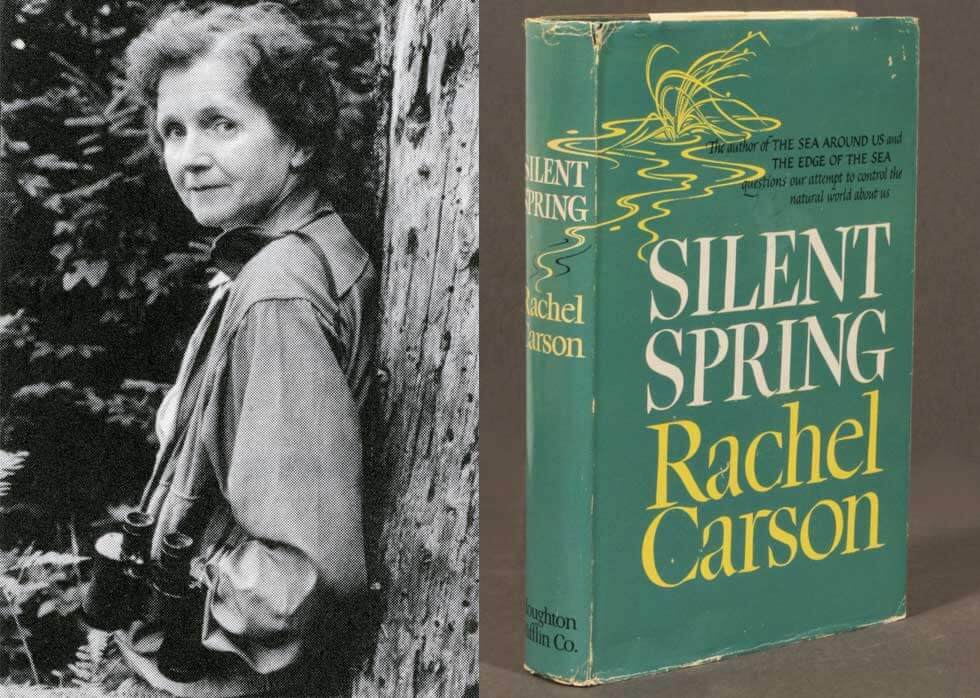
In 1962, Rachel Carson published her book Silent Spring, which warned of our declining bird and bee populations and impacts to human health from unregulated pesticide/herbicide use (such as carcinogens and hormone disruptors). Carson’s warning was simple but important: that the pesticide DDT didn’t stay where you sprayed it. It moved through insects and the birds that ate them, bioaccumulating up the food chain, concentrating in fat tissue; it thinned eggshells of raptors until entire breeding populations collapsed. Her question was simply not whether the technology works as intended (e.g., as a pesticide—which it did rather admirably) but whether we have thought through all of its implications—e.g. unintended consequences to the environment. She exhorted the use of caution and further study before proceeding. Essentially, she was promoting use of the precautionary principle: that when a technology has plausible potential for serious harm, the burden of proof should fall on demonstrating safety, not on waiting for proof of damage after the fact.
It comes down to two types of risk: which is deemed most valuable and how they are measured. In my previous work as a field scientist and environmental consultant representing a client, we often based our formal hypotheses in statistics, which considered two types of error: Type 1 and Type 2 errors.
Type 1 errors are false positives: a researcher states that a specific relationship exists when in fact it does not. This is akin to an alarm sounding when there’s no fire.
Type 2 errors are false negatives: the researcher states that no relationship occurs when in fact it does. This is akin to no alarm sounding during a fire.
Put simply, environmental risk management assesses two types of cost through statistical probability: one to environment and one to investment. Risk analyses are often used in cost-benefit analyses in which the risk posed by errors as a cost to the environment vs a cost to revenue are assessed and balanced. Type 1 errors create false positives (that a cost to environment exists when there is little or none). Type 2 errors create false negatives (that there is no cost to environment when there is). Industry and their consultants mostly focus on avoiding Type 1 errors (while often ignoring Type 2 errors) to protect their investments.
Aside from attacking her personally as a woman, Carson’s critics focused on the benefits of the pesticide DDT and other agricultural chemicals in helping to feed the world, while ignoring the dangers. The industry and government argued that caution meant falling behind.
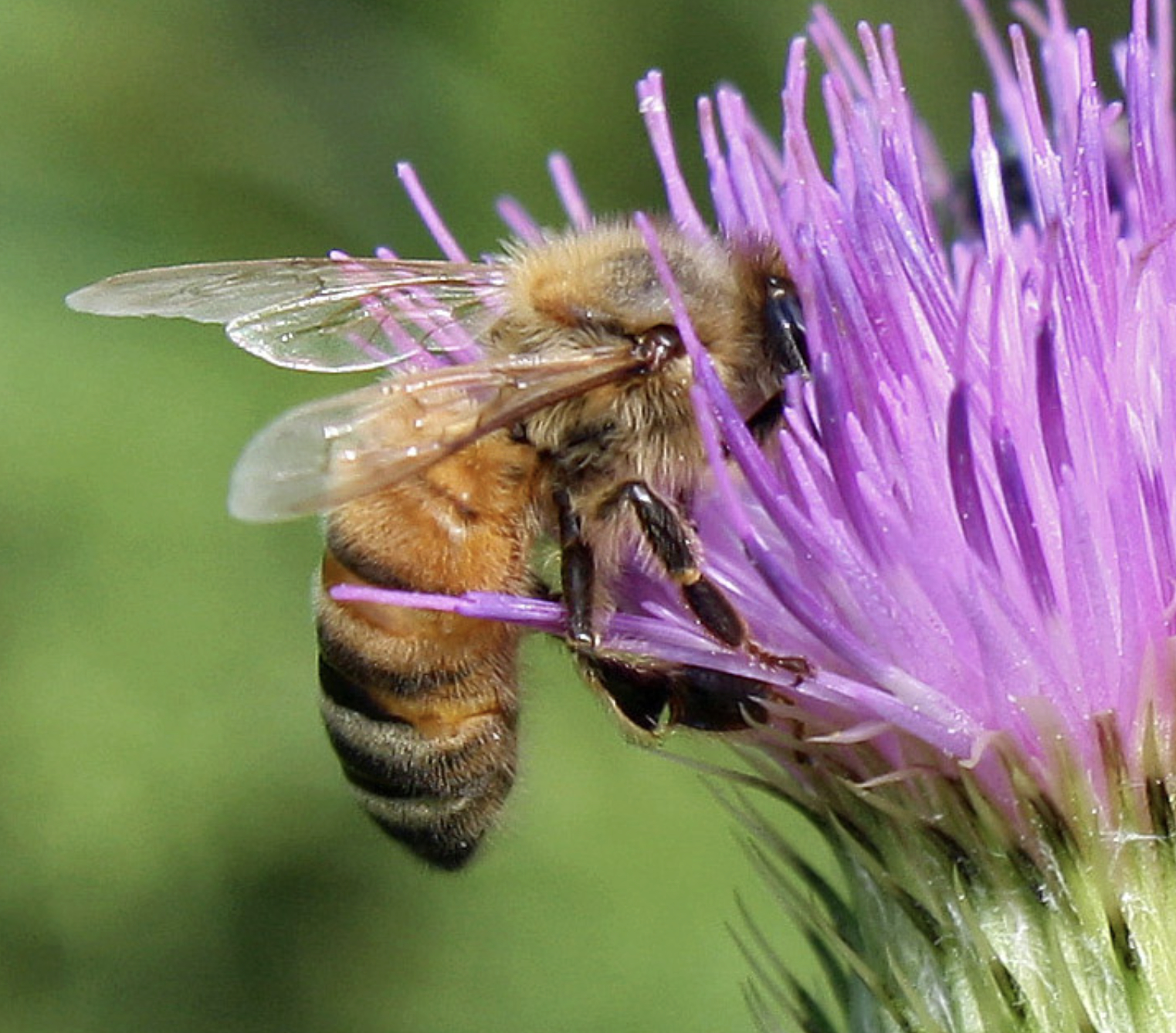
Thanks mostly to Carson’s warning, DDT was finally banned in 1972, ten years after her book was published; but pesticides with similar impacts (e.g. cancer-causing and endocrine disrupting to humans and fatal to some animals and insects such as pollinating bees) have continued to be used at an astronomical rate. The greater ecological lesson was ignored.
.
This same lack of an ecological systems approach is being applied to climate change. And to AI.
Natalie Shapiro, systems ecologist at Kings College London, warned: “Once AI agents are embedded in real-world infrastructures with communication channels, delegated authority, and persistent memory, new classes of failure emerge.”
The challenge we face in raising alarms about AI are that they are largely abstract and theoretical, through papers and computer models. This is very similar to the climate projections made for decades about the effects of climate change.
In February 2025, at the AI Action Summit in Paris, Canada, China, and most other countries signed a declaration committing to safe, secure, and trustworthy AI development. The United States did not, arguing that caution meant falling behind.
Vice President Vance announced, “I’m not here to talk about AI safety; I’m here to talk about AI opportunity.” Parroting what the chemical industry argued in 1962, Vance warned that regulation could kill a transformative industry. Indeed, every company developing AI is racing for that golden prize, hoping to be the first to reach the technological singularity: a system that can match or exceed human capability —without any consideration of what this might actually mean. Why this must be achieved remains inconceivable to me. To push technology to surpass us?
As Greta Thunberg so aptly said in her January 21, 2020 speech in Davos about climate change: “our house is still on fire and you’re fuelling the flames.”
This gold rush mindset—so iconic for Americans and so many who have gone to America to pursue the American dream (whatever that is)—will usher us into a world that is no longer ours. But then again, perhaps it never was …

.

Nina Munteanu is a Canadian ecologist / limnologist and novelist. She is co-editor of Europa SF and currently teaches writing courses at George Brown College and the University of Toronto. For the latest on her books, visit www.ninamunteanu.ca. Nina’s bilingual “La natura dell’acqua / The Way of Water” was published by Mincione Edizioni in Rome. Her non-fiction book “Water Is…” by Pixl Press (Vancouver) was selected by Margaret Atwood in the New York Times ‘Year in Reading’ and was chosen as the 2017 Summer Read by Water Canada. Her novel “A Diary in the Age of Water” was released by Inanna Publications (Toronto) in June 2020. You can read her just released eco-fiction thriller Gaia’s Revolution by Dragon Moon Press.
.

