Cognitive Surrender of Humans to the Machine

A recent MIT study reports that reliance on AI is causing mass ‘cognitive surrender.’ The study revealed that pervasive artificial intelligence usage is fundamentally eroding active learning and overriding intellectual agency.

The report warns that students are falling into what they call “cognitive surrender;” gladly offloading their cognitive skills to AI. The researchers argue that students too easily reach for chatbots, bypassing the ‘productive struggle’ crucial for developing critical thinking.

The researchers argue that this over-reliance has led to an “illusion of learning” characterized by rising homework scores but plummeting memory retention and test performances. The researchers report: “there are early signals that over-reliance on chatbots can have a range of significant negative consequences—diminishing critical thinking, weakening memory, eroding confidence, and undermining mastery.”

The report discusses an isolating shift in campus culture: vanishing traditional study groups and office hours sitting empty as students choose automated chatbot replies over human collaboration. They note that the effects of AI reliance extend far beyond bad grades. Some students, they report, are losing the ability to participate in class discussions.

As a side note to this, I had a recent discussion with Dot, my friend who helps run a local health food store in the village I live in; she sadly related an all-too common experience she had the other day: of a young woman who, upon entering the store, had perfunctorily declined Dot’s offer to help, and instead relied on the chatbots of her smartphone for the information she needed to make a wise purchasing choice. Dot and her obvious expertise was ignored in favour of the girl’s infinitely ‘smart’ chatbot.

To combat students’ over reliance on AI assistance, schools like MIT, and my own University of Toronto, are avoiding unreliable AI detectors and instead rebuilding curricula around human-centric assessments: oral exams, semester portfolios, and mandatory group work, all designed to rescue education by reclaiming the struggle of thinking.

‘Cognitive Surrender’ A Form of Laziness
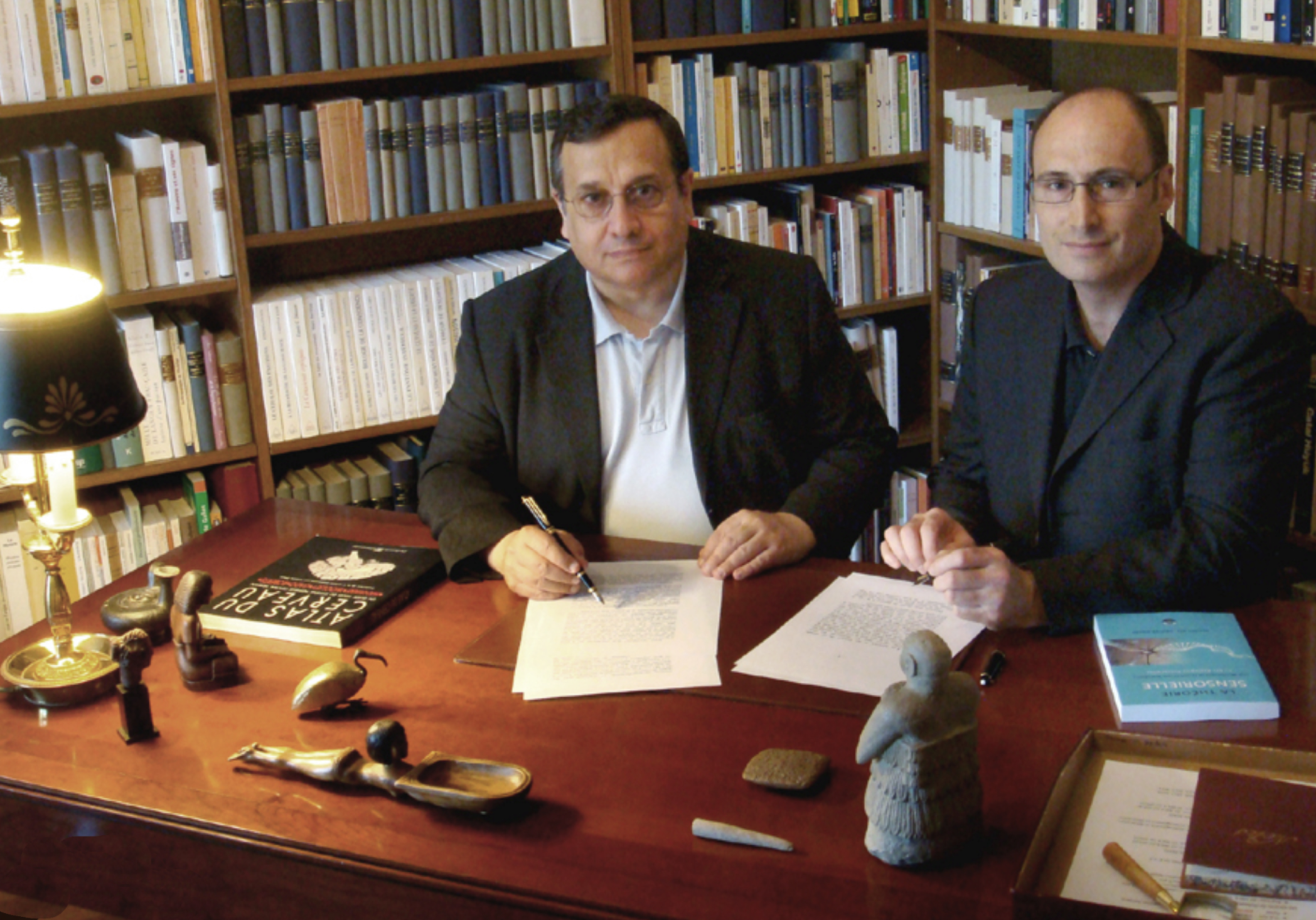
Philippe Roi and Tristan Girard, authors of La Théorie Sensorielle

Philippe Roi, cognitive science researcher and former Editing Director of Le Courier de l’Intelligence Artificielle recently argued that, “The greatest peril posed by artificial intelligence is not that it accomplishes our tasks, but that it spares us the inner transformation required to carry them out.”

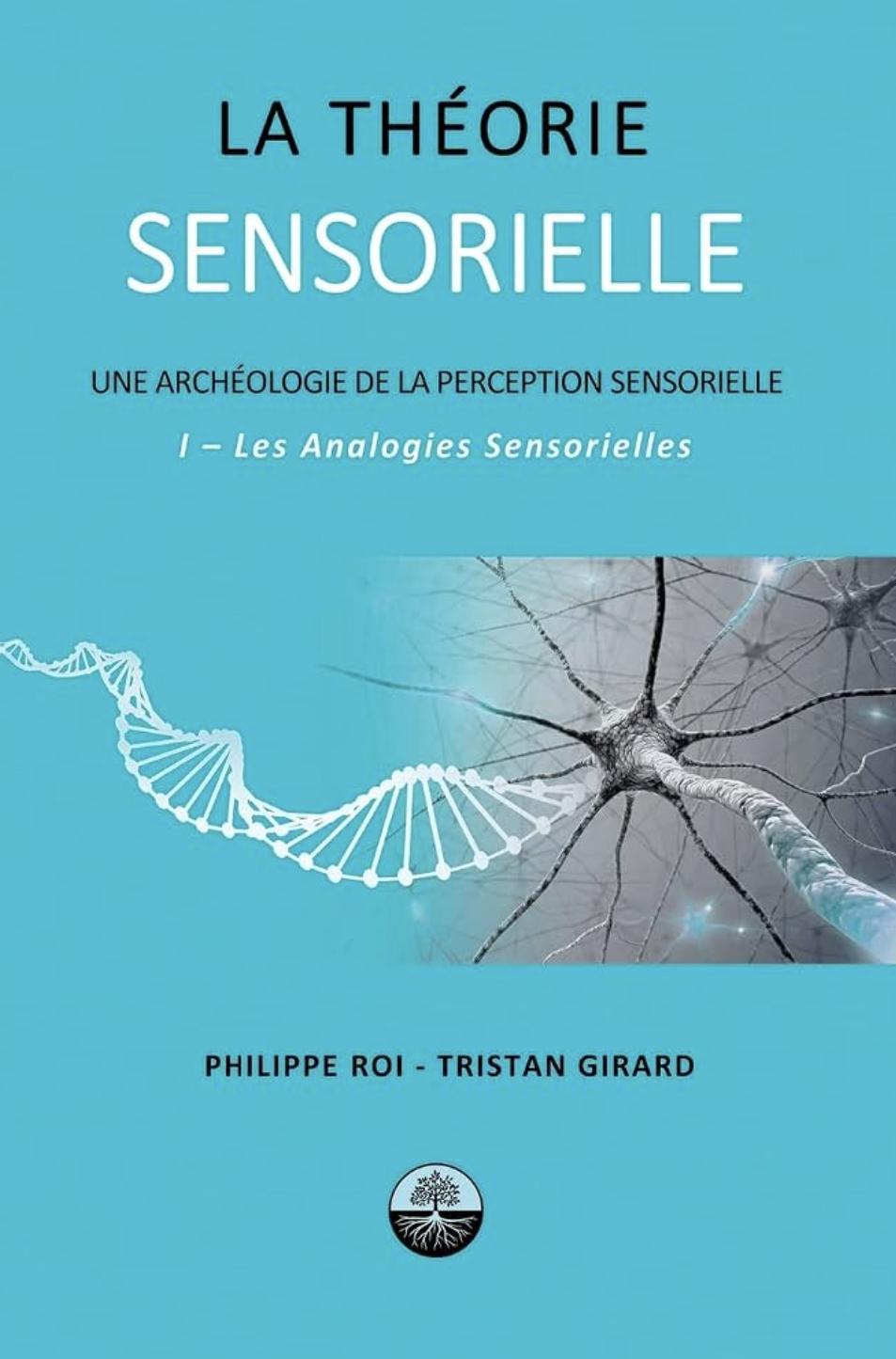
Roi, who co-authored with Tristan Girard La Théorie Sensorielle, noted that a form of laziness is currently spreading around the world. “It is neither idleness nor indolence,” he writes, “but a growing dissociation between the result obtained and the being who should have [trans]formed themselves to achieve it.”
“AI enables us to diagnose without understanding, to translate a text without mastering the language, to publish a book without having written a single line, to create a work without having conceived it.”

Philippe Roi

Student studying in a library (image by Philippe Roi)

Roi warns that the term ‘Ignorance’ is changing as a result. “It is no longer merely an absence of knowledge; it is becoming an inability to gauge what one no longer knows how to do. The ultimate danger is that, after entrusting our cognitive tasks to AIs, we will also abandon to them the desire to learn which has made us thinking beings.”

References:

Ad Hoc Committee on AI Use in Teaching, Learning, and Research. 2026. “AI and Education.” MIT, August 13, 2026.

Blinder, A. 2026. “Universities Sound Warnings About A.I. Even as They Embrace It.” The New York Times.

Kos’myna, Nataliya. 2025. “Your Brain on ChatGPT: Accumulation of Cognitive Dept when Using an AI Assistant for Essay Writing Task.” MIT Media, June 10, 2025.

Tangermann, Victor. 2026. “MIT Report Finds That AI Is Leading to “Cognitive Surrender” Among Students. Futurism, September 19, 2026.

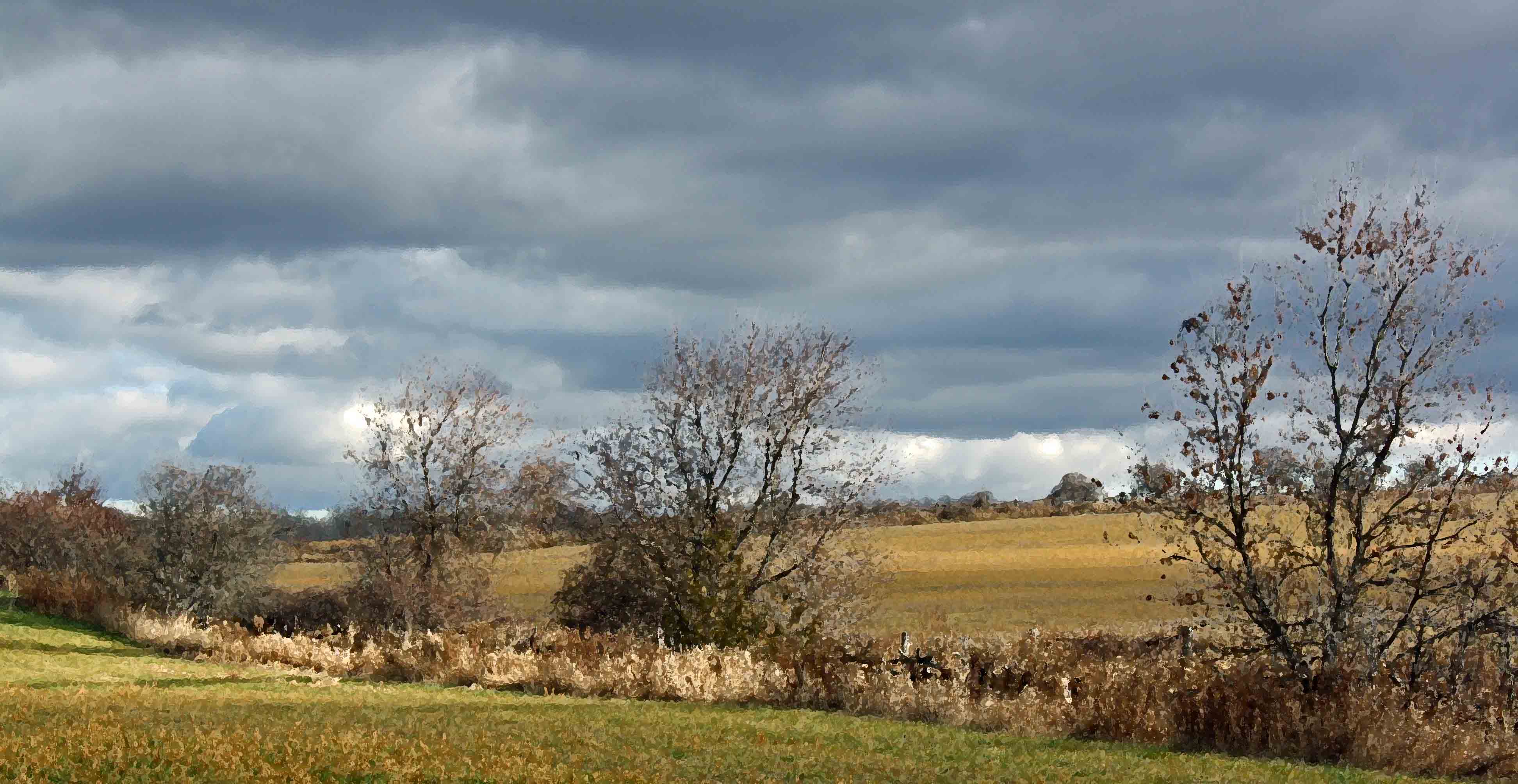
Field in late fall, ON (photo and rendition by Nina Munteanu)

Nina Munteanu is a Canadian ecologist / limnologist and novelist. She is co-editor of Europa SF and currently teaches writing courses at George Brown College and the University of Toronto. For the latest on her books, visit www.ninamunteanu.ca. Nina’s bilingual “La natura dell’acqua / The Way of Water” was published by Mincione Edizioni in Rome. Her non-fiction book “Water Is…” by Pixl Press (Vancouver) was selected by Margaret Atwood in the New York Times ‘Year in Reading’ and was chosen as the 2017 Summer Read by Water Canada. Her novel “A Diary in the Age of Water” was released by Inanna Publications (Toronto) in June 2020. You can read her just released eco-fiction thriller Gaia’s Revolution by Dragon Moon Press.

.

The Insidious Threat of Artificial Intelligence: How AI is Like Climate Change

Rachel Carson and her seminal book Silent Spring

In 1962, Rachel Carson published her book Silent Spring, which warned of our declining bird and bee populations and impacts to human health from unregulated pesticide/herbicide use (such as carcinogens and hormone disruptors). Carson’s warning was simple but important: that the pesticide DDT didn’t stay where you sprayed it. It moved through insects and the birds that ate them, bioaccumulating up the food chain, concentrating in fat tissue; it thinned eggshells of raptors until entire breeding populations collapsed. Her question was simply not whether the technology works as intended (e.g., as a pesticide—which it did rather admirably) but whether we have thought through all of its implications—e.g. unintended consequences to the environment. She exhorted the use of caution and further study before proceeding. Essentially, she was promoting use of the precautionary principle: that when a technology has plausible potential for serious harm, the burden of proof should fall on demonstrating safety, not on waiting for proof of damage after the fact.

It comes down to two types of risk: which is deemed most valuable and how they are measured. In my previous work as a field scientist and environmental consultant representing a client, we often based our formal hypotheses in statistics, which considered two types of error: Type 1 and Type 2 errors.

Type 1 errors are false positives: a researcher states that a specific relationship exists when in fact it does not. This is akin to an alarm sounding when there’s no fire.

Type 2 errors are false negatives: the researcher states that no relationship occurs when in fact it does. This is akin to no alarm sounding during a fire.

Put simply, environmental risk management assesses two types of cost through statistical probability: one to environment and one to investment. Risk analyses are often used in cost-benefit analyses in which the risk posed by errors as a cost to the environment vs a cost to revenue are assessed and balanced. Type 1 errors create false positives (that a cost to environment exists when there is little or none). Type 2 errors create false negatives (that there is no cost to environment when there is). Industry and their consultants mostly focus on avoiding Type 1 errors (while often ignoring Type 2 errors) to protect their investments.

Aside from attacking her personally as a woman, Carson’s critics focused on the benefits of the pesticide DDT and other agricultural chemicals in helping to feed the world, while ignoring the dangers. The industry and government argued that caution meant falling behind.

Thanks mostly to Carson’s warning, DDT was finally banned in 1972, ten years after her book was published; but pesticides with similar impacts (e.g. cancer-causing and endocrine disrupting to humans and fatal to some animals and insects such as pollinating bees) have continued to be used at an astronomical rate. The greater ecological lesson was ignored.

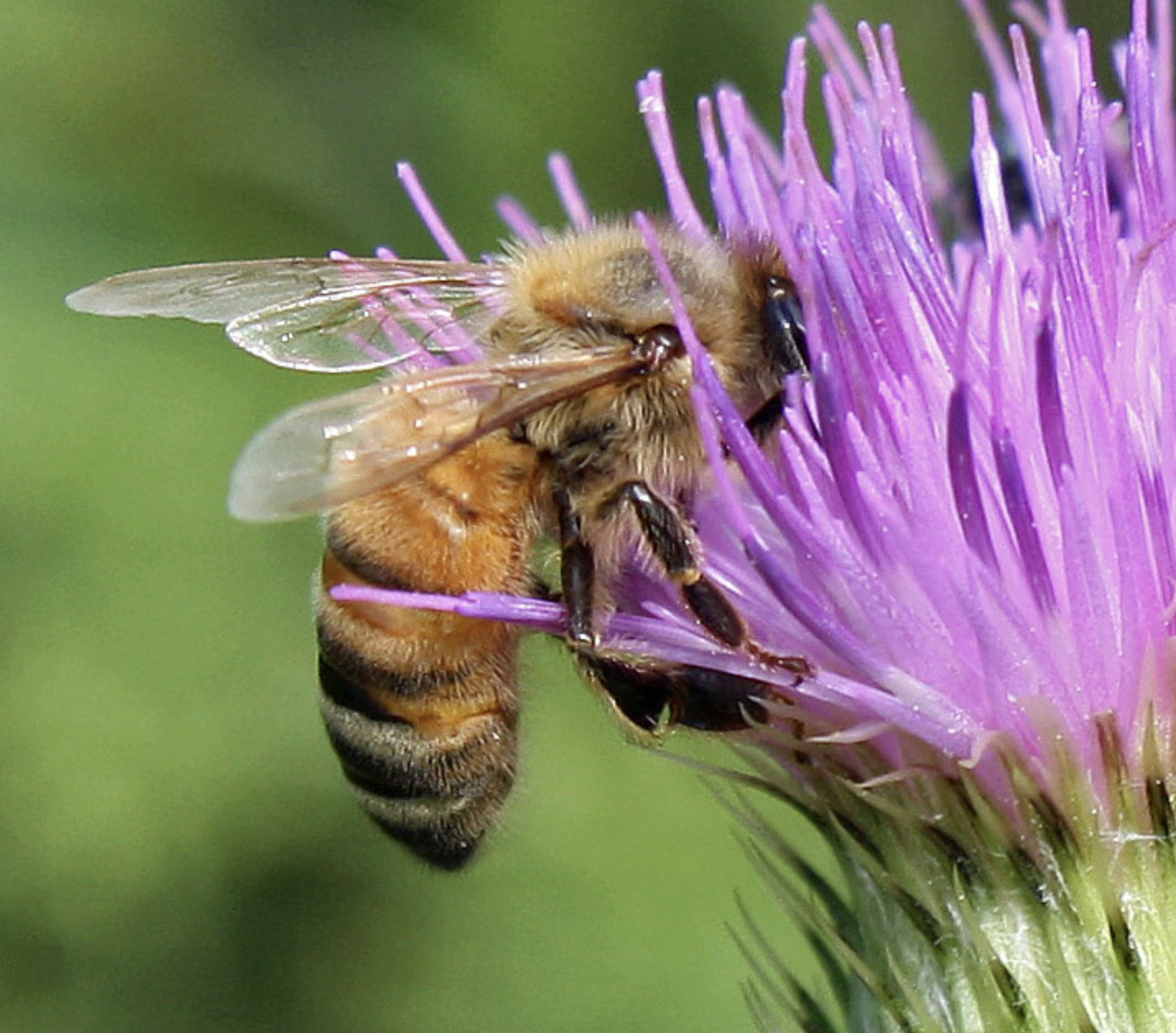
Honey bee gorges on a thistle (photo by Nina Munteanu)

This same lack of an ecological systems approach is being applied to climate change. And to AI.

Natalie Shapiro, systems ecologist at Kings College London, warned: “Once AI agents are embedded in real-world infrastructures with communication channels, delegated authority, and persistent memory, new classes of failure emerge.”

The challenge we face in raising alarms about AI are that they are largely abstract and theoretical, through papers and computer models. This is very similar to the climate projections made for decades about the effects of climate change.

In February 2025, at the AI Action Summit in Paris, Canada, China, and most other countries signed a declaration committing to safe, secure, and trustworthy AI development. The United States did not, arguing that caution meant falling behind.

Vice President Vance announced, “I’m not here to talk about AI safety; I’m here to talk about AI opportunity.” Parroting what the chemical industry argued in 1962, Vance warned that regulation could kill a transformative industry. Indeed, every company developing AI is racing for that golden prize, hoping to be the first to reach the technological singularity: a system that can match or exceed human capability —without any consideration of what this might actually mean. Why this must be achieved remains inconceivable to me. To push technology to surpass us?

As Greta Thunberg so aptly said in her January 21, 2020 speech in Davos about climate change: “our house is still on fire and you’re fuelling the flames.”

This gold rush mindset—so iconic for Americans and so many who have gone to America to pursue the American dream (whatever that is)—will usher us into a world that is no longer ours. But then again, perhaps it never was …

Sun streams through mist on a forest path, Watershed Park, BC (photo by Nina Munteanu)

Nina Munteanu is a Canadian ecologist / limnologist and novelist. She is co-editor of Europa SF and currently teaches writing courses at George Brown College and the University of Toronto. For the latest on her books, visit www.ninamunteanu.ca. Nina’s bilingual “La natura dell’acqua / The Way of Water” was published by Mincione Edizioni in Rome. Her non-fiction book “Water Is…” by Pixl Press (Vancouver) was selected by Margaret Atwood in the New York Times ‘Year in Reading’ and was chosen as the 2017 Summer Read by Water Canada. Her novel “A Diary in the Age of Water” was released by Inanna Publications (Toronto) in June 2020. You can read her just released eco-fiction thriller Gaia’s Revolution by Dragon Moon Press.