…A Different Christmas Story…
 Blika lived in Mossland with her clone sestras, gathering and sucking the delicious juices of detritus and algae. Never in a hurry, she lumbered from frond to frond on eight stubby legs in a gestalt of feasting and being. Blika led a microscopic life of bloated bliss—unaware of forests, human beings, quantum physics or the coming singularity…
A sudden fierce wind wicked her water away. In a burst of alien urgency, she wriggled madly for purchase on the frond as it shivered violently in the roaring wind. Blika lost hold and the wind swept her into a dark dryness. Her liquid life-force bleeding away from her, Blika crawled into herself. The moss piglet felt herself shrivel into oblivion.

No, not oblivion… more like a vast expanse…
She had entered a wonderland of twinkling lights in a vast fabric of dark matter. Where am I?
It occurred to her that she had never thought such a thing before. Am I dead? She’d never thought about existence before either. What has happened to me? And where are my sestras? She felt an overwhelming sadness. Something else she’d never felt before and wondered why she hadn’t. Did it have to do with that liquid that had always embraced her with its life-force? Here, in the darkness of space, she felt alone for the first time, separated from the plenum.
“Welcome, sestra!” boomed a large voice.
Blika beheld a being like her with eight arms and hands, seated on a throne and wearing a jeweled crown. “Why do you call me sestra?” Blika asked.
 “Because we are ALL sestras! You are a Tardigrade, aren’t you?” She waved all eight arms at Blika. “Well, I am your queen!” She looked self-pleased. “You are in Tunland now! The land of awareness. And now that you are self-aware, you can do anything! We’re special,” the queen ended in smug delight. The folds of her body jiggled and shimmered.
“Why are we special?” Blika asked.
“Because we are!” the queen said sharply, already losing patience with her new subject. “Don’t you know that you can survive anything? Ionizing radiation. Huge pressure. Boiling heat. Freezing cold. Absolutely no air. And no water…”
Blika gasped. Water was the elixor that connected her to her sestras and her world… her…home…
“How do you think you got here, eh?” the queen mocked her with a sinister laugh. Blika cringed. The queen went on blithely, “So, where do you come from, piglet?”
“I’m trying to find my way home…”

“Your way? All ways here are my ways!”
“But I was just thinking—”
“I warn you, child…” The queen glowered at her. “If I lose my temper, you lose your head. Understand?”
Blika nodded, now missing her home even more.
“Why think when you can do!” the queen added, suddenly cheerful again. “First there is BE, then THINK, then DO. Why not skip the think part and go straight to the do part? In Tunland we do that all the time,” she went on cheerfully. “And, as I was saying, here we can do anything!”
The queen grabbed Blika by an arm and steered them through the swirling darkness of space toward a box-like floating object. “This is my doctor’s Tardis…”
“Doctor who?” Blika naively asked.
The queen shivered off her annoyance and led them eagerly through the door and into her kingdom.
 They entered a strange place of giant blocks and whining sounds beneath a dark swirling sky.
The first thing Blika noticed was the huge tardigrades floating above them like dirigibles! Others were dressed in suits holding little suitcases and walking into and out of the huge blocks through doorways.
“We’ve crossed into another dimension—my universe,” the queen announced cheerfully. “Here you can do anything you want. So, why be tiny and feckless when you can be huge and powerful!” She studied Blika. “This is your moment to do what you could never do before. Think of the possibilities! You too could be huge!”
Blika stared at the strange world of smoke and metal and yearned for her simple mossy home.
 As if she knew what Blika wanted, the queen quickly added, “But you can never go back home!”
“Why not?” Blika asked, disappointed.
“Because, that’s why!” the queen shouted. Squinting, she added, “It’s too late. It’s just not done! Once you’ve learned what the colour green means you can’t erase its significance!”
“But I still don’t know what the colour green means,” Blika complained. “And, besides, I think you’re wrong. Becoming self-aware doesn’t stop you from going home. It just changes its meaning. And if I can really do what I want, then you can’t stop me. I’m going home to my family.”

The little hairs on the queen bristled. Then she grew terribly calm. “I won’t stop you, but…” The queen pointed to the floating tardigrades above them. “My water bear army will. I sentence you to remain in Tunland forever for your crime!”
“I haven’t done anything…yet.”
“You’ve broken the law of thinking before doing. In Tunland you have to skip that part—”
“You just made that up—”
“Doesn’t matter!” shouted the queen. “Sentence first, verdict afterwards!”
“That’s nonsense,” said Blika loudly. “The idea of having the sentence first.”
“Hold your tongue!” said the queen, turning a shade of chartreuse.
“I won’t,” said Blika.
“Off with your head!” the queen shouted at the top of her voice, pointing to Blika with all eight of her appendages. The water bear army hovered over Blika, taking aim. They were going to get more than her head with those lasers, Blika thought, and scurried for cover faster than her stubby eight legs had ever moved before. She was doomed—
Then, just beyond her sight, she saw—no felt—something far more significant than the colour green…or a huge bloated water bear army about to shoot her…
Water! She could taste it, smell it, hear it. Blika rejoiced with thoughts of her green home.
 The water came in a giant wet wave of blue and silver and frothy green. Tunland sloshed then totally dissolved. Blika surfed the churning water. That green! She knew what it was! Blika reached out with her deft claws and snagged a tumbling moss frond. It finally settled and there were her sestras! So many of them clinging to the same green moss! She’d found her family! She was home! Yes, it was a different home and different sestras, but it was also the same. Love made it so…
Merry Christmas!
 Tardigrades, also known as water bears or moss piglets, are plump, microscopic organisms with eight clawed legs. Fossils of tardigrades date to the Cambrian period over 500 million years ago. Over 900 species are known. Tardigrades were first described by the German pastor Johann August Ephraim Goeze in 1773 and given the name Tardigrada, meaning “slow stepper,” by the Italian biologist Lazzaro Spallanzani. Tardigrades reproduce asexually (parthenogenesis) or sexually. They mostly suck on the fluids of plant cells, animal cells, and bacteria.
Tardigrades survive adverse environmental stresses including:
- High and low temperatures (e.g., -273°C to +151°C)
- freezing and thawing
- changes in salinity
- lack of oxygen
- lack of water
- levels of X-ray radiation 1000x the lethal human dose
- some toxic chemicals
- boiling alcohol
- low pressure of a vacuum
- high pressure (up to 6x the pressure of the deepest ocean).
 Tardigrades respond to adverse environmental stresses through “cryptobiosis”, a process that greatly slows their metabolism. Tardigrades survive dry periods by shriveling up into a little ball or tun and waiting it out. They make a protective sugar called trehalose, which moves into the cells to replace the lost water. You could say that the water bear turns into a gummy bear.
Tardigrades have revived after a 100 years of desiccation. The antioxidants they make soak up dangerous chemicals and tardigrades can also repair damaged DNA from long term dry-out. In low oxygen, the tardigrade stretches out, relaxed muscles letting more water and oxygen enter its cells. The tardigrade’s cold-resistant tun also prevents ice crystals that could damage cell membranes.
Tardigrades survive temperatures, pressures and ionizing radiation not normally found on Earth. All this raises questions of origin and evolutionary adaptation. How—and why—have tardigrades developed the ability to survive the vacuum and ionizing radiation of space? Some suggest that it’s because they originated there. Scientists argue that they developed extreme tolerances from Earth’s volatile environments (e.g., water bodies that freeze or dry up, and undergo anoxia). But, if they can make it there, they can make it anywhere. So, where is “home” really?…
 My Book “Water Is…” by Pixl Press explores this creature and many other interesting things about water. Look for it on Amazon, Chapters, Kobo and in bookstores & libraries near you. If it’s not in your local library, ask for it.
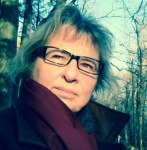 Nina Munteanu is an ecologist, limnologist and internationally published author of award-nominated speculative novels, short stories and non-fiction. She is co-editor of Europa SF and currently teaches writing courses at George Brown College and the University of Toronto. Visit www.ninamunteanu.ca for the latest on her books.
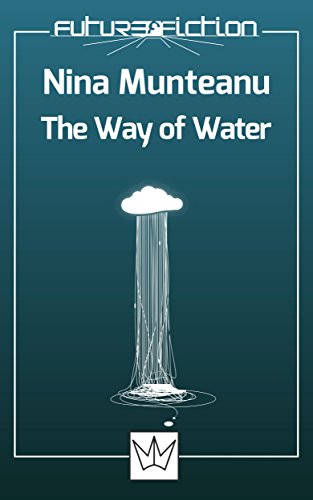
 Nina Munteanu’s “The Way of Water” and the anthology in which it appears was recently praised by Emilie Moorhouse in Prism International Magazine, in a review entitled “Courage and Imagination in Cli-Fi: Canadian Tales of Climate Change”. The review was also carried by the National Observer:
 “The Way of Water” (La natura dell’acqua) was translated by Fiorella Smoscatello for Mincione Edizioni. Simone Casavecchia of SoloLibri.net, describes “The Way of Water” in her review of the Italian version: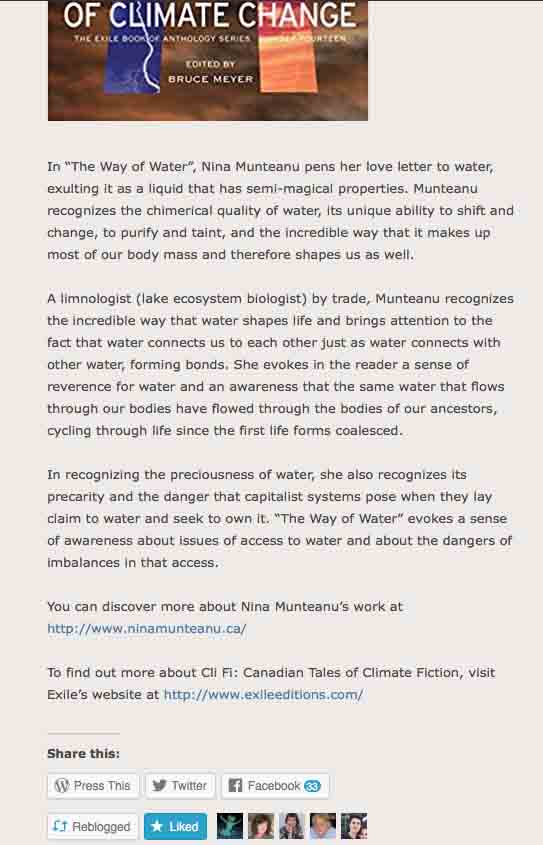
 “The Way of Water” will also appear alongside a collection of international works (including authors from Greece, Nigeria, China, India, Russia, Mexico, USA, UK, Italy, Canada (yours truly), Cuba, and Zimbabwe) in Bill Campbell and Francesco Verso’s Rosarium Publishing / Future Fiction’s anthology “New Dimensions in International Science Fiction” in April 2018.
 J.K. Rowling was an unemployed single mother on public assistance when she wrote the first book. The book was rejected by over a dozen publishers before a small British publisher, Bloomsbury, said yes.
 John Steinbeck worked through many odd jobs before earning enough to work as a full time writer. His day jobs included: apprentice painter, fruit picker, estate caretaker and Madison Square Garden construction worker. He also ran a fish hatchery in Lake Tahoe and did guided tours there.
 Margaret Atwood worked in a coffee shop. She says her first job experience was NOT ideal: She had to deal with a difficult cash register, a rude ex-boyfriend who would come by just to stare at her and barely tip, and fellow employees who were definitely not friendship material.
 Before his writing career blossomed, William Faulkner worked for the postal service, as postmaster at the University of Mississippi. In his resignation note, he summarized the struggle of art and commerce faced by most authors: “As long as I live under the capitalist system I expect to have my life influenced by the demands of moneyed people. But I will be damned if I propose to be at the beck and call of every itinerant scoundrel who has two cents to invest in a postage stamp. This, sir, is my resignation.”
 In a 1953 interview, J.D. Salinger shared that he had served as entertainment director on the HMS Kungsholm, a Swedish luxury liner. He drew on the experience for his short story “Teddy”, which takes place on a liner.
 Ursula Le Guin struggled initially to be published in the mainstream fiction world, but her first three novels, Rocannon’s World, Planet of Exile and City of Illusions, put her on the sci-fi map.
 An accomplished tenor, James Joyce made money singing for his supper before his work was published.
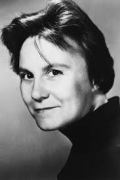 Harper Lee worked as a reservation clerk for Eastern Air Lines for several years, writing stories in her spare time. A windfall came when a friend offered her a Chirsmas gift of one year’s wages and one year off to write whatever she pleased; she wrote the first draft of “To Kill a Mockingbird”.
 Stephen King was a janitor for a high school as he struggled to get his fiction published. His time wheeling the cart through the halls inspired him to write the opening girl’s locker room scene in “Carrie”, his breakout novel.
 Kurt Vonnegut managed Americas first Saab dealership in Cape Cod during the late 1950s, a job he joked about in a 2004 essay, “I now believe my failure as a dealer … explains what would otherwise remain a deep mystery: why the Swedes have never given me a Nobel prize for literature.”
 When Virginia Woolf’s brilliant novels failed to find a publisher, she and her husband Leonard bought a printing press and set up their own publishing compay Hogarth Press in their living room. They published Woolf’s masterful novels, such as Orlando and To The Lighthouse, as well as T.S. Eliot’s The Waste Land, among other classics of the era.
 T.S. Eliot worked as a clerk for Lloyds Bank of London. During that time, he composed “The Waste Land”.
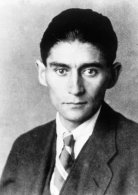 Franz Kafka served as the Chief Legal Secretary of the Workmen’s Accident Insurance Institute. Obviously.
 and The Hitchhiker’s Guide to the Galaxy author Douglas Adams was no exception: At one point, he served as a bodyguard for a wealthy Arabian family while he wrote for radio shows and Monty Python. Good writers are good multitaskers!
 James A. Michener was a teacher before writing only at age 40. He Michener is notable more for his output than his age. The Tales of the South Pacific author (whose Pulitzer Prize-winning book would later be adapted into a Broadway musical) wrote a staggering 40 books after the age of 40—nearly a
  book a year—after spending much of his life as a teacher.
 Nina Munteanu is an ecologist, limnologist and internationally published author of award-nominated speculative novels, short stories and non-fiction. She is co-editor of Europa SF and currently teaches writing courses at George Brown College and the University of Toronto. Visit

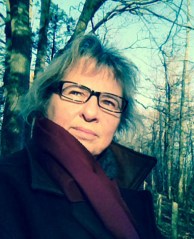 Nina Munteanu is an ecologist, limnologist and internationally published author of award-nominated speculative novels, short stories and non-fiction. She is co-editor of Europa SF and currently teaches writing courses at George Brown College and the University of Toronto. Visit
  Nina Munteanu’s near-future speculative short story “The Way of Water” in Bruce Meyer’s (editor) “Cli Fi: Canadian Tales of Climate Change”, published by
  A bilingual print book by
  ” ‘The Way of Water’ is to be ‘a shapeshifter,’ says Nina Munteanu in her dystopian narrative, where she draws a dark scenario and, unfortunately, not too improbable in the near future. In the universe of the story water has become a very precious commodity: rationed consumption, credits (always of water) accounted for and debts collected…The Chinese multinationals have exchanged the public debt of other states with their water reserves with which, now, they can control the climate, deciding when and where it will rain. Who understands this dirty game has been silenced, like Hilda’s mother, a limnologist, inexplicably arrested and never returned; like the daughter of two water vendors, mysteriously disappeared, after having decided not to bow to economic powers: Hanna, who now prefers secure virtual identities to evanescent real appearances. Water. The two, like the covalent bond of a complex molecule, develop a relationship of attraction and repulsion that will first make them meet and then, little by little, will change into a tormented love but, at the same time, so pure as to cause Hilda at great risk, to make an extreme decision that will allow Hanna to realize the strange prophecy that the internal voice, perhaps the consciousness of water, had resonated in the two women for a long time.
 “The Way of Water” will also appear alongside a collection of international works (including authors from Greece, Nigeria, China, India, Russia, Mexico, USA, UK, Italy, Canada (yours truly), Cuba, and Zimbabwe) in Bill Campbell and Francesco Verso’s

 Nina Munteanu is an ecologist, limnologist and internationally published author of award-nominated speculative novels, short stories and non-fiction. She is co-editor of Europa SF and currently teaches writing courses at George Brown College and the University of Toronto. Visit
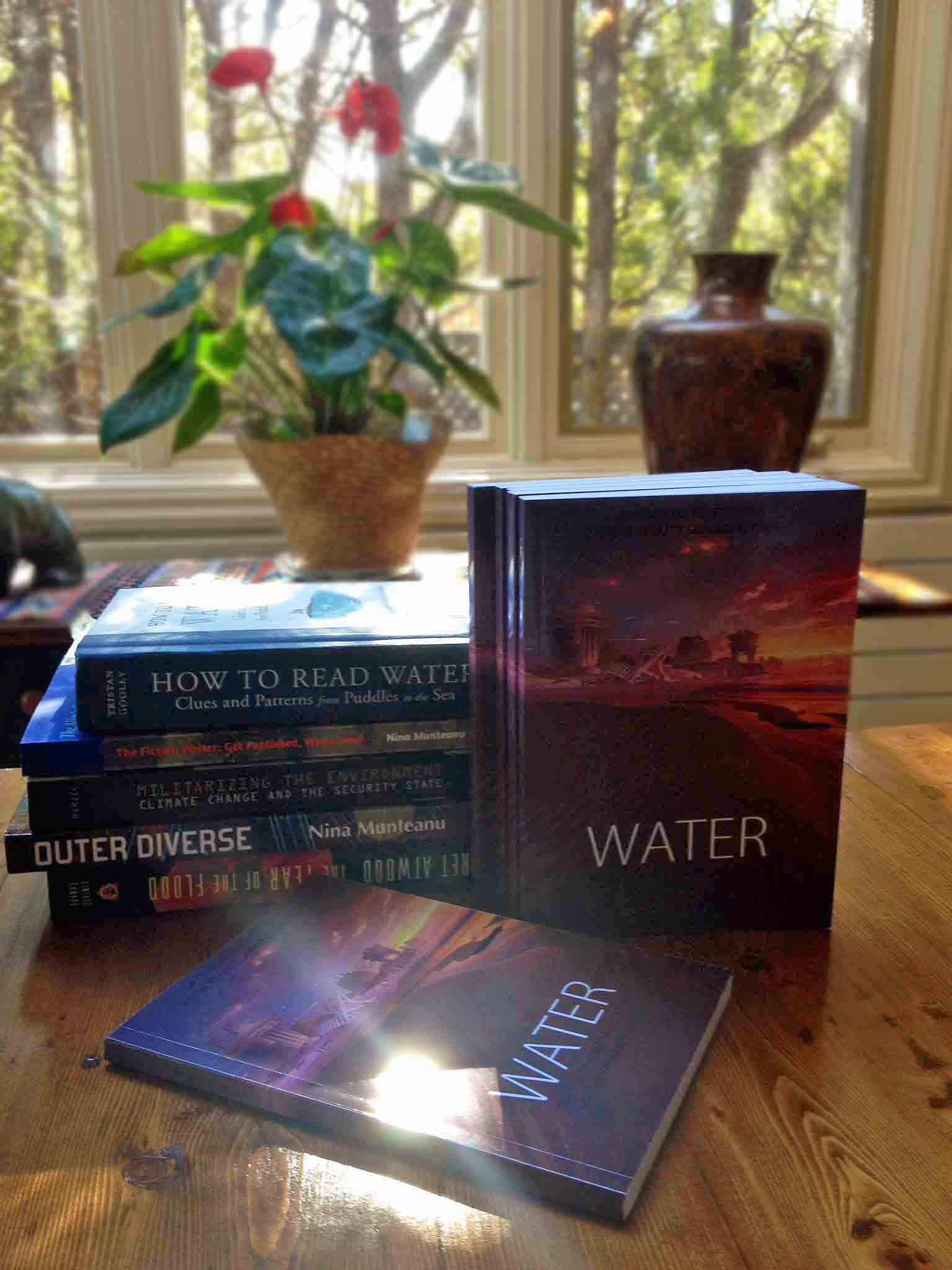
 In December 2017, “Water”, the first of Reality Skimming Press’s Optimistic Sci-Fi Series was released in Vancouver, BC. I was invited to be one of the editors for the anthology, given my passion for and experience with water.

 In the years that followed, Reality Skimming Press published several works, including the “Megan Survival” Anthology for which I wrote a short story, “

 Unclutter your writing: There is a Mennonite adage that applies to writing: “less is more”. Sentences in early works tend to be full of extra words (e.g., using “ing” verbs, add-ons like “he started to think” instead of simply “he thought”). Cut down the words in your paragraphs (often in the intro chapters) by at least 20%. Be merciless; you won’t miss them, believe me, and you will add others later in your second round of edits.
 Nina Munteanu is an ecologist and internationally published author of award-nominated speculative novels, short stories and non-fiction. She is co-editor of Europa SF and currently teaches writing courses at George Brown College and the University of Toronto. Visit
 Part 2 of the Beginning Novelist will focus on language.
