
Eramosa River, Guelph (photo by Nina Munteanu)
Does art imitate life or does life imitate art? Which came first? Story or reality? Do we dream about our past or of another reality? What is déjà vu…really? What came BEFORE the Big Bang? Did time even exist before we defined it?
The most frequent question asked of writers is “where do you get your ideas?” to which we often bumble some inadequate reply and evoke that indefinable abstruse term MUSE. But what is muse…really? Intuition? Divine inspiration?
In a quote from his autobiographical essay, Philip Pullman says, “It’s important to put it like that: not ‘I am a writer’ but rather ‘I write stories’. If you put the emphasis on yourself rather than your work, you’re in danger of thinking that you’re the most important thing. But you’re not. The story is what matters and you’re only the servant, and your job is to get it out on time and in good order.” But where do they come from, Philip?
In my 2012 historical fantasy “The Last Summoner” (Starfire), the young Baroness Vivianne discovered that she could alter History. Having travelled into the future (e.g., 2010 from 1410 Poland), she used hindsight to recreate a new path for humanity, one devoid of two world wars and the evils consequently unleashed. Vivianne traveled back in time and tried to subvert critical events (time/space nodes) involving Emperor Wilhelm II, Annie Oakley, Nikola Tesla and others. In each case, her interference failed to alter the event in the way she had hoped. In fact, while the details of History differed, the end result remained pretty much the same. For instance, it seemed that no matter what she did to prevent World War I, it happened anyway.
Vivianne discovered that she was unable to alter History the way she’d intended. She found to her dismay that every time she set out to alter a crucial event, quirky consequences ensued and events did not yield to her clever manipulations—as though History had an uncooperative conscience and a predetermined destiny to fulfill.
OK… That’s just me being the writer, subverting the protagonist with obstacles played out in ever-twisting plots and subplots. But, what if…
What if… History (as in any realized reality) is predetermined through its harmonic relationship with other realizable realities? Given that all mass and energy is governed and expressed through frequency, and given that in physics (and music) frequencies exist as multiples of some fundamental frequency; then does it not follow that threads of realizable realities, intertwined around a fundamental path (of history), would move inexorably toward a common destiny?
A recent article I ran across on a writer’s forum discussed how artists tend to mimic each other’s ideas, or come up with the same ideas at the same time. Aside from outright stealing (which happens a lot less than people think), multiple and independent formulation of same ideas is also more common than people think. And it’s increasing. Multiple-independent discoveries (and inventions) have increased in society a thousand-fold since the nineteenth century. Some followers of Jungian thought suggest that this is because the fabric of our society is acting more and more like a neural network, learning, interacting and sharing toward the achievement of a common zeitgeist.
What if… the whole of our society behaves like an autopoietic system, self-organized, adaptive, evolving and tapping into—and possibly influencing—a common super consciousness? One related to a fundamental frequency?
Ray Tomes of the Alexandria City Meeting in 1996 suggested that “the pattern of cycles found in every field of study on earth, in astronomy and also in music are all explained by a simple rule that says that a single initial frequency will generate harmonics and each of these will do the same.”
Why do galaxies and stars form where they do? Toss a handful of sand on a drum and then beat it (not at the centre); you will find that the sand moves to certain places and congregates into predetermined patterns. These are the nodes of the standing waves in the drum. The standing waves are electromagnetic waves (e.g., radio waves, light and x-rays etc). Consider the “predetermined” beauty of natural phenomena. Consider the Fibonacci numbers and the golden mean in nature. Consider fractals and the Mandelbrot Set, quantum entanglement, and Schumann Resonance. Consider synchronicity, autopoiesis and self-organization…
Einstein tells us that, “everything in life is vibration.” Schroedinger’s wave function describes us as vibrating waves.
The normal standing wave created in the Schumann Cavity (the cavity formed by the Earth’s conducting surface and the ionosphere) occurs at a wavelength equal to the circumference of the Earth, and at a base frequency (and highest intensity) of between 6-8 Hz (7.83 Hz). This is called Schumann Resonance Frequency, after the man who formulated it mathematically in 1954 (after Nikola Tesla described it in the late 1800s). Some call this basic frequency the Earth’s “heartbeat” or the “tuning fork” of the planet, suggesting that it generates natural healing properties when living things are entrained to its rhythm. It turns out that all biological systems resonate at this same frequency range. The electrical resonance of the Earth lies between 6-8 Hz. This coincides with alpha rhythms produced by the human brain during meditation, relaxation and creativity.
“Vibrations are dynamic things not unlike living things,” John Keely, researcher in harmonics, adds. “They are active and prolific in their dynamics as are their harmonic offspring. These discrete tones of the harmonics interact with each other… They will in a very natural way mix, merge and divide among themselves just like living cells.”
 In “Outer Diverse”, the first book of “The Splintered Universe Trilogy” (Starfire), Galactic Guardian Rhea Hawke speaks with Ka, an alien mystic, about music, frequency and harmony. And something called “the music of the spheres”. Says Ka:
“…The particular tone of the planet’s song is dependent upon the ratio of its orbit, just like the relationship of a keynote to its octave. The cosmic beauty of the octave is that it divides wholeness into two audibly distinguishable parts, yet remains recognizable as the same musical note…We, of course, now know that ratios in frequencies of spectra of elements compare to intervals in a musical chord,” Ka went on, leaning forward on his massive feathered arms. “Given that a pitch of sound is analogous to the color of light, both being caused by the frequencies of their waves, we can characterize entire worlds based on these properties,” he ended, beak-mouth breaking into a beaming grin that showed his round little teeth. “It was your Kepler—a scientist I believe—who suggested that when planets formed angles equivalent to particular harmonic ratios, a resonance was created both in the archetypal ‘Earth soul’ and in the souls of individuals born under those configurations…He called it a celestial
imprint,” Ka continued, now leaning forward with his cup in both hands, “and said that in the vital power of the human being, ignited at birth, that remembered image glows. That geometric-harmonic imprint is the music that impels each listener to dance … from the particle to the cosmic. Your own heart finds its shifting harmony between excessive order and complete randomness, encompassing complex variability—a symphony—in its beating pattern. Sound—vibration—is the language of the mind and the secret to creation.”
We are creatures of this planet, co-evolved with Earth’s environment through the helix structure of our DNA and the water coursing through us; this is reflected in our behavior, culture, intelligence and beliefs. Our entire bodies resonate with all other life at a similar frequency as the planet Earth. Our brains in their most “divine” state of creativity, prayer or meditation reflect the same frequency. We are a gestalt culmination of light, wave-pulse, matter and motion resonating with this beloved planet Earth. Our minds, bodies and souls “sing” its choral aria. What is muse if not this wonderful “intent”?
So, which came first? Story or reality?
 Nina Munteanu is an ecologist and internationally published author of award-nominated speculative novels, short stories and non-fiction. She is co-editor of Europa SF and currently teaches writing courses at George Brown College and the University of Toronto. Visit www.ninamunteanu.ca for the latest on her books.
 When I first heard the writer’s edict “write what you know” I rejoined: but I write science fiction—I write about the unknown. What I still had to learn was that by describing “the other” SF really describes “us”. We explore ourselves through our relationship with the unknown. We do this by ensuring that all our plotlines reflect theme.


 There are many ways to manage the fine balance of exposition, telling and showing and
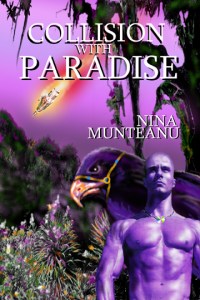 Write to the audience’s expectations (given the promise of your work): success of stories with readers will rely on the alignment of expected story structure, tone and endings. My romance SF therefore reads differently from my hard SF in so many ways.
 Write to the understanding level of your intended audience: how and what I write for my hard science fiction audience (with expectations on accurate and intelligent exploration and extrapolation on science) is different from the style I use for my historical fantasy. This will include “voice”, language and use of specific vocabulary, terms and concepts, sentence structure and pace.
 At Calgary’s When Words Collide this past August, I moderated a panel on Eco-Fiction with publisher/writer Hayden Trenholm, and writers Michael J. Martineck, Sarah Kades, and Susan Forest. The panel was well attended; panelists and audience discussed and argued what eco-fiction was, its role in literature and storytelling generally, and even some of the risks of identifying a work as eco-fiction.
 I submit that if we are noticing it more, we are also writing it more. Artists are cultural leaders and reporters, after all. My own experience in the science fiction classes I teach at UofT and George Brown College, is that I have noted a trend of increasing “eco-fiction” in the works in progress that students are bringing in to workshop in class. Students were not aware that they were writing eco-fiction, but they were indeed writing it.
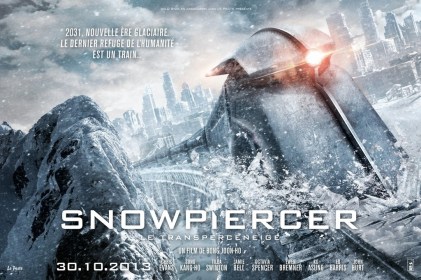 Just as Bong Joon-Ho’s 2014 science fiction movie Snowpiercer wasn’t so much about climate change as it was about exploring class struggle, the capitalist decadence of entitlement, disrespect and prejudice through the premise of climate catastrophe. Though, one could argue that these form a closed loop of cause and effect (and responsibility).
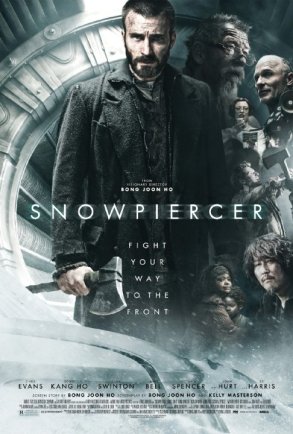 The self-contained closed ecosystem of the Snowpiercer train is maintained by an ordered social system, imposed by a stony militia. Those at the front of the train enjoy privileges and luxurious living conditions, though most drown in a debauched drug stupor; those at the back live on next to nothing and must resort to savage means to survive. Revolution brews from the back, lead by Curtis Everett (Chris Evans), a man whose two intact arms suggest he hasn’t done his part to serve the community yet.
 In my latest book Water Is… I define an ecotone as the transition zone between two overlapping systems. It is essentially where two communities exchange information and integrate. Ecotones typically support varied and rich communities, representing a boiling pot of two colliding worlds. An estuary—where fresh water meets salt water. The edge of a forest with a meadow. The shoreline of a lake or pond.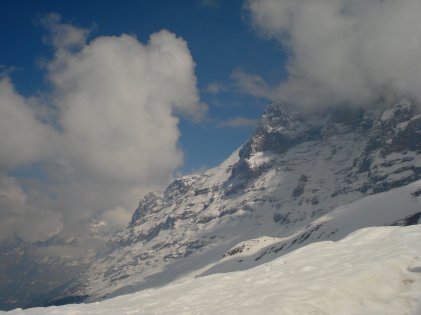
 Early on in the recent science fiction movie Interstellar, NASA astronaut Cooper declares that “the world’s a treasure, but it’s been telling us to leave for a while now. Mankind was born on Earth; it was never meant to die here.” After showing Cooper how their last corn crops will eventually fail like the okra and wheat before them, NASA Professor Brand answers Cooper’s question of, “So, how do you plan on saving the world?” with: “We’re not meant to save the world…We’re meant to leave it.” Cooper rejoins: “I’ve got kids.” To which Brand answers: “Then go save them.”
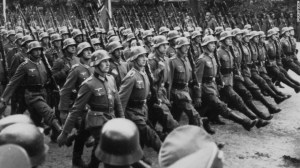 “Scientists are telling us that the whole territory of modern history, from the end of World War II to the present, forms the threshold to a new geological epoch,” adds Jonsson. This epoch succeeded the relatively stable natural variability of the Holocene Epoch that had endured for 11,700 years. Scientists Paul Crutzen and Eugene Stoermer call it the Anthropocene Epoch. Suggestions for its inception vary from the time of the Industrial Revolution in the late 1700s with the advent of the steam engine and a fossil fuel economy to the time of the Great Acceleration—the economic boom following World War II.
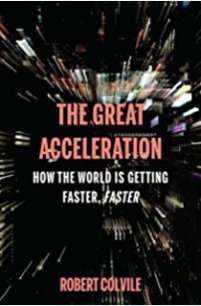 The Great Acceleration describes a kind of tipping point in planetary change and succession resulting from a rising market society.
 The Great Acceleration encompasses the notion of “planetary boundaries,” thresholds of environmental risks beyond which we can expect nonlinear and irreversible change on a planetary level. A well known one is that of carbon emissions. Emissions above 350 ppm represent unacceptable danger to the welfare of the planet in its current state; and humanity—adapted to this current state. This threshold has already been surpassed during the postwar capitalism period decades ago.
 In Amitav Ghosh’s diagnosis of the condition of literature and culture in the Age of the Anthropocene (The Great Derangement: Climate Change and the Unthinkable), he observes that the literary world has responded to climate change with almost complete silence. “How can we explain the fact that writers of fiction have overwhelmingly failed to grapple with the ongoing planetary crisis in their works?” continues Jonsson, who observes that, “for Ghosh, this silence is part of a broader pattern of indifference and misrepresentation. Contemporary arts and literature are characterized by ‘modes of concealment that [prevent] people from recognizing the realities of their plight.’”
 Jonsson tells us that bourgeois reason takes many forms, showing affinities with classical political economy, and—I would add—in classical physics and Cartesian philosophy. From Adam Smith’s 18th Century economic vision to the conceit of bankers who drove the 2008 American housing bubble, humanity’s men have consistently espoused the myth of a constant natural world capable of absorbing infinite abuse without oscillation. When James Lovelock and Lynn Margulis proposed the Gaia Hypothesis in the 1970s, many saw its basis in a homeostatic balance of the natural order as confirmation of Nature’s infinite resilience to abuse. They failed to recognize that we are Nature and abuse of Nature is really self-abuse.
 Louise Fabiani of Pacific Standard suggests that novels are still the best way for us to clarify planetary issues and prepare for change—even play a meaningful part in that change. In her article “The Literature of Climate Change” she points to science fiction as helping “us prepare for radical change, just when things may be getting too comfortable.” Referring to our overwhelming reliance on technology and outsourced knowledge, Fabiani suggests that “our privileged lives (particularly in consumer-based North America) are built on unconscious trust in the mostly invisible others who make this illusion of domestic independence possible—the faith that they will never stop being there for us. And we have no back-ups in place should they let us down.” Which they will—given their short-term thinking.
 In my interview with Mary Woodbury on
  My own works of
 Whether told through cautionary tale / political dystopia (e.g., Margaret Atwood’s MaddAddam trilogy; Bong Jung-Ho’s Snowpiercer), or a retooled version of “alien invasion” (e.g., Cixin Liu’s 2015 Hugo Award-winning The Three Body Problem), these stories all reflect a shift in focus from a technological-centred & human-centred story to a more eco- or world-centred story that explores wider and deeper existential questions. So, yes, science fiction today may appear less technologically imaginative; but it is certainly more sociologically astute, courageous and sophisticated.
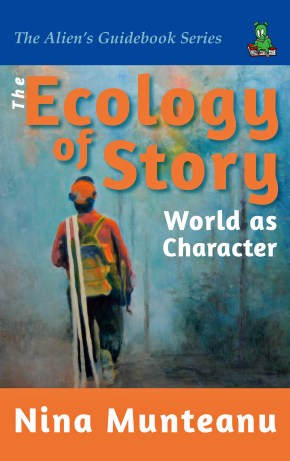 One of the lectures I give to my science fiction writing students is called “Ecology in Storytelling”. It’s usually well attended by writers hoping to gain better insight into world-building and how to master the layering-in of metaphoric connections between setting and character.1
 for its larvae. They do this by secreting a chemical that mimics how ants communicate; the ants in turn adopt the newly hatched caterpillars for two years. There’s a terrible side to this story of deception. The Ichneumon wasp, upon finding an Alcon caterpillar inside an ant colony, secretes a pheromone that drives the ants into confused chaos; allowing it to slip through the confusion and lay its eggs inside the poor caterpillar. When the caterpillar turns into a chrysalis, the wasp eggs hatch and consume it from inside.

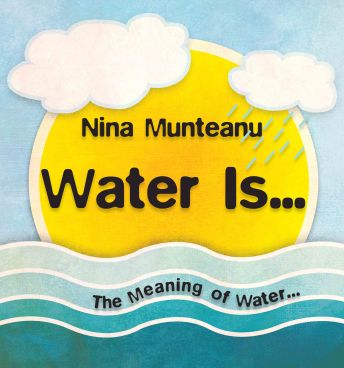 You can read more about this in my book “
