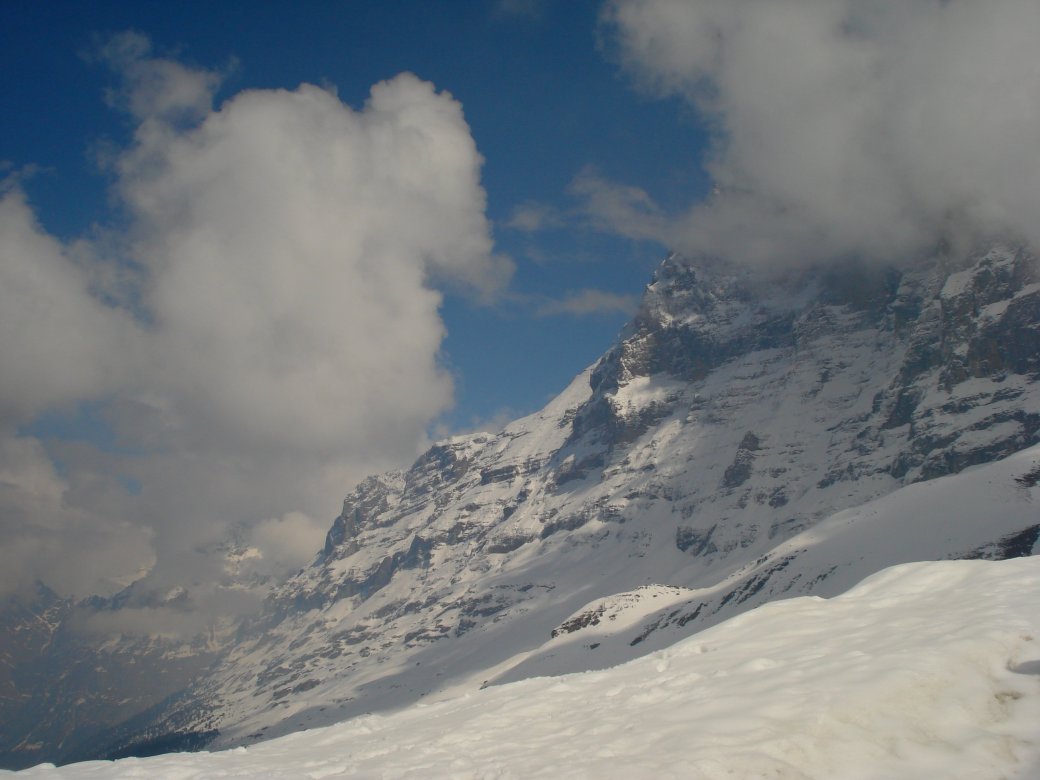
Mountain peaks at Zermatt, Switzerland (photo by Nina Munteanu)
Writer and essayist Annis Pratt begins her compelling essay “World of Wonder, World of Reason” in Impakter, with the question: “Do we live in a world of wonder where Nature ultimately calls the shots or a world of reason where Homo Sapiens are in control?”
Invoking the now vogue term “Anthropocene”, she puts it another way: “Is Nature dependent upon our definitions of it, or does it both precede and transcend human consciousness? Does the term “Anthropocene” signal an apocalyptic shift that places us at the center of the Universe and if so, is the death of Nature upon us, or are we mistaken?”
Pratt examined and synthesized four works of different perspectives on nature and humanity to answer these questions. My book “Water Is…” was among them:
- “The Invention of Nature: Alexander von Humboldt’s New World” by Andrea Wulf (Knoff, 2015)
- “The Hidden Life of Trees: What They Feel, How They Communicate” by Peter Wohlleben, translated by Jane Billinghurst (Greystone Books, 2016)
- “Water Is…The Meaning of Water” by Nina Munteanu (Pixl Press, 2016)
- “Sapiens: A Brief History of Humankind” by Yuval Noah Harari (Harper Collins, 2015)
The first three, says Pratt, are scientists who made close observations of nature that filled them with wonder at the complexity of its processes: “Alexander von Humboldt, an 18th century Prussian scientist, the father of ecology; Peter Wohlleben, an ecologist who worked over twenty years for the forestry commission in Germany and Nina Munteanu, a limnologist, university teacher and award-winning ecologist.” The fourth, an Israeli historian, Yuval Noah Harari took a dramatically different stance, says Pratt. “He deplores our epoch when human egos have run amuck, putting Nature itself in peril.”
Wonder: Alexander von Humboldt
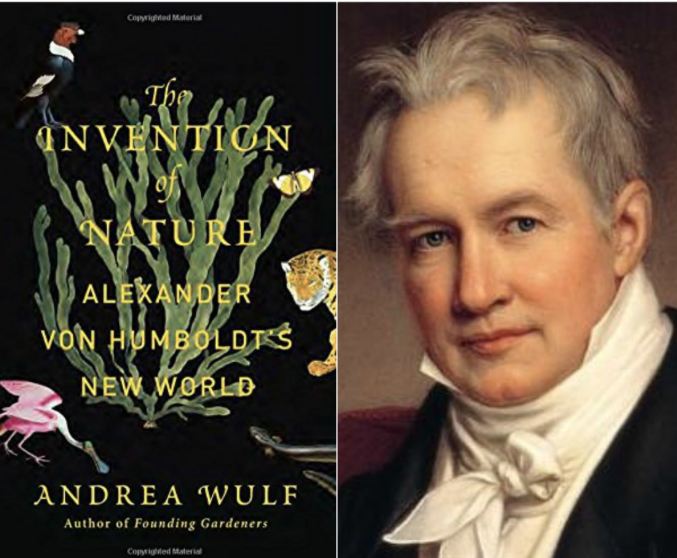
Alexander von Humboldt lived from 1769-1859 (when Darwin published Origin of Species) and considered a genius, polymath, explorer and keen observer of botanical phenomena. In a world and time when Enlightenment thinkers and scientists predicated their observations on a premise of a static unchanging Nature (recall this was prior to Darwin’s controversial theory of evolution), von Humboldt discovered that nature’s one constant was change. As with von Goethe and von Schelling, von Humboldt embraced Naturphilosophie to comprehend nature in its totality and to outline its general theoretical structure. Naturphilosophie espoused an organic and dynamic worldview as an alternative to the atomist and mechanist outlook prevailing at the time.
Von Humboldt succeeded in proving that species change according to their circumstances, such as altitude or climate. According to Wulf, Bildungsreich was a force that shaped the formation of bodies, with every living organism, from humans to mould, having this formative drive. Von Humboldt’s “discovery that natural phenomena are inter-influencing elements of an interdependent whole, connected and interacting along an ‘invisible web of life,’ made Humboldt the first ecologist,” writes Pratt.
Wonder: Peter Wohlleben
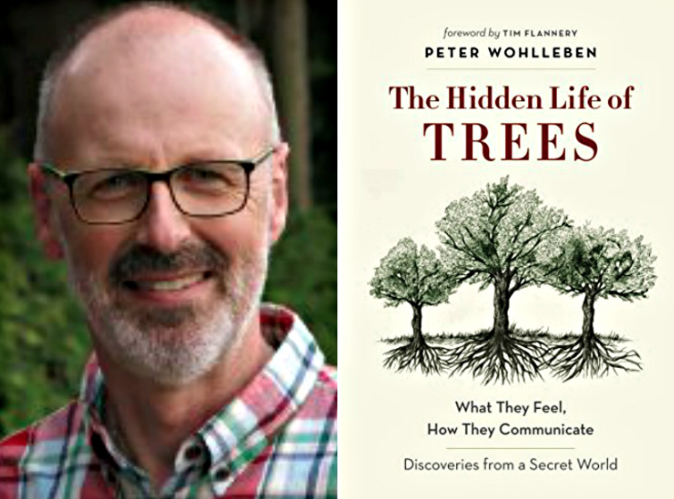
“Contemporary German forest ranger Peter Wohlleben belongs to the same school of Naturalphilosophie as Humboldt, bringing a similar sense of curiosity and wonder to his botanical observations,” says Pratt, who suggests that criticism aimed at his work arose in response to the anthropomorphic “voice” he uses—despite validation through the work of Dr. Suzanne Simard, Professor of Forest Ecology at the University of British Columbia.
Simard showed that trees “talk” to each other through electrical impulses as part of an underground network of fungi: “like fiber-optic internet cables.”
Pratt describes the events that led to Wohlleben’s path as an ecologist and his series of “hidden life of” books: he had become uncomfortable chopping down trees and spraying the forest with chemicals and became depressed when his superiors refused to consider his alternative methods. Wohlleben had decided to quit his job and emigrate to Sweden, when the town of Hummel decided to annul its state contract, reconstitute itself as a private preserve, and hire him to implement his innovations.
Wohlleben uses the findings of Simard and other scientists that trees communicate, nourish and heal each other. “It appears that the nutrient exchange and helping neighbors in times of need is the rule, and this leads to the conclusion that forests are superorganisms with interconnections much like ant colonies,” writes Wohlleben.
Wonder: Nina Munteanu

“In the same way that Peter Wohlleben approaches the hidden life of trees with a combination of scientific observation and enthusiastic wonder, in Water Is…The Meaning of Water, Canadian limnologist Nina Munteanu observes the hidden properties of water with a scientist’s eye for detailed processes and a sense of amazement at their intricacies,” writes Pratt. “Echoing Humboldt’s discovery of the interwoven multiplicities of nature, [Munteanu] “transcends ‘Newtonian Physics and Cartesian reductionism aimed at dominating and controlling Nature’”:
“Science is beginning to understand that coherence, which exists on all levels—cellular, molecular, atomic and organic—governs all life processes. Life and all that informs it is a gestalt process. The flow of information is fractal and multidirectional, forming a complex network of paths created by resonance interactions in a self-organizing framework. It’s stable chaos. And water drives the process”—Nina Munteanu, Water Is…
“In addition to providing a gripping analysis of water science,” says Pratt, Nina Munteanu’s Water Is… “provides an encyclopedic trove of quirky observations, like how Galileo understood water flow, the Chinese character for water, Leonardo da Vinci’s water drawings, the Gaia Hypothesis, and David Bohm’s theory of flux.”
“the Gaia Hypothesis proposes that living and non-living parts of our planet interact in a complex network like a super-organism. The hypothesis postulates that all living things exert a regulatory effect on the Earth’s environment that promotes life overall…Much of nature – if not all of it – embraces this hidden order, which I describe as ‘‘stable chaos’”—Nina Munteanu, Water Is…
Reason: Yuval Noah Harari
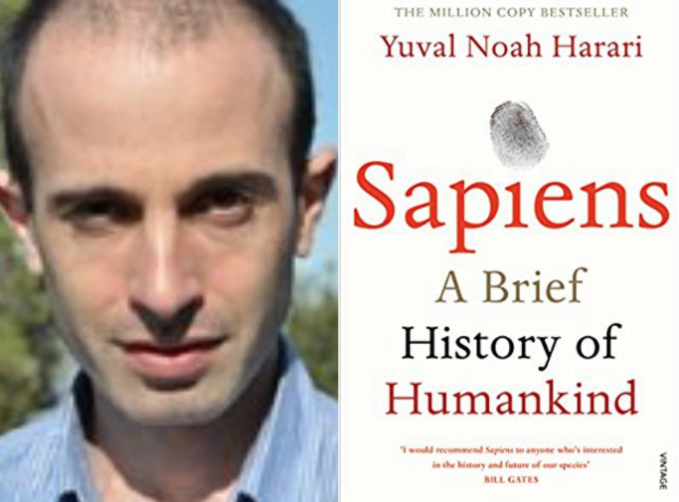
Israeli Historian, Harari sees Homo Sapiens as destructively self-serving. “Even in our earliest history,” Pratt tells us, “he suspects we were responsible for the extirpation of the Neanderthals. Everywhere we settled, mammoths and other megafauna suffered mass extinction. “The historical record,” he concludes, “makes Homo Sapiens look like an ecological serial killer.”
We are like the bully elbowing his way at school. And our casualties—such as the extinction of a dozen species a day—are innocence lost.
According to Harari, while the industrial revolution “liberated humankind from dependence on the surrounding ecosystem,” it provided no lasting benefit to the human race: “Many are convinced that science and technology hold the answers to all our problems…” but, “Like all other parts of our culture, it is shaped by economic, political and religious interests…We constantly wreak havoc on the surrounding ecosystem, seeking little more than our own comfort and amusement, yet never finding satisfaction.”
Human-Centred or Nature-Centred?
To answer Pratt’s first question: “Do we live in a world of wonder where Nature ultimately calls the shots or a world of reason where Homo Sapiens are in control?” she invokes global warming to suggest that we don’t have the last say in the planet’s welfare: “Aren’t these tumultuous catastrophes demonstrative of nature’s ability to rise over and against what we throw at it? Global warming may end civilization and perhaps the human species along with so many others we have destroyed, but are human beings really capable of engineering the destruction of the planet? I doubt it.”
I concur. While humanity is capable of extensive natural destruction, Gaia will not only accommodate—it will prevail. Very soon—some think now already—Nature may no longer resemble that “friendly” and stable Holocene environment that we’ve come to rely on and exploit so heedlessly. Species will die out. Others will take their place in a shifting world.
As the first swell of the climate change tidal wave laps at our feet, we are beginning to see the planetary results of what humanity has helped create and exacerbate. Humanity has in many ways reached a planetary tipping point; a threshold that will be felt by all aspects of our planet—both animate and inanimate—as the planet’s very identity shifts.
One thing is certain: environments will cease to be hospitable for humanity. Compared with many other life forms, we actually have very narrow tolerances to stay healthy and survive:
- We need lots of water (70%)
- We freeze or cook beyond the 40-100 degree F range in a galaxy that goes from minus 400 at the moon’s south pole to 25 million degrees inside the sun
- We faint from lack of oxygen on our tallest mountains
- We need a pH balance of 6.5 to 7.5 to stay alive
- Ionizing radiation kills us at low concentrations
- Many compounds in the wrong amounts are toxic to us
But something will benefit. For every perturbation imposed there is adaptation and exploitation, stitched into the flowing tapestry of evolution. That is ecology.
Ecology studies relationships and change in our environment: how we interact, impact one another, change one another. Ecology studies individuals, communities and ecosystems and provides insight into the dynamics that cause and result from these interactions.
 In my upcoming novel “A Diary in the Age of Water” (due in May 2020) a journaling limnologist in the near-future reflects on the acidified oceans in her current world: flagellates (microscopic plankton with flagella) have outcompeted diatoms (food for many species) and are mainstay of the box jellyfish—the top marine predator from the Proterozoic Era—that has overrun the entire ocean. The box jellyfish is currently overrunning Tokyo Bay. The story proceeds into the future when dead zones—currently found in the Gulf of Mexico, the mouth of the Mississippi River, Chesapeake Bay, Kattegat Strait, and Baltic Sea—occur on virtually every marine and freshwater coast; the AMOC eventually fails and the oceans grow toxic; sea level immerses Florida, the Pudong District, the entire Maldives, and dozens of coastal cities; and global temperature has triggered a heat-related epidemic involving heat shock proteins. This is a world very different from the one we have grown accustomed to; it is a harsh, hostile world that no longer treats us well; but it is a world, none the less.
Living with Natural Succession
One of the first things we learn in Ecology 101 is that change is the one constant in biology; systems endure by striking dynamic equilibria within a shifting tapestry. Succession—the natural procession of one community to another—lies at the core of a dynamic and functional ecosystem, itself evolving to another system through succession.
“Still immature and undeveloped, an oligotrophic lake often displays a rugged untamed beauty. An oligotrophic lake hungers for the stuff of life. Sediments from incoming rivers slowly feed it with dissolved nutrients and particulate organic matter. Detritus and associated microbes slowly seed the lake. Phytoplankton eventually flourish, food for zooplankton and fish. The shores then gradually slide and fill, as does the very bottom. Deltas form and macrophytes colonize the shallows. Birds bring in more creatures. And so on. As Nature tames the unruly lake over time, one thing replaces another. As a lake undergoes its natural succession from oligotrophic to highly productive eutrophic lake, its beauty mellows and it surrenders to the complexities of destiny. Minimalism yields to a baroque richness that, in turn, heralds extinction. The lake shrinks to a swamp then buries itself under a meadow.”—Nina Munteanu A Diary in the Age of Water
Ecology and Story
 In a talk I give at conferences on “Ecology and Story”, I provide examples of extremophiles that have adapted to and thrive in extreme conditions on Earth. The brine shrimp of Mono Lake—an endorheic lake that is extremely salty, anaerobic and alkaline—happily hatch in the trillions every year. The bacteria of Rio Tinto—toxic with heavy metals—thrive on the iron through a biofilm that protects them. Radiotrophic fungi feed on gamma radiation at the Chernobyl nuclear power plant. Life on Earth will endure and prevail—not despite but alongside humanity’s imposed ecological succession.
The question is, will we survive our own succession?
Literature of the Anthropocene
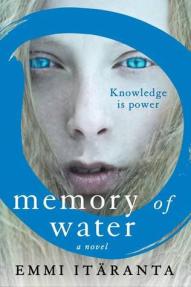 Terms such as eco-fiction, climate fiction and its odd cousin “cli-fi”, have embedded themselves in science fiction and literary fiction terminology; this fiction has attracted a host of impressive authors who write to its calling: Margaret Atwood, Emmi Itäranta, Jeff VanderMeer, Richard Powers, Barbara Kingsolver, Upton Sinclair, Ursula Le Guin, JoeAnn Hart, Frank Herbert, John Yunker, Kim Stanley Robinson, James Bradley, Paolo Bacigalupi, Nathaniel Rich, David Mitchell, Junot Diaz, Claire Vaye Watkins, J.G. Ballard, Marcel Theroux, Thomas Wharton—just to name a few. The list is growing. Of course, I’m on it too. Many of these works explore and illuminate environmental degradation and ecosystem collapse at the hands of humanity.
.
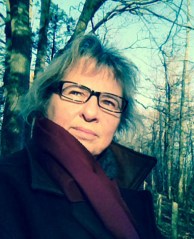 Nina Munteanu is an ecologist, limnologist and internationally published author of award-nominated speculative novels, short stories and non-fiction. She is co-editor of Europa SF and currently teaches writing courses at George Brown College and the University of Toronto. Visit www.ninamunteanu.ca for the latest on her books.

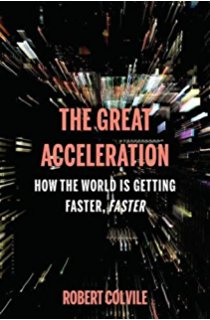 Scientists have suggested that we have now slid from the relatively stable Holocene Epoch to the
  Take water, for instance. Today, we control water on a massive scale. Reservoirs around the world hold 10,000 cubic kilometres of water; five times the water of all the rivers on Earth. Most of these great reservoirs lie in the northern hemisphere, and the extra weight has slightly changed how the Earth spins on its axis, speeding its rotation and shortening the day by eight millionths of a second in the last forty years. Ponder too, that an age has a beginning and an end. Is climate change the planet’s way of telling us that the


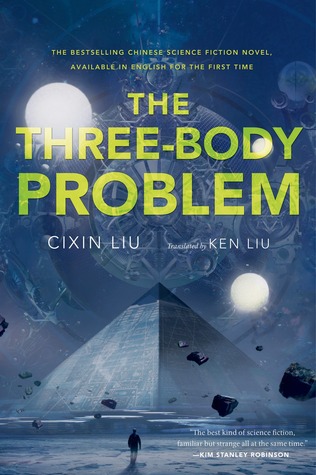 In the story, a secret military project sends signals into space to establish contact with aliens. An alien civilization on the brink of destruction captures the signal and plans to invade Earth. One of the main protagonists is Ye Wenjie, a young woman traumatized after witnessing the execution of her scientist father in a brutal cleansing at the height of the Cultural Revolution. Considered a traitor, young Wenjie is sent to a labour brigade in Inner Mongolia, where she witnesses further destruction by humans: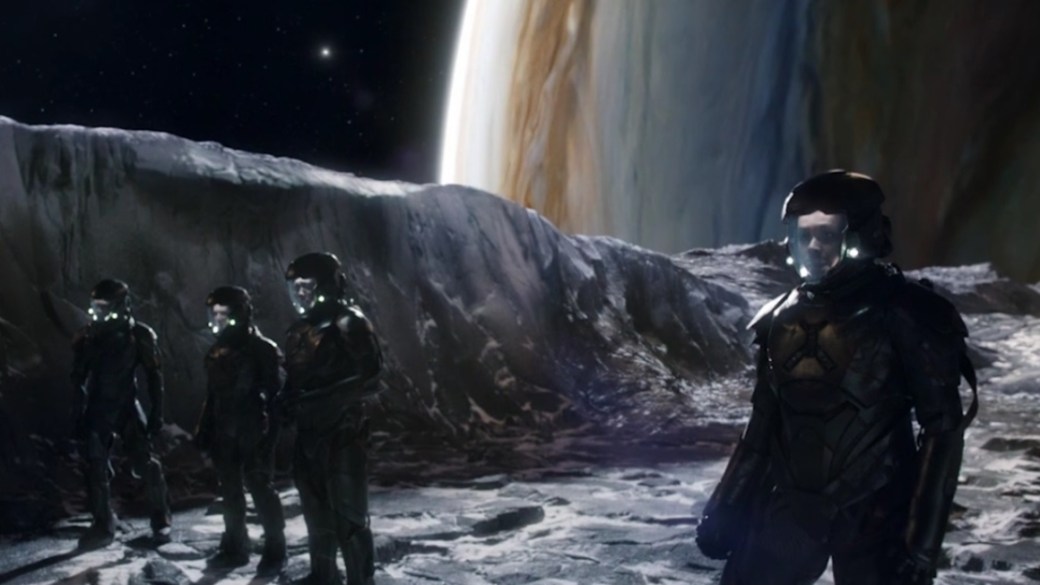

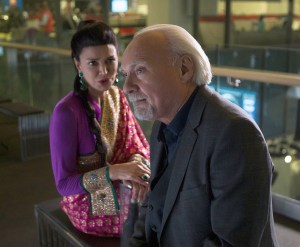
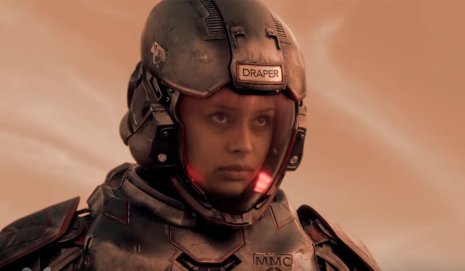
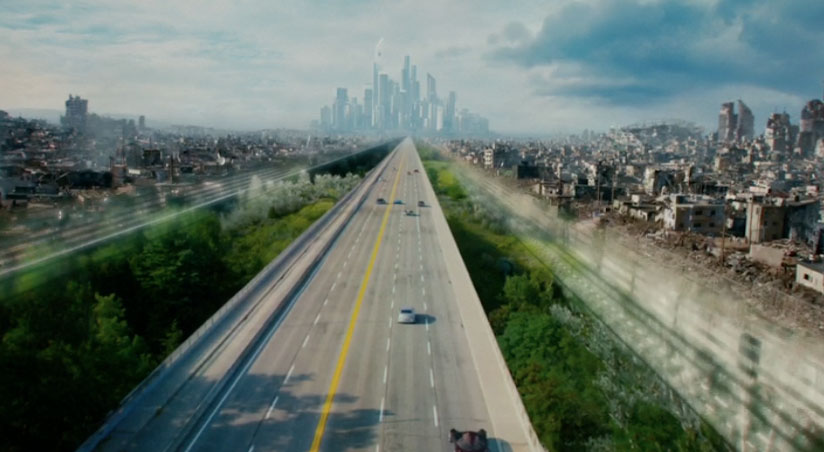

 Incorporated is less thriller than satire; it is less science fiction than cautionary tale.
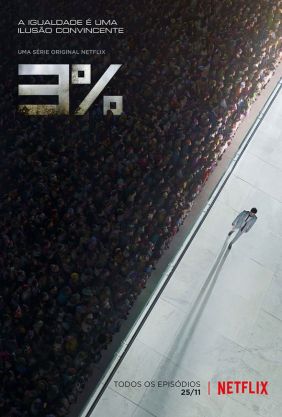 Every year the 97% send their 20-year olds to undergo The Process, a grueling Hunger Games-style contest run by the Offshore elite to replenish their numbers. Only 3% of the candidates will be considered worthy. They must pass psychological, emotional and physical tests to earn a place in Mar Alto.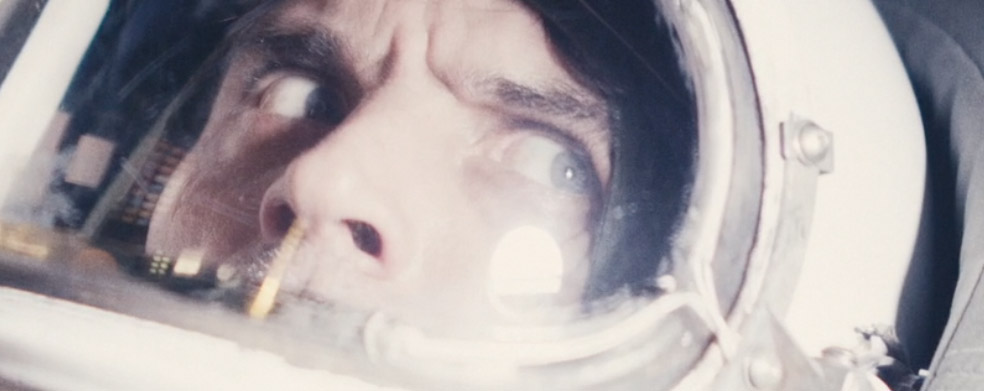
 After the 1967 opening scene with Komarov, we go to the present day with psychologist Jeanne Renoir, conducting an experiment on a child: giving them one marshmallow and leaving the room with the instruction that if they don’t eat the marshmallow but wait for her to return, they’ll get two. Jeanne correctly anticipates the child will eat the marshmallow.

 The Beyond’s climax, discovery and resolution is really more of a question. The movie doesn’t have a tidy end; its solution is veiled with more questions.
 Nina Munteanu’s “The Way of Water” and the anthology in which it appears was recently praised by Emilie Moorhouse in Prism International Magazine, in a review entitled
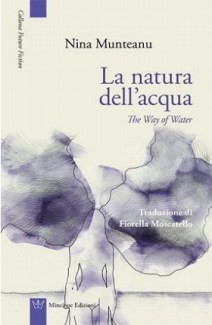
  “The Way of Water” (La natura dell’acqua) was translated by Fiorella Smoscatello for Mincione Edizioni. Simone Casavecchia of SoloLibri.net, describes “The Way of Water” in her review of the Italian version:
 “The Way of Water” will also appear alongside a collection of international works (including authors from Greece, Nigeria, China, India, Russia, Mexico, USA, UK, Italy, Canada (yours truly), Cuba, and Zimbabwe) in Bill Campbell and Francesco Verso’s
 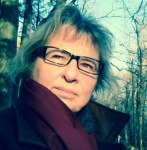 Nina Munteanu is an ecologist, limnologist and internationally published author of award-nominated speculative novels, short stories and non-fiction. She is co-editor of Europa SF and currently teaches writing courses at George Brown College and the University of Toronto. Visit
  Nina Munteanu’s near-future speculative short story “The Way of Water” in Bruce Meyer’s (editor) “Cli Fi: Canadian Tales of Climate Change”, published by
 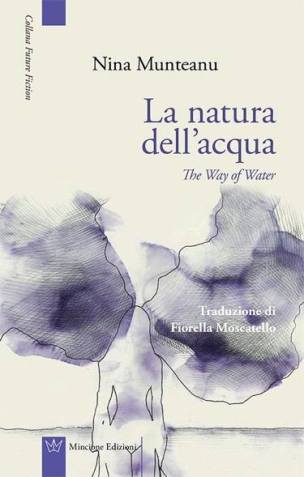 A bilingual print book by
 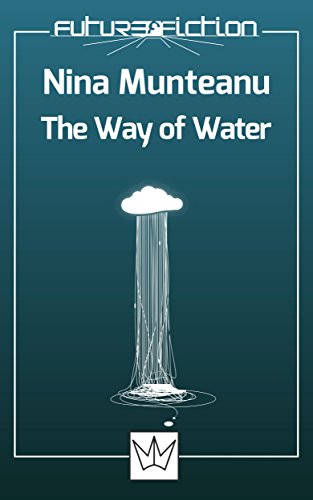 ” ‘The Way of Water’ is to be ‘a shapeshifter,’ says Nina Munteanu in her dystopian narrative, where she draws a dark scenario and, unfortunately, not too improbable in the near future. In the universe of the story water has become a very precious commodity: rationed consumption, credits (always of water) accounted for and debts collected…The Chinese multinationals have exchanged the public debt of other states with their water reserves with which, now, they can control the climate, deciding when and where it will rain. Who understands this dirty game has been silenced, like Hilda’s mother, a limnologist, inexplicably arrested and never returned; like the daughter of two water vendors, mysteriously disappeared, after having decided not to bow to economic powers: Hanna, who now prefers secure virtual identities to evanescent real appearances. Water. The two, like the covalent bond of a complex molecule, develop a relationship of attraction and repulsion that will first make them meet and then, little by little, will change into a tormented love but, at the same time, so pure as to cause Hilda at great risk, to make an extreme decision that will allow Hanna to realize the strange prophecy that the internal voice, perhaps the consciousness of water, had resonated in the two women for a long time.
 “The Way of Water” will also appear alongside a collection of international works (including authors from Greece, Nigeria, China, India, Russia, Mexico, USA, UK, Italy, Canada (yours truly), Cuba, and Zimbabwe) in Bill Campbell and Francesco Verso’s
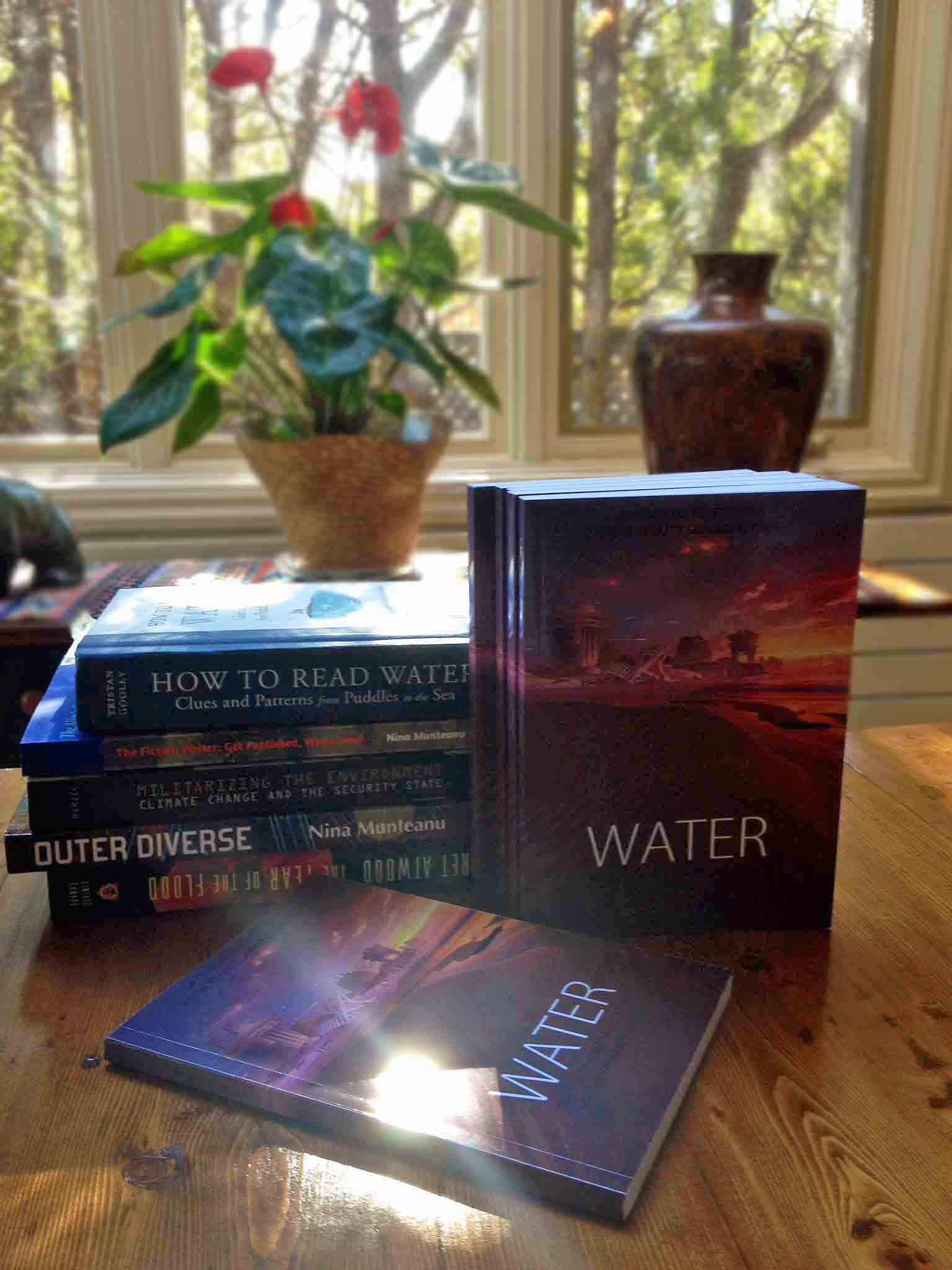
  In December 2017, “Water”, the first of Reality Skimming Press’s Optimistic Sci-Fi Series was released in Vancouver, BC. I was invited to be one of the editors for the anthology, given my passion for and experience with water.

 In the years that followed, Reality Skimming Press published several works, including the “Megan Survival” Anthology for which I wrote a short story, “
 Arizona State University’s Imagination and Climate Futures Initiative is again hosting a Climate Fiction Short Story Contest. In years past they invited writers from around the world to submit speculative fiction stories that explore climate change to narrate a world in flux. Previous contests received submissions from 67 different countries and 12 finalists were published in a digital anthology “Everything Change”.
 Hi-Sci-Fi Radio (a podcast radio show out of CJSF 90.1FM in Burnaby, British Columbia) interviewed Nina Munteanu about the paradoxes of her eco-thriller
  “In his introduction to this all-original set of (at times barely) futuristic tales, Meyer warns readers, “[The] imaginings of today could well become the cold, hard facts of tomorrow.” Meyer (Testing the Elements) has gathered an eclectic variety of eco-fictions from some of Canada’s top genre writers, each of which, he writes, reminds readers that “the world is speaking to us and that it is our duty, if not a covenant, to listen to what it has to say.” In these pages, scientists work desperately against human ignorance, pockets of civilization fight to balance morality and survival, and corporations cruelly control access to basic needs such as water. The most affecting tale, Wendy Bone’s “Abdul,” is also the least futuristic, an emotional story that touchingly contrasts Western guilt against the life of a captive orangutan. The anthology may be inescapably dark, but it is a necessary read, a clarion call to take action rather than, as a character in Seán Virgo’s “My Atlantis” describes it, “waiting unknowingly for the plague, the hive collapse, the entropic thunderbolt.” Luckily, it’s also vastly entertaining. It appears there’s nothing like catastrophe to bring the best out in authors in describing the worst of humankind.”
 She imagines its coolness gliding down her throat. Wet with a lingering aftertaste of fish and mud. She imagines its deep voice resonating through her in primal notes; echoes from when the dinosaurs quenched their throats in the Triassic swamps.
 A limnologist (lake ecosystem biologist) by trade, Munteanu recognizes the incredible way that water shapes life and brings attention to the fact that water connects us to each other just as water connects with other water, forming bonds. She evokes in the reader a sense of reverence for water and an awareness that the same water that flows through our bodies have flowed through the bodies of our ancestors, cycling through life since the first life forms coalesced.
 “Water covers every aspect of this science fiction story that pits the vulnerable citizen against the evil multinational corporation in a dystopian Canada sometime in our future. Water is presented in its multiplicity of facets: in the science behind its composition, in its history, in it’s symbolic nature and different physical states; water is a giver and taker of life, and is the form in which the friendship of protagonists Hilda and Hanna functions. Water is also magic and the ultimate righter of wrongs committed to it and to a humanity it gives life to. Within this framework, Munteanu spins a thought-provoking tale that projects where our headlong pursuit of profit may one day lead us to, and how nature will ultimately, with a little human coaxing, be the only one to correct the balance.”—Shane Joseph, Canadian author of Fringe Dwellers
 love; a story to read, not only to deal with the possible but, above all, to understand that the time still available for “love” might be less than what you believe.”—Simone Casavecchia,
  Nina Munteanu is an ecologist and internationally published author of award-nominated speculative novels, short stories and non-fiction. She is co-editor of Europa SF and currently teaches writing courses at George Brown College and the University of Toronto. Visit