
I met my fellow Romanian author friend Lucia Monica Gorea several years ago at a writer’s function in Vancouver and our (Romanian) passion for writing and storytelling made us fast friends. At the time Lucia was teaching writing at UBC and was co-hosting a radio show on Vancouver Coop Radio. She interviewed me several times about my science fiction publications, about water, my limnology and my eco-fiction.

Co-host Lucia with Nina and Coop Radio team, Vancouver, BC

Nina Munteanu and Lucia Monica Gorea at Gaudeamus Book Fair, Bucharest, Romania
We also together attended the launch of our books with Romanian publisher Editura Paralela 45 in Bucharest Romania at the Gaudeamus Book Fair. I was launching my translated book on fiction writing, “Manual de Scriere Creativa” (The Fiction Writer: Get Published, Write Now!) and Lucia was launching her English / Romanian translation of Petre Ispirescu’s fairy tale “The Morning Star and the Evening Star.”
I’ve since moved to Ontario and teach writing at the University of Toronto and Lucia moved to Nanaimo, BC, where she teaches at Vancouver Island University.
I recently interviewed Lucia, who just reissued her most recent children’s book “Yukon,” a wonderfully illustrated story about a young polar bear who loses his mother and goes on a perilous adventure:
- You recently republished your children’s climate fiction book “Yukon” through Bestsellers Publishing Academy. Tell us about the book.
Yukon, the Polar Bear is a story that brings awareness about global warming and climate change and teaches children how important our planet is. The reader is not only drawn into the story, but he or she learns how climate change affects polar bear habitat, and how polar bears will eventually become extinct if we don’t take action now.

Yukon and his mom
Since younger children can’t easily grasp concepts such as, glaciers and sea ice melting, or ocean acidification, they can better understand the issues our planet faces at the moment, through stories that are age appropriate.
- What inspired you to write “Yukon”?
I have always been fascinated by polar bears. I believe that they are so cool.
Seeing that their habitat is in huge danger, I wanted to bring my small apport to educate children, by letting them know how important our planet is through this children’s book.

Yukon alone on a melting ice float after losing his mother
- Who do you hope will read “Yukon”?
“Yukon” is intended for grade school children, ages 7+, for parents, and teachers alike. The topic of climate change can initiate interesting discussions and debates at school or home, during circle time, book clubs, or science classes. Teachers can assign research topics and invite children to further explore polar bear habitat, and learn how the Arctic animals are being affected by global warming.
- What does the polar bear represent in our awareness and fight against climate change?
Polar bears represent a “healthy planet.” As climate change forces polar bears to spend longer time offshore, they come in contact with Arctic coastal communities. Unfortunately, these interactions sometimes end badly for both humans and bears. At the same time, the melting of the ice is resulting in more polar bears spending longer periods on land.
The expansion of offshore petroleum installations and operations in the Arctic are expected to increase in number. This expansion would affect polar bears and their habitat in many negative ways. As oil tankers and cargo ships in Arctic waters increase, so do the risks of polar bear disturbance. It is our responsibility to protect these iconic creatures. It is no wonder that the polar bear is of great cultural significance to the Canadian people. For the Inuit and many northern communities, polar bears are especially significant culturally, spiritually, and economically.

Jasper teaches Yukon how to survive on terra firma
- In your book, Yukon meets a brown bear named Jasper and Jasper’s family teaches Yukon how to feed and take care of himself in his new environment. How close do you think this matches what is already happening in our northern regions as melting sea ice is forcing polar bears onto dry land into northern communities and the Inuvialuit Game Council reports that more and more grizzly bears are moving into Canada’s High Arctic? Is this heralding a future written by climate change?
Experts say that interbreeding is happening more frequently now due to climate change.
With climate change, grizzly bears are moving further north, so there is more overlap between grizzly bears and polar bears in terms of their range. A hybrid bear is unofficially called a grolar bear if the sire is a grizzly bear, and a pizzly bear if the sire is a polar bear. A third potential name is nanurlak — a word combining the Inuit-language words for polar bear and grizzly, nanuk and aklak.

Grizzly bear + Polar bear = Pizzly or Grolar (depending on who the mother bear is)
Grizzly bears in Alaska and Canada are moving north as their environment warms, bringing them into contact with polar bears located on the coastline
“…predicting that far into the future is a challenge and it really depends on what we do about global warming as a whole,” says Andrew Derocher, bear biologist.
- Will you do an educational tour with the book?
 Absolutely! As soon as COVID- 19 will not pose a threat to BC schools, and to schools around the country, and when the students are safe to return to class, I plan a reading and educational tour on Vancouver Island, then I will visit various schools within the province.
- Where can individuals and schools purchase “Yukon”?
“Yukon” can be purchased in both paperback and electronic format on Amazon, Draft to Digital, Smashwords, Ingram, and Barnes and Noble.
- What projects are you working on next?
I have already started working on two projects. One is a How-to book titled, “Write! Publish! Sell!” – and the second book is a collection of supernatural short stories that take place in my native Transylvania, “The Hills of Magherani.”
On the podcast “Age of Water”, co-host Claudiu Murgan and I interviewed Lucia about her book, about young readers and climate change, and about writing in general. The podcast episode with Lucia will air in December, 2020.
More about Lucia Monica Gorea

Lucia Monica Gorea
Lucia Monica Gorea, is a Canadian poet and award-winning author of fifteen books spanning multiple genres including poetry, short stories, a historical novel, ESL texts, children’s books, fairy tales, and translations.
The Transylvanian province of Romania, which filled Lucia with literary passion inspired her to write at a young age. She graduated from the University of Bucharest with degrees in English, French and Linguistics then earned her PhD in English and Education in the USA.
Her interest in history inspired The Impaler, her debut novel, which tells the captivating and intriguing story of Vlad the Impaler. She has also written Journey Through My Soul—a collection of love and mystical poems, Welcome to America! ESL Games and Classroom Activities, and Speak English for Success. Lucia also wrote several children’s stories that were inspired by her son, Alex: How Alex Saved Christmas, The Crow That Swallowed a Pearl, Halloween in Transylvania, and Yukon, the Polar Bear.

Lucia with young girl, reading her translated book at Gaudeamus
Lucia translated several fairy tales and poetry books from Romanian into English: The Enchanted Turtle, Aleodor the Emperor, The Morning Star and the Evening Star, and The Enchanted Pig, fairy tales authored by Petre Ispirescu.
Lucia was the keynote speaker at the 8th International Symposium on Translation, Interpretation, and Terminology in Havana (2013). Lucia currently teaches English courses at Vancouver Island University in British Columbia, and graduate studies at Atlantic International University in the United States.
Lucia founded BestSellers Publishing Academy – Your Story Must Be Told in 2019. She also founded Poetry Around the World, Monica’s Writers’ Café and Poets and Writers’ Café, online groups. She hosted radio (World Poetry Café Radio Show) and television poetry shows (Poetry Around the World) in Portland, Oregon, Vancouver, and Nanaimo, BC.
More about the Polar Bear
Temperatures in the Arctic are rising at least twice as fast as the global average and sea ice cover is diminishing by nearly four per cent per decade.
The primary habitat of the polar bear is sea ice, which they use to hunt seals. Polar bears live in the Arctic regions of Canada, Greenland/Denmark, Norway, Russia and the United States. The primary habitat of the polar bear is sea ice, which they use to hunt seals. Polar bears feed on ringed seals that live at the ice edge; the bears get two thirds of the energy they need for the entire year in late spring and early summer. Sea ice loss due to climate change poses the single largest threat to polar bear numbers according to a recent comprehensive review. As the ice retreats earlier in spring and forms later in winter, the bears have less time to hunt prey. Consequences mean that the bears average weight declines and fewer cubs survive; the ones that do are smaller. Warming has also caused bear dens to collapse, trapping a female’s young.
Scientists’ best estimate is that there’s a 70% chance the global population of polar bears will fall by more than a third within the next three generations.

Polar bear cubs in their den

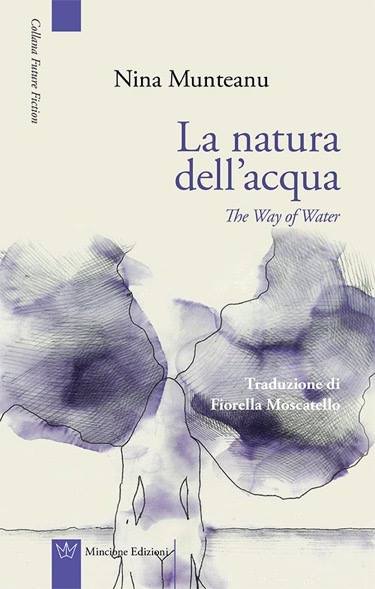
Nina Munteanu is a Canadian ecologist / limnologist and novelist. She is co-editor of Europa SF and currently teaches writing courses at George Brown College and the University of Toronto. Visit www.ninamunteanu.ca for the latest on her books. Nina’s bilingual “La natura dell’acqua / The Way of Water” was published by Mincione Edizioni in Rome. Her non-fiction book “Water Is…” by Pixl Press (Vancouver) was selected by Margaret Atwood in the New York Times ‘Year in Reading’ and was chosen as the 2017 Summer Read by Water Canada. Her novel “A Diary in the Age of Water” was released by Inanna Publications (Toronto) in June 2020.
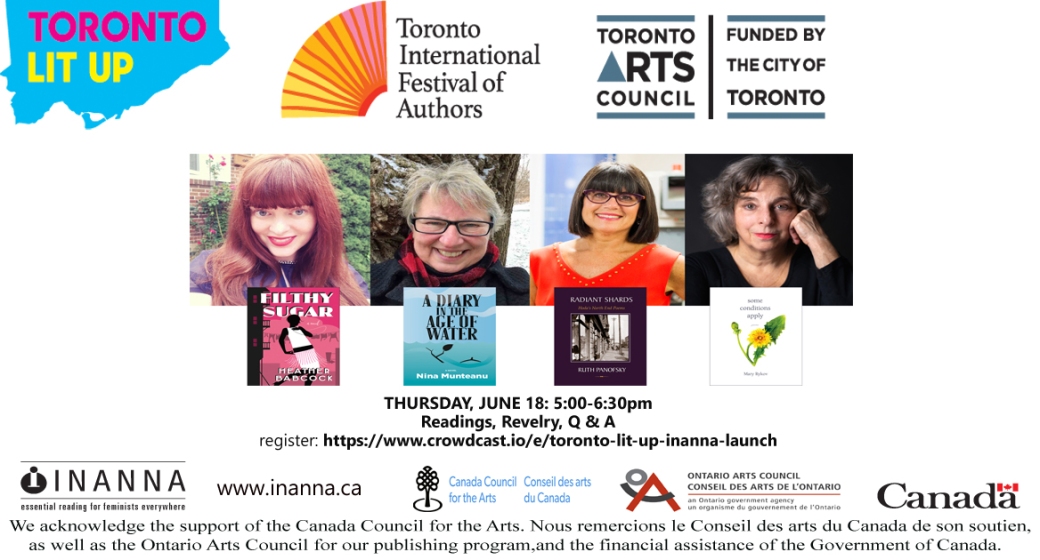
 On June 18th, Toronto book publishing house
 Who really… My


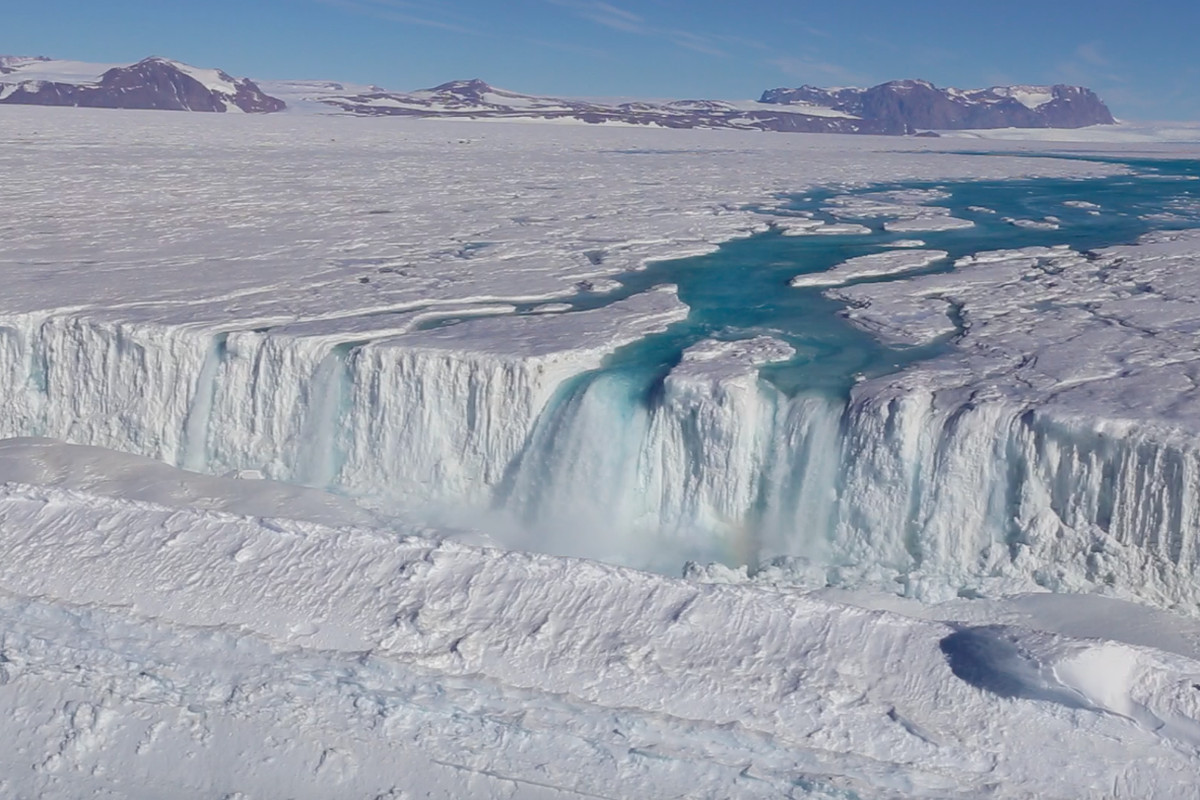
 Craig Russell begins his eco-thriller Fragment with a TV interview of glaciologist Kate Sexsmith in Scott Base Antarctica. The interview is interrupted by what turns out to be four runaway glaciers that have avalanched into the back of the Ross Ice Shelf and a fragment the size of Switzerland surges out into the open sea. Hence the title: Fragment.




 Written 45 years ago, Le Guin’s scathing article may have accurately represented the North American science fiction community of writers of that time. Today, despite the remnants of a strong old guard that still promotes a patriarchal colonialist hegemony, the science fiction genre has matured and grown beyond this self-limiting view. This is partly because current authors—many who are women and many who are representatives of minority or marginalized groups—have given SF a new face and voice that promises to include equality, inclusion, and a fresh look at exploration and ‘the other.’
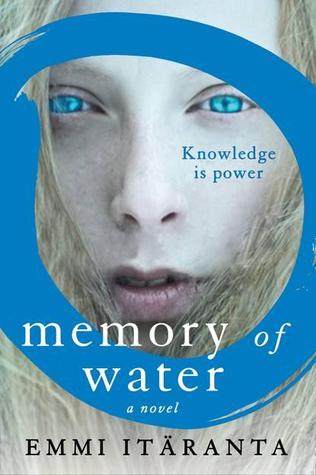
 Science fiction that leans toward “mundane”(everyday life) and literary fiction include the works of Paulo Bacigalupi (Windup Girl), Margaret Atwood (Year of the Flood), and Kim Stanley Robinson (New York 2140). Literary fiction overlaps with science fiction through eco-fiction and climate fiction which address oppression, jingoism and neoliberalism often through dystopian themes—and often through the voice of women writers—such as Octavia Butler’s Parable of the Sower, N.K. Jemisin’s The Broken Earth series, Emmi Itäranta’s The Memory of Water, Nina Munteanu’s A Diary in the Age of Water, Barbara Kingsolver’s Flight Behavior, Annie Proulx’s Barkskins, and Richard Power’s Overstory.
 In 2017, several publications addressed different aspects of society through speculative fiction. Laksa Media published Strangers Among Us: Tales of the Underdogs and Outcasts, which explores issues of mental health. Exile Editions published Cli-Fi: Tales of Climate Change with stories on personal experience with climate change. Reality Skimming Press published Water, for which I was editor, which explored optimism in the face of climate change.
 Novels and anthologies of short stories that feature disabled characters are also growing. Examples include Borderline by Mishell Baker, We Who Are About To… by Joanna Russ, Murderbot series by Martha Wells, and Uncanny: Disabled People Destroy Science Fiction (edited by Elsa Sjunneson-Henry, Dominik Parisien et al.) among many others.
 In an introduction to seven Indigenous Futurism books, Barnes and Noble writes:
 There were stories in sweat. The sweat of a woman bent double in an onion field, working fourteen hours under the hot sun, was different from the sweat of a man as he approached a checkpoint in Mexico, praying to La Santa Muerte that the federales weren’t on the payroll of the enemies he was fleeing…Sweat was a body’s history, compressed into jewels, beaded on the brow, staining shirts with salt. It told you everything about how a person had ended up in the right place at the wrong time, and whether they would survive another day.
 My upcoming novel by Inanna Publications—A Diary in the Age of Water coming out in 2020—explores the socio-political consequences of corruption in Canada, now owned by China and America as an indentured resource ‘reservoir’; it is a story told through four generations of women and their unique relationship with water during a time of great unheralded change. On February 17, 2046, limnologist Lynna writes in her diary about her mother Una:
 Science fiction explores our water crisis through premises of extreme water shortage and devastating violence (floods, droughts and storms), water diversion, and hoarding. Premises explore weather manipulation, the consequences of extensive deforestation and the massive extinction of species. As with my own book A Diary in the Age of Water, Claudiu Murgan’s Water Entanglement explores water as a character, as though water has gone rogue, unruly. Perhaps even vengeful…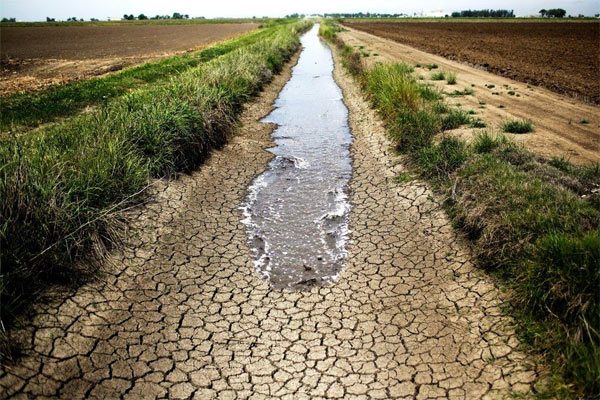
 A tidal wave of TV shows and movies currently explore—or at least acknowledge—the devastation we are forcing on the planet. Every week Netflix puts out a new science fiction show that follows this premise of Earth’s devastation: 3%; The 100; The Titan; Orbiter 9; even Lost in Space.
 Ellen Szabo, author of Saving the World One Word at a Time: Writing Cli-Fi suggests that the ability to make environmental issues less political and more personal (through story) permits more engagement by readers and a higher likelihood of action toward justice: we are more likely to take action on the things we love and know. It’s all about connection.



 Paolo Bacigalupi’s 2015 biopunk science fiction novel The Windup Girl occurs in 23rd century post-food crash Thailand after global warming has raised sea levels and carbon fuel sources are depleted. Thailand struggles under the tyrannical boot of ag-biotech multinational giants such as AgriGen, RedStar, and PurCal—predatory companies who have fomented corruption and political strife through their plague-inducing and sterilizing genetic manipulations. The story’s premise could very easily be described as “what would happen if Monsanto got its way?”
 It’s difficult not to always be aware of those high walls and the pressure of the water beyond. Difficult not to think of the City of Divine Beings as anything other than a disaster waiting to happen. But the Thais are stubborn and have fought to keep their revered city of Krung Thep from drowning. With coal-burning pumps and leveed labor and a deep faith in the visionary leadership of their Chakri Dynasty they have so far kept at bay that thing which has swallowed New York and Rangoon, Mumbai and New Orleans.





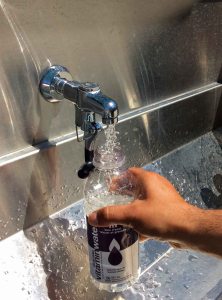 In Summer of 2016, I attended a talk given by Maude Barlow on water justice. The radical talk was based on her recent book “Boiling Point”, a comprehensive exploration of Canada’s water crisis—a crisis that most Canadians weren’t—and still aren’t—aware. Canada is steward to a fifth of the world’s fresh water, after all. It is a water-rich country. Of the dozen largest inland lakes in the world, Canada holds eight of them. So, why water crisis? Well, Maude explains. And you should read “Boiling Point.” It will open your eyes to the politics of water and how multinational corporations—like Nestlé—are already grabbing and funneling water away from Canadians and into the global profit machine.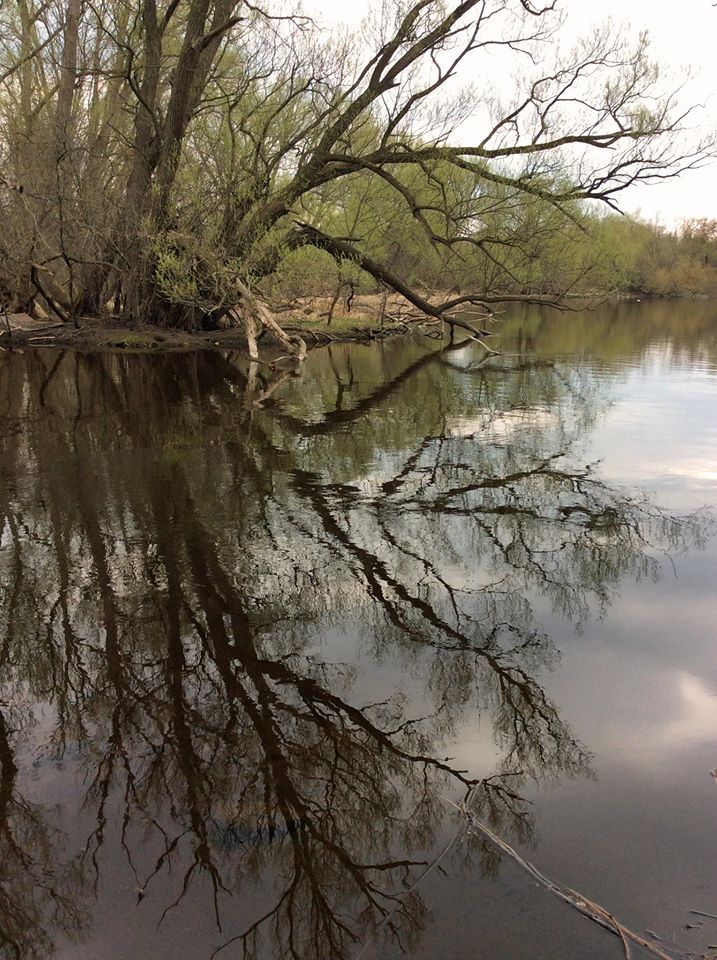
 I named the story “
 The story first appeared in 2015 in
  After the success of this short story, I realized that I needed to tell the larger story—how did the world—Canada—get to where Hilda was? Her mysterious mother, the limnologist Lynna who was taken away by the RCMP in 2063, clamored for more attention. I remembered that four-year old girl and her mother in the gallery at Maude Barlow’s talk on water politics. And I thought of my characters: young Lynna and her mother Una. How does a daughter of an activist mother behave and think? How best to express her voice?
 I had earlier written a short story that was a mix of correspondence (emails) and third person narrative (“The Arc of Time” in
  I had a lot of material; I had already been researching water issues and climate change in my activism as a science reporter. I had recently published
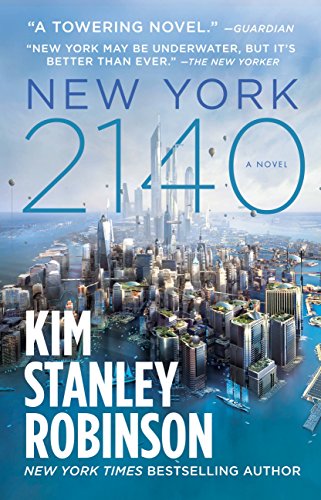 “By failing to engage with climate change, artists and writers are contributing to an impoverished sense of the world, right at the moment when art and literature are most needed to galvanize a grassroots movement in favor of climate justice and carbon mitigation.”—Amitav Ghosh, 2017
 “To counteract this epidemic of short-term thinking,” says Fabiani, “it might be a good idea for more of us to read science fiction, specifically the post-apocalyptic sub-genre: that is, fiction dealing with the aftermath of major societal collapse, whether due to a pandemic, nuclear fallout, or climate change.”
 In 2015, I joined Lynda Williams of Reality Skimming Press in creating an optimistic science fiction anthology with the theme of water. My foreword to

 In my new writing guidebook
