Nina Munteanu’s Short Story “Natural Selection” features in Eagle Literary Magazine Issue #1

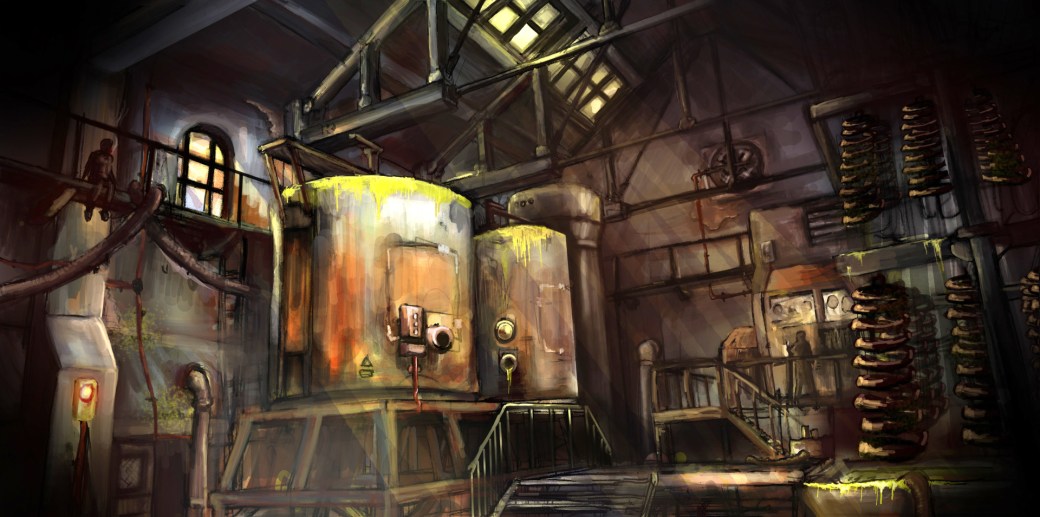
NaturalSelection-IonutiBanuta

Illustration by Ionuț Bănuță

Sarah reached the summit, panting for breath, and grinned at her prize. She’d just caught the sun trembling over the horizon, before it dipped out of sight and left a glowing sky under pewter clouds. She glanced behind her, where the towers of Icaria blazed like embers catching fire. Struck by their beauty, Sarah admired their smooth, clean surfaces. When she looked back toward the path, the sanguine images burnt into her eyes.

Which way should she go? The deer path she’d followed now diverged into two smaller ones. She shifted her mind to veemeld with her AI, DEX. Which way should we go, DEX?

Her AI answered in her head: Sarah, shouldn’t you be returning inside? It’s dangerous to stay out this long. Statistics are now against you for getting caught—

Just a few more minutes, DEX. How about to the right?

“Natural Selection” tells the story of Sarah, an unruly veemeld who can speak to the machine world that runs Icaria. Given her immunity to the environmental disease ravaging the enclosed city, Sarah—at least her genetic material—is sought after by the Ecologist government in a bid to maintain order and reshape humanity through “selection”; but Sarah fraternizes with unsavory friends and her truant behaviour poses a great risk to her freedom and survival.

Eagle-1issue-summer2019_Cover_1600“Natural Selection” first appeared in 2013 in my short story collection of the same name by Pixl Press. The story returns in Issue #1 of Eagle Literary Magazine, Pan European Science Fiction & Fantasy Collection (Summer 2019; Nexus Project) edited by Mugur Cornilă and featuring the impeccable artwork of Ionuț Bănuță.

In the 2013 Pixl Press short story collection my introduction describes the theme that embraces the nine stories in the collection:

How do we define today a concept that Darwin originated 200 years ago in a time without bio-engineering, nano-technology, chaos theory, quantum mechanics and the internet? We live in an exciting era of complicated change, where science based on the limitation of traditional biology is being challenged and stretched by pioneers into areas some scientists might call heretical. Endosymbiosis, synchronicity, autopoiesis & self-organization, morphic resonance, Gaia Hypothesis and planetary intelligence. Some of these might more aptly be described through the language of meta physics. But should they be so confined? It comes down to language and how we communicate.

Is it possible for an individual to evolve in one’s own lifetime? To become more than oneself? And then pass on one’s personal experience irrevocably to others—laterally and vertically?

On the vertical argument, the French naturalist Jean-Baptiste Lamark developed a theory of biological evolution in the early 19th century considered so ridiculous that it spawned a name: Lamarkism. His notion — that acquired traits could be passed along to offspring—was ridiculed for over two hundred years. Until he was proven right. Evolutionary biologists at Tel Aviv University in Israel showed that all sorts of cellular machinery — an intelligence of sorts — played a vital role in how DNA sequences were inherited. When researchers inserted foreign genes into the DNA of lab animals and plants, something strange happened. The genes worked at first; then they were “silenced”. Generation after generation. The host cells had tagged the foreign genes with an “off switch” that made the gene inoperable. And although the new gene was passed onto offspring, so was the off switch. It was Larmarkism in action: the parent’s experience had influenced its offspring’s inheritance. Evolutionists gave it a new name. They called it soft inheritance [also known as epigenetics].

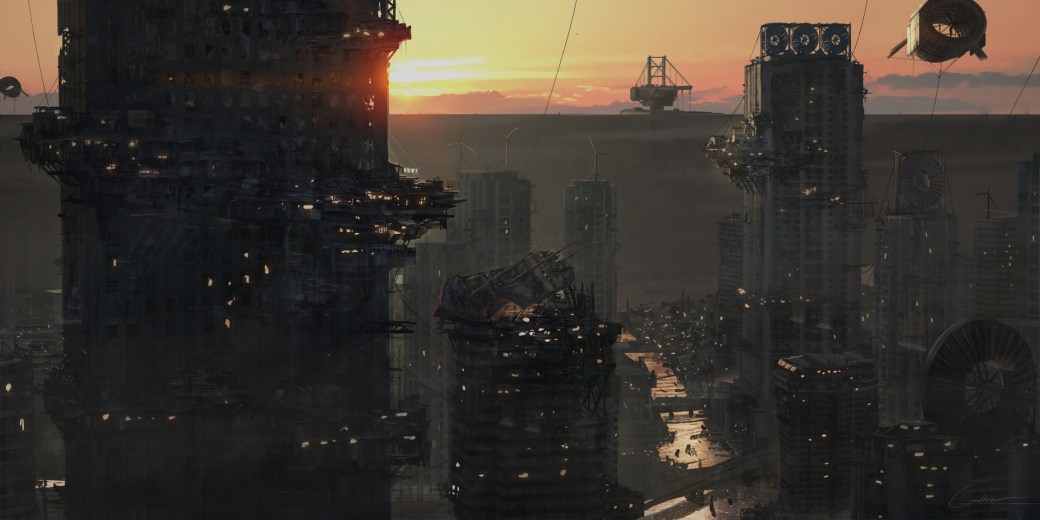
NaturalSelection-IonutBanua2

Illustration by Ionuț Bănuță

Horizontal gene transfer (HGT) is the movement of genetic material between organisms other than by vertical transmission of DNA from parent to offspring. Jumping genes (transposons) are mobile segments of DNA that may pick up a gene and insert it into a plastic or chromosome. Pieces of DNA move from one locus to another of a genome without parent-to-offspring by horizontal transposon transfer (HTT). Epigenetics describes the modification of DNA expression through DNA methylation—and results in “Lamarkism.” Transgenerational epigenetic inheritance is the new black: genes and environments interacting. Where do we end and where does environment begin? Researchers have proven the significant role of environmental feedback through HGT in evolutionary success. Researchers showed that up to 20% of a bdelloid rotifer’s genome is made of foreign genes that they stole from the environment through horizontal gene transfer and gene conversion. This compares to about 1% for humans and a fifth for tardigrades.

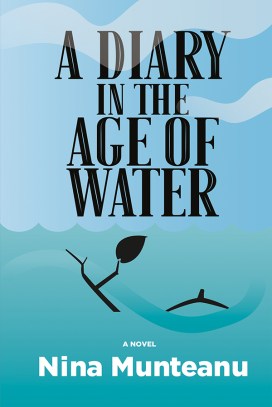
—excerpts from “A Diary in the Age of Water” due for release in 2020 by Inanna Publications.

Diary Water cover finalAs for passing on one’s experience and acquisitions to others laterally, education in all its facets surely provides a mechanism. This may run the gamut from wise mentors, spiritual leaders, storytellers, courageous heroes to our kindergarten teacher.  Who’s to say that these too are not irrevocable? This relies, after all, on how we learn, and how we “remember”.

Evolution is choice. It is a choice made on many levels, from the intuitive mind to the intelligent cell. The controversial British botanist Rupert Sheldrake proposed that the physical forms we take on are not necessarily contained inside our genes, which he suggested may be more analogous to transistors tuned in to the proper frequencies for translating invisible information into visible form. According to Sheldrake’s morphic resonance, any form always looks alike because it ‘remembers’ its form through repetition and that any new form having similar characteristics will use the pattern of already existing forms as a guide for its appearance.  This notion is conveyed through other phenomena, which truly lie in the realm of metaphysics and lateral evolution; concepts like bilocation, psychic telegraphing, telekinesis and manifestation. Critics condemn these as crazy notions. Or is it just limited vision again? Our future cannot be foretold in our present language; that has yet to be written. Shakespeare knew this…

There are more things in heaven and earth , Horatio, than are dreamt of in your philosophy—Shakespeare
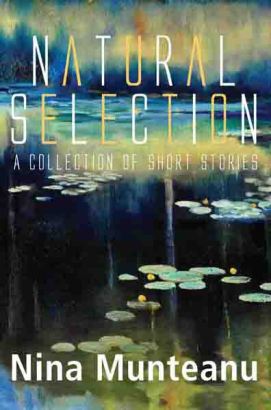
NaturalSelection-front-webEach story in the “Natural Selection” short story collection reflects a perspective on what it means to be human and evolve in a world that is rapidly changing technologically and environmentally. How we relate to our rapidly changing fractal environments—from our cells to our ecosystems, our planet and ultimately our universe—will determine our path and our destiny and those we touch in some way.

My friend Heidi Lampietti, publisher of Redjack Books, expressed it eloquently, “For me, one of the most important themes that came through in the collection is the incredible difficulty, complexity, and importance of making conscious choices — and how these choices, large and small, impact our survival, either as individual humans, as a community, a species, or a world.”

DarwinsParadox-Cover-FINALsmall“Natural Selection” also features the sprawling semi-underground AI-run city of Icaria (a post-industrial plague Toronto) that was first introduced in my novel “Darwin’s Paradox” and is a character itself. Sarah is a “gifted” and troubled misfit—not in sync with the rest of the population. Yet her choices—and how she is treated by her community— will influence an entire species and world.


You can purchase Issue #1 of Eagle Literary Magazine in the United Kingdom, United States, Spain, Italy, France, Germany, Japan, Canada.


nina-2014aaaNina is a Canadian scientist and novelist. She worked for 25 years as an environmental consultant in the field of aquatic ecology and limnology, publishing papers and technical reports on water quality and impacts to aquatic systems. Nina has written over a dozen eco-fiction, science fiction and fantasy novels. An award-winning short story writer, and essayist, Nina currently lives in Toronto where she teaches writing at the University of Toronto and George Brown College. Her non-fiction book “Water Is…”—a scientific study and personal journey as limnologist, mother, teacher and environmentalist—was picked by Margaret Atwood in the New York Times as 2016 ‘The Year in Reading’. Nina’s most recent novel “A Diary in the Age of Water”— about four generations of women and their relationship to water in a rapidly changing world—will be released in 2020 by Inanna Publications.

Writing About the Truth…and Other Lies: Monsanto’s Big Cheat

The June 2019 issue of Walrus Magazine addresses a current publishing crisis in academia. In his article “Fake Science Is the New Fake News,” reporter Alex Gillis reveals the alarming rise of fake and bogus professional journals and how scientists are both duped and drawn to publish with them.

The lure came from frustrations of scientists with the very gate-keeping devices that ensure good science is being conducted and accurately reported: high standards for acceptance; long wait times for peer review and publication; and high expense to the scientist. With the advent of online journals and the open-access model (that allowed free access), many scientists flocked to them, claiming more timely and less expensive publication. Unfortunately, the open-access model that made reporting of and access to science more easy, also permitted its exploitation by unscrupulous entrepreneurs who set up predatory (fake) journals. This allowed scientists with less integrity to publish material of lower standard. Even more insidious, the model and its fake journals also supports fake science with an agenda. Essentially, science as propaganda.

1984Nineteen Eighty-Four kind of science.

An example of the publication of Nineteen Eighty-Four kind of science with corporate motive was revealed in 2018 with the lawsuit against Monsanto (now part of Bayer) in which evidence showed that Monsanto had been funding junk studies to discredit legitimate research about its cancer-causing herbicide, Roundup. A terrible example in 2015 is the fake studies that underplayed risks to children exposed to lead from improperly maintained pipes in the drinking water service lines in Flint, Michigan.

So, what is it to write about the truth?

Here’s a bit of truth from seven years ago: New York Times reporter Stephanie Strom in an article on September 19th, 2012, entitled Uneasy Allies in the Grocery Aisle: “Giant bioengineering companies like Monsanto and DuPont are spending millions of dollars to fight a California ballot initiative aimed at requiring the labeling of genetically modified foods. That surprises no one, least of all the proponents of the law, which if approved by voters would become the first of its kind in the nation.”

Let’s dig a bit deeper into this truth: “companies behind some of the biggest organic brands in the country—Kashi, Cascadian Farm, Horizon Organic—also joined the anti-labeling effort, adding millions of dollars to defeat the initiative, known as Proposition 37.”

Strom revealed even deeper truths when she disclosed that these well-known “organic” companies are owned by larger conglomerates like Kellogg, General Mills, Dean Foods, Smucker’s and Coca-Cola. Other food companies who had thrown in funds to help defeat the bill for transparency include PepsiCo., Neslé, and ConAgra Foods.

Strom reported that those who support the bill to label GMO products include Whole Foods, Nature’s Path (a Canadian company) Organic Valley, Cliff Bar and Amy’s Kitchen.

Whenever an issue of importance arises, the truth reveals itself. And sometimes in the oddest way. It often slides in through a back door. I’m not just talking about factual truth; I’m talking about resonating hair-standing gut-grabbing truth.

The kind of truth that resonates through you in a scintillating frisson. The kind of truth that stops you mid-stride, like someone shouting your name. Subversive truth. The kind of truth that vibrates deep inside and radiates out in a flood of epiphany.  The kind of truth that stirs your heart in a relentless wave of flaming light.

The kind of truth that “changes” you.

At first glance it’s rather obvious why those fighting the bill were against it: they had something to lose in transparency. The question is, why do they think that way? These giant biotech food companies are feeding the entire world, after all, with revolutionary strains of super-plants. They are doing a great good, surely. Could it simply be a concern that they may lose some customers who do not wish to consume GE products but who are unwittingly doing so now? That is being dishonestly self-serving as well as short-sighted (the European Union has required biotech labeling since 1997—it’s just a matter of time).

Could it be the bad publicity from findings of the long-term effects of GMO products and Roundup on test animals? (See the incendiary paper by French and Italian scientists in Food Chem. Toxicol., referenced below, that started it all).  Despite the barrage of bad press, the paper’s results could not be refuted entirely or ignored (if only from the basis of scientific inquiry and professional due diligence to do with Type II Error).

Or is it more insidious?

Far more insidious than a lie is to dissemble with a half-lie—or half-truth—a truth that veils a festering lie beneath its candy-coated mantle of equivocation. A “truth” so delicious that we want to believe it, even when we see the lie lurking beneath. Little lies always hide bigger lies.

For more than a decade, consumers in North America have purchased cereals, snack foods, and salad dressings, among other products, blithely unaware that these products contained ingredients from plants whose DNA was manipulated in a laboratory.

Here’s my witnessed truth: The aggressive multi-million dollar campaign waged by multi-national corporations against transparency in food labeling in the USA is the culmination of self-serving protectionism in a most heinous way. Their decade-long silence and current reluctance to label their products (and all this before the Seralini et al. study) points to a far greater lie.

Since the long-term toxicity study by Seralini et al. was released in Food & Chemical Toxicology, a massive campaign to discredit the study was waged on the Internet. This despite the soundness of the 2-year study, its glaringly obvious results (e.g. test animals died 2-3 times more quickly than controls among many other findings) and the fact that it sets precedent by being the longest and most detailed study ever conducted on a herbicide and a GMO to date; all previous studies by Monsanto labs and others were only 90-day trials (and we now know that these studies were fake studies).

So, what is it to write about the truth?

I’ve been a practicing scientist for over twenty years. I did research and wrote papers that were published in scientific peer-reviewed journals. I diligently used the scientific method, hypothesis-testing, objective observation and appropriate statistics to back up my work. I also write articles for magazines, blogs and places like this site. I write short stories and novels. I write how-to books and guidebooks. And I write letters. Lots of letters. In all this, I have made a point to do my research. I try always to go to the source and verify my information through cross-checking, and various other quality assurance procedures I learned over the years to best represent and communicate the truth.

For instance, in writing this article, I perused many articles that presented both sides of the several issues I covered, including the source paper by Seralini et al.

Science is the rational tool for the pursuit of truth. This is why scientists are burdened to proceed under an objective protocol in their premise presentation, experimental design, methodology and interpretation and conclusions drawn. Because the introduction of error and bias is possible in each of these areas, researchers with integrity ensure through design and quality assurance protocol that these errors and biases are minimized. This includes the use of contols, sufficient sample size and statistical power, blind or even double-blind experiments and more. Experiments are reported with sufficient transparency to be replicated (an icon of good science).

Once they are reported in a paper, results transform from science into politics. Objectivity gives way to agenda. That is inevitable. However, what has changed in the last decade is that science itself has become seconded for agenda. Science by agenda to fulfill a propaganda is flooding in as assuredly as the rising seas of climate change.

Gillis writes: “Fake and flawed studies are so pervasive that the presumed authority of an expert or researcher in a scholarly journal is no longer what it used to be…the traditional knowledge-sharing process has been corrupted.”

america-missouri02

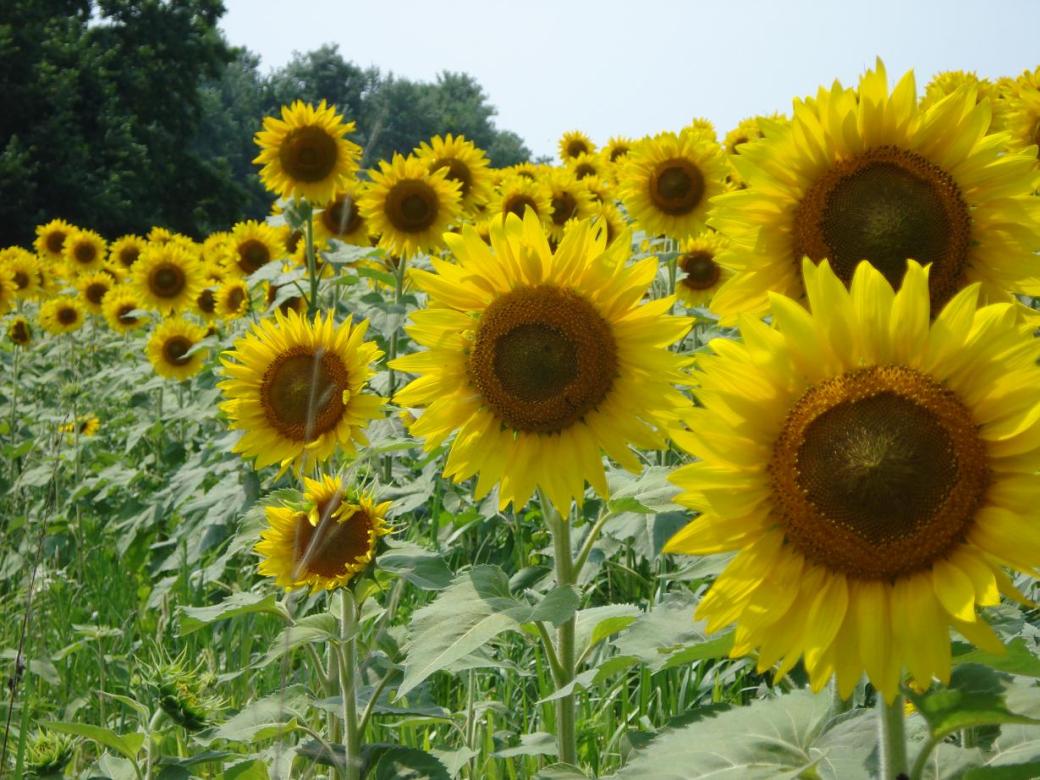
Sunflowers in Missouri (photo by Nina Munteanu)

Who are the politicians behind the “soldiers” of science and what are their motives? That is where the truth lies.

In the end, I have found that listening to the conviction of my heart, to my inner “soul wisdom”, best serves the truth. Then again I prefer the resonating hair-standing gut-grabbing truth.

Reference:

Gillis, Alex. 2019. “The Rise of Junk Science.” Walrus Magazine, Toronto, ON. June 2019.

Seralini, G.-E., et al. 2012. “Long term toxicity of a Roundup herbicide and a Roundup-tolerant genetically modified maize.” Food Chem. Toxicolhttp://www.sciencedirect.com/science/article/pii/S0278691512005637

Strom, Stephanie. 2012. “Uneasy Allies in the Grocery Aisle.” New York Times, New York, September 19, 2012.

nina-2014aaa

Nina Munteanu is a Canadian ecologist / limnologist and novelist. She is co-editor of Europa SF and currently teaches writing courses at George Brown College and the University of Toronto. Visit www.ninamunteanu.ca for the latest on her books. Nina’s bilingual “La natura dell’acqua / The Way of Water” was published by Mincione Edizioni in Rome. Her non-fiction book “Water Is…” by Pixl Press (Vancouver) was selected by Margaret Atwood in the New York Times ‘Year in Reading’ and was chosen as the 2017 Summer Read by Water Canada. Her novel “A Diary in the Age of Water” will be released by Inanna Publications (Toronto) in 2020.

Book Review: “The Windup Girl” When Monsanto Gets Its Way…

Windup GirlPaolo Bacigalupi’s 2015 biopunk science fiction novel The Windup Girl occurs in 23rd century post-food crash Thailand after global warming has raised sea levels and carbon fuel sources are depleted. Thailand struggles under the tyrannical boot of ag-biotech multinational giants such as AgriGen, RedStar, and PurCal—predatory companies who have fomented corruption and political strife through their plague-inducing and sterilizing genetic manipulations. The story’s premise could very easily be described as “what would happen if Monsanto got its way?”
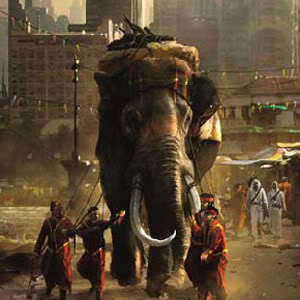
Bacigalupi’s story opens in Bangkok, “City of Angels”, now below sea level and precariously protected by a giant sea wall and pumps that run on bio-power:

Windup Girl-closeIt’s difficult not to always be aware of those high walls and the pressure of the water beyond. Difficult not to think of the City of Divine Beings as anything other than a disaster waiting to happen. But the Thais are stubborn and have fought to keep their revered city of Krung Thep from drowning. With coal-burning pumps and leveed labor and a deep faith in the visionary leadership of their Chakri Dynasty they have so far kept at bay that thing which has swallowed New York and Rangoon, Mumbai and New Orleans.

Energy storage in this post-oil society is provided by manually-wound springs using cruelly mistreated genehacked megodonts—elephant-slave labor. Biotechnology dominates via international mega-corporations—called calorie companies—that control food production through genehacked seeds. The companies use bioterrorism and economic hitmen to secure markets for their products—just as Monsanto is currently doing. Plagues (some they created, others unintended mutations) have wiped out the natural seed stock, now virtually supplanted by genetically engineered sterile plants and mutant pests such as cibiscosis, blister rust, and genehack weevil. Thailand—one of the economically disadvantaged—has avoided economic subjugation by the foreign calorie companies through some ingenuity—a hidden seedbank of diverse natural seeds—and is now targeted by the agri-corporations.

julien-gauthier-bangkok

future Bangkok envisioned by Julien Gauthier

Bacigalupi’s opening entwines the clogged and crumbling city of Bangkok and its swarming beggars, slaves and laborers in a microcosm of a world spinning out of control:

Overhead, the towers of Bangkok’s old Expansion loom, robed in vines and mold, windows long ago blown out, great bones picked clean. Without air conditioning or elevators to make them habitable, they stand and blister in the sun. The black smoke of illegal dung fires wafts from their pores, marking where Malayan refugees hurriedly scald chapatis and boil kopi before the white shirts can storm the sweltering heights and beat them for their infringements.

Anderson Lake is a farang (of white race) who owns an AgriGen factory trying to mass-produce kink-springs—successors to the internal combustion engine) to store energy. The factory is in fact a cover for his real mission: to find and exploit the secret Thai seedbank with its wealth of genetic material. We later discover that Lake is an economic hitman and spy whose previous missions have destroyed entire countries for the sake of monopoly.

Emiko is an illegal Japanese “windup” (genetically modified human), owned by a Thai sex club owner, and treated as a sub-human slave. When she meets Lake, he cavalierly shares that a refuge in the remnant forests of northern Thailand exists for people like her (the “New People”); Emiko dreams of escaping her bonds to find her own people in the north. But like Bangkok itself, both protected and trapped by the wall against a sea poised to claim it—a bustling city of squalor caught up in the clash of new and old—Emiko cannot escape who and what she is: a gifted modified human—and possible herald of a sustainable future—vilified and feared by the very humanity that created her.

Bangkok-floating market

Bangkok’s floating market

Bangkok emerges as a central character in a story that explores the paradox of conflicting dialectics battling for survival in a violently changing world. Anyone who has spent time in Bangkok will recognize the connective tissue that holds together its crumbling remnants with ambitious chic. Just like the novel’s cheshires: genetically created “cats” (made by an agri-giant as a “toy”) that wiped out the regular cat Felis domesticus.

cheshire-cat

Cheshire Cat of “Alice in Wonderland”

Named after Alice in Wonderland’s Cheshire Cat, these crafty creatures have adapted well to Bangkok’s unstable environment. The cheshires exemplify the cost of unintended consequence (a major theme in the novel); the cheshires also reflect the paradoxical nature of a shape-shifting city of Thais, Chinese and Malaya refuges who struggle to survive in a place that is both haven and danger:

Cheshire cat-disappearing

Cheshire cat disappearing

The flicker-shimmer shapes of cheshires twine, yowling and hoping for scraps … The old man’s flinch is as hallucinogenic as a cheshire’s fade—one moment there, the next gone and doubted … The devil cats flicker closer. Calico and ginger, black as night—all of them fading in and out of view as their bodies take on the colors of their surroundings.

Captain Jaidee Rojjanasukchai is a righteous white shirt—the strong arm of the Ministry of the Environment. He is a faithful Thai Buddhist, whose only weakness is his sense of invincibility borne from a mistaken sense of government integrity. Revered by fellow white shirts as the “Tiger of Bangkok,” he is incorruptible—we find out that he may be the only person in the entire place who refuses to be swayed by bribes. A true and passionate believer in the cause he is fighting for—the very survival of the environment and his people by association—Jaidee is ruthless in his raids and attacks on those who wish to open the markets of globalization and potential contamination. Early in the novel, Jaidee reflects on humanity’s impact on the ecological cycle:

All life produces waste. The act of living produces costs, hazards, and disposal questions, and so the Ministry has found itself in the centre of all life, mitigating, guiding and policing the detritus of the average person along with investigating the infractions of the greedy and short-sighted, the ones who wish to make quick profits and trade on others’ lives for it.

Bacigalupi astutely identifies the tenuous role of any government’s environment ministry—to protect and champion the environment—within a government that values its economy more highly and when, in fact, most of the time its members operate quietly in the pocket of short-sighted politicians and business men who focus myopically on short-term gain. “The symbol for the Environment Ministry is the eye of the tortoise, for the long view—the understanding that nothing comes cheap or quickly without a hidden cost,” Jaidee thinks. The United States EPA is a prime example of such paradox—in which the agency’s top executive is in fact a former industrialist who lobbied for deregulation. The current EPA no longer fulfills its role as guardian of the environment. In Canada, I have witnessed terrible conflict between one ministry with another in a game of greed vs. protection. Bacigalupi showcases this diametric with his characters Pracha (Environment) and Akkarat (Trade).

Abandoned Shopping Mall now Koi Pond

Abandoned supermarket now a giant koi pond, Bangkok

The rivalry between Thailand’s Minister of Trade and Minister of the Environment represent the central conflict of the novel, reflecting the current conflict of neo-liberal promotion of globalization and its senseless exploitation (Akkarat) with the forces of sustainability, fierce environmental protection and (in some cases) isolationism (Pracha). Given the setting and the two men vying for power, both scenarios are extreme and there appears no middle ground for a balanced existence using responsible and sustainable means. Emiko, who represents a possible future, is precariously poised; Jaidee, the single individual who refuses to succumb to the bribes of a dying civilization—is sacrificed: just as integrity and righteousness are violently destroyed when chaos threatens and engulfs.

Bangkok dam

“Windup Girl” Bangkok dam

Various reviewers of the novel identify the gaijin (foreigner) Anderson Lake as the closest thing to a protagonist. In fact, Lake never manages to rise from his avatar as the human face to the behemoth of ruthless globalization, the face of a Monsanto-look-alike. He is an unsympathetic and weak character, who—despite showing some feelings for the windup girl—connives and lacks human compassion to the end. Not a protagonist. During a meeting with the Minister of Trade, in which Lake hubristically offers “aid”, Akkarat confronts Lake on the destruction of his greedy corporation: “Ever since your first missionaries landed on our shores, you have always sought to destroy us. During the old Expansion your kind tried to take every part of us. Chopping off the arms and legs of our country…With the Contraction, your worshipped global economy left us starving and over-specialized. And then your calorie plagues came.” Lake shrugs this off and continues his aggressive exchange with the minister—sealing his fate beneath Nature’s relentless tsunami.

rob-davies-WIndupGirl-twug-tank

Twug tank, imagined by Rob Davies

Jaidee—who is brutally killed on page 197 of the novel with another 200 pages to go—remains Bacigalupi’s only character of agency worth following. The Tiger of Bangkok represents the Ministry of Environment’s hard policy of environmental protection—the only thing that kept Thailand from falling to the global mega-corporation’s plagues. With Jaidee’s demise, we tumble in free fall into a “Game of Thrones” miasma of “who goes next—I don’t care.” While I continued to read, it was more from post-traumatic shock than from eager interest. It was as though I’d lost a good friend—my safety anchor in a horrid place—and was now set adrift. I drifted, alone, amid the remaining characters—each pathetic in their own way—on a slow slide into the wrathful hell of a vengeful Nature. I found myself rooting for the cheshires and windups, experiments-turned victims-turned adapted survivors of a vast unintended consequence in human greed.

Perhaps that is what Bacigalupi intended.

WindupGirl-megadonts

Concept of megadonts in “Windup Girl”

And yet, there is unsmiling monosyllabic Kanya, Jaidee’s not-so-pure lieutenant, now promoted to his position and eager to atone for her former betrayal—we learn that she was planted as a Trade mole in Environment. Struggling to do the right thing after Jaidee’s murder, Kanya emerges as the true protagonist in the novel. As we learn more of her unfortunate history and gain a clear understanding of her complex motivations (we get no such insight into Lake), Kanya’s journey unfolds through heartbreak and redemption. Kanya picks up Jaidee’s spirit—literally—and, accompanied by his phii (his ghost), tries to settle the warring factions to gain peace for a rioting city. Of course, it doesn’t work and the gaiji devils return in full force as Akkarat hands over Thailand and its precious seedbank to the American corporations.

Happy with Akkarat’s coup, corporate mogul Carlyle says to Lake: “The first thing we do is go find some whiskey and a rooftop, and watch the damn sun rise over the country we just bought.”

Instructed to take the AgriGen gaigi to the vault and hand over the seedbank to them, “Kanya studies the people who used to be called calorie demons and who now walk so brazenly in Krung Thep, the City of Divine Beings.” Jeering and laughing with no respect, the gaiji behave like they own the place. In a sudden moment of clarity—inspired by Jaidee’s phii—Kanya then singlehandedly creates her own coup by executing the AgriGen gaigi and instructing the monks to dispatch Thailand’s precious seedbank safely to the jungle wilderness. Husked of its precious treasure, the city implodes.  Floodwater pumps and locks fail to sabotage. Then the monsoons arrive. The City of Angels gives in to the sea that chases refugees into the genehack-destroyed outer forests.

paolo-bacigalupi

Paolo Bacigalupi

While Kanya triumphs in her own personal battle, she remains less agent of change than feckless witness to Nature’s powerful force as it unfurls like a giant cheshire and sends dominoes crashing into one another.

Fittingly, Bacigalupi’s Epilogue belongs to the windup girl and the cheshires. And an uncertain future with promise of change.

And that is certainly what Bacigalupi intended.

julien-gauthier-bangkoksunset

Bangkok sunset by Julien Gauthier

nina-2014aaa

Nina Munteanu is a Canadian ecologist / limnologist and novelist. She is co-editor of Europa SF and currently teaches writing courses at George Brown College and the University of Toronto. Visit www.ninamunteanu.ca for the latest on her books. Nina’s bilingual “La natura dell’acqua / The Way of Water” was published by Mincione Edizioni in Rome. Her non-fiction book “Water Is…” by Pixl Press (Vancouver) was selected by Margaret Atwood in the New York Times ‘Year in Reading’ and was chosen as the 2017 Summer Read by Water Canada. Her novel “A Diary in the Age of Water” will be released by Inanna Publications (Toronto) in 2020.

On This Day … Water Is…

Today is World Water Day. All around the world, people are celebrating water–without which we would simply not exist. We celebrate this day (and all days) that water has blessed us with its life-giving properties so freely given.

I gladly offer my poem to water…


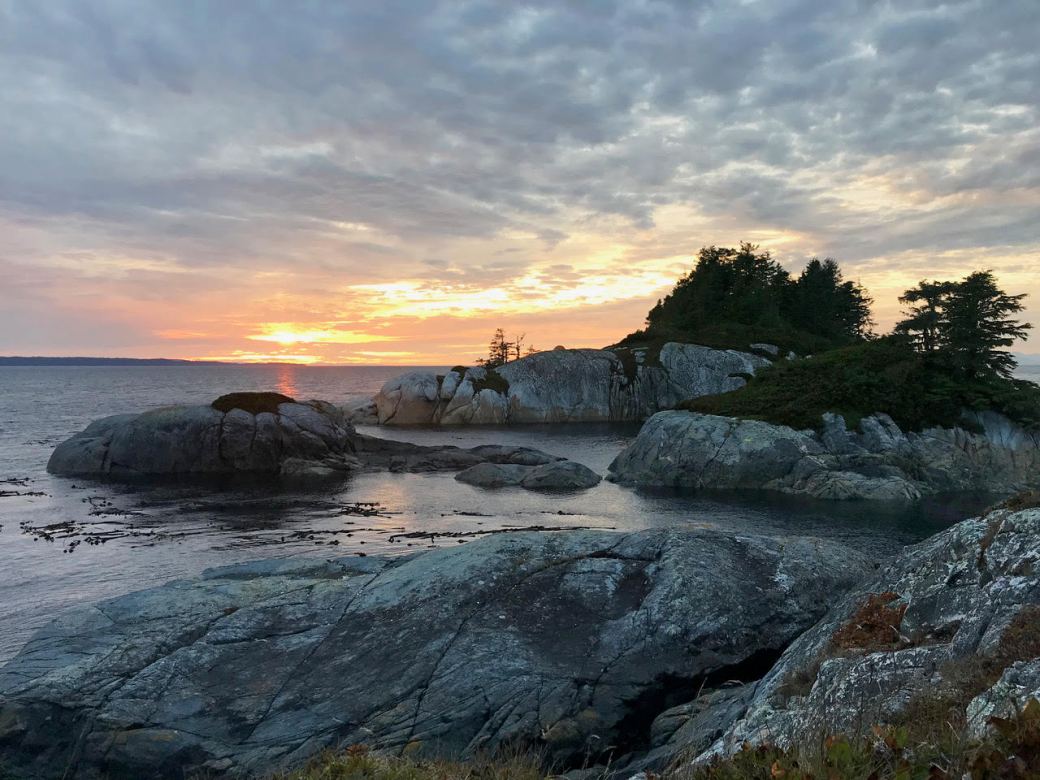
Broughton-sunset-kev

Sunset off Broughton coast, British Columbia (photo by Kevin Klassen)

Magic surges with power and mystery. Magic hides in clear view; it ripples with intrigue. When you look at magic, you see only your reflection; while its depths veil immeasurable possibility. Magic is water.

Life is sacred and flows with holy expression. Energetic, invigorating, and bracing, life fertilizes all Being to become more than Itself. Life is water.

water pattern01-credit

Water patterns (photo by Nina Munteanu)

Motion is the demon and angel of change. Motion flows endlessly on a tangent with time, destroying and creating. Motion carves sinuous patterns of stable chaos. In its turbulent wake or gliding caress, motion heralds transcendence. Motion is water.

Communication is the dance of singularity in a sea of Unity. It is the river of connection, uniting and expressing the fractal whole. Communication collides in a waterfall of notion and surprise. Informing. Transforming. Evolving. Communication floods the iconic dam, surging through conformity toward its own imaginings. Communication is water.

Memory streams in a braided and recursive path, meandering Ouroboros-like toward itself. Memory stirs up sediments that have lain for eons; re-suspending, re-examining, as if new. Then cascading toward the abyss of truth and paradox. The collective. The great ocean of thought. Memory is water.

FinCreek3-RockyM

Fin Creek, Rocky Mountains (photo by Nina Munteanu)

Rhythm undulates—at once turbulent and calm—signaling its fractal presence. Rhythm scours and builds its music with infinite patience and precision. Spiralling. Oscillating in successive rushes, glides, surges and trickles. Self-organizing. Coherent. Viscous. Rhythm is water.

Vibration hides and reveals its entangled energy. Vibration drifts on the tidal tapestry of the soul. Resonating in synchronous tones as it courses down gravity waves, vibration writes its unique sound and story. Vibration is water.

Beauty reflects Nature’s flowing embrace. Deep and quiet, beauty captures divine radiance—refracting, magnifying, rejoicing—and bursts into a sparkling sea of serenity. Light personified. Beauty is water.

Story meanders through varied landscape; cutting jagged rock and stirring fertile soils to release their messages; then joining in the great sea of the plenum. Story springs from the depths, bubbling forth with fresh bracing news of a new land. Story is water.

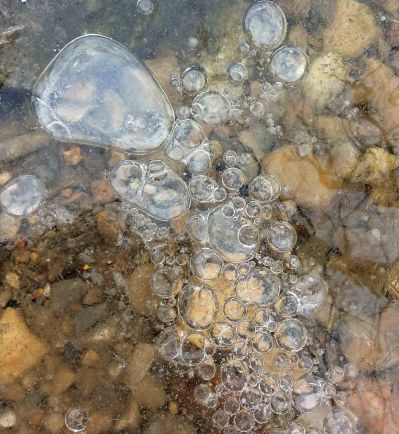
Bubbles under ice-LR

Bubbles under ice in Little Rouge River (photo by Nina Munteanu)

Prayer ripples out in circular waves of coherence from its source and back. Gestalt self-actualization. Prayer is a rainbow, revealing the reflected soul. Prayer scours, cleanses, refreshes and renews in a cycle of creation and connection. Prayer is water.

Wisdom does not stand still. Wisdom flows. It doesn’t flow in a straight line. Wisdom winds. Wisdom is wily. It transforms and transcends matter and energy with a subtle and patient hand. It erodes and deposits, from idea to emotion to philosophy. Wisdom tolerates. It forgives. It embraces and encompasses and—in changing—stays the same. Wisdom is water.


Ultimately, water will travel through the Universe and transform worlds; it will transcend time and space to share and teach; water will do its job to energize you and give you life, then quietly take its leave; it will move mountains particle by particle with a subtle hand; it will paint the world with beauty, then return to its fold and rejoice.

I am water. I am joy.

snow-scene-road-to-Wolfville-stream2a

Creek in Nova Scotia (photo by Nina Munteanu)


This poem was created using excerpts from “Water Is…The Meaning of Water” (Pixl Press, 2016) by Nina Munteanu.


nina-2014aaaNina Munteanu is an ecologist and internationally published author of award-nominated speculative novels, short stories and non-fiction. She is co-editor of Europa SF and currently teaches writing courses at George Brown College and the University of Toronto. Visit www.ninamunteanu.ca for the latest on her books. Nina’s recent book is the bilingual “La natura dell’acqua / The Way of Water” (Mincione Edizioni, Rome). Her latest “Water Is…” is currently an Amazon Bestseller and NY Times ‘year in reading’ choice of Margaret Atwood.

Surfing Schumann’s Wave and Catching the Ion Spray: Everything in Life is Vibration

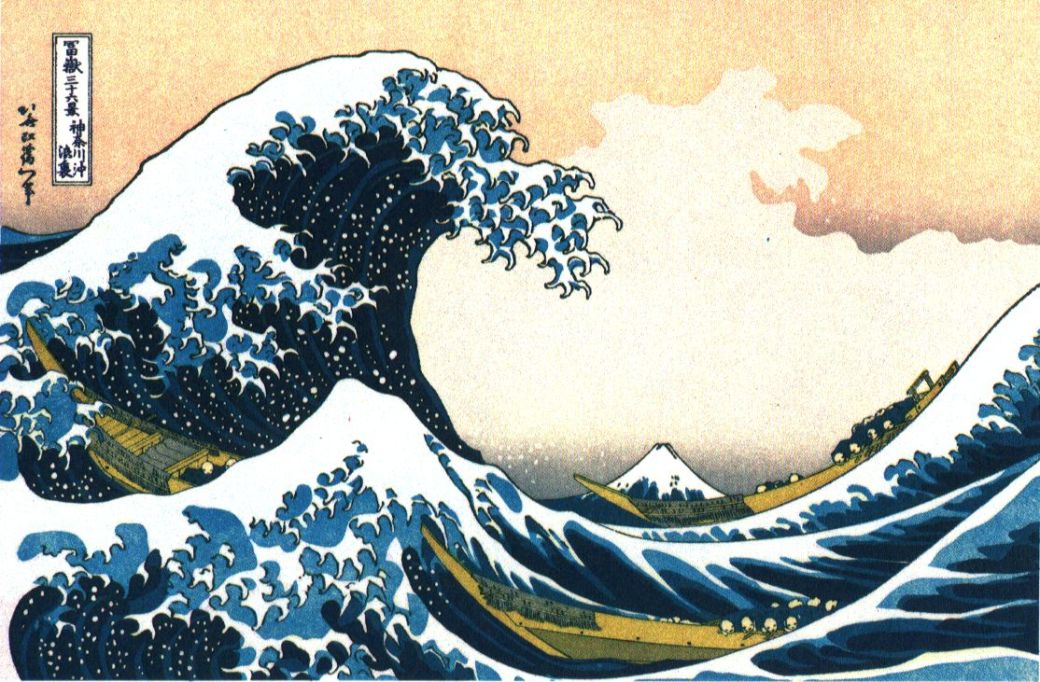
hokusai-wave

The Wave by Hokusai

Sometime ago, on another writing site that I used to post for, a reader/writer made an interesting comment to my article ” Stoking the Scintillation of Inspiration.” She said, “I feel energized and challenged to see where my mind takes me in the midst of my mommy days.  Often it’s when my four young children are home the ideas long to push through the clutter of multiple voices and feverish activity.

It made me think about what it is in those “repetitive tasks” that stoke our muse and how we as writers can benefit from them. Is it simply God’s ironic sense of humor (e.g., “You’re too busy to do anything about it now, so I will give you a genius moment to ponder….Good luck remembering it!”). Or have we inadvertently caught the universal wave? Einstein once said, “everything in life is vibration.”

We are creatures of rhythm: circadian, diurnal, and seasonal. Let’s face it; our environment—light especially—affects our behavior, psychologically, physiologically and even socially. For instance, mood-altering chemicals generated in the pineal gland in our brain, are partially affected by the light received from our retina. Our world is composed of energy, light, sound and matter, all expressed at different frequencies. Music—which is all frequency—can heal the body, strengthen the mind and unlock the creative spirit. For instance, music with a pulse of about sixty beats per minute can shift consciousness from the beta wave (ordinary consciousness at 14-20 Hz) toward enhanced alertness and general well-being at the alpha range (heightened awareness at 8-13 Hz, and essentially the standing wave in Schumann’s Cavity).

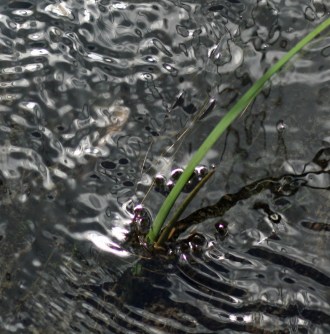
water pattern01-credit

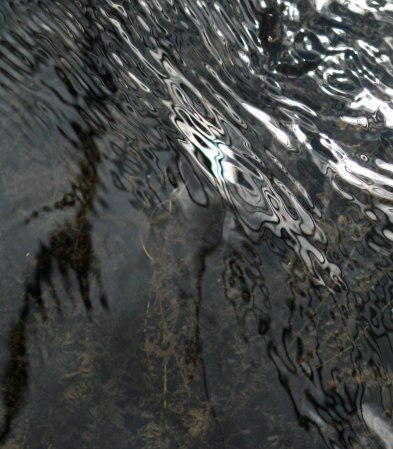
wave patterns (photo by Nina Munteanu)

The study of cymatics, coined in 1967 by Swiss doctor Hans Jenny from the Greek word kyma (wave), explores how sound affects gases, liquids, plasmas and solids and how vibrations, in the broad sense, generate and influence patterns, shapes and moving processes. When sound travels through non-solids it moves in longitudinal waves called compression waves. In matter, the medium is displaced by sound waves, causing it to oscillate at a frequency relative to the sound, and visible patterns emerge.

Using crystal oscillators and a “tonoscope” to set plates and membranes vibrating, Jenny controlled frequency and amplitude/volume to demonstrate that simple frequencies and songs could rearrange the essential molecular structure of water and other materials.

water-pattern03-credit

Wave patterns (photo by Nina Munteanu)

Jenny was convinced that biological evolution resulted from vibrations in a kind of fractal progression, and that their nature determined the ultimate outcome. He speculated that every cell has its own frequency and that a number of cells with the same frequency create a new frequency, which is harmonious with the original, which in its turn possibly forms an organ that also creates a new frequency in harmony with the two preceding ones. Jenny was saying that the key to understanding how we can heal the body with the help of tones lies in our understanding of how different frequencies influence genes, cells and various structures in the body (think of how you feel when you listen to Mozart’s Divertimento No. 15 vs. when you’re listening to Mick Jagger belt out Ruby Tuesday).

Boldly extending his tonoscope research into voice and language, Jenny discovered that when the vowels of ancient Hebrew and Sanskrit were pronounced, the sand took the shape of the written symbols for these vowels, while modern languages didn’t generate the same result. This has led spiritual philosophers to ponder if “sacred languages” (including Tibetan and Egyptian) have the power to influence and transform physical reality, to create things through their inherent power, or through the recitation or singing of sacred texts, to heal a person who has gone “out of tune”?…

This is an exceptional concept…

In a controversial movie called “Water”, Rustum Roy, professor at the State University of Pennsylvania and member of the International Academy of Sciences, posited that water has “memory”, based on the structure it takes on as a result of electromagnetic fields and various frequencies to which it is exposed.

water-pattern-06-credit

Wave patterns (photo by Nina Munteanu)

I’m a practicing aquatic scientist and I’m compelled to note that the human brain is 75% water; it is not surprising that we can be affected by the shape and form of water itself—and, in turn, may shape water with our minds. This is in itself a startling admission and opens up a myriad of controversial topics, which many scientists find hard to reconcile and refuse to investigate, let alone entertain. And, yes, I am edging into the area of metaphysics, “science fiction”, and “fanciful thinking”. A place populated by heretics who do “questionable science”, those rogue mavericks who dare step outside the realm of traditional science to imagine, to dare pursue a truth using unconventional means.

Here’s my point: water is important to us in ways science can’t even begin to explain. Because science can’t yet explain it, should we abandon the potential and its investigation? All good science was once perceived as magic before it was understood.

Let me take it one step further:

water-pattern-07-credit

Water patterns (photo by Nina Munteanu)

I posit that our entire bodies are sending and receiving vibrations at different frequencies with our environment, other people and other animals around us, inanimate objects, even the seemingly ‘empty’ space. It has permeated our culture more than you may realize, including the metaphors we have seamlessly adopted in our common language: terms like “bad vibes”, “you can feel the tension”, and “you could cut the air in here with a knife”.

If you think this is all too weird, consider the weirdness of quantum mechanics, which shows us that not only is “solid” matter made up mostly of energy and “empty” space but what makes a solid a chair vs. you sitting on it is the vibration of its energy. Quantum science has demonstrated that light and matter are made of both particles and waves (New Scientist, May 6, 2010) and can exist in two simultaneous states (heard of Schrodinger’s Cat?). Let’s consider, for instance, “entanglement” (quantum non-local connection), the notion that particles can be linked in such a way that changing the quantum state of one instantaneously affects the other, even if they are light years apart. And what does it mean when solid flows, ghost-like, through itself under certain conditions? Or parallel universes are created by splitting realities? (You’ll have to check out my historical fantasy “The Last Summoner” for a unique take on this popular notion).

Nobel prize-winning physicist Richard Feyman says of the paradoxes presented by quantum mechanics, “the ‘paradox’ is only a conflict between reality and your feeling of what reality ought to be.”

So, what does all of this have to do with “writing”, scintillating or otherwise, some of you may be asking… Well, nothing … Everything …


Reference:
Munteanu, Nina. 2016. “Water Is…The Meaning of Water” Pixl Press, Vancouver, BC. 585pp.


nina-2014aaaNina Munteanu is an ecologist and internationally published author of award-nominated speculative novels, short stories and non-fiction. She is co-editor of Europa SF and currently teaches writing courses at George Brown College and the University of Toronto. Visit www.ninamunteanu.ca for the latest on her books. Nina’s recent book is the bilingual “La natura dell’acqua / The Way of Water” (Mincione Edizioni, Rome). Her latest “Water Is…” is currently an Amazon Bestseller and NY Times ‘year in reading’ choice of Margaret Atwood.

Stoking the Scintillation of Inspiration

Forest conifers Metchosin

Forest in Metchosin, BC (photo by Nina Munteanu)

“Many of us wish we were more creative,” Julia Cameron, author of The Artist’s Way, shares. “Many of us sense we are more creative, but unable to effectively tap that creativity. Our dreams elude us. Our lives feel somehow flat. Often, we have great ideas, wonderful dreams, but are unable to actualize them for ourselves. Sometimes we have specific creative longings we would love to be able to fulfill … we hunger for what might be called creative living.”

Many of us are, in fact, creatively blocked. How would you know if you were? Jealousy is an excellent clue. Are there creative people you resent? Do you tell yourself, ‘I could do that, if only…’ An old friend of mine used to constantly share that he would “start living and settle down” once he had enough money. It never happened; and he never did—twenty years later. That was sad; because he was waiting for life to begin, when it was already happening—and he was missing it.

YellowCreek-3

Stairway to Yellow River, Ontario (photo by Nina Munteanu)

Creative recovery (or discovery) is something you can learn. It is something you can enhance and direct. “As you learn to recognize, nurture, and protect your inner artist,” says Cameron, “you will be able to move beyond pain and creative constriction. You will learn ways to recognize and resolve fear, remove emotional scar tissue, and strengthen your confidence.”

Stoking the creative artist inside you may be as simple as giving your mind the chance to wander—and taking the time to pay attention. Rhythm and regular, repetitive actions play a role in priming the artistic well. Cameron lightheartedly describes how the “s” activities work so well for this: showering, swimming, scrubbing, shaving, steering a car. I can testify to the latter—how many great plot ideas have I cooked up while driving to work! Filmmaker Steven Spielberg claimed that his best ideas came to him while he was driving the freeway. Negotiating through the flow of traffic triggered the artist-brain with images that translated into ideas. “Why do I get my best ideas in the shower?” Einstein was known to have remarked. Scientists tell us that this is because showering is an artist-brain activity.

Anne-walking-Cedars

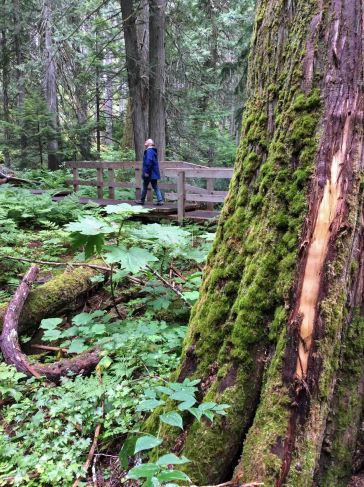
Giant Cedar forest, Revelstoke Park, BC (photo by Nina Munteanu)

The magical part in this is to pay attention. Pay attention to your life experiences; don’t ignore them. Sit up in the bus and watch people, play with the images, sounds and smells. Get sensual and let your eyes, ears, nose and limbs delight in the world. It’s amazing how interesting the world becomes once you start paying attention.

Henry Miller tells us to develop interest in your daily life; in people, things, literature, and music: “the world is … simply throbbing with rich treasures, beautiful souls and interesting people. Forget yourself,” he says.

Looking outward as well as inward allows us to explore different angles and facets of the same thing. When we see the same thing through different perspectives we rediscover something new in ourselves. We create interest and connect the world to ourselves.

GairlochGardens-LakeOntario

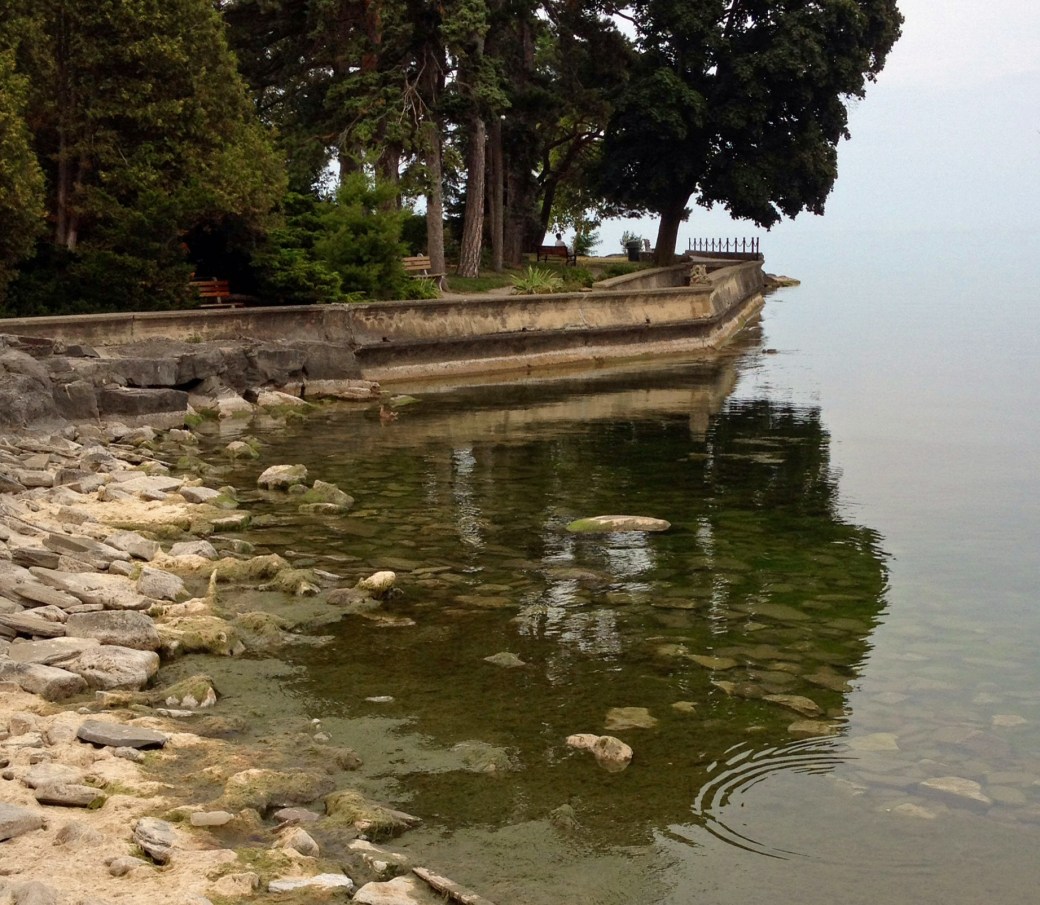
Lake Ontario at Gairloch Gardens, Ontario (photo by Nina Munteanu)

Julia Cameron shares that “art may seem to spring from pain, but perhaps that is because pain serves to focus our attention onto details (for instance, the excruciatingly beautiful curve of a lost lover’s neck). Art may seem to involve broad strokes, grand schemes, great plans. But it is the attention to detail that stays with us; the singular image is what haunts us and becomes art. Even in the midst of pain, this singular image brings delight. The artist who tells you different is lying.”


Brenda Ueland tells us why we should all use our creative power: “Because there is nothing that makes people so generous, joyful, lively, bold and compassionate, so indifferent to fighting and the accumulation of objects and money.”

References:

Julia Cameron. 2002. “The Artist’s Way”. Tarcher. 272pp.
Nina Munteanu. In Press. “The Journal Writer:  Finding Your Voice”. Pixl Press. 132pp.


nina-2014aaaNina Munteanu is an ecologist and internationally published author of award-nominated speculative novels, short stories and non-fiction. She is co-editor of Europa SF and currently teaches writing courses at George Brown College and the University of Toronto. Visit www.ninamunteanu.ca for the latest on her books. Nina’s recent book is the bilingual “La natura dell’acqua / The Way of Water” (Mincione Edizioni, Rome). Her latest “Water Is…” is currently an Amazon Bestseller and NY Times ‘year in reading’ choice of Margaret Atwood.

Eco-Artist Roundtable with Frank Horvat on Green Majority Radio

On December 8th on Green Majority Radio, artist and composer Frank Horvat hosted the second Eco-Artist Roundtable featuring visual artist Mark Adair, theatre artist Kevin Matthew Wong, and author Nina Munteanu.

In this hour-long thoughtful and insightful discussion, artists covered a range of topics pertinent to the environment from the role of the artist in raising eco-awareness to activism in art and human rights. Nina also read from her book “Water Is…”

Go have a listen.

CIUT-eco-art panel show

Kevin, Nina, Mark and Frank at the studio

nina-2014aaaNina Munteanu is an ecologist and internationally published author of award-nominated speculative novels, short stories and non-fiction. She is co-editor of Europa SF and currently teaches writing courses at George Brown College and the University of Toronto. Visit www.ninamunteanu.ca for the latest on her books. Nina’s recent book is the bilingual “La natura dell’acqua / The Way of Water” (Mincione Edizioni, Rome). Her latest “Water Is…” is currently an Amazon Bestseller and NY Times ‘year in reading’ choice of Margaret Atwood.

The Ontario Climate Symposium: Adaptive Urban Habitats by Design

SONY DSC

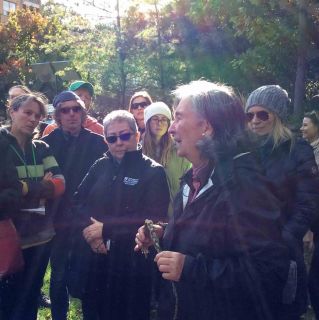
Nina presents Diana Beresford-Kroeger with a copy of “Water Is…”

I recently participated in the 2018 Ontario Climate Symposium “Adaptive Urban Habitats by Design” at OCAD University in Toronto, hosted by the Ontario Climate Consortium and the Toronto and Region Conservation Authority.

Day 1 opened with a ceremony by Chief R. Stacey Laforme of the Mississauga of the New Credit First Nation, followed by keynote address by Dr. Faisal Moola, associate professor of the University of Guelph.

A three-track panel stream provided diverse and comprehensive programming that helped further the goal to foster important discussions for how art and design can play a role in developing adaptive, low carbon cities. Panels sparked much networking among a diverse group of participants, who clustered around the refreshments in the Great Hall, where my “Water Is…” exhibit was located.

OCS-venue

The Great Hall, where participants networked over refreshments

WaterIs...at OCS2

one participant clutches “Water Is…”

Water Is… was also there for sale, as part of my exhibit on water, along with Environment and Climate Change Canada, Green Roofs, Waste, and the Environmental Commissioner of Ontario. I had several lively and insightful conversations with participants and I’m glad to say that Water Is… made it into several people’s hands at the symposium. Water is, after all, a key component of climate and climate action.

The film “Call of the Forest: The Forgotten Wisdom of Trees” was screened and scientist Diana Beresford-Kroeger participated in a question and answer period then signed her latest book.

diana_and_the_tree_

Call of the Forest” was called “a folksy and educational documentary with a poetic sort of alarmism about disappearing forests,” by the Globe and Mail. The film “takes us on a journey to the ancient forests of the northern hemisphere, revealing the profound connection that exists between trees and human life and the vital ways that trees sustain all life on this planet.” The movie describes the numerous health-giving aerosols that trees use to communicate. Diana’s genuine and earnest concern illuminates her simple yet powerful narrative, such as when she says that the forests are “haunted by silence and a certain quality of mercy.” Featuring forests from Japan and Germany’s Black Forest to Canada’s boreal forest, this documentary is a powerful manifesto for sustainability.

DianaBeresfordKroeger

Diana lecturing in High Park

On Day 2, I toured the Black Oak savanna in High Park with Diana Beresford-Kroeger (author of The Global Forest). The tour was refreshing and enlightening. Diana is a genuine advocate for the forest and showed some of the medicinal properties of forest plants. An example is the common weed, Goldenrod; its astringent and antiseptic qualities tighten and tone the urinary system and bladder, making goldenrod useful for UTI infections; Its kidney tropho-restorative abilities both nourishe and restore balance to the kidneys.

Diana spoke from the heart and brought a wealth of scientific knowledge to us in ways easy to understand—like the biochemistry of photosynthesis or quantum coherence. Diana shared how over 200 tree aerosols help combat anything from asthma to cancer. I also talk about this in the “Water Is Life” chapter of my book, Water Is…, which I gave a copy to Diana.

lunenburg-shop01

Shops in Lunenburg, NS (photo by Nina Munteanu)


nina-munteanuNina Munteanu is an ecologist, limnologist and internationally published author of award-nominated speculative novels, short stories and non-fiction. She is co-editor of Europa SF and currently teaches writing courses at George Brown College and the University of Toronto. Visit www.ninamunteanu.ca for the latest on her books.

How Creative Destruction Embraces Paradox…

“Very well, then, I contradict myself; I am large—I contain multitudes.”—Walt Whitman

OuterDiverse-cover-webCreative destruction … sounds like a paradox, doesn’t it? Nature—and God— is full of contradiction and paradox. There is so much that we do not understand (at least on the surface)… and apparent contradiction proves that to me. In Outer Diverse, Book One of The Splintered Universe Trilogy, my character Serge says:
“… somewhere between the infinities of [worlds] you would experience paradox: black holes, quasars; intuition, déjà vu, clairvoyance… order in chaos…darkness at the heart of all beauty… beauty in the heart of all darkness…a mathematician with faith …the strength of surrender…loving your enemy…dying to live…”

Paradox lies undeniably at the heart of the clash of two realms.

I understand something of paradox. As an ecologist, I deal with it all the time.

Destruction in creation and creation in destruction is ingrained in the life-cycles of everything on this planet, indeed in this universe. A forest fire can destroy life but in so doing creates a more vibrant, healthier forest.

Darwins Paradox-2nd coverIn my speculative fiction novel, Darwin’s Paradox, Julie applies her father’s ecological precept to describe her observations on the rise and fall of a civilization, an ecosystem and an entire world. The precept was based on C.S. Holling’s 1987 ecological model of creative destruction:

Fire was a constant hazard in the heath. Yet, fire served the heath by discouraging invasive shrubs and halting succession. The grazing deer populations completed the job of keeping the heath from reverting to woodland. So, fire had its place as creative destroyer in the natural cycle of ecosystem behavior. Stable chaos, according to her father. It was a harsh and rude environment, Julie concluded. Like thieves in the night, bell heather, gorse and purple loosestrife snatched everything for themselves, leaving nothing for the others. Like many things in nature, the heath plants, though beautiful and fragrant, were ruthlessly greedy. . .

Creative destruction was first introduced as a term in 1942 by the economist, Joseph Schumpeter to describe the process of industrial transformation that accompanies radical innovation. According to Schumpeter’s view of capitalism, innovative entry by entrepreneurs sustained long-term economic growth, even as it destroyed the value of established companies that enjoyed some degree of monopoly power. An example is Xerox, who has seen its profits fall and its dominance vanish as rivals launched improved designs or cut manufacturing costs, drawing customers away.

The Science of Creative Destruction

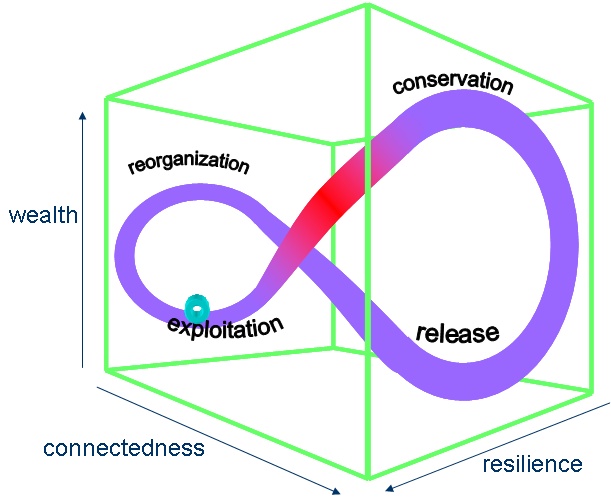
In his classic paper, entitled: “Simplifying the complex: the paradigms of ecological function and structure” (1987) C.S. Holling applied Schumpeter’s term to ecology. Holling’s model of ecosystem behaviour recognized ecosystems as non-linear, self-organizing and continually adapting through cycles of change from expansion and prosperity to creative destruction and reorganization.

creative-destruction-model

Holling presented several paradigms that ecologists use to describe the causes and behaviour (and management) of ecosystems, including an equilibrium-centred view (based on the constancy of behaviour over time), which Simon Forge described as “driving using the rear-view mirror”—trying to judge the road ahead by what went on behind. Holling advocated a “nature evolving” view, which describes ecosystems as undergoing sharp, discontinuous changes that are internally organized and balanced (I like his mobius loop to describe the closed ouroborus-like cycle of creation and destruction in nature). Holling described four phases of natural ecosystem succession within his “nature evolving” paradigm. It starts out with the exploitation phase, in which new opportunities are realized through rapid colonization and competition. Natural forces of conservation (e.g., nurturing, consolidation) lead to vulnerable systems (e.g., old growth forests), as stabilizing factors lose strength and the system evolves from having few interrelationships to having many. The result is often an abrupt change that both destroys systems and creates opportunity (creative destruction) through fire, storms, pests, senescence. Mobilization of bound, stored “capital” (e.g., carbon, nutrients and energy) through physicochemical and biological processes like decomposition and mineralization completes the dynamic cycle of functional ecosystems.

What this means for the ecosystem manager is that efforts to detect responses to changes, including human interventions like restoration activities, are confounded. Traditional (equilibrium-centred) ecosystem management may be misdirected, resulting in pathological “surprises” of ecosystem response and a spiralling vigilance and cost in control measures. Examples of traditional equilibrium-centred management of forests, fish and other organisms of terrestrial and aquatic environments with devastating consequences include:

  • firecycle copySuppression of spruce budworm populations in eastern Canada using insecticides partially protected the forest but left it vulnerable to an outbreak covering an area and of an intensity never experienced before;
  • Forest fire suppression reduced the probability of fire in the national parks of the United States but the consequence has been the accumulation of fuel to produce fires of an extent and cost never experienced before;
  • Semi-arid savanna ecosystems have been turned into productive cattle grazing systems in the Sahel zone of Africa, southern and east Africa, and other parts of the world. However, changes in grass composition have promoted an irreversible switch to woody vegetation and the systems have become highly susceptible to collapse, often triggered by drought; and,
  • Protection and enhancement of salmon spawning on the west coast of North America may have led to some success regarding enhanced stocks (e.g., hatchery-grown fish), but fishing industry is left precariously dependent on a few enhanced stocks which are vulnerable to collapse.

In each of these examples, the policy succeeded in its immediate objective. But in each case the system evolved into something with different properties and each “solution” led to a larger problem. In short, the biophysical environment had evolved into one that was more fragile, more dependent on vigilance and error-free management. Something Holling called “Nature Engineered.”

In his classic 1987 paper, Holling suggests that ecosystems be viewed—and managed—as “Resilient Nature”, where the experience of instability maintains the structure and general patterns of ecosystem behaviour; in other words, that Nature ‘learns’ and accommodates with time. In the final analysis, it is a matter of scale.

We are seeing that now as global warming takes force and we step solidly into the depths of the Anthropocene Age where green is the colour of resilience.

The Narrative of Creative Destruction

Water Is-COVER-webIn my book Water Is… I write: “Destruction in creation and creation in destruction are ingrained in the life cycles of everything on this planet and in the universe. A forest fire can destroy life but in so doing creates a more vibrant, healthier forest. Holling and I, in our separate studies, were really drawing on the ancient knowledge of polarity and cycles in nature. The opposing forces of polarity generate ongoing cycles of creation and destruction. The Ouroboros, remembering.”

The Ouroboros is an ancient symbol that depicts a serpent or dragon swallowing its own tail to form a circle. As a serpent devouring its own tail, the Ouroboros symbolizes the cyclic nature of the Universe: creation out of destruction, Life out of Death. The Ouroboros eats its own tail to sustain its life, in an eternal cycle of renewal. In the Gnosis scriptures, it symbolizes eternity and the soul of the world.

“in the Chinese I Ching, the hexagram for “crisis” also represents “opportunity.” This is because when we are in stasis (which represents lack of movement), we do not recognize our path; perspective only comes with movement. In this way, calamity, initially seen as disaster, may be viewed as unexpected opportunity for creative change. The unpredictable nature of water provides the opportunity to teach and learn.” The “crisis” of change and “destruction” provides opportunity, just as collision of viewpoints bring new ideas.”

Tree-YellowBirch winter-LR

Yellow birch tree in Little Rouge woodland (photo by Nina Munteanu)


Recommended Reading:

Holling, C.S. 1987. Simplifying the complex: the paradigms of ecological function and structure. Eur. J. Oper. Rel. 30: 139-146.

Holling, C.S. 1973. Resilience and stability of ecological systems. Annual Rev. Ecol. Syst. 4: 1-23.

Holling, C.S. 1977. Myths of ecology and energy. In: Proceedings Symposium on Future Strategies for Energy Development, Oak Ridge, Tenn., 20-21 October, 1976. Oxford University Press, New York, N.Y.

Munteanu, N. 2016. Water Is… The Meaning of Water. Pixl Press, Vancouver. 586pp.


nina-2014aaaNina Munteanu is an ecologist and internationally published author of award-nominated speculative novels, short stories and non-fiction. She is co-editor of Europa SF and currently teaches writing courses at George Brown College and the University of Toronto. Visit www.ninamunteanu.ca for the latest on her books. Nina’s recent book is the bilingual “La natura dell’acqua / The Way of Water” (Mincione Edizioni, Rome). Her latest “Water Is…” is currently an Amazon Bestseller and NY Times ‘year in reading’ choice of Margaret Atwood.


Wonder and Reason in The Age of Water

Jungfrau-peak

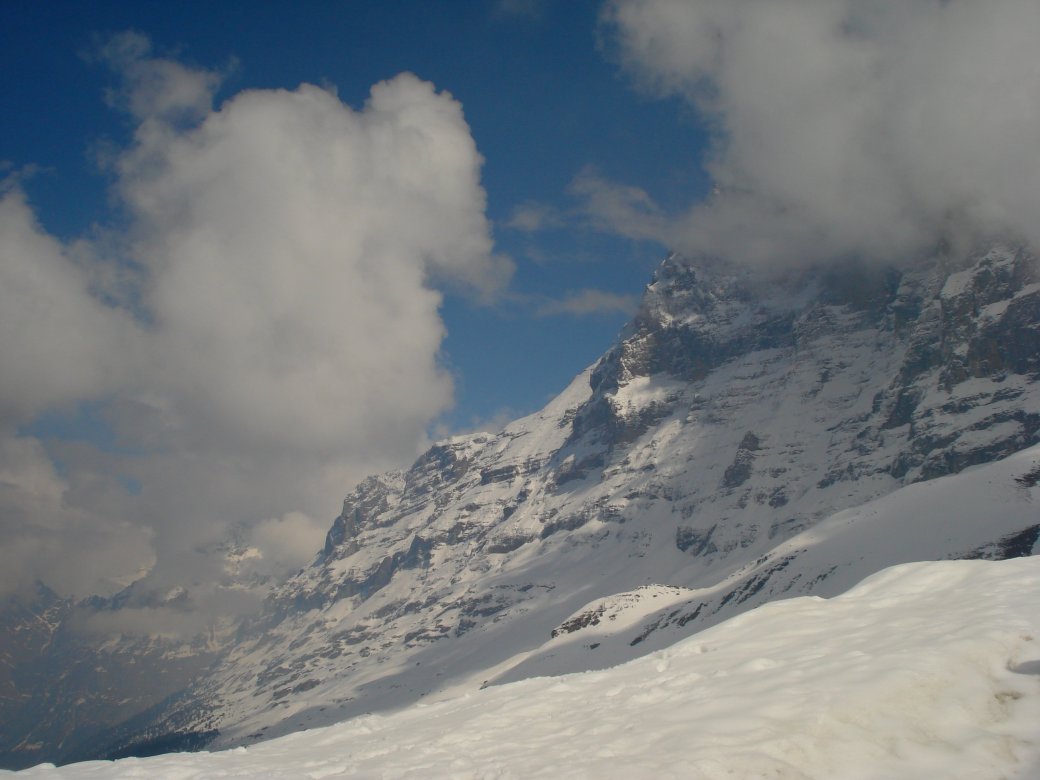
Mountain peaks at Zermatt, Switzerland (photo by Nina Munteanu)

Writer and essayist Annis Pratt begins her compelling essay “World of Wonder, World of Reason” in Impakter, with the question: “Do we live in a world of wonder where Nature ultimately calls the shots or a world of reason where Homo Sapiens are in control?”

Invoking the now vogue term “Anthropocene”, she puts it another way: “Is Nature dependent upon our definitions of it, or does it both precede and transcend human consciousness?  Does the term “Anthropocene” signal an apocalyptic shift that places us at the center of the Universe and if so, is the death of Nature upon us, or are we mistaken?”

Pratt examined and synthesized four works of different perspectives on nature and humanity to answer these questions. My book “Water Is…” was among them:

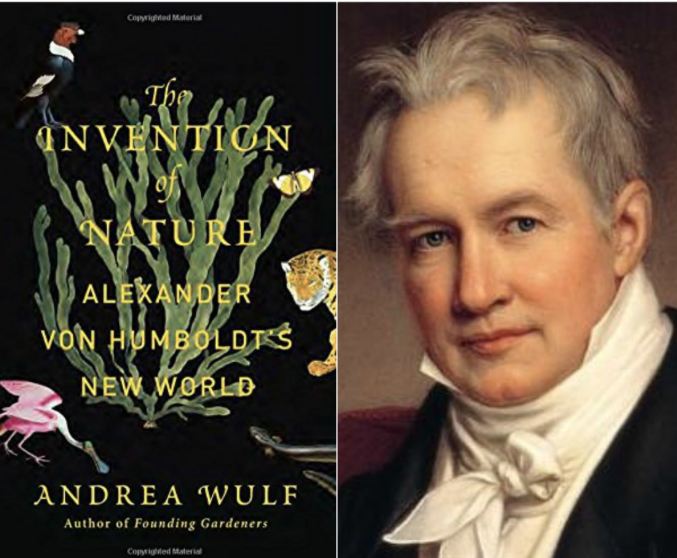
  1. The Invention of Nature: Alexander von Humboldt’s New World” by Andrea Wulf (Knoff, 2015)
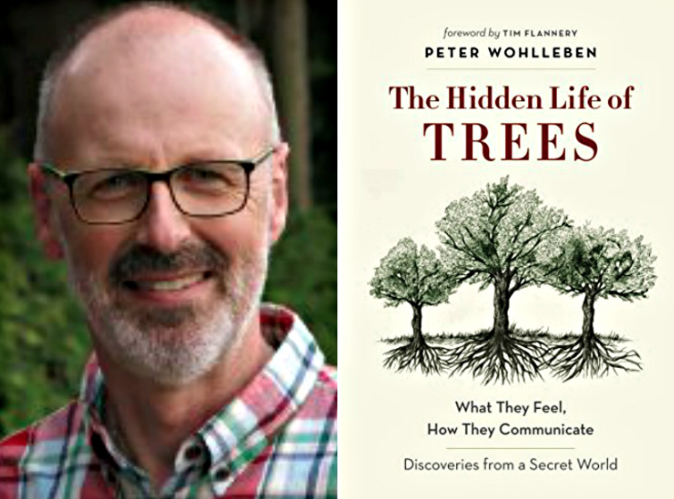
  2. The Hidden Life of Trees: What They Feel, How They Communicate” by Peter Wohlleben, translated by Jane Billinghurst (Greystone Books, 2016)
  3. Water Is…The Meaning of Water” by Nina Munteanu (Pixl Press, 2016)
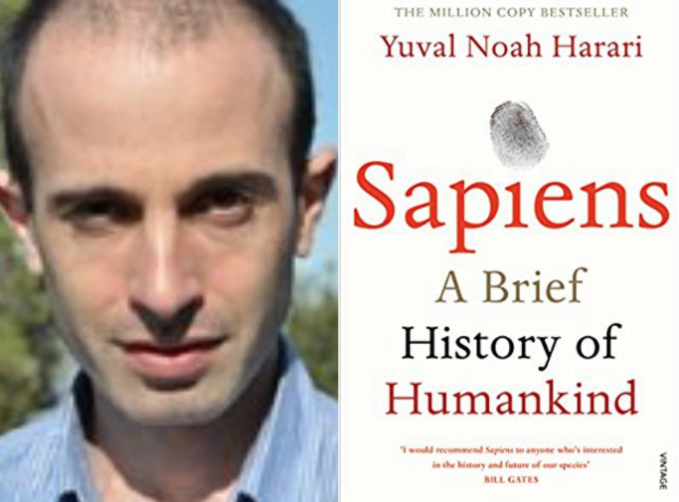
  4. Sapiens: A Brief History of Humankind” by Yuval Noah Harari (Harper Collins, 2015)

The first three, says Pratt, are scientists who made close observations of nature that filled them with wonder at the complexity of its processes: “Alexander von Humboldt, an 18th century Prussian scientist, the father of ecology; Peter Wohlleben, an ecologist who worked over twenty years for the forestry commission in Germany and Nina Munteanu, a limnologist, university teacher and award-winning ecologist.” The fourth, an Israeli historian, Yuval Noah Harari took a dramatically different stance, says Pratt. “He deplores our epoch when human egos have run amuck, putting Nature itself in peril.”

Wonder: Alexander von Humboldt

AlexVonHumboldt

Alexander von Humboldt lived from 1769-1859 (when Darwin published Origin of Species) and considered a genius, polymath, explorer and keen observer of botanical phenomena. In a world and time when Enlightenment thinkers and scientists predicated their observations on a premise of a static unchanging Nature (recall this was prior to Darwin’s controversial theory of evolution), von Humboldt discovered that nature’s one constant was change. As with von Goethe and von Schelling, von Humboldt embraced Naturphilosophie to comprehend nature in its totality and to outline its general theoretical structure. Naturphilosophie espoused an organic and dynamic worldview as an alternative to the atomist and mechanist outlook prevailing at the time.

Von Humboldt succeeded in proving that species change according to their circumstances, such as altitude or climate. According to Wulf, Bildungsreich was a force that shaped the formation of bodies, with every living organism, from humans to mould, having this formative drive. Von Humboldt’s “discovery that natural phenomena are inter-influencing elements of an interdependent whole, connected and interacting along an ‘invisible web of life,’ made Humboldt the first ecologist,” writes Pratt.

Wonder: Peter Wohlleben

Wohlleben

“Contemporary German forest ranger Peter Wohlleben belongs to the same school of Naturalphilosophie as Humboldt, bringing a similar sense of curiosity and wonder to his botanical observations,” says Pratt, who suggests that criticism aimed at his work arose in response to the anthropomorphic “voice” he uses—despite validation through the work of Dr. Suzanne Simard, Professor of Forest Ecology at the University of British Columbia.

Simard showed that trees “talk” to each other through electrical impulses as part of an underground network of fungi: “like fiber-optic internet cables.”

Pratt describes the events that led to Wohlleben’s path as an ecologist and his series of “hidden life of” books: he had become uncomfortable chopping down trees and spraying the forest with chemicals and became depressed when his superiors refused to consider his alternative methods. Wohlleben had decided to quit his job and emigrate to Sweden, when the town of Hummel decided to annul its state contract, reconstitute itself as a private preserve, and hire him to implement his innovations.

Wohlleben uses the findings of Simard and other scientists that trees communicate, nourish and heal each other. “It appears that the nutrient exchange and helping neighbors in times of need is the rule, and this leads to the conclusion that forests are superorganisms with interconnections much like ant colonies,” writes Wohlleben.

Wonder: Nina Munteanu

NinaWaterIs-Impakter

“In the same way that Peter Wohlleben approaches the hidden life of trees with a combination of scientific observation and enthusiastic wonder, in Water Is…The Meaning of Water,  Canadian limnologist Nina Munteanu observes the hidden properties of water with a scientist’s eye for detailed processes and a sense of amazement at their intricacies,” writes Pratt. “Echoing Humboldt’s discovery of the interwoven multiplicities of nature, [Munteanu] “transcends ‘Newtonian Physics and Cartesian reductionism aimed at dominating and controlling Nature’”:

“Science is beginning to understand that coherence, which exists on all levels—cellular, molecular, atomic and organic—governs all life processes. Life and all that informs it is a gestalt process. The flow of information is fractal and multidirectional, forming a complex network of paths created by resonance interactions in a self-organizing framework. It’s stable chaos. And water drives the process”—Nina Munteanu, Water Is…

“In addition to providing a gripping analysis of water science,” says Pratt, Nina Munteanu’s Water Is… “provides an encyclopedic trove of quirky observations, like how Galileo understood water flow, the Chinese character for water, Leonardo da Vinci’s water drawings, the Gaia Hypothesis, and David Bohm’s theory of flux.”

“the Gaia Hypothesis proposes that living and non-living parts of our planet interact in a complex network like a super-organism. The hypothesis postulates that all living things exert a regulatory effect on the Earth’s environment that promotes life overall…Much of nature – if not all of it – embraces this hidden order, which I describe as ‘‘stable chaos’”—Nina Munteanu, Water Is…

Reason: Yuval Noah Harari

YuvalNoahHarari

Israeli Historian, Harari sees Homo Sapiens as destructively self-serving. “Even in our earliest history,” Pratt tells us, “he suspects we were responsible for the extirpation of the Neanderthals. Everywhere we settled, mammoths and other megafauna suffered mass extinction. “The historical record,” he concludes, “makes Homo Sapiens look like an ecological serial killer.”

We are like the bully elbowing his way at school. And our casualties—such as the extinction of a dozen species a day—are innocence lost.

According to Harari, while the industrial revolution “liberated humankind from dependence on the surrounding ecosystem,” it provided no lasting benefit to the human race: “Many are convinced that science and technology hold the answers to all our problems…” but, “Like all other parts of our culture, it is shaped by economic, political and religious interests…We constantly wreak havoc on the surrounding ecosystem, seeking little more than our own comfort and amusement, yet never finding satisfaction.”

Human-Centred or Nature-Centred?

To answer Pratt’s first question: “Do we live in a world of wonder where Nature ultimately calls the shots or a world of reason where Homo Sapiens are in control?” she invokes global warming to suggest that we don’t have the last say in the planet’s welfare: “Aren’t these tumultuous catastrophes demonstrative of nature’s ability to rise over and against what we throw at it? Global warming may end civilization and perhaps the human species along with so many others we have destroyed, but are human beings really capable of engineering the destruction of the planet?  I doubt it.”

I concur. While humanity is capable of extensive natural destruction, Gaia will not only accommodate—it will prevail. Very soon—some think now already—Nature may no longer resemble that “friendly” and stable Holocene environment that we’ve come to rely on and exploit so heedlessly. Species will die out. Others will take their place in a shifting world.

As the first swell of the climate change tidal wave laps at our feet, we are beginning to see the planetary results of what humanity has helped create and exacerbate. Humanity has in many ways reached a planetary tipping point; a threshold that will be felt by all aspects of our planet—both animate and inanimate—as the planet’s very identity shifts.

One thing is certain: environments will cease to be hospitable for humanity. Compared with many other life forms, we actually have very narrow tolerances to stay healthy and survive:

  1. We need lots of water (70%)
  2. We freeze or cook beyond the 40-100 degree F range in a galaxy that goes from minus 400 at the moon’s south pole to 25 million degrees inside the sun
  3. We faint from lack of oxygen on our tallest mountains
  4. We need a pH balance of 6.5 to 7.5 to stay alive
  5. Ionizing radiation kills us at low concentrations
  6. Many compounds in the wrong amounts are toxic to us

But something will benefit. For every perturbation imposed there is adaptation and exploitation, stitched into the flowing tapestry of evolution. That is ecology.

Ecology studies relationships and change in our environment: how we interact, impact one another, change one another. Ecology studies individuals, communities and ecosystems and provides insight into the dynamics that cause and result from these interactions.

Diary Water cover finalIn my upcoming novel “A Diary in the Age of Water” (due in May 2020) a journaling limnologist in the near-future reflects on the acidified oceans in her current world: flagellates (microscopic plankton with flagella) have outcompeted diatoms (food for many species) and are mainstay of the box jellyfish—the top marine predator from the Proterozoic Era—that has overrun the entire ocean. The box jellyfish is currently overrunning Tokyo Bay. The story proceeds into the future when dead zones—currently found in the Gulf of Mexico, the mouth of the Mississippi River, Chesapeake Bay, Kattegat Strait, and Baltic Sea—occur on virtually every marine and freshwater coast; the AMOC eventually fails and the oceans grow toxic; sea level immerses Florida, the Pudong District, the entire Maldives, and dozens of coastal cities; and global temperature has triggered a heat-related epidemic involving heat shock proteins. This is a world very different from the one we have grown accustomed to; it is a harsh, hostile world that no longer treats us well; but it is a world, none the less.

Living with Natural Succession

One of the first things we learn in Ecology 101 is that change is the one constant in biology; systems endure by striking dynamic equilibria within a shifting tapestry. Succession—the natural procession of one community to another—lies at the core of a dynamic and functional ecosystem, itself evolving to another system through succession.

“Still immature and undeveloped, an oligotrophic lake often displays a rugged untamed beauty. An oligotrophic lake hungers for the stuff of life. Sediments from incoming rivers slowly feed it with dissolved nutrients and particulate organic matter. Detritus and associated microbes slowly seed the lake. Phytoplankton eventually flourish, food for zooplankton and fish. The shores then gradually slide and fill, as does the very bottom. Deltas form and macrophytes colonize the shallows. Birds bring in more creatures. And so on. As Nature tames the unruly lake over time, one thing replaces another. As a lake undergoes its natural succession from oligotrophic to highly productive eutrophic lake, its beauty mellows and it surrenders to the complexities of destiny. Minimalism yields to a baroque richness that, in turn, heralds extinction. The lake shrinks to a swamp then buries itself under a meadow.”—Nina Munteanu A Diary in the Age of Water

Ecology and Story

NaturalSelection-front-webIn a talk I give at conferences on “Ecology and Story”, I provide examples of extremophiles that have adapted to and thrive in extreme conditions on Earth.  The brine shrimp of Mono Lake—an endorheic lake that is extremely salty, anaerobic and alkaline—happily hatch in the trillions every year. The bacteria of Rio Tinto—toxic with heavy metals—thrive on the iron through a biofilm that protects them. Radiotrophic fungi feed on gamma radiation at the Chernobyl nuclear power plant. Life on Earth will endure and prevail—not despite but alongside humanity’s imposed ecological succession.

The question is, will we survive our own succession?

Literature of the Anthropocene

Memory of waterTerms such as eco-fiction, climate fiction and its odd cousin “cli-fi”, have embedded themselves in science fiction and literary fiction terminology; this fiction has attracted a host of impressive authors who write to its calling: Margaret Atwood, Emmi Itäranta, Jeff VanderMeer, Richard Powers, Barbara Kingsolver, Upton Sinclair, Ursula Le Guin, JoeAnn Hart, Frank Herbert, John Yunker, Kim Stanley Robinson, James Bradley, Paolo Bacigalupi, Nathaniel Rich, David Mitchell, Junot Diaz, Claire Vaye Watkins, J.G. Ballard, Marcel Theroux, Thomas Wharton—just to name a few. The list is growing. Of course, I’m on it too. Many of these works explore and illuminate environmental degradation and ecosystem collapse at the hands of humanity.

.

Nina MunteanuNina Munteanu is an ecologist, limnologist and internationally published author of award-nominated speculative novels, short stories and non-fiction. She is co-editor of Europa SF and currently teaches writing courses at George Brown College and the University of Toronto. Visit www.ninamunteanu.ca for the latest on her books.