Reflections: The Meaning of Water (a talk for the Lewis Creek Association)

Nina Louis Merridy

Nina Munteanu with Louis DuPont and Merridy Cox with Lewis Creek behind

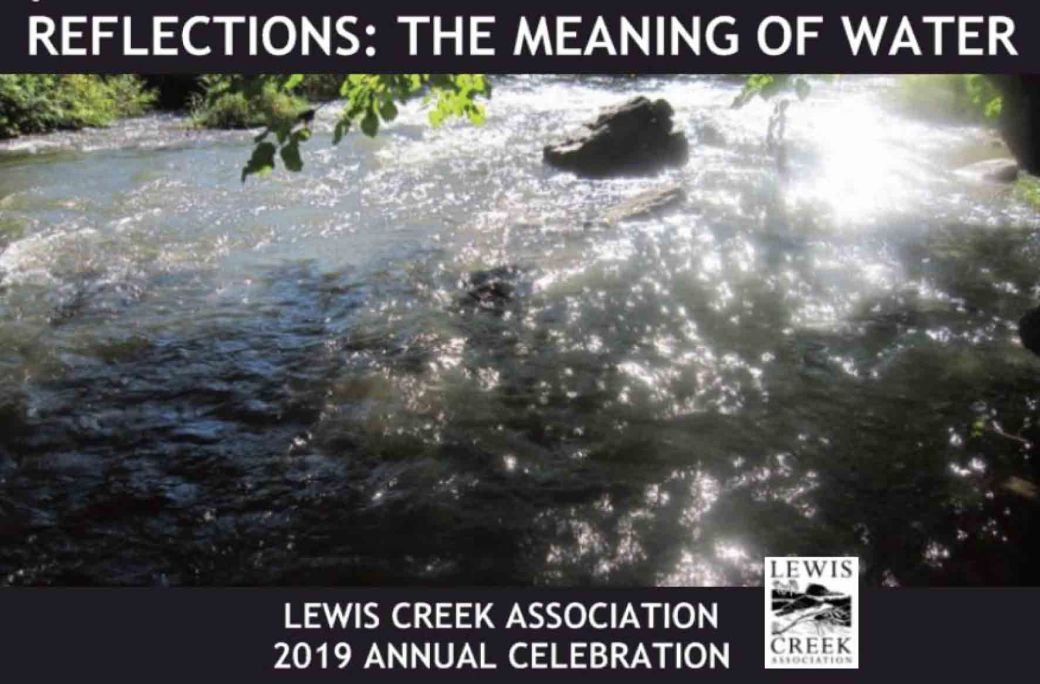
A short time ago, I was invited to give a talk on water to the Lewis Creek Association during their annual meeting for 2019 to help celebrate their recent accomplishments. Here is their write up:

Join our special guest, Canadian ecologist and author Nina Munteanu, who will discuss the many dimensions of water. She describes personally the curiosity and emotional connection with nature that compels us to caretake our environment with love versus a sense of duty. Her book “Water Is…The Meaning of Water” is an ode to and discourse about water, the indispensable and mysterious element that is the foundation of life here on our blue planet. The book is a fascinating catalogue of the many amazing and anomalous qualities of water, and has become a favorite of several Board members. She trained in limnology, the study of lakes, and has consulted in the aquatic sciences for many years. The author of over a dozen fiction and non-fiction books, she currently teaches writing at the University of Toronto and George Brown College in Toronto, Canada. We are delighted to have Nina join us and share her insights and concerns about this substance we have been concerned with over the last 30 or so years.

Microsoft Word - Nina map Barrio cafe.docx

At Cafe Barrio in Burlington, Vermont, Nina checks the map for directions…and finds her way…

I chose to drive to Vermont from Toronto with good friend and editor Merridy Cox. We crossed into USA near Cornwall and drove through New York state to Rousse’s Point, then into Vermont over the Vermont Bridge over Lake Champlain. We took the scenic route along the islands to the village of Charlotte, where we met with some of the Lewis Creek Board members and enjoyed a wonderful home-cooked supper at executive director Marty Illick’s country home along with Board president Andrea Morgante, board member Louis DuPont, and several other guests.

Merridy-LakeChamplain marsh

Merridy Cox photographing Lake Champlain just east of the Vermont Bridge

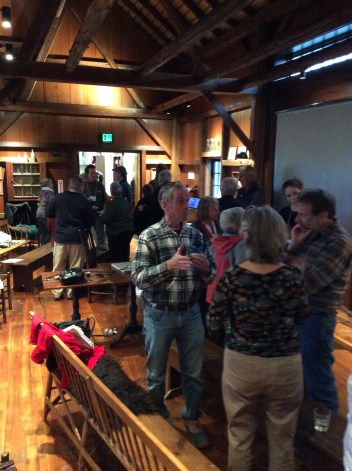
The event took place in the large converted barn of Philo Ridge Farm, a 400-acre historic dairy farm now also running as an educational institution of sustainable practices and store and restaurant. The barn is now a state-of-the-art sustainably built facility with a combination of rustic and sophisticated in its design of rich wood walls, large windows and beams with high vaulted ceiling; ideal for a presentation.

I spoke about my roots in the Eastern Townships of Quebec…and where they led me:

I was born in a small town in the Eastern Townships of Quebec, a gently rolling and verdant farming community, where water—l’eau—bubbles and gurgles in at least two languages.

I spent a lot of my childhood days close to the ground, observing, poking, catching, prodding, destroying and creating. Perhaps it was this early induction to the organic fragrances of soil, rotting leaves and moss that set my path in later life as a limnologist, environmental consultant and writer of eco-fiction.

Nina EasternTownships

I followed my older brother and sister to the nearby forest and local stream. We stirred soil, flower petals and other interesting things with water to fuel “magic potions” that we inflicted on some poor insect. Yes, I was a bit destructive as a child—and I took a lot for granted. Like water. There was so much of it, after all. It was clean and easily accessed, fresh from the tap.

When I gave birth to my son, Kevin, I felt a miracle pass through me. Kevin became my doorway back to wonder. His curiosity was boundless and lured me into a special world of transformation.

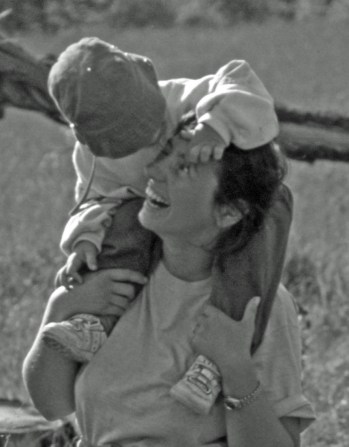
Nina-Kevin playing

Nina Munteanu and her son hiking in B.C.

I took time off work to spend with Kevin when he was young. We went on great trips, from the local mall, where we had a hot chocolate and played with Lego, to the local beach on the Fraser River, where we explored the rocks. When he was no more than three, I took him on endless adventures in the city and its surroundings. We didn’t have to go far. The mud puddles of a new subdivision after a rain were enough to keep our attention for dozens of minutes. We became connoisseurs of mud. The best kind was “chocolate mud,” with a consistency and viscosity that created the best crater when a rock was thrown into it.

Kevin and I often explored the little woodland near our house. We made “magic potions” out of nightshade flowers, fir needles, loam and moss; we fueled our concoctions with the elixir of water from a stagnant pool. This time the little insects weren’t molested.

Travelling the world has helped me realize that I was blessed with an abundance of water. I lived my entire life in a country of plentiful and healthy water. And for most of that time I didn’t even realize it. Canada holds one fifth of the world’s fresh water in lakes, rivers, and wetlands, as well as in our underground aquifers and glaciers. Canada’s wetlands, which cover more than 1.2 million square kilometres, makes Canada the largest wetland area in the world.*

The folks who attended my presentation were wonderfully receptive, gracious and kind. They bought all my books too! I felt so welcomed by this community concerned about the land and their water. I was also impressed with the dedication, organization and knowledge of this non-profit conservation initiative.

Presentation venue

Venue

Lewis Creek Association

The Lewis Creek Association (LCA) started in 1990, when a group of concerned citizens and the Hinesburg Land Trust came together to conserve a critical stretch of wetland habitat bordering Lewis Creek in Hinesburg, Vermont. Lewis Creek is one of Vermont’s most ecologically diverse streams and suffers from increasing habitat degradation due to river encroachment by development and roads, land use change, and more extreme weather events.

LCA’s mission is to protect, maintain and restore ecological health while promoting social values that support sustainable community development in the Lewis Creek and LaPlatte watershed regions and Vermont generally. Through education and action, LCA works to:

  • Restore water quality, stream stability, and native wildlife habitat
  • Protect and restore important and diverse natural areas
  • Conserve productive and scenic lands that contribute to rural character and economy
  • Support growth compatible with important natural systems and working landscapes
  • Strengthen and support local conservation initiatives and opportunities
  • Model active participation and respect for differences

With a hard-working volunteer board and a part-time paid consultant, LCA facilitates educational, planning, and field work programs involving dozens of volunteers. This work assists town planning and facilitates the restoration and conservation of important Champlain Valley natural areas of high public value.

LCA Annual Party 2019

Their track record has been impressive. Since forming their organization, the LCA has spearheaded and conducted numerous initiatives. Highlights include: annual water quality sampling in six streams and rivers; biodiversity studies of stream corridors, conservation and restoration work in watershed towns; invasive aquatic plant control in local areas; helped educate citizens on ecological improvements; actively participated in implementing VT’s Water Quality Law, Act 64; generated Water Quality Scorecard Maps to track pollution problems; and designed the “Ahead of the Storm” education program used throughout the watershed region.

LakeChamplainBasin

In the Moment-anthology copy*A version of this talk is available in an article I wrote called “Coming Home to Water,” which first appeared in the 2016 anthology In the Moment (A Hopeful Sign) edited by Gary Doi. It was reprinted in 2018 The Earth We Love (Mississauga Writers) edited by Elizabeth Banfalvi; and again in 2019 in The Literary Connection IV: Then and Now (IOWI) edited by Cheryl Antao Xavier.


LakeChamplain-VT-NY bridge

Lake Champlain, looking west from Vermont to New York at Vermont Bridge (right) (photo by Nina Munteanu)


nina-2014aaa

Nina Munteanu is a Canadian ecologist / limnologist and novelist. She is co-editor of Europa SF and currently teaches writing courses at George Brown College and the University of Toronto. Visit www.ninamunteanu.ca for the latest on her books. Nina’s bilingual “La natura dell’acqua / The Way of Water” was published by Mincione Edizioni in Rome. Her non-fiction book “Water Is…” by Pixl Press (Vancouver) was selected by Margaret Atwood in the New York Times ‘Year in Reading’ and was chosen as the 2017 Summer Read by Water Canada. Her novel “A Diary in the Age of Water” will be released by Inanna Publications (Toronto) in 2020.

Word Is Wild Literary Festival in Ontario’s Near North

WordIsWild Festival-presentersB

presenters Nina Munteanu, Merridy Cox, Sharon Berg, Albert Saxby, Carol Williams, Dallas Ray Bader, and Honey Novick

WriterFestival posterI was recently invited by organizer and poet Kathy Figueroa to participate in The Word Is Wild Literary Festival III in Cardiff in Ontario’s northern community. I joined poet and author Sharon Berg from Sarnia, poet and vocalist Honey Novick and poet naturalist Merridy Cox from Toronto, singer / songwriter Albert Saxby from Essenville and other locals for a day of readings, musings, and singing.

I’d not yet ventured to this northern part of Ontario, so I was excited to drive there. I caught a ride with Merridy and Honey and the three of us took turns driving north from Toronto into the rolling hills that blazed in a chaos of fall colour. Dominated by the bright orange of the Sugar Maple, the hills formed a rolling carpet of coppers, yellows, reds and greens of American Beech, Yellow Birch, Red Maple, Eastern Hemlock and White Pine.


Cardiff is a tiny village-suburb of Highlands East, and is a former mining community. The township is located between Haliburton and the old mining town of Bancroft to the north. Bancroft was purchased from the Chippewa and Mississauga First Nations in the 1850s by Irish and English settlers who logged and mined the area for gold and other minerals.


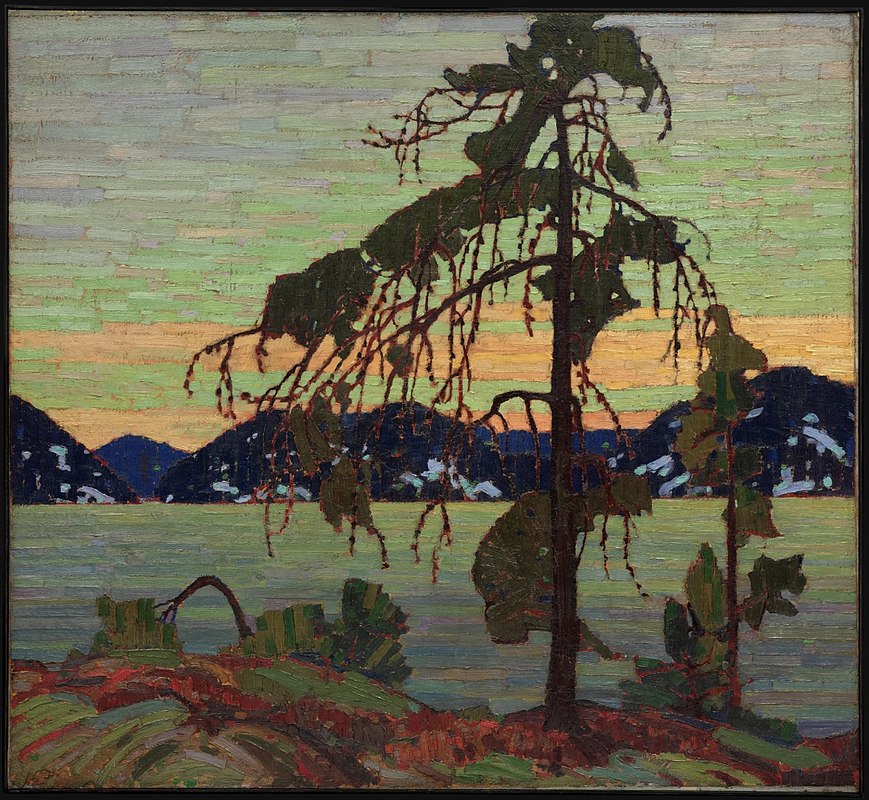
Not far north of Bancroft, Algonquin Park—a provincial park that spans over 7500 km2 between Georgian Bay and the Ottawa River—beckons. Established in 1893—making it the oldest provincial park in Canada—Algonquin Park was frequented by several artists of The Group of Seven, including Tom Thomson. His oil painting entitled The Jack Pine remains an iconic representation of Canada’s most broadly distributed pine species and well-represents this area’s landscape.

The_Jack_Pine,_by_Tom_Thomson

oil painting “The Jack Pine” by Tom Thomson

The three of us settled at the Cardiff House Writers’ Retreat, located right in the middle of Cardiff, then proceeded to the community centre where the festival was held.


Nina WaterIs

Nina Munteanu

I shared how I came to write my latest book, “A Diary in the Age of Water,” coming out in 2020 with Inanna Publications. You can read about it in my post “On Writing ‘A Diary in the Age of Water’ ” I mentioned how it started with a talk by Maude Barlow in a church on Bloor Street in Toronto, which led to a short story, to my non-fiction book “Water Is…” and finally to the novel.

The festival is hosted by Cardiff House Writers’ Retreat along with sponsorship by The League of Canadian Poets & Canada Council Poetry Tours, The Writers’ Union of Canada, and the National Public Reading Program. I hope to return next year. I think I will go for a longer time and explore this spectacular countryside and provincial park.


nina-2014aaa

Nina Munteanu is a Canadian ecologist / limnologist and novelist. She is co-editor of Europa SF and currently teaches writing courses at George Brown College and the University of Toronto. Visit www.ninamunteanu.ca for the latest on her books. Nina’s bilingual “La natura dell’acqua / The Way of Water” was published by Mincione Edizioni in Rome. Her non-fiction book “Water Is…” by Pixl Press (Vancouver) was selected by Margaret Atwood in the New York Times ‘Year in Reading’ and was chosen as the 2017 Summer Read by Water Canada. Her novel “A Diary in the Age of Water” will be released by Inanna Publications (Toronto) in 2020.

A True Rocky Mountain Gem: The Antique Forest of Robson Valley

In my novel “A Diary in the Age of Water” (Inanna Publications) the diarist writes about the huge reservoir complex that was built in the late 2020s in the Rocky Mountain Trench to create an 800 km long reservoir system to rehydrate the United States. Of course, it’s science fiction, but it was based on real plans (NAWAPA) that went all the way to congress in the 1960s. That reservoir might have drowned the rainforest conservation corridor of Robson Valley—a conservation area that continues to experience existential risk due to development, resource harvest, and other disturbance.

Cedar-boardwalk-Anne

Friend Anne walks the boardwalk of the ancient forest park

In Robson Valley—tucked between the Rocky and Cariboo Mountains of East-Central British Columbia, the Fraser River nourishes an ancient rainforest matched nowhere on Earth. Massive Western Redcedar (Thuja plicata)—some over 1200 years-old, 3.5 meters in diameter, and 45 meters high—thrive in this valley, nurtured by abundant groundwater flow and high humidity for healthy tree growth and reduced fire risk. “Unfortunately, this requirement for growth in wet toe-slope positions has had negative consequences for ancient cedar stands. Historically, roads and railroads were placed at the base of mountain slopes, where easy access on level roadside terrain meant that ancient cedar stands were often among the first sites chosen for logging. Ancient cedar stands now represent less than 5% of forested landscapes within the Upper Fraser River watershed.” (UNBC Plant Ecology)

GiantCedars boardwalk2

Moss-covered giant Redcedar in foreground to boardwalk

This valley contains the most extensive inland rainforest in the northern hemisphere and is the only valley in the Rocky Mountains where grizzly bears still feed on wild ocean-going salmon.

Old Cedar-RobsonPark2019

Western Redcedar with wide buttresses

The Save-The-Cedar League also tells us that the Robson Rainforest is oroboreal: mountain-caused with boreal biome characteristics—unlike typical rainforests which are temperate-coastal or tropical. “Antique Forest” is a term used for ancient cedar-hemlock stands that have endured for more than 1000 years. One stand in Primordial Grove can be seen via a well-constructed boardwalk in a small park off Highway 16.

When I entered the ancient forest of magnificent giants with wide buttressed bases, a deep reverence came over me. No other word comes close to describing what I experienced or felt. I was enthralled and humbled by these magnificent trees, silent giants that rose into the mist like sentinels, piercing the heavens. It had rained that morning and the forest dripped with living moisture. Greens of all shades created a living mosaic of hue and texture. Moss covered everything. Lichen dripped off branches and clothed trees in crenulated patterns. The fragrance was intoxicating, a fresh pungency that woke something inside me. The smell has been variously described as “lingering”, “fresh”, “sweet”, “like pineapple when crushed”, or “almost like fresh water.” Even the breeze took on a different voice inside this living cathedral. A kind of deep hush that whispered of sacred grandness.

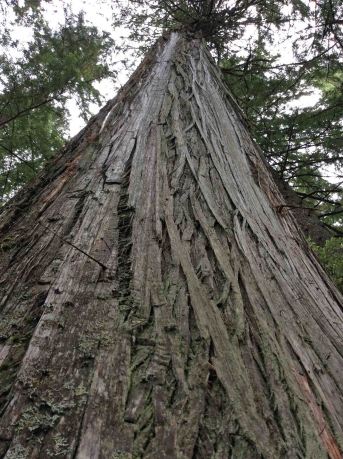
Cedar-up

Western Redcedar

I knew I was in a sacred place.

This ancient forest had been here at least a millennium; long before the arrival of Christopher Columbus to the Atlantic shores of North America. Long before us. Referred to as “the cornerstone of northwest coastal Indian culture,” the Western Redcedar is known as the “tree of life” and “life giver.” Groves of ancient cedars were symbols of power, and gathering places for ceremonies, retreat, and contemplation.

I kept to the boardwalk—to help prevent unwanted trampling and soil compression. The boardwalk snaked past giant buttressed trees that towered several stories high and formed a feathered canopy way above me. Whenever the boardwalk came close to a giant cedar, I had to stop and touch it. The reddish bark was smooth. I smiled; many others had done the same. In unavoidable reverence.

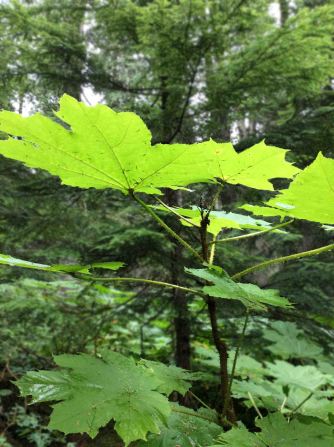
Breathing in the tree’s exquisite fragrance, I scanned my surroundings. A rich understory of red-berried Devil’s Club (Oplopanax horridus), huckleberry, fern, moss, liverworts and dense ground cover painted the forest floor in varying form and colour. I imagined the diversity of invertebrates, amphibians, reptiles, birds and mammals that flourished here. I’m told that scientists are still finding new species in this rainforest. UBC scientists tell us that arboreal lichen communities of the inland rainforest, especially the epiphytic cyanolichen assemblages on conifers, are among the richest in the world.

Nina-giant cedar03

Nina Munteanu leans against a well-loved giant Western Redcedar


Gentle Giant of North Temporate Rainforest: Western Redcedar (Thuja plicata)

tall cedar-moss

Western Redcedar

The Western Redcedar (Thuja plicata) is one of the most magnificent conifers in Pacific Northwest forests (both coastal and inland); it flourishes along the coastal fog belt from Alaska to northern California, and inland from the Pacific Ocean to Montana. The Western Redcedar is actually an arborvitae—not a true cedar; acknowledged by its name “redcedar”. True cedars only grow in the Mediterranean regions of the world. “Thuja,” is the latinism for the ancient Greek word for a now unknown, long-lost aromatic evergreen wood; “plicata,” means “folded into plaits,” which may refer to the tree’s characteristic foliage or its furrowed, stringy bark. The heartwood is pink- to red-brown to deep warm brown and highly resistant to moisture, decay and insect infestation due to the oils and acids (polyoxylphenols) it produces; it’s the phenols, in fact, that give the cedar its distinctive and pleasant aroma.

Given their extensive root system, cedars can remain standing long after they die. Western Redcedar snags (standing dead trees) can remain intact for up to 125 years. The large snags provide habitat for many cavity-nesting birds and mammals. Many species that require snags for habitats also prey on insects that use trees in a fine balance of a functional ecosystem. Examples include the pileated woodpecker, squirrels, weasels, martens, bats, owls and ducks. A fallen cedar can remain on the forest floor for over a century. “This durability is the result of a natural preservative that is toxic to decay-causing fungi. This ability does not decrease with age; in fact, it increases,” writes Jeri Chase, Oregon forester.

DevilsClub Hemlock-CedarGrove

Devil’s Club

Several of these live ancient cedar trees grow out of the trunks of other live ancient cedars, following a 180 million-year-old pattern observed in the closely-related redwoods (Sequoia). Basal shoots of the trunk yield genetically-superior mature trees when compared to seeds, root sprouts, other shoots or other layering phenomena.

Western Redcedar reproduces from root or branch development on fallen trees—the classic “nurse logs” often seen in northwest forests that also nourish other forest species. The magnificent bark of the Redcedar ranges in color from grey to reddish brown, and is deeply furrowed, forming long flat fibrous plates that peel and shed easily. Wildlife use the cedar in many ways. The foliage is an important winter food for elk and is browsed year-long by deer and rodents. Black bears den in the hollowed-out trunks of old trees and the cedar-dominated old growth forests provide valuable habitat for spotted owls and Vaux swifts.

Functional Ecosystem & Symbiosis

red-backed_vole

Red-backed vole

The Robson Valley cedar-hemlock rainforest supports a diverse and efficient ecosystem from apex and keystone predator—the grizzly—to black bear, gray wolf, cougar, lynx, wolverine, coyote, and seven ungulate species (including the Mountain caribou); all feeding on a diversity of prey and primary producers. The Mountain caribou feeds on mountain boxwood shrubs which are sheltered by the cedar and hemlock canopy layer.

An example of the symbiotic nature of the old growth cedar-hemlock forest is the red-backed vole, which resembles a large plump mouse. This forest mammal eats truffles—a type of fungus that lives underground. After digesting the truffles, voles spread the fungus around the litter layer of the forest through their droppings. The truffles help tree roots absorb soil minerals and the trees produce sugars necessary for the truffles: a win-win symbiotic relationship. The cedar and the hemlock require this alliance with truffles and voles to grow so large in the nutrient-poor soil.

The Inland Sea of the Rocky Mountain Trench (NAWAPA)

Diary Water cover finalUna stopped the car and we stared out across the longest reservoir in North America. What had once been a breathtaking view of the valley floor of the Rocky Mountain Trench was now a spectacular inland sea. It ran north-south over eight hundred kilometres and stretched several kilometres across to the foothills of the Cariboo Mountain Range. Una pointed to Mount Mica, Mount Pierre Elliot Trudeau and several other snow-covered peaks. They stood above the inland sea like sentinels of another time. Una then pointed down to what used to be Jackman Flats—mostly inundated along with McLellan River and the town of Valemont to the south. Hugging the shore of what was left of Jackman Flats was a tiny village. “That’s the new Tête Jaune Cache,” my mother told me.

If villages had karma this one was fated to drown over and over until it got it right.  Once a bustling trading town on the Grand Trunk Pacific railway, Tête Jaune Cache drowned in the early 1900s when the Fraser naturally flooded. The village relocated to the junction of the original Yellowhead 16 and 5 Highways. Villagers settled close to where the Fraser, Tête Creek, and the McLellan River joined, all fed by the meltwater from the glaciers and icefields of the Premiere Range of the Cariboo Mountains. The village drowned again in 2025. I imagined the pool halls, restaurants, saloons and trading posts crushed by the flood.

“This area used to be a prime Chinook spawning ground,” Una said. “They swam over 1,200 km from the Pacific Ocean to lay their eggs right there.” She pointed to the cobalt blue water below us.

The reservoir sparkled in the sun like an ocean. Steep shores rose into majestic snow-capped mountains. The village lay in a kind of cruel paradise, I thought. It was surrounded by a multi-hued forest of Lodgepole pine, Western red cedar, Douglas fir, paper birch and trembling Aspen. Directly behind the village was Mount Terry Fox and across the Robson valley mouth, to the northeast, rose Mount Goslin. Behind it, Mount Robson cut a jagged pyramid against a stunning blue sky. Wispy clouds veiled its crown. I couldn’t help thinking it was the most beautiful place I’d seen. And yet, for all its beauty, the villagers had lost their principle livelihood and food. The reservoir had destroyed the wildlife habitats and the fishery. And its people with it.

Una pointed to where the giant reservoir snaked northwest and where towns like Dunster, McBride and Prince George lay submerged beneath a silent wall of water. Her eyes suddenly misted as she told me about Slim Creek Provincial Park, between what used to be Slim and Driscoll Creeks just northwest of what used to be the community of Urling. She told me about the Oroboreal rainforest, called an “Antique Rainforest”—ancient cedar-hemlock stands over a 1000 years old. She described how massive trunks the width of a small house once rose straight up toward a kinder sun. The Primordial Grove was once home to bears, the gray wolf, cougar, lynx, wolverine and ungulates. It was the last valley in North America where the grizzly bear once fished ocean-going salmon. Now even the salmon were no longer there, she said. Then she bent low beside me and pulled me close to her in a hug. She quietly said to me, “This is what killed Trudeau.”

I stared at her and firmly corrected, “but that was an accident.”

“Yes,” she agreed. Then added, “a planned one.”

—A Diary in the Age of Water

tall cedar-moss2 copy

Moss-covered Western Redcedar


NAWAPA (North America Water Power Alliance)

The original NAWAPA Plan was drawn up by the Pasadena-based firm of Ralph M. Parsons Co. in 1964, and had a favorable review by Congress for completion in the 1990s. The plan—thankfully never completed—was drafted by the US Army Corps of Engineers and entailed the southward diversion of a portion (if not all) of the Mackenzie and Yukon rivers in northern Canada and Alaska, now flowing into the Arctic Ocean as well as the Peace, Liard and other rivers flowing into the Pacific by creating massive dams in the north. This would cause the rivers to flow backwards into the mountains to form vast reservoirs that would flood one-tenth of British Columbia. The water would be channeled south through the 800-km Rocky Mountain Trench Reservoir into the Northern USA, and from there along various routes into the dry regions of the South, to California and reaching as far as Mexico.

NAWAPA copy

Expanded NAWAPA XXI plan to hydrate the USA with Canadian water

NAWAPA was envisioned as the largest construction effort of all times, comprising some 369 separate projects of dams, canals, and tunnels, for water diversion. The water diversion would be accomplished through a series of connecting tunnels, canals, lakes, dams, and pump-lifts, as the trench itself is located at an elevation of 914 m (3,000 feet). To the east, a 9 m (thirty-foot) deep canal would be cut from the Peace River to Lake Superior. Its largest proposed dam would be 518 m (1,700 feet) tall, more than twice the height of Hoover Dam (at 221 m) and taller than any dam in the world today, including the Jinping-I Dam in China (at 305 m).

Conspiracy theorist and convicted fraudster Lyndon LaRouche was a principle proponent of the environmentally destructive NAWAPA plan. Although the plan was scrapped in the 1970s due to environmental concerns, it resurfaced in 1982 particularly by Parsons engineer Roland Kelley, who wrote a report called NAWAPA Plan Can Work. LaRouche and his movement revived interest more recently. In 2012 the LaRouche Political Action Committee released their NAWAPA XXI special report, which contained a detailed plan for the revival of an updated and expanded version of NAWAPA. The LaRouche movement continues to promote this outlandish plan today with support from various American politicians and industrialists.

In his book Cadillac Desert, environmental writer Marc Reisner described the plan as one of “brutal magnificence” and “unprecedented destructiveness.” Historian Ted Steinberg suggested that NAWAPA summed up “the sheer arrogance and imperial ambitions of the modern hydraulic West.”

Forest-Cedar giant-marg drybr-LHP

Old growth Redcedar-Douglas fir forest near Vancouver, BC (photo and illustration by Nina Munteanu)

nina-2014aaa

Nina Munteanu is a Canadian ecologist / limnologist and novelist. She is co-editor of Europa SF and currently teaches writing courses at George Brown College and the University of Toronto. Visit www.ninamunteanu.ca for the latest on her books. Nina’s bilingual “La natura dell’acqua / The Way of Water” was published by Mincione Edizioni in Rome. Her non-fiction book “Water Is…” by Pixl Press (Vancouver) was selected by Margaret Atwood in the New York Times ‘Year in Reading’ and was chosen as the 2017 Summer Read by Water Canada. Her novel “A Diary in the Age of Water” will be released by Inanna Publications (Toronto) in 2020.

International Writers’ Festival at Val David

ValDavid-group inside1

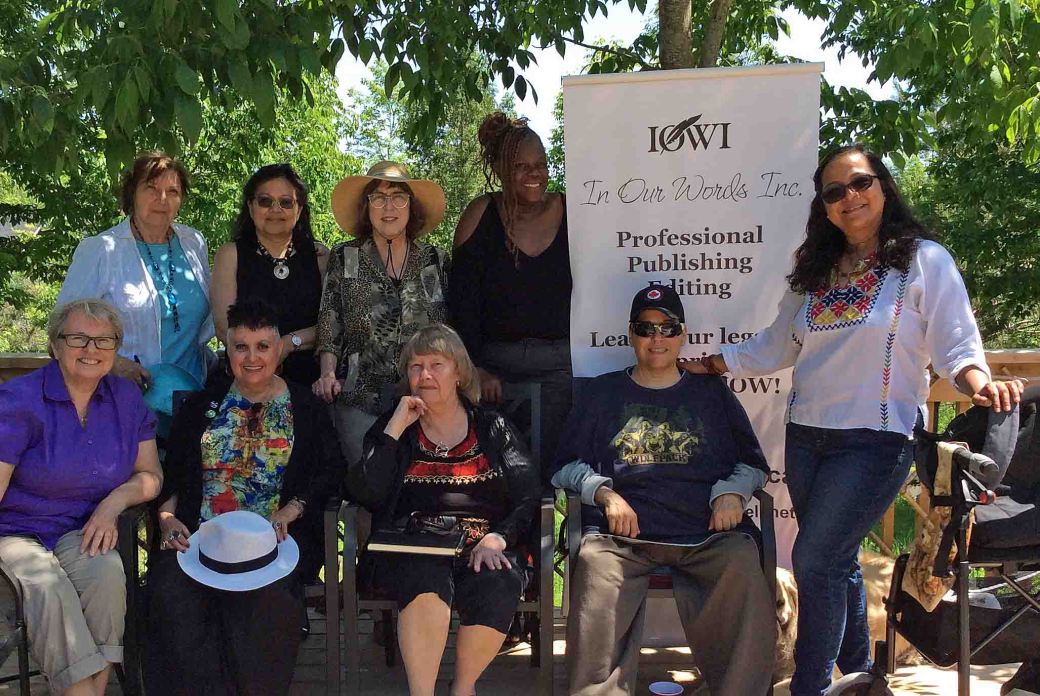
International Writers’ Festival & Retreat with Flavia Cosma, Val David

In the middle of June 2019, I drove to Val David, Quebec, with poet-songstress and friend Honey Novick. We had been invited to participate in Les Mots du Monde, the nineteenth international writers’ and artists’ festival of readings, songs, and discussions. The location was the residence of international poet Flavia Cosma. Cosma has been hosting the writer’s event for close to a decade in her large house in the forest just outside the resort town of Val David in the Laurentians.

The program spanned two days of lecture, readings, performance and art by artists and writers from Argentina, Romania, Mexico, USA, Laval, Montreal, and Toronto.

Festival-group outside

International Festival among the trees

Poets, writers, musicians and artists included Honey Novick, Hélène Dorion, Tito Alvarado, Dinorah Gutiérrez Andana, Flavia Cosma, Gerette Buglion, Yvan-Denis Dupuis, EcologyOfStoryJeremiah Wall, Nina Munteanu, Nancy R. Lange, Nicole Davidson, Carmen Doreal, MarieAnnie Soleil, Luis Raúl Calvo, Louis-Philippe Hébert, Melania Rusu Caragioiu, Anna-Louise Fontaine.

I talked about my experience and process of writing my upcoming speculative novel “A Diary in the Age of Water”, coming out in 2020 with Inanna Publications. The novel chronicles four generations of women and their relationship with water during a time of extreme change.

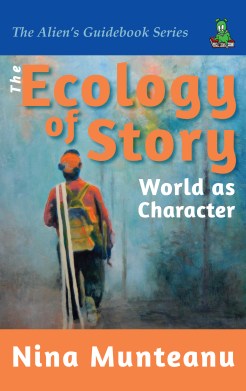
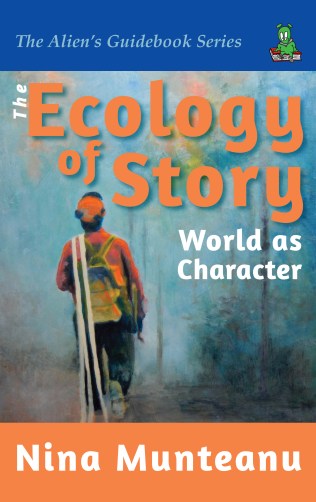
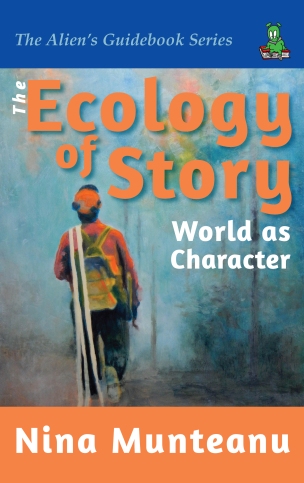
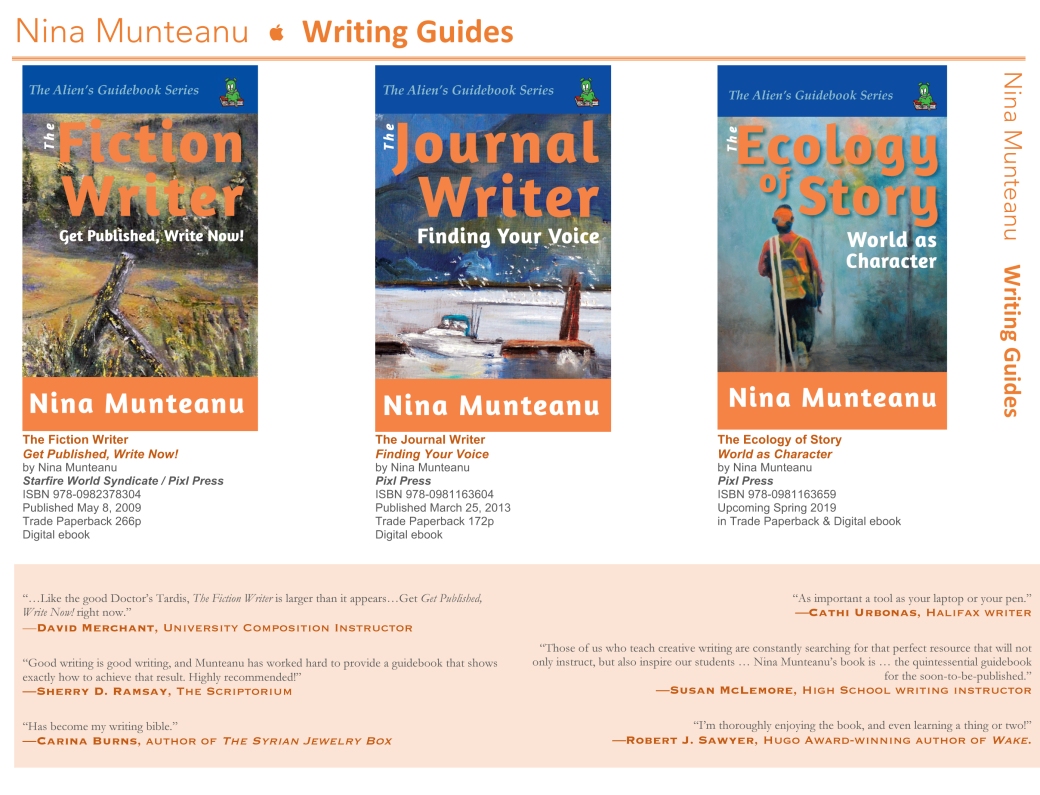
I also shared examples of my recently launched writing guidebook “The Ecology of Story: World as Character” (Pixl Press). The 3rd guidebook in my Alien Guidebook Series, “Ecology of Story” focuses on place and environment and how these form the heart of a good story.

Throughout the festival, we were treated to magnificent ethnic food and refreshments. Interesting discussions on the international literary scene over wine and desert followed.

lunch 2

Lunch at Flavia’s

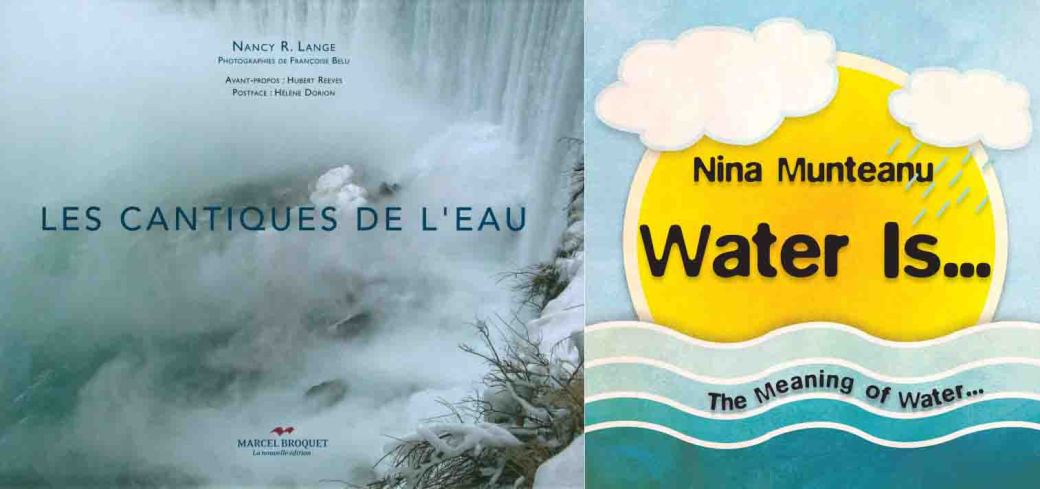
I shared good conversation with fellow poet and water advocate Nancy R. Lange. She had given a compelling presentation on her recent book “Les Cantiques de l’eau” (Marcel Broquet) and knew about my book “Water Is: The Meaning of Water” (Pixl Press). Of course, the best thing to do was exchange books—which we did. Nancy is the literary ambassador for the Eau Secours organization and has promoted responsible water stewardship through her writing and presentations for many years.

Microsoft Word - WaterBooks.docx

“It is not the cliff that shapes the ocean. It is the ocean that shapes the cliff. Fluidity is always the greater force than rigidity.”—Nancy R. Lange


On the final day, the writers and artists put on a public performance at the Val David Centre d’Exposition.

C'est La Vie Cafe

C’est la Vie Cafe, Val David

Val David

Val David is a small resort town located in the Laurentian Mountains about 80 kilometers from Montreal, Quebec. The village is known for its food scene and its artistic character. When I was there, I sampled the local cafes and experienced the street market, which offered a diversity of locally made and sourced produce and crafts.


nina-2014aaa

Nina Munteanu is a Canadian ecologist / limnologist and novelist. She is co-editor of Europa SF and currently teaches writing courses at George Brown College and the University of Toronto. Visit www.ninamunteanu.ca for the latest on her books. Nina’s bilingual “La natura dell’acqua / The Way of Water” was published by Mincione Edizioni in Rome. Her non-fiction book “Water Is…” by Pixl Press (Vancouver) was selected by Margaret Atwood in the New York Times ‘Year in Reading’ and was chosen as the 2017 Summer Read by Water Canada. Her novel “A Diary in the Age of Water” will be released by Inanna Publications (Toronto) in 2020.


How Trees Can Save Us…Five Perspectives on Humanity’s Relationship with Our Forests

Cedar trunk base-LR

Cedar tree in Little Rouge Forest, Ontario (Nina Munteanu)

Alick Bartholomew, author of The Spiritual Life of Water, describes four geologic periods when forests thrived on this planet. The first was the Carboniferous, 350 million years ago, when land vertebrates established. The second was the Jurassic, 170 million years ago, when dinosaurs dominated the planet. The third, the Eocene epoch, 60 million years ago, witnessed the first primitive mammals. The last, the Holocene epoch, which began some 500,000 years ago, ushered in modern humanity. Bartholomew suggests that perhaps, “in each case the forests delivered a boost in the oxygen content of the atmosphere, which may have been a trigger for an evolutionary explosion of life forms.”

Ten thousand years ago, the land along the Mediterranean was covered in mixed forests of conifers and oak. Lebanon’s forests provided timber for the exploring ships of the Phoenician empire in third century BCE. North Africa, a fertile forest two thousand years ago, is now a desert. A thousand years ago, three quarters of the world was forest. Today forest and woodland cover only a third of the world. The UK is currently the least wooded area of Europe with 13% woodland cover; its ancient woodland is being removed at a faster rate than the Amazon rainforest. Humanity is currently cutting down trees at a rate of 15 billion a year. We are losing forests the size of New York City daily; every 100 days we lose forests the size of Scotland; within a single year we lose forest ecosystems the size of Italy.

Since humanity arrived, we have cut down trees for timber, agriculture and development. Our impact is a matter of scale. When humanity was a mere 300 million in pre-medieval times, forest ecosystems remained intact. We are now over 7 billion, doing essentially the same thing we did thousands of years ago. What may have been sustainable then is now extirpating entire complex ecosystems, along with species we may never know existed. Deforestation releases a massive carbon sink into the atmosphere, driving global warming. It is largely responsible for reducing populations of wildlife by half in the last 40 years, and for starting the sixth massive extinction event.

Clearcut gordon valley copy 2

Clearcut in Gordon Valley, Vancouver Island, BC (photo by T.J. Watts)

While too many of us do not understand or appreciate the global consequences of deforestation, we remain intimately and personally connected with trees: in ways we don’t realize or have forgotten.

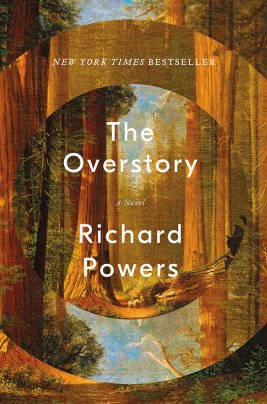
This article overviews the perspectives of five writers on the role and history of trees in global planetary health and our journey with climate change. I explore three non-fiction books and two fiction books. The non-fiction books include Witness Tree (2017) by Lynda Mapes, The Global Forest (2011) by Diana Beresford-Kroeger, and The Songs of Trees (2018) by David George Haskell. The two fiction books include The Overstory (2018) by Richard Powers and Barkskins (2016) by Annie Proulx. Each work is a compelling testament of humanity’s connection with trees, both historically and in the present. All provide powerful and evocative optimism in different ways.

SONY DSC

Ash tree, Little Rouge River forest, Ontario (photo by Nina Munteanu)


The Philosophical OPTIMISM of Lynda Mapes
LyndaMapes

Lynda V. Vapes

Seattle Times environmental reporter and author of Witness Tree, Lynda V. Mapes explores a changing natural world and humanity’s relationship with it through a single Century-old red oak tree over four seasons. Mapes brings in elements of physics, ecology, biology and sociology and philosophy to probe her witness tree and reveal a colourful history of aboriginal life, colonialism, commodification and human-caused climate change.

In describing her oak tree, journalist and author of Witness Tree, Lynda V. Mapes writes, “The big oak dominates its space…but it also supports a vast web of life and relies in turn on a menagerie of helpers, aboveground and below. With its crown in the wind and its roots in the teeming soil, the big oak connects earth and sky, and many millions of beings, and is home to each and to all. It is just one tree, and yet a whole world unto itself.”

WitnessTreeMapes reveals that her witness tree overcame a 1 in 500 chance of taking root from tiny acorn to seedling to become a thirteen-storey tall giant. Mapes considered her oak a living timeline that revealed through its phenology how climate change is resetting the seasonal clock. Mapes sought “the quiet testimony of living things.” Through an “intimate exploration” in which she dug below, climbed up and lay beneath her oak, Mapes found vulnerability, loss, renewal, and hope.

“No matter what else the future may bring, in an uncertain world forests are a repository of only good verbs:  Forests shelter. Nurture. Moderate. Cleanse. Regenerate. Provide. Connect. Sustain…Trees can be our wellspring of inspiration. More than building material, fuel, and carbon-storage utilities, forests are foundational to life on the earth, refugia for countless animals, and an endless source of human joy, renewal, and refreshment.”

“People and trees are meant to be together, and if we work at it, that’s how we will stay,” writes Mapes at the end of her book. It is both hope and warning. A quiet clarion for us to “remember” our place in the world and to embrace our relationship with trees as wisdom guide.

Mapes invites us to connect with the forest.

Fallen log stream-2012

Old growth forest on Vancouver Island, British Columbia (photo by Kevin Klassen)

The Practical OPTIMISM of Diana Beresford-Kroeger

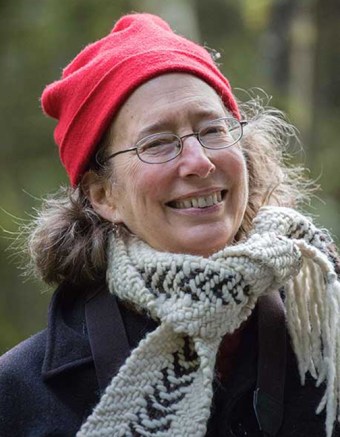
Diana-and-the-tree3

Diana Beresford-Kroeger

In her book The Global Forest: 40 Ways Trees Can Save Us, botanist and medical biochemist Diana Beresford-Kroeger tells us that:

“A functioning forest is a complex form of life. It is interconnected by its own flora and driven by the mammals, the amphibians and insects in it. It is kept in place by fungi, algae, lichens, bacteria, viruses, and bacteriophages. The primogenitors of the forests are trees. They communicate by carbon-coded calls and mass-market themselves by infrasound. The atmosphere links forests into the heavens and the great oceans. The human family is both caught and held in that web of life.”
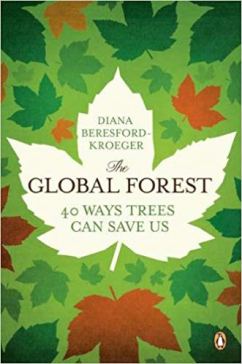
TheGlobalForestWritten with passionate lyricism and a mother’s nurturing spirit, Irish storyteller Beresford-Kroeger weaves a compelling tapestry of ancient forest lore with modern science to promote the global forest. Tapping into aboriginal wisdom and ancient pagan legend, Beresford-Kroeger invites you into the forest to explore the many beneficial and pharmaceutical properties of trees—from leaves that filter the air of particulate pollution, the cardiotonic property of hawthorn, fatty acids in hickory nuts and walnuts that promote brain development, to the aerosols in pine trees that calm nerves.

The titles of her chapters reveal an overarching agenda: “The Global Forest Has Within Itself a Master Plan for Sustainability”; “Climate Change Can Be Reversed: Simplicity, Sustainability, and Sanity”.

“This [global] forest is the environment that drives and fulfills the dream of each leaf in a vast rhythmic cycle called life. Nothing is outside. We are all of it in a unity that transcends the whole. Maybe, just maybe, this resonates of God. If that is so, then we are all His children, every earthworm, every virus, mammal, fish and whale, every fern, every tree, man, woman and child. One equal to another. Again and again.”

Beresford-Kroeger compels us to interact with and learn from the forest.


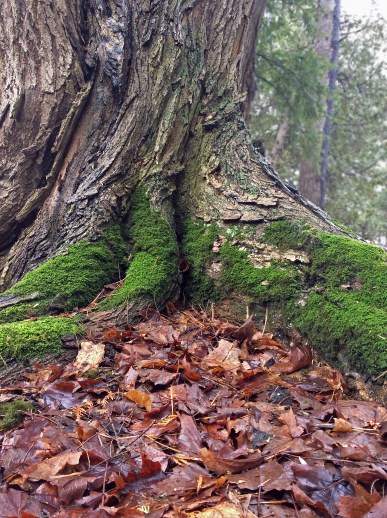
gnarly cedar tree

Gnarly “feet” of cedar tree in Little Rouge River forest, Ontario (photo by Nina Munteanu)


The Existential OPTIMISM of David George Haskell  

DavidGeorgeHaskell

David George Haskell

In The Songs of Trees: Stories from Nature’s Great Connectors, biologist David George Haskell pens an existentialist poem to life’s interconnected network. Haskell’s notion of ‘listening to trees’ arises not from metaphor or metaphysics but from a spiritual understanding of the woven tapestry of life.

 “For the Homeric Greeks, kleos, fame, was made of song. Vibrations in air contained the measure and memory of a person’s life. To listen was therefore to learn what endures. I turned my ear to trees, seeking ecological kleos. I found no heroes, no individuals around whom history pivots. Instead, living memories of trees, manifest in their songs, tell of life’s community, a net of relations. We humans belong within this conversation, as blood kin and incarnate members. To listen is therefore to hear our voices and those of our family…To listen is therefore to touch a stethoscope to the skin of a landscape, to hear what stirs below.”

SongsOfTreesIn his travels to visit iconic trees around the world, Haskell draws on the wisdom and moral ethics of “ecological aesthetics” to describe a natural beauty—not as individual property but as a world within a world of interactive life to which we belong and serve but do not own:

“We’re all — trees, humans, insects, birds, bacteria — pluralities. Life is embodied network…where ecological and evolutionary tensions between cooperation and conflict are negotiated and resolved…Because life is network, there is no ‘nature’ or ‘environment,’ separate and apart from humans. We are part of the community of life, composed of relationships with ‘others,’ so the human/nature duality that lives near the heart of many philosophies is, from a biological perspective, illusory…We cannot step outside life’s songs. This music made us; it is our nature…To listen to trees, nature’s great connectors, is therefore to learn how to inhabit the relationships that give life its source, substance, and beauty.”

In the vein of the naturphilosophie of Goethe and Schelling—and later of Carson, Thoreau, Eisely and Dillard—Haskell invites us to cultivate a strong sense of place and being, one that extends beyond “self” to the existential nature of experience. Glancing up a magnificent oak or beech tree reveals wood as “an embodied conversation between plant life, shudder of ground and yaw of wind.”

Haskell exhorts us to be the forest.
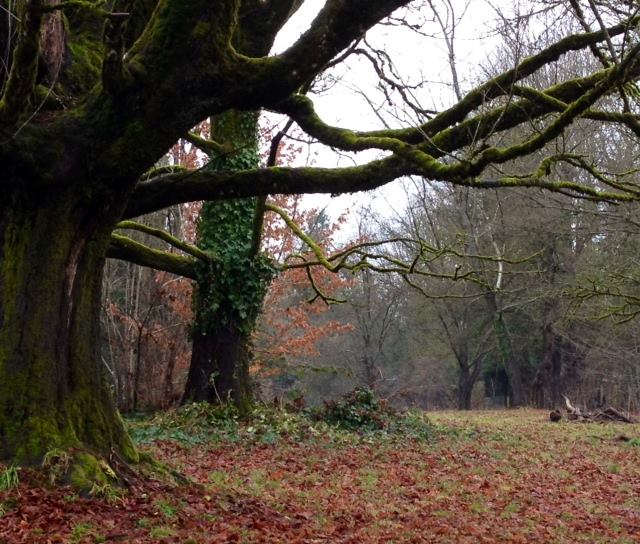
Old tree deer lake park

Old tree in Deer Lake Park, Burnaby, BC (photo by Nina Munteanu)

The Fierce OPTIMISM of Richard Powers  

RichardPowers

Richard Powers

At the heart of Richard Powers’s The Overstory are the pivotal lives of two women, botanist Patricia Westerford and college student Olivia Vandergriff. Both will inspire a movement against the destruction of forests.

Patricia Westerford—whose work resembles that of UBC’s Suzanne Simard—is a shy introvert who discovers that trees communicate, learn, trade goods and services, and have intelligence. When she shares her discovery, she is ridiculed by her peers and loses her position.  But, just as with Lynn Margulis and her theory of endosymbiosis, Westerford is finally validated. She is the archetypal ‘mother tree’, the metaphoric Tachigali versicolor, who ultimately brings the tangle of narratives together through meaning. Westerford writes in her book The Secret Forest:

mossy tree copy

Moss-covered cedar, Alberta (photo by Nina Munteanu)

“There are no individuals in a forest, no separable events. The bird and the branch it sits on are a joint thing. A third or more of the food a big tree makes may go to feed other organisms. Even different kinds of trees form partnerships. Cut down a birch, and a nearby Douglas fir may suffer…Fungi mine stone to supply their trees with minerals. They hunt springtails, which they feed to their hosts. Trees, for their part, store extra sugar in their fungi’s synapses, to dole out to the sick and shaded and wounded. A forest takes care of itself, even as it builds the local climate it needs to survive…A tree is a wondrous thing that shelters, feeds, and protects all living things. It even offers shade to the axmen who destroy it.”
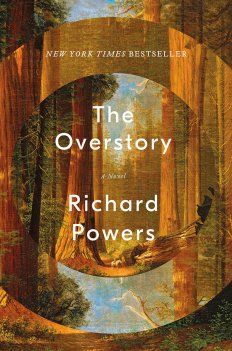
TheOverstoryOlivia Vandergriff miraculously survives an electrocution to become an ecowarrior after she begins to hear the voices of the trees. She rallies others to embrace the urgency of activism in fighting the destruction of California’s redwoods and even camps in the canopy of one of the trees to deter the logging. When the ancient tree she has unsuccessfully protected is felled, the sound is “like an artillery shell hitting a cathedral.” Vandergriff weeps for this magnificent thousand-year old tree. So do I. Perhaps the real heroes of this novel are the ancient trees.

In his review of Overstory in The Guardian, Banjamin Markovits wrote, “ There is something exhilarating…in reading a novel whose context is wider than human life. Like Moby-Dick, The Overstory leaves you with a slightly adjusted frame of reference… And I found, while reading, that some of what was happening to his characters passed into my conscience, like alcohol into the bloodstream, and left a feeling behind of grief or guilt, even after I put it down.”

Powers challenges us to champion the forest.
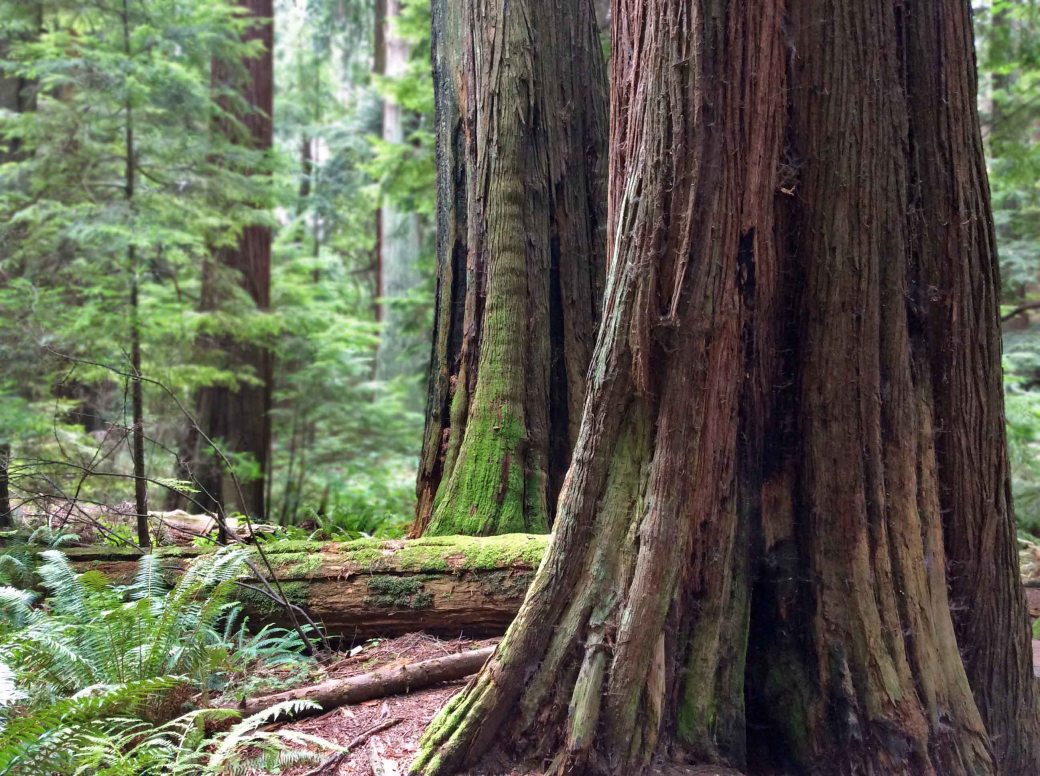
Cedar Giants-LHP

Ancient cedars in Lighthouse Park, West Vancouver, BC (photo by Nina Munteanu)

The Intellectual OPTIMISM of Annie Proulx  

AnnieProulx

Annie Proulx

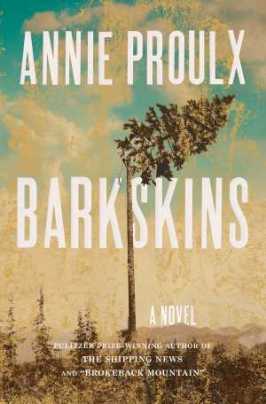
Annie Proulx’s Barkskins chronicles two immigrants who arrive in Canada in 1693 (Rene Sel and Charles Duquet) and their descendants over 300 years of deforestation of North America starting with the arrival of the Europeans to contemporary global warming. “Barkskins” (woodcutters) are, in fact indentured servants who were brought from the Paris slums to the wilds of New France “to clear the land, to subdue this evil wilderness,” says their seigneur. Sel is forced to marry a native woman and their descendants live trapped between two cultures; Duquet runs away to become a fur trader and build a timber empire.

barkskinsProulx immerses the reader in rich sensory detail of a place and time, equally comfortable describing a white pine stand in Michigan and logging camp in Upper Gatineau to a Mi’kmaq village on the Nova Scotia coast or the stately Boston home of Charles Duquet. The foreshadowing of doom for the magnificent forests is cast by the shadow of how settlers treat the Mi’kmaq people. The fate of the forests and the Mi’kmaq are inextricably linked through settler disrespect and a fierce hunger for “more.”

The novel rolls out events in a relentless stream of life and death; no character is safe from the ravages of nature or the notions of that time period. While most of the book flows like a great amoral river—filled with feckless, unheroic and at times miserable characters—there are moments of emotional shoring. They act like exclamation marks for their rarity. By the 1830s, the character, German forester Armenius Breitsprecher, expresses anger and frustration with his colleagues:

LittleRougeRiver-TreeUp copy

White pine, Little Rouge River forest, Ontario

“Not for the first time he saw that the acquisitive hunger of Duke & Sons was so great they intended to clear the continent. And he was helping them. He hated the [lumber companies] clear-cut despoliation, the insane wastage of sound valuable wood, the destruction of soil, the gullying and erosion, the ruin of the forest world with no thought for the future—the choppers considered the supply to be endless—there was always another forest.”

Proulx’s unsentimental narrative and grand historic set-pieces lure the reader first to passively observe humanity’s struggles with the grand forest; then, once immersed, we are nudged to participate along with the awakening of the human consciousness over the generations of her 300-year long saga—first in the early 1900s through Conrad and Charley who recognize the importance of a functional forest ecosystem then through current day ecologist Sapatisia Sel (descendant of Rene), who responds to a scientist’s claim of  “A great crisis is just ahead” with “The forests, the trees, they can change everything!”

Cedar-boardwalk copy

Giant Cedars boardwalk, Alberta (photo by Nina Munteanu)

The suggestion is that, while we remain inextricably embedded in time and place—we are also progenitors of change to our future generations. Three hundred years ago, our beliefs and knowledge prevented us from acting sustainably. We know better now. The time to save our forests and let them save us is now.

“The reader comes to realize that the novel isn’t really about the human characters so much as it is about the forests,” Gus Powell of The National Post concludes of Barkskins. “As [the forests] disappear, the narrative seems to recede in importance, revealing a crucial interdependence between the human and the natural world previously handled almost entirely as subtext. This is especially true in the novel’s closing, where the anger and despair that have characterized the novel shift into an outspoken environmental advocacy.” This is the essence of optimism…

Proulx dares us to believe in the forest.

*****
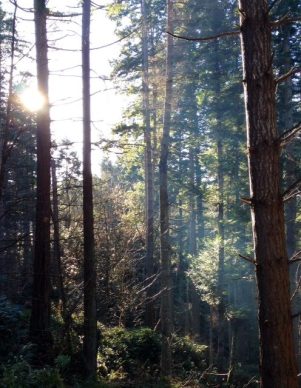
Forest conifers Metchosin

Forest in Metchosin, BC (photo by Nina Munteanu)

Whether philosophical, pragmatic, existentialist, fierce or intellectual, “Optimism is the faith that leads to achievement…No pessimist ever discovered the secret of the stars, or sailed to an uncharted land, or opened a new doorway for the human spirit,” wrote Helen Keller. In her recent book Breaking Murphy’s Law, Suzanne Segerstrom demonstrates the connection between optimists and their investment in goal setting and achievement. The trick to avoiding the cynicism that may come with complacent optimism (thinking, hoping and wishing for good things to happen) is through the simple action of engagement. “Optimists,” says Segerstrom, “are happy and healthy not because of who they are but because of how they act. Optimism is more what we do than what we are, and thereby can be learned.”

I hope so. If we connect, interact and learn, and be the forest, we may find the strength and passion to champion the forest we believe in.


nina-2014aaa

Nina Munteanu is a Canadian ecologist / limnologist and novelist. She is co-editor of Europa SF and currently teaches writing courses at George Brown College and the University of Toronto. Visit www.ninamunteanu.ca for the latest on her books. Nina’s bilingual “La natura dell’acqua / The Way of Water” was published by Mincione Edizioni in Rome. Her non-fiction book “Water Is…” by Pixl Press (Vancouver) was selected by Margaret Atwood in the New York Times ‘Year in Reading’ and was chosen as the 2017 Summer Read by Water Canada. Her novel “A Diary in the Age of Water” will be released by Inanna Publications (Toronto) in 2020.


“Ecology of Story: World as Character” Workshop at When Words Collide, Calgary

EcologyOfStoryI recently gave a 2-hour workshop on “ecology of story” at Calgary’s When Words Collide writing festival in August, 2019.

The workshop—based on my third writing guidebook: “The Ecology of Story: World as Character”—explored some of the major relationships in functional ecosystems and how to effectively incorporate them in story. We  briefly explored how ecosystems and ecological processes work and looked at several of the more bizarre examples of ecological adaptation.

I showed how treating world and place as character provides depth and meaning to story through its integration with plot, theme, and other characters. We looked at these story components as integral to help ground the reader in context and meaning of story. We explored place / setting as metaphor, symbol, archetype, and allegory.

Through literary examples of setting and place, we looked at how readers are drawn into story through metaphor, sensual description, and thematic integration through POV character.

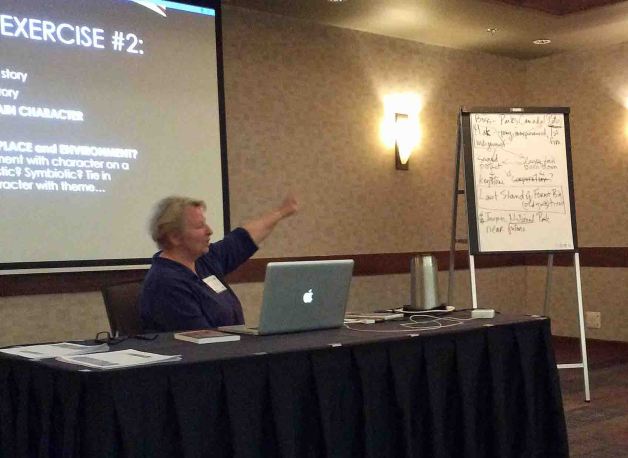
Nina and flipchart2

Reviewing the story we created through an exercise

Then came the story-building part of the workshop—a snappy, fast-paced dialogue among all workshop participants. Using the book’s cover image as story-prompt, we worked through the story components of premise, theme, character, plot and setting. Following a lively discussion, we succeeded in creating a stunning first crack at a story that was both original and intriguing. And at whose heart was a strong sense of place and identity.

creating a story

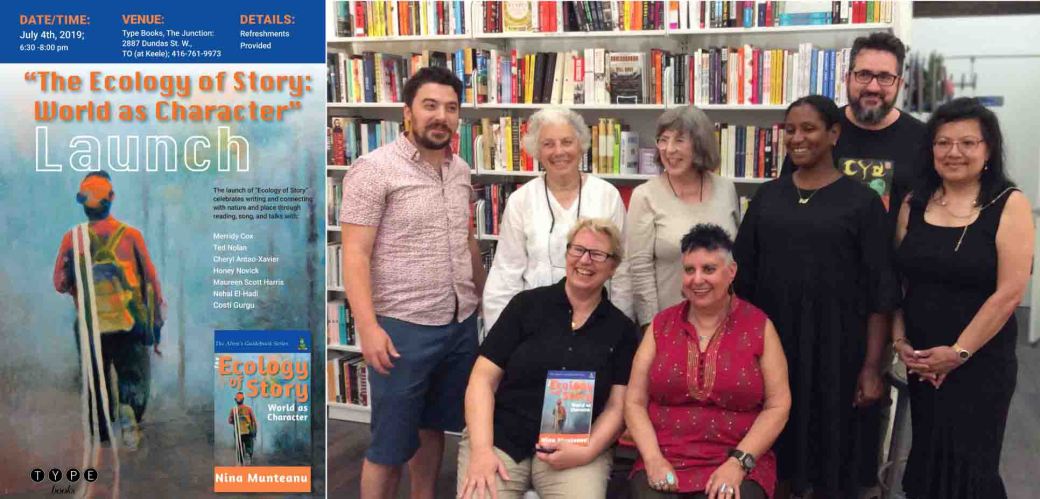
“The Ecology of Story” had only recently been launched at Type Books in Toronto and saw its first use at the Calgary When Words Collide conference. Books were sold out an hour after the workshop.

Microsoft Word - EcologyOfStory Launch.docx

“The Ecology of Story” recently achieved Amazon Bestseller status in the Ecology category.

EcologyOfStory-AmazonBestseller-Ecology


NinaEcologyWorkshop01

Nina starts her “The Ecology of Story” workshop with Part 1: ecology

Nina-slide-EcologyWorkshop

Nina talks about some interesting adaptations in reproduction


Rainforeset Stream-2012

Stream on Vancouver Island, BC (photo by Kevin Klassen)


nina-2014aaaNina is a Canadian scientist and novelist. She worked for 25 years as an environmental consultant in the field of aquatic ecology and limnology, publishing papers and technical reports on water quality and impacts to aquatic systems. Nina has written over a dozen eco-fiction, science fiction and fantasy novels. An award-winning short story writer, and essayist, Nina currently lives in Toronto where she teaches writing at the University of Toronto and George Brown College. Her non-fiction book “Water Is…”—a scientific study and personal journey as limnologist, mother, teacher and environmentalist—was picked by Margaret Atwood in the New York Times as 2016 ‘The Year in Reading’. Nina’s most recent novel “A Diary in the Age of Water”— about four generations of women and their relationship to water in a rapidly changing world—will be released in 2020 by Inanna Publications.


One-Day Writing Intensive in Georgian Bay

On June 22, 2019, I joined Honey Novick and Cheryl Antao-Xavier as presenters of a one-day writing intensive at Noël’s Nest Country Bed & Breakfast near Port McNicoll.

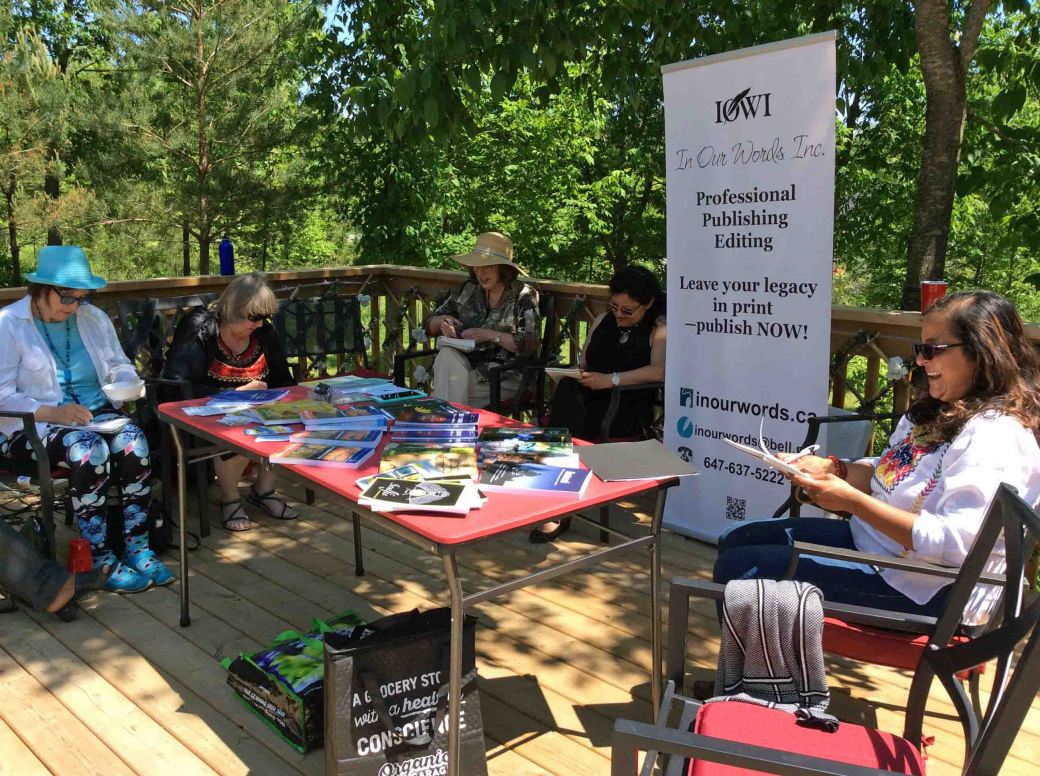
NoelsNest-Group-close

writing group at Noel’s Nest

A small group of dedicated writers joined the intensive and we explored topics to do with writing, manuscript preparation and submission, as well as publishing models. This included meaningful discussions and writing exercises, readings and sharing.

writers writing2I talked about the importance of theme to help determine a story’s beginning and ending. We also discussed the use of theme in memoir to help focus the memoir into a meaningful story with a directed narrative. I discussed the use of the hero’s journey plot approach and its associated archetypes to help determine relevance of events, characters and place: all topics explored in my Alien’s Guidebook series.

As part of the intensive at Noël’s Nest, a magnificent lunch was served along with refreshments. The day was sunny and warm. And perfect in the shade. We ended the intensive with a short nature walk led by naturalist Merridy Cox.

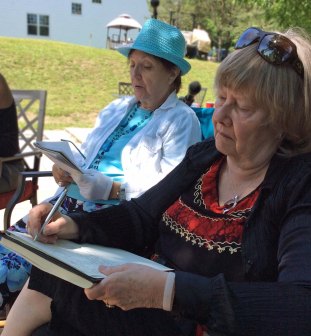
Liana-Lillian writingWhile everyone left at six, I stayed on with a friend. I’d booked the night and looked forward to a restful evening among deer, rustling trees and a chorus of birdsong. The owner had left us some leftovers for supper, and, as we dined on a smorgasbord of gourmet food and wine, I reveled in Nature’s meditative sounds. The night sky opened deep and clear with a million stars.

The next day we enjoyed exploring southern Geogrian Bay, which included the small towns of Port McNicoll, Midland and Penetanguishene. Georgian Bay is part of Lake Huron, one of the Great Lakes.

Tom_Thomson_-_Pine_Island,_Georgian_Bay

Pine Island by Tom Thompson

The bay itself is quite large, comprising about four-fifths the size of Lake Ontario. Eastern Georgian Bay, where we were exploring, is part of the southern edge of the Canadian Shield. Granite bedrock exposed by the glaciers at the end of the last ice age about 11,000 years ago, forms a rugged coastline dotted by windswept eastern white pine. The rugged beauty of the area inspired landscapes by artists of the Group of Seven.

The shores and waterways of the Georgian Bay are the traditional domain of the Anishinaabeg First Nations peoples to the north and Huron-Petun (Wyandot) to the south.

Port McNicoll-GeorgianBay2

Georgian Bay at Port McNicoll

The bay was a major Algonquian-Iroquoian trade route when Champlain, the first European to explore and map the area in 1615–1616, arrived and called it “La Mer douce” (the calm sea). Originally named Waasaagamaa by the Ojibwe, the bay was renamed Georgian Bay by Lieutenant Bayfield of a Royal Navy expedition after King George IV.

After driving through Port McNicoll, we drifted into Midland, where we enjoyed a delicious crepe at La Baie Creperie. On the recommendation of a local, we then moved on to Penetanguishene to the Dock Lunch for the best ice cream in Southern Georgian Bay.

LaBaie Creperie-Midland

La Baie Crêperie in Midland

Upon leaving, I realized that I’d only seen a small portion of the Georgian Bay area and vowed to return soon.

Group writing

Eager writers work on an exercise I’ve given them

Writing intensive June 22, 2019


nina-2014aaa

Nina Munteanu is a Canadian ecologist / limnologist and novelist. She is co-editor of Europa SF and currently teaches writing courses at George Brown College and the University of Toronto. Visit www.ninamunteanu.ca for the latest on her books. Nina’s bilingual “La natura dell’acqua / The Way of Water” was published by Mincione Edizioni in Rome. Her non-fiction book “Water Is…” by Pixl Press (Vancouver) was selected by Margaret Atwood in the New York Times ‘Year in Reading’ and was chosen as the 2017 Summer Read by Water Canada. Her novel “A Diary in the Age of Water” will be released by Inanna Publications (Toronto) in 2020.


Can Dystopian Eco-Fiction Save the Planet?

NewYork 2140“By failing to engage with climate change, artists and writers are contributing to an impoverished sense of the world, right at the moment when art and literature are most needed to galvanize a grassroots movement in favor of climate justice and carbon mitigation.”—Amitav Ghosh, 2017

…Margaret Atwood’s The Year of the Flood. Paolo Bacigalupi’s The Windup Girl or The Water Knife. Kim Stanley Robinson’s New York 2140. Nina Munteanu’s A Diary in the Age of Water. Richard Power’s Overstory. Annie Proulx’s Barkskins. Emmi Itäranta’s The Memory of Water…

Diary Water cover finalWhat these novels have in common is that they are all Dystopian Eco-Fiction. Humanity’s key role in environmental destruction serves a strong thematic element. In eco-fiction dystopias (as opposed to political or socio-cultural dystopias such as Brave New World, 1984, The Handmaid’s Tale) the environment—whether forest, ocean, water generally, or the animal world—plays a key character.

Our Literature in the Anthropocene

In 2017, Amitav Ghosh observed that the literary world has responded to climate change with almost complete silence (The Great Derangement: Climate Change and the Unthinkable). “How can we explain the fact that writers of fiction have overwhelmingly failed to grapple with the ongoing planetary crisis in their works?” writes Fredrick Albritton Jonsson of The Guardian, who observes that, “for Ghosh, this silence is part of a broader pattern of indifference and misrepresentation. Contemporary arts and literature are characterized by ‘modes of concealment that [prevent] people from recognizing the realities of their plight.’”

Windup GirlAccording to Ghosh, plots and characters of contemporary literature tend to reflect the regularity of middle-class life and the worldview of the Victorian natural sciences, one that depends on a principle of uniformity. Change in Nature has been perceived as gradual (or static by some) and never catastrophic. Extraordinary or bizarre happenings were left to marginal genres like the Gothic tale and—of course—science fiction. The strange and unlikely have been externalized: hence the failure of modern novels and art to recognize anthropogenic climate change.

From Adam Smith’s 18th Century economic vision to the conceit of bankers who drove the 2008 American housing bubble, humanity’s men have consistently espoused the myth of a constant natural world capable of absorbing infinite abuse without oscillation. When James Lovelock and Lynn Margulis proposed the Gaia Hypothesis in the 1970s, many saw its basis in a homeostatic balance of the natural order as confirmation of Nature’s infinite resilience to abuse. They failed to recognize that we are Nature and abuse of Nature is really self-abuse.

Jonsson suggests that these Enlightenment ideas are essentially ideological manifestations of Holocene stability, remnants from 11,000 years of small variability in temperature and carbon dioxide levels, giving rise to deep-seated habits and ideas about the resilience of the natural world. “The commitment to indefinite economic growth espoused by the economics profession in the postwar era is perhaps its most triumphant [and dangerous] expression.”

barkskins

Louise Fabiani of Pacific Standard suggests that novels are still the best way for us to clarify planetary issues and prepare for change—even play a meaningful part in that change. In her article “The Literature of Climate Change” she points to science fiction as helping “us prepare for radical change, just when things may be getting too comfortable.”

Referring to our overwhelming reliance on technology and outsourced knowledge, Fabiani suggests that “our privileged lives (particularly in consumer-based North America) are built on unconscious trust in the mostly invisible others who make this illusion of domestic independence possible—the faith that they will never stop being there for us. And we have no back-ups in place should they let us down.” Which they certainly will—given their short-term thinking.

TheOverstory“To counteract this epidemic of short-term thinking,” says Fabiani, “it might be a good idea for more of us to read science fiction, specifically the post-apocalyptic sub-genre: that is, fiction dealing with the aftermath of major societal collapse, whether due to a pandemic, nuclear fallout, or climate change.”

I suggest widening the genre to include good dystopian eco-fiction, which includes not just post-apocalyptic tales but also cautionary tales, worlds in upheaval, and satires. Dystopian literature is ultimately an exploration of hope through personal experience. The eco-fiction protagonist navigates their dystopia by learning meaningful lessons—lessons that pertain directly to our reader in their current world. This is because the premise of a dystopia lies squarely in the present world. Good dystopias can enlighten and suggest possibilities; they can warn and herald. At the very least, they incite the necessary conversation.

On the Role of Dystopian Eco-Fiction

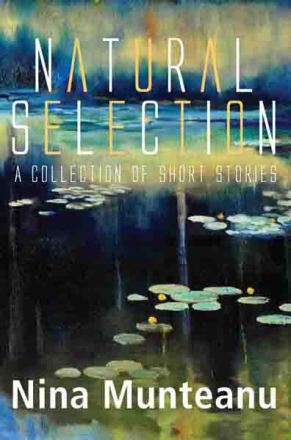
NaturalSelection-front-webI recently shared a panel discussion with writer Kristen Kiomall-Evans at the 2019 Limestone Genre Expo in Kingston entitled: “On the Role of (Dystopian) Literature and Environmental Issues: Can Books Save the Planet.” The audience of mostly women shared enlightened input in an open discussion, which spanned a range of topics and directions from what dystopian literature actually is to whether we are turned off by its negativity—that it may be too close to reality and makes us cringe and want to hide. One person even brought up Game of Thrones as an example; which I then bluntly suggested was not real “story”—it is a stream of episodic sensationalism and horror—aimed at thrilling shock value, not fulfilling meaning.

The group explored what Eco-Fiction is and the possibility of how eco-fiction writers can influence their audience to engage in helping the planet and humanity, in turn.

 “Science doesn’t tell us what we should do,” Barbara Kingsolver wrote in Flight Behavior “It only tells us what is.” Stories can never be a solution in themselves, but they have the capacity to inspire action. Margaret Atwood wrote in MaddAddam, “People need such stories, because however dark, a darkness with voices in it is better than a silent void.”

We explored several areas in which writers could elucidate ways to engage readers for edification, connection and participation. We discussed optimism, new perspectives, envisioning our future, and imaginative use of “product placement” to gain reader engagement and galvanize a movement of action.

Optimism in Story

I pointed out that good dystopias—like all good fiction—follow a character and story arc that must ultimately resolve (which Game of Thrones may never do, certainly not well—J.R.R. Martin’s books series upon which it is based are not even finished yet!). Eco-Fiction Dystopias often conclude with a strong element of hope, based on some positive aspect of humanity and the human spirit—which may include our own evolution. Think Day After Tomorrow, Year of the Flood, Windup Girl, The Postman, Darwin’s Paradox.

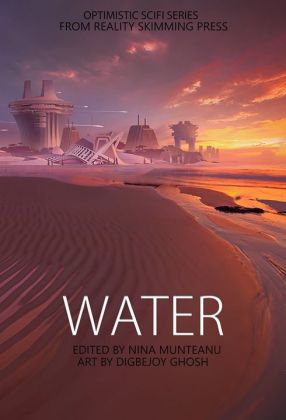
WaterAnthology-RealitySkimmingPress copyIn 2015, I joined Lynda Williams of Reality Skimming Press in creating an optimistic science fiction anthology with the theme of water. My foreword to Water addressed this point:

As we drank Schofferhoffers over salmon burgers, Lynda lamented that while the speculative / science fiction genre has gained a literary presence, this has been at some expense. Much of the current zeitgeist of this genre in Canada tends toward depressing, “self-interested cynicism and extended analogies to drug addiction as a means of coping with reality,” Lynda remarked. Where was the optimism and associated hope for a future? I brought up the “hero’s journey” and its role in meaningful story. One of the reasons this ancient plot approach, based on the hero journey myth, is so popular is that its proper use ensures meaning in story. This is not to say that tragedy is not a powerful and useful story trope; so long as hope for someone—even if just the reader—is generated. Lynda and I concluded that the science fiction genre could use more optimism. [As a result,] these stories explore individual choices and the triumph of human imagination in the presence of adversity. [Each story explores] the surging spirit of humanity toward hopeful shores.

New Perspectives in Story

Evans spoke of the emergence of and need for a strong voice by marginalized groups who would be most affected by things like habitat destruction and climate change. The poor and marginalized will most certainly make up the majority of climate change refugees, starved out and water shorted, and suffering malnutrition, violence and disease.

FifthSeason-JemisinEvans pointed out that afro-American writers (e.g., Octavia Butler, Walter Mosley, Nalo Hopkinson and N.K. Jemisin) and indigenous writers (Cherie Dimaline, Daniel Wilson, Drew Hayden Taylor) are an exciting voice, providing a new and compelling perspective on ongoing global issues.

I would add that the “feminine” voice—the voice of women and the voice of ecology and those who embrace the gylanic voice—are needed. This was strangely not mentioned in the group—perhaps because we were all women—but one. Such a voice can help personalize the experience to readers, by creating discovery, connection and understanding—and ultimately serving a key force in engaging readers to act.

Envisioning Our Future Through Story

One audience member shared a yearning for an optimistic focus through an envisioned world where solutions have successfully created that world. She wasn’t so much suggesting writing a utopia, but including elements of future wishes as an integral part of the world, following Ghandi’s wise advice: be the change you seek. In a recent interview in which I also participated in The Globe and Mail on women science fiction writers, Ottawa writer Marie Bilodeau addressed this concept:

“the best part about writing science fiction is showing different ways of being without having your characters struggle to gain rights. Invented worlds can host a social landscape where debated rights in this world – such as gay marriage, abortion and euthanasia – are just a fact of life.”

People are looking for hopeful fiction that addresses the issues but explores a successful paradigm shift. One that accurately addresses our current issues with intelligence and hope. The power of envisioning a certain future is that the vision enables one to see it as possible.

Product Placement in Story

Editor and naturalist Merridy Cox suggested that writers could make motivating connections through altruistic (not market-driven) “product placement.” She gave the example of an Ash tree. The Ash (Fraxinus species) could subtly make its name, its character and ecology known in the story, along with its plight—its destruction by the non-native invasive emerald ash borer. The use of metaphor and personification would easily link the Ash to a character and at the same time illuminate the reader on a real aspect of the environment to consider. Another example she gave was of the threatened bobolink bird, now all but gone. The bobolink originally made its home in the tallgrass prairie and other open meadows. As native prairies were cleared for farming, the bobolink was displaced and moved to living in hayfields and fallow fields—building their nests on the ground in dense grasses. Changing farm practices (shorter crop rotation and earlier maturing seed mixtures) are now destroying the bobolink’s last refuge.

bobolink-chicks-mom

Bobolink mother and her chicks

Such “product placement” essentially gives Nature and the environmental a personalized face that can easily interact with the story’s theme and its characters. “Product placement”—like symbol—lies embedded in its own story. In the case of the bobolink, it is a story of colonialism, exploitation, and single-minded pursuit at the expense of others not considered, known or understood. These examples have anthropogenic connections to human behaviour, action and knowledge—all related to story and theme.

MockUpEcology copyIn my new writing guidebook The Ecology of Story: World as Character I discuss and explore how some authors do this impeccably. Authors such as Barbara Kingsolver, Richard Powers, Frank Herbert, Ray Bradbury, Thomas Hardy, Margaret Atwood, Alice Munro, Janet Fitch, John Steinbeck, David Mitchell, Joanne Harris and many others.

Writing for the Anthropocene

Learn how to write for the Anthropocene: from Habitats and Trophic Levels to Metaphor and Archetype…

Learn the fundamentals of ecology, insights of world-building, and how to master layering-in of metaphoric connections and symbols between setting and character. “Ecology of Story: World as Character” is the 3rd guidebook in Nina Munteanu’s acclaimed “how to write” series for novice to professional writers.

The Ecology of Story will be released by Pixl Press in June 2019.

nina-2014aaa

Nina Munteanu is a Canadian ecologist / limnologist and novelist. She is co-editor of Europa SF and currently teaches writing courses at George Brown College and the University of Toronto. Visit www.ninamunteanu.ca for the latest on her books. Nina’s bilingual “La natura dell’acqua / The Way of Water” was published by Mincione Edizioni in Rome. Her non-fiction book “Water Is…” by Pixl Press (Vancouver) was selected by Margaret Atwood in the New York Times ‘Year in Reading’ and was chosen as the 2017 Summer Read by Water Canada. Her novel “A Diary in the Age of Water” will be released by Inanna Publications (Toronto) in May 2020.

Ecology of Story: Place as Allegory

Birds deer lake

Birds on Deer Lake, BC (photo by Nina Munteanu)

An allegory is a complete narrative whose images and material things represent an abstract idea or theme such as a political system, religious practice or figure, or a philosophical viewpoint. The entire narrative is a metaphor in which all components are symbolic. Most fairy tales, folk tales and myths are allegories. Examples include: Edmund Spencer’s Faerie Queen; Mary Shelley’s Frankenstein; and Beowulf.

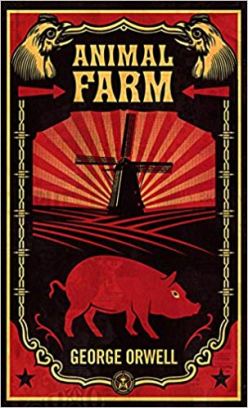
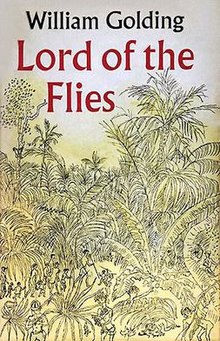
The narrative of allegory is a fractal nest of symbolic names, places and things, that contribute key elements to the story (e.g., Luke Skywalker and Han Solo in Star Wars; Gabriel Oak in Far From the Madding Crowd; John Savage of Stanger in a Strange Land; Darwin Mall in Darwin’s Paradox; Middle Earth in Lord of the Rings; Lilliput in Gulliver’s Travels). Setting and place in allegory symbolizes the theme being explored (e.g. Orwell’s farm in Animal Farm represents a totalitarian world of oppression; the road in John Bunyan’s Pilgrim’s Progress represents the journey of humankind; the island in William Golding’s Lord of the Flies represents the world at war).

As an aside, the science of place names, geographical names or toponyms (derived from a topographic feature) is called toponymy. The city of Montreal, for instance, is a toponym (named after le Mont Royal). Toponyms often come through the local vernacular. Given their link to cultural identity, such place names can provide a significant symbolic role in story.

Animal Farm-GeorgeOrwellIn Animal Farm, George Orwell uses animals to describe the revolution against a totalitarian regime (e.g. the overthrow of the last Russian Csar and the Communist Revolution of Russia). The animals embrace archetypes to symbolize the actions and thoughts of various sectors within that world. The pigs are the leaders of the revolution; Mr. Jones represents the ruling despot who is overthrown; the horse Boxer is the ever-loyal and unquestioning labor class.

John Bunyan’s The Pilgrim’s Progress, published in 1678, tells the story of a narrator who falls asleep and dreams of a man named Christian fleeing the City of Destruction while bearing a heavy burden (e.g., symbolizing his own sins) on his back. A character named Evangelist shows Christian the way to Celestial City, a perilous journey through the Slough (swamp) as characters called Mr. Worldly Wiseman and Hypocrisy try to lead him astray.

LordOfTheFlies-WilliamGoldingIn Lord of the Flies, William Golding explores the conflict in humanity between the impulse toward civilization and the impulse toward savagery. The symbols of the island, the ocean, the conch shell, Piggy’s glasses, and the Lord of the Flies, or the Beast, represent central ideas that reinforce this main theme. Each character has recognizable symbolic significance: Ralph represents civilization and democracy; Piggy represents intellect and rationalism; Jack represents self-interested savagery and dictatorship; and Simon (the outsider in so many ways) represents altruistic purity.

Many of Golding’s potent symbols to power his allegory come from the natural world. These include the use of smoke, fire, and snakes to invoke the imaginary beast (that exists within each of them). The scar left from the plane crash that destroys this natural paradise symbolizes our savage and destructive nature.

Allegories may also be powerful as satires. The social commentary of satires expose and criticize corruption and foolhardiness of societies, groups or even individuals through humor, irony and even ridicule. Gulliver’s Travels by Jonathan Swift is a good example of satire and parody. Swift targets politics, religion and western culture through satire. Aspects of place, landscape and setting are effectively used to feature his commentary. Another excellent example of political satire and use of place and setting with embedded character is found in Lewis Carroll’s Alice’s Adventures in Wonderland.

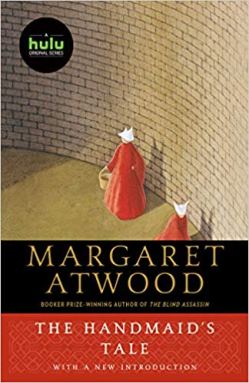
TheHandmaidsTale-MargaretAtwoodExcellent examples of satires with less obvious allegorical structure (but it’s there) can be found in the genre of science fiction—a highly metaphorical literature that makes prime use of place and setting with archetypal characters to satirize an aspect of society. Brave New World by Aldous Huxley is a satirical response to his observation of humans’ addiction to (sexual) pleasure and vulnerability to mind control and the dumbing of civilization in the 1930s. George Orwell’s Nineteen Eight-Four satirizes humanity’s vulnerability to fascism, based on his perception of humans’ sense of fear and helplessness under powerful governments and their oppressive surveillance. Margaret Atwood’s The Handmaid’s Tale satirizes a society in which a woman struggles in a fundamentalist Christian dictatorship patriarchy where women are forced into a system of sexual slavery for the ruling patriarchy.

Other examples include Stranger in a Strange Land by Robert Heinlein; The Dispossessed by Ursula K. Le Guin; The Time Machine by H. G. Wells; The Hunger Games by Suzanne Collins. Each of these stories examines the world of the day and provides critical commentary through premise, place and character. In each of these stories, place and setting help define premise and theme (e.g., what is being satirized.)


MockUpEcology copyThis article is an excerpt from “The Ecology of Story: World as Character” released in June 2019 by Pixl Press.

From Habitats and Trophic Levels to Metaphor and Archetype…

Learn the fundamentals of ecology, insights of world-building, and how to master layering-in of metaphoric connections between setting and character. “Ecology of Story: World as Character” is the 3rd guidebook in Nina Munteanu’s acclaimed “how to write” series for novice to professional writers.


Microsoft Word - Three Writing Guides.docx


nina-2014aaa

Nina Munteanu is a Canadian ecologist / limnologist and novelist. She is co-editor of Europa SF and currently teaches writing courses at George Brown College and the University of Toronto. Visit www.ninamunteanu.ca for the latest on her books. Nina’s bilingual “La natura dell’acqua / The Way of Water” was published by Mincione Edizioni in Rome. Her non-fiction book “Water Is…” by Pixl Press (Vancouver) was selected by Margaret Atwood in the New York Times ‘Year in Reading’ and was chosen as the 2017 Summer Read by Water Canada. Her novel “A Diary in the Age of Water” will be released by Inanna Publications (Toronto) in 2020.

Write and Publish, Part 8: The Hero’s Journey Plot Approach

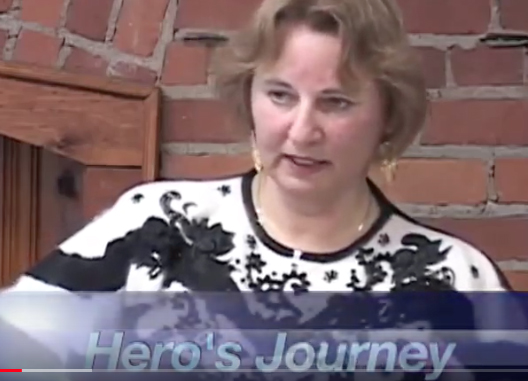
Plot your way to success. nine-time novelist and short story author Nina Munteanu describes successful plot approaches in storytelling, including The Hero’s Journey.


The Write and Publish Series

You want to write but don’t know how to get started? The Write and Publish Series focuses on:

  • How to find time to write around your busy schedule
  • How to make the most of your present resources
  • How to get inspired and motivate yourself to write
  • How to write, finish and submit your work

This 7-part series of lectures consists of: 1) Nina’s 5-Ps to Success; 2) Redefine Yourself as an Author; 3) Time and Space to Write; 4) Adopt a Winning Attitude; 5) Write What Excites You; 6) How to Beat Writer’s Block; 7) How to Keep Motivated; and 8) Plot Approaches including the Hero’s Journey.

Nina-Heros Journey

The Writer’s Toolkit

This series of lectures and workshops is part of Nina Munteanu’s “The Writer’s Toolkit”, available as three workshops and DVDs for writers wishing to get published. This 6-hour set of three discs contains lectures, examples and exercises on how to get started and finish, writing craft, marketing and promotion. Available through the author (nina.sfgirl@gmail.com).

nina-smiling-close

Nina gives a writing workshop in Mahone Bay, Nova Scotia

the writers toolkit-front-WEB“I was fascinated by Nina’s clear and extremely interesting lecture on the hero’s journey.  Maybe all writers have a novel in their heads they want to write one day, and the techniques Nina shared with us will help me when I get to that point.  In fact, because of her, I may get there a lot sooner than I had planned.”— Zoe M. Hicks, Saint Simon’s Island, GA
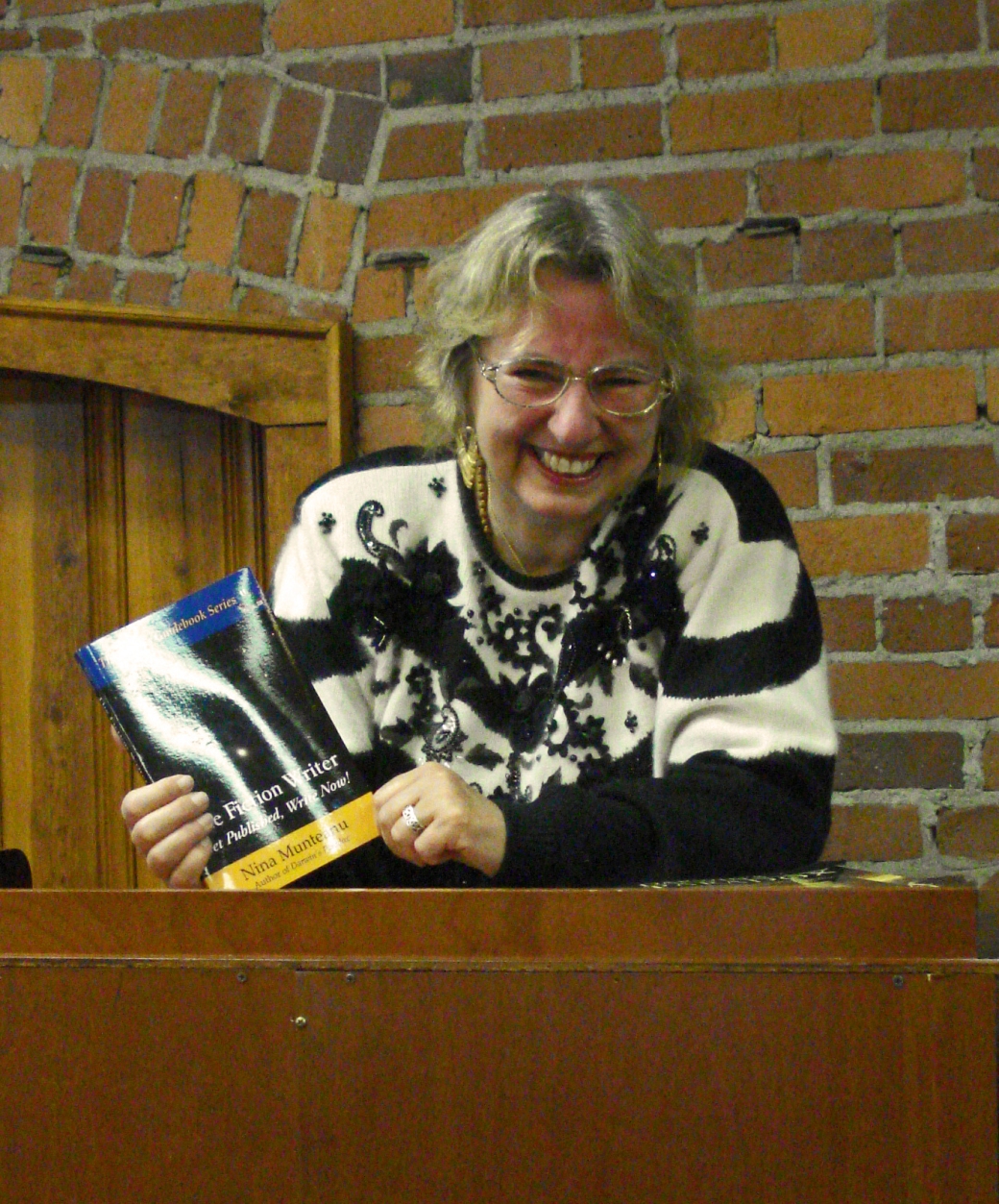
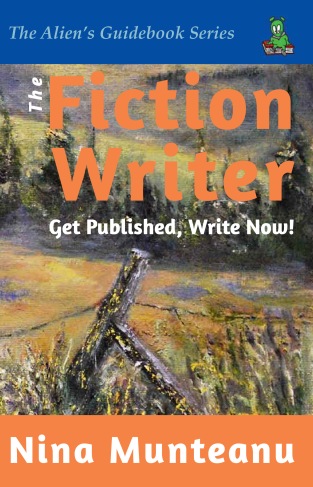
“Nina Munteanu’s command of the subject matter and her ability to explain in a way that the audience understood was excellent. As a hopeful author, I found her words inspiring.”—Amanda Lott, Scribblers Writers’ Retreat, GA

“Rarely have I encountered someone of Nina’s considerable talent and intellect tied to such an extraordinary work ethic…A gifted and inventive writer, Nina is also an excellent speaker who is able to communicate complicated ideas in simple terms and generate creative thought in others. Her accessible, positive approach and delightful sense of humor set people at ease almost immediately.”–Heather Dugan, Ohio writer and voice artist

“What you’ve done for me, Nina, is you’ve just opened up a whole new world. You’ve shown me how to put soul into my books.”–Hectorine Roy, Nova Scotia writer

nina-teaching-with-fiction-writer_edited-1

Nina teaching a workshop in Halifax, Nova Scotia

The Writer’s Toolkit workshops were based on my award-nominated fiction writing guide: The Fiction Writer: Get Published, Write Now! Chapter P describes various plot approaches and Chapter J focuses specifically on the Hero’s Journey Plot Approach.

FictionWriter-front cover-2nd ed-web“…Like the good Doctor’s Tardis, The Fiction Writer is larger than it appears… Get Get Published, Write Now! right now.”—David Merchant, Creative Writing Instructor
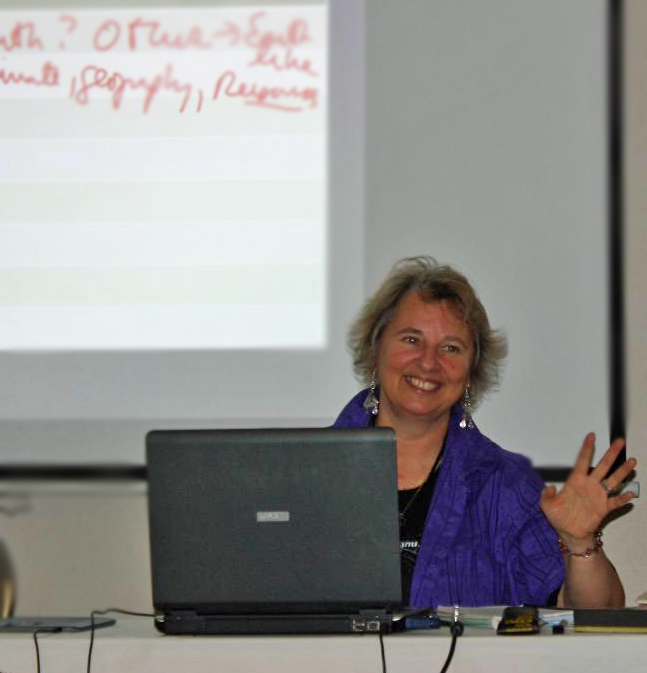
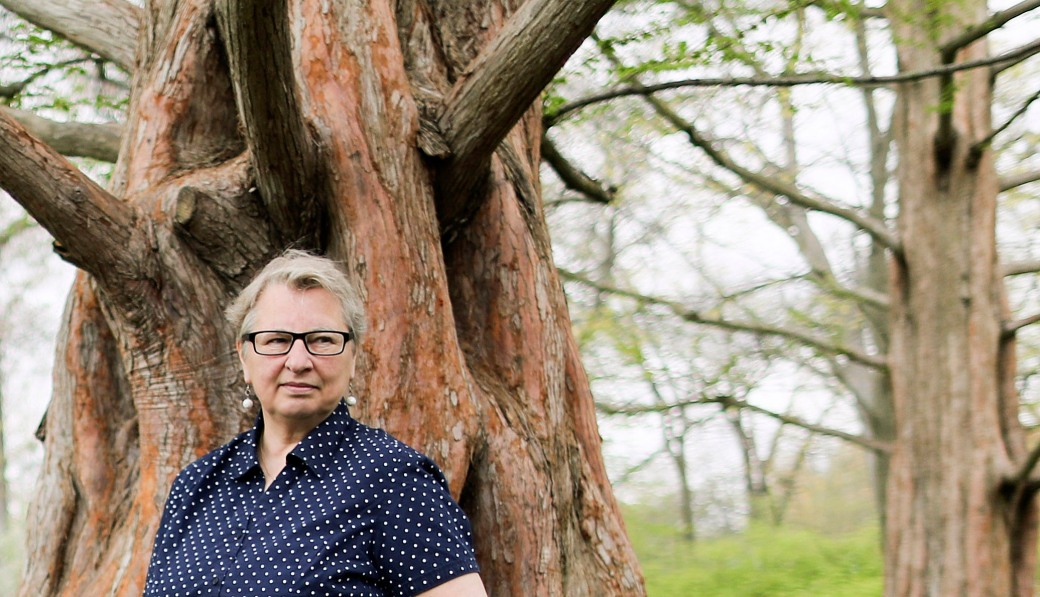
The Fiction Writer: Get Published, Write Now! (Starfire World Syndicate) is a digest of how-to’s in writing fiction and creative non-fiction by masters of the craft from over the last century. Packaged into 26 chapters of well-researched and easy to read instruction, novelist and teacher Nina Munteanu brings in entertaining real-life examples and practical exercises. The Fiction Writer will help you learn the basic, tried and true lessons of a professional writer: 1) how to craft a compelling story; 2) how to give editors and agents what they want and 3) how to maintain a winning attitude.

“The Fiction Writer is at the top of the required reading list for my Writer’s Workshop students. With its engagingly direct, conversational style and easily accessible format, it is a veritable cornucopia of hands-on help for aspiring writers of any age…the quintessential guidebook for the soon-to-be-published.”—Susan McLemore, Writing Instructor

“As important a tool as your laptop or your pen.”—Cathi Urbonas, Halifax writer

“Has become my writing bible.”—Carina Burns, author of The Syrian Jewelry Box

“I highly recommend this book for any writer wishing to get published.”—Marie Bilodeau, acclaimed author of Destiny’s Blood

“I’m thoroughly enjoying the book and even learning a thing or two!”—Robert J. Sawyer, Hugo and Nebula Award-winning author of Wake

nina-workshop 2

Nina teaching a workshop in Calgary, Alberta

The Fiction Writer is the first of a series of writing guides, which consist so far of: The Journal Writer: Finding Your Voice; and The Ecology of Story: World as Character.

Microsoft Word - Three Writing Guides.docx


Nina Munteanu

Nina Munteanu next to metasequoia tree in The Beach (photo by Richard Lautens)

nina-2014aaa

Nina Munteanu is a Canadian ecologist / limnologist and novelist. She is co-editor of Europa SF and currently teaches writing courses at George Brown College and the University of Toronto. Visit www.ninamunteanu.ca for the latest on her books. Nina’s bilingual “La natura dell’acqua / The Way of Water” was published by Mincione Edizioni in Rome. Her non-fiction book “Water Is…” by Pixl Press (Vancouver) was selected by Margaret Atwood in the New York Times ‘Year in Reading’ and was chosen as the 2017 Summer Read by Water Canada. Her novel “A Diary in the Age of Water” will be released by Inanna Publications (Toronto) in 2020.