
Vancouver Central Library (photo by Nina Munteanu)
Imagine the place. Dark and subversive, oozing with ‘blasphemous’, ‘racial’, ‘offensive’, ‘obscene’, ‘Satanic’, and ‘anarchistic’ literature. Its librarian, Janet Yanosko, added her own pithy remarks to a long list of books that were banned for their offensive nature. Books like:
- Fahrenheit 451 by Ray Bradbury: a book on censorship gets censored!
- James and the Giant Peach by Roald Dahl: promotes drugs and disobedience
- Where’s Waldo by Martin Handford: for nudity
- 1984 by George Orwell: for being pro-communist
- The Lorax by Doctor Seuss: because it criminalizes the logging industry
- Zen Buddhism: selected writings by D.T. Suzuki: because it portrays Buddhism as appealing
- Slaughterhouse Five by Kurt Vonnegut: for its foul language
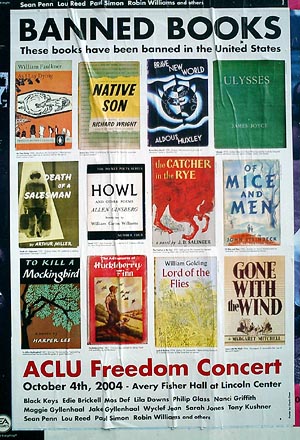
The irony is that The Forbidden Library seems itself to have found obscurity, joining the ranks of great ancient libraries that were destroyed … and silenced.
Books have been banned (and burned) on many occasions by many societies over humankind’s history of existence. Books considered critical of governments or societies with power were a common target. So were books that dealt with criminal matter or promoted views counter with popular worldviews, or were considered distasteful or disturbing.
The Bible, the Qur’an and other religious works were banned (and burned) over the years. In Medieval Europe, the Roman Catholic Church dealt with dissenting printed opinion through a program called the Index Librorum Prohibitorum (index of prohibited books).
I found a partial list on Wikipedia and share it here with you. I’ve bolded the ones I’ve read. How many did YOU read?
- Alice’s Adventures in Wonderland by Lewis Carroll: for portraying animals and humans on the same level
- The Age of Reason by Thomas Paine: banned in UK for blasphemy in 18th C
- All Quiet on the Western Front by Erich Maria Remaraque: banned in Nazi Germany for demoralizing and insulting the Wehrmacht
- Animal Farm by George Orwell: banned for anti-Stalin theme
- Adventures of Huckleberry Finn by Mark Twain: banned in some U.S. schools for use of racial slurs
- Bible: banned by the Index Librorum Prohibitorum in Catholic Church
- Black Beauty by Anna Sewell: banned in South Africa for using the word ‘black’
- Brave New World byAldous Huxley: banned for centering around negative activity
- Canterbury Tales by Geoffrey Chaucer: banned for sexual content
- Catcher in the Rye by J.D. Salinger: banned in some U.S. schools and libraries for sexual situations, immorality and other themes of impropriety and anti-Christian sentiments
- Civil Disobedience by Henry David Thoreau: banned in U.S. during McCarthyism
- Clan of the Cave Bear by Jean Auel: banned because of hardcore graphic sexual content
- The Communist Manifesto by Karl Marx and Friedrich Engels: banned in anti-Communist countries during the Red scare
- Doctor Zhivago by Boris Pasternak: banned in USSR for criticism of the Bolshevik Party
- Fahrenheit 451 by Ray Bradbury: for issues on censorship
- For Whom the Bell Tolls by Ernest Hemingway: banned in Spain during Francisco Franco’s rule for its pro-Republican views
- Gone with the Wind by Margaret Mitchell: banned in part of U.S. because of the use of the word ‘nigger’
- Grapes of Wrath by John Steinbeck: banned in some U.S. schools for use of the name God and Jesus in a vain and profane manner along with inappropriate sexual references
- Gulliver’s Travels by Jonathan Swift: banned in Ireland as wicked and obscene
- Hamlet by William Shakespeare: banned in Ethiopia
- Harry Potter by J.K. Rowling: banned in some U.S. school libraries for use of witchcraft and supposedly Satanic views
- King Lear by William Shakespeare: banned in UK out of respect to King George III’s aleged insanity
- Lady Chatterley’s Lover by D.H. Lawrence: banned in U.S. and UK for obsenity
- The Lion, the Witch and the Wardrobe by C.S. Lewis: challenged in part of U.S. for depicting graphic violence, mysticism and gore
- The Lorax by Dr. Seuss: banned in parts of U.S. for being an allegorical political commentary
- The Martian Chronicles by Ray Bradbury: challenged in U.S. for profanity
- Mein Kampf by Adolf Hitler: reproduction and sale is forbidden outside Germany, Austria and Netherlands for promoting Nazism
- Le Morte D’Arthur by Sir Thomas Malory: challenged in UK as ‘junk’
- 1984 by George Orwell: banned in USSR for political reasons; banned in U.S. for being pro-communist and for explicit sexual matter
- Of Mice and Men by John Steinbeck: banned in some U.S. schools and libraries for promoting ‘euthanasia’ and for profanity
- The Odyssey by Homer: Plato suggested expurgating it for immature readers and Caligula tried to suppress it for expressing Greek ideals of freedom
- On the Origin of Species by Charles Darwin: banned in various places for promoting the evolutionary theory
- Paradise Lost by John Milton: listed on the Indx Librorum Prohibitorum in Rome
- To Kill a Mockingbird by Harper Lee: challenged due to racial themes
- Ulysses by James Joyce: banned in U.S. for its sexual content
- Uncle Tom’s Cabin by Harriet Beecher Stowe: banned in southern States and Czarist Russia for racist portrayal of African Americans and use of word ‘nigger’.
 This all begs the question of what art truly is and should be. Susan Sontag suggested that “real art makes us nervous.” The genius of art skirts the edge of propriety and comfort to ask the questions that help us define our own humanity. Oscar Wilde remarked, “an idea that is not dangerous is unworthy of being an idea at all.” Benjamin Franklin suggested that, “if all printers were determined not to print anything till they were sure it would offend nobody, there would be very little printed.”
Lillian Hellman, who was subpoenaed to appear before the House of Un-American Activities Commitee in 1952, exclaimed, “I cannot and will not cut my conscience to fit this year’s fashions.”
Live and write from the heart.
 Nina Munteanu is an ecologist and internationally published author of award-nominated speculative novels, short stories and non-fiction. She is co-editor of Europa SF and currently teaches writing courses at George Brown College and the University of Toronto. Visit www.ninamunteanu.ca for the latest on her books.
 When I first heard the writer’s edict “write what you know” I rejoined: but I write science fiction—I write about the unknown. What I still had to learn was that by describing “the other” SF really describes “us”. We explore ourselves through our relationship with the unknown. We do this by ensuring that all our plotlines reflect theme.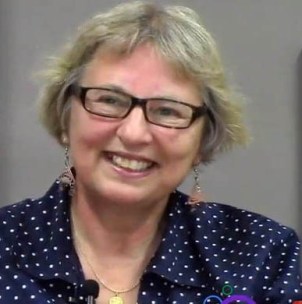

 Some years ago, I was interviewed by Michael Stackpole (New York Times bestselling author of over 40 novels, including “I, Jedi” and “Rogue Squadron”) and Michael Mennenga (CEO of “Slice of Sci-Fi”) on
  We talked about my book “
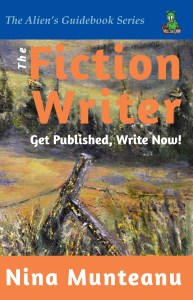 Here is an excerpt from
  “In his introduction to this all-original set of (at times barely) futuristic tales, Meyer warns readers, “[The] imaginings of today could well become the cold, hard facts of tomorrow.” Meyer (Testing the Elements) has gathered an eclectic variety of eco-fictions from some of Canada’s top genre writers, each of which, he writes, reminds readers that “the world is speaking to us and that it is our duty, if not a covenant, to listen to what it has to say.” In these pages, scientists work desperately against human ignorance, pockets of civilization fight to balance morality and survival, and corporations cruelly control access to basic needs such as water. The most affecting tale, Wendy Bone’s “Abdul,” is also the least futuristic, an emotional story that touchingly contrasts Western guilt against the life of a captive orangutan. The anthology may be inescapably dark, but it is a necessary read, a clarion call to take action rather than, as a character in Seán Virgo’s “My Atlantis” describes it, “waiting unknowingly for the plague, the hive collapse, the entropic thunderbolt.” Luckily, it’s also vastly entertaining. It appears there’s nothing like catastrophe to bring the best out in authors in describing the worst of humankind.”
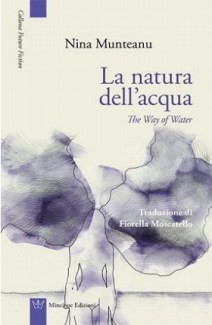 She imagines its coolness gliding down her throat. Wet with a lingering aftertaste of fish and mud. She imagines its deep voice resonating through her in primal notes; echoes from when the dinosaurs quenched their throats in the Triassic swamps.
 A limnologist (lake ecosystem biologist) by trade, Munteanu recognizes the incredible way that water shapes life and brings attention to the fact that water connects us to each other just as water connects with other water, forming bonds. She evokes in the reader a sense of reverence for water and an awareness that the same water that flows through our bodies have flowed through the bodies of our ancestors, cycling through life since the first life forms coalesced.
 “Water covers every aspect of this science fiction story that pits the vulnerable citizen against the evil multinational corporation in a dystopian Canada sometime in our future. Water is presented in its multiplicity of facets: in the science behind its composition, in its history, in it’s symbolic nature and different physical states; water is a giver and taker of life, and is the form in which the friendship of protagonists Hilda and Hanna functions. Water is also magic and the ultimate righter of wrongs committed to it and to a humanity it gives life to. Within this framework, Munteanu spins a thought-provoking tale that projects where our headlong pursuit of profit may one day lead us to, and how nature will ultimately, with a little human coaxing, be the only one to correct the balance.”—Shane Joseph, Canadian author of Fringe Dwellers
 love; a story to read, not only to deal with the possible but, above all, to understand that the time still available for “love” might be less than what you believe.”—Simone Casavecchia,
  Nina Munteanu is an ecologist and internationally published author of award-nominated speculative novels, short stories and non-fiction. She is co-editor of Europa SF and currently teaches writing courses at George Brown College and the University of Toronto. Visit
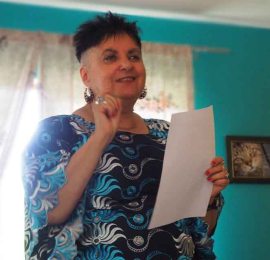
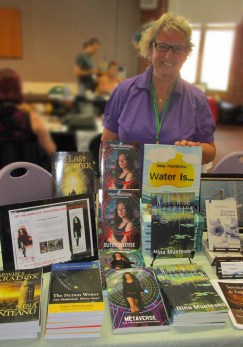
  On Friday, June 9th, I drove with friend, songwriter and poet Honey Novick, to the 15th International Writers’ and Artists’ Festival in Val-David, Quebec (June 10th and 11th, 2017). Celebrated artists, poets, writers and singers with an international heritage that included France, Chile, Argentina, Romania, Canada and the USA would congregate at the festival, set in a large house nestled deep in the Maple Laurentian forest.



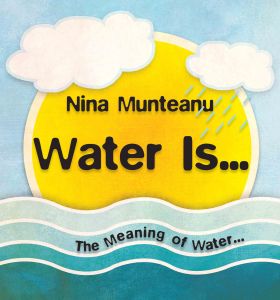 “Water Is…”: I shared the inspiration and making of my latest book, “Water Is…”, a scientific study and personal journey as limnologist, mother, teacher and environmentalist, which was recently picked by Margaret Atwood in the NY Times as 2016 ‘Year in Reading’ and recommended by Water Canada as ‘

 Eco-Fiction



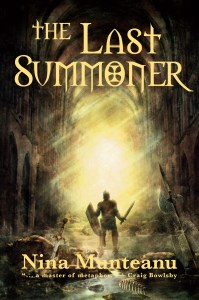 I brought up the notion of history’s quantum properties, a braided flow of multi-dimensional and entangled realities. This served as premise for my alternative historical time-travel fantasy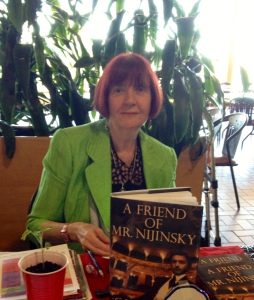

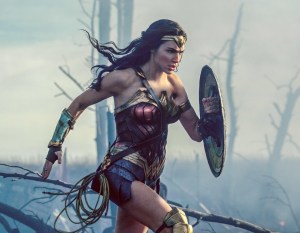

 Wonder Woman uses a unique weapon, the Golden Lasso, known as the Lasso of Truth—because it compels anyone wrapped by it to reveal the truth.
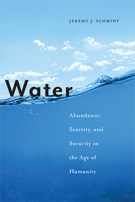 “Water, Abundance, Scarcity, and Security in the Age of Humanity” (NYU Press) by Jeremy Schmidt is an intellectual history of America’s water management philosophy. Debates over how human impacts on the planet, writes
 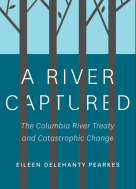 “A River Captured: The Columbia River Treaty and Catastrophic Change” (RMB Books) By Eileen Delehanty Pearkes reviews key historical events that preceded the Treaty, including the Depression-era construction of Grand Coulee Dam in central Washington, a project that resulted in the extirpation of prolific runs of chinook, coho and sockeye into B.C. Prompted by concerns over the 1948 flood, American and Canadian political leaders began to focus their policy energy on governing the flow of the snow-charged Columbia to suit agricultural and industrial interests.
 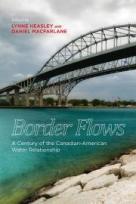 “Border Flows: A Century of the Canadian-American Water Relationship” (University of Calgary Press), Lynne Heasley and Daniel Macfarlane, editors, explore and discuss Canada-U.S. governance.
  “New York 2140” (Orbit) by Kim Stanley Robinson is a novel set in New York City following major sea level rises due to climate change.
  “The Death and Life of the Great Lakes” (WW Norton & Company Inc. Press) by Dan Egan is a frank discussion of the threat under which the five Great Lakes currently suffer. This book, writes
 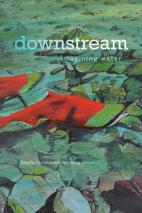 “Downstream: reimagining water” (Wilfred Laurier University Press) by Dorothy Christian & Rita Wong “brings together artists, writers, scientists, scholars, environmentalists, and activists who understand that our shared human need for clean water is crucial to building peace and good relationships with one another and the planet. This book explores the key roles that culture, arts, and the humanities play in supporting healthy water-based ecology and provides local, global, and Indigenous perspectives on water that help to guide our societies in a time of global warming. The contributions range from practical to visionary, and each of the four sections closes with a poem to encourage personal freedom along with collective care,” writes
  “
“
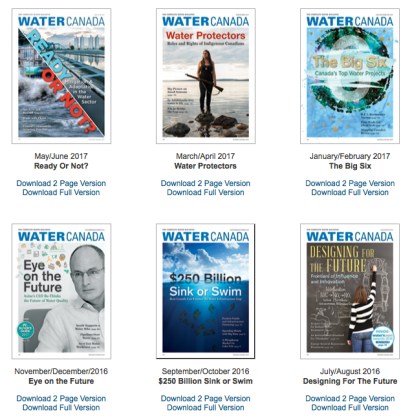 Water Canada

 Nina Munteanu Writing Coach