
Gargantua Black Hole in “Interstellar)
Science fiction, which Ted Gioia of The San Francisco Chronicle calls “conceptual fiction” explores the interaction of humanity with some larger phenomenon that involves science. SF writer Robert J. Sawyer calls it the fiction of the large. Large ideas, large circumstance, large impact. Science fiction is a powerful literature of allegory and metaphor that is deeply embedded in culture. By capturing context, SF is a symbolic meditation on history itself and ultimately a literature of great vision.
Science fiction is the literature of consequence that, in exploring large issues faced by humankind, can provide an important vehicle in raising environmental awareness and a planetary consciousness. Much of science fiction is currently focused in that direction. Terms such as eco-fiction, climate fiction and its odd cousin “cli-fi”, have embedded themselves in science fiction terminology; this fiction has attracted a host of impressive authors who write to its calling: Margaret Atwood, Emmi Itäranta, Jeff VanderMeer, Richard Powers, Barbara Kingsolver, Upton Sinclair, Ursula Le Guin, JoeAnn Hart, Frank Herbert, John Yunker, Kim Stanley Robinson, James Bradley, Paolo Bacigalupi, Nathaniel Rich, David Mitchell, Junot Diaz, Claire Vaye Watkins, J.G. Ballard, Marcel Theroux, Thomas Wharton—just to name a few. The list seems endless. Of course, I’m one of them too. Many of these works explore and illuminate environmental degradation and ecosystem collapse at the hands of humanity.
Lately, science fiction is asking the question of whether humanity is worth saving and at what expense?
It’s a valid question.
As the first swell of the climate change tidal wave laps at our feet, we are beginning to see the planetary results of what humanity has created and exacerbated. Humanity has in many ways reached a planetary tipping point; a threshold that will be felt by all aspects of our planet, both animate and inanimate as the planet’s very identity shifts.
 Scientists have suggested that we have now slid from the relatively stable Holocene Epoch to the Anthropocene Epoch—the age of humanity. The term arose not from hubris, but in recognition of our ubiquitous and overwhelming influence on large systems and planetary cycles.
 Take water, for instance. Today, we control water on a massive scale. Reservoirs around the world hold 10,000 cubic kilometres of water; five times the water of all the rivers on Earth. Most of these great reservoirs lie in the northern hemisphere, and the extra weight has slightly changed how the Earth spins on its axis, speeding its rotation and shortening the day by eight millionths of a second in the last forty years. Ponder too, that an age has a beginning and an end. Is climate change the planet’s way of telling us that the Anthropocene Epoch too shall end? Is that when we end … or transcend?
A tidal wave of TV shows and movies currently explore—or at least acknowledge—the devastation we are forcing on the planet. Every week Netflix puts out a new show that follows this premise of Earth’s devastation: 3%; The 100; The Titan; Orbiter 9; even Lost in Space.
Are we worth saving? Below are a few examples of movies, TV series I’ve lately watched and books I’ve lately read that address this key question to an irresponsible humanity that seems unconcerned that we are destroying our very home. In some the question is subtly implied; in others, not so subtle.
Battlestar Galactica (2004)

In the pilot of Battlestar Galactica, Commander Adama gives an impromptu speech (not the one he prepared; but one provoked by an argument with his son), which resonates throughout the entire series as cylon and human must refashion themselves and their relationship to each other while they discover the cyclical recursive nature of all things and that “all this has happened before and will again.”
The Galactica ship is about to be decommissioned and has now become a museum since the cylons have disappeared forty years ago. The great battle between the cylons and their human creators ended forty years ago with the cylons disappearing suddenly, never to be heard from again. But that is about to change; as Adama gives his speech, the first strike occurs, followed by a massive attack that almost wipes out the human race.

Commander Adama
In his speech Adama says:
“The cost of wearing the uniform can be high…but sometimes it’s too high. When we fought the cylons, we did it to save ourselves from extinction. But we never answered the question why. Why are we as a people worth saving. We still commit murder because of greed, spite and jealousy. And we still visit all of our sins upon our children. We refuse to accept the responsibility for anything that we’ve done. Like we did with the cylons. We decided to play God. Create life. When that life turned against us, we comforted ourselves in the knowledge that it really wasn’t our fault, not really. You cannot play God then wash your hands of the things you’ve created. Sooner or later the day comes when you can’t hide from the things that you’ve done anymore.”
Interstellar (2014)

Voyaging to Gargantua Black Hole

Cooper explores the ice planet
Early on in the science fiction movie Interstellar, NASA astronaut Cooper declares that “the world is a treasure, but it’s been telling us to leave for a while now. Mankind was born on Earth; it was never meant to die here.”
After showing Cooper how their last corn crops will eventually fail like the okra and wheat before them, NASA Professor Brand answers Cooper’s question of, “So, how do you plan on saving the world?” with: “We’re not meant to save the world…We’re meant to leave it.” The human-centred hubris in this colonialist mentality lies in what we have left behind—a planet suffocating from the effects of humanity’s careless and thoughtless activities. What Interstellar circles but does not address is the all-important question: is humanity even worth saving?
The suggestion during the movie’s final moments, is that we are worth saving because we will transcend into wiser benevolent beings: a hopeful gesture based on the power of love.
The Three Body Problem (2014)

Cixin Liu’s The Three Body Problem was set against the backdrop of China’s Cultural Revolution, because, says Liu, “The Cultural Revolution provides the necessary background for the story. The tale I wanted to tell demanded a protagonist [Ye Wenjie] who gave up all hope in humanity and human nature. I think the only episode in modern Chinese history capable of generating such a response is the Cultural Revolution. It was such a dark and absurd time that even dystopias like 1984 seem lacking in imagination in comparison.” (I suppose Cixin did not experience the holocaust of Germany or Stalin’s purge in the Soviet Union).
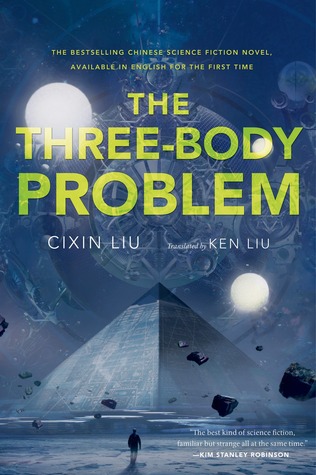 In the story, a secret military project sends signals into space to establish contact with aliens. An alien civilization on the brink of destruction captures the signal and plans to invade Earth. One of the main protagonists is Ye Wenjie, a young woman traumatized after witnessing the execution of her scientist father in a brutal cleansing at the height of the Cultural Revolution. Considered a traitor, young Wenjie is sent to a labour brigade in Inner Mongolia, where she witnesses further destruction by humans:
“Ye Wenjie could only describe the deforestation that she witnessed as madness. The tall Dahurian larch, the evergreen Scots pine, the slim and straight white birch, the cloud-piercing Korean aspen, the aromatic Siberian fir, along with black birch, oak, mountain elm, Chosenia arbutifolia—whatever they laid eyes on, they cut down. Her company wielded hundreds of chain saws like a swarm of steel locusts, and after they passed, only stumps were left.
The fallen Dahurian larch, now bereft of branches, was ready to be taken away by tractor. Ye gently caressed the freshly exposed cross section of the felled trunk. She did this often, as though such surfaces were giant wounds, as though she could feel the tree’s pain… The trunk was dragged away. Rocks and stumps in the ground broke the bark in more places, wounding the giant body further. In the spot where it once stood, the weight of the fallen tree being dragged left a deep channel in the layers of decomposing leaves that had accumulated over the years. Water quickly filled the ditch. The rotting leaves made the water appear crimson, like blood.”
Already cynical about humanity’s failed culture and science—Wenjie acquires a contraband copy of Rachel Carson’s Silent Spring. The book and revelation she experiences from it sets in motion her remaining trajectory.
“More than four decades later, in her last moments, Ye Wenjie would recall the influence Silent Spring had on her life. The book dealt only with a limited subject: the negative environmental effects of excessive pesticide use. But the perspective taken by the author shook Ye to the core. The use of pesticides had seemed to Ye just a normal, proper—or, at least, neutral—act, but Carson’s book allowed Ye to see that, from Nature’s perspective, their use was indistinguishable from the Cultural Revolution, and equally destructive to our world. If this was so, then how many other acts of humankind that had seemed normal or even righteous were, in reality, evil?
As she continued to mull over these thoughts, a deduction made her shudder: Is it possible that the relationship between humanity and evil is similar to the relationship between the ocean and an iceberg floating on its surface? Both the ocean and the iceberg are made of the same material. That the iceberg seems separate is only because it is in a different form. In reality, it is but a part of the vast ocean.…It was impossible to expect a moral awakening from humankind itself, just like it was impossible to expect humans to lift off the earth by pulling up on their own hair. To achieve moral awakening required a force outside the human race.
This thought determined the entire direction of Ye’s life.”
Ye is sent to the Chinese version of SETI and succeeds in sending a message to aliens on Trisolaris. Despite a warning that the Trisolarians mean only to invade, Wenjie invites them to Earth. To ensure the arrival of the Trisolaris aliens, she collaborates with Michael Evans—an oil billionaire’s son who is disgusted with human’s destruction of Nature. Despising humankind in its current state, Wenjie believes the aliens will somehow ensure humanity’s transcendence; Evans, however, applauds the coming invasion as the best route to achieve the eradication of humanity and the survival of the rest of the planet.
The Expanse (2015)
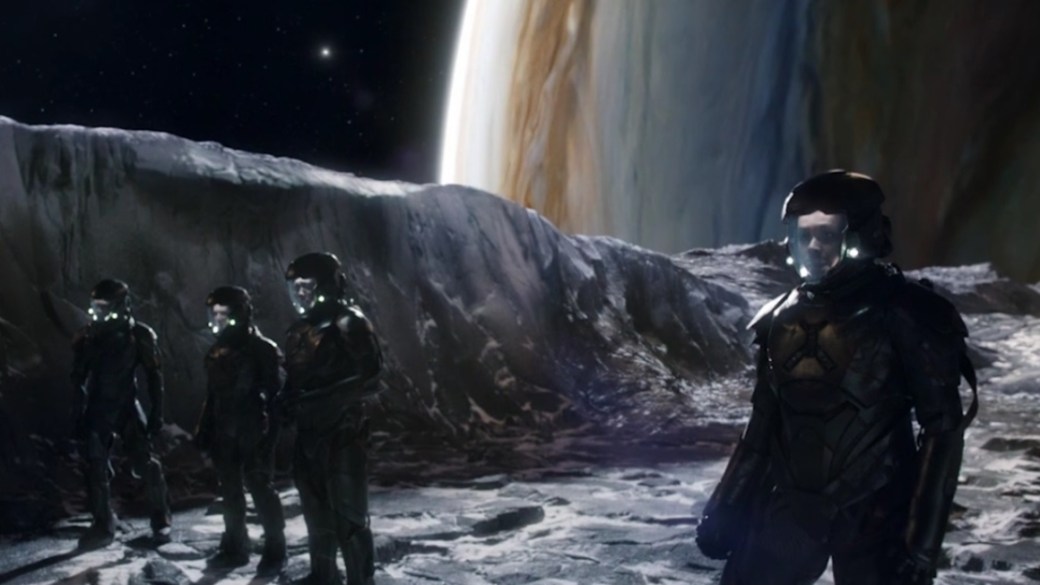
Bobby Draper and crew face an unknown enemy on Ganymede Station

Naomi and Holden
The Expanse is a stylish and intelligent science fiction (SF) TV series (on Syfy Channel) based on books by James S.A. Corey. It is set 200 years in the future when humanity has colonized the moon, Mars and the Asteroid Belt to mine minerals and water. This sophisticated SF film noir thriller elevates the space opera sub-genre with a meaningful metaphoric exploration of issues relevant in today’s world—issues of resource allocation, domination & power struggle, values, prejudice, and racism. Ever-expanding outward in a frantic search for resources as Earth’s own resources fester in pollution and Earthers languish on “the dole”, colonizing humans on Mars and the Belt have even changed their physiology, culture, language and identity.
The tag line of the first season poster for The Expanse reads: “We’ve gone too far.” The series begins on Ceres with a Belter activist inciting a crowd with talk about how Mars and Earth are squeezing Belters for all their water.
Avasarala and DeGraaf
Not so subtle signs of our destructive jingoistic determination runs through this series (now in its third season). After Under Secretary Avasarala’s friend Degraaf (Earth ambassador to Mars) becomes a casualty of one of her intel games, Degraaf quietly shares: “You know what I love about Mars?… They still dream; we gave up. They are an entire culture dedicated to a common goal: working together as one to turn a lifeless rock into a garden. We had a garden and we paved it.”
Miller and Dawes sparring
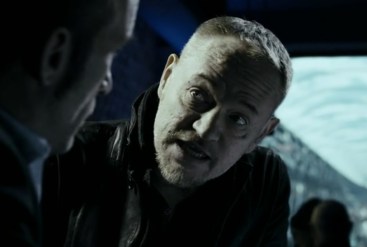
Ceres born militant activist Anderson Dawes confides to Detective Miller: “All we’ve ever known is low G and an atmosphere we can’t breathe. Earthers,” he continues, “get to walk outside into the light, breathe pure air, look up at a blue sky and see something that gives them hope. And what do they do? They look past that light, past that blue sky. They see the stars and they think ‘mine’… Earthers have a home; it’s time Belters had one too.”
The Martians hold Earth in contempt for their cavalier approach to their resources. Onboard the MCRN Donnager, Martian Lopez asks his prisoner Jim Holden if he misses Earth and Holden grumbles, “If I did, I’d go back.” Lopez then dreamily relates stories his uncle told him about Earth’s “endless blue sky and free air everywhere. Open water all the way to the horizon.” Then Lopez turns a cynical eye back on Holden. “I could never understand your people. Why, when the universe has bestowed so much upon you, you seem to care so little for it.” Holden admits, “Wrecking things is what Earthers do best…”
Martian marine Bobbie Draper
Then he churlishly adds, “Martians too, by the look of your ship.” Lopez retorts, “We are nothing like you. The only thing Earthers care about is government handouts. Free food, free water. Free drugs to forget the aimless lives you lead. You’re shortsighted. Selfish. It will destroy you. Earth is over, Mr. Holden. My only hope is that we can bring Mars to life before you destroy that too.” When a Ceres-born Detective Miller asks Holden why he left Earth, Holden responds: “everything I loved there was being destroyed.”
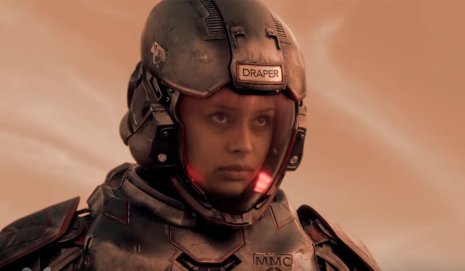
The show makes a few opportunities to point out what we are doing to our planet. Cherish what you have. Cherish your home and take care of it. We’re reminded that time and again, we aren’t doing a good job of that. When Martian marine Bobbie Draper travels to Earth for the first time and is compelled to find the ocean, she is met with the stench of sewage and garbage; yet, she looks longingly out to sea, seeing a dream…
Incorporated (2016)
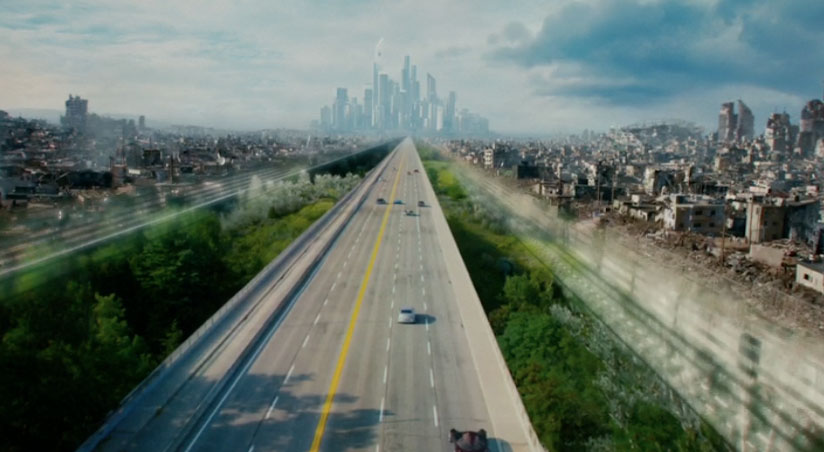
Incorporated is a science fiction thriller that provides a chilling glimpse of a post-climate change dystopia. Created by David and Alex Pastor and produced by Ben Affleck, Matt Damon, Ted Humphrey and Jennifer Todd, the TV show (filmed in Toronto, Canada) opens in 82 °F Milwaukee in November 2074 after environmental degradation, water level rise, widespread famine and mismanagement have bankrupted governments. We learn later that Milwaukee Airport served as a FEMA climate relocation centre that resembles an impoverished shantytown. In the wake of the governments demise, a tide of multinational corporations has swept in to control 90% of the globe and ratified the 29th amendment, granting them total sovereignty.
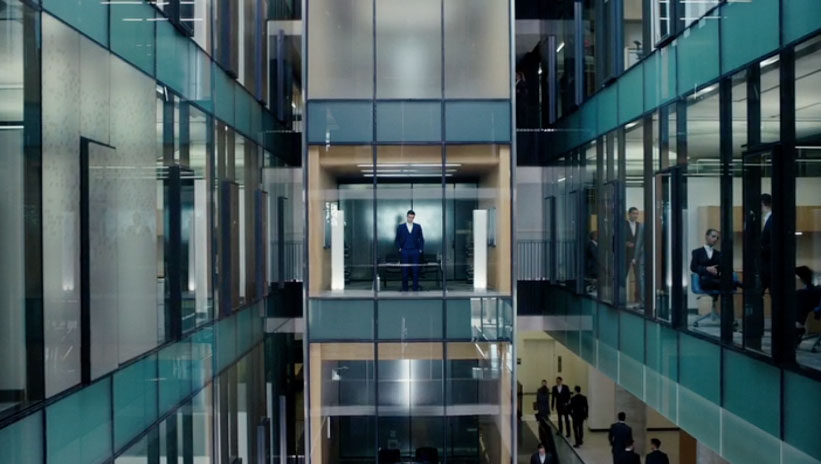
Corporations fight a brutal covert war for market share and dwindling natural resources. Like turkey vultures circling overhead, they position themselves for what’s left after short-sighted government regulations, lack of corporate check and FEMA mismanagement have ‘had their way’ with the planet. The world is now a very different place. There is no Spain or France. Everything south of the Loire is toxic desert; submerged New York City reduced to a punch line in a joke. Reykjavik and Anchorage are sandy beach destinations and Norway is the new France—at least where champagne vineyards are concerned. Asia and Canada are coveted for their less harsh climates.
 Incorporated is less thriller than satire; it is less science fiction than cautionary tale.
“You look to Incorporated for dystopian fiction that expresses our current anxieties,” writes Jeff Jensen of Entertainment Weekly. “What you get is fitful resonance that makes you realize it might be too soon for any show to meet that challenge.”
Or is it more that we may be too late… The question of whether we are worth saving is never asked—it is shown: and perhaps the real reason the show was cancelled after one season.
3% (2016)

3% is set in the near future after the planet has fallen into a divided haves and have-nots through environmental calamity. Three percent of the population live well on an island in the Atlantic Ocean, called Offshore (Mar Alto). The remaining 97% struggle Inland with poverty and scarcity. A selection process lies between them.
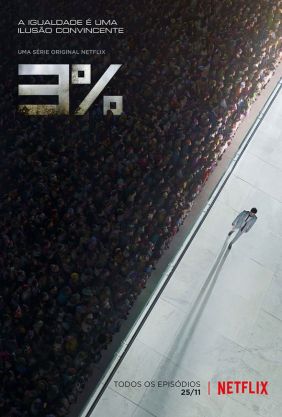 Every year the 97% send their 20-year olds to undergo The Process, a grueling Hunger Games-style contest run by the Offshore elite to replenish their numbers. Only 3% of the candidates will be considered worthy. They must pass psychological, emotional and physical tests to earn a place in Mar Alto.
By the time Season 1 is over, candidates will have committed a full range of desperate and unsavory acts to make the cut—the stakes are high, after all: secure a position in the 3% elite or die in squalor and poverty. After being eliminated during the interview process, one youth throws himself off a balcony of the testing centre.
3% examines the motivations and paradoxes of heroism and villainy, sometimes turning them on their sides until they touch with such intimacy you can’t tell them apart. At its deepest, 3% explores the nature of humanity—from its most glorious to its most heinous—under the stress of scarcity and uncertainty. How we behave under these polarizing challenges ultimately determines who we are. The question of whether we are worth saving is explored through the subtleties—or not so subtle aspects—of a fascist society that practices exterminism.
Missions (2018)
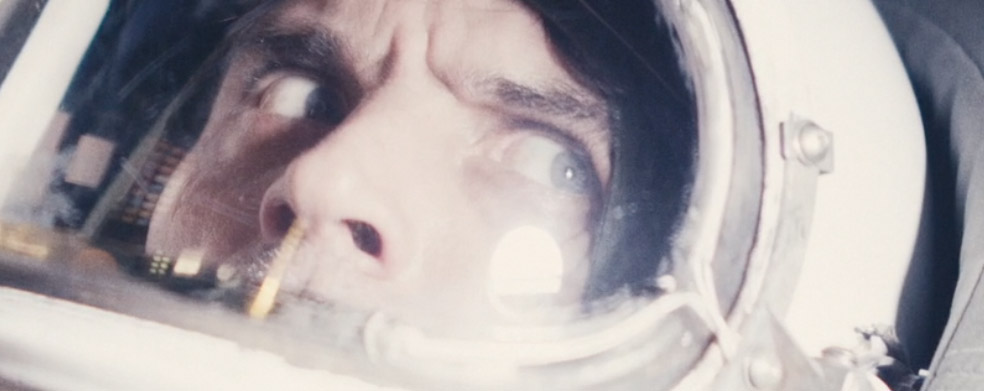
Missions is a French TV series about the race by two ships—the Ulysses and Z1, representing two ambitious billionaires—to explore Mars. It opens in 1967 with the heroic sacrifice of Vladimir Komarov, the pilot of the faulty Soyuz 1, who knew he would not return and accepted his mission to save his best friend, Yuri Gagarin (his backup). This heroic act is mirrored in the last episode of Season 1 with a similar selfless act of heroism by Ulysses psychologist Jeanne Renoir to save her crewmembers who are trying to escape a fatal dust storm on Mars.
 After the 1967 opening scene with Komarov, we go to the present day with psychologist Jeanne Renoir, conducting an experiment on a child: giving them one marshmallow and leaving the room with the instruction that if they don’t eat the marshmallow but wait for her to return, they’ll get two. Jeanne correctly anticipates the child will eat the marshmallow.
Amid developments between the two ship teams in which self-serving agendas, paranoias and blind ambition reign, Jeanne shares a vision with an entity that looks like Komarov, in which he tells her: “Yes, people dream of other places, while they can’t even look after their own planet…You must remember your past in order to think about your future. Do you think Earth has a future?” When Jeanne says she doesn’t know, Komarov challenges, “Yes, you do. They eat their marshmallow right away, when they could have two. Or a thousand. Do you think humanity can continue like that?” Of course she doesn’t think so. Komarov continues, “People have chosen a brief but exciting life. Your species burns the candle at both ends. You know this. And it terrifies you…”

Jeanne Renoir
From the beginning, we glimpse a surreal connection between Jeanne and Komarov and ultimately between Earth and Mars: from her childhood admiration for the Russian’s heroism on Earth to the “visions” they currently share that link key elements of her past to Mars and Komarov’s strange energy-giving powers, to Jeanne’s own final act of heroism on Mars.
As the storyline develops, linking Earth and Mars in startling ways, and as various agendas—personal missions—are revealed, we finally clue in on the main question that “Missions”—through Komarov and finally Jeanne—is asking: are we worth saving?
The Beyond (2018)

In The Beyond, the sudden appearance of a wormhole causes the disappearance of astronaut Jim Marcell during EVA on Earth’s orbiting space station, followed by associated calamitous phenomena on Earth. Giant dark spherical clouds then appear and settle all over the Earth, disrupting the world’s population, and setting in motion a series of fearful and aggressive reactions by various sectors of humanity.
 The Beyond’s climax, discovery and resolution is really more of a question. The movie doesn’t have a tidy end; its solution is veiled with more questions.
The film ends with a cautious hope, implicitly asking that big question: are we (humanity) worth saving? When Jessica asks why humanity was offered a second chance by benevolent beings way beyond our comprehension, the returned Jim Marcell (currently a spokesman for the aliens) shows her the GAD (Golden Archive Drive with video images of Earth and humanity—basically our “hello” message to extra-solar life like the one placed onboard NASA’s Pioneer missions) that had accompanied the ship into the wormhole. The message displayed scenes of mothers and their children, people laughing in joy; it also showed scenes of other aspects of this beautiful planet worth saving: the ocean surf, the forests and wildlife. In our hubris, we have lost our perspective about this planet. Perhaps, it wasn’t so much humanity the alien beings intended to save but the Earth itself; we just come along with it. The Earth is, after all, a beautiful, vital and unique world, rich with life-giving water, trees, animals, creatures of all kinds in a diverse network of flowing and evolving beauty. A planet worth saving and that, frankly, functions better without us.
So, the question remains: is humanity worth saving? For centuries we have hubristically and disrespectfully used, discarded and destroyed just about everything on this beautiful planet. According to the World Wildlife Federation, 10,000 species go extinct every year. That’s mostly on us. They are the casualty of our selfish actions. We’ve become estranged from our environment, lacking connection and compassion. That has translated into a lack of consideration—even for each other. In response to mass shootings of children in schools, the U.S. government does nothing to curb gun-related violence through gun-control measures; instead they suggest arming teachers. We light up our cigarettes in front of people who don’t smoke and blow cancer-causing second-hand smoke in each other’s faces. We litter our streets and we refuse to pick up after others even if it helps the environment and provides beauty for self and others. The garbage we thoughtlessly discard pollutes our oceans with plastic and junk, hurting sea creatures and the ocean ecosystem in unimaginable ways. We consume and discard without consideration.
We do not live lightly on this planet.
We tread with incredibly heavy feet. We behave like bullies and, as The Beyond points out, our inclination to self-interest makes us far too prone to suspicion and distrust: when we meet the unknown, we tend to respond with fear and aggression over curiosity, hope and kindness.
Something we need to work on if we are going to survive.
Science fiction—the highest form of metaphoric and visionary art—is telling us something. Are we paying attention?
References:
Carson, Rachel. 1962. “Silent Spring.” Houghton Mifflin. 336pp.
Corey, James S.A. “The Leviathan Wakes.” Orbit. 592 pp.
Liu, Cixin. 2014. “The Three Body Problem.” Tor Books. 400pp.
 In an article I’d written some time ago on my blog The Alien Next Door (“Fertility — Infertility & the Environment”, with commentary on the film “Children of Men”) I got into a rather lively discussion with a fellow blogger (Erik) about the tendency in Western Culture mythos (in literature and in movies, particularly) to portray the main character in fiction as Christ figure and the ramifications of this choice. Erik lamented the separation that has occurred between “Jesus the Teacher” and “Christ the Redeemer”. I hadn’t really given this much thought until he brought it up. But his examples (e.g., Matrix and Harry Potter) and his discourse were so compelling, I had to ponder. So, here are my ponderings.
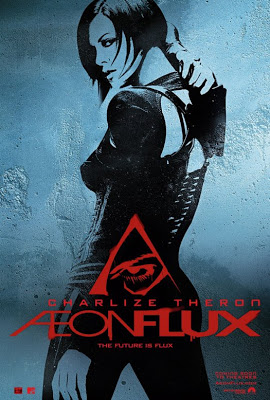 Today’s Christ-like hero suffers for the sins of the world and prepares himself (often struggling with this considerably) to deliver salvation, usually through fighting or violent confrontation and often with an incredible arsenal of weapons. I was swiftly brought to mind of the many action shoot-em up films whose tortured hero redeems him(her)self through some selfless, though violent action (e.g., Omega Man, V for Vendetta, Ultra Violet, Aeon Flux — all sci-fi movies, by the way, and ones I enjoyed immensely. And what about all those superhero movies, like Spiderman, X-Men, Green Lantern, etc. These films represent one version of Joseph Campbell’s “Hero’s Journey”, where the original hero leaves his ‘ordinary world’ wherein he/she has some major flaw to overcome (like apathy, greed, distrust, anger, fear of strawberries…etc.) to answer ‘the call’ to be the hero he/she was destined to become. This is a very familiar trope. Erik suggested that Western culture’s “concept of Redemption has invariably separated from the Grace that created it.” Jesus the Teacher had somehow fallen to the wayside to make room for Christ the Redeemer. According to Erik: “Jesus the Teacher said to ‘turn the other cheek’, but today’s Redeemers kick ass. Jesus the Teacher told us that what is done in love is blessed, but today’s Redeemers have more personal and interior motivations.” The two have simply become two different people, says Erik and “the latter is a superstar” compared to the former.” He ends his post with these compelling thoughts:
 If you still don’t get what Erik and I are talking about, go watch the poignant film Pay It Forward and then contrast its main character with the one in Ultra Violet or The Matrix.
 While I agree with Erik on the apparent separation of Christ figure in today’s popular fiction, perhaps there is another way to look at these tales that resolves this apparent dichotomy to some degree. My suggestion is to view them more as allegories with traits and values represented in several characters woven together in a complete and whole tapestry. To do so is to include the secondary character as being equally important. Let’s take Matrix, for instance. In fact, Neo isn’t the only Jesus-figure. His two female opposites (Trinity/Oracle) demonstrate Christ-like traits that embody grace, mercy, love (the holy spirit) and wisdom. Okay, so Trinity kicks major ass too; but her character also provides the chief motivation for our main ‘kick-ass’ hero through her selfless love and humility.
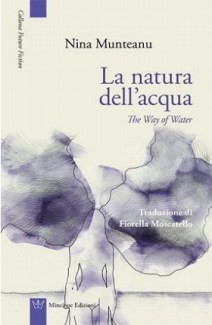
 Nina Munteanu is an ecologist and internationally published author of award-nominated speculative novels, short stories and non-fiction. She is co-editor of Europa SF and currently teaches writing courses at George Brown College and the University of Toronto. Visit www.ninamunteanu.ca for the latest on her books. Nina’s recent book is the bilingual “La natura dell’acqua / The Way of Water” (Mincione Edizioni, Rome). Her latest “Water Is…” is currently an Amazon Bestseller and NY Times ‘year in reading’ choice of Margaret Atwood.
 “I write SF about a near future ‘Gaian’ world too, and at times felt I was reading a prequel to my own novels, but that’s not why I rated this collection so highly. I did so for two reasons. First, because the science was so interesting, combining visionary metaphysical speculation with AI corporate tech in scenarios that often seemed chillingly possible. Second, because of the author’s focus on the effects of these developments on human beings with complex pasts and desires. Jealousy, lust, loneliness, grief and love are all drivers of these taut and fascinating narratives…”–Amazon Review
 Evolution is the language of destiny. What is destiny, after all, but self-actualization and synchronicity? If evolution is the language of destiny, then choice and selection are the words of evolution and “fractal ecology” is its plot.
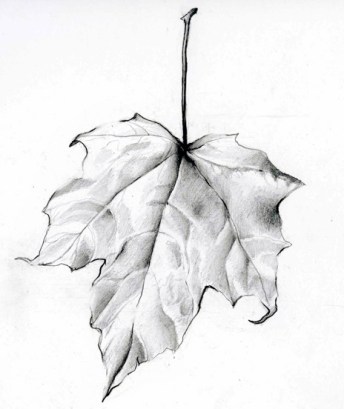 On the vertical argument, the French naturalist Jean-Baptiste Lamark developed a theory of biological evolution in the early 19th century considered so ridiculous that it spawned a name: Lamarkism. His notion—that acquired traits could be passed along to offspring—was ridiculed for over two hundred years. Until he was proven right. Evolutionary biologists at Tel Aviv University in Israel showed that all sorts of cellular machinery—an intelligence of sorts—played a vital role in how DNA sequences were inherited. When researchers inserted foreign genes into the DNA of lab animals and plants, something strange happened. The genes worked at first; then they were “silenced”. Generation after generation. The host cells had tagged the foreign genes with an “off switch” that made the gene inoperable. And although the new gene was passed onto offspring, so was the off switch. It was Larmarkism in action: the parent’s experience had influenced its offspring’s inheritance. Evolutionists gave it a new name. They called it soft inheritance.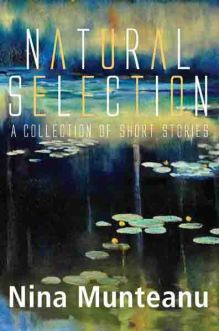


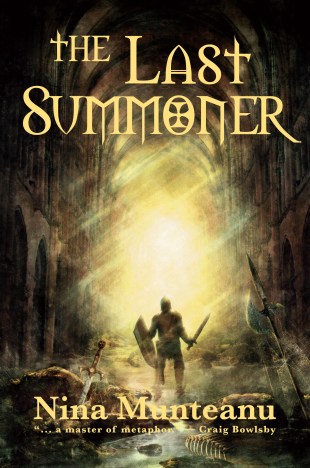 I teach writing at the University of Toronto and fiction writing at George Brown College in Toronto. A question I’m often asked is how I get my story ideas. I always start by sharing my favourite example of how I came to write my historical fantasy
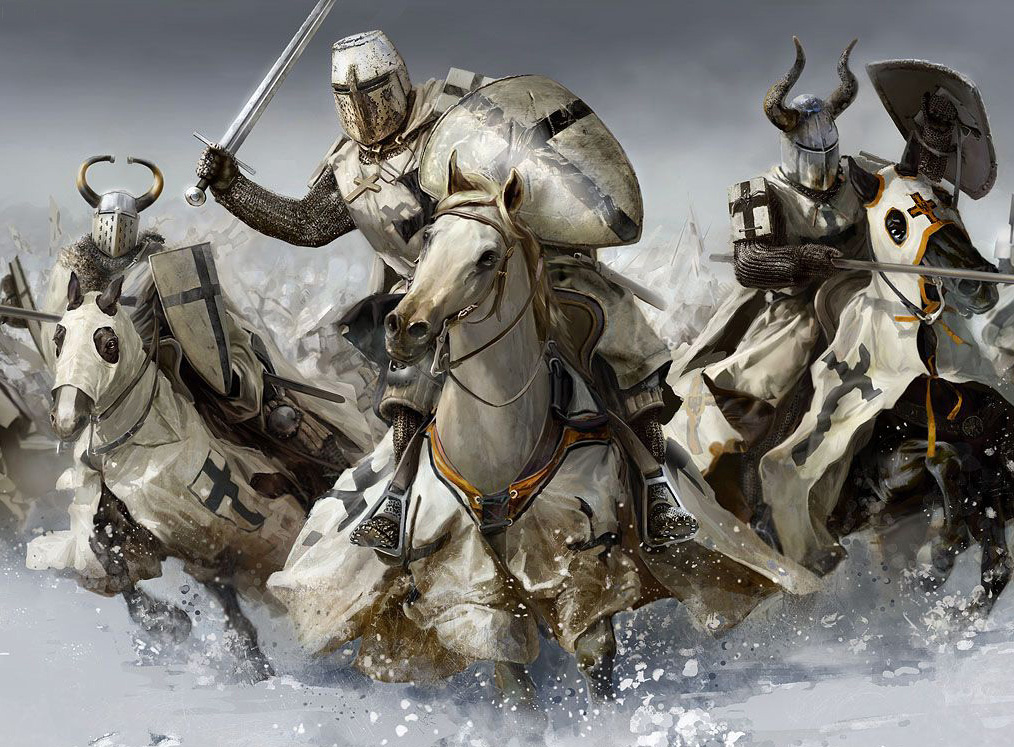
 Intrigued by this little known order of religious crusaders, I pursued the premise of an alternative consequence: what if the Teutonic Knights had NOT underestimated their enemy and won the Battle of Grunwald? Would they have continued their catastrophic sweep of Northeast Europe into Russia and beyond? Would they have claimed the whole for Germany’s expansionist lebensraum movement, fueled by its sonderweg—a dialectic that would ultimately lead to the killing fields of the Holocaust? What if the success of the Teutonic Order helped consolidate a united fascist elite, ambitious to conquer the world? What if Nazism sprang up 100 years earlier than it did in our current reality?
 Spanning from medieval Poland to present day Paris,

 across a story that stumped my super CSI powers of deduction was a real treat.”
 were incredibly strong and involved you in their lives. The flow was fun & fast-paced. Merci, Nina. Great book!”
 Nina Munteanu is an ecologist, limnologist and internationally published author of award-nominated speculative novels, short stories and non-fiction. She is co-editor of Europa SF and currently teaches writing courses at George Brown College and the University of Toronto. Visit
  Nina Munteanu’s “The Way of Water” and the anthology in which it appears was recently praised by Emilie Moorhouse in Prism International Magazine, in a review entitled
  “The Way of Water” (La natura dell’acqua) was translated by Fiorella Smoscatello for Mincione Edizioni. Simone Casavecchia of SoloLibri.net, describes “The Way of Water” in her review of the Italian version: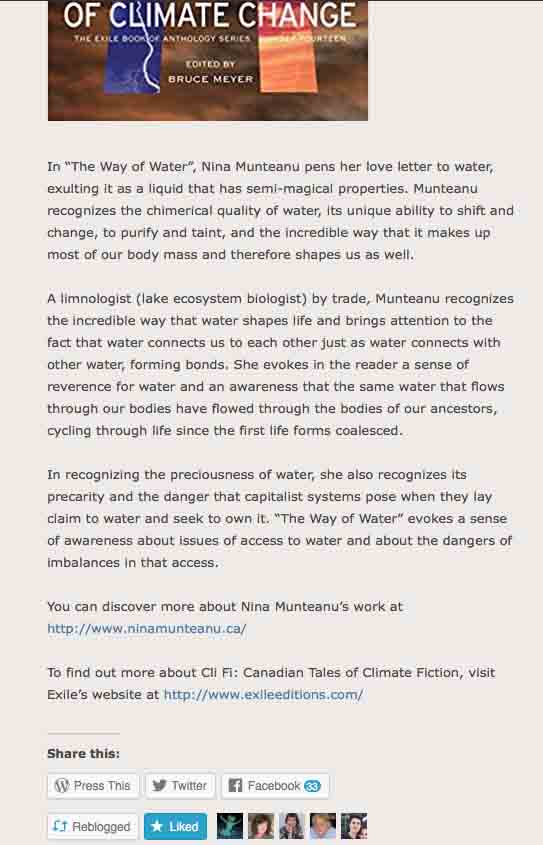
 “The Way of Water” will also appear alongside a collection of international works (including authors from Greece, Nigeria, China, India, Russia, Mexico, USA, UK, Italy, Canada (yours truly), Cuba, and Zimbabwe) in Bill Campbell and Francesco Verso’s
  Writer Timea Noemi selected
 Timea Noemi also recommended the Romanian translated version of
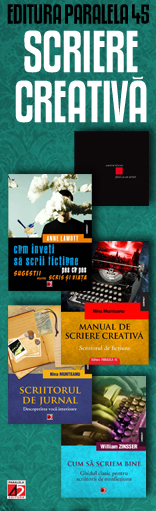 Cu plecere, Timi!
 My father is originally from Romania and grew up in Bucharest. So, I was delighted to attend the launch of
  Nina Munteanu is an ecologist, limnologist and internationally published author of award-nominated speculative novels, short stories and non-fiction. She is co-editor of Europa SF and currently teaches writing courses at George Brown College and the University of Toronto. Visit
  In the Green Kingdom, stimulation through the sense of taste has become a powerful and complex art form that rules the lives of the males—the phrils. Not only does it bring pleasure, it can change a phril’s destiny, even guide him into death and beyond. But only if he can afford the services of the artists called Recipears. Without a Recipear, a phril will live and die a pagan, with no chance of an afterlife. The female of the species, called phriliras, cannot experience RecipeArium; they replace it with their faith in one God with changing names. In the world within the huge body of a monstrous beast, the Recipears rule society.
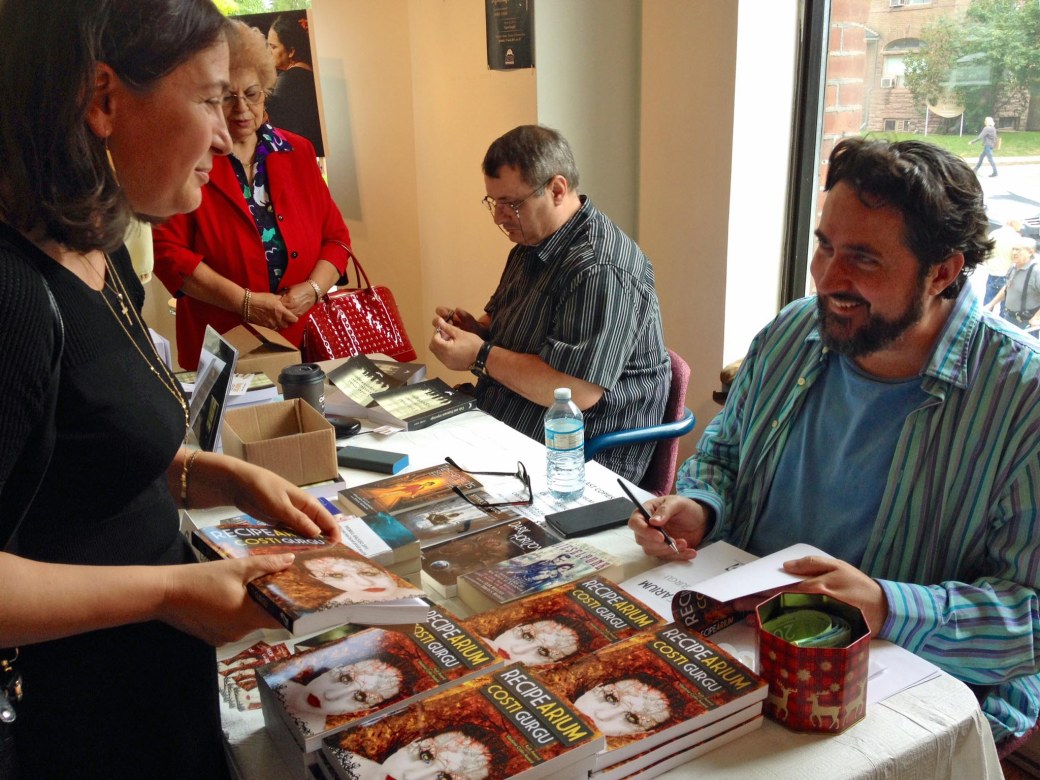
 fiction, which is itself considered strange), Costi responded:
 We embrace the exotic, the foreign, the strange, the unknown… the alien.
 “In his introduction to this all-original set of (at times barely) futuristic tales, Meyer warns readers, “[The] imaginings of today could well become the cold, hard facts of tomorrow.” Meyer (Testing the Elements) has gathered an eclectic variety of eco-fictions from some of Canada’s top genre writers, each of which, he writes, reminds readers that “the world is speaking to us and that it is our duty, if not a covenant, to listen to what it has to say.” In these pages, scientists work desperately against human ignorance, pockets of civilization fight to balance morality and survival, and corporations cruelly control access to basic needs such as water. The most affecting tale, Wendy Bone’s “Abdul,” is also the least futuristic, an emotional story that touchingly contrasts Western guilt against the life of a captive orangutan. The anthology may be inescapably dark, but it is a necessary read, a clarion call to take action rather than, as a character in Seán Virgo’s “My Atlantis” describes it, “waiting unknowingly for the plague, the hive collapse, the entropic thunderbolt.” Luckily, it’s also vastly entertaining. It appears there’s nothing like catastrophe to bring the best out in authors in describing the worst of humankind.”
 She imagines its coolness gliding down her throat. Wet with a lingering aftertaste of fish and mud. She imagines its deep voice resonating through her in primal notes; echoes from when the dinosaurs quenched their throats in the Triassic swamps.
 A limnologist (lake ecosystem biologist) by trade, Munteanu recognizes the incredible way that water shapes life and brings attention to the fact that water connects us to each other just as water connects with other water, forming bonds. She evokes in the reader a sense of reverence for water and an awareness that the same water that flows through our bodies have flowed through the bodies of our ancestors, cycling through life since the first life forms coalesced.
 “Water covers every aspect of this science fiction story that pits the vulnerable citizen against the evil multinational corporation in a dystopian Canada sometime in our future. Water is presented in its multiplicity of facets: in the science behind its composition, in its history, in it’s symbolic nature and different physical states; water is a giver and taker of life, and is the form in which the friendship of protagonists Hilda and Hanna functions. Water is also magic and the ultimate righter of wrongs committed to it and to a humanity it gives life to. Within this framework, Munteanu spins a thought-provoking tale that projects where our headlong pursuit of profit may one day lead us to, and how nature will ultimately, with a little human coaxing, be the only one to correct the balance.”—Shane Joseph, Canadian author of Fringe Dwellers
 love; a story to read, not only to deal with the possible but, above all, to understand that the time still available for “love” might be less than what you believe.”—Simone Casavecchia,
  Nina Munteanu is an ecologist and internationally published author of award-nominated speculative novels, short stories and non-fiction. She is co-editor of Europa SF and currently teaches writing courses at George Brown College and the University of Toronto. Visit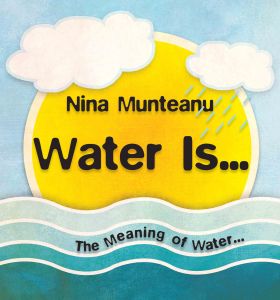
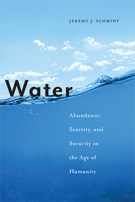 “Water, Abundance, Scarcity, and Security in the Age of Humanity” (NYU Press) by Jeremy Schmidt is an intellectual history of America’s water management philosophy. Debates over how human impacts on the planet, writes
 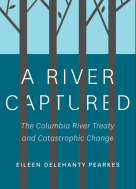 “A River Captured: The Columbia River Treaty and Catastrophic Change” (RMB Books) By Eileen Delehanty Pearkes reviews key historical events that preceded the Treaty, including the Depression-era construction of Grand Coulee Dam in central Washington, a project that resulted in the extirpation of prolific runs of chinook, coho and sockeye into B.C. Prompted by concerns over the 1948 flood, American and Canadian political leaders began to focus their policy energy on governing the flow of the snow-charged Columbia to suit agricultural and industrial interests.
 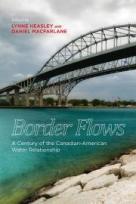 “Border Flows: A Century of the Canadian-American Water Relationship” (University of Calgary Press), Lynne Heasley and Daniel Macfarlane, editors, explore and discuss Canada-U.S. governance.
  “New York 2140” (Orbit) by Kim Stanley Robinson is a novel set in New York City following major sea level rises due to climate change.
  “The Death and Life of the Great Lakes” (WW Norton & Company Inc. Press) by Dan Egan is a frank discussion of the threat under which the five Great Lakes currently suffer. This book, writes
 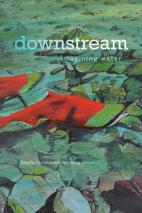 “Downstream: reimagining water” (Wilfred Laurier University Press) by Dorothy Christian & Rita Wong “brings together artists, writers, scientists, scholars, environmentalists, and activists who understand that our shared human need for clean water is crucial to building peace and good relationships with one another and the planet. This book explores the key roles that culture, arts, and the humanities play in supporting healthy water-based ecology and provides local, global, and Indigenous perspectives on water that help to guide our societies in a time of global warming. The contributions range from practical to visionary, and each of the four sections closes with a poem to encourage personal freedom along with collective care,” writes
  “
“
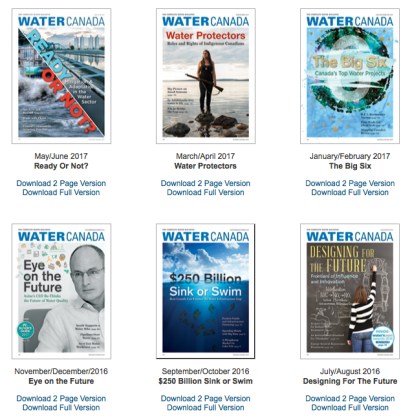 Water Canada





 Nina Munteanu Writing Coach