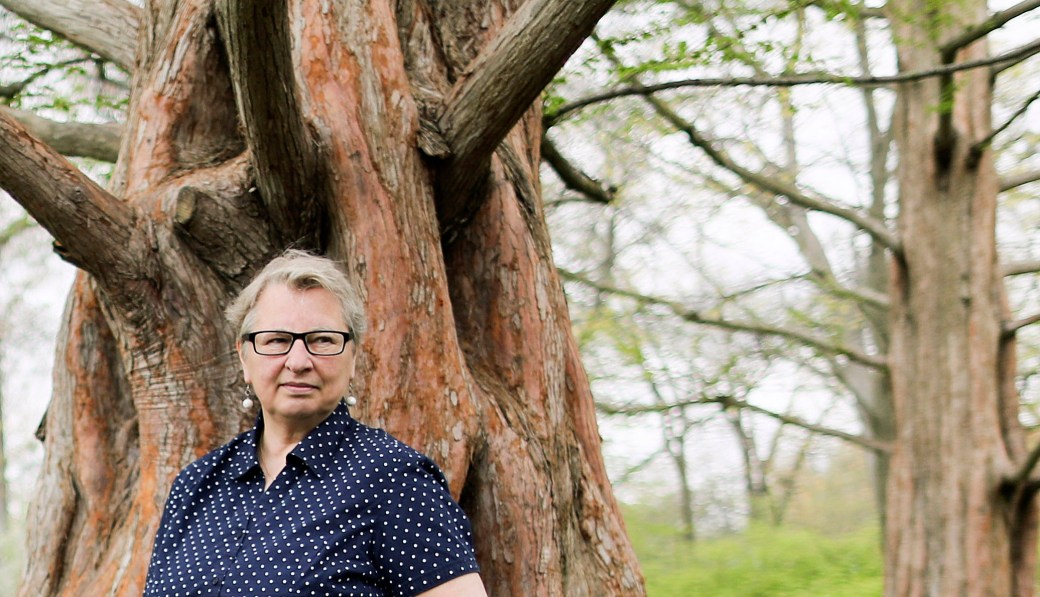
Nina Munteanu (photo by Richard Lautens)
The Toronto Star recently spoke to Nina Munteanu with two questions about climate change. These were included in a recent handbook published by the Star entitled “Undeniable: Canada’s Changing Climate—What We Can Do Now.” In it, The Star showed how the majority of Canadians place climate change as a top priority. In “Let’s Talk” The Star interviews computer scientist and head of UofT’s School of the Environment Steve Easterbrook. Questions involving local community action and the importance of hope.
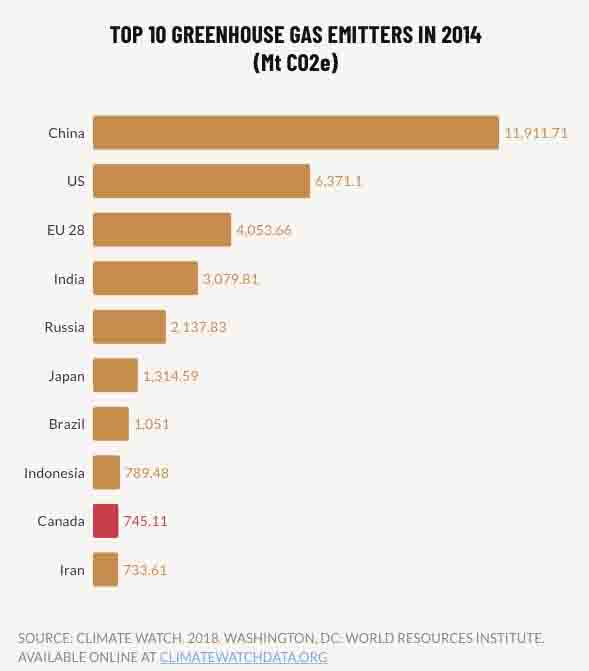
In “Your Carbon Footprint” The Star showed how China and the US together produce over half of the entire greenhouse gases emitted annually by the top ten countries that include EU 28, India, Russia, Japan, Brazil, Indonesia, Canada, and Iran. These ten countries currently emit seventy percent of the world’s greenhouse gases. China (11.912 Mt CO2) continues to lead in greenhouse gas emissions, being over twice the US, the next large emitter (6.371 Mt CO2).
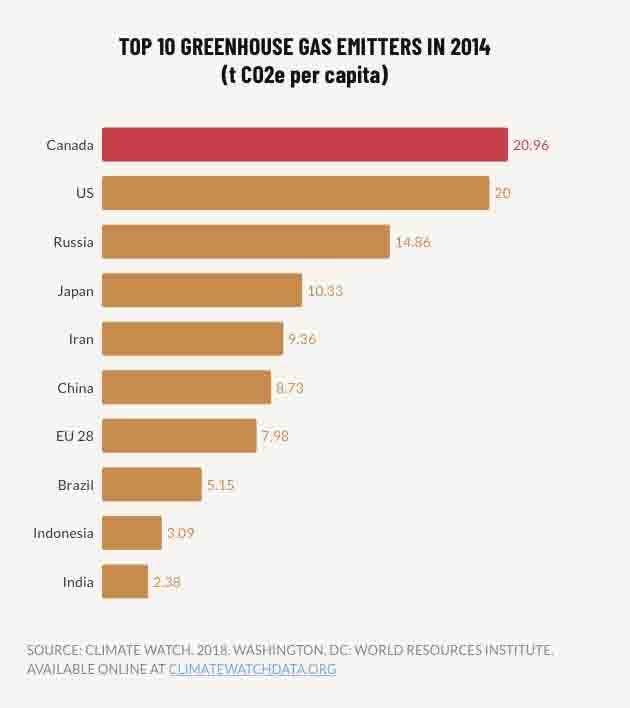
However, when The Star looked at per capita greenhouse emissions, Canada jumped to the top rank at 21 tonnes per person annually, followed by the US (20 tonnes/person). By comparison, China—ranked the highest for total emissions—measured only 8.73 tonnes per person annually. And Bangladesh measured 1.1 tonnes/person.
“Most scientists agree that in the coming decades we need to limit our individual annual carbon footprint to 1-2 tons,” says The Star. This entails making personal changes to cut our carbon output. One example is driving less or converting to a hybrid or electric car. “Our behaviours, whether good or bad, are contagious,” says The Star. I agree. It is important to not only do what we can but to share with others and provide our reasons. Seth Wynes, a geographer at the University of British Columbia concurs: “It’s not just about what you do, it’s about setting an example for others.” Research suggests, for example that homeowners are more likely to install solar panels when someone else does it first in their neighbourhood. Wynes in 2017 co-authored a study that ranks the most effective lifestyle changes to curb an individual’s carbon footprint.
In “Four Things You Can Do”, The Star suggests the following key initiatives:
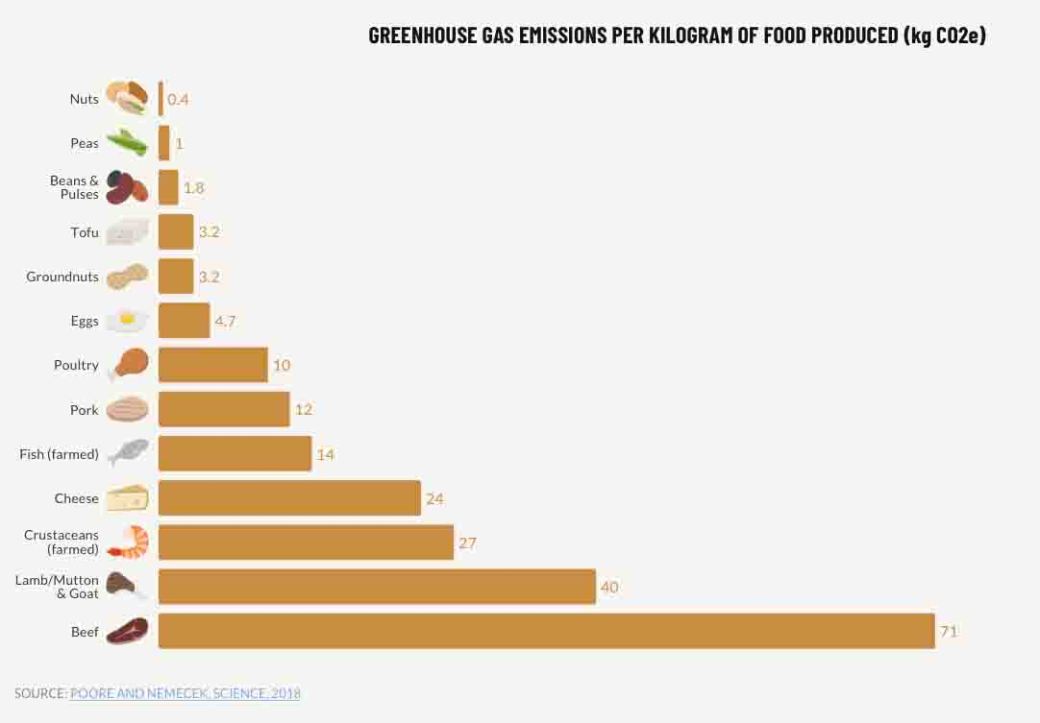
- Eat less beef
- Live car-free or go hybrid / electric
- Invest in green infrastructure
- Reduce air travel
The Star also provided good advice on how to talk to children about our changing climate. They provide excellent examples of children empowering themselves by making a difference—instead of becoming depressed with what they are inheriting. In “Political Checkup” The Star discusses with experts how we can best interact with our political leaders to engage and ensure positive change. In “Faith and Community” The Star showcases examples of faith communities addressing our waste stream.
In “The ChangeMakers” The Star asked the same two questions of five Canadians who are making climate change a top priority. They included:
- Franny Ladell Yakelashek: 12-year old environmental rights activist from Victoria, BC
- Jocelyn Joe-Strack: Indigenous scientist and storyteller, Whitehorse, Yukon
- Kathy Bardswick: director of the Institute for Clean Growth and Climate Change, Guelph, ON
- Gordon McBean: climatologist and professor emeritus at Western University, London, ON
- Nina Munteanu: ecologist, instructor at The University of Toronto and author of eco-fiction and climate fiction, Toronto, ON.
Q1: What is the one thing about climate change that keeps you up at night?
Nina: I worry that my son and his kids will end up experiencing one of my dystopias from one of my books. My son lives in Vancouver, and my main concern is that he and his kids won’t have the chance to live safely and enjoy a stable and beautiful planet because we have wrecked it for them.
That leads me to the second thing that keeps me up at night, which is that nobody cares. Or that they are scared to care. We’re still going about our business like nothing is happening.
That really frustrates me. I’m a scientist and we’ve been talking about this for a long time; for me it’s been decades. My frustration is that we are still debating climate change, and we should be acting on it.
Q2: What is the one thing Canadians can do to act on climate change?
Nina: I think it has to be three things. First, plant a tree; make an actual difference through action. By doing that, we get out from hiding under the bed and face the monster of climate change and show that we care and that we are not alone. And that — taking direct action — will give us courage and hope.
Second, vote for green politicians. Politicians need to hear directly from their communities, they need you to push them to act on climate change.
Third, find your tribe and create a movement. Everyone says that people have the power, but that power comes best through numbers and solidarity. Find your tribe, and you’ll find yourself more motivated.
For answers to these two questions by the other changemakers, please go to the Toronto Star’s “What You Can Do About Climate Change” site.

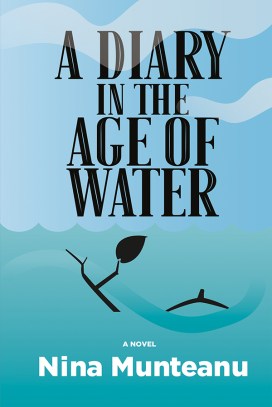
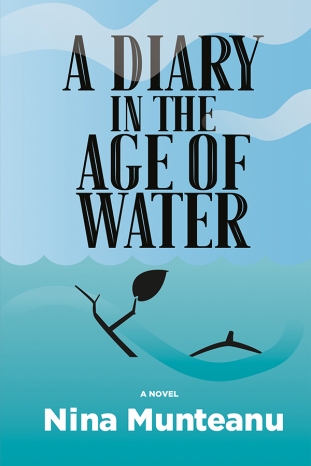
Nina Munteanu is a Canadian ecologist / limnologist and novelist. She is co-editor of Europa SF and currently teaches writing courses at George Brown College and the University of Toronto. Visit www.ninamunteanu.ca for the latest on her books. Nina’s bilingual “La natura dell’acqua / The Way of Water” was published by Mincione Edizioni in Rome. Her non-fiction book “Water Is…” by Pixl Press (Vancouver) was selected by Margaret Atwood in the New York Times ‘Year in Reading’ and was chosen as the 2017 Summer Read by Water Canada. Nina’s short story collection of eco-fiction can be found in “Natural Selection” published by Pixl Press. Her novel “A Diary in the Age of Water” will be released by Inanna Publications (Toronto) in 2020.
 I recently gave a 2-hour workshop on “ecology of story” at Calgary’s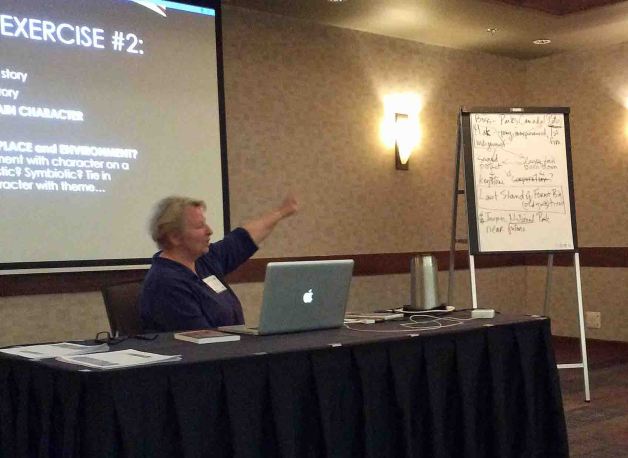



 Nina is a Canadian scientist and novelist. She worked for 25 years as an environmental consultant in the field of aquatic ecology and limnology, publishing papers and technical reports on water quality and impacts to aquatic systems. Nina has written over a dozen eco-fiction, science fiction and fantasy novels. An award-winning short story writer, and essayist, Nina currently lives in Toronto where she teaches writing at the University of Toronto and George Brown College. Her non-fiction book “Water Is…”—a scientific study and personal journey as limnologist, mother, teacher and environmentalist—was picked by Margaret Atwood in the New York Times as 2016 ‘The Year in Reading’. Nina’s most recent novel “A Diary in the Age of Water”— about four generations of women and their relationship to water in a rapidly changing world—will be released in 2020 by Inanna Publications.
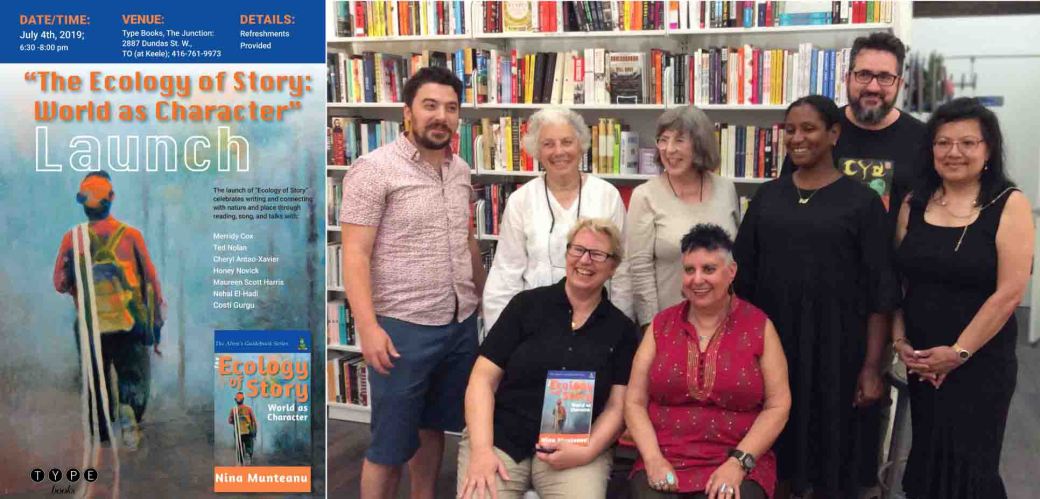
 UofT instructor and writer Nina Munteanu launched the third book in her acclaimed “how to write” series at Type Books, Toronto, on July 4th, 2019. The launch of

 Honey Novick is a poet, voice teacher, singer and songwriter. Honey is the winner of the Empowered Poet Award, CAPAC, Yamaha Classical Music Competition in Japan, among others. Honey wrote music for CBC’s Morningside and sang for Prime Minister Pierre Elliot Trudeau.
 Ted Nolan—E. Martin Nolan—is a poet, essayist, editor and voice of the trees. He teaches in the Engineering Communication Program at the University of Toronto and is a PhD Candidate in Applied Linguistics at York University. His latest work is a chapbook written in collaboration with some trees entitled: “Trees Hate Us.”
 Maureen Scott Harris is a poet, essayist, and rare books cataloguer. A UofT grad in Library Science, she received the Trillium Book Award for poetry for Drowning Lessons and was the first non-Australian to be awarded the 2009 WildCare Tasmania Nature Writing Prize for her essay, “Broken Mouth: Offerings for the Don River, Toronto.”
 Nehal El-Hadi is a writer, researcher, editor and journalist, who explores the intersections of body, technology, and space. Her writing has appeared in academic journals, literary magazines, and forthcoming in anthologies and edited collections. She is currently a visiting scholar at York University and sessional faculty at the University of Toronto.
 Merridy Cox is a naturalist, photographer, editor, indexer and poet. She is also managing editor of Lyrical Leaf Publishing. Merridy has a degree in biology and museum studies; her poetry focuses mostly on the natural world around her; her poems and photographs are published in several literary anthologies. She has edited several books, including this one!
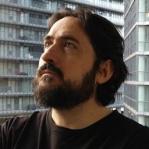 Costi Gurgu is a graphic designer and illustrator as well as an award-winning science fiction and fantasy novelist and short story writer who is published in anthologies and magazines throughout the world. He is a former lawyer and was art director for lifestyle and fashion magazines in Europe before moving to Canada. His latest novel—RecipeArium—was called the new new weird by Robert J. Sawyer and was nominated for an Aurora Award.
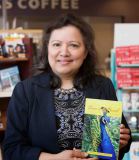 Cheryl Antao-Xavier is an editor, interior book designer and publisher with IOWI. She has been publishing emergent writers since 2008 and continues to offer self-publishing solutions to writers and companies and organizations. She recently released her book: “Self-Publishing the Professional Way: 5 Steps from Raw Manuscript to Publishing.”

 “Natural Selection”
 As for passing on one’s experience and acquisitions to others laterally, education in all its facets surely provides a mechanism. This may run the gamut from wise mentors, spiritual leaders, storytellers, courageous heroes to our kindergarten teacher. Who’s to say that these too are not irrevocable? This relies, after all, on how we learn, and how we “remember”.
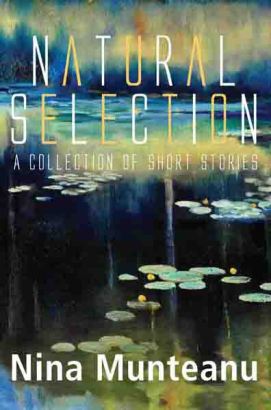 Each story in the
  “Natural Selection” also features the sprawling semi-underground AI-run city of Icaria (a post-industrial plague Toronto) that was first introduced in my novel
  “By failing to engage with climate change, artists and writers are contributing to an impoverished sense of the world, right at the moment when art and literature are most needed to galvanize a grassroots movement in favor of climate justice and carbon mitigation.”—Amitav Ghosh, 2017
 What these novels have in common is that they are all
  According to Ghosh, plots and characters of contemporary literature tend to reflect the regularity of middle-class life and the worldview of the Victorian natural sciences, one that depends on a principle of uniformity. Change in Nature has been perceived as gradual (or static by some) and never catastrophic. Extraordinary or bizarre happenings were left to marginal genres like the Gothic tale and—of course—science fiction. The strange and unlikely have been externalized: hence the failure of modern novels and art to recognize anthropogenic climate change.
 “To counteract this epidemic of short-term thinking,” says Fabiani, “it might be a good idea for more of us to read science fiction, specifically the post-apocalyptic sub-genre: that is, fiction dealing with the aftermath of major societal collapse, whether due to a pandemic, nuclear fallout, or climate change.”
 I recently shared a panel discussion with writer
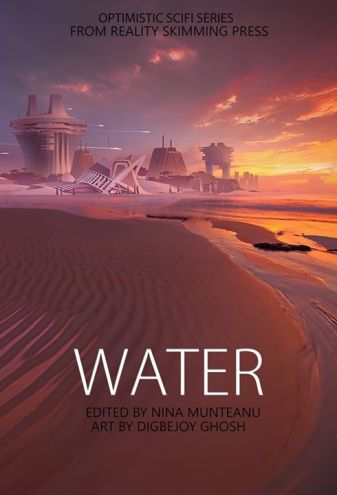
  In 2015, I joined Lynda Williams of Reality Skimming Press in creating an optimistic science fiction anthology with the theme of water. My foreword to

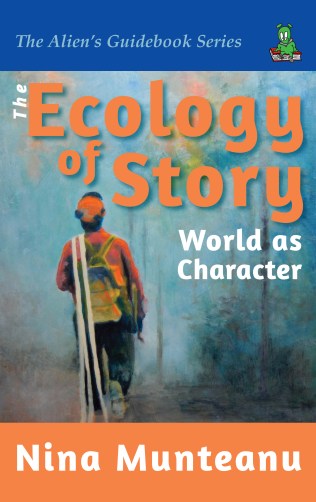 In my new writing guidebook
  In 1963 science fiction writer Kurt Vonnegut used the fictionalized concept of ice-IX—a crystalline polymorph of ice that remains stable at room temperature—in his novel Cat’s Cradle. Ice-nine was a form of water so stable that it never melted and would crystallize all water it touched. It was the Ebola of water…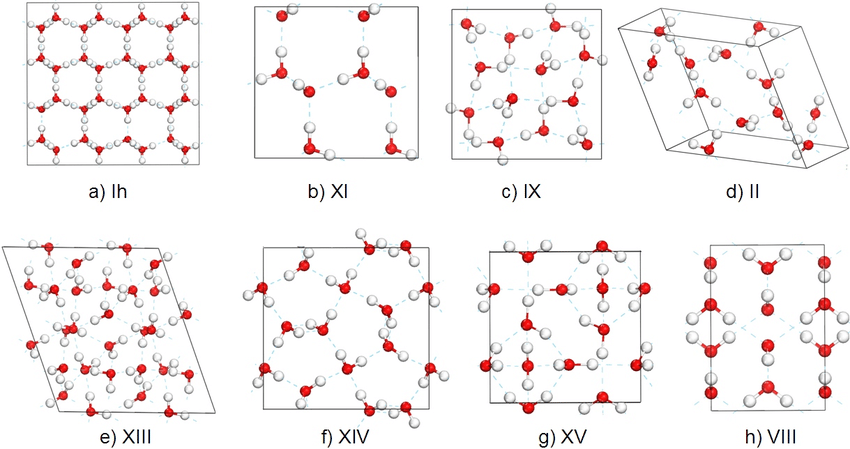


 The media spread a panic about polywater-contaminated oceans of “jelly” aka Vonnegut’s novel Cat’s Cradle.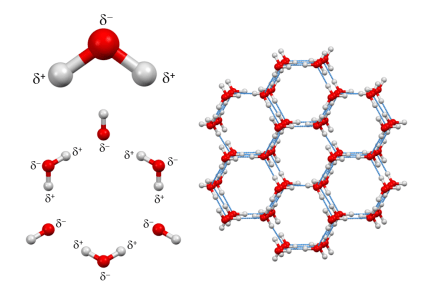

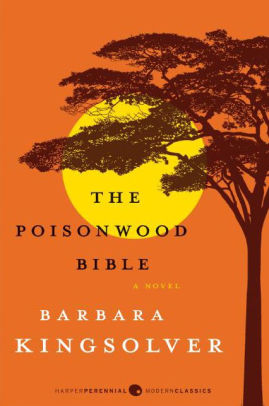 She is inhumanly alone. And then, all at once, she isn’t. A beautiful animal stands on the other side of the water. They look up from their lives, woman and animal, amazed to find themselves in the same place. He freezes, inspecting her with his black-tipped ears. His back is purplish-brown in the dim light, sloping downward from the gentle hump of his shoulders. The forest’s shadows fall into lines across his white-striped flanks. His stiff forelegs play out to the sides like stilts, for he’s been caught in the act of reaching down for water. Without taking his eyes from her, he twitches a little at the knee, then the shoulder, where a fly devils him. Finally he surrenders his surprise, looks away, and drinks. She can feel the touch of his long, curled tongue on the water’s skin, as if he were lapping from her hand. His head bobs gently, nodding small, velvet horns lit white from behind like new leaves.
  An oligotrophic lake is basically a young lake. Still immature and undeveloped, an oligotrophic lake often displays a rugged untamed beauty. An oligotrophic lakes hungers for the stuff of life. Sediments from incoming rivers slowly feed it with dissolved nutrients and particulate organic matter. Detritus and associated microbes slowly seed the lake. Phytoplankton eventually flourish, food for zooplankton and fish. The shores then gradually slide and fill, as does the very bottom. Deltas form and macrophytes colonize the shallows. Birds bring in more creatures. And so on. Succession is the engine of destiny and trophic status its shibboleth.
 They met in the lobby of a shabby downtown Toronto hotel. Hilda barely knew what she looked like but when Hanna entered the lobby through the front doors, Hilda knew every bit of her. Hanna swept in like a stray summer rainstorm, beaming with the self- conscious optimism of someone who recognized a twin sister. She reminded Hilda of her first boyfriend, clutching flowers in one hand and chocolate in the other. When their eyes met, Hilda knew. For an instant, she knew all of Hanna. For an instant, she’d glimpsed eternity. What she didn’t know then was that it was love.
 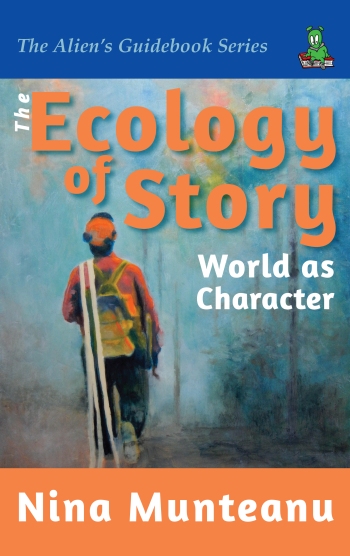 This article is an excerpt from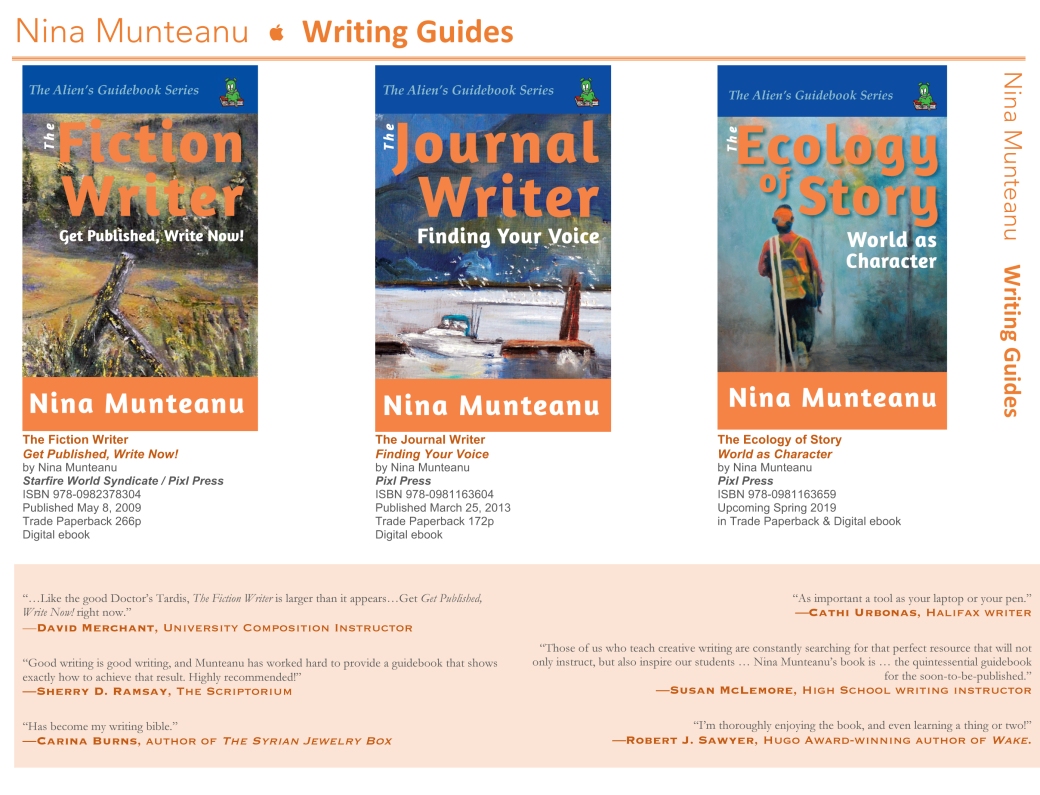


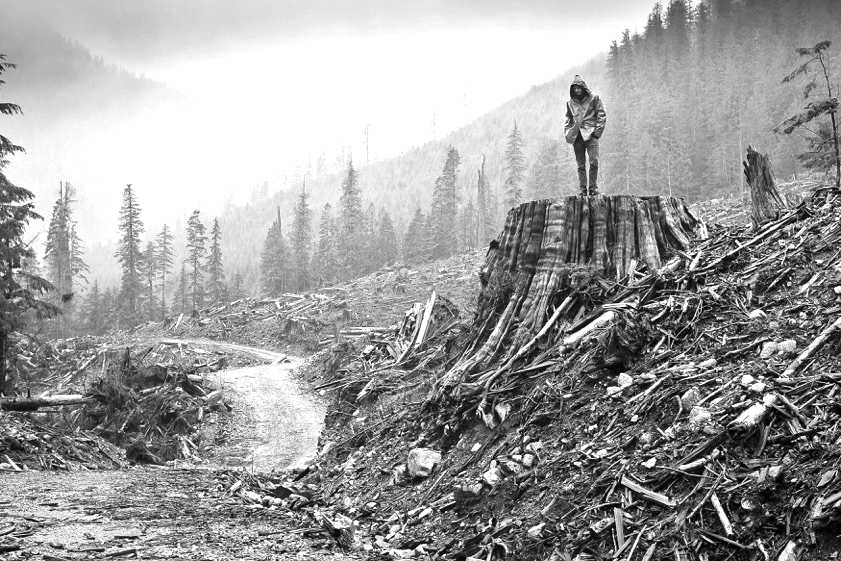
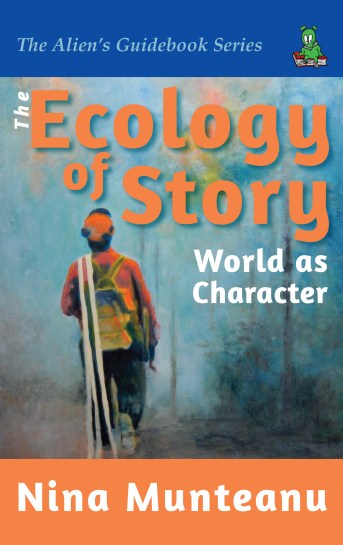 This article is an excerpt from
 They came because they were afraid or unafraid, happy or unhappy. There was a reason for each man. They were coming to find something or get something, or to dig up something or bury something. They were coming with small dreams or big dreams or none at all.
 In Emmi Itäranta’s Memory of Water—about a post-climate change world of sea level rise—water is a powerful archetype, whose secret tea masters guard with their lives:
 Water, with its life-giving properties and other strange qualities, has been used as a powerful metaphor and archetype in many stories: from vast oceans of mystery, beauty and danger—to the relentless flow of an inland stream. Margaret Atwood’s The Penelopiad is just one example:
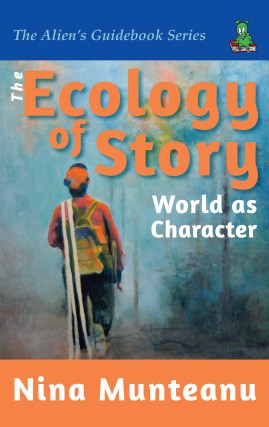 This article is an excerpt from

 This article is an excerpt from
  Nina Munteanu Writing Coach