“Water Is… at Banyen Books & Sound, Vancouver

BanyenBooks copy

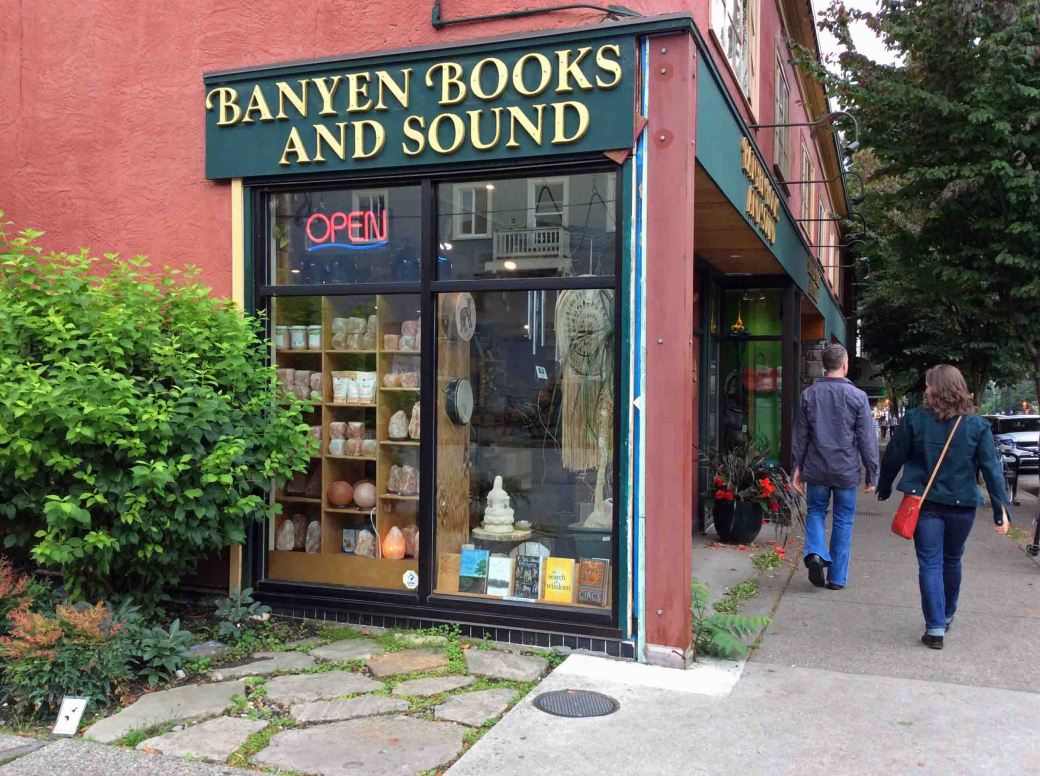
Banyen Books and Sound, Vancouver, BC (photo by Nina Munteanu)

When I lived in Vancouver—raising my family, consulting for the environment and teaching limnology—I often visited my favourite bookstore in town: Banyen Books & Sound on 4th Avenue in Kitsilano. It was a bookstore like no other, I thought. Spacious with comfortable chairs to read, the bookstore became a destination and an experience in discovery for me.

BanyenBooks-Anne-WaterIs2 copy

A customer browses “Water Is…” in Banyen Books

In fact, since opening in 1970 Banyen Books has become Canada’s most comprehensive metaphysical bookstore, offering a broad spectrum of resources from humanity’s spiritual, healing, and earth wisdom traditions. Here is how they put it:

Banyen is an oasis, a crossroads, a meeting place… for East and West, the “old ways” and current discoveries and syntheses. Our beat is the “Perennial Philosophy” as well as our evolving learning edges and best practices in a wide variety of fields, from acupuncture to Zen, from childbirth and business to the Hermetic Mysteries, from the compost pile to the celestial spheres. We’re “in the philosophy business,” on “a street in the philosophy district” (as an old cartoon wagged). We welcome and celebrate the love of wisdom, be it in art, science, lifecraft, healing, visioning, religion, psychology, eco-design, gardening… Our service is to offer life-giving nourishment for the body (resilient, vital), the mind (trained, open), and the soul (resonant, connected, in-formed). Think of us as your open source bookstore for the “University of Life”.

I had long harboured romantic notions of one day seeing my own book on one of their shelves. I must have sent a compelling message to the universe, because in Autumn of 2018, this incredible bookstore agreed to carry “Water Is…

Water Is...” now sits joyfully beside William Mark’s “Holy Order of Water” and Masaru Emoto’s books on water and crystals and Wallace J. Nichol’s bestseller “Blue Mind” on water’s healing powers.

WaterIs-BanyenBookshelf copy

When I mentioned about my book being at Banyens Books, my son Kevin visited the bookstore and soon found “Water Is…” among a variety of other “savoury books”; he admitted a need for strength not to walk out of the bookstore with an armload of books. This has been my experience too.

WaterIs-Banyen-Kevin reading copy

Kevin finds “Water Is…” on Banyen’s shelf and makes himself comfortable…

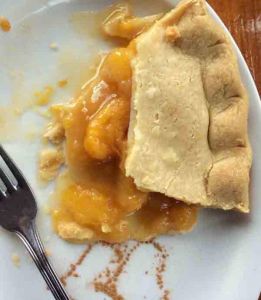
Anne, one of the directors of Pixl Press, visited the bookstore with her friend Jackie from out of town. After browsing the bookstore, they walked across the street to Aphrodites Pies and enjoyed their signature organic peach pie.

Aphrodites Pies

Aphrodites Pies on 4th Avenue (photo by Nina Munteanu)

Banyen Books & Sound:
PeachPie at Aphrodites3608 West 4th Avenue
Vancouver, BC
604-732-7912

HOURS:
Mon-Fri: 10am-9pm
Sat: 10am-8pm
Sun: 11am-7pm


nina-munteanuNina Munteanu is an ecologist, limnologist and internationally published author of award-nominated speculative novels, short stories and non-fiction. She is co-editor of Europa SF and currently teaches writing courses at George Brown College and the University of Toronto. Visit www.ninamunteanu.ca for the latest on her books.

Ecology, Story & Stranger Things

MockUpEcology-2

Illustration by Anne Moody, typology & design by Costi Gurgu

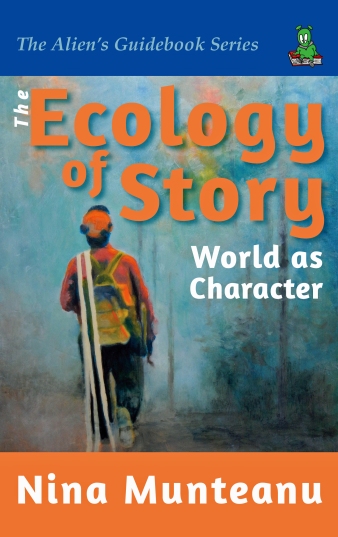
One of the lectures I give in my science fiction writing course and conference workshops is called “Ecology in Storytelling”. It’s usually well attended by writers hoping to gain better insight into world-building and how to master the layering-in of metaphoric connections between setting and character. My upcoming writing guidebook “Ecology of Story: World as Character” addresses this subject with examples from a wide range of published fiction. The book will be released in June/July of 2019 by Pixl Press.

In my lecture (and book) I talk about the adaptations of organisms to their changing environments. I describe the trophic (energy) relationships from producers to consumers and destroyers in a complex cycle of creative destruction.

Students perk up when I bring up some of the more strange and interesting adaptations of organisms to their environment: twisted stories of adaptations and strategies that involve feeding, locomotion, reproduction and shelter.

Purposeful Miscommunication & Other Lies

alconbluebutterfly-ants

Alcon blue butterfly and caterpillar with ant

For instance, the Alcon blue butterfly hoodwinks ants into caring for its larvae. They do this by secreting a chemical that mimics how ants communicate; the ants in turn adopt the newly hatched caterpillars for two years. There’s a terrible side to this story of deception. The Ichneumon wasp, upon finding an Alcon caterpillar inside an ant colony, secretes a pheromone that drives the ants into confused chaos; allowing it to slip through the confusion and lay its eggs inside the poor caterpillar. When the caterpillar turns into a chrysalis, the wasp eggs hatch and consume it from inside.

This reads like something out of a noir thriller. Or better yet, a horror story. Nature is large, profligate, complex and paradoxical. She is by turns gentle and cruel. Creative and destructive. Competitive and cooperative. Idle and nurturing.

Extremophiles & Anhydrobiosis

water-bear03

Tardigrade on moss

When I bring in the subject of extremophiles, who thrive in places you and I would cringe to set foot in, students’ imaginations run wild with ideas.

I describe a panoply of weird adaptations in Nature—involving poisons, mimicry and deception, phototaxis and something called anhydrobiosis, which permits the tiny tardigrade to shrivel into a tun in the absence of water then revive after a 100 years with just a drop of water.

All this adaptation hinges on communication. How an organism or population communicates with its environment and among its own.

Examples of “strange” communication are the purview of the science fiction writer … and already the nature of our current world—if you only know where to look. The scope of how Nature communicates—her devices and intentions—embraces the strange to the astonishing. From using infrasound to chemical receptors and sensing magnetic fields. To allelopathy. Aggressive symbiosis. And so much more.

Talking Trees

suzanne-simard-portrait

Dr. Suzanne Simard

UBC researcher Suzanne Simard, who has published hundreds of papers over 30 years of research, suggests a kind of “intelligence” when she describes the underground world “of infinite biological pathways that connect trees and allow them to communicate” In a forest.

This communication allows the forest to behave as if it was a single organism, says Simard. Her early in situ experiments showed solid evidence that tree species, such as Paper Birch and Douglas Fir communicated in a cooperative manner underground through an underground mutualistic-symbiosis involving mycorrhizae (e.g., fungus-root).

forest-conversing

mycelium connects trees underground

These trees were conversing in the language of carbon and nitrogen, phosphorus, water, defense signals, allelo-chemicals, and hormones via a network of mycelia. Fungal threads form a mycelium that infects and colonizes the roots of all the trees and plants. Simard compares this dense network to the Internet, which also has nodes and links—just as the forest.

Fungal highways link each tree and plant to its community, with busiest nodes called hub trees or mother trees. Calling them mother trees is appropriate, given that they nurture their young in the understory; sending excess carbon to the understory trees, which receive less light for photosynthesis. “In a single forest,” says Simard, “a mother tree can be connected to hundreds of other trees.” These mature trees act as nodal anchors—like major hub sites on the Internet—for tree groupings; according to Simard, they look after their families, nurture seedlings and even share wisdom—information—when they are injured or dying.

Fatal Attractions & Natural Bullies

bracken fern copy

Bracken fern fronds

The “ordinary” Bracken fern thrives in a wide range of conditions on virtually every continent (except Antarctica). That’s because it plays the “long game” by having several strategies to outlive and outcompete its surrounding nemeses.

ant on bracken copy

The symbiosis of Bracken fern and ant

Strategies include a loose lifestyle such as several ways to reproduce and grow to accommodate seasons, drought and burning; a shady arrangement with the local thugs (aggressive ants) who protect it for its tasty nectar; use of cyanide and ecdysones by its young shoots; and tough carcinogenic fronds that contain glass-like silicates.

Despite its many uses by humans (e.g., used for potash fertilizer, heating fuel, roofing, bedding for animals), the Bracken fern is considered a pest. In truth, it is a hardy versatile adapter to changing environments. And that is what our climate changing world is fast becoming.

I highly recommend the works of Annie Dillard and Loren Eiseley for wonderful and bizarre examples of natural wonders that resonate with metaphor.

Fallen log stream-2012

Stream in coastal rainforest on Vancouver Island, BC (photo by Kevin Klassen)

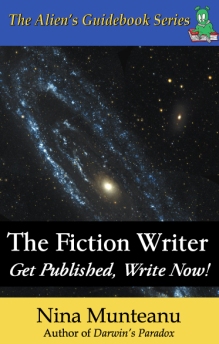
I also recommend my upcoming book “Ecology of Story” (Pixl Press), which will showcase a diverse set of examples from the literature of metaphoric environment and creatures. “Ecology of Story” is due for release in Summer of 2019. Look for it on Amazon, Kobo, and a fine bookstore near you. Two other books in my writing guide series include: “The Fiction Writer” and “The Journal Writer“.

Microsoft Word - Three Writing Guides.docx

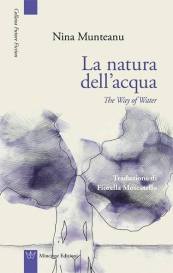
nina-2014aaaNina Munteanu is an ecologist and internationally published author of award-nominated speculative novels, short stories and non-fiction. She is co-editor of Europa SF and currently teaches writing courses at George Brown College and the University of Toronto. Visit www.ninamunteanu.ca for the latest on her books. Nina’s recent book is the bilingual “La natura dell’acqua / The Way of Water” (Mincione Edizioni, Rome). Her latest “Water Is…” is currently an Amazon Bestseller and NY Times ‘year in reading’ choice of Margaret Atwood.


Creating the Ecotone at ToRo Fest

ToRoFestOn October 5, 6 2018, I participated in the second ToRo Fest International Salon of Literature, Visual Arts & Music, put on by Tradicious at the Centre for Culture, Arts, Media and Education on 918 Bathurst Ave.

After attending the gala opening on Friday, I arrived early Saturday morning and had a chance to wander the two art galleries of the fest before the crowds came. One gallery featured the deep narrative art of nine-year old Sophia Leopold-Muresan. Bright and flowing with child-wisdom, her art was playful, whimsical and thoughtful.

Otilia Gruneantu Scriuba

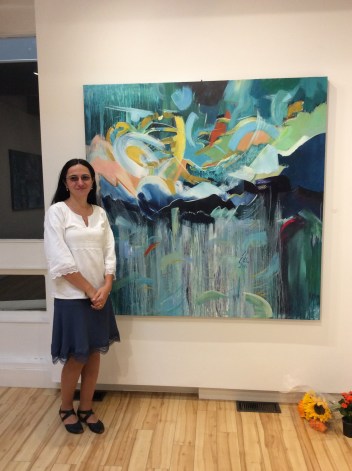
Otilia Greneantu Scriuba stands next to “Fusion”

Otilia Greneantu Scriuba’s abstract art featured cultural symbols such as water, the wave, the horizontal line to convey personal and deep-rooted narratives. The description on her website reads: “Otilia’s art orients images within collages. Parts of her paintings juxtapose original disparate fragments with origins drawn from different historic epochs and through different geographical spaces. Throughout her work she employs important cultural symbols such as: the water, the wave, the horizontal line, the square, the horse, the butterfly, the fish, the egg, the shell and the feather. In addition, she uses other symbols from some of the most important artistic periods: Victoria by Samotrace, human figures by Fidias Metopes, and Venus by Botticelli. Otilia Gruneantu Scriuba creates complex compositions while managing to harmonize her found elements in a unitary image.”

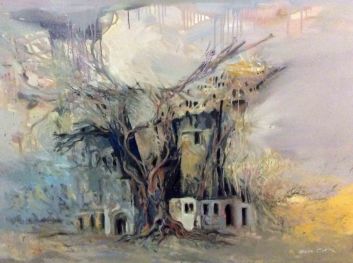
Cioata-Haunted House

“Haunted House” by Doru Ciota

The surreal realism of Romanian artist Doru Cioata—a mix of detailed graphic design, intricate sketches and paintings—evoked a powerful metaphoric narrative. Seeing this art reminded me of the power of image in writing and my own adventure with image and writing. Several months ago, I was invited to write a flash fiction story based on a chosen Group of Seven painting for an anthology coming out next year. It was one of the most thrilling, fun and difficult projects I’d embarked on—and the most fulfilling. See my article on how visual art and writing communicate.

Alice WaterIs

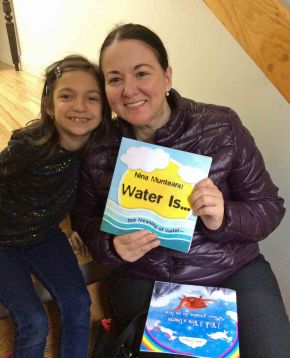
Alice with “Water Is…”

The three-track ToRo Fest ran the whole day with over fifteen book launches, literary presentations—including my talk on “Water Is…”—games, poetry readings, and panels, in addition to excellent live music from piano to guitar and drums.

I participated with Costi Gurgu (author of Aurora-nominated RecipeArium) in Claudiu Murgan’s panel on publishing models: “Publishing your book is not what it used to be: think hard and pick one: traditional vs. self-publishing vs. hybrid.” Costi, Claudiu and I discussed the pros and cons of each model, providing our experiences with these publishing types.

Nina-Costi-Claudiu-panel

Costi Gurgu, Nina Munteanu, and Claudiu Morgan discuss publishing models

I reprised this subject with my lecture on hybrid publishing at the Mississauga Writers Group meeting on October 13 (at the South Common Community Centre, 11 am). I will also be giving this Hybrid Publishing lecture/workshop in the Toronto City Hall through the Immigrant Writers Association’s “writing and publishing series” of their “Learn with IWA” initiative (October 26, 7-9 pm). The lecture/workshop is open to members (zero to $10) and non-members (fee $15).

Absolutism4

Vali Gurgu makes her move in “Absolutism”

Professor Nicolae Gavriliu of the Antiochian House of Studies gave an interesting lecture on the theology and art of the icon. I also attended a student presentation on global issues faced by marginalized groups from Roma in Romania to married children in Lebanon.

Costi and Vali Gurgu brought their new game Absolutism, a funny card game about surviving dictatorship (which should sell very well in the USA…). Several intrepid players tried their hand at dictatorship—and slavery, depending on whether they were losing or winning. I could hear the laughter clear to the lobby. See more about Absolutism, a fascinating, clever and witty game by author-lawyers who did, in fact, survive a dictatorship.

water is-blood

Ad for “Water Is…” on TTC subway

Several of my science fiction, eco-fiction and historical fantasy books were for sale and some sold out. Alice caught up to me for an autograph and joyfully shared that she’d seen the Pixl Press Water Is… ad on the Toronto subway and had told herself, “I need to meet this person.” Then she did—at ToRo!

A week prior to the festival, I was interviewed by Andreea Demirgian of “Radio Encounters” who called me “The Absolute Dame of Canadian Eco-Fiction”! I was flattered … and humbled. In truth, eco-fiction has become my passion and brand in writing. I realized only recently (in the last few years) that I’d been writing eco-fiction for twenty years but had branded my writing under science fiction. Sometimes, it takes a while to find one’s true voice–and niche. Thanks, Andreea! You can listen to the interview below:


GreenBeanery-myFlatWhite

enjoying my flat white at the Green Beanery

After much panelling, talking, selling out of my books, and discovering delicious Romanian pastries, I slipped out into the brisk drizzle with a mission: I was in search of good coffee. I spotted the Green Beanery, looking comfortable in an old brick building on the corner of Bathurst and Bloor. I smiled; I knew I’d found my coffee haven. I ordered my favourite from the barista—a flat white— and relaxed in the funky-hipster atmosphere of the café.

It turns out that the Green Beanery is a Canadian trust, created and staffed by environmentalists at Probe International. All earnings support the charity that protects lands and people’s livelihoods. The Green Beanery promotes small coffee farmers who produce niche coffees with characteristics as distinctive and extraordinary as their local ecology and who are less likely to use pesticides or fertilizers (like their larger counterparts). Green Beanery also encourages neighbourhood-based micro-roasting in small coffee shops and local roasteries. Creating niche markets for little known coffee bean varieties helps maintain the world’s store of genetic diversity.

Nina-Juliana-Crina

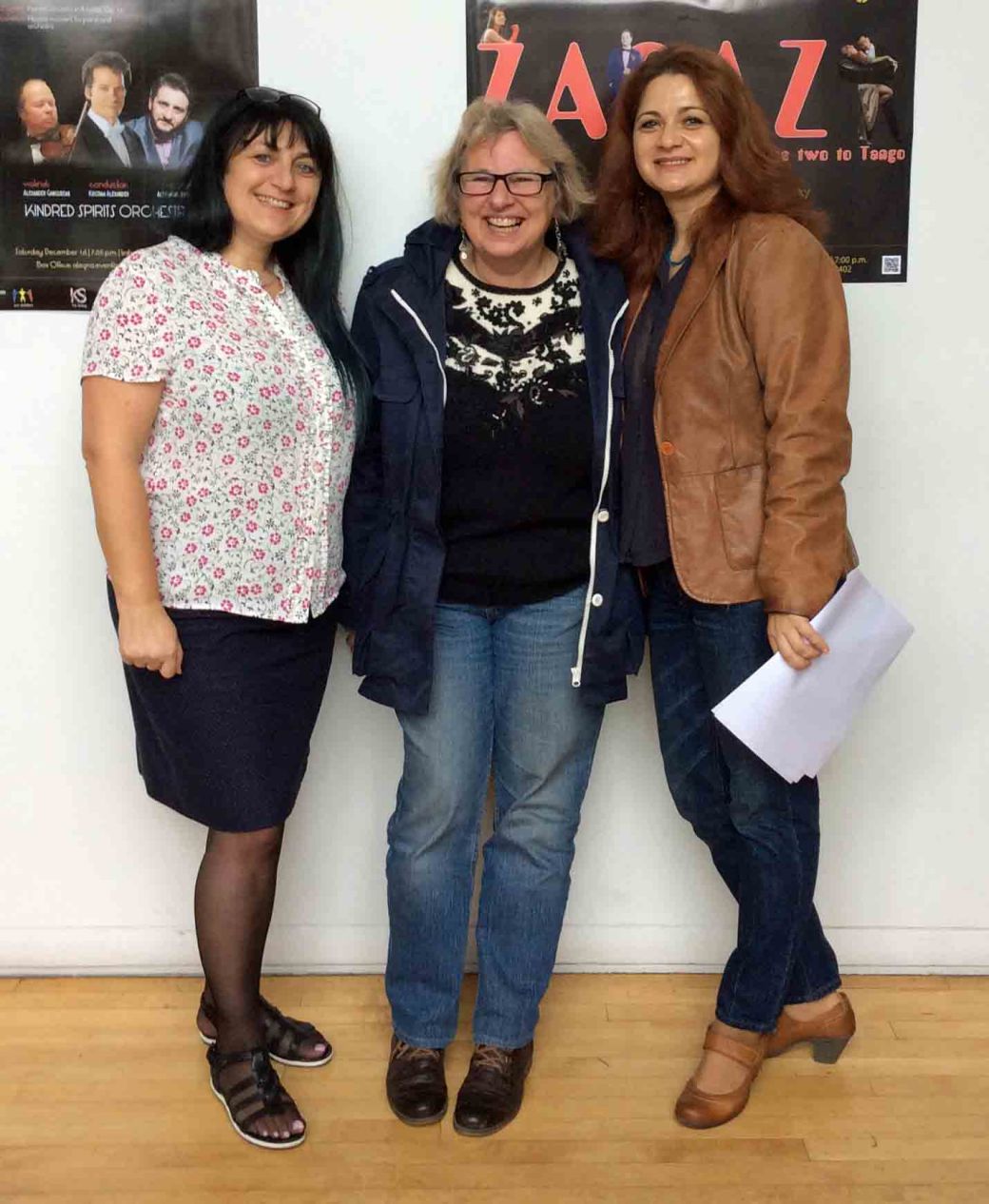
Nina stands between Juliana Pacso and Crina Bud of Tradicious

As I returned refreshed to ToRo, I realized that Tradicious was doing the same thing as Green Beanery: they had brought in a diversity of international artists in music, visual arts, fiction and poetry, philosophy and even socio-politics to meet, share, and discuss. Tradicious had created an ecotone (where worlds and ideas meet, share and learn) where diversity flourishes.

Well done, Tradicious!

nina-2014aaaNina Munteanu is an ecologist and internationally published author of award-nominated speculative novels, short stories and non-fiction. She is co-editor of Europa SF and currently teaches writing courses at George Brown College and the University of Toronto. Visit www.ninamunteanu.ca for the latest on her books. Nina’s recent book is the bilingual “La natura dell’acqua / The Way of Water” (Mincione Edizioni, Rome). Her latest “Water Is…” is currently an Amazon Bestseller and NY Times ‘year in reading’ choice of Margaret Atwood.

“A Day in the Life” of Nina Munteanu in The Toronto Guardian

Cat WaterIs-3

Felix loves water!

On October 20, 2018, the Toronto Guardian presented “A Day in the Life” of Nina Munteanu, Toronto writer. The series previously profiled writer Charles de Lint, dance artist Natasha Powell, choreographer Maria Shalvarova, dancer Lori Duncan, author Claudiu Murgan and many others.

Editor Merridy Cox (who edited Nina’s latest book “Water Is…”) introduced the “Day”, followed by eight photos that marked Nina’s “typical” day, then a short interview by the Guardian.

Photo 1-Nina-Oli

Nina’s early morning walk with Oli

Photo 2-Nina-cafe

Nina writes her next novel at a local indie coffee shop

nina-2014aaaNina Munteanu is an ecologist and internationally published author of award-nominated speculative novels, short stories and non-fiction. She is co-editor of Europa SF and currently teaches writing courses at George Brown College and the University of Toronto. Visit www.ninamunteanu.ca for the latest on her books. Nina’s recent book is the bilingual “La natura dell’acqua / The Way of Water” (Mincione Edizioni, Rome). Her latest “Water Is…” is currently an Amazon Bestseller and NY Times ‘year in reading’ choice of Margaret Atwood.


Nina Munteanu Interviewed in Canadian Romanian Newspaper “Observatorul”

Claudiu Murgan (author of “Water Entanglement”) recently interviewed me in the Canadian Romanian newspaper Observatorul.

gaudeamus-book-fair-crowd copy

Gaudeamus Book Fair in Bucharest, Romania

nina-paralela45-gaudeamus-web copy

Nina Munteanu at Gaudeamus

In the interview, I talked about my involvement with the Toronto Romanian community through the Immigrant Writers Association and my visit several years ago to Bucharest Romania to launch my two writing guidebooks with Editura Paralela 45 at the Gaudeamus Book Fair at the Rome Expo Exhibition Centre:

“In 2011 I attended the launch of my writing guide Manual de Scriere Creativa. Scriitorul de fictiune (The Fiction Writer) in Bucharest, hosted by Editura Paralela 45 at the Gaudeamus Book Fair. Dr. Florin Munteanu, respected scientist in Complexity Theory, kindly picked me up at the airport and took me to the Phoenicia Grand Hotel where we relaxed in the lounge and discussed fractal geometry and the Fibonacci Golden Ratio over café cremes. It was a very civilized introduction to this eclectic “city of joy” and I felt strangely at home.

It was a wonderful experience, which included drinking copious amounts of Tuica with my publisher and touring the Lipscani District with George Kudor, a student of Florin’s. Florin calls Romania “the corpus callosum of the world” where east and west converge, mingle and learn. It’s no wonder that Romania is one of the leading countries in the world on complexity theory, a science that embraces the “collision” of different “worlds” to create more than the sum of its parts.”

scriitorul_de_fictiune_Munteanu_coperta1 copyFictionWriter-front cover-2nd ed-webThe Fiction Writer (Scriitorul de fictiune) was very well received by the Romanian writing community. Romanian poet and English instructor Lucia Gorea calls The Fiction Writer “the most practical book on publishing that I’ve ever read, and I’ve read them all!”


In the Observatorul interview, Claudiu asked me if I was pursuing other projects in Romania. I am currently corresponding with a Romanian distributor to get some of my other books translated and published in Romania. I also co-edit Europa SF, a European ezine on speculative fiction from around the world, with a focus on European science fiction, fantasy and horror.

The Way of Water-COVER copyI hope to collaborate more with colleague and friend Cristian Tamas, who introduced me to editor/publisher Francesco Verso (of Future Fiction) and Mincione Edizioni, who published my short story “The Way of Water.” I later developed “The Way of Water” in novel form and I anticipate its release next year.

I hope to do more with Dr. Florin Munteanu and Claudiu Murgan on projects to do with water—particularly on entanglement, intention, subtle energies and memory. I would be delighted if a Romanian publisher chose to translate my book “Water Is…The Meaning of Water” and publish it for Romanians.

OLYMPUS DIGITAL CAMERA

Gaudeamus Book Fair in Rome Expo Exhibition Centre, Bucharest

bucharest-old-downtown01-web copy

Lipscani District in Bucharest

nina-gaudeamus-close-web copy

Nina enjoying the book fair

nina-2014aaaNina Munteanu is an ecologist and internationally published author of award-nominated speculative novels, short stories and non-fiction. She is co-editor of Europa SF and currently teaches writing courses at George Brown College and the University of Toronto. Visit www.ninamunteanu.ca for the latest on her books. Nina’s recent book is the bilingual “La natura dell’acqua / The Way of Water” (Mincione Edizioni, Rome). Her latest “Water Is…” is currently an Amazon Bestseller and NY Times ‘year in reading’ choice of Margaret Atwood.

Revisiting the Short Story and Heinlein’s Five Rules of Writing

george brown college

The seventh class of my 12-week Creating Science Fiction course at George Brown College is all about short story writing. I’m by nature a progressive—and an itinerant explorer; so, I am updating materials for my students and sharing them with you.

PlayingTheShortGame-DougSmithOne resource I’m eager to introduce to my students is Canadian SF short story writer Douglas Smith’s recent guidebook, Playing the Short Game: How to Market & Sell Short Fiction. Smith’s guidebook is a Tardis-style smallish yet comprehensive guide on what it takes to be a successful short story writer from starting & finishing to marketing & publishing to leveraging & promotion.

Smith is an accomplished short story writer and marketer, who has always openly shared his treasures of acquired wisdom with others.  His stories have appeared in thirty countries and 25 languages. He’s won three awards and has three acclaimed collections—so far. For years, his Foreign Market List has helped writers—including me—sell their work all over the world. To date, I have sold short stories (mostly translated reprints) to markets in Greece, Poland, Romania, Israel, and Italy—thanks to his list.

Why Write Short?

coffee-doubleespressoI’m a petite five foot-three height and purposely wear flat shoes. I love short. I prefer my espresso pulled in short shots—or  ristretto—in my flat white. Described as bolder, fuller, with more body and less bitterness, the ristretto is like a burst of intense flavor with a lingering finish. Short is pretty cool.

Douglas Smith gives seven excellent reasons for writing short fiction, even if you are ultimately a novel writer, like me. Writing short stories:


  1. Helps you learn your craft in easy, short-term, bite-sized amounts and over a reasonable time for you to learn, apply, and relearn
  2. Helps you test the waters of literature, to discover what excites you, provokes you and what ultimately you NEED to express
  3. Builds your resume, again more easily and quickly than a novel, toward that ultimate novel; publishers of magazines and publishing houses are more likely to take your work seriously if you have a publishing history
  4. Helps you explore ideas for your novel, by “pinging” certain premises you may wish to explore in further detail or take elsewhere in a novel
  5. Helps you build a backlist of published stories, which you own, once rights have reverted back to you
  6. Helps you build a network in your writing community of publishing houses, editors, other writers and so forth as you submit and exchange through your works and letters (including all those rejections!). Eventually, a pleased editor/publisher may invite you to submit to a “Best of” anthology or provide a collection. This has happened to me several times.
  7. Helps you learn the publishing business (well, sort of, says Smith…). Through exposure to the business side of publishing, you will gain an appreciation of how the publishing world works.

Know What You’re Writing

Nina-computer-KraveA short story only has 7,000 or less words to get your tale across while a novel has over ten times that many words to do the same. It follows then that the short story format is a simpler one. This does not necessarily mean easier.

Novels provide a sense of change, growth and solutions to problems and conflicts. “The short story doesn’t have the luxury of depicting change; the closest it can come is awareness,” writes Shelley Lowenkopf in her 2007 article “Telling Tales” in The Portable Writer’s Conference: Your Guide to Getting Published by Quill Driver Books.

She goes on to describe the short story as a close-up to a novel’s landscape. The short story is, therefore, often more intense and powerful. A short story, more than a novel, has the power to transport, disturb and enlighten.

ElementsOfFiction-SceneStructure-BickhamRenowned short story authors like Edgar Allen Poe, Nathanial Hawthorne, and Somerset Maugham, emphasize the importance of striving for one effect when writing a short story: the single effect you wish to leave with the reader at the end. This is accomplished by selecting events or situations that build quickly into a combustible response. Even Alice Munro, who is known for cramming long timeframes into her short stories, frames time through a single event: a meal, family gathering, wedding or funeral, for instance.

Jack Bickham, in his book, Elements of Fiction Writing: Scene and Structure by Writer’s Digest Books (1993) writes that, “story length, author intention, traditional expectations of the audience, and all sorts of things may affect the form a story may take.” Choosing the appropriate length to tell your story relies on the complexity of your premise and theme.

Understanding the Short Story Format

Here are seven tips toward writing a compelling and memorable short story:

  1. Open in the middle of something happening (e.g., action/in a “scene”)
  2. Make your opening provocative (raise the stakes as high as you can)
  3. Write scenes and write sparingly (avoid describing the obvious—use description to show something odd, memorable, exotic)
  4. Have characters define themselves and their goals through what they do and observe (e.g., show more than tell)
  5. Define characters with dialogue (a great way to reveal while keeping a high pace)
  6. Withhold vital information for as long as possible
  7. Don’t explain the ending (cut down on the denouement; let the reader make those conclusions—a key in the short story format)

Selling Your Short Story

Smith’s guidebook provides several chapters of excellent advice in logical steps toward a successful career.

Here are just a few gems that I will be sharing with my students.

First of all, remember that you are not selling your story; you’re licensing a particular set of rights for someone to do something with that story. Before you do anything else, do your homework: know the rights you’re selling; and which ones to keep. Smith describes five major types of rights: media; language; geography (less and less relevant); occurrence; and time.
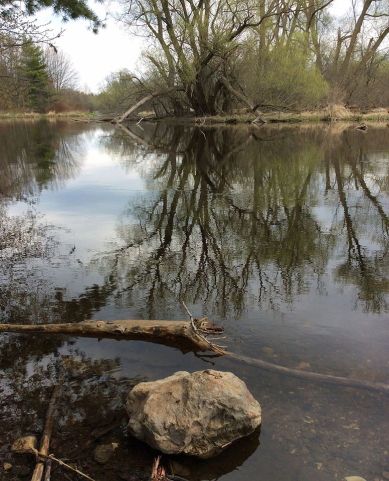
Eramosa River 3

Eramosa River, Ontario (photo by Nina Munteanu)

Media rights include print rights, electronic rights and audio rights. Markets include magazines, anthologies and collections for short stories. Language and geography rights are pretty self-explanatory. Occurrence rights relate to whether the publisher is buying first or second and onward rights (otherwise known as reprints). Most publishers prefer to pay for the right to publish your work for the first time in that particular format (e.g., in print and in English, for instance). Having said that, I’ve had a lucrative history of selling reprints to some of my more popular short stories. I’ve furthered gone on to selling other rights, such as foreign language rights and audiobook and e-book rights. I’ve also sold two short story collections, one to an Italian publisher (coming out this year) and shorts in several anthologies. No movies yet… But I did have a serious discussion with a writer/producer on one of my shorts. Recall how many Philip K. Dick short stories have been adapted to movies (e.g., Total Recall, The Adjustment Bureau, Paycheck, Minority Report, and Blade Runner).

Heinlein’s Five Rules of Writing

Smith evokes SF writer Robert J Heinlein’s 5 rules of writing to succeed as a short story writer (as any kind of writer, actually). These are:

  1. You must write
  2. You must finish what you write
  3. You must refrain from rewriting, except to editorial order
  4. You must put the work on the market
  5. You must keep the work on the market until sold

I know… Number 3 sounds pretty suspicious, or arrogant at the very least. As Robert J. Sawyer concludes on his site in reference to the five rules, number 3 is open to reasonable interpretation. Of course, it must mean AFTER you’ve finished and edited the story with some level of confidence that you’re happy with it—never mind what other people think of it.

FictionWriter-front cover-2nd ed-webNina’s Bus-Terminal Model

In my writing guide The Fiction Writer, Chapter L (for “Long or Short?”), I talk about how I launched my own successful short story writing career. I’d been writing short stories for a few years without much success (I was getting interesting rejection letters, so I knew I was getting close); then I settled into a kind of model/routine. I call it The Bus Terminal Approach. As Smith attests—several times—it’s a numbers game. That’s how I played it. It starts with one story and relies on you not waiting until you write the next, and the next and the next. Here’s how it works:

  1. You list at least 3 markets that you’ve researched for Story A and send it to the first of the three
  2. You start right away writing Story B, send it to the first of 3 markets you’ve researched and listed for it
  3. When Story A rejection arrives, you do not revise but send it right away to the second market
  4. Same thing for Story B
  5. Write Story C and treat similarly

NaturalSelection-front-webRemember to keep track of what you send where and when and what happens to it. It can become a very confusing bus terminal otherwise, with someone ending up in Seattle when they are headed to Toronto! What happens with this approach is several things: you begin to treat the whole marketing/publishing process as a business (which it is) and because you have so many “buses” out there coming and going, the rejections don’t hurt quite as much and instead become part of the learning process, which they should be. You adopt a more business-like approach, which translates into your relationship with editors and publishers. A win-win situation results. Believe me; this works. Once I fell into this method, my sales increased by over 70%.


Several of my stories are currently available in a collection entitled Natural Selection by Pixl Press. You can read one of my short stories right on Amazing Stories: “Virtually Yours”.

My guidebook, The Fiction Writer, can be purchased in various online and onsite bookstores, including Amazon, Kobo, Chapters Online, Barnes & Noble, and several others even I don’t know about.

nina-2014aaaNina Munteanu is an ecologist and internationally published author of award-nominated speculative novels, short stories and non-fiction. She is co-editor of Europa SF and currently teaches writing courses at George Brown College and the University of Toronto. Visit www.ninamunteanu.ca for the latest on her books. Nina’s recent short story is the bilingual “La natura dell’acqua / The Way of Water” (Mincione Edizioni, Rome). Her latest “Water Is…” is currently an Amazon Bestseller and NY Times ‘year in reading’ choice of Margaret Atwood.
Amazing Cover Art, Part 2: Anne Moody and Costi Gurgu

MockUpEcology-2

The cover for Nina’s upcoming writing guide: illustration by Anne Moody; typology & design by Costi Gurgu

In my article “Should You Judge a Book by its Cover”, I wrote about the importance of cover art for book sales and to maintain integrity and satisfaction with the story inside. In the article, I pointed out that, “If you don’t know the author of the book, the nature—and implied promise—of the cover becomes even more important. If the book does not deliver on the promise of the cover, it will fail with many readers despite its intrinsic value. A broken promise is still a broken promise. I say cover—not necessarily the back jacket blurb—because the front cover is our first and most potent introduction to the quality of the story inside. How many of us have picked up a book—intrigued by its alluring front cover—read the blurb that seemed to resonate with the title and image, then upon reading our cherished purchase been disillusioned with the story and decided we disliked it and its author?”

Cover art provides an important aspect of writer and publisher branding. Cover artists understand this and address the finer nuances of the type and genre of the story to resonate with the reader and their expectations of story. This includes the image/illustration, typography, and overall design of the cover. A cover for a work of literary fiction will look quite different from a work of fantasy or romance. Within a genre, subtle qualities provide more clues—all of which the cover artist grasps with acute expertise.

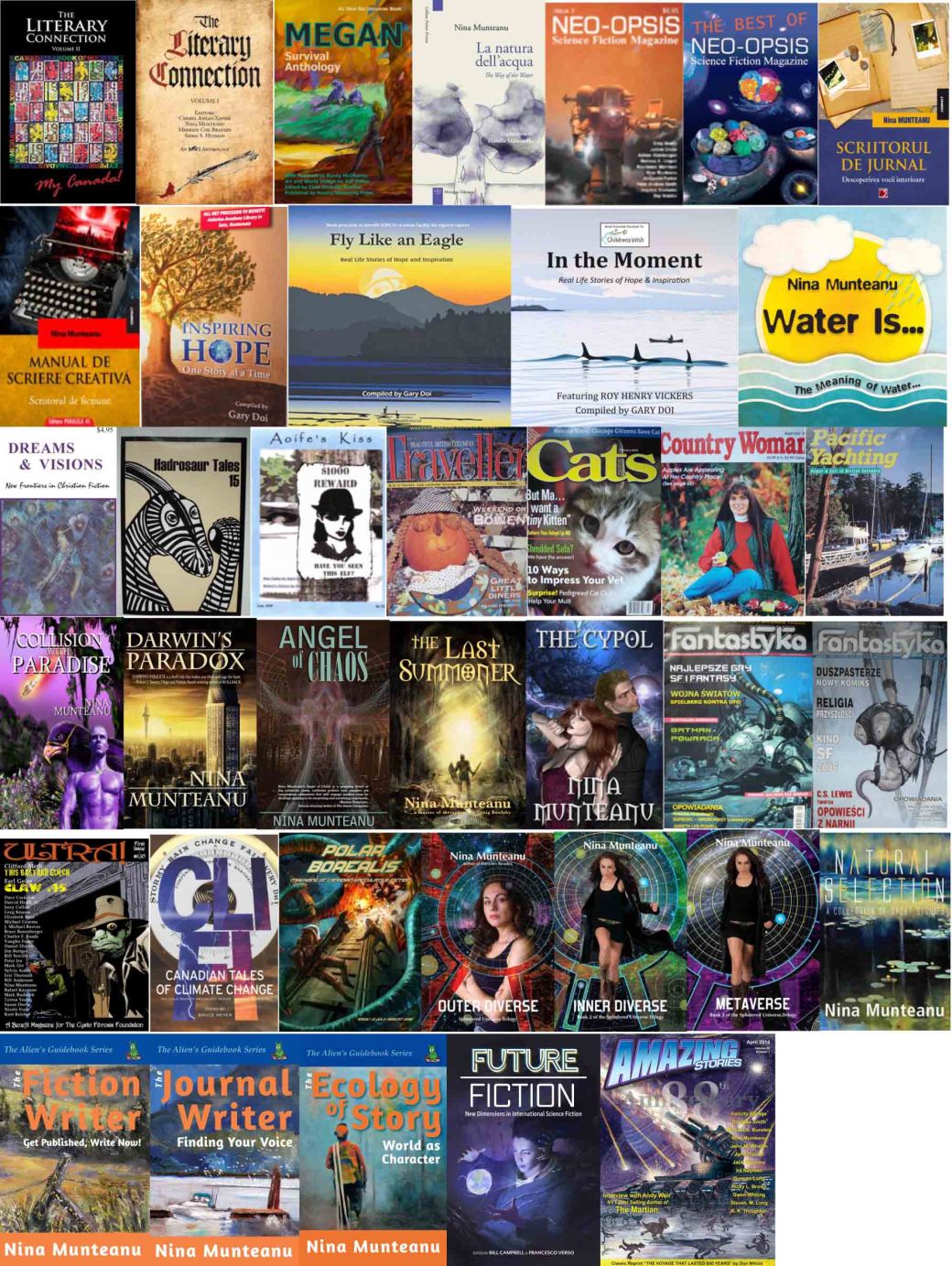
I’ve been fortunate in my history as a professional writer to have had exceptional art work on the books I’ve written or collections and anthologies I’ve participated in (see the mosaic below of many but not all the covers my work has been associated with).

For most of my books, my publisher provided me with a direct link to the cover artist (e.g., Dragon Moon Press, Edge Publishing, eXtasy Books, Liquid Silver Books, Starfire, Pixl Press) and I retained some creative control. I even found and brought in the cover artist for projects I had with Pixl Press.

Anne Moody and Pixl Press

Anne-Studio01 copy

Anne Moody working on her next painting

I met Anne Moody at the environmental consulting firm where I worked after leaving the University of Victoria. I’d taught limnology (the study of freshwater) for several years at UVic, then I joined the Vancouver firm as an aquatic ecologist and environmental consultant. That’s where I met fellow ecologist, Anne. Anne is a plant ecologist who has worked with federal and provincial governments on reclamation and restoration projects. She’s designed and planted marshes throughout the world and has taught at university in her field of expertise.

Anne wasn’t painting then. She started long after we parted our ways—she to a government job and I to a teaching job at The University of Toronto. However, as she mentions in her short bio, Anne has been drawing and painting since childhood—just like me. The difference is that she has come back to the fine arts with an eye for compelling imagery. Using her science knowledge and discipline to work with light, texture and form, Anne creates works of stunning originality that resonate with rugged landscape and with those who belong to it. Her work is, needless to say, fetching for a book cover!

FictionWriter-front cover-2nd ed-web copyWhen Pixl Press started looking for suitable cover artists to rebrand my writing craft series, I showed some of Anne’s work to the director Anne Voute. Pixl Press had already worked with Costi Gurgu and we liked his work. The result of Anne’s illustrations and Costi’s typography and design was a series of stunning covers that branded my books with just the right voice.

Journal Writer-FRONT-cover-WEB copyThe Alien Guidebook Series, of which two books are out so far (The Fiction Writer: Get Published, Write Now! and The Journal Writer: Finding Your Voice) was designed by Costi with a guidebook brand that would stand out, yet showcase the natural British Columbia landscape art by Anne that I felt strongly connected to. Anne’s cover art for The Journal Writer is one of several studies of Toquart Bay, BC.

FictionWriterCoverWeb copy 2Anne’s illustration for The Fiction Writer (a painting of Knutsford, BC) actually represents the second cover. The Fiction Writer was originally released in May 2009 and the cover portrayed a spiral galaxy—beautifully designed by Virginia O’Dine. The cover overly stressed my science fiction background and did not give a balanced portrayal of the guidebook, which addresses any fiction—not just science fiction. Anne’s portrayal of a field in Knutsford was deemed better suited to a new branding for the series.

MockUpEcology-2I am currently researching and writing the third guidebook in the series—a reference on world building and use of ecology in story—The Ecology of Story: World as Character.

I visited Anne at her ranch near Vanderhoof, B.C., to discuss a cover. Between chores on the 100-acre ranch, gourmet meals from local produce, and lively political discussions over generous amounts of wine—we spent the entire weekend looking over and evaluating Anne’s pieces as potential cover art. Anne had so many good pieces, I became confused with what would work best.

Nina-sedgefield at Annes-closest2 copy 2

Nina stands in Anne’s sedge marsh

Finally on the last day, we stumbled on the perfect one: a painting Anne had done of a photograph her daughter had taken during a wildfire in northern British Columbia. Anne had stylized the photo into its own narrative that was compelling. My publisher was excited by it. We expect Pixl Press to release The Ecology of Story in late 2019.

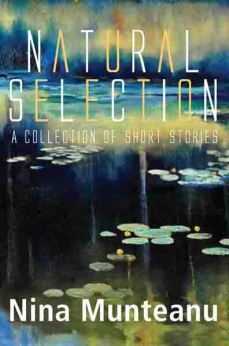
NaturalSelection-front-web copyAnne’s art work for the cover of Natural Selection: A collection of short stories had originally resonated with me when she had first shown me the original painting at an art show on Vancouver Island. Called Mere Tranquility, her acrylic and oil painting uses shades of aqua, green, blue and yellow to convey a small pond during a quiet summer day. She’d captured the elusive dance of light and water perfectly. I was reminded of the genius of Monet. Anne was delighted to let us use it. Pixl Press commissioned Gurgu to design the cover; his minimalist clean design was pure genius.

The cover for Natural Selection remains one of my favourite covers of all time. And it just so happens that the cover art and design solidly portray the tone and content of the stories within. Bellisima!


anne-moody-plein-air-painting

Anne Moody painting en plein-air

Anne Moody is a celebrated Canadian artist and plant ecologist. She worked with the British Columbia provincial government in their Department of Environment and now consults for her own company. She has been drawing and painting since childhood and won her first award at a “Painting in the Parks Program” when she was nine.

“I consider myself a realist, strongly tempted by abstract elements wrapped in story,” says Anne. “The images that speak to me are scenes that convey meaning beyond superficial beauty. My compulsion to paint takes charge when an image embedded in my memory will not allow me to rest until I promote it to canvas. My choice of medium, water-colour, acrylics or oil, is dictated by the nature of the image.”

All Nina Munteanu books can be found on most Amazon sites.

Microsoft Word - Publication-COVERS-all-2018.docx

nina-2014aaaNina Munteanu is an ecologist and internationally published author of award-nominated speculative novels, short stories and non-fiction. She is co-editor of Europa SF and currently teaches writing courses at George Brown College and the University of Toronto. Visit www.ninamunteanu.ca for the latest on her books. Nina’s recent book is the bilingual “La natura dell’acqua / The Way of Water” (Mincione Edizioni, Rome). Her latest “Water Is…” is currently an Amazon Bestseller and NY Times ‘year in reading’ choice of Margaret Atwood.

Coming Home to Water at Stir Coffee House

Nina-LadnerPier copy

Nina on Ladner pier

For several years I’ve been returning from Toronto—where I teach at The University of Toronto and George Brown College—to Ladner, BC to spend my summers.

I cherish the time as a chance to see family and friends and to enjoy a different pace of life—one I enjoyed when I used to live and work here and where I brought up my family. We lived in a comfortable house on a quiet street and our back yard faced one of Ladner’s sloughs and beyond that a vast tract of farmland, most often scored with rows of potato plants. My son Kevin had grown up swimming in the slough and jumping off the rope swing his dad had constructed. Pilgrims from close and far came to use that swing and enjoy the murky waters of our back slough.

Rope swing copy

Kevin on the rope swing

Parties at our place always involved water and getting wet. We even had a fleet of kayaks and canoes that we took on paddling adventures through farmland and under highways, with the occasional siting of muskrat, carp, heron, or eagle. Coyotes whined and barked at night as bats dipped through the night air, foraging for food. My female cat poised for the hunt and sometimes brought in her “catch of the day.”

Cathleen-Nina-Ladner1 copy

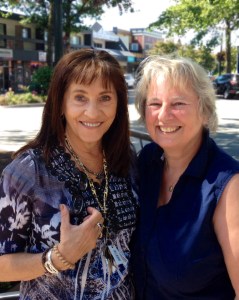
Cathleen and Nina at Stir

This summer, good friend and writer Cathleen Chance Vecchiato decided I should give a talk to my old community on Water Is… my recent bestselling book on water. With that, she immediately made it happen. The venue was already decided: the best café in Ladner, Stir Coffee House. I’d taken Cathleen there the previous year as part of a tour of the old farming and fishing village. Cathleen was charmed by the village atmosphere.

Stir Coffee House was happy to host a talk and Robert and Cathleen proceeded to plan it. Ian Jacques at The Delta Optimist wrote a wonderful piece on my journey, the talk and the book.

Nina-WaterIs-OPTIMIST2018 copy

On the evening of August 16th a growing crowd of people, eager for more on this precious substance flowed into the café until there was hardly a seat left in the cozy venue. I recognized some locals as well as colleagues from my environmental consulting days in Vancouver. It was a good crowd.

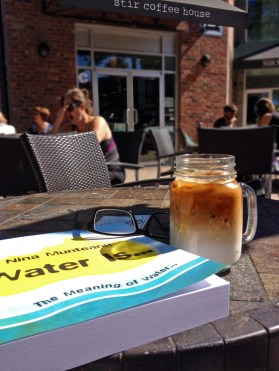
Coffee-Water-StirCoffeeHouse copy

Water Is… snug against an iced latte

I shared the story of how I came to write this book—not a limnology book for non-scientists, as I thought I was going to write—but something that was more than science. Something that encompassed so much more about water: what it means to each of us and how we still don’t understand its many magical anomalous properties. I confided my discovery that the synchronicity of important moments in my life were all connected to water, which compelled the book to evolve into a study of “what water means to us.” Good friend Emmi Itäranta, author of Memory of Water, called Water Is… a biography of water.

Travelling the world has helped me realize that I was blessed with an abundance of water. I lived my entire life in a country of plentiful and healthy water. And for most of that time I didn’t even realize it. Canada holds one fifth of the world’s fresh water in lakes, rivers, and wetlands, as well as in our underground aquifers and glaciers. Canada’s wetlands, which cover more than 1.2 million square kilometres, makes Canada the largest wetland area in the world.

Nina-Hope-Trevor Stir copy

Nina with hosts Hope and Trevor

Perhaps it is no coincidence that Canada is steward of the world’s largest wetlands. Wetlands include marshes, swamps, fens, and bogs, all irreplaceable habitat for a huge diversity of nesting, feeding and staging waterfowl, reptiles, amphibians and mammals—many at risk. Wetlands provide a major filtration system, removing contaminants, improving water quality and renewing water’s vitality; wetlands serve as reservoirs, controlling and reducing flooding toward a more balanced hydrological cycle. Wetlands are a source of oxygen and water vapour, serving a vital role in our global atmospheric and climatic cycles. As ecotones— transitional areas—wetlands protect coasts from erosion and provide exceptional opportunity for boundary interaction and the emergence of vitality. Like a good metaphor, wetlands “recognize” and encompass similarities between dissimilarities. Wetlands powerfully connect. Canada’s strong multi-cultural policies and its open tolerance in embracing and celebrating diversity makes it the “wetland” of the world.

When I turn on the water tap in my house in Canada, it is pure drinking water. I don’t need to boil it or filter it or test it for impurities and toxins. I am confident that it will nourish and hydrate me like water should. I can bathe without restriction. I can play with it.

My water hasn’t changed; but I have. I do not take it for granted. I know that I am blessed.

I am home and I am so grateful.


In the Moment-anthology copyPart of this article is an excerpt from Nina Munteanu’s “Coming Home to Water” first published in “In the Moment” (A Hopeful Sign) edited by Gary Doi, September 2016; reprinted in “The Earth We Love” (Mississauga Writers) edited by Elizabeth Banfalvi, September 2018; and “The Literary Connection IV: Then and Now” (IOWI) edited by Cheryl Antao Xavier, upcoming 2018.


nina-munteanuNina Munteanu is an ecologist, limnologist and internationally published author of award-nominated speculative novels, short stories and non-fiction. She is co-editor of Europa SF and currently teaches writing courses at George Brown College and the University of Toronto. Visit www.ninamunteanu.ca for the latest on her books.


“Water Is…” at The Bookshelf Book Fair in Newmarket

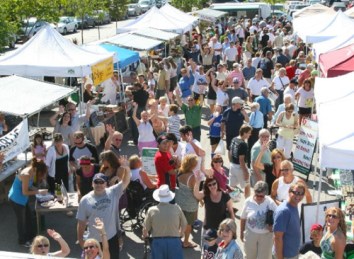
Newmarket-farmers market

Newmarket farmer’s market

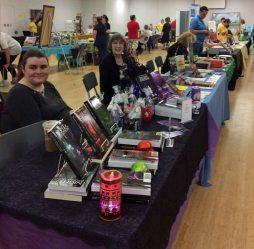
Every summer, the Writers’ Community of York Region (WYRC) holds a book fair (The Bookshelf) at the Newmarket Community Centre & Lions Hall, next to the farmer’s market. The fair showcases over 40 local authors, publishers and artisans through readings, discussions and a tradeshow that features writers’ works in a variety of genres from science fiction and fantasy to mystery, inspiration, science, history, self-help and children’s literature. I participated in this year’s festival on July 7, 2018.

Reading from “Water Is…The Meaning of Water

Nina-Bookshelf booksale1

Nina at her book table

At the Reading Lounge onstage in the adjoining Farmers’ Market, I read from my Amazon-bestselling “science-for-lay public” book Water Is…The Meaning of Water. As children and their parents played in the main water feature behind me, I introduced the term “limnology” (someone who studies freshwater) and talked briefly about the meaning of water with an audience eager to learn.

“We can’t live without it, so maybe we should start respecting it; this beautifully designed book by a limnologist looks at water from 12 different angles, from life and motion and vibration to beauty and prayer,” said Canadian author Margaret Atwood when she selected Water Is… as her first pick in the New York Times ‘Year in Reading.’

Water Is-COVER-webEach of the 12 chapters completes the phrase “Water is…” with terms that evolve from science into philosophy and spirituality; terms such as “magic”, “life”, “motion”, “communication”, “memory”, “rhythm”, “vibration”, “beauty”, “story”, “wisdom”, “prayer”, and finally “joy”.

The book is, after all, a celebration of water.

I first shared some history on the making of the book. I shared that the pursuit of this book was oddly serendipitous and “entangled.”

kevin-nina-close

Nina and son go hiking

“Early on, during the research and writing of this book, I discovered that this project on water had become a gestalt watershed for all the important moments in my life. Places I’ve been. Things I’ve learned. People I’ve met and with whom I’d had surprising discussions and realizations. All spanning many years. And many of them totally unrelated. And yet, now, with a sudden flood of context, their significance has transcended into a new fabric of meaning through surprising connection. Like puzzle pieces cooperatively arranging themselves into a symbiotic pattern of synchronicity.”

Writer and philosopher Jake Kotze suggests that, “Synchronicity happens when we notice the bleed-through from one seemingly separate thing into another—or when we for a brief moment move beyond the mind’s divisions of the world.” Synchronicity and serendipitous discovery, like metaphor, appear when we change the way we look at things.

“Serendipitous discovery comes to us through peripheral vision. Like our muse, it doesn’t happen by chasing after it; it sneaks up on us when we’re not looking. It comes to us when we focus outward and embrace our wonder for this world. When we quiet our minds and nurture our souls with beauty. It is then that what we had been seeking naturally comes to us. Like a gift.”

For my reading, I chose several summary quotes that appear at the end of each chapter of the book. These quotes were also featured earlier this year in “Morphology”, an art exhibit in Mississauga that honored the creation of a marsh park as part of Jim Tovey’s vision for the Lakeview Site and the Waterfront Connection:

Water-travel

Quote from “Water Is…” on display at Mississauga Civic Centre

Wonder Woman Respects Water

“Respect water!” says Wonder Woman (aka cosplayer Jes Tongio). Wonder Woman was careful to point out with her wise Amazonian sword of Athena (goddess of wisdom)—forged by Hephaestus—that “Water Is…” provides a doorway to wonder and responsible action.

WonderWoman-WaterIs2a

Wonder Woman (Yes Tongio) with “Water Is…”

Other Authors at The Bookshelf

Bookshelf-venue2

Clair McIntyre and Merridy Cox

I met and visited with other fellow writers, including Clair McIntyre, author of YA/fantasy, and crime writer Joan O’Callaghan.

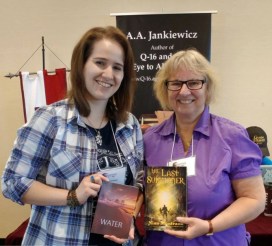
Fellow authors who read at Reading Lounge included Douglas Smith, award-winning author of “Wolf at the End of the World”; and A.A. Jankewicz,

Nina-Agnes-LIMESTONE

A.A. Jankewicz with Nina Munteanu

fantasy author of Q16, and who’s short story appears in the Water Anthology I edited for Reality Skimming Press; and Gabriela Casineanu read from her bestselling book Introverts: Leverage Your Strengths for an Effective Job Search.

Claudiu Murgan read from Decadence of the Soul; he is launching his recent science fiction novel Water Entanglement next month.

Myth Hawker Travelling Bookstore was also at the festival. Specializing in Canadian authors, Canadian content, and Canadian small press, they  carry an extensive list of local Canadian authors wherever they go across Canada.

The Immigrant Writers Association (IWA)

Nina-IWA-BookshelfinNewcastle

Gabriela, the two Andreeas, Nina and Claudiu

Nina IWA memberThe IWA was also represented, along with member-writers Gabriela Casineanu, Andreea Munteanu, Claudiu Murgan and Andreea Demirgian.

The Immigrant Writers Association provides programs, activities, and services that empower and support immigrant writers in their journeys. According to their website, the goal of the IWA is to  “encourage immigrants to express themselves through writing, to bring more awareness, compassion, and peace into the world.”

As second-generation immigrant daughter to German and Romanian parents, I recently joined the IWA. I look forward to mentoring new writers and providing workshops and lectures to share my experience as a writer, editor, and teacher of fiction and non-fiction.


MJ Moores-Bookshelf

M.J. Moores, chair of the board and founder of Bookshelf

nina-munteanuNina Munteanu is an ecologist, limnologist and internationally published author of award-nominated speculative novels, short stories and non-fiction. She is co-editor of Europa SF and currently teaches writing courses at George Brown College and the University of Toronto. Visit www.ninamunteanu.ca for the latest on her books.

Amazing Cover Art, Part 1: Tomislav Tikulin and Costi Gurgu

In my article “Should You Judge a Book by its Cover”, I wrote about the importance of cover art for book sales and to maintain integrity and satisfaction with the story inside. In the article, I pointed out that, “If you don’t know the author of the book, the nature—and implied promise—of the cover becomes even more important. If the book does not deliver on the promise of the cover, it will fail with many readers despite its intrinsic value. A broken promise is still a broken promise. I say cover—not necessarily the back jacket blurb—because the front cover is our first and most potent introduction to the quality of the story inside. How many of us have picked up a book, intrigued by its alluring front cover, read the blurb that seemed to resonate with the title and image, then upon reading our cherished purchase been disillusioned with the story and decided we disliked it and its author?”

Collision With Paradise Small

Liquid Silver’s romance / SF cover

Cover art provides an important aspect of writer and publisher branding. Cover artists understand this and address the finer nuances of the type and genre of the story to resonate with the reader and their expectations of story. This includes the image/illustration, typology, and overall design of the cover. A cover for a work of literary fiction will look quite different from a work of fantasy or romance. Within a genre, subtle qualities provide more clues—all of which the cover artist grasps with expertise.

I’ve been fortunate in my history as a professional writer to have had exceptional art work on the books I’ve written or collections and anthologies I’ve participated in (see the mosaic below of many but not all the covers my work has been associated with).

For most of my books, my publisher provided me with a direct link to the cover artist (e.g., Dragon Moon Press, Edge Publishing, eXtasy Books, Liquid Silver Books, Starfire, Pixl Press) and I retained some creative control. I even found and brought in the cover artist for two projects I had with Starfire.


Tomislav Tikulin and “The Last Summoner

DarwinsParadox-Cover-FINALsmall

Dragon Moon’s SF cover

Croation artist Tomislav Tikulin was the artist my Dragon Moon publisher had found for my 2007 book “Darwin’s Paradox”. For Darwin, I worked closely with Tikulin, who created the compelling hard science fiction cover of “future Toronto” that has attracted readers to the book for years. Tikulin has done cover designs for many publishers and bestselling writers from Ray Bradbury’s Dandelion Wine and Arthur C. Clarke’s Rendezvous with Rama to Amazing Stories Magazine.

Cover1_LastSummoner-frontcover

Starfire’s fantasy cover

In perusing Tikulin’s website one day, I was transported by one of his illustrations—of an awestruck knight standing knee deep in a mire within a huge drowned cathedral. Shafts of golden light from the vaulted ceiling angled across, bathing the mire and the bemused knight beneath. There was a powerful story in that image, I thought, and wrote a whole book based on it: “The Last Summoner”. Imagine the feeling when I approached Tikulin to licence the image and then my Starfire publisher to use it—and both agreed! You’ll have to read the book to find out why the image was so important to the overall story. Graphic artist Costi Gurgu took Tikulin’s image and used his typology and design skills to create an extraordinary front and back cover and spine. You can learn more about Tikulin in my interview with him on The Alien Next Door.


Costi Gurgu and “The Splintered Universe Trilogy

Front Cover ONLY-web

Starfire’s SF cover

I met Costi Gurgu and his wife Vali Gurgu at a science fiction convention in Montreal in 2009. Costi and Vali were successful graphic artists working on magazine covers and interiors for top magazines in Toronto. When I eventually moved there to teach at the University of Toronto, I discussed cover design with Costi. I was working on a detective thriller in space with kick-ass female detective and Galactic Guardian, Rhea Hawke. I’d initially envisioned the book as one entire novel with three parts, but it very soon became apparent to me that it was three actual books in a trilogy. The Splintered Universe Trilogy consists of Outer Diverse, Inner Diverse, and Metaverse.

I was intrigued by what Costi designed: a “Triptych” for the three books of The Splintered Universe Trilogy. In an interview I did on The Alien Next Door, I asked him what inspired him to come up with it and what did he like about it? Costi replied:

“Your main character, Rhea, undergoes a certain evolution from a regular human being to… let’s just say something else. And that evolution has three parts, one for each book of the trilogy and it also has a touch of divine. So, the triptych design, so often used for religious paintings, fits like a glove on the entire concept.”

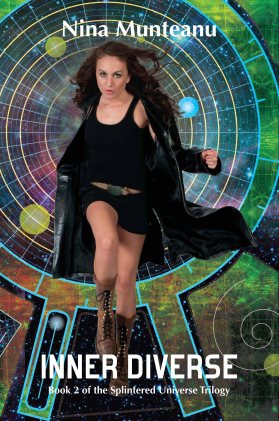
Inner-diverse-front-cover-WEB

Starfire’s SF cover

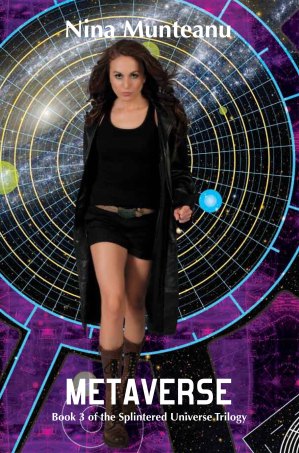
I was very taken by how the design for the triptych carried a powerful image that conjures a portal or gateway into another world (which is what the trilogy is about). The reader is drawn into an infinite landscape, looking in, and Rhea is looking out from within in Outer Diverse, bursting through in Inner Diverse, and walking outside with confidence in Metaverse. Costi explained the meaning behind the symbols and colours he used: “The initial idea was for the red ring to be a sort of mapping device and a radar combined into one, since Rhea travels great distances in her quest. Then I realized it might as well be a portal device on top of everything else and serve all her travelling needs.

There were two options —either we would look with her outside, to whatever target she had, or look towards her. I thought that it would be more powerful if we could look towards her and see her determined face, see the unflinching resolution in her eyes, while she’s pondering her next move and readying herself to use the device once again. But to look towards her and see her in a confining room of a space ship, or such, would have defeated the purpose. So, I needed to have her against the infinite landscape as the backdrop. She is in a continuous journey to discover herself and this journey takes her literally through the infinite spaces of not just one universe.”

Costi also shared some of the process in creating a cover design:

Metaverse-FRONT-web

Starfire’s SF cover

“Technically speaking, I always start with sketches on paper, which I later scan. I mainly use Adobe Photoshop, but for this illustration I had to use Adobe Illustrator as well. Obviously, the layout and the typography were done in Adobe InDesign.”

Costi’s wife, Vali, was the model for Rhea Hawke. Some of the additional shoots can be seen in the Youtube book trailer). Costi shared that, “I had to decide how to treat her image. I could have gone towards a more glamorous, shiny look, like in a fashion image, or I could just simply keep it more realistic… I chose to keep it that way, because I wanted to offer a realistic image of an ex-police officer: a woman who was used to fighting and chasing criminals, rather than taking care of her appearance.”

You can read the complete interview with Costi on The Alien Next Door.

All Nina Munteanu books can be found on most Amazon sites.

Microsoft Word - Publication-COVERS-all-2017.docx

Sampling of publication cover art for works by Nina Munteanu (to 2017)

nina-2014aaaNina Munteanu is an ecologist and internationally published author of award-nominated speculative novels, short stories and non-fiction. She is co-editor of Europa SF and currently teaches writing courses at George Brown College and the University of Toronto. Visit www.ninamunteanu.ca for the latest on her books. Nina’s recent book is the bilingual “La natura dell’acqua / The Way of Water” (Mincione Edizioni, Rome). Her latest “Water Is…” is currently an Amazon Bestseller and NY Times ‘year in reading’ choice of Margaret Atwood.