Book Review: Craig Russell’s “Fragment” in the time of COVID-19

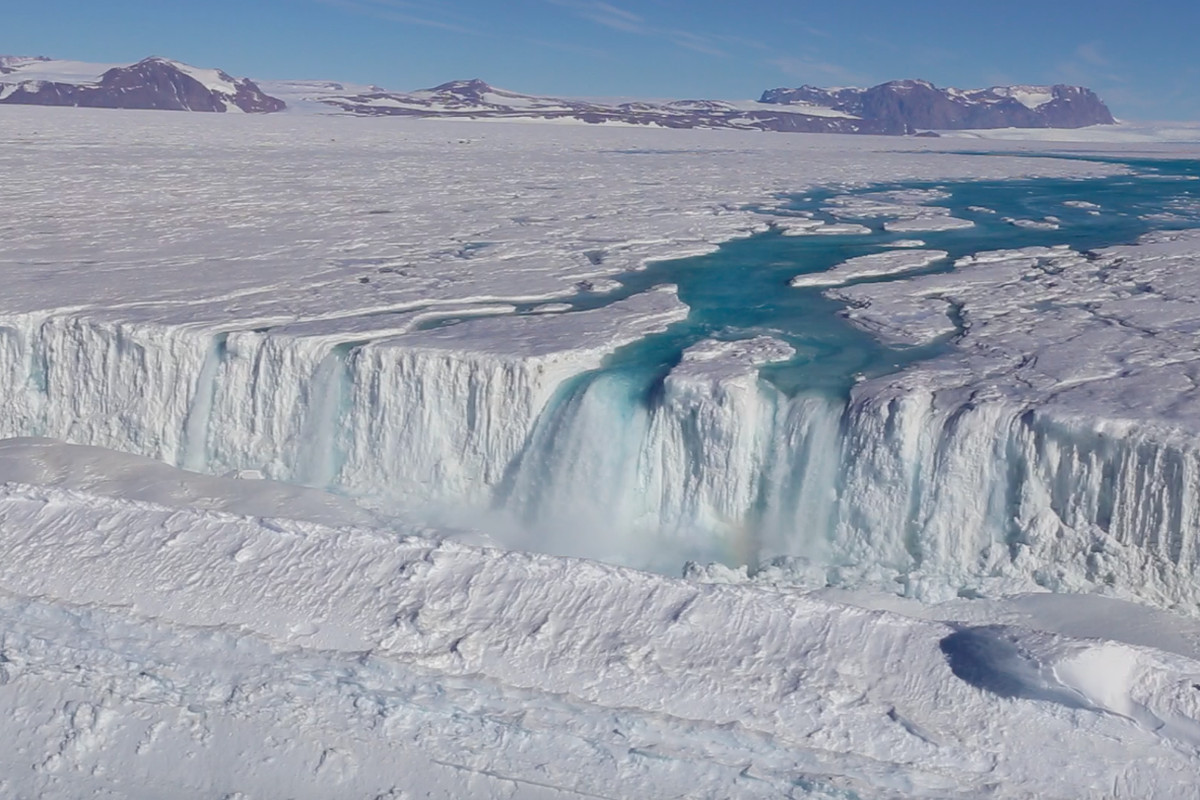
Fragment-CraigRussellCraig Russell begins his eco-thriller Fragment with a TV interview of glaciologist Kate Sexsmith in Scott Base Antarctica. The interview is interrupted by what turns out to be four runaway glaciers that have avalanched into the back of the Ross Ice Shelf and a fragment the size of Switzerland surges out into the open sea. Hence the title: Fragment.

The original slide / wave and ensuing tsunami wipes out both Scott Station and the American McMurdo Station. The TV station records the moment:

Where Kate had stood to touch the map of Antarctica moments before, something hit the wall like an artillery round. It left a ragged hole through wall and map alike, framing an eerie light-show. A sheet of jewels flickered, glinting greens and blues, until a white mountain appeared and the screen went black.

Ross Ice Shelf 4

Ross Ice Shelf, Antartica

With astute prescience, Russell reveals humanity’s behaviour in the stress of such a momentous event: from scientists who understand the global significance of this rogue fragment to those who minimize its effect such as the media and tourist industry who wish to exploit this anomaly and self-centred politicians obsessed with protecting their status.

antarctic-glaciers

Antartica


snowball in senate

Senator Inhofe and infamous snow ball

My first thought was: he’s stereotyping a little. Then COVID-19 broke out to become a global pandemic. The reactions of scientists, media and certain politicians (e.g. the Trumps of the world) have played out with COVID-19 just as Russell had predicted with Fragment. Then again, good science fiction reaches deeply into a society’s core being, our motivations, fears and strengths; this is why science fiction is so eerily good at predicting. The best way to predict possibilities of the future is to understand the present and, as Russell demonstrates, science fiction writers are in touch with the zeitgeist of the world.

Reflecting the American government’s ridiculous denial of climate change, and calling to mind Republican Senator Inhofe’s snow ball in the senate scene, Russell’s character David Rookland (Washington’s Science Advisor) uses the glacier avalanche and fragment that he (purposely) misunderstands to illustrate with equal lack of logic the same misguided myth: “these theorists claim that around the world, glaciers have been receding. Thankfully, as you can see in the second photo, dear old Mother Nature has proven them wrong again.”

blue whale 2

Blue whale


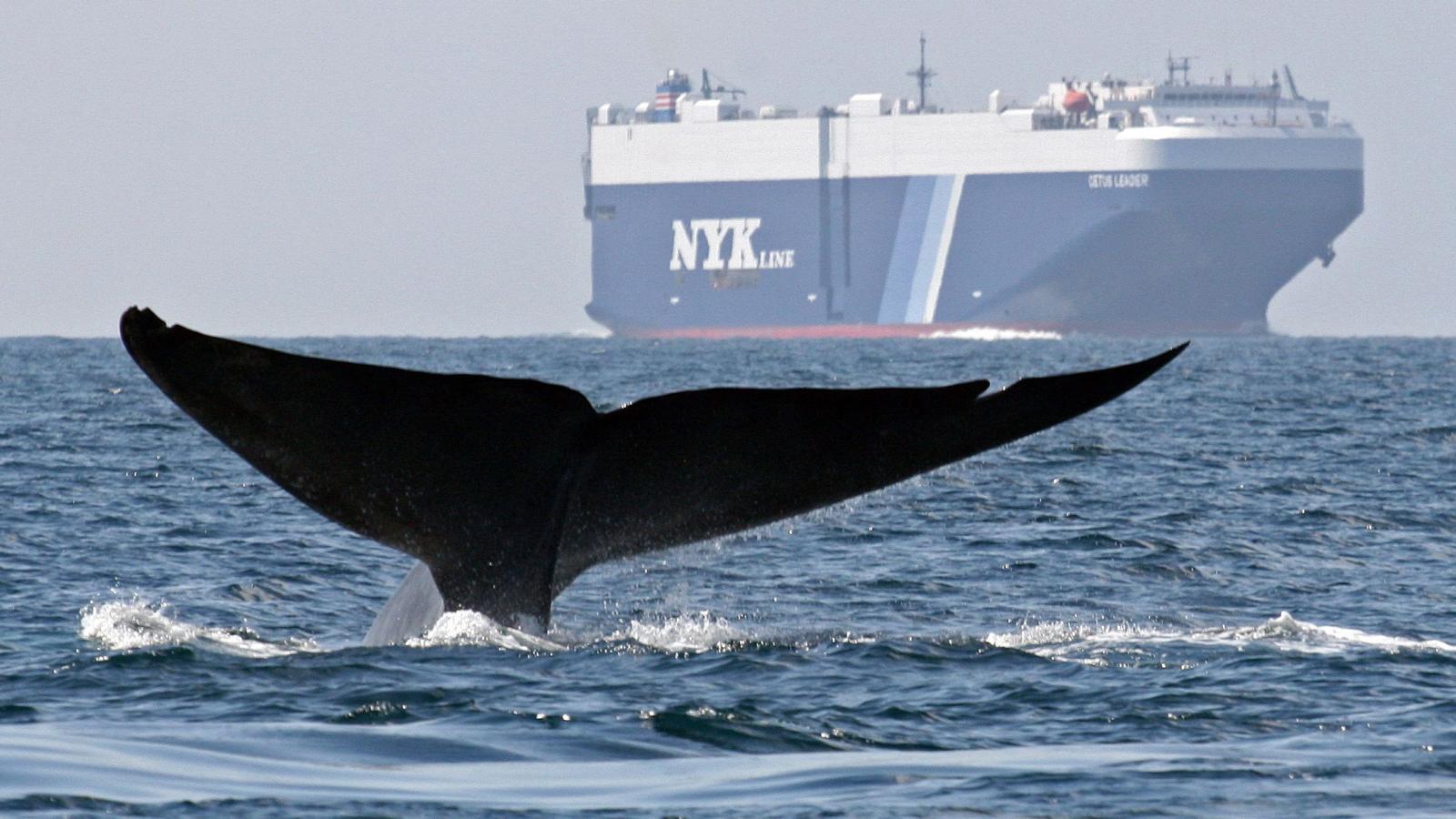
Russell’s chapters devoted to the POV of character Ring, a young blue whale also fragmented from his pod, are particularly touching and powerful. Chased alternatively by Killer whales and human hunters, Ring must warn his kind of the danger posed by the fragment. In one chapter Ring observes that “there’s a special taste to the air here, a tang carried north from the twin Smoking Mountains, which send their steamy vapors into the sky forever.”

Russell then weaves an inspiring legend among the blues about a whale named Long-Throat and the “hard/noisy things” that came to hunt. Men slaughtered so many and scattered the pods in all directions. According to the legend of Long-Throat, the faint bitter smell of the Smoking Mountains brought the pods together again. This had been a time, thinks Ring, when the pods were not afraid to be different, or of new places and strange experiences. But no more. “The Slaughter scarred his race and young Blues are fed fear with their mother’s milk. Fear that never heals, never sleeps. Fight it though he may, that fear lives inside him too.” Ring hopes that, by facing this new fear of the fragment and its incredible power to devastate (any whale caught under its massive moving force will drown), “the old fear can be allowed to sink away.” His course is clear: he must compose a new song to warn other blues. Ring ends up doing far more than sound the warning of the moving behemoth to his people when he is discovered by an American nuclear missile submarine. What follows is what I think is the real story and its magic.

Ross Ice Shelf

Ross ice shelf, Antarctica

The book is appropriately titled Fragment because in some ways the fragment is a main character, carrying the theme. It is herald, harbinger, and misunderstood by many. Its power is greatly underestimated by others, and it is set apart from its fold to become something else. Like Ring and his people. Like humanity, even. Just as the Corona virus pandemic (currently ravaging the world as I write this article) promises to change every aspect of our world, so too does the fragment.

The fragment: “….Its northern rim is a world of chaos. Pack-ice, bulldozed by the Fragment, has been swept up into a bramble, miles deep, piled up and over itself in a frozen explosion. The corpses of countless penguins lie within, broken by the onslaught. Behind this jumble rises the Wall. A hundred metres above the water line and six hundred below, the Shelf is old, formed before Columbus stumbled his way across the Atlantic. In the Fragment’s back, imbedded like spears, are vast sections of the four glaciers. Byrd, Nimrod, Beardmore, and Shackleton. Truly ancient, each is a fortress, hard as granite, laminated layer upon layer over millennia…The creatures of the sea meet the wall in their millions. The air breathers, penguins, seals, dolphins, and so on, have no hope. They swim and die, exhausted and drowned. For many of the water breathers like fish and squid, the drop in temperature near the Fragment is too much…Some species of fish, well able to withstand the cold, succumb instead to the unfamiliar fresh water that has begun to pool around the Fragment.”–Craig Russell, Fragment

In a scene near the end of the book, which could be taken out of our current COVID-19 crisis, Russell describes how carefully considered warnings by scientists are downplayed as “alarmist” resulting in devastating inaction:

When Kate Sexsmith presents a possible scenario of the Fragment smashing into Europe, the Chairman of the European Fragment Conference counters with “in that highly unlikely event” all is under control by the world community. To this dangerous platitude, Sexsmith challenges (only to receive a mealy-mouthed double-speak reply):

“Respectfully, Mr. Chairman, [says Sexsmith] the world has faced plenty of hurricanes, tidal waves, and earthquakes. But we have no historical event to compare with the Fragment. And Europe isn’t the only place in danger. There are millions of people at risk on the Caribeean islands. Many are poorly educated and have no resources of their own. When do we mov them? How do we move them? Who is prepared to take them in? And based on Stanley [which was totally destroyed by the Fragment] who is prepared to take them in on a permanent basis?”

“We are not blind to these concerns, Doctor [says the chairman]. But we must take a balanced view. We cannot simply adopt an alarmist approach. Our scientific community’s reputation for sound council is too important to risk…”

But when great disaster strikes, all peoples (whales and humanity) come together in solidarity. With new humility, kindness and wisdom. I was astonished at the way Russell pulled things together toward a unique resolution. I give Craig Russell five stars for the courage to end his book the way he did. It was pure magic. The kind of magic we all want to see more of in this currently beleaguered, divisive and consumer-obsessed world.

Antarctica ice

Antartica

As Dutch trends forecaster Li Edelkoort said of COVID-19, the Fragment “might just turn the world around for the better [as] an amazing grace for the planet.”
Antarctica melting

Antarctica melting


Whales and Intelligence:

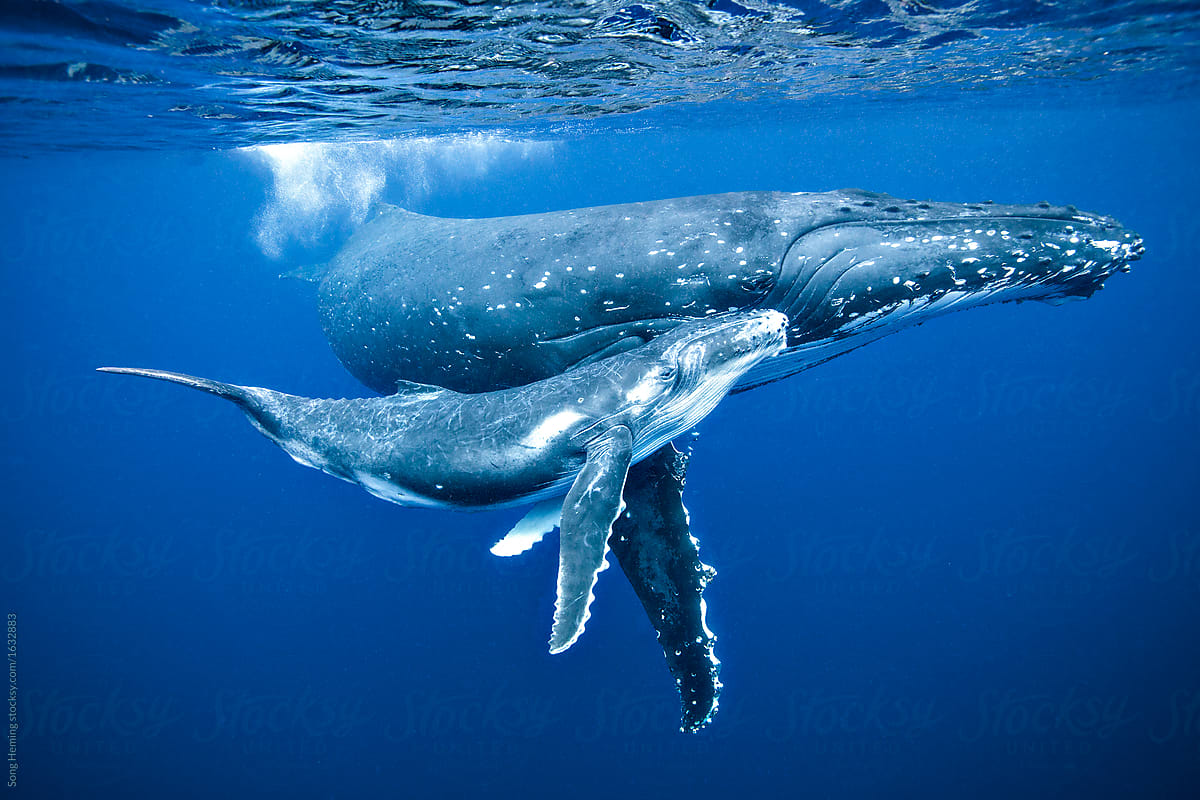
Scientists are still finding ways to assess “intelligence”, particularly in life that isn’t human. Whales have been shown to have emotional intelligence. They show signs of empathy, grief, joy, and playfulness. All of these learned behaviors, types of intelligence, and signs of teamwork have led scientists to think about groups of whales in new ways.
blue-whales-commercial-whaling-shipping-population-endangered-species-ocean-sea-whale-whaling-hunting-recovery

Blue whale

Most humans believe that our ability to communicate is far more complex and evolved than that of other animals, but cetaceans may be superior. According to a comparison of cetacean to primate brains from Michigan State University, “They have the distinct advantage over us in that their primary sense is the same as their primary means of communication, both are auditory. With primates, the primary sense is visual and the primary means of communication is auditory.” Communication is so great in cetaceans that there is a strong possibility they are able to literally project an “auditory image” that replicates a sonar message they may receive.  MSU describes it this way: “So a dolphin wishing to convey the image of a fish to another dolphin can literally send the image of a fish to the other animal. The equivalent of this in humans would be the ability to create instantaneous holographic pictures to convey images to other people.”

Specialized brain cells called spindle neurons are most often associated with an organism’s ability to “recognize, remember, reason, communicate, perceive, adapt to change, problem solve and understand.” Spindle neurons have been isolated in the brains of both whales and dolphins, which suggests that whales do a lot more thinking than previously thought. Dolphins, for example, have been known to recognize themselves in mirrors, solve problems, follow recipes, and associate a part of their anatomy with that of a human’s (such as when a dolphin waves it’s fin whenever a trainer waves their arm). Recent studies even indicate that dolphins are capable of creating personalized whistles that act as names for individual members of a pod. With this name, dolphins are able to communicate more efficiently while roaming the open seas.
mother calf humpback whale

Mother humpback and her calf

In a Scientific American article entitled “Are Whales Smarter Then We Are?” R. Douglas Fields writes: Logically, brain function and intelligence must relate to the number of neurons. Intelligence resides in the neocortex (the thin, convuluted “rind” of the brain) rather than in other, underlying areas devoted to controlling vital housekeeping functions for the body, so Eriksen and Pakkenberg focused their investigation there. The frontal lobes of the dolphin brain are comparatively smaller than in other mammals, but the researchers found that the neocortex of the Minke whale was surprisingly thick. The whale neocortex is thicker than that of other mammals and roughly equal to that of humans (2.63 mm). However, the layered structure of the whale neocortex is known to be simpler than that of humans and most other mammals. In particular, whales lack cortical layer IV, and thus have five neocortical layers to humankind’s six. This means that the wiring of connections into and out of the neocortex is much different in whales than in other mammals. The researchers’ cellular census revealed that the total number of neocortical neurons in the Minke whale was 12.8 billion. This is 13 times that of the rhesus monkey and 500 times more than rats, but only 2/3 that of the human neocortex. What can account for the fact that whales have bigger brains — and similarly thick neocortexes — but fewer neurons? Eriksen and Pakkenberg found that there were 98.2 billion non-neuronal cells, called glia, in the Minke whale neocortex. This is the highest number of glial cells in neocortex seen in any mammal studied to date. The ratio of neocortical glial cells to neocortical neurons is 7.7 to 1 in Minke whales and only 1.4 to 1 in humans. This finding may indicate a tendency for larger glia/neuron ratios as brain mass increases to support the growing neurons. But when one considers other recent research revealing that glia play an important role in information processing (see “The Other Half of the Brain,” fromn Sci. Am. April 2004), one is left to wonder. Is the whale brain intellectually weaker than the human brain, or just different? They have fewer neurons but more glia, and in traditional views of the glia, the neurons count for much more.

In her article in One Green Planet entitled “Whales and Dolphins Might Be The Smartest Animals”, Madison Montgomery leaves us a strong message and exhortation: “While it appears that cetaceans have incredible abilities to feel emotions, understand complex problems and communicate in ways we can’t even imagine, humans don’t seem to value this. Because we assume we are so smart, we put the other creatures of the world underneath us. Knowing how dynamic cetaceans are, keeping them in glorified bathtubs and forcing them to do tricks for food is insulting and cruel. Could you imagine the pain of living in a small room your entire life and having to do flips to be fed? Sounds like a miserable existence, doesn’t it?”

As a postscript, Fragment was selected by the American National Oceanic and Atmospheric Administration (NOAA) for their “Planet Stewards” 2023-2024 Book Club.

nina-2014aaa

Nina Munteanu is a Canadian ecologist / limnologist and novelist. She is co-editor of Europa SF and currently teaches writing courses at George Brown College and the University of Toronto. Visit www.ninamunteanu.ca for the latest on her books. Nina’s bilingual “La natura dell’acqua / The Way of Water” was published by Mincione Edizioni in Rome. Her non-fiction book “Water Is…” by Pixl Press (Vancouver) was selected by Margaret Atwood in the New York Times ‘Year in Reading’ and was chosen as the 2017 Summer Read by Water Canada. Her novel “A Diary in the Age of Waterwill be released by Inanna Publications (Toronto) in June 2020.


A Diary in the Age of Water: The Rocky Mountain Trench Inland Sea

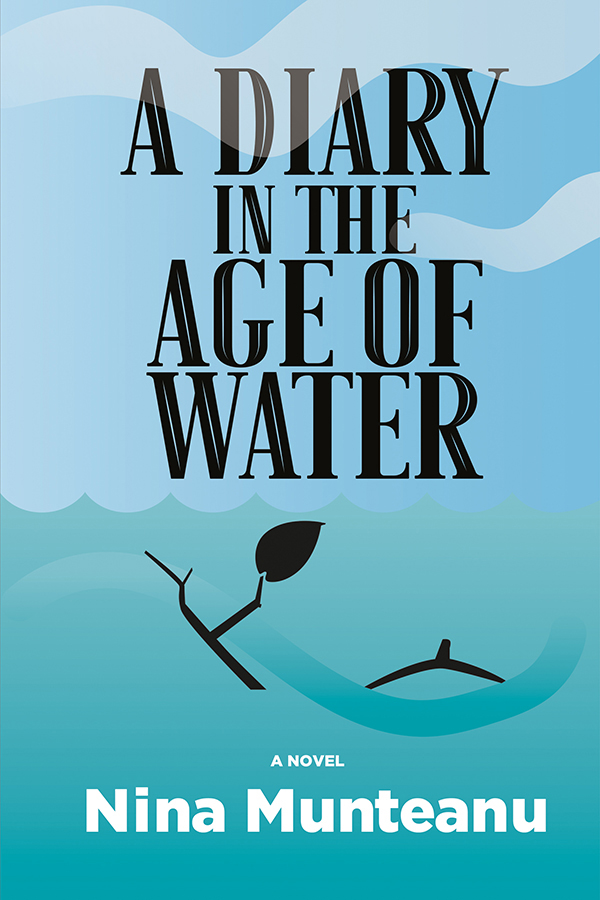
Diary Water cover finalIn my novel A Diary in the Age of Water (Inanna Publications) the diarist writes about the huge 800-km reservoir complex built in the late 2020s in the Rocky Mountain Trench to rehydrate the United States. Of course, it’s science fiction, but it was based on real plans that went all the way to Congress in the 1960s.

Snaking along the length of the Rocky Mountain Trench, the reservoir promised to submerge numerous British Columbia towns such as Dunster, McBride and Valemount and pose an existential threat to northern communities of BC and Alaska.

The Trench

The Rocky Mountain Trench is a long and deep valley walled by sedimentary, volcanic and igneous rock that extends about 1,500 km from Flathead Lake and the ‘banana but’ of the Bitterroot Valley of western Montana through British Columbia to the Liard Plain just south of the Yukon Territory. Blanketed mostly by white and black spruce, subalpine fir and lodgepole pine, the northern trench stretches 3–20 km wide to accommodate the major river systems that snake along its mostly flat floor. This rich ecosystem is home to bears, caribou, moose and wolves. To the south, where the valley meanders more at lower elevation, the forest opens up and gives way to grasslands, marsh and farmland. The Trench is sometimes referred to as the “Valley of a Thousand Peaks” because of the towering mountain ranges on either side: the Rocky Mountains to the east and the Columbia, Omineca and Cassiar mountains to the west.

The Trench is a large fault—a crack in the Earth’s crust—and bordered along much of its length by smaller faults. Major structural features resulted from the shifting and thrusting of tectonic plates of the crust during the early Cenozoic Era, some 65 million years ago to form mountains. The ridges of fractured crust then pulled apart and the land in between dropped, creating the floor of the Trench.

RMT near Golden-south of Kinbasket

Rocky Mountain Trench, near Golden, B.C.

Among the major rivers that flow through the trench are the Fraser, Liard, Peace and Columbia rivers. Construction of hydroelectric projects—particularly those at Peace Canyon and Mica Dam—have disrupted the seven major rivers that once flowed through the Trench. All but the Fraser and Kechika rivers now empty into reservoirs on the valley floor; these include several reservoirs along the Columbia River in the southern trench such as the Kinbasket reservoir (created by the Mica Dam in 1973 to form Canoe Reach), and Revelstoke Lake (created by the Revelstoke Dam in 1984). Williston Lake was formed by the A.C. Bennet Dam on the Peace River in 1968. I had studied the effects of pulp mill activities for the federal government’s Environmental Effects Monitoring (EEM) Program.

Mackenzie-RMT

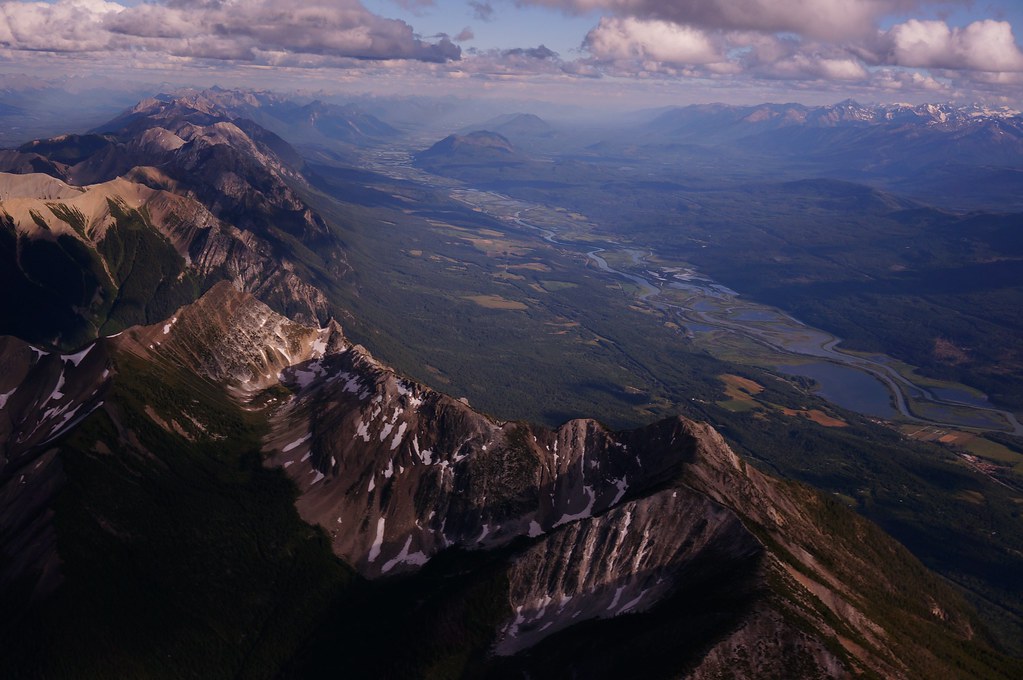
The Rocky Mountain Trench is topographically visible as it follows the BC-Alberta border south from Williston Lake

The Inland Sea

Like pseudopods of a hunting amoeba, the Rocky Mountain Trench reservoir system would have sent tendrils of water up river arms, and drowned swaths of ancient oroboreal rainforest. The rainforest corridor of Robson Valley—a conservation area that continues to experience existential risk due to development, resource harvest, and other disturbance—would have been one of the many casualties.

Cedar base-old growth copy 2

Ancient Redcedars in old-growth rainforest (photo by Nina Munteanu)

Una stopped the car and we stared out across the longest reservoir in North America. What had once been a breathtaking view of the valley floor of the Rocky Mountain Trench was now a spectacular inland sea. It ran north-south over eight hundred kilometres and stretched several kilometres across to the foothills of the Cariboo Mountain Range. Una pointed to Mount Mica, Mount Pierre Elliot Trudeau and several other snow-covered peaks. They stood above the inland sea like sentinels of another time. Una then pointed down to what used to be Jackman Flats—mostly inundated along with McLellan River and the town of Valemont to the south. Hugging the shore of what was left of Jackman Flats was a tiny village. “That’s the new Tête Jaune Cache,” my mother told me.

If villages had karma this one was fated to drown over and over until it got it right.  Once a bustling trading town on the Grand Trunk Pacific railway, Tête Jaune Cache drowned in the early 1900s when the Fraser naturally flooded. The village relocated to the junction of the original Yellowhead 16 and 5 Highways. Villagers settled close to where the Fraser, Tête Creek, and the McLellan River joined, all fed by the meltwater from the glaciers and icefields of the Premiere Range of the Cariboo Mountains. The village drowned again in 2025. I imagined the pool halls, restaurants, saloons and trading posts crushed by the flood.

“This area used to be a prime Chinook spawning ground,” Una said. “They swam over 1,200 km from the Pacific Ocean to lay their eggs right there.” She pointed to the cobalt blue water below us.

Kinbasket Lake-RMT

Kinbasket Reservoir

The reservoir sparkled in the sun like an ocean. Steep shores rose into majestic snow-capped mountains. The village lay in a kind of cruel paradise, I thought. It was surrounded by a multi-hued forest of Lodgepole pine, Western red cedar, Douglas fir, paper birch and trembling Aspen. Directly behind the village was Mount Terry Fox and across the Robson valley mouth, to the northeast, rose Mount Goslin. Behind it, Mount Robson cut a jagged pyramid against a stunning blue sky. Wispy clouds veiled its crown. I couldn’t help thinking it was the most beautiful place I’d seen. And yet, for all its beauty, the villagers had lost their principle livelihood and food. The reservoir had destroyed the wildlife habitats and the fishery. And its people with it.

Una pointed to where the giant reservoir snaked northwest and where towns like Croydon, Dunster, and McBride lay submerged beneath a silent wall of water. Her eyes suddenly misted as she told me about Slim Creek Provincial Park, between what used to be Slim and Driscoll Creeks just northwest of what used to be the community of Urling. She told me about the Oroboreal rainforest, called an “Antique Rainforest”—ancient cedar-hemlock stands over a 1000-years old. She described how massive trunks the width of a small house once rose straight up toward a kinder sun. The Primordial Grove was once home to bears, the gray wolf, cougar, lynx, wolverine and ungulates. It was the last valley in North America where the grizzly bear once fished ocean-going salmon. Now even the salmon were no longer there, she said. Then she bent low beside me and pulled me close to her in a hug. She quietly said to me, “This is what killed Trudeau.”

I stared at her and firmly corrected, “but that was an accident.”

“Yes,” she agreed. Then added, “a planned one.”

A Diary in the Age of Water

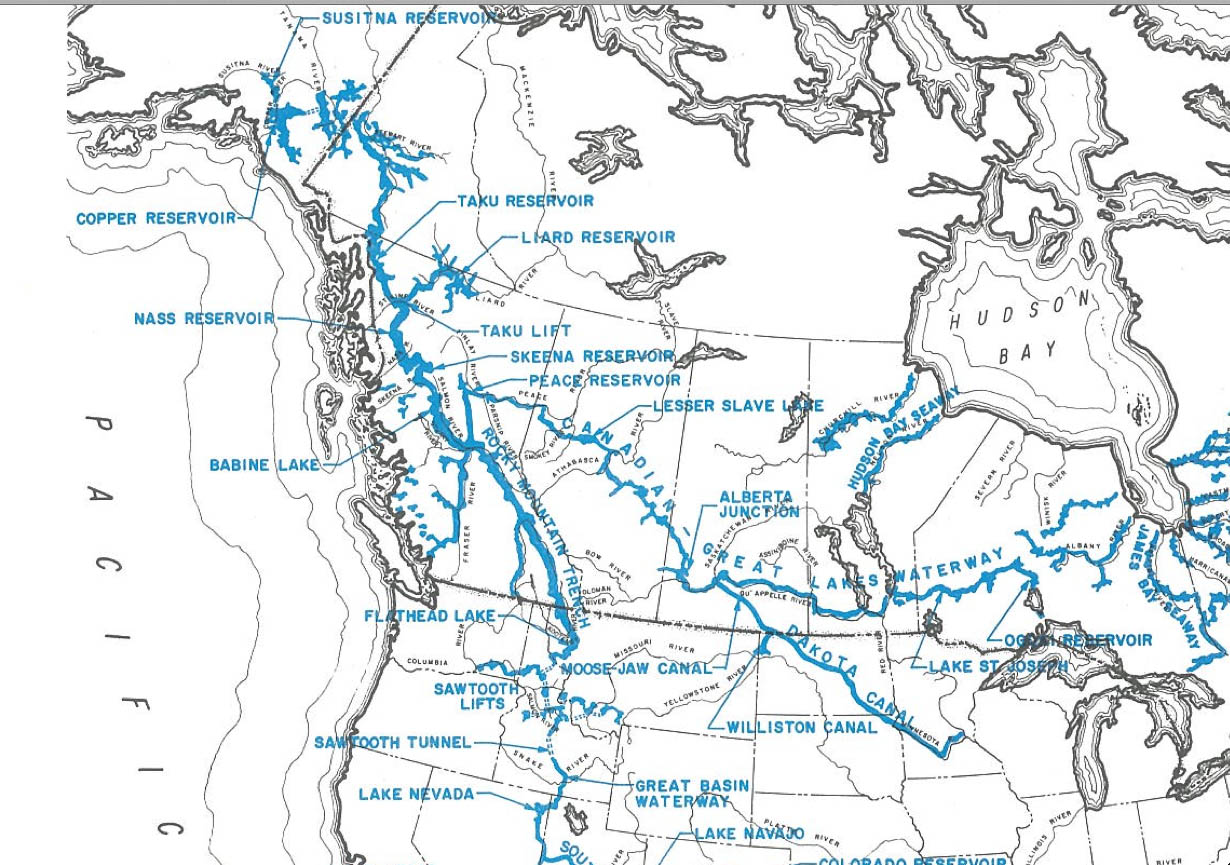
NAWAPA (North America Water Power Alliance)

The original NAWAPA Plan was drawn up by the Pasadena-based firm of Ralph M. Parsons Co. in 1964, and had a favorable review by Congress for completion in the 1990s. The plan—thankfully never completed—was drafted by the US Army Corps of Engineers and entailed the southward diversion of a portion (if not all) of the Mackenzie and Yukon rivers in northern Canada and Alaska, now flowing into the Arctic Ocean as well as the Peace, Liard and other rivers flowing into the Pacific by creating massive dams in the north. This would cause the rivers to flow backwards into the mountains to form vast reservoirs that would flood one-tenth of British Columbia. The water would be channeled south through the 800-km Rocky Mountain Trench Reservoir into the Northern USA, and from there along various routes into the dry regions of the South, to California and reaching as far as Mexico.

NAWAPA proposal Ralph M. ParsonsCo-1960s copy

NAWAPA was envisioned as the largest construction effort of all times, comprising some 369 separate projects of dams, canals, and tunnels, for water diversion. The water diversion would be accomplished through a series of connecting tunnels, canals, lakes, dams, and pump-lifts, as the trench itself is located at an elevation of 914 m (3,000 feet). To the east, a 9 m (thirty-foot) deep canal would be cut from the Peace River to Lake Superior. NAWAPA’s largest proposed dam would be 518 m (1,700 feet) tall, more than twice the height of Hoover Dam (at 221 m) and taller than any dam in the world today, including the Jinping-I Dam in China (at 305 m).

Conspiracy theorist and convicted fraudster Lyndon LaRouche was a principle proponent of the environmentally destructive NAWAPA plan. Although the plan was scrapped in the 1970s due to environmental concerns, it resurfaced in 1982 particularly by Parsons engineer Roland Kelley, who wrote a report called NAWAPA Plan Can Work. LaRouche and his movement revived interest more recently. In 2012 the LaRouche Political Action Committee released their NAWAPA XXI special report, which contained a detailed plan for the revival of an updated and expanded version of NAWAPA. The LaRouche movement continues to promote this outlandish plan today with support from various American politicians and industrialists.

In his book Cadillac Desert, environmental writer Marc Reisner described the plan as one of “brutal magnificence” and “unprecedented destructiveness.” Historian Ted Steinberg suggested that NAWAPA summed up “the sheer arrogance and imperial ambitions of the modern hydraulic West.”

NAWAPA copy 2

Expanded NAWAPA XXI plan

Rocky Mountain Trench near Radium Hot Springs, BC

Rocky Mountain Trench near Radium Hot Springs

nina-2014aaa

Nina Munteanu is a Canadian ecologist / limnologist and novelist. She is co-editor of Europa SF and currently teaches writing courses at George Brown College and the University of Toronto. Visit www.ninamunteanu.ca for the latest on her books. Nina’s bilingual “La natura dell’acqua / The Way of Water” was published by Mincione Edizioni in Rome. Her non-fiction book “Water Is…” by Pixl Press (Vancouver) was selected by Margaret Atwood in the New York Times ‘Year in Reading’ and was chosen as the 2017 Summer Read by Water Canada. Her novel “A Diary in the Age of Waterwill be released by Inanna Publications (Toronto) in June 2020.

The Ecology of Story: Revealing Hidden Characters of the Forest

 Story is place, and place is character—Nina Munteanu

EcologyOfStory coverI remember a wonderful conversation I had several years ago at a conference with another science fiction writer on weird and wonderful protagonists and antagonists. Derek knew me as an ecologist—in fact I’d been invited to do a lecture at that conference entitled “The Ecology of Story” (also the name of my writing guidebook on treating setting and place as a character). We discussed the role that ecology plays in creating setting that resonates with theme and how to provide characters enlivened with metaphor.
Derek was fascinated by saprotrophs and their qualities. Saprotrophs take their nutrition from dead and decaying matter such as decaying pieces of plants or animals by dissolving them and absorbing the energy through their body surface. They accomplish this by secreting digestive enzymes into the dead/decaying matter to absorb the soluble organic nutrients. The process—called lysotrophic nutrition—occurs through microscopic lysis of detritus. Examples of saprotrophs include mushrooms, slime mold, and bacteria.

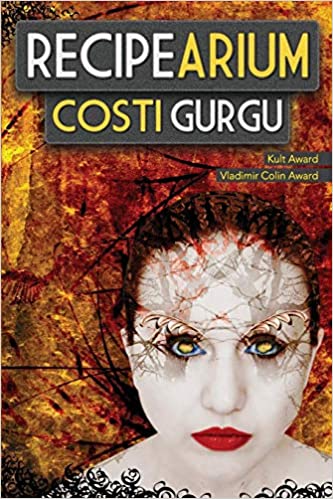
Recipearium CostiGurguI recall Derek’s eagerness to create a story that involved characters who demonstrate saprotrophic traits or even were genuine saprotrophs (in science fiction you can do that—it’s not hard. Check out Costi Gurgu’s astonishing novel Recipearium for a thrilling example). I wonder if Derek fulfilled his imagination.

I think of what Derek said, as I walk in my favourite woodland. It is early spring and the river that had swollen with snow melt just a week before, now flows with more restraint. I can see the cobbles and clay of scoured banks under the water. Further on, part of the path along the river has collapsed from a major bank scour the previous week. The little river is rather big and capricious, I ponder; then I consider that the entire forest sways to similar vagaries of wind, season, precipitation and unforeseen events. Despite its steadfast appearance the forest flows—like the river—in a constant state of flux and change, cycling irrevocably through life and death.

Cedar trunk base

Cedar tree (photo by Nina Munteanu)

As I’m writing this, the entire world struggles with life and death in the deep throws of a viral pandemic. COVID-19 has sent many cities into severe lock down to prevent viral spread in a life and death conflict. I’ve left the city and I’m walking in a quiet forest in southern Ontario in early spring. The forest is also experiencing life and death. But here, this intricate dance has seamlessly partnered death and decay with the living being of the forest. Without the firm embrace of death and decay, life cannot dance. In fact, life would be impossible. What strikes me here in the forest is how the two dance so well.

cedar log patterns2 copy

Cedar log, patterns in sapwood (photo by Nina Munteanu)

I walk slowly, eyes cast to the forest floor to the thick layer of dead leaves, and discover seeds and nuts—the promise of new life. I aim my gaze past trees and shrubs to the nearby snags and fallen logs. I’m looking for hidden gifts. One fallen cedar log reveals swirling impressionistic patterns of wood grain, dusted with moss and lichen. Nature’s death clothed in beauty.

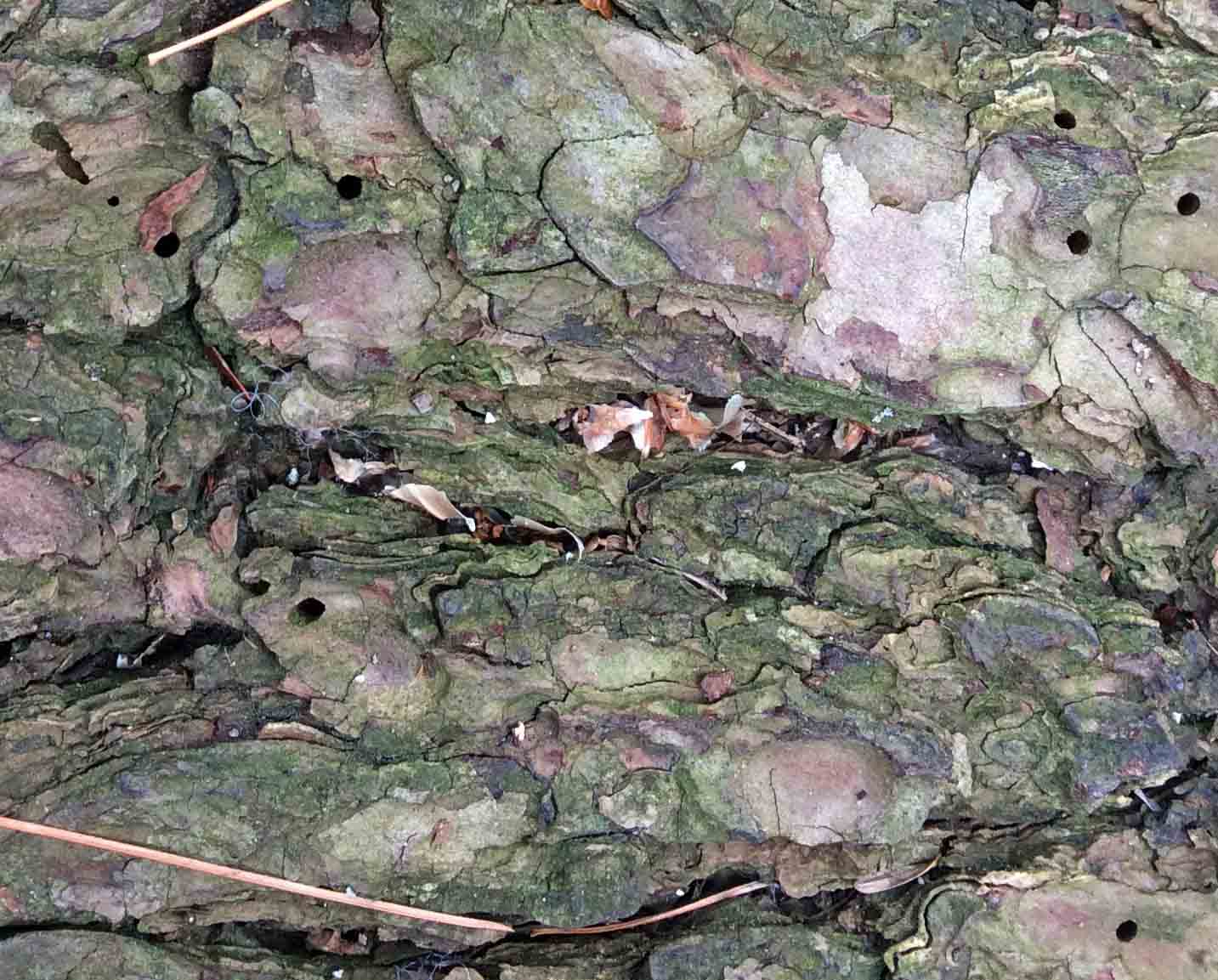
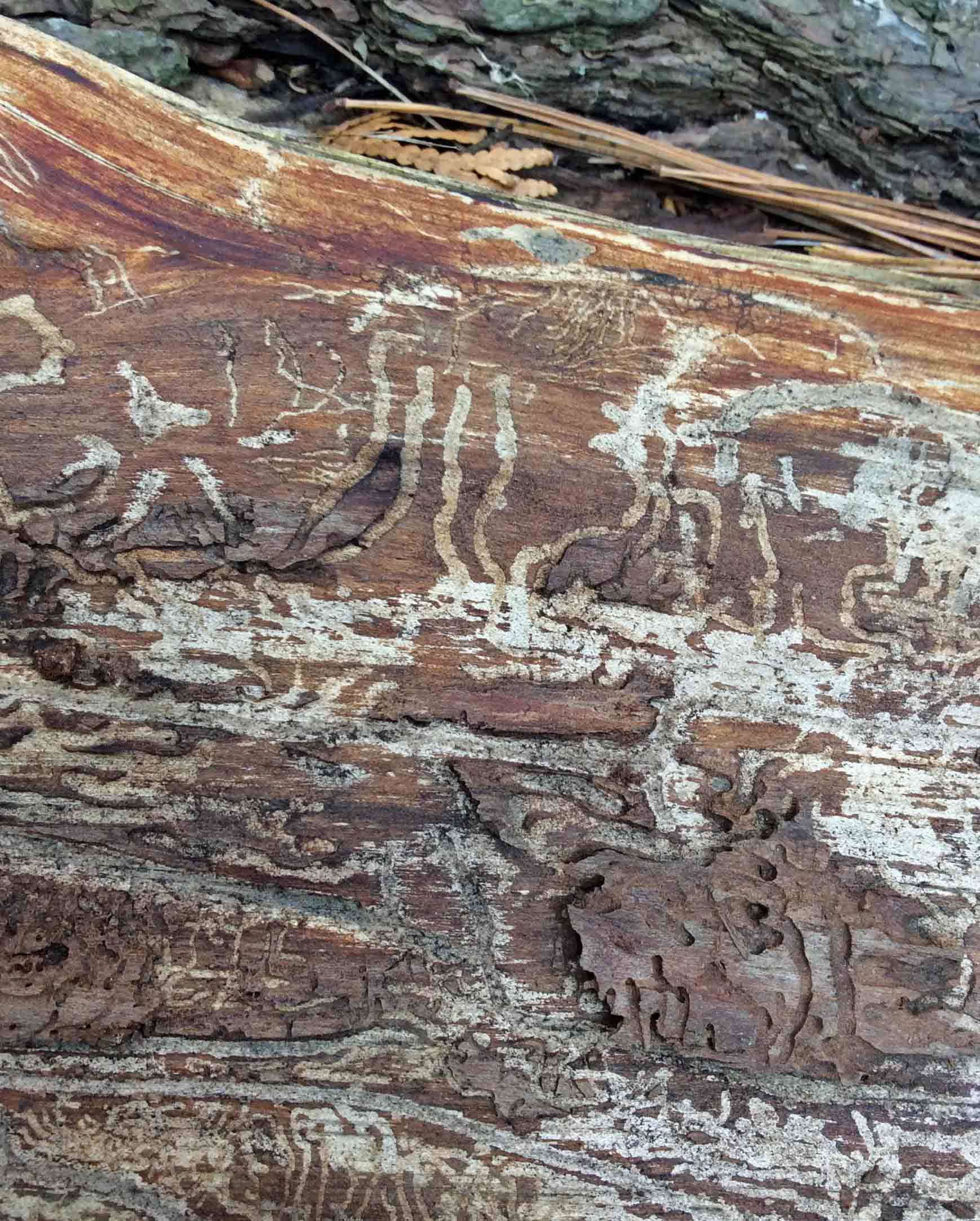
The bark of a large pine tree that has fallen is riddled with tiny beetle holes drilled into its bark. Where the bark has sloughed off, a gallery of larval tracks in the sapwood create a map of meandering texture, form and colour.

Beetle bore holes pine log

White pine bark scales with tiny beetle bore holes, Little Rouge, ON (photo by Nina Munteanu)

larval tracks in pine wood

Beetle larval tracks in pine sapwood (photo by Nina Munteanu)

Nearby, another giant pine stands tall in the forest. Its roughly chiselled bark is dusted in lichens, moss and fungus. The broad thick ridges of the bark seem arranged like in a jigsaw puzzle with scales that resemble metal plates. They form a colourful layered mosaic of copper to gray and greenish-gray. At the base of the tree, I notice that some critter has burrowed a home in a notch between two of the pine’s feet. Then just around the corner, at the base of a cedar, I spot several half-eaten black walnuts strewn in a pile—no doubt brought and left there by some hungry and industrious squirrel who prefers to dine here.

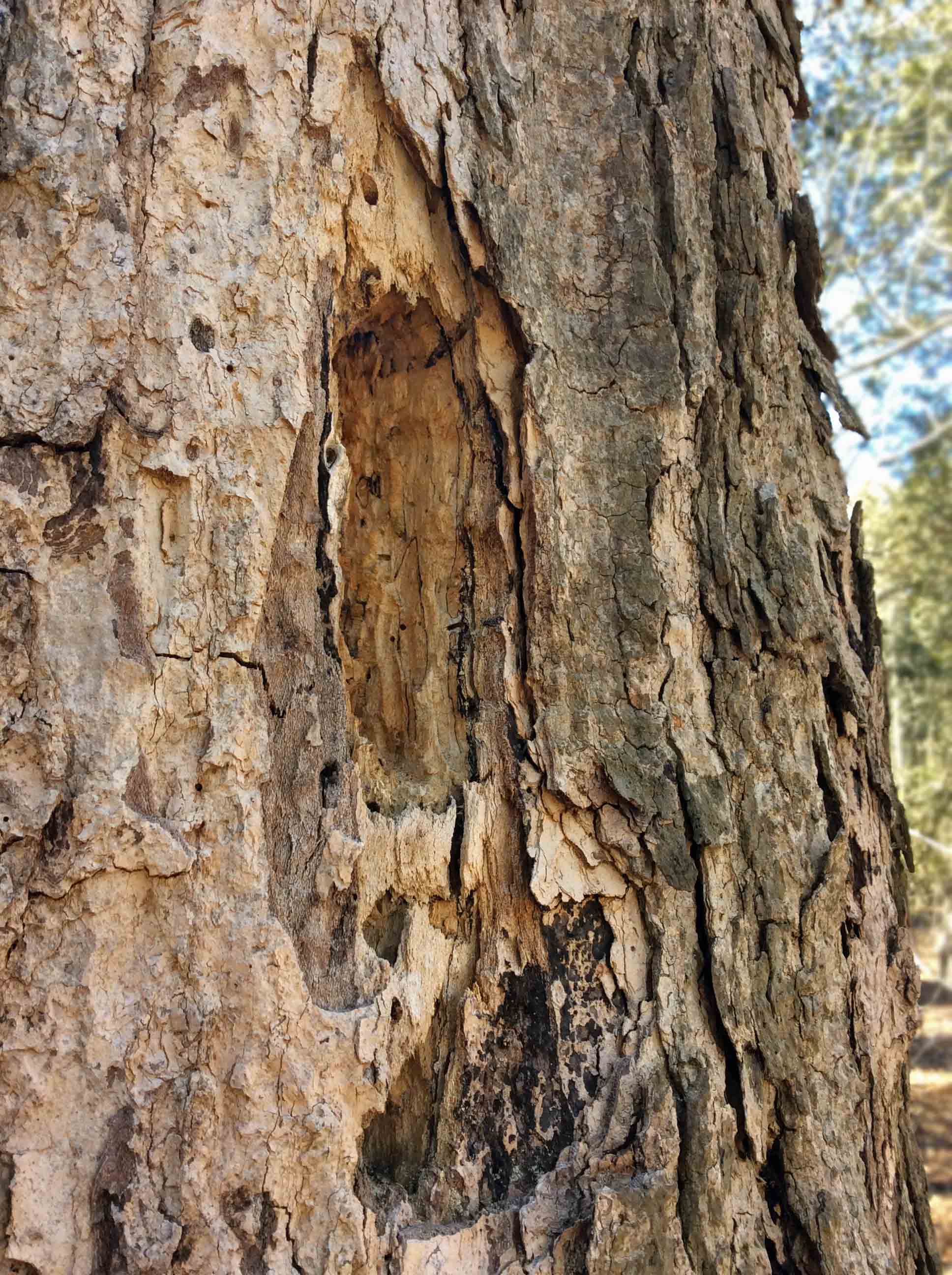
The forest is littered with snags and fallen trees in different stages of breakdown, decomposition and decay. I spot several large cedar, pine, oak and maple snags with woodpecker holes. The snags may remain for many decades before finally falling to the ground.

Fallen Heroes, Mother Archetypes & Saprophyte Characters

WoodpeckerHole on cedar

Woodpecker hole in a snag (photo by Nina Munteanu)

The forest ecosystem supports a diverse community of organisms in various stages of life and death and decay. Trees lie at the heart of this ecosystem, supporting a complex and dynamic cycle of evolving life. Even in death, the trees continue to support thriving detrivore and saprophytic communities that, in turn, provide nutrients and soil for the next generation of living trees. It’s a partnership.

Decomposition and decay are the yin to the yang of growth, writes Trees for Life; and together they form two halves of the whole that is the closed-loop cycle of natural ecosystems.

Snags and rotting logs on the forest floor provide damp shelter and food for many plants and animals. Most are decomposers, including earthworms, fungi, and bacteria. As the wood decays, nutrients in the log break down and recycle in the forest ecosystem. Insects, mosses, lichens, and ferns recycle the nutrients and put them back into the soil for other forest plants to use. Dead wood is an important reservoir of organic matter in forests and a source of soil formation. Decaying and dead wood host diverse communities of bacteria and fungi.

TurkeyTail fungus on tree-LR

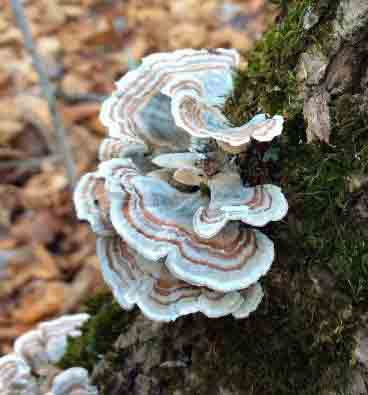
Turkey tail fungus, Little Rouge woodland (photo by Nina Munteanu)

Mother Archetypes

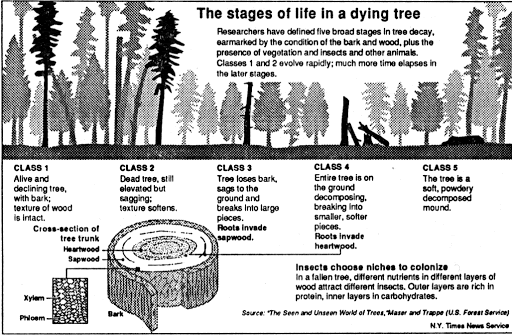
Wood tissues of tree stems include the outer bark, cork cambium, inner bark (phloem), vascular cambium, outer xylem (living sapwood), and the inner xylem (non-living heartwood). The outer bark provides a non-living barrier between the inner tree and harmful factors in the environment, such as fire, insects, and diseases. The cork cambium (phellogen) produces bark cells. The vascular cambium produces both the phloem cells (principal food-conducting tissue) and xylem cells of the sapwood (the main water storage and conducting tissue) and heartwood.

stages of tree life

Forest ecologists defined five broad stages in tree decay, shown by the condition of the bark and wood and presence of insects and other animals. The first two stages evolve rapidly; much more time elapses in the later stages, when the tree sags to the ground. These latter stages can take decades for the tree to break down completely and surrender all of itself back to the forest. A fallen tree nurtures, much like a “mother” archetype; it provides food, shelter, and protection to a vast community—from bears and small mammals to salamanders, invertebrates, fungus, moss and lichens. This is why fallen trees are called “nursing logs.”

uprooted stump carbon cushion fungus

Uprooted tree covered in fungi, lichen and moss, Little Rouge, ON (photo by Nina Munteanu)


Heralds, Tricksters and Enablers

rotting maple log2

Rotting maple log (photo by Nina Munteanu)

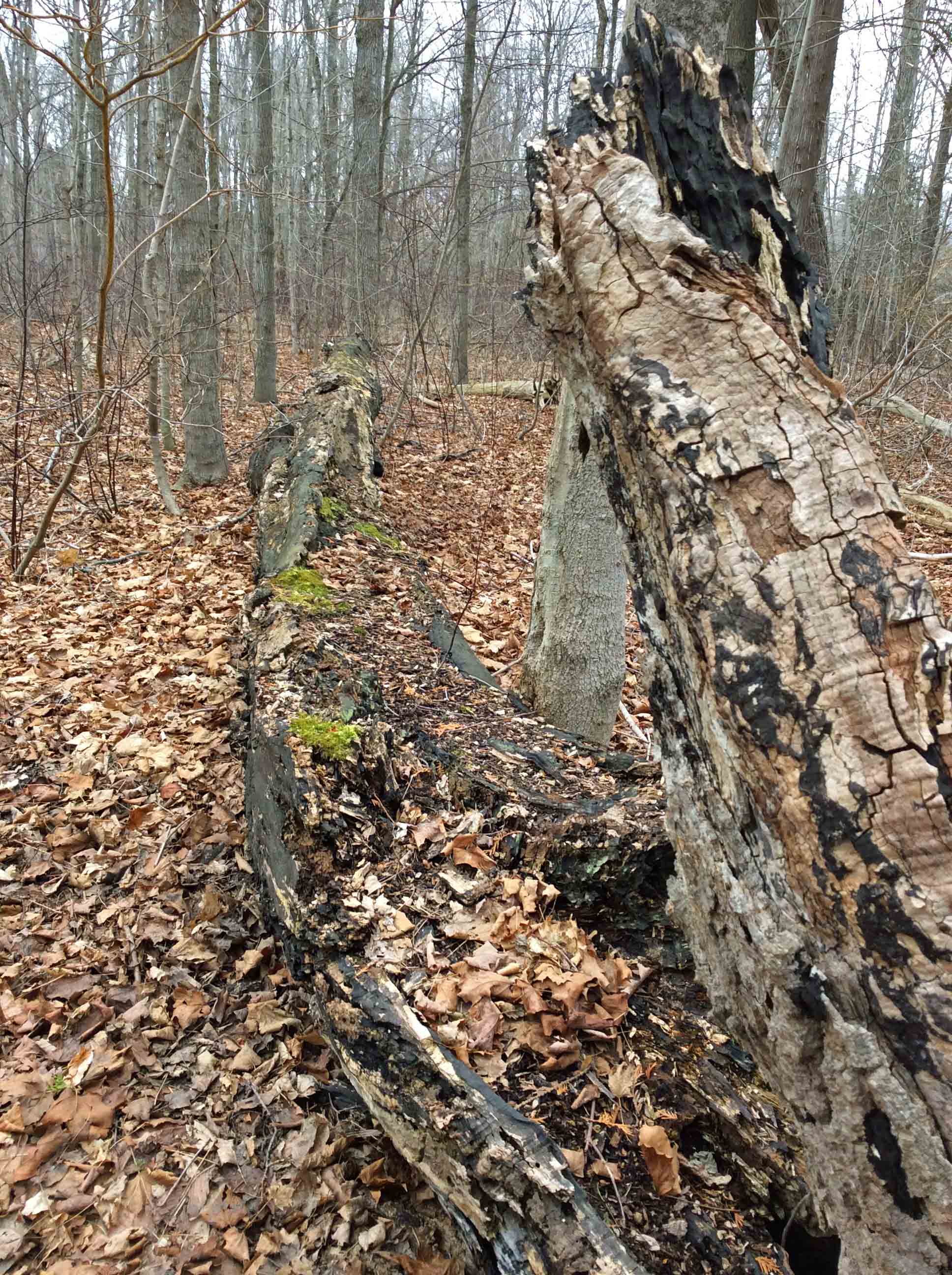
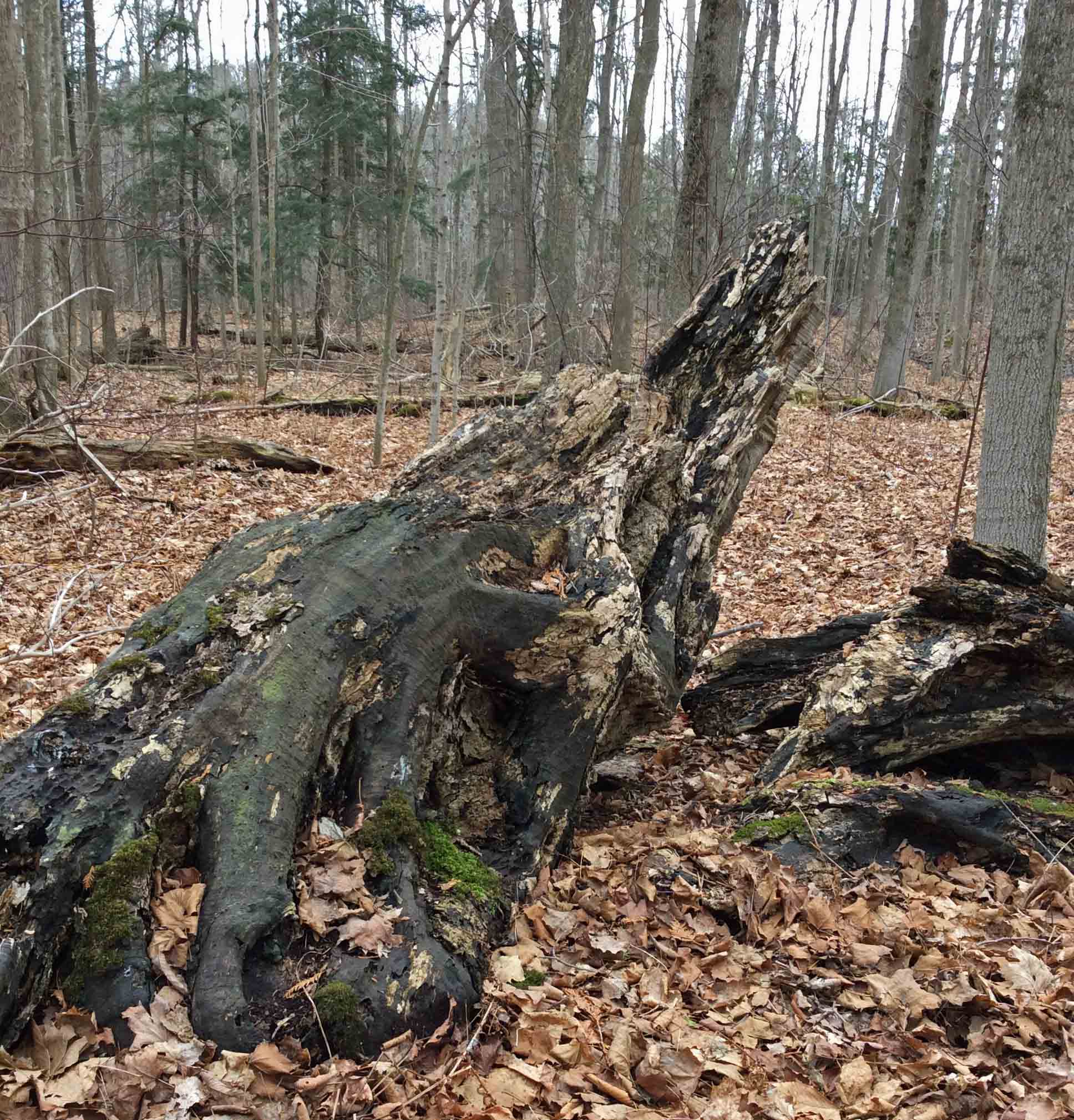
I stop to inspect another fallen tree lying on a bed of decaying maple, beech and oak leaves. When a fallen tree decomposes, unique new habitats are created within its body as the outer and inner bark, sapwood, and heartwood decompose at different rates, based in part on their characteristics for fine dining. For instance, the outer layers of the tree are rich in protein; inner layers are high in carbohydrates. This log—probably a sugar maple judging from what bark is left—has surrendered itself with the help of detrivores and saprophytes to decomposition and decay. The outer bark has mostly rotted and fallen away revealing an inner sapwood layer rich in varied colours, textures and incredible patterns—mostly from fungal infestations. In fact, this tree is a rich ecosystem for dozens of organisms. Wood-boring beetle larvae tunnel through the bark and wood, building their chambers and inoculating the tree with microbes. They open the tree to colonization by other microbes and small invertebrates. Slime molds, lichen, moss and fungi join in. The march of decay follows a succession of steps. Even fungi are followed by yet other fungi in the process as one form creates the right condition for another form.

rotting maple log

Rotting maple log, covered in carbon cushion fungus, Little Rouge, ON (photo by Nina Munteanu)

Most hardwoods take several decades to decompose and surrender all of themselves back to the forest. In western Canada in the westcoast old growth forest, trees like cedars can take over a hundred years to decay once they’re down. The maple log I’m studying in this Carolinian forest looks like it’s been lying on the ground for a while, certainly several years. The bark has fragmented and mostly fallen away, revealing layers of sapwood in differing stages of infestation and decay. Some sapwood is fragmented and cracked into blocks and in places looks like stacked bones.

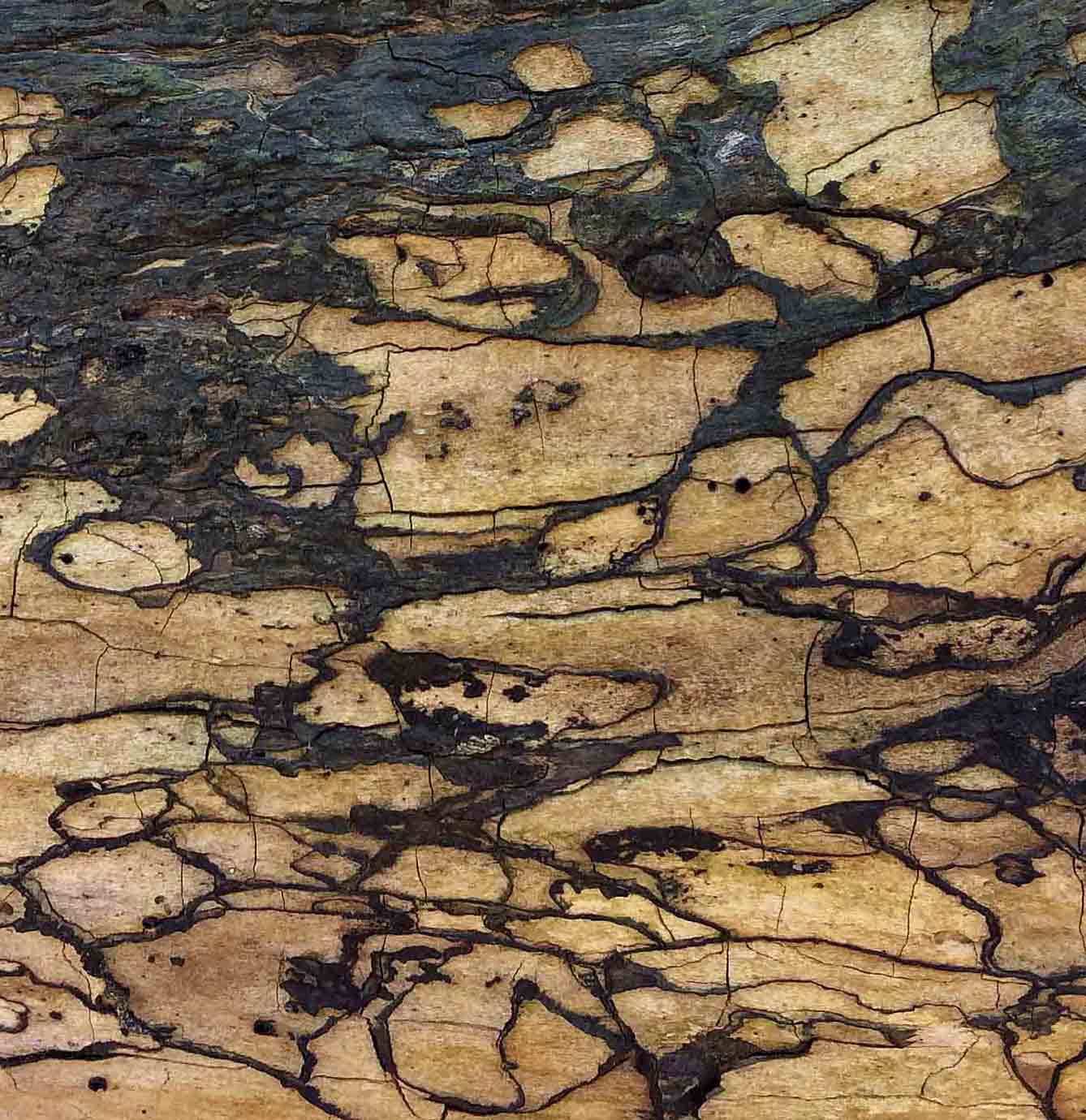
Black lines as though drawn by a child’s paintbrush flow through much of the sapwood; these winding thick streaks of black known as “zone lines” are in fact clumps of dark mycelia, which cause “spalting,” the colouration of wood by fungus. According to mycologist Jens Petersen, these zone lines prevent “a hostile takeover by mycelia” from any interloping fungi. Most common trees that experience spalting include birch, maple, and beech. Two common fungi that cause spalting have colonized my maple log. They’re both carbon cushion fungi.

Spalting

Spalting through zone lines by carbon cushion fungus, Little Rouge, ON (photo by Nina Munteanu)

hypoxylon-close

Hypoxylon fungus (photo N. Munteanu)

Brittle cinder (Kretzschmaria deusta) resembles burnt wood at maturity. Deusta means “burned up” referring to the charred appearance of the fungus. Hypoxylon forms a “velvety” grey-greenish cushion or mat (stroma). As the Hypoxylon ages, it blackens and hardens and tiny, embedded fruitbodies (perithecia) show up like pimples over the surface of the crust.

Blue-green fungus on log

Green and Blue Stain fungus (photo N. Munteanu)

Much of the exposed outer wood layer looks as though it has been spray painted with a green to blue-black layer. The “paint” is caused by the green-stain fungus (Chlorociboria) and blue-stain fungus (Ceratocystis). The blue-green stain is a metabolite called xylindein. Chlorociboria and Ceratocystis are also spalter fungi, producing a pigment that changes the color of the wood where they grow. While zone lines that create spalting don’t damage wood, the fungus responsible most likely does.

Spalting is common because of the way fungi colonize, in waves of primary and secondary colonizers. Primary colonizers initially capture and control the resource, change the pH and structure of the wood, then must defend against the secondary colonizers now able to colonize the changed wood.

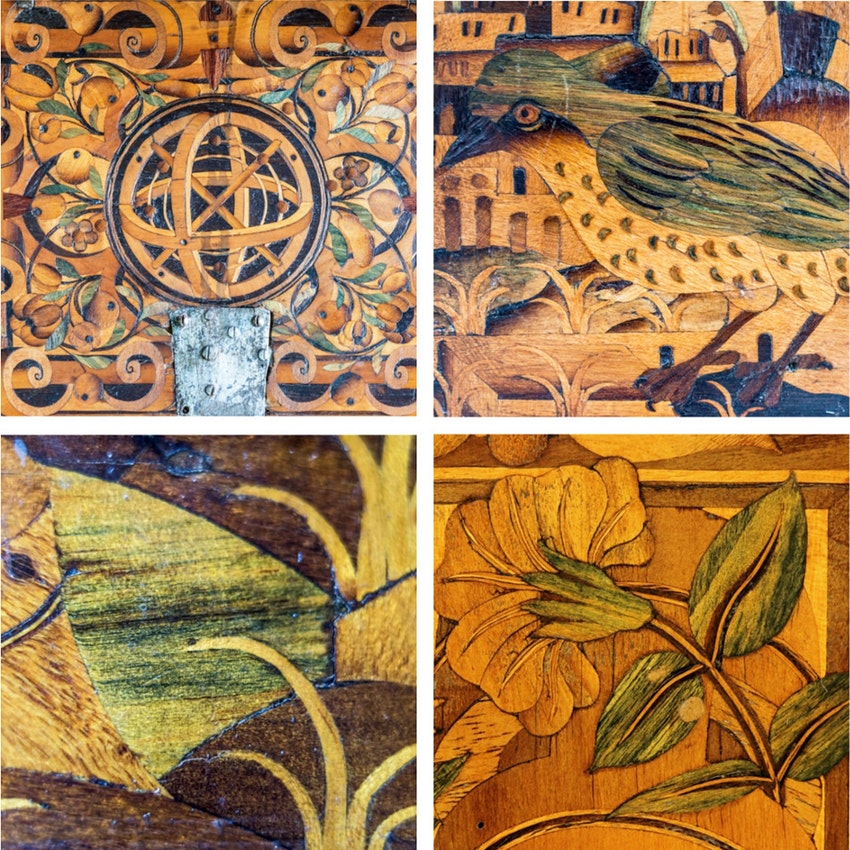
Intarsia using blue-green spalted wood

Details of 16th century German bureaus containing blue-green spalted wood by the elf-cup fungus Chlorociboria aeruginascens

Wood that is stained green, blue or blue-green by spalting fungi has been and continues to be valued for inlaid woodwork. In an article called “Exquisite Rot: Spalted Wood and the Lost Art of Intarsia” Daniel Elkind writes of how “the technique of intarsia–the fitting together of pieces of intricately cut wood to make often complex images–has produced some of the most awe-inspiring pieces of Renaissance craftsmanship.” The article explores “the history of this masterful art, and how an added dash of colour arose from the most unlikely source: lumber ridden with fungus.”

Shapeshifting Characters

moss hiding under leaves

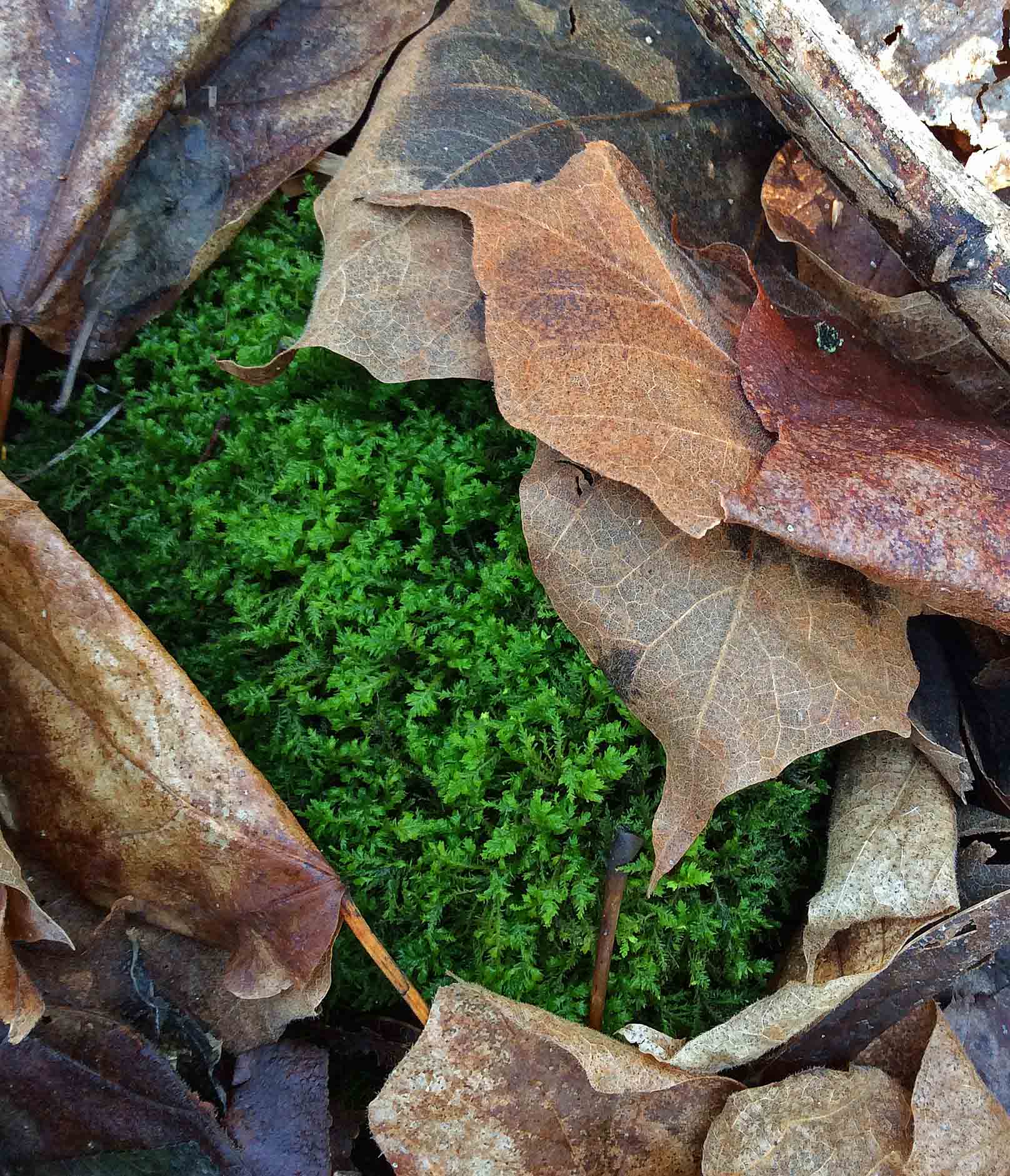
Moss in forest litter (photo by Nina Munteanu)

I find moss everywhere in the forest, including beneath the forest floor. Moss is a ubiquitous character, adapting itself to different situations and scenarios. Like a shapeshifter, moss is at once coy, hiding beneath rotting leaf litter, stealthy and curious as it creeps up the feet of huge cedars, and exuberant as it unabashedly drapes itself over every possible surface such as logs, twigs and rocks, and then proceeds to procreate for all to see.

Moss is a non-vascular plant that helps create soil; moss also filters and retains water, stabilizes the ground and removes CO2 from the atmosphere. Science tells us that mosses are important regulators of soil hydroclimate and nutrient cycling in forests, particularly in boreal ecosystems, bolstering their resilience. Mosses help with nutrient cycling because they can fix nitrogen from the air, making it available to other plants.

Moss with spores water drops2

Green moss gametophyte with sporophytes growing out of it (photo by Nina Munteanu)

Mosses thrive in the wet winter and spring, providing brilliant green to an otherwise brown-gray environment. Even when covered in snow (or a bed of leaves), moss continues its growth cycle, usually in the leafy gametophyte stage. When the winter is moderate, like it is near Toronto, sporophyte structures can already appear on stalks that hold a capsule full of spores.  In the spring the capsules release spores that can each create a new moss individual. Moss is quietly, gloriously profligate.

Symbiotic Characters

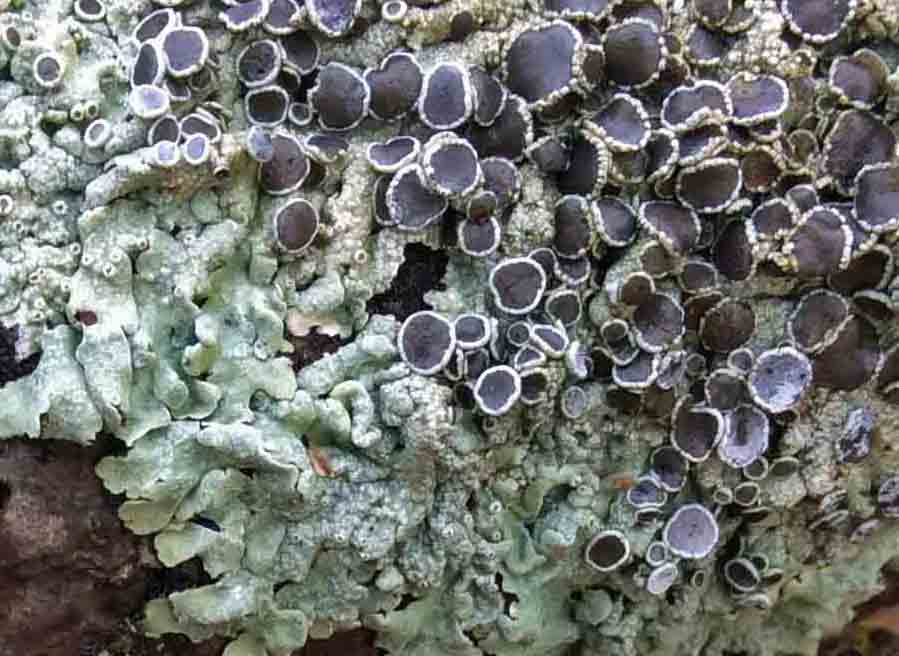
Many twigs strewn on the leaf-covered forest floor are covered in grey-green lichen with leaf-like, lobes. On close inspection, the lichen thallus contains abundant cup-shaped fruiting bodies. I identify the lichen as Physchia stellaris, common and widespread in Ontario and typically pioneering on the bark of twigs—especially of poplars, and alders.

Lichen fruiting-best-2 copy

Physchia stellaris lichen with fruiting bodies (apothecia), Little Rouge, ON (photo by Nina Munteanu)

Lichens are a cooperative character; two characters in one, really. Lichens are a complex symbiotic association of two or more fungi and algae (some also partner up with a yeast). The algae in lichens (called phycobiont or photobiont) photosynthesize and the fungus (mycobiont) provides protection for the photobiont. Both the algae and fungus absorb water, minerals, and pollutants from the air, through rain and dust. In sexual reproduction, the mycobiont produces fruiting bodies, often cup-shaped, called apothecia that release ascospores. The spores must find a compatible photobiont to create a lichen. They depend on each other for resources—from food to shelter and protection.

Forest as Character

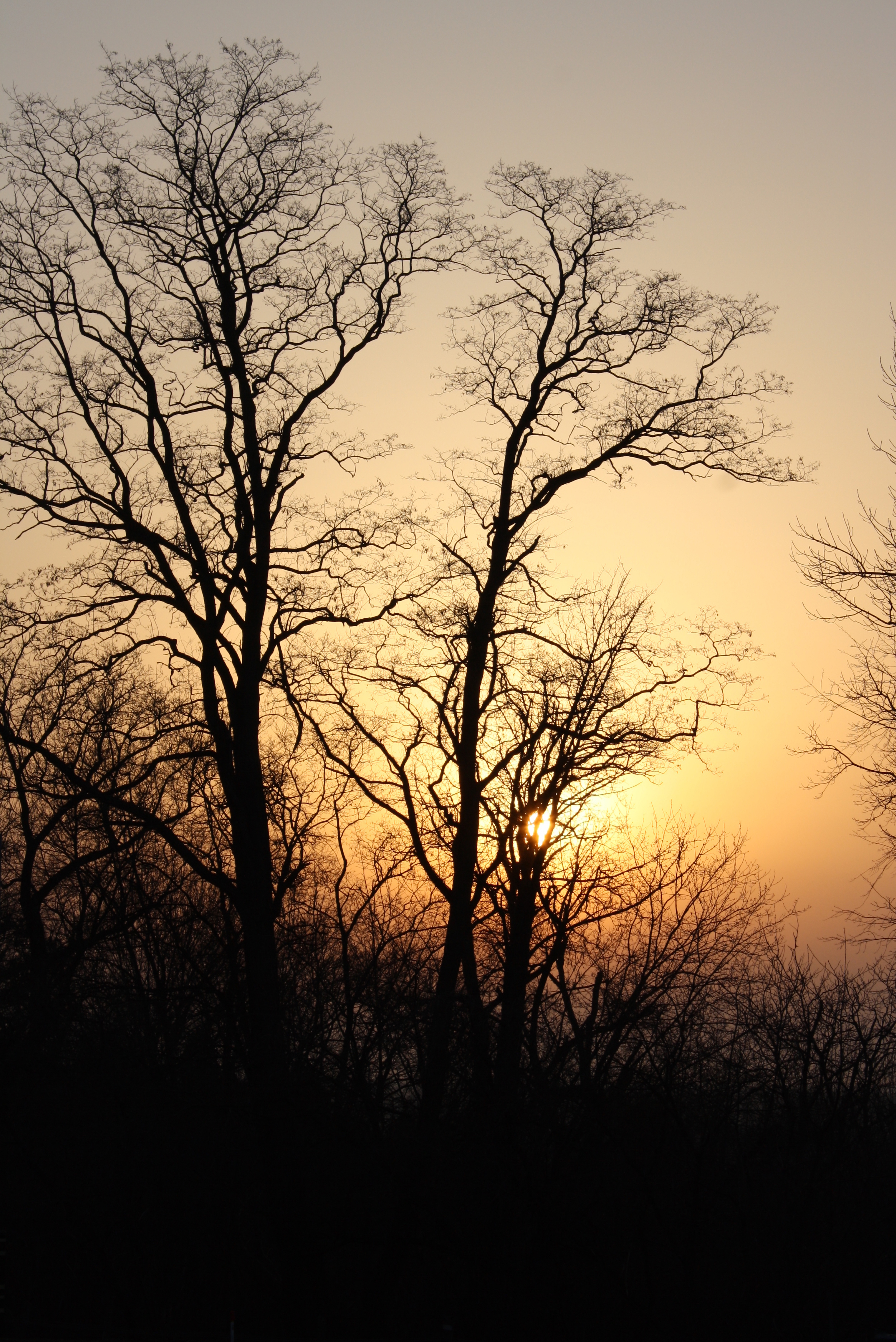
Sunset 1 Niagara

Sunset in Niagara on the Lake (photo by Nina Munteanu)

In Far from the Madding Crowd, Thomas Hardy personified trees as interpreters between Nature and humanity: from the “sobbing breaths” of a fir plantation to the stillness of trees in a quiet fog, standing “in an attitude of intentness, as if they waited longingly for a wind to come and rock them.” Trees, meadows, winding brooks and country roads were far more than back-drop for Hardy’s world and his stories. Elements of the natural world were characters in their own right that impacted the other characters in a world dominated by nature.

Place ultimately portrays what lies at the heart of the story. Place as character serves as an archetype that story characters connect with and navigate in ways that depend on the theme of the story, particularly in allegories that rely strongly on metaphor. A story’s theme is essentially the “so what part” of the story. What is at stake for the character on their journey. Theme is the backbone—the heart—of the story, driving characters to journey through time and place toward some kind of fulfillment. There is no story without theme. And there is no theme without place.
—excerpted from The Ecology of Story: World as Character


nina-2014aaa

Nina Munteanu is a Canadian ecologist / limnologist and novelist. She is co-editor of Europa SF and currently teaches writing courses at George Brown College and the University of Toronto. Visit www.ninamunteanu.ca for the latest on her books. Nina’s bilingual “La natura dell’acqua / The Way of Water” was published by Mincione Edizioni in Rome. Her non-fiction book “Water Is…” by Pixl Press (Vancouver) was selected by Margaret Atwood in the New York Times ‘Year in Reading’ and was chosen as the 2017 Summer Read by Water Canada. Her novel “A Diary in the Age of Waterwill be released by Inanna Publications (Toronto) in June 2020.


The Aggressive Symbiosis of SARS-CoV-2: Seeking Balance in an Unbalanced World

SARS-CoV-2

SARS-CoV-2

In the following scene of my upcoming speculative novel “Thalweg” (set in 2053 Toronto) one of my characters, Daniel–who is a bit of a conspiracy theorist–is trapped in an old abandoned garage, about to fight off a pack of stray dogs. His feverish mind thinks back to the COVID-19 pandemic:

“The official story was that SARS-CoV-2, which caused the COVID-19 pandemic of the early ‘20s resulted from the recombination of two previous viruses in some host—supposedly a bat or pangolin—which then ended up in a Wuhun wet market; there, the recombined virus gleefully jumped species to humans, who, in turn, gleefully spread it worldwide. But, according to the study at the Wuhun hospital, patient zero hadn’t been anywhere near the wet market. So, where did the virus really come from?…”

Daniel then recalls a conversation he had–when he still had a job–with colleague Lynna in which he  suggested that the chimera virus–and the others that followed–were developed as a bioweapon through Gain-of-Function research and they somehow leaked into the public. To her scoff, he reminded her that the aim of GOF research is to induce an increase in the transmissibility and/or virulence of pathogens. He then provided numerous examples involving Influenza, SARS, and MERS.

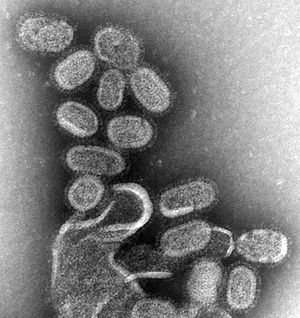
Influenza virus

Influenza virus

Did she know, for instance, that in 2014 Obama put a funding moratorium on all GOFR experiments that might enhance virus pathogenicity or transmissibility in mammals via the respiratory route. Then in 2017, under the Trump administration, the NIH turned it all back on.

squirrel monkey

Squirrel monkey

Lynna responded calmly with a convincing argument, based on science and ecology. “Sure, they could be that,” she acknowledged thoughtfully. “Or they could simply be more cases of co-evolution and aggressive symbiosis…” Then she informed Daniel that viruses commonly form aggressive relationships with their hosts. Every monkey, baboon, chimpanzee and gorilla is carrying at least ten different species of symbiotic viruses, she said. The herpes-B virus that chums with the squirrel monkey is one example. The virus and an immunity to it passes harmlessly from mother to baby monkey. If a rival species like the marmoset monkey invades their territory, the virus jumps species and wipes out the challenger by inducing cancer in the competing marmoset monkey. Ebola and hantavirus outbreaks follow a similar pattern of “aggressive symbiosis.”

This community-symbiosis functions like an ecosystem’s “immune system” that protects its own from the encroachment of invading species—even when that invading species is us.

—excerpt from Nina Munteanu’s “Thalweg” (upcoming)


Aggressive Symbiosis & Virus X

Virus X FrankRyanIn his book Virus X, Dr. Frank Ryan coined the term aggressive symbiosis to explain a common form of symbiosis where one or both symbiotic partners demonstrates an aggressive and potentially harmful effect on the other’s competitor or potential predator. Examples abound, but a few are worth mentioning. In South American forests, a species of acacia tree produces a waxy berry of protein at the ends of its leaves that provides nourishment for the growing infants of the ant colony residing in the tree. The ants, in turn, not only keep the foliage clear of herbivores and preying insects through a stinging assault, but they make hunting forays into the wilderness of the tree, destroying the growing shoots of potential rivals to the acacia.

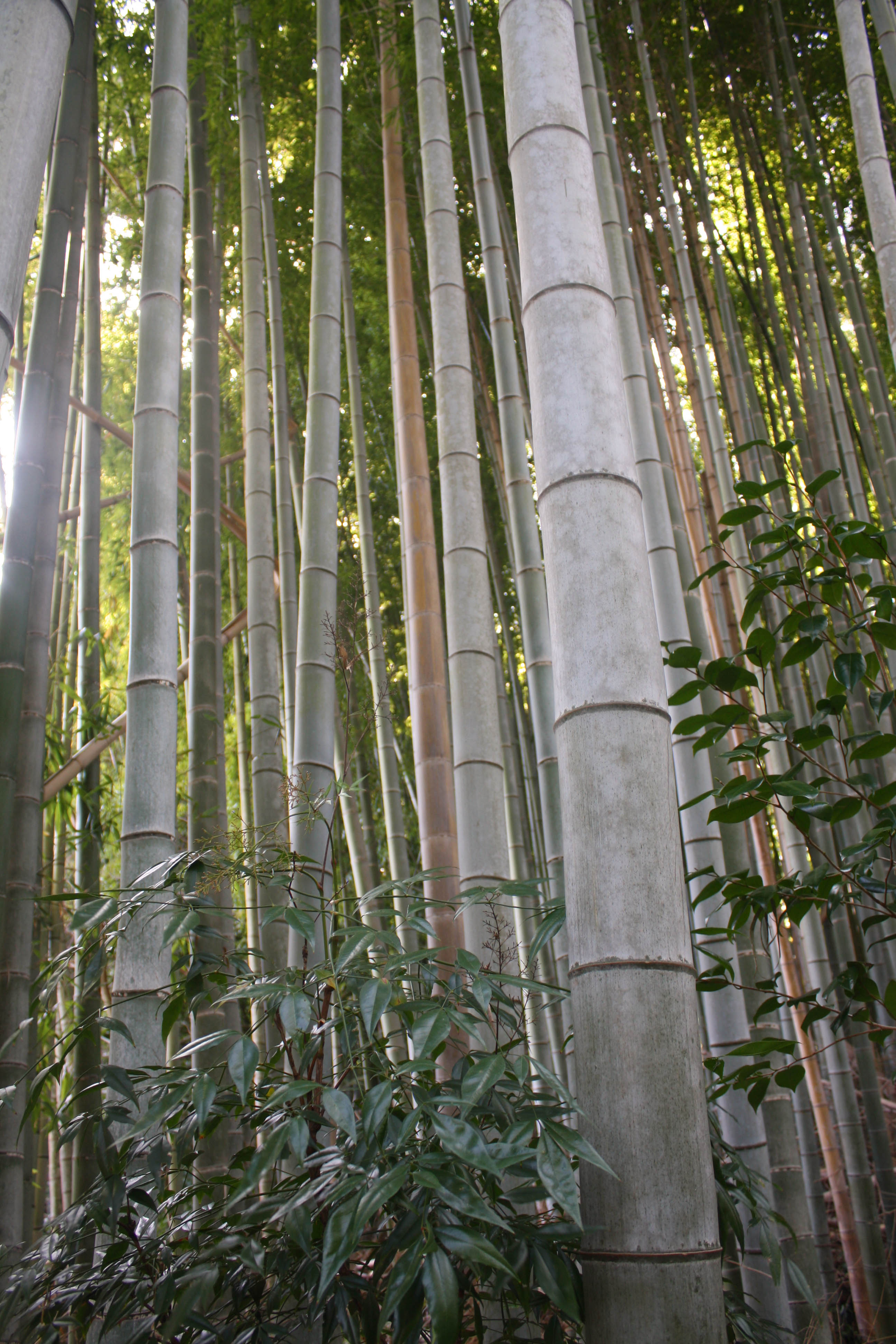
bamboo rising copy

Bamboo forest near Kyoto, Japan (photo by Nina Munteanu)

In Borneo, a species of rattan cane has developed a symbiotic relationship with a species of ants. The ants make a nest around the cane and drink its sweet sap. The ants, in turn, protect the cane. When a herbivore approaches to feed on the leaves, the ants attack.

Ryan draws an analogy between this aggressive symbiotic partnership and that of new zoonotic agents of disease. He argues that when it comes to emerging viruses, animals are the cane and ants are the virus.

Viruses & Zoonotic Agents of Disease

Ryan suggests that Ebola and hantavirus outbreaks follow a pattern of aggressive symbiosis. This may explain why Ebola is so virulent. The Ebola virus is so fierce that victims don’t make it very far to infect others, suggesting that the virus is an evolutionary failure. However, if the virus is acting as an aggressive symbiont, it may be fulfilling its evolutionary purpose by protecting a host species we haven’t yet identified.

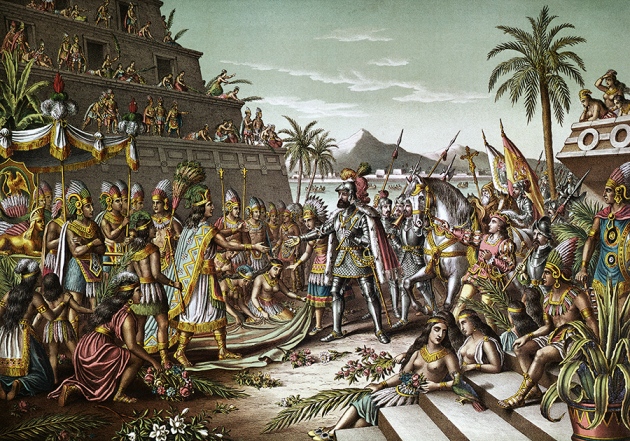
Aztecs and Spaniards

Azteks meet Spaniards who bring smallpox

Historian William H. McNeill suggested that a form of aggressive symbiosis played a key role in the history of human civilization. “At every level of organization—molecular, cellular, organismic, and social—one confronts equilibrium [symbiotic] patterns. Within such equilibria, any alteration from ‘outside’ tends to provoke compensatory changes [aggressive symbiosis] throughout the system to minimize overall upheaval.”

One of a legacy of examples of aggressive symbiosis in history includes smallpox: the Europeans introduced smallpox (symbiotically co-evolved with them) to the Aztecs with devastating results. Other examples of aggressive symbiosis include measles, malaria, and yellow fever.


Wet Markets & Factory Farming

CHINESE MAN DOG RABBIT

Inhumane and unsafe treatment of animals in wet market in China

The National Observer gives a vivid description of the potential for zoonotic viral spread in the world’s wet markets, particularly in Wuhun:

“Dozens of species that rarely, if ever, come in contact with one another in the wild ― fish, turtles, snakes, bamboo rats, bats, even foxes and wolf cubs ― are confined in close quarters, waiting to be butchered and sold. The animals are often stressed, dehydrated and shedding live viruses; the floors, stalls and tables are covered in blood, feces and other bodily fluids.

This is the scene at many of China’s so-called “wet markets,” where a poorly regulated wildlife trade thrives and creates conditions that experts say are ideal for spawning new diseases.

“You could not design a better way of creating pandemics,” said Joe Walston, head of global conservation at the nonprofit Wildlife Conservation Society. “It’s really the perfect mechanism, not just for the Wuhan coronavirus but for the next ones that will undoubtedly emerge sooner rather than later.”

Zoonotic diseases, or diseases that can leap from animals to humans, are not uncommon and they don’t always come from exotic animals, writes Ari Solomon of Veganista. “Many come from the animals we regularly farm and eat. The 1918 influenza pandemic, or the Spanish flu, infected more than 500 million people and killed between 40-50 million worldwide. It is now commonly believed that the disease originated in birds. When the H1N1 virus, the same strain that caused the Spanish flu, showed up again in 2009, it first emerged in pigs. Tuberculosis, mad cow disease, and pig MRSA also came from animals exploited for food.”

cows-seelisberg02

Happy cows in Seelisberg, Switzerland (photo by Nina Munteanu)

In 2004, Linda Saif, with the Department of Food Animal Health Research Program at the Ohio Agricultural Research and Development Center summarizes a number of farm and domestic animal reservoirs of zoonotic corona viruses that have caused human diseases historically and many that may still do so through recombinations. Animals have included cows (BCoV), pigs (PEDV and PRCV), chickens (IBV, turkeys, cats (FCoV and FIPV), ferrets and macaques. Saif cautions that, given an estimated 75% of newly emerging human diseases arise as zoonoses (from wild or farm animals), interspecies transmission poses a continued threat to human health.

Wet markets aren’t the only places where animals are kept under and treated with cruelty and lack of any compassion or kindness:

“Thanks to the advent of factory farming, billions of animals are routinely kept in crammed, filthy conditions that cause them extreme stress. This abhorrent practice creates the perfect breeding ground for new diseases to thrive. Add to that the fact that we regularly feed factory farmed animals low-doses of antibiotics and we really have a recipe for disaster.”—Ari Solomon, Veganista

It comes down to balance. Something about which the human species has much to learn.

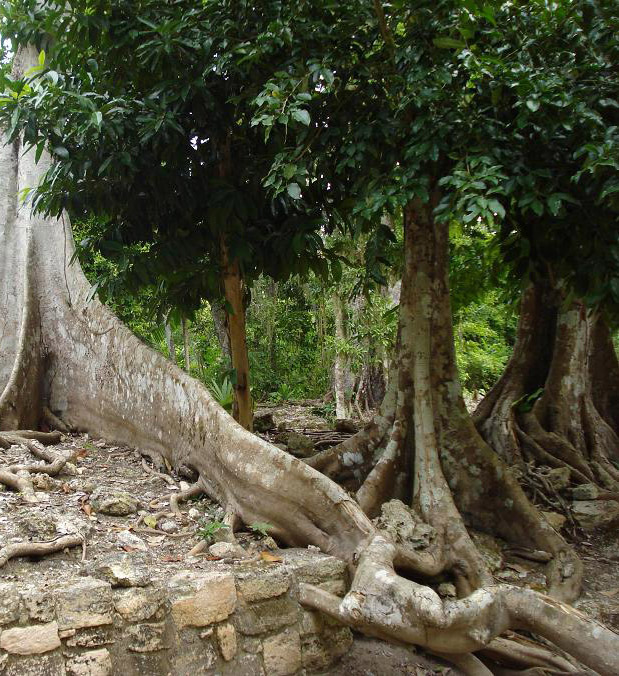
costa-maya-09-close

Buttressed fig tree in Costa Maya (photo by Nina Munteanu)

It is clear to me that these pandemics are exacerbated—if not outright caused by—our dense over-population and an exploitation mentality: our encroachment and defilement of natural habitats and the life that inhabits them. Gaia is suggesting that we live more lightly on this planet. Her ecosystems are responding to our aggression with equal aggression. And, make no mistake, we won’t win that battle. Just as we won’t win the battle with changing climate. It’s time to learn humility as a species in a diverse world. Time to cultivate respect for our life-giving environment. Time to learn the power of  kindness.

The National Observer recently ran an article stating that: “COVID-19 and other health endemics are directly connected to climate change and deforestation, according to Indigenous leaders from around the world who gathered on March 13, in New York City, for a panel on Indigenous rights, deforestation and related health endemics.” The virus is telling the world what Indigenous Peoples have been saying for thousands of years: that “if we do not help protect biodiversity and nature, we will face this and even worse threats,” said Levi Sucre Romero, a BriBri Indigenous person from Costa Rica and co-ordinator of the Mesoamerican Alliance of Peoples and Forests (AMPB).

Many environmental experts agree that the novel coronavirus will only be the first in waves of pandemics we can expect if we ignore links between infectious diseases and the destruction of the natural world.

bamboo-close01 copy

Bamboo, Japan (photo by Nina Munteanu)

“I’m absolutely sure that there are going to be more diseases like this in future if we continue with our practices of destroying the natural world,” said marine ecologist Dr Enric Sala to the Independent.


Reiterating the work of Dr. Frank Ryan, David Quammen, author of 2012 Spillover: Animal Infections and the Next Human Pandemic told the Independent: “Our highly diverse ecosystems are filled with many species of wild animals, plants, fungi and bacteria. All of that biological diversity contains unique viruses.” This unique community has developed over many many years into a functional community symbiosis in which viruses play an important part.

“There’s misapprehension among scientists and the public that natural ecosystems are the source of threats to ourselves. It’s a mistake. Nature poses threats, it is true, but it’s human activities that do the real damage. The health risks in a natural environment can be made much worse when we interfere with it,” says Richard Ostfeld, senior scientist at the Cary Institute of Ecosystem Studies in Millbrook, New York.

He and others are developing the emerging discipline of planetary health, which looks at the links between human and ecosystem health.

The disruption of pristine forests driven by logging, mining, road building through remote places, rapid urbanisation and population growth is bringing people into closer contact with animal species they may never have been near before, said Kate Jones, chair of ecology and biodiversity at UCL to The Guardian.

“We are researching how species in degraded habitats are likely to carry more viruses which can infect humans,” says Jones. “Simpler systems get an amplification effect. Destroy landscapes, and the species you are left with are the ones humans get the diseases from…We are going into largely undisturbed places and being exposed more and more. We are creating habitats where viruses are transmitted more easily, and then we are surprised that we have new ones.”

“It’s like if you demolish an old barn then dust flies. When you demolish a tropical forest, viruses fly. Those moments of destruction represent opportunity for unfamiliar viruses to get into humans and take hold.”–David Quammen

It’s aggression meeting aggression.

“Community-symbiosis functions like an ecosystem’s ‘immune system’ that protects its own from the encroachment of invading species—even when that invading species is us.”–Lynna Dresden, in Nina Munteanu’s Thalweg


EcologyOfStoryFor more on “ecology” and a good summary and description of environmental factors like aggressive symbiosis and other ecological relationships, read my book “The Ecology of Story: World as Character” (Pixl Press, 2019).

Glossary of Terms: 

Aggressive Symbiosis: a common form of symbiosis where one or both symbiotic partners demonstrates an aggressive and potentially harmful effect on the other’s competitor or potential predator (Ryan, 1997).

Co-evolution: when two or more species reciprocally affect each other’s evolution through the process of natural selection and other processes. 

Gain-of-Function Research (GOFR): involves experimentation that aims or is expected to (and/or, perhaps, actually does) increase the transmissibility and/or virulence of pathogens (Selgelid, 2016). 

Patient Zero: the person identified as the first carrier of a communicable disease in an outbreak of related cases. 

Recombination: the process by which pieces of DNA are broken and recombined to produce new combinations of alleles. This recombination process creates genetic diversity at the level of genes that reflects differences in the DNA sequences of different organisms.

Symbiosis: Greek for “companionship” describes a close and long term interaction between two organisms that may be beneficial (mutualism), beneficial to one with no effect on the other (commensalism), or beneficial to one at the expense of the other (parasitism). (Munteanu, 2019).

Zoonosis: a zoonotic disease, or zoonosis, is one that can be transmitted from animals, either wild or domesticated, to humans (Haenan et al., 2013).

Virus: a sub-microscopic infectious agent that replicates only inside the living cells of an organism. The virus directs the cell machinery to produce more viruses. Most have either RNA or DNA as their genetic material.


References:

Frazer, Jennifer. 2015. “Root Fungi Can Turn Pine Trees Into Carnivores—or at Least Accomplices.” Scientific American, May 12, 2015. Online: https://blogs. scientificamerican.com/artful-amoeba/root-fungi-can-turn-pine-trees-into- carnivores-8212-or-at-least-accomplices/

Munteanu, N. 2019. “The Ecology of Story: World as Character.” Pixl Press, Vancouver, BC. 198pp. (Section 2.7 Evolutionary Strategies)

Munteanu, N. 2020. “A Diary in the Age of Water.” Inanna Publications, Toronto.

Ryan, Frank, M.D. 1997. “Virus X: Tracking the New Killer Plagues.” Little, Brown and Company, New York, N.Y. 430pp.

Ryan, Frank, M.D. 2009. “Virolution.” Harper Collins, London, UK. 390pp.

Saif, Linda J. 2004. “Animal Coronaviruses: lessons for SARS.” In: “Learning from SARS: Preparing for the Next Disease Outbreak: Workshop Summary.” National Academies Press (US), Kobler S., Mahmoud A., Lemon S., et. al. editors. Washington (DC).

Selgelid, Michael J. 2016. “Gain-of-Function Research: Ethical Analysis.” Sci Eng Ethics 22(4): 923-964.

VanLoon, J. 2000. “Parasite politics: on the significance of symbiosis and assemblage in theorizing community formations.” In: Pierson C and Tormey S (eds.), Politics at the Edge (London, UK: Political Studies Association)

Villarreal LP, Defilippis VR, and Gottlieb KA. 2000. “Acute and persistent viral life strategies and their relationship to emerging diseases.” Virology 272:1-6. Online: http://bird uexposed.com/resources/Villarreal1.pdf

Wohlleben, Peter. 2015. “The Hidden Life of Trees.” Greystone Books, Vancouver, BC. 272pp.


nina-2014aaa

Nina Munteanu is a Canadian ecologist / limnologist and novelist. She is co-editor of Europa SF and currently teaches writing courses at George Brown College and the University of Toronto. Visit www.ninamunteanu.ca for the latest on her books. Nina’s bilingual “La natura dell’acqua / The Way of Water” was published by Mincione Edizioni in Rome. Her non-fiction book “Water Is…” by Pixl Press (Vancouver) was selected by Margaret Atwood in the New York Times ‘Year in Reading’ and was chosen as the 2017 Summer Read by Water Canada. Her novel “A Diary in the Age of Waterwill be released by Inanna Publications (Toronto) in June 2020.

Dreams and Perceptions…And ‘The Other’

Credit Riv path in snow

path along Credit River (photo by Nina Munteanu)

It was a while ago, as I was driving home from a friend’s place in the sultry dark of night that I noticed the change…

Perhaps it was the rain and the winding road that nudged my psyche to wander into that other realm. Or was it the surrealistic motion picture The Fountain that I’d seen the evening before? Or had it more to do with the fact that I’d been, for various reasons, without sleep for over forty hours that I glimpsed the ordinary in an extra-ordinary light?

Light had everything to do with it…Amber traffic lights at a construction site pulsed like living things. Smoky back-lit clouds billowed over an inky sky. A garish screen of trees, caught in the beams of my car lights as I turned a corner, flashed. Nature recast. A half-built apartment building loomed up like some dark tower in Lord of the Rings. I was reminded of a scene early on in The Fountain where the viewer is disoriented initially by a busy street at night because it was shot upside down. Ironically, the picture was filmed in my hometown of Montreal and I didn’t even recognize it.

Have you ever done that? Looked backward while driving through a familiar scene to gain a different perspective? And felt different for just a moment? Like you’d briefly entered a different dimension and glimpsed “the other”?

What is it like to meet “the other”?

What is it like to approach the unfamiliar? A new landscape. A stranger in town. A different culture. An “alien” encounter. How do we react? Is it with wonder? Curiosity? Fear? Hatred? A mixture of these?

The genre of science fiction vividly explores our humanity through our reactions to “the other.” It does this by looking at both perspectives. By describing “the other,” science fiction writers describe “us.” In his book Orientalism: Western Conceptions of the Orient Edward W. Said contended that for there to be an ‘us’, there has to be a ‘not-us.’ According to Patricia Kerslake of Central Queensland University, this arises from a postcolonial notion of ‘the Other’, through a mutual process of exclusion. This exclusion inspires the very idea of ‘alien’ by imposing expectation on perception. Kerslake argues that: “When one culture imposes its perceptions on another, in that it begins to see the Other not as they are but as, in Said’s words, ‘they ought to be’, then the process of representation becomes inevitable: a choice is made to see a ‘preferred’ real.”

Ursula K LeGuin

Ursula K. LeGuin

In her 1975 article “American SF and the Other,” Ursula K. LeGuin unequivocally scolded the Western SF genre for representing and promoting colonialism and androcratic motives.

One of the great early socialists said that the status of women in a society is a pretty reliable index of the degree of civilization of that society. If this is true, then the very low status of women in SF should make us ponder about whether SF is civilized at all.

The women’s movement has made most of us conscious of the fact that SF has either totally ignored women, or presented them as squeaking dolls subject to instant rape by monsters—or old-maid scientists de-sexed by hypertrophy of the intellectual organs—or, at best, loyal little wives or mistresses of accomplished heroes. Male elitism has run rampant in SF. But is it only male elitism? Isn’t the “subjection of women” in SF merely a symptom of a whole which is authoritarian, power-worshiping, and intensely parochial?

The question involved here is the question of The Other—the being who is different from yourself. This being can be different from you in its sex; or in its annual income; or in its way of speaking and dressing and doing things; or in the color of its skin, or the number of its legs and heads. In other words, there is the sexual Alien, and the social Alien, and the cultural Alien, and finally the racial Alien.

Well, how about the social Alien in SF? How about, in Marxist terms, “the proletariat”? Where are they in SF? Where are the poor, the people who work hard and go to bed hungry? Are they ever persons, in SF? No. They appear as vast anonymous masses fleeing from giant slime-globules from the Chicago sewers, or dying off by the billion from pollution or radiation, or as faceless armies being led to battle by generals and statesmen. In sword and sorcery they behave like the walk-on parts in a high school performance of The Chocolate Prince. Now and then there’s a busty lass amongst them who is honored by the attentions of the Captain of the Supreme Terran Command, or in a space-ship crew there’s a quaint old cook, with a Scots or Swedish accent, representing the Wisdom of the Common Folk.

The people, in SF, are not people. They are masses, existing for one purpose: to be led by their superiors…

…What about the cultural and the racial Other? This is the Alien everybody recognizes as alien, supposed to be the special concern of SF. Well, in the old pulp SF, it’s very simple. The only good alien is a dead alien—whether he is an Aldebaranian Mantis-Man, or a German dentist. And this tradition still flourishes: witness Larry Niven’s story “Inconstant Moon” (in All the Myriad Ways, 1941) which has a happy ending—consisting of the fact that America, including Los Angeles, was not hurt by a solar flare. Of course a few million Europeans and Asians were fried, but that doesn’t matter, it just makes the world a little safer for democracy, in fact. (It is interesting that the female character in the same story is quite brainless; her only function is to say Oh? and Ooooh! to the clever and resourceful hero.)

If you deny any affinity with another person or kind of person, if you declare it to be wholly different from yourself—as men have done to women, and class has done to class, and nation has done to nation—you may hate it, or deify it; but in either case you have denied its spiritual equality, and its human reality. You have made it into a thing, to which the only possible relationship is a power relationship. And thus you have fatally impoverished your own reality.

You have, in fact, alienated yourself.

Diary Water cover finalWritten 45 years ago, Le Guin’s scathing article may have accurately represented the North American science fiction community of writers of that time. Today, despite the remnants of a strong old guard that still promotes a patriarchal colonialist hegemony, the science fiction genre has matured and grown beyond this self-limiting view. This is partly because current authors—many who are women and many who are representatives of minority or marginalized groups—have given SF a new face and voice that promises to include equality, inclusion, and a fresh look at exploration and ‘the other.’

The genre of science fiction has matured by diversifying to embrace “mundane science fiction,” literary fiction, speculative fiction, climate fiction, cli-fi, eco-fiction, indigenous futurisms and more.

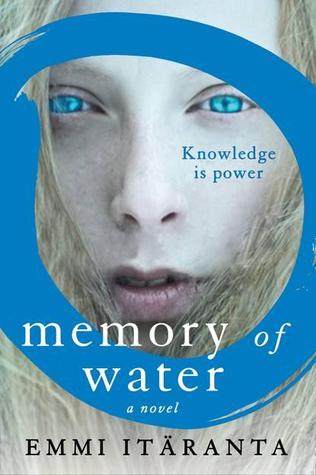
memoryofwaterScience fiction that leans toward “mundane”(everyday life) and literary fiction include the works of Paulo Bacigalupi (Windup Girl), Margaret Atwood (Year of the Flood), and Kim Stanley Robinson (New York 2140). Literary fiction overlaps with science fiction through eco-fiction and climate fiction which address oppression, jingoism and neoliberalism often through dystopian themes—and often through the voice of women writers—such as Octavia Butler’s Parable of the Sower, N.K. Jemisin’s The Broken Earth series, Emmi Itäranta’s The Memory of Water, Nina Munteanu’s A Diary in the Age of Water, Barbara Kingsolver’s Flight Behavior, Annie Proulx’s Barkskins, and Richard Power’s Overstory.

CliFi Tales of ClimateChangeIn 2017, several publications addressed different aspects of society through speculative fiction.  Laksa Media published Strangers Among Us: Tales of the Underdogs and Outcasts, which explores issues of mental health. Exile Editions published Cli-Fi: Tales of Climate Change with stories on personal experience with climate change. Reality Skimming Press published Water, for which I was editor, which explored optimism in the face of climate change.

In Ann Leckie’s 2014 Ancillary Justice, the main character is a space ship. The Gethenians in Ursula K. LeGuin’s The Left Hand of Darkness are humanoids with fluid gender, adapted to environment. In Kim Stanley Robinson’s 2312,  humans have abandoned the gender binary for an intersex existence based on proven longevity.

Borderline mishell bakerNovels and anthologies of short stories that feature disabled characters are also growing. Examples include Borderline by Mishell Baker, We Who Are About To… by Joanna Russ, Murderbot series by Martha Wells, and Uncanny: Disabled People Destroy Science Fiction (edited by Elsa Sjunneson-Henry, Dominik Parisien et al.) among many others.

Indigenous futurisms, speculative writings on issues of colonialism, identity, AI, and climate change include Trail of Lightning by Rebecca Roanhorse, Mongrels by Stephen Graham Jones, Robopocalypse by Daniel H. Wilson, Take Us to Your Chief, by Drew Hayden Taylor, The Marrow Thieves by Cherie Dimaline, Walking the Clouds Anthology edited by Grace L. Dillon, and Future Home of the Living God by Louise Erdrich.

Trail of LightningIn an introduction to seven Indigenous Futurism books, Barnes and Noble writes:

So many stories, well intentioned and not-so-well-intentioned, have fixated on the dark pasts of Indigenous people, assuming that colonization stole from them any future not involving slow decline and assimilation. Though there’s plenty of tragedy to be recounted, Indigenous history didn’t end there, and a wave of modern authors are exploring Indigenous cultures as living, vibrant, and firmly fixed in both the modern and furute worlds—sovereign nations with as much claim to an endless array of possible futures as any other culture. So much of what we call classic science fiction involves tropes that look very different to colonized peoples: the heroic space explorers who travel the stars visiting (and often conquering) alien worlds look very different to people whose histories are so strongly marked by the scars of colonization.

Of Indigenous Futurisms, the Seattle Public Library writes:

Indigenous Futurisms confront many of the norms of speculative fiction by challenging, subverting, or refusing to engage with colonial, racist, and otherwise oppressive genre tropes. Indigenous Futurism draws on the strength of Indigenous knowledge systems, worldviews, stories, languages, and traditions to reimagine the past, present, and future of this world and others. Yet it is not necessarily utopic or optimistic. Many authors writing within the Indigenous Futurisms genre engage with the realities of ongoing colonialism around the world, and the apocalyptic nature of the present for many Indigenous communities. However, characters struggle despite the circumstances for a better future.


Credit River first snow

First snow on the Credit River (photo by Nina Munteanu)

nina-2014aaa

Nina Munteanu is a Canadian ecologist / limnologist and novelist. She is co-editor of Europa SF and currently teaches writing courses at George Brown College and the University of Toronto. Visit www.ninamunteanu.ca for the latest on her books. Nina’s bilingual “La natura dell’acqua / The Way of Water” was published by Mincione Edizioni in Rome. Her non-fiction book “Water Is…” by Pixl Press (Vancouver) was selected by Margaret Atwood in the New York Times ‘Year in Reading’ and was chosen as the 2017 Summer Read by Water Canada. Her novel “A Diary in the Age of Waterwill be released by Inanna Publications (Toronto) in June 2020.

The Invasion of Giant Crayfish Clones & A Diary in the Age of Water

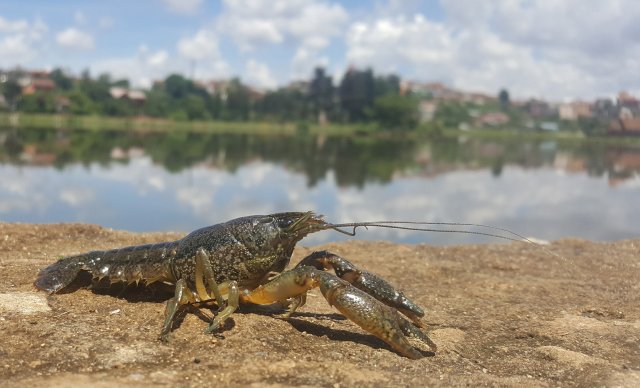
OLYMPUS DIGITAL CAMERA

Marmorkrebs, giant marbled crayfish

In 2018, scientists reported that the giant marbled crayfish (Marmorkrebs [German]: Procambarus fallax f. virginalis) recently developed the strategy of being entirely female and cloning itself via parthenogenesis1; the female doesn’t require a male crayfish to fertilize its eggs. Despite the cloning procedure that makes them virtually identical genetically, the crayfish vary in size and pattern—no doubt due to epigenetics.2

First discovered by a German aquarium in the mid-1990s, these crayfish that developed from Florida-Native crayfish have migrated into the wild and are aggressively spreading in Europe, at the expense of the native European crayfish. The 8 to 12 cm long Marmorkrebs has been observed in Germany, Italy, Slovakia, Sweden, Japan, and Madagascar. The marbled crayfish prefers a warm and humid climate, suggesting that climate change may influence its distribution and success. The clones also thrive in a wide range of habitats—from abandoned coal fields in Germany to rice paddies in Madagascar, writes Carl Zimmer of the New York Times.

Given that every individual Marmorkrebs can reproduce (the advantage of parthenogenesis is that the female crayfish doesn’t need to find a mate—it just gives birth), one European scientist has dramatically suggested that, “we’re being invaded by an army of clones.” Zimmer shares the results of Dr Lyko and his team on how the all-female Marbokrebs came to be:

“Scientists concluded that the new species got its start when two slough crayfish mated. One of them had a mutation in a sex cell — whether it was an egg or sperm, the scientists can’t tell. Normal sex cells contain a single copy of each chromosome. But the mutant crayfish sex cell had two. Somehow the two sex cells fused and produced a female crayfish embryo with three copies of each chromosome instead of the normal two. Somehow, too, the new crayfish didn’t suffer any deformities as a result of all that extra DNA.” 

In its first couple decades, [Marmorkrebs] is doing extremely well, writes Zimmer. But sooner or later, the marbled crayfish’s fortunes may well turn, he adds. “Maybe they just survive for 100,000 years,” Dr. Lyko speculated. “That would be a long time for me personally, but in evolution it would just be a blip on the radar.”

marbled-crayfish2

Marmorkrebs

But what if this speculation isn’t the whole scenario? What if Marmorkrebs is just another example of climate change-induced adaptation and change through epigenetics? While climate forcing and habitat destruction is causing the extinction of many species; other species are, no doubt, adapting and exploiting the change. These generalists (born with change inside them) are poised to take over in Nature’s successional march.3

Bdelloid-rotifer-Philodina-gregaria

Bdelloid rotifer

Parthenogenesis and epigenetic change isn’t new. In fact, it’s very old … All-female bdelloid rotifers have been cloning a sisterhood for millions of years and using incorporated foreign genes through horizontal gene transfer4 (essentially stealing genetic material from their environment) to maintain a healthy diverse population. What’s new and weird is that this crayfish “suddenly” developed this ability—probably through epigenetic means (given this entire group is versatile in reproductive strategies in general). The real question none of the articles that covered this phenonemon ask is: WHY? Why is it happening NOW?

In my latest book A Diary in the Age of Water (due for release in May 2020 by Inanna Publications) I explore this “change” in a unique way:

Diary Water cover finalKyo finds a copy of Robert Wetzel’s Limnology on a lower shelf of the “L” section. It stands tall with a thick green-coloured spine. This is the book that Hilda, one of the Water Twins, had saved from the book burnings of the Water Age. A present from her limnologist mother. Hilda kept it hidden under her mattress. When CanadaCorp police burst into their home and dragged her mother away, Hilda was left alone with Wetzel. The limnology textbook was forbidden reading because its facts were no longer facts. 
After some coaxing, Myo shared a most bizarre tale of that time which led to the catastrophic storms and flood. What the governments hadn’t told their citizens—but what each citizen felt and knew—was that humans had lost the ability to reproduce. Then a spate of “virgin births” throughout the world spawned what seemed a new race of girls—‘deformed’, blue and often with strange abilities. Many considered them abominations, a terrible sign of what was in store for humanity—a punishment for their evil ways. Then, as quickly as they’d populated the world, these strange blue girls all disappeared without a trace. They simply vanished and became the Disappeared. Myo told her that some people called it a Rapture, a portent of the end times. Others suggested that the girls had all been murdered—a genocide, organized by what was left of the world government. 

Then … the storms … changed the world.

–“A Diary in the Age of Water” 

  1. Spontaneous Parthenogenesis: From the Greek Parthenon “virgin” and genesis “creation”, parthenogenesis is a natural form of asexual reproduction in which growth and development of embryos occur without fertilization. In animals it involves development of an embryo from an unfertilized egg; in plants it proceeds through apomixis. The production of only female offspring by parthenogenesis (such as with bdelloid rotifers) is called thelytoky.
  2. Epigenetics is the study of changes in organisms caused by the modification of gene expression (such as environmental triggers) rather than alteration of the genetic code itself. If genetics represents the hardrive of a computer, epigenetics is its software.
  3. Niche (the role or job of an organism or population) can be broad (for generalists) or narrow (for specialists). A specialist has superior abilities to exploit the narrow environmental conditions it lives in and is splendidly adapted to a fixed stable environment; generalists, less successful at exploiting than the specialist but more widely adaptive, can thrive in less stable environments that present a wider range of conditions.
  4. Horizontal gene transfer is the movement of genetic material between organisms other than by the vertical transmission of DNA from parent to offspring through reproduction. HGT is an important factor in the evolution of many organisms.

A Diary in the Age of Water will be released in May 2020 by Inanna Publications, Toronto, Canada.


nina-2014aaa

Nina Munteanu is a Canadian ecologist / limnologist and novelist. She is co-editor of Europa SF and currently teaches writing courses at George Brown College and the University of Toronto. Visit www.ninamunteanu.ca for the latest on her books. Nina’s bilingual “La natura dell’acqua / The Way of Water” was published by Mincione Edizioni in Rome. Her non-fiction book “Water Is…” by Pixl Press (Vancouver) was selected by Margaret Atwood in the New York Times ‘Year in Reading’ and was chosen as the 2017 Summer Read by Water Canada. Her novel “A Diary in the Age of Waterwill be released by Inanna Publications (Toronto) in June 2020.

When Media Gets the Science Wrong We ALL Suffer

Atlantic salmon farm escape

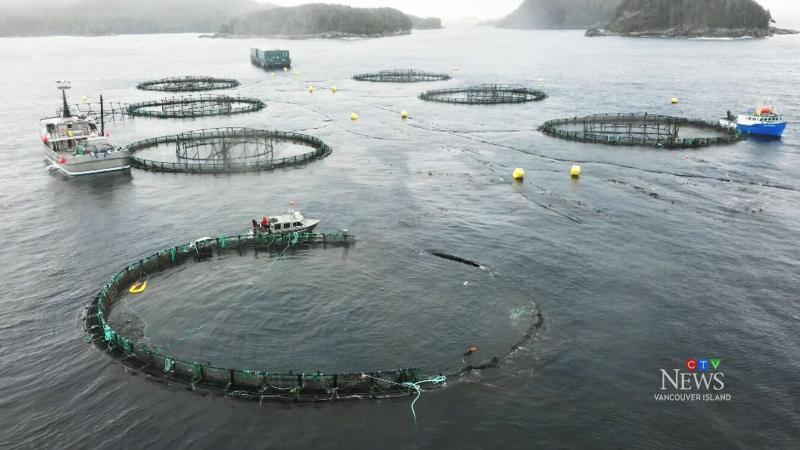
I was dismayed by a recent news story on CTV on the escape of farm fish into native fish waters. I was dismayed for two reasons: 1) the ecological impacts of this accident; and 2) the failure of CTV in appropriately reporting the seriousness of it.


Shoddy Reporting by CTV 

In late December 2019, a fire at the Mowi fish farm in BC waters near Port Hardy resulted in the escape of over twenty thousand Atlantic salmon. The news story by the CTV media proved biased, incomplete and erroneous—and ultimately dangerous—in its reporting.

CTV targeted “environmentalists and indigenous groups” as worried that “it could have devastating impacts on [Pacific] wild salmon…Escape presents ecological and environmental risks to an already fragile wild salmon population.” But CTV failed to include concerns by environmental scientists in this matter: government or academics with real expertise and authority.

CTV talked to some “so-called” experts to counter the position of the environmentalists. This included comments by a vet (Dr. Hugh Mitchell), who works for the fish farm: “[Atlantic salmon] are brought up on prepared fish pellets from since they start feeding …They don’t know how to forage. They don’t know how to find rivers and reproduce. They get eaten by predators or they die of starvation after they escape.” (see below for proof against this). A vet (who will have some expertise in fish physiology and biology) does not have the same expertise as a fish population biologist, oceanographer, ecologist or geneticist—all of who would better understand the potential impact of released exotic species to native species in a region. But CTV didn’t interview any of these experts. Instead, they interviewed a vet who works for the farm. CTV ends its story with a remark by the managing director of Mowi who said, “Data would suggest there’s a very low risk to the [Atlantic] salmon making it to any rivers and an even lower risk of them establishing successful populations within the BC environment.”

But where’s the data to prove this? And who provided it to Mowi? CTV fails to mention that or show any of “the data”.

This is clearly careless reporting that provides no substantiation for the claims made by Mowi; nor does CTV provide a more robust inquiry into potential risks. Risks posed by more than Atlantic salmon just outcompeting native fish; risks posed by disease and other indirect challenges to native fish—not addressed by Mitchell and Mowi.

Log over water forest-DeasPark

BC wetland (photo by Nina Munteanu)

CTV provided no statement by DFO scientists or academia. Where were the UBC or UVic scientists? Why weren’t these unbiased authorities consulted for their expertise instead of a vet who works for the aquaculture industry? This is very sloppy reporting.


The Vancouver Sun, which also covered this story, showed a little more balance in its reporting. However, when it came time for the Sun to report on DFO’s response, it was less than clear: “Among the feedback the federal government has received through early consultations on the legislation is a need for a more effective risk management framework and support for Indigenous involvement and rights in the sector, it says.”

The Georgia Straight used the right word—claimed—to describe Mowi’s unsubstantiated statements: “The company claimed that the escaped fish are easy prey because they are ‘unaccustomed to living in the wild, and thus unable to forage for their own food.’” The Straight also balanced that claim with another by Ernest Alfred of the ‘Ngamis First Nation and videographer and wild-salmon advocate Tavis Campbell, who suggested that the presence of Atlantic salmon in ocean water “presents a serious threat to native Pacific salmon through transfer of pathogens and other associated risks”. The Straight then followed up with some relevant historic precedence: “After a large number of Atlantic salmon escaped from a Washington state fish farm near Bellingham in 2017, these species were found as far away as the Saanich Inlet and Harrison River.” Hardly the weaklings described by Mowi and Mitchell…

Global News provides a more in-depth examination of the August 2017 net pens collapse in the waters off northwest Washington—pens owned by Canadian company Cooke Aquaculture Pacific — the largest Atlantic salmon farmer in the U.S.

“Up to 263,000 invasive Atlantic salmon escaped into Puget Sound, raising fears about the impact on native Pacific salmon runs. The incident inspired Washington state to introduce legislation that would phase out marine farming of non-native fish by 2022. Groups like the Pacific Salmon Foundation have called for the B.C. and federal governments to do the same in Canada.”


Declining Pacific Wild Salmon 

Stream longshutter-warmed-close01 copy

Westcoast forest stream, BC (photo by Kevin Klassen)

Wild Pacific salmon have been declining for decades off the BC coast and streams. Human interference is primarily responsible, which includes habitat destruction, diversions for agriculture and hydro-power, and climate change. Habitat destruction—both quantity and quality—has occurred mainly from logging, road construction, urban development, mining, agriculture and recreation. Added to that list is the aquaculture industry that uses Atlantic salmon, an exotic to the Pacific Ocean.

A recent study conducted by the Strategic Salmon Health Initiative (SSHI) revealed that the piscine reovirus (PRV) found in farmed Atlantic salmon is linked to disease in Pacific Chinook salmon. The SSHI is an initiative made up of scientists from the Department of Fisheries and Oceans (DFO), Genome B.C., and the Pacific Salmon Foundation (PSF).

The findings show that the same strain of PRV, known to cause heart and skeletal muscle inflammation (HSMI) in farmed Atlantic salmon, is causing Chinook salmon to develop jaundice – anemia, a condition that ruptures red blood cells, and causes organ failure in the fish. The disease could cause a serious threat to wild salmon migrating past open-net fish farms in coastal waters in B.C.

In B.C., concerns about the decline of Pacific salmon have already risen to peak levels after the Big Bar landslide in the Fraser River near Kamloops; scientists say this could result in the extinction of multiple salmon runs by 2020. The federal Liberal government has pledged to transition BC’s open-net pen salmon farms to closed inland containment systems by 2025.

All this corroborates the serious risk of Atlantic salmon farming. Accidents must be expected to happen. They always do. Risk analysis must include the certainty of this inevitability—just as water engineers must account for 100-year storms, which do happen.

Need for Better Risk Management (Type I and Type II Errors in Risk Assessment) 

The scientific method relies on accurately measuring certainty and therefore reliably predicting risk. This means accounting for all biases and errors within an experiment or exploration. In my work as a field scientist and environmental consultant representing a client, we often based our formal hypotheses in statistics, which considered two types of error: Type I and Type II errors. Type I errors are false positives: a researcher states that a specific relationship exists when in fact it does not. This is akin to an alarm sounding when there’s no fire. Type II errors are false negatives: the researcher states that no relationship occurs when in fact it does. This is akin to no alarm sounding during a fire.

The reason why remarks made by vet Mitchell and Mowi are so dangerous is because they make assumptions that are akin to not sounding an alarm when there is a fire; they are committing a Type II error. And in risk assessment, this is irresponsible. And dangerous.

Instead of targeting “environmentalists” “activists” and certain groups for opinions on issues, I strongly urge CTV and other media to seek out evidence-based science through scientists with relevant knowledge (e.g. an ecologist—NOT an economist or a vet—for an environmental issue). My advice to Media: DO YOUR HOMEWORK AND GET THE FACTS STRAIGHT! You need to talk to academics and scientists with no ties to perpetrators and with relevant knowledge on the topic in question.

The Need for The Precautionary Principle in Environmental Science and Reporting 

FinCreek 4-RockyM

Fin Creek, Rocky Mountains, BC (photo by Nina Munteanu)

Environmental scientists generally pride themselves on the use of the Precautionary Principle when dealing with issues of sustainability and environmental management. According to the Precautionary Principle, “one shall take action to avoid potentially damaging impacts on nature even when there is no scientific evidence to prove a causal link between activities and effects.” The environment should be protected against substances (such as an exotic species) which can be assumed potentially harmful to the current ecosystem, even when full scientific certainty is lacking.

Unfortunately, politicians, engineers and the scientists who work for them tend to focus on avoiding Type I rather than Type II statistical errors. In fact, by traditionally avoiding Type I errors, scientists increase the risk of committing Type II errors, which increases the risk that an effect will not be observed, in turn increasing risk to environment.

In describing the case of the eutrophication of a Skagerrak (a marine inlet), Lene Buhl-Mortensen asks which is worse: risk a Type II error and destroy the soft bottom habitat of Skagerrak and perhaps some benthic species, or risk a Type I error and spend money on cleaning the outfalls to Skagerrak when in fact there is no eutrophication? “Scientists have argued that cleaning up is too expensive and should not be done in vain,” writes Buhl-Mortensen. “But more often the opposite is the case. The increased eutrophication of Skagerrak could end up more costly than reducing the outfalls of nutrients [to the inlet].”

“Because threats to the environment are threats to human welfare, ecologists have a prima facie ethical obligation to minimize Type II errors,” argues Buhl-Mortensen in the journal Marine Pollution Bulletin. Use of the precautionary principle will save costs—and lives—in the end.

ferry wake active pass copy

Ferry crossing with wake in foreground, BC coast (photo by Nina Munteanu)


nina-2014aaa

Nina Munteanu is a Canadian ecologist / limnologist and novelist. She is co-editor of Europa SF and currently teaches writing courses at George Brown College and the University of Toronto. Visit www.ninamunteanu.ca for the latest on her books. Nina’s bilingual “La natura dell’acqua / The Way of Water” was published by Mincione Edizioni in Rome. Her non-fiction book “Water Is…” by Pixl Press (Vancouver) was selected by Margaret Atwood in the New York Times ‘Year in Reading’ and was chosen as the 2017 Summer Read by Water Canada. Her novel “A Diary in the Age of Waterwill be released by Inanna Publications (Toronto) in June 2020.


Nina Munteanu Talks about The Splintered Universe with Simon Rose

Author, writer, coach and consultant Simon Rose interviews Nina Munteanu about The Splintered Universe Trilogy, now out in three formats: print, ebook, and audiobook. Listen to a sample from each of the trilogy audiobooks on Audible:

audible listen

Here’s Simon’s interview with me:

SimonRose site

nina interview 3

Nina interview 2

nina interview 4

nina interview 5

nina interview 6

In Metaverse, the third and last book of The Splintered Universe Trilogy, Detective Rhea Hawke travels back to Earth, hoping to convince an eccentric mystic to help her defend humanity from an impending Vos attack—only to find herself trapped in a deception that promises to change her and her two worlds forever.

You can listen to a sample recording of Outer Diverse, Inner Diverse, and Metaverse through Audible. Read The Splintered Universe reviews on Goodreads.

Microsoft Word - trilogy-poster03.docx

Nina Highland Cr 1

Nina checks her photos, Highland Creek, ON (photo by Merridy Cox)

nina-2014aaa

Nina Munteanu is a Canadian ecologist / limnologist and novelist. She is co-editor of Europa SF and currently teaches writing courses at George Brown College and the University of Toronto. Visit www.ninamunteanu.ca for the latest on her books. Nina’s bilingual “La natura dell’acqua / The Way of Water” was published by Mincione Edizioni in Rome. Her non-fiction book “Water Is…” by Pixl Press (Vancouver) was selected by Margaret Atwood in the New York Times ‘Year in Reading’ and was chosen as the 2017 Summer Read by Water Canada. Her novel “A Diary in the Age of Water” will be released by Inanna Publications (Toronto) in 2020.

Reflections: The Meaning of Water (a talk for the Lewis Creek Association)

Nina Louis Merridy

Nina Munteanu with Louis DuPont and Merridy Cox with Lewis Creek behind

A short time ago, I was invited to give a talk on water to the Lewis Creek Association during their annual meeting for 2019 to help celebrate their recent accomplishments. Here is their write up:

Join our special guest, Canadian ecologist and author Nina Munteanu, who will discuss the many dimensions of water. She describes personally the curiosity and emotional connection with nature that compels us to caretake our environment with love versus a sense of duty. Her book “Water Is…The Meaning of Water” is an ode to and discourse about water, the indispensable and mysterious element that is the foundation of life here on our blue planet. The book is a fascinating catalogue of the many amazing and anomalous qualities of water, and has become a favorite of several Board members. She trained in limnology, the study of lakes, and has consulted in the aquatic sciences for many years. The author of over a dozen fiction and non-fiction books, she currently teaches writing at the University of Toronto and George Brown College in Toronto, Canada. We are delighted to have Nina join us and share her insights and concerns about this substance we have been concerned with over the last 30 or so years.

Microsoft Word - Nina map Barrio cafe.docx

At Cafe Barrio in Burlington, Vermont, Nina checks the map for directions…and finds her way…

I chose to drive to Vermont from Toronto with good friend and editor Merridy Cox. We crossed into USA near Cornwall and drove through New York state to Rousse’s Point, then into Vermont over the Vermont Bridge over Lake Champlain. We took the scenic route along the islands to the village of Charlotte, where we met with some of the Lewis Creek Board members and enjoyed a wonderful home-cooked supper at executive director Marty Illick’s country home along with Board president Andrea Morgante, board member Louis DuPont, and several other guests.

Merridy-LakeChamplain marsh

Merridy Cox photographing Lake Champlain just east of the Vermont Bridge

The event took place in the large converted barn of Philo Ridge Farm, a 400-acre historic dairy farm now also running as an educational institution of sustainable practices and store and restaurant. The barn is now a state-of-the-art sustainably built facility with a combination of rustic and sophisticated in its design of rich wood walls, large windows and beams with high vaulted ceiling; ideal for a presentation.

I spoke about my roots in the Eastern Townships of Quebec…and where they led me:

I was born in a small town in the Eastern Townships of Quebec, a gently rolling and verdant farming community, where water—l’eau—bubbles and gurgles in at least two languages.

I spent a lot of my childhood days close to the ground, observing, poking, catching, prodding, destroying and creating. Perhaps it was this early induction to the organic fragrances of soil, rotting leaves and moss that set my path in later life as a limnologist, environmental consultant and writer of eco-fiction.

Nina EasternTownships

I followed my older brother and sister to the nearby forest and local stream. We stirred soil, flower petals and other interesting things with water to fuel “magic potions” that we inflicted on some poor insect. Yes, I was a bit destructive as a child—and I took a lot for granted. Like water. There was so much of it, after all. It was clean and easily accessed, fresh from the tap.

When I gave birth to my son, Kevin, I felt a miracle pass through me. Kevin became my doorway back to wonder. His curiosity was boundless and lured me into a special world of transformation.

Nina-Kevin playing

Nina Munteanu and her son hiking in B.C.

I took time off work to spend with Kevin when he was young. We went on great trips, from the local mall, where we had a hot chocolate and played with Lego, to the local beach on the Fraser River, where we explored the rocks. When he was no more than three, I took him on endless adventures in the city and its surroundings. We didn’t have to go far. The mud puddles of a new subdivision after a rain were enough to keep our attention for dozens of minutes. We became connoisseurs of mud. The best kind was “chocolate mud,” with a consistency and viscosity that created the best crater when a rock was thrown into it.

Kevin and I often explored the little woodland near our house. We made “magic potions” out of nightshade flowers, fir needles, loam and moss; we fueled our concoctions with the elixir of water from a stagnant pool. This time the little insects weren’t molested.

Travelling the world has helped me realize that I was blessed with an abundance of water. I lived my entire life in a country of plentiful and healthy water. And for most of that time I didn’t even realize it. Canada holds one fifth of the world’s fresh water in lakes, rivers, and wetlands, as well as in our underground aquifers and glaciers. Canada’s wetlands, which cover more than 1.2 million square kilometres, makes Canada the largest wetland area in the world.*

The folks who attended my presentation were wonderfully receptive, gracious and kind. They bought all my books too! I felt so welcomed by this community concerned about the land and their water. I was also impressed with the dedication, organization and knowledge of this non-profit conservation initiative.

Presentation venue

Venue

Lewis Creek Association

The Lewis Creek Association (LCA) started in 1990, when a group of concerned citizens and the Hinesburg Land Trust came together to conserve a critical stretch of wetland habitat bordering Lewis Creek in Hinesburg, Vermont. Lewis Creek is one of Vermont’s most ecologically diverse streams and suffers from increasing habitat degradation due to river encroachment by development and roads, land use change, and more extreme weather events.

LCA’s mission is to protect, maintain and restore ecological health while promoting social values that support sustainable community development in the Lewis Creek and LaPlatte watershed regions and Vermont generally. Through education and action, LCA works to:

  • Restore water quality, stream stability, and native wildlife habitat
  • Protect and restore important and diverse natural areas
  • Conserve productive and scenic lands that contribute to rural character and economy
  • Support growth compatible with important natural systems and working landscapes
  • Strengthen and support local conservation initiatives and opportunities
  • Model active participation and respect for differences

With a hard-working volunteer board and a part-time paid consultant, LCA facilitates educational, planning, and field work programs involving dozens of volunteers. This work assists town planning and facilitates the restoration and conservation of important Champlain Valley natural areas of high public value.

LCA Annual Party 2019

Their track record has been impressive. Since forming their organization, the LCA has spearheaded and conducted numerous initiatives. Highlights include: annual water quality sampling in six streams and rivers; biodiversity studies of stream corridors, conservation and restoration work in watershed towns; invasive aquatic plant control in local areas; helped educate citizens on ecological improvements; actively participated in implementing VT’s Water Quality Law, Act 64; generated Water Quality Scorecard Maps to track pollution problems; and designed the “Ahead of the Storm” education program used throughout the watershed region.

LakeChamplainBasin

In the Moment-anthology copy*A version of this talk is available in an article I wrote called “Coming Home to Water,” which first appeared in the 2016 anthology In the Moment (A Hopeful Sign) edited by Gary Doi. It was reprinted in 2018 The Earth We Love (Mississauga Writers) edited by Elizabeth Banfalvi; and again in 2019 in The Literary Connection IV: Then and Now (IOWI) edited by Cheryl Antao Xavier.


LakeChamplain-VT-NY bridge

Lake Champlain, looking west from Vermont to New York at Vermont Bridge (right) (photo by Nina Munteanu)


nina-2014aaa

Nina Munteanu is a Canadian ecologist / limnologist and novelist. She is co-editor of Europa SF and currently teaches writing courses at George Brown College and the University of Toronto. Visit www.ninamunteanu.ca for the latest on her books. Nina’s bilingual “La natura dell’acqua / The Way of Water” was published by Mincione Edizioni in Rome. Her non-fiction book “Water Is…” by Pixl Press (Vancouver) was selected by Margaret Atwood in the New York Times ‘Year in Reading’ and was chosen as the 2017 Summer Read by Water Canada. Her novel “A Diary in the Age of Water” will be released by Inanna Publications (Toronto) in 2020.

Science Fiction On Water Justice & Climate Change

TheWaterKnife-Paolo BacigalupiThere were stories in sweat. The sweat of a woman bent double in an onion field, working fourteen hours under the hot sun, was different from the sweat of a man as he approached a checkpoint in Mexico, praying to La Santa Muerte that the federales weren’t on the payroll of the enemies he was fleeing…Sweat was a body’s history, compressed into jewels, beaded on the brow, staining shirts with salt. It told you everything about how a person had ended up in the right place at the wrong time, and whether they would survive another day.
So begins Paolo Bacigalupi’s speculative thriller The Water Knife, set in the near-future in the drought-stricken American southwest. Where corrupt state-corporations have supplanted the foundering national government. Where water is the new gold—to barter, steal, and murder for. Corporations have formed militias and shut down borders to climate refugees, fomenting an ecology of poverty and tragedy. Massive resorts—arcadias—constructed across the parched landscape, flaunt their water-wealth in the face of exploited workers and gross ecological disparity. Water is controlled by corrupt gangsters and “water knives” who cleverly navigate the mercurial nature of water rights in a world where “haves” hydrate and “have nots” die of thirst.

drinking water from tap copy

Paolo Bacigalupi is just one of many authors of compelling dystopian eco-thrillers that engage readers in climate change—many with strong water themes: Margaret Atwood, Emmi Itäranta, Jeff VanderMeer, Richard Powers, Barbara Kingsolver, Upton Sinclair, Ursula Le Guin, JoeAnn Hart, Frank Herbert, John Yunker, Kim Stanley Robinson, James Bradley, Nathaniel Rich, David Mitchell, Junot Diaz, Claire Vaye Watkins, J.G. Ballard, Marcel Theroux, Thomas Wharton—just to name a few.

Diary Water cover finalMy upcoming novel by Inanna Publications—A Diary in the Age of Water coming out in 2020—explores the socio-political consequences of corruption in Canada, now owned by China and America as an indentured resource ‘reservoir’; it is a story told through four generations of women and their unique relationship with water during a time of great unheralded change. On February 17, 2046, limnologist Lynna writes in her diary about her mother Una:

Bald, alle das wasser verschwindet,” She said in her quiet voice of certainty. She always spoke in her mother tongue when it came to water. Soon, all the water will be gone. “Und so werden wir.” And so will we. “Es wird das Ende des Zeitalters des Wassers sein.” It will be the end of the Age of Water. 

Una always seemed to follow the thalweg. She seemed to always know what water was doing. Even when it braided and curled in on itself. Even when human-made obstructions got in the way; like the increased water tax, followed by the severe water-use quota. Like water, Una found a way around it.  

I wish I had that skill.

wter tap2 copy

Adobe Photoshop PDFScience fiction explores our water crisis through premises of extreme water shortage and devastating violence (floods, droughts and storms), water diversion, and hoarding. Premises explore weather manipulation, the consequences of extensive deforestation and the massive extinction of species. As with my own book A Diary in the Age of Water, Claudiu Murgan’s Water Entanglement explores water as a character, as though water has gone rogue, unruly. Perhaps even vengeful…
Today, we control water on a massive scale. Reservoirs around the world hold 10,000 cubic kilometres of water; five times the water of all the rivers on Earth. Most of these great reservoirs lie in the northern hemisphere, and the extra weight has slightly changed how the Earth spins on its axis, speeding its rotation and shortening the day by eight millionths of a second in the last forty years.

dried up river bed2 copy

Millennia ago, we adapted and lived by the rhythms of the global water cycle. We have since harnessed the power of water; we captured it and diverted it and changed it in ways to suit our own rhythms. Our unprecedented power over the planet’s water has advanced our civilizations immeasurably. But water remains our Achilles’ heel; it has the potential to limit our ambition like no other resource on Earth.

If climate change is the planet’s response to humanity’s relentless exploitation, water is its archangel.

Three Percent TVshowA tidal wave of TV shows and movies currently explore—or at least acknowledge—the devastation we are forcing on the planet. Every week Netflix puts out a new science fiction show that follows this premise of Earth’s devastation: 3%; The 100The TitanOrbiter 9; even Lost in Space.

Science fiction is suited to this role; it is the literature of consequence that explores large issues faced by humankind and can provide an important vehicle in raising environmental awareness. Literature in general has always served as a cultural reporter on themes important to humanity.  The science fiction genre—and speculative fiction particularly—explores premises based on current scientific and technological paradigms. What if we kept doing this?…What if that went on unchecked?… What if we decided to end this?… These are conveyed through the various predictive visions from cautionary tales (e.g., Atwood’s Year of the Flood) to dystopias (e.g., Itäranta’s The Memory of Water). Science fiction has always been the pre-eminent literature of metaphor and history; it has lately matured in the Anthropocene to incorporate the edgy realism of literary fiction to give us potent environmental relevance. Sub-genres now include eco-fiction, climate fiction, and cli-fi.

MemoryOfWater_Emmi ItarantaEllen Szabo, author of Saving the World One Word at a Time: Writing Cli-Fi suggests that the ability to make environmental issues less political and more personal (through story) permits more engagement by readers and a higher likelihood of action toward justice: we are more likely to take action on the things we love and know. It’s all about connection.

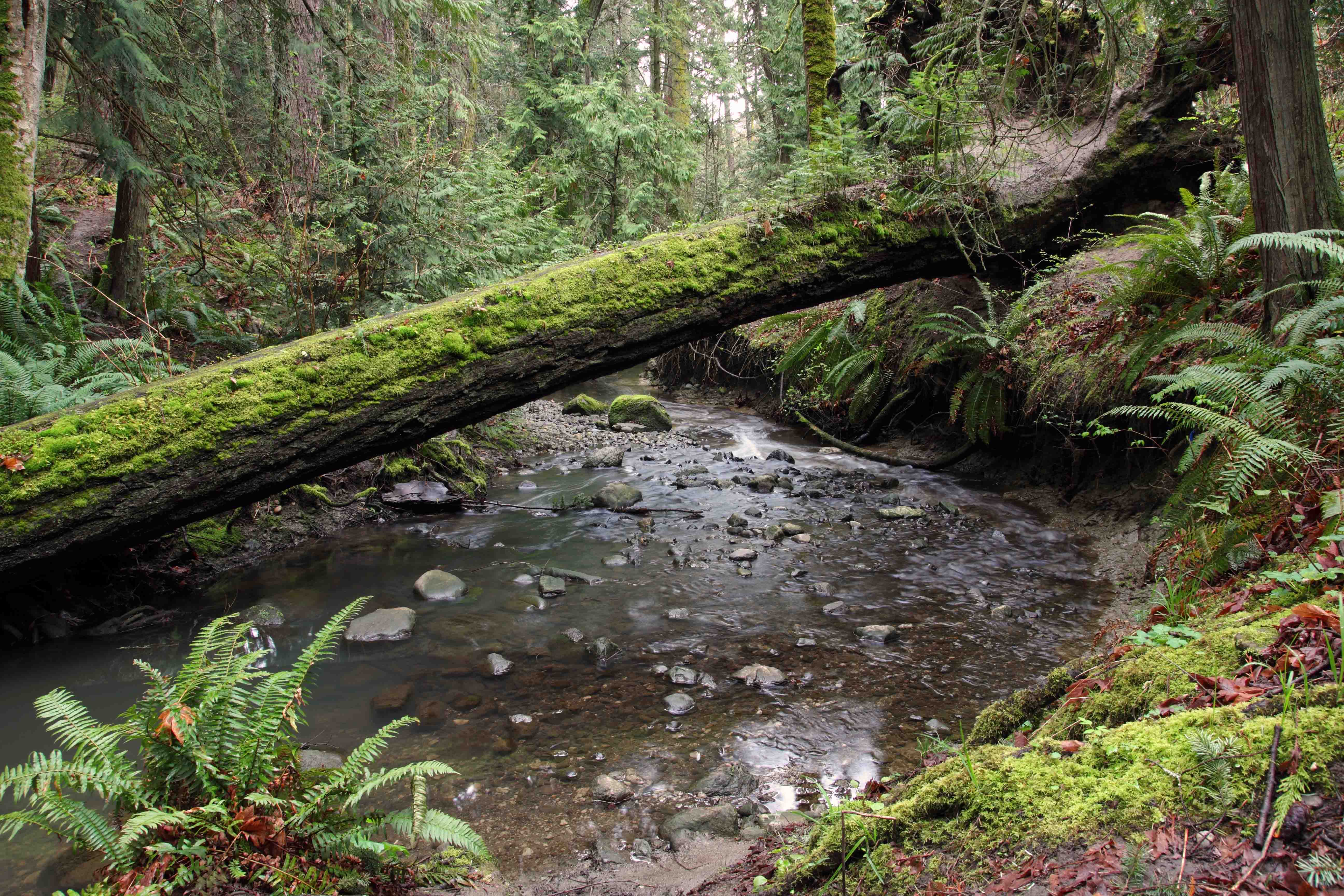
“Science doesn’t tell us what we should do,” Barbara Kingsolver wrote in Flight Behavior “It only tells us what is.” Stories can never be a solution in themselves, but they have the capacity to inspire action, which is perhaps why cli-fi’s appeal among young adult readers holds such promise. As the scientists and leaders of tomorrow, they may be most capable of addressing climate and water issues where previous generations have failed, writes J.K. Ullrich of The Atlantic. As Margaret Atwood wrote in MaddAddam, “People need such stories, because however dark, a darkness with voices in it is better than a silent void.”

We tend to live very much in the here and now, Bacigalupi told an audience at the University of Seattle when describing humanity’s lack of planning for the future.  But, he added, “with science fiction, I can give you a [here and now] experience far into the future,” and allow a reader to truly experience “what it’s like to be a climate refugee” or be someone with no legal access to water. An extrapolated science fiction future provides a visceral opportunity to see our future selves in a way that promotes serious consideration, says Bacigalupi. By putting us there, we have a better chance of making those extrapolations into consequence.

freighter-Toronto harbourJPG

For centuries we have hubristically and disrespectfully used, discarded and destroyed just about everything on this beautiful planet. According to the World Wildlife Federation, 10,000 species go extinct every year. That’s mostly on us. They are the casualty of our selfish actions. We’ve become estranged from our environment, lacking connection and compassion. That has translated into a lack of consideration—even for each other. In response to mass shootings of children in schools, the U.S. government does nothing to curb gun-related violence through gun-control measures; instead they suggest arming teachers. We light up our cigarettes in front of people who don’t smoke and blow cancer-causing second-hand smoke in each other’s faces. We litter our streets and we refuse to pick up after others even if it helps the environment and provides beauty for self and others. The garbage we thoughtlessly discard pollutes our oceans with plastic and junk, hurting sea creatures and the ocean ecosystem in unimaginable ways. We consume and discard without consideration.

PolarMom 2 cubs

We do not live lightly on this planet.

We tread with incredibly heavy feet. We behave like bullies and our inclination to self-interest makes us far too prone to suspicion and distrust: when we meet the unknown—the “other” so often portrayed in science fiction—we tend to respond with fear and aggression over curiosity, hope and kindness. Something we need to work on if we are going to survive.

Science fiction—the highest form of metaphoric and visionary art—is telling us something. Are we paying attention?

Fallen log BC-rainforest

Rainforest on southern Vancouver Island, B.C. (Photo by Kevin Klassen)


nina-2014aaa

Nina Munteanu is a Canadian ecologist / limnologist and novelist. She is co-editor of Europa SF and currently teaches writing courses at George Brown College and the University of Toronto. Visit www.ninamunteanu.ca for the latest on her books. Nina’s bilingual “La natura dell’acqua / The Way of Water” was published by Mincione Edizioni in Rome. Her non-fiction book “Water Is…” by Pixl Press (Vancouver) was selected by Margaret Atwood in the New York Times ‘Year in Reading’ and was chosen as the 2017 Summer Read by Water Canada. Her novel “A Diary in the Age of Water” will be released by Inanna Publications (Toronto) in 2020.