When Media Gets the Science Wrong We ALL Suffer

Atlantic salmon farm escape

I was dismayed by a recent news story on CTV on the escape of farm fish into native fish waters. I was dismayed for two reasons: 1) the ecological impacts of this accident; and 2) the failure of CTV in appropriately reporting the seriousness of it.


Shoddy Reporting by CTV 

In late December 2019, a fire at the Mowi fish farm in BC waters near Port Hardy resulted in the escape of over twenty thousand Atlantic salmon. The news story by the CTV media proved biased, incomplete and erroneous—and ultimately dangerous—in its reporting.

CTV targeted “environmentalists and indigenous groups” as worried that “it could have devastating impacts on [Pacific] wild salmon…Escape presents ecological and environmental risks to an already fragile wild salmon population.” But CTV failed to include concerns by environmental scientists in this matter: government or academics with real expertise and authority.

CTV talked to some “so-called” experts to counter the position of the environmentalists. This included comments by a vet (Dr. Hugh Mitchell), who works for the fish farm: “[Atlantic salmon] are brought up on prepared fish pellets from since they start feeding …They don’t know how to forage. They don’t know how to find rivers and reproduce. They get eaten by predators or they die of starvation after they escape.” (see below for proof against this). A vet (who will have some expertise in fish physiology and biology) does not have the same expertise as a fish population biologist, oceanographer, ecologist or geneticist—all of who would better understand the potential impact of released exotic species to native species in a region. But CTV didn’t interview any of these experts. Instead, they interviewed a vet who works for the farm. CTV ends its story with a remark by the managing director of Mowi who said, “Data would suggest there’s a very low risk to the [Atlantic] salmon making it to any rivers and an even lower risk of them establishing successful populations within the BC environment.”

But where’s the data to prove this? And who provided it to Mowi? CTV fails to mention that or show any of “the data”.

This is clearly careless reporting that provides no substantiation for the claims made by Mowi; nor does CTV provide a more robust inquiry into potential risks. Risks posed by more than Atlantic salmon just outcompeting native fish; risks posed by disease and other indirect challenges to native fish—not addressed by Mitchell and Mowi.

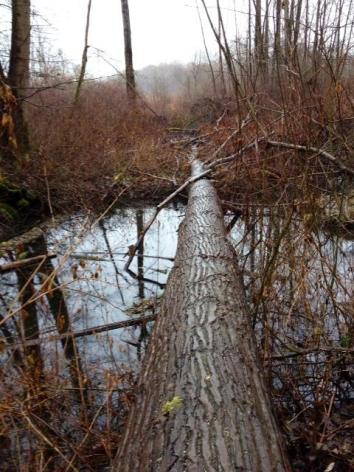
Log over water forest-DeasPark

BC wetland (photo by Nina Munteanu)

CTV provided no statement by DFO scientists or academia. Where were the UBC or UVic scientists? Why weren’t these unbiased authorities consulted for their expertise instead of a vet who works for the aquaculture industry? This is very sloppy reporting.


The Vancouver Sun, which also covered this story, showed a little more balance in its reporting. However, when it came time for the Sun to report on DFO’s response, it was less than clear: “Among the feedback the federal government has received through early consultations on the legislation is a need for a more effective risk management framework and support for Indigenous involvement and rights in the sector, it says.”

The Georgia Straight used the right word—claimed—to describe Mowi’s unsubstantiated statements: “The company claimed that the escaped fish are easy prey because they are ‘unaccustomed to living in the wild, and thus unable to forage for their own food.’” The Straight also balanced that claim with another by Ernest Alfred of the ‘Ngamis First Nation and videographer and wild-salmon advocate Tavis Campbell, who suggested that the presence of Atlantic salmon in ocean water “presents a serious threat to native Pacific salmon through transfer of pathogens and other associated risks”. The Straight then followed up with some relevant historic precedence: “After a large number of Atlantic salmon escaped from a Washington state fish farm near Bellingham in 2017, these species were found as far away as the Saanich Inlet and Harrison River.” Hardly the weaklings described by Mowi and Mitchell…

Global News provides a more in-depth examination of the August 2017 net pens collapse in the waters off northwest Washington—pens owned by Canadian company Cooke Aquaculture Pacific — the largest Atlantic salmon farmer in the U.S.

“Up to 263,000 invasive Atlantic salmon escaped into Puget Sound, raising fears about the impact on native Pacific salmon runs. The incident inspired Washington state to introduce legislation that would phase out marine farming of non-native fish by 2022. Groups like the Pacific Salmon Foundation have called for the B.C. and federal governments to do the same in Canada.”


Declining Pacific Wild Salmon 

Stream longshutter-warmed-close01 copy

Westcoast forest stream, BC (photo by Kevin Klassen)

Wild Pacific salmon have been declining for decades off the BC coast and streams. Human interference is primarily responsible, which includes habitat destruction, diversions for agriculture and hydro-power, and climate change. Habitat destruction—both quantity and quality—has occurred mainly from logging, road construction, urban development, mining, agriculture and recreation. Added to that list is the aquaculture industry that uses Atlantic salmon, an exotic to the Pacific Ocean.

A recent study conducted by the Strategic Salmon Health Initiative (SSHI) revealed that the piscine reovirus (PRV) found in farmed Atlantic salmon is linked to disease in Pacific Chinook salmon. The SSHI is an initiative made up of scientists from the Department of Fisheries and Oceans (DFO), Genome B.C., and the Pacific Salmon Foundation (PSF).

The findings show that the same strain of PRV, known to cause heart and skeletal muscle inflammation (HSMI) in farmed Atlantic salmon, is causing Chinook salmon to develop jaundice – anemia, a condition that ruptures red blood cells, and causes organ failure in the fish. The disease could cause a serious threat to wild salmon migrating past open-net fish farms in coastal waters in B.C.

In B.C., concerns about the decline of Pacific salmon have already risen to peak levels after the Big Bar landslide in the Fraser River near Kamloops; scientists say this could result in the extinction of multiple salmon runs by 2020. The federal Liberal government has pledged to transition BC’s open-net pen salmon farms to closed inland containment systems by 2025.

All this corroborates the serious risk of Atlantic salmon farming. Accidents must be expected to happen. They always do. Risk analysis must include the certainty of this inevitability—just as water engineers must account for 100-year storms, which do happen.

Need for Better Risk Management (Type I and Type II Errors in Risk Assessment) 

The scientific method relies on accurately measuring certainty and therefore reliably predicting risk. This means accounting for all biases and errors within an experiment or exploration. In my work as a field scientist and environmental consultant representing a client, we often based our formal hypotheses in statistics, which considered two types of error: Type I and Type II errors. Type I errors are false positives: a researcher states that a specific relationship exists when in fact it does not. This is akin to an alarm sounding when there’s no fire. Type II errors are false negatives: the researcher states that no relationship occurs when in fact it does. This is akin to no alarm sounding during a fire.

The reason why remarks made by vet Mitchell and Mowi are so dangerous is because they make assumptions that are akin to not sounding an alarm when there is a fire; they are committing a Type II error. And in risk assessment, this is irresponsible. And dangerous.

Instead of targeting “environmentalists” “activists” and certain groups for opinions on issues, I strongly urge CTV and other media to seek out evidence-based science through scientists with relevant knowledge (e.g. an ecologist—NOT an economist or a vet—for an environmental issue). My advice to Media: DO YOUR HOMEWORK AND GET THE FACTS STRAIGHT! You need to talk to academics and scientists with no ties to perpetrators and with relevant knowledge on the topic in question.

The Need for The Precautionary Principle in Environmental Science and Reporting 

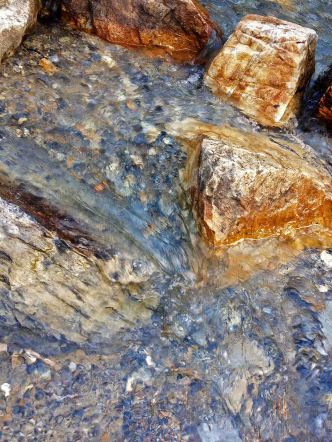
FinCreek 4-RockyM

Fin Creek, Rocky Mountains, BC (photo by Nina Munteanu)

Environmental scientists generally pride themselves on the use of the Precautionary Principle when dealing with issues of sustainability and environmental management. According to the Precautionary Principle, “one shall take action to avoid potentially damaging impacts on nature even when there is no scientific evidence to prove a causal link between activities and effects.” The environment should be protected against substances (such as an exotic species) which can be assumed potentially harmful to the current ecosystem, even when full scientific certainty is lacking.

Unfortunately, politicians, engineers and the scientists who work for them tend to focus on avoiding Type I rather than Type II statistical errors. In fact, by traditionally avoiding Type I errors, scientists increase the risk of committing Type II errors, which increases the risk that an effect will not be observed, in turn increasing risk to environment.

In describing the case of the eutrophication of a Skagerrak (a marine inlet), Lene Buhl-Mortensen asks which is worse: risk a Type II error and destroy the soft bottom habitat of Skagerrak and perhaps some benthic species, or risk a Type I error and spend money on cleaning the outfalls to Skagerrak when in fact there is no eutrophication? “Scientists have argued that cleaning up is too expensive and should not be done in vain,” writes Buhl-Mortensen. “But more often the opposite is the case. The increased eutrophication of Skagerrak could end up more costly than reducing the outfalls of nutrients [to the inlet].”

“Because threats to the environment are threats to human welfare, ecologists have a prima facie ethical obligation to minimize Type II errors,” argues Buhl-Mortensen in the journal Marine Pollution Bulletin. Use of the precautionary principle will save costs—and lives—in the end.

ferry wake active pass copy

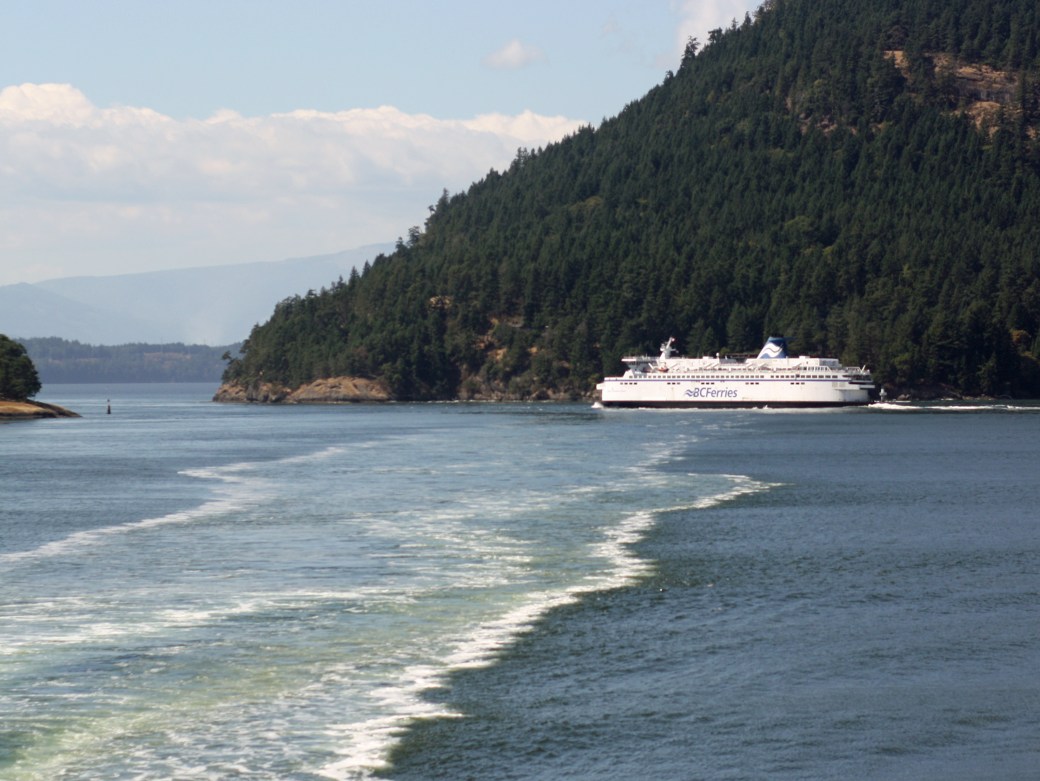
Ferry crossing with wake in foreground, BC coast (photo by Nina Munteanu)


nina-2014aaa

Nina Munteanu is a Canadian ecologist / limnologist and novelist. She is co-editor of Europa SF and currently teaches writing courses at George Brown College and the University of Toronto. Visit www.ninamunteanu.ca for the latest on her books. Nina’s bilingual “La natura dell’acqua / The Way of Water” was published by Mincione Edizioni in Rome. Her non-fiction book “Water Is…” by Pixl Press (Vancouver) was selected by Margaret Atwood in the New York Times ‘Year in Reading’ and was chosen as the 2017 Summer Read by Water Canada. Her novel “A Diary in the Age of Waterwill be released by Inanna Publications (Toronto) in June 2020.


Nina Munteanu Talks about The Splintered Universe with Simon Rose

Author, writer, coach and consultant Simon Rose interviews Nina Munteanu about The Splintered Universe Trilogy, now out in three formats: print, ebook, and audiobook. Listen to a sample from each of the trilogy audiobooks on Audible:

audible listen

Here’s Simon’s interview with me:

SimonRose site

nina interview 3

Nina interview 2

nina interview 4

nina interview 5

nina interview 6

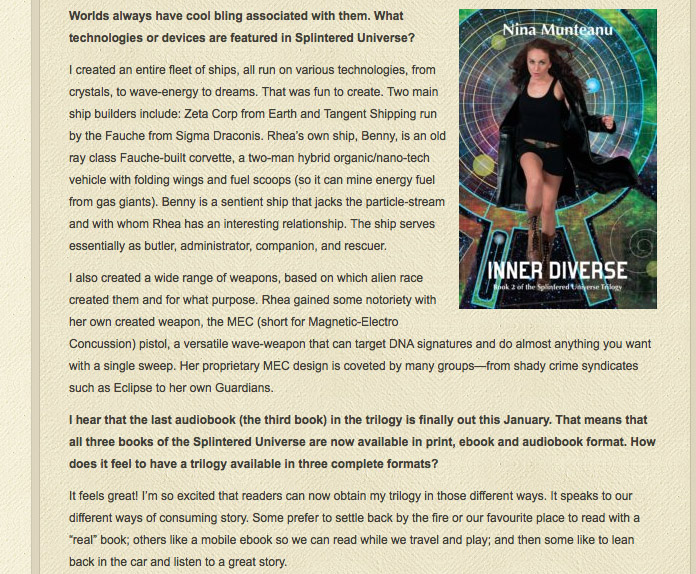
In Metaverse, the third and last book of The Splintered Universe Trilogy, Detective Rhea Hawke travels back to Earth, hoping to convince an eccentric mystic to help her defend humanity from an impending Vos attack—only to find herself trapped in a deception that promises to change her and her two worlds forever.

You can listen to a sample recording of Outer Diverse, Inner Diverse, and Metaverse through Audible. Read The Splintered Universe reviews on Goodreads.

Microsoft Word - trilogy-poster03.docx

Nina Highland Cr 1

Nina checks her photos, Highland Creek, ON (photo by Merridy Cox)

nina-2014aaa

Nina Munteanu is a Canadian ecologist / limnologist and novelist. She is co-editor of Europa SF and currently teaches writing courses at George Brown College and the University of Toronto. Visit www.ninamunteanu.ca for the latest on her books. Nina’s bilingual “La natura dell’acqua / The Way of Water” was published by Mincione Edizioni in Rome. Her non-fiction book “Water Is…” by Pixl Press (Vancouver) was selected by Margaret Atwood in the New York Times ‘Year in Reading’ and was chosen as the 2017 Summer Read by Water Canada. Her novel “A Diary in the Age of Water” will be released by Inanna Publications (Toronto) in 2020.

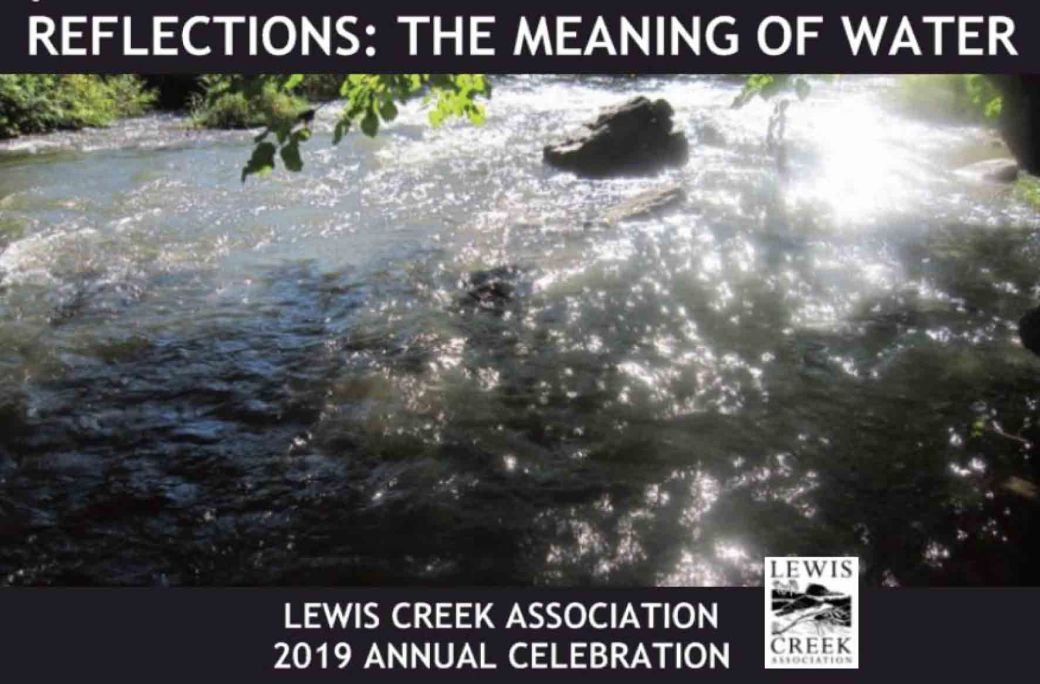
Reflections: The Meaning of Water (a talk for the Lewis Creek Association)

Nina Louis Merridy

Nina Munteanu with Louis DuPont and Merridy Cox with Lewis Creek behind

A short time ago, I was invited to give a talk on water to the Lewis Creek Association during their annual meeting for 2019 to help celebrate their recent accomplishments. Here is their write up:

Join our special guest, Canadian ecologist and author Nina Munteanu, who will discuss the many dimensions of water. She describes personally the curiosity and emotional connection with nature that compels us to caretake our environment with love versus a sense of duty. Her book “Water Is…The Meaning of Water” is an ode to and discourse about water, the indispensable and mysterious element that is the foundation of life here on our blue planet. The book is a fascinating catalogue of the many amazing and anomalous qualities of water, and has become a favorite of several Board members. She trained in limnology, the study of lakes, and has consulted in the aquatic sciences for many years. The author of over a dozen fiction and non-fiction books, she currently teaches writing at the University of Toronto and George Brown College in Toronto, Canada. We are delighted to have Nina join us and share her insights and concerns about this substance we have been concerned with over the last 30 or so years.

Microsoft Word - Nina map Barrio cafe.docx

At Cafe Barrio in Burlington, Vermont, Nina checks the map for directions…and finds her way…

I chose to drive to Vermont from Toronto with good friend and editor Merridy Cox. We crossed into USA near Cornwall and drove through New York state to Rousse’s Point, then into Vermont over the Vermont Bridge over Lake Champlain. We took the scenic route along the islands to the village of Charlotte, where we met with some of the Lewis Creek Board members and enjoyed a wonderful home-cooked supper at executive director Marty Illick’s country home along with Board president Andrea Morgante, board member Louis DuPont, and several other guests.

Merridy-LakeChamplain marsh

Merridy Cox photographing Lake Champlain just east of the Vermont Bridge

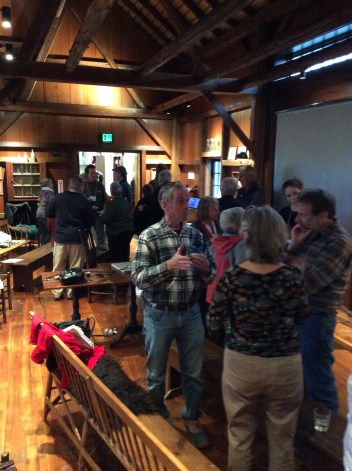
The event took place in the large converted barn of Philo Ridge Farm, a 400-acre historic dairy farm now also running as an educational institution of sustainable practices and store and restaurant. The barn is now a state-of-the-art sustainably built facility with a combination of rustic and sophisticated in its design of rich wood walls, large windows and beams with high vaulted ceiling; ideal for a presentation.

I spoke about my roots in the Eastern Townships of Quebec…and where they led me:

I was born in a small town in the Eastern Townships of Quebec, a gently rolling and verdant farming community, where water—l’eau—bubbles and gurgles in at least two languages.

I spent a lot of my childhood days close to the ground, observing, poking, catching, prodding, destroying and creating. Perhaps it was this early induction to the organic fragrances of soil, rotting leaves and moss that set my path in later life as a limnologist, environmental consultant and writer of eco-fiction.

Nina EasternTownships

I followed my older brother and sister to the nearby forest and local stream. We stirred soil, flower petals and other interesting things with water to fuel “magic potions” that we inflicted on some poor insect. Yes, I was a bit destructive as a child—and I took a lot for granted. Like water. There was so much of it, after all. It was clean and easily accessed, fresh from the tap.

When I gave birth to my son, Kevin, I felt a miracle pass through me. Kevin became my doorway back to wonder. His curiosity was boundless and lured me into a special world of transformation.

Nina-Kevin playing

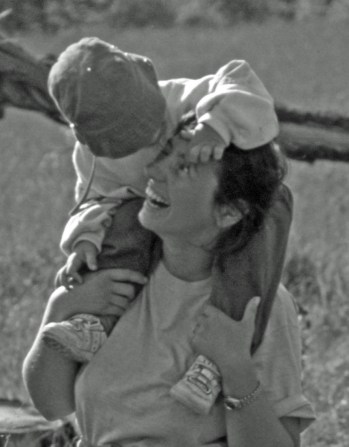
Nina Munteanu and her son hiking in B.C.

I took time off work to spend with Kevin when he was young. We went on great trips, from the local mall, where we had a hot chocolate and played with Lego, to the local beach on the Fraser River, where we explored the rocks. When he was no more than three, I took him on endless adventures in the city and its surroundings. We didn’t have to go far. The mud puddles of a new subdivision after a rain were enough to keep our attention for dozens of minutes. We became connoisseurs of mud. The best kind was “chocolate mud,” with a consistency and viscosity that created the best crater when a rock was thrown into it.

Kevin and I often explored the little woodland near our house. We made “magic potions” out of nightshade flowers, fir needles, loam and moss; we fueled our concoctions with the elixir of water from a stagnant pool. This time the little insects weren’t molested.

Travelling the world has helped me realize that I was blessed with an abundance of water. I lived my entire life in a country of plentiful and healthy water. And for most of that time I didn’t even realize it. Canada holds one fifth of the world’s fresh water in lakes, rivers, and wetlands, as well as in our underground aquifers and glaciers. Canada’s wetlands, which cover more than 1.2 million square kilometres, makes Canada the largest wetland area in the world.*

The folks who attended my presentation were wonderfully receptive, gracious and kind. They bought all my books too! I felt so welcomed by this community concerned about the land and their water. I was also impressed with the dedication, organization and knowledge of this non-profit conservation initiative.

Presentation venue

Venue

Lewis Creek Association

The Lewis Creek Association (LCA) started in 1990, when a group of concerned citizens and the Hinesburg Land Trust came together to conserve a critical stretch of wetland habitat bordering Lewis Creek in Hinesburg, Vermont. Lewis Creek is one of Vermont’s most ecologically diverse streams and suffers from increasing habitat degradation due to river encroachment by development and roads, land use change, and more extreme weather events.

LCA’s mission is to protect, maintain and restore ecological health while promoting social values that support sustainable community development in the Lewis Creek and LaPlatte watershed regions and Vermont generally. Through education and action, LCA works to:

  • Restore water quality, stream stability, and native wildlife habitat
  • Protect and restore important and diverse natural areas
  • Conserve productive and scenic lands that contribute to rural character and economy
  • Support growth compatible with important natural systems and working landscapes
  • Strengthen and support local conservation initiatives and opportunities
  • Model active participation and respect for differences

With a hard-working volunteer board and a part-time paid consultant, LCA facilitates educational, planning, and field work programs involving dozens of volunteers. This work assists town planning and facilitates the restoration and conservation of important Champlain Valley natural areas of high public value.

LCA Annual Party 2019

Their track record has been impressive. Since forming their organization, the LCA has spearheaded and conducted numerous initiatives. Highlights include: annual water quality sampling in six streams and rivers; biodiversity studies of stream corridors, conservation and restoration work in watershed towns; invasive aquatic plant control in local areas; helped educate citizens on ecological improvements; actively participated in implementing VT’s Water Quality Law, Act 64; generated Water Quality Scorecard Maps to track pollution problems; and designed the “Ahead of the Storm” education program used throughout the watershed region.

LakeChamplainBasin

In the Moment-anthology copy*A version of this talk is available in an article I wrote called “Coming Home to Water,” which first appeared in the 2016 anthology In the Moment (A Hopeful Sign) edited by Gary Doi. It was reprinted in 2018 The Earth We Love (Mississauga Writers) edited by Elizabeth Banfalvi; and again in 2019 in The Literary Connection IV: Then and Now (IOWI) edited by Cheryl Antao Xavier.


LakeChamplain-VT-NY bridge

Lake Champlain, looking west from Vermont to New York at Vermont Bridge (right) (photo by Nina Munteanu)


nina-2014aaa

Nina Munteanu is a Canadian ecologist / limnologist and novelist. She is co-editor of Europa SF and currently teaches writing courses at George Brown College and the University of Toronto. Visit www.ninamunteanu.ca for the latest on her books. Nina’s bilingual “La natura dell’acqua / The Way of Water” was published by Mincione Edizioni in Rome. Her non-fiction book “Water Is…” by Pixl Press (Vancouver) was selected by Margaret Atwood in the New York Times ‘Year in Reading’ and was chosen as the 2017 Summer Read by Water Canada. Her novel “A Diary in the Age of Water” will be released by Inanna Publications (Toronto) in 2020.

Science Fiction On Water Justice & Climate Change

TheWaterKnife-Paolo BacigalupiThere were stories in sweat. The sweat of a woman bent double in an onion field, working fourteen hours under the hot sun, was different from the sweat of a man as he approached a checkpoint in Mexico, praying to La Santa Muerte that the federales weren’t on the payroll of the enemies he was fleeing…Sweat was a body’s history, compressed into jewels, beaded on the brow, staining shirts with salt. It told you everything about how a person had ended up in the right place at the wrong time, and whether they would survive another day.

So begins Paolo Bacigalupi’s speculative thriller The Water Knife, set in the near-future in the drought-stricken American southwest. Where corrupt state-corporations have supplanted the foundering national government. Where water is the new gold—to barter, steal, and murder for. Corporations have formed militias and shut down borders to climate refugees, fomenting an ecology of poverty and tragedy. Massive resorts—arcadias—constructed across the parched landscape, flaunt their water-wealth in the face of exploited workers and gross ecological disparity. Water is controlled by corrupt gangsters and “water knives” who cleverly navigate the mercurial nature of water rights in a world where “haves” hydrate and “have nots” die of thirst.

drinking water from tap copy

Paolo Bacigalupi is just one of many authors of compelling dystopian eco-thrillers that engage readers in climate change—many with strong water themes: Margaret Atwood, Emmi Itäranta, Jeff VanderMeer, Richard Powers, Barbara Kingsolver, Upton Sinclair, Ursula Le Guin, JoeAnn Hart, Frank Herbert, John Yunker, Kim Stanley Robinson, James Bradley, Nathaniel Rich, David Mitchell, Junot Diaz, Claire Vaye Watkins, J.G. Ballard, Marcel Theroux, Thomas Wharton—just to name a few.

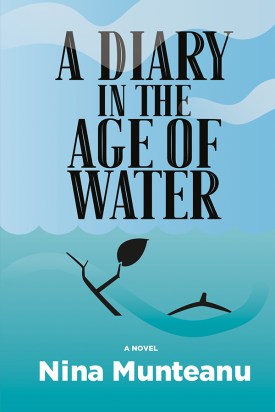
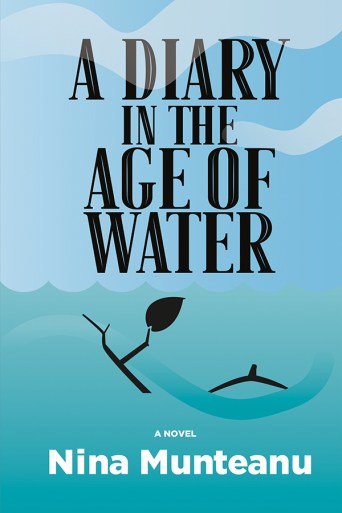
Diary Water cover finalMy upcoming novel by Inanna Publications—A Diary in the Age of Water coming out in 2020—explores the socio-political consequences of corruption in Canada, now owned by China and America as an indentured resource ‘reservoir’; it is a story told through four generations of women and their unique relationship with water during a time of great unheralded change. On February 17, 2046, limnologist Lynna writes in her diary about her mother Una:
Bald, alle das wasser verschwindet,” She said in her quiet voice of certainty. She always spoke in her mother tongue when it came to water. Soon, all the water will be gone. “Und so werden wir.” And so will we. “Es wird das Ende des Zeitalters des Wassers sein.” It will be the end of the Age of Water. 

Una always seemed to follow the thalweg. She seemed to always know what water was doing. Even when it braided and curled in on itself. Even when human-made obstructions got in the way; like the increased water tax, followed by the severe water-use quota. Like water, Una found a way around it.  

I wish I had that skill.

wter tap2 copy

Adobe Photoshop PDFScience fiction explores our water crisis through premises of extreme water shortage and devastating violence (floods, droughts and storms), water diversion, and hoarding. Premises explore weather manipulation, the consequences of extensive deforestation and the massive extinction of species. As with my own book A Diary in the Age of Water, Claudiu Murgan’s Water Entanglement explores water as a character, as though water has gone rogue, unruly. Perhaps even vengeful…
Today, we control water on a massive scale. Reservoirs around the world hold 10,000 cubic kilometres of water; five times the water of all the rivers on Earth. Most of these great reservoirs lie in the northern hemisphere, and the extra weight has slightly changed how the Earth spins on its axis, speeding its rotation and shortening the day by eight millionths of a second in the last forty years.

dried up river bed2 copy

Millennia ago, we adapted and lived by the rhythms of the global water cycle. We have since harnessed the power of water; we captured it and diverted it and changed it in ways to suit our own rhythms. Our unprecedented power over the planet’s water has advanced our civilizations immeasurably. But water remains our Achilles’ heel; it has the potential to limit our ambition like no other resource on Earth.

If climate change is the planet’s response to humanity’s relentless exploitation, water is its archangel.

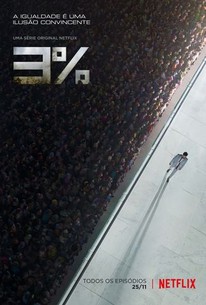
Three Percent TVshowA tidal wave of TV shows and movies currently explore—or at least acknowledge—the devastation we are forcing on the planet. Every week Netflix puts out a new science fiction show that follows this premise of Earth’s devastation: 3%; The 100The TitanOrbiter 9; even Lost in Space.

Science fiction is suited to this role; it is the literature of consequence that explores large issues faced by humankind and can provide an important vehicle in raising environmental awareness. Literature in general has always served as a cultural reporter on themes important to humanity.  The science fiction genre—and speculative fiction particularly—explores premises based on current scientific and technological paradigms. What if we kept doing this?…What if that went on unchecked?… What if we decided to end this?… These are conveyed through the various predictive visions from cautionary tales (e.g., Atwood’s Year of the Flood) to dystopias (e.g., Itäranta’s The Memory of Water). Science fiction has always been the pre-eminent literature of metaphor and history; it has lately matured in the Anthropocene to incorporate the edgy realism of literary fiction to give us potent environmental relevance. Sub-genres now include eco-fiction, climate fiction, and cli-fi.

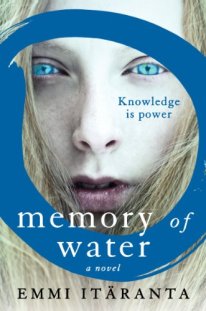
MemoryOfWater_Emmi ItarantaEllen Szabo, author of Saving the World One Word at a Time: Writing Cli-Fi suggests that the ability to make environmental issues less political and more personal (through story) permits more engagement by readers and a higher likelihood of action toward justice: we are more likely to take action on the things we love and know. It’s all about connection.

“Science doesn’t tell us what we should do,” Barbara Kingsolver wrote in Flight Behavior “It only tells us what is.” Stories can never be a solution in themselves, but they have the capacity to inspire action, which is perhaps why cli-fi’s appeal among young adult readers holds such promise. As the scientists and leaders of tomorrow, they may be most capable of addressing climate and water issues where previous generations have failed, writes J.K. Ullrich of The Atlantic. As Margaret Atwood wrote in MaddAddam, “People need such stories, because however dark, a darkness with voices in it is better than a silent void.”

We tend to live very much in the here and now, Bacigalupi told an audience at the University of Seattle when describing humanity’s lack of planning for the future.  But, he added, “with science fiction, I can give you a [here and now] experience far into the future,” and allow a reader to truly experience “what it’s like to be a climate refugee” or be someone with no legal access to water. An extrapolated science fiction future provides a visceral opportunity to see our future selves in a way that promotes serious consideration, says Bacigalupi. By putting us there, we have a better chance of making those extrapolations into consequence.

freighter-Toronto harbourJPG

For centuries we have hubristically and disrespectfully used, discarded and destroyed just about everything on this beautiful planet. According to the World Wildlife Federation, 10,000 species go extinct every year. That’s mostly on us. They are the casualty of our selfish actions. We’ve become estranged from our environment, lacking connection and compassion. That has translated into a lack of consideration—even for each other. In response to mass shootings of children in schools, the U.S. government does nothing to curb gun-related violence through gun-control measures; instead they suggest arming teachers. We light up our cigarettes in front of people who don’t smoke and blow cancer-causing second-hand smoke in each other’s faces. We litter our streets and we refuse to pick up after others even if it helps the environment and provides beauty for self and others. The garbage we thoughtlessly discard pollutes our oceans with plastic and junk, hurting sea creatures and the ocean ecosystem in unimaginable ways. We consume and discard without consideration.

PolarMom 2 cubs

We do not live lightly on this planet.

We tread with incredibly heavy feet. We behave like bullies and our inclination to self-interest makes us far too prone to suspicion and distrust: when we meet the unknown—the “other” so often portrayed in science fiction—we tend to respond with fear and aggression over curiosity, hope and kindness. Something we need to work on if we are going to survive.

Science fiction—the highest form of metaphoric and visionary art—is telling us something. Are we paying attention?

Fallen log BC-rainforest

Rainforest on southern Vancouver Island, B.C. (Photo by Kevin Klassen)


nina-2014aaa

Nina Munteanu is a Canadian ecologist / limnologist and novelist. She is co-editor of Europa SF and currently teaches writing courses at George Brown College and the University of Toronto. Visit www.ninamunteanu.ca for the latest on her books. Nina’s bilingual “La natura dell’acqua / The Way of Water” was published by Mincione Edizioni in Rome. Her non-fiction book “Water Is…” by Pixl Press (Vancouver) was selected by Margaret Atwood in the New York Times ‘Year in Reading’ and was chosen as the 2017 Summer Read by Water Canada. Her novel “A Diary in the Age of Water” will be released by Inanna Publications (Toronto) in 2020.

International Writers’ Festival at Val David

ValDavid-group inside1

International Writers’ Festival & Retreat with Flavia Cosma, Val David

In the middle of June 2019, I drove to Val David, Quebec, with poet-songstress and friend Honey Novick. We had been invited to participate in Les Mots du Monde, the nineteenth international writers’ and artists’ festival of readings, songs, and discussions. The location was the residence of international poet Flavia Cosma. Cosma has been hosting the writer’s event for close to a decade in her large house in the forest just outside the resort town of Val David in the Laurentians.

The program spanned two days of lecture, readings, performance and art by artists and writers from Argentina, Romania, Mexico, USA, Laval, Montreal, and Toronto.

Festival-group outside

International Festival among the trees

Poets, writers, musicians and artists included Honey Novick, Hélène Dorion, Tito Alvarado, Dinorah Gutiérrez Andana, Flavia Cosma, Gerette Buglion, Yvan-Denis Dupuis, EcologyOfStoryJeremiah Wall, Nina Munteanu, Nancy R. Lange, Nicole Davidson, Carmen Doreal, MarieAnnie Soleil, Luis Raúl Calvo, Louis-Philippe Hébert, Melania Rusu Caragioiu, Anna-Louise Fontaine.
I talked about my experience and process of writing my upcoming speculative novel “A Diary in the Age of Water”, coming out in 2020 with Inanna Publications. The novel chronicles four generations of women and their relationship with water during a time of extreme change.

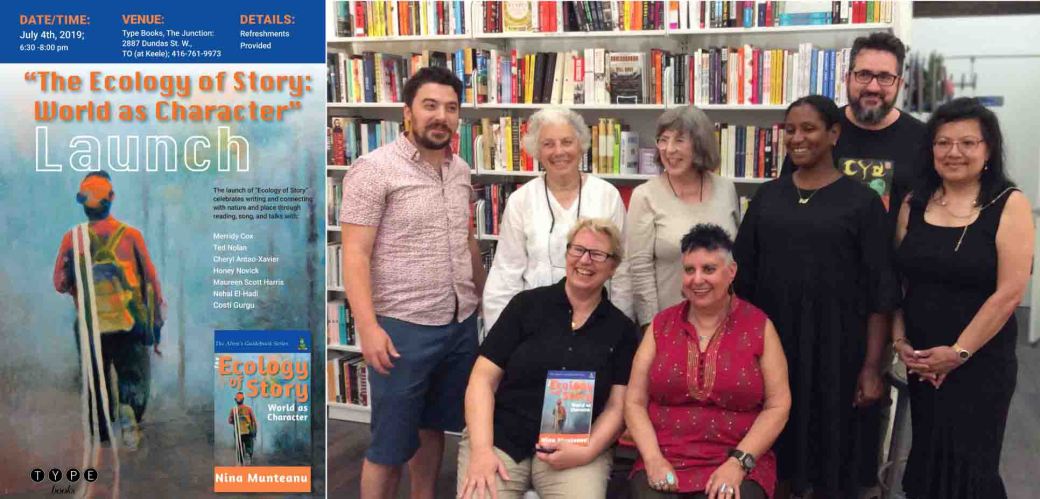
I also shared examples of my recently launched writing guidebook “The Ecology of Story: World as Character” (Pixl Press). The 3rd guidebook in my Alien Guidebook Series, “Ecology of Story” focuses on place and environment and how these form the heart of a good story.

Throughout the festival, we were treated to magnificent ethnic food and refreshments. Interesting discussions on the international literary scene over wine and desert followed.

lunch 2

Lunch at Flavia’s

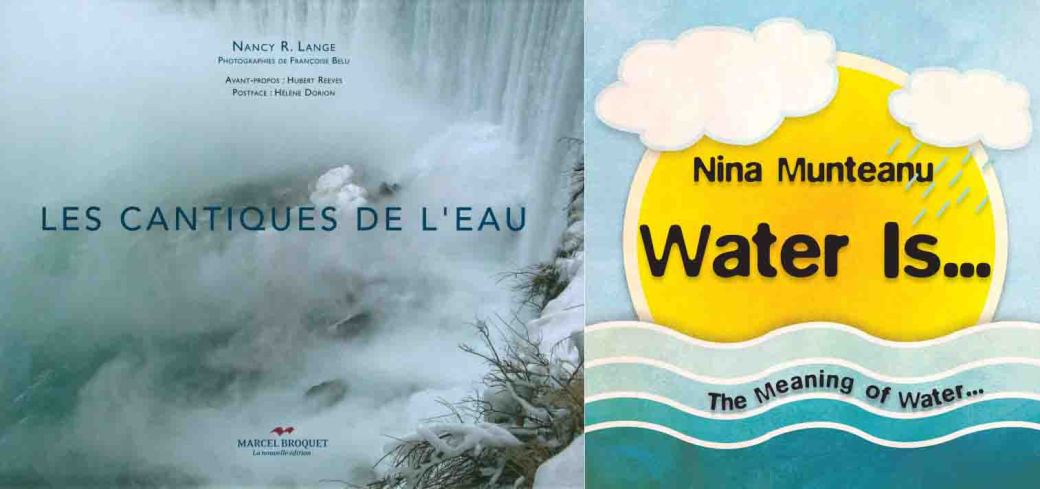
I shared good conversation with fellow poet and water advocate Nancy R. Lange. She had given a compelling presentation on her recent book “Les Cantiques de l’eau” (Marcel Broquet) and knew about my book “Water Is: The Meaning of Water” (Pixl Press). Of course, the best thing to do was exchange books—which we did. Nancy is the literary ambassador for the Eau Secours organization and has promoted responsible water stewardship through her writing and presentations for many years.

Microsoft Word - WaterBooks.docx

“It is not the cliff that shapes the ocean. It is the ocean that shapes the cliff. Fluidity is always the greater force than rigidity.”—Nancy R. Lange


On the final day, the writers and artists put on a public performance at the Val David Centre d’Exposition.

C'est La Vie Cafe

C’est la Vie Cafe, Val David

Val David

Val David is a small resort town located in the Laurentian Mountains about 80 kilometers from Montreal, Quebec. The village is known for its food scene and its artistic character. When I was there, I sampled the local cafes and experienced the street market, which offered a diversity of locally made and sourced produce and crafts.


nina-2014aaa

Nina Munteanu is a Canadian ecologist / limnologist and novelist. She is co-editor of Europa SF and currently teaches writing courses at George Brown College and the University of Toronto. Visit www.ninamunteanu.ca for the latest on her books. Nina’s bilingual “La natura dell’acqua / The Way of Water” was published by Mincione Edizioni in Rome. Her non-fiction book “Water Is…” by Pixl Press (Vancouver) was selected by Margaret Atwood in the New York Times ‘Year in Reading’ and was chosen as the 2017 Summer Read by Water Canada. Her novel “A Diary in the Age of Water” will be released by Inanna Publications (Toronto) in 2020.


How Trees Can Save Us…Five Perspectives on Humanity’s Relationship with Our Forests

Cedar trunk base-LR

Cedar tree in Little Rouge Forest, Ontario (Nina Munteanu)

Alick Bartholomew, author of The Spiritual Life of Water, describes four geologic periods when forests thrived on this planet. The first was the Carboniferous, 350 million years ago, when land vertebrates established. The second was the Jurassic, 170 million years ago, when dinosaurs dominated the planet. The third, the Eocene epoch, 60 million years ago, witnessed the first primitive mammals. The last, the Holocene epoch, which began some 500,000 years ago, ushered in modern humanity. Bartholomew suggests that perhaps, “in each case the forests delivered a boost in the oxygen content of the atmosphere, which may have been a trigger for an evolutionary explosion of life forms.”

Ten thousand years ago, the land along the Mediterranean was covered in mixed forests of conifers and oak. Lebanon’s forests provided timber for the exploring ships of the Phoenician empire in third century BCE. North Africa, a fertile forest two thousand years ago, is now a desert. A thousand years ago, three quarters of the world was forest. Today forest and woodland cover only a third of the world. The UK is currently the least wooded area of Europe with 13% woodland cover; its ancient woodland is being removed at a faster rate than the Amazon rainforest. Humanity is currently cutting down trees at a rate of 15 billion a year. We are losing forests the size of New York City daily; every 100 days we lose forests the size of Scotland; within a single year we lose forest ecosystems the size of Italy.

Since humanity arrived, we have cut down trees for timber, agriculture and development. Our impact is a matter of scale. When humanity was a mere 300 million in pre-medieval times, forest ecosystems remained intact. We are now over 7 billion, doing essentially the same thing we did thousands of years ago. What may have been sustainable then is now extirpating entire complex ecosystems, along with species we may never know existed. Deforestation releases a massive carbon sink into the atmosphere, driving global warming. It is largely responsible for reducing populations of wildlife by half in the last 40 years, and for starting the sixth massive extinction event.

Clearcut gordon valley copy 2

Clearcut in Gordon Valley, Vancouver Island, BC (photo by T.J. Watts)

While too many of us do not understand or appreciate the global consequences of deforestation, we remain intimately and personally connected with trees: in ways we don’t realize or have forgotten.

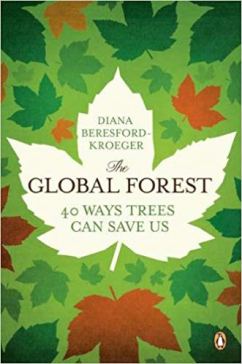
This article overviews the perspectives of five writers on the role and history of trees in global planetary health and our journey with climate change. I explore three non-fiction books and two fiction books. The non-fiction books include Witness Tree (2017) by Lynda Mapes, The Global Forest (2011) by Diana Beresford-Kroeger, and The Songs of Trees (2018) by David George Haskell. The two fiction books include The Overstory (2018) by Richard Powers and Barkskins (2016) by Annie Proulx. Each work is a compelling testament of humanity’s connection with trees, both historically and in the present. All provide powerful and evocative optimism in different ways.

SONY DSC

Ash tree, Little Rouge River forest, Ontario (photo by Nina Munteanu)


The Philosophical OPTIMISM of Lynda Mapes

LyndaMapes

Lynda V. Vapes

Seattle Times environmental reporter and author of Witness Tree, Lynda V. Mapes explores a changing natural world and humanity’s relationship with it through a single Century-old red oak tree over four seasons. Mapes brings in elements of physics, ecology, biology and sociology and philosophy to probe her witness tree and reveal a colourful history of aboriginal life, colonialism, commodification and human-caused climate change.

In describing her oak tree, journalist and author of Witness Tree, Lynda V. Mapes writes, “The big oak dominates its space…but it also supports a vast web of life and relies in turn on a menagerie of helpers, aboveground and below. With its crown in the wind and its roots in the teeming soil, the big oak connects earth and sky, and many millions of beings, and is home to each and to all. It is just one tree, and yet a whole world unto itself.”

WitnessTreeMapes reveals that her witness tree overcame a 1 in 500 chance of taking root from tiny acorn to seedling to become a thirteen-storey tall giant. Mapes considered her oak a living timeline that revealed through its phenology how climate change is resetting the seasonal clock. Mapes sought “the quiet testimony of living things.” Through an “intimate exploration” in which she dug below, climbed up and lay beneath her oak, Mapes found vulnerability, loss, renewal, and hope.

“No matter what else the future may bring, in an uncertain world forests are a repository of only good verbs:  Forests shelter. Nurture. Moderate. Cleanse. Regenerate. Provide. Connect. Sustain…Trees can be our wellspring of inspiration. More than building material, fuel, and carbon-storage utilities, forests are foundational to life on the earth, refugia for countless animals, and an endless source of human joy, renewal, and refreshment.”

“People and trees are meant to be together, and if we work at it, that’s how we will stay,” writes Mapes at the end of her book. It is both hope and warning. A quiet clarion for us to “remember” our place in the world and to embrace our relationship with trees as wisdom guide.

Mapes invites us to connect with the forest.

Fallen log stream-2012

Old growth forest on Vancouver Island, British Columbia (photo by Kevin Klassen)

The Practical OPTIMISM of Diana Beresford-Kroeger

Diana-and-the-tree3

Diana Beresford-Kroeger

In her book The Global Forest: 40 Ways Trees Can Save Us, botanist and medical biochemist Diana Beresford-Kroeger tells us that:

“A functioning forest is a complex form of life. It is interconnected by its own flora and driven by the mammals, the amphibians and insects in it. It is kept in place by fungi, algae, lichens, bacteria, viruses, and bacteriophages. The primogenitors of the forests are trees. They communicate by carbon-coded calls and mass-market themselves by infrasound. The atmosphere links forests into the heavens and the great oceans. The human family is both caught and held in that web of life.”

TheGlobalForestWritten with passionate lyricism and a mother’s nurturing spirit, Irish storyteller Beresford-Kroeger weaves a compelling tapestry of ancient forest lore with modern science to promote the global forest. Tapping into aboriginal wisdom and ancient pagan legend, Beresford-Kroeger invites you into the forest to explore the many beneficial and pharmaceutical properties of trees—from leaves that filter the air of particulate pollution, the cardiotonic property of hawthorn, fatty acids in hickory nuts and walnuts that promote brain development, to the aerosols in pine trees that calm nerves.

The titles of her chapters reveal an overarching agenda: “The Global Forest Has Within Itself a Master Plan for Sustainability”; “Climate Change Can Be Reversed: Simplicity, Sustainability, and Sanity”.

“This [global] forest is the environment that drives and fulfills the dream of each leaf in a vast rhythmic cycle called life. Nothing is outside. We are all of it in a unity that transcends the whole. Maybe, just maybe, this resonates of God. If that is so, then we are all His children, every earthworm, every virus, mammal, fish and whale, every fern, every tree, man, woman and child. One equal to another. Again and again.”

Beresford-Kroeger compels us to interact with and learn from the forest.


gnarly cedar tree

Gnarly “feet” of cedar tree in Little Rouge River forest, Ontario (photo by Nina Munteanu)


The Existential OPTIMISM of David George Haskell  

DavidGeorgeHaskell

David George Haskell

In The Songs of Trees: Stories from Nature’s Great Connectors, biologist David George Haskell pens an existentialist poem to life’s interconnected network. Haskell’s notion of ‘listening to trees’ arises not from metaphor or metaphysics but from a spiritual understanding of the woven tapestry of life.

 “For the Homeric Greeks, kleos, fame, was made of song. Vibrations in air contained the measure and memory of a person’s life. To listen was therefore to learn what endures. I turned my ear to trees, seeking ecological kleos. I found no heroes, no individuals around whom history pivots. Instead, living memories of trees, manifest in their songs, tell of life’s community, a net of relations. We humans belong within this conversation, as blood kin and incarnate members. To listen is therefore to hear our voices and those of our family…To listen is therefore to touch a stethoscope to the skin of a landscape, to hear what stirs below.”

SongsOfTreesIn his travels to visit iconic trees around the world, Haskell draws on the wisdom and moral ethics of “ecological aesthetics” to describe a natural beauty—not as individual property but as a world within a world of interactive life to which we belong and serve but do not own:
“We’re all — trees, humans, insects, birds, bacteria — pluralities. Life is embodied network…where ecological and evolutionary tensions between cooperation and conflict are negotiated and resolved…Because life is network, there is no ‘nature’ or ‘environment,’ separate and apart from humans. We are part of the community of life, composed of relationships with ‘others,’ so the human/nature duality that lives near the heart of many philosophies is, from a biological perspective, illusory…We cannot step outside life’s songs. This music made us; it is our nature…To listen to trees, nature’s great connectors, is therefore to learn how to inhabit the relationships that give life its source, substance, and beauty.”

In the vein of the naturphilosophie of Goethe and Schelling—and later of Carson, Thoreau, Eisely and Dillard—Haskell invites us to cultivate a strong sense of place and being, one that extends beyond “self” to the existential nature of experience. Glancing up a magnificent oak or beech tree reveals wood as “an embodied conversation between plant life, shudder of ground and yaw of wind.”

Haskell exhorts us to be the forest.

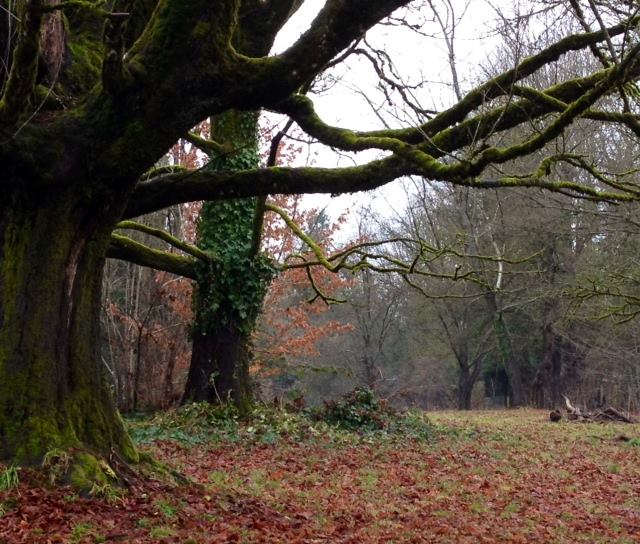
Old tree deer lake park

Old tree in Deer Lake Park, Burnaby, BC (photo by Nina Munteanu)

The Fierce OPTIMISM of Richard Powers  

RichardPowers

Richard Powers

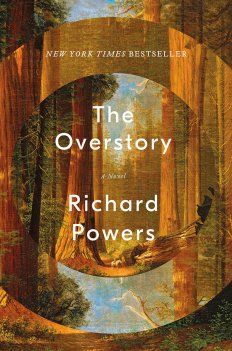
At the heart of Richard Powers’s The Overstory are the pivotal lives of two women, botanist Patricia Westerford and college student Olivia Vandergriff. Both will inspire a movement against the destruction of forests.

Patricia Westerford—whose work resembles that of UBC’s Suzanne Simard—is a shy introvert who discovers that trees communicate, learn, trade goods and services, and have intelligence. When she shares her discovery, she is ridiculed by her peers and loses her position.  But, just as with Lynn Margulis and her theory of endosymbiosis, Westerford is finally validated. She is the archetypal ‘mother tree’, the metaphoric Tachigali versicolor, who ultimately brings the tangle of narratives together through meaning. Westerford writes in her book The Secret Forest:

mossy tree copy

Moss-covered cedar, Alberta (photo by Nina Munteanu)

“There are no individuals in a forest, no separable events. The bird and the branch it sits on are a joint thing. A third or more of the food a big tree makes may go to feed other organisms. Even different kinds of trees form partnerships. Cut down a birch, and a nearby Douglas fir may suffer…Fungi mine stone to supply their trees with minerals. They hunt springtails, which they feed to their hosts. Trees, for their part, store extra sugar in their fungi’s synapses, to dole out to the sick and shaded and wounded. A forest takes care of itself, even as it builds the local climate it needs to survive…A tree is a wondrous thing that shelters, feeds, and protects all living things. It even offers shade to the axmen who destroy it.”

TheOverstoryOlivia Vandergriff miraculously survives an electrocution to become an ecowarrior after she begins to hear the voices of the trees. She rallies others to embrace the urgency of activism in fighting the destruction of California’s redwoods and even camps in the canopy of one of the trees to deter the logging. When the ancient tree she has unsuccessfully protected is felled, the sound is “like an artillery shell hitting a cathedral.” Vandergriff weeps for this magnificent thousand-year old tree. So do I. Perhaps the real heroes of this novel are the ancient trees.
In his review of Overstory in The Guardian, Banjamin Markovits wrote, “ There is something exhilarating…in reading a novel whose context is wider than human life. Like Moby-DickThe Overstory leaves you with a slightly adjusted frame of reference… And I found, while reading, that some of what was happening to his characters passed into my conscience, like alcohol into the bloodstream, and left a feeling behind of grief or guilt, even after I put it down.”

Powers challenges us to champion the forest.

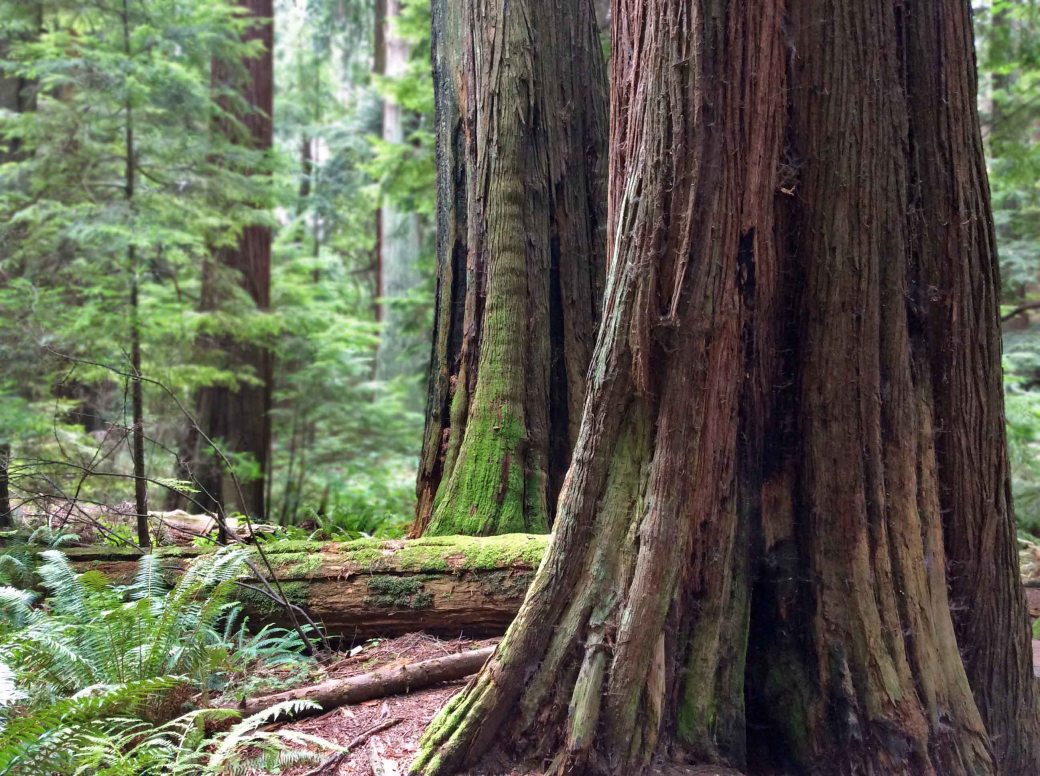
Cedar Giants-LHP

Ancient cedars in Lighthouse Park, West Vancouver, BC (photo by Nina Munteanu)

The Intellectual OPTIMISM of Annie Proulx  

AnnieProulx

Annie Proulx

Annie Proulx’s Barkskins chronicles two immigrants who arrive in Canada in 1693 (Rene Sel and Charles Duquet) and their descendants over 300 years of deforestation of North America starting with the arrival of the Europeans to contemporary global warming. “Barkskins” (woodcutters) are, in fact indentured servants who were brought from the Paris slums to the wilds of New France “to clear the land, to subdue this evil wilderness,” says their seigneur. Sel is forced to marry a native woman and their descendants live trapped between two cultures; Duquet runs away to become a fur trader and build a timber empire.

barkskinsProulx immerses the reader in rich sensory detail of a place and time, equally comfortable describing a white pine stand in Michigan and logging camp in Upper Gatineau to a Mi’kmaq village on the Nova Scotia coast or the stately Boston home of Charles Duquet. The foreshadowing of doom for the magnificent forests is cast by the shadow of how settlers treat the Mi’kmaq people. The fate of the forests and the Mi’kmaq are inextricably linked through settler disrespect and a fierce hunger for “more.”

The novel rolls out events in a relentless stream of life and death; no character is safe from the ravages of nature or the notions of that time period. While most of the book flows like a great amoral river—filled with feckless, unheroic and at times miserable characters—there are moments of emotional shoring. They act like exclamation marks for their rarity. By the 1830s, the character, German forester Armenius Breitsprecher, expresses anger and frustration with his colleagues:

LittleRougeRiver-TreeUp copy

White pine, Little Rouge River forest, Ontario

“Not for the first time he saw that the acquisitive hunger of Duke & Sons was so great they intended to clear the continent. And he was helping them. He hated the [lumber companies] clear-cut despoliation, the insane wastage of sound valuable wood, the destruction of soil, the gullying and erosion, the ruin of the forest world with no thought for the future—the choppers considered the supply to be endless—there was always another forest.”

Proulx’s unsentimental narrative and grand historic set-pieces lure the reader first to passively observe humanity’s struggles with the grand forest; then, once immersed, we are nudged to participate along with the awakening of the human consciousness over the generations of her 300-year long saga—first in the early 1900s through Conrad and Charley who recognize the importance of a functional forest ecosystem then through current day ecologist Sapatisia Sel (descendant of Rene), who responds to a scientist’s claim of  “A great crisis is just ahead” with “The forests, the trees, they can change everything!”

Cedar-boardwalk copy

Giant Cedars boardwalk, Alberta (photo by Nina Munteanu)

The suggestion is that, while we remain inextricably embedded in time and place—we are also progenitors of change to our future generations. Three hundred years ago, our beliefs and knowledge prevented us from acting sustainably. We know better now. The time to save our forests and let them save us is now.

“The reader comes to realize that the novel isn’t really about the human characters so much as it is about the forests,” Gus Powell of The National Post concludes of Barkskins. “As [the forests] disappear, the narrative seems to recede in importance, revealing a crucial interdependence between the human and the natural world previously handled almost entirely as subtext. This is especially true in the novel’s closing, where the anger and despair that have characterized the novel shift into an outspoken environmental advocacy.” This is the essence of optimism…

Proulx dares us to believe in the forest.

*****

Forest conifers Metchosin

Forest in Metchosin, BC (photo by Nina Munteanu)

Whether philosophical, pragmatic, existentialist, fierce or intellectual, “Optimism is the faith that leads to achievement…No pessimist ever discovered the secret of the stars, or sailed to an uncharted land, or opened a new doorway for the human spirit,” wrote Helen Keller. In her recent book Breaking Murphy’s Law, Suzanne Segerstrom demonstrates the connection between optimists and their investment in goal setting and achievement. The trick to avoiding the cynicism that may come with complacent optimism (thinking, hoping and wishing for good things to happen) is through the simple action of engagement. “Optimists,” says Segerstrom, “are happy and healthy not because of who they are but because of how they act. Optimism is more what we do than what we are, and thereby can be learned.”

I hope so. If we connect, interact and learn, and be the forest, we may find the strength and passion to champion the forest we believe in.


nina-2014aaa

Nina Munteanu is a Canadian ecologist / limnologist and novelist. She is co-editor of Europa SF and currently teaches writing courses at George Brown College and the University of Toronto. Visit www.ninamunteanu.ca for the latest on her books. Nina’s bilingual “La natura dell’acqua / The Way of Water” was published by Mincione Edizioni in Rome. Her non-fiction book “Water Is…” by Pixl Press (Vancouver) was selected by Margaret Atwood in the New York Times ‘Year in Reading’ and was chosen as the 2017 Summer Read by Water Canada. Her novel “A Diary in the Age of Water” will be released by Inanna Publications (Toronto) in 2020.


“Ecology of Story: World as Character” Workshop at When Words Collide, Calgary

EcologyOfStoryI recently gave a 2-hour workshop on “ecology of story” at Calgary’s When Words Collide writing festival in August, 2019.
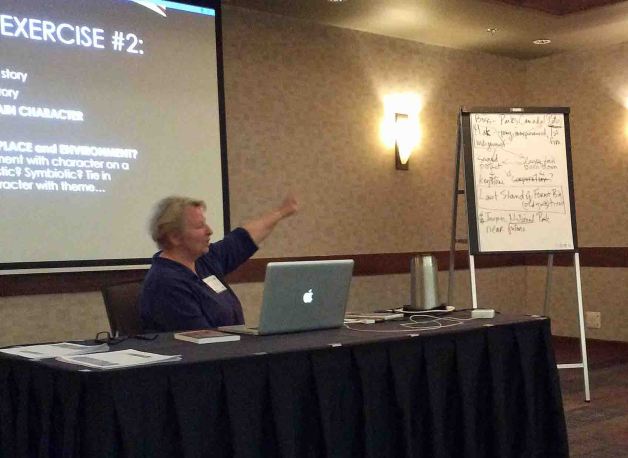
The workshop—based on my third writing guidebook: “The Ecology of Story: World as Character”explored some of the major relationships in functional ecosystems and how to effectively incorporate them in story. We  briefly explored how ecosystems and ecological processes work and looked at several of the more bizarre examples of ecological adaptation.

I showed how treating world and place as character provides depth and meaning to story through its integration with plot, theme, and other characters. We looked at these story components as integral to help ground the reader in context and meaning of story. We explored place / setting as metaphor, symbol, archetype, and allegory.

Through literary examples of setting and place, we looked at how readers are drawn into story through metaphor, sensual description, and thematic integration through POV character.

Nina and flipchart2

Reviewing the story we created through an exercise

Then came the story-building part of the workshop—a snappy, fast-paced dialogue among all workshop participants. Using the book’s cover image as story-prompt, we worked through the story components of premise, theme, character, plot and setting. Following a lively discussion, we succeeded in creating a stunning first crack at a story that was both original and intriguing. And at whose heart was a strong sense of place and identity.

creating a story

“The Ecology of Story” had only recently been launched at Type Books in Toronto and saw its first use at the Calgary When Words Collide conference. Books were sold out an hour after the workshop.

Microsoft Word - EcologyOfStory Launch.docx

“The Ecology of Story” recently achieved Amazon Bestseller status in the Ecology category.

EcologyOfStory-AmazonBestseller-Ecology


NinaEcologyWorkshop01

Nina starts her “The Ecology of Story” workshop with Part 1: ecology

Nina-slide-EcologyWorkshop

Nina talks about some interesting adaptations in reproduction


Rainforeset Stream-2012

Stream on Vancouver Island, BC (photo by Kevin Klassen)


nina-2014aaaNina is a Canadian scientist and novelist. She worked for 25 years as an environmental consultant in the field of aquatic ecology and limnology, publishing papers and technical reports on water quality and impacts to aquatic systems. Nina has written over a dozen eco-fiction, science fiction and fantasy novels. An award-winning short story writer, and essayist, Nina currently lives in Toronto where she teaches writing at the University of Toronto and George Brown College. Her non-fiction book “Water Is…”—a scientific study and personal journey as limnologist, mother, teacher and environmentalist—was picked by Margaret Atwood in the New York Times as 2016 ‘The Year in Reading’. Nina’s most recent novel “A Diary in the Age of Water”— about four generations of women and their relationship to water in a rapidly changing world—will be released in 2020 by Inanna Publications.
 

Investing in The Future by Embracing (Climate) Change

Wir müssen uns immer verändern, erneuern, verjüngen; sonst verhärten wir.—Goethe


Nina-reading-Ward Is

Nina reading “How to Read Water” on Algonquin Island, Ontario (photo by Nina Munteanu)

In his book, How to Read Water, Tristan Gooley describes a phenomenon called clapotis gaufre. Also known as “waffled clapotis”, the term comes from the French word (clapotis) for “lapping” and describes a standing wave phenomenon created by the troughs and crests of waves as they hit and reflect back from a barrier. The incoming and reflected outgoing waves, in passing each other, form a waffle-pattern that bobs up and down but otherwise appears stationary.

In fact, it is far from stationary.

But we like “stationary.” So much so that, despite the magnitude of planetary-scale change, everything appears stationary to us. People go on with their daily lives as they have for generations: driving cars; living profligately; wastefully consuming energy, disposables and water; bickering about fuel taxes and job security. But this is an illusion, a very dangerous one. Surface inertia hides a depth of motion. In a river, where high-velocity water roars over a steep river-bottom depression, a frothy stationary breaker forms; it is the most dangerous part of the river. What we can’t see, we think won’t hurt us. But what if we could see the ominous dark cloud of carbon dioxide and methane blotting more and more of our sky? What if we could see the fumes billowing out of our cars and the heat radiating from our homes? Or smell the toxins spilling into our rivers and lakes? Or the quiet extinctions happening by the minute in the wilderness?

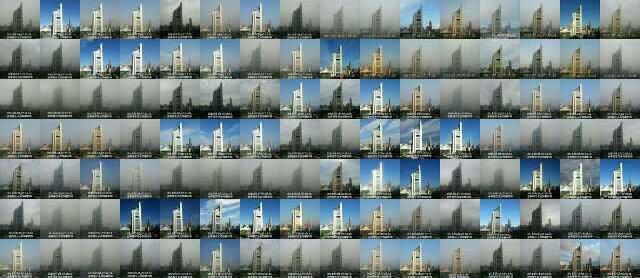
oneyearbeijing

Photographs of same Beijing location over a year showing smog days


Old tree deer lake park

Old oak tree in Deer Lake Park, BC

What if we could see the fractal signs of change?

Nothing in nature stays the same. If it does, that’s because change has brought it back to what it once was. Trees move. They grow wider and taller; they just do it at a pace beyond our impatient lifestyle. Because their motion is invisible, they are invisible. We think of trees as stationary objects, not living beings. Like a standing wave of frozen time. We observe through the hurried lens of human impatience and self-preoccupation. A quick glance takes in a scene. We forget that we can “see” with other senses. Smell. Touch. Taste. Hearing. As hyposmia and disinterest dulls our senses, we grow less able to recognize the verisimilitudes of Nature’s trompe l’oeils. Trapped by our preordained notions, we no longer see the changes we’re not prepared to see. And that’s the change that kills us.

In witnessing the collapse of fish populations on the west coast in the ‘90s, UBC fisheries biologist Daniel Pauly noticed that people just went on fishing ever smaller fish. The collapse occurred through what he called “creeping disappearance.” Pauly named this impaired vision “shifting baseline syndrome,” a willing ignorance of consequence based on short-term gain.

One could argue that the inability to feel and connect beyond our immediate line of sight can be a good thing—a kind of selective memory that allows us to adapt to each “new normal.” Mothers of several children can testify to the benefits of “forgetting” their hours of labour to give birth. Hence the ability and willingness to repeat this very painful experience. Is this part of successful biological adaptation in all of us? The ability to reset?

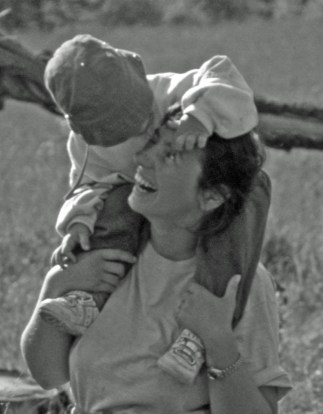
Nina-Kevin playing

Author and her son enjoy an outing

Or is it rather that our mother chooses not to forget but to relegate her memory of the previous birth behind something far more beautiful and wondrous to remember and something she is deeply connected to: the miraculous birth of her child—her investment in the future. Shifting baseline syndrome is part of a larger amnesia, one that encompasses many generations; a selective memory driven by short-sightedness that comes mostly from lack of connection. But to successfully invest in our future, that is precisely what we must do: connect.

If only we could see the fractal signs of change…

Bill McKibben wrote in The New Yorker, “Climate change isn’t just a threat. It’s an opportunity for us to live happier, more fulfilling lives.” True happiness comes with long-term fulfillment, not short-term material wealth and comfort. When we focus from ourselves to embrace the changing world—to connect—we discover a well-spring of altruistic happiness. When we embrace, we transcend. When we transcend, we become fluid with change. That is when we succeed.

quote by Goethe: “We must always change, renew, rejuvenate ourselves; otherwise we harden.”


nina-2014aaa

Nina Munteanu is a Canadian ecologist / limnologist and novelist. She is co-editor of Europa SF and currently teaches writing courses at George Brown College and the University of Toronto. Visit www.ninamunteanu.ca for the latest on her books. Nina’s bilingual “La natura dell’acqua / The Way of Water” was published by Mincione Edizioni in Rome. Her non-fiction book “Water Is…” by Pixl Press (Vancouver) was selected by Margaret Atwood in the New York Times ‘Year in Reading’ and was chosen as the 2017 Summer Read by Water Canada. Her novel “A Diary in the Age of Water” will be released by Inanna Publications (Toronto) in 2020.


Can Dystopian Eco-Fiction Save the Planet?

NewYork 2140By failing to engage with climate change, artists and writers are contributing to an impoverished sense of the world, right at the moment when art and literature are most needed to galvanize a grassroots movement in favor of climate justice and carbon mitigation.”—Amitav Ghosh, 2017

…Margaret Atwood’s The Year of the Flood. Paolo Bacigalupi’s The Windup Girl or The Water Knife. Kim Stanley Robinson’s New York 2140. Nina Munteanu’s A Diary in the Age of Water. Richard Power’s Overstory. Annie Proulx’s Barkskins. Emmi Itäranta’s The Memory of Water

Diary Water cover finalWhat these novels have in common is that they are all Dystopian Eco-Fiction. Humanity’s key role in environmental destruction serves a strong thematic element. In eco-fiction dystopias (as opposed to political or socio-cultural dystopias such as Brave New World, 1984, The Handmaid’s Tale) the environment—whether forest, ocean, water generally, or the animal world—plays a key character.

Our Literature in the Anthropocene

In 2017, Amitav Ghosh observed that the literary world has responded to climate change with almost complete silence (The Great Derangement: Climate Change and the Unthinkable). “How can we explain the fact that writers of fiction have overwhelmingly failed to grapple with the ongoing planetary crisis in their works?” writes Fredrick Albritton Jonsson of The Guardian, who observes that, “for Ghosh, this silence is part of a broader pattern of indifference and misrepresentation. Contemporary arts and literature are characterized by ‘modes of concealment that [prevent] people from recognizing the realities of their plight.’”

Windup GirlAccording to Ghosh, plots and characters of contemporary literature tend to reflect the regularity of middle-class life and the worldview of the Victorian natural sciences, one that depends on a principle of uniformity. Change in Nature has been perceived as gradual (or static by some) and never catastrophic. Extraordinary or bizarre happenings were left to marginal genres like the Gothic tale and—of course—science fiction. The strange and unlikely have been externalized: hence the failure of modern novels and art to recognize anthropogenic climate change.

From Adam Smith’s 18th Century economic vision to the conceit of bankers who drove the 2008 American housing bubble, humanity’s men have consistently espoused the myth of a constant natural world capable of absorbing infinite abuse without oscillation. When James Lovelock and Lynn Margulis proposed the Gaia Hypothesis in the 1970s, many saw its basis in a homeostatic balance of the natural order as confirmation of Nature’s infinite resilience to abuse. They failed to recognize that we are Nature and abuse of Nature is really self-abuse.

Jonsson suggests that these Enlightenment ideas are essentially ideological manifestations of Holocene stability, remnants from 11,000 years of small variability in temperature and carbon dioxide levels, giving rise to deep-seated habits and ideas about the resilience of the natural world. “The commitment to indefinite economic growth espoused by the economics profession in the postwar era is perhaps its most triumphant [and dangerous] expression.”

barkskins

Louise Fabiani of Pacific Standard suggests that novels are still the best way for us to clarify planetary issues and prepare for change—even play a meaningful part in that change. In her article “The Literature of Climate Change” she points to science fiction as helping “us prepare for radical change, just when things may be getting too comfortable.”

Referring to our overwhelming reliance on technology and outsourced knowledge, Fabiani suggests that “our privileged lives (particularly in consumer-based North America) are built on unconscious trust in the mostly invisible others who make this illusion of domestic independence possible—the faith that they will never stop being there for us. And we have no back-ups in place should they let us down.” Which they certainly will—given their short-term thinking.

TheOverstory“To counteract this epidemic of short-term thinking,” says Fabiani, “it might be a good idea for more of us to read science fiction, specifically the post-apocalyptic sub-genre: that is, fiction dealing with the aftermath of major societal collapse, whether due to a pandemic, nuclear fallout, or climate change.”

I suggest widening the genre to include good dystopian eco-fiction, which includes not just post-apocalyptic tales but also cautionary tales, worlds in upheaval, and satires. Dystopian literature is ultimately an exploration of hope through personal experience. The eco-fiction protagonist navigates their dystopia by learning meaningful lessons—lessons that pertain directly to our reader in their current world. This is because the premise of a dystopia lies squarely in the present world. Good dystopias can enlighten and suggest possibilities; they can warn and herald. At the very least, they incite the necessary conversation.

On the Role of Dystopian Eco-Fiction

NaturalSelection-front-webI recently shared a panel discussion with writer Kristen Kiomall-Evans at the 2019 Limestone Genre Expo in Kingston entitled: “On the Role of (Dystopian) Literature and Environmental Issues: Can Books Save the Planet.” The audience of mostly women shared enlightened input in an open discussion, which spanned a range of topics and directions from what dystopian literature actually is to whether we are turned off by its negativity—that it may be too close to reality and makes us cringe and want to hide. One person even brought up Game of Thrones as an example; which I then bluntly suggested was not real “story”—it is a stream of episodic sensationalism and horror—aimed at thrilling shock value, not fulfilling meaning.

The group explored what Eco-Fiction is and the possibility of how eco-fiction writers can influence their audience to engage in helping the planet and humanity, in turn.

 “Science doesn’t tell us what we should do,” Barbara Kingsolver wrote in Flight Behavior “It only tells us what is.” Stories can never be a solution in themselves, but they have the capacity to inspire action. Margaret Atwood wrote in MaddAddam, “People need such stories, because however dark, a darkness with voices in it is better than a silent void.”

We explored several areas in which writers could elucidate ways to engage readers for edification, connection and participation. We discussed optimism, new perspectives, envisioning our future, and imaginative use of “product placement” to gain reader engagement and galvanize a movement of action.

Optimism in Story

I pointed out that good dystopias—like all good fiction—follow a character and story arc that must ultimately resolve (which Game of Thrones may never do, certainly not well—J.R.R. Martin’s books series upon which it is based are not even finished yet!). Eco-Fiction Dystopias often conclude with a strong element of hope, based on some positive aspect of humanity and the human spirit—which may include our own evolution. Think Day After Tomorrow, Year of the Flood, Windup Girl, The Postman, Darwin’s Paradox.

WaterAnthology-RealitySkimmingPress copyIn 2015, I joined Lynda Williams of Reality Skimming Press in creating an optimistic science fiction anthology with the theme of water. My foreword to Water addressed this point:

As we drank Schofferhoffers over salmon burgers, Lynda lamented that while the speculative / science fiction genre has gained a literary presence, this has been at some expense. Much of the current zeitgeist of this genre in Canada tends toward depressing, “self-interested cynicism and extended analogies to drug addiction as a means of coping with reality,” Lynda remarked. Where was the optimism and associated hope for a future? I brought up the “hero’s journey” and its role in meaningful story. One of the reasons this ancient plot approach, based on the hero journey myth, is so popular is that its proper use ensures meaning in story. This is not to say that tragedy is not a powerful and useful story trope; so long as hope for someone—even if just the reader—is generated. Lynda and I concluded that the science fiction genre could use more optimism. [As a result,] these stories explore individual choices and the triumph of human imagination in the presence of adversity. [Each story explores] the surging spirit of humanity toward hopeful shores.

New Perspectives in Story

Evans spoke of the emergence of and need for a strong voice by marginalized groups who would be most affected by things like habitat destruction and climate change. The poor and marginalized will most certainly make up the majority of climate change refugees, starved out and water shorted, and suffering malnutrition, violence and disease.

FifthSeason-JemisinEvans pointed out that afro-American writers (e.g., Octavia Butler, Walter Mosley, Nalo Hopkinson and N.K. Jemisin) and indigenous writers (Cherie Dimaline, Daniel Wilson, Drew Hayden Taylor) are an exciting voice, providing a new and compelling perspective on ongoing global issues.

I would add that the “feminine” voice—the voice of women and the voice of ecology and those who embrace the gylanic voice—are needed. This was strangely not mentioned in the group—perhaps because we were all women—but one. Such a voice can help personalize the experience to readers, by creating discovery, connection and understanding—and ultimately serving a key force in engaging readers to act.

Envisioning Our Future Through Story

One audience member shared a yearning for an optimistic focus through an envisioned world where solutions have successfully created that world. She wasn’t so much suggesting writing a utopia, but including elements of future wishes as an integral part of the world, following Ghandi’s wise advice: be the change you seek. In a recent interview in which I also participated in The Globe and Mail on women science fiction writers, Ottawa writer Marie Bilodeau addressed this concept:

“the best part about writing science fiction is showing different ways of being without having your characters struggle to gain rights. Invented worlds can host a social landscape where debated rights in this world – such as gay marriage, abortion and euthanasia – are just a fact of life.”

People are looking for hopeful fiction that addresses the issues but explores a successful paradigm shift. One that accurately addresses our current issues with intelligence and hope. The power of envisioning a certain future is that the vision enables one to see it as possible.

Product Placement in Story

Editor and naturalist Merridy Cox suggested that writers could make motivating connections through altruistic (not market-driven) “product placement.” She gave the example of an Ash tree. The Ash (Fraxinus species) could subtly make its name, its character and ecology known in the story, along with its plight—its destruction by the non-native invasive emerald ash borer. The use of metaphor and personification would easily link the Ash to a character and at the same time illuminate the reader on a real aspect of the environment to consider. Another example she gave was of the threatened bobolink bird, now all but gone. The bobolink originally made its home in the tallgrass prairie and other open meadows. As native prairies were cleared for farming, the bobolink was displaced and moved to living in hayfields and fallow fields—building their nests on the ground in dense grasses. Changing farm practices (shorter crop rotation and earlier maturing seed mixtures) are now destroying the bobolink’s last refuge.

bobolink-chicks-mom

Bobolink mother and her chicks

Such “product placement” essentially gives Nature and the environmental a personalized face that can easily interact with the story’s theme and its characters. “Product placement”—like symbol—lies embedded in its own story. In the case of the bobolink, it is a story of colonialism, exploitation, and single-minded pursuit at the expense of others not considered, known or understood. These examples have anthropogenic connections to human behaviour, action and knowledge—all related to story and theme.

MockUpEcology copyIn my new writing guidebook The Ecology of Story: World as Character I discuss and explore how some authors do this impeccably. Authors such as Barbara Kingsolver, Richard Powers, Frank Herbert, Ray Bradbury, Thomas Hardy, Margaret Atwood, Alice Munro, Janet Fitch, John Steinbeck, David Mitchell, Joanne Harris and many others.

Writing for the Anthropocene

Learn how to write for the Anthropocene: from Habitats and Trophic Levels to Metaphor and Archetype…

Learn the fundamentals of ecology, insights of world-building, and how to master layering-in of metaphoric connections and symbols between setting and character. “Ecology of Story: World as Character” is the 3rd guidebook in Nina Munteanu’s acclaimed “how to write” series for novice to professional writers.

The Ecology of Story will be released by Pixl Press in June 2019.

nina-2014aaa

Nina Munteanu is a Canadian ecologist / limnologist and novelist. She is co-editor of Europa SF and currently teaches writing courses at George Brown College and the University of Toronto. Visit www.ninamunteanu.ca for the latest on her books. Nina’s bilingual “La natura dell’acqua / The Way of Water” was published by Mincione Edizioni in Rome. Her non-fiction book “Water Is…” by Pixl Press (Vancouver) was selected by Margaret Atwood in the New York Times ‘Year in Reading’ and was chosen as the 2017 Summer Read by Water Canada. Her novel “A Diary in the Age of Water” will be released by Inanna Publications (Toronto) in May 2020.

Ecology of Story: Place as Allegory

Birds deer lake

Birds on Deer Lake, BC (photo by Nina Munteanu)

An allegory is a complete narrative whose images and material things represent an abstract idea or theme such as a political system, religious practice or figure, or a philosophical viewpoint. The entire narrative is a metaphor in which all components are symbolic. Most fairy tales, folk tales and myths are allegories. Examples include: Edmund Spencer’s Faerie Queen; Mary Shelley’s Frankenstein; and Beowulf.

The narrative of allegory is a fractal nest of symbolic names, places and things, that contribute key elements to the story (e.g., Luke Skywalker and Han Solo in Star Wars; Gabriel Oak in Far From the Madding Crowd; John Savage of Stanger in a Strange Land; Darwin Mall in Darwin’s Paradox; Middle Earth in Lord of the Rings; Lilliput in Gulliver’s Travels). Setting and place in allegory symbolizes the theme being explored (e.g. Orwell’s farm in Animal Farm represents a totalitarian world of oppression; the road in John Bunyan’s Pilgrim’s Progress represents the journey of humankind; the island in William Golding’s Lord of the Flies represents the world at war).

As an aside, the science of place names, geographical names or toponyms (derived from a topographic feature) is called toponymy. The city of Montreal, for instance, is a toponym (named after le Mont Royal). Toponyms often come through the local vernacular. Given their link to cultural identity, such place names can provide a significant symbolic role in story.

Animal Farm-GeorgeOrwellIn Animal Farm, George Orwell uses animals to describe the revolution against a totalitarian regime (e.g. the overthrow of the last Russian Csar and the Communist Revolution of Russia). The animals embrace archetypes to symbolize the actions and thoughts of various sectors within that world. The pigs are the leaders of the revolution; Mr. Jones represents the ruling despot who is overthrown; the horse Boxer is the ever-loyal and unquestioning labor class.

John Bunyan’s The Pilgrim’s Progress, published in 1678, tells the story of a narrator who falls asleep and dreams of a man named Christian fleeing the City of Destruction while bearing a heavy burden (e.g., symbolizing his own sins) on his back. A character named Evangelist shows Christian the way to Celestial City, a perilous journey through the Slough (swamp) as characters called Mr. Worldly Wiseman and Hypocrisy try to lead him astray.

LordOfTheFlies-WilliamGoldingIn Lord of the Flies, William Golding explores the conflict in humanity between the impulse toward civilization and the impulse toward savagery. The symbols of the island, the ocean, the conch shell, Piggy’s glasses, and the Lord of the Flies, or the Beast, represent central ideas that reinforce this main theme. Each character has recognizable symbolic significance: Ralph represents civilization and democracy; Piggy represents intellect and rationalism; Jack represents self-interested savagery and dictatorship; and Simon (the outsider in so many ways) represents altruistic purity.

Many of Golding’s potent symbols to power his allegory come from the natural world. These include the use of smoke, fire, and snakes to invoke the imaginary beast (that exists within each of them). The scar left from the plane crash that destroys this natural paradise symbolizes our savage and destructive nature.

Allegories may also be powerful as satires. The social commentary of satires expose and criticize corruption and foolhardiness of societies, groups or even individuals through humor, irony and even ridicule. Gulliver’s Travels by Jonathan Swift is a good example of satire and parody. Swift targets politics, religion and western culture through satire. Aspects of place, landscape and setting are effectively used to feature his commentary. Another excellent example of political satire and use of place and setting with embedded character is found in Lewis Carroll’s Alice’s Adventures in Wonderland.

TheHandmaidsTale-MargaretAtwoodExcellent examples of satires with less obvious allegorical structure (but it’s there) can be found in the genre of science fiction—a highly metaphorical literature that makes prime use of place and setting with archetypal characters to satirize an aspect of society. Brave New World by Aldous Huxley is a satirical response to his observation of humans’ addiction to (sexual) pleasure and vulnerability to mind control and the dumbing of civilization in the 1930s. George Orwell’s Nineteen Eight-Four satirizes humanity’s vulnerability to fascism, based on his perception of humans’ sense of fear and helplessness under powerful governments and their oppressive surveillance. Margaret Atwood’s The Handmaid’s Tale satirizes a society in which a woman struggles in a fundamentalist Christian dictatorship patriarchy where women are forced into a system of sexual slavery for the ruling patriarchy.

Other examples include Stranger in a Strange Land by Robert Heinlein; The Dispossessed by Ursula K. Le Guin; The Time Machine by H. G. Wells; The Hunger Games by Suzanne Collins. Each of these stories examines the world of the day and provides critical commentary through premise, place and character. In each of these stories, place and setting help define premise and theme (e.g., what is being satirized.)


MockUpEcology copyThis article is an excerpt from The Ecology of Story: World as Character released in June 2019 by Pixl Press.

From Habitats and Trophic Levels to Metaphor and Archetype…

Learn the fundamentals of ecology, insights of world-building, and how to master layering-in of metaphoric connections between setting and character. “Ecology of Story: World as Character” is the 3rd guidebook in Nina Munteanu’s acclaimed “how to write” series for novice to professional writers.


Microsoft Word - Three Writing Guides.docx


nina-2014aaa

Nina Munteanu is a Canadian ecologist / limnologist and novelist. She is co-editor of Europa SF and currently teaches writing courses at George Brown College and the University of Toronto. Visit www.ninamunteanu.ca for the latest on her books. Nina’s bilingual “La natura dell’acqua / The Way of Water” was published by Mincione Edizioni in Rome. Her non-fiction book “Water Is…” by Pixl Press (Vancouver) was selected by Margaret Atwood in the New York Times ‘Year in Reading’ and was chosen as the 2017 Summer Read by Water Canada. Her novel “A Diary in the Age of Water” will be released by Inanna Publications (Toronto) in 2020.