Staircase to Rouge River (photo by Nina Munteanu)
I don’t often get writer’s block. I just walk out of it into Nature.

My favourite place to walk is the forest, along a river.
Walking in a forest unclutters my mind and soul. The forest is simple in its natural complexity. Its beauty combs out the tangles of human complexity like a dam dissolving and grounds me back to the simplicity of natural life.
The river trickles in the background as I step through dappled light and inhale the organic scents of the forest. The forest and the river help me re-align and focus—without trying. That’s the magic of it. It’s in the not trying.
I carry a notebook with me to jot down ideas that come to me. They always do. I find writing by hand additionally helps in the creative process.
My favourite park is the little woodland of the Little Rouge River, located off a small road hidden from the sprawling desert of suburbia.

my old maple leaning over the Little Rouge River (photo by Nina Munteanu)
It was spring when I first entered this forest. I inhaled its complex smell, awakening with spring flowers. At my entrance, chipmunks scattered and scolded me for interrupting their calm. I chuckled and thought that I’d seen more within the space of one minute here than I had in a year in the suburb I currently live in. A duff-strewn path led me beneath the pungent smell of pine and cedar. I made my way toward the riverbank where beech and maple leaned over the water. I found a place to write.
When I returned in the fall, the forest was a mix of colour. Most of the deciduous trees had dropped their leaves in a revealing show of textured grays, gray-browns and blacks. The bare trunks and fractal branches contrasted with the deep greens of the conifers. Rogue trees—like the oak and beech—still claimed their leaves, adding deep russet tones to the varied grays and deep greens of the canopy. The forest was now more open, emerging with ancient magnificence from a soft brown carpet on the ground. The air was fresh with the scent of loam, decaying leaves and saprophyte activity.
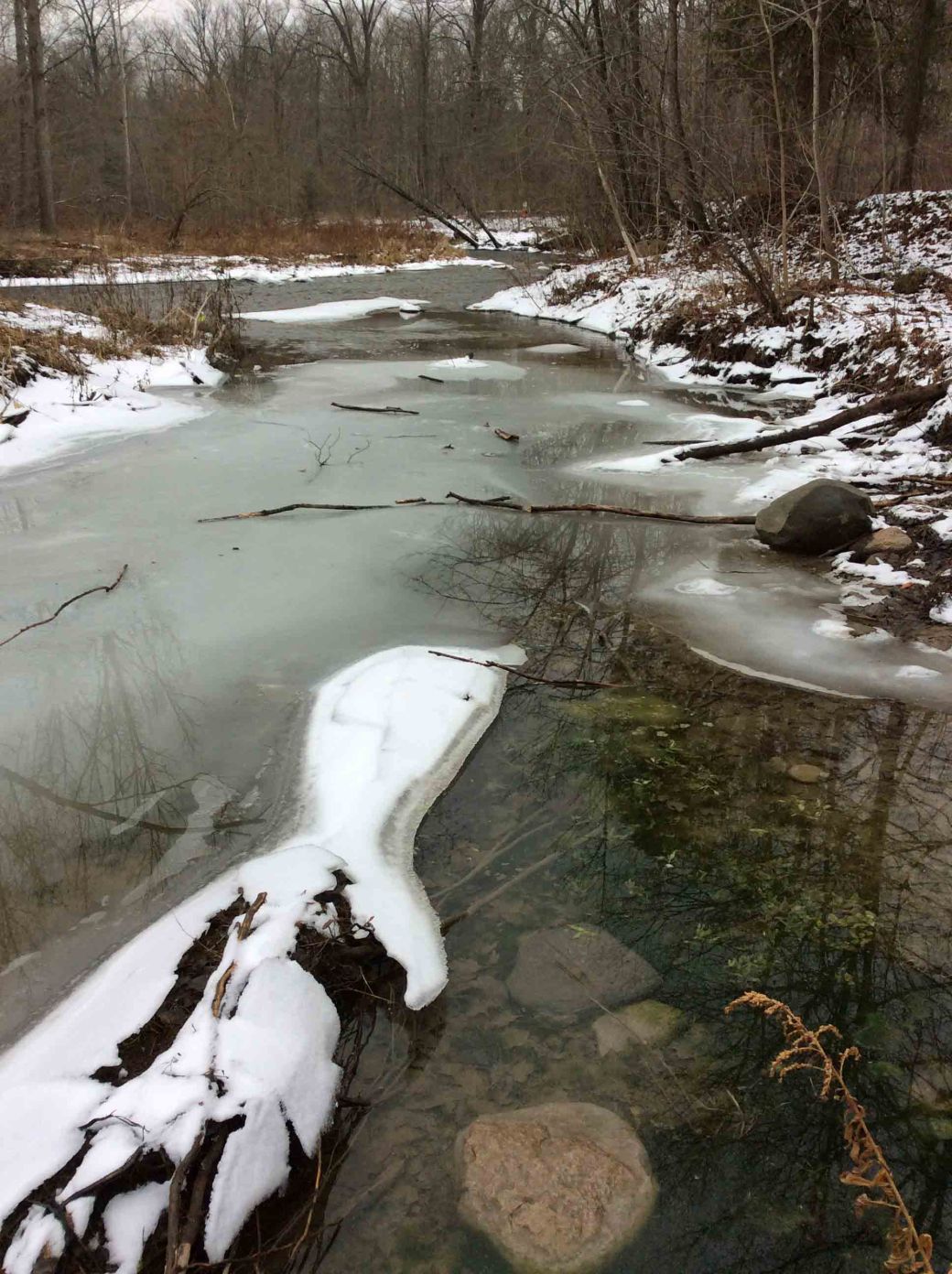
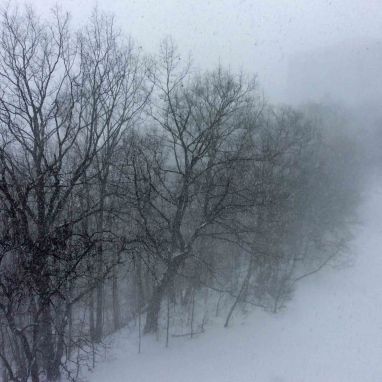
A shallow part of the Little Rouge ices over with the first snowfall in late autumn (photo by Nina Munteanu)
I strayed off the path toward the riverbank again. I was looking for the old sugar maple I’d spent time with the previous spring. After several bends in the river, I saw it, leaning precipitously over the river like an old man sharing an intimate story. It had already lost its leaves; they covered the ground in a soft carpet. The old tree literally hugged the bank in a braided network of snaking roots; like a carved figurehead hugs the prow of a great tall ship.

Burl on my maple (photo by Nina Munteanu)
Eager to see my old friend up close, I scrambled down the overhanging bank using the old maple’s root “stairway,” then ungracefully dropped onto the cobbles below. Every part of my gnarly old maple tree was splendid. Its shaggy trunk stretched up with typical silhouette of branching-out arms that every Canadian kid drew when they were six. The horizontal roots stretched out in a tangle and stitched the bank together, keeping it intact.
The Little Rouge River calls me to sit and listen to its flowing song—a joyful playful symphony of breaths, chortles and open-throated froth. I sit. And still my breath. I find my whole body relax from the tension of the suburban drive. I am home, sighing with a rhythm I’d forgotten. Re-aligning. Bones with rock. Rock with twig. Twig with root. The animals no longer scold me. They have resumed their natural rhythm, as I merge into scenery. And write…
****
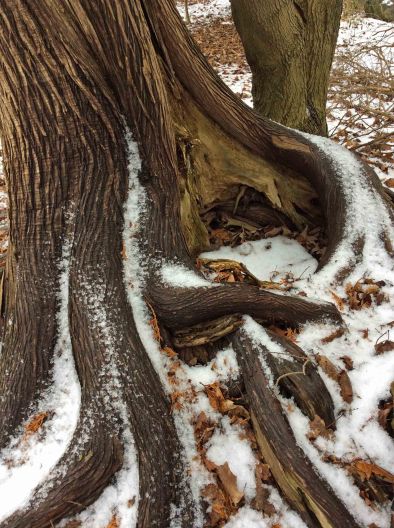
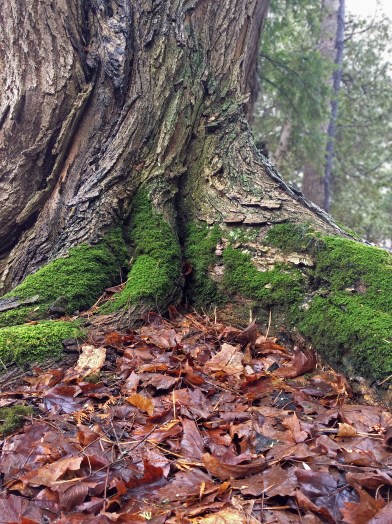
gnarly cedar roots (photo by Nina Munteanu)
What I do is not new to creative thinkers all over the world and throughout time. I share great company with people who used walking (usually in Nature) as a venue toward creative thinking (and writing). All great walkers.
Aristotle conducted his lectures while walking the grounds of his school in Athens. His followers, who chased him as he walked, were known as the peripatelics (e.g., Greek for meandering). Darwin refined his ideas on natural selection and other topics during his frequent walks along his “thinking path”, a gravel road called Sandwalk Wood near his home in southeast England. Dickens walked for miles each day: “If I could not walk far and fast, I think I should just explode and perish.” Beethoven often took solitary walks. He strolled the Viennese woods for hours, finding inspiration for his works and jotting them down on a notepad that he carried with him. Nietzsche loved his walks in the mountains: “it is only ideas gained from walking that have any worth.” For Wordsworth, the act of walking was one in the same with the act of writing poetry. Both involved rhythm and meter. Henry David Thoreau was known for his great walkabouts. Walking through nature for Thoreau was a pilgrimage without a destination—more discovery and rapture.

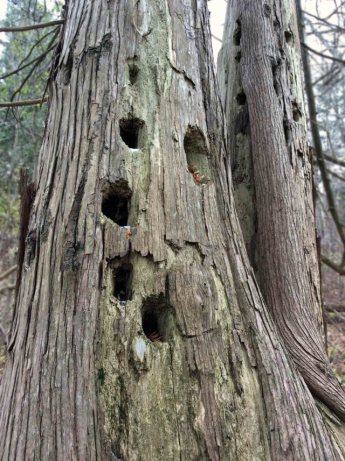
Yellow birch trunk (photo by Nina Munteanu)
Stanford researchers demonstrated that walking boosts creative inspiration. They showed that the act of walking significantly increased creativity for 81% of the participants and that the creative ideas generated while walking were not irrelevant or far-fetched, but innovative and practical.
“The answer begins with changes to our chemistry,” writes journalist Ferris Jabr in The New Yorker (2014). “When we go for a walk, the heart pumps faster, circulating more blood and oxgen not just to the muscles but to all the organs—including the brain. Many experiments have shown that after or during exercise, even very mild exertion, people perform better on tests of memory and attention. Walking on a regular basis also promotes new connections between brain cells, staves off the usual withering of brain tissue that comes with age, increases the volume of the hippocampus (a brain region crucial to memory) and elevates levels of molecules that both stimulate the growth of new neurons and transmit messages between them.”

Nina Munteanu walks the forest (photo by Merridy Cox)
While walking is good for our creativity and general well-being, walking in a park or wilderness is so much better. Researchers in Europe and Japan found that anxiety and depression was significantly reduced in the presence of green space and that it boosted attentiveness, focus and academic performance. Vegetation creates “a halo of improved health.” Dr. Frances Kuo at the University of Illinois demonstrated that just seeing a tree helps cognition and promotes a sense of well-being. While a human-made environment of objects—cars and buildings—requires high-frequency processing in the brain; a landscaped environment allows the observer to relax his or her attention, resulting in reduced muscle tension, lower heart rate, and a generally less stressful physiology.
Finding a favourite tree might be the best thing you do to boost your creativity.

Forest path in Nova Scotia (photo by Nina Munteanu)
References:

Nina Munteanu by a large willow tree (photo Jane Raptor)
Cameron, Julia. 1992. “The Artist’s Way”. Penguin Putnam Inc., New York, NY. 222pp.
Deasey, Louise. 2015. “Negative Ions Are Great for Your Health”. Body and Soul.
Munteanu, Nina. 2013. The Journal Writer: Finding Your Voice. Pixl Press, Vancouver, BC. 170pp.
Oppezzo, Marily and Daniel L. Schwartz. 2014. “Give Your Ideas Some Legs: The Positive Effect of Walking on Creative Thinking”, Journal of Experimental Psychology: Learning, Memory, and Cognition, Vol. 40, No. 4: 1142-1152.
Wells, Nancy M. 2000. “At Home with Nature: Effects of ‘Greenness’ on Children’s Cognitive Functioning”. Environment and Behavior 32 (6): 775–795.
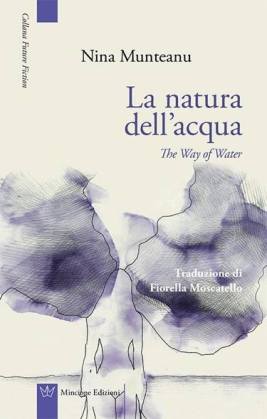
 Nina Munteanu is an ecologist and internationally published author of award-nominated speculative novels, short stories and non-fiction. She is co-editor of Europa SF and currently teaches writing courses at George Brown College and the University of Toronto. Visit www.ninamunteanu.ca for the latest on her books. Nina’s recent book is the bilingual “La natura dell’acqua / The Way of Water” (Mincione Edizioni, Rome). Her latest “Water Is…” is currently an Amazon Bestseller and NY Times ‘year in reading’ choice of Margaret Atwood.







 The Fiction Writer “is the most practical book on publishing that I’ve ever read, and I’ve read them all! Not only is each chapter packed with advice for writers at every level of the publishing process, but the text is highly readable and even entertaining. The clear format, the direct style and the playful layout keep the large volume of information from ever becoming dry or boring.
 On Friday evening of October 26th Nina will be giving the first in a series of 10 writing workshops through the Immigrant Writers Association Writing and Publishing workshop series for members and non-members. Workshops are free for Class A members, $10 for Class B members, and $15 for non-members.


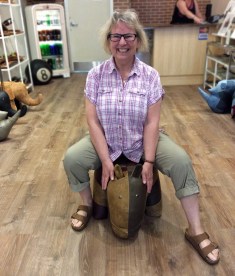
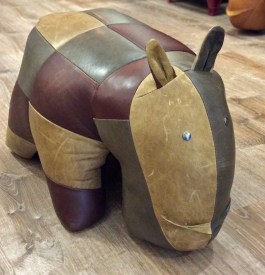 These weren’t ordinary ottomans—they were all animals! Hippos, bears, moose, elephants and pigs stood on stout legs, begging for a nice home to live in.


 She imagines its coolness gliding down her throat. Wet with a lingering aftertaste of fish and mud. She imagines its deep voice resonating through her in primal notes; echoes from when the dinosaurs quenched their throats in the Triassic swamps.
 Emilie Moorhouse of
  “…In an interesting scarcity future in which we follow the fate of a character abandoned by her mother, water itself becomes a character. In the second paragraph we’re told that “Water is a shape shifter,” and in the next page we encounter the following description: “Water was paradox. Aggressive yet yielding. Life-giving yet dangerous. Floods. Droughts. Mudslides. Tsunamis. Water cut recursive patterns of creative destruction through the landscape, an ouroboros remembering.” These descriptive musings cleverly turn out to be more than metaphors and tie in directly to the tale’s surprising ending.”—Alvaro Zinos-Amaro,
  Water Is… The Meaning of Water


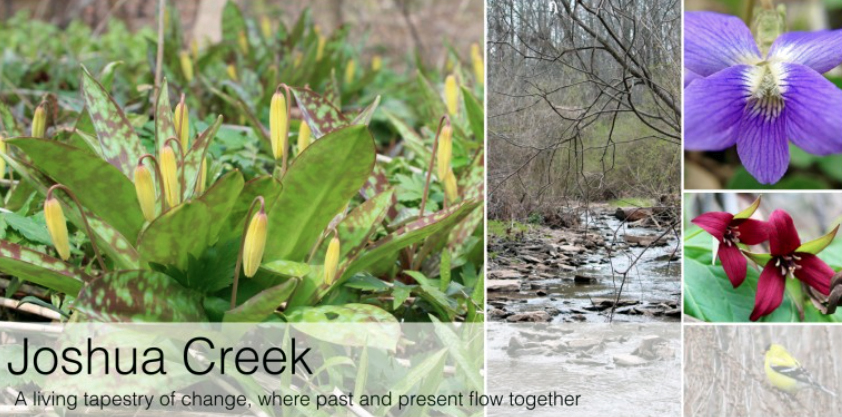
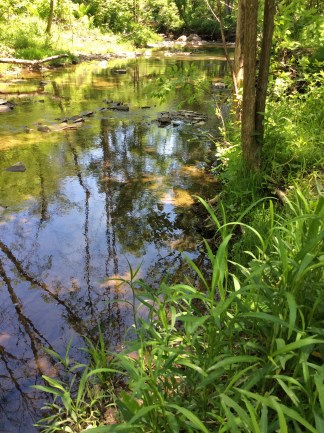
 But Joshua is a spirited creek – in spite of all it has been through, Joshua Creek is among the top two urban creeks for healthy water quality, and is still inhabited by a variety of aquatic animals like small fish and insects. Joshua Creek is home to forests, wetlands and thickets with around 150 plant species, and provides an important natural habitat corridor for the movement of birds and other animals, including migratory species. Rather than exclusively shrinking, there are also areas of Joshua Creek that are actually in the middle of regrowing their forests, and in spite of everything, Joshua still retains some beautiful gems of natural areas.”