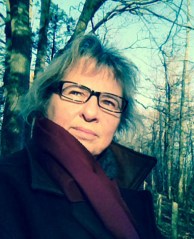
Ecology of Story: The Difference Between Anecdotes and Stories—How to Tell a Good Story

Birds deer lake

Birds fly over Deer Lake, BC (photo by Nina Munteanu)

In her article in Quartz Magazine, Lila MacLellan suggests that “we’ve become masters of telling anecdotes, and terrible at telling our friends real stories.” Sometimes people think they are telling a story, but they are really just telling anecdotes, MacLellan reports after interviewing Maggie Cino, senior story producer for Moth storytelling series. While “anecdotes just relate facts,” Cino explains, stories are “about letting us know that things started one way and ended a different way.” Stories create space for movement.

Merriam-Webster defines an anecdote as a “short narrative of an interesting, amusing, or biographical incident.” Anecdotes serve to incite interest and to illustrate a point. They are often amusing, odd, sad or even tragic; if they are biographical, they often serve to reflect someone’s personality, attitude or philosophy. While anecdotes often provide a contextual jumping board to make a point—drawing you in with relevance—they lack the structure of stories. An anecdote is something that happens; a story has a structure that makes it memorable and provides a depth of meaning.

Stories move with direction; they have a beginning, middle and end. Stories evoke emotional truths. They compel with intrigue then fulfil us with awareness and, sometimes, understanding. The best stories are told through metaphor, those universal truths we all live by. And all good stories weave a premise, theme, plot, character and setting into a tapestry with meaning.

I teach new writers at the University of Toronto and George Brown College how to tell stories. I teach how stories can tell us who we are. Where we’ve been. And sometimes, where we are  going. The stories that stir our hearts come from deep inside, where the personal meets the universal, through symbols or archetypes and metaphor.

Depth psychologist Carl Jung described these shared symbols, metaphors and archetypes as pre-existing forms of the psyche. He drew parallels between synchronicity, relativity theory and quantum mechanics to describe life as an expression of a deeper order. He believed that we are both embedded in a framework of a whole and are the focus of that whole. Jung was describing a fractal whole, which reflects quantum scientist David Bohm’s quantum vision of holomovement.

Jung’s concept of embedded whole and a universal collective unconscious was embraced by Hero’s Journey author and scholar Joseph Campbell, who suggested that these mythic images lie at the depth of the unconscious where humans are no longer distinct individuals, where our minds widen and merge into the mind and memory of humankind—where we are all the same, in Unity. Carl Jung’s thesis of the “collective unconscious” in fact linked with what Freud called archaic remnants: mental forms whose presence cannot be explained by anything in the individual’s own life and which seem aboriginal, innate, and the inherited shapes of the human mind. Marie-Louise von Franz, in 1985, identified Jung’s hypothesis of the collective unconscious with the ancient idea of an all- extensive world-soul. Writer Sherry Healy suggested that Jung viewed the human mind as linked to “a body of unconscious energy that lives forever.”

What Makes a Good Story?

subway

Passengers on the Toronto subway (photo by Nina Munteanu)

A good story is about something important; attracted by gravity, it has purpose and seeks a destination. A good story goes somewhere; it flows like a river from one place to another. A good story has meaning; its undercurrents run deep across hidden substrates with intrigue. A good story resonates with place; it finds its way home. We’ve just touched upon the five main components of good story: premise, character on a journey & plot, theme and—what is ultimately at the heart of a story—setting or place.

Story Components

The premise of a story is like the anecdote, a starting point of interest. It is an idea that will be dramatized through plot, character and setting. In idea-driven stories, it can often be identified by asking the question: “What if?” For instance, what if time travel was possible?

A character on a journey propels the story through meaningful change. Characters provide dramatized meaning to premise through personal representation of global themes. A character takes an issue and through their actions and circumstance in story provide a fractal connection to a larger issue. Characters need to move. They need to “go somewhere.” Archetypes—ancient patterns of personality (symbols) shared by humanity and connected by our collective unconscious—are metaphoric characters (which includes place) in the universal language of storytelling that help carry the story forward.

The theme of a story takes the premise and gives it personal and metaphoric meaning by dramatizing through a character journey. It is often identified by asking the question: “What’s at stake?” In taking the time travel premise, a theme of forgiveness may be applied by choosing a character wishing to return to the past to right a wrong, when what they just need to do is forgive others and themselves, not travel to the past at all, and get on with their lives.

DS-2008-26

Cliff diving on BC coast (photo by Nina Munteanu)

In such a story, the plot would provide means and obstacles for the character in their journey toward enlightenment. Plot works together with theme to challenge and push a character toward their epiphany and meaningful change. Plot provides obstacles. Challenges. Emotional turning points. Opportunities for learning and change.

The role of setting or place is often not as clear to writers. Because of this, place and setting may often be neglected and haphazardly tacked on without addressing its role in story; in such a case the story will not resonate with what is often at the heart of the story: a sense of place. In stories where the setting changes (either itself changing such as in a story about the volcanic eruption of Vesuvius impacting Pompeii’s community; or by the character’s own movements from place to place) it appears easier to include how setting affects characters. However, the effect of place on character when the setting does not change can be equally compelling even if more subtle; the change is still there but lies in the POV character’s altered relationship to that place—a reflection of change within them.


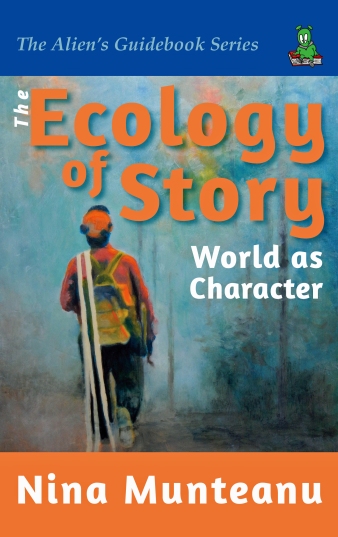
MockUpEcology copyThis article is an excerpt from “The Ecology of Story: World as Character” due in June 2019 by Pixl Press.

From Habitats and Trophic Levels to Metaphor and Archetype…

Learn the fundamentals of ecology, insights of world-building, and how to master layering-in of metaphoric connections between setting and character. Ecology of Story: World as Character is the 3rd guidebook in Nina Munteanu’s acclaimed “how to write” series for novice to professional writers.


nina-2014aaa

Nina Munteanu is a Canadian ecologist / limnologist and novelist. She is co-editor of Europa SF and currently teaches writing courses at George Brown College and the University of Toronto. Visit www.ninamunteanu.ca for the latest on her books. Nina’s bilingual “La natura dell’acqua / The Way of Water” was published by Mincione Edizioni in Rome. Her non-fiction book “Water Is…” by Pixl Press (Vancouver) was selected by Margaret Atwood in the New York Times ‘Year in Reading’ and was chosen as the 2017 Summer Read by Water Canada. A collection of Nina’s short eco-fiction can be found in “Natural Selection” by Pixl Press.  Her novel “A Diary in the Age of Water” will be released by Inanna Publications (Toronto) in 2020.
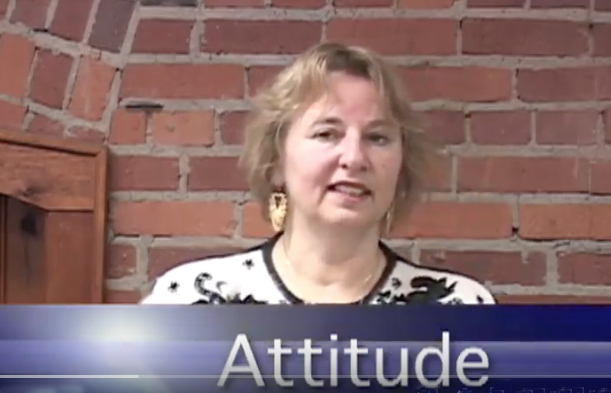


Write and Publish, Part 4: Adopt a Winning Attitude

Author and university writing instructor Nina Munteanu describes the attitude you need to successfully write, complete and market your works.

Nina-Attitude

The Write and Publish Series

You want to write but don’t know how to get started? The Write and Publish Series focuses on:

  • How to find time to write around your busy schedule
  • How to make the most of your present resources
  • How to get inspired and motivate yourself to write
  • How to write, finish and submit your work

The 7-part series of lectures consists of: 1) Nina’s 5-Ps to Success; 2) Redefine Yourself as an Author; 3) Time and Space to Write; 4) Adopt a Winning Attitude; 5) Write What Excites You; 6) How to Beat Writer’s Block; and 7) How to Keep Motivated.

The Writer’s Toolkit

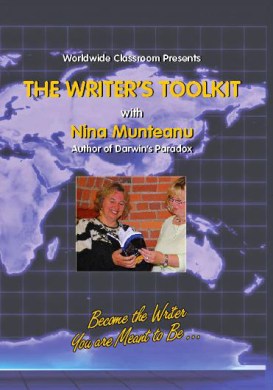
This series of lectures and workshops is part of Nina Munteanu’s “The Writer’s Toolkit”, available as three workshops and DVDs for writers wishing to get published. This 6-hour set of three discs contains lectures, examples and exercises on how to get started and finish, writing craft, marketing and promotion. Available through the author (nina.sfgirl@gmail.com).

the writers toolkit-front-WEBI was fascinated by Nina’s clear and extremely interesting lecture on the hero’s journey.  Maybe all writer’s have a novel in their heads they want to write one day, and the techniques Nina  shared with us will help me when I get to that point.  In fact, because of her, I may get there a lot sooner than I had planned.”— Zoe M. Hicks, Saint Simon’s Island, GA
Nina Munteanu’s command of the subject matter and her ability to explain in a way that the audience understood was excellent. As a hopeful author, I found her words inspiring.”—Amanda Lott, Scribblers Writers’ Retreat, GA

Rarely have I encountered someone of Nina’s considerable talent and intellect tied to such an extraordinary work ethic…A gifted and inventive writer, Nina is also an excellent speaker who is able to communicate complicated ideas in simple terms and generate creative thought in others. Her accessible, positive approach and delightful sense of humor set people at ease almost immediately.”–Heather Dugan, Ohio writer and voice artist

What you’ve done for me, Nina, is you’ve just opened up a whole new world. You’ve shown me how to put soul into my books.”–Hectorine Roy, Nova Scotia writer

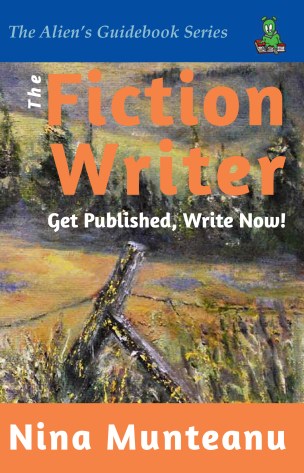
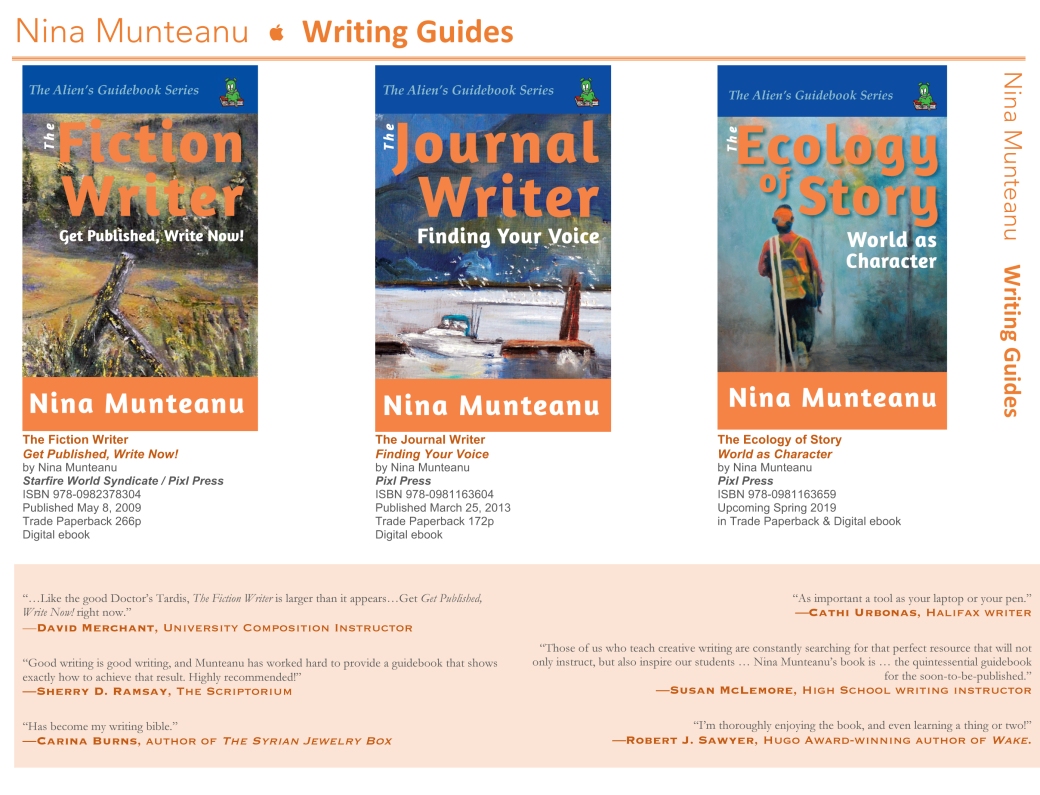
The Writer’s Toolkit workshops were based on my award-nominated fiction writing guide: The Fiction Writer: Get Published, Write Now!

“…Like the good Doctor’s Tardis, The Fiction Writer is larger than it appears… Get Get Published, Write Now! right now.”—David Merchant, Creative Writing Instructor

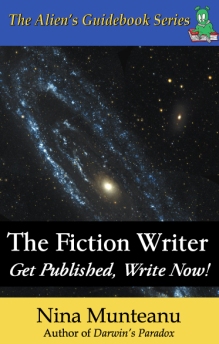
The Fiction Writer: Get Published, Write Now! (Starfire World Syndicate) is a digest of how-to’s in writing fiction and creative non-fiction by masters of the craft from over the last century. Packaged into 26 chapters of well-researched and easy to read instruction, novelist and teacher Nina Munteanu brings in entertaining real-life examples and practical exercises. The Fiction Writer will help you learn the basic, tried and true lessons of a professional writer: 1) how to craft a compelling story; 2) how to give editors and agents what they want and 3) how to maintain a winning attitude.

FictionWriter-front cover-2nd ed-webThe Fiction Writer is at the top of the required reading list for my Writer’s Workshop students. With its engagingly direct, conversational style and easily accessible format, it is a veritable cornucopia of hands-on help for aspiring writers of any age…the quintessential guidebook for the soon-to-be-published.”—Susan McLemore, Writing Instructor
As important a tool as your laptop or your pen.”—Cathi Urbonas, Halifax writer

Has become my writing bible.”—Carina Burns, author of The Syrian Jewelry Box

I highly recommend this book for any writer wishing to get published.”—Marie Bilodeau, acclaimed author of Destiny’s Blood

I’m thoroughly enjoying the book and even learning a thing or two!”—Robert J. Sawyer, Hugo and Nebula Award-winning author of Wake


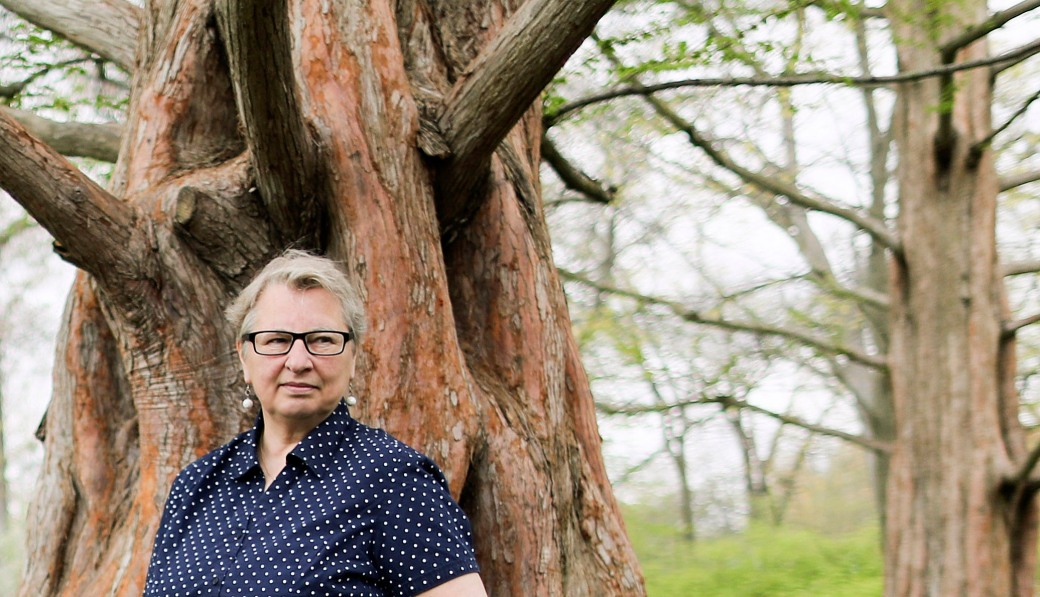
Nina Munteanu

Nina Munteanu next to a metasequoia tree in The Beach, Ontario (photo by Richard Lautens)


The Fiction Writer is the first of a series of writing guides, which consist so far of: The Journal Writer: Finding Your Voice; and The Ecology of Story: World as Character.

Microsoft Word - Three Writing Guides.docx


nina-2014aaaNina Munteanu is an ecologist and internationally published author of award-nominated speculative novels, short stories and non-fiction. She is co-editor of Europa SF and currently teaches writing courses at George Brown College and the University of Toronto. Visit www.ninamunteanu.ca for the latest on her books. Nina’s recent book is the bilingual “La natura dell’acqua / The Way of Water” (Mincione Edizioni, Rome). Her latest “Water Is…” is currently an Amazon Bestseller and NY Times ‘year in reading’ choice of Margaret Atwood.

Write and Publish, Part 3: Time and Space to Write

Author and university instructor Nina Munteanu talks about the importance of defining and respecting your time and space for a successful writing career.

Nina-SacredSpace

The Write and Publish Series

You want to write but don’t know how to get started? The Write and Publish Series focuses on:

  • How to find time to write around your busy schedule
  • How to make the most of your present resources
  • How to get inspired and motivate yourself to write
  • How to write, finish and submit your work

The 7-part series of lectures consists of: 1) Nina’s 5-Ps to Success; 2) Redefine Yourself as an Author; 3) Time and Space to Write; 4) Adopt a Winning Attitude; 5) Write What Excites You; 6) How to Beat Writer’s Block; and 7) How to Keep Motivated.

The Writer’s Toolkit

This series of lectures and workshops is part of Nina Munteanu’s “The Writer’s Toolkit”, available as three workshops and DVDs for writers wishing to get published. This 6-hour set of three discs contains lectures, examples and exercises on how to get started and finish, writing craft, marketing and promotion. Available through the author (nina.sfgirl@gmail.com).

the writers toolkit-front-WEBI was fascinated by Nina’s clear and extremely interesting lecture on the hero’s journey.  Maybe all writer’s have a novel in their heads they want to write one day, and the techniques Nina shared with us will help me when I get to that point.  In fact, because of her, I may get there a lot sooner than I had planned.”— Zoe M. Hicks, Saint Simon’s Island, GA

Nina Munteanu’s command of the subject matter and her ability to explain in a way that the audience understood was excellent. As a hopeful author, I found her words inspiring.”—Amanda Lott, Scribblers Writers’ Retreat, GA

Rarely have I encountered someone of Nina’s considerable talent and intellect tied to such an extraordinary work ethic…A gifted and inventive writer, Nina is also an excellent speaker who is able to communicate complicated ideas in simple terms and generate creative thought in others. Her accessible, positive approach and delightful sense of humor set people at ease almost immediately.”–Heather Dugan, Ohio writer and voice artist

What you’ve done for me, Nina, is you’ve just opened up a whole new world. You’ve shown me how to put soul into my books.”–Hectorine Roy, Nova Scotia writer

The Writer’s Toolkit workshops were based on my award-nominated fiction writing guide: The Fiction Writer: Get Published, Write Now!

“…Like the good Doctor’s Tardis, The Fiction Writer is larger than it appears… Get Get Published, Write Now! right now.”—David Merchant, Creative Writing Instructor

The Fiction Writer: Get Published, Write Now! (Starfire World Syndicate) is a digest of how-to’s in writing fiction and creative non-fiction by masters of the craft from over the last century. Packaged into 26 chapters of well-researched and easy to read instruction, novelist and teacher Nina Munteanu brings in entertaining real-life examples and practical exercises. The Fiction Writer will help you learn the basic, tried and true lessons of a professional writer: 1) how to craft a compelling story; 2) how to give editors and agents what they want’ and 3) how to maintain a winning attitude.

FictionWriter-front cover-2nd ed-webThe Fiction Writer is at the top of the required reading list for my Writer’s Workshop students. With its engagingly direct, conversational style and easily accessible format, it is a veritable cornucopia of hands-on help for aspiring writers of any age…the quintessential guidebook for the soon-to-be-published.”—Susan McLemore, Writing Instructor

As important a tool as your laptop or your pen.”—Cathi Urbonas, Halifax writer

Has become my writing bible.”—Carina Burns, author of The Syrian Jewelry Box

I highly recommend this book for any writer wishing to get published.”—Marie Bilodeau, acclaimed author of Destiny’s Blood

I’m thoroughly enjoying the book and even learning a thing or two!”—Robert J. Sawyer, Hugo and Nebula Award-winning author of Wake


Nina Munteanu

Nina Munteanu next to metasequoia tree in The Beach, ON (photo by Richard Lautens)


The Fiction Writer is the first of a series of writing guides, which consist so far of: The Journal Writer: Finding Your Voice; and The Ecology of Story: World as Character.

Microsoft Word - Three Writing Guides.docx


nina-2014aaaNina Munteanu is an ecologist and internationally published author of award-nominated speculative novels, short stories and non-fiction. She is co-editor of Europa SF and currently teaches writing courses at George Brown College and the University of Toronto. Visit www.ninamunteanu.ca for the latest on her books. Nina’s recent book is the bilingual “La natura dell’acqua / The Way of Water” (Mincione Edizioni, Rome). Her latest “Water Is…” is currently an Amazon Bestseller and NY Times ‘year in reading’ choice of Margaret Atwood.

Write and Publish, Part 2: Redefining Yourself

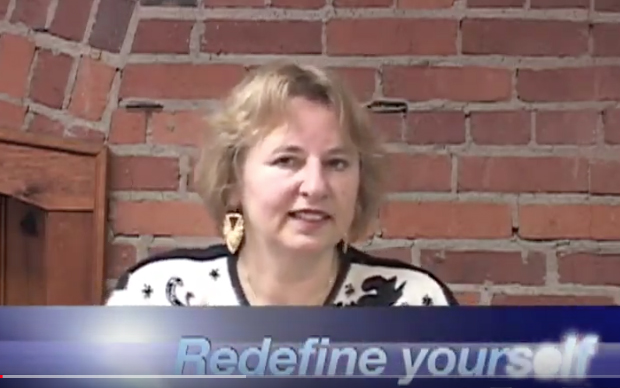
Author and university writing instructor Nina Munteanu shares how you can become successful as a writer: one of them is to redefine yourself as an author–to be successful you need to play the part.


Nina-RedefineYourself

The Write and Publish Series

You want to write but don’t know how to get started? The Write and Publish Series focuses on:

  • How to find time to write around your busy schedule
  • How to make the most of your present resources
  • How to get inspired and motivate yourself to write
  • How to write, finish and submit your work

The 7-part series of lectures consists of: 1) Nina’s 5-Ps to Success; 2) Redefine Yourself as an Author; 3) Time and Space to Write; 4) Adopt a Winning Attitude; 5) Write What Excites You; 6) How to Beat Writer’s Block; and 7) How to Keep Motivated.

The Writer’s Toolkit

This series of lectures and workshops is part of Nina Munteanu’s “The Writer’s Toolkit”, available as three workshops and DVDs for writers wishing to get published. This 6-hour set of three discs contains lectures, examples and exercises on how to get started and finish, writing craft, marketing and promotion. Available through the author (nina.sfgirl@gmail.com).

the writers toolkit-front-WEBI was fascinated by Nina’s clear and extremely interesting lecture on the hero’s journey.  Maybe all writer’s have a novel in their heads they want to write one day, and the techniques Nina  shared with us will help me when I get to that point.  In fact, because of her, I may get there a lot sooner than I had planned.”— Zoe M. Hicks, Saint Simon’s Island, GA

Nina Munteanu’s command of the subject matter and her ability to explain in a way that the audience understood was excellent. As a hopeful author, I found her words inspiring.”—Amanda Lott, Scribblers Writers’ Retreat, GA

Rarely have I encountered someone of Nina’s considerable talent and intellect tied to such an extraordinary work ethic…A gifted and inventive writer, Nina is also an excellent speaker who is able to communicate complicated ideas in simple terms and generate creative thought in others. Her accessible, positive approach and delightful sense of humor set people at ease almost immediately.”–Heather Dugan, Ohio writer and voice artist

What you’ve done for me, Nina, is you’ve just opened up a whole new world. You’ve shown me how to put soul into my books.”–Hectorine Roy, Nova Scotia writer

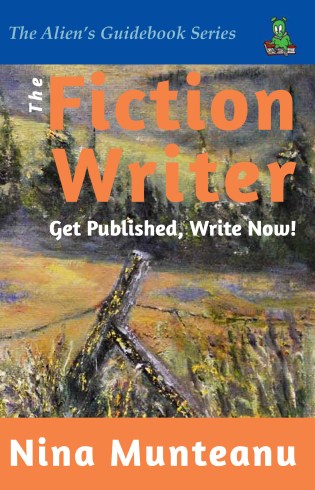
The Writer’s Toolkit workshops were based on my award-nominated fiction writing guide: The Fiction Writer: Get Published, Write Now!

“…Like the good Doctor’s Tardis, The Fiction Writer is larger than it appears… Get Get Published, Write Now! right now.”—David Merchant, Creative Writing Instructor

The Fiction Writer: Get Published, Write Now! (Starfire World Syndicate) is a digest of how-to’s in writing fiction and creative non-fiction by masters of the craft from over the last century. Packaged into 26 chapters of well-researched and easy to read instruction, novelist and teacher Nina Munteanu brings in entertaining real-life examples and practical exercises. The Fiction Writer will help you learn the basic, tried and true lessons of a professional writer: 1) how to craft a compelling story; 2) how to give editors and agents what they want’ and 3) how to maintain a winning attitude.

FictionWriter-front cover-2nd ed-webThe Fiction Writer is at the top of the required reading list for my Writer’s Workshop students. With its engagingly direct, conversational style and easily accessible format, it is a veritable cornucopia of hands-on help for aspiring writers of any age…the quintessential guidebook for the soon-to-be-published.”—Susan McLemore, Writing Instructor
As important a tool as your laptop or your pen.”—Cathi Urbonas, Halifax writer

Has become my writing bible.”—Carina Burns, author of The Syrian Jewelry Box

I highly recommend this book for any writer wishing to get published.”—Marie Bilodeau, acclaimed author of Destiny’s Blood

I’m thoroughly enjoying the book and even learning a thing or two!”—Robert J. Sawyer, Hugo and Nebula Award-winning author of Wake


Nina Munteanu

Nina Munteanu next to a metasequoia tree in The Beach, ON (photo by Richard Lautens)


The Fiction Writer is the first of a series of writing guides, which consist so far of: The Journal Writer: Finding Your Voice; and The Ecology of Story: World as Character.


Microsoft Word - Three Writing Guides.docx


nina-2014aaaNina Munteanu is an ecologist and internationally published author of award-nominated speculative novels, short stories and non-fiction. She is co-editor of Europa SF and currently teaches writing courses at George Brown College and the University of Toronto. Visit www.ninamunteanu.ca for the latest on her books. Nina’s recent book is the bilingual “La natura dell’acqua / The Way of Water” (Mincione Edizioni, Rome). Her latest “Water Is…” is currently an Amazon Bestseller and NY Times ‘year in reading’ choice of Margaret Atwood.

Write and Publish, Part 1: Nina’s 5-Ps to Success

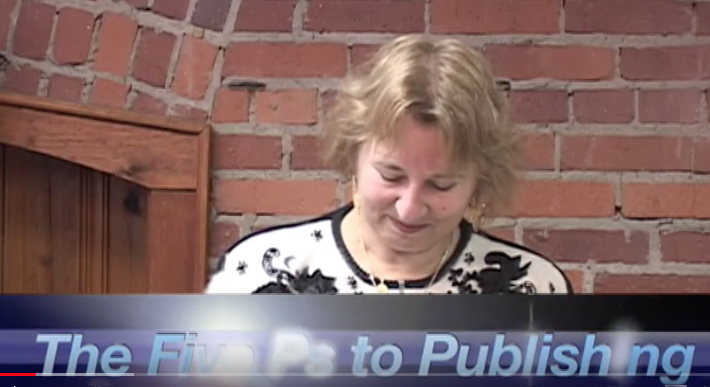
Author and university instructor Nina Munteanu gives her “formula” for publishing success that she calls ‘the 5-Ps.’


Nina-5Ps of Publishing


The Write and Publish Series

You want to write but don’t know how to get started? The Write and Publish Series focus on:

  • How to find time to write around your busy schedule
  • How to make the most of your present resources
  • How to get inspired and motivate yourself to write
  • How to write, finish and submit your work

This 7-part series of lectures consists of: 1) Nina’s 5-Ps to Success; 2) Redefine Yourself as an Author; 3) Time and Space to Write; 4) Adopt a Winning Attitude; 5) Write What Excites You; 6) How to Beat Writer’s Block; and 7) How to Keep Motivated.

The Writer’s Toolkit

This series of lectures and workshops is part of Nina Munteanu’s “The Writer’s Toolkit”, available as three workshops and DVDs for writers wishing to get published. This 6-hour set of three discs contains lectures, examples and exercises on how to get started and finish, writing craft, marketing and promotion. Available through the author (nina.sfgirl@gmail.com).

the writers toolkit-front-WEBI was fascinated by Nina’s clear and extremely interesting lecture on the hero’s journey.  Maybe all writer’s have a novel in their heads they want to write one day, and the techniques Nina  shared with us will help me when I get to that point.  In fact, because of her, I may get there a lot sooner than I had planned.”— Zoe M. Hicks, Saint Simon’s Island, GA
Nina Munteanu’s command of the subject matter and her ability to explain in a way that the audience understood was excellent. As a hopeful author, I found her words inspiring.”—Amanda Lott, Scribblers Writers’ Retreat, GA

Rarely have I encountered someone of Nina’s considerable talent and intellect tied to such an extraordinary work ethic…A gifted and inventive writer, Nina is also an excellent speaker who is able to communicate complicated ideas in simple terms and generate creative thought in others. Her accessible, positive approach and delightful sense of humor set people at ease almost immediately.”–Heather Dugan, Ohio writer and voice artist

What you’ve done for me, Nina, is you’ve just opened up a whole new world. You’ve shown me how to put soul into my books.”–Hectorine Roy, Nova Scotia writer

FictionWriter-front cover-2nd ed-webThe Writer’s Toolkit workshops were based on my award-nominated fiction writing guide: The Fiction Writer: Get Published, Write Now!

“…Like the good Doctor’s Tardis, The Fiction Writer is larger than it appears… Get Get Published, Write Now! right now.”—David Merchant, Creative Writing Instructor

The Fiction Writer: Get Published, Write Now! (Starfire World Syndicate) is a digest of how-to’s in writing fiction and creative non-fiction by masters of the craft from over the last century. Packaged into 26 chapters of well-researched and easy to read instruction, novelist and teacher Nina Munteanu brings in entertaining real-life examples and practical exercises. The Fiction Writer will help you learn the basic, tried and true lessons of a professional writer: 1) how to craft a compelling story; 2) how to give editors and agents what they want’ and 3) how to maintain a winning attitude.

The Fiction Writer is at the top of the required reading list for my Writer’s Workshop students. With its engagingly direct, conversational style and easily accessible format, it is a veritable cornucopia of hands-on help for aspiring writers of any age…the quintessential guidebook for the soon-to-be-published.”—Susan McLemore, Writing Instructor
As important a tool as your laptop or your pen.”—Cathi Urbonas, Halifax writer

Has become my writing bible.”—Carina Burns, author of The Syrian Jewelry Box

I highly recommend this book for any writer wishing to get published.”—Marie Bilodeau, acclaimed author of Destiny’s Blood

I’m thoroughly enjoying the book and even learning a thing or two!”—Robert J. Sawyer, Hugo and Nebula Award-winning author of Wake

Nina Munteanu

Nina next to a metasequoia tree in The Beach, ON (photo by Richard Lautens)


The Fiction Writer is the first of a series of writing guides, which consist so far of: The Journal Writer: Finding Your Voice; and The Ecology of Story: World as Character.


Microsoft Word - Three Writing Guides.docx

nina-2014aaaNina Munteanu is an ecologist and internationally published author of award-nominated speculative novels, short stories and non-fiction. She is co-editor of Europa SF and currently teaches writing courses at George Brown College and the University of Toronto. Visit www.ninamunteanu.ca for the latest on her books. Nina’s recent book is the bilingual “La natura dell’acqua / The Way of Water” (Mincione Edizioni, Rome). Her latest “Water Is…” is currently an Amazon Bestseller and NY Times ‘year in reading’ choice of Margaret Atwood.

Ecology, Story & Stranger Things

MockUpEcology-2

Illustration by Anne Moody, typology & design by Costi Gurgu

One of the lectures I give in my science fiction writing course and conference workshops is called “Ecology in Storytelling”. It’s usually well attended by writers hoping to gain better insight into world-building and how to master the layering-in of metaphoric connections between setting and character. My upcoming writing guidebook “Ecology of Story: World as Character” addresses this subject with examples from a wide range of published fiction. The book will be released in June/July of 2019 by Pixl Press.

In my lecture (and book) I talk about the adaptations of organisms to their changing environments. I describe the trophic (energy) relationships from producers to consumers and destroyers in a complex cycle of creative destruction.

Students perk up when I bring up some of the more strange and interesting adaptations of organisms to their environment: twisted stories of adaptations and strategies that involve feeding, locomotion, reproduction and shelter.

Purposeful Miscommunication & Other Lies

alconbluebutterfly-ants

Alcon blue butterfly and caterpillar with ant

For instance, the Alcon blue butterfly hoodwinks ants into caring for its larvae. They do this by secreting a chemical that mimics how ants communicate; the ants in turn adopt the newly hatched caterpillars for two years. There’s a terrible side to this story of deception. The Ichneumon wasp, upon finding an Alcon caterpillar inside an ant colony, secretes a pheromone that drives the ants into confused chaos; allowing it to slip through the confusion and lay its eggs inside the poor caterpillar. When the caterpillar turns into a chrysalis, the wasp eggs hatch and consume it from inside.

This reads like something out of a noir thriller. Or better yet, a horror story. Nature is large, profligate, complex and paradoxical. She is by turns gentle and cruel. Creative and destructive. Competitive and cooperative. Idle and nurturing.

Extremophiles & Anhydrobiosis

water-bear03

Tardigrade on moss

When I bring in the subject of extremophiles, who thrive in places you and I would cringe to set foot in, students’ imaginations run wild with ideas.

I describe a panoply of weird adaptations in Nature—involving poisons, mimicry and deception, phototaxis and something called anhydrobiosis, which permits the tiny tardigrade to shrivel into a tun in the absence of water then revive after a 100 years with just a drop of water.

All this adaptation hinges on communication. How an organism or population communicates with its environment and among its own.

Examples of “strange” communication are the purview of the science fiction writer … and already the nature of our current world—if you only know where to look. The scope of how Nature communicates—her devices and intentions—embraces the strange to the astonishing. From using infrasound to chemical receptors and sensing magnetic fields. To allelopathy. Aggressive symbiosis. And so much more.

Talking Trees

suzanne-simard-portrait

Dr. Suzanne Simard

UBC researcher Suzanne Simard, who has published hundreds of papers over 30 years of research, suggests a kind of “intelligence” when she describes the underground world “of infinite biological pathways that connect trees and allow them to communicate” In a forest.

This communication allows the forest to behave as if it was a single organism, says Simard. Her early in situ experiments showed solid evidence that tree species, such as Paper Birch and Douglas Fir communicated in a cooperative manner underground through an underground mutualistic-symbiosis involving mycorrhizae (e.g., fungus-root).

forest-conversing

mycelium connects trees underground

These trees were conversing in the language of carbon and nitrogen, phosphorus, water, defense signals, allelo-chemicals, and hormones via a network of mycelia. Fungal threads form a mycelium that infects and colonizes the roots of all the trees and plants. Simard compares this dense network to the Internet, which also has nodes and links—just as the forest.

Fungal highways link each tree and plant to its community, with busiest nodes called hub trees or mother trees. Calling them mother trees is appropriate, given that they nurture their young in the understory; sending excess carbon to the understory trees, which receive less light for photosynthesis. “In a single forest,” says Simard, “a mother tree can be connected to hundreds of other trees.” These mature trees act as nodal anchors—like major hub sites on the Internet—for tree groupings; according to Simard, they look after their families, nurture seedlings and even share wisdom—information—when they are injured or dying.

Fatal Attractions & Natural Bullies

bracken fern copy

Bracken fern fronds

The “ordinary” Bracken fern thrives in a wide range of conditions on virtually every continent (except Antarctica). That’s because it plays the “long game” by having several strategies to outlive and outcompete its surrounding nemeses.

ant on bracken copy

The symbiosis of Bracken fern and ant

Strategies include a loose lifestyle such as several ways to reproduce and grow to accommodate seasons, drought and burning; a shady arrangement with the local thugs (aggressive ants) who protect it for its tasty nectar; use of cyanide and ecdysones by its young shoots; and tough carcinogenic fronds that contain glass-like silicates.

Despite its many uses by humans (e.g., used for potash fertilizer, heating fuel, roofing, bedding for animals), the Bracken fern is considered a pest. In truth, it is a hardy versatile adapter to changing environments. And that is what our climate changing world is fast becoming.

I highly recommend the works of Annie Dillard and Loren Eiseley for wonderful and bizarre examples of natural wonders that resonate with metaphor.

Fallen log stream-2012

Stream in coastal rainforest on Vancouver Island, BC (photo by Kevin Klassen)

I also recommend my upcoming book “Ecology of Story” (Pixl Press), which will showcase a diverse set of examples from the literature of metaphoric environment and creatures. “Ecology of Story” is due for release in Summer of 2019. Look for it on Amazon, Kobo, and a fine bookstore near you. Two other books in my writing guide series include: “The Fiction Writer” and “The Journal Writer“.

Microsoft Word - Three Writing Guides.docx

nina-2014aaaNina Munteanu is an ecologist and internationally published author of award-nominated speculative novels, short stories and non-fiction. She is co-editor of Europa SF and currently teaches writing courses at George Brown College and the University of Toronto. Visit www.ninamunteanu.ca for the latest on her books. Nina’s recent book is the bilingual “La natura dell’acqua / The Way of Water” (Mincione Edizioni, Rome). Her latest “Water Is…” is currently an Amazon Bestseller and NY Times ‘year in reading’ choice of Margaret Atwood.


Nina Munteanu Interviewed in Canadian Romanian Newspaper “Observatorul”

Claudiu Murgan (author of “Water Entanglement”) recently interviewed me in the Canadian Romanian newspaper Observatorul.

gaudeamus-book-fair-crowd copy

Gaudeamus Book Fair in Bucharest, Romania

nina-paralela45-gaudeamus-web copy

Nina Munteanu at Gaudeamus

In the interview, I talked about my involvement with the Toronto Romanian community through the Immigrant Writers Association and my visit several years ago to Bucharest Romania to launch my two writing guidebooks with Editura Paralela 45 at the Gaudeamus Book Fair at the Rome Expo Exhibition Centre:

“In 2011 I attended the launch of my writing guide Manual de Scriere Creativa. Scriitorul de fictiune (The Fiction Writer) in Bucharest, hosted by Editura Paralela 45 at the Gaudeamus Book Fair. Dr. Florin Munteanu, respected scientist in Complexity Theory, kindly picked me up at the airport and took me to the Phoenicia Grand Hotel where we relaxed in the lounge and discussed fractal geometry and the Fibonacci Golden Ratio over café cremes. It was a very civilized introduction to this eclectic “city of joy” and I felt strangely at home.

It was a wonderful experience, which included drinking copious amounts of Tuica with my publisher and touring the Lipscani District with George Kudor, a student of Florin’s. Florin calls Romania “the corpus callosum of the world” where east and west converge, mingle and learn. It’s no wonder that Romania is one of the leading countries in the world on complexity theory, a science that embraces the “collision” of different “worlds” to create more than the sum of its parts.”

scriitorul_de_fictiune_Munteanu_coperta1 copyFictionWriter-front cover-2nd ed-webThe Fiction Writer (Scriitorul de fictiune) was very well received by the Romanian writing community. Romanian poet and English instructor Lucia Gorea calls The Fiction Writer “the most practical book on publishing that I’ve ever read, and I’ve read them all!”


In the Observatorul interview, Claudiu asked me if I was pursuing other projects in Romania. I am currently corresponding with a Romanian distributor to get some of my other books translated and published in Romania. I also co-edit Europa SF, a European ezine on speculative fiction from around the world, with a focus on European science fiction, fantasy and horror.

The Way of Water-COVER copyI hope to collaborate more with colleague and friend Cristian Tamas, who introduced me to editor/publisher Francesco Verso (of Future Fiction) and Mincione Edizioni, who published my short story “The Way of Water.” I later developed “The Way of Water” in novel form and I anticipate its release next year.

I hope to do more with Dr. Florin Munteanu and Claudiu Murgan on projects to do with water—particularly on entanglement, intention, subtle energies and memory. I would be delighted if a Romanian publisher chose to translate my book “Water Is…The Meaning of Water” and publish it for Romanians.

OLYMPUS DIGITAL CAMERA

Gaudeamus Book Fair in Rome Expo Exhibition Centre, Bucharest

bucharest-old-downtown01-web copy

Lipscani District in Bucharest

nina-gaudeamus-close-web copy

Nina enjoying the book fair

nina-2014aaaNina Munteanu is an ecologist and internationally published author of award-nominated speculative novels, short stories and non-fiction. She is co-editor of Europa SF and currently teaches writing courses at George Brown College and the University of Toronto. Visit www.ninamunteanu.ca for the latest on her books. Nina’s recent book is the bilingual “La natura dell’acqua / The Way of Water” (Mincione Edizioni, Rome). Her latest “Water Is…” is currently an Amazon Bestseller and NY Times ‘year in reading’ choice of Margaret Atwood.

Amazing Cover Art, Part 2: Anne Moody and Costi Gurgu

MockUpEcology-2

The cover for Nina’s upcoming writing guide: illustration by Anne Moody; typology & design by Costi Gurgu

In my article “Should You Judge a Book by its Cover”, I wrote about the importance of cover art for book sales and to maintain integrity and satisfaction with the story inside. In the article, I pointed out that, “If you don’t know the author of the book, the nature—and implied promise—of the cover becomes even more important. If the book does not deliver on the promise of the cover, it will fail with many readers despite its intrinsic value. A broken promise is still a broken promise. I say cover—not necessarily the back jacket blurb—because the front cover is our first and most potent introduction to the quality of the story inside. How many of us have picked up a book—intrigued by its alluring front cover—read the blurb that seemed to resonate with the title and image, then upon reading our cherished purchase been disillusioned with the story and decided we disliked it and its author?”

Cover art provides an important aspect of writer and publisher branding. Cover artists understand this and address the finer nuances of the type and genre of the story to resonate with the reader and their expectations of story. This includes the image/illustration, typography, and overall design of the cover. A cover for a work of literary fiction will look quite different from a work of fantasy or romance. Within a genre, subtle qualities provide more clues—all of which the cover artist grasps with acute expertise.

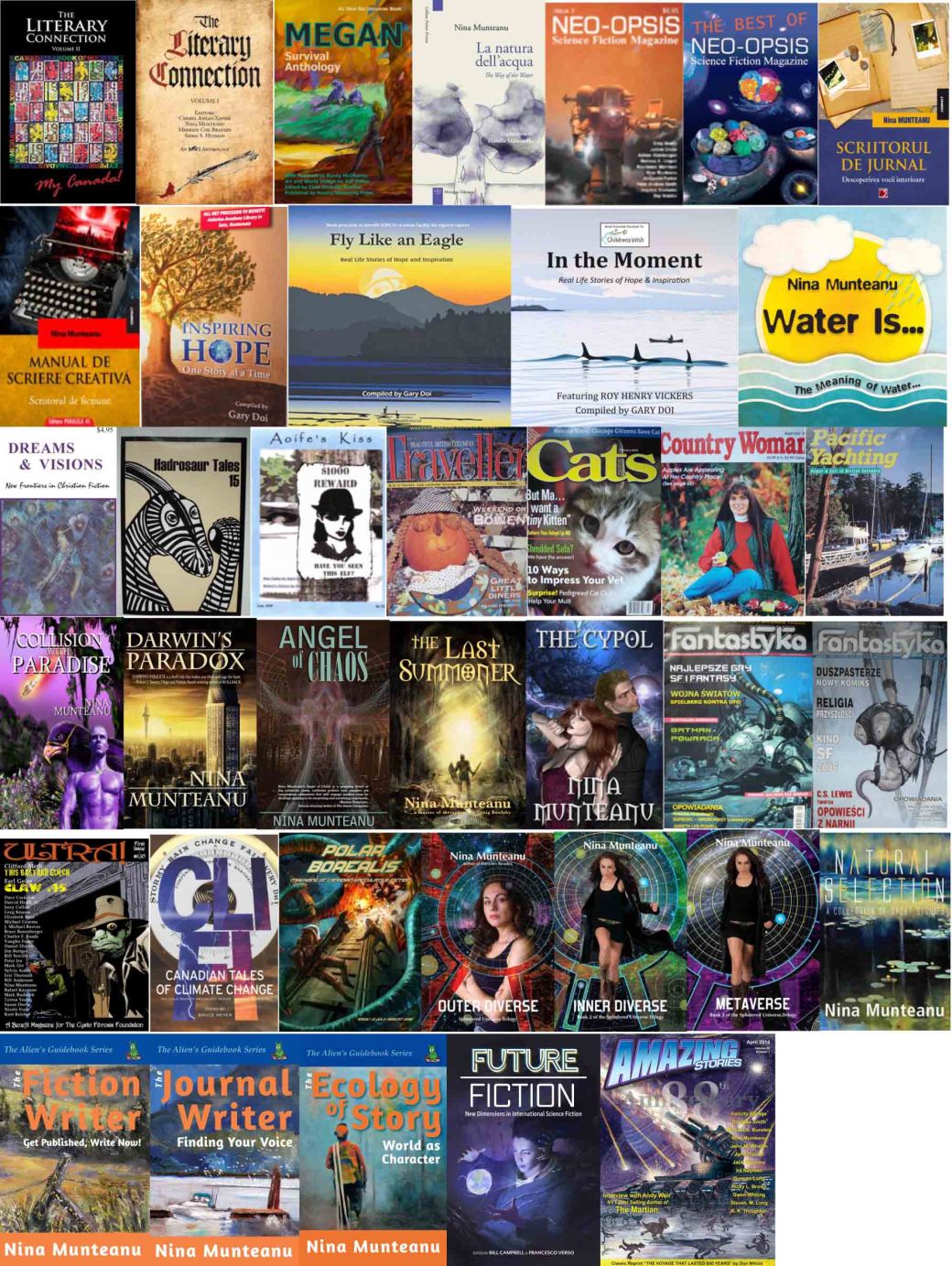
I’ve been fortunate in my history as a professional writer to have had exceptional art work on the books I’ve written or collections and anthologies I’ve participated in (see the mosaic below of many but not all the covers my work has been associated with).

For most of my books, my publisher provided me with a direct link to the cover artist (e.g., Dragon Moon Press, Edge Publishing, eXtasy Books, Liquid Silver Books, Starfire, Pixl Press) and I retained some creative control. I even found and brought in the cover artist for projects I had with Pixl Press.

Anne Moody and Pixl Press

Anne-Studio01 copy

Anne Moody working on her next painting

I met Anne Moody at the environmental consulting firm where I worked after leaving the University of Victoria. I’d taught limnology (the study of freshwater) for several years at UVic, then I joined the Vancouver firm as an aquatic ecologist and environmental consultant. That’s where I met fellow ecologist, Anne. Anne is a plant ecologist who has worked with federal and provincial governments on reclamation and restoration projects. She’s designed and planted marshes throughout the world and has taught at university in her field of expertise.

Anne wasn’t painting then. She started long after we parted our ways—she to a government job and I to a teaching job at The University of Toronto. However, as she mentions in her short bio, Anne has been drawing and painting since childhood—just like me. The difference is that she has come back to the fine arts with an eye for compelling imagery. Using her science knowledge and discipline to work with light, texture and form, Anne creates works of stunning originality that resonate with rugged landscape and with those who belong to it. Her work is, needless to say, fetching for a book cover!

FictionWriter-front cover-2nd ed-web copyWhen Pixl Press started looking for suitable cover artists to rebrand my writing craft series, I showed some of Anne’s work to the director Anne Voute. Pixl Press had already worked with Costi Gurgu and we liked his work. The result of Anne’s illustrations and Costi’s typography and design was a series of stunning covers that branded my books with just the right voice.

Journal Writer-FRONT-cover-WEB copyThe Alien Guidebook Series, of which two books are out so far (The Fiction Writer: Get Published, Write Now! and The Journal Writer: Finding Your Voice) was designed by Costi with a guidebook brand that would stand out, yet showcase the natural British Columbia landscape art by Anne that I felt strongly connected to. Anne’s cover art for The Journal Writer is one of several studies of Toquart Bay, BC.

FictionWriterCoverWeb copy 2Anne’s illustration for The Fiction Writer (a painting of Knutsford, BC) actually represents the second cover. The Fiction Writer was originally released in May 2009 and the cover portrayed a spiral galaxy—beautifully designed by Virginia O’Dine. The cover overly stressed my science fiction background and did not give a balanced portrayal of the guidebook, which addresses any fiction—not just science fiction. Anne’s portrayal of a field in Knutsford was deemed better suited to a new branding for the series.

MockUpEcology-2I am currently researching and writing the third guidebook in the series—a reference on world building and use of ecology in story—The Ecology of Story: World as Character.

I visited Anne at her ranch near Vanderhoof, B.C., to discuss a cover. Between chores on the 100-acre ranch, gourmet meals from local produce, and lively political discussions over generous amounts of wine—we spent the entire weekend looking over and evaluating Anne’s pieces as potential cover art. Anne had so many good pieces, I became confused with what would work best.

Nina-sedgefield at Annes-closest2 copy 2

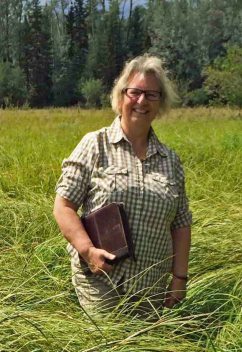
Nina stands in Anne’s sedge marsh

Finally on the last day, we stumbled on the perfect one: a painting Anne had done of a photograph her daughter had taken during a wildfire in northern British Columbia. Anne had stylized the photo into its own narrative that was compelling. My publisher was excited by it. We expect Pixl Press to release The Ecology of Story in late 2019.

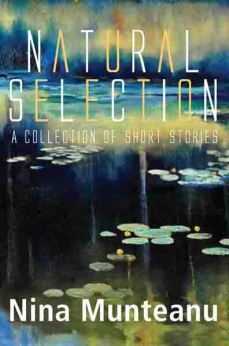
NaturalSelection-front-web copyAnne’s art work for the cover of Natural Selection: A collection of short stories had originally resonated with me when she had first shown me the original painting at an art show on Vancouver Island. Called Mere Tranquility, her acrylic and oil painting uses shades of aqua, green, blue and yellow to convey a small pond during a quiet summer day. She’d captured the elusive dance of light and water perfectly. I was reminded of the genius of Monet. Anne was delighted to let us use it. Pixl Press commissioned Gurgu to design the cover; his minimalist clean design was pure genius.

The cover for Natural Selection remains one of my favourite covers of all time. And it just so happens that the cover art and design solidly portray the tone and content of the stories within. Bellisima!


anne-moody-plein-air-painting

Anne Moody painting en plein-air

Anne Moody is a celebrated Canadian artist and plant ecologist. She worked with the British Columbia provincial government in their Department of Environment and now consults for her own company. She has been drawing and painting since childhood and won her first award at a “Painting in the Parks Program” when she was nine.

“I consider myself a realist, strongly tempted by abstract elements wrapped in story,” says Anne. “The images that speak to me are scenes that convey meaning beyond superficial beauty. My compulsion to paint takes charge when an image embedded in my memory will not allow me to rest until I promote it to canvas. My choice of medium, water-colour, acrylics or oil, is dictated by the nature of the image.”

All Nina Munteanu books can be found on most Amazon sites.

Microsoft Word - Publication-COVERS-all-2018.docx

nina-2014aaaNina Munteanu is an ecologist and internationally published author of award-nominated speculative novels, short stories and non-fiction. She is co-editor of Europa SF and currently teaches writing courses at George Brown College and the University of Toronto. Visit www.ninamunteanu.ca for the latest on her books. Nina’s recent book is the bilingual “La natura dell’acqua / The Way of Water” (Mincione Edizioni, Rome). Her latest “Water Is…” is currently an Amazon Bestseller and NY Times ‘year in reading’ choice of Margaret Atwood.

Fiction Writer on Recommended Reads

FictionWriter-front cover-2nd edWriter Timea Noemi selected The Fiction Writer by Nina Munteanu along with the works of Angela Ackerman and Katie Weiland as her Top books on How to Write.

“[The Fiction Writer]is the most practical book on publishing that I’ve ever read, and I’ve read them all! Not only is each chapter packed with advice for writers at every level of the publishing process, but the text is highly readable and even entertaining. The clear format, the direct style and the playful layout keep the large volume of information from ever becoming dry or boring.”–Lucia Gorea, English Instructor, University of Vancouver

FictionWriter-No1-tweet

scriitorul_de_fictiune_Munteanu_coperta1Timea Noemi also recommended the Romanian translated version of “The Fiction Writer: Get Published, Write Now!” (“Manual de Scriere Creativa. Scriitorul de fictiune”) by Nina Munteanu along with “The Emotion Thesaurus” by Angela Ackerman and the Hungarian “How to Write a Book” by Krisz Nadasi.

Of “the Fiction Writer” Timea said:

“Eu mutumesc enorm! Cartea aceasta ma invatat atat de multe lucruri este bibia mea de scriitor. Din pacate nu prea se gasesc carti despre scriere creative in tara si m-am bucurat tare mult sa gasesc aceasta carte.” (Thank you so much! This book taught me so many things; it is my writer’s Bible. Unfortunately, there are no books on creative writing in the country, and I enjoyed finding this book.)

FictionWriter Tesimonial-Romanian

editura-paralela-45-scriere creativa.Cu plecere, Timi!

In fact, I knew this (that writing guides were lacking in Romania, a country full of writers!) and so did my Romanian publisher Calin Vlasie of Editura Paralela 45. This is why Editura Paralela 45 translated and published a Romanian version of The Fiction Writer. It so gladdens me to hear that this book on writing is making its way around the country.

Gaudeamus-LaunchMy father is originally from Romania and grew up in Bucharest.  So, I was delighted to attend the launch of Manual de Scriere Creativa. Scriitorul de fictiune (The Fiction Writer) in Bucharest in 2011, hosted by Editura Paralela 45 in the Gaudeamus Book Fair. It was a wonderful experience, which included drinking copious amounts of Romania’s national drink Tuica (plum liquor that packs a punch!) with my publisher. You can find out more about my adventure in Bucharest on my good friend’s site, Toulouse On the Loose.

Canadians can purchase “The Fiction Writer” at a very decent price right now from Chapters / Indigo. The Fiction Writer is the first book of The Alien Guidebook Series, which includes The Journal Writer: Finding Your Voice (for journalling and memoir writing) and upcoming The Ecology of Story: World as Character (on setting, place and world building–scheduled release Summer 2019).


Nina MunteanuNina Munteanu is an ecologist, limnologist and internationally published author of award-nominated speculative novels, short stories and non-fiction. She is co-editor of Europa SF and currently teaches writing courses at George Brown College and the University of Toronto. Visit www.ninamunteanu.ca for the latest on her books.


Creating the Right Time and Place to Write

Look and you will find it—what is unsought will go undetected —Sophocles

Snowy Path scarborough

Snowy path, Scarborough (photo by Nina Munteanu)

During a time when I had a demanding job as an scientist, wife and mother and community volunteer, I wrote and successfully marketed five books, over a dozen short stories and many articles and reviews. Some people, including my publishers, thought I never slept (true) or cloned myself (possibly). They couldn’t believe my productivity when I was so busy with life.

But I did what I did, because I’d worked out a system. One that I could live by. One that fit my lifestyle. One created out of respect for my art as part of my “busy” life of commitments.

The truth of it is that we all lead busy lives. If you are going to finish that novel you’ve been working on over the years or book of poems sitting in the bottom dresser drawer, you need to make a commitment. Aside from giving your art the respect it deserves, it comes down to creating a time and place to write.

It starts with being realistic about your daily schedules and routines and inclinations and picking a time and place accordingly. Try to be consistent. It’s actually best to create a routine related to both time and place; the key is to be realistic about it. Don’t fight your inclinations or habits; instead, build your writing into your lifestyle. This will ensure success.

Choose a Sacred Time

Finding the time to write is critical to succeeding. If you don’t dedicate time to write you won’t. Believe me, you won’t. Make it sacred.

Writer Louise DeSalvo shared a common story about her experience: “Many people I know who want to write but don’t (my husband, Ernie, for example) or who want to write more than they have but say they can’t find the time (my friend Marla) have told me that taking the time to write seems so, well, self-indulgent, self-involved, frivolous even. And that finding the time to write—even a diary, much less fiction or memoir or poetry—in their busy schedules is impossible. I’ll write when I have the time, they say.”

It doesn’t work that way. You don’t find time; you must create it.

Writing of any kind is a commitment you make to yourself. So, choose a time that’s right for you. If you’re a morning person, don’t pick the end of the day when you don’t function as well. Instead, pick the early morning to write, a time before everyone else gets up and the day’s distractions pile up.

It’s actually best to create a routine related to time of the day (e.g., fixed time such as every morning or right after supper) or based on some other constant in your life, say the school calendar or your daily activities. The key is to be realistic about the time(s) you’ve chosen. In other words, your goals should be realistic and realizable.

The second part of the commitment is sharing it with your family and friends so that they will respect your sacred writing time. By sharing how important it is to you, you also give them the gift of sharing the experience with you and they are more likely to respect your time alone to write. This is also why choosing a routine makes more sense; it is something your family and friends will better remember and abide by. Making it easy for others is part of making it easy for you.

Find Your Own Rhythm

There’s no rule for when and how often you write. Because frequency and schedule of writing depends on the kind of writing you do (e.g., novel, short stories, articles, research) and on your own rhythms, you must decide what works best.

Most writers recommend that you commit to a regular writing schedule that is realistic to your overall routine and biorhythms. Some recommend you write in the morning, after a refreshing sleep; others suggest you write at night, at the end of the day when your memories are more fresh with the day’s activities and stimulations. Yet others suggest you take time out during the day to jot down relevant experiences as close to the time as the muse hits you, then spend some time at the end of the day compiling it into your work.

In the end, it’s up to you to choose what works for you and your own rhythms. When is the best time for you to write? And for how long or how many pages? Once you decide, stick to that schedule.

Choose a Sacred Place

Writing is a reflective activity that requires the right environment. The best environment is a quiet one with no interruptions and where you are alone. A reflective environment will let you find a connection with your muse. You need a place where you can relax and not worry about someone barging in or other things distracting you from your reflections. You should also feel physically comfortable and the place should meet your time requirements.

Because the suitability of a place can change with the time of day, learn the rhythms that affect the place you wish to write in. For example, the kitchen may be the centre of activity during the day but an oasis of quietude during the evening. Similarly, learn what kind of environment stimulates and nurtures your writing. Does music help or do you need complete quiet? Do you respond to nature’s soft breezes and sounds or do you prefer to surround yourself with the anonymous murmur of a crowded café for company?

Places that work for me include the local coffee shop, a park near my house, a library or other quiet place where I can enjoy uninterrupted anonymity. Where you write may reflect what you’re writing and vice versa. To some extent, you are environment and environment is you. You might try a few places first and see what happens to your muse. What you write while sitting under an apple tree in the breeze hearing the birds singing may differ from what you write while sitting in your living room by the crackling fireplace with music playing or sitting at your desk in your bedroom in total silence or in a crowded café surrounded by cheerful bustle.

Again, as with your choice of time, tell your family and friends about your sacred place. Provide rules, if you have to. Let’s say it’s a desk in the study. You may, for instance, let others know that your “mess” is part of a work in progress, perhaps even explain a little about it so they understand the nature of what you’re doing and why it should not be touched or moved or used, even while you are away from it. This will ensure that they respect your things and what you’re doing.

Credit Riv path in snow

Path along Credit River (photo by Nina Munteanu)

In the end it comes to finding the right integration and balance of time and place. Letting others know of your choices is equally important; this will ensure that they can help you, not hinder you in your writing. While writing is to a large extent an activity done in solitude, the journey is far from secluded. Ensure that you have a good support network.

This article is an excerpt from my fiction writing guidebooks The Fiction Writer: Get Published, Write Now! (Starfire, 2009) and The Journal Writer: Finding Your Voice (Pixl Press, 2013), part of the Alien Guidebook Series.

 

Nina Munteanu is an ecologist and internationally published author of award-nominated speculative novels, short stories and non-fiction. She is co-editor of Europa SF and currently teaches writing courses at George Brown College and the University of Toronto. Visit www.ninamunteanu.ca for the latest on her books.