The Invasion of Giant Crayfish Clones & A Diary in the Age of Water

OLYMPUS DIGITAL CAMERA

Marmorkrebs, giant marbled crayfish

In 2018, scientists reported that the giant marbled crayfish (Marmorkrebs [German]: Procambarus fallax f. virginalis) recently developed the strategy of being entirely female and cloning itself via parthenogenesis1; the female doesn’t require a male crayfish to fertilize its eggs. Despite the cloning procedure that makes them virtually identical genetically, the crayfish vary in size and pattern—no doubt due to epigenetics.2

First discovered by a German aquarium in the mid-1990s, these crayfish that developed from Florida-Native crayfish have migrated into the wild and are aggressively spreading in Europe, at the expense of the native European crayfish. The 8 to 12 cm long Marmorkrebs has been observed in Germany, Italy, Slovakia, Sweden, Japan, and Madagascar. The marbled crayfish prefers a warm and humid climate, suggesting that climate change may influence its distribution and success. The clones also thrive in a wide range of habitats—from abandoned coal fields in Germany to rice paddies in Madagascar, writes Carl Zimmer of the New York Times.

Given that every individual Marmorkrebs can reproduce (the advantage of parthenogenesis is that the female crayfish doesn’t need to find a mate—it just gives birth), one European scientist has dramatically suggested that, “we’re being invaded by an army of clones.” Zimmer shares the results of Dr Lyko and his team on how the all-female Marbokrebs came to be:

“Scientists concluded that the new species got its start when two slough crayfish mated. One of them had a mutation in a sex cell — whether it was an egg or sperm, the scientists can’t tell. Normal sex cells contain a single copy of each chromosome. But the mutant crayfish sex cell had two. Somehow the two sex cells fused and produced a female crayfish embryo with three copies of each chromosome instead of the normal two. Somehow, too, the new crayfish didn’t suffer any deformities as a result of all that extra DNA.” 

In its first couple decades, [Marmorkrebs] is doing extremely well, writes Zimmer. But sooner or later, the marbled crayfish’s fortunes may well turn, he adds. “Maybe they just survive for 100,000 years,” Dr. Lyko speculated. “That would be a long time for me personally, but in evolution it would just be a blip on the radar.”

marbled-crayfish2

Marmorkrebs

But what if this speculation isn’t the whole scenario? What if Marmorkrebs is just another example of climate change-induced adaptation and change through epigenetics? While climate forcing and habitat destruction is causing the extinction of many species; other species are, no doubt, adapting and exploiting the change. These generalists (born with change inside them) are poised to take over in Nature’s successional march.3

Bdelloid-rotifer-Philodina-gregaria

Bdelloid rotifer

Parthenogenesis and epigenetic change isn’t new. In fact, it’s very old … All-female bdelloid rotifers have been cloning a sisterhood for millions of years and using incorporated foreign genes through horizontal gene transfer4 (essentially stealing genetic material from their environment) to maintain a healthy diverse population. What’s new and weird is that this crayfish “suddenly” developed this ability—probably through epigenetic means (given this entire group is versatile in reproductive strategies in general). The real question none of the articles that covered this phenonemon ask is: WHY? Why is it happening NOW?

In my latest book “A Diary in the Age of Water” (due for release in May 2020 by Inanna Publications) I explore this “change” in a unique way:

Diary Water cover finalKyo finds a copy of Robert Wetzel’s Limnology on a lower shelf of the “L” section. It stands tall with a thick green-coloured spine. This is the book that Hilda, one of the Water Twins, had saved from the book burnings of the Water Age. A present from her limnologist mother. Hilda kept it hidden under her mattress. When CanadaCorp police burst into their home and dragged her mother away, Hilda was left alone with Wetzel. The limnology textbook was forbidden reading because its facts were no longer facts. 

After some coaxing, Myo shared a most bizarre tale of that time which led to the catastrophic storms and flood. What the governments hadn’t told their citizens—but what each citizen felt and knew—was that humans had lost the ability to reproduce. Then a spate of “virgin births” throughout the world spawned what seemed a new race of girls—‘deformed’, blue and often with strange abilities. Many considered them abominations, a terrible sign of what was in store for humanity—a punishment for their evil ways. Then, as quickly as they’d populated the world, these strange blue girls all disappeared without a trace. They simply vanished and became the Disappeared. Myo told her that some people called it a Rapture, a portent of the end times. Others suggested that the girls had all been murdered—a genocide, organized by what was left of the world government. 

Then … the storms … changed the world.

–“A Diary in the Age of Water” 

  1. Spontaneous Parthenogenesis: From the Greek Parthenon “virgin” and genesis “creation”, parthenogenesis is a natural form of asexual reproduction in which growth and development of embryos occur without fertilization. In animals it involves development of an embryo from an unfertilized egg; in plants it proceeds through apomixis. The production of only female offspring by parthenogenesis (such as with bdelloid rotifers) is called thelytoky.
  2. Epigenetics is the study of changes in organisms caused by the modification of gene expression (such as environmental triggers) rather than alteration of the genetic code itself. If genetics represents the hardrive of a computer, epigenetics is its software.
  3. Niche (the role or job of an organism or population) can be broad (for generalists) or narrow (for specialists). A specialist has superior abilities to exploit the narrow environmental conditions it lives in and is splendidly adapted to a fixed stable environment; generalists, less successful at exploiting than the specialist but more widely adaptive, can thrive in less stable environments that present a wider range of conditions.
  4. Horizontal gene transfer is the movement of genetic material between organisms other than by the vertical transmission of DNA from parent to offspring through reproduction. HGT is an important factor in the evolution of many organisms.

A Diary in the Age of Water will be released in May 2020 by Inanna Publications, Toronto, Canada.


nina-2014aaa

Nina Munteanu is a Canadian ecologist / limnologist and novelist. She is co-editor of Europa SF and currently teaches writing courses at George Brown College and the University of Toronto. Visit www.ninamunteanu.ca for the latest on her books. Nina’s bilingual “La natura dell’acqua / The Way of Water” was published by Mincione Edizioni in Rome. Her non-fiction book “Water Is…” by Pixl Press (Vancouver) was selected by Margaret Atwood in the New York Times ‘Year in Reading’ and was chosen as the 2017 Summer Read by Water Canada. Her novel “A Diary in the Age of Water” will be released by Inanna Publications (Toronto) in June 2020.
The Careful Writer: When To Use Passive or Active Verbs

patterns-Spalting-LR

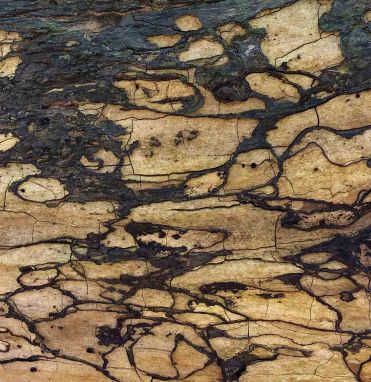
Maple spalting with carbon cushion fungus (photo by Nina Munteanu)

One of the most common pieces of advice I give to students of writing in coaching sessions and my classes at UofT (technical and non-fiction writing) and George Brown College (fiction writing) is that active verbs most often work better than passive verbs.


Active Verbs Clarify by Identifying Agent

The use of active verbs avoid confusion because they clearly identify the subject (the doer). For instance, consider these two versions:

ACTIVE: Alice walked the dog.

PASSIVE: The dog was walked.

The active sentence clearly identifies Alice as the one walking the dog; the passive sentence does not provide agency (Alice). We don’t know who walked the dog. When we use active verbs we always know the agent (of change); not so with passive. However, if we modify the passive sentence with “by”, then agency is provided:

PASSIVE (with agency): The dog was walked by Alice.

But the sentence no longer flows easily. This is because the typical subject-verb-object (SVO) flow that we are used to in the English language has changed to object-verb-subject (OVS). If you speak Native Brazilian Hixkaryana, you might be OK with that, given they organize their sentences this way. But that is not how we think and read. Here’s another example:

PASSIVE: The report was written by Ahmed, and it was found to be excellent

ACTIVE: Ahmed wrote the report and it was excellent.

ACTIVE BETTER: Ahmed wrote an excellent report.


Active Verbs Clarify and Empower by Reducing Need for Modifiers

Another reason to use active verbs is that a writer depends less on modifiers to prop up a weak verb, which passive verbs tend to be. For instance, which version is more compelling and easy to take in?

  1. Jill was walking quickly into the room.

  2. Jill rushed into the room.

The example below that I explore in my book The Fiction Writer: Get Published, Write Now! shows how the use of active and powerful verbs adds vividness and clarity to a scene.

PASSIVE

ACTIVE

„ Joe walked slowly into the room.


„ Joe sidled into the room.


„ The naked couple were in the bed almost buried under the rumpled covers. They were now struggling to get up.


„ The naked couple struggled out from the rumple of clothes and blankets.


„ Joe saw the big man sit up and stare at him angrily.


„ The man reared up and glared at Joe.


TOTAL WORDS: 38 TOTAL WORDS: 25

TheFictionWriter-NMNotice how the use of active verbs also unclutters sentences and makes them more succinct and accurate. This was achieved not only by choosing active verbs but power-verbs that more accurately portray the mood and feel of the action. Most of the verbs used in the Passive column are weak and can be interpreted in many ways; words such as “walk” “were” “sit” and “stare”; each of these verbs begs the question ‘how’, hence the inevitable adverb. So we end up with “walk slowly” “were now struggling” “sit up” and “stare angrily.” When activated with power-verbs, we end up with “sidle” “struggled” “rear up” and “glared”—all more succinctly and accurately conveying a mood and feeling behind the action.


When Passive Verbs Clarify…

In Chapter 17 of their book The Craft of Research (University of Chicago Press) Wayne C. Booth and colleagues stress that mindlessly adhering to the tacit rule to choose active verbs over passive verbs can in fact cloud a sentence. They suggest asking a simpler question: do your sentences begin with familiar information, preferably a main character? “If you put familiar characters in your subjects, you will use the active and passive properly,” they say.

It’s all about context.

Booth et al. provide two passages and ask you to choose which “flows” more easily:

  1. The quality of our air and even the climate of the world depend on healthy rain forests in Asia, Africa, and South America. But the increasing demand for more land for agricultural use and for wood products for construction worldwide now threatens these rain forests with destruction.

  2. The quality of our air and even the climate of the world depend on healthy rain forests in Asia, Africa, and South America. But these rain forests are now threatened with destruction by the increasing demand for more land for agricultural use and for wood products used in construction worldwide.

Most readers will find that 2. flows more easily. This is because the beginning of the second sentence picks up on the “character” (the rain forest) introduced at the end of the first sentence (…the rain forests in Asia, Africa, and South America. But these rain forests…). In the active verb version of 1. the second sentence starts with new information unconnected to the first sentence. The sentences don’t flow into each other as well.

The passive version (2.) permitted the reader to continue with the familiar “character” right away. This, argue Booth et al., is the main function of the passive: to build sentences that begin with older information. The other reason version 2. works better is that the second sentence opens with something short, simple and easy to read: These rain forests are now threatened. In the active version 1. the second sentence opens with something long and complex. The key to clarity is to start simple (and strong, with a “character”) and end with complexity; this way, you set up the reader to better understand by starting with familiar/simple and moving to new/complex.

In engineering and the sciences where I teach at UofT, teachers still demand the use of passive verbs, believing that this makes the writing more objective. This advice is often equally misleading. Booth again provide two passages to show this:

  1. Eye movements were measured at tenth-of-second intervals.

  2. We measured eye movements at tenth-of-second intervals.

In fact, both sentences are equally objective; however, their stories differ. Version 1. ignores the person doing the measuring and focuses on the measurement. Avoiding “we” or “I” doesn’t make it more objective; it does, however shift the focus of the narrative. There is another explanation for using the passive version of 1. vs. the active 2. When a scientist uses the passive to describe a process, she implies that the process can be repeated by anyone—much like providing a recipe that anyone can follow.

Consider the following two passages:

  1. It can be concluded that the fluctuations result from the Burnes effect.

  2. We conclude that the fluctuations result from the Burnes effect.

The active verb in 2. conclude and we as subject refers to actions that only the writer / researcher can perform. In other words, they are taking responsibility for that conclusion. Anyone can measure; only the author / researcher can claim what their research means.

The lesson here is that there is no one magic stick for sentence structure and active vs. passive verb use. Reader-ease and clarity depends on context and a natural flow of ideas.


nina-2014aaa

Nina Munteanu is a Canadian ecologist / limnologist and novelist. She is co-editor of Europa SF and currently teaches writing courses at George Brown College and the University of Toronto. Visit www.ninamunteanu.ca for the latest on her books. Nina’s bilingual “La natura dell’acqua / The Way of Water” was published by Mincione Edizioni in Rome. Her non-fiction book “Water Is…” by Pixl Press (Vancouver) was selected by Margaret Atwood in the New York Times ‘Year in Reading’ and was chosen as the 2017 Summer Read by Water Canada. Her novel “A Diary in the Age of Water” will be released by Inanna Publications (Toronto) in June 2020.

Reminiscing on 2019…

Diary Water cover finalThis week is a wonderful time to reflect on the past year, 2019. It’s also a good time to be thankful for the things we have: loving family, meaningful friendships, pursuits that fulfill us and a place that nurtures our soul.

It’s been a very good year for my writing…and my soul…

Last year I received a writer’s dream Christmas gift: a signed contract with Inanna Publications to publish my ninth novel: “A Diary in the Age of Water” about four generations of women and their relationship with water during a time of extreme climate change. The book will be released by Inanna in May 2020 with a launch in Toronto on May 26th at Queen Books as part of the Toronto International Festival of Authors. The book is now available on Amazon.ca for pre-order!

Publications   

LBM 2019 ClimateInCrisis2019 saw several of my publications come out. In January 2019 the reprint of my story “The Way of Water” was published by Little Blue Marble Magazine. It will reappear in a print and web anthology devoted to climate fiction called “Little Blue Marble 2019: Climate in Crisis” on December 27, 2019. That will be the sixth time “The Way of Water” has been published!

EcologyOfStoryImpakter Magazine also published my article “How Trees Can Save Us,” an essay on five writers’ perspectives on trees and humanity’s relationship with them.

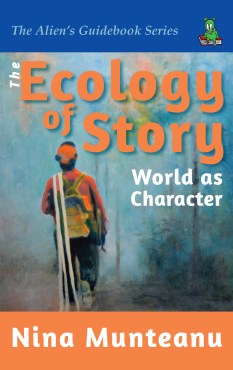
In June, I published the 3rd guidebook in my Alien Writing Guidebook series—called “The Ecology of Story: Worlds as Character” with Pixl Press in Vancouver. The launch on July 4th at Type Books was well attended with presentations by several local writers and artists.

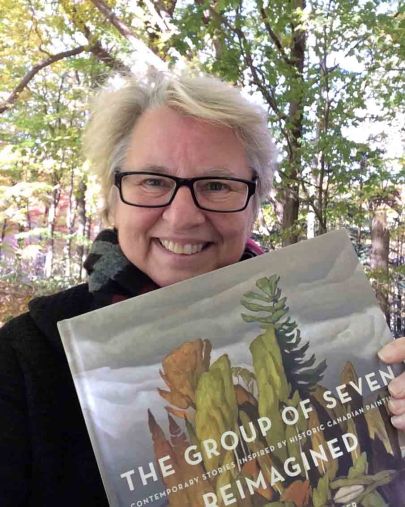
Nina GroupOfSevenReimagined

Nina Munteanu with The Group of Seven Reimagined

I was commissioned along with twenty other writers to write a piece of flash fiction for a commemorative anthology to the Group of Seven, entitled “The Group of Seven Reimagined,” with Heritage House in Vancouver.

I’d never written flash fiction before and it was both exciting and challenging to write. I was asked to pick an artist’s piece as inspiration for a flash fiction story. The beautiful hardcover book was released October 2019.

October also saw another of my pieces published. I was asked to contribute something to the Immigrant Writer’s Association’s first anthology, entitled “Building Bridges,” about the immigrant’s experience in Canada. While I’m not an immigrant, I did share my parents’ experience who had immigrated to Canada from France. I wrote a piece on the hero’s journey.


Age of Water Podcast 

AgeOfWater-HomePage

On November 22, 2019, co-host Claudiu Murgan and I launched the Age of Water podcast.  The podcast covers anything of interest from breaking environmental news to evergreen material on water and the environment. We interview scientists, journalists, writers, academia and innovators who share their knowledge and opinions about the real state of the environment and what committed individuals and groups are doing to make a difference. We talk about the problems and we talk about the solutions.

Appearances & Media / News

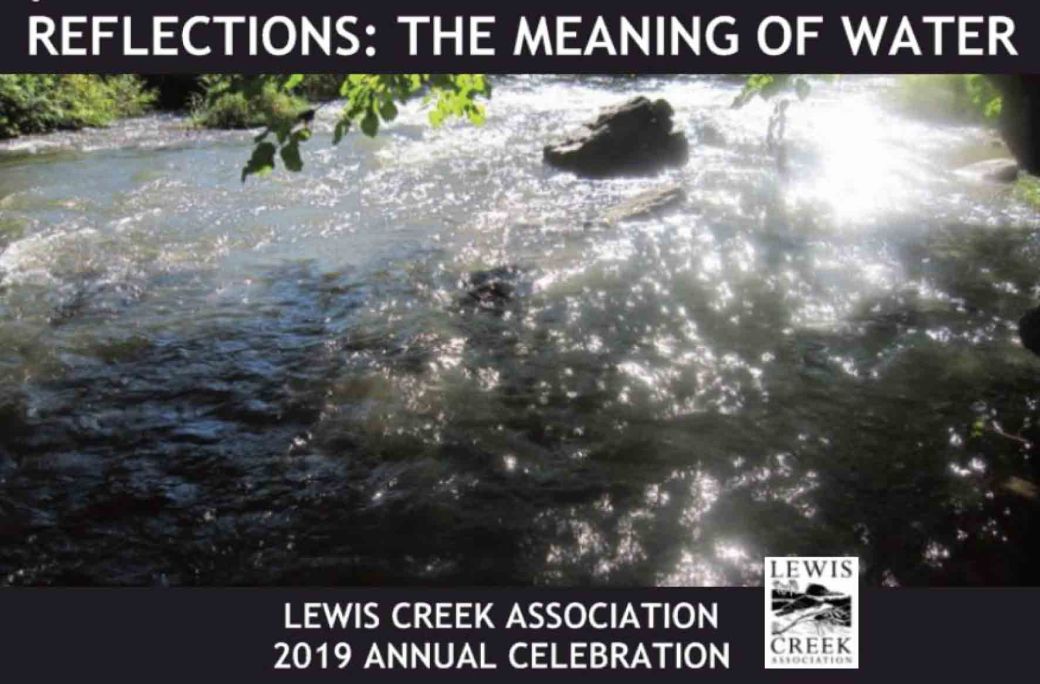
On June 22, I traveled to Port McNicoll at Georgian Bay to help give a writing intensive, hosted by publisher Cheryl Antao-Xavier at IOWI. I was also invited to speak at The Word is Wild Literary Festival in October. The event took place in Cardiff, in the Highlands of Ontario. In late October, I traveled with friend and editor Merridy Cox to Vermont to give a presentation on water to the Lewis Creek Association. Entitled “Reflections: The Meaning of Water”, the talk focused on our individual connection with water. I will be reprising this talk at several venues this year.

Nina Munteanu

Nina Munteanu with a metasequoia in the Beaches (photo by Richard Lautens)

I was also featured in the news a few times. The Toronto Star asked me to answer two questions about climate change and the Vancouver Sun published an Oped of mine entitled “Why Women Will Save the Planet.”

Research & Adventure

Cedar Giants copy

Giant red cedars in Lighthouse Park (photo by Nina Munteanu)

In Summer 2019 I travelled to British Columbia to visit friends and family in Vancouver and elsewhere. Following a dream of mine, I travelled with good friend Anne to Port Renfrew on Vancouver Island to see the ancient forests and the west coast. I had wanted to see these old-growth forests for some time since I’d been to Carmanah many years ago. The ancient forests were magnificent and breathtaking and so nourishing for the soul. Recognizing these forests as living cathedrals, I felt a deep reverence. The silent giants rose from wide buttressed bases into the mist like sentinels, piercing the heavens. A complex tangle of beauty instinct whispered in the breeze with the pungent freshness of pine, cedar and fir. Anne and I even had a chance to hug Big Lonely Doug, the second tallest Douglas fir tree in Canada.

Nina looking up dougfir copy 3

Nina Munteanu stands, dwarfed, by a Douglas fir tree in Lighthouse Park (photo by Margaret Ross)

While in British Columbia, I also visited a small enclave of old-growth forest in the heart of Vancouver at Lighthouse Park (West Vancouver). I went with son Kevin and then again with good friend Margaret. This majestic forest of redcedar, Douglas fir, spruce and hemlock is deeply awesome and humbling. And a real gem for the city.

Nina boot

Nina Munteanu in Ladner, BC (photo by Anne Voute)

Then, with just a few days before my flight back to Toronto, I slipped and fell and broke my ankle. I got a “boot” and a cane then hobbled on the plane and went back to work at UofT.

It has been a wonderfully inspirational year for me in writing and teaching. I still actively teach at The University of Toronto in several writing centres and classes throughout the downtown campus. The students are bright and challenging. I also still coach writers to publication and have helped several finish their works in 2019.


I hope the beauty of the season has filled your heart with joy. Wishing you a wonderful 2020, filled with grace, good health, and sweet adventure!


nina-2014aaa

Nina Munteanu is a Canadian ecologist / limnologist and novelist. She is co-editor of Europa SF and currently teaches writing courses at George Brown College and the University of Toronto. Visit www.ninamunteanu.ca for the latest on her books. Nina’s bilingual “La natura dell’acqua / The Way of Water” was published by Mincione Edizioni in Rome. Her non-fiction book “Water Is…” by Pixl Press (Vancouver) was selected by Margaret Atwood in the New York Times ‘Year in Reading’ and was chosen as the 2017 Summer Read by Water Canada. Her novel “A Diary in the Age of Water” will be released by Inanna Publications (Toronto) in June 2020.

Perr-fecting the Cat Purr Meditation…

Willow-artsy

Willow

Her name is Willow, and she helps me centre my being…

Willow is a diminutive 18-year old Russian blue cat, who I looked after for some friends in Mississauga. When I first met Willow, she responded with reticence–like all smart discerning cats. She appeared so delicate, I was scared to pick her up. I soon realized that this was a fallacy. That not only could I pick her up but that she loved to be held. I just needed to learn how.

As soon as I did, we became best friends. And it all came together with the Purring Cat Meditation.

It starts out with her finding me “doing nothing terribly important” like typing on the computer, or something. A soft but decisive tap of the paw on my leg and I have to smile at her intense look up at me with those guileless emerald eyes. I abandon my work–how can I ignore such a plea?– and pick her up. After all, I know what she wants…And so starts our journey toward “nirvana”… the meditative state that will centre our beings and ultimately save the world.

I wander the house with her. We check out each room and make our silent observations. We end up in the bedroom upstairs, where she normally sleeps (except when she’s decided to join me on my bed to sit on me and purr in my face in the middle of the night).

Willow basking

Willow teasing me

In her sanctuary, we drift to the window that faces the back yard, now in the bright colours of fall. The window is slightly open and a crisp breeze braces us with the deep scent of autumn. I breathe in the fragrance of fallen leaves, mist and bark…

Willow settles into a feather-light pose in the crook of my arms and I hardly feel her. More like she and I have joined to become one. We are both purring …

We remain in Cat-Purr-Meditation for …

Willow looking up

“Time to pick me up, Nina!” says Willow

I have no idea … It feels like moments … infinity … it encompasses and defines an entire world. We’ve just created something. Just by being.

Cats–well, most animal companions–are incredibly centring and can teach us a lot about the art of simply being.

And meditating…


I write about this more in my article entitled “Wake Up Your Muse: How my Cat Taught Me the Art of Being“.

Whenever I run across a bout of writer’s block or need to stoke my muse, instead of trying harder, I stop and reach out for my cat-friend.

And practice Cat-Purring-Meditation…

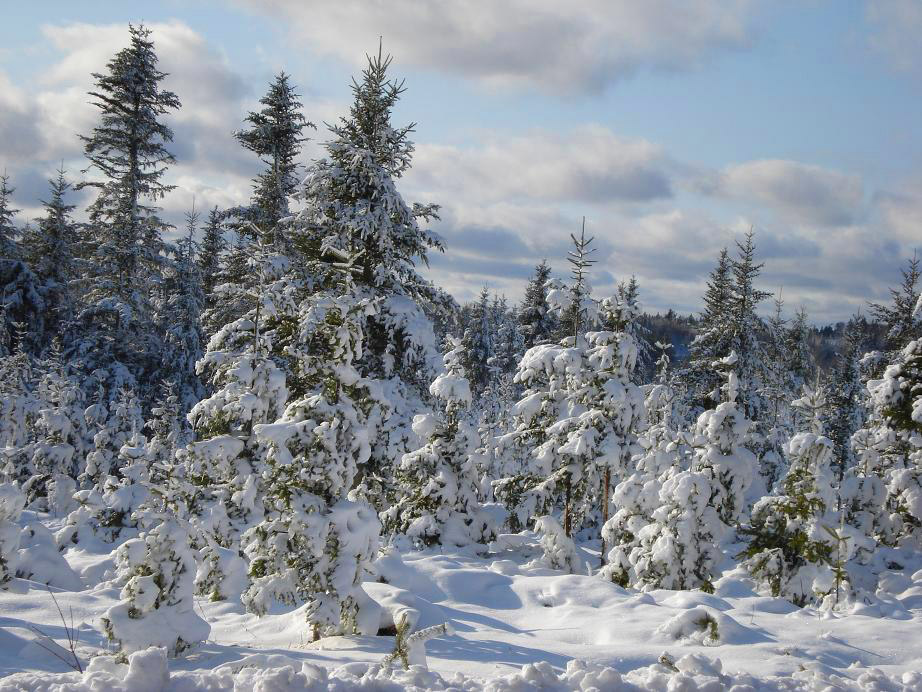
snow-scene-road-to-Wolfville_edited-1

Winter on the road to Wolfville, NS (photo by Nina Munteanu)


nina-2014aaa

Nina Munteanu is a Canadian ecologist / limnologist and novelist. She is co-editor of Europa SF and currently teaches writing courses at George Brown College and the University of Toronto. Visit www.ninamunteanu.ca for the latest on her books. Nina’s bilingual “La natura dell’acqua / The Way of Water” was published by Mincione Edizioni in Rome. Her non-fiction book “Water Is…” by Pixl Press (Vancouver) was selected by Margaret Atwood in the New York Times ‘Year in Reading’ and was chosen as the 2017 Summer Read by Water Canada. Nina’s short story collection of eco-fiction can be found in “Natural Selection” published by Pixl Press. Her novel “A Diary in the Age of Water” will be released by Inanna Publications (Toronto) in 2020.

Walking Helps Me Think and Imagine

Beaches-snow03

Walking in The Beach (photo by Nina Munteanu)

I’ve written many articles and over a dozen books and readers often remark on my imagination with something akin to awe and incredulity. I often get asked where I get my ideas. Let me tell you a story first…

A Toronto friend—himself a prolific letter writer—shares that his ideas come to him during his daily walks (you’ll find his witty, humorous and somewhat pithy letters in the National Post, Globe and Mail or Toronto Star … almost weekly). David Honigsberg doesn’t use his car (that’s reserved for when his son is in town) and he walks every opportunity he gets, whether it’s a short jaunt to the coffee shop several blocks from his work place or a long trek to his home in Mount Pleasant after a lunch engagement near Bloor and Yonge. He tells me that he uses his phone to capture his “eureka” moments in what may now be considered unorthodox—he doesn’t make digital notes (it’s not that kind of phone!) but instead leaves a series of voice mails on his home phone. When he gets home, David replays his messages and writes out his letter to the editor.

What Dave does is not new to creative thinkers all over the world and throughout time. He shares great company with people who used walking as a venue toward creative thinking (and writing); people like Aristotle, Charles Darwin, Charles Dickens, Ludwig van Beethoven, Friedrich Nietzsche, William Wordsworth, Henry David Thoreau, Steve Jobs, and Soren Kierkegaard—just to name a few. All great walkers.

Winter-Forest Hill

Snow day in Forest Hill, Ontario (photo by Nina Munteanu)

Aristotle conducted his lectures while walking the grounds of his school in Athens. His followers, who chased him as he walked, were known as the peripatelics (e.g., Greek for meandering). Darwin refined his ideas on natural selection and other topics during his frequent walks along his “thinking path”, a gravel road called Sandwalk Wood near his home in southeast England. Dickens walked for miles each day and once said, “If I could not walk far and fast, I think I should just explode and perish.” Beethoven often took solitary walks. He strolled the Viennese woods for hours, finding inspiration for his works and jotting them down on a notepad that he carried with him. Nietzsche loved his walks in the mountains. He wrote, “it is only ideas gained from walking that have any worth.” For Wordsworth, the act of walking was one in the same with the act of writing poetry.

Both involved rhythm and meter. Henry David Thoreau was known for his great walkabouts. Walking through nature for Thoreau was a pilgrimage without a destination—more discovery and rapture. “Taking a long walk was [Steve Job’s] preferred way to have a serious conversation,” wrote Job’s biographer Walter Isaacson. Writer and avid walker, Soren Kierkegaard writes:

“Above all, do not lose your desire to walk. Everyday, I walk myself into a state of well-being and walk away from every illness. I have walked myself into my best thoughts, and I know of no thought so burdensome that one cannot walk away from it.”

In the April 2014 issue of the Journal of Experimental Pshychology: Learning, Memory and Cognition, Stanford researchers Marily Oppezzo and Daniel L. Schwartz demonstrated that walking boosts creative inspiration. Using the Guildford’s Alternative Uses Test they showed that the act of walking, whether inside or outside, significantly increased creativity for 81% of the participants. Oppezzo and Schwartz were able to demonstrate that the creative ideas generated while walking were not irrelevant or far-fetched, but innovative and practical.

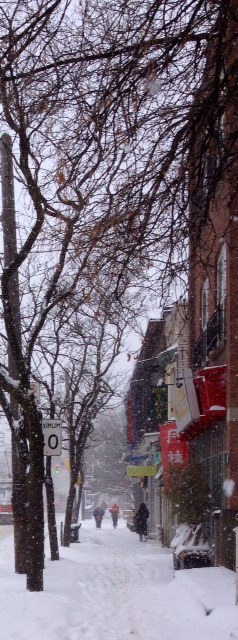
snowy street TheBeach

Snow day walk in The Beach (photo by Nina Munteanu)

In the September 3 2014 issue of The New Yorker, journalist Ferris Jabr describes why this is the case:

“The answer begins with changes to our chemistry. When we go for a walk, the heart pumps faster, circulating more blood and oxygen not just to the muscles but to all the organs—including the brain. Many experiments have shown that after or during exercise, even very mild exertion, people perform better on tests of memory and attention. Walking on a regular basis also promotes new connections between brain cells, staves off the usual withering of brain tissue that comes with age, increases the volume of the hippocampus (a brain region crucial for memory), and elevates levels of molecules that both stimulate the growth of new neurons and transmit messages between them.”

It isn’t just strolling or sauntering that stimulates the creative mind to new heights.

SONY DSC

Author hiking Highland River, Ontario (photo by Merridy Cox)

Stoking the creative artist inside you may be as simple as giving your mind the chance to wander—and taking the time to pay attention. In her book The Artist’s Way Julia Cameron talks about how “rhythm” and regular, repetitive actions play a role in priming the artistic well. She lightheartedly describes how the “s” activities work so well for this: showering, swimming, scrubbing, shaving, strolling, steering a car. I can testify to the latter—how many great plot ideas have I cooked up while driving to work! Filmmaker Steven Spielberg claimed that his best ideas came to him while he was driving the freeway. Negotiating through the flow of traffic triggered the artist-brain with images, translated into ideas. “Why do I get my best ideas in the shower?” Einstein was known to have remarked. Scientists tell us that this is because showering is an artist-brain activity.

The magic part in this is to pay attention. Pay attention to your life experiences; don’t ignore them. Sit up in the bus and watch people, play with the images, sounds and smells. Get sensual and let your eyes, ears, nose and limbs delight in the world. It’s amazing how interesting the world becomes once you start paying attention.

So, to answer the question above about where I get my ideas: in one word, everywhere.

Of course, I find those “s” activities mentioned above very helpful in quieting my mind to “listen” to my creative spirit and see; they calm and focus me. I would add another “s” word–scrawling–to the list. While Dave sends a voice message home on his phone when he gets an idea, I carry a notebook with me to jot down my eureka moments. I find writing by hand additionally helps in the creative process.  What works best for me is a walk in Nature. Nothing beats that…having a dialogue with the wind, or the chiming birds and rustling trees, the gurgling brook or surging sea or tiny insect, the soothing sun…rough bark of a fir tree… The texture of the world…


Snowy Path scarborough

Snowy path in Scarborough, Ontario (photo by Nina Munteanu)

“The texture of the world, its filigree and scrollwork, means that there is the possibility for beauty here, a beauty inexhaustible in its complexity, which opens to my knock, which answers in me a call I do not remember calling, and which trains me to the wild and extravagant nature of the spirit I seek.”—Annie Dillard, Pilgrim at Tinker Creek


References:

Cameron, Julia. 1992. “The Artist’s Way”. Penguin Putnam Inc., New York, NY. 222pp.

Dillard, Annie. 1974. Pilgrim at Tinker Creek. Harper Perennial. 304pp.

Downden, Craig. 2014. “Steve Jobs was Right About Walking” In: The National Post, December 23, 2014.

Munteanu, Nina. 2013. The Journal Writer: Finding Your Voice. Pixl Press, Vancouver, BC. 170pp.

Oppezzo, Marily and Daniel L. Schwartz. 2014. “Give Your Ideas Some Legs: The Positive Effect of Walking on Creative Thinking”, Journal of Experimental Psychology: Learning, Memory, and Cognition, Vol. 40, No. 4: 1142-1152.


nina-2014aaa

Nina Munteanu is a Canadian ecologist / limnologist and novelist. She is co-editor of Europa SF and currently teaches writing courses at George Brown College and the University of Toronto. Visit www.ninamunteanu.ca for the latest on her books. Nina’s bilingual “La natura dell’acqua / The Way of Water” was published by Mincione Edizioni in Rome. Her non-fiction book “Water Is…” by Pixl Press (Vancouver) was selected by Margaret Atwood in the New York Times ‘Year in Reading’ and was chosen as the 2017 Summer Read by Water Canada. Her novel “A Diary in the Age of Water” will be released by Inanna Publications (Toronto) in 2020.

Nina Munteanu Talks about The Splintered Universe with Simon Rose

Author, writer, coach and consultant Simon Rose interviews Nina Munteanu about The Splintered Universe Trilogy, now out in three formats: print, ebook, and audiobook. Listen to a sample from each of the trilogy audiobooks on Audible:

audible listen

Here’s Simon’s interview with me:

SimonRose site

nina interview 3

Nina interview 2

nina interview 4

nina interview 5

nina interview 6

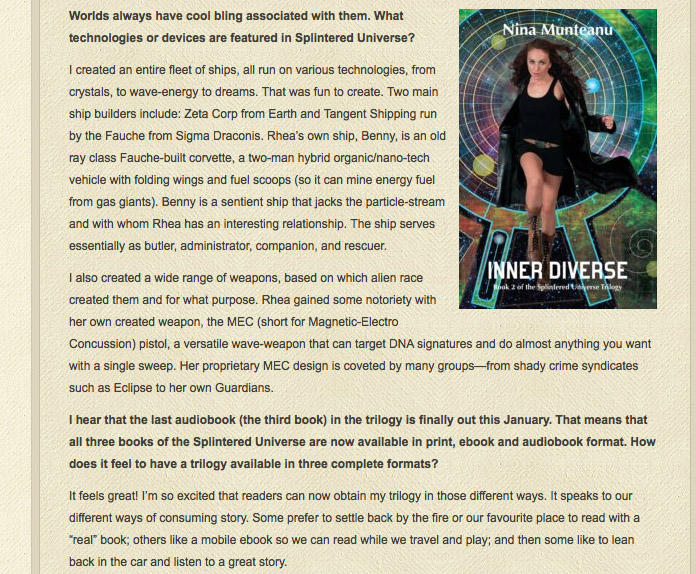
In Metaverse, the third and last book of The Splintered Universe Trilogy, Detective Rhea Hawke travels back to Earth, hoping to convince an eccentric mystic to help her defend humanity from an impending Vos attack—only to find herself trapped in a deception that promises to change her and her two worlds forever.

You can listen to a sample recording of Outer Diverse, Inner Diverse, and Metaverse through Audible. Read The Splintered Universe reviews on Goodreads.

Microsoft Word - trilogy-poster03.docx

Nina Highland Cr 1

Nina checks her photos, Highland Creek, ON (photo by Merridy Cox)

nina-2014aaa

Nina Munteanu is a Canadian ecologist / limnologist and novelist. She is co-editor of Europa SF and currently teaches writing courses at George Brown College and the University of Toronto. Visit www.ninamunteanu.ca for the latest on her books. Nina’s bilingual “La natura dell’acqua / The Way of Water” was published by Mincione Edizioni in Rome. Her non-fiction book “Water Is…” by Pixl Press (Vancouver) was selected by Margaret Atwood in the New York Times ‘Year in Reading’ and was chosen as the 2017 Summer Read by Water Canada. Her novel “A Diary in the Age of Water” will be released by Inanna Publications (Toronto) in 2020.

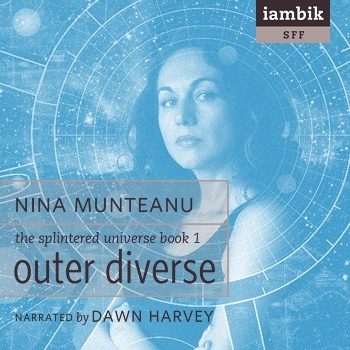
Review of “Outer Diverse” Audiobook by Martha’s Bookshelf

MarthasBookshelf-banner

OD-review-MarthasBookshelf

Review by Martha’s Bookshelf:

Rhea Hawke is some tough cookie… well – I guess you wouldn’t call a Galactic Guardian Enforcer, a “cookie”. Rhea has a strong sense of justice and is prepared to kill in the line of duty. The problem is that she killed an innocent man by accident when she was just a child and that still haunts her.  That event has shaped her life, leading her to become the only human law enforcement officer on the Eosian force. Now it is the reason she is on leave from her job and has enemies hunting her out of fear and for revenge.

Rhea has kickin’ weapons, including a Guardian Great Coat that is a shield, weapon cache and healing cover. But her most significant weapon is the ‘MEC” (Magnetic-Electro Concussion) pistol that she designed herself. The gun is technically outlawed but it is being sought by many because it is so powerful. She has created it so it can’t be dismantled and copied and the only design schematics are in her head.

Rhea is frustrated that her Eosian boss doesn’t believe her arguments that the Vos, a brutal alien race that attacked Earth, pose a real terrorist threat to the galaxy. She continues the investigation on her own and with the help of another Guardian, Basileus, she steals Benny, her beloved little ship, (saving him from the junk heap) and heads off to face more danger.

Whew- this one takes some concentration. I had a little confusion getting the characters, races, friends – well mostly foes – sorted out.  There is wonderful world building with fascinating aliens and planets, along with detailed weapons, missions, errors, and blunders. I was a bit frustrated about a third into the book when Rhea falls in lust with a stranger and begins a heavy romantic relationship. Although Serge seems loving and caring it puzzled me that Rhea totally failed to use her police smarts in getting involved with this handsome guy.  Is he safe or not; lover or the worst sort of enemy?

Rhea faces one perilous situation after another. Some she is led into and others she plunges head long into. There are ideological twists and parallel world theories at the root of the terrorist threat that Rhea seeks to thwart. As her investigation proceeds the issues become even more complex. This isn’t a light read but it sure kept my attention as I listened to see who was really a foe or a friend and what Rhea’s ultimate fate might be.  This is the first book of the Splintered Universe Trilogy. I hope the next book will be available soon so I can continue to follow Rhea and Bennie on their dangerous adventures.

Audio Notes:
Ms. Harvey did a superb job with the narration. She manages to enthuse the personality of the characters into each voice. The wise, gentle Ka has a soft, strong sound that reminds you of a wise old bird. Shlsh Shle She, a slippery, slimy creature has a slurry, garbled voice like a mouthful of mushy, wet food.  Dawn’s reading conveys the loneliness in Rhea, the sexiness of Serge, the frustrated, friendliness of Bas, and the faithful, coziness of Benny. She is able to bring emphasis to the action or romance, weariness or fear elements of the story. The narration never takes over the story but rather enhances it.

Thought words jotted while listening:   Harsh, lonely, intense, complex, naive, betrayal, secrets.  Some sexual content.

Listen to an excerpt of Outer Diverse:

Get the complete Splintered Universe Trilogy. Available in ALL THREE FORMATS: print, ebook, and audiobook. Listen to a sample from the three audiobooks below on Audible. Read the Splintered Universe reviews on Goodreads.

audible listen

Microsoft Word - trilogy-poster03.docx

nina-2014aaa

Nina Munteanu is a Canadian ecologist / limnologist and novelist. She is co-editor of Europa SF and currently teaches writing courses at George Brown College and the University of Toronto. Visit www.ninamunteanu.ca for the latest on her books. Nina’s bilingual “La natura dell’acqua / The Way of Water” was published by Mincione Edizioni in Rome. Her non-fiction book “Water Is…” by Pixl Press (Vancouver) was selected by Margaret Atwood in the New York Times ‘Year in Reading’ and was chosen as the 2017 Summer Read by Water Canada. Her novel “A Diary in the Age of Water” will be released by Inanna Publications (Toronto) in 2020.

Nina Munteanu Talks About Writing and Audiobooks

AudiobookPromotions

In a recent interview with Jess at Audiobookworm Promotions, I talked about the process of turning The Splintered Universe Trilogy into three audiobooks and the process of writing in general:

Nina-tree

Nina Munteanu

Tell us about the process of turning your book into an audiobook.

The process was magical for me. It was professional and proceeded at a pace that felt productive. All of this was mainly because of the professional relationship I had with the narrator. From audition to each step of quality assurance in ensuring character voice, pronunciations, mood, tempo, etc. the narrator and I were in good communication. The final product shows. I can’t recall how long it took for each audiobook to be created, but it didn’t feel long.

How did you select your narrator?

Dawn Harvey2

Dawn Harvey

Dawn Harvey auditioned for my first book along with two other narrators through the audiobook publisher, Iambik. I picked Dawn because her voice resonated with my idea of my main character, Rhea Hawke, a cynical badass detective on a mission to save the world–a world she doesn’t understand. Dawn’s voice carried attitude and sarcasm as well as compassion and kindness. It was exactly what I was looking for in my paradoxical character. Given that the book is told in the first person, the main character voice was critical. Dawn just nailed it. When the second and third books came out, I just HAD to have Dawn do them too—not just for consistency, but because in my mind, Dawn WAS Rhea.

How closely did you work with your narrator before and during the recording process? Did you give them any pronunciation tips or special insight into the characters?

We worked closely and well. Dawn took the driver’s seat in it. She was very professional. She sent me sections of audio to check for tone, voice, etc. She created a list of voices (I had at least twenty different alien species she needed to create unique voices for—one with multiple mouths! And another was a kind of “amoeba”—her voices were splendid!) and a list of terms with her pronunciations for me to vet. She had also asked for more information on the characters, which I was able to provide, given I keep a character dossier on all characters I create.

You can listen to samples of her narration of the three audiobooks below:

audible listen

Are you an audiobook listener? What about the audiobook format appeals to you?

OuterDiverse-web-1 copyI like to listen to audiobooks in the car, especially when I’m on a long trip. I find it a wonderful way to enjoy a book. It’s very relaxing. When my best friend and I used to do road trips down to California from Vancouver, we took turns reading a novel or nonfiction book out loud as the other drove. It was lots of fun. With audiobooks I can do the same even when I’m the only one in the car!

What gets you out of a writing slump? What about a reading slump?

EcologyOfStoryIf I’m in a slump, it’s usually because I can’t figure something out—usually some plot point or character quirk or backstory. What helps me is to put the book I’m working on away and do something else. I know that what I need will come; I just have to let it come on its own terms. The break could even be writing something else, so long as it isn’t my book. Or I could do something else on the book such as edit a certain section or research some element. Other ways I coax my muse back are walks in Nature, reading a good book, visiting the library or a bookstore and cycling. These work really well to take me out of the book and into the muse. When I take my mind out of the direct involvement with the book, I’m letting things outside of me impact me with insight. Invariably that is what happens. I’ll see something or experience something that provides me with a clue or even an epiphany.
What advice would you give to aspiring authors?

InnerDiverse-web copyLearn your “voice” and how it’s unique from anyone else. Write from the heart, write something that means something to you, and keep writing. Success in writing results from a passion to share. If you infuse your writing with passion, everything else comes with it: the patience and determination to learn craft, marketing, and the persistence in your pursuit.

Do you have any tips for authors going through the process of turning their books into audiobooks?

Know what you’re looking for to represent the “voice” of your book. Know the narrative voice you want for your book and don’t compromise on it. Work respectfully with your narrator: if they are good, they will turn your cherished book into something more than it was. Let it surprise you and delight you. Together, you and your narrator will become more than the sum of the parts. Enjoy the process and don’t rush it.

What’s next for you?

MetaverseAUDIO-FINAL2-webI recently finished my latest novel, A Diary in the Age of Water, which was picked up by Inanna Publications in Toronto and will be out in 2020. I recently launched the third book in my “Alien Guidebook” series of writing guides. This one is called The Ecology of Story: World as Character and I’ve had lots of fun with it!

I’m currently at the idea-premise phase of a feature short story commissioned by a magazine in Vancouver. The story, which may involve a branch of ecology called soundscape ecology, explores a world we hope to live in and how we might get there.

nina-2014aaa

Nina Munteanu is a Canadian ecologist / limnologist and novelist. She is co-editor of Europa SF and currently teaches writing courses at George Brown College and the University of Toronto. Visit www.ninamunteanu.ca for the latest on her books. Nina’s bilingual “La natura dell’acqua / The Way of Water” was published by Mincione Edizioni in Rome. Her non-fiction book “Water Is…” by Pixl Press (Vancouver) was selected by Margaret Atwood in the New York Times ‘Year in Reading’ and was chosen as the 2017 Summer Read by Water Canada. Her novel “A Diary in the Age of Water” will be released by Inanna Publications (Toronto) in 2020.

Reflections: The Meaning of Water (a talk for the Lewis Creek Association)

Nina Louis Merridy

Nina Munteanu with Louis DuPont and Merridy Cox with Lewis Creek behind

A short time ago, I was invited to give a talk on water to the Lewis Creek Association during their annual meeting for 2019 to help celebrate their recent accomplishments. Here is their write up:

Join our special guest, Canadian ecologist and author Nina Munteanu, who will discuss the many dimensions of water. She describes personally the curiosity and emotional connection with nature that compels us to caretake our environment with love versus a sense of duty. Her book “Water Is…The Meaning of Water” is an ode to and discourse about water, the indispensable and mysterious element that is the foundation of life here on our blue planet. The book is a fascinating catalogue of the many amazing and anomalous qualities of water, and has become a favorite of several Board members. She trained in limnology, the study of lakes, and has consulted in the aquatic sciences for many years. The author of over a dozen fiction and non-fiction books, she currently teaches writing at the University of Toronto and George Brown College in Toronto, Canada. We are delighted to have Nina join us and share her insights and concerns about this substance we have been concerned with over the last 30 or so years.

Microsoft Word - Nina map Barrio cafe.docx

At Cafe Barrio in Burlington, Vermont, Nina checks the map for directions…and finds her way…

I chose to drive to Vermont from Toronto with good friend and editor Merridy Cox. We crossed into USA near Cornwall and drove through New York state to Rousse’s Point, then into Vermont over the Vermont Bridge over Lake Champlain. We took the scenic route along the islands to the village of Charlotte, where we met with some of the Lewis Creek Board members and enjoyed a wonderful home-cooked supper at executive director Marty Illick’s country home along with Board president Andrea Morgante, board member Louis DuPont, and several other guests.

Merridy-LakeChamplain marsh

Merridy Cox photographing Lake Champlain just east of the Vermont Bridge

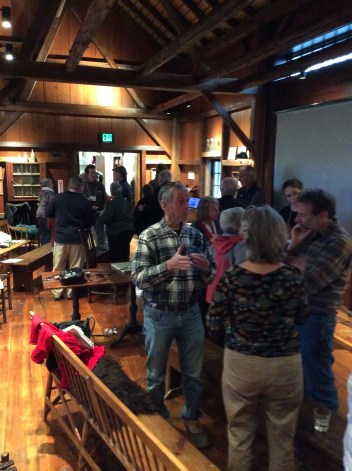
The event took place in the large converted barn of Philo Ridge Farm, a 400-acre historic dairy farm now also running as an educational institution of sustainable practices and store and restaurant. The barn is now a state-of-the-art sustainably built facility with a combination of rustic and sophisticated in its design of rich wood walls, large windows and beams with high vaulted ceiling; ideal for a presentation.

I spoke about my roots in the Eastern Townships of Quebec…and where they led me:

I was born in a small town in the Eastern Townships of Quebec, a gently rolling and verdant farming community, where water—l’eau—bubbles and gurgles in at least two languages.

I spent a lot of my childhood days close to the ground, observing, poking, catching, prodding, destroying and creating. Perhaps it was this early induction to the organic fragrances of soil, rotting leaves and moss that set my path in later life as a limnologist, environmental consultant and writer of eco-fiction.

Nina EasternTownships

I followed my older brother and sister to the nearby forest and local stream. We stirred soil, flower petals and other interesting things with water to fuel “magic potions” that we inflicted on some poor insect. Yes, I was a bit destructive as a child—and I took a lot for granted. Like water. There was so much of it, after all. It was clean and easily accessed, fresh from the tap.

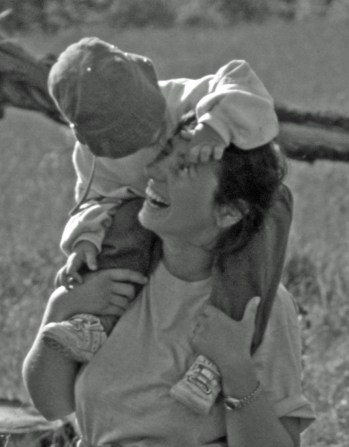
When I gave birth to my son, Kevin, I felt a miracle pass through me. Kevin became my doorway back to wonder. His curiosity was boundless and lured me into a special world of transformation.

Nina-Kevin playing

Nina Munteanu and her son hiking in B.C.

I took time off work to spend with Kevin when he was young. We went on great trips, from the local mall, where we had a hot chocolate and played with Lego, to the local beach on the Fraser River, where we explored the rocks. When he was no more than three, I took him on endless adventures in the city and its surroundings. We didn’t have to go far. The mud puddles of a new subdivision after a rain were enough to keep our attention for dozens of minutes. We became connoisseurs of mud. The best kind was “chocolate mud,” with a consistency and viscosity that created the best crater when a rock was thrown into it.

Kevin and I often explored the little woodland near our house. We made “magic potions” out of nightshade flowers, fir needles, loam and moss; we fueled our concoctions with the elixir of water from a stagnant pool. This time the little insects weren’t molested.

Travelling the world has helped me realize that I was blessed with an abundance of water. I lived my entire life in a country of plentiful and healthy water. And for most of that time I didn’t even realize it. Canada holds one fifth of the world’s fresh water in lakes, rivers, and wetlands, as well as in our underground aquifers and glaciers. Canada’s wetlands, which cover more than 1.2 million square kilometres, makes Canada the largest wetland area in the world.*

The folks who attended my presentation were wonderfully receptive, gracious and kind. They bought all my books too! I felt so welcomed by this community concerned about the land and their water. I was also impressed with the dedication, organization and knowledge of this non-profit conservation initiative.

Presentation venue

Venue

Lewis Creek Association

The Lewis Creek Association (LCA) started in 1990, when a group of concerned citizens and the Hinesburg Land Trust came together to conserve a critical stretch of wetland habitat bordering Lewis Creek in Hinesburg, Vermont. Lewis Creek is one of Vermont’s most ecologically diverse streams and suffers from increasing habitat degradation due to river encroachment by development and roads, land use change, and more extreme weather events.

LCA’s mission is to protect, maintain and restore ecological health while promoting social values that support sustainable community development in the Lewis Creek and LaPlatte watershed regions and Vermont generally. Through education and action, LCA works to:

  • Restore water quality, stream stability, and native wildlife habitat
  • Protect and restore important and diverse natural areas
  • Conserve productive and scenic lands that contribute to rural character and economy
  • Support growth compatible with important natural systems and working landscapes
  • Strengthen and support local conservation initiatives and opportunities
  • Model active participation and respect for differences

With a hard-working volunteer board and a part-time paid consultant, LCA facilitates educational, planning, and field work programs involving dozens of volunteers. This work assists town planning and facilitates the restoration and conservation of important Champlain Valley natural areas of high public value.

LCA Annual Party 2019

Their track record has been impressive. Since forming their organization, the LCA has spearheaded and conducted numerous initiatives. Highlights include: annual water quality sampling in six streams and rivers; biodiversity studies of stream corridors, conservation and restoration work in watershed towns; invasive aquatic plant control in local areas; helped educate citizens on ecological improvements; actively participated in implementing VT’s Water Quality Law, Act 64; generated Water Quality Scorecard Maps to track pollution problems; and designed the “Ahead of the Storm” education program used throughout the watershed region.

LakeChamplainBasin

In the Moment-anthology copy*A version of this talk is available in an article I wrote called “Coming Home to Water,” which first appeared in the 2016 anthology In the Moment (A Hopeful Sign) edited by Gary Doi. It was reprinted in 2018 The Earth We Love (Mississauga Writers) edited by Elizabeth Banfalvi; and again in 2019 in The Literary Connection IV: Then and Now (IOWI) edited by Cheryl Antao Xavier.


LakeChamplain-VT-NY bridge

Lake Champlain, looking west from Vermont to New York at Vermont Bridge (right) (photo by Nina Munteanu)


nina-2014aaa

Nina Munteanu is a Canadian ecologist / limnologist and novelist. She is co-editor of Europa SF and currently teaches writing courses at George Brown College and the University of Toronto. Visit www.ninamunteanu.ca for the latest on her books. Nina’s bilingual “La natura dell’acqua / The Way of Water” was published by Mincione Edizioni in Rome. Her non-fiction book “Water Is…” by Pixl Press (Vancouver) was selected by Margaret Atwood in the New York Times ‘Year in Reading’ and was chosen as the 2017 Summer Read by Water Canada. Her novel “A Diary in the Age of Water” will be released by Inanna Publications (Toronto) in 2020.

Word Is Wild Literary Festival in Ontario’s Near North

WordIsWild Festival-presentersB

presenters Nina Munteanu, Merridy Cox, Sharon Berg, Albert Saxby, Carol Williams, Dallas Ray Bader, and Honey Novick

WriterFestival posterI was recently invited by organizer and poet Kathy Figueroa to participate in The Word Is Wild Literary Festival III in Cardiff in Ontario’s northern community. I joined poet and author Sharon Berg from Sarnia, poet and vocalist Honey Novick and poet naturalist Merridy Cox from Toronto, singer / songwriter Albert Saxby from Essenville and other locals for a day of readings, musings, and singing.
I’d not yet ventured to this northern part of Ontario, so I was excited to drive there. I caught a ride with Merridy and Honey and the three of us took turns driving north from Toronto into the rolling hills that blazed in a chaos of fall colour. Dominated by the bright orange of the Sugar Maple, the hills formed a rolling carpet of coppers, yellows, reds and greens of American Beech, Yellow Birch, Red Maple, Eastern Hemlock and White Pine.


Cardiff is a tiny village-suburb of Highlands East, and is a former mining community. The township is located between Haliburton and the old mining town of Bancroft to the north. Bancroft was purchased from the Chippewa and Mississauga First Nations in the 1850s by Irish and English settlers who logged and mined the area for gold and other minerals.


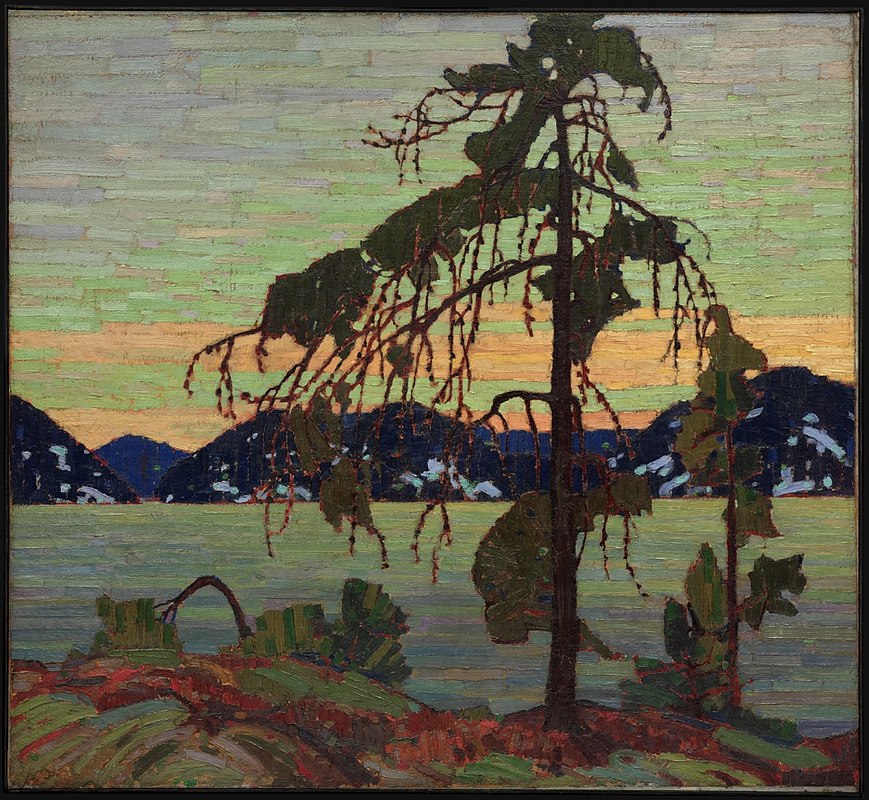
Not far north of Bancroft, Algonquin Park—a provincial park that spans over 7500 km2 between Georgian Bay and the Ottawa River—beckons. Established in 1893—making it the oldest provincial park in Canada—Algonquin Park was frequented by several artists of The Group of Seven, including Tom Thomson. His oil painting entitled The Jack Pine remains an iconic representation of Canada’s most broadly distributed pine species and well-represents this area’s landscape.

The_Jack_Pine,_by_Tom_Thomson

oil painting “The Jack Pine” by Tom Thomson

The three of us settled at the Cardiff House Writers’ Retreat, located right in the middle of Cardiff, then proceeded to the community centre where the festival was held.


Nina WaterIs

Nina Munteanu

I shared how I came to write my latest book, “A Diary in the Age of Water,” coming out in 2020 with Inanna Publications. You can read about it in my post “On Writing ‘A Diary in the Age of Water’ ” I mentioned how it started with a talk by Maude Barlow in a church on Bloor Street in Toronto, which led to a short story, to my non-fiction book “Water Is…” and finally to the novel.

The festival is hosted by Cardiff House Writers’ Retreat along with sponsorship by The League of Canadian Poets & Canada Council Poetry Tours, The Writers’ Union of Canada, and the National Public Reading Program. I hope to return next year. I think I will go for a longer time and explore this spectacular countryside and provincial park.


nina-2014aaa

Nina Munteanu is a Canadian ecologist / limnologist and novelist. She is co-editor of Europa SF and currently teaches writing courses at George Brown College and the University of Toronto. Visit www.ninamunteanu.ca for the latest on her books. Nina’s bilingual “La natura dell’acqua / The Way of Water” was published by Mincione Edizioni in Rome. Her non-fiction book “Water Is…” by Pixl Press (Vancouver) was selected by Margaret Atwood in the New York Times ‘Year in Reading’ and was chosen as the 2017 Summer Read by Water Canada. Her novel “A Diary in the Age of Water” will be released by Inanna Publications (Toronto) in 2020.