Book Review: “Rogue Harvest” by Danita Maslan and What Ecology Can Teach Us

Farmer’s field, ON (photo and rendition by Nina Munteanu)

Sometime in the future, Earth is recovering from a devastating 50-year plague that has destroyed most of its natural forests and grasslands and killed two out of every three people. Environmental technocrats now run the world under strict rule: while virgin ecosystems are re-created from original templates through genetic engineering, no human is permitted to set foot in these sanctuaries. As sanctuaries grow ever larger, humanity is pressed into over-crowded cities where boredom and strife dominate. The Emerald Coalition hires reclamation company EcoTech to “recreate the world their great, great grandparents lost.” But their ecosystems are morphing into “aberrations” (new species with surprising properties), which would shock the applied Ecology community—except EcoTech is keeping it a secret. So begins Danita Maslan’s eco-thriller Rogue Harvest by Red Deer Press. Published in 2005, this powerful environmental story is as relevant today as it was fifteen years ago. Perhaps more so.

In his Foreword to Maslan’s book, Hugo-winning author Robert J. Sawyer, shared a story from a 2004 presentation he gave at Mount Royal College in Calgary. In his presentation, Sawyer lamented that science fiction seemed to pull in opposite directions to such an extent that any message was cancelled by its opposition. The example he gave in the Foreword came from two bestselling authors: Kim Stanley Robinson whose Forty Signs of Rainwarned of rising temperatures due to climate change; and Michael Crichton, who denied global warming as fearmongering in State of Fear. According to Sawyer, Rogue Harvest provided a fresh story grounded in the balance of a third perspective—not a neutral middle-ground, but “one that shears away at right angles from the current polarized debate, taking our thinking in new directions by predicting both environmental collapse andenvironmental salvation.” 

Told through the unruly character of Jasmine, Rogue Harvest explores a post-plague world in recovery. After radical environmentalists from Green Splinter assassinate her father, Jasmine enlists a street-smart mercenary to help her vindicate her father’s call to open the forbidden preservesto the public. This leads Jasmine into the depths of the genetically re-created South American rainforest, where political intrigue, corporate greed and violence collide in a combustible mix. This is where it gets messy—which biology certainly is. But it gets messy for other reasons. Human-reasons. Reasons of power-mongering and lack of compassion. The very reasons why the environmental technocrats established their hands-off edict in the first place. This is explored through great irony in Rogue Harvest. An irony that L.E. Modesitt, Jr. astutely notes, “[the environmental technocrats] prove that, given power, they’re just like everyone else.” Just as there remain uncompassionate exploiters and pillagers in the likes of harvester Gunther Vint, who heedlessly pollutes the rainforest as he harvests it.

buttressed strangler fig in Costa Maya jungle (photo by Nina Munteanu)

The South American rainforest provides some of the most vivid, colourful and memorable scenes in the book. Maslan traveled to the tropics and ensured accurate science of this incredibly rich ecosystem through Mark W. Moffett’s The High Frontierand Donald Perry’s Life Above the Jungle Floor, as well as Tropical Nature: Life and Death in the Rain Forests of Central and South America by Adrian Forsyth and Ken Miyata. It is in the South American recreated jungle that the key elements—and posed questions—of the story play out. 

In his testimonial to Rogue Harvest, Hugo Award Finalist James Alan Gardner poses: “We see both sides of an ecological conundrum that resonates with the present day: how can we live in harmony with our environment, neither vandalizing it nor walling it off as too precious to touch?”

This is the tantamount question. Can our species achieve this balance? Rogue Harvest answers this clarion call with mixed optimism. While showcasing the propensity for greed and careless exploitation, the book also reveals a more altruistic and kinder side of humanity. One that promises hope and light to our darker side. But, is this realistic, given our current dominant worldview? 

On page 149 in Rogue Harvest, Jasmine’s politician father Owen Lamberin defends his position of wishing to open up the protected Nature preserves to regular folk by proclaiming, “Do they want to keep us out forever? Then who are we reseeding the globe for if not for us?” This is later echoed by Jasmine to justify flouting the preservationist edicts of the Emerald Coalition. When I first read this passage, part of me rankled. Does not the natural world have an intrinsic value and right to simply be? Must we justify all things by our own presence and direct use of them? Surely functional ecosystems provide ecosystem services for planetary wellness that benefit ALL life, not just humans, and not all directly. For example, our terrestrial and marine forests provide necessary oxygen and climate balance (by removing excess carbon dioxide) that benefits all life on the planet. Ecologists—particularly Canadians—recognize the benefit of ‘preservation’ (wilderness that is not accessed by humans) over ‘conservation’ (areas where humans extract resources with some environmental risk) and the need for both to exist for the planet’s overall well-being. This is based on the simple fact that not all humans behave as they should. Those of us who follow a utilitarian neo-liberal worldview of consumption and “othering nature” are not acting as efficient partners in the natural world. Many see themselves as apart from Nature, above Her, even, and will act less than kindly. Current deforestation of the Amazon and the old-growth forests of British Columbia, are just two examples that reflect this destructive “Nature othering” force. 

Ancient red cedar tree in Lighthouse Park, BC (photo by Nina Munteanu)

In contrast, indigenous peoples on the planet incorporate Nature in their beliefs, philosophies and way of life. They conduct themselves with humility and the utmost respect for the natural world of which they are a part. Knowing that they are part of Nature, they act accordingly, with respect. They are efficient partners, taking only what they need, thanking Nature for her gifts, and giving back in return in a process of reciprocal altruism and mutualism.

Robin Wall Kimmerer, author of “Gathering Moss” and “Braiding Sweetgrass” writes:

“In indigenous ways of knowing, it is understood that each living being has a particular role to play. Every being is endowed with certain gifts, its own intelligence, its own spirit, its own story. Our stories tell us that the Creator gave these to us, as original instructions. The foundation of education is to discover that gift within us and learn to use it well. 

These gifts are also responsibilities, a way of caring for each other. Wood Thrush received the gift of song; it’s his responsibility to say the evening prayer. Maple received the gift of sweet sap and the coupled responsibility to share that gift in feeding the people at a hungry time of year. This is the web of reciprocity that the elders speak of, that which connects us all. I find no discord between this story of creation and my scientific training. This reciprocity is what I see all the time in studies of ecological communities. Sage has its duties, to draw up water to its leaves for the rabbits, to shelter the baby quail. Part of its responsibility is also to the people. Sage helps us clear our minds of ill thoughts, to carry our good thoughts upward. The roles of mosses are to clothe the rocks, purify the water, and soften the nests of birds … Traditional knowledge is rooted in intimacy with a local landscape where the land itself is the teacher.”

Robin wall kimmerer


Wall-Kimmerer is talking about a way of life through willing participation and an attitude of great respect and humility. But many non-indigenous people do not ascribe to this philosophy and way of life—with dire consequence to our environment and our own welfare. In Rogue Harvest Maslan rightfully demonstrated the continued presence of this destructive force in humanity even as a respectful and thankful attitude was shown by Jasmine and her harvesting team. The question is: How many does it take to spoil this balance?

It would be close to fifteen years after Rogue Harvest was published that I would finally read Maslan’s book—this year, in 2020, during an ongoing planetary-wide plague. Ironically, only two years after Danita’s debut novel, my own debut eco-thriller Darwin’s Paradox was released by Dragon Moon Press in 2007. And the theme was eerily similar: struggling with the devastation of an environmental plague (Darwin Disease), the Gaians—environmental technocrats who run the world—have isolated humanity from Earth’s treasured natural environment. One main difference between Rogue Harvest and Darwin’s Paradox is that in the latter book the technocrats have kept the public ignorant of how the environment has recovered, ensuring its safety from destructive human hands—except for the ‘enlightened’ Gaians, who secretly live out in the beauty of a recovered natural world and commute to the indoor world. However, as the environment recovers, humanity deteriorates in its cloistered indoor world. Darwin’s Disease—related to indoor living—sweeps across humanity with debilitating genetic deterioration, violent death and the promise of extinction.  This is something the self-professed deep ecology Gaians—akin to Maslan’s Emerald Coalition—are content to see in—if it means preserving the natural world.

Both the Gaians and Maslan’s Emerald Coalition demonstrate a lack of faith in humanity and an unrealistic need to restore environments to their pristine pre-human levels; something that is highly unrealistic—and doomed to fail. “Aberrations” (as Maslan’s characters called them) are part of the natural process of adaptation and change inherent in the natural world. As a practicing ecological consultant, I was constantly running against an idealised and unrealizable notion to put everything back to what it used to be. For several decades ecologists were tasked to restore habitats to their pristine condition—when the notion of “pristine” was impossible to achieve, let along discern. It would have been like turning back the clock of history to prevent John F. Kennedy from being shot–with its own unknown consequences. Ecologists finally realized that in lieu of “restoration” and looking back, we needed to “rehabilitate” by looking forward. This is what Nature has always done. Nature adapts. So must we. Our management programs must incorporate Nature’s ever-changing processes of resilience and look forward—not backward—to achieve a sacred balance. 

If there is a deeper message in Maslan’s book, it is this: that our salvation—and the salvation of the world—lies in not obsessing on returning to a past pristine state (with attempts at over-protection), but in looking forward to healing and nurturing a world in which we have a place. This would involve reimagining our niche (our job) as efficient partners in an ever-evolving and changing natural world, by casting off the parasitoid1 role we’ve all too often assumed and replacing with a role of mutualism2. But … and there is a huge BUT here. This will only work if we pursue this approach with integrity. With our eyes and hearts open to Gaia’s sacred plan of which we are a part. Robin Wall Kimmerer shows us the way through Traditional Ecological Knowledge:

“If each plant has a particular role and is interconnected with the lives of humans, how do we come to know what that role is? How do we use the plant in accordance to its gifts? The legacy of traditional ecological knowledge, the intellectual twin to science, has been handed down in the oral tradition for countless generations. It passes from grandmother to granddaughter gathering together in the meadow, from uncle to nephew fishing on the riverbank … How did they know which plant to use in childbirth, which plant to conceal the scent of a hunter? Like scientific information, traditional knowledge arises from careful systematic observation of nature, from the results of innumerable lived experiments. Traditional knowledge is rooted in intimacy with a local landscape where the land itself is the teacher. Plant knowledge comes from watching what the animals eat, how Bear harvests lilies and how Squirrel taps maple trees. Plant knowledge also comes from the plants themselves. To the attentive observer, plants reveal their gifts.”

Robin Wall Kimmerer, Gathering Moss

But is this possible? To return to Sawyer’s remark and Gardner’s question, can we achieve this sacred balance and harmony? For many of us, I think, yes. But for many more, I’m not sure. And that is what worries me. It is my firm belief that until our worldview embraces humility in partnership with the natural world—until we cast off our parasitoid archetype of self-serving, neo-liberal, capitalist ideologies—we will remain hampered in our journey forward towards a sacred balance. And time is running out for us. Time to rewrite our story.

In Maslan’s book, humanity is given a second chance to prove itself worthy of inclusion. Her book is a call to action. Can we do this before it’s too late for us? Time to listen and learn from our indigenous peoples. Time to learn about Traditional Ecological Knowledge. Time to slow down, set aside our egos, and use all our senses to learn from Birch, Bear, and Beaver…

Cedar pine forest in early winter, Jackson Creek Park, ON (photo by Nina Munteanu)

1.parasitoid is a term that describes a parasite that grows on the body of another organism from which they get nutrients and shelter. Unlike typical parasites, a parasitoid usually kills its host (Munteanu, 2019).

2.mutualism describes an ecological interaction between two or more species that increases fitness in both, through direct interaction and co-adaptation. Two examples include vascular plants and mycorrhizae, their fungal partners, and flowering plants and their pollinating insects. Even predators act in some form of mutualism when their role of culling weaker individuals from the prey gene pool is considered (Munteanu, 2019). 

References:

  • Kimmerer, Robin Wall. 2003. “Gathering Moss.” Oregon State University Press, Corvalis. 168pp.
  • Munteanu, Nina. 2019. “The Ecology of Story: World as Character.” Pixl Press, Vancouver. 198pp.
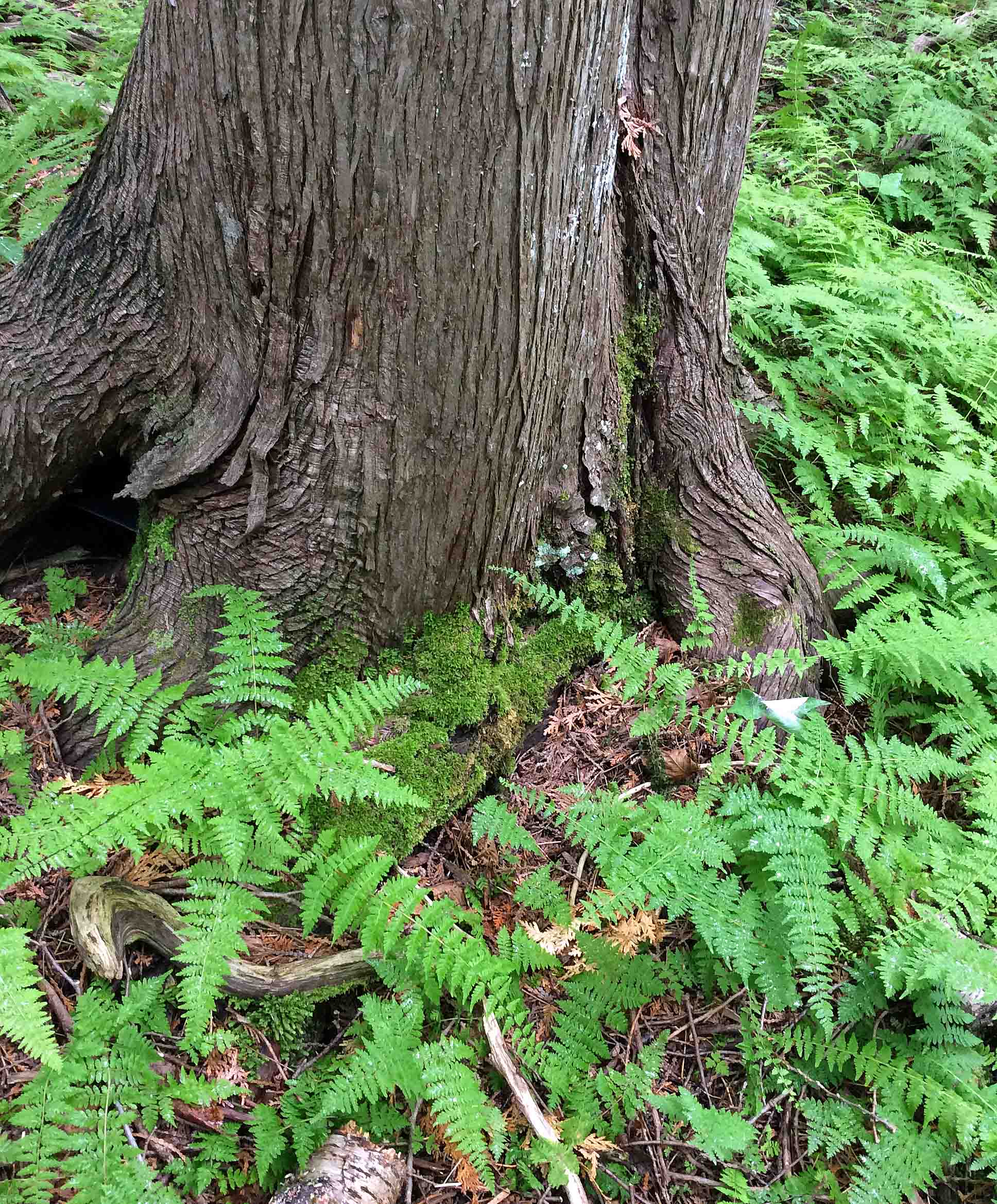
White cedar tree and stump in early winter, Jackson Creek Park, ON (photo by Nina Munteanu)

Nina Munteanu is a Canadian ecologist / limnologist and novelist. She is co-editor of Europa SF and currently teaches writing courses at George Brown College and the University of Toronto. Visit www.ninamunteanu.ca for the latest on her books. Nina’s bilingual “La natura dell’acqua / The Way of Water” was published by Mincione Edizioni in Rome. Her non-fiction book “Water Is…” by Pixl Press(Vancouver) was selected by Margaret Atwood in the New York Times ‘Year in Reading’ and was chosen as the 2017 Summer Read by Water Canada. Her novel “A Diary in the Age of Water” was released by Inanna Publications (Toronto) in June 2020.

Nina Munteanu Talks about more than Water on the Douglas Coleman Show

Nina Munteanu was recently on The Douglas Coleman Show where she and Douglas talked about writing, being scared of water, the sub-genre of eco-fiction and what Canada might have been like if the white settlers hadn’t come.

Here’s the show:

Nina Munteanu is a Canadian ecologist / limnologist and novelist. She is co-editor of Europa SF and currently teaches writing courses at George Brown College and the University of Toronto. Visit www.ninamunteanu.ca for the latest on her books. Nina’s bilingual “La natura dell’acqua / The Way of Water” was published by Mincione Edizioni in Rome. Her non-fiction book “Water Is…” by Pixl Press(Vancouver) was selected by Margaret Atwood in the New York Times‘Year in Reading’ and was chosen as the 2017 Summer Read by Water Canada. Her novel “A Diary in the Age of Water” was released by Inanna Publications (Toronto) in June 2020.
“The Best Books I Have Read This Year—2020

Author and reviewer Lee Hall recently compiled their list of the twenty best books they read in 2020. Says Lee:

It’s hard to believe that we’ve got to this point but we have. For all the words you could use to describe the dumpster fire that is and was 2020 I am going to use the word grateful. 

Grateful for the authors who have provided me with not only an escape through their wonderful works but grateful to them for providing a vital centre pillar of content for this blog – reviews. Some of these creators have become friends and important connections in the world of online authoring for me. This post is dedicated to them and the best books I have read this year. 

While the criteria of ‘best books’ is derived mainly from my own personal taste it is also influenced by how many views the review got on here along with my admiration for the author. These works are an extension of some wonderful personalities who make up an incredible community.

A Diary in the Age of Water was among the books Lee chose for 2020 reading:

‘A Diary in the Age of Water’ by Nina Munteanu

A truly important once in a generation read that flows like a wild river right through your imagination and heart– Quote from my review

I’m being 100% serious when I say ‘A Diary in the Age of Water’ is one of the most powerful books I’ve ever read. For what it stands for is truly a statement towards our own damning of this beautiful planet and our most precious resource – water. Canadian Author Nina Munteanu has put together a masterful look at where we could possibly end up if we don’t act. This one was another Reedsy Discovery find and thus totally justified my joining of the platform well and truly!

LEE HALL

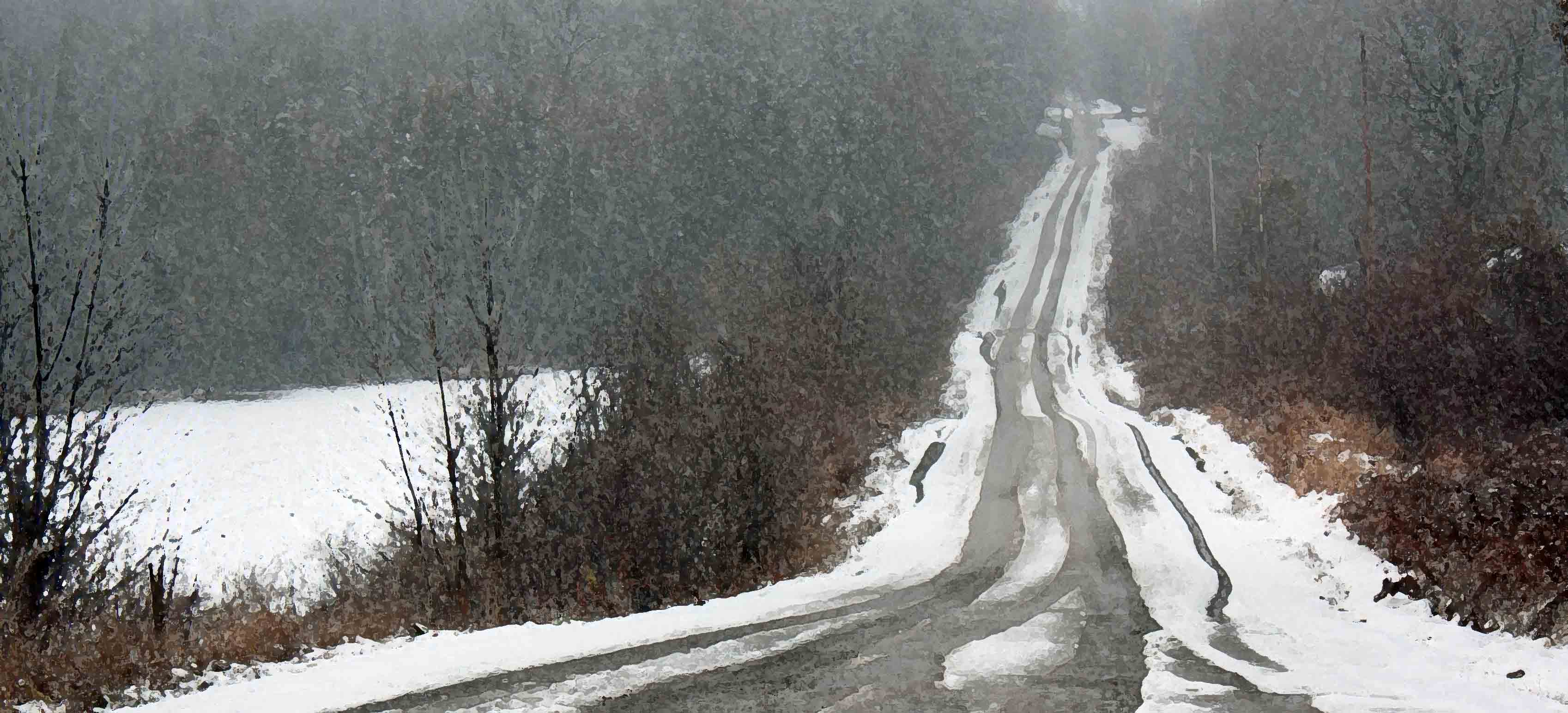
Country road in winter, ON (photo and rendition by Nina Munteanu)

Nina Munteanu is a Canadian ecologist / limnologist and novelist. She is co-editor of Europa SF and currently teaches writing courses at George Brown College and the University of Toronto. Visit www.ninamunteanu.ca for the latest on her books. Nina’s bilingual “La natura dell’acqua / The Way of Water” was published by Mincione Edizioni in Rome. Her non-fiction book “Water Is…” by Pixl Press(Vancouver) was selected by Margaret Atwood in the New York Times ‘Year in Reading’ and was chosen as the 2017 Summer Read by Water Canada. Her novel “A Diary in the Age of Water” was released by Inanna Publications (Toronto) in June 2020.

Writing a Cat Christmas…

First snow in Peterborough, ON (photo by Nina Munteanu)

I move around a lot these days. It helps me to appreciate some of the most simple things in life and reminds me of what I love most about Christmas: how it focuses my heart and reconnects me. I don’t mean just with relatives and friends either, although the season certainly does that. I’m talking about my soul and the universe itself. Before I became an itinerant, Christmas bustled with my responsibilities as primary caregiver, social coordinator and hostess of major parties. After I’d said goodbye to our visiting friends and done the dishes and tidied the house; after my husband and son had gone to bed, I sat in the dark living room lit only with the Christmas Tree lights and the flickering candle, and listened to soft Christmas music, primed to write.

Sammy, the cat (photo by Nina Munteanu)

My male cat, smelling fresh from outside, found his rightful place on my lap and settled there, pinning me down with love. And there, as I breathed in the scent of wax and fir and cat I found myself again.

Christmas is, more than anything, a time of embracing paradox. It is an opportunity to still oneself amid the bustle; to find joy in duty; to give of one’s precious time when others have none, to embrace selflessness when surrounded by promoted selfishness, and to be genuine in a commercial and dishonest world. If one were to look beyond the rhetoric and imposed tradition, the Christmas season represents a time of focus, a time to reflect on one’s genuine nature and altruistic destiny. A time to reconnect with the harmony and balance in our lives.

A time to sit with our cat, pinned with love, and write our next novel.

Merry Christmas!

First snow in Ontario field (photo by Nina Munteanu)

Nina Munteanu is a Canadian ecologist / limnologist and novelist. She is co-editor of Europa SF and currently teaches writing courses at George Brown College and the University of Toronto. Visit www.ninamunteanu.ca for the latest on her books. Nina’s bilingual “La natura dell’acqua / The Way of Water” was published by Mincione Edizioni in Rome. Her non-fiction book “Water Is…” by Pixl Press(Vancouver) was selected by Margaret Atwood in the New York Times ‘Year in Reading’ and was chosen as the 2017 Summer Read by Water Canada. Her novel “A Diary in the Age of Water” was released by Inanna Publications (Toronto) in June 2020.
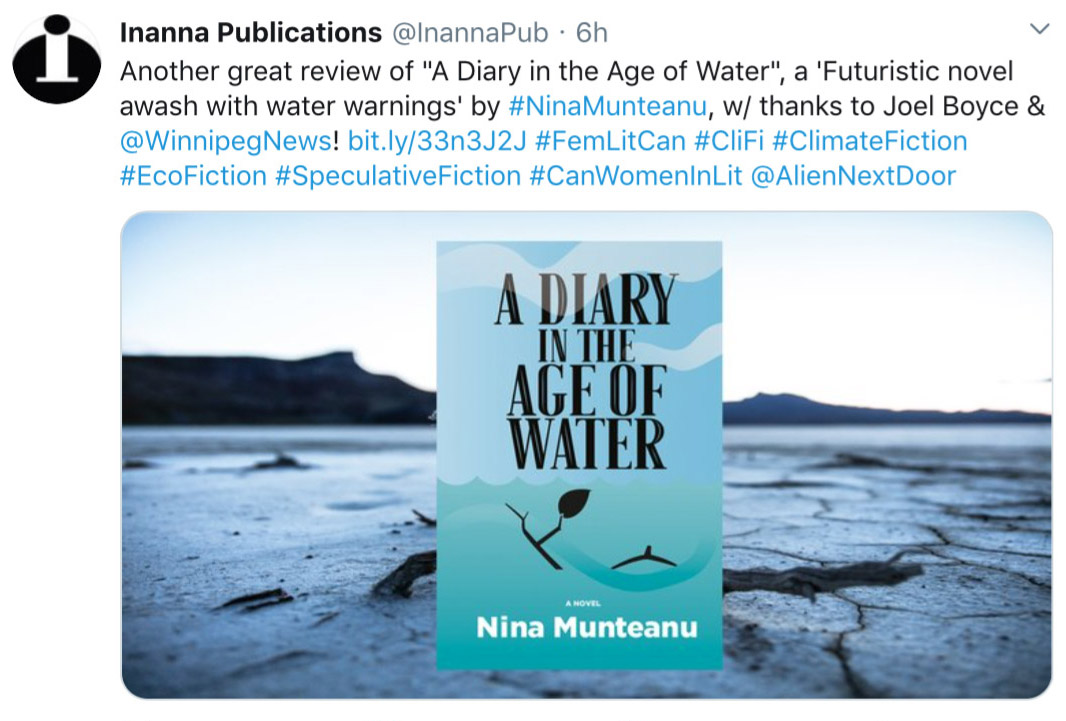
“A Diary in the Age of Water” Reviewed by Kirkus Reviews, The Winnipeg Free Press and The Miramichi Reader

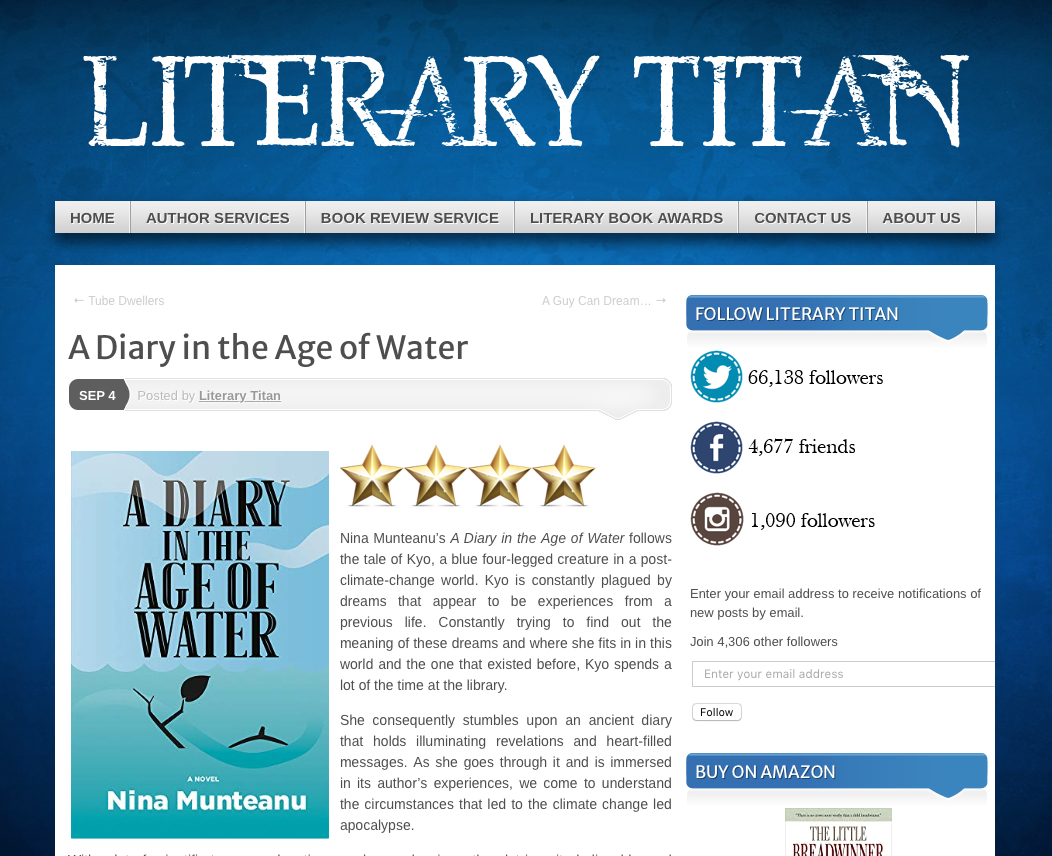
Nina Munteanu’s cli-fi eco-novel “A Diary in the Age of Water” just released in summer of 2020 received several favourable reviews from Kirkus ReviewsThe Winnipeg Free Press, and The Miramichi Reader. The speculative novel about four generations of woman and their unique relationship with water was recently awarded the Literary Titan Award for a book that “expertly delivers complex characters, intricate worlds, and thought provoking themes. The ease with which the story is told is a reflection of the author’s talent in exercising fluent, powerful, and appropriate language.”

“While bringing attention to the current politicization of climate change, the story maintains important underlying themes like family, love, forgiveness, and the complexity of the human soul. The author has gone to great lengths to show that there are different layers to each character, none fully evil nor fully good. A Diary in the Age of Water is an exceptional and thought-provoking dystopian fiction.”
—LITERARY TITAN (4-star)

“In Canadian ecologist Munteanu’s novel, a child in a world of climate disaster discovers hidden truths about the past in a mysterious journal. In a story set centuries in the future, a young girl with four arms named Kyo lives on the last vestige of a planet damaged by climate crisis, water scarcity, and a cataclysm brought on by semi-divine figures called the Water Twins. Kyo comes across the 21st-century journal of a limnologist named Lynna; over two decades, the journal’s author details Earth’s fate with scientific observations on the harm wrought by corporate greed, as well as her own personal struggles raising a child in a world of catastrophe and authoritarianism. She’s a deeply relatable and tragically flawed character who’s wracked by doubt, fear, and cynicism—a stark contrast to her fierce environmentalist mother, Una, and her spiritual, idealistic daughter, Hildegard. What unites them all is the study of water: its intrinsic properties, its mysteries, and ultimately its necessity to the planet. In poetic prose (“We’re going down in a kind of slow violence”) with sober factual basis, Munteanu transmutes a harrowing dystopia into a transcendentalist origin myth…the author asks uncomfortable questions and explores the effects of one generation’s actions upon the next as they ripple outward like a stone dropped in a pond. A sobering and original cautionary tale that combines a family drama with an environmental treatise.”
—KIRKUS REVIEWS

Futuristic novel awash with water warnings

“An engaging epistolary novel. An ecologist and environmental activist herself, Munteanu has no difficulty voicing a fully formed literary character who is both scientifically literate enough to understand how quickly human society is entering its final ebb, and humane enough to mourn the fullness of this tragedy.

The prose here is beautiful and purposeful in the tradition of environmentally and socially minded novelists such as Ursula K. Le Guin and Margaret Atwood… It comes down to water: ice sheets, rain and drought, the loss of water tables and the collapse of marine ecologies in an acidifying ocean. The pulse and rhythm of life on this planet is water. Its death throes, too, can be read in the flow of water.

Munteanu has produced something which joins George Orwell and Aldous Huxley, Le Guin and Atwood, a warning of the direction we are heading that will be valuable even if we manage to avert disaster.”
—Joel Boyce, WINNIPEG FREE PRESS

“A Diary in the Age of Water commands reader interest on a number of levels…a chilling but believable portrayal of what might happen as fresh water becomes scarcer… Munteanu’s novel provides a cautionary note for what might happen if we fail to pay attention to this precious resource.”
—Lisa Timpf, MIRAMICHI READER

Short Synopsis

A Diary in the Age of Water follows the climate-induced journey of the Earth and humanity through four generations of women, each with a unique relationship to her world and to water. Water plays both metaphoric and literal roles in this allegorical tale of humanity’s final journey from home—where male sterility, heat-shock proteins, horizontal gene transfer, and virgin-births rule a changing world of water securitization through ambitious environmental manipulation (e.g., resurrecting the US Army Corps of Engineers 1960s NAWAPA/CeNAWP plan to create the 800 km long Rocky Mountain Trench reservoir and divert most of northern Canada’s water to the USA—drowning a fifth of BC). 

Told in far-future and near-future frames, the central part of the story is a diary by a limnologist, whose personal account creates a terrifying realism to the geo-political tension of water securitization, plague containment, and police oppression—the diary spans from 2045 to 2064 (when the diarist disappears herself). 

The cli-fi novel begins centuries from now in the dying northern boreal forest with young KYO, a blue water nymph with multiple arms who dreams of the past and of being a normal human. She is on her way to the library to memorize a textbook on the Age of Water and there discovers a piece of her past from that age when The Water Twins destroyed the world. Kyo discovers a diary by a limnologist (who happens to be the mother of one of the Twins). Intrigued, Kyo drops the textbook and reads the diary. The diary, by cynical limnologist LYNNA, describes a near-future Toronto in the grips of severe water scarcity. The gritty memoir describes Toronto in a time when China owns the USA and the USA owns Canada, and aggressively mines its water. While lamenting the greed and destructive nature of her race, Lynna self-servingly helps murder three people; she also gives birth to rebel daughter HILDA (one of the Water Twins) who destroys her world through water and gives virgin-birth to the next stage in human evolution: a mutant who becomes one of the Disappeared who returns centuries later in a dying world as the water keeper Kyo. 

“A Diary in the Age of Water” explores identity and our concept of what is “normal”—as a nation and an individual—in a world that is rapidly and incomprehensibly changing.

Poplar trees in northern Ontario in fall (photograph by Nina Munteanu

Nina Munteanu is a Canadian ecologist / limnologist and novelist. She is co-editor of Europa SF and currently teaches writing courses at George Brown College and the University of Toronto. Visit www.ninamunteanu.ca for the latest on her books. Nina’s bilingual “La natura dell’acqua / The Way of Water” was published by Mincione Edizioni in Rome. Her non-fiction book “Water Is…” by Pixl Press (Vancouver) was selected by Margaret Atwood in the New York Times ‘Year in Reading’ and was chosen as the 2017 Summer Read by Water Canada. Her novel “A Diary in the Age of Water” was released by Inanna Publications (Toronto) in June 2020.

Nina Munteanu Interviewed About “A Diary in the Age of Water” by Simon Rose

Diary Water cover finalI was recently interviewed by Canadian writer Simon Rose on my recent novel release “A Diary in the Age of Water” by Inanna Publications. Set mostly in near-future and far-future Toronto area, the book has already received some praise:

Evoking Ursula LeGuin’s unflinching humane and moral authority, Nina Munteanu takes us into the lives of four generations of women and their battles against a global giant that controls and manipulates Earth’s water…In language both gritty and hauntingly poetic, Munteanu delivers an uncompromising warning of our future.”—Lynn Hutchinson Lee, Toronto playwright

Dragonfly.eco calls the book “an insightful novel…a cautionary tale rummaging through the forgotten drawers of time in the lives of four generations…This whirling, holistic, and evolving novel comes alive, like we imagine water does.”

The novel received a five-star review in Foreword Clarion Review and Kirkus Reviews writes: “Munteanu transmutes a harrowing dystopia into a transcendentalist origin myth. A sobering and original cautionary tale that combines a family drama with an environmental treatise.”

Part of the story is told through the diary of a limnologist (someone who studies freshwater) who witnesses and suffers through severe water taxes and imposed restrictions, dark intrigue through neighbourhood water betrayals, corporate spying and espionage, and repression of her scientific freedoms. Some people die. Others disappear… Here’s an excerpt from the interview:

What is “A Diary in the Age of Water” about? 

The book is essentially a journey of four generations of women who have a unique relationship with water, through a time of extreme change through climate change and water shortage. The book spans over forty years (from the 2020s to the 2060s) and into the far future, mostly through the diary of a limnologist, which is found by a future water-being. During the diarist’s lifetime, all things to do with water are overseen and controlled by the international giant water utility CanadaCorp—with powers to arrest and detain anyone. This is a world in which China owns America and America, in turn, owns Canada.

You mention the” Age of Water” in your book. Are there other ages/epochs?

Yes. The story begins in the far future with young Kyo during the Age of Trees, after the end of the Age of Water. It is, in fact, the end of that age as well and that is why she prepares for the Exodus to “humanity’s” new home.

What inspired you to write this book? 

The Way of Water-COVERMy publisher in Rome (Mincione Edizioni) had asked me for a short story on water and politics. I wanted to write about Canada and I wanted something ironic… so I chose water scarcity in Canada, a nation rich in water. The bilingual story “The Way of Water” (“La natura dell’acqua”) resulted, which has been reprinted in several magazines and anthologies, including Cli-Fi: Canadian Tales of Climate Change (Exile Editions), Future Fiction: New Dimensions in International Science Fiction (Future Fiction/Rosarium Publishing), Little Blue Marble Magazine, and Climate Crisis Anthology (Little Blue Marble). The story was about young Hilde—the daughter of the diarist (of the novel). Hilde was dying of thirst in Toronto and the story begged for more … so the novel came from it…

Why did you choose to write your novel as a diary?

I was writing about both the far and the near future and much of it was based—like Margaret Atwood and her books—on real events and even real people. I wanted personal relevance to what was going on, particularly with climate change. I also wanted to achieve a gritty realism of “the mundane” and a diary felt right. Lynna—the diarist—is also a reclusive inexpressive character, so I thought a personal diary would help bring out her thoughts and feelings more. There’s nothing like eves-dropping to make the mundane exciting. The diary-aspect of the book characterizes it as “mundane science fiction” by presenting an “ordinary” setting for characters to play out. The tension arises more from insidious cumulative events and circumstances that slowly grow into something incendiary.

Your book has been described by various reviewers and literary types as being anything from literary fiction and FemLit to science fiction, Cli-Fi and eco-fiction How would you describe it?

Reeds and water sparkles drybr Otonabee

Otonabee shoreline, ON (photo by Nina Munteanu)

It’s really all these things. The story carries the personal journeys of four strong and complex women characters. It gives them much agency in dealing with the climate and water crisis—socially, politically, and environmentally. One is a political activist, another a wary scientist, and another an anarchist. However, while A Diary in the Age of Water showcases strong women characters, its main climate and environmental theme carries the story through the four generations to its climax. In the end, the book’s classification will depend on the reader, who will decide which aspect of the novel resonates the most with them. The main protagonist in “A Diary in the Age of Water” is a limnologist (someone who studies freshwater); so are you. Is there any resemblance? Both Lynna and I chose to study water through the discipline of limnology; Lynna did most of her work on Canadian glaciers, while my focus was on small streams in southern Quebec. We also share similar views on the environment and humanity’s place in it. I might even have some of her character foibles … hopefully not ALL of them. However, how she chose to live that worldview—cloistered, repressed, and fearful—is not me at all. I tend to bluster, confront, and generally get into trouble. In that way, I might more resemble Lynna’s daughter. Having said that, I’d say that all good characters have a piece of the writer in them. Some dark and some light. How can they not? In this case, the resemblance with the diarist is heightened because she is depicted through her diary, which adds a gritty realism and a highly personal aspect to the first person fiction. There’s a piece of me in each of the four women depicted in the story.

You mentioned that each of the four generations of women have a singular relationship with water. What role does water play in the book?

Well, in some important way, water is the fifth character. You could say even the main character. Water is the theme that carries each woman on her personal journey with climate change and the devastation that occurs—through water, I might add. Climate change is a water phenomenon, after all… So, water—like place and setting—plays a subtle yet powerful role in the story, influencing each character in her own way and bringing them together in the overall journey of humanity during a time of great and catastrophic change.

Pond lily 2 mouth TC

Pond lily, ON (photo by Nina Munteanu)

The diary spans a twenty-year period in the mid-twenty-first century and describes a Canada in the grips of severe water scarcity. Tell us about that—how does a water-rich country like Canada suffer severe water scarcity?

Water gold-blue patterns

Trent Canal, ON (photo by Nina Munteanu)

Ecologists and economists alike (who truly understand water and its global distribution and movement) will tell you that there is, in fact enough water on the planet; scarcity results from its unequal distribution, pollution and toxic input, squandering, diversion, and manipulation (one example being making rain and instructing it to fall here rather than there). Maude Barlow (Chairperson of the Council of Canadians) will tell you that Canada is currently at risk of giving away much of its water. Foreign companies are now mining Canada’s watersheds with impunity and at minimal cost. Under my premise, United States (and China) aggressively mines Canada’s groundwater, glaciers, rain and surface water through massive diversion projects to rehydrate the dwindling aquifers of the United States.

My premise is based on real events currently ongoing throughout the world. China leads the world in rainmaking and manipulation. Egypt plans to pump water from Lake Nassar into the Sahara as tensions between Egypt, and nine upstream countries for control of water in the Nile watershed increase from dams the Sudanese and Ethiopians build and as Tanzania pumps water from Lake Victoria, and Kenya diverts lakes feeding Lake Victoria to its arid eastern regions. India, Pakistan, Bangladesh, and China are in conflict over control of rivers such as the Indus, Ganges, and particularly the Brahmaputra. India’s River Link Plan impacts Bangladesh. As Pakistan, Kashmir and India fight over more and more water, the Indus dries up and no longer flows into the ocean. Meantime, Russian scientists are reviving a 1930s Soviet plan to reverse some of Siberia’s largest rivers to the parched former Soviet republics of central Asia with plans to replenish the Aral Sea. This is something very similar to the USA’s 1960 plan to divert Canada’s northward waterways south to rehydrate America’s drying midwest. Massive water diversion is also being debated within a single country; Spain’s water-rich northern region has fallen under pressure by Spain’s water-poor southern region, provoking the controversial Ebro diversion project. Norwegian university professor Terje Tvedt aptly concludes: “At the heart of these gigantic enterprises lies one of history’s great paradoxes: the more humans try to tame and regulate water by means of large-scale elaborate projects, the more water will, in turn, control society.”

Back to Canada and my not so outlandish premise: by the 2040s, Canadians are indentured to US needs through massive diversions and resulting water-use restrictions. One example, taken from precedent set in states like Colorado, is an imposed ruling by CanadaCorp that Canadians cannot collect rainwater. Something several states have already implemented.

The novel mentions a huge water diversion plan called NAWAPA. Can you tell us about that?

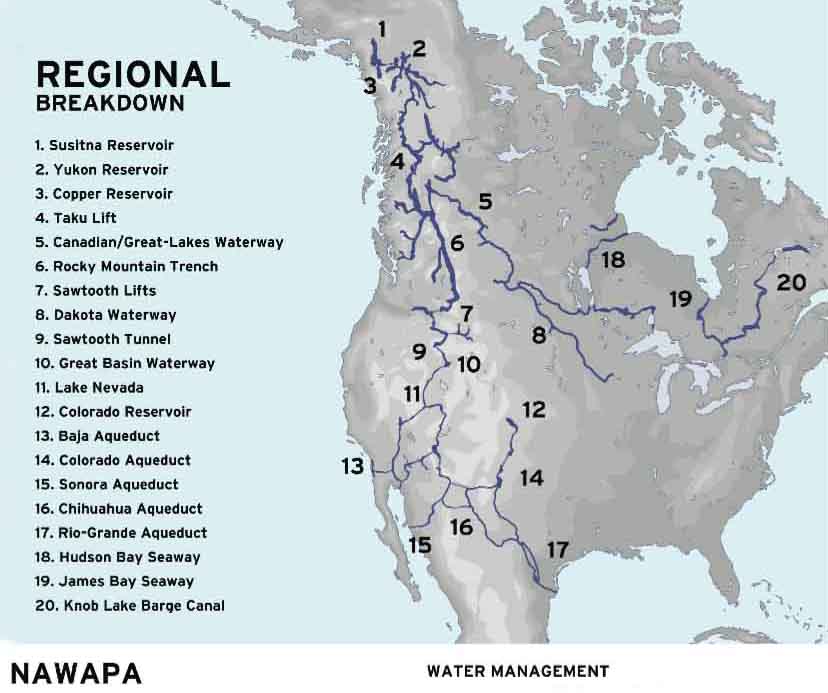
The original NAWAPA (North America Water Power Alliance) Plan was drawn up by the Pasadena-based firm of Ralph M. Parsons Co. in 1964, and had a favorable review by Congress for completion in the 1990s. The plan—thankfully never completed—was drafted by the US Army Corps of Engineers and entailed the southward diversion of a portion (if not all) of the Mackenzie and Yukon rivers in northern Canada and Alaska, now flowing into the Arctic Ocean as well as the Peace, Liard and other rivers flowing into the Pacific by creating massive dams in the north. This would cause the rivers to flow backwards into the mountains to form vast reservoirs that would flood one-tenth of British Columbia. The water would be channeled south through the 800-km Rocky Mountain Trench Reservoir into the Northern USA, and from there along various routes into the dry regions of the South, to California and reaching as far as Mexico.

NAWAPA proposal Ralph M. ParsonsCo-1960s

NAWAPA was envisioned as the largest construction effort of all times, comprising some 369 separate projects of dams, canals, and tunnels, for water diversion. The water diversion would be accomplished through a series of connecting tunnels, canals, lakes, dams, and pump-lifts, as the trench itself is located at an elevation of 914 m (3,000 feet). To the east, a 9 m (thirty-foot) deep canal would be cut from the Peace River to Lake Superior. NAWAPA’s largest proposed dam would be 518 m (1,700 feet) tall, more than twice the height of Hoover Dam (at 221 m) and taller than any dam in the world today, including the Jinping-I Dam in China (at 305 m).

In the novel, NAWAPA-2 gets completed by 2045, which includes creating a giant inland sea in the Rocky Mountain Trench in British Columbia and a huge diversion in central Canada as well.

Very intriguing. Where can readers purchase the book? 

They can buy the book in most quality bookstores such as Chapters-Indigo, Barnes & Noble, and Amazon. They can also purchase the book through the publisher, Inanna Publications.

Best of luck, Nina, on this book!

Thanks, Simon!


nina-2014aaa

Nina Munteanu is a Canadian ecologist / limnologist and novelist. She is co-editor of Europa SF and currently teaches writing courses at George Brown College and the University of Toronto. Visit www.ninamunteanu.ca for the latest on her books. Nina’s bilingual “La natura dell’acqua / The Way of Water” was published by Mincione Edizioni in Rome. Her non-fiction book “Water Is…” by Pixl Press(Vancouver) was selected by Margaret Atwood in the New York Times ‘Year in Reading’ and was chosen as the 2017 Summer Read by Water Canada. Her novel “A Diary in the Age of Waterwas released by Inanna Publications (Toronto) in June 2020.
When Art Tangos with Science Through Synchronicity

Imagination is more important than knowledge—Albert Einstein


Fern woodfern Cedar JC

Eastern cedar and wood fern in Jackson Creek Park, ON (photo by Nina Munteanu)

I tell stories. I’m also a scientist. I use the scientific method in my research to seek truth; I also find truth presented to me through the symbols of intuition.

Several years ago, I was introduced to Krista Fogel, a University of British Columbia masters student at the time, who was investigating the use of creative art in high-ability scientists. She named her thesis: “The Self-Perceived Experience of Investigating Science with an Artistic Spirit: A Hermeneutic Phenomenological Study of High Ability Scientists Who Also Engage in the Arts”. Hermeneutic, by the way, is the development and study of theories of the interpretation and understanding of texts (I had to look it up) and phenomenology is an approach to philosophy through the study of phenomena.

Krista wanted to interview me as part of her project. I was flattered, of course. Me, a High Ability Scientist? Who’d told her that? Once I got past my own humble angst, I found Krista’s questions bracing; they reopened a world of compelling ideas I had carried with me for some time. The concept of using art to do good science has dwelled inside me since registration day at Concordia University when I quit my fine arts program to pursue a science degree only to come full circle and write fiction.

Fern woodfern moss logs JC

Wood fern and moss, Jackson Creek, ON (photo by Nina Munteanu)

I’d received my Masters Degree in Ecology and Limnology and was then working as a scientist for an environmental consulting firm (I now write and teach writing full time). I conducted research, drove boats, collected samples and analyzed data then wrote up my findings and made recommendations. I wrote science fiction novels on the side.

“History shows that eminent scientists, such as Leonardo da Vinci, also engaged in the arts,” said Fogel. She went on to cite 400 other famous scientists who also practiced art at a high level. “If not entirely engaged in the arts, scientists throughout history have at least engaged in science with an artistic spirit. Scientists and artists use common tools for thinking such as intuition and imaginative processes.”

Krista and I met several times at the local Starbucks, where I “toked” on coffee as she fumbled with her notes. A young gal with a direct but unassuming gaze and a gentle smile, Krista asked me to share my personal experience of mixing art with science. Every good scientist is an artist at heart, she told me: science is the tool and art is the process.

Fogel concluded that when conducting scientific investigations with an artistic spirit, the scientist holds her heart central, from which the artist springs. This “allows us to connect with serendipitous occurrences, which breed discovery,” Fogel added.

You can train your mind as both artist and scientist to become more aware of serendipitous occurrences around you. I call it being in sync and wrote about it in a previous article here. Often, when I’m researching a novel, I pick up things serendipitously. Something will come up that just fits with what I was searching for. An article pops up in the news. Or I’m talking to someone and they bring up just the topic I am researching. These things always happen to me. This occurs not only in my fiction writing but in my scientific pursuits. Some years ago, I was doing a pollution study using glass slides for colonizing algae to compare communities of an urban stream to those of an agricultural stream. I was really looking to see the difference between communities of these different stream environments when I discovered that the algae were colonizing the glass surfaces according to the current. Compelled with more questions of why, how and what if, I pursued this new line of research (which turned out to be far more interesting than my original research premise) and wrote several ground-breaking papers on it.

Indeed, questions like “why” and “what if” are germane to both art and science; the ‘what if’ question is the science fiction writer’s mantra and the premise, which comes from the artist part of you: imagination and an inquisitive and open mind. The idea of seemingly unrelated events intersecting to produce meaningful patterns has spawned new notions of thought from the scientific study of spontaneous order in the universe  (synchrony), to Synchromysticism — the discovery of convergent archetypal symbols in pop culture (e.g., books, music and film).

Fern woodfern SolomonSeal JC

Wood fern and Solomon seal, ON (photo by Nina Munteanu)

Writer and philosopher Jake Kotze suggests that, “Synchronicity happens when we notice the bleed-through from one seemingly separate thing into another — or when we for a brief moment move beyond the mind’s divisions of the world.” Synchronicity and serendipitous discovery, like metaphor, appears when we change the way we look at things.

Serendipitous discovery comes to us through peripheral vision. Like our muse, it doesn’t happen by chasing after it; it sneaks up on us when we’re not looking. It comes to us when we focus outward and embrace our wonder for this world. When we quiet our minds and nurture our souls with beauty. It is then that what we had been seeking naturally comes to us. Like a gift.

Author Sibyl Hunter tells us that “Sync operates as an undercurrent of divine awareness personified through the myriad processes and symbols that make up the building blocks of our reality. Within that current, we spin our modern-day myths into books, fairy tales and movies, subconsciously retelling ourselves the same story over and over.” This also holds true in the models and metaphors of scientific genius, which often spring from the creativity of an intuitive heart and imaginative mind.

According to Mark A. Runco (California State University) “creativity depends on originality, while accomplishment and achievement reflect other problem-solving skills. Creative thinking involves at least three things: 1) the cognitive capacity to transform experience into original interpretations, 2) an interest in producing original interpretations, and 3) discretion.” The title of Piaget’s monograph, To Understand Is to Invent, reflects the fact that we do not have an authentic understanding of our experience until we construct that understanding for ourselves. In other words, “it is one thing to memorize some datum; it is quite another to discover it for one’s self; only then do we understand,” says Runco. Fogel concurs: “what Piaget called inventionis a kind of creation, a creation of personal meaning. Piaget tied assimilation to imaginative play into creative interpretation.”

According to Dean Keith Simonton (University of California), even the most illustrious creative geniuses of history have careers riddled by both hits and misses, both successes and failures. He uses Albert Einstein as an example. A man who has achieved almost mythical status as a genius, Einstein’s career “was plagued by terrible ideas, false starts and surprising disasters.” Simonton tells the story of Einstein’s debate with Niels Bohr over the implications of quantum theory, in which Einstein offered a series of arguments that Bohr countered. Bohr once even pointed out that Einstein failed to take into consideration the theory of relativity! According to some, Einstein wasted the final years of his career working on a unified field theory that was almost universally rejected by his colleagues. Einstein defended his missteps by noting that errors can advance science so long as they are not trivial; the greater the error, the greater the opportunity for new perspective and discovery.

It is left for us to simply recognize the dance.

Fern woodfern two Cedars wide JC

Wood fern and two Eastern cedars, ON (photo by Nina Munteanu)


nina-2014aaa

Nina Munteanu is a Canadian ecologist / limnologist and novelist. She is co-editor of Europa SF and currently teaches writing courses at George Brown College and the University of Toronto. Visit www.ninamunteanu.ca for the latest on her books. Nina’s bilingual “La natura dell’acqua / The Way of Water” was published by Mincione Edizioni in Rome. Her non-fiction book “Water Is…” by Pixl Press (Vancouver) was selected by Margaret Atwood in the New York Times ‘Year in Reading’ and was chosen as the 2017 Summer Read by Water Canada. Her novel “A Diary in the Age of Waterwas released by Inanna Publications (Toronto) in June 2020.

“A Diary in the Age of Water” Receives Literary Titan Award

Nina Munteanu’s cli-fi eco-novel “A Diary in the Age of Water” was awarded a Silver Literary Titan Award for a book that:

expertly delivers complex characters, intricate worlds, and thought provoking themes. The ease with which the story is told is a reflection of the author’s talent in exercising fluent, powerful, and appropriate language.”–Literary Titan

“A Diary in the Age of Water” received a 4-star review by Literary Titan:

While bringing attention to the current politicization of climate change, the story maintains important underlying themes like family, love, forgiveness, and the complexity of the human soul. The author has gone to great lengths to show that there are different layers to each character, none fully evil nor fully good. A Diary in the Age of Water is an exceptional and thought-provoking dystopian fiction.
—LITERARY TITAN (4-star)

Atlantykron Summer Academy—2020

Because of the COVID19 pandemic, The 31st annual summer academy for learning was held virtually this year by New Horizons (of the World Genesis Foundation and United Nations Educational, Scientific and Cultural Organization).

Because of this, I was finally able to participate. Virtually and all the way from Canada.

Atlantykron island

Atlantykron on the Danube

The international event is normally held on an island on the Danube River near the village and ancient Roman ruins of Capidava, Romania. First held in the summer of 1989, the event has attracted hundreds of youth and teachers from around the world to learn with scientists, artists, writers and other professionals in a wilderness setting.

Coordinated by Sorin Repanovici of the World Genesis Foundation and run by Dr. Florin Munteanu, Heather Caton-Anderson and Constantin D. Pavel, Atlantykron promotes UNESCO core goals of promoting sustainable development and creating dialogue and collaboration among nations in the areas of education, science, culture and communications.

Key presentations in the 2020 Atlantykron included:

  • “New Horizons of Animal-Human Relationships” by Chan Chow Wah in China
  • “Mars 2020 Mission Perseverance” by Ravi Prakash and Erisa K. Stilley in USA
  • “Planning and Scripting a Time-Lapse Movie” by Stan Jiman in USA
  • “Generating & Solving Crisis to Avoid Imbalance and Catastrophe” by Dr. Florin Colceag in Romania
  • “The Science and Meaning of Water” by Nina Munteanu in Canada
  • “Who’s Afraid of Autonomous Cars” by Pompilian Tofilescu in USA

Atlantykron pg2 copy

Florin Munteanu

Dr. Florin Munteanu

I’d met Florin Munteanu in 2012, when I went to Bucharest, Romania to participate in the launch of the Romanian translation of my book The Fiction Writer (Manual de Scriere Creativa: scriitorul de fictiune) with Editura Paralela 45 at the Gaudeamus Book Fair. Florin met me at the airport and took me to the Phoenicia Grand Hotel where I was staying. We had some coffee and pastries over a wonderful chat and he then coordinated a tour of the city for me with one of his students at the Centre of Complexity Studies where he taught.

When Florin invited me to speak at Atlantykron 2020, I was more than pleased.

Nina WaterIs book

Nina with “Water Is…”

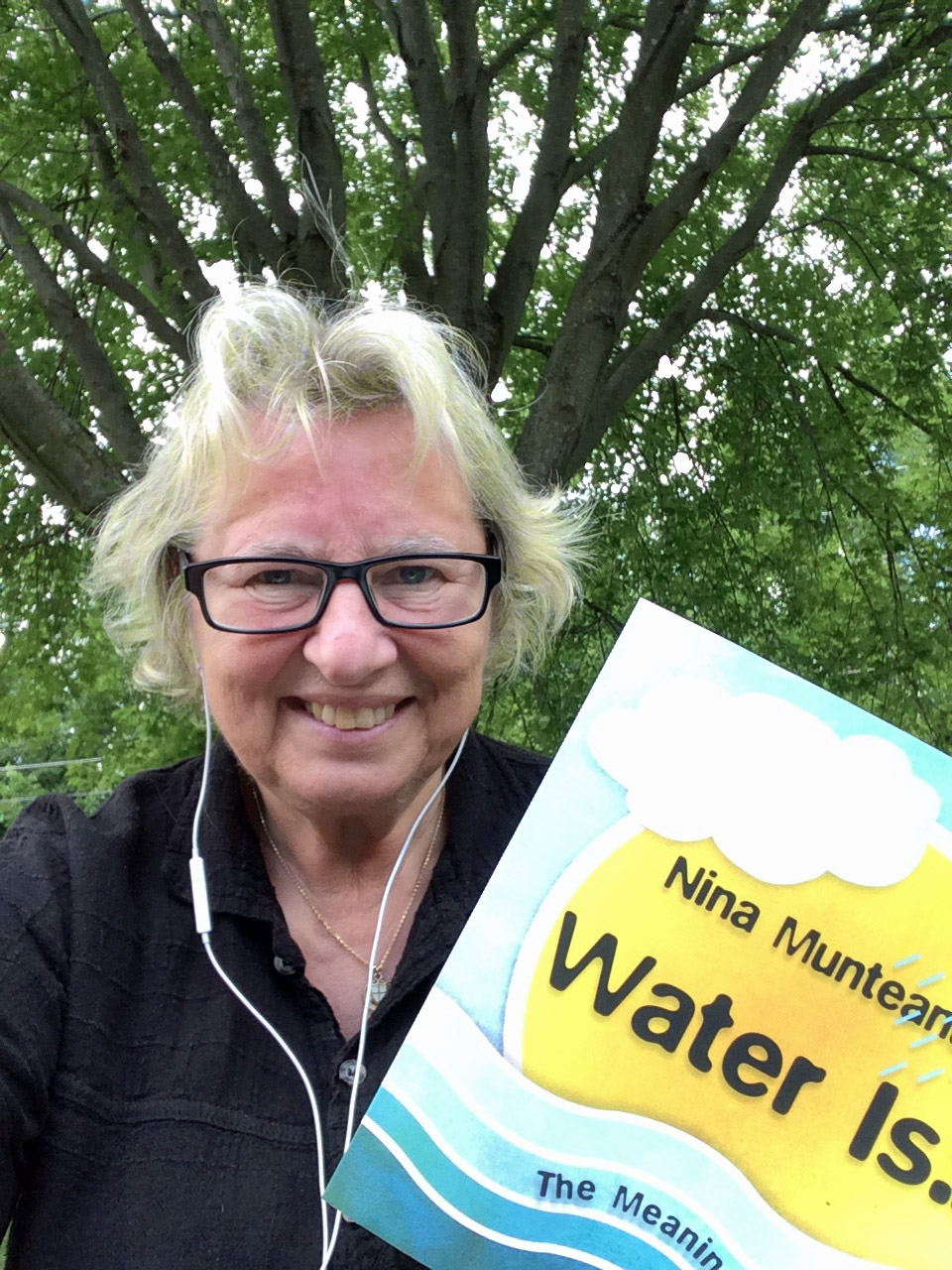
As a limnologist and with two major books on water published, I gave a talk on the science and meaning of water. Much of what I shared is in my book Water Is… The Meaning of Water, which provides 12 different angles on what water means—to different people from scientists and technologists to politicians, spiritualists and lay folk.

Water is so much more than the sum of its parts…

“Ultimately, water and our relationship with it is a curious gestalt of magic and paradox. Like the Suntelia Aion described by the Greeks, water cuts recursive patterns of creative destruction through the landscape, an ouroborous remembering. It changes, yet stays the same, shifting its face with the climate. It wanders the earth like a gypsy, stealing from where it is needed and giving whimsically where it isn’t wanted; aggressive yet yielding. Life-giving yet dangerous. Water is the well-spring of life. Yet it is the River Styx that leads the dead to Hades… Water is a shape shifter.”—Water Is…The Meaning of Water

Nina A Diary book

Nina with “A Diary in the Age of Water”

I overviewed some of water’s many anomalous qualities such as its unique density, cohesive, and adhesive properties—all life-giving. I discussed the water bridge, demonstrated by Dr. Elmar C. Fuchs and Professor Jakob Woisetchlager in 2007. I explored why water—particularly moving water—makes us feel so good (all those negative ions!). I went over the water cycle, water’s role in most natural cycles, and how it contributes to climate.

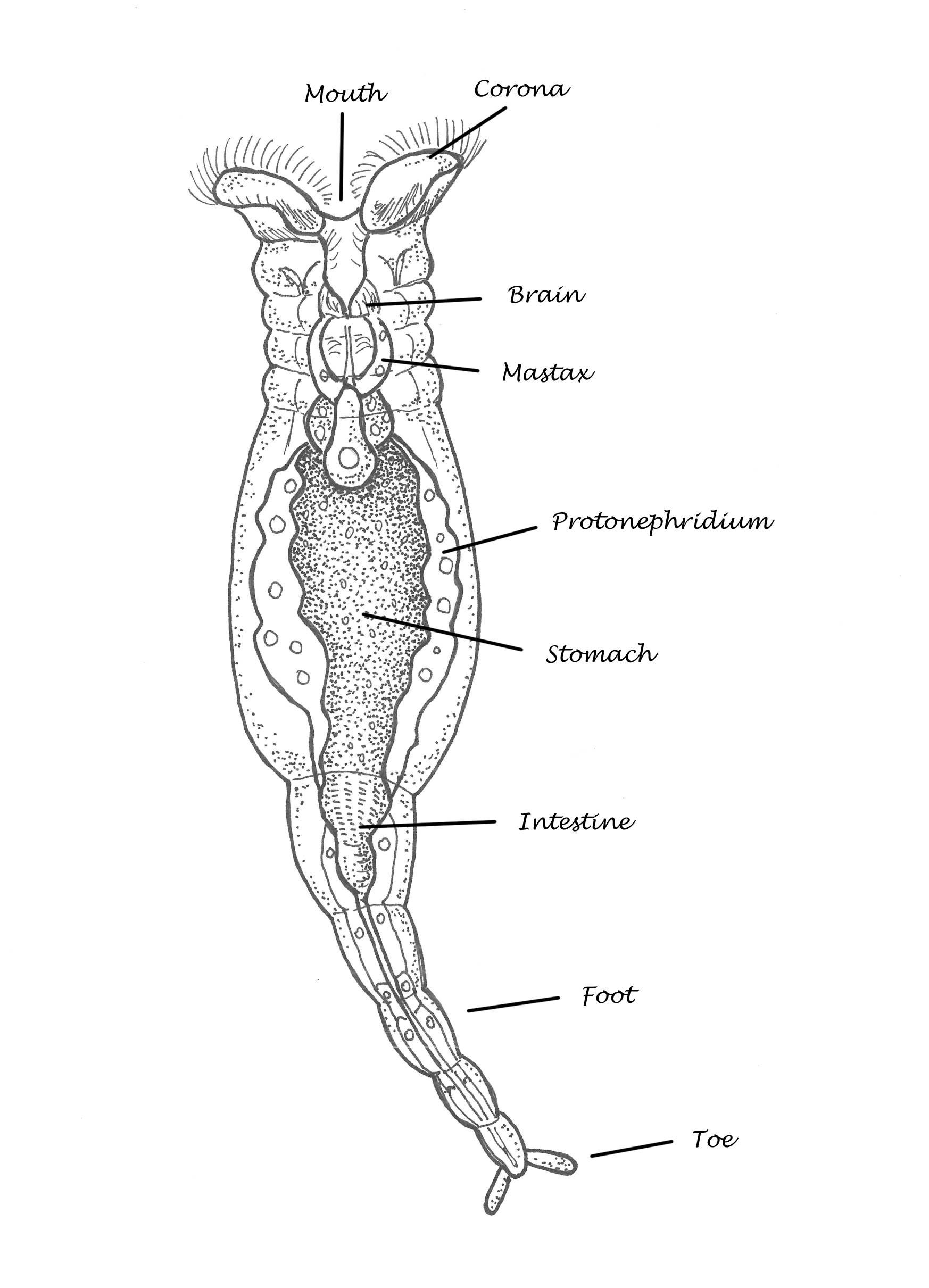
I then explored some of the oddest but most common tiny water residents. One example is the bdelloid rotifer—featured in my latest novel A Diary in the Age of Water—which is smaller than a millimeter, ubiquitous, lives wherever there is some water and can withstand desiccation, drying up into a dormant stage called a tun. Bdelloids create protective proteins, such as LEA, which act as a molecular shield.

Illustration 11 Rotifer copy 2

Sketch of a bdelloid rotifer (illustration by Nina Munteanu)

The bdelloid rotifer has existed for over forty million years. It reproduces through obligate parthenogenesis to produce all females, called thelytoky. Their long-term survival and evolutionary success in the absence of sex is largely a function of ecological adaptation that involves horizontal gene transfer through DNA repair. While they are patching up their broken genes from desiccation, they stitch in foreign DNA from the environment through horizontal gene transfer.

I ended the talk with some notes about conservation and stewardship of water. Using twelve-year old Rachel Parent and Greta Thunberg as examples, I stressed that no one is too young or too alone to make a difference; we then explored several activities that anyone could do.

Microsoft Word - What You Can Do.docx

Did you know slide

nina-2014aaa

Nina Munteanu is a Canadian ecologist / limnologist and novelist. She is co-editor of Europa SF and currently teaches writing courses at George Brown College and the University of Toronto. Visit www.ninamunteanu.ca for the latest on her books. Nina’s bilingual “La natura dell’acqua / The Way of Water” was published by Mincione Edizioni in Rome. Her non-fiction book “Water Is…” by Pixl Press(Vancouver) was selected by Margaret Atwood in the New York Times ‘Year in Reading’ and was chosen as the 2017 Summer Read by Water Canada. Her novel “A Diary in the Age of Waterwas released by Inanna Publications (Toronto) in June 2020.
Eco-Fiction: What Readers Get From It and How to Prevent Polemic

Mary Woodbury on Dragonfly.eco recently shared a survey of over a hundred readers to determine the impact that eco-fiction had on them. What did environmental fiction mean to readers? What about it appealed to them? What were their favourite works? And did it incite them to action? The answers were both expected and surprising. Given the sample size and some study limitations on audience and diversity, the results are preliminary still. However, they remain interesting and enlightening.

theoverstorySome of the most impactful novels according to the readers surveyed include Barbara Kingsolver’s Flight Behavior, Richard Power’s The Overstory, Margaret Atwood’s MaddAddam trilogy, Cormac McCarthy’s The Road, Edward Abbey’s Monkey Wrench Gang, and Ursula K. Le Guin’s Hainish Cycle series.
Readers gave Woodbury several reasons why they enjoyed and found eco-novels impactful:

  • Realism or compelling account of or reflection of society, scary or not
  • Goes beyond readers’ culture–expands minds
  • Humorous
  • Story focused on characters versus an issue
  • Learned something new
  • Opened readers’ minds
  • Captured imagination
  • Positive endings
  • Good storytelling
  • Interesting characters
  • Suspense and/or psychological burn

One reader mentioned that what appealed to them about Emmi Itäranta’s Memory of Water was the style of writing. It provoked “feelings of utter beauty but also unease.”

One reader enjoyed Cormac Mccarthy’s The Road “for its spare post-apocalyptic world where even language seems to run out.”

Of Cherie Dimaline’s The Marrow Thieves a reader wrote that “The dystopic beginning felt so real, and then the positive ending was so good. I loved it and it made me think about how climate change can possibly have impacts beyond just our physical and mental health, but also our dreams!”

A reader of Frank Herbert’s Dune wrote that “it was the first time I’d seen a literary rendering of an ecosystem that felt real. The ideas of ecology are woven into this story in a way I didn’t think was possible for fiction. Interconnection is hard to think about, hard to grasp, and Dune showed me that fiction, done well, can really help with this.” The same reader acknowledged that in Annihilation Jeff VenderMeer “mastered the technique.”

FavTopics Eco-Fiction

Graph from Environmental Fiction Impact Survey by Mary Woodbury

When asked the question “Do you think that environmental themes in fiction can impact society, and if so, how?” 81% agreed and qualified their answers:

  • Fiction can encourage empathy and imagination. Stories can affect us more than dry facts. Fiction reaches us more deeply than academic understanding, moving us to action.
  • Fiction can trigger a sense of wonder about the natural world, and even a sense of loss and mourning. Stories can immerse readers into imagined worlds with environmental issues similar to ours.
  • Fiction raises awareness, encourages conversations and idea-sharing. Fiction is one way that helps to create a vision of our future. Cautionary tales can nudge people to action and encourage alternative futures. Novels can shift viewpoints without direct confrontation, avoid cognitive dissonance, and invite reframed human-nature relationships through enjoyment and voluntary participation.
  • Environmental themes can reorient our perspective from egocentrism to the greater-than-human world.

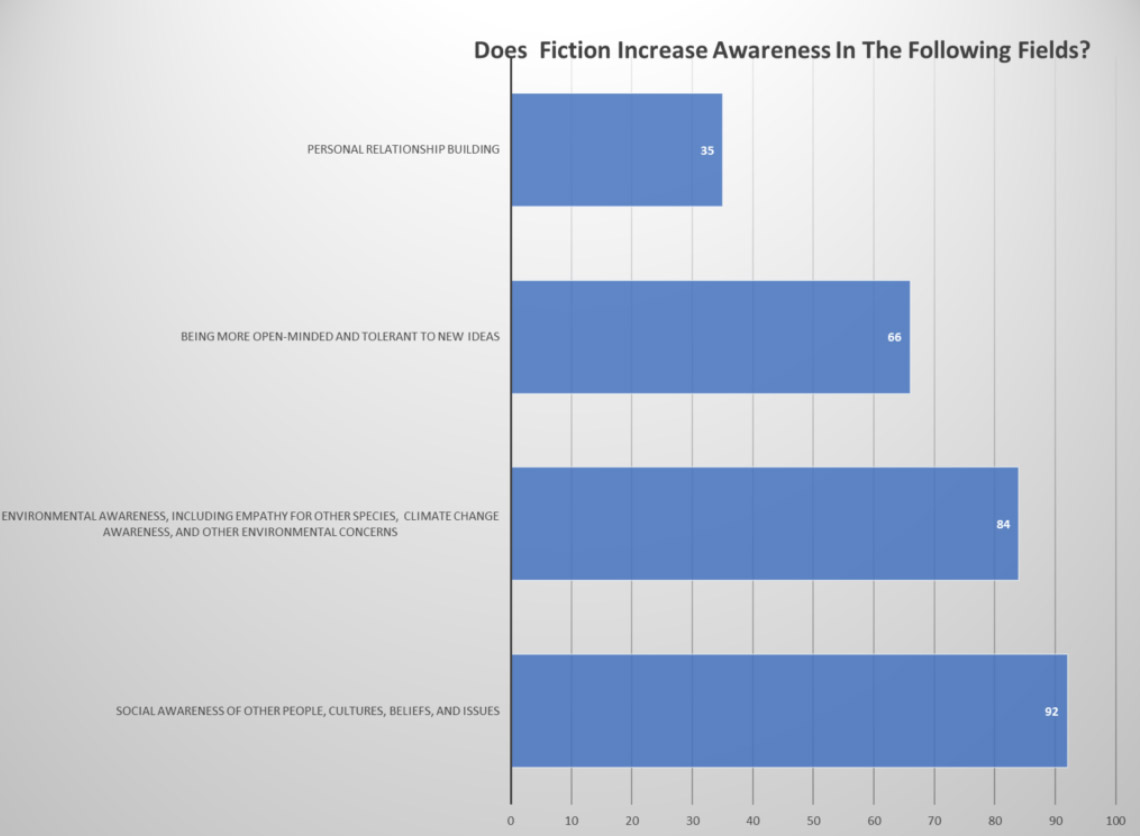
Awareness in Fields

Graph from Environmental Fiction Impact Survey by Mary Woodbury

In summary, Woodbury writes:

“The sample size (103) seems to be a good one for people who are mostly familiar with the idea of eco-fiction (and similar environmental/nature fiction genres and subgenres), though I was still hoping to get a larger, more diverse group of participants. The majority of respondents were highly educated middle-aged women. The majority of the group read from 1-29 novels a year. Favorite novels represented mostly North American or European authors (male and female about equally, with J.R.R. Tolkien, Barbara Kingsolver and Margaret Atwood consistently a favorite), with the majority of readers enjoying literary fiction the most, followed by dystopia/utopia and then science fiction.”

Woodbury notes that the genres of science fiction and fantasy were well represented in the survey, “both as favorite and most impactful novels, despite literary fiction being the favorite genre among the participants.” Of novels that respondents enjoyed, “readers were most impacted by good storytelling.” Polemic was not well regarded.


Achieving Impactful Eco-Fiction & Avoiding Polemic Through Use of Metaphor

The key to impact and enjoyment for a reader lies in good storytelling. The very best storytelling uses metaphor and oblique description to achieve a deeper meaning. The greatest art must be left to interpretation; not directly dispensed. Great art is felt and experienced viscerally; not just taken in intellectually. Great art shows; not tells.

EcologyOfStoryIn my writing guidebook The Ecology of Story: World as Character, I discuss the various ways that the use of metaphor achieves depth and meaning in story, particularly in eco-fiction. One impactful way is in the choice of setting. In the chapter on Place as Metaphor, I write:

Everything in story is metaphor, Ray Bradbury once told me. That is no more apparent than in setting and place, in which a story is embedded and through which characters move and interact.

Metaphor is the subtext that provides the subtleties in story, subtleties that evoke mood, anticipation, and memorable scenes. Richard Russo says, “to know the rhythms, the textures, the feel of a place is to know more deeply and truly its people.” When you choose your setting, remember that its primary role is to help depict theme. This is because place is destiny.

What would the book Dune be without Arrakis, the planet Dune? What would the Harry Potter books be without Hogwarts?

Metaphor provides similarity to two dissimilar things through meaning. In the metaphor “Love danced in her heart” or the simile “his love was like a slow dance”, love is equated with the joy of dance. By providing figurative rather than literal description to something, metaphor invites participation through interpretation.

When I write “John’s office was a prison,” I am efficiently and sparingly suggesting in five words—in what would normally take a paragraph—how John felt about his workplace. The reader would conjure imagery suggested by their knowledge of a prison cell: that John felt trapped, cramped, solitary, stifled, oppressed—even frightened and threatened. Metaphor relies on sub-text knowledge. This is why metaphor is so powerful and universally relevant: the reader fully participates—the reader brings in relevance through their personal knowledge and experience and this creates the memorable aspect to the scene.

Metaphor is woven into story through the use of devices and constructs such as depiction of the senses, personification, emotional connections, memories, symbols, archetypes, analogies and comparisons. Sense, and theme interweave in story to achieve layers of movement with characters on a journey. All through metaphor.

Symbols and Archetypes

In Emmi Itäranta’s Memory of Water—about a post-climate change world of sea level rise—water is a powerful archetype, whose secret tea masters guard with their lives. Water, with its life-giving properties and other strange qualities, has been used as a powerful metaphor and archetype in many stories: from vast oceans used as a powerful metaphor and archetype in many stories: from vast oceans of mystery, beauty and danger—to the relentless flow of an inland stream. Margaret Atwood’s The Penelopiad is one example:

Water does not resist. Water flows. When you plunge your hand into it, all you feel is a caress. Water is not a solid wall, it will not stop you. But water always goes where it wants to go, and nothing in the end can stand against it. Water is patient. Dripping water wears away a stone. Remember that, my child. Remember you are half water. If you can’t go through an obstacle, go around it. Water does.

In my short story The Way of Water (La natura dell’acqua), water’s connection with love flows throughout the story:

The Way of Water-COVERThey met in the lobby of a shabby downtown Toronto hotel. Hilda barely knew what she looked like but when Hanna entered the lobby through the front doors, Hilda knew every bit of her. Hanna swept in like a stray summer rainstorm, beaming with the self-conscious optimism of someone who recognized a twin sister. She reminded Hilda of her first boyfriend, clutching flowers in one hand and chocolate in the other. When their eyes met, Hilda knew. For an instant, she knew all of Hanna. For an instant, she’d glimpsed eternity. What she didn’t know then was that it was love. 

Love flowed like water, gliding into backwaters and lagoons with ease, filling every swale and mire. Connecting, looking for home. Easing from crystal to liquid to vapour then back, water recognized its hydrophilic likeness, and its complement. Before the inevitable decoherence, remnants of the entanglement lingered like a quantum vapour, infusing everything. Hilda always knew where and when to find Hanna on Oracle, as though water inhabited the machine and told her. Water even whispered to her when her wandering friend was about to return from the dark abyss and land unannounced on her doorstep. 

In a world of severe water scarcity through climate catastrophe and geopolitical oppression, the bond of these two girls—to each other through water and with water—is like the shifting covalent bond of a complex molecule, a bond that fuses a relationship of paradox linked to the paradoxical properties of water. Just as two water drops join, the two women find each other in the wasteland of intrigue. Hilda’s relationship with Hanna—as with water—is both complex and shifting according to the bonds they make and break.

Using the Senses 

Readers don’t just “watch” a character in a book; they enter the character’s body and “feel”.

How do writers satisfy the readers’ need to experience the senses fully? Description, yes. But how cold is cold? What does snow really smell like? What color is that sunset? How do you describe the taste of wine to a teetotaler?

Literal description is insufficient. To have the sense sink in and linger with the reader, it should be linked to the emotions and memories of the character experiencing it. By doing this, you are achieving several things at the same time: describing the sense as the character is experiencing it—emotionally; revealing additional information on the character through his/her reaction; and creating a more compelling link for the reader’s own experience of the sense.

Senses can be explored by writers through metaphor, linking the sense to memories, using synesthesia (cross-sensory metaphor), linking the sense psychologically to an emotion or attitude, and relating that sense in a different way (e.g., describing a visual scene from the point of view of a painter or photographer—painting with light). How a sense is interpreted by your protagonist relies on her emotional state, memories associated with that sense and her attitude.

Using Personification

TheWindupGirl Paolo BacigalupiEnvironmental forces—such as weather, climate, forests, mountains, water systems—convey the mood and tone of both story and character. These environmental forces are not just part of the scenery. To a writer, they are devices used in plot, theme and premise. They may also be a compelling character, particularly in eco-fiction, climate-fiction, and speculative fiction. Dystopian fiction often explores a violent world of contrast between the affluent and vulnerable poor that often portrays the aftermath of economic and environmental collapse (e.g., Maddaddam Trilogy, The Windup Girl, Snowpiercer, Interstellar, Mad Max). In any fiction genre it is important to get the science right. Readers of fiction with strong environmental components, however, expect to learn as much from the potential reality as from the real science upon which the premise depends.
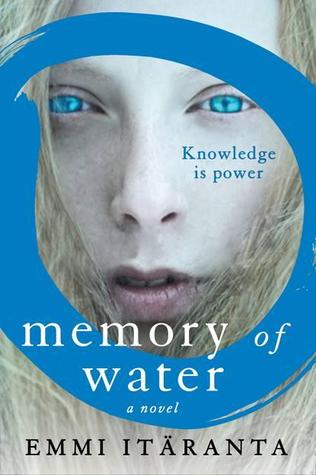
In Memory of Water, Emmi Itäranta personifies this life-giving substance whose very nature is tightly interwoven with her main character. As companion and harbinger, water is portrayed simultaneously as friend and enemy. As giver and taker of life.

Memory of Water Emmi ItarantaWater is the most versatile of all elements … Water walks with the moon and embraces the earth, and it isn’t afraid to die in fire or live in air. When you step into it, it will be as close as your own skin, but if you hit it too hard, it will shatter you … Death is water’s close companion. The two cannot be separated, and neither can be separated from us, for they are what we are ultimately made of: the versatility of water, and the closeness of death. Water has no beginning and no end, but death has both. Death is both. Sometimes death travels hidden in water, and sometimes water will chase death away, but they go together always, in the world and in us. 
Personification of natural things provides the reader with an image they can clearly and emotionally relate to and care about. When a point-of-view character does the describing, we get a powerful and intimate indication of their thoughts and feelings—mainly in how they connect to place (often as symbol). When this happens, place and perception entwine in powerful force.

Donald Maass writes in Writing the Breakout Novel Workbook: “The beauty of seeing a locale through a particular perspective is that the point-of-view character cannot be separated from the place. The place comes alive, as does the observer of that place, in ways that would not be possible if described using objective point of view.” The POV character’s relationship to place helps identify the transformative elements of their journey. Such transformation is the theme of the story and ultimately portrays the story’s heart and soul.

Connecting Character with Environment

Strong relationships and linkages can be forged in story between a major character and an aspect of their environment (e.g., home/place, animal/pet, minor character as avatar/spokesperson for environment [e.g. often indigenous people]). In these examples the environmental aspect serves as symbol and metaphoric connection to theme. They can illuminate through the sub-text of metaphor a core aspect of the main character and their journey: the grounding nature of the land of Tara for Scarlet O’Hara in Gone With the Wind; the sacred white pine forests for the Mi’kmaq in Barkskins; The dear animals for Beatrix Potter of the Susan Wittig Albert series.

The immense sandworms of Frank Herbert’s Dune are strong archetypes of Nature—large and graceful creatures whose movements in the vast desert sands resemble the elegant whales of our oceans:

It came from their right with an uncaring majesty that could not be ignored. A twisting burrow-mound of sand cut through the dunes within their field of vision. The mound lifted in front, dusting away like a bow wave in water. 

Misunderstood, except by the indigenous Fremen, the giant sandworms are targeted as a dangerous nuisance by the colonists—when, in fact, they are closely tied to the ecological cycles of the desert planet through water and spice.

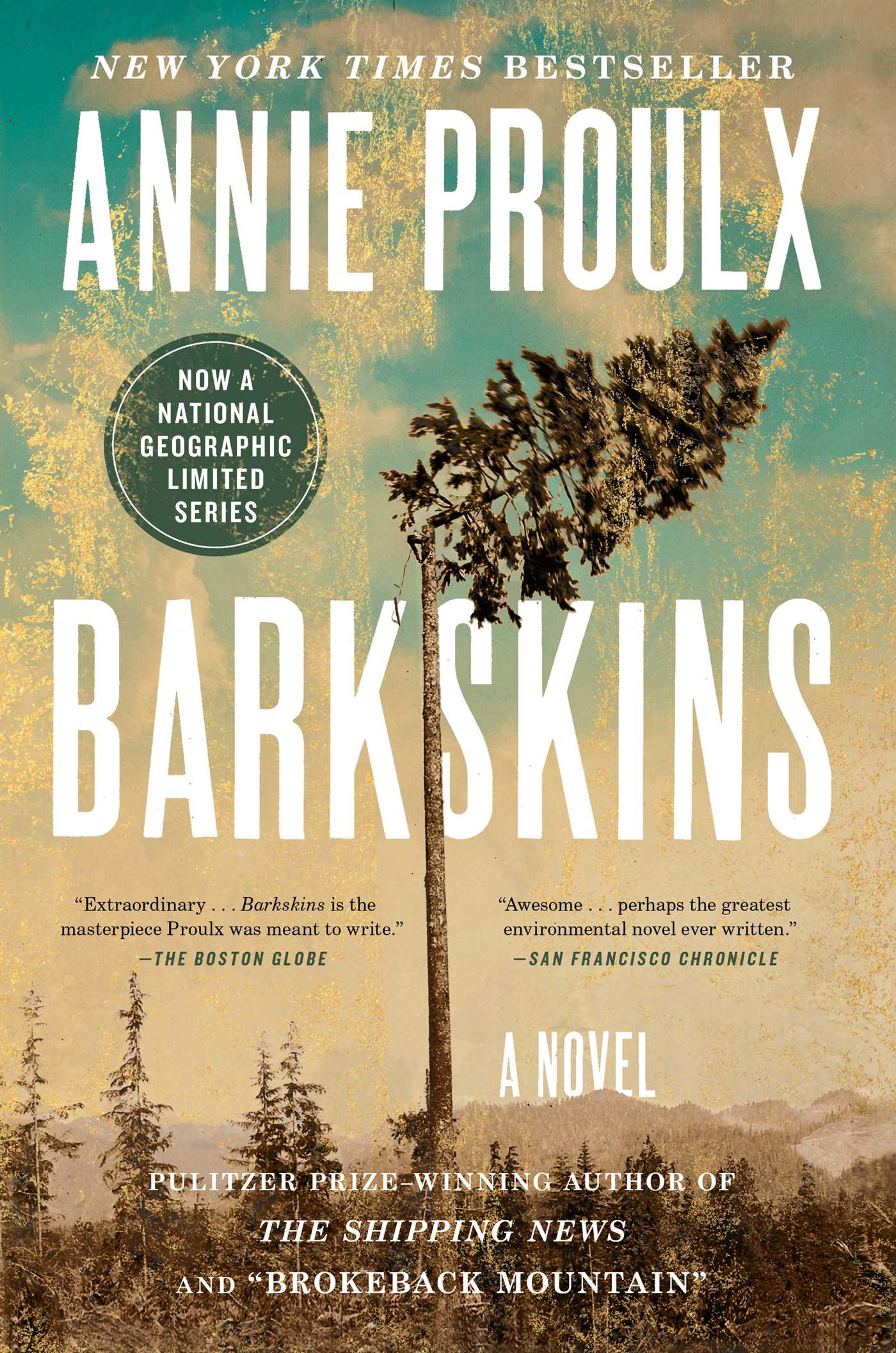
Barkskins Annie ProulxAnnie Proulx opens her novel Barkskins with a scene in which René Sel and fellow barkskins (woodcutters) arrive from France in the late seventeenth century to the still pristine wilderness of Canada to settle, trade and accumulate wealth:
In twilight they passed bloody Tadoossac, Kébec and Trois-Rivières and near dawn moored at a remote riverbank settlement … Mosquitoes covered their hands and necks like fur. A man with yellow eyebrows pointed them at a rain-dark house. Mud, rain, biting insects and the odor of willows made the first impression of New France. The second impression was of dark vast forest, inimical wilderness.

These bleak impressions of a harsh environment crawling with pests such as bébites and moustiques underlie the combative mindset of the settlers to conquer and seize what they can of a presumed infinite resource. By page seventeen, we know that mindset well. René asks why they must cut so much forest when it would be easier to use the many adequate clearings to build their houses and settlements. Trépagny fulminates: “Easier? Yes, easier, but we are here to clear the forest, to subdue this evil wilderness.” He further explains the concept of property ownership that is based on strips of surveyable land parcels—an application of the enclosure system. For them, the vast Canadian boreal forest was never-ending and for the taking: “It is the forest of the world. It is infinite. It twists around as a snake. swallows its own tail and has no end and no beginning,” Trépagny claims.

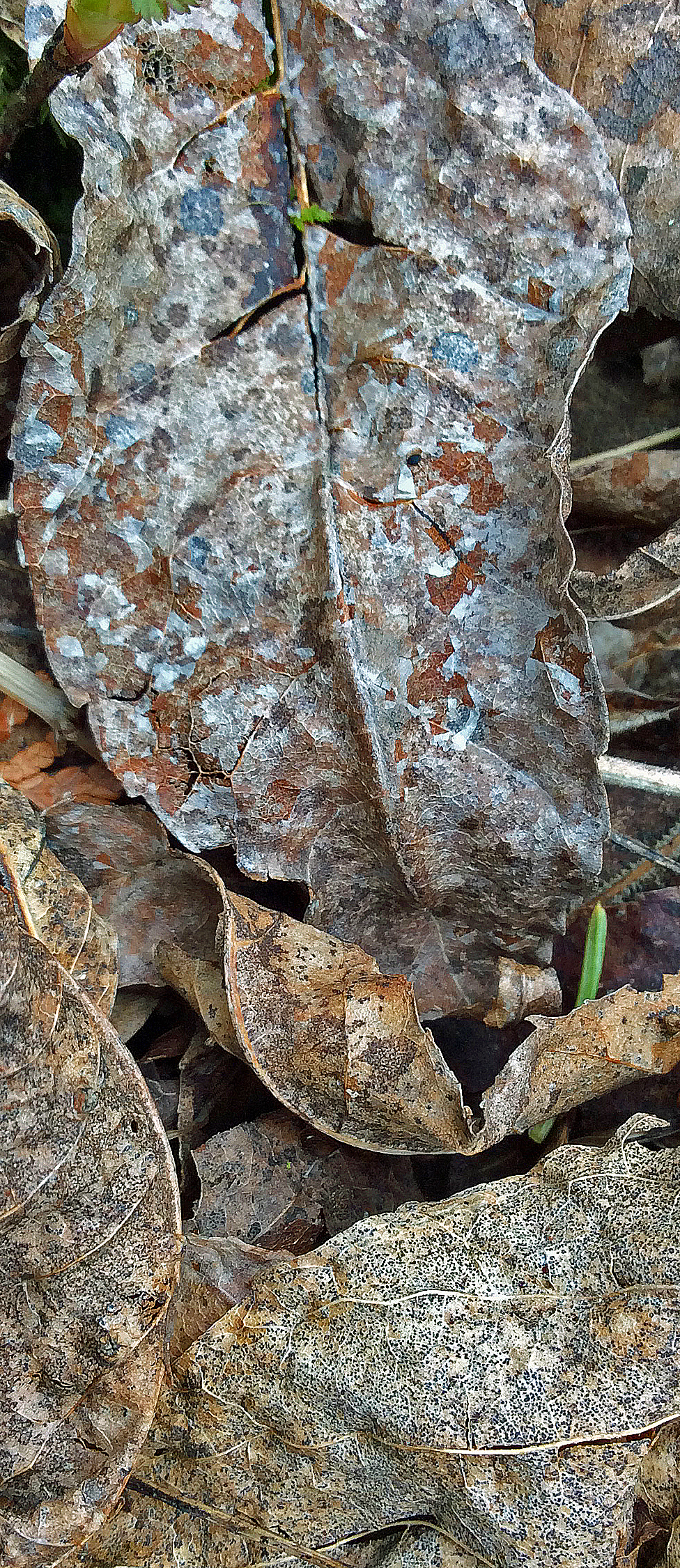
Leaves dead litter-long sh TNS

Leaf litter in Ontario forest (photo by Nina Munteanu)

Annie Proulx’s Barkskins chronicles two immigrants who arrive in Canada in 1693 (René Sel and Charles Duquet) and their descendants over 300 years of deforestation of North America; a saga that starts with the arrival of the Europeans in pristine forest and ends with a largely decimated forest under the veil of global warming. “Barkskins” (woodcutters) are, in fact indentured servants who were brought from the Paris slums to the wilds of New France to clear the land, build and settle. Sel is forced to marry a native woman and their descendants live trapped between two cultures; Duquet runs away to become a fur trader and builds a timber empire.

The Mi’kmaq are interwoven with the land and the forest. Missionary Pere Crème, who studies language makes this observation of the natives and the forest:

He saw they were so tightly knitted into the natural world that their language could only reflect the union and that neither could be separated from the other. They seemed to believe they had grown from this place as trees grow from the soil, as new stones emerge aboveground in spring. He thought the central word for this tenet, weji-sqalia’timk, deserved an entire dictionary to itself. 

The foreshadowing of doom for the magnificent forests is cast by the shadow of how settlers treat the Mi’kmaq people. The fate of the forests and the Mi’kmaq are inextricably linked through settler disrespect for anything indigenous and a fierce hunger for “more” of the forests and lands. Ensnared by settler greed, the Mi’kmaq lose their own culture and their links to the natural world erode with grave consequence. In a pivotal scene, Noë, a Mi’kmaw descendent of René Sel, grows enraged when she sees a telltale change in her brothers:

The offshore wind had shifted slightly but carried the fading clatter of boots on rock. They were wearing boots instead of moccasins. Noë knew what that meant but denied it … The men should be setting out to hunt moose, but because of the boots she knew they were going to work for the French logger.


Other Articles on Environmental Fiction, Eco-Fiction and Climate Fiction 

Can Dystopian Eco-Fiction Save the Planet?

Science Fiction on Water Justice & Climate Change

Windup Girl: When Monsanto Gets Its Way

Eco-Artist Roundtable with Frank Horvat on Green Majority Radio


Thanks to Mary Woodbury for the permission to share her survey results here. Much of the second part of this article is excerpted from the “Story” section of  The Ecology of Story: World as Character.

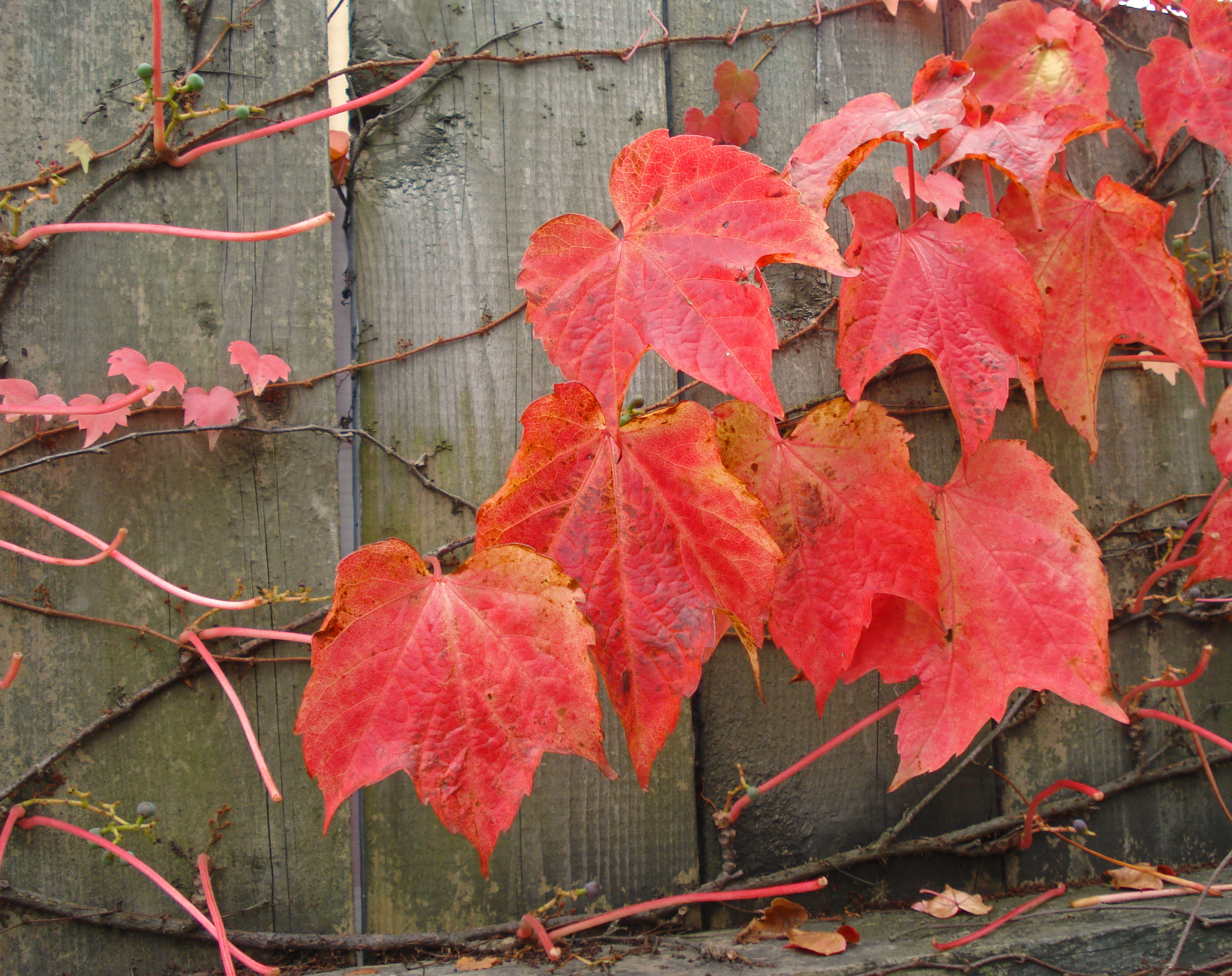
grape leaves in fall-halifax copy

Grape leaves on fence in Toronto, ON (photo by Nina Munteanu)

nina-2014aaa

Nina Munteanu is a Canadian ecologist / limnologist and novelist. She is co-editor of Europa SF and currently teaches writing courses at George Brown College and the University of Toronto. Visit www.ninamunteanu.ca for the latest on her books. Nina’s bilingual “La natura dell’acqua / The Way of Water” was published by Mincione Edizioni in Rome. Her non-fiction book “Water Is…” by Pixl Press(Vancouver) was selected by Margaret Atwood in the New York Times ‘Year in Reading’ and was chosen as the 2017 Summer Read by Water Canada. Her novel “A Diary in the Age of Waterwas released by Inanna Publications (Toronto) in June 2020.