“Write with passion. A lot of people say ‘write what you know.’ Those two in some ways are the same thing. You can do a lot of research on things that you don’t know and bring that in [to your writing.] But to know in your soul, in your heart, the thing that’s important that you need to write about is more what I mean by ‘write what you know.’ If you’re passionate about something—a global catastrophe or a personal journey with abuse—if it comes from the heart, it will keep you on track through those rejections and to finish and complete your work. Otherwise you won’t persist and you’ll let someone tell you that it isn’t important, it’s just a hobby.”
On water:
Nina and Fiona discuss the perils of commodifying water and Canada’s role in protecting the freshwater of the world and the boreal zone of Canada.
Nina talks about how she turned her fear of water as a child into a fascination for water and a passion for its protection. “I’m a limnologist, an ecologist. I’ve have been studying it since I was a little kid who was scared of water. I triumphed over that into fascination and made that into a career.” Nina’s non-fiction book Water Is… was published in 2016 as a biography of water and was endorsed by Margaret Atwood in the New York Times ‘Year in Reading.’
Nina talks about some of water’s over 70 anomalous properties and how virtually each is life-giving. She shares how water can teach us to be stewards and protectors of water within an emerging paradigm of gratitude and humbleness.
On being both scientist and artist:
Nina suggests that: “All great scientists are informed by art. They are creative in some way. [Scientists] bring that creativity, that original thinking and that curiosity, with them into their science. That’s what makes their science great because they are willing to look outward…We try to compartmentalize so we can better understand [art and science] but the irony is that we better understand them by bringing them together and integrating them…”
Nina Munteanu is a Canadian ecologist / limnologist and novelist. She is co-editor of Europa SF and currently teaches writing courses at George Brown College and the University of Toronto. Visit www.ninamunteanu.ca for the latest on her books. Nina’s bilingual “La natura dell’acqua / The Way of Water” was published by Mincione Edizioni in Rome. Her non-fiction book “Water Is…” by Pixl Press(Vancouver) was selected by Margaret Atwood in the New York Times‘Year in Reading’ and was chosen as the 2017 Summer Read by Water Canada. Her novel “A Diary in the Age of Water” was released by Inanna Publications (Toronto) in June 2020.
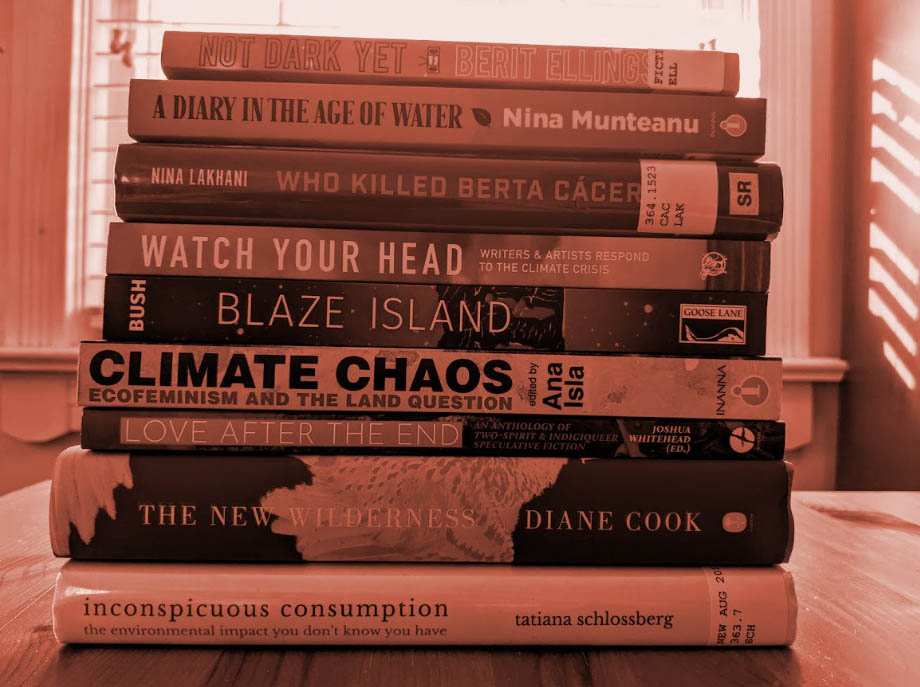
“It’s hard to resist identifying the author with Lynna, the most prominent character, who also works as a limnologist, although her employment is increasingly precarious, as her timeline hastens toward ecological devastation.
A predominantly female cast, a mythic forming narrative and, most saliently, the focus on water, all made this an interesting read for me.
The book’s epigraphs are from Maude Barlow and the chapter’s epigraphs from textbook definitions (sometimes excerpts from limnology tests), and there are even cutaway diagrams that you’d expect in lecture hall.
Ultimately it exists in an in-between place, some mystical elements of the generational tale possibly alienating the dedicated science-y readers and the instructional elements possibly alienating fiction devotees. And, yet, I read on: strangely compelling.”
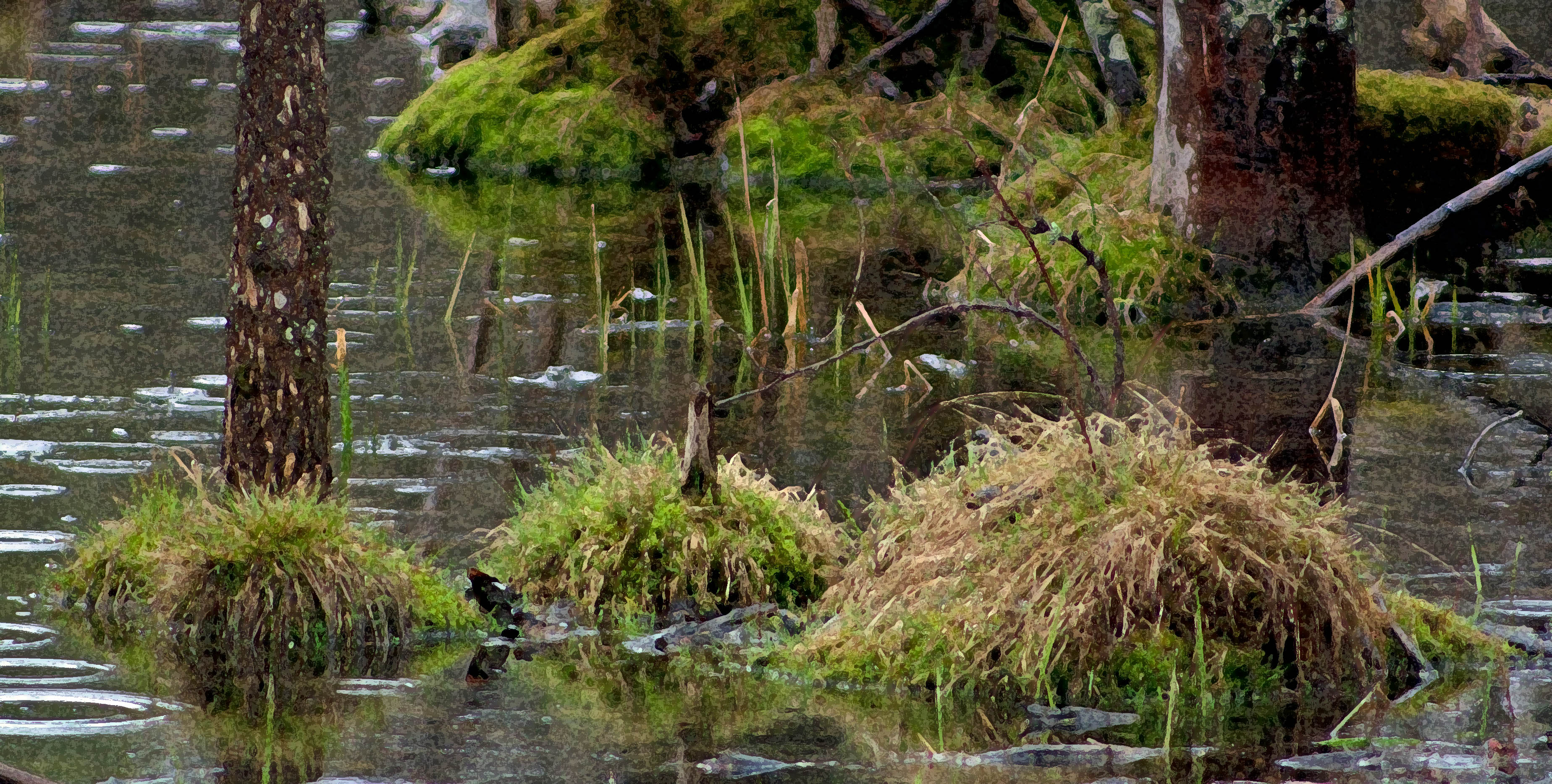
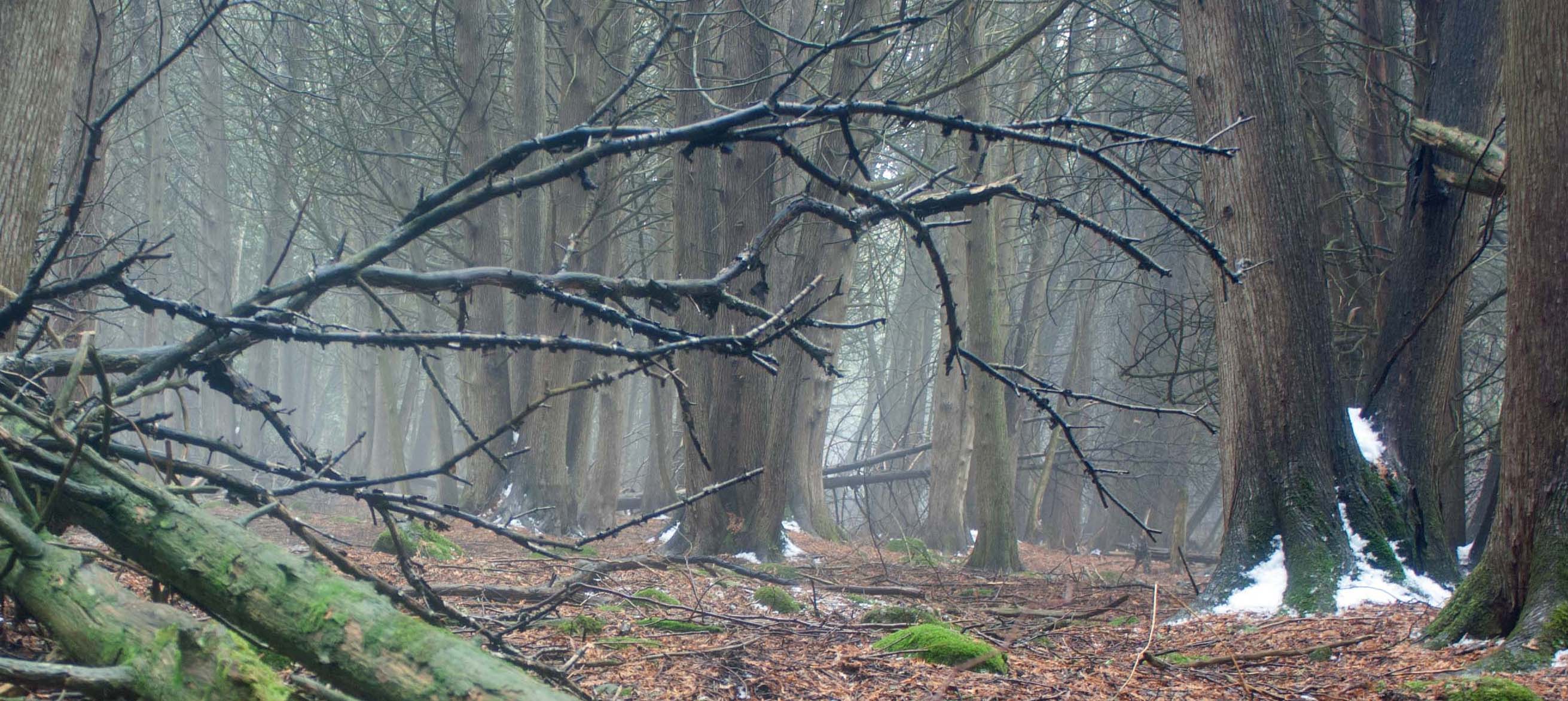
Forest swamp in Kawarthas in spring, ON (photo and dry brush rendition by Nina Munteanu)
Nina Munteanu is a Canadian ecologist / limnologist and novelist. She is co-editor of Europa SF and currently teaches writing courses at George Brown College and the University of Toronto. Visit www.ninamunteanu.ca for the latest on her books. Nina’s bilingual “La natura dell’acqua / The Way of Water” was published by Mincione Edizioni in Rome. Her non-fiction book “Water Is…” by Pixl Press(Vancouver) was selected by Margaret Atwood in the New York Times ‘Year in Reading’ and was chosen as the 2017 Summer Read by Water Canada. Her novel “A Diary in the Age of Water” was released by Inanna Publications (Toronto) in June 2020.
“A spindly middle-aged mathematician with a soaring mind, a sunken heart, and bad skin is being thrown about the back of a carriage in the bone-hollowing cold of a German January…He is now racing through the icy alabaster expanse of the countryside in the precarious hope of averting another: Four days after Christmas and two days after his forty-fourth birthday, a letter from his sister has informed him that their widowed mother is on trial for witchcraft — a fact for which he holds himself responsible.”
This is how Maria Popova of brainpickings starts her article entitled: “How Kepler Invented Science Fiction and Defended His Mother in a Witchcraft Trial While Revolutionizing Our Understanding of the Universe.”
It all started with Somnium (The Dream), Kepler’s work of science fiction.
Despite having sufficient mathematical evidence to confirm Copernicus’s heliocentric model of the universe, Kepler understood that the proof was overly complex and abstract to persuade his peers, much less the scientifically illiterate public. He realized that where data and evidence could not dismantle their “celestial parochialism,” storytelling could. Somnium resulted.
Somnium (The Dream), was a fictional account of a young astronomer who travels to the Moon. Rich in scientific ingenuity and symbolism, the allegory advanced the controversial Copernican model of the universe—that our planet revolves around the Sun, not the other way around. The young astronomer finds that lunar beings believe Earth revolves around them. Using the moon beings’ delusion as metaphor for our delusion about Earth’s central position in an immutable universe, Kepler hoped to awaken people to the truth of Copernicus’s heliocentric model of the universe. But we weren’t ready for the truth; instead Somniumresulted in Kepler’s elderly mother’s being accused of witchcraft.
Popova adds: “As Kepler is galloping through the German countryside to prevent his mother’s execution, the Inquisition in Rome is about to declare the claim of Earth’s motion heretical — a heresy punishable by death.” This was a dangerous time for anyone with a scientific mind.
This was a world, Popova reminds us, where the will of God supersedes the laws of nature. A world where the Devil is more real and powerful than gravity. A time when most people believed that the sun revolved around the Earth every day in a circular orbit. Kepler would disprove this belief by demonstrating that physical forces move the heavenly bodies in calculable ellipses. But he paid a price for his unconventionality. Kepler was a game-changer, a scientific seditionist who would spill the apple cart of conventional thought with ungodly science. He invented the word orbit and developed a scientific method to predict eclipses. He was the first astrophysicist. And yet…
“All of this he would accomplish while drawing horoscopes, espousing the spontaneous creation of new animal species rising from bogs and oozing from tree bark, and believing the Earth itself to be an ensouled body that has digestion, that suffers illness, that inhales and exhales like a living organism,” writes Popova. “Three centuries later, the marine biologist and writer Rachel Carson would reimagine a version of this view woven of science and stripped of mysticism as she makes ecology a household word.”
The superstitious villagers of Kepler’s hometown overlooked the metaphor and science of Somnium and focused instead on what they recognized as autobiographical: the young narrator (a young astronomer who apprenticed with Tycho Brahe like Kepler did) and a witch-like mother, who was a herb doctor (like Kepler’s own mother). Having recognized a likeness, they saw Kepler’s allegory as non-fiction. This meant that the narrator’s mother, who conjures up spirits to assist her son in his lunar voyage, and Kepler’s mother were one in the same. Katharina Kepler—a blunt, independent and outspoken woman—was soon called out as a witch. Villagers who had a bone to pick with her took advantage and rumors spread: a mother claimed that her daughter’s arm grew numb after Katharina brushed against it in the street; the butcher’s wife swore that pain pierced her husband’s thigh when Katharina walked by; the limping schoolmaster dated the onset of his disability to a night ten years earlier when he had taken a sip from a tin cup at Katharina’s house while reading her one of Kepler’s letters. She was accused of appearing magically through closed doors, of having caused the deaths of infants and animals.
The burning at the stake of Anne Drake (anonymous engraving)
“After years of exerting reason against superstition, Kepler ultimately succeeded in getting his mother acquitted,” writes Popova. “But the seventy-five-year-old woman never recovered from the trauma of the trial and the bitter German winter spent in the unheated prison.” She died shortly after she was released.
Thousands of people were tried for witchcraft during that time. Most of the accused were women, whose defense fell on their sons, brothers, and husbands. Most trials ended in execution. In Germany, some twenty-five thousand were killed. In Kepler’s small hometown, six women had been burned as witches just a few weeks before his mother was indicted.
Popova tells us that Katharina Kepler “first enchanted her son with astronomy when she took him to the top of a nearby hill and let the six-year-old boy gape in wonderment as the Great Comet of 1577 blazed across the sky.”
But Katharina’s fate was written by the world she lived in. Kepler understood that as a man, his privileges in education—and standing—provided him with additional social standing beyond his mother’s. “I was born a man, not a woman,” he wrote, “a difference in sex which the astrologers seek in vain in the heavens.”
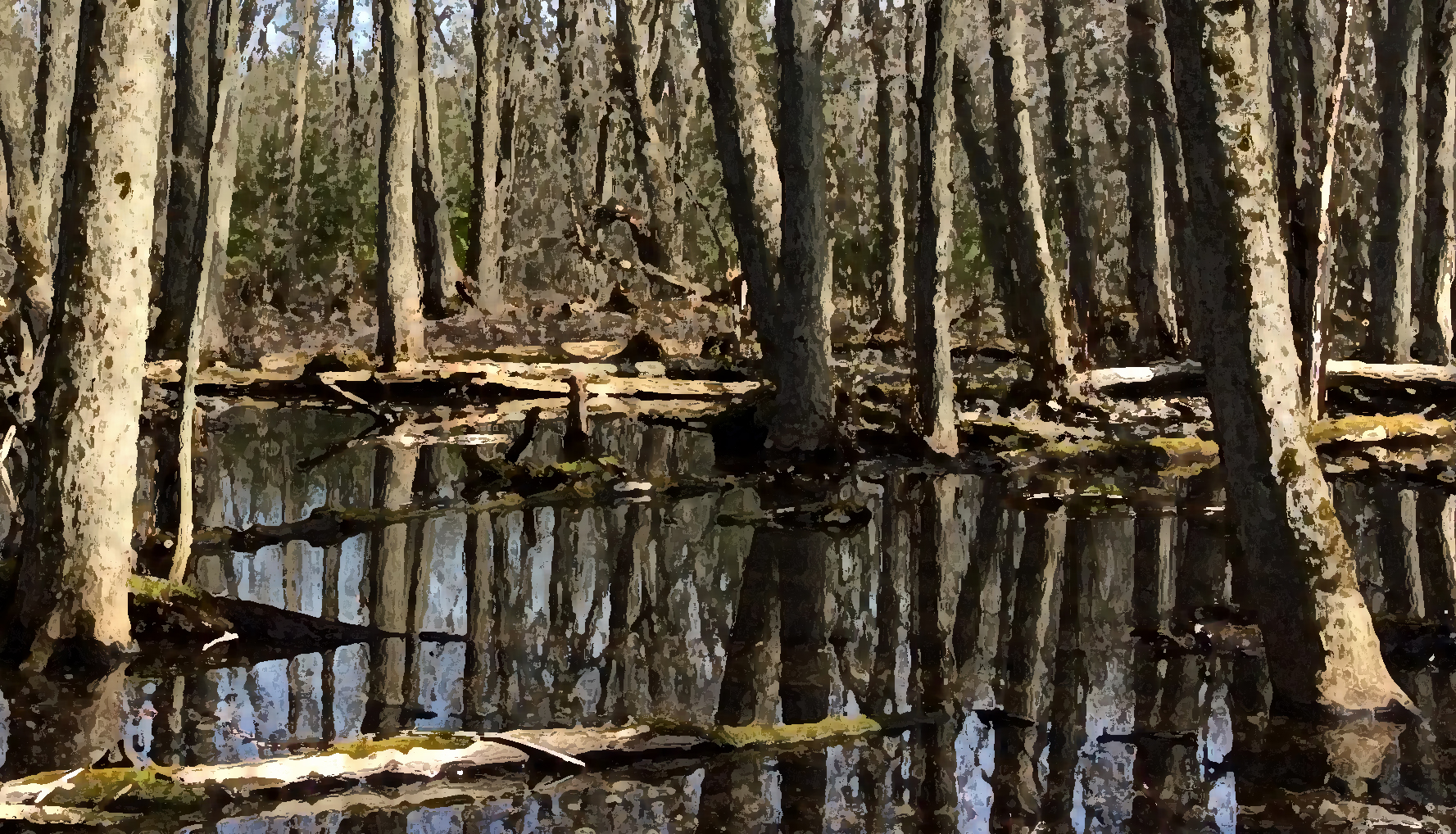
Maple-Oak swamp forest in spring, Trent Nature Sanctuary, ON (photo by Nina Munteanu)
Nina Munteanu is a Canadian ecologist / limnologist and novelist. She is co-editor of Europa SF and currently teaches writing courses at George Brown College and the University of Toronto. Visit www.ninamunteanu.ca for the latest on her books. Nina’s bilingual “La natura dell’acqua / The Way of Water” was published by Mincione Edizioni in Rome. Her non-fiction book “Water Is…” by Pixl Press(Vancouver) was selected by Margaret Atwood in the New York Times‘Year in Reading’ and was chosen as the 2017 Summer Read by Water Canada. Her novel “A Diary in the Age of Water” was released by Inanna Publications (Toronto) in June 2020.
In the Spring issue of Ecology & Action, Mary Woodbury, author and publisher of Dragonfly.eco, lists some of her favourite Eco-Fiction that Inspires Action. Among them is Nina Munteanu’s eco-novel “A Diary in the Age of Water.”
“Fiction exploring humanity’s impacts on nature is becoming more popular. It has the distinct ability to creatively engage and appeal to readers’ emotions. In fact, it can stir environmental action. A survey I took last year showed that 88% of its participants were inspired to act after reading ecological fiction.
Principled by real science and exalting our planet’s beauty, these stories are works of art. They live within classic modes of fiction exploring the human condition, but also integrate the wild. They can be referred to as “rewilded stories.” The following Canadian titles are some of my favourites in this genre.”
MARY WOODBURY
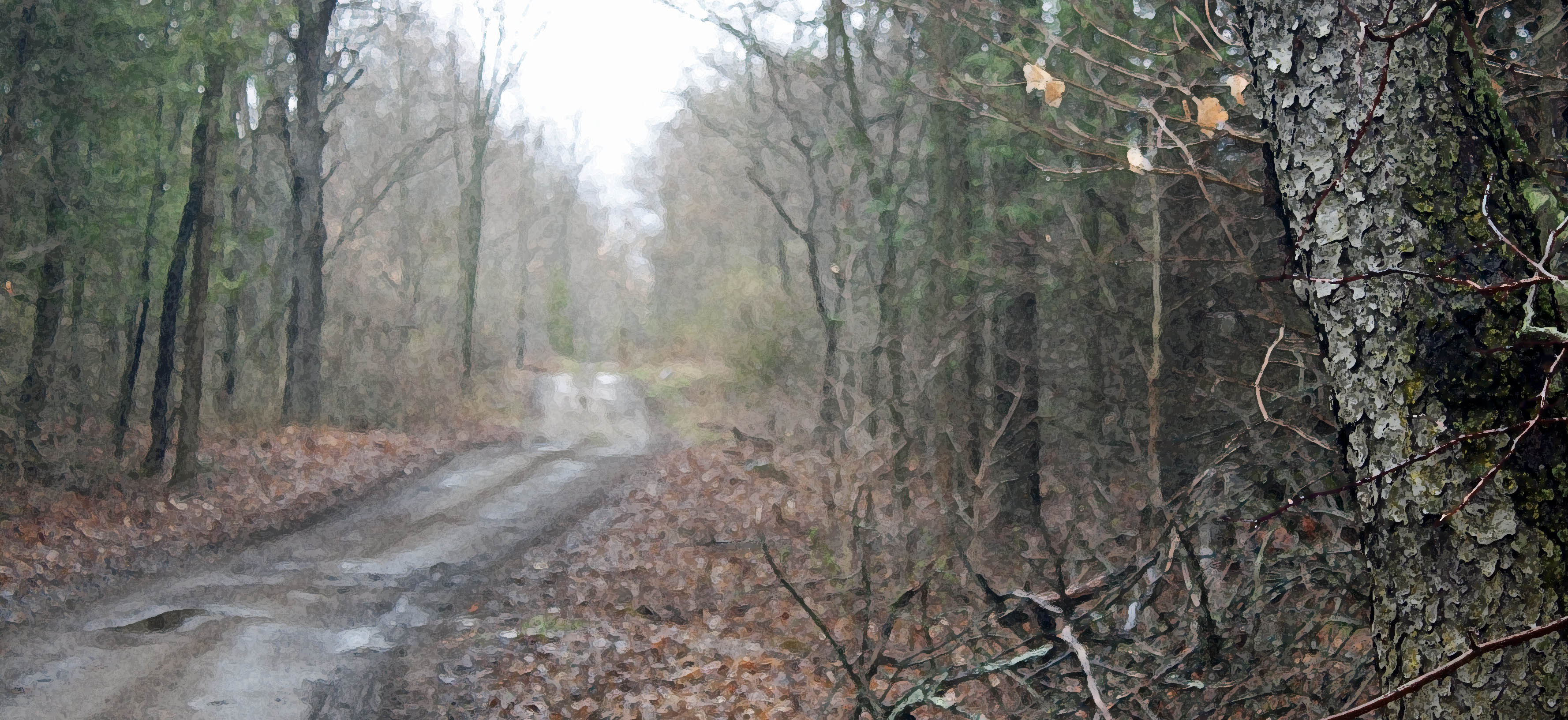
Dirt road to Long Lake in a misty light rain in early spring, ON (photo and dry brush rendition by Nina Munteanu)
Nina Munteanu is a Canadian ecologist / limnologist and novelist. She is co-editor of Europa SF and currently teaches writing courses at George Brown College and the University of Toronto. Visit www.ninamunteanu.ca for the latest on her books. Nina’s bilingual “La natura dell’acqua / The Way of Water” was published by Mincione Edizioni in Rome. Her non-fiction book “Water Is…” by Pixl Press(Vancouver) was selected by Margaret Atwood in the New York Times‘Year in Reading’ and was chosen as the 2017 Summer Read by Water Canada. Her novel “A Diary in the Age of Water” was released by Inanna Publications (Toronto) in June 2020.
You walk toward English Bay to the nearest Hydrogenase Hub, where you are meeting with your team to discuss the presentation.
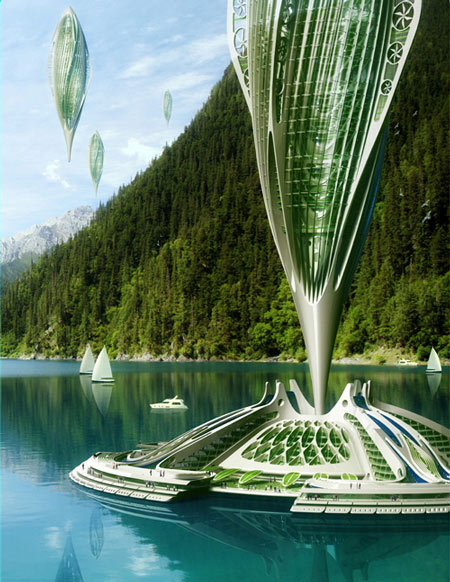
The hub is a floating algal farm. The farm and the elongated seed-shaped airship docked at its centre both produce biofuel—essentially hydrogen—from the microorganism Chlamydomonas reinhardtii. Your mom, a former environmental consultant and algal scientist—now she writes science fiction—explained to you that this unicellular organism has both plant and animal properties; it carries out photosynthesis but is also heterotrophic (able to use organic carbon to grow) and will in the absence of oxygen produce gaseous hydrogen and metabolites such as formate and ethanol through hydrogenase enzymes. Chlamydomonas reinhardtii was first discovered as a clean source of hydrogen back in 1939 by German scientist Hans Gaffron at the University of Chicago (ironically the same year Germany invaded Poland). Gaffron called it “photosynthetic hydrogen production by algae”; and today it is a process that produces electricity and biofuel with zero emissions.
The algae farm recycles CO2for the bio-hydrogen airship you will be boarding after your meeting in the hub. You enter the airy station, whose honeycomb circular design resembles a stylized lily pad and glance up through the high nano-glass ceiling toward the elongated seed-shaped transport rising ten stories above you. The sun glances off the diaphanous double helix frame that resembles a freshwater spirogyra. The hub you’re standing in is a floating algae farm with solar cells on top and hydro-turbines below to capture tidal energy. The algae farm recycles CO2 for the bio-hydrogen airship you will be boarding after your meeting in the hub. You enter the airy station, whose honeycomb circular design resembles a stylized lily pad and glance up through the high nano-glass ceiling toward the elongated seed-shaped transport rising ten stories above you.
The sun glances off the diaphanous double helix frame that resembles a freshwater spirogyra. The hub you’re standing in is a floating algae farm with solar cells on top and hydro-turbines below to capture tidal energy.
The concept is the “subversive architecture” of Belgian architect Vincent Callebaut and inspired by the principles of biomimicry, coined by Janine Benyus in 2002 in her book “Biomimicry: Innovation Inspired by Nature”. Callebaut conceived Hydrogenase in 2010 as a 100% self-sufficient and zero-emission transport system using algae. He claimed that a hectare of seaweeds could produce 120 times more biofuel than a hectare of colza, soya or sunflower without consuming land needed for crops or forests. He called Hydrogenase a true miniature biochemical power station. Able to absorb CO2 as the main nutrient through photosynthesis the algae, under anaerobic conditions, produce hydrogen in vitro or in bioreactors.
You swipe your PAL over the ticket booth sensor and the optional ticket-brochure pops out. You take it and read the specs between glances at the tall vessel loading in the dock of the hub. It’s really like a vertical dirigible, you think, studying the seed-shaped airship with self-cleaning “intelligent” nanostructured glass—inspired by the lotus leaf that doesn’t get wet. The semi-rigid unpressurised airship stretches vertically around an arborescent spine that twists like chloroplast ribbons 400 meters high and 180 meters in diameter.
You read that each Hydrogenase airship is covered with flexible inflatable photovoltaic cells and twenty wind turbines to maneuver and collect energy. The interior spaces provide room for housing, offices, scientific laboratories, and entertainment, and a series of vegetable gardens that provide a source of food while recycling waste.
You read that this self-sufficient organic transport flies about 2000 meters high at about 175 km/hr (twice the speed of a conventional ship). Given its ease in negotiating airspace and its ability to land and take off from virtually any location, the Hydrogenase is used by many groups in various capacities. Your friend Michael who teaches at the University of Victoria uses one as a mobile research station in his studies along the coast of northern British Columbia.
The vessel is made of “intelligent layers” and “self-separable ceramics”. Its bionic coating draws inspiration from sharkskin that is self-cleaning and flow-efficient.
Hydrogenase concept with algal farm pods and air ships
You head down the spiral staircase to the third subsea level toward the meeting room you booked earlier on your PAL. The view is spectacular from here through the nano-glass panes. Rays of shimmering light stream through a gently swaying forest of kelp. You glimpse the sun-glinted flickering of hundreds of anchovies as they school through the kelp. This floating farm is an organic purifying station of four carbon wells where the algae recycle the carbonated waste brought by the airships and, in turn, feed the airship with biohydrogen. It’s the new “gas station”, you reflect with a smile.
After your meeting with staff, you and three others of your team board the airship and settle in one of the skyview chambers. The journey is relaxing, like the BC Ferry used to be, but without the pungent smell and pollution of conventional motorized sea vessels. It’s a quiet and relaxing trip with a spectacular view of the Gulf Islands. Your team strategizes your presentation over a light lunch and Matcha lattes.
Vincent Callebaut’s Hydrogenase
The PA system sounds and a woman’s voice informs you that the ship will be making an emergency landing on Saturna Island to rescue two hikers injured at East Point. This will only add twenty minutes to the trip, the woman assures you. You don’t mind and recall the disclaimer at the bottom of the ticket. Given the ability of this airship to take off and accurately land virtually anywhere, all Hydrogenases are by law mandated to be on standby for rescue missions in rough terrain.
You pull out the ticket and read again: The Hydrogenase is affiliated with the International Red Cross and BC Coastguard. The Hydrogenase must by law respond to any distress call at sea or rough terrain associated with coastal waters. Because of this service, we cannot guarantee a timely schedule.
You recall how Hydrogenases were deployed in the last hurricane disaster off the coast of Florida last year, saving countless people trapped in the flooding that accompanied the storm. The International Red Cross uses them as flying hospitals.
Bernard frets over the time delay. He is concerned about the lack of preparation and set up time once you get into Victoria. You assuage him gently. The best preparation is sincerity, you tell him. The landscape architect Thomas Woltz, whose work you highly respect, saw himself as someone who embraces the complexity of modern life while seeking meaning and narrative in both natural and human-made environments.
“We’re storytellers,” you tell Andre. Invoking metaphor through design. “They know we’re coming and they know we’re helping someone; they’ll wait for our story. And it’s all about harmony.”
The lines of Henry David Thoreau come to you: Man’s life must be of equal simplicity and sincerity with nature, and his actions harmonize with her grandeur and beauty.
Then you point your PAL at the ServiceBot and order three more lattes. You lean back in your bamboo fabric chair and cross your legs over the leg rest.
It’s a brave new world.
Pine forest in Jackson Creek Park, ON (photo and dry brush rendition by Nina Munteanu)
Nina Munteanu is a Canadian ecologist / limnologist and novelist. She is co-editor of Europa SF and currently teaches writing courses at George Brown College and the University of Toronto. Visit www.ninamunteanu.ca for the latest on her books. Nina’s bilingual “La natura dell’acqua / The Way of Water” was published by Mincione Edizioni in Rome. Her non-fiction book “Water Is…” by Pixl Press(Vancouver) was selected by Margaret Atwood in the New York Times‘Year in Reading’ and was chosen as the 2017 Summer Read by Water Canada. Her novel “A Diary in the Age of Water” was released by Inanna Publications (Toronto) in June 2020.
“Every story is a story of water,” says Mojave American poet Natalie Diaz.
In her article on Diaz, Maria Popova reiterates, “we ourselves are a story of water—biologically and culturally, in our most elemental materiality and our mightiest metaphors.”
There is a reason that women are recognized worldwide as water keepers. Women are intimately connected with flowing water; everything about us is flowing: from our menstrual and birthing waters to the waters of our nurturing milk and the tears we shed for our lost ones. We flow with life and it flows out of us.
The water walk with Grandmother Josephine along Lake Ontario in 2019 (photo by Nina Munteanu)
So, when Lake Erie became a person with rights in February 2019, this landmark designation came with both triumph and some irony to womankind and water keepers around the world.
Based on that quote, it would seem that only men did the trammelling (given that women are not included or the more correct term would be “human”). It was only a hundred years ago, in 1920, that the 19thAmendment granted women legal personhood in the United States; and in that amendment Native American women were not included—until years after. In her poem Lake-loop, Mojave poet Natalie Diaz explored “how that nesting doll of exclusions breaks open into the living reality of this Earth”:
“Part of the San Andreas fault runs along the Mojave Desert. We see and feel the fault, it has always been a part of Mojave stories and geography. We have always existed with it–in rift–part land. We are land’s action, maybe. I am always wondering and wandering around what it means to be part of this condition, in shift. What it means to embrace discontinuity, to need it and even to need to cause it in order to be–depression but also moving energy. The necessary fracturing of what is broken. The idea of being made anything or nothing in this country–“to be ruined before becoming”–the idea that this country tried to give us no space to exist, yet we made that space, and make it still–in stress, in friction, glide and flow, slip and heave. We are tectonic, and ready.”
NATALIE DIAZ
The Earth is indeed shifting. As are we. If we are to survive, that is. This will come with a connection with Earth’s natural rhythms. We haven’t been doing that very well, particularly under an “othering” capitalist, exploitive, hubristic dogma. It’s time to ride the swells and turbulence of a Nature evolving. And co-evolve; or get left behind. We can learn much from the stories of our Indigenous relatives. We can learn much from the stories of our non-human relatives too.
That’s what climate change is: a new story. And that story is all about water.
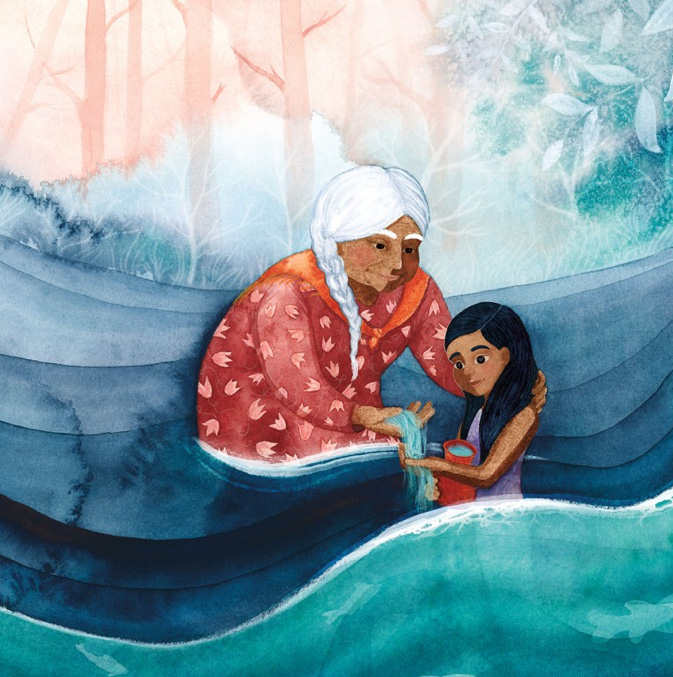
Grandmother with young water keeper (illustration by Michaela Goade)
For this World Water Day, I share with you a wonderful story of water keepers and the water we keep safe. Author Carole Lindstrom, member of the Turtle Mountain Band of Ojibwe, and artist Michaela Goade, member of the Central Council of the Tlingit Haida Tribe of Alaska. have produced “We Are Water Protectors”, a lyrical illustrated celebration of cultural heritage and the courage to stand up for nature.
“Yours is a grave and sobering responsibility, but it is also a shining opportunity. You go out into a world where [human]kind is challenged, as it has never been challenged before, to prove its maturity and its mastery–not of nature but of itself. Therein lies our hope and our destiny.”
RACHEL CARSON
Today is World Water Day…
I exhort you to do something for water today. Plant a tree (they love water and water loves them). Clean up a local stream or lakeshore. Write a letter to a government official about protecting your watershed. Research something about water and share with someone. Share your watermark on the WatermarkProject.ca site. Buy We Are Water Protectors and share it with someone or give it away. Or buy Silent Spring and share it with someone who hasn’t read it yet.
Keep it flowing…
Nina Munteanu is a Canadian ecologist / limnologist and novelist. She is co-editor of Europa SF and currently teaches writing courses at George Brown College and the University of Toronto. Visit www.ninamunteanu.ca for the latest on her books. Nina’s bilingual “La natura dell’acqua / The Way of Water” was published by Mincione Edizioni in Rome. Her non-fiction book “Water Is…” by Pixl Press(Vancouver) was selected by Margaret Atwood in the New York Times‘Year in Reading’ and was chosen as the 2017 Summer Read by Water Canada. Her novel “A Diary in the Age of Water” was released by Inanna Publications (Toronto) in June 2020.
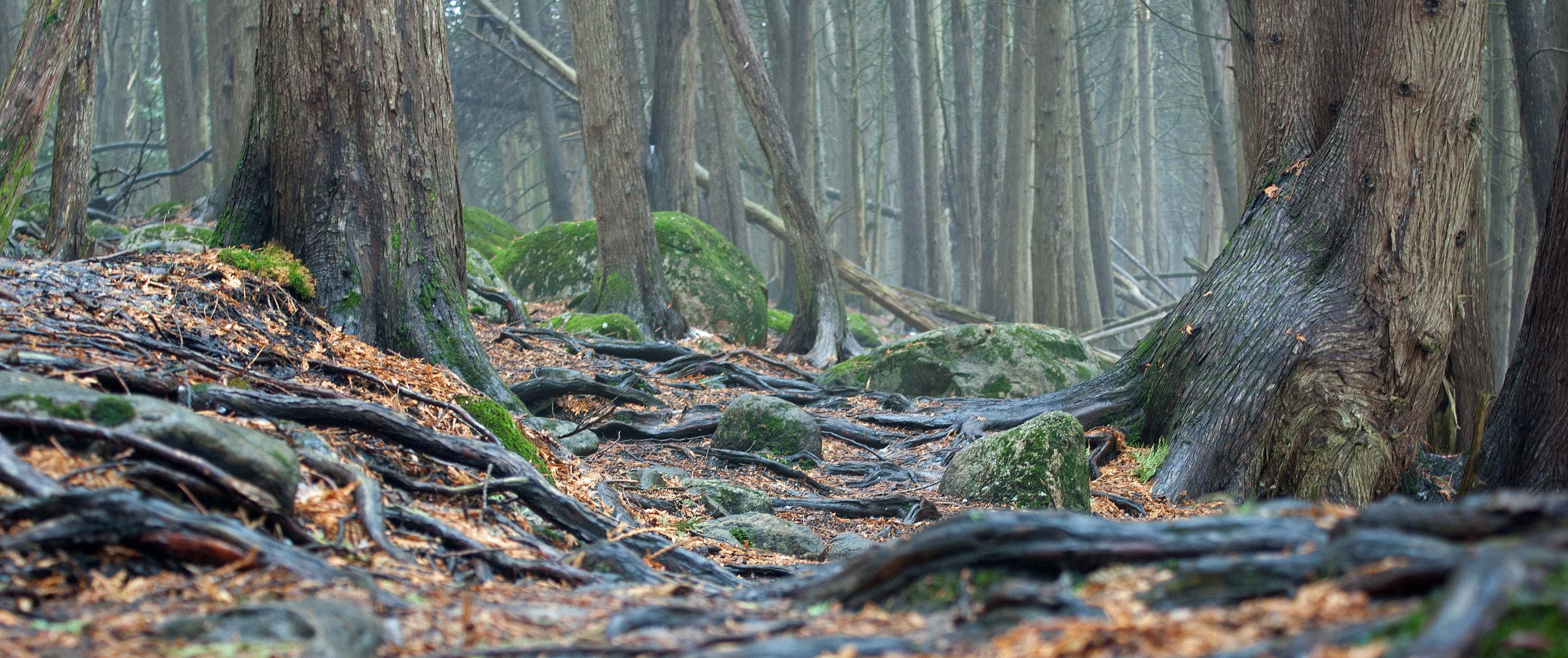
Cedar forest and extensive roots amid glacial erratics flank Jackson Creek on the right, ON (photo by Nina Munteanu)
.
It was a cold November day, after a light snow, as I wandered the Jackson Creek old-growth forest. Centuries-old cedar, pine and hemlock towered above me, giving off the fresh scent of forest. The trees creaked and cracked, swaying in a mischievous wind. I left the main path and descended the leaf-strewn slope toward the river. My boots pressed through a frosty crust into the spongy ground of dead leaves and organic soil. I stopped and breathed in the fresh coolness of the air. A damp mist huddled among the trees, adding wisps of mystery to the ancient forest. It was as though I’d entered an enchanted forest in some fanciful fairy tale.
Cedar forest on slope of Jackson Creek Park in early winter, ON (photo by Nina Munteanu)
.
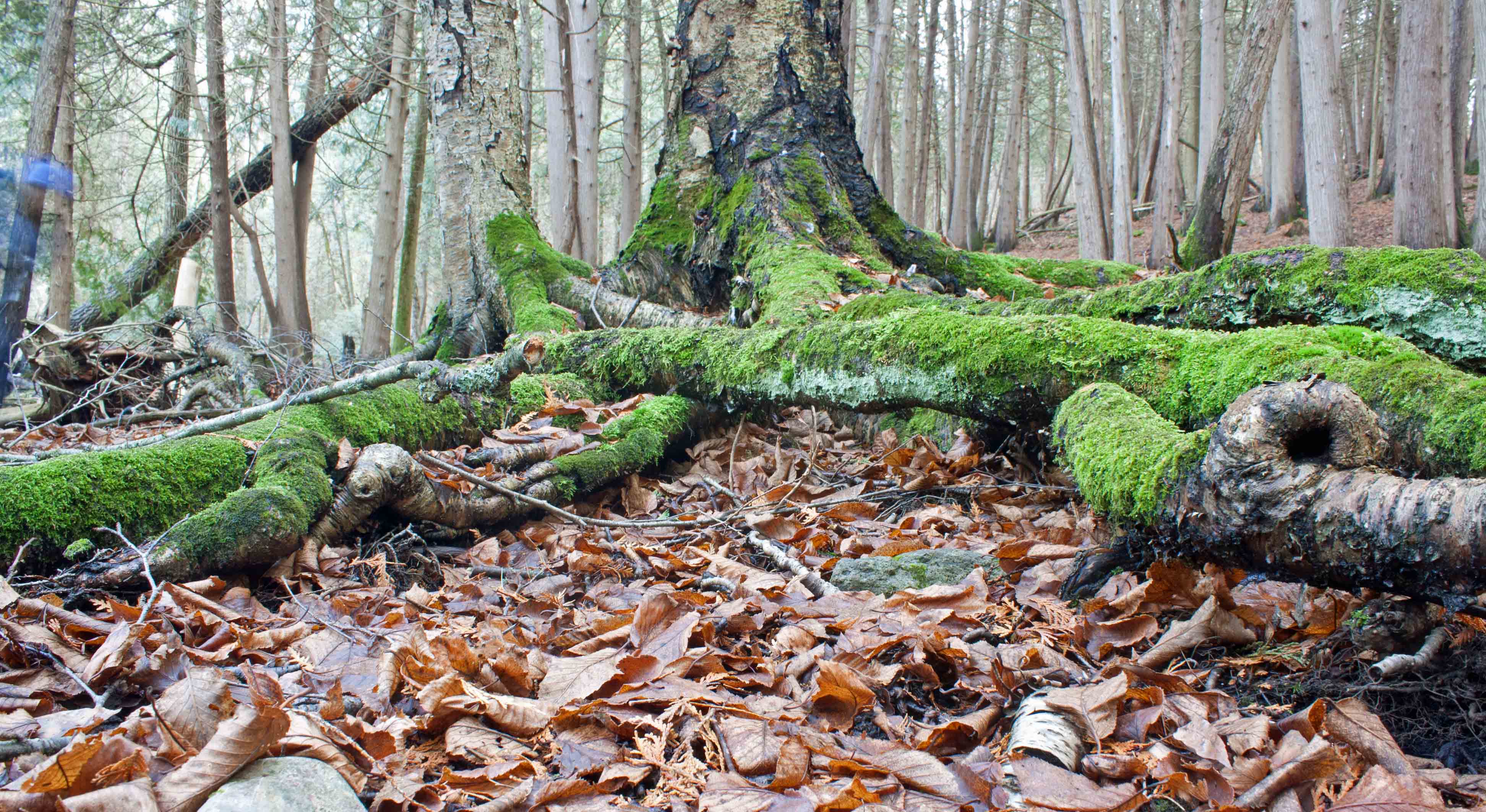
Not far from the river, I approached an old yellow birch tree, large trunk rising as tall as some of the cedars and pines around it. Golden flakes of bark curled and formed craggy patterns around the girth of the old tree. Radiating out from the tree, moss-covered roots snaked out like tangled ropes in a profusion of brilliant green. This was fairy country, I suddenly thought.
I dropped to my knees, crouching down, and set up my tripod and camera to capture this magical tree from the perspective of the forest floor. Head almost touching the ground, I inhaled the scent of loam and decaying leaves. The fresh pungency of cedar, pine, and humid moss hung in the air. Nearby, the river chortled and bubbled in a content symphony of motion. A curious red squirrel parked itself on a log nearby to watch me. It didn’t scold me like they normally did when I entered the forest; like it understood… It then occurred to me, as I set up my equipment under the squirrel’s careful stare, that I was in the presence of an enchantment. Like I was peering into a secret dance of feral celebration. But being there and appreciating it, I had now become part of it; I was Alice going down the rabbit hole into a true wonderland…
It was then that I glimpsed it as I carefully took my timed pictures. A blur of blue. What had I witnessed? A motion? A colour? Then it was gone. But in that moment, I’d felt the spark of an elation that comes with a glimpse into a secret world.
Old yellow birch tree and moss-covered roots with approaching blue sprite from left (photo by Nina Munteanu)
.
When I returned home to look at the images I saw that my camera had captured a wispy blue entity that flowed into its view and peered around the old birch at me with a kind of curious though mischievous grin.
Had I just captured a blue sprite? Something was unmistakably there!
Forest sprite peers around a yellow birch tree, Jackson Creek Park, ON (photo by Nina Munteanu)
.
I read up on sprites. According to European lore, a sprite is a supernatural entity. They are often depicted as fairy-like creatures or as an ethereal entity. The word sprite comes from the Latin spiritus (“spirit”), via the French esprit.
Given that the sprite I’d observed was blue and we were close to the river, I wondered if it was not a forest or wood sprite, but a water sprite. According to alchemist Paracelsus, the term ‘water sprite’ is used for any elemental spirit associated with water. They can breathe water or air and sometimes can fly. They also possess the power of hydrokinesis, which is the ability to create and manipulate water at will. Also known as ‘water nymphs’ and naiads (or nyads), these divine entities tend to be fixed in one place. Slavic mythology calls them vilas. Sprites are not corporeal beings (like selkies, mermaids and sirens) given that they are not purely physical; they are more like local deities than animals. This explained the wispy nature of the being I’d seen peering at me from the tree.
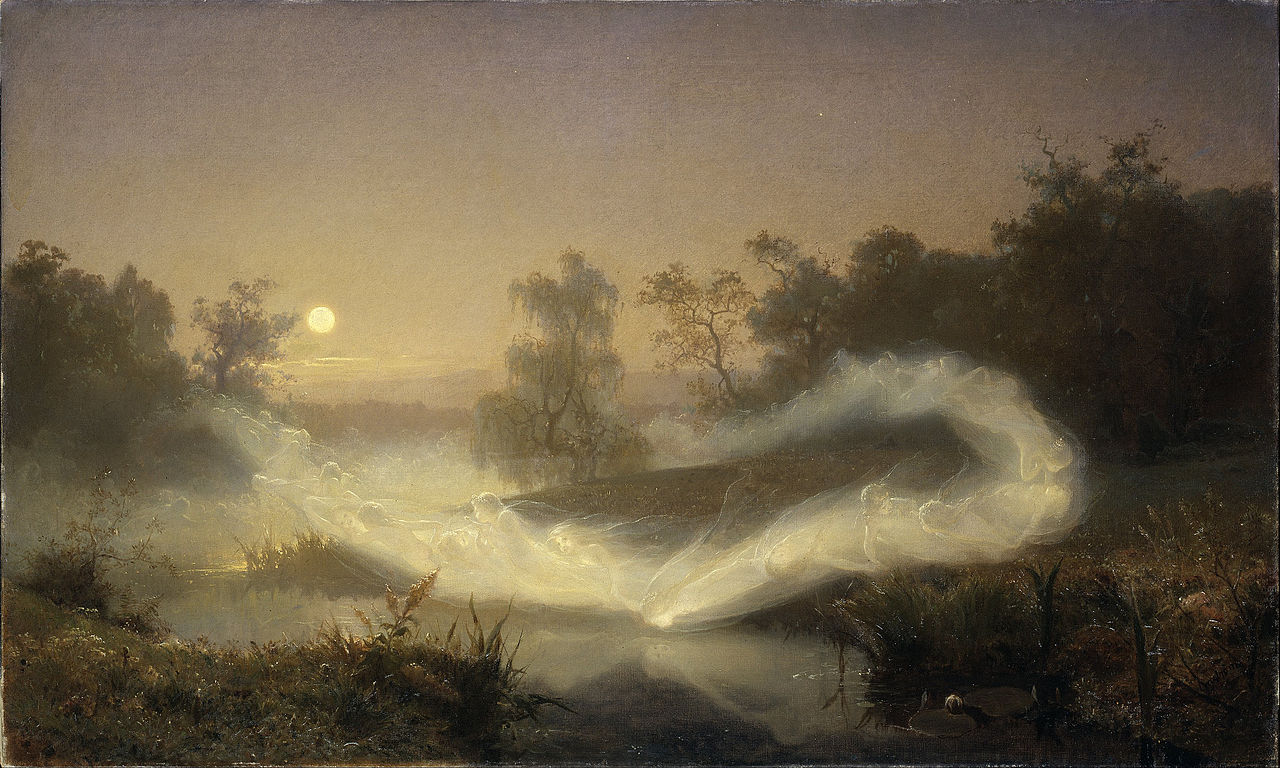
“Dancing Fairies” by August Malmström
.
After consulting with several friends—some who purported to know much more about sprites than I did—I concluded that this sprite was, in fact, a forest sprite and it was blue because it was near the water. Friend Merridy suggested that “forest sprites, normally green, may turn blue if a nearby brook calls to them.” She added that “water sprites can be distinguished by their chatty nature. They rarely go beyond the banks of a river or brook. Forest sprites are mostly silent.” Which this one certainly was. Friend Craig then pondered, “Are digital sprites in our world or in an electro-magnetic world? Or something else?” He was referring to them showing up on my camera without me even noticing they were there. When I told him I would return in search of them he observed, “if you’re looking for them that might be when they hide. Or maybe not. Any type of sprite is probably good, mischievous or friendly.” Thanks, Craig! That was helpful…
Glacial erratic boulders in Jackson Creek, ON (photo by Nina Munteanu)
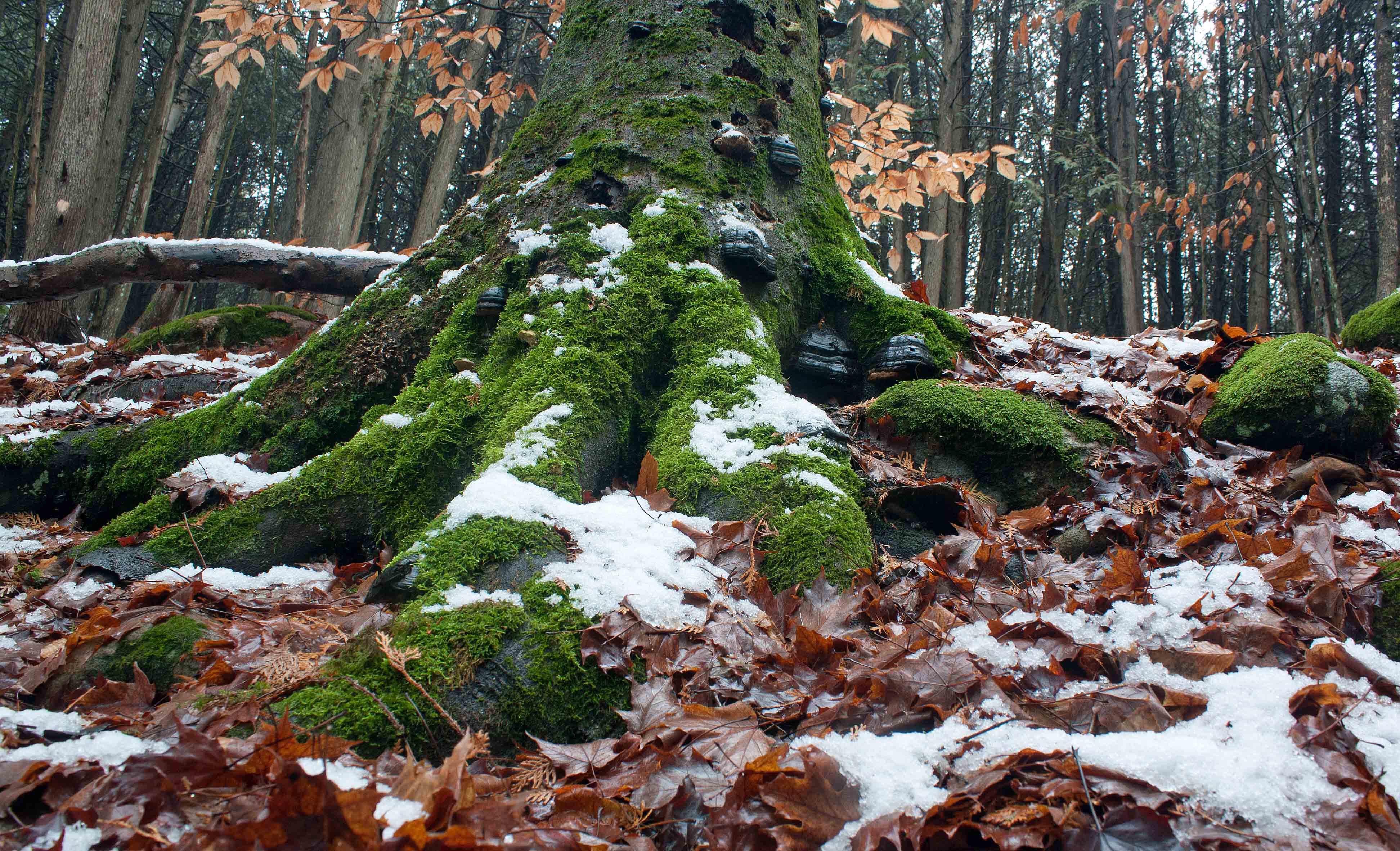
Century-old beech tree, decaying and moss-covered in early winter, Jackson Creek Park, ON (photo by Nina Munteanu)
Ancient cedar tree stands next to an ice sheet on the path beside Jackson Creek, ON (photo by Nina Munteanu)
.
I visited the forest many times after but saw no sign of any sprites. Perhaps Craig was right; they were hiding from me.
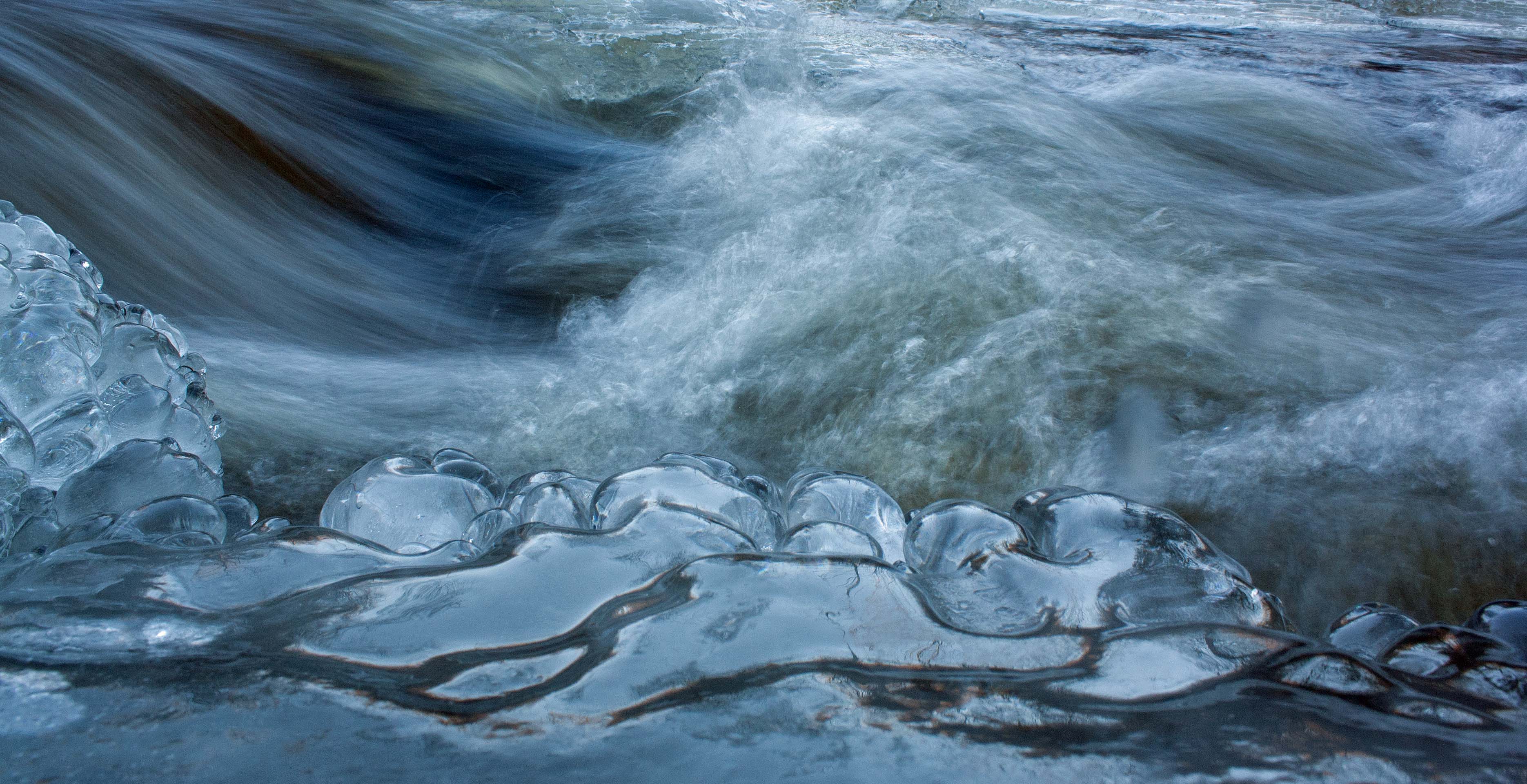
Then, on a foggy late December day, after a light dusting of snow, I returned to document the ice forming in the river. Islands and columns of ice had created a new topography for the flowing waters of Jackson Creek. Ice sheets also covered the forest path in places—making the walk somewhat treacherous. At times, I had to scramble and seize hold of branches to haul my way up precipitous banks from where I’d captured sculptures of ice ‘pearls,’ ‘platforms,’ and ‘columns’ on the river.
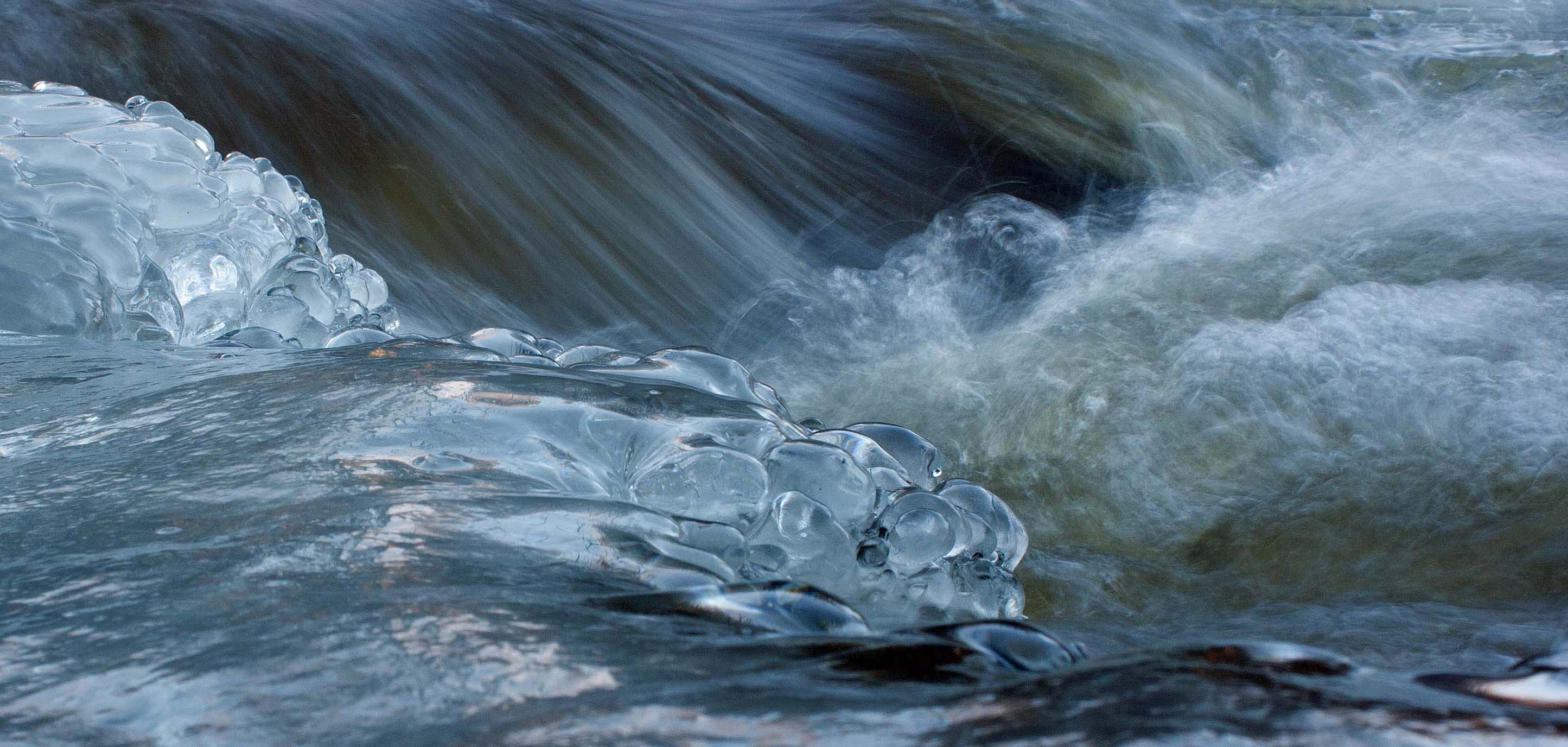
Ice forming on Jackson Creek in early winter, ON (photo by Nina Munteanu)
Ice ‘pearls’ forming on shore by rushing river, Jackson Creek, ON (photo by Nina Munteanu)
.
The fog grew thick as my walk eventually led me into an area of eccentric lopsided cedars in a ‘drunken’ stand by the river bank. The cedars sent out a tangled tapestry of gnarly roots I had to negotiate. I could feel the earth-magic. I dropped to my knees again and set my camera and tripod to the level of the roots. That is when I saw the blue sprite again! This time the sprite wasn’t playful; it appeared startled and disoriented. But, I managed to capture it as it fled the scene in wisps of blue smoke. As I left the forest, my thoughts returned to this serendipitous moment. Had I interrupted the wood /earth sprite in its work in the forest? These sprites are known to have the power of chlorokinesis, the ability to grow and control plants at will. When I checked my images at home, the sprite appeared to float near one of the cedars.
Blue forest sprite floats by cedar tree, Jackson Creek Park, ON (photo by Nina Munteanu)
.
When she saw the image, friend Merridy asked, “was the sprite entering the tree?” Thinking of incantations, friend Dyana asked if I’d had my recording feature on, which I’d never thought to do. On second thought, she decided that it might be dangerous. Not a good idea to anger a sprite. Friend Gabriela then challenged me: “did you ask what message they have for you, Nina? They keep showing up in your way, they might have a message for you or to be delivered through you to…” whoever… I hadn’t thought of that either. How would I hear their message when they were silent and so fleeting, I challenged back. She wisely responded, “Just ask yourself the question; you might be surprised when your next thought brings the answer. Since everything is energy, and you saw them at least twice, you’re probably connected with them.”
Sprite vaporizes behind tree, Jackson Creek Park, ON (photo by Nina Munteanu)
.
I didn’t tell her that the question that came to mind after seeing the sprite was: I wonder what’s for dinner!
I must ponder this more, however.
Cedar forest on a misty winter day, Jackson Creek Park, ON (photo by Nina Munteanu)
Thinking of Gabriela’s interesting remark, I am reminded of a rather sad but evocative tale by Vladimir Nabokov entitled “The Wood Sprite.” Told in the first person, it recounts the narrator’s experience when he was visited at his desk by an old wood sprite, “powdered with the pollen of the frosty, starry night.” The creature tells of his exile from a country wood in Russia, all cut down and burned amid the treachery of war.
Now that I think of it, I know the blue sprite’s message. And now you know it too.
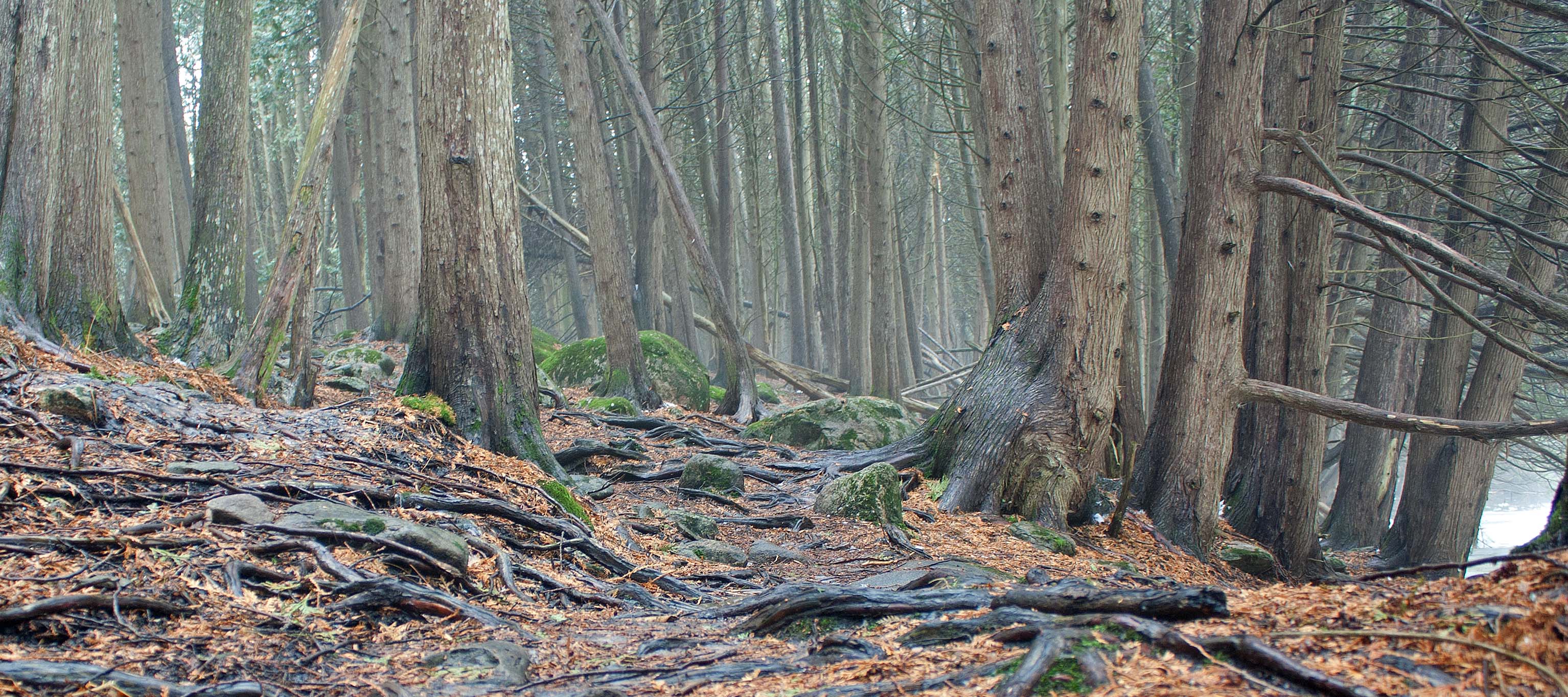
Cedar forest and roots amid glacial erratics in Jackson Creek Park, ON (photo by Nina Munteanu)
Nina Munteanu is a Canadian ecologist / limnologist and novelist. She is co-editor of Europa SF and currently teaches writing courses at George Brown College and the University of Toronto. Visit www.ninamunteanu.ca for the latest on her books. Nina’s bilingual “La natura dell’acqua / The Way of Water” was published by Mincione Edizioni in Rome. Her non-fiction book “Water Is…” by Pixl Press(Vancouver) was selected by Margaret Atwood in the New York Times‘Year in Reading’ and was chosen as the 2017 Summer Read by Water Canada. Her novel “A Diary in the Age of Water” was released by Inanna Publications (Toronto) in June 2020.
I was recently interviewed by Matt Nappo on Minddog TV in New York, where we talked about the science and magic of water, climate change and how to not become cynical, the process of writing, what scares us and what takes us through it into great storytelling.
Here’s the interview:
Matt Nappo interviews limnologist and clifi author Nina Munteanu on minddog TV
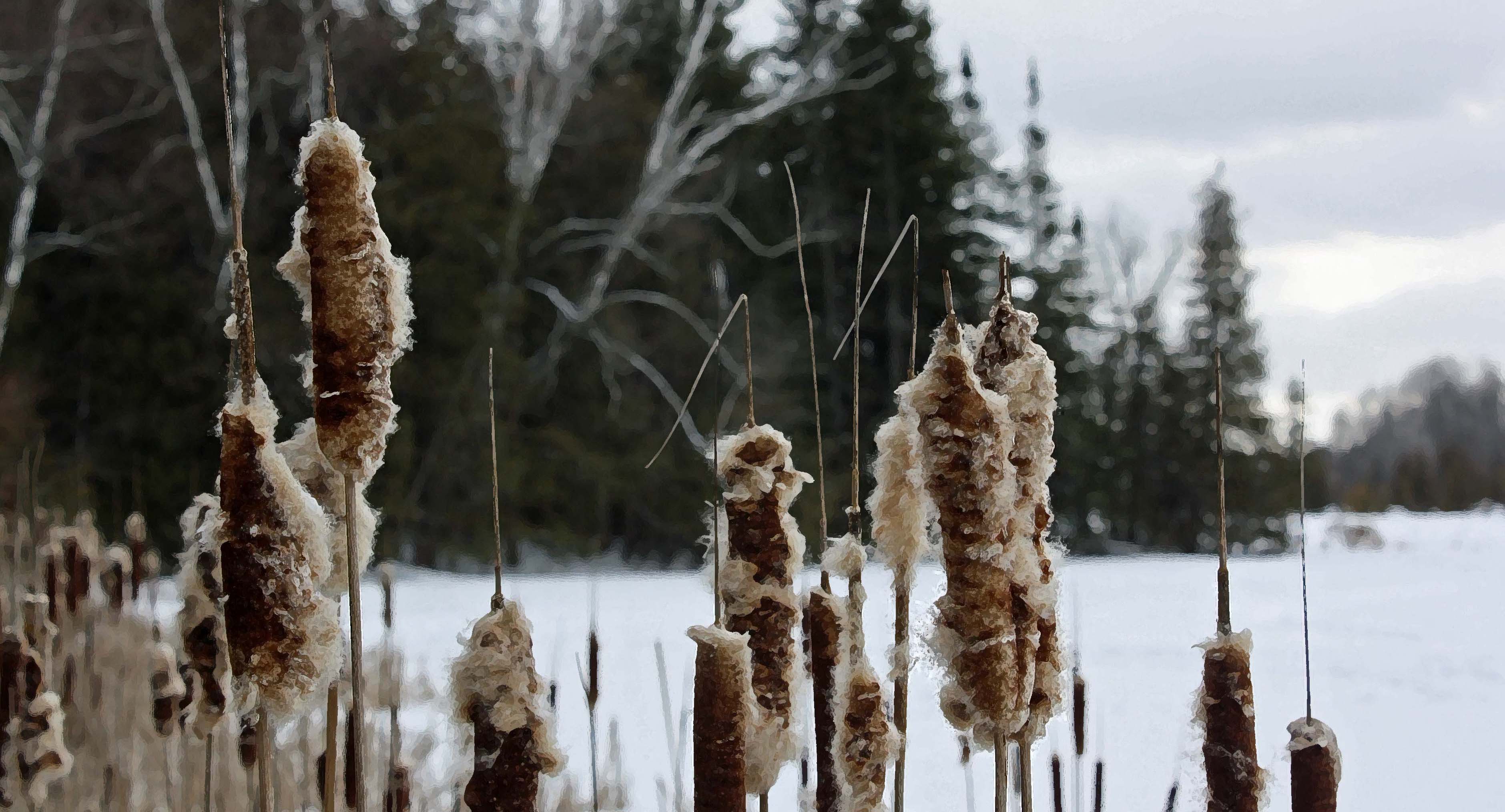
Cattails oversee the snowy plain of the iced-over Trent Canal, ON (photo and dry brush rendition by Nina Munteanu)
Nina Munteanu is a Canadian ecologist / limnologist and novelist. She is co-editor of Europa SF and currently teaches writing courses at George Brown College and the University of Toronto. Visit www.ninamunteanu.ca for the latest on her books. Nina’s bilingual “La natura dell’acqua / The Way of Water” was published by Mincione Edizioni in Rome. Her non-fiction book “Water Is…” by Pixl Press(Vancouver) was selected by Margaret Atwood in the New York Times‘Year in Reading’ and was chosen as the 2017 Summer Read by Water Canada. Her novel “A Diary in the Age of Water” was released by Inanna Publications (Toronto) in June 2020.
“In this bonus episode, we continue our conversation with limnologist and cli-fi author Nina Munteanu. We discuss her book A Diary in the Age of Water and what led her to write this dystopian tale of a future that revolves around water scarcity. Nina’s background as a limnologist gives her a unique perspective on the challenges that await us if we do not address climate change.”
Click below to listen:
Nina Munteanu is a Canadian ecologist / limnologist and novelist. She is co-editor of Europa SF and currently teaches writing courses at George Brown College and the University of Toronto. Visit www.ninamunteanu.ca for the latest on her books. Nina’s bilingual “La natura dell’acqua / The Way of Water” was published by Mincione Edizioni in Rome. Her non-fiction book “Water Is…” by Pixl Press(Vancouver) was selected by Margaret Atwood in the New York Times‘Year in Reading’ and was chosen as the 2017 Summer Read by Water Canada. Her novel “A Diary in the Age of Water” was released by Inanna Publications (Toronto) in June 2020.
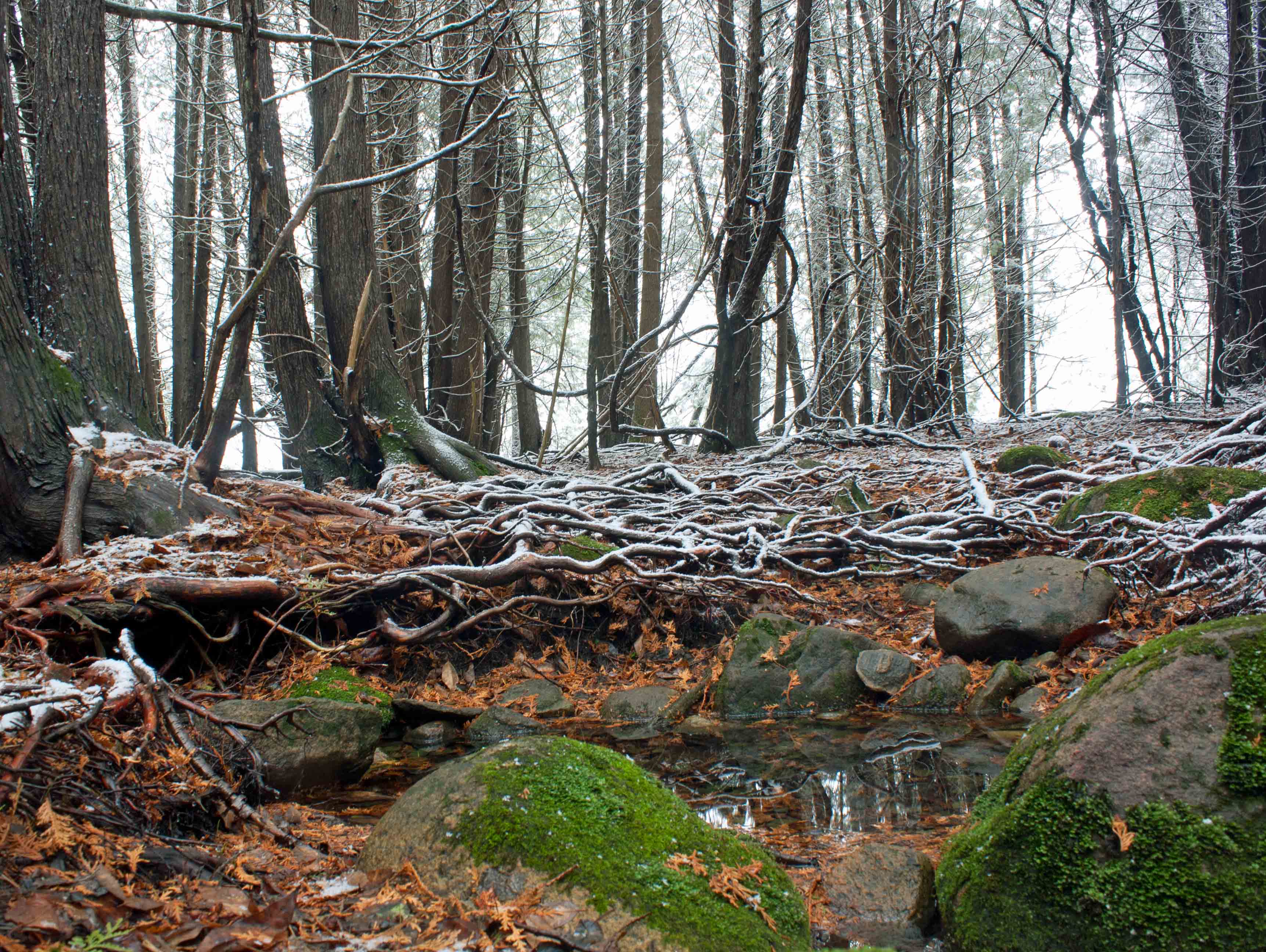
Cedar roots dusted in winter snow, Jackson Creek Park, ON (photo by Nina Munteanu)
.
It’s late December in the old-growth riparian forest of Jackson Creek, Peterborough. A light snow is falling on the cedars. When I walk by the creek through this deep forest, my senses reach out like tendrils, touching the mysteries of Nature’s complexity. To my right, the river’s multi-timbral chorus gurgles and chortles in chaotic symphony. Occasionally, I hear the percussion of ice cracking and booming like a designer rearranging furniture. The cedar pine forest sloping up to my left hisses and giggles as the snow falls and melts. My footfalls crunch over a frozen sponge of litter and loam. Nature’s sounds and aromas coarse through me like sweet nectar and my soul rejoices. I quiet my mind and become one with all of it. Serene in discovery. In sensing. Feeling. Embedding. I’m awestruck with the simple beauty of complex form, pattern and purpose: from the tiniest moss covering a boulder erratic to the largest cedar trees creaking and swaying above me in the whisper of a brisk winter wind.
Today is different.
I see something unexpected. A skull.
.
Red fox skull embedded in frozen shore of Jackson Creek, ON (photo by Nina Munteanu)
.
I’ve been following the icing of Jackson Creek. Huge ice “islands” have formed over boulders, creating new channels for the freezing water to coarse around. I stop near a small tributary of the river to study the formation of ice “pearls” on either side of an ice-formed channel. I venture out onto an ice shelf and set up my small tripod to take slow shots of water magic. The sun paints the water a brilliant turquoise hue.
.
Jackson Creek with ice formation on shore, ON (photo by Nina Munteanu)
.
Breathing hard from my efforts and satisfied with the shots I’ve taken, I stand up and step back from the shore. It’s then, as I look down to where I’ve placed my feet, that I see it. A small white “rock”—No! A skull! Embedded in the frozen leaf litter and ground, not more than several centimetres from the frozen shore of the river, lies an animal skull the size of my hand with a long snout. How have I managed not to step on it and crush it with all my tramping there? I must have stepped past it several times to get to my photo op. I bend low to get a better look. What is it doing there? Who—or what—had brought it there, depositing it on the creek shore?
I returned the next day, eager to show my discovery to a friend and naturalist; she suggested it was a red fox. Excited, I returned the following day with a ruler to measure it and a trowel and some hot water to help me extricate it for better examination. A light snow had fallen the night before but the top of the skull was still visible. I removed the snow and the skull came out of the ground rather easily, revealing several back teeth still embedded in it. While the skull was mostly intact, the lower jaw was missing and a loose tooth lay on the ground below it. I removed my prize and brought it home. After cleaning it with some bleach, I examined it further.
.
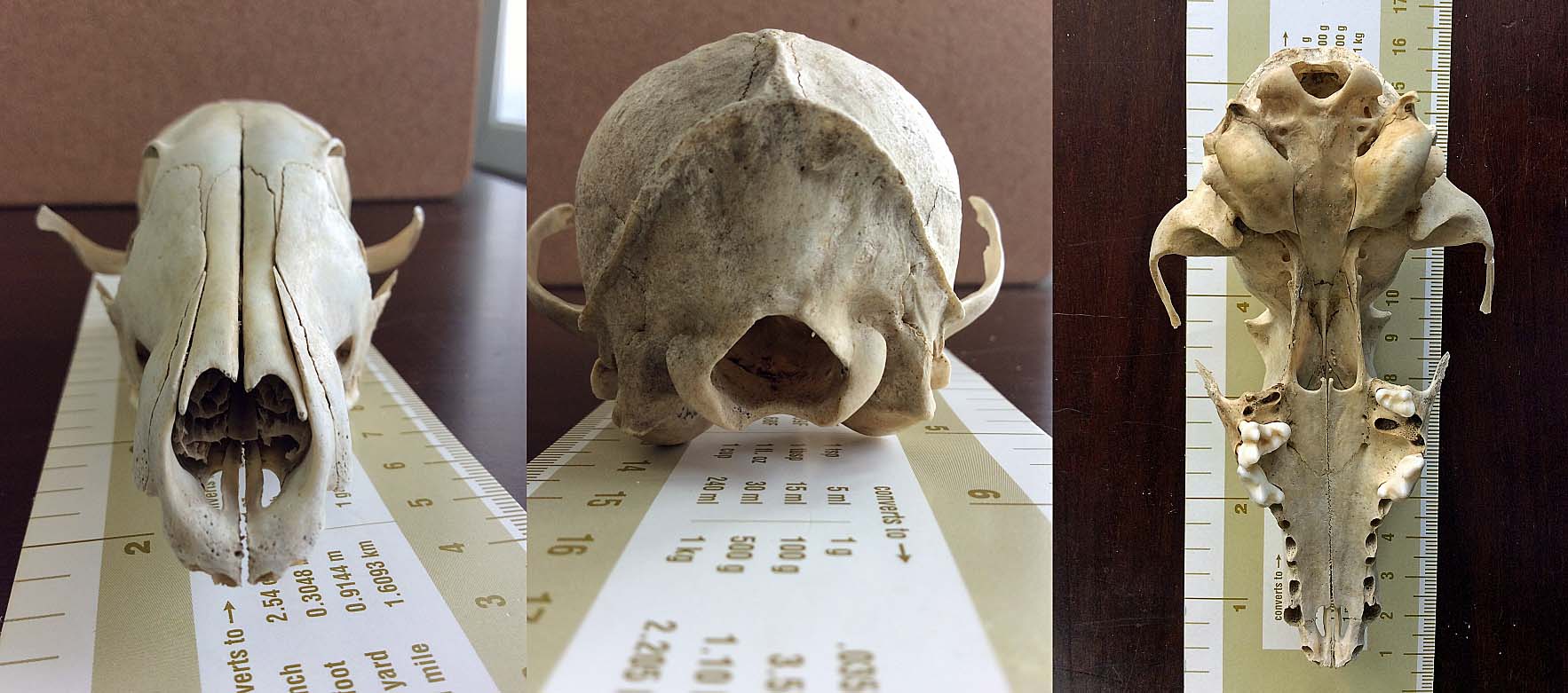
Red fox skull, left to right: front, back, ventral aspects (photos by Nina Munteanu)
.
The skull showed no signs of trauma or injuries to the head. I guessed that while this fox was an adult, it was young; the teeth that were there were in excellent condition. The skull measured 133 mm from end of snout to external occipital protuberance (inion). The average skull length of an adult male measures 129 to 167 mm and vixens 128-159 mm. Steve Harris in BBC’s Discover Wildlife tells us that dog foxes also tend to have broader and more domed skulls than vixens; my skull was rather sleek, I thought. From this I guessed that the skull belonged to a young adult female, a vixen. Statistics for fox deaths also favoured a young fox (see below).
Measurement
Value
Skull Length
Inion to prosthion
133 mm
Skull width
Widest interzygomatic distance
70 mm
Facial length
Nasion to prosthion
63 mm
Facial width
Widest interzygomatic distance
45 mm
Cranial length
Inion to nasion
79 mm
Cranial width
Widest interparietal distance
47 mm
Cranial height
Middle of external acoustic meatus to bregma
43 mm
Red fox skull, lateral aspect (photo by Nina Munteanu)
.
I couldn’t help wondering about this fox which had appeared as if by magic at my feet. What was Vera Vixen’s story? (Somewhere between bringing her home and cleaning her, I decided to name her). How did Vera meet her demise and where was the rest of her? Had the skull recently washed onshore or was it recently brought to the shore by a scavenging racoon, badger (they’re more common in this area than most people think) or another fox? Or had the skull been there longer and the winter ice and water just washed away the litter to reveal the embedded skull? Was it a death of misadventure? Had Vixen drowned when Jackson Creek flooded? Or was she hit by a car at the edge of the park, torn up by scavengers and her skull brought here to eat? Jake McGown-Lowe of BBC’s The One Show shares that “Fox bones are hard to find.” He had found his specimens at the edge of a wood. “In the countryside the main predator of foxes are farmers and gamekeepers, especially around lambing time, and the gamekeepers usually take the bodies away to dispose of.” Jackson Creek is an urban park. Thirty percent of its perimeter is surrounded by urban and suburban streets of Peterborough; sixty percent of the park is surrounded by farmland and some marsh at its upstream end. A Bristol University study on cub survival determined that major sources of mortality included hypothermia, attack by domestic dogs, attack by badgers, and death of the mother.
.
Red fox skull, dorsal side (photo by Nina Munteanu)
.
Various hunters have indicated that in a temperate climate it takes several weeks to several years for decomposers (insects, fungi and bacteria) to clean a skull left in the elements of nature. Temperature, humidity, presence of insects and water play key roles in the process of skeletonization. The skull at my feet could have died as recently as the fall of 2020 and as long ago as spring of 2019 during lambing season. Had Vera been shot or poisoned (including indirectly through scavenging) as she hunted for her kits?
Bristol University estimated that two thirds of the fox population die each year by predators (including humans), disease and vehicles with the single largest cause of fox mortality being through road collisions. An Oxford study corroborated this with observations that 60% of the fox population were run-over by vehicles. Apparently most of the fox deaths are the young. In their 2004 review of the red fox, David Macdonald and Jonathan Reynolds at Oxford noted that “roughly 75% of the fox population die in their first year.” Studies in Europe have also shown that three to seven-month old foxes are most susceptible to traffic collisions—associated with the cub’s increase in ranging behaviour around the den and their lack of experience—and larger propensity for misadventure.
BBC Wildlife Magazine tells us that “spring is a good time to look for mammal skulls. The end of winter is a peak period of mortality for many species, and skulls can be found virtually anywhere.”
.
Red fox pups in refuge park in Delaware (photo by Jennifer Cross, USFWS)
.
The red fox (Vulpes vulpes) is one of Canada’s most widespread mammals, living in a wide range of habitats including forests, grasslands, meadows and farmland. Known for their ability to adapt quickly to new environments, foxes have adapted well to urban settings and ecotones between city and wilderness; in fact, they prefer mixed vegetation communities such as edge habitats and mixed scrub and woodland. They are highly athletic, agile and incredibly fast (they can run up to 30 mph); foxes are known for pouncing on mice and other small rodents, burrowing in the snow using the earth’s magnetic field to help them hunt. Foxes have good visual acuity, capable of seeing small movements from far away and for navigating dense forests as they sprint after prey; but their most useful sense is their ultrasonic hearing. Treehugger reported on a 2014 study by the University of Duisburg-Essen and Czech University of Life Sciences who discovered that “red foxes have the best known maximal absolute hearing sensitivity of any mammal. They can hear a mouse squeak from 100 feet away.” This along with their ability to move swiftly and quietly through most terrain makes them effective crepuscular (dawn and dusk) predators in open country and nocturnal hunters in areas of concentrated human habitation. Foxes generally live an average of 3-7 years in the wild.
Foxes are monogamous. They live in family units in which both parents take equal part in raising their young. Older siblings also care for the young pups. The young kits remain with their parents at least until the fall of the year they were born in and sometimes longer, especially females. Pups are typically born from February-April. They are born blind, deaf and toothless, with dark brown fluffy fur. Mom fox stays close to guard the kits and nurse them for several weeks and the father or barren vixens feed the mothers. The kits leave the den a month after and are fully weaned by 8-10 weeks. The mother and her pups remain together until the autumn after the birth. After the pups are weaned and begin to play about the den’s entrance, Dad fox helps watch them while Mom fox gets in some hunting. If the mother dies, the father takes over caring for the pups. Kits reach adult form by seven months and some vixens reach sexual maturity by ten months—enabling them to bear their first litter at one year of age.
Red foxes help balance ecosystems by controlling population of prey animals such as rodents and rabbits. They also disperse seeds by eating fruit. Steve Hall of Adirondack Almanack reminds us that red foxes play an important ecological role:
“Now and then, vulnerable farm animals such as chickens, ducks and lamb will be taken. While farmers used to routinely trap foxes, many now realize that the fox brings far more benefit in its constant predation on crop-destroying rodents and insects, than the harm they cause in taking the occasional barnyard animal; secure enclosures for hens and [use of] guard dogs to keep the fox in the field but out of the barnyard, are the key to discouraging unwanted fox predation.”
James Fair of BBC Discover Wildlife noted that a single fox during its lifetime may be worth £150-190 to a farmer through rabbit predation. Most farmers in Wiltshire consider the fox a helpmate in reducing the pest of rabbits. Hall adds that while, “Deer are significant carriers of the tick, Lyme disease starts with rodents… [the red fox] eats huge quantities of rodents. If for no other reason, fox hunting and trapping should be banned.”
.
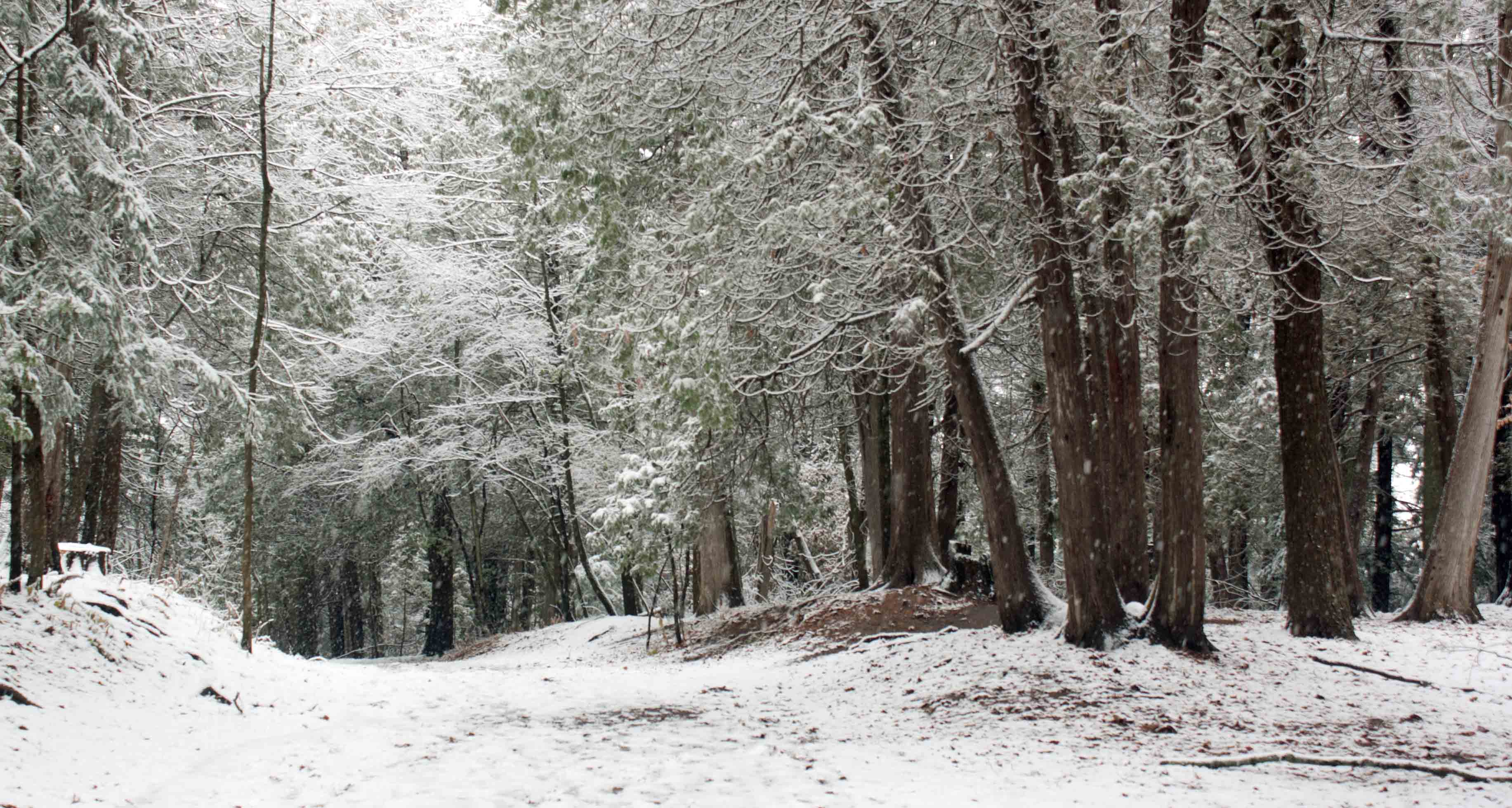
Cedar-pine-hemlock forest after first snow, Jackson Creek Park, ON (photo by Nina Munteanu)
.
Foxes take shelter in thickets and heavy bushes in the autumn until March of the next year. They are omnivores with a varied diet of small mammals such as voles, mice, squirrels and rabbits, and a variety of plants, berries, other fruit and nuts. Foxes have good eyesight but very keen hearing and sense of smell; this along with their ability to move swiftly and quietly through most terrain makes them effective crepuscular (dawn and dusk) predators in open country and nocturnal hunters in areas of concentrated human habitation. Foxes generally live an average of 3-7 years in the wild.
The red fox communicates through a wide range of body language and vocalizations. Foxes use scent glands and urination to communicate their individuality through their skunk-like smell. They use scent to mark territory and show status. The smell increases during mating season. The fox vocal range spans across five octaves with at least 28 different sounds that include those for “contact” and those for “interaction.” Individual voices can be distinguished. One contact sound between two foxes approaching one another resembles the territorial call of a tawny owl. When foxes draw close together, they use a greeting warble similar to the clucking of chickens. Adults greet their kits with gruff huffing sounds.
Red foxes feature prominently in the folklore and mythology of human cultures with which they are sympatric. In Greek mythology, the Teumessian fox or Cadmean vixen, was a gigantic fox that was destined never to be caught. The fox was one of the children of Echidna. In Japanese mythology,the kitsune are fox-like spirits that possess magical abilities which increase with age and wisdom. This includes the ability to assume human form. Some folktales suggest that kitsune use this ability to trick others; others portray them as faithful guardians, friends and love. In the Cotswolds, witches were thought to take the shape of foxes to steal butter from their neighbours. In later European folklore, Reynard the Fox symbolizes trickery and deceit. In the actual world, this translates to resourcefulness, a quick study, and swift and decisive action. And perhaps that is the true meaning of Vixen.
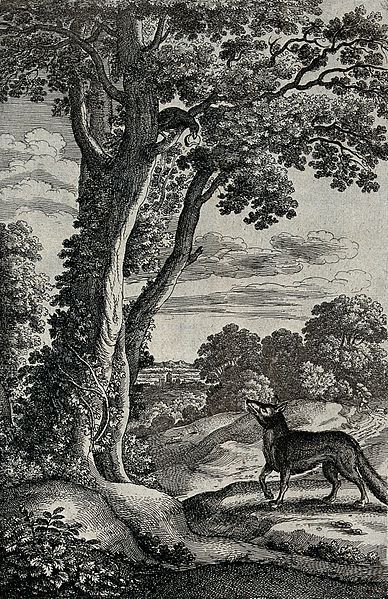
Image of fox and crow from Aesop’s Fables
.
Fox teaches us that gender equality helps to create a strong family, says Chris Lüttichau, author of Animal Spirit Guides. Fox’s medicine is family, survival and voice. Fox embodies resourcefulness and daring in her quest to feed herself and her young. “Fox survives and flourishes because she is clever and adaptable; she is now found living in cities. Fox teaches us to be flexible rather than to resist change.” According to Lüttichau, Fox’s medicine is “swiftness, surefootedness and a quick mind that always knows what to do.” Foxes have a wide vocal capacity and range, from screams and calls to low barks—something for each case as the fox calls and listens and calls back. We can learn from Fox’s varied voice to transcend traditions and prejudices through healing council and stories.
With thoughts returning to my Vera Vixen, I think that perhaps she is not a young unlucky fox who met with misadventure after all; rather, she’s a smart old vixen who’s birthed and nurtured several litters of four to six kits each spring. Her natural death after four to seven years of a rich life in the old growth forest and marsh of Jackson Creek would have led her to a quiet place to lay herself to rest; there her corpse was ultimately found by a badger, racoon or other fox and parts of her scattered throughout the forest to decompose and feed the ecosystem. Ever the mother, Vera now feeds the forest that nurtured her and her family’s existence.
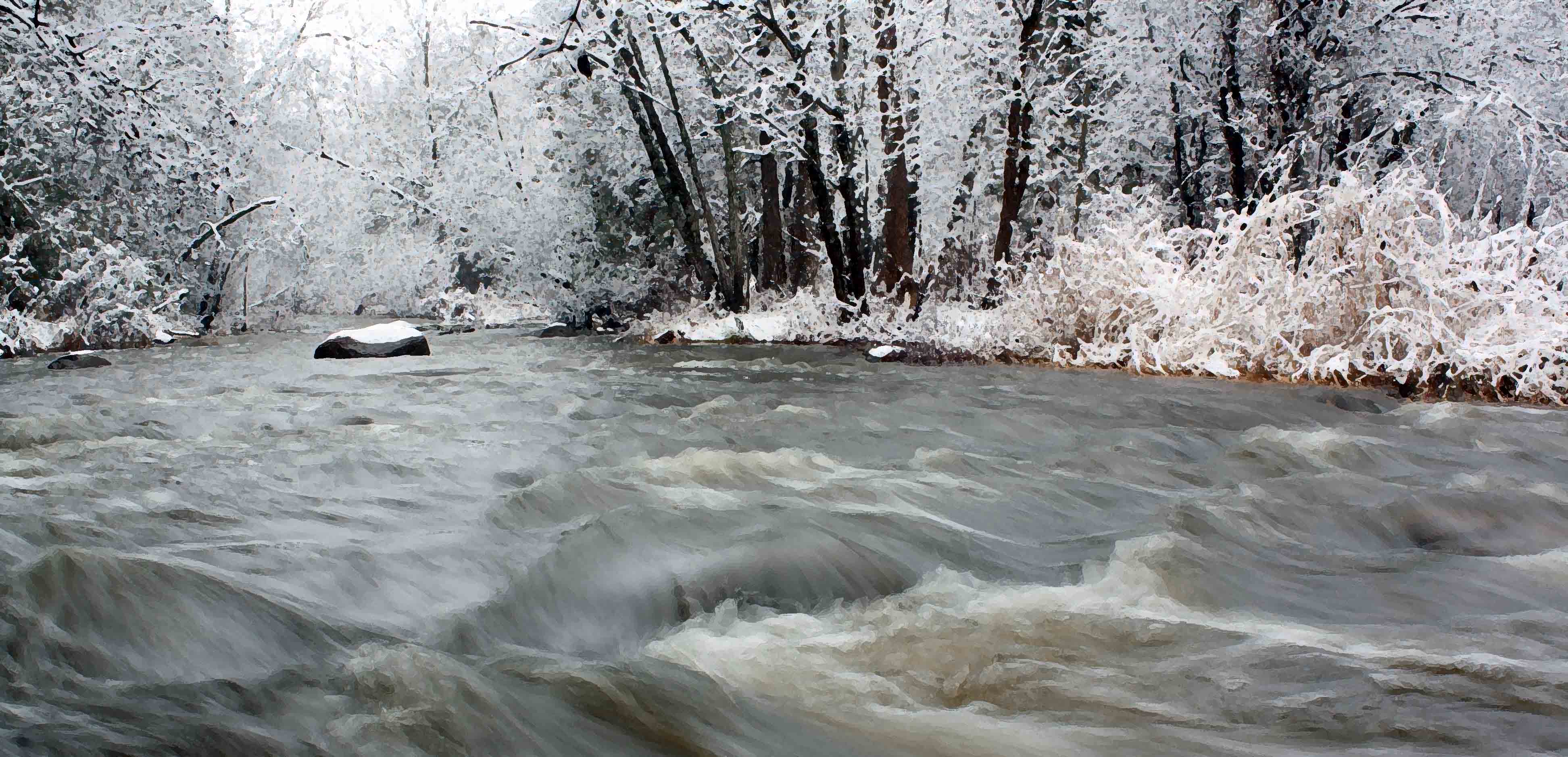
Jackson Creek during first heavy snow, ON (photo by Nina Munteanu)
.
The Story of Fleet, the Fox of Surrey: In January 2014 it was reported that “Fleet”, a relatively tame urban red fox tracked as part of a wider study by the University of Brighton in partnership with the BBC’s TV series Winterwatch, had unexpectedly traveled 195 miles in 21 days from his neighbourhood in Hove, at the western edge of East Sussex, across rural countryside as far as Rye, at the eastern edge of the county. He was still continuing his journey when the GPS collar stopped transmitting due to suspected water damage. Along with setting a record for the longest journey undertaken by a tracked red fox in the United Kingdom, his travels have highlighted the fluidity of movement between rural and urban red fox populations.
Fox Prayer for 2021:
I call on Fox. Shapeshifter and trickster. Edge-walker and messenger. Help me blend with my surroundings and adapt to the changing landscapes. Show me the hidden paths between the worlds. Teach me the ways of invisibility and camouflage. Gift me your keen senses that i might see more of what is around me and use it to accomplish my goals. I call on you, Fox, to bring magic and discernment into my life. Lead me at your steady gait to those places where I might do the greatest good. Let us walk the borders between day and night and follow the scent of divine mischief. Fox, I call on you.
TRAVIS BOWMAN
Jackson Creek ices up in December, ON (photo by Nina Munteanu)
Map of Jackson Creek Park and surrounding area, ON
Jackson Creek Old-Growth Forest:
Jackson Creek Old-Growth Forest (OGF) is a 4.5 hectare urban forest located on a glacial spillway slope littered with granite erratic boulders. The OGF lies within the Jackson Creek Riparian Forest, a 92-ha valley land forest which extends into a major wetland of importance. Dominant conifers in the OGF include white cedar (Thuja occidentalis), white pine (Pinus strobus), and eastern hemlock (Tsuga Canadensis). Sugar maple, American beech, yellow birch, white ash and white oak contribute to the mixed riparian forest. Trees are commonly over 150 years old with some reaching over 250 years. Largest trees—which tend to be the pines and cedars—reach diameters of 97 cm dbh and heights of 35 metres.
Cedar-pine-hemlock forest in Jackson Creek Park, ON (photo by Nina Munteanu)
The Jackson Creek valley was formed by the torrent of glacial meltwater that flowed from the ancient Lakes Algonquin and Jackson through the overlying till to create a glacial spillway some 12,000 years ago (Adams and Taylor 2009); the outflow of glacial Lake Algonquin was channeled to the former glacial Lake Iroquois—a body of water larger than the current Lake Ontario but in the same general area (Ecclestone and Cogley 2009).
The Jackson Creek OGF is a good example of a mature White Cedar—White Pine—Eastern Hemlock stand on a glacial spillway slope in Ecodistrict 6E-8. This eco-district extends in a band from south of Lake Simcoe eastward to the Bay of Quinte, north of the Oak Ridges Moraine, and is characterized by rolling till plains with drumlins, eskers, and intervening wide river valleys (Hanna 1984).
Red fox skull found embedded on iced shore of Jackson Creek, ON (photo by Nina Munteanu)
References:
Adams, P. and C. Taylor. 2009. Peterborough and the Kawarthas (Third Edition). Geography Department, Trent University, Peterborough, Ontario. 252 pp.
Ecclestone, M. and G. Cogley. 2009. “The Physical Landscape of Peterborough and the Kawarthas.” In: Peterborough and the Kawarthas, Third Edition, ed. by P. Adams and C. Taylor, pp. 19-40. Geography Department, Trent University, Peterborough, Ontario.
Hanna, R. 1984. “Life Science Areas of Natural and Scientific Interest in Site District 6-8.” Parks and Recreational Areas Section, Central Region, Ontario Ministry of Natural Resources, Richmond Hill, Ontario. 71 pp. & map.
MacDonald, D. and J. Reynolds. 2005. “Red fox (Vulpes vulpes)” IUCN Canid Specialist Group. Online
Malkemper, E. Pascal, Vaclav Topinka, and Hynek Burda. 2015. “A behavioral audiogram of the red fox (Vulpes vulpes). Hearing Research Vol. 320: 30-37: Online
Monaghan, Patricia. 2004. “The Encyclopedia of Celtic Mythology and Folklore”. Infobase Publishing. pp. 199–200. ISBN978-0-8160-4524-2.
The Nature Conservancy: Nature.org. “Wetlands Mammals: Red Fox.” PDF Online
“Relatives are the worst friends, said the fox as the dogs took after him.” – Danish
Nina Munteanu is a Canadian ecologist / limnologist and novelist. She is co-editor of Europa SF and currently teaches writing courses at George Brown College and the University of Toronto. Visit www.ninamunteanu.ca for the latest on her books. Nina’s bilingual “La natura dell’acqua / The Way of Water” was published by Mincione Edizioni in Rome. Her non-fiction book “Water Is…” by Pixl Press(Vancouver) was selected by Margaret Atwood in the New York Times ‘Year in Reading’ and was chosen as the 2017 Summer Read by Water Canada. Her novel “A Diary in the Age of Water” was released by Inanna Publications (Toronto) in June 2020.