What Kind of Hero is Rhea Hawke?

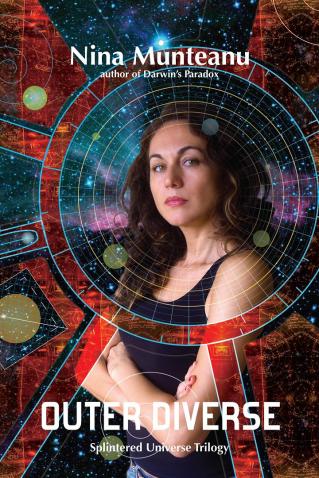
OuterDiverse-front cover

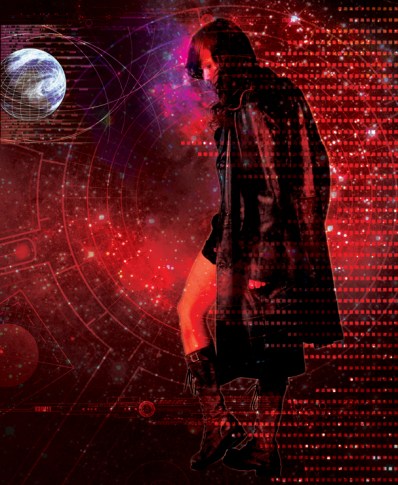
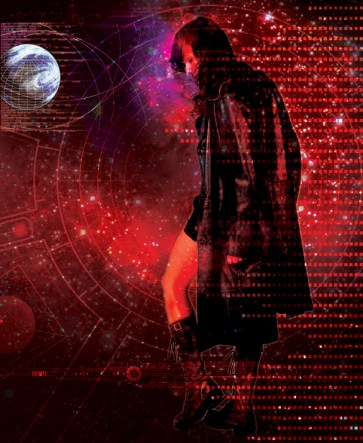
Rhea Hawke on the cover of Outer Diverse

“Rhea Hawke…I want to be her when I grow up.”—Amazon Review

Something is changing for women—and for men too. I’m talking about storytelling—and what makes a hero. Only a few years ago, no one would have predicted the success of Wonder Woman, which portrays a well-rounded female hero as both “badass” warrior (strong, determined and violent) and kind (compassionate, nurturing, empathetic and inclusive).

The male hero stereotype of western neoliberal-corporate culture—and science fiction particularly—has often been characterized by strength, courage, honor, intelligence, and assertive single-mindedness. He is the altruist warrior, often acting alone against an unfair society: all traits honored, respected and esteemed in men. In a woman, these Boadicean qualities often taint her as “bitch”, “bossy”, “cold” or even heartless. She may be considered unwomanly, unlady-like, intimidating, and untouchable (as in lesbian).

In the patriarchal model, a woman “hero” must shed her feminine nurturing qualities of kindness, tenderness, and inclusion, to express those hero-defining qualities that are typically considered male. I have seen too many 2-dimensional female characters limited by their own stereotype in the science fiction genre—particularly in the adventure/thriller sub-genre. If they aren’t untouchable goddesses or “witches”, they are often delegated to enabling the “real hero” on his journey through their belief in him: as Trinity enables Neo; Hermione enables Harry; and Lois enables Superman. In so many of these storylines, the female—no matter how complex, interesting and tough she starts out being—demures to the male lead to support his hero’s journey—without considering her own. And this often means serving as the prize for his chivalry. There’s even a name for it: the Trinity Syndrome.

edge-of-tomorrow-emily-blunt

Rita Vratasky (Emily Blunt) in Edge of Tomorrow

chrisjenavasarala-theexpanse

Avasarala (Shohreh Aghdashloo) in The Expanse

A different kind of hero is gaining momentum in science fiction and action-thrillers in which the heroic gifts of altruism, compassion, faith, courage, passion, and endurance drive the female lead. We see her in movies and TV shows like Edge of Tomorrow, Hunger Games, Divergence, Orphan Black, Farscape, Battlestar Galactica and The Expanse. Even Game of Thrones.

She fights the dragons of prejudice, ignorance, cruelty, greed and intolerance–either in partnership with her male counterpart or alone.

****

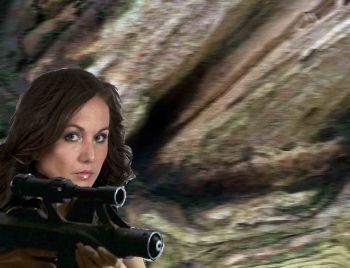
Enter Rhea Hawke, Galactic Guardian: wounded hero with a massive grudge. She’s the only human in a galactic police force of giant alien Eosians (who she despises). In the early scenes of Outer Diverse, Rhea is a “badass”; but she’s also far from heroic—displaying cynicism, open racism and even cruelty to her own colleagues. And yet, in her stubborn resolve to solve the massacre of a spiritual sect—even after she’s fired for killing her suspect—and to solve the mystery of the alien spectre of the Vos (who destroyed her home planet Earth), Rhea betrays a humane need to right all wrongs, including her own.

rhea-contemplative01

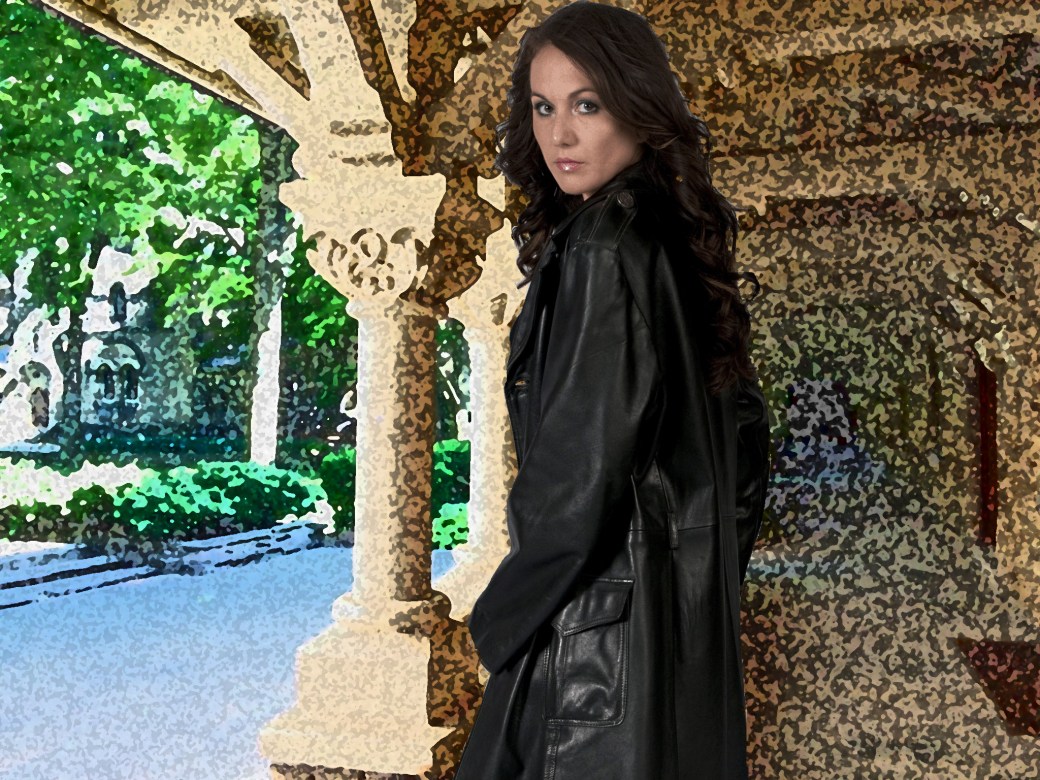
Rhea Hawke (Vali Gurgu)

Rhea’s journey is large—epic, even. It’s a journey of transformation, both literally and figuratively. Her journey of self-discovery will take her across the galaxy, only to find that compassion and forgiveness were with her all along. She just needed to uncover them to find her whole self. Her sometimes foil and love-interest, Serge, continually bates her, challenges her and even betrays her. By turns a foil and an ally, Serge is Rhea’s perfect counterpart; not weaker or stronger, he is an equal to her. A true partner. And their banter is some of the most rewarding writing I’ve done in my career.

When Galactic Guardian Rhea Hawke investigates the genocide of an entire spiritual sect, she collides not only with dark intrigue but with her own tarnished past. Her quest for justice catapults Rhea into the heart of a universal struggle across alien landscapes of cruel beauty and toward an unbearable truth she’s hidden from herself since she murdered an innocent man.

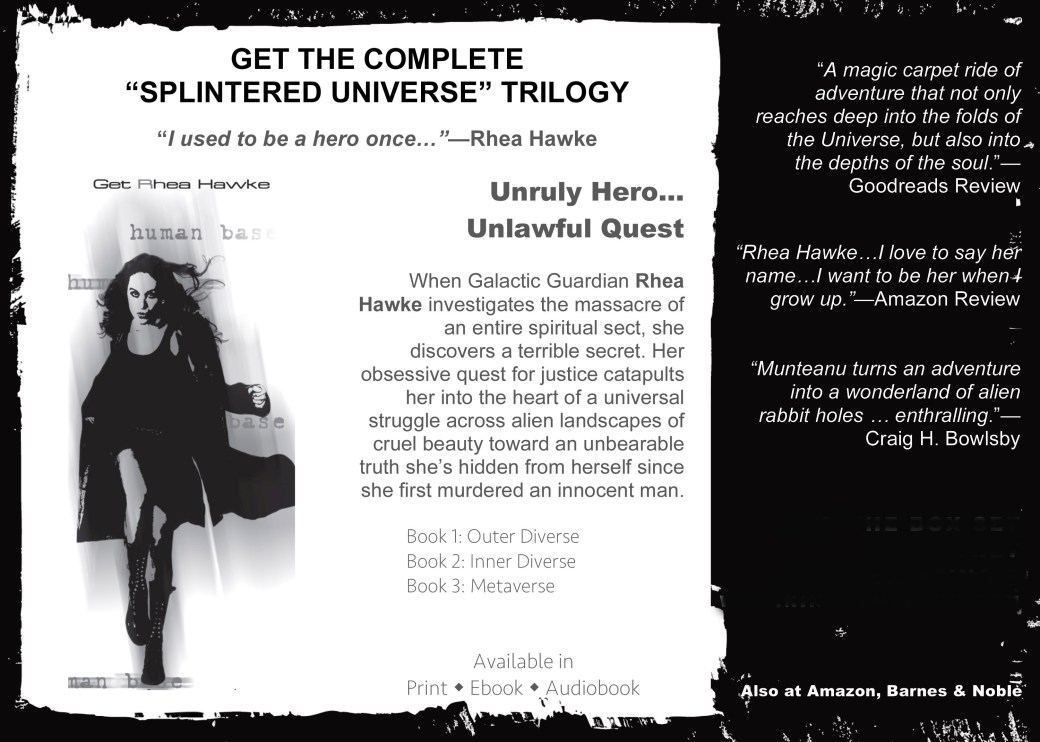
Get the complete Splintered Universe Trilogy. Available in ALL THREE FORMATS: print, ebook, and audiobook. Read the Splintered Universe reviews on Goodreads.

audible listen

Microsoft Word - trilogy-poster03.docx

nina-2014aaa

Nina Munteanu is a Canadian ecologist / limnologist and novelist. She is co-editor of Europa SF and currently teaches writing courses at George Brown College and the University of Toronto. Visit www.ninamunteanu.ca for the latest on her books. Nina’s bilingual “La natura dell’acqua / The Way of Water” was published by Mincione Edizioni in Rome. Her non-fiction book “Water Is…” by Pixl Press (Vancouver) was selected by Margaret Atwood in the New York Times ‘Year in Reading’ and was chosen as the 2017 Summer Read by Water Canada. Her novel “A Diary in the Age of Water” will be released by Inanna Publications (Toronto) in 2020.

Love’s Labour’s Lost…

EXCERPT from Chapter One of Outer Diverse; Galactic Guardian Detective Rhea Hawke sprawls, broken, in the acid-rain mud of an AI-run city—her chase gone terribly awry. Rhea had just jacked the particle-wave stream to the ancient dusty solar system of Fomalhaut, a bright isolated star below the galactic plane about twenty-five light-years from Earth. She’d chased the Dust smuggler V’mer to the sentient city on Mar Delena, home of the largest Dust-addict population in the galaxy:

Rhea-marsh02

Rhea Hawke (Vali Gurgu)

My heart pounded up my throat. I gazed past the long barrel of the Q-gun drilled into my face to V’mer’s menacing grin. The shapeshifter bent over me like a vulture as I lay on my back in the mud. My chest heaved with pain and acid rain stung my eyes, forcing me to blink.

“Now whose fear do you smell, bitch?” V’mer snarled. He shoved the gun further up my nose. The sour smell of congealing blood cloyed in my nostrils. I gulped in sobbing breaths, tasting blood. V’mer sneered down at me out of yet another alien face he’d taken on. He’d assumed the giant form of a hairless purple-skinned Eosian. He’d literally torn out of his clothes. Rain sluiced down the smooth muscular flesh of his naked body, and his bald head shone in the amber street light. “I heard about you,” he went on. “Rhea Hawke, the only human Galactic Enforcer. She loved baldies so much she tecked herself into one—”

I squirmed up in sudden rage, but he slammed his boot hard on my torn shoulder and laughed sharply. I seized in an agonized breath and let my head fall back. White spots strobed in front of my eyes.

“You’re one to talk,” I hissed out between wheezing breaths and fought against passing out.

“You mean the form I’ve taken on? I did it so you could feast on my magnificent body and use your baldie tecks to smell all of me.” He barked out a stuttering laugh. “Wanna kiss me, Officer Hawke?” He went into a mock sing-song: “Rhea, scare-ya, wouldn’t you cry? She kissed the baldies and made them die …”

Alarm seized my heart. How did V’mer know about that malicious tease at the precinct?

V’mer let his laugh die down to a frown of concentration and stroked his face, mock-philosopher style. “Or is it more that you hate your own kind so much …?”

My eyelids involuntarily fluttered shut, and I felt myself slide into darkness. How did it come to this? It was only minutes ago that I was the one in control …

OuterDiverse-front coverOuter Diverse is the first book of The Splintered Universe Trilogy:

When Galactic Guardian Rhea Hawke investigates the genocide of an entire spiritual sect, she collides not only with dark intrigue but with her own tarnished past. Her quest for justice catapults Rhea into the heart of a universal struggle across alien landscapes of cruel beauty and toward an unbearable truth she’s hidden from herself since she murdered an innocent man.

Get the complete Splintered Universe Trilogy. Available in ALL THREE FORMATS: print, ebook, and audiobook. Read the Splintered Universe reviews on Goodreads.

audible listen

Microsoft Word - trilogy-poster03.docx

nina-2014aaa

Nina Munteanu is a Canadian ecologist / limnologist and novelist. She is co-editor of Europa SF and currently teaches writing courses at George Brown College and the University of Toronto. Visit www.ninamunteanu.ca for the latest on her books. Nina’s bilingual “La natura dell’acqua / The Way of Water” was published by Mincione Edizioni in Rome. Her non-fiction book “Water Is…” by Pixl Press (Vancouver) was selected by Margaret Atwood in the New York Times ‘Year in Reading’ and was chosen as the 2017 Summer Read by Water Canada. Her novel “A Diary in the Age of Water” will be released by Inanna Publications (Toronto) in 2020.

The Splintered Universe, Book 1: “Outer Diverse” Audiobook

OuterDiverse-front coverOuter Diverse is the first book of the Splintered Universe Trilogy, set in and around the Milky Way Galaxy. The first book begins as Galactic Guardian Detective Rhea Hawke investigates the massacre of an entire religious sect, catapulting her into a treacherous storm of politics, conspiracy and self-discovery. Her quest for justice leads her into the heart of a universal struggle and toward an unbearable truth she’s hidden from herself since she murdered an innocent man.

Dab of Darkness summarizes the audiobook:

I had the pleasure to listen to this book 5 or 6 years ago, and I really enjoyed it then. I’m very pleased to say that this book has stood up well over the years. Rhea Hawke is still the bad ass I want to be when I grow up. I love her dress sense (boots, weapons, sentient great coat), her sorta pet tappin (kinda a cat with 3 tails), and her best friend Benny, who is the AI on her little work-issued spaceship. Alas, she messed up big time at work (the Galactic Guardians, which is way more bureaucratic than it sounds), and she lost all but her boot and her sorta cat.

rhea-contemplative01

Rhea Hawke (Vali Gurgu)

While wallowing in her self-pity, wondering what to do with her life now, she joins a gym where she meets Serge. He’s way more sexy than his name hints at. Pretty soon, she’s spending nearly all her time at his place. She’s held back from snooping into his past, as she would have done in a heart beat when she worked for the Guardians. That’s going to come back to bite her in the butt.

I especially enjoyed the tangled relationship she has with her mom. She loves her (maybe) but hates her too (and definitely hates that she sleeps around so much!). But her mom has kept some really big secrets from her and that had to sting, so I see her point most of the time.

So many aliens! I love this aspect to the story because humans aren’t the focus. In fact, they are basically an endangered species. Barely tolerated in most civilized places, Rhea has had to work twice as hard to prove herself worthy. She’d rather do that than take the path her mom did (free love).

Then there’s the evil Vos. Cue evil laughter. So many rumors about what they can do, what atrocities they have done. I know it’s quite silly, but I love this because that’s my last name, minus and S, pronounced the same way. Hahaha! If I lived in Rhea’s universe, I’d have to change my last name or risk being shot on sight…

Dawn Harvey does a great job with all the different alien voices. She really went the extra mile, making them sound as described in the text of the story. I don’t know how she made some of those voices, but they really worked!…The pacing is perfect. Her voice for Rhea is spot on – a hero that is sometimes vulnerable.

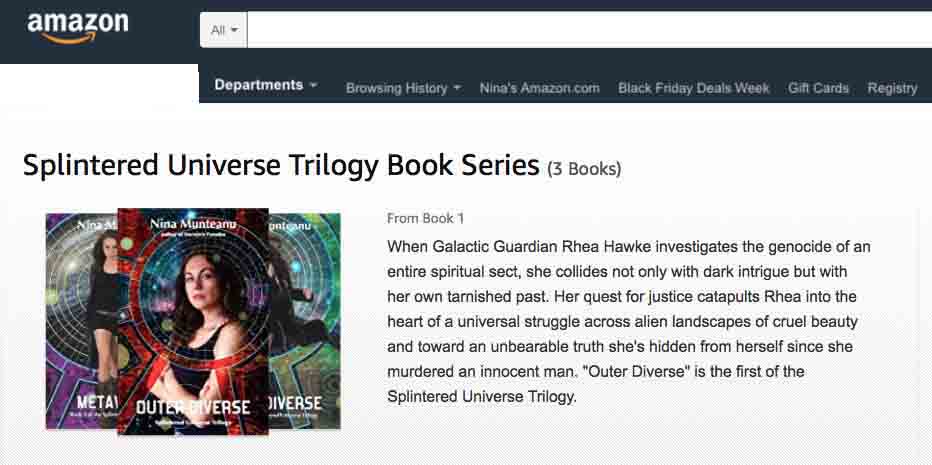
SplinteredUniverseTrilogy-Amazon

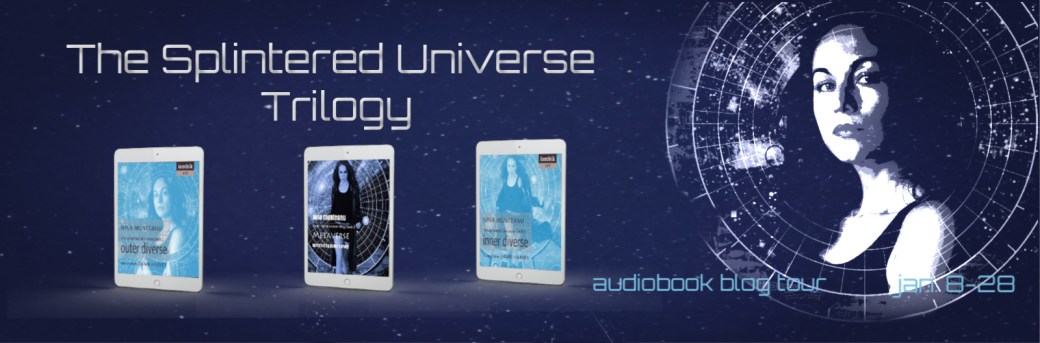
The trilogy consists of Outer Diverse, Inner Diverse, and Metaverse. and is available in ALL THREE FORMATS: print, ebook, and audiobook. You can listen to a sample recording of all three audiobooks through Audible. Read the Splintered Universe reviews on Goodreads.

audible listen

Nina Munteanu’s story is full of surprises, full of action and twists and I liked it so much!Lilly’s Book World

An addictive start to the trilogy!Book Addict

A feast for the senses; glorious worlds with complex inhabitants hurtle towards our unprepared ears—QuirkyMezzo23

I want to grow up to be Rhea HawkeDabOfDarkness

nina-2014aaa

Nina Munteanu is a Canadian ecologist / limnologist and novelist. She is co-editor of Europa SF and currently teaches writing courses at George Brown College and the University of Toronto. Visit www.ninamunteanu.ca for the latest on her books. Nina’s bilingual “La natura dell’acqua / The Way of Water” was published by Mincione Edizioni in Rome. Her non-fiction book “Water Is…” by Pixl Press (Vancouver) was selected by Margaret Atwood in the New York Times ‘Year in Reading’ and was chosen as the 2017 Summer Read by Water Canada. Her novel “A Diary in the Age of Water” will be released by Inanna Publications (Toronto) in 2020.

Rhea Hawke Gets Fired…

EXCERPT from Chapter Two of Outer Diverse, Book 1 of The Splintered Universe Trilogy: Galactic Guardian Detective Rhea Hawke sits in her boss’s office after she kills a lead in a skirmish before she is able to acquire critical information on a case. Hawke insists that the Vos (an alien race that had previously attacked Earth) are linked to the spiritual sect massacre she is investigating.

Rhea library02

Rhea Hawke (Vali Gurgu)

“You don’t get it, Hawke,” he cut me off, smacking the table with his large hand. “I’m not just taking you off the case; I’m closing it. You’re the only proponent of a Vos link and you keep killing your witnesses. We’ll pursue the spiritual killings some other way, with other—less controversial—operatives, but we’re not chasing some Vos-related fantasy. You’re the only one who believes that the Vos have something to do with Eclipse’s Uma-1 massacre and The Rose’s hit list. There’s nothing here to show me that the Vos have returned or intend to. It’s over, Hawke.” He snapped the dossier shut with a finality that made me flinch.

With that final move, he’d nullified my last two months of work: the countless hours of research; dogging subversives and terrorists across the galaxy to dark alleys and smoky back rooms of seedy bars on nameless planets; the needless sacrifices made by colleagues, not to mention my own blunders. With the case shut, Asphalios, even V’mer, had died for nothing.

“I went along with your crazy hunch,” Ennos continued savagely. “Now I’m cutting it loose. This investigation is over. You’ve done enough damage. I want your gun, your badge, and your Great Coat. We’ve impounded Benny.”

He was leading to this but it hit me like a MEC concussion wave anyway. I swallowed the saliva collecting in my mouth and kept swallowing down the ache that rose in my throat. A sudden tremble shook me. Tears stung the backs of my eyes and threatened to close my throat. He was firing me. Only, Ennos couldn’t do it outright. He was too soft on me. Because of my mother. He was trying to ease me out by convincing me it was my idea. Mouth compressing to a thin line, I commanded myself not to cry in front of him; I’d never cried in front of anyone. But I couldn’t say what I wanted to say or the dam would break and the tears would flow. I could only stare at him with the eyes of a wounded animal, pleading and glaring at the same time.

“Hand them over,” Ennos said, taking advantage of my silence. He motioned to me impatiently with his hand, eyes shifting away.

I fumbled shakily for the sobek wallet that held my Enforcer badge and slammed it a little harder than I’d intended on the desk. Then I pulled out my slim pocket pistol from an inside fold of my Great Coat and placed it on the desk beside the badge.

“The MEC too,” Ennos said. “You know the rules,” he reminded me. “It’s non-regulation. No civilian is permitted to have a non-regulation weapon or to carry anything higher than a Class D.”

I sucked in a long breath then snapped open the holster on my thigh and surrendered my MEC alongside the pocket.

Ennos scowled at the gun. My weapon of senseless destruction, he’d called it. Yet he’d pleaded for the design earlier, then bullied me with threats of confiscation after I’d demonstrated the MEC’s capability for devastation.

“Just so you know, sir,” I said, hand resting on the weapon and eyes pinning his, “if anyone tries to design this MEC from its parts, they’ll never succeed, because I rigged a failsafe mechanism based on an algorithm only I know. It’ll be useless.”

Then I slowly let go. Ennos’s face remained stony cold but I thought I noticed it twitch and his eyes briefly falter.

“The coat,” he said.

After another moment of hesitation, I shrugged out of my Great Coat, the Enforcer’s real badge. My shield. I folded it carefully and slowly, stroking the smooth sentient fabric with trembling hands, then placed it on top of the badge and weapons. I stood rigid in my black sleeveless top and trousers, arms hanging stiff at my sides and fighting off shivers. I felt naked.

“That’s all, Hawke,” Ennos muttered. He avoided my eyes and waved a dismissive hand while finding some files to study. “Get your personal things in Stores. Take a holiday in the Rec-Center. Find your life again,” he ended, not bothering to look up, and I knew I’d been dismissed. And fired.

OuterDiverse-front coverOuter Diverse is the first book of The Splintered Universe Trilogy:

When Galactic Guardian Rhea Hawke investigates the genocide of an entire spiritual sect, she collides not only with dark intrigue but with her own tarnished past. Her quest for justice catapults Rhea into the heart of a universal struggle across alien landscapes of cruel beauty and toward an unbearable truth she’s hidden from herself since she murdered an innocent man.

Get the complete Splintered Universe Trilogy. Available in ALL THREE FORMATS: print, ebook, and audiobook. You can listen to a sample recording of all three audiobooks through Audible. Read the Splintered Universe reviews on Goodreads.

audible listen

Microsoft Word - Trilogy-Vcon-AD-2.docx

nina-2014aaa

Nina Munteanu is a Canadian ecologist / limnologist and novelist. She is co-editor of Europa SF and currently teaches writing courses at George Brown College and the University of Toronto. Visit www.ninamunteanu.ca for the latest on her books. Nina’s bilingual “La natura dell’acqua / The Way of Water” was published by Mincione Edizioni in Rome. Her non-fiction book “Water Is…” by Pixl Press (Vancouver) was selected by Margaret Atwood in the New York Times ‘Year in Reading’ and was chosen as the 2017 Summer Read by Water Canada. Her novel “A Diary in the Age of Water” will be released by Inanna Publications (Toronto) in 2020.

Why Ya Gotta Listen to The Splintered Universe Audiobook Trilogy

CoverI04

Rhea Hawke (Vali Gurgu)

Because of Dawn Harvey. It’s that simple.

If you haven’t listened to a book narration by voice actor Dawn Harvey before, you’re in for a treat. When I first embarked on this audiobook project, I had no idea what to expect. I give full credit to the original audiobook publisher, Iambik, who have since closed their doors (my books are currently carried and produced by Audible). Iambik introduced me to Dawn Harvey. She was one of three narrators they’d short-listed for me to audition. I had a short bio of each narrator along with a sample of their reading.

You can listen to samples from all three books on Audible:

audible listen

I knew nothing about the process of narration or turning my print book into an audiobook. But, I did know what I needed in the voice of my book:

  1. The story is told in the first person by Galactic Guardian Rhea Hawke, a cynical angry human in a world of aliens; Rhea hates the colleagues she works with. They consider her puny and incompetent and rash and they continually remind her of some of her earlier disastrous mistakes. Rhea’s voice had to reflect a gritty hardness and sarcasm, while betraying a hidden compassion and kindness. Dawn’s voice nailed it. Dark and rich like a good cup of coffee, Dawn captured Rhea completely. The grit. The hardness. The irony. The vulnerability lurking beneath it all.
  2. The story takes place throughout the galaxy and Rhea encounters over twenty different alien species—all of which needed a distinct voice when conversing with her. Dawn showed incredible versatility in capturing their voices according to the alien’s morphology and culture, which I provided. One of the aliens has five mouths and speaks in a multi-timbral voice; Dawn successfully portrayed it.

OuterDiverse-audiobook-IambikI was so impressed when I listened to the final recording of Outer Diverse (the first book in the trilogy). It was as though I was experiencing the story for the first time—as if I hadn’t written it myself—I was right there, exploring with Rhea Hawke, journeying to the outer planets of the galaxy. Dawn had breathed life into my character and my story. I was totally unprepared for my reaction. Voice artists would explain her techniques: her prepared pauses, tone, speed, inflections, etc. I knew they were there. But that didn’t seem to matter; what mattered was that she’d embraced both my main character and the story and it all came out in her voice.

So, give The Splintered Universe Audiobook trilogy a listen and treat yourself to the entertaining narration of Dawn Harvey. Check out the fawn-like Fauche, raptor-like Khonsus, Azorians, burly Badowins, the amoeba-like Ngu and chameleon-like Xhix. Tell me what you think.

Microsoft Word - Document1

The audiobook trilogy consists of Outer Diverse, Inner Diverse, and Metaverse. The Splintered Universe Trilogy is also available in ALL THREE FORMATS: print, ebook, and audiobook. You can listen to a sample recording of all three audiobooks through Audible.

audible listen

Microsoft Word - Trilogy-Vcon-AD-2.docx

An addictive start to the trilogy!Book Addict

A feast for the senses; glorious worlds with complex inhabitants hurtle towards our unprepared ears—QuirkyMezzo23

I want to grow up to be Rhea HawkeDabOfDarkness

Microsoft Word - SplinteredUniverseTrilogy Audiobooks.docx

Rhea courtyard03

Detective Rhea Hawke (Vali Gurgu)

nina-2014aaa

Nina Munteanu is a Canadian ecologist / limnologist and novelist. She is co-editor of Europa SF and currently teaches writing courses at George Brown College and the University of Toronto. Visit www.ninamunteanu.ca for the latest on her books. Nina’s bilingual “La natura dell’acqua / The Way of Water” was published by Mincione Edizioni in Rome. Her non-fiction book “Water Is…” by Pixl Press (Vancouver) was selected by Margaret Atwood in the New York Times ‘Year in Reading’ and was chosen as the 2017 Summer Read by Water Canada. Her novel “A Diary in the Age of Water” will be released by Inanna Publications (Toronto) in 2020.

The Splintered Universe Audiobook Series–at When Words Collide, 2019

Rhea library02

Rhea Hawke (Vali Gurgu)

In August 2019 I participated in several panels and workshops at Calgary’s writer and reader festival When Words Collide (WWC). One of them was a presentation I shared with voice actor Dawn Harvey.

Dawn had impeccably narrated the audiobooks of my science fiction / space adventure trilogyThe Splintered Universe: a rollicking, fast-paced detective adventure that features a complex character and her sentient great coat, unique weaponry, aliens, bio-technology, intelligent space ships and compelling intrigue.

When Galactic Guardian Rhea Hawke investigates the genocide of an entire spiritual sect, she collides not only with dark intrigue but with her own tarnished past. Her quest for justice catapults Rhea into the heart of a universal struggle across alien landscapes of cruel beauty and toward an unbearable truth she’s hidden from herself since she murdered an innocent man.

The trilogy consists of Outer Diverse, Inner Diverse, and Metaverse. and is available in ALL THREE FORMATS: print, ebook, and audiobook.

You can listen to a sample recording of all three audiobooks through Audible. Read the Splintered Universe reviews on Goodreads.

Microsoft Word - trilogy-poster03.docx

In the WWC presentation, Dawn and I shared our experience with the auditioning process, the partnership between author and narrator, and the actual production of an audiobook. Dawn (who is a lawyer) brought thirty pages of notes and you can guess that we only covered a portion of them in the hour-long presentation; she needs to come back and have more time for an audience clamoring for more. The blurb for the WWC presentation read:

While paper sales dwindle, audiobooks continue to be the fastest growing segment of the publishing world with sales increasing by 30% year over year for the past decade. With our fast paced and connected society, audiobooks are the way of the 21st century and it’s high time you got on the bandwagon! Join author Nina Munteanu and audiobook narrator and producer Dawn Harvey to learn what it takes to turn your masterpiece into an audiobook.

I’ve been told by many that this trilogy would make a cool TV series or movie: the strong and strange female protagonist, weird technology and worlds, create a visually stunning and compelling narrative. The audiobook series is a first step toward increased depth in a series just bursting with the energy to express beyond the confines of written narrative.

*****

The Splintered Universe Trilogy Twitter Cover

The narration is addictive, leaving you wanting moreKeeps you listening far into the night—Book Addict

rhea-contemplative01

Rhea Hawke (Vali Gurgu)

RA feast for the senses; glorious worlds with complex inhabitants hurtle towards our unprepared ears!—QuirkyMezzo23

There’s so much I have enjoyed about this series so far. Rhea is a fascinating character from the start and she continues to grow throughout the tale. There’s her AI ship, Benny, her sentient great coat, her special made gun, and her own hidden shapeshifting abilities. Then there’s a cast of interesting characters, good guys and bad guys. I love that I don’t know how things will turn out; the plot keeps me guessing—Dab of Darkness

Full of surprises, action and twists!—Lilly’s Book World

nina-2014aaa

Nina Munteanu is a Canadian ecologist / limnologist and novelist. She is co-editor of Europa SF and currently teaches writing courses at George Brown College and the University of Toronto. Visit www.ninamunteanu.ca for the latest on her books. Nina’s bilingual “La natura dell’acqua / The Way of Water” was published by Mincione Edizioni in Rome. Her non-fiction book “Water Is…” by Pixl Press (Vancouver) was selected by Margaret Atwood in the New York Times ‘Year in Reading’ and was chosen as the 2017 Summer Read by Water Canada. Her novel “A Diary in the Age of Water” will be released by Inanna Publications (Toronto) in 2020.

A True Rocky Mountain Gem: The Antique Forest of Robson Valley

In my novel A Diary in the Age of Water (Inanna Publications) the diarist writes about the huge reservoir complex that was built in the late 2020s in the Rocky Mountain Trench to create an 800 km long reservoir system to rehydrate the United States. Of course, it’s science fiction, but it was based on real plans (NAWAPA) that went all the way to congress in the 1960s. That reservoir might have drowned the rainforest conservation corridor of Robson Valley—a conservation area that continues to experience existential risk due to development, resource harvest, and other disturbance.

Cedar-boardwalk-Anne

Friend Anne walks the boardwalk of the ancient forest park

In Robson Valley—tucked between the Rocky and Cariboo Mountains of East-Central British Columbia, the Fraser River nourishes an ancient rainforest matched nowhere on Earth. Massive Western Redcedar (Thuja plicata)—some over 1200 years-old, 3.5 meters in diameter, and 45 meters high—thrive in this valley, nurtured by abundant groundwater flow and high humidity for healthy tree growth and reduced fire risk. “Unfortunately, this requirement for growth in wet toe-slope positions has had negative consequences for ancient cedar stands. Historically, roads and railroads were placed at the base of mountain slopes, where easy access on level roadside terrain meant that ancient cedar stands were often among the first sites chosen for logging. Ancient cedar stands now represent less than 5% of forested landscapes within the Upper Fraser River watershed.” (UNBC Plant Ecology)

GiantCedars boardwalk2

Moss-covered giant Redcedar in foreground to boardwalk

This valley contains the most extensive inland rainforest in the northern hemisphere and is the only valley in the Rocky Mountains where grizzly bears still feed on wild ocean-going salmon.

Old Cedar-RobsonPark2019

Western Redcedar with wide buttresses

The Save-The-Cedar League also tells us that the Robson Rainforest is oroboreal: mountain-caused with boreal biome characteristics—unlike typical rainforests which are temperate-coastal or tropical. “Antique Forest” is a term used for ancient cedar-hemlock stands that have endured for more than 1000 years. One stand in Primordial Grove can be seen via a well-constructed boardwalk in a small park off Highway 16.

When I entered the ancient forest of magnificent giants with wide buttressed bases, a deep reverence came over me. No other word comes close to describing what I experienced or felt. I was enthralled and humbled by these magnificent trees, silent giants that rose into the mist like sentinels, piercing the heavens. It had rained that morning and the forest dripped with living moisture. Greens of all shades created a living mosaic of hue and texture. Moss covered everything. Lichen dripped off branches and clothed trees in crenulated patterns. The fragrance was intoxicating, a fresh pungency that woke something inside me. The smell has been variously described as “lingering”, “fresh”, “sweet”, “like pineapple when crushed”, or “almost like fresh water.” Even the breeze took on a different voice inside this living cathedral. A kind of deep hush that whispered of sacred grandness.
Cedar-up

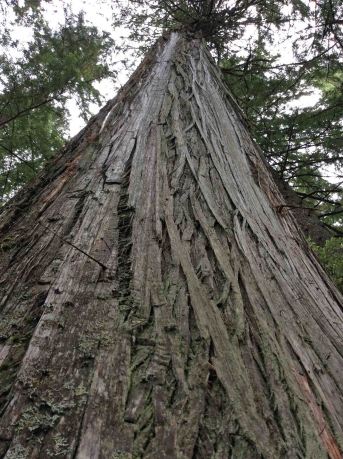
Western Redcedar

I knew I was in a sacred place.

This ancient forest had been here at least a millennium; long before the arrival of Christopher Columbus to the Atlantic shores of North America. Long before us. Referred to as “the cornerstone of northwest coastal Indian culture,” the Western Redcedar is known as the “tree of life” and “life giver.” Groves of ancient cedars were symbols of power, and gathering places for ceremonies, retreat, and contemplation.

I kept to the boardwalk—to help prevent unwanted trampling and soil compression. The boardwalk snaked past giant buttressed trees that towered several stories high and formed a feathered canopy way above me. Whenever the boardwalk came close to a giant cedar, I had to stop and touch it. The reddish bark was smooth. I smiled; many others had done the same. In unavoidable reverence.

Breathing in the tree’s exquisite fragrance, I scanned my surroundings. A rich understory of red-berried Devil’s Club (Oplopanax horridus), huckleberry, fern, moss, liverworts and dense ground cover painted the forest floor in varying form and colour. I imagined the diversity of invertebrates, amphibians, reptiles, birds and mammals that flourished here. I’m told that scientists are still finding new species in this rainforest. UBC scientists tell us that arboreal lichen communities of the inland rainforest, especially the epiphytic cyanolichen assemblages on conifers, are among the richest in the world.

Nina-giant cedar03

Nina Munteanu leans against a well-loved giant Western Redcedar


Gentle Giant of North Temporate Rainforest: Western Redcedar (Thuja plicata)

tall cedar-moss

Western Redcedar

The Western Redcedar (Thuja plicata) is one of the most magnificent conifers in Pacific Northwest forests (both coastal and inland); it flourishes along the coastal fog belt from Alaska to northern California, and inland from the Pacific Ocean to Montana. The Western Redcedar is actually an arborvitae—not a true cedar; acknowledged by its name “redcedar”. True cedars only grow in the Mediterranean regions of the world. “Thuja,” is the latinism for the ancient Greek word for a now unknown, long-lost aromatic evergreen wood; “plicata,” means “folded into plaits,” which may refer to the tree’s characteristic foliage or its furrowed, stringy bark. The heartwood is pink- to red-brown to deep warm brown and highly resistant to moisture, decay and insect infestation due to the oils and acids (polyoxylphenols) it produces; it’s the phenols, in fact, that give the cedar its distinctive and pleasant aroma.

Given their extensive root system, cedars can remain standing long after they die. Western Redcedar snags (standing dead trees) can remain intact for up to 125 years. The large snags provide habitat for many cavity-nesting birds and mammals. Many species that require snags for habitats also prey on insects that use trees in a fine balance of a functional ecosystem. Examples include the pileated woodpecker, squirrels, weasels, martens, bats, owls and ducks. A fallen cedar can remain on the forest floor for over a century. “This durability is the result of a natural preservative that is toxic to decay-causing fungi. This ability does not decrease with age; in fact, it increases,” writes Jeri Chase, Oregon forester.
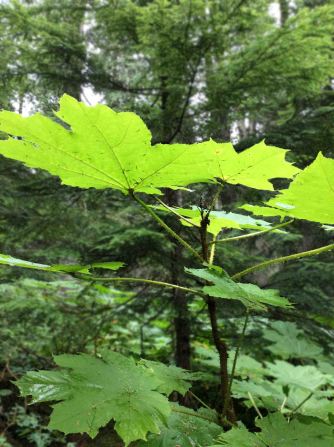
DevilsClub Hemlock-CedarGrove

Devil’s Club

Several of these live ancient cedar trees grow out of the trunks of other live ancient cedars, following a 180 million-year-old pattern observed in the closely-related redwoods (Sequoia). Basal shoots of the trunk yield genetically-superior mature trees when compared to seeds, root sprouts, other shoots or other layering phenomena.

Western Redcedar reproduces from root or branch development on fallen trees—the classic “nurse logs” often seen in northwest forests that also nourish other forest species. The magnificent bark of the Redcedar ranges in color from grey to reddish brown, and is deeply furrowed, forming long flat fibrous plates that peel and shed easily. Wildlife use the cedar in many ways. The foliage is an important winter food for elk and is browsed year-long by deer and rodents. Black bears den in the hollowed-out trunks of old trees and the cedar-dominated old growth forests provide valuable habitat for spotted owls and Vaux swifts.

Functional Ecosystem & Symbiosis

red-backed_vole

Red-backed vole

The Robson Valley cedar-hemlock rainforest supports a diverse and efficient ecosystem from apex and keystone predator—the grizzly—to black bear, gray wolf, cougar, lynx, wolverine, coyote, and seven ungulate species (including the Mountain caribou); all feeding on a diversity of prey and primary producers. The Mountain caribou feeds on mountain boxwood shrubs which are sheltered by the cedar and hemlock canopy layer.

An example of the symbiotic nature of the old growth cedar-hemlock forest is the red-backed vole, which resembles a large plump mouse. This forest mammal eats truffles—a type of fungus that lives underground. After digesting the truffles, voles spread the fungus around the litter layer of the forest through their droppings. The truffles help tree roots absorb soil minerals and the trees produce sugars necessary for the truffles: a win-win symbiotic relationship. The cedar and the hemlock require this alliance with truffles and voles to grow so large in the nutrient-poor soil.

The Inland Sea of the Rocky Mountain Trench (NAWAPA)

Diary Water cover finalUna stopped the car and we stared out across the longest reservoir in North America. What had once been a breathtaking view of the valley floor of the Rocky Mountain Trench was now a spectacular inland sea. It ran north-south over eight hundred kilometres and stretched several kilometres across to the foothills of the Cariboo Mountain Range. Una pointed to Mount Mica, Mount Pierre Elliot Trudeau and several other snow-covered peaks. They stood above the inland sea like sentinels of another time. Una then pointed down to what used to be Jackman Flats—mostly inundated along with McLellan River and the town of Valemont to the south. Hugging the shore of what was left of Jackman Flats was a tiny village. “That’s the new Tête Jaune Cache,” my mother told me.

If villages had karma this one was fated to drown over and over until it got it right.  Once a bustling trading town on the Grand Trunk Pacific railway, Tête Jaune Cache drowned in the early 1900s when the Fraser naturally flooded. The village relocated to the junction of the original Yellowhead 16 and 5 Highways. Villagers settled close to where the Fraser, Tête Creek, and the McLellan River joined, all fed by the meltwater from the glaciers and icefields of the Premiere Range of the Cariboo Mountains. The village drowned again in 2025. I imagined the pool halls, restaurants, saloons and trading posts crushed by the flood.

“This area used to be a prime Chinook spawning ground,” Una said. “They swam over 1,200 km from the Pacific Ocean to lay their eggs right there.” She pointed to the cobalt blue water below us.

The reservoir sparkled in the sun like an ocean. Steep shores rose into majestic snow-capped mountains. The village lay in a kind of cruel paradise, I thought. It was surrounded by a multi-hued forest of Lodgepole pine, Western red cedar, Douglas fir, paper birch and trembling Aspen. Directly behind the village was Mount Terry Fox and across the Robson valley mouth, to the northeast, rose Mount Goslin. Behind it, Mount Robson cut a jagged pyramid against a stunning blue sky. Wispy clouds veiled its crown. I couldn’t help thinking it was the most beautiful place I’d seen. And yet, for all its beauty, the villagers had lost their principle livelihood and food. The reservoir had destroyed the wildlife habitats and the fishery. And its people with it.

Una pointed to where the giant reservoir snaked northwest and where towns like Dunster, McBride and Prince George lay submerged beneath a silent wall of water. Her eyes suddenly misted as she told me about Slim Creek Provincial Park, between what used to be Slim and Driscoll Creeks just northwest of what used to be the community of Urling. She told me about the Oroboreal rainforest, called an “Antique Rainforest”—ancient cedar-hemlock stands over a 1000 years old. She described how massive trunks the width of a small house once rose straight up toward a kinder sun. The Primordial Grove was once home to bears, the gray wolf, cougar, lynx, wolverine and ungulates. It was the last valley in North America where the grizzly bear once fished ocean-going salmon. Now even the salmon were no longer there, she said. Then she bent low beside me and pulled me close to her in a hug. She quietly said to me, “This is what killed Trudeau.”

I stared at her and firmly corrected, “but that was an accident.”

“Yes,” she agreed. Then added, “a planned one.”

A Diary in the Age of Water

tall cedar-moss2 copy

Moss-covered Western Redcedar


NAWAPA (North America Water Power Alliance)

The original NAWAPA Plan was drawn up by the Pasadena-based firm of Ralph M. Parsons Co. in 1964, and had a favorable review by Congress for completion in the 1990s. The plan—thankfully never completed—was drafted by the US Army Corps of Engineers and entailed the southward diversion of a portion (if not all) of the Mackenzie and Yukon rivers in northern Canada and Alaska, now flowing into the Arctic Ocean as well as the Peace, Liard and other rivers flowing into the Pacific by creating massive dams in the north. This would cause the rivers to flow backwards into the mountains to form vast reservoirs that would flood one-tenth of British Columbia. The water would be channeled south through the 800-km Rocky Mountain Trench Reservoir into the Northern USA, and from there along various routes into the dry regions of the South, to California and reaching as far as Mexico.

NAWAPA copy

Expanded NAWAPA XXI plan to hydrate the USA with Canadian water

NAWAPA was envisioned as the largest construction effort of all times, comprising some 369 separate projects of dams, canals, and tunnels, for water diversion. The water diversion would be accomplished through a series of connecting tunnels, canals, lakes, dams, and pump-lifts, as the trench itself is located at an elevation of 914 m (3,000 feet). To the east, a 9 m (thirty-foot) deep canal would be cut from the Peace River to Lake Superior. Its largest proposed dam would be 518 m (1,700 feet) tall, more than twice the height of Hoover Dam (at 221 m) and taller than any dam in the world today, including the Jinping-I Dam in China (at 305 m).

Conspiracy theorist and convicted fraudster Lyndon LaRouche was a principle proponent of the environmentally destructive NAWAPA plan. Although the plan was scrapped in the 1970s due to environmental concerns, it resurfaced in 1982 particularly by Parsons engineer Roland Kelley, who wrote a report called NAWAPA Plan Can Work. LaRouche and his movement revived interest more recently. In 2012 the LaRouche Political Action Committee released their NAWAPA XXI special report, which contained a detailed plan for the revival of an updated and expanded version of NAWAPA. The LaRouche movement continues to promote this outlandish plan today with support from various American politicians and industrialists.

In his book Cadillac Desert, environmental writer Marc Reisner described the plan as one of “brutal magnificence” and “unprecedented destructiveness.” Historian Ted Steinberg suggested that NAWAPA summed up “the sheer arrogance and imperial ambitions of the modern hydraulic West.”

Forest-Cedar giant-marg drybr-LHP

Old growth Redcedar-Douglas fir forest near Vancouver, BC (photo and illustration by Nina Munteanu)

nina-2014aaa

Nina Munteanu is a Canadian ecologist / limnologist and novelist. She is co-editor of Europa SF and currently teaches writing courses at George Brown College and the University of Toronto. Visit www.ninamunteanu.ca for the latest on her books. Nina’s bilingual “La natura dell’acqua / The Way of Water” was published by Mincione Edizioni in Rome. Her non-fiction book “Water Is…” by Pixl Press (Vancouver) was selected by Margaret Atwood in the New York Times ‘Year in Reading’ and was chosen as the 2017 Summer Read by Water Canada. Her novel “A Diary in the Age of Water” will be released by Inanna Publications (Toronto) in 2020.

Science Fiction On Water Justice & Climate Change

TheWaterKnife-Paolo BacigalupiThere were stories in sweat. The sweat of a woman bent double in an onion field, working fourteen hours under the hot sun, was different from the sweat of a man as he approached a checkpoint in Mexico, praying to La Santa Muerte that the federales weren’t on the payroll of the enemies he was fleeing…Sweat was a body’s history, compressed into jewels, beaded on the brow, staining shirts with salt. It told you everything about how a person had ended up in the right place at the wrong time, and whether they would survive another day.

So begins Paolo Bacigalupi’s speculative thriller The Water Knife, set in the near-future in the drought-stricken American southwest. Where corrupt state-corporations have supplanted the foundering national government. Where water is the new gold—to barter, steal, and murder for. Corporations have formed militias and shut down borders to climate refugees, fomenting an ecology of poverty and tragedy. Massive resorts—arcadias—constructed across the parched landscape, flaunt their water-wealth in the face of exploited workers and gross ecological disparity. Water is controlled by corrupt gangsters and “water knives” who cleverly navigate the mercurial nature of water rights in a world where “haves” hydrate and “have nots” die of thirst.

drinking water from tap copy

Paolo Bacigalupi is just one of many authors of compelling dystopian eco-thrillers that engage readers in climate change—many with strong water themes: Margaret Atwood, Emmi Itäranta, Jeff VanderMeer, Richard Powers, Barbara Kingsolver, Upton Sinclair, Ursula Le Guin, JoeAnn Hart, Frank Herbert, John Yunker, Kim Stanley Robinson, James Bradley, Nathaniel Rich, David Mitchell, Junot Diaz, Claire Vaye Watkins, J.G. Ballard, Marcel Theroux, Thomas Wharton—just to name a few.

Diary Water cover finalMy upcoming novel by Inanna Publications—A Diary in the Age of Water coming out in 2020—explores the socio-political consequences of corruption in Canada, now owned by China and America as an indentured resource ‘reservoir’; it is a story told through four generations of women and their unique relationship with water during a time of great unheralded change. On February 17, 2046, limnologist Lynna writes in her diary about her mother Una:

Bald, alle das wasser verschwindet,” She said in her quiet voice of certainty. She always spoke in her mother tongue when it came to water. Soon, all the water will be gone. “Und so werden wir.” And so will we. “Es wird das Ende des Zeitalters des Wassers sein.” It will be the end of the Age of Water. 

Una always seemed to follow the thalweg. She seemed to always know what water was doing. Even when it braided and curled in on itself. Even when human-made obstructions got in the way; like the increased water tax, followed by the severe water-use quota. Like water, Una found a way around it.  

I wish I had that skill.

wter tap2 copy

Adobe Photoshop PDFScience fiction explores our water crisis through premises of extreme water shortage and devastating violence (floods, droughts and storms), water diversion, and hoarding. Premises explore weather manipulation, the consequences of extensive deforestation and the massive extinction of species. As with my own book A Diary in the Age of Water, Claudiu Murgan’s Water Entanglement explores water as a character, as though water has gone rogue, unruly. Perhaps even vengeful…

Today, we control water on a massive scale. Reservoirs around the world hold 10,000 cubic kilometres of water; five times the water of all the rivers on Earth. Most of these great reservoirs lie in the northern hemisphere, and the extra weight has slightly changed how the Earth spins on its axis, speeding its rotation and shortening the day by eight millionths of a second in the last forty years.

dried up river bed2 copy

Millennia ago, we adapted and lived by the rhythms of the global water cycle. We have since harnessed the power of water; we captured it and diverted it and changed it in ways to suit our own rhythms. Our unprecedented power over the planet’s water has advanced our civilizations immeasurably. But water remains our Achilles’ heel; it has the potential to limit our ambition like no other resource on Earth.

If climate change is the planet’s response to humanity’s relentless exploitation, water is its archangel.

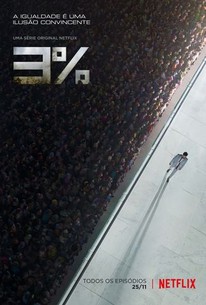
Three Percent TVshowA tidal wave of TV shows and movies currently explore—or at least acknowledge—the devastation we are forcing on the planet. Every week Netflix puts out a new science fiction show that follows this premise of Earth’s devastation: 3%; The 100The TitanOrbiter 9; even Lost in Space.

Science fiction is suited to this role; it is the literature of consequence that explores large issues faced by humankind and can provide an important vehicle in raising environmental awareness. Literature in general has always served as a cultural reporter on themes important to humanity.  The science fiction genre—and speculative fiction particularly—explores premises based on current scientific and technological paradigms. What if we kept doing this?…What if that went on unchecked?… What if we decided to end this?… These are conveyed through the various predictive visions from cautionary tales (e.g., Atwood’s Year of the Flood) to dystopias (e.g., Itäranta’s The Memory of Water). Science fiction has always been the pre-eminent literature of metaphor and history; it has lately matured in the Anthropocene to incorporate the edgy realism of literary fiction to give us potent environmental relevance. Sub-genres now include eco-fiction, climate fiction, and cli-fi.

MemoryOfWater_Emmi ItarantaEllen Szabo, author of Saving the World One Word at a Time: Writing Cli-Fi suggests that the ability to make environmental issues less political and more personal (through story) permits more engagement by readers and a higher likelihood of action toward justice: we are more likely to take action on the things we love and know. It’s all about connection.

“Science doesn’t tell us what we should do,” Barbara Kingsolver wrote in Flight Behavior “It only tells us what is.” Stories can never be a solution in themselves, but they have the capacity to inspire action, which is perhaps why cli-fi’s appeal among young adult readers holds such promise. As the scientists and leaders of tomorrow, they may be most capable of addressing climate and water issues where previous generations have failed, writes J.K. Ullrich of The Atlantic. As Margaret Atwood wrote in MaddAddam, “People need such stories, because however dark, a darkness with voices in it is better than a silent void.”

We tend to live very much in the here and now, Bacigalupi told an audience at the University of Seattle when describing humanity’s lack of planning for the future.  But, he added, “with science fiction, I can give you a [here and now] experience far into the future,” and allow a reader to truly experience “what it’s like to be a climate refugee” or be someone with no legal access to water. An extrapolated science fiction future provides a visceral opportunity to see our future selves in a way that promotes serious consideration, says Bacigalupi. By putting us there, we have a better chance of making those extrapolations into consequence.

freighter-Toronto harbourJPG

For centuries we have hubristically and disrespectfully used, discarded and destroyed just about everything on this beautiful planet. According to the World Wildlife Federation, 10,000 species go extinct every year. That’s mostly on us. They are the casualty of our selfish actions. We’ve become estranged from our environment, lacking connection and compassion. That has translated into a lack of consideration—even for each other. In response to mass shootings of children in schools, the U.S. government does nothing to curb gun-related violence through gun-control measures; instead they suggest arming teachers. We light up our cigarettes in front of people who don’t smoke and blow cancer-causing second-hand smoke in each other’s faces. We litter our streets and we refuse to pick up after others even if it helps the environment and provides beauty for self and others. The garbage we thoughtlessly discard pollutes our oceans with plastic and junk, hurting sea creatures and the ocean ecosystem in unimaginable ways. We consume and discard without consideration.

PolarMom 2 cubs

We do not live lightly on this planet.

We tread with incredibly heavy feet. We behave like bullies and our inclination to self-interest makes us far too prone to suspicion and distrust: when we meet the unknown—the “other” so often portrayed in science fiction—we tend to respond with fear and aggression over curiosity, hope and kindness. Something we need to work on if we are going to survive.

Science fiction—the highest form of metaphoric and visionary art—is telling us something. Are we paying attention?

Fallen log BC-rainforest

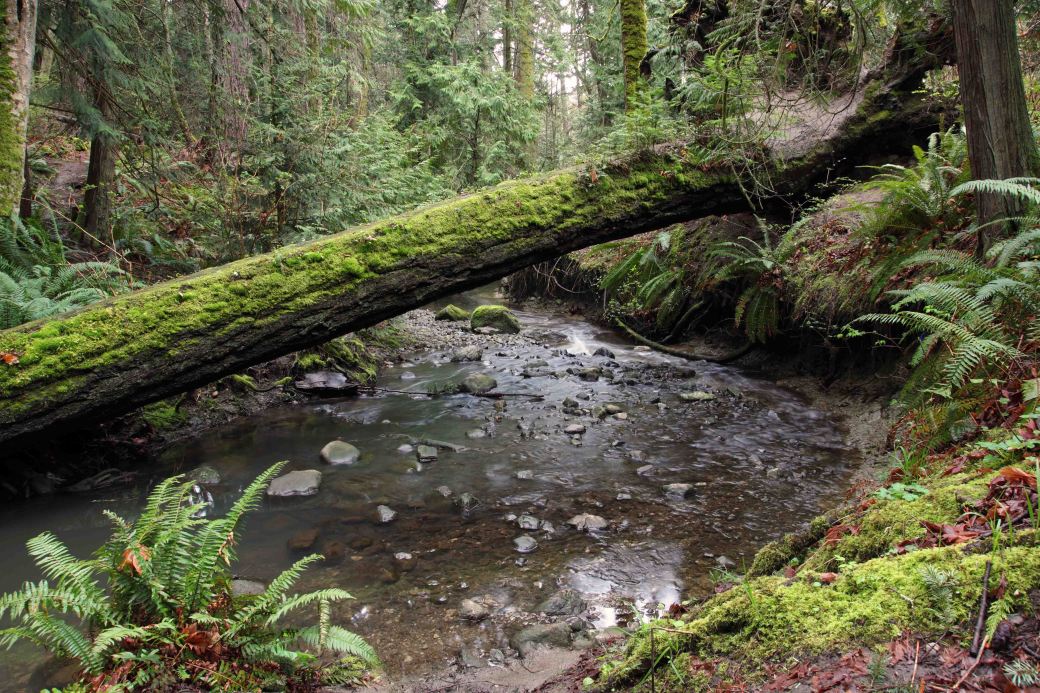
Rainforest on southern Vancouver Island, B.C. (Photo by Kevin Klassen)


nina-2014aaa

Nina Munteanu is a Canadian ecologist / limnologist and novelist. She is co-editor of Europa SF and currently teaches writing courses at George Brown College and the University of Toronto. Visit www.ninamunteanu.ca for the latest on her books. Nina’s bilingual “La natura dell’acqua / The Way of Water” was published by Mincione Edizioni in Rome. Her non-fiction book “Water Is…” by Pixl Press (Vancouver) was selected by Margaret Atwood in the New York Times ‘Year in Reading’ and was chosen as the 2017 Summer Read by Water Canada. Her novel “A Diary in the Age of Water” will be released by Inanna Publications (Toronto) in 2020.
“Ecology of Story: World as Character” Workshop at When Words Collide, Calgary

EcologyOfStoryI recently gave a 2-hour workshop on “ecology of story” at Calgary’s When Words Collide writing festival in August, 2019.
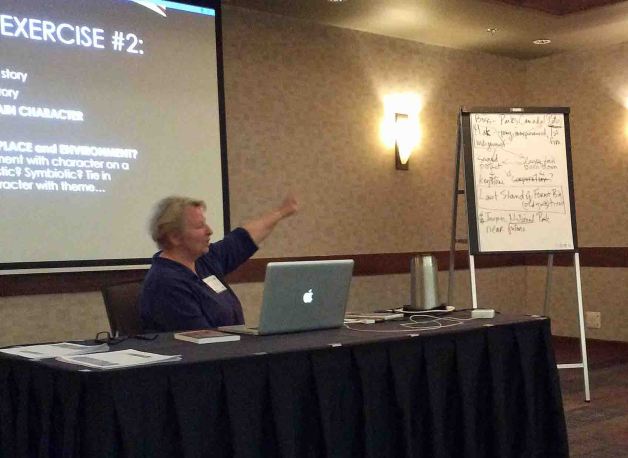
The workshop—based on my third writing guidebook: “The Ecology of Story: World as Character”explored some of the major relationships in functional ecosystems and how to effectively incorporate them in story. We  briefly explored how ecosystems and ecological processes work and looked at several of the more bizarre examples of ecological adaptation.

I showed how treating world and place as character provides depth and meaning to story through its integration with plot, theme, and other characters. We looked at these story components as integral to help ground the reader in context and meaning of story. We explored place / setting as metaphor, symbol, archetype, and allegory.

Through literary examples of setting and place, we looked at how readers are drawn into story through metaphor, sensual description, and thematic integration through POV character.

Nina and flipchart2

Reviewing the story we created through an exercise

Then came the story-building part of the workshop—a snappy, fast-paced dialogue among all workshop participants. Using the book’s cover image as story-prompt, we worked through the story components of premise, theme, character, plot and setting. Following a lively discussion, we succeeded in creating a stunning first crack at a story that was both original and intriguing. And at whose heart was a strong sense of place and identity.

creating a story

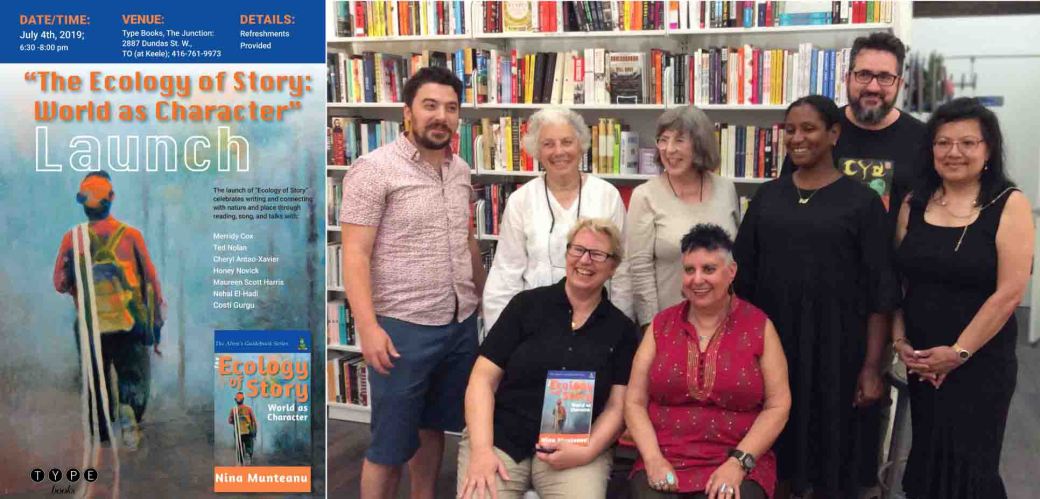
“The Ecology of Story” had only recently been launched at Type Books in Toronto and saw its first use at the Calgary When Words Collide conference. Books were sold out an hour after the workshop.

Microsoft Word - EcologyOfStory Launch.docx

“The Ecology of Story” recently achieved Amazon Bestseller status in the Ecology category.

EcologyOfStory-AmazonBestseller-Ecology


NinaEcologyWorkshop01

Nina starts her “The Ecology of Story” workshop with Part 1: ecology

Nina-slide-EcologyWorkshop

Nina talks about some interesting adaptations in reproduction


Rainforeset Stream-2012

Stream on Vancouver Island, BC (photo by Kevin Klassen)


nina-2014aaaNina is a Canadian scientist and novelist. She worked for 25 years as an environmental consultant in the field of aquatic ecology and limnology, publishing papers and technical reports on water quality and impacts to aquatic systems. Nina has written over a dozen eco-fiction, science fiction and fantasy novels. An award-winning short story writer, and essayist, Nina currently lives in Toronto where she teaches writing at the University of Toronto and George Brown College. Her non-fiction book “Water Is…”—a scientific study and personal journey as limnologist, mother, teacher and environmentalist—was picked by Margaret Atwood in the New York Times as 2016 ‘The Year in Reading’. Nina’s most recent novel “A Diary in the Age of Water”— about four generations of women and their relationship to water in a rapidly changing world—will be released in 2020 by Inanna Publications.


Nina Munteanu’s Short Story “Natural Selection” features in Eagle Literary Magazine Issue #1

NaturalSelection-IonutiBanuta

Illustration by Ionuț Bănuță

Sarah reached the summit, panting for breath, and grinned at her prize. She’d just caught the sun trembling over the horizon, before it dipped out of sight and left a glowing sky under pewter clouds. She glanced behind her, where the towers of Icaria blazed like embers catching fire. Struck by their beauty, Sarah admired their smooth, clean surfaces. When she looked back toward the path, the sanguine images burnt into her eyes.

Which way should she go? The deer path she’d followed now diverged into two smaller ones. She shifted her mind to veemeld with her AI, DEX. Which way should we go, DEX?

Her AI answered in her head: Sarah, shouldn’t you be returning inside? It’s dangerous to stay out this long. Statistics are now against you for getting caught—

Just a few more minutes, DEX. How about to the right?

“Natural Selection” tells the story of Sarah, an unruly veemeld who can speak to the machine world that runs Icaria. Given her immunity to the environmental disease ravaging the enclosed city, Sarah—at least her genetic material—is sought after by the Ecologist government in a bid to maintain order and reshape humanity through “selection”; but Sarah fraternizes with unsavory friends and her truant behaviour poses a great risk to her freedom and survival.

Eagle-1issue-summer2019_Cover_1600“Natural Selection” first appeared in 2013 in my short story collection of the same name by Pixl Press. The story returns in Issue #1 of Eagle Literary Magazine, Pan European Science Fiction & Fantasy Collection (Summer 2019; Nexus Project) edited by Mugur Cornilă and featuring the impeccable artwork of Ionuț Bănuță.

In the 2013 Pixl Press short story collection my introduction describes the theme that embraces the nine stories in the collection:

How do we define today a concept that Darwin originated 200 years ago in a time without bio-engineering, nano-technology, chaos theory, quantum mechanics and the internet? We live in an exciting era of complicated change, where science based on the limitation of traditional biology is being challenged and stretched by pioneers into areas some scientists might call heretical. Endosymbiosis, synchronicity, autopoiesis & self-organization, morphic resonance, Gaia Hypothesis and planetary intelligence. Some of these might more aptly be described through the language of meta physics. But should they be so confined? It comes down to language and how we communicate.

Is it possible for an individual to evolve in one’s own lifetime? To become more than oneself? And then pass on one’s personal experience irrevocably to others—laterally and vertically?

On the vertical argument, the French naturalist Jean-Baptiste Lamark developed a theory of biological evolution in the early 19th century considered so ridiculous that it spawned a name: Lamarkism. His notion — that acquired traits could be passed along to offspring—was ridiculed for over two hundred years. Until he was proven right. Evolutionary biologists at Tel Aviv University in Israel showed that all sorts of cellular machinery — an intelligence of sorts — played a vital role in how DNA sequences were inherited. When researchers inserted foreign genes into the DNA of lab animals and plants, something strange happened. The genes worked at first; then they were “silenced”. Generation after generation. The host cells had tagged the foreign genes with an “off switch” that made the gene inoperable. And although the new gene was passed onto offspring, so was the off switch. It was Larmarkism in action: the parent’s experience had influenced its offspring’s inheritance. Evolutionists gave it a new name. They called it soft inheritance [also known as epigenetics].

NaturalSelection-IonutBanua2

Illustration by Ionuț Bănuță

Horizontal gene transfer (HGT) is the movement of genetic material between organisms other than by vertical transmission of DNA from parent to offspring. Jumping genes (transposons) are mobile segments of DNA that may pick up a gene and insert it into a plastic or chromosome. Pieces of DNA move from one locus to another of a genome without parent-to-offspring by horizontal transposon transfer (HTT). Epigenetics describes the modification of DNA expression through DNA methylation—and results in “Lamarkism.” Transgenerational epigenetic inheritance is the new black: genes and environments interacting. Where do we end and where does environment begin? Researchers have proven the significant role of environmental feedback through HGT in evolutionary success. Researchers showed that up to 20% of a bdelloid rotifer’s genome is made of foreign genes that they stole from the environment through horizontal gene transfer and gene conversion. This compares to about 1% for humans and a fifth for tardigrades.

—excerpts from “A Diary in the Age of Water” due for release in 2020 by Inanna Publications.

Diary Water cover finalAs for passing on one’s experience and acquisitions to others laterally, education in all its facets surely provides a mechanism. This may run the gamut from wise mentors, spiritual leaders, storytellers, courageous heroes to our kindergarten teacher.  Who’s to say that these too are not irrevocable? This relies, after all, on how we learn, and how we “remember”.

Evolution is choice. It is a choice made on many levels, from the intuitive mind to the intelligent cell. The controversial British botanist Rupert Sheldrake proposed that the physical forms we take on are not necessarily contained inside our genes, which he suggested may be more analogous to transistors tuned in to the proper frequencies for translating invisible information into visible form. According to Sheldrake’s morphic resonance, any form always looks alike because it ‘remembers’ its form through repetition and that any new form having similar characteristics will use the pattern of already existing forms as a guide for its appearance.  This notion is conveyed through other phenomena, which truly lie in the realm of metaphysics and lateral evolution; concepts like bilocation, psychic telegraphing, telekinesis and manifestation. Critics condemn these as crazy notions. Or is it just limited vision again? Our future cannot be foretold in our present language; that has yet to be written. Shakespeare knew this…

There are more things in heaven and earth , Horatio, than are dreamt of in your philosophy—Shakespeare

NaturalSelection-front-webEach story in the “Natural Selection” short story collection reflects a perspective on what it means to be human and evolve in a world that is rapidly changing technologically and environmentally. How we relate to our rapidly changing fractal environments—from our cells to our ecosystems, our planet and ultimately our universe—will determine our path and our destiny and those we touch in some way.

My friend Heidi Lampietti, publisher of Redjack Books, expressed it eloquently, “For me, one of the most important themes that came through in the collection is the incredible difficulty, complexity, and importance of making conscious choices — and how these choices, large and small, impact our survival, either as individual humans, as a community, a species, or a world.”

DarwinsParadox-Cover-FINALsmall“Natural Selection” also features the sprawling semi-underground AI-run city of Icaria (a post-industrial plague Toronto) that was first introduced in my novel “Darwin’s Paradox” and is a character itself. Sarah is a “gifted” and troubled misfit—not in sync with the rest of the population. Yet her choices—and how she is treated by her community— will influence an entire species and world.


You can purchase Issue #1 of Eagle Literary Magazine in the United Kingdom, United States, Spain, Italy, France, Germany, Japan, Canada.


nina-2014aaaNina is a Canadian scientist and novelist. She worked for 25 years as an environmental consultant in the field of aquatic ecology and limnology, publishing papers and technical reports on water quality and impacts to aquatic systems. Nina has written over a dozen eco-fiction, science fiction and fantasy novels. An award-winning short story writer, and essayist, Nina currently lives in Toronto where she teaches writing at the University of Toronto and George Brown College. Her non-fiction book “Water Is…”—a scientific study and personal journey as limnologist, mother, teacher and environmentalist—was picked by Margaret Atwood in the New York Times as 2016 ‘The Year in Reading’. Nina’s most recent novel “A Diary in the Age of Water”— about four generations of women and their relationship to water in a rapidly changing world—will be released in 2020 by Inanna Publications.