Nina Munteanu’s Writing Featured in “Morphology” Art Exhibit

“We are water, what we do to water, we do to ourselves”—Nina Munteanu

WaterIs-story-quote2

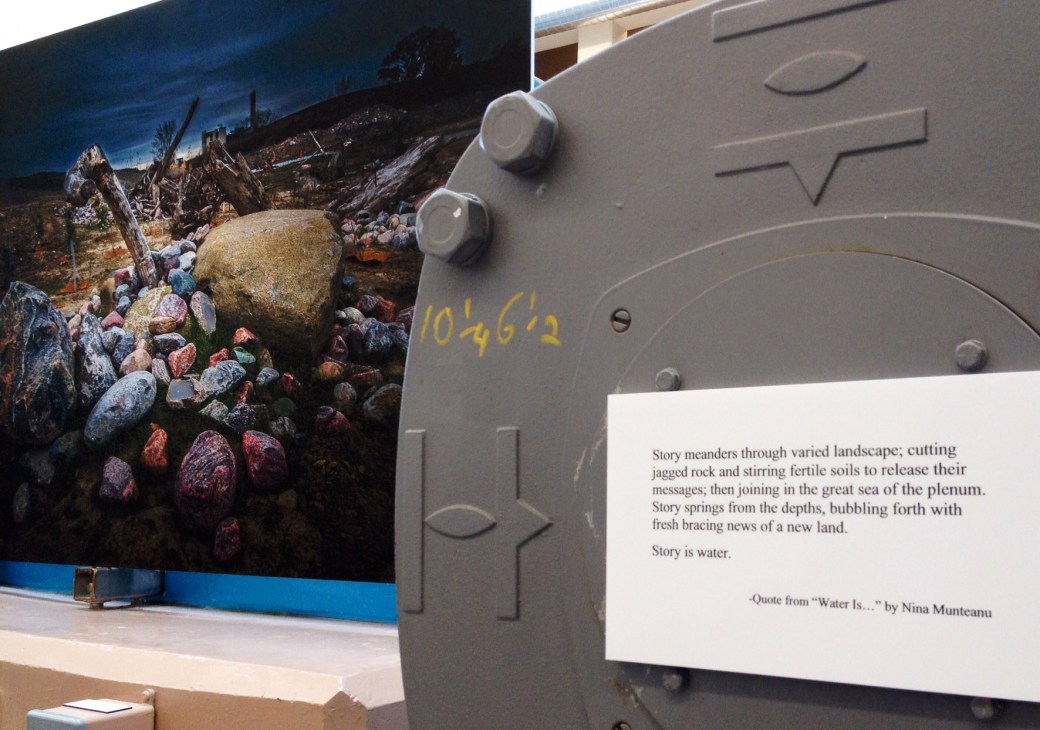
“Story” quote by Nina Munteanu from “Water Is…”

On Sunday January 14, “Morphology”, an art/writing exhibit and gala located in the world-class Lakeview Water Treatment Plant celebrated the new Waterfront Connection through the eyes of eleven photographers and writer/limnologist Nina Munteanu.

The show documented the initial stages of the newly created wetlands in Lakeview, Mississauga, on the shores of Lake Ontario. This revitalization project was the realized dream of visionary Ward 1 Councillor Jim Tovey, and was spearheaded by various organizations, including Credit Valley Conservation Foundation, The Region of Peel and the TRCA.

WaterIs-beauty-JulieKnox

Photo Art by Julie Knox, “Beauty” quote by Nina Munteanu from “Water Is…”

The Lakeview Waterfront Connection reclamation project will extend from the old Lakeview generating station to Marie Curtis Park in Toronto When completed, the 64-acre site will provide 1.5 km of beach, meadow, forest, wetland and islands—providing excellent habitat for migratory birds, fish and other aquatic life. Clean rubble from demolition projects are being used to build new land.

“It is the first ecosystem that’s ever been built in Lake Ontario in the GTA—ever,” said Councillor Tovey.


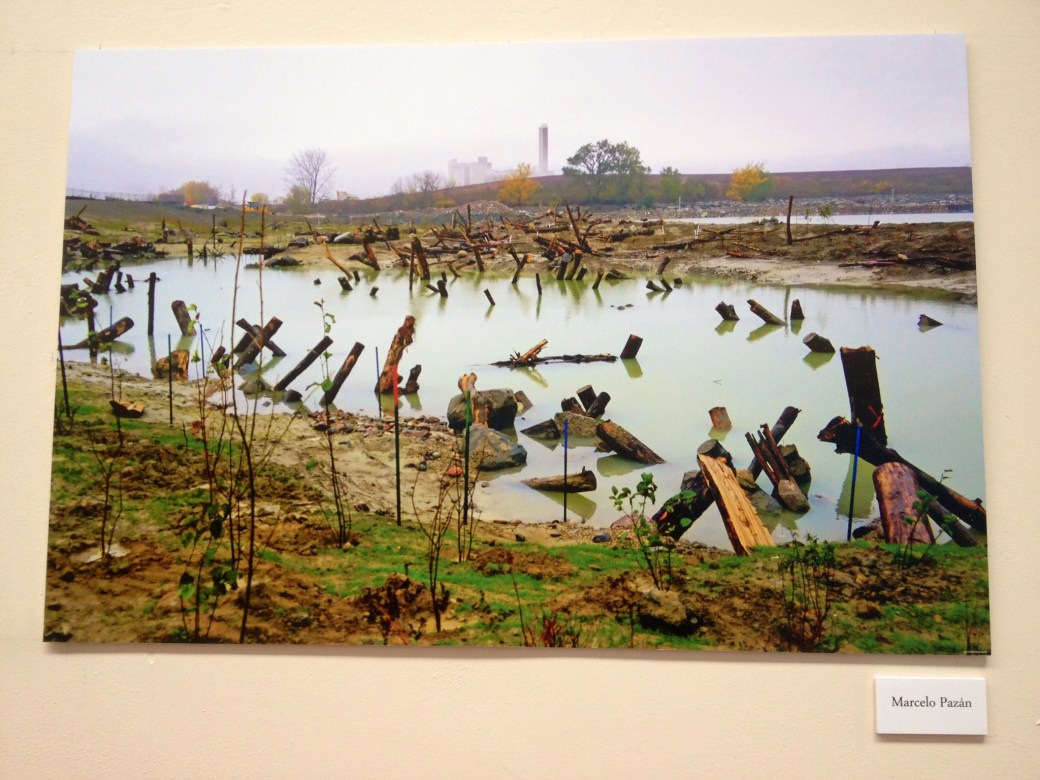
MarceloPazan-photo

Photo Art by Marcelo Pazan

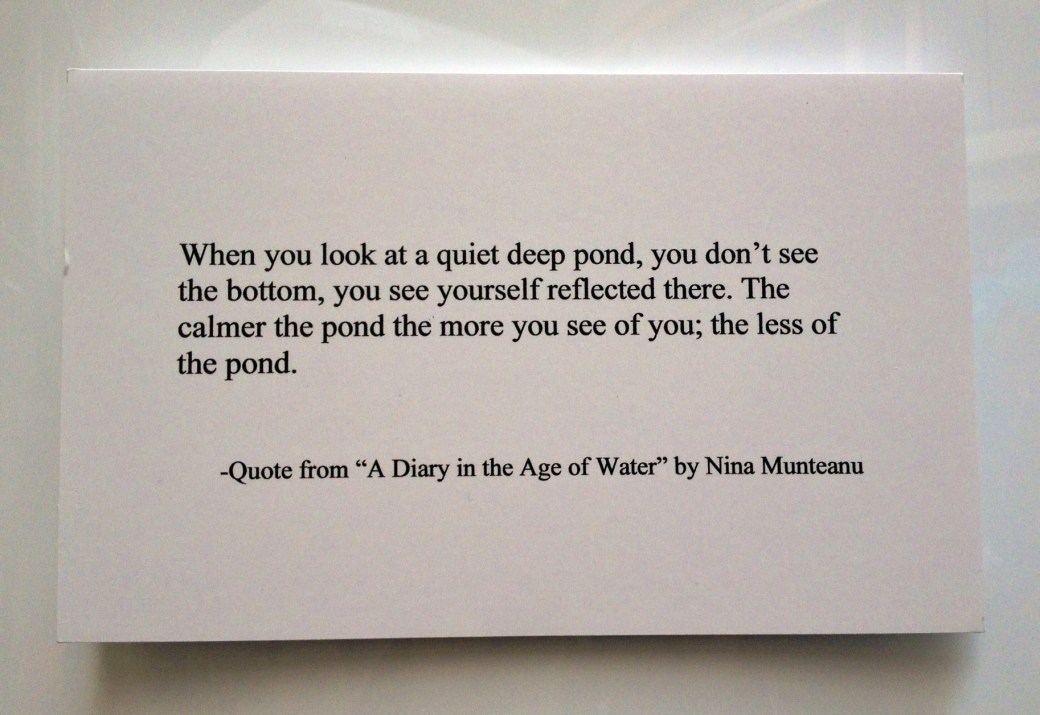
The art of eleven photographers documented the early stages of the wetland construction. “It sort of looks like a Salvador Dali surrealistic sculpture garden…and what an interesting way to really celebrate all of this,” said Councillor Tovey to the Mississauga News. Nina Munteanu was invited to provide water-related literature to augment the photography; quotes from Munteanu’s “Water Is…” and her upcoming novel “A Diary in the Age of Water” appeared in key locations with the photo art.

DiaryAgeOfWater-quoteReiterating Jim Tovey’s earlier comment on the water treatment plant as its own sculpture-art, Munteanu celebrated the location and the nature of the exhibit: “When technology, art and ecology are celebrated together, you get magic.”

JimTovey-ElizabethDowdeswell

Councillor Jim Tovey and The Honourable Elisabeth Dowdeswell tour the exhibit

The Honourable Elisabeth Dowdeswell (Lieutenant Governor of Ontario) was present for the exhibit: “The Great Lakes … face certain challenges,” said The Honourable Dowdeswell. “Threats such as increased pollution, habitat destruction and climate change are all having negative effects on much of our natural world.” We need strong stewardship, she added.

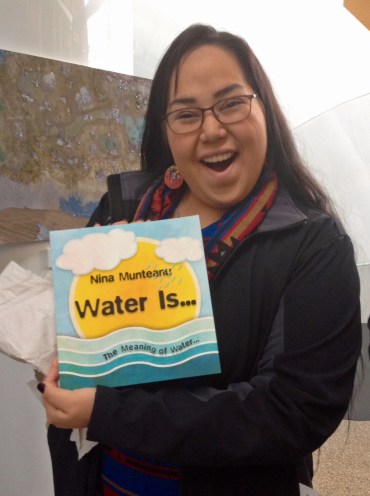
CathieJamieson-WaterIs-happy

Councillor Cathie Jamieson with her copy of “Water Is…”

Cathie Jamieson, Councillor of the New Credit First Nation gave a stirring speech. “We are the water carriers and it’s in our best interest to respect and take care of our natural surroundings for the next seven generations,” she said.

Councillor Jamieson was presented with a copy of “Water Is…” during the exhibit.

The exhibit will be moved and on public display at Mississauga’s Great Hall in March 2018. It is a must see!


Featured this year is the photo art by: Gabriella Bank, Sandor Bank, PJ Bell, Darren Clarke, Julie Knox, Lachlan McVie, Marcelo Leonardo Pazán, Martin Pinker, Annette Seip, Stephen Uhraney and Bob Warren; and written quotes by Nina Munteanu from “Water Is…” and upcoming “A Diary in the Age of Water”.


LWTP-blue-green-red pipes

Lakeview Water Treatment Plant

nina-2014aaaNina Munteanu is an ecologist, limnologist and internationally published author of award-nominated speculative novels, short stories and non-fiction. She is co-editor of Europa SF and currently teaches writing courses at George Brown College and the University of Toronto. Visit www.ninamunteanu.ca for the latest on her books.


LWTP-catwalk-close

“Water” a Speculative Fiction Anthology by Reality Skimming Press

WaterAnthology-RealitySkimmingPressIn December 2017, “Water”, the first of Reality Skimming Press’s Optimistic Sci-Fi Series was released in Vancouver, BC. I was invited to be one of the editors for the anthology, given my passion for and experience with water.

This is how Reality Skimming Press introduces the series:

Reality Skimming Press strives to see the light in the dark world we live in, so we bring to you the optimistic science fiction anthology series. Water is the first book in the series, and is edited by author and scientist Nina Munteanu. Six authors thought optimistically about what Earth will be like in terms of water in the near future and provide us with stories on that theme. Step into the light and muse with us about the world of water.

Editing “Water” was a remarkable experience, best described in my Foreword to the anthology:

LyndaWilliams

Lynda Williams

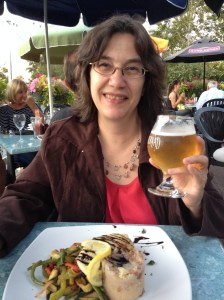
This anthology started for me in Summer of 2015, when Lynda Williams (publisher of RSP) and I were sitting on the patio of Sharky’s Restaurant in Ladner, BC, overlooking the mouth of the Fraser River. As we drank Schofferhoffers over salmon burgers, Lynda lamented that while the speculative / science fiction genre has gained a literary presence, this has been at some expense. Much of the current zeitgeist of this genre in Canada tends toward depressing, “self-interested cynicism and extended analogies to drug addiction as a means of coping with reality,” Lynda remarked.

Nina-Sharkys

lunch at Sharky’s

Where was the optimism and associated hope for a future? I brought up the “hero’s journey” and its role in meaningful story. One of the reasons this ancient plot approach, based on the hero journey myth, is so popular is that its proper use ensures meaning in story. This is not to say that tragedy is not a powerful and useful story trope; so long as hope for someone—even if just the reader—is generated. Lynda and I concluded that the science fiction genre could use more optimism. Reality Skimming Press is the result of that need and I am glad of it.

Megan coverIn the years that followed, Reality Skimming Press published several works, including the “Megan Survival” Anthology for which I wrote a short story, “Fingal’s Cave”. It would be one of several works that I produced on the topic of water.

As a limnologist (freshwater scientist), I am fascinated by water’s anomalous and life-giving properties and how this still little understood substance underlies our lives in so many ways. We—like the planet—are over 70% water. Water dominates the chemical composition of all organisms and is considered by many to be the most important substance in the world. The water cycle drives every process on Earth from the movement of cells to climate change. Water is a curious gestalt of magic and paradox, cutting recursive patterns of creative destruction through the landscape. It changes, yet stays the same, shifting its face with the climate. It wanders the earth like a gypsy, stealing from where it is needed and giving whimsically where it isn’t wanted; aggressive yet yielding. Life-giving yet dangerous. Water is a force of global change, ultimately testing our compassion and wisdom as participants on a grand journey.

When Reality Skimming invited me to be editor of their first anthology in their hard science optimistic series, and that it would be about water, I was delighted and excited.

WATER Anthology-interior-image

Illustration by Digbejoy Gosh for Bruce Meyer’s “The River Tax”

The six short stories captured here flow through exotic landscapes, at once eerie and beautiful. Each story uniquely explores water and our relationship with its profound and magical properties:  melting glaciers in Canada’s north; water’s computing properties and weather control; water as fury and the metaphoric deluge of flood; mining space ice from a nearby comet; water as shapeshifter and echoes of “polywater”. From climate fiction to literary speculative fiction; from the fantastic to the purest of science fiction and a hint of horror—these stories explore individual choices and the triumph of human imagination in the presence of adversity.

I invite you to wade in and experience the surging spirit of humanity toward hopeful shores.

Nina Munteanu, M. Sc., R.P.Bio.
Author of Water Is…
October, 2017
Toronto, Canada

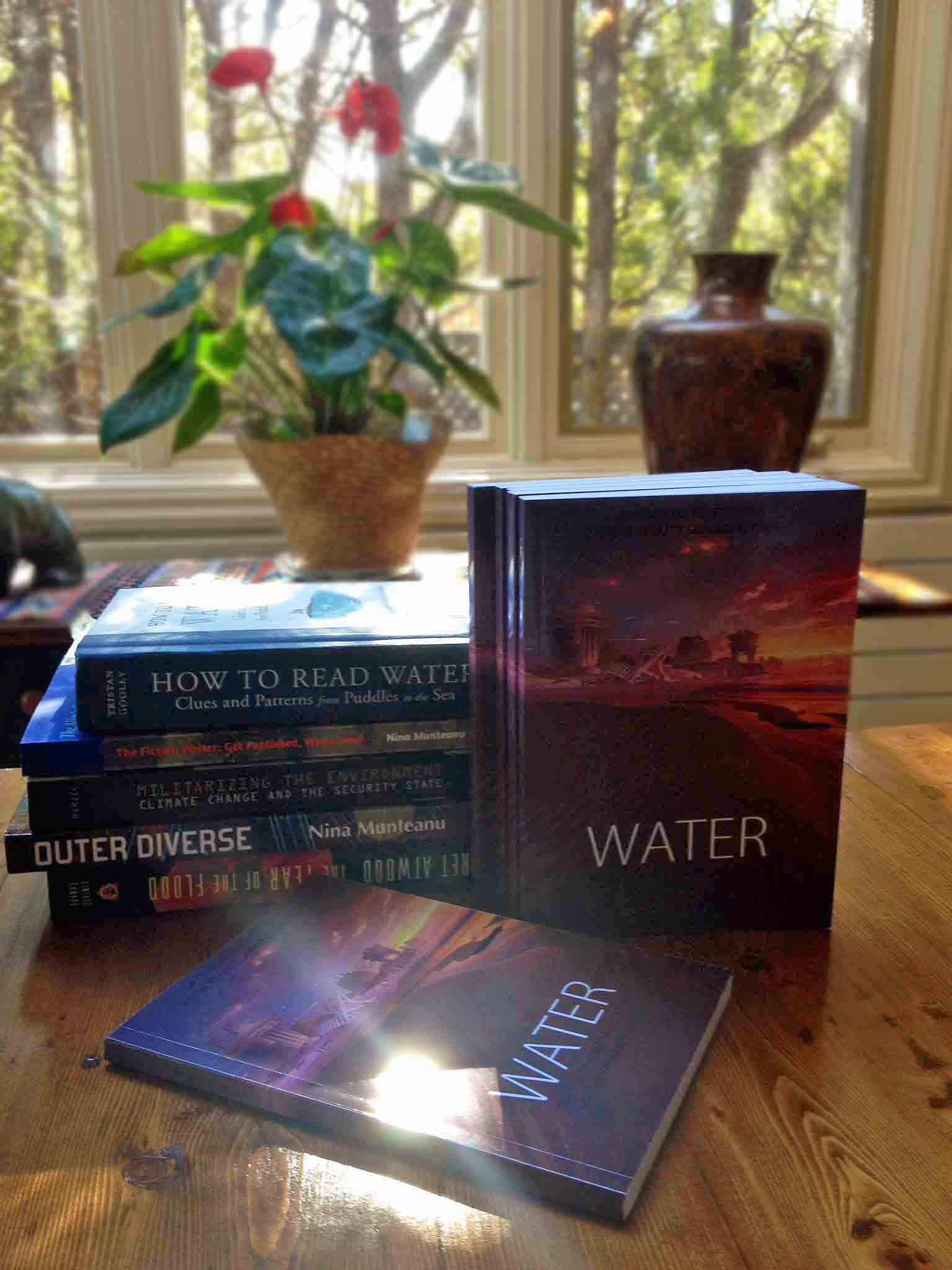
waterbooks2L

My desk with copies of “Water” among my current books to read…

The anthology features the art work of Digbejoy Ghosh (both cover and interior for each story) and stories by:

Holly Schofield
Michelle Goddard
Bruce Meyer
Robert Dawson
A.A. Jankiewicz
Costi Gurgu

You can buy a copy on Amazon.ca or through the publisher.

nina-2014aaaNina Munteanu is an ecologist, limnologist and internationally published author of award-nominated speculative novels, short stories and non-fiction. She is co-editor of Europa SF and currently teaches writing courses at George Brown College and the University of Toronto. Visit www.ninamunteanu.ca for the latest on her books.

Nina Munteanu Talks to Hi-Sci-Fi Radio…

darwins-paradoxHi-Sci-Fi Radio (a podcast radio show out of CJSF 90.1FM in Burnaby, British Columbia) interviewed Nina Munteanu about the paradoxes of her eco-thriller “Darwin’s Paradox” by Dragon Moon Press (Edge Publishing).

A devastating disease. A world on the brink of violent change. And one woman who can save it or destroy it all. Julie Crane must confront the will of the ambitious virus lurking inside her to fulfill her final destiny as Darwin s Paradox, the key to the evolution of an entire civilization.

Nina and Irma Arkus talked synchronicity, autopoiesis, Nature’s intelligence and whether algae can sing in this entertaining interview on science fiction and all things wonderful and strange.

Darwin’s Paradox is a thrill ride that makes you think and tugs the heart.”–Robert J. Sawyer, Hugo and Nebula Award-winning author of Quantum Night

The Careful Writer: Common Pitfalls of the Beginning Novelist: Part 1–Characters

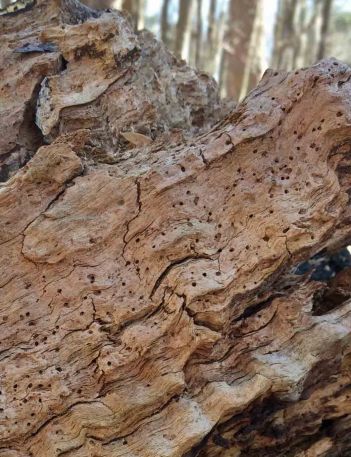
patterns2-log-beetl holes-LR

Decaying log with insect bores (photo by Nina Munteanu)

Have you ever wondered how an editor decides not to read your cherished tome past the second paragraph of the first page and has pegged you as a beginning writer? This used to really bug me… Now, as a published author, mentor, and writing coach I read a lot of unpublished manuscripts. I now recognize what these editors do.

So, I’d like to share what I’ve learned over the years (some of the very same comments that have been made of my work, I am now sharing with you). I’ll be providing you my advice in three parts: 1) characters; 2) language; and 3) structure.

Let’s start with characters, since they are in my opinion, the most important part of a novel:

Characters carry the theme of the book. Each character needs to have a role in advancing the plot and/or theme; each character needs a reason to be there. A character therefore needs to be distinctive and usually shows some character development (as story arc) from beginning to end of story. Your characters are the most important part of your book (more so than the plot or premise). Through them your book lives and breathes. Through them your premise, your plot (which is essentially just a way to create problems for your characters to live out their development) and story come alive. Through them you achieve empathy and commitment from the reader and his/her willingness to keep reading to find out what’s going to happen next: if the reader doesn’t invest in the characters, they won’t really care what happens next.

Characters need to be real. They come to life by giving them individual traits and real weaknesses and heroic qualities that are consistent and have qualities readers can recognize and empathize with. You play these against each other to achieve drama. For instance, a man who is afraid of heights but who must climb a mountain to save his love is far more compelling than one who is not; a military man who fears responsibility but must lead his team into battle; a scientist who is afraid of failure; etc.

Characters of beginning writers often suffer from lack of distinction, or purpose, and often simply clutter up a story. For a character to “come alive” their “voice” must be distinct. Give them distinctive body movements, dress, facial features and expressions that reveal character, inner feelings, emotions, fears, motivations, etc. Then keep them consistent. There are several techniques writers use to increase empathy for a character. This includes use of third person POV, keeping the story with focus on fewer rather than many characters, creating character dossiers and keeping them consistent, providing each character a distinctive “voice” (figuratively), as in how they behave, say, react, etc. Another way to make your characters distinct (and works to also tie into plot and theme) is to make your characters not get along. Make them argue, disagree (at least!), have suspicions, betray one another, laugh and ridicule, etc. By doing this you increase tension, conflict (two things every book requires) and you enlighten the reader into each of the characters involved. Make them fight or argue over what they believe in – or not. You need to describe your characters in effective brief but vivid language as the reader encounters them.

Here are some questions you need to ask about your characters:

  1. if I can remove the character, will the book fall apart? (if not, you don’t need that character; they aren’t fulfilling a role in the book);
  2. how does the character portray the major or minor theme of the book? (that’s what characters are there for)
  3. what is the role of the character? (e.g., protagonist, antagonist, mentor, catalyst, etc.)
  4. what is the story arc of the character? Does he or she develop, change, do they learn something by the end? If not, they will be two-dimensional and less interesting
  5. what major obstacle(s) must the character overcome?
  6. who are your major protagonist(s) (the main character who changes the most)?
  7. who are your major antagonist(s) (those who provide trouble for your protagonists, the source of conflict, tension, the obstacle: one of their own?
  8. what’s at stake: for the world (plot); for each individual (Theme) and how do these tie together? Every character has a role to fulfill in the plot and to other characters. Don’t be afraid to totally remove characters if they do not fulfill a role.

To summarize, each character is there for a purpose and this needs to be made apparent to the reader (intuitively through characterization, their failings, weaknesses, etc.). Make them bleed, hurt, cry, feel. This needs to be clear to the reader, who wants to empathize with some of them and hate others. How characters interact with their surroundings and each other creates tension, a key element to good storytelling. Tension, of course builds further with the additional conflict of protagonist with antagonists. But, in truth, it’s more fun to read about the tension from WITHIN a group that’s supposed to be together. Think of Harry Potter and what was juicy there… It wasn’t really Voldemort … it was what went on at Hogwarts between Harry and his friends and not-so-friends. That is what makes a story memorable; that is what makes a story something you can’t put down until you’ve finished it.

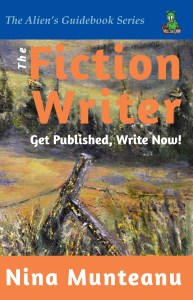
TheFictionWriter-NMPart 2 of the Beginning Novelist will focus on language.

This is an excerpt from The Fiction Writer: Get Published, Write Now! (Starfire)


nina-2014aaNina Munteanu is an ecologist and internationally published author of award-nominated speculative novels, short stories and non-fiction. She is co-editor of Europa SF and currently teaches writing courses at George Brown College and the University of Toronto. Visit www.ninamunteanu.ca for the latest on her books.


He said, She said: Using Dialogue

Steveston-boats

Boats in Steveston, BC (photo by Nina Munteanu)

One of the most important devices to spice up narrative and increase pace is the use of dialogue. There’s a reason for this: we read dialogue more quickly; it’s written in more fluid, conversational English; it tends to create more white space on a page with less dense text, more pleasing to the reader’s eye.  Dialogue is action. It gets readers involved.

Good dialogue neither exactly mimics actual speech (e.g., it’s not usually mundane, repetitive or broken with words like “uh”) nor on the other extreme does it proselytize or educate the reader through long discourse (unless the character is that kind of person). Good dialogue in a story should be somewhere in the middle. While it should read as fluid conversation, dialogue remains a device to propel the plot or enlighten us to the character of the speaker). No conversation follows a perfect linear progression. People interrupt one another, talk over one another, often don’t answer questions posed to them or avoid them by not answering them directly. These can all be used by the writer to establish character, tension, and relationship.

Below, I provide a few tips when using dialogue in your story.

  • Show, don’t tell: a common error of beginning writers is to use dialogue to explain something that both participants should already know but the reader doesn’t. It is both awkward and unrealistic and immediately exposes you as a novice. For instance, avoid the use of “As you know…” It’s better to keep the reader in the dark for a while than to use dialogue to explain something. Which brings us to the next point.
  • Have your characters talk to each other, not to the reader: for instance, “Hello, John, you loser drunk and wayward son of the most feared gangster in town!” could be improved to, “You stink like a distillery, John! Wait ‘til papa’s thugs find you!”
  • Avoid adverbs: e.g., he said dramatically, she said pleadingly; instead look for better ways to express the way they said it with actual dialogue. That’s not to say you can’t use adverbs (I believe J.K. Rowling is notorious for this), just use them sparingly and judiciously.
  • Avoid tag lines that repeat what the dialogue already tells the reader: e.g., “I’m sorry,” he apologized. “Do you have a dog?” she asked.
  • He said, she said: reduce tag lines where possible and keep them simple by using “said”; another sign of a novice is the overuse of words other than said (e.g., snarled, hissed, purred, etc.). While these can add spice, keep them for special places as they are noticed by the reader and will distract otherwise.
  • Pay consistent attention to a character’s “voice”: each character has a way of speaking that identifies them as a certain type of person. This can be used to identify class, education, culture, ethnicity, proclivities, etc. For instance one character might use Oxford English and another might swear every third word.
  • Use speech signatures: pick out particular word phrases for characters that can be their own and can be identified with them. If they have additional metaphoric meaning to the story, even better. For instance, I know a person who always adds “Don’t you think?” to almost everything they say. This says something about how that person… well, thinks… I knew another person who always added “Do you see?” at the end of their phrase. Again rather revealing.
  • Intersperse dialogue with good descriptive narrative: don’t forget to keep the reader plugged into the setting. Many beginning writers forget to “ground” the reader with sufficient cues as to where the characters are and what they’re doing while they are having this great conversation. This phenomenon is so common, it even has a name. It’s called “talking heads.”
  • Contradict dialogue with narrative: when dialogue contradicts body language or other narrative cues about the speaker, this adds an element of compelling tension and heightens reader excitement while telling them something important. Here are a few examples:

“How’d it go?”

“Great,” he lied.

“I feel so much better now,” she said, eyes darting away from him.

Well, you get the picture, anyway.

This is an excerpt from The Fiction Writer: Get Published, Write Now! (Starfire)


nina-2014aaNina Munteanu is an ecologist and internationally published author of award-nominated speculative novels, short stories and non-fiction. She is co-editor of Europa SF and currently teaches writing courses at George Brown College and the University of Toronto. Visit www.ninamunteanu.ca for the latest on her books.

Nina Talks Writing on Dragon Page

michael-stackpoleSome years ago, I was interviewed by Michael Stackpole (New York Times bestselling author of over 40 novels, including “I, Jedi” and “Rogue Squadron”) and Michael Mennenga (CEO of “Slice of Sci-Fi”) on Dragon Page Cover to Cover.

michael mennengaWe talked about my book “The Fiction Writer: Get Published, Write Now!” and what new writers fret over. A lot of the discussion focused on how to handle rejection and I shared my “bus terminal” model (also in my book), which worked very well. For details on our discussion about the industry and craft of writing, listen below:


DragonPage-FictionWriter

The Bus Terminal Model:

FictionWriter-front cover-2nd ed-webHere is an excerpt from The Fiction Writer, Chapter R:

One way to see your way through rejection is to find ways to distance yourself from your story once you’ve sent it off and to see the whole process of submission-rejection-acceptance as a business. The very best way to do this is to submit lots of stories and to keep submitting them. With novels, this is a little harder to do but you can certainly be working on the next one once you’ve submitted the first.

When I was writing short stories, I kept a list of what and where I submitted, along with the most important item: where to submit NEXT. At any given time, I made sure that I had at least x-number of submissions out there and each story had a designated place to go if it returned. As soon as a story came back from magazine A, I simply re-packaged it and sent it to magazine B. The critical part of the list was to have a contingency for each story: the next place where I would send the story once it returned. I was planning on the story being rejected with the hope that it would be accepted; that way, a rejection became part of a story’s journey rather than a final comment.

I ran my submissions like a bus terminal. A story was in and out so fast it never had a chance to cool off. And, since I had five other pieces out there, I could do this with little emotion. I was running a fast-paced “story depot”, after all. All my stories had to be out there as soon as possible; if they were sitting in the terminal, they were doing nothing for me.


nina-2014aaNina Munteanu is an ecologist and internationally published author of award-nominated speculative novels, short stories and non-fiction. She is co-editor of Europa SF and currently teaches writing courses at George Brown College and the University of Toronto. Visit www.ninamunteanu.ca for the latest on her books.

Publishers Weekly Praises Cli-Fi: Canadian Tales of Climate Change & “The Way of Water”

Publishers Weekly writes:

cli-fi-exile anthology2017“In his introduction to this all-original set of (at times barely) futuristic tales, Meyer warns readers, “[The] imaginings of today could well become the cold, hard facts of tomorrow.” Meyer (Testing the Elements) has gathered an eclectic variety of eco-fictions from some of Canada’s top genre writers, each of which, he writes, reminds readers that “the world is speaking to us and that it is our duty, if not a covenant, to listen to what it has to say.” In these pages, scientists work desperately against human ignorance, pockets of civilization fight to balance morality and survival, and corporations cruelly control access to basic needs such as water. The most affecting tale, Wendy Bone’s “Abdul,” is also the least futuristic, an emotional story that touchingly contrasts Western guilt against the life of a captive orangutan. The anthology may be inescapably dark, but it is a necessary read, a clarion call to take action rather than, as a character in Seán Virgo’s “My Atlantis” describes it, “waiting unknowingly for the plague, the hive collapse, the entropic thunderbolt.” Luckily, it’s also vastly entertaining. It appears there’s nothing like catastrophe to bring the best out in authors in describing the worst of humankind.”

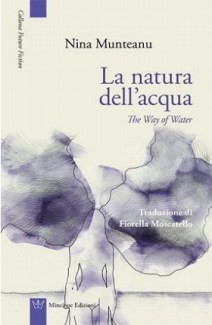
My story The Way of Water is one of 17 stories in Exile’s anthology, published in May 2017. It was originally published in English and Italian [La natura dell’acqua] by Mincione Edizioni [print] and Future Fiction [ebook] in Rome in early 2016. The Way of Water is a near-future vision that explores the nuances of corporate and government corruption and deceit together with resource warfare. An ecologist and technologist, Nina Munteanu uses both fiction and non-fiction to examine our humanity in the face of climate change and our changing relationship with technology and Nature … through water.

la natura dell'acquaShe imagines its coolness gliding down her throat. Wet with a lingering aftertaste of fish and mud. She imagines its deep voice resonating through her in primal notes; echoes from when the dinosaurs quenched their throats in the Triassic swamps.

Water is a shape shifter.

It changes yet stays the same, shifting its face with the climate. It wanders the earth like a gypsy, stealing from where it is needed and giving whimsically where it isn’t wanted.

Dizzy and shivering in the blistering heat, Hilda shuffles forward with the snaking line of people in the dusty square in front of University College where her mother used to teach. The sun beats down, crawling on her skin like an insect. She’s been standing for an hour in the queue for the public water tap.

The Way of Water takes place in Toronto, Ontario in Canada, mostly on or near the campus of the University of Toronto.

In The Way of Water, Nina Munteanu pens her love letter to water, exulting it as a liquid that has semi-magical properties. Munteanu recognizes the chimerical quality of water, its unique ability to shift and change, to purify and taint, and the incredible way that it makes up most of our body mass and therefore shapes us as well.

nina-TV-nov2015A limnologist (lake ecosystem biologist) by trade, Munteanu recognizes the incredible way that water shapes life and brings attention to the fact that water connects us to each other just as water connects with other water, forming bonds. She evokes in the reader a sense of reverence for water and an awareness that the same water that flows through our bodies have flowed through the bodies of our ancestors, cycling through life since the first life forms coalesced.

In recognizing the preciousness of water, she also recognizes its precarity and the danger that capitalist systems pose when they lay claim to water and seek to own it. “The Way of Water” evokes a sense of awareness about issues of access to water and about the dangers of imbalances in that access.”—Derek Newman-Stille, Speculating Canada


book-patio2 copy“Water covers every aspect of this science fiction story that pits the vulnerable citizen against the evil multinational corporation in a dystopian Canada sometime in our future. Water is presented in its multiplicity of facets: in the science behind its composition, in its history, in it’s symbolic nature and different physical states; water is a giver and taker of life, and is the form in which the friendship of protagonists Hilda and Hanna functions. Water is also magic and the ultimate righter of wrongs committed to it and to a humanity it gives life to. Within this framework, Munteanu spins a thought-provoking tale that projects where our headlong pursuit of profit may one day lead us to, and how nature will ultimately, with a little human coaxing, be the only one to correct the balance.”—Shane Joseph, Canadian author of Fringe Dwellers

“Nina Munteanu with The Way of Water suggests that this element is also a form of laNaturaDell'Acqua-coverlove; a story to read, not only to deal with the possible but, above all, to understand that the time still available for “love” might be less than what you believe.”—Simone Casavecchia, SoloLibri.net (read the original Italian review here)

The Way of Water is a story of the kind you hope is science fiction but you fear is not.”—Massimo Luciani, NetMassimo (read the original Italian review here)


nina-2014aaNina Munteanu is an ecologist and internationally published author of award-nominated speculative novels, short stories and non-fiction. She is co-editor of Europa SF and currently teaches writing courses at George Brown College and the University of Toronto. Visit www.ninamunteanu.ca for the latest on her books.


The Fifteenth International Writers’ and Artists’ Festival / Le XVe Festival International des écrivains et artistes–Quebec

best best group shotOn Friday, June 9th, I drove with friend, songwriter and poet Honey Novick, to the 15th International Writers’ and Artists’ Festival in Val-David, Quebec (June 10th and 11th, 2017). Celebrated artists, poets, writers and singers with an international heritage that included France, Chile, Argentina, Romania, Canada and the USA would congregate at the festival, set in a large house nestled deep in the Maple Laurentian forest.

The mixed Laurentian forest is called the “eastern forest-boreal transition” and includes a varied tapestry of broadleaf (aspen, oak, paper birch, mountain ash and maple) and conifer (pine, spruce and fir) trees.

Nina-fest-close-web

Nina Munteanu

When we reached our destination—a large three-story house surrounded by forest—I took in the aroma of fresh pine and “sweet fern” and spotted Bunchberry (soon to be designated Canada’s national flower), forget-me-nots and lupine carpeting the ground near the house. A young deer, foraging on a shrub’s new leaves beside the house, glanced at us without fear then slipped back into the forest.

I thought the setting ideal for an international festival celebrating the expression of the arts. I was scheduled to talk about my latest book Water Is…”, a personal and scientific journey with water, and to give a lecture on eco-fiction.

Outside-view-web

View outside my bedroom

Flavia Cosma, the originator and organizer of the festival for over a decade, greeted us at the door and in true Romanian-fashion immediately sat us down to eat and drink. After a seven-hour drive (we somehow ended up in Charlamagne, Celine Dion’s birthplace), I was hungry and enjoyed some of Flavia’s signature dishes, varză a la Cluj (cabbage a la Cluj) and salată boeuf (beef salad), made with carrots, parsley roots, eggs, potatoes, beef, pickles and peas mixed with mayonnaise. The view outside my bedroom on the third floor peered through tall firs to a mountain valley and the small village of Val-David. I looked forward to meeting poets, writers, musicians and artists the next day…


Day 1: Saturday
HoneyNovickBC-web

Honey Novick

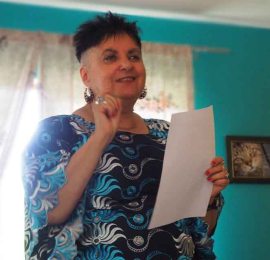
Honey Novick (Toronto, Ontario), poet laureate of the Summer of Love Project 2007 Luminato Festival and winner of the Bobbi Nahwegahbow Memorial Award, opened the festival with an inspirational song.

Composers and singers Brian Campbell (Montréal, Quebec) and Ivan-Denis Dupuis (Sainte Adele, QC) provided additional and stirring song performance.
Louis Hebert

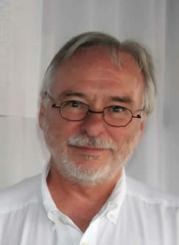
Louis-Philippe Hebert

Quebec author Louis-Philippe Hébert (Saint Sauveur, QC), winner of the Grand Prix Québecor du Festival de Poésie de Trois-Rivières and the Prix du Festival de Poésie de Montréal, read from his novel Un homme discret (Lévesque, 2017). Poet Julie de Belle read several poems, including When the sea subsides, finalist in the Malahat Review. Brian Campbell, finalist in the 2006 CBC Literary Award for Poetry, read from his book Shimmer Report (Ekstasis Editions, 2015).

FlaviaCosma-EarlyYears

Flavia Cosma

Poet and award-winning TV documentarist Flavia Cosma, who received the gold medal as an honorary member by the Casa del Poeta Peruano, Lima, Peru in 2010, nominated for the Pushcart Prize, and whose work has been used in University of Toronto literature courses, read from her collection of poems, The Latin Quarter (MadHat Press, 2015) and Plumas de Angeles (Editorial Dunken, 2008).

Felicia Mihali

Felicia Mihali

Romanian writer Felicia Mihali read from her novel La bien-aimée de Kandahar, nominated for Canada Reads 2013. Romanian author Melania Rusi Caragioiu, member of the Canadian Association of Romanian Writers, read from her book of poems Basm în versuri și poeme pentru copii in Romanian.

Nicole Davidson, the mayor of Val-David, read some of her poetry. Jeanine Pioger, French author of Permanence de l’instant, read a selection of her poetry. Jocelyne Dubois showed her artwork and Romanian artists Carmen Doreal and Eva Halus discussed their artwork and poetry.
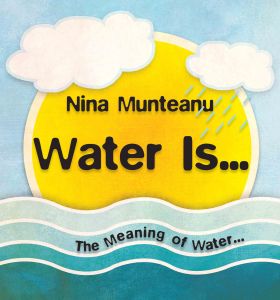
water-is-cover-web“Water Is…”: I shared the inspiration and making of my latest book, “Water Is…”, a scientific study and personal journey as limnologist, mother, teacher and environmentalist, which was recently picked by Margaret Atwood in the NY Times as 2016 ‘Year in Reading’ and recommended by Water Canada as ‘Summer Reading’. I discussed how I first conceived the book as a textbook early in my career as a freshwater biologist and how it morphed from one idea into something completely different and why it is my most cherished work to date.

Day 2: Sunday

French poet David Brême gave a workshop on poetry and the cultural hybridization of franco-québécoise (atelier sur la poésie et l’hybridation culturelle franco québécoise), which he had given earlier in Toronto.

couzier_nane

Nane Couzier

Montreal poet from France and Senegal, Nane Couzier, read from her collection Commencements, honorable mention in le Prix de poésie 2016 des Écrivains francophones d’Amerique.
JocelyneDubois

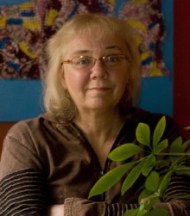
Jocelyne Dubois

Novelist and short story writer Jocelyne Dubois read from her novel World of Glass, finalist for the 2013 QWF Paragraphe Hugh MaLennan Prize for fiction. Laurentian poet John Monette, author of the collection Occupons Montréal (Editions Louise Courteau, 2012) read several poems and Eva Halus, Romanian poet, read from her book Pour tous les Voyages. Chilean poet Tito Alvarado also read his poetry.

NasulTV-claudiuScrieciu

Claudiu Scrieciu of Nasul.TV Canada

Claudiu Scrieciu and Felicia Popa of Nasul.TV CanadaTeleviziunea Libera—the Canadian chapter of Romanian TV in St. Laurent, Quebec, televised aspects of the festival and the closing ceremony. Felicia, who interviewed me for their show, talked with me about “Water Is…”.

naturalselectionEco-Fiction: I discussed how eco-fiction evolved as a genre and its importance, both metaphorically and literally, in the literature of the Anthropocene (with a nod to Margaret Atwood’s 2016 challenge to a college audience in Barrie, Ontario, to write the stories that focus on our current global environmental crisis). I provided examples of ecological metaphor such as Barbara Kingsolver’s Flight Behavior, Michael Ondaadje’s The English Patient, Frank Hebert’s Dune, and Thomas Hardy’s The Return of the Native. Astute questions, initiated by Flavia, led to an animated discussion on our ultimate participation in Nature, co-evolution, cooperation vs competition, soft-inheritance, DNA repair and the role and place of water in virtually all things.

The festival concluded at the Centre d’Exposition (art centre) of Val David with “Les Mots du Monde”, where poets, songwriters and writers performed readings and song to the community. The cultural setting and perfect acoustics provided a true inspiration for Honey Novick’s stirring opening songs—angelic in nature and in voice. I asked colleague Jeanine Pioger to read my essay “Why I Write,” which I had translated into French with help from colleague Betty Ing. The French version appears below.
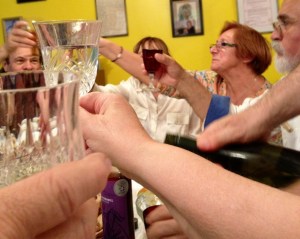
toast02

Toasting the international festival

After the closing ceremony, Flavia invited participants to a grand dinner party at the festival house featuring authentic Romanian dishes, good wine and stimulating conversation.

The festival was a great success on many levels. Honey Novick astutely thanked Flavia in a Facebook post, “thanks for the wonderful memories, great inspiration, generous hearts and a tremendous weekend.”  I felt a great resonance and synchronicity throughout the weekend. It was as though we all embarked on a dimensional ride together, orchestrated by Flavia, that challenged, fulfilled and enlightened…I spoke English, French and puțin limba română. Foarte puțin… …And the food… OOHLALA!

Mulțumesc, Flavia! A fost minunat!
BrianCambell-ShimmerReportEva Halus-Pour tous les VoyagesLatinQuarter-flavia cosmaun homme discret


La raison pour laquelle j’écris

L’écriture est le souffle et la lumière de mon âme et la source de mon essence. Quand j’écris, je vis le moment présent. Je suis dans le moment de la création, connecté au Soi Divin, embrassant la nature et l’ensemble de l’univers fractal.

Je fais quelque chose d’important.

Je me connecte avec vous.

Isaac Asimov a dit : « j’écris pour la même raison que je respire — parce que si je ne le faisais pas, je mourrirais ». C’était aussi vrai quand il était auteur inconnu qu’après qu’il est devenu grand écrivain. Il parlait métaphoriquement, spirituellement et littéralement. Je sais que si je n’écrivais pas, je me priverais mon âme de sa respiration de vie. Il représente plus que la vérité métaphorique ; il est scientifiquement prouvé. L’écriture expressive — que ce soit sous la forme de l’écriture d’un journal, de blogging, de l’écriture de lettres, de mémoires ou de fiction — améliore la santé.

Que vous publiiez ou non, votre écriture est importante et utile. Prenez possession de celle-ci, nourrissez-la et considérez-la comme sacrée. Inspirez le respect des autres et respectez tous les écrivains à leur tour ; ne laissez pas l’ignorance vous intimider et vous faire taire.

L’écriture, comme toute forme de créativité, exige un acte de foi ; tant en nous-mêmes qu’en les autres. Et c’est effrayant. C’est effrayant, parce qu’il faut que nous renoncions au contrôle. Il est d’autant plus préférable d’écrire. La résistance est une forme d’autodestruction, dit Julia Cameron, auteur de The Artist’s Way.

Nous résistons afin de maintenir une vague idée de contrôle, mais au contraire, nous augmentons nos chances de développer la dépression, l’anxiété et la confusion. Booth et al. (1997) ont conclu que la divulgation écrite réduit sensiblement le stress physiologique du corps causé par une inhibition. Nous sommes nés pour créer. Pourquoi hésitons-nous et résistons-nous? Parce que, dit Cameron, « nous avons accepté le message de notre culture… [que] nous sommes censés faire notre devoir et puis mourir. La vérité est que nous sommes censés être prospères et vivre ».

Joseph Campbell a écrit : « suivez votre bonheur et les portes s’ouvriront là où il n’y avait pas de portes avant. » Cameron ajoute : « c’est l’engagement interne pour être fidèle à nous-mêmes et de suivre nos rêves qui déclenche le soutien de l’univers. Alors que nous sommes ambivalents, l’univers nous semblera également être ambivalent et erratique. » Quand j’écris, je vis le moment présent, en harmonie avec le moment divin de la création.

En pleine joie.
nina-2014aaNina Munteanu is an ecologist and internationally published author of award-nominated speculative novels, short stories and non-fiction. She is co-editor of Europa SF and currently teaches writing courses at George Brown College and the University of Toronto. Visit www.ninamunteanu.ca for the latest on her books.
Limestone Genre Expo—One of Kingston’s Gems

Nina-Hali-clifi2

Nina Munteanu and Halli Villegas

I recently attended the Limestone Genre Expo in Kingston, Ontario. Held at the St. Lawrence College campus—ideally suited to a literary festival—the expo featured panels, readings, and workshops.

The festival was well attended by local, Canadian and international authors, editors, publishers, and readers—all committed to exploring literature, the arts and to having a good time.

Authors included Tanya Huff, Nancy Kilpatrick, Caro Soles, Violette Malan, Rick Blechta, Matthew Bin and Eve Langlais, among many others.

Nina-books-Limestone2016

Science Fiction GOH in 2016

Publishers included Exile Editions, Chizine Publications, Bundoran Press and others. Exile Editions recently published their anthology “Cli Fi: Canadian Tales of Climate Change” in which my story “The Way of Water” appears.

I was Limestone’s Science Fiction Guest of Honour last year; this year I got to relax and I sat on three panels.

NancyKilpatrick-limestone

Nancy Kilpatrick

In “Alternative Histories to Cyberpunk“, I was joined on the panel by Matthew Bin, Maldonado Skaff-Koren, Eric Desmarais, Michael Romaric, Dominic Bercier, and A.A. Jankiewicz with moderator Sean Moreland. We mostly discussed the literary device of alternative timelines and unanimously concluded that visionary science fiction that “failed” to predict the future was successful alternative “history”. This theme continued in the science fiction panel.

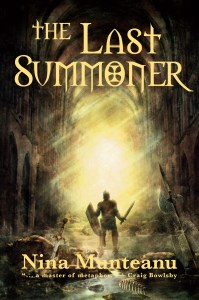
Cover1_LastSummoner-frontcoverI brought up the notion of history’s quantum properties, a braided flow of multi-dimensional and entangled realities. This served as premise for my alternative historical time-travel fantasy The Last Summoner, which takes place in fifteenth century Poland. On her fourteenth birthday, the baroness Vivianne Von Grunwald discovers that she can change history as an aeon; but she soon realizes that, while she is able to change some disastrous historic event, its entangled “destiny” indelibly moves closer to the original consequence than her intended one: yet another disaster. My scientific approach to alternate history is what excited me to write this, my only fantasy so far among a dozen science fiction novels.

CaroSoles

Caro Soles

In the panel “The Science behind Science Fiction” I was joined by Katherine Prairie, Anita Dolman, Matthew Bin, Lisa Tooey, Kristen Kiomall, and A.A. Jankiewicz with moderator Caroline Frechette. We discussed the utility and risk of using pseudoscience in a science fiction story, a genre known for expectations of accuracy and prescience. In 1979, Ray Bradbury wrote: People ask me to predict the future, when all I want to do is prevent it. Better yet, build it. Predicting the future is much too easy, anyway. You look at the people around you, the street you stand on, the visible air you breathe, and predict more of the same. To hell with more. I want better.”

TanyaHuff-signing

Tanya Huff signs one of her books

Depending on whether the story is considered hard SF or soft SF, this level of accuracy in both actual science presented as premise and ability to predict science and technology will vary. Given that science fiction is largely metaphoric, the predictability of an SF story is secondary to the story’s value as metaphor and allegory. The consensus of the panel was that the audience determined the importance of precision and accuracy. In the final analysis, if the story is grounded in its own consistency, anything is possible.

WonderWoman

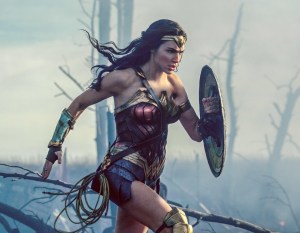
Wonder Woman (Gal Gadot)

In “Women in Genre” I was joined by Violette Malan, Nancy Kilpatrick, Eve Langland, Alyssa Cooper, Janet Kellogg, and Liz Lindsay with moderator Sandra Kasturi. The banter was by turns fun and edgy, all lubricated with good humour by all participants. As a writer of science fiction and fantasy of which 90% feature a “strong female protagonist”, I brought up the controversy of what, in fact, determines a good female lead in story. Why do so many heroines still provide just a kick-ass version of a male hero? Why are so many female protagonist heroes still defined by the rules of what makes a male a hero? Where are the real women?

Politics south of us aside—along with Margaret Atwood’s all too realistic Handmaid’s Tale (currently playing on Bravo TV), we discussed the recent push-back in Texas on the all-women showing of “Wonder Woman,” which prompted many heated tweets. The Atlantic recently published an article on the film—and surrounding events—entitled “Wonder Woman, Heroine of the Post-Truth Age.”wonder-woman-movie-poster

Wonder Woman is set at the height of World War I, but is otherwise a decidedly modern movie,” writes Megan Garber of The Atlantic. “It stars a woman (Gal Gadot) and treats a man, Steve (Chris Pine), as its damsel-in-distress. It has managed, even before its release, to enrage men’s-rights activists, which is quickly becoming a reliable measure of a movie’s modernity.”

wonderwoman-golden lassoWonder Woman uses a unique weapon, the Golden Lasso, known as the Lasso of Truth—because it compels anyone wrapped by it to reveal the truth.

When William Moulton Marston—scientist and inventor of the polygraph machine— created the Wonder Woman character, he envisioned a warrior who was also an investigator of truth. “Frankly,” he said, “Wonder Woman is psychological propaganda for the new type of woman who should, I believe, rule the world.” He believed that a world that gave women more power—politically and otherwise—would be more peaceful, more empathetic, more worthy, writes Garber. “And so Wonder Woman is a work that is decidedly at home, across its dimensions, in the world of 2017—a world that is on the one hand newly recognizing women’s widespread capabilities, but that is on the other deeply anxious about ‘alternative facts,’ about ‘fake news,’ about politically weaponized lies, about falsehoods that are uttered with no seeming consequence. The princess’s lasso, that shimmering metaphor for objective truth, is a symbol of aspiration; seen in another way, though, it is a symbol of despair. Here, in this wobbling weapon, is “wonder” as in awe; here, too, is “wonder” as in uncertainty. Here is a tool of truth that is decidedly ambivalent about its own powers. “How do I know you’re not lying to me right now?” the princess asks the spy. And the only way she can know for sure is to trust, paradoxically, in magic.”

Magic is OK, though. It is, after all, the stuff from which we draw when we write.

Nina-SF GOH-Limestone Genre Expo

Nina Munteanu, Science Fiction GOH at Limestone Genre Expo 2016

nina-2014aaNina Munteanu is an ecologist and internationally published author of award-nominated speculative novels, short stories and non-fiction. She is co-editor of Europa SF and currently teaches writing courses at George Brown College and the University of Toronto. Visit www.ninamunteanu.ca for the latest on her books.

“Water Is…” Recommended Summer Read by Water Canada Magazine

water-is-cover-web“Water Is…” (Pixl Press) by Nina Munteanu was among several books recommended by Water Canada as a good summer read for 2017.

One of Canada’s premiere magazines on issues of water and water management, Water Canada suggested recharging this summer with “the latest selection of winning water management fiction and non-fiction.” The list comprised mostly of 2017 publications, but included a few late arrivals from 2016.

Recommendations included:

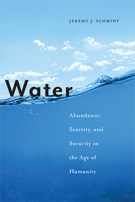
schmidt comps.indd“Water, Abundance, Scarcity, and Security in the Age of Humanity” (NYU Press) by Jeremy Schmidt is an intellectual history of America’s water management philosophy. Debates over how human impacts on the planet, writes Water Canada, are connected to a new geological epoch—“the Anthropocene”—tend to focus on either the social causes of environmental crises or scientific assessments of the Earth system. Schmidt shows how, when it comes to water, the two are one and the same. The very way we think about managing water resources validates putting ever more water to use for some human purposes at the expense of others.
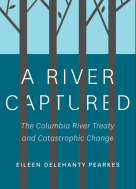
 

ARiverCaptured“A River Captured: The Columbia River Treaty and Catastrophic Change” (RMB Books) By Eileen Delehanty Pearkes reviews key historical events that preceded the Treaty, including the Depression-era construction of Grand Coulee Dam in central Washington, a project that resulted in the extirpation of prolific runs of chinook, coho and sockeye into B.C. Prompted by concerns over the 1948 flood, American and Canadian political leaders began to focus their policy energy on governing the flow of the snow-charged Columbia to suit agricultural and industrial interests. Water Canada writes, “Referring to national and provincial politics, First Nations history, and ecology, the narrative weaves from the present day to the past and back again in an engaging and unflinching examination of how and why Canada decided to sell water storage rights to American interests. The resulting Treaty flooded three major river valleys with four dams, all constructed in a single decade.”
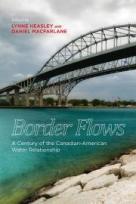
 

borderflows“Border Flows: A Century of the Canadian-American Water Relationship” (University of Calgary Press), Lynne Heasley and Daniel Macfarlane, editors, explore and discuss Canada-U.S. governance. Water Canada writes, “Ranging across the continent, from the Great Lakes to the Northwest Passage to the Salish Sea, the histories in Border Flows offer critical insights into the historical struggle to care for these vital waters. From multiple perspectives, the book reveals alternative paradigms in water history, law, and policy at scales from the local to the transnational. Students, concerned citizens, and policymakers alike will benefit from the lessons to be found along this critical international border.”


NewYork2140“New York 2140” (Orbit) by Kim Stanley Robinson is a novel set in New York City following major sea level rises due to climate change. Water Canada writes, “The book explores a full eight separate narratives: the market trader, who finds opportunities where others find trouble; the detective, whose work will never disappear, along with the lawyers, of course; an Internet star; a building’s manager; and two boys who don’t live there, but have no other home—and who are more important to its future than anyone might imagine. Lastly there are the coders, temporary residents on the roof, whose disappearance triggers a sequence of events that threatens the existence of all– and even the long-hidden foundations on which the city rests.”


Death and Life of Great Lakes_FINAL 1129.indd“The Death and Life of the Great Lakes” (WW Norton & Company Inc. Press) by Dan Egan is a frank discussion of the threat under which the five Great Lakes currently suffer. This book, writes Water Canada is “prize-winning reporter Dan Egan’s compulsively readable portrait of an ecological catastrophe happening right before our eyes, blending the epic story of the lakes with an examination of the perils they face and the ways we can restore and preserve them for generations to come…Egan explores why outbreaks of toxic algae stemming from the over-application of farm fertilizer have left massive biological “dead zones” that threaten the supply of fresh water. He examines fluctuations in the levels of the lakes caused by manmade climate change and overzealous dredging of shipping channels. And he reports on the chronic threats to siphon off Great Lakes water to slake drier regions of America or to be sold abroad.”
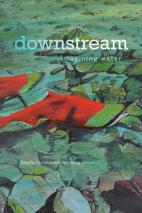
 

downstream“Downstream: reimagining water” (Wilfred Laurier University Press) by Dorothy Christian & Rita Wong “brings together artists, writers, scientists, scholars, environmentalists, and activists who understand that our shared human need for clean water is crucial to building peace and good relationships with one another and the planet. This book explores the key roles that culture, arts, and the humanities play in supporting healthy water-based ecology and provides local, global, and Indigenous perspectives on water that help to guide our societies in a time of global warming. The contributions range from practical to visionary, and each of the four sections closes with a poem to encourage personal freedom along with collective care,” writes Water Canada.


water-is-cover-webWater Is…The Meaning of Water (Pixl Press) by Nina Munteanu “explores the many dimension of H2O—the practical, the physical, and the magical. Water Is… represents the culmination of over twenty-five years of her study of water. During her consulting career for industry and government, Munteanu discovered a great disparity between humanity’s use, appreciation, and understanding of water. This set in motion a quest to further explore our most incredible yet largely misunderstood and undervalued substance. Part history, part science and part philosophy and spirituality, Water Is… combines personal journey with scientific discovery that explores water’s many “identities” and ultimately our own,” writes Water CanadaWater Is…  was recommended by Margaret Atwood as her premiere choice in the New York Times ‘The Year in Reading‘ for 2016.


WaterCanada-LOGO

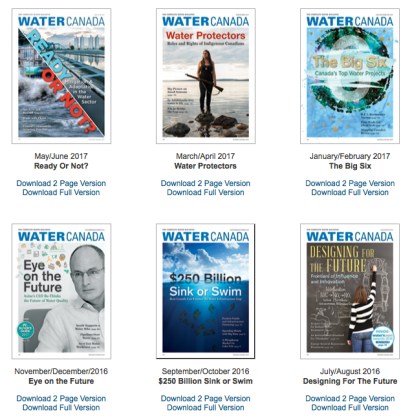
WaterCanada-coversWater Canada is a Canadian magazine that provides news and feature articles on water and water management. They currently co-host the Canadian Water Summit, a gathering of professionals from the water industry including academia, NGOs, local communities, cleantech, industry associations, manufacturing and government. “Delegates will explore opportunities to collaborate on water technology and infrastructure finance, ‘blue economy’ growth and climate change resilience through progressive policies, smart business and bold investment leadership.” This year’s summit will occur June 22, 2017 at the Sheraton Centre Hotel in Toronto.

DS-2008-16 copy

Nina Munteanu kayaking Desolation Sound on the west coast of British Columbia


#CanadaReads #Canada150 #WhatIsWATER #TheMeaningOfWater #WaterCanada