Walking Helps Me Think and Imagine

Beaches-snow03

Walking in The Beach (photo by Nina Munteanu)

I’ve written many articles and over a dozen books and readers often remark on my imagination with something akin to awe and incredulity. I often get asked where I get my ideas. Let me tell you a story first…

A Toronto friend—himself a prolific letter writer—shares that his ideas come to him during his daily walks (you’ll find his witty, humorous and somewhat pithy letters in the National Post, Globe and Mail or Toronto Star … almost weekly). David Honigsberg doesn’t use his car (that’s reserved for when his son is in town) and he walks every opportunity he gets, whether it’s a short jaunt to the coffee shop several blocks from his work place or a long trek to his home in Mount Pleasant after a lunch engagement near Bloor and Yonge. He tells me that he uses his phone to capture his “eureka” moments in what may now be considered unorthodox—he doesn’t make digital notes (it’s not that kind of phone!) but instead leaves a series of voice mails on his home phone. When he gets home, David replays his messages and writes out his letter to the editor.

What Dave does is not new to creative thinkers all over the world and throughout time. He shares great company with people who used walking as a venue toward creative thinking (and writing); people like Aristotle, Charles Darwin, Charles Dickens, Ludwig van Beethoven, Friedrich Nietzsche, William Wordsworth, Henry David Thoreau, Steve Jobs, and Soren Kierkegaard—just to name a few. All great walkers.

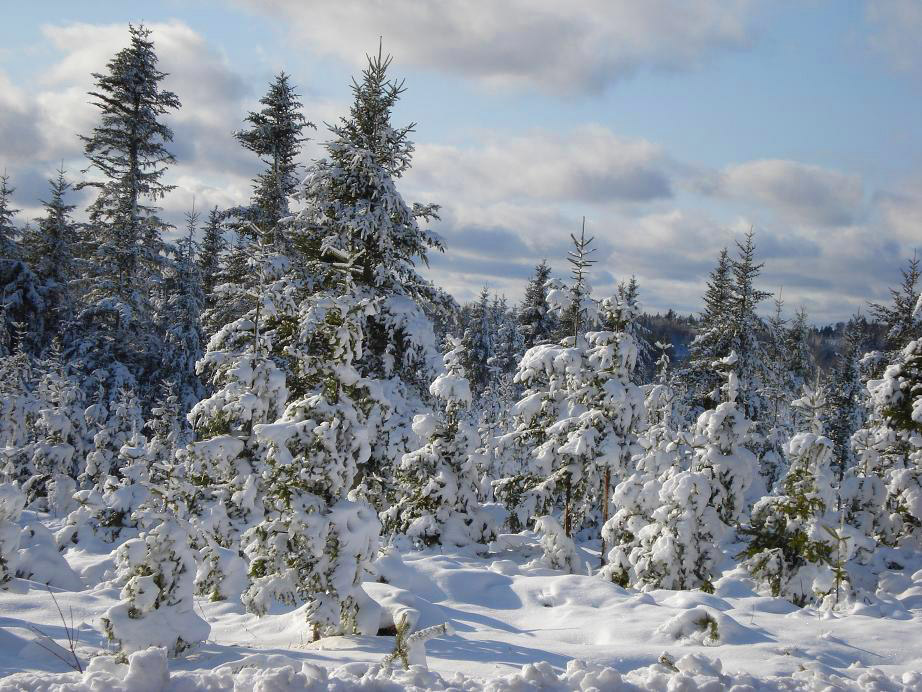
Winter-Forest Hill

Snow day in Forest Hill, Ontario (photo by Nina Munteanu)

Aristotle conducted his lectures while walking the grounds of his school in Athens. His followers, who chased him as he walked, were known as the peripatelics (e.g., Greek for meandering). Darwin refined his ideas on natural selection and other topics during his frequent walks along his “thinking path”, a gravel road called Sandwalk Wood near his home in southeast England. Dickens walked for miles each day and once said, “If I could not walk far and fast, I think I should just explode and perish.” Beethoven often took solitary walks. He strolled the Viennese woods for hours, finding inspiration for his works and jotting them down on a notepad that he carried with him. Nietzsche loved his walks in the mountains. He wrote, “it is only ideas gained from walking that have any worth.” For Wordsworth, the act of walking was one in the same with the act of writing poetry.

Both involved rhythm and meter. Henry David Thoreau was known for his great walkabouts. Walking through nature for Thoreau was a pilgrimage without a destination—more discovery and rapture. “Taking a long walk was [Steve Job’s] preferred way to have a serious conversation,” wrote Job’s biographer Walter Isaacson. Writer and avid walker, Soren Kierkegaard writes:

“Above all, do not lose your desire to walk. Everyday, I walk myself into a state of well-being and walk away from every illness. I have walked myself into my best thoughts, and I know of no thought so burdensome that one cannot walk away from it.”

In the April 2014 issue of the Journal of Experimental Pshychology: Learning, Memory and Cognition, Stanford researchers Marily Oppezzo and Daniel L. Schwartz demonstrated that walking boosts creative inspiration. Using the Guildford’s Alternative Uses Test they showed that the act of walking, whether inside or outside, significantly increased creativity for 81% of the participants. Oppezzo and Schwartz were able to demonstrate that the creative ideas generated while walking were not irrelevant or far-fetched, but innovative and practical.

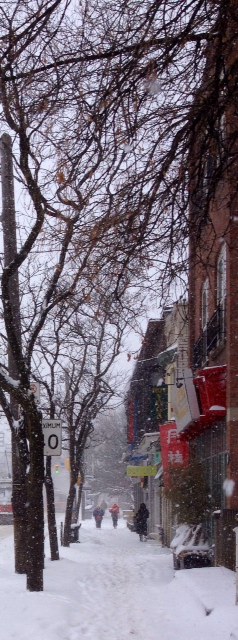
snowy street TheBeach

Snow day walk in The Beach (photo by Nina Munteanu)

In the September 3 2014 issue of The New Yorker, journalist Ferris Jabr describes why this is the case:

“The answer begins with changes to our chemistry. When we go for a walk, the heart pumps faster, circulating more blood and oxygen not just to the muscles but to all the organs—including the brain. Many experiments have shown that after or during exercise, even very mild exertion, people perform better on tests of memory and attention. Walking on a regular basis also promotes new connections between brain cells, staves off the usual withering of brain tissue that comes with age, increases the volume of the hippocampus (a brain region crucial for memory), and elevates levels of molecules that both stimulate the growth of new neurons and transmit messages between them.”

It isn’t just strolling or sauntering that stimulates the creative mind to new heights.

SONY DSC

Author hiking Highland River, Ontario (photo by Merridy Cox)

Stoking the creative artist inside you may be as simple as giving your mind the chance to wander—and taking the time to pay attention. In her book The Artist’s Way Julia Cameron talks about how “rhythm” and regular, repetitive actions play a role in priming the artistic well. She lightheartedly describes how the “s” activities work so well for this: showering, swimming, scrubbing, shaving, strolling, steering a car. I can testify to the latter—how many great plot ideas have I cooked up while driving to work! Filmmaker Steven Spielberg claimed that his best ideas came to him while he was driving the freeway. Negotiating through the flow of traffic triggered the artist-brain with images, translated into ideas. “Why do I get my best ideas in the shower?” Einstein was known to have remarked. Scientists tell us that this is because showering is an artist-brain activity.

The magic part in this is to pay attention. Pay attention to your life experiences; don’t ignore them. Sit up in the bus and watch people, play with the images, sounds and smells. Get sensual and let your eyes, ears, nose and limbs delight in the world. It’s amazing how interesting the world becomes once you start paying attention.

So, to answer the question above about where I get my ideas: in one word, everywhere.

Of course, I find those “s” activities mentioned above very helpful in quieting my mind to “listen” to my creative spirit and see; they calm and focus me. I would add another “s” word–scrawling–to the list. While Dave sends a voice message home on his phone when he gets an idea, I carry a notebook with me to jot down my eureka moments. I find writing by hand additionally helps in the creative process.  What works best for me is a walk in Nature. Nothing beats that…having a dialogue with the wind, or the chiming birds and rustling trees, the gurgling brook or surging sea or tiny insect, the soothing sun…rough bark of a fir tree… The texture of the world…


Snowy Path scarborough

Snowy path in Scarborough, Ontario (photo by Nina Munteanu)

“The texture of the world, its filigree and scrollwork, means that there is the possibility for beauty here, a beauty inexhaustible in its complexity, which opens to my knock, which answers in me a call I do not remember calling, and which trains me to the wild and extravagant nature of the spirit I seek.”—Annie Dillard, Pilgrim at Tinker Creek


References:

Cameron, Julia. 1992. “The Artist’s Way”. Penguin Putnam Inc., New York, NY. 222pp.

Dillard, Annie. 1974. Pilgrim at Tinker Creek. Harper Perennial. 304pp.

Downden, Craig. 2014. “Steve Jobs was Right About Walking” In: The National Post, December 23, 2014.

Munteanu, Nina. 2013. The Journal Writer: Finding Your Voice. Pixl Press, Vancouver, BC. 170pp.

Oppezzo, Marily and Daniel L. Schwartz. 2014. “Give Your Ideas Some Legs: The Positive Effect of Walking on Creative Thinking”, Journal of Experimental Psychology: Learning, Memory, and Cognition, Vol. 40, No. 4: 1142-1152.


nina-2014aaa

Nina Munteanu is a Canadian ecologist / limnologist and novelist. She is co-editor of Europa SF and currently teaches writing courses at George Brown College and the University of Toronto. Visit www.ninamunteanu.ca for the latest on her books. Nina’s bilingual “La natura dell’acqua / The Way of Water” was published by Mincione Edizioni in Rome. Her non-fiction book “Water Is…” by Pixl Press (Vancouver) was selected by Margaret Atwood in the New York Times ‘Year in Reading’ and was chosen as the 2017 Summer Read by Water Canada. Her novel “A Diary in the Age of Water” will be released by Inanna Publications (Toronto) in 2020.

Artist Costi Gurgu Explains his Cover Art for The Splintered Universe Trilogy

Get Rhea-HawkeGOODWhen I first met Costi and Vali Gurgu at the World Fantasy Convention in Montreal several years ago, I had no idea that Costi would end up creating the stunning book covers for The Splintered Universe Trilogy or that his wife, Vali, would serve as the model for the hero of my story, the relentless and steely detective, Rhea Hawke. You can find his cover art and other artworks on Costi’s illustration site.

Nina: Hi, Costi. Thanks so much for agreeing to do this interview. 

Costi: Hi, Nina. The pleasure is mine.

Nina: You came up with a “Triptych” design for the Splintered Universe Trilogy. What inspired you to come up with it and what do you like about it?

Costi: There is the danger of spoilers in this answer. The fact is that your main character, Rhea, undergoes a certain evolution from a regular human being to… let’s just say something else. And that evolution has three parts, one for each book of the trilogy and it also has a touch of divine. So, the triptych design, so often used for religious paintings, fits like a glove on the entire concept.

Microsoft Word - trilogy-poster03.docx

Nina: Your design for Outer Diverse (and designs for the other two covers) carries a powerful image that conjures a portal or gateway into another world (which is what the trilogy is about). The reader is drawn into an infinite landscape, looking in, and Rhea is looking out. Can you tell us a little about how you conceived this compelling design. Is there a meaning behind the symbols and colours you used? 

Costi: To be honest, the initial idea was for the red ring to be a sort of mapping device and a radar combined into one, since Rhea travels great distances in her quest. Then I realized it might as well be a portal device on top of everything else and serve all her travelling needs.

There were two options —either we would look with her outside, to whatever target she had, or look towards her. I thought that it would be more powerful if we could look towards her and see her determined face, see the unflinching resolution in her eyes, while she’s pondering her next move and readying herself to use the device once again. But to look towards her and see her in a confining room of a space ship, or such, would have defeated the purpose. So I needed to have her against the infinite landscape as the backdrop. She is in a continuous journey to discover herself and this journey takes her literally through the infinite spaces of not just one universe.
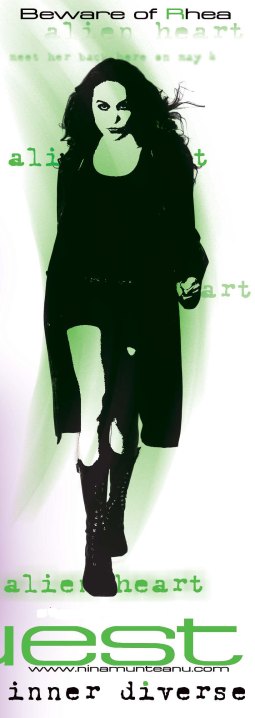
BewareRhea-GOOD copyNina: Yes, I love the metaphoric elements you’ve woven into the design. The image speaks to us on many levels. Do you use music or other devices in your work to evoke your creativity? What other tools did you use to create the stunning covers of Splintered Universe (e.g., animation software, etc.)?

Costi: I’m always listening to music while working. The kind of music varies depending on what I’m working on. If I’m writing for instance, I need instrumental music, without words to influence my own ones. Also, it depends on the kind of feeling and mood I try to generate through my writing or my illustration. Music helps me channel those feelings into the right words or imagery.

Technically speaking, I always start with sketches on paper, which I later scan. I mainly use Adobe Photoshop, but for this illustration I had to use Adobe Illustrator as well. Obviously, the layout and the typography were done in Adobe InDesign.

Nina: Your wife, Vali, was the model for Rhea Hawke. I understand you had a great time doing the photo-shoot (p.s., some of the additional shoots can be seen in the Youtube book trailer). I’ve attended several launches and events and both the cover and the model have been extolled. One reader compared Vali to actress Catherine Zeta Jones. How does Vali feel about being somewhat of a celebrity?

Costi: I’m so happy to hear that. You know, I had to decide how to treat her image. I could have gone towards a more glamorous, shiny look, like in a fashion image, or I could just simply keep it more realistic. Despite Vali’s protests, I chose to keep it that way, because I wanted to offer a realistic image of an ex-police officer: a woman who was used to fighting and chasing criminals, rather than taking care of her appearances. Now, to hear that her rougher and tougher image created that kind of reaction gives me a sort of peace and satisfaction.

Nina: You and Vali have had rich and varied careers in commercial art, law and writing. You’ve served, for instance, as art director for several high-end magazines including Playboy, and you taught graphic design at the college level. You journeyed from Romania to England and finally to Toronto, Canada. No doubt your law degree helped you in your entrepreneurial pursuits. Did you pursue illustration and design in England?

Costi: Well, three years [after England] saw us going back to Romania; our families expected us to go back to the Bar Association and behave responsibly. But after showing my portfolio around I got a designer job at Playboy Magazine! The Art Director and I launched its first Romanian edition issue a few months later. Three years later I became the Creative Director of MediaPro Group, the largest publishing company in Romania and Vali took on the position of Art Director of Playboy Magazine.

Two years later we came to Canada to pursue a dream. So, yes, I could say that my law degree created the perfect opportunity for me to discover my passion for visual arts. It took me to England and eventually to Canada. Life is funny that way.

Nina: Does Vali help you with your work and do you help her with hers?

Costi: We help each other a lot in our work. Because we worked together in our first legal job and after that in our first design job, we have become a team. We have different approaches to the art process and we have different styles. I went deeper into illustration to complement my design skills, while she chose photography to do that.

Even now, for the most important projects we have for our different employers we involve each other not only for need of feedback, but also for need of different ideas and fresh approaches. We basically complement each other.

Not to mention that she’s always my first reader for any piece of fiction I write. She’s the toughest reader I have but in the same time I know she’s also the most sincere one.

Nina: Thanks so much, Costi, for joining us. I wish you the best of luck in all your writing and illustration projects. It’s been an honor to work with you.

Costi: Again, my pleasure, Nina.

Microsoft Word - Rhea Triptych.docx

In Metaverse, the third and last book of The Splintered Universe Trilogy, Detective Rhea Hawke travels back to Earth, hoping to convince an eccentric mystic to help her defend humanity from an impending Vos attack—only to find herself trapped in a deception that promises to change her and her two worlds forever.

You can listen to a sample recording of Outer Diverse, Inner Diverse, and Metaverse through Audible. You can access the complete Splintered Universe Audiobook Trilogy on Audible. Read the Splintered Universe reviews on Goodreads.

audible listen

Microsoft Word - trilogy-poster03.docx

nina-2014aaa

Nina Munteanu is a Canadian ecologist / limnologist and novelist. She is co-editor of Europa SF and currently teaches writing courses at George Brown College and the University of Toronto. Visit www.ninamunteanu.ca for the latest on her books. Nina’s bilingual “La natura dell’acqua / The Way of Water” was published by Mincione Edizioni in Rome. Her non-fiction book “Water Is…” by Pixl Press (Vancouver) was selected by Margaret Atwood in the New York Times ‘Year in Reading’ and was chosen as the 2017 Summer Read by Water Canada. Her novel “A Diary in the Age of Water” will be released by Inanna Publications (Toronto) in 2020.

Nina Munteanu Talks About Writing and Audiobooks

AudiobookPromotions

In a recent interview with Jess at Audiobookworm Promotions, I talked about the process of turning The Splintered Universe Trilogy into three audiobooks and the process of writing in general:

Nina-tree

Nina Munteanu

Tell us about the process of turning your book into an audiobook.

The process was magical for me. It was professional and proceeded at a pace that felt productive. All of this was mainly because of the professional relationship I had with the narrator. From audition to each step of quality assurance in ensuring character voice, pronunciations, mood, tempo, etc. the narrator and I were in good communication. The final product shows. I can’t recall how long it took for each audiobook to be created, but it didn’t feel long.

How did you select your narrator?

Dawn Harvey2

Dawn Harvey

Dawn Harvey auditioned for my first book along with two other narrators through the audiobook publisher, Iambik. I picked Dawn because her voice resonated with my idea of my main character, Rhea Hawke, a cynical badass detective on a mission to save the world–a world she doesn’t understand. Dawn’s voice carried attitude and sarcasm as well as compassion and kindness. It was exactly what I was looking for in my paradoxical character. Given that the book is told in the first person, the main character voice was critical. Dawn just nailed it. When the second and third books came out, I just HAD to have Dawn do them too—not just for consistency, but because in my mind, Dawn WAS Rhea.

How closely did you work with your narrator before and during the recording process? Did you give them any pronunciation tips or special insight into the characters?

We worked closely and well. Dawn took the driver’s seat in it. She was very professional. She sent me sections of audio to check for tone, voice, etc. She created a list of voices (I had at least twenty different alien species she needed to create unique voices for—one with multiple mouths! And another was a kind of “amoeba”—her voices were splendid!) and a list of terms with her pronunciations for me to vet. She had also asked for more information on the characters, which I was able to provide, given I keep a character dossier on all characters I create.

You can listen to samples of her narration of the three audiobooks below:

audible listen

Are you an audiobook listener? What about the audiobook format appeals to you?

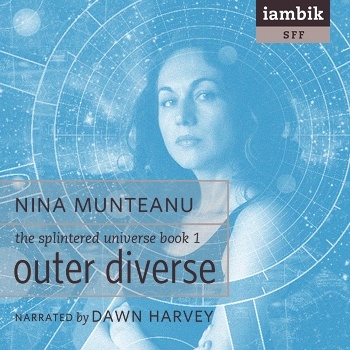
OuterDiverse-web-1 copyI like to listen to audiobooks in the car, especially when I’m on a long trip. I find it a wonderful way to enjoy a book. It’s very relaxing. When my best friend and I used to do road trips down to California from Vancouver, we took turns reading a novel or nonfiction book out loud as the other drove. It was lots of fun. With audiobooks I can do the same even when I’m the only one in the car!

What gets you out of a writing slump? What about a reading slump?

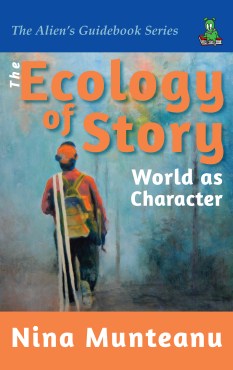
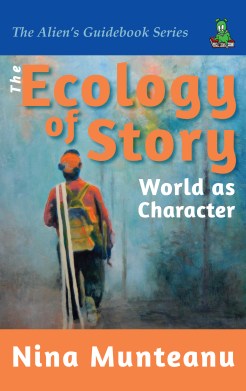
EcologyOfStoryIf I’m in a slump, it’s usually because I can’t figure something out—usually some plot point or character quirk or backstory. What helps me is to put the book I’m working on away and do something else. I know that what I need will come; I just have to let it come on its own terms. The break could even be writing something else, so long as it isn’t my book. Or I could do something else on the book such as edit a certain section or research some element. Other ways I coax my muse back are walks in Nature, reading a good book, visiting the library or a bookstore and cycling. These work really well to take me out of the book and into the muse. When I take my mind out of the direct involvement with the book, I’m letting things outside of me impact me with insight. Invariably that is what happens. I’ll see something or experience something that provides me with a clue or even an epiphany.

What advice would you give to aspiring authors?

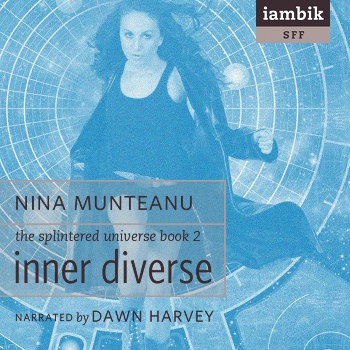
InnerDiverse-web copyLearn your “voice” and how it’s unique from anyone else. Write from the heart, write something that means something to you, and keep writing. Success in writing results from a passion to share. If you infuse your writing with passion, everything else comes with it: the patience and determination to learn craft, marketing, and the persistence in your pursuit.

Do you have any tips for authors going through the process of turning their books into audiobooks?

Know what you’re looking for to represent the “voice” of your book. Know the narrative voice you want for your book and don’t compromise on it. Work respectfully with your narrator: if they are good, they will turn your cherished book into something more than it was. Let it surprise you and delight you. Together, you and your narrator will become more than the sum of the parts. Enjoy the process and don’t rush it.

What’s next for you?

MetaverseAUDIO-FINAL2-webI recently finished my latest novel, A Diary in the Age of Water, which was picked up by Inanna Publications in Toronto and will be out in 2020. I recently launched the third book in my “Alien Guidebook” series of writing guides. This one is called The Ecology of Story: World as Character and I’ve had lots of fun with it!

I’m currently at the idea-premise phase of a feature short story commissioned by a magazine in Vancouver. The story, which may involve a branch of ecology called soundscape ecology, explores a world we hope to live in and how we might get there.

nina-2014aaa

Nina Munteanu is a Canadian ecologist / limnologist and novelist. She is co-editor of Europa SF and currently teaches writing courses at George Brown College and the University of Toronto. Visit www.ninamunteanu.ca for the latest on her books. Nina’s bilingual “La natura dell’acqua / The Way of Water” was published by Mincione Edizioni in Rome. Her non-fiction book “Water Is…” by Pixl Press (Vancouver) was selected by Margaret Atwood in the New York Times ‘Year in Reading’ and was chosen as the 2017 Summer Read by Water Canada. Her novel “A Diary in the Age of Water” will be released by Inanna Publications (Toronto) in 2020.

Word Is Wild Literary Festival in Ontario’s Near North

WordIsWild Festival-presentersB

presenters Nina Munteanu, Merridy Cox, Sharon Berg, Albert Saxby, Carol Williams, Dallas Ray Bader, and Honey Novick

WriterFestival posterI was recently invited by organizer and poet Kathy Figueroa to participate in The Word Is Wild Literary Festival III in Cardiff in Ontario’s northern community. I joined poet and author Sharon Berg from Sarnia, poet and vocalist Honey Novick and poet naturalist Merridy Cox from Toronto, singer / songwriter Albert Saxby from Essenville and other locals for a day of readings, musings, and singing.

I’d not yet ventured to this northern part of Ontario, so I was excited to drive there. I caught a ride with Merridy and Honey and the three of us took turns driving north from Toronto into the rolling hills that blazed in a chaos of fall colour. Dominated by the bright orange of the Sugar Maple, the hills formed a rolling carpet of coppers, yellows, reds and greens of American Beech, Yellow Birch, Red Maple, Eastern Hemlock and White Pine.


Cardiff is a tiny village-suburb of Highlands East, and is a former mining community. The township is located between Haliburton and the old mining town of Bancroft to the north. Bancroft was purchased from the Chippewa and Mississauga First Nations in the 1850s by Irish and English settlers who logged and mined the area for gold and other minerals.


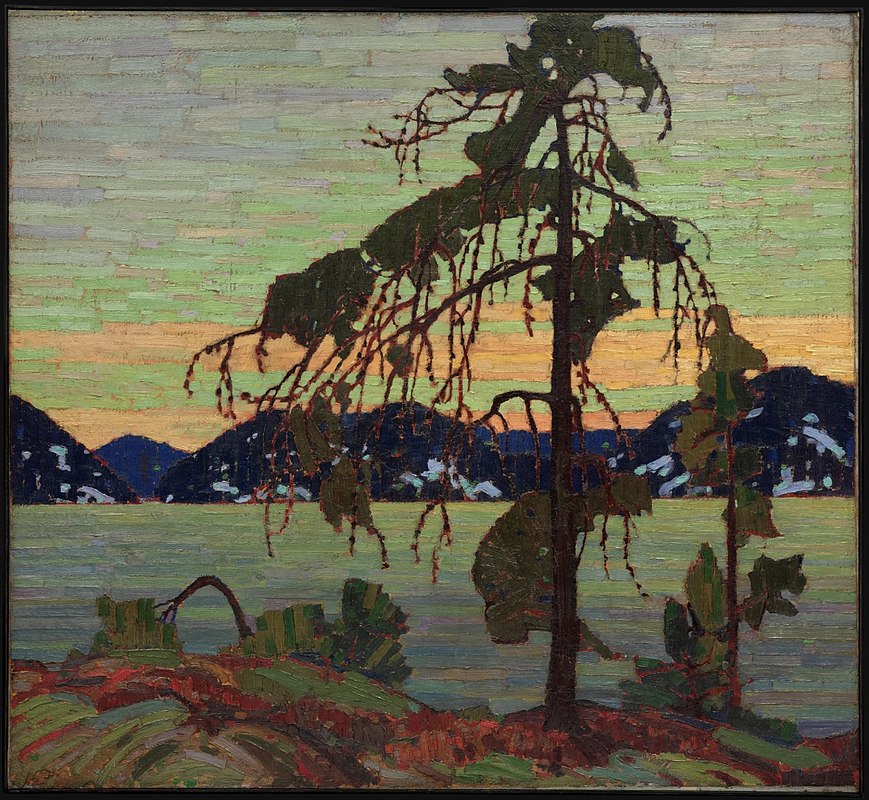
Not far north of Bancroft, Algonquin Park—a provincial park that spans over 7500 km2 between Georgian Bay and the Ottawa River—beckons. Established in 1893—making it the oldest provincial park in Canada—Algonquin Park was frequented by several artists of The Group of Seven, including Tom Thomson. His oil painting entitled The Jack Pine remains an iconic representation of Canada’s most broadly distributed pine species and well-represents this area’s landscape.

The_Jack_Pine,_by_Tom_Thomson

oil painting “The Jack Pine” by Tom Thomson

The three of us settled at the Cardiff House Writers’ Retreat, located right in the middle of Cardiff, then proceeded to the community centre where the festival was held.


Nina WaterIs

Nina Munteanu

I shared how I came to write my latest book, “A Diary in the Age of Water,” coming out in 2020 with Inanna Publications. You can read about it in my post “On Writing ‘A Diary in the Age of Water’ ” I mentioned how it started with a talk by Maude Barlow in a church on Bloor Street in Toronto, which led to a short story, to my non-fiction book “Water Is…” and finally to the novel.

The festival is hosted by Cardiff House Writers’ Retreat along with sponsorship by The League of Canadian Poets & Canada Council Poetry Tours, The Writers’ Union of Canada, and the National Public Reading Program. I hope to return next year. I think I will go for a longer time and explore this spectacular countryside and provincial park.


nina-2014aaa

Nina Munteanu is a Canadian ecologist / limnologist and novelist. She is co-editor of Europa SF and currently teaches writing courses at George Brown College and the University of Toronto. Visit www.ninamunteanu.ca for the latest on her books. Nina’s bilingual “La natura dell’acqua / The Way of Water” was published by Mincione Edizioni in Rome. Her non-fiction book “Water Is…” by Pixl Press (Vancouver) was selected by Margaret Atwood in the New York Times ‘Year in Reading’ and was chosen as the 2017 Summer Read by Water Canada. Her novel “A Diary in the Age of Water” will be released by Inanna Publications (Toronto) in 2020.

Science Fiction On Water Justice & Climate Change

TheWaterKnife-Paolo BacigalupiThere were stories in sweat. The sweat of a woman bent double in an onion field, working fourteen hours under the hot sun, was different from the sweat of a man as he approached a checkpoint in Mexico, praying to La Santa Muerte that the federales weren’t on the payroll of the enemies he was fleeing…Sweat was a body’s history, compressed into jewels, beaded on the brow, staining shirts with salt. It told you everything about how a person had ended up in the right place at the wrong time, and whether they would survive another day.

So begins Paolo Bacigalupi’s speculative thriller The Water Knife, set in the near-future in the drought-stricken American southwest. Where corrupt state-corporations have supplanted the foundering national government. Where water is the new gold—to barter, steal, and murder for. Corporations have formed militias and shut down borders to climate refugees, fomenting an ecology of poverty and tragedy. Massive resorts—arcadias—constructed across the parched landscape, flaunt their water-wealth in the face of exploited workers and gross ecological disparity. Water is controlled by corrupt gangsters and “water knives” who cleverly navigate the mercurial nature of water rights in a world where “haves” hydrate and “have nots” die of thirst.

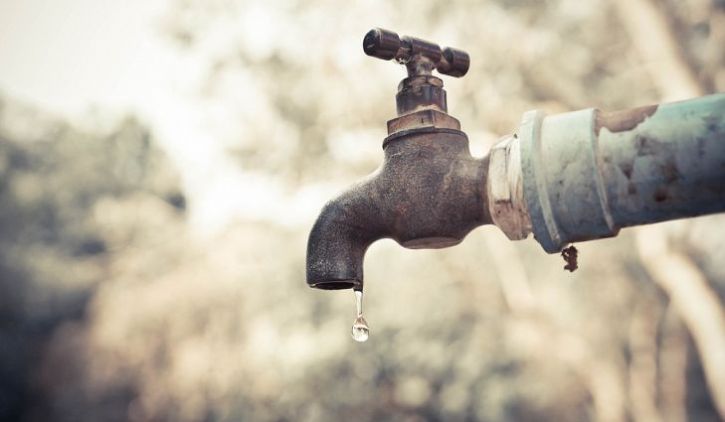
drinking water from tap copy

Paolo Bacigalupi is just one of many authors of compelling dystopian eco-thrillers that engage readers in climate change—many with strong water themes: Margaret Atwood, Emmi Itäranta, Jeff VanderMeer, Richard Powers, Barbara Kingsolver, Upton Sinclair, Ursula Le Guin, JoeAnn Hart, Frank Herbert, John Yunker, Kim Stanley Robinson, James Bradley, Nathaniel Rich, David Mitchell, Junot Diaz, Claire Vaye Watkins, J.G. Ballard, Marcel Theroux, Thomas Wharton—just to name a few.

Diary Water cover finalMy upcoming novel by Inanna Publications—A Diary in the Age of Water coming out in 2020—explores the socio-political consequences of corruption in Canada, now owned by China and America as an indentured resource ‘reservoir’; it is a story told through four generations of women and their unique relationship with water during a time of great unheralded change. On February 17, 2046, limnologist Lynna writes in her diary about her mother Una:

Bald, alle das wasser verschwindet,” She said in her quiet voice of certainty. She always spoke in her mother tongue when it came to water. Soon, all the water will be gone. “Und so werden wir.” And so will we. “Es wird das Ende des Zeitalters des Wassers sein.” It will be the end of the Age of Water. 

Una always seemed to follow the thalweg. She seemed to always know what water was doing. Even when it braided and curled in on itself. Even when human-made obstructions got in the way; like the increased water tax, followed by the severe water-use quota. Like water, Una found a way around it.  

I wish I had that skill.

wter tap2 copy

Adobe Photoshop PDFScience fiction explores our water crisis through premises of extreme water shortage and devastating violence (floods, droughts and storms), water diversion, and hoarding. Premises explore weather manipulation, the consequences of extensive deforestation and the massive extinction of species. As with my own book A Diary in the Age of Water, Claudiu Murgan’s Water Entanglement explores water as a character, as though water has gone rogue, unruly. Perhaps even vengeful…

Today, we control water on a massive scale. Reservoirs around the world hold 10,000 cubic kilometres of water; five times the water of all the rivers on Earth. Most of these great reservoirs lie in the northern hemisphere, and the extra weight has slightly changed how the Earth spins on its axis, speeding its rotation and shortening the day by eight millionths of a second in the last forty years.

dried up river bed2 copy

Millennia ago, we adapted and lived by the rhythms of the global water cycle. We have since harnessed the power of water; we captured it and diverted it and changed it in ways to suit our own rhythms. Our unprecedented power over the planet’s water has advanced our civilizations immeasurably. But water remains our Achilles’ heel; it has the potential to limit our ambition like no other resource on Earth.

If climate change is the planet’s response to humanity’s relentless exploitation, water is its archangel.

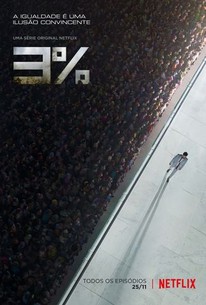
Three Percent TVshowA tidal wave of TV shows and movies currently explore—or at least acknowledge—the devastation we are forcing on the planet. Every week Netflix puts out a new science fiction show that follows this premise of Earth’s devastation: 3%; The 100The TitanOrbiter 9; even Lost in Space.

Science fiction is suited to this role; it is the literature of consequence that explores large issues faced by humankind and can provide an important vehicle in raising environmental awareness. Literature in general has always served as a cultural reporter on themes important to humanity.  The science fiction genre—and speculative fiction particularly—explores premises based on current scientific and technological paradigms. What if we kept doing this?…What if that went on unchecked?… What if we decided to end this?… These are conveyed through the various predictive visions from cautionary tales (e.g., Atwood’s Year of the Flood) to dystopias (e.g., Itäranta’s The Memory of Water). Science fiction has always been the pre-eminent literature of metaphor and history; it has lately matured in the Anthropocene to incorporate the edgy realism of literary fiction to give us potent environmental relevance. Sub-genres now include eco-fiction, climate fiction, and cli-fi.

MemoryOfWater_Emmi ItarantaEllen Szabo, author of Saving the World One Word at a Time: Writing Cli-Fi suggests that the ability to make environmental issues less political and more personal (through story) permits more engagement by readers and a higher likelihood of action toward justice: we are more likely to take action on the things we love and know. It’s all about connection.

“Science doesn’t tell us what we should do,” Barbara Kingsolver wrote in Flight Behavior “It only tells us what is.” Stories can never be a solution in themselves, but they have the capacity to inspire action, which is perhaps why cli-fi’s appeal among young adult readers holds such promise. As the scientists and leaders of tomorrow, they may be most capable of addressing climate and water issues where previous generations have failed, writes J.K. Ullrich of The Atlantic. As Margaret Atwood wrote in MaddAddam, “People need such stories, because however dark, a darkness with voices in it is better than a silent void.”

We tend to live very much in the here and now, Bacigalupi told an audience at the University of Seattle when describing humanity’s lack of planning for the future.  But, he added, “with science fiction, I can give you a [here and now] experience far into the future,” and allow a reader to truly experience “what it’s like to be a climate refugee” or be someone with no legal access to water. An extrapolated science fiction future provides a visceral opportunity to see our future selves in a way that promotes serious consideration, says Bacigalupi. By putting us there, we have a better chance of making those extrapolations into consequence.

freighter-Toronto harbourJPG

For centuries we have hubristically and disrespectfully used, discarded and destroyed just about everything on this beautiful planet. According to the World Wildlife Federation, 10,000 species go extinct every year. That’s mostly on us. They are the casualty of our selfish actions. We’ve become estranged from our environment, lacking connection and compassion. That has translated into a lack of consideration—even for each other. In response to mass shootings of children in schools, the U.S. government does nothing to curb gun-related violence through gun-control measures; instead they suggest arming teachers. We light up our cigarettes in front of people who don’t smoke and blow cancer-causing second-hand smoke in each other’s faces. We litter our streets and we refuse to pick up after others even if it helps the environment and provides beauty for self and others. The garbage we thoughtlessly discard pollutes our oceans with plastic and junk, hurting sea creatures and the ocean ecosystem in unimaginable ways. We consume and discard without consideration.

PolarMom 2 cubs

We do not live lightly on this planet.

We tread with incredibly heavy feet. We behave like bullies and our inclination to self-interest makes us far too prone to suspicion and distrust: when we meet the unknown—the “other” so often portrayed in science fiction—we tend to respond with fear and aggression over curiosity, hope and kindness. Something we need to work on if we are going to survive.

Science fiction—the highest form of metaphoric and visionary art—is telling us something. Are we paying attention?

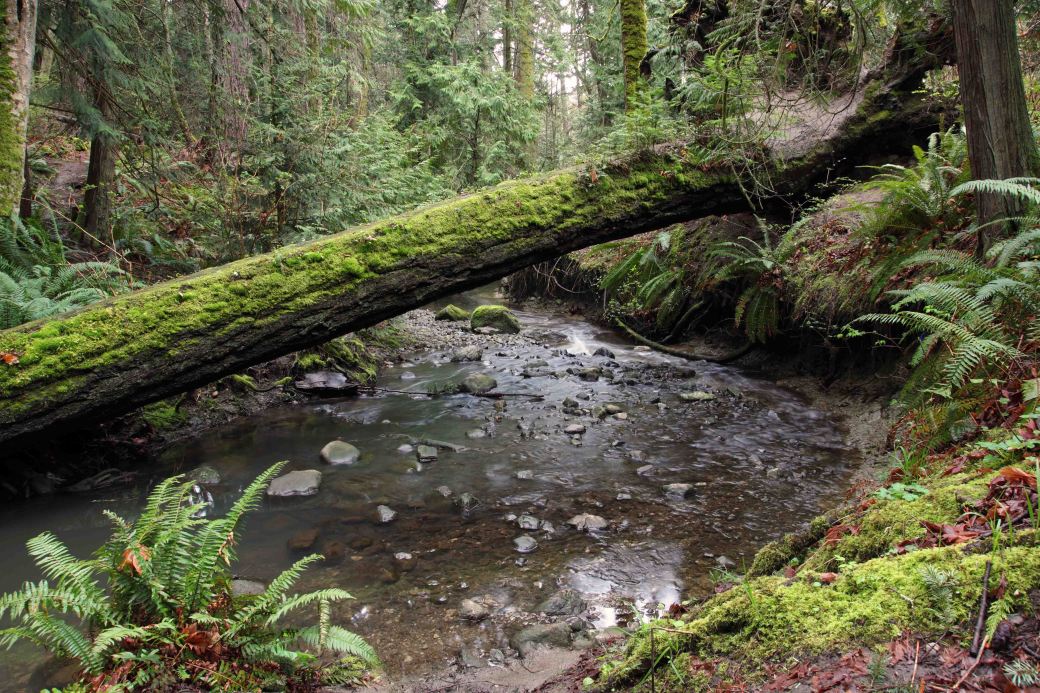
Fallen log BC-rainforest

Rainforest on southern Vancouver Island, B.C. (Photo by Kevin Klassen)


nina-2014aaa

Nina Munteanu is a Canadian ecologist / limnologist and novelist. She is co-editor of Europa SF and currently teaches writing courses at George Brown College and the University of Toronto. Visit www.ninamunteanu.ca for the latest on her books. Nina’s bilingual “La natura dell’acqua / The Way of Water” was published by Mincione Edizioni in Rome. Her non-fiction book “Water Is…” by Pixl Press (Vancouver) was selected by Margaret Atwood in the New York Times ‘Year in Reading’ and was chosen as the 2017 Summer Read by Water Canada. Her novel “A Diary in the Age of Water” will be released by Inanna Publications (Toronto) in 2020.
International Writers’ Festival at Val David

ValDavid-group inside1

International Writers’ Festival & Retreat with Flavia Cosma, Val David

In the middle of June 2019, I drove to Val David, Quebec, with poet-songstress and friend Honey Novick. We had been invited to participate in Les Mots du Monde, the nineteenth international writers’ and artists’ festival of readings, songs, and discussions. The location was the residence of international poet Flavia Cosma. Cosma has been hosting the writer’s event for close to a decade in her large house in the forest just outside the resort town of Val David in the Laurentians.

The program spanned two days of lecture, readings, performance and art by artists and writers from Argentina, Romania, Mexico, USA, Laval, Montreal, and Toronto.

Festival-group outside

International Festival among the trees

Poets, writers, musicians and artists included Honey Novick, Hélène Dorion, Tito Alvarado, Dinorah Gutiérrez Andana, Flavia Cosma, Gerette Buglion, Yvan-Denis Dupuis, EcologyOfStoryJeremiah Wall, Nina Munteanu, Nancy R. Lange, Nicole Davidson, Carmen Doreal, MarieAnnie Soleil, Luis Raúl Calvo, Louis-Philippe Hébert, Melania Rusu Caragioiu, Anna-Louise Fontaine.

I talked about my experience and process of writing my upcoming speculative novel “A Diary in the Age of Water”, coming out in 2020 with Inanna Publications. The novel chronicles four generations of women and their relationship with water during a time of extreme change.

I also shared examples of my recently launched writing guidebook “The Ecology of Story: World as Character” (Pixl Press). The 3rd guidebook in my Alien Guidebook Series, “Ecology of Story” focuses on place and environment and how these form the heart of a good story.

Throughout the festival, we were treated to magnificent ethnic food and refreshments. Interesting discussions on the international literary scene over wine and desert followed.

lunch 2

Lunch at Flavia’s

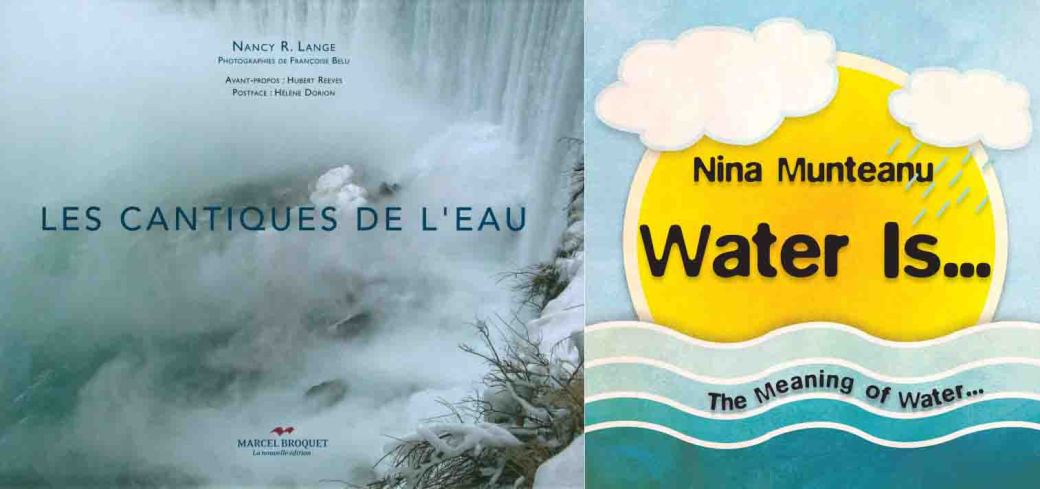
I shared good conversation with fellow poet and water advocate Nancy R. Lange. She had given a compelling presentation on her recent book “Les Cantiques de l’eau” (Marcel Broquet) and knew about my book “Water Is: The Meaning of Water” (Pixl Press). Of course, the best thing to do was exchange books—which we did. Nancy is the literary ambassador for the Eau Secours organization and has promoted responsible water stewardship through her writing and presentations for many years.

Microsoft Word - WaterBooks.docx

“It is not the cliff that shapes the ocean. It is the ocean that shapes the cliff. Fluidity is always the greater force than rigidity.”—Nancy R. Lange


On the final day, the writers and artists put on a public performance at the Val David Centre d’Exposition.

C'est La Vie Cafe

C’est la Vie Cafe, Val David

Val David

Val David is a small resort town located in the Laurentian Mountains about 80 kilometers from Montreal, Quebec. The village is known for its food scene and its artistic character. When I was there, I sampled the local cafes and experienced the street market, which offered a diversity of locally made and sourced produce and crafts.


nina-2014aaa

Nina Munteanu is a Canadian ecologist / limnologist and novelist. She is co-editor of Europa SF and currently teaches writing courses at George Brown College and the University of Toronto. Visit www.ninamunteanu.ca for the latest on her books. Nina’s bilingual “La natura dell’acqua / The Way of Water” was published by Mincione Edizioni in Rome. Her non-fiction book “Water Is…” by Pixl Press (Vancouver) was selected by Margaret Atwood in the New York Times ‘Year in Reading’ and was chosen as the 2017 Summer Read by Water Canada. Her novel “A Diary in the Age of Water” will be released by Inanna Publications (Toronto) in 2020.
 

“Ecology of Story: World as Character” Workshop at When Words Collide, Calgary

EcologyOfStoryI recently gave a 2-hour workshop on “ecology of story” at Calgary’s When Words Collide writing festival in August, 2019.

The workshop—based on my third writing guidebook: “The Ecology of Story: World as Character”explored some of the major relationships in functional ecosystems and how to effectively incorporate them in story. We  briefly explored how ecosystems and ecological processes work and looked at several of the more bizarre examples of ecological adaptation.

I showed how treating world and place as character provides depth and meaning to story through its integration with plot, theme, and other characters. We looked at these story components as integral to help ground the reader in context and meaning of story. We explored place / setting as metaphor, symbol, archetype, and allegory.

Through literary examples of setting and place, we looked at how readers are drawn into story through metaphor, sensual description, and thematic integration through POV character.

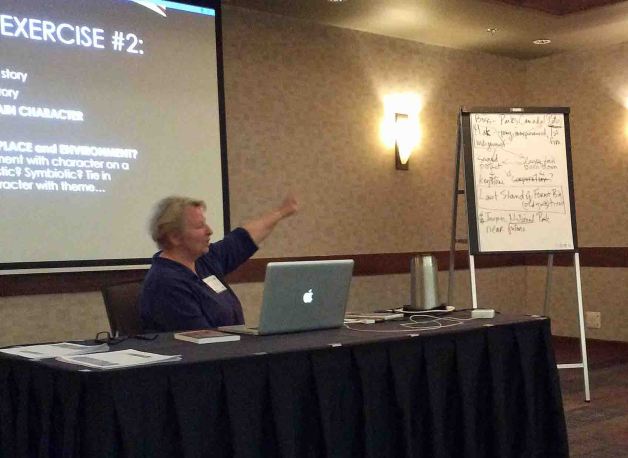
Nina and flipchart2

Reviewing the story we created through an exercise

Then came the story-building part of the workshop—a snappy, fast-paced dialogue among all workshop participants. Using the book’s cover image as story-prompt, we worked through the story components of premise, theme, character, plot and setting. Following a lively discussion, we succeeded in creating a stunning first crack at a story that was both original and intriguing. And at whose heart was a strong sense of place and identity.

creating a story

“The Ecology of Story” had only recently been launched at Type Books in Toronto and saw its first use at the Calgary When Words Collide conference. Books were sold out an hour after the workshop.

Microsoft Word - EcologyOfStory Launch.docx

“The Ecology of Story” recently achieved Amazon Bestseller status in the Ecology category.

EcologyOfStory-AmazonBestseller-Ecology


NinaEcologyWorkshop01

Nina starts her “The Ecology of Story” workshop with Part 1: ecology

Nina-slide-EcologyWorkshop

Nina talks about some interesting adaptations in reproduction


Rainforeset Stream-2012

Stream on Vancouver Island, BC (photo by Kevin Klassen)


nina-2014aaaNina is a Canadian scientist and novelist. She worked for 25 years as an environmental consultant in the field of aquatic ecology and limnology, publishing papers and technical reports on water quality and impacts to aquatic systems. Nina has written over a dozen eco-fiction, science fiction and fantasy novels. An award-winning short story writer, and essayist, Nina currently lives in Toronto where she teaches writing at the University of Toronto and George Brown College. Her non-fiction book “Water Is…”—a scientific study and personal journey as limnologist, mother, teacher and environmentalist—was picked by Margaret Atwood in the New York Times as 2016 ‘The Year in Reading’. Nina’s most recent novel “A Diary in the Age of Water”— about four generations of women and their relationship to water in a rapidly changing world—will be released in 2020 by Inanna Publications.


One-Day Writing Intensive in Georgian Bay

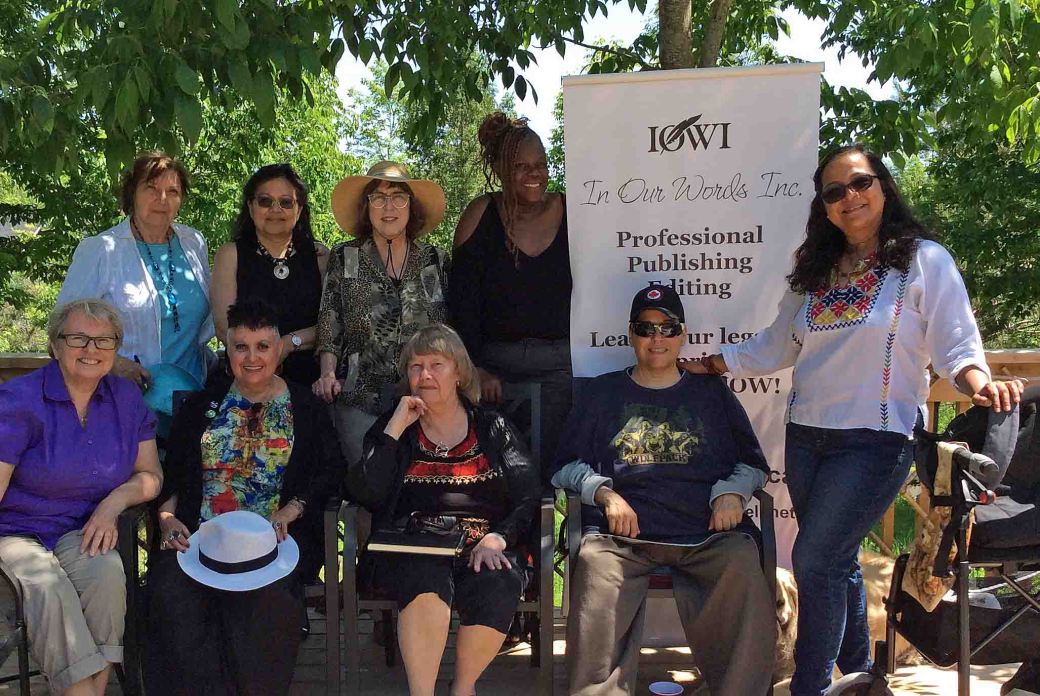
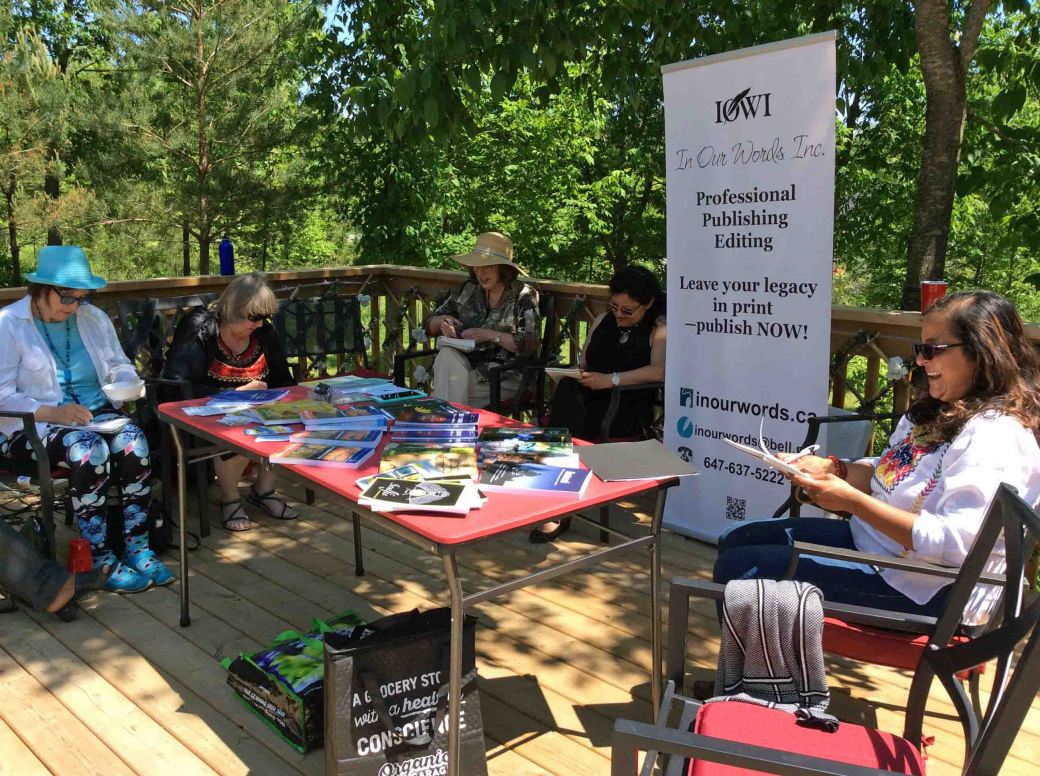
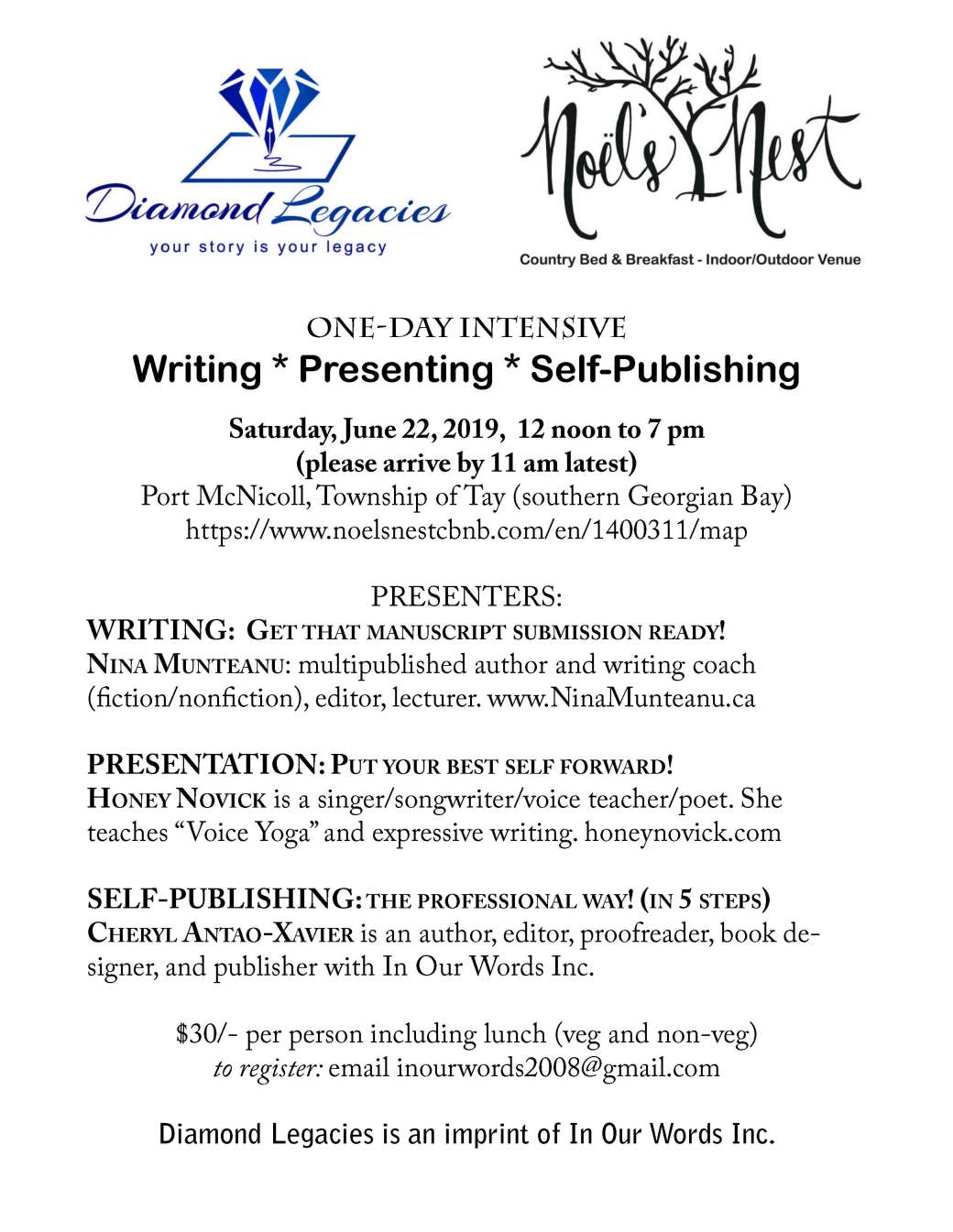
On June 22, 2019, I joined Honey Novick and Cheryl Antao-Xavier as presenters of a one-day writing intensive at Noël’s Nest Country Bed & Breakfast near Port McNicoll.

NoelsNest-Group-close

writing group at Noel’s Nest

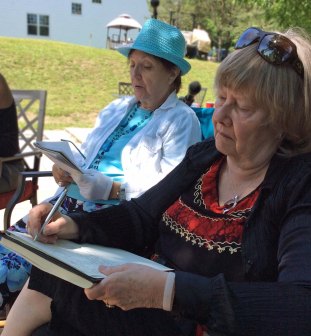
A small group of dedicated writers joined the intensive and we explored topics to do with writing, manuscript preparation and submission, as well as publishing models. This included meaningful discussions and writing exercises, readings and sharing.

writers writing2I talked about the importance of theme to help determine a story’s beginning and ending. We also discussed the use of theme in memoir to help focus the memoir into a meaningful story with a directed narrative. I discussed the use of the hero’s journey plot approach and its associated archetypes to help determine relevance of events, characters and place: all topics explored in my Alien’s Guidebook series.

As part of the intensive at Noël’s Nest, a magnificent lunch was served along with refreshments. The day was sunny and warm. And perfect in the shade. We ended the intensive with a short nature walk led by naturalist Merridy Cox.

Liana-Lillian writingWhile everyone left at six, I stayed on with a friend. I’d booked the night and looked forward to a restful evening among deer, rustling trees and a chorus of birdsong. The owner had left us some leftovers for supper, and, as we dined on a smorgasbord of gourmet food and wine, I reveled in Nature’s meditative sounds. The night sky opened deep and clear with a million stars.

The next day we enjoyed exploring southern Geogrian Bay, which included the small towns of Port McNicoll, Midland and Penetanguishene. Georgian Bay is part of Lake Huron, one of the Great Lakes.

Tom_Thomson_-_Pine_Island,_Georgian_Bay

Pine Island by Tom Thompson

The bay itself is quite large, comprising about four-fifths the size of Lake Ontario. Eastern Georgian Bay, where we were exploring, is part of the southern edge of the Canadian Shield. Granite bedrock exposed by the glaciers at the end of the last ice age about 11,000 years ago, forms a rugged coastline dotted by windswept eastern white pine. The rugged beauty of the area inspired landscapes by artists of the Group of Seven.

The shores and waterways of the Georgian Bay are the traditional domain of the Anishinaabeg First Nations peoples to the north and Huron-Petun (Wyandot) to the south.

Port McNicoll-GeorgianBay2

Georgian Bay at Port McNicoll

The bay was a major Algonquian-Iroquoian trade route when Champlain, the first European to explore and map the area in 1615–1616, arrived and called it “La Mer douce” (the calm sea). Originally named Waasaagamaa by the Ojibwe, the bay was renamed Georgian Bay by Lieutenant Bayfield of a Royal Navy expedition after King George IV.

After driving through Port McNicoll, we drifted into Midland, where we enjoyed a delicious crepe at La Baie Creperie. On the recommendation of a local, we then moved on to Penetanguishene to the Dock Lunch for the best ice cream in Southern Georgian Bay.

LaBaie Creperie-Midland

La Baie Crêperie in Midland

Upon leaving, I realized that I’d only seen a small portion of the Georgian Bay area and vowed to return soon.

Group writing

Eager writers work on an exercise I’ve given them

Writing intensive June 22, 2019


nina-2014aaa

Nina Munteanu is a Canadian ecologist / limnologist and novelist. She is co-editor of Europa SF and currently teaches writing courses at George Brown College and the University of Toronto. Visit www.ninamunteanu.ca for the latest on her books. Nina’s bilingual “La natura dell’acqua / The Way of Water” was published by Mincione Edizioni in Rome. Her non-fiction book “Water Is…” by Pixl Press (Vancouver) was selected by Margaret Atwood in the New York Times ‘Year in Reading’ and was chosen as the 2017 Summer Read by Water Canada. Her novel “A Diary in the Age of Water” will be released by Inanna Publications (Toronto) in 2020.


“The Ecology of Story: World as Character” Launched at Type Books, Toronto

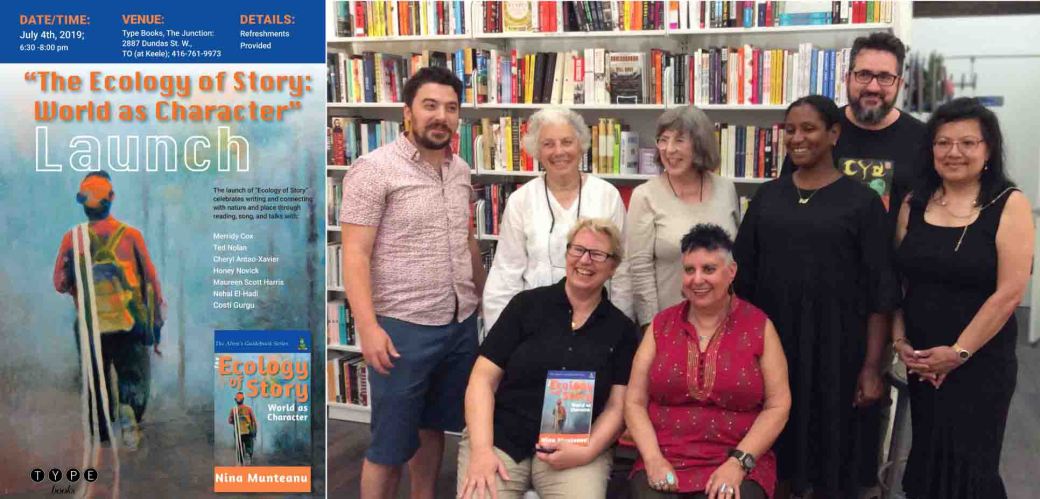
ECOLOGY_Poster-web2UofT instructor and writer Nina Munteanu launched the third book in her acclaimed “how to write” series at Type Books, Toronto, on July 4th, 2019. The launch of “The Ecology of Story: World as Character” celebrated writing and place through readings, songs and talks by local writers, poets and singers.

“The Ecology of Story” was created to address the need for writers to better acknowledge the central role of place in story and better address the interrelatedness of environment with character on a journey.

“The Ecology of Story” appears in two parts; Part 1 is dedicated to basic ecology with a focus on strange and wonderful relationships in the natural world; Part 2 integrates metaphoric connections between character and place/environment to deepen meaning in story.


audience01

Launch at Type Books

From Habitats and Trophic Levels to Metaphor and Archetype…

The Ecology of Story” teaches the fundamentals of ecology, insights of world-building, and how to master layering-in of metaphoric connections between setting and character in fiction. For excerpts of the book go to EcologyOfStory.

presenters01

Launch presenters

Launch at Type Books

Poet and song writer Honey Novick opened the launch with an inspirational song. Ted Nolan, Maureen Scott Harris and Nehal El-Hadi read poems and works that addressed lost rivers, particularly of Toronto. Merridy Cox discussed the science of binomials. Costi Gurgu read from his most recent work Reciparium, and Cheryl Xavier read her poem to the Banyan tree. Honey closed with another song, ending the formal part of the event.

Launch Presenters

Honey NovickHoney Novick is a poet, voice teacher, singer and songwriter. Honey is the winner of the Empowered Poet Award, CAPAC, Yamaha Classical Music Competition in Japan, among others. Honey wrote music for CBC’s Morningside and sang for Prime Minister Pierre Elliot Trudeau.


Ted NolanTed NolanE. Martin Nolan—is a poet, essayist, editor and voice of the trees. He teaches in the Engineering Communication Program at the University of Toronto and is a PhD Candidate in Applied Linguistics at York University. His latest work is a chapbook written in collaboration with some trees entitled: “Trees Hate Us.”


MaureenScottHarrisMaureen Scott Harris is a poet, essayist, and rare books cataloguer. A UofT grad in Library Science, she received the Trillium Book Award for poetry for Drowning Lessons and was the first non-Australian to be awarded the 2009 WildCare Tasmania Nature Writing Prize for her essay, “Broken Mouth: Offerings for the Don River, Toronto.”


Nehal El-HadiNehal El-Hadi is a writer, researcher, editor and journalist, who explores the intersections of body, technology, and space. Her writing has appeared in academic journals, literary magazines, and forthcoming in anthologies and edited collections. She is currently a visiting scholar at York University and sessional faculty at the University of Toronto.


MerridyCoxMerridy Cox is a naturalist, photographer, editor, indexer and poet. She is also managing editor of Lyrical Leaf Publishing. Merridy has a degree in biology and museum studies;  her poetry focuses mostly on the natural world around her; her poems and photographs are published in several literary anthologies. She has edited several books, including this one!


Costi GurguCosti Gurgu is a graphic designer and illustrator as well as an award-winning science fiction and fantasy novelist and short story writer who is published in anthologies and magazines throughout the world. He is a former lawyer and was art director for lifestyle and fashion magazines in Europe before moving to Canada. His latest novel—RecipeArium—was called the new new weird by Robert J. Sawyer and was nominated for an Aurora Award.


cheryl-xavierCheryl Antao-Xavier is an editor, interior book designer and publisher with IOWI. She has been publishing emergent writers since 2008 and continues to offer self-publishing solutions to writers and companies and organizations. She recently released her book: “Self-Publishing the Professional Way: 5 Steps from Raw Manuscript to Publishing.”


Launch sign outside


nina-2014aaa

Nina Munteanu is a Canadian ecologist / limnologist and novelist. She is co-editor of Europa SF and currently teaches writing courses at George Brown College and the University of Toronto. Visit www.ninamunteanu.ca for the latest on her books. Nina’s bilingual “La natura dell’acqua / The Way of Water” was published by Mincione Edizioni in Rome. Her non-fiction book “Water Is…” by Pixl Press (Vancouver) was selected by Margaret Atwood in the New York Times ‘Year in Reading’ and was chosen as the 2017 Summer Read by Water Canada. Her novel “A Diary in the Age of Water” will be released by Inanna Publications (Toronto) in 2020.


On Writing “A Diary in the Age of Water”

How does any fire begin? With a spark…

FillingAtWaterTap copyIn Summer of 2016, I attended a talk given by Maude Barlow on water justice. The radical talk was based on her recent book “Boiling Point”, a comprehensive exploration of Canada’s water crisis—a crisis that most Canadians weren’t—and still aren’t—aware. Canada is steward to a fifth of the world’s fresh water, after all. It is a water-rich country. Of the dozen largest inland lakes in the world, Canada holds eight of them. So, why water crisis? Well, Maude explains. And you should read “Boiling Point.” It will open your eyes to the politics of water and how multinational corporations—like Nestlé—are already grabbing and funneling water away from Canadians and into the global profit machine.

Maude’s talk was in a church on Bloor Street in Toronto. I sat close to the front to best see her. But I soon noticed that many people had elected to sit in the gallery above. I found myself focusing on a young mother and her little girl. The girl had some paper and crayons and was busy with that as the enthusiastic mother listened to Maude deliver dire facts about corporate water high-jacking and government complicity.

I saw a story there.

What mother would take her pre-school child to a socio-political talk on water? I would later reflect that memory of the mother and her little girl through my characters Una and her little daughter Lynna, the diarist in my novel “A Diary in the Age of Water” (due for publication in 2020 with Inanna Publications).


Elora Park something river 4

Reflections on the Eramosa River, Ontario (photo by Nina Munteanu)

The spark for my novel began with a short story I was invited to write in 2015 about water and politics in Canada.  I had long been thinking of potential ironies in Canada’s water-rich heritage. The premise I wanted to explore was the irony of people in a water-rich nation experiencing water scarcity: living under a government-imposed daily water quota of 5 litres as water bottling and utility companies took it all.

The Way of Water-COVERI named the story “The Way of Water.” It was about a young woman (Hilda) in near-future Toronto who has run out of water credits for the public iTap; by this time houses no longer have potable water and their water taps have been cemented shut; the only way to get water is through the public iTaps—at great cost. She is two metres from water—in a line of people waiting to use the tap—and dying of thirst.

The Way of Water” captures a vision that explores the nuances of corporate and government corruption and deceit together with global resource warfare. In this near-future, Canada is mined of all its water by thirsty Chinese and US multinationals—leaving nothing for the Canadians. Rain has not fallen on Canadian soil in years due to advances in geoengineering and weather manipulation that prevent rain clouds from going anywhere north of the Canada-US border. If you’re wondering if this is possible, it’s already happening in China and surrounding countries.

Exile-CanTales ClimateChangeThe story first appeared in 2015 in Future Fiction, edited by Francesco Verso, and in 2016 as a bilingual (English and Italian) book and essay published by Mincione Edizioni in Rome. The story was reprinted in magazines and anthologies several times since, including “Cli-Fi: Canadian Tales of Climate Change Anthology” (Exile Editions, Bruce Meyer, ed), in 2017, Future Fiction: New Dimensions in International Science Fiction (Francesco Verso & Bill Campbell, eds; Future Fiction / Rosarium Publishing, Rome and Greenbelt, MD) in 2018; and in Little Blue Marble Magazine (Katrina Archer, ed) in January, 2019. “The Way of Water” received generous praise from review sites and the press worldwide.

FF - Rosarium CoverAfter the success of this short story, I realized that I needed to tell the larger story—how did the world—Canada—get to where Hilda was? Her mysterious mother, the limnologist Lynna who was taken away by the RCMP in 2063, clamored for more attention. I remembered that four-year old girl and her mother in the gallery at Maude Barlow’s talk on water politics. And I thought of my characters: young Lynna and her mother Una. How does a daughter of an activist mother behave and think? How best to express her voice?

NaturalSelection-front-webI had earlier written a short story that was a mix of correspondence (emails) and third person narrative (“The Arc of Time” in Natural Selection), which I felt captured the voices of the characters well. I realized that a diary by Lynna would be an ideal way for her to express her unique worldview and cynicism—yet allow her vulnerable humanity to reveal itself through this unique relationship with her diary. The remaining characters and their narratives emerged easily from there: Una, her activist mother; Daniel, her conspiracy theorist colleague (and her conscience); Orvil, the water baron (and lover she betrayed); and Hilda, her “wayward” supposedly mind-challenged daughter—who appears in the short story that takes place later.

Water Is-COVER-webI had a lot of material; I had already been researching water issues and climate change in my activism as a science reporter. I had recently published “Water Is… The Meaning of Water”, essentially a biography of water, written from the perspective of mother, environmentalist and scientist. I had practiced as a limnologist for over twenty-five years and could mine my various personal experiences in the field, lab and office with genuine realism. I chose Robert Wetzel’s Limnology (the classic text book I used in my introductory limnology course) for quotes to each of Lynna’s entries; this added an opportunity to provide additional metaphor and irony through Lynna’s scientific voice. I placed the child Lynna (who was born in 2012) into actual events in Toronto, where I currently live. This pushed the story further into the area of documentary and blurred the lines between fiction and non-fiction to achieve a gritty and textured reality. Lynna also taught limnology at the University of Toronto, where I currently teach.

Just as Water Is…” served as a watershed for all my relevant experiences as mother, environmentalist and scientist, “A Diary in the Age of Water” would galvanize many of my personal experiences, doubts, challenges and victories into compelling story. Although parts of the story wrote themselves, the entire book was not easy to write. There were times when I had to walk away from the book to gain some perspective—and optimism—before continuing. When I found myself drowning in Lynna’s voice, I invoked Hilda to guide me to shore. I found a balance that worked and compelled. Ultimately this opened to some of the best internal conflict and tension I have experienced in my writing.

Diary Water cover finalLike water itself, A Diary in the Age of Water expresses through many vessels and in many perspectives, spanning hundreds of years—and four generations of women—with a context wider than human life. Through its characters, A Diary in the Age of Water explores the big question of humanity’s deadlock with planetary wellness and whether one is worth saving at the expense of the other. One of the characters asks Lynna the hard question: “If you had the chance to save the planet [stop the mass extinctions, deforestation and pollution ravaging the planet], but it was at the expense of humanity, would you do it?”


Water is, in fact, a character in the book—sometimes subtle and revealed in subtext, other times horrific and roaring with a clamorous voice. Water plays both metaphoric and literal roles in this allegorical tale of humanity’s final journey from home. The story explores identity and our concept of what is “normal”—as a nation and an individual—in a world that is rapidly and incomprehensibly changing—and in which each of us plays a vital role simply by doing or not doing.

A Diary in the Age of Water” promises to leave you adjusting your frame of reference to see the world, yourself—and water—in a different way. “A Diary in the Age of Water” is scheduled for release by Inanna Publications in 2020.

WaterDrop-byPeterJames

Water drops (photo by Peter James)


nina-2014aaa

Nina Munteanu is a Canadian ecologist / limnologist and novelist. She is co-editor of Europa SF and currently teaches writing courses at George Brown College and the University of Toronto. Visit www.ninamunteanu.ca for the latest on her books. Nina’s bilingual “La natura dell’acqua / The Way of Water” was published by Mincione Edizioni in Rome. Her non-fiction book “Water Is…” by Pixl Press (Vancouver) was selected by Margaret Atwood in the New York Times ‘Year in Reading’ and was chosen as the 2017 Summer Read by Water Canada. Her novel “A Diary in the Age of Waterwill be released by Inanna Publications (Toronto) in May 2020.