 In 1963 science fiction writer Kurt Vonnegut used the fictionalized concept of ice-IX—a crystalline polymorph of ice that remains stable at room temperature—in his novel Cat’s Cradle. Ice-nine was a form of water so stable that it never melted and would crystallize all water it touched. It was the Ebola of water…
In Vonnegut’s book, physicist Felix Hoenikker created ice-nine as a tool to help troops easily traverse mud and swamps. Unfortunately, once the process started, it could not be stopped and with a melting point of 114 degrees F, the ice wasn’t likely to melt; in a pivotal scene some of the ice-nine is introduced to the ocean, which freezes solid entirely along with the rest of the planet’s freshwater. This throws the planet into calamity and threatens the natural world with violent storms and tornadoes ravaging the landscape.
With all water on Earth crystalized, locked in the Ice-Nine configuration, humanity is lost:
There were no smells. There was no movement. Every step I took made a gravelly squeak in blue-white frost. And every squeak was echoed loudly. The season of locking was over. The Earth was locked up tight.
In fact, Ice-IX does exist; it was discovered in 1968 and exits under high pressure as a tetragonal crystal lattice but without the properties of Vonnegut’s ice-nine. It forms by cooling Ice III; it has an identical structure to Ice III other than being hydrogen-ordered. According to Dr. Martin Chaplin, London South Bank University, Vonnegut’s ice-nine has no scientific basis: “The actual Ice-IX is a proton-ordered form of Ice-III, and only exists at very low temperatures and high pressures and cannot exist alongside liquid water under any conditions.”
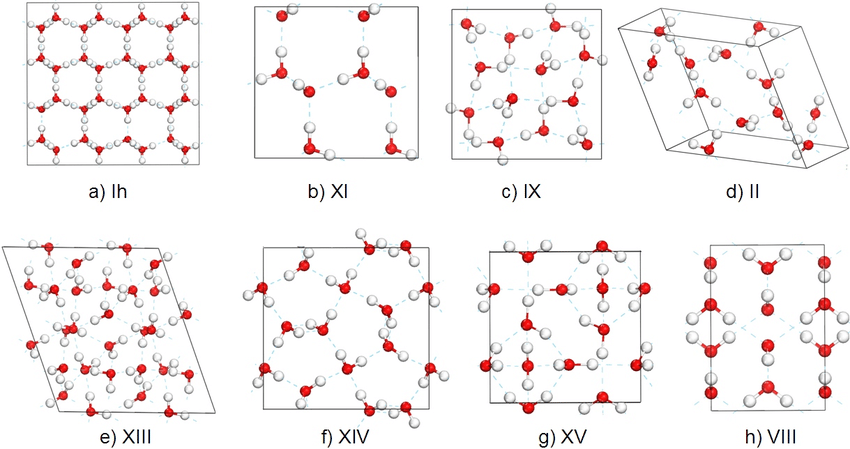
Ice phases–unit ‘cells’
A form of Vonnegut’s Ice-IX was “created” by Harvard researchers recently through a computer simulation that shows how it might be possible for water to remain frozen at body temperature. They showed how a layer of diamond, coated with sodium atoms, kept water frozen indefinitely at up to 108 degrees Fahrenheit. The technique only works on a very thin layer of water—a few molecules thick—to successfully keep the ice structure intact. The researchers explain:
In ice, water molecules are arranged in a rigid framework that gives the substance its hardness. The process of melting is like a building falling down: pieces that had been arranged into a rigid structure move and flow against one another, becoming liquid water.
The computer model shows that whenever a water molecule near the diamond-sodium surface starts to fall out of place, the surface stabilizes it and reassembles the crystalline ice structure.
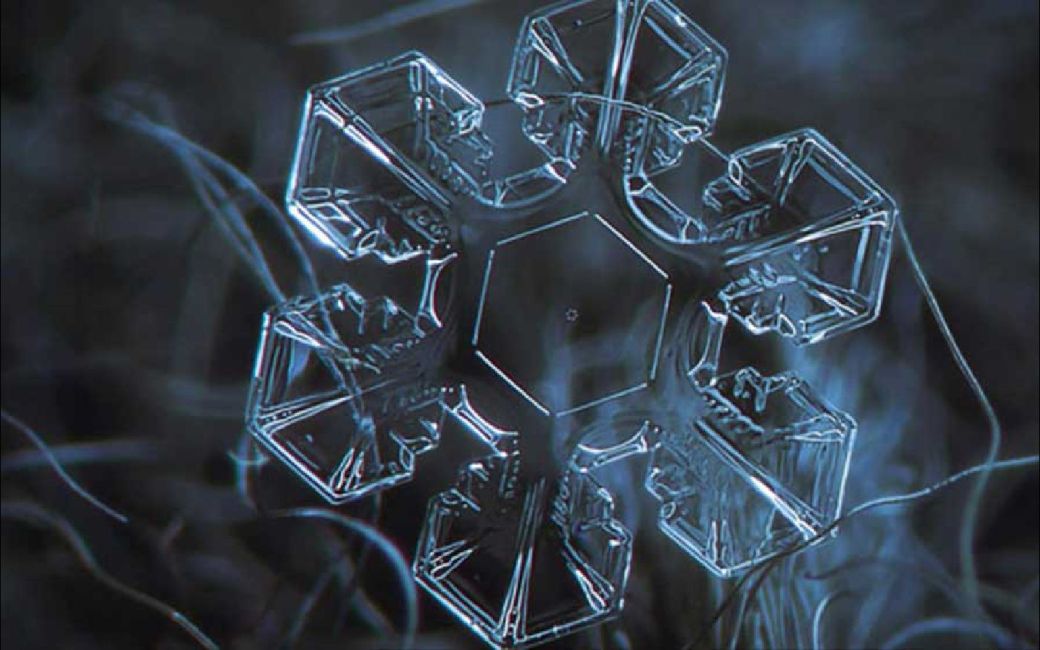
Hexagonal structure of water crystal (snowflake)
Ordinary ice—the kind we skate on—has a hexagonal structure and is called Ice-Ih. It’s the kind of crystal that forms snowflakes (which are all hexagonal). Including the hexagonal arrangement of common ice, scientists have already discovered a bewildering 18 architectures of ice crystal. At different temperatures and pressures, water forms solids that may be hexagonal (Ice Ih) rhombohedral (Ice II and Ice IV), tetragonal (Ice III and IX), cubic (Ice Ic and Ice XIc), or orthorhomboic (Ice XI) in structure. Some forms of frozen water are disordered (non-crystalline). Eighteen crystalline phases of ice polymorphs have been identified based on the structure of the molecules and atoms and their bonds.

Ice phases Ih to XV at different temperatures and pressures
Liquid Crystals & Polywater
Around the time that Vonnegut’s novel came out, a similar potential phenomenon of contact-induced change to water structure was discovered: polywater.
In 1961, the Russian physicist Nikolai Fedyakin discovered a new polymerized form of water. He had been measuring the properties of water which had been condensed in, or repeatedly forced through, narrow quartz capillary tubes. Some experiments revealed water with a higher boiling point, lower freezing point, and much higher viscosity than ordinary water; it had the consistency of syrup and was 40% denser and 15 times more viscous. Boris Derjaquin, director of surface physics at the Institute for Physical Chemistry in Moscow reproduced the results and used the term anomalous water.
 The media spread a panic about polywater-contaminated oceans of “jelly” aka Vonnegut’s novel Cat’s Cradle.
You can read a compelling version of this scenario in Costi Gurgu’s “Corrosion” in the anthology Water (Reality Skimming Press, 2017) edited by Nina Munteanu.
Subsequent analysis of polywater found that the samples were contaminated with other substances, which explained the changes in melting and boiling points due to colligative properties. Electron microscopy confirmed that the polywater also contained small particles of various solids – from silica to phospholipids, which explained its greater viscosity.
When the experiments which had initially produced polywater were repeated with thoroughly cleaned glassware, the anomalous properties of the resulting water vanished, and even the scientists who had originally advanced the case for polywater agreed it did not exist. The anomalous properties were finally attributed to impurities rather than to the existence of polymeric water molecules.
Fourth Phase of Water
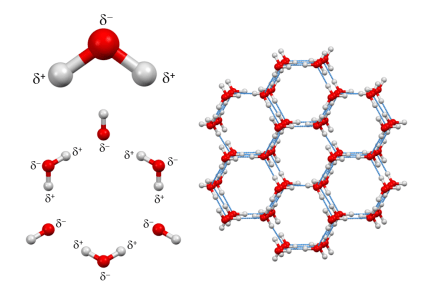
Hexagonal structure of bulk water and ice Ih
The significance of the Russian results was abandoned in the hubbub of scientific embarrassment. “Contaminants” are natural features of water, given its impeccable universal solvent characteristics, and their presence in limited quantities does not necessarily imply that observed features are not relevant to water’s behaviour. The natural question abandoned by the community was this: In the presence of contaminants, why does water take on the interesting features described by Derjaguin’s team? Earlier work by Henniker and Szent-Györgyi had established that water organized itself close to surfaces such as cell membranes.
This was later demonstrated by Gerald Pollack and his team at the University of Washington. Forty years after the polywater debacle, Pollack and other scientists discussed a fourth phase of water, an interfacial water zone that Pollack calls Exclusion Zone water or EZ water, given that it excludes materials. Interfacial EZ water was more stable, more viscous and more ordered, and according to biochemist Martin Chaplin of South Bank University this water was, “hydrophobic, stiffer, superfluidic and thermally more stable than bulk water.” While Chaplin discounts Pollack’s suggested structure for EZ-water (as nonsense), he acknowledges the existence of EZ-water, which forms a liquid ‘phase’ that can be legitimately treated as different from ‘bulk’ liquid water.
Not the same as “polywater” but certainly related. And questions remain.
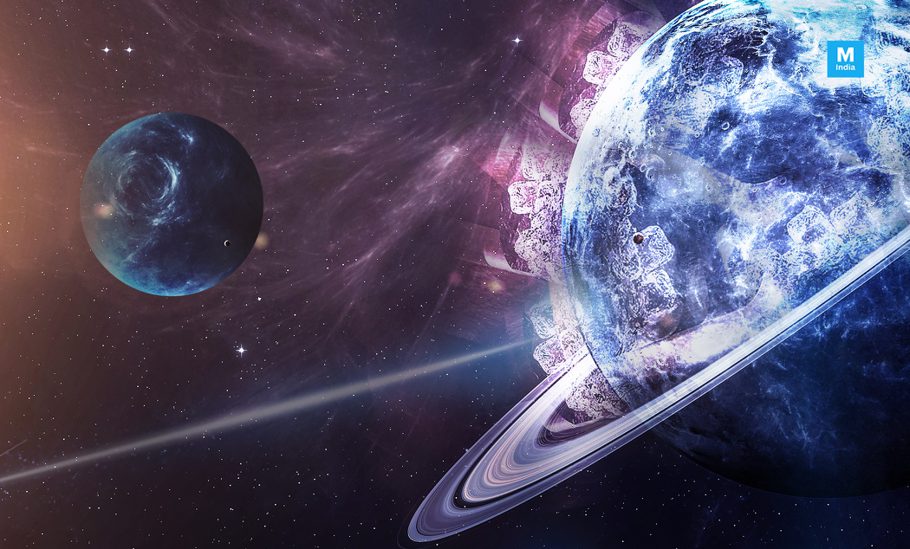
Superionic ice
Superionic Ice
Recently, the Laboratory for Laser Energetics in Brighton, New York, blasted a droplet of water that created a shock wave, raising the water’s pressure to millions of atmospheres and temperature to thousands of degrees. The water atoms inside the shock wave didn’t form superheated liquid or gas; they froze solid into crystalline ice—something called “superionic ice,” a new phase of water with weird properties. It’s black and hot. And weighs four times as much as normal ice.
According to Joshua Sokol of Quanta Magazine, scientists suggest that this black hot ice may be the universe’s most common form of water. Superionic ice fills Uranus and Neptune and comprises the bulk of giant icy planets throughout the universe.
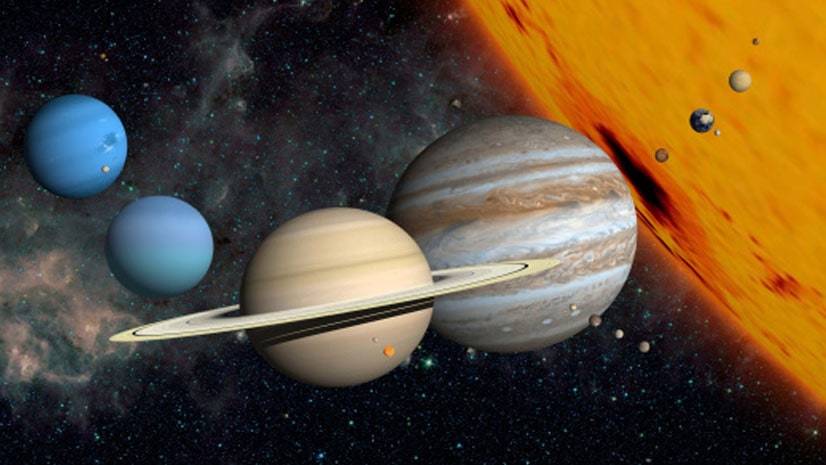
Gas giants in our solar system
Superionic ice—called ice XVIII—is a new cubic crystal but with a twist, writes Sokol:
Superionic ice nearly as hot as the sun
All the previously known water ices are made of intact water molecules, each with one oxygen atom linked to two hydrogen atoms. But superionic ice, the new measurements confirm, isn’t like that. It exists in a sort of surrealist limbo, part solid, part liquid. Individual water molecules break apart. The oxygen atoms form a cubic lattice, but the hydrogen atoms spill free, flowing like a liquid through the rigid cage of oxygens.
Sokol adds, “Experts say the discovery of superionic ice vindicates computer predictions, which could help material physicists craft future substances.”
Because its water molecules break apart, said physicist Livia Bove of France’s National Center for Scientific Research and Pierre and Marie Curie University, it’s not quite a new phase of water. “It’s really a new state of matter,” she said, “which is rather spectacular.”
Sokol tells us that computer simulations led by Pierfranco Demontis in 1988 predicted “water would take on this strange, almost metal-like form if you pushed it beyond the map of known ice phases.” Atoms in the water had rearranged into the long-predicted but never-before-seen architecture, ice XVIII: a cubic lattice with oxygen atoms at every corner and the center of each face. “It’s quite a breakthrough,” Coppari said.
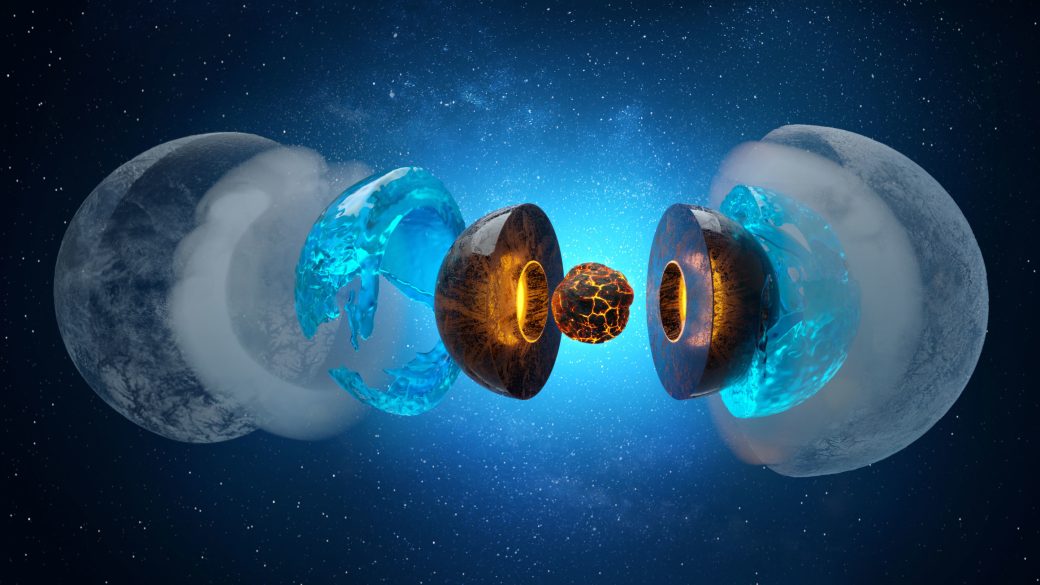
Superionic ice giant
When Ice Flows
The simulations showed that under extreme pressure and heat water molecules break. With the oxygen atoms locked in a cubic lattice, “the hydrogens now start to jump from one position in the crystal to another, and jump again, and jump again,” Millot said. The jumps between lattice sites are so fast that the ionized hydrogen atoms act as positively charged protons and appear to move like a liquid.
This suggests that superionic ice might conduct electricity, like a metal, with the hydrogens acting as electrons. “Having these loose hydrogen atoms gushing around would also boost the ice’s disorder, or entropy. In turn, that increase in entropy would make this ice much more stable than other kinds of ice crystals, causing its melting point to soar upward,” writes Sokol, and continues:

Neptune
Other planets and moons in the solar system likely don’t host the right interior sweet spots of temperature and pressure to allow for superionic ice. But many ice giant-sized exoplanets might, suggesting that the substance could be common inside icy worlds throughout the galaxy.
No real planet contains just water. The ice giants in our solar system also mix in chemical species like methane and ammonia. The extent to which superionic behavior actually occurs in nature is “going to depend on whether these phases still exist when we mix water with other materials,” Stanley said. So far, that isn’t clear, although other researchers have argued superionic ammonia should also exist.
References:
Chaplin, Martin. 2019. “Ice Phases” In: Water Structure and Science. Updated May 16, 2019. Online: http://www1.lsbu.ac.uk/water/ice_phases.html
Munteanu, Nina. 2016. “Water Is…The Meaning of Water.” Pixl Press, Vancouver. 583pp.
Sokol, Joshua. 2019. “Black, Hot Ice May Be Nature’s Most Common Form of Water.” Quanta Magazine. Online: https://www.quantamagazine.org/black-hot-superionic-ice-may-be-natures-most-common-form-of-water-20190508/

Nina Munteanu is a Canadian ecologist / limnologist and novelist. She is co-editor of Europa SF and currently teaches writing courses at George Brown College and the University of Toronto. Visit www.ninamunteanu.ca for the latest on her books. Nina’s bilingual “La natura dell’acqua / The Way of Water” was published by Mincione Edizioni in Rome. Her non-fiction book “Water Is…” by Pixl Press (Vancouver) was selected by Margaret Atwood in the New York Times ‘Year in Reading’ and was chosen as the 2017 Summer Read by Water Canada. Her novel “A Diary in the Age of Water” will be released by Inanna Publications (Toronto) in 2020.

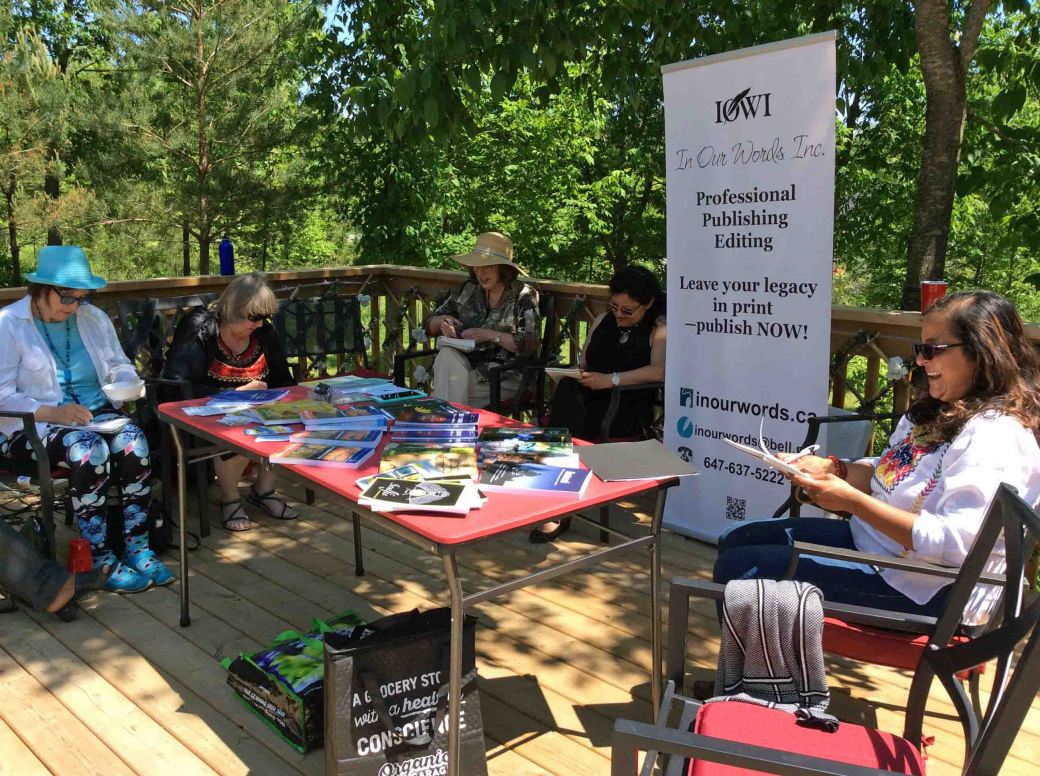
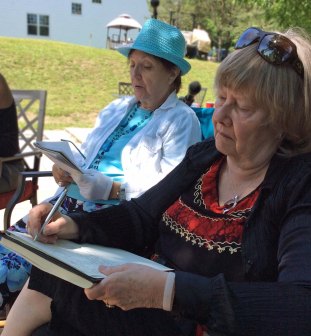 I talked about the importance of theme to help determine a story’s beginning and ending. We also discussed the use of theme in memoir to help focus the memoir into a meaningful story with a directed narrative. I discussed the use of the hero’s journey plot approach and its associated archetypes to help determine relevance of events, characters and place: all topics explored in my Alien’s Guidebook series.
 While everyone left at six, I stayed on with a friend. I’d booked the night and looked forward to a restful evening among deer, rustling trees and a chorus of birdsong. The owner had left us some leftovers for supper, and, as we dined on a smorgasbord of gourmet food and wine, I reveled in Nature’s meditative sounds. The night sky opened deep and clear with a million stars.


 UofT instructor and writer Nina Munteanu launched the third book in her acclaimed “how to write” series at Type Books, Toronto, on July 4th, 2019. The launch of

 Honey Novick is a poet, voice teacher, singer and songwriter. Honey is the winner of the Empowered Poet Award, CAPAC, Yamaha Classical Music Competition in Japan, among others. Honey wrote music for CBC’s Morningside and sang for Prime Minister Pierre Elliot Trudeau.
 Ted Nolan—E. Martin Nolan—is a poet, essayist, editor and voice of the trees. He teaches in the Engineering Communication Program at the University of Toronto and is a PhD Candidate in Applied Linguistics at York University. His latest work is a chapbook written in collaboration with some trees entitled: “Trees Hate Us.”
 Maureen Scott Harris is a poet, essayist, and rare books cataloguer. A UofT grad in Library Science, she received the Trillium Book Award for poetry for Drowning Lessons and was the first non-Australian to be awarded the 2009 WildCare Tasmania Nature Writing Prize for her essay, “Broken Mouth: Offerings for the Don River, Toronto.”
 Nehal El-Hadi is a writer, researcher, editor and journalist, who explores the intersections of body, technology, and space. Her writing has appeared in academic journals, literary magazines, and forthcoming in anthologies and edited collections. She is currently a visiting scholar at York University and sessional faculty at the University of Toronto.
 Merridy Cox is a naturalist, photographer, editor, indexer and poet. She is also managing editor of Lyrical Leaf Publishing. Merridy has a degree in biology and museum studies; her poetry focuses mostly on the natural world around her; her poems and photographs are published in several literary anthologies. She has edited several books, including this one!
 Costi Gurgu is a graphic designer and illustrator as well as an award-winning science fiction and fantasy novelist and short story writer who is published in anthologies and magazines throughout the world. He is a former lawyer and was art director for lifestyle and fashion magazines in Europe before moving to Canada. His latest novel—RecipeArium—was called the new new weird by Robert J. Sawyer and was nominated for an Aurora Award.
 Cheryl Antao-Xavier is an editor, interior book designer and publisher with IOWI. She has been publishing emergent writers since 2008 and continues to offer self-publishing solutions to writers and companies and organizations. She recently released her book: “Self-Publishing the Professional Way: 5 Steps from Raw Manuscript to Publishing.”

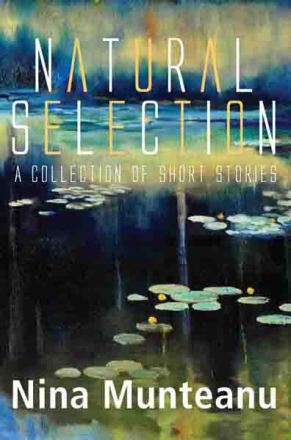
 “Natural Selection”
 As for passing on one’s experience and acquisitions to others laterally, education in all its facets surely provides a mechanism. This may run the gamut from wise mentors, spiritual leaders, storytellers, courageous heroes to our kindergarten teacher. Who’s to say that these too are not irrevocable? This relies, after all, on how we learn, and how we “remember”.
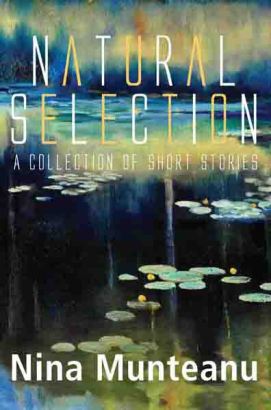 Each story in the
  “Natural Selection” also features the sprawling semi-underground AI-run city of Icaria (a post-industrial plague Toronto) that was first introduced in my novel
  Nina is a Canadian scientist and novelist. She worked for 25 years as an environmental consultant in the field of aquatic ecology and limnology, publishing papers and technical reports on water quality and impacts to aquatic systems. Nina has written over a dozen eco-fiction, science fiction and fantasy novels. An award-winning short story writer, and essayist, Nina currently lives in Toronto where she teaches writing at the University of Toronto and George Brown College. Her non-fiction book “Water Is…”—a scientific study and personal journey as limnologist, mother, teacher and environmentalist—was picked by Margaret Atwood in the New York Times as 2016 ‘The Year in Reading’. Nina’s most recent novel “A Diary in the Age of Water”— about four generations of women and their relationship to water in a rapidly changing world—will be released in 2020 by Inanna Publications.
 Paolo Bacigalupi’s 2015 biopunk science fiction novel The Windup Girl occurs in 23rd century post-food crash Thailand after global warming has raised sea levels and carbon fuel sources are depleted. Thailand struggles under the tyrannical boot of ag-biotech multinational giants such as AgriGen, RedStar, and PurCal—predatory companies who have fomented corruption and political strife through their plague-inducing and sterilizing genetic manipulations. The story’s premise could very easily be described as “what would happen if Monsanto got its way?”
 It’s difficult not to always be aware of those high walls and the pressure of the water beyond. Difficult not to think of the City of Divine Beings as anything other than a disaster waiting to happen. But the Thais are stubborn and have fought to keep their revered city of Krung Thep from drowning. With coal-burning pumps and leveed labor and a deep faith in the visionary leadership of their Chakri Dynasty they have so far kept at bay that thing which has swallowed New York and Rangoon, Mumbai and New Orleans.




 In Summer of 2016, I attended a talk given by Maude Barlow on water justice. The radical talk was based on her recent book “Boiling Point”, a comprehensive exploration of Canada’s water crisis—a crisis that most Canadians weren’t—and still aren’t—aware. Canada is steward to a fifth of the world’s fresh water, after all. It is a water-rich country. Of the dozen largest inland lakes in the world, Canada holds eight of them. So, why water crisis? Well, Maude explains. And you should read “Boiling Point.” It will open your eyes to the politics of water and how multinational corporations—like Nestlé—are already grabbing and funneling water away from Canadians and into the global profit machine.
 I named the story “
 The story first appeared in 2015 in
  After the success of this short story, I realized that I needed to tell the larger story—how did the world—Canada—get to where Hilda was? Her mysterious mother, the limnologist Lynna who was taken away by the RCMP in 2063, clamored for more attention. I remembered that four-year old girl and her mother in the gallery at Maude Barlow’s talk on water politics. And I thought of my characters: young Lynna and her mother Una. How does a daughter of an activist mother behave and think? How best to express her voice?
 I had earlier written a short story that was a mix of correspondence (emails) and third person narrative (“The Arc of Time” in
  I had a lot of material; I had already been researching water issues and climate change in my activism as a science reporter. I had recently published
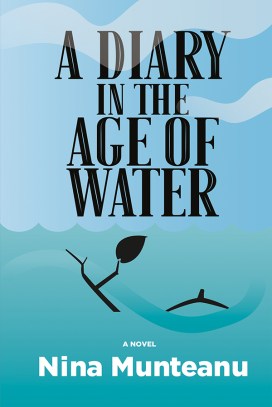
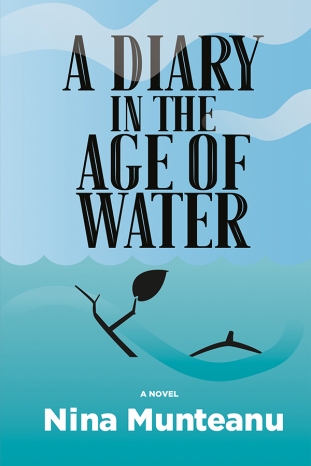
  Like water itself, A Diary in the Age of Water expresses through many vessels and in many perspectives, spanning hundreds of years—and four generations of women—with a context wider than human life. Through its characters, A Diary in the Age of Water explores the big question of humanity’s deadlock with planetary wellness and whether one is worth saving at the expense of the other. One of the characters asks Lynna the hard question: “If you had the chance to save the planet [stop the mass extinctions, deforestation and pollution ravaging the planet], but it was at the expense of humanity, would you do it?”
 “By failing to engage with climate change, artists and writers are contributing to an impoverished sense of the world, right at the moment when art and literature are most needed to galvanize a grassroots movement in favor of climate justice and carbon mitigation.”—Amitav Ghosh, 2017
 What these novels have in common is that they are all
  According to Ghosh, plots and characters of contemporary literature tend to reflect the regularity of middle-class life and the worldview of the Victorian natural sciences, one that depends on a principle of uniformity. Change in Nature has been perceived as gradual (or static by some) and never catastrophic. Extraordinary or bizarre happenings were left to marginal genres like the Gothic tale and—of course—science fiction. The strange and unlikely have been externalized: hence the failure of modern novels and art to recognize anthropogenic climate change.
 “To counteract this epidemic of short-term thinking,” says Fabiani, “it might be a good idea for more of us to read science fiction, specifically the post-apocalyptic sub-genre: that is, fiction dealing with the aftermath of major societal collapse, whether due to a pandemic, nuclear fallout, or climate change.”
 I recently shared a panel discussion with writer
 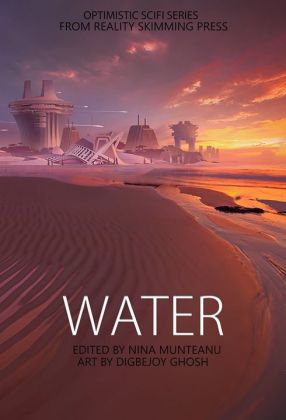 In 2015, I joined Lynda Williams of Reality Skimming Press in creating an optimistic science fiction anthology with the theme of water. My foreword to

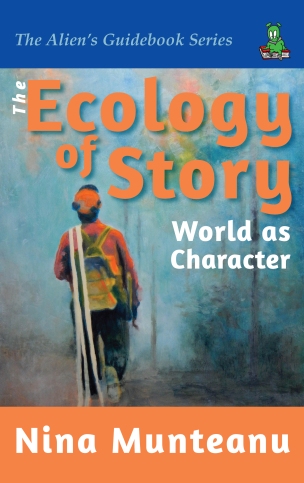
 In my new writing guidebook
 In Animal Farm, George Orwell uses animals to describe the revolution against a totalitarian regime (e.g. the overthrow of the last Russian Csar and the Communist Revolution of Russia). The animals embrace archetypes to symbolize the actions and thoughts of various sectors within that world. The pigs are the leaders of the revolution; Mr. Jones represents the ruling despot who is overthrown; the horse Boxer is the ever-loyal and unquestioning labor class.
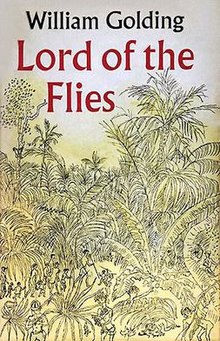 In Lord of the Flies, William Golding explores the conflict in humanity between the impulse toward civilization and the impulse toward savagery. The symbols of the island, the ocean, the conch shell, Piggy’s glasses, and the Lord of the Flies, or the Beast, represent central ideas that reinforce this main theme. Each character has recognizable symbolic significance: Ralph represents civilization and democracy; Piggy represents intellect and rationalism; Jack represents self-interested savagery and dictatorship; and Simon (the outsider in so many ways) represents altruistic purity.
 Excellent examples of satires with less obvious allegorical structure (but it’s there) can be found in the genre of science fiction—a highly metaphorical literature that makes prime use of place and setting with archetypal characters to satirize an aspect of society. Brave New World by Aldous Huxley is a satirical response to his observation of humans’ addiction to (sexual) pleasure and vulnerability to mind control and the dumbing of civilization in the 1930s. George Orwell’s Nineteen Eight-Four satirizes humanity’s vulnerability to fascism, based on his perception of humans’ sense of fear and helplessness under powerful governments and their oppressive surveillance. Margaret Atwood’s The Handmaid’s Tale satirizes a society in which a woman struggles in a fundamentalist Christian dictatorship patriarchy where women are forced into a system of sexual slavery for the ruling patriarchy.
 This article is an excerpt from “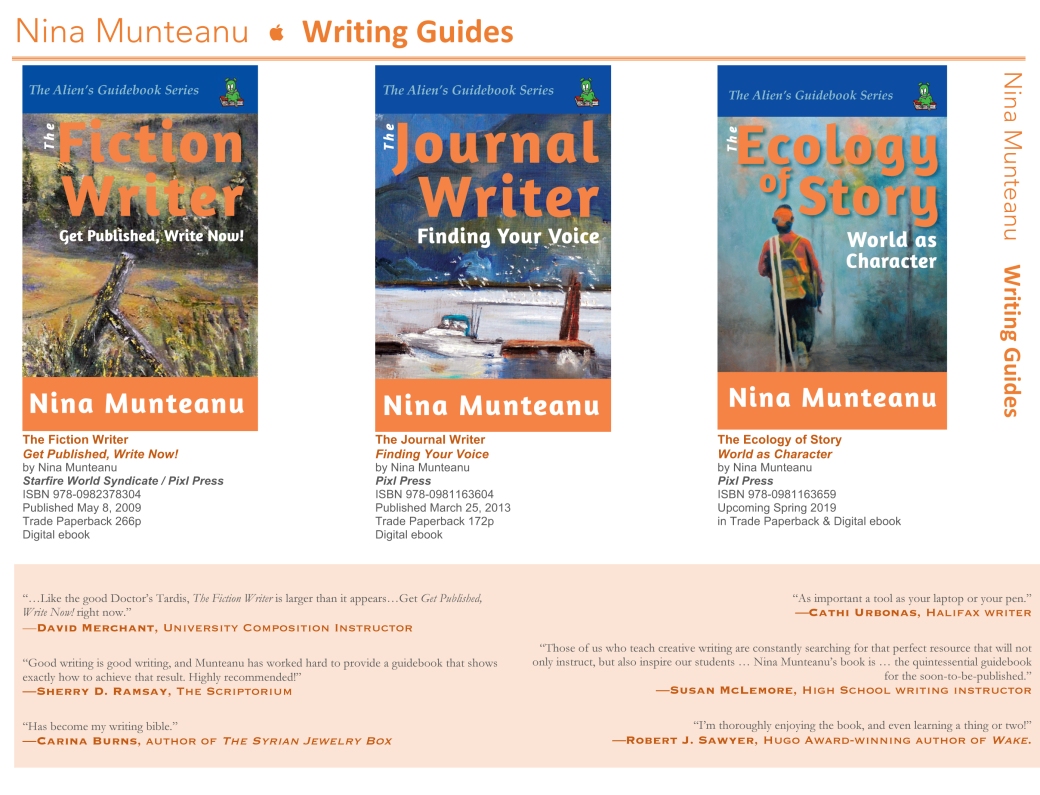
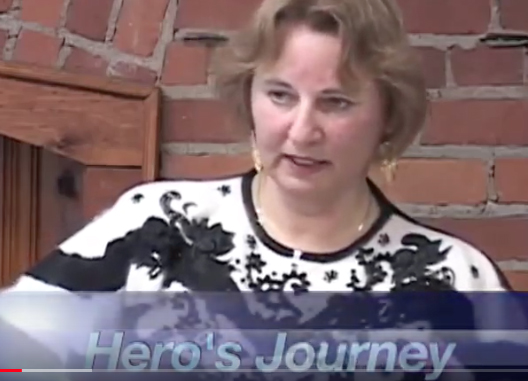
 “I was fascinated by Nina’s clear and extremely interesting lecture on the hero’s journey. Maybe all writers have a novel in their heads they want to write one day, and the techniques Nina shared with us will help me when I get to that point. In fact, because of her, I may get there a lot sooner than I had planned.”— Zoe M. Hicks, Saint Simon’s Island, GA
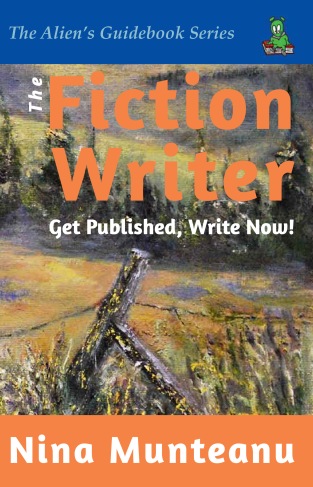 “…Like the good Doctor’s Tardis, The Fiction Writer is larger than it appears… Get Get Published, Write Now! right now.”—David Merchant, Creative Writing Instructor
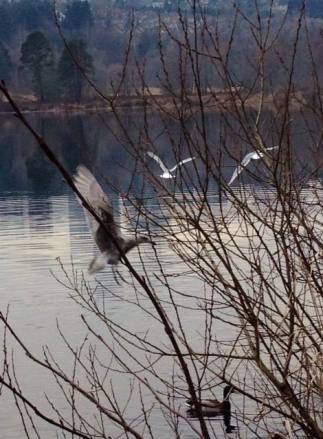
 She is inhumanly alone. And then, all at once, she isn’t. A beautiful animal stands on the other side of the water. They look up from their lives, woman and animal, amazed to find themselves in the same place. He freezes, inspecting her with his black-tipped ears. His back is purplish-brown in the dim light, sloping downward from the gentle hump of his shoulders. The forest’s shadows fall into lines across his white-striped flanks. His stiff forelegs play out to the sides like stilts, for he’s been caught in the act of reaching down for water. Without taking his eyes from her, he twitches a little at the knee, then the shoulder, where a fly devils him. Finally he surrenders his surprise, looks away, and drinks. She can feel the touch of his long, curled tongue on the water’s skin, as if he were lapping from her hand. His head bobs gently, nodding small, velvet horns lit white from behind like new leaves.
  An oligotrophic lake is basically a young lake. Still immature and undeveloped, an oligotrophic lake often displays a rugged untamed beauty. An oligotrophic lakes hungers for the stuff of life. Sediments from incoming rivers slowly feed it with dissolved nutrients and particulate organic matter. Detritus and associated microbes slowly seed the lake. Phytoplankton eventually flourish, food for zooplankton and fish. The shores then gradually slide and fill, as does the very bottom. Deltas form and macrophytes colonize the shallows. Birds bring in more creatures. And so on. Succession is the engine of destiny and trophic status its shibboleth.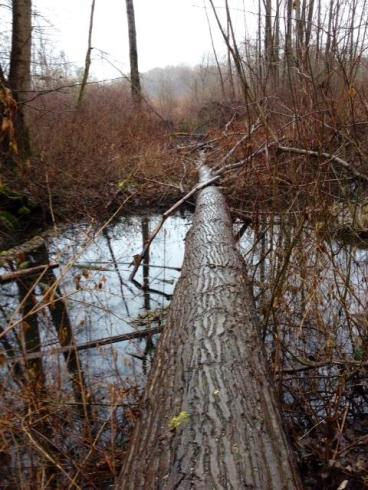
 They met in the lobby of a shabby downtown Toronto hotel. Hilda barely knew what she looked like but when Hanna entered the lobby through the front doors, Hilda knew every bit of her. Hanna swept in like a stray summer rainstorm, beaming with the self- conscious optimism of someone who recognized a twin sister. She reminded Hilda of her first boyfriend, clutching flowers in one hand and chocolate in the other. When their eyes met, Hilda knew. For an instant, she knew all of Hanna. For an instant, she’d glimpsed eternity. What she didn’t know then was that it was love.
  This article is an excerpt from
  Nina Munteanu Writing Coach