Willow
Her name is Willow, and she helps me centre my being…
Willow is a diminutive 18-year old Russian blue cat, who I looked after for some friends in Mississauga. When I first met Willow, she responded with reticence–like all smart discerning cats. She appeared so delicate, I was scared to pick her up. I soon realized that this was a fallacy. That not only could I pick her up but that she loved to be held. I just needed to learn how.
As soon as I did, we became best friends. And it all came together with the Purring Cat Meditation.
It starts out with her finding me “doing nothing terribly important” like typing on the computer, or something. A soft but decisive tap of the paw on my leg and I have to smile at her intense look up at me with those guileless emerald eyes. I abandon my work–how can I ignore such a plea?– and pick her up. After all, I know what she wants…And so starts our journey toward “nirvana”… the meditative state that will centre our beings and ultimately save the world.
I wander the house with her. We check out each room and make our silent observations. We end up in the bedroom upstairs, where she normally sleeps (except when she’s decided to join me on my bed to sit on me and purr in my face in the middle of the night).

Willow teasing me…
In her sanctuary, we drift to the window that faces the back yard, now in the bright colours of fall. The window is slightly open and a crisp breeze braces us with the deep scent of autumn. I breathe in the fragrance of fallen leaves, mist and bark…
Willow settles into a feather-light pose in the crook of my arms and I hardly feel her. More like she and I have joined to become one. We are both purring …
We remain in Cat-Purr-Meditation for …

“Time to pick me up, Nina!” she says…
I have no idea … It feels like moments … infinity … it encompasses and defines an entire world. We’ve just created something. Just by being.
Cats–well, most animal companions–are incredibly centring and can teach us a lot about the art of simply being.
And meditating…
I write about this more in my article entitled “Wake Up Your Muse: How my Cat Taught Me the Art of Being“. Whenever I run across a bout of writer’s block or need to stoke my muse, instead of trying harder, I stop and reach out for my cat-friend.

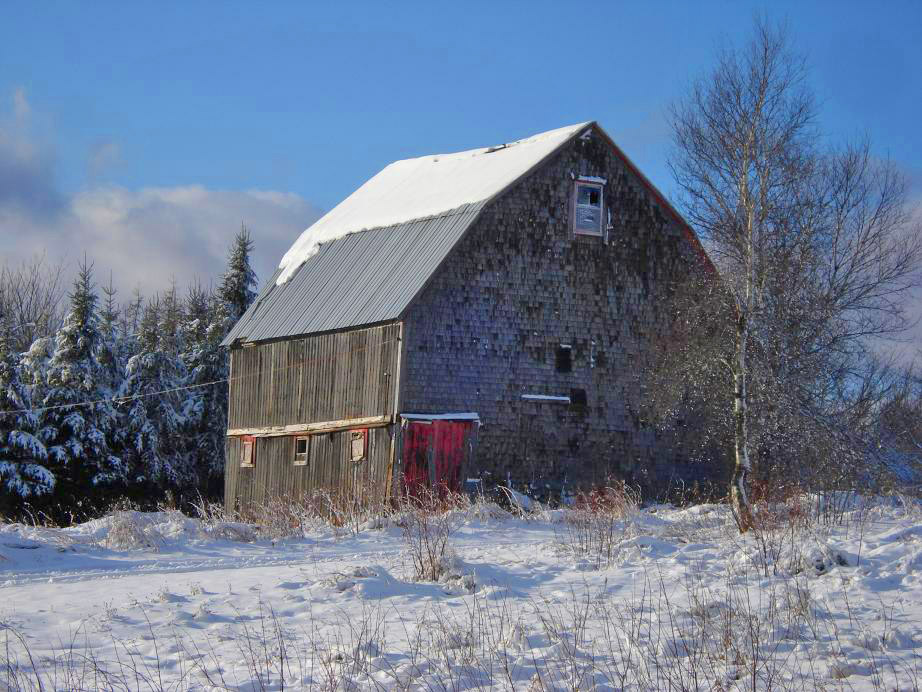
Douglas fir in winter, BC
And practice Cat-Purring-Meditation…
Merry Christmas!
 Nina Munteanu is an ecologist and internationally published author of award-nominated speculative novels, short stories and non-fiction. She is co-editor of Europa SF and currently teaches writing courses at George Brown College and the University of Toronto. Visit www.ninamunteanu.ca for the latest on her books.


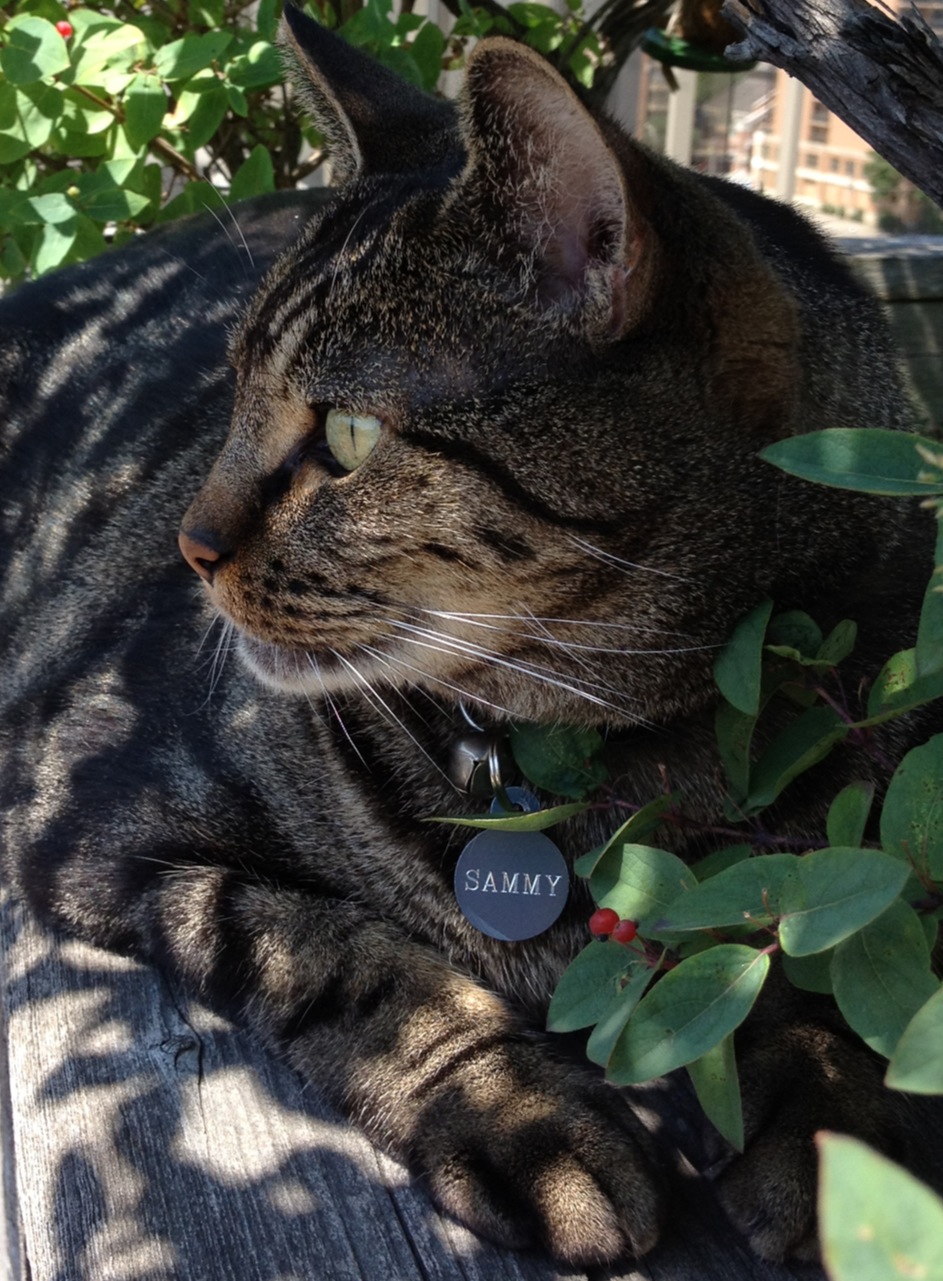 I’m not a very patient person. I make no time for writer’s block or lingering in useless limbo over some plot issue or misbehaving minor character. I write pretty much to a tight schedule: this short story to that market by this date; edits to this book to the editor by that date; blog posts created by such and such a time; an article to another market by another date. It goes on and on. When I go to my computer to write, I write.
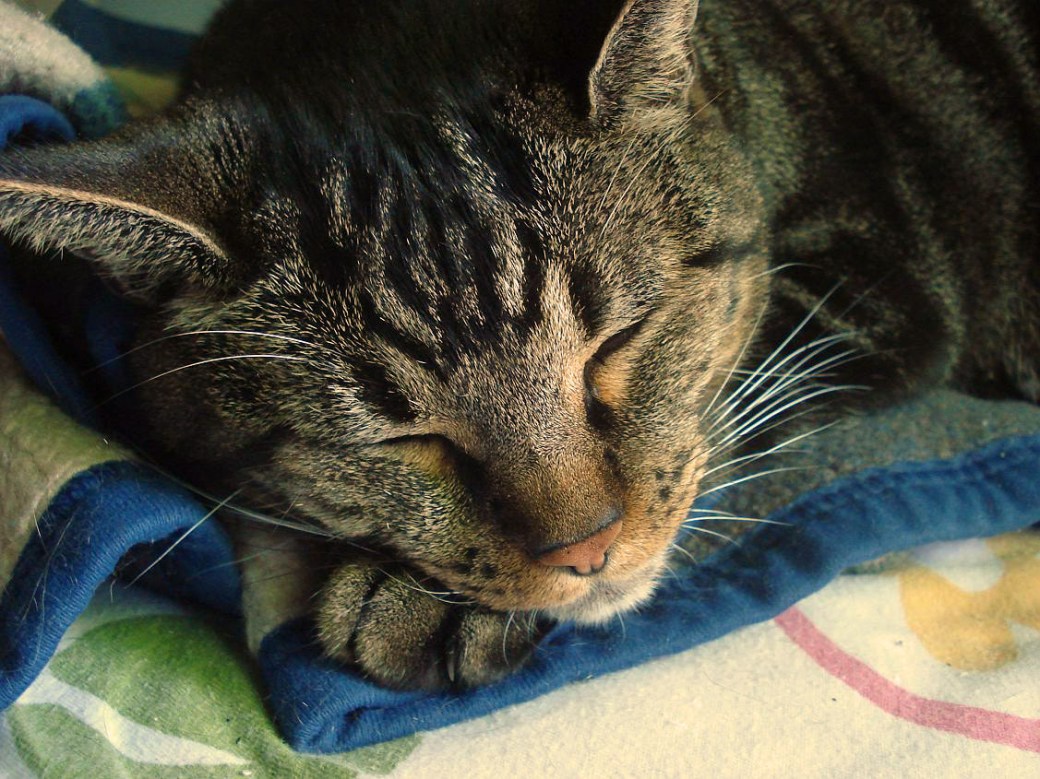 Pinned in the moment, my mind first struggles with the need to pound out the next line. My mind then rephrases and teases out nuances of that line. Finally, it wanders out with my gaze and I find myself daydreaming in a kind of trance. Giving in to the cat-purr-meditation.

 Arizona State University’s Imagination and Climate Futures Initiative is again hosting a Climate Fiction Short Story Contest. In years past they invited writers from around the world to submit speculative fiction stories that explore climate change to narrate a world in flux. Previous contests received submissions from 67 different countries and 12 finalists were published in a digital anthology “Everything Change”.
 When I was just beginning as a novelist, the publisher guideline request “submit a synopsis and sample chapters” was intimidating to say the least. There was something terrifyingly daunting about writing a succinct compelling summary of my 300-page novel packaged into just a few pages. As author Katherine Eliska Kimbriel said, “The instinctive response [of the author] is to clap on a helmet and start digging a trench.” I had a right to be terrified. In some ways the synopsis is the hardest thing for a novelist to write. Yet it is the first thing most publishers and agents want (and have time) to see of your cherished project (aside from those sample chapters, of course). Every fiction writer who wants to sell in the current market must know how to write a synopsis because that’s what an editor wants to see first. Most editors (if they’re good) are overworked with scarce enough time to answer their phones, much less their emails.
 A synopsis of your novel goes beyond the outline to help polish elements of story arc, characterization with plot and setting with story. The synopsis can answer questions perplexing the author, stuck on a scene or plot item. It helps you weave your novel’s elements into a well-integrated story that is compelling at many levels. Because the synopsis is based on emotional turning points (related to theme), character dramatization of the premise is a key foundation. It makes sense to write drafts of your synopsis as you go along in the novel; that way it’s useful to both you and to the editor and then it’s more or less written when you need to submit it along with sample chapters…and not quite as daunting a task either.
 Unclutter your writing: There is a Mennonite adage that applies to writing: “less is more”. Sentences in early works tend to be full of extra words (e.g., using “ing” verbs, add-ons like “he started to think” instead of simply “he thought”). Cut down the words in your paragraphs (often in the intro chapters) by at least 20%. Be merciless; you won’t miss them, believe me, and you will add others later in your second round of edits.
 Hi-Sci-Fi Radio (a podcast radio show out of CJSF 90.1FM in Burnaby, British Columbia) interviewed Nina Munteanu about the paradoxes of her eco-thriller
 Part 2 of the Beginning Novelist will focus on language.