“A society that does not believe in the objective pursuit of truth—even if it challenges your worldview—is doomed to servitude.”
Lynna Dresden
“An insightful novel…A cautionary tale rummaging through the forgotten drawers of time in the lives of four generations…This whirling, holistic and evolving novel comes alive, like we imagine water does.”
Mary Woodbury, DRAGONFLY.ECO
Jackson creek in late fall, ON (photo and rendition by Nina Munteanu)
My guest today is Calgary author Simon Rose, who has published eighteen novels for children and young adults, eight guides for writers, more than a hundred nonfiction books, and numerous articles on a wide range of topics.
Nina:Your most recently published books were those in The Stone of the Seer series. Remind us again of what it’s all about.
Simon:The Stone of the Seer is young adult historical fantasy series, featuring The Stone of the Seer, Royal Blood, and Revenge of the Witchfinder. The exciting story is mostly set in the mid-seventeenth century during the English Civil War. In The Stone of the Seer, Lady Elizabeth Usborne, Kate, and Tom encounter a magical stone, mysterious parchments and manuscripts, and an incredible time viewing device. In Royal Blood, Lady Elizabeth, Kate, and Tom are in London, witnessing the political turmoil at the time of the Civil War, including the king’s trial and execution. Revenge of the Witchfinder takes place in multiple time periods. The story features weird dreams, disturbing visions, parallel lives, and a bewildering identity crisis, as the lead characters discover to their horror that not even the passage of centuries can prevent a bloodthirsty witchfinder from the 1640s from seeking his deadly revenge.
Nina:Do you have any current projects?
Simon: Right now, I’m working on another historical fantasy novel series, this time set in the early years of World War II, that I’m hoping to publish next year. I’ve recently finished another story that takes place in the later stages of World War II and am putting the finishing touches to that one as well, potentially for publication the following year. Yet another series is currently in development in the same paranormal genre as my previously published Flashback series, which can learn more about on my website.
I’ve also been working on the script for a film project and continue to work on the adaptations of my Shadowzone series into screenplays for movies and TV shows. You can learn more about my work writing screenplays for clients and creating adaptations of my own work here on my website.
Anyone interested in keeping up to date with the projects that I’m working on is always welcome to subscribe to my monthly newsletter, which you can do on my website.
Nina:You certainly seem to be very busy. You also do other work related to writing and publishing, right?
Simon: Yes, I offer coaching, editing, consulting, and mentoring services for writers of novels, short stories, fiction, nonfiction, biographies, and in many other genres, plus work with writers of scripts and screenplays.
I’m also a writing instructor and mentor at the University of Calgary and have some courses coming up in the fall, including Writing for Children and Youth. My own online courses, including Writing Historical Fiction and Writing for Children and Young Adults, are also always available.
Simon: People can buy The Stone of the Seer, Royal Blood, and Revenge of the Witchfinder, as well as all my other books, at Amazon and all the other usual places online, which you can link to on my website at www.simon-rose.com I’ll also be making some personal appearances at local events in the fall, where people can buy autographed copies of all the books in the series, as well as all my other novels.
Nina:Thanks Simon, for being my guest here today.
Simon: My pleasure, Nina.
You can learn more about Simon and his work on his website at www.simon-rose.com where you can also link to him on social media and at other locations online.
She imagines its coolness gliding down her throat. Wet with a lingering aftertaste of fish and mud. She imagines its deep voice resonating through her in primal notes; echoes from when the dinosaurs quenched their throats in the Triassic swamps.
Water is a shape shifter.
It changes yet stays the same, shifting its face with the climate. It wanders the earth like a gypsy, stealing from where it is needed and giving whimsically where it isn’t wanted.
Dizzy and shivering in the blistering heat, Hilda shuffles forward with the snaking line of people in the dusty square in front of University College where her mother used to teach. The sun beats down, crawling on her skin like an insect. She’s been standing for an hour in the queue for the public water tap.
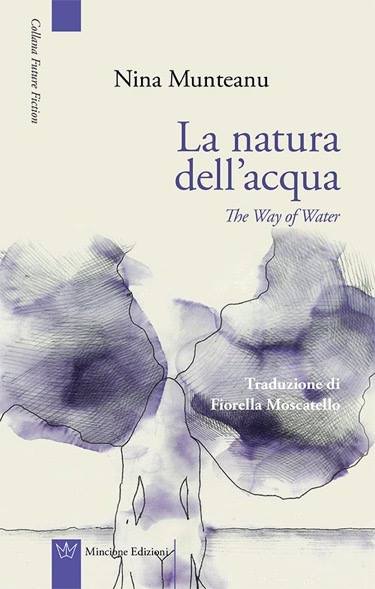
The Way of Water was first published as a bilingual print book by Mincione Edizioni(Rome) in Italian (La natura dell’acqua, translated by Fiorella Moscatello), and English along with a recounting of what inspired it: The Story of Water (La storia dell’acqua) in 2016. The Way of Water has been reprinted several times, in magazines and anthologies, since its first appearance in 2016.
It all started with an invitation by my publisher in Rome in 2015 to write about water and politics in Canada. I had long been thinking of potential ironies in Canada’s water-rich heritage. The premise I wanted to explore was the irony of people in a water-rich nation experiencing water scarcity: living under a government-imposed daily water quota of 5 litres as water bottling and utility companies took it all.
I named the story “The Way of Water” (“La natura dell’acqua”), about a young woman (Hilda) in near-future Toronto who has run out of water credits for the public wTap; by this time houses no longer have potable water and their water taps have been cemented shut (as was done in Detroit in 2014); the only way to get water is through the public wTaps—at great cost. She’s standing two metres from water—in a line of people waiting to use the tap—and dying of thirst.
“The Way of Water” captures a vision that explores the nuances of corporate and government corruption and deceit together with global resource warfare. In this near-future, Canada is mined of all its water by thirsty Chinese and US multinationals—leaving nothing for the Canadians. Rain has not fallen on Canadian soil in years due to advances in geoengineering and weather manipulation that prevent rain clouds from going anywhere north of the Canada-US border. If you’re wondering if this is possible, it’s already happening in China and surrounding countries.
The Way of Water, in turn, inspired my recent dystopian novel A Diary in the Age of Water, which explores the lives of four generations of women and their relationship to water during a time of severe water restriction and calamitous climate change.
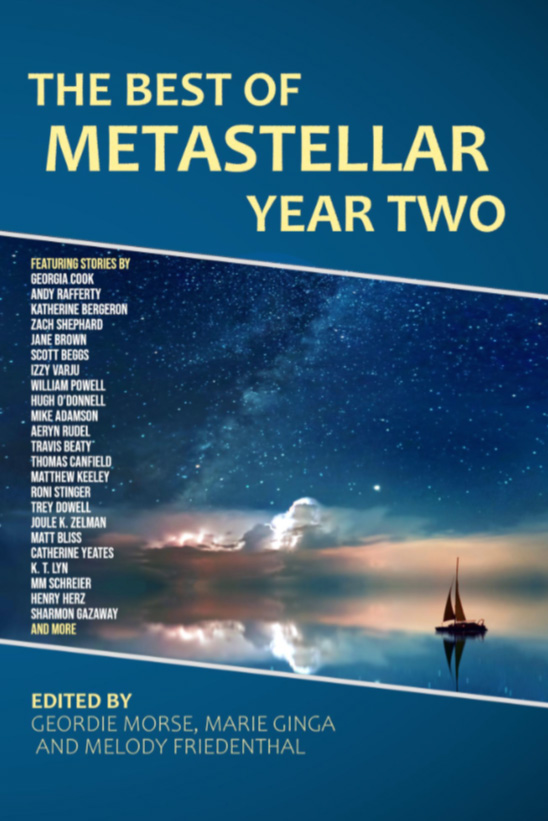
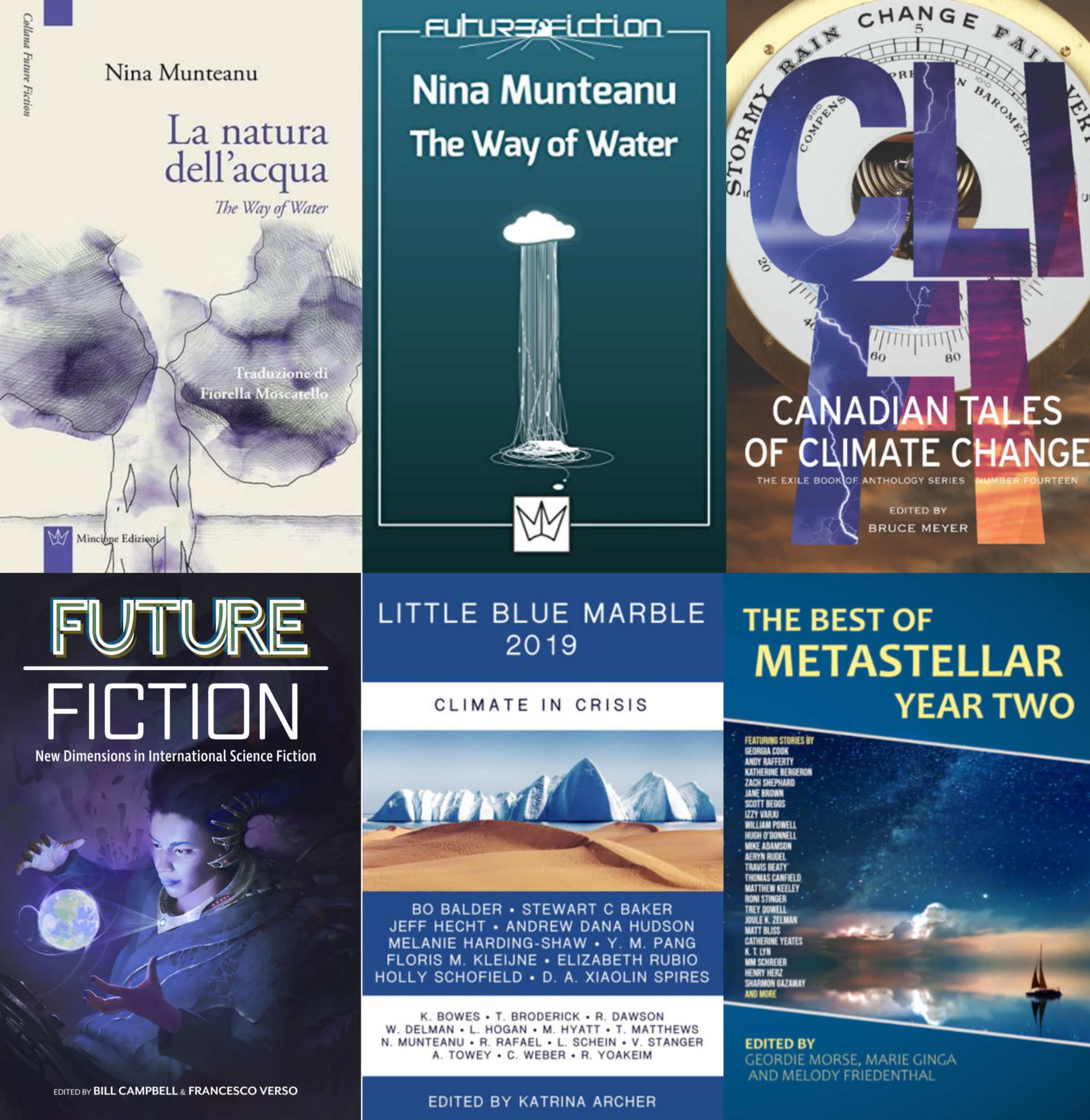
Publications (excluding online pubs) that featured The Way of Water
“The Way of Water evokes a sense of awareness about issues of access to water and about the dangers of imbalances in that access.”
Derek Newman-Stille, Speculating Canada
“In a short story in which every word has its weight, Nina Munteanu manages to describe a dystopia with ecological, political, social and economic elements and Hilda’s reactions to her situation with a great emotional intensituy. To avoid thirst, Hilda ends up embracing an extreme idea, a last hope linked to water. The Way of Water is a story of the kind you hope is science fiction but you fear is not.”
Massimo Luciani
Nina Munteanu is a Canadian ecologist / limnologist and novelist. She is co-editor of Europa SF and currently teaches writing courses at George Brown College and the University of Toronto. Visit www.ninamunteanu.ca for the latest on her books. Nina’s bilingual “La natura dell’acqua / The Way of Water” was published by Mincione Edizioni in Rome. Her non-fiction book “Water Is…” by Pixl Press (Vancouver) was selected by Margaret Atwood in the New York Times ‘Year in Reading’ and was chosen as the 2017 Summer Read by Water Canada. Her novel “A Diary in the Age of Water” was released by Inanna Publications (Toronto) in June 2020.
“The truth isn’t about telling; no one just tells you the truth. It needs to be coaxed, even tricked, out. The truth is carefully hoarded—like water—and only flows among privileged acolytes who have proven themselves.”
Lynna Dresden
“Those of us who are captivated by fear, who despair in a dead zone—we need to consider new ways to tell familiar stories, to envision different endings. A book like this can change the way that you see the world at this moment, can allow formulae to take root in fiction and grow into a different kind of solution.”
Marcie McCauley, THE tEmz REVIEW
Jackson Creek in early fall, ON (photo and rendition by Nina Munteanu)
Cafe patio facing Otonabee River (photo by Nina Munteanu)
.
I’m a bit of a wanderer, an itinerant. A hobo, even. I house sat and pet sat for a decade. I travel light; I carry what I own in my Jetta. One of the things I look for when I first settle somewhere is a choice café and a place where I can walk—preferably in a forest by a river. The small unpretentious town of Peterborough, north of Toronto and entry way to the Kawarthas, has both. The Otonabee River flows through Peterborough, much of it protected by riparian woodland and marsh (it is Peterborough’s source of drinking water, after all). The place where I currently live allows me to walk daily—rain or shine or snow—through riparian forest along the Otonabee River.
And then there’s the café part…
.
Silver Bean Cafe and boat wharf on the Otonabee River in Millennium Park, ON (photo by Nina Munteanu)
Cafe entrance to King Street and ice cream booth (photo by Nina Munteanu)
.
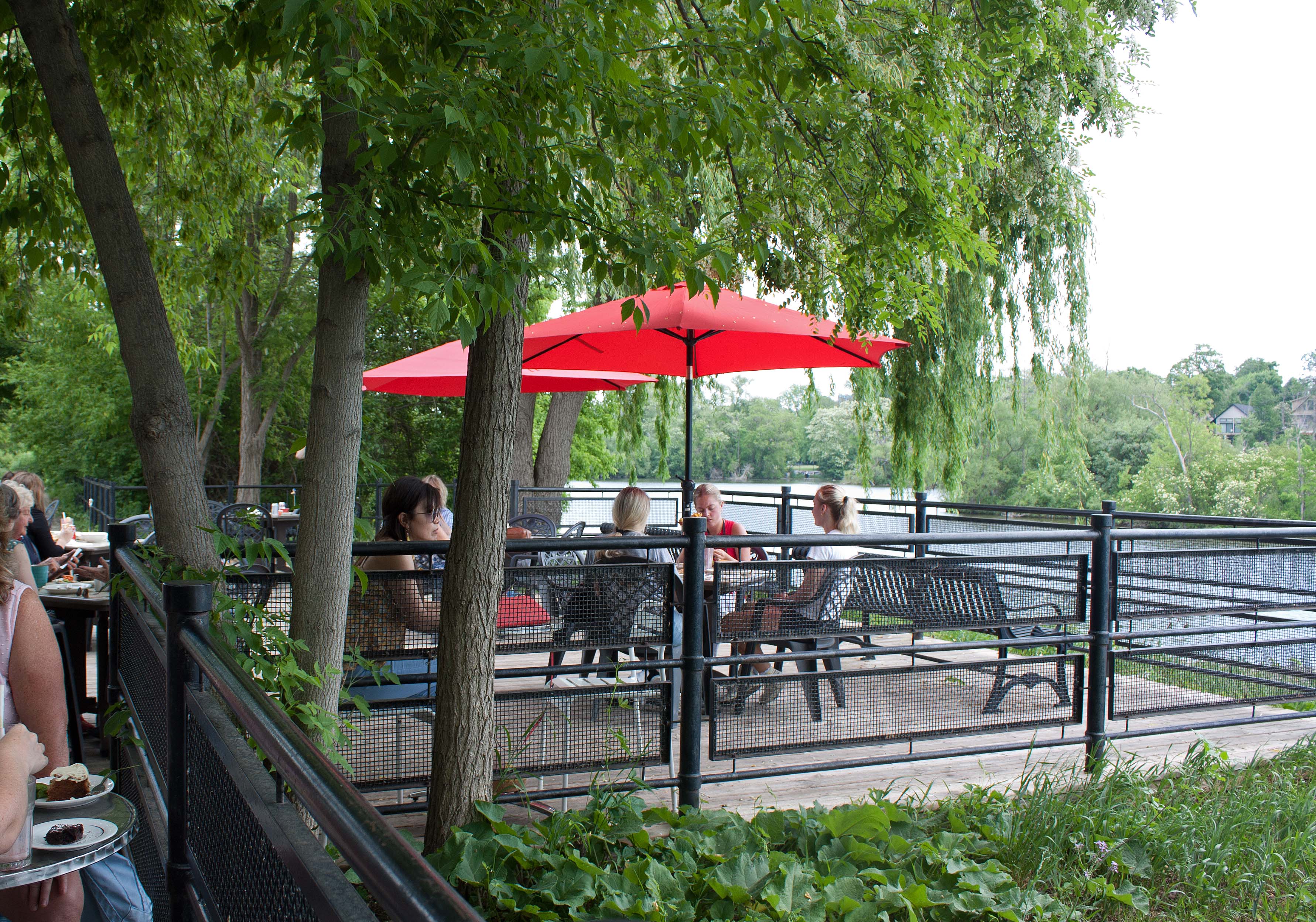
The Silver Bean Café fills that requirement wonderfully. It’s a café situated at a dead end of King Street within a linear riparian park (Millennium Park) on the banks of the river with a large side-park patio under a canopy of willows, black locust, and Manitoba maples. They know what they are too: they call themselves “your waterfront cottage in the city.” When I sit on the patio, enjoying my lunch under the dappled shade of a flowering black locust tree with a view of the river, I hear only birds and the desultory chatter of fellow patrons. And yet, the city is right there, next to this riparian park.
.
Stairs up to Silver Bean Cafe patio from boat wharf, beneath canopy of flowering black locust trees (photo by Nina Munteanu)
Riverside patio overlooking Otonabee River, ON (photo by Nina Munteanu)
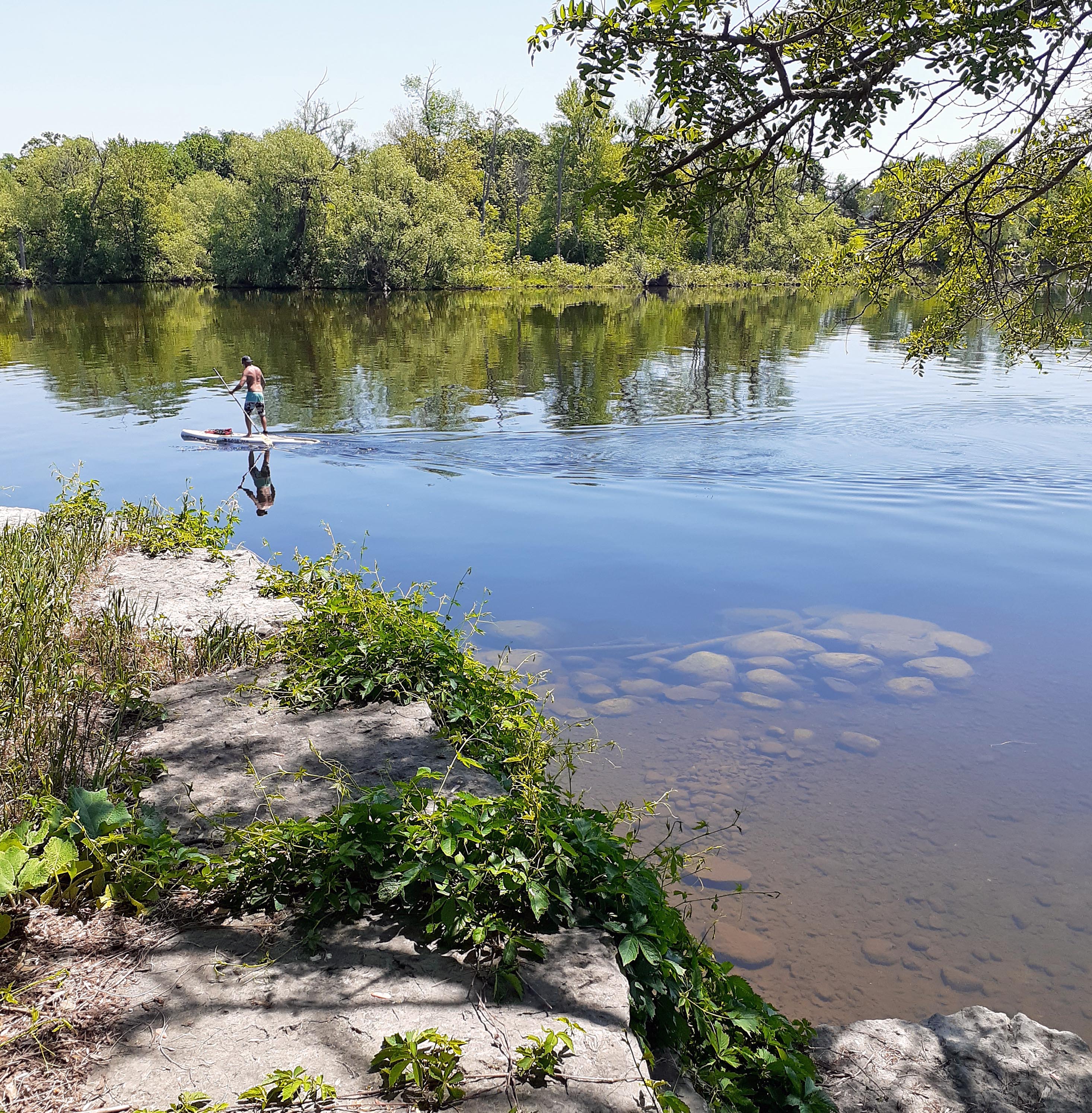
River boarder paddles by on Otonabee River, ON (photo by Nina Munteanu)
.
As I sit, eating my lunch and breathing in the ambrosia fragrance of black locust blooms, a young man paddles his canoe past the café. Soon after, a family of geese, adults flanking seven goslings, paddle leisurely by. Gulls cry out and gather on one of the small islands as a freight train lumbers over the old rail/footbridge downstream. A robin hops close to my table, looking for crumbs and I clumsily drop a seed from my multi-grain sandwich… Oops! Darn, I wanted that…
.
Family of geese paddle by cafe on the Otonabee River (photo by Nina Munteanu)
.
2023 is the Silver Bean’s 20th season, their website tells me. They opened in 2003 as a community café, serving light lunches with speciality sandwiches and salads, breakfasts, freshly baked scones, desserts and, of course, locally roasted coffee and espresso drinks. Oh! And their nook by the street-side serves at least thirty different flavours of my favourite Kawartha ice cream!
.
View of Silver Bean Cafe patio and boat rental wharf from park walk, ON (photo by Nina Munteanu)
.
One day, I was sitting on a stone step by the river on the park walkway, eating my peanut butter chocolate ice cream cone and watching a mother mallard and her chicks in the water. A well-dressed lady sat nearby with a take out coffee. Slipping off her shoes in the sun, she shared that she worked in the government building nearby and came here daily for her fix of sanity. I nodded sympathetically then smiled to myself. I felt the guilty pleasure of not being on ‘the clock.’ She left soon after. I stretched my legs in the sun, found my muse, and daydreamed about the next book I was going to write…
.
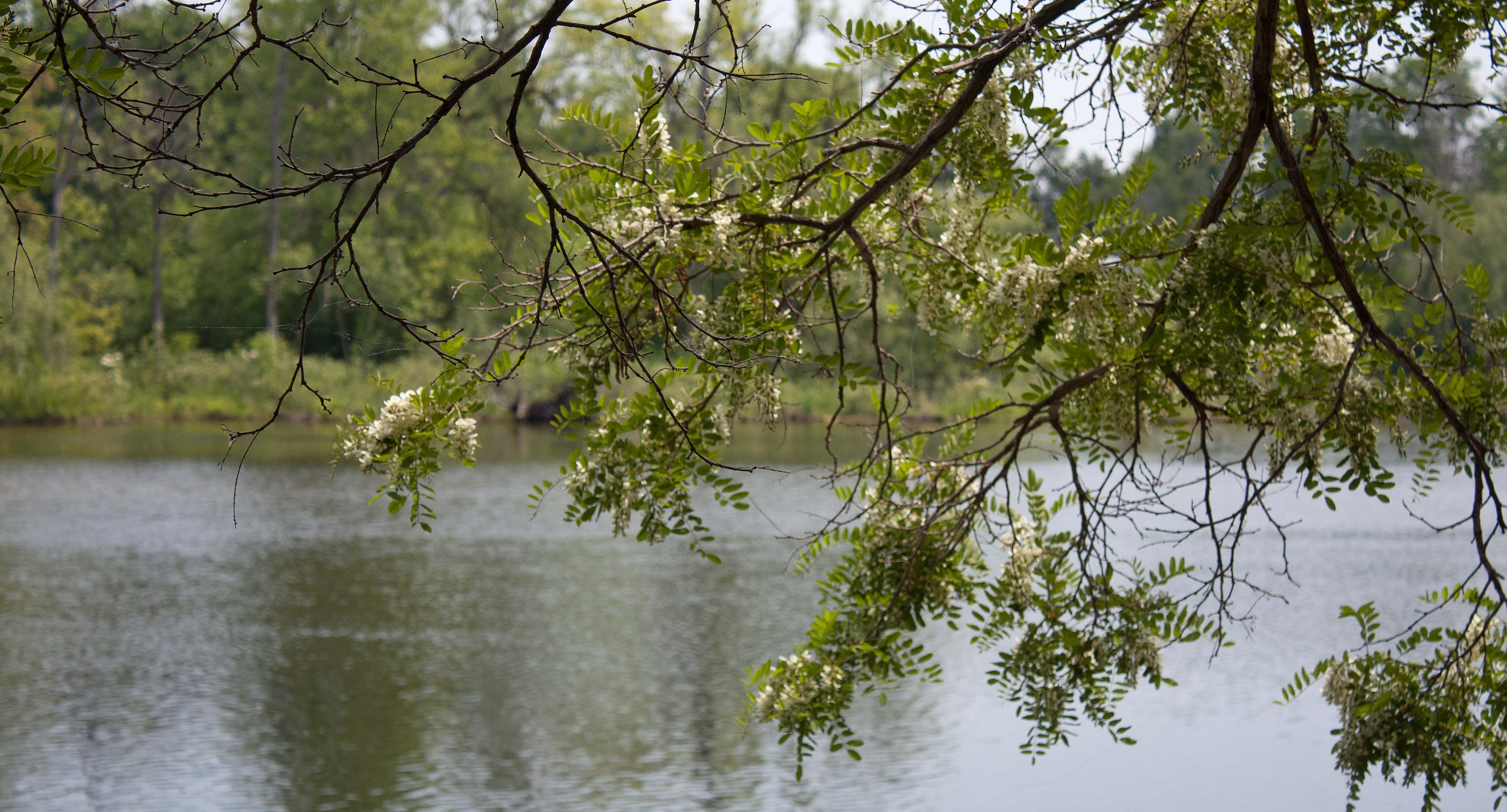
Black locust with fragrant flowers in spring, overlooking the Otonabee River, ON (photo by Nina Munteanu)
.
Nina Munteanu is an ecologist and internationally published author of award-nominated speculative novels, short stories and non-fiction. She is co-editor of Europa SF and currently teaches writing courses at George Brown College and the University of Toronto. Visit www.ninamunteanu.ca for the latest on her books. Nina’s recent book is the bilingual “La natura dell’acqua / The Way of Water” (Mincione Edizioni, Rome). Her latest “Water Is…” is currently an Amazon Bestseller and NY Times ‘year in reading’ choice of Margaret Atwood.
“Climate change is larger than all of us. It speaks in the language of finality. And mostly through water.”
Lynna Dresden
“An eye-opening story for those who are still on the fence about climate change. This is the perfect read for both sci-fi readers and eco-interested readers alike.”
“There simply aren’t enough Canadians to protect our wilderness; but if there were enough of us, there’d be no wilderness left to protect.”
Lynna Dresden
“Strangely compelling.”
BURIED IN PRINT
“A Diary in the Age of Water, is simply and beautifully told, profoundly true; a novel that invites us to embrace the wisdom of ages. The story stirs its readers, teaches them about the importance of water, and leaves an imprint on the canvas of the literary and scientific world.”
LUCIA MONICA GOREA, author of Journey Through My Soul
Boys explore the shore of the Otonabee River, ON (photo and rendition by Nina Munteanu)
This noir/ dystopian story, set in Vancouver B.C., finds Suki prematurely awoken from an induced suspension between being alive and dead. With her retinas deactivated and her Government persona suspended, it’s up to her long-time friend and private investigator, Gabe, to uncover why she was brought back early and the way forward to recover her identity. Through the gritty and flooded streets of East End Vancouver and the mega corporations who control their entire existence, Gabe and Suki scheme to claim what is rightfully Suki’s.
Crime Writers of Canada
The story is set in the near-future in a post climate change Vancouver when sea level rise has water lapping decrepit buildings north of The Oak Street Bridge on Oak and 77th, Amazon owns entire roadways, and people pay corporate credits as currency.
One of the aspects of this mystery story that I found particularly attractive and interesting was Bowlsby’s use of cross-genre (mystery with science fiction), which he indicated in his interview with Erik D’Souza with Crime Writers of Canada he has an affinity for. I was reminded of the eco-techno thriller style of Hayden Trenholm’s detective series The Steele Chronicles, also set in the near future in Alberta Canada where biotechnology strays into the hands of corporate moguls and fundamentalist cults.
Bowlsby manages to cram both rich and seamless world building in his story (a feat in any short story), addressing mundane aspects of life, including the nuances of language (e.g. swear words suited to the time and place). Deadland, for instance, is a slang word that describes a government program that allows people to temporarily commit suicide, allowing them to place their lives on hold to supposedly help them escape their problems and supposedly better cope later (Bowlsby tells us rather pithily that it doesn’t really work).
Characters were fully fleshed out and interesting and I found that I would very much like to see more stories set in this universe with Gabe and Suki.
Interview
NM:One of the first things I noticed and loved about the story is its title. How did you arrive at it? Is there a story behind the choice?
CHB: There’s usually more than one story behind my titles. It started with a very different title for a couple of years. Then I began to revise the story very seriously and that meant I had to reconsider the title too. I postulated hundreds of titles over three more years and ended up with a new one. But a friend pointed out a slight logic problem with that new title, related to the story. So, I had another reason to work on it. Normally if it doesn’t feel right, I always look for something that resonates better. Finally, this one resonated well, and wouldn’t be shaken off.
NM:What was the spark or inspiration for this story? Why did you set it where and when you did (post-climate-change Vancouver)?
CHB: Well, when Erik De Souza asked me about the social commentary of the story in his interview, I forgot that the germ of the first inkling of this story came from a discussion I had with a friend, twenty years ago, who felt that everything in our society should be available for sale. For him that represented a pure state that would fix all our problems. (Sorry Erik—I’ll explain this when I see you next.) I disagreed, but I wondered what it would be like if we started on that path. So as a social background, the characters are acting within a stage created for such a system—a system just starting to find its own steady legs. I don’t say it’s bad or good—I just give it free rein. The story itself came from other elements, but the characters’ difficulties are complicated by the hyper-capitalism. As for the climate change problem, and the flooding, that came naturally with the near-future time period; I’m afraid it’s going to happen no matter what we do. As for Suki, her main problem stems from an idea I had about how we might alleviate suicides. Even if it might not work very well.
NM:In your interview with Erik, you both discussed the use of language as a way to describe the world and create the gritty noir tone of the story. Can you describe some of the ways you derived them and other techniques you used?
CHB: That was hard. Or at least, it forced me to work my synapses hard for years. I don’t really know how I came up with the language changes except I set myself that task and used my brain like a sifter. I needed words for certain kinds of things, put myself into the future, and rattled hundreds of words through the filter. I kept lists of possibilities and used the best ones. I suppose that helps create the tone, but a lot of things do that: attitudes, social background, plot, etc.
NM:You mentioned in your interview with Erik that this story was “essentially a failure” and you’d been tirelessly working on it for five years, polishing, changing, revising—until finally someone liked it. Can you describe the process you went through in writing, preparing and getting out this story? Was this an exception for you or part of a typical process?
CHB: A typical process. Only a few of my stories have been published without being rejected by other publications. This story was first a short story, then a screenplay for a long time, then back to a short story, which meant at that point I had to cut out many scenes. Then it failed many more times in other publications. I just felt though that it generated so many sparks in my mind that it should catch fire somewhere, sometime. It was a surprise when it did. So, for some reason my stories need a lot of work. I’m guilty, therefore, I suppose, of not giving a story time enough time to mature, so in the future I should probably take more time to revise things before they see an editor. Generally, that’s a good approach, though, because you can come up with things that work better if you give them time to appear, which is what happened with this story.
NM:Your writing has covered non-fiction and many genres of fiction: science fiction, fantasy, space adventure, mystery, thrillers. How would you describe yourself as a writer?
CHB: An activationist. But I just made that up because of your question. I get an idea and I have to activate it, no matter the theme or genre. I don’t see myself restricted in any way to theme or subject. But I definitely feel an affinity for a plodding detective, no matter the time period or plot. (Or plod).
NM:What’s next for Craig H. Bowlsby?
CHB: I have several projects ready or pounding on my skull to get out. I have a series of three novels in the works about a Shanghai detective in 1917. Two in this series are complete. One takes place mostly in Shanghai; the next mostly in Vancouver; and the third will take place in Shanghai again.
NM: Now that you’re rich and famous, will you still talk to me? I’ll be in Vancouver soon and would gladly celebrate, starting with you buying me a beer!
CHB: I guess that sounds fair. Although I think I already owe you a six-pack. I enjoy our discussions, Nina. See you then!
You can read Craig’s story in the April 2022 Issue of Mystery Magazine. You can listen to Craig’s interview with Erik D’Souza here.
Glade in Jackson Creek, ON (photo and rendition by Nina Munteanu)
Nina Munteanu is a Canadian ecologist / limnologist and novelist. She is co-editor of Europa SF and currently teaches writing courses at George Brown College and the University of Toronto. Visit www.ninamunteanu.ca for the latest on her books. Nina’s bilingual “La natura dell’acqua / The Way of Water” was published by Mincione Edizioni in Rome. Her non-fiction book “Water Is…” by Pixl Press (Vancouver) was selected by Margaret Atwood in the New York Times ‘Year in Reading’ and was chosen as the 2017 Summer Read by Water Canada. Her novel “A Diary in the Age of Water” was released by Inanna Publications (Toronto) in June 2020.
“Nothing in nature stays the same. Or if it does, it’s because change has brought it back to what it once was.”
Lynna Dresden
“Munteanu excels at extrapolating today’s science into a stark vision of what we face in the next decades. Environmentalists, science fact enthusiasts, and science fiction fans will be shaken by this cautionary tale of climate change. Great for fans of James Lawrence Powell’s The 2084 Report, Kim Stanley Robinson’s The Ministry for the Future.”
PUBLISHERS WEEKLY
Thompson Creek, ON (photo and rendition by Nina Munteanu)









 Nina Munteanu Writing Coach