The Use of Character-Coupling in Eco-Literature to Give Voice to the Other, Part 1: Introduction 


A trickster wind stirs up clouds of drifting snow, ON (photo and rendition by Nina Munteanu)

Not long ago, I was driving through a short tunnel that I typically take to go to work and, glancing back through the rearview mirror, I didn’t see what I expected to see. For some reason—perhaps it was the light or my wandering mind—the familiar scene looked unfamiliar; it was as though I’d entered a new dimension.

It felt ‘Otherly’ and I briefly experienced a titillating excitement akin to a protagonist journeying into a new world in some novel.

Indeed, the rhetoric of ‘Otherness’ in most fiction is typically portrayed through the singular point of view (POV) and discourse of a protagonist on a journey. The very nature of the term ‘Other’ used in any narrative suggests exclusion. According to Patricia Kerslake of Central Queensland University, the postcolonial notion of the Other arises through a mutual process of exclusion that inspires the very idea of ‘alien’ by imposing expectation on perception. Kerslake argues that: “When one culture imposes its perceptions on another, in that it begins to see the Other not as they are but as, in [Edward W.] Said’s words, ‘they ought to be’, then the process of representation becomes inevitable: a choice is made to see a ‘preferred’ real”.  

In most forms of literature The POV ‘voice’ represents the Self, the inclusive ‘us’ (worldview) in its encounter with the Other, which in turn is the ‘not us.’ In his book  Orientalism: Western Conceptions of the Orient Edward W. Said contended that for there to even be an ‘us’, there has to be a ‘not-us’. The resulting power dynamic of “them and us,” of Other and Self, is created and controlled by perceptions of the singular POV voice that usually represents ‘us.

Tree branches overlook river during snowfall, ON (photo and rendition by Nina Munteanu)

‘The Other’ in Various Genres of Literature

In most genres of literature, the Other is often relegated to this dichotomous portrayal. In post-apocalyptic and metaphoric journey stories the Other may be the harsh environment or a calamity through which the protagonist must find their own strength to survive; in military stories it is clearly the enemy, seldom portrayed with compassion or understanding but there to test our hero; in coming-of-age stories it may be the oppressive rule or established world the hero must overcome; in science fiction it may be the hostile or unknowable aliens who must be defeated. According to Ursula K. Le Guin, science fiction displays a legacy of silencing the Other and rendering it impotent to establish and confirm humanity’s superior position in the world. Given that science fiction (SF) literature is rooted in culture, and often helps construct national identity, SF often confirms worldview, and in so doing creates internal Others (Brioni and Comberiati). According to Hermann, by failing to escape our boundary conflicts, SF simply constructs “new situations of restriction and otherness.” Kerslake argues that “silencing the Other provides SF with an indirect ability to define the potential of humankind”.1 

Country road in the Kawarthas, ON (photo and rendition by Nina Munteanu)

‘The Other’ in Eco-Literature

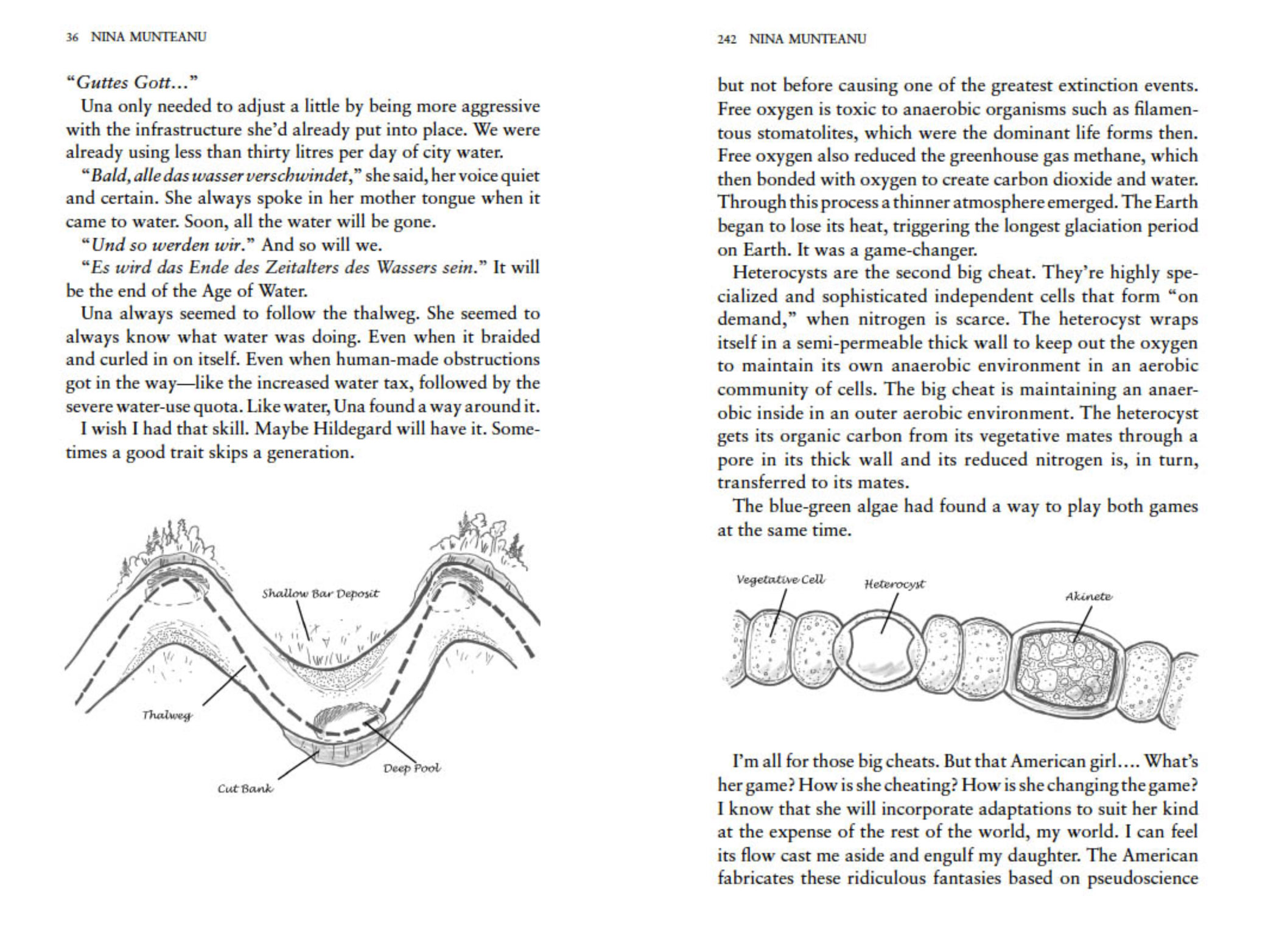
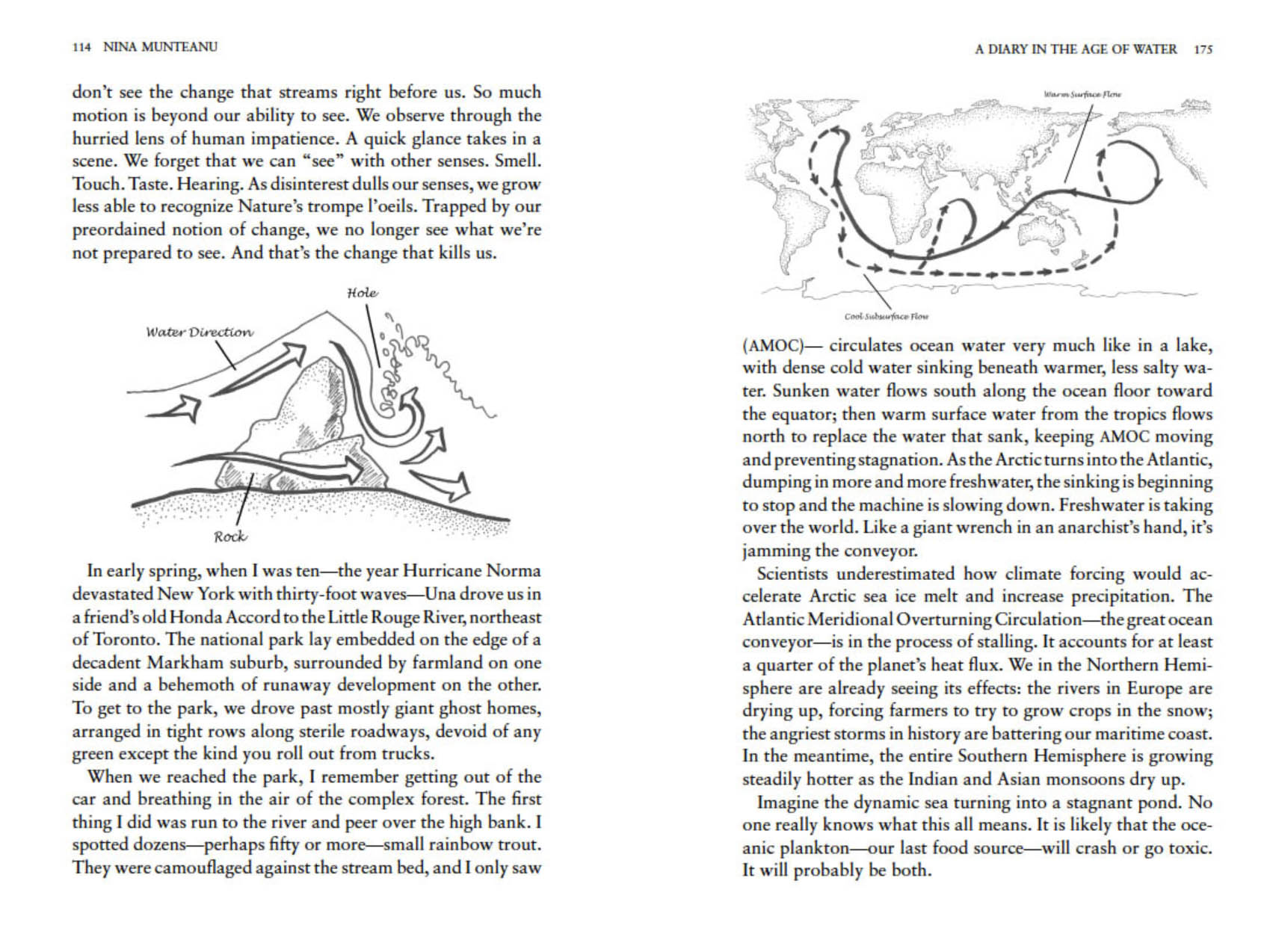
While eco-literature overlaps with many genres, it appears to differ from SF and other genres portrayal of Other through its unique intention to give voice to otherwise voiceless characters, and it often does this through masterful use of character-coupling. Mary Woodbury defines eco-literature or eco-fiction as literature “made up of fictional tales that reflect important connections, dependencies, and interactions between people and their natural environments.” The environment—or an aspect of the environment—plays a major role in eco-literature, either as premise or as itself a character on a journey.

Eco-Literature is preeminently the literature of bringing awareness to the plight of the environment as both character and as Other and explores humanity’s role in that plight. 

Eco-literature may go beyond raising awareness to link environmental abuse with concepts of jingoistic hubris; it may raise issues of human intersectionality, misogyny, marginalization, oppression of class, privilege, sexuality and race, and misuse of power. Violent acts perpetrated on environment—when environment is personified as ‘character’ and/or coupled directly to a character—elicit powerful emotion and clearly demonstrate how social/human injustice reflects environmental injustice.

At the heart of much eco-literature lie strong relationships forged between a major character (often main protagonist) and a minor character (as avatar for the environment such as place or ecosystem, a being, animal or plant) or an aspect of their environment—itself a character and archetype. The strong connection between protagonist and environment—whether antagonistic or sympathetic—fosters unique communication that provides ‘voice’ to the environment as Other and as Othered.  The environment may serve as a symbolic connection to theme and can illuminate through the sub-text of metaphor a core aspect of a main or minor character and their journey: the over-exploited white pine forests for the lost Mi’kmaq in Annie Proulx’s Barkskins; the mystical life-giving sandworms for the beleaguered Fremen of Arrakis in Frank Herbert’s Dune

Old shed overlooks the Otonabee river on a snowy-foggy day, ON (photo and rendition by Nina Munteanu)

Giving Voice to the Other Through Character-Coupling 

The coupling of protagonist with avatar—character-coupling—creates powerful drama and visceral connection to environmental issues and needs. Character-coupling characterizes environment, the Other, and effectively provides it with a voice, often through relationship. It elicits reader engagement, sparking new understandings and motivations toward a better caring of this world. The Other’s voice may be understandable (e.g. in many fables such as The Bear), arcane, tumultuous or fearsome (Memory of Water), or enduring and silently profound (The Breathing Hole). 

Eco-literature is particularly poised to make meaningful character-couplings between mostly human protagonist and environmental characters or representatives. This is because the protagonist provides relatable qualities for easy reader empathy, while the Othered character is often less relatable—often an arcane aspect of the environment, such as water (Memory of Water) or a forest (The Overstory). Character-couplings illuminate a core aspect of the main character’s journey and/or the reader’s journey. From direct and intimate (The Breathing Hole, The Bear) to associated and inferred (The Windup Girl, Barkskins), different forms of character couplings often provide a new understanding of the plight and viewpoint of the Other. The protagonist’s link to the Other provides a readable map for the reader to follow and make their own connection. 

Dogwood shrubs and trees line a marsh in Ontario (photo and rendition by Nina Munteanu)

Women Coupled with Nature as Other  

Since before the industrial revolution, and very much to this day, the prevailing western worldview toward the wildness of nature has been to dominate it and constrain it. The conviction that humans are separate from and superior to nature was established by Judeo-Christian beliefs and the Cartesian hegemony that laid the foundations of modern anthropocentrism (White). Ecofeminist Ynestra King argues that “we live in a culture that is founded on the repudiation, [exploitation], and domination of nature … the Other that has no voice”. King further argues that, “Women, who are identified with nature, have been similarly objectified and subordinated in patriarchal society”.   

The modern ecofeminist movement contends that a long historical precedent of associating women with nature has led to the oppression of both. Ecofeminists note that “women and nature were often depicted as chaotic, irrational, and in need of control, while men were frequently characterized as rational, ordered, and thus capable of directing the use and development of women and nature” (Miles). 

French philosopher and writer Simone de Beauvoir elegantly explores this connection: 

Man seeks in woman the Other as Nature and as his fellow being. But we know what ambivalent feelings Nature inspires in man. He exploits her, but she crushes him, he is born of her and dies in her; she is the source of his being and the realm that he subjugates to his will; Nature is a vein of gross material in which the soul is imprisoned, and she is the supreme reality…Woman sums up Nature as Mother. Wife, and Idea; these forms now mingle and now conflict, and each of them wears a double visage.  

Simone de Beauvoir

Because of this association and history, some of the most powerful character-couplings in eco-literature are of women protagonists coupled with natural avatar: the Inuk widow with polar bear cub in the clifi allegory The Breathing Hole; the girl and bear in the allegory-fable The Bear; the windup girl Emiko and the Cheshire cats in the cautionary tale The Windup Girl; the tea master Noria and water in the post-ecosystem collapse novel Memory of Water; the ecologist, Patricia Westerford, with the giant trees in The Overstory.3

Part 2 (“Types of Character-Coupling in Seven Examples of eco-Literature“) follows next week.

Heavy snow on the river, ON (photo and rendition by Nina Munteanu)

Footnotes:

  1. The Other has often been metaphorically portrayed in SF by aliens that lack a distinct voice or viewpoint; some portrayal has reflected a fearful imperialistic colonialism by representing Other as adversary such as an invading monster with no regard for humans (e.g. Robert Heinlein’s The Number of the Beast; H.G. Wells’s War of the Worlds). Kerslake argues that the traits of the Other “fall characteristically—and conveniently—into those spaces we choose not to recognize in ourselves, the ‘half-imagined, half-known: monsters, devils, heroes, terrors, pleasures, desires’ of Said’s ‘Orient’”. The Martians of Ray Bradbury’s Martian Chronicles—who also have no voice—reflect our indigenous peoples under the yoke of settler colonialism and an exploitive resource-extraction mindset. The monster of Mary Shelley’s Frankenstein—also with no voice—exemplifies the disabled/deformed unsavory departure from our ‘perfect’ self-image; to be chased, destroyed and nullified.  
  2. In some stories the protagonist is Othered in some way, providing a more direct link to the experience of being the Other or being Othered. For instance, in Mishell Baker’s Borderline, disabled protagonist Millie provides the connection to the greater theme of Othering “lesser beings.” In Costi Gurgu’s Recipearium, the protagonists are not human; they are alien creatures that dwell inside the dead carcass of a monster, representing Other as main character. 
  3. Excellent examples that overtly deal with some of these injustices include The Fifth Season trilogy by N.K. Jemisin and The Marrow Thieves by Cherie Dimaline.
Snow-covered houses line the river during a snowstorm, ON (photos and rendition by Nina Munteanu)

In Part 2 of this series, I discuss seven examples of literature that use meaningful and impactful character coupling to achieve a voice for the marginalized, neglected and abused.

References:

Agamben, Giorgo. Homo Sacer: Sovereign Power and Bare Life. Stanford University Press. 1998. 228pp.

Bacigalupi, Paolo. The Windup Girl. Night Shade Books, New York. 2015. 466pp.

de Beauvoir, Simone. “The Second Sex.” Modern Library, Random House, New York. 1968. p.144 In:

Dwyer, Jim. Where the Wild Books are: A Field Guide to Ecofiction. University of Nevada Press, Reno, Nevada. 2010. 264pp.

Ganz, Marshall and Emily S. Lin. “Learning to Lead: a Pedagogy of Practice.” The Handbook for Teaching Leadership: Knowing, Doing, and Being, edited byIn Scott A. Sook, Nitin Nohria, and Rakesh Khurana. Thousand Oaks: SAGE Publications, 2012. 354p.

Herbert, Frank. Dune. Ace, New York. 1965. 884pp.

Itäranta, Emmi. Memory of Water. Harper Voyager. New York. 2014. 266pp.

Kerslake, Patricia. “The Self and Representations of the Other in Science Fiction.” Chapter 1. Science Fiction and Empire, Liverpool University Press, 2007, pp. 8-24.

King, Ynestra. “The Ecology of Feminism and the Feminism of Ecology.” Chapter 2. Healing the Wounds: The Promise of Ecofeminism, edited by Judith Plant. New Society Pub, 1989, pp. 18-28.

Krivak, Andrew. The Bear. Bellevue Literary Press, New York, NY. 2020. 221pp.

Miles, Kathryn. “Ecofeminism: sociology and environmentalism.” Britannica, britannica.com/topic/ecofeminism.

Murphy, Coleen. The Breathing Hole. Playwrights Canada Press, Toronto. 2020. 305pp.

Nugent, Brittany. “The Rare Bear Protecting a Canadian Rainforest.” Goodness Exchange. 2021. https://goodness-exchange.com/spirit-bear-kermode-bear-kept-a-secret-for-generations/ Accessed October 30, 2022.

Powers, Richard. The Overstory. W.W. Norton & Company, New York. 2018. 502pp.

Proulx, Annie. Barkskins. Scribner, New York. 2016. 717pp.

Roburn, Shirley. Shifting Stories, Changing Places: Being Caribou and Narratives of Transformational Climate Change in Northwestern North America. Concordia University PhD dissertation. P. 31. https://spectrum.library.concordia.ca/id/eprint/980193/1/Roburn_PhD_F2015.pdf. Accessed 31 October 2022

Said, Edward W. Orientalism: Western Conceptions of the Orient. Vintage, London, 1978. 432pp.

Woodbury, Mary. “What is Eco-fiction?” Dragonfly.eco. 2016. https://dragonfly.eco/eco-fiction/ Accessed September 15, 2022.

The rotary trail on a heavy-snow day, ON (photo and rendition by Nina Munteanu)

Nina Munteanu is a Canadian ecologist / limnologist and novelist. She is co-editor of Europa SF and currently teaches writing courses at George Brown College and the University of Toronto. Visit www.ninamunteanu.ca for the latest on her books. Nina’s bilingual “La natura dell’acqua / The Way of Water” was published by Mincione Edizioni in Rome. Her non-fiction book “Water Is…” by Pixl Press (Vancouver) was selected by Margaret Atwood in the New York Times ‘Year in Reading’ and was chosen as the 2017 Summer Read by Water Canada. Her novel “A Diary in the Age of Water” was released by Inanna Publications (Toronto) in June 2020.

“Virtually Yours” Is Doing Virtually Well…

Twelve years ago, my speculative short story Virtually Yours was originally published in issue #15 of Hadrosaur Tales, a small but vibrant literary magazine out of Las Cruces, New Mexico. The story explored concepts of cyber-spying, virtual workspace, anonymity, and identity. And like its own characters, who wandered through their impermanent virtual offices, the story has wandered far and wide since…

Some of the publications Virtually Yours appeared in: Hadrosaur Tales in 2002; Neo-opsis Science Fiction Magazine in 2004; Nowa Fantastyka in 2006; Amazing Stories 2014; and Speculative North in 2021

Nina in the North holding December 2021 issue of Speculative North

Shortly after Virtually Yours was published for the eighth time, in the December 2021 issue of Canadian magazine Speculative North, Issue #6, R. Graeme Cameron reviewed all the stories in that issue, including mine. His review appeared in Amazing Stories and here’s what he said about Virtually Yours:

Review of Virtually Yours by R. Graeme Cameron in Amazing Stories

Story Illustration by Duncan Long for Virtually Yours in Amazing Stories

Since its first publication in 2002 in Hadrosaur Tales, Virtually Yours has travelled well. In 2004, it went to British Columbia with Neo-opsis Science Fiction Magazine (Issue #3). In 2006, it moved to Poland and was translated into Polish in Nowa Fantastyka. It then returned to British Columbia in the Best of Neo-opsis Science Fiction Magazine: Anthology in 2006 and was nominated for the Speculative Literature Foundation Fountain Award. It then moved to Israel and was translated into Hebrew in Bli-Panika in 2006. In 2014, it moved back to America for an appearance in Amazing Stories (Issue 88) then went to Italy in 2016 to appear in Future Fiction. Its eighth appearance saw its return in 2021 to Canada in Ontario’s Speculative North.

Virtually Yours continues to wander the literary landscape, most recently making its ninth appearance in the worldly MetaStellar Speculative Fiction and Beyond, December 2022 (where you can find several of my other short stories).

Virtually Yours story illustration in MetaStellar by Brigitte Werner

I just love it when a story shows ‘legs’ and wanders the world.

Cover art for 2006 “The Best of Neo-opsis Science Fiction Magazine Anthology” by Karl Johanson

p.s. I was just informed that “Virtually Yours” will make its tenth appearance in MetaStellar’s short fiction 3rd annual anthology, with expected release both in print and electronic versions in June 2024.

Nina Munteanu is a Canadian ecologist / limnologist and novelist. She is co-editor of Europa SF and currently teaches writing courses at George Brown College and the University of Toronto. Visit www.ninamunteanu.ca for the latest on her books. Nina’s bilingual “La natura dell’acqua / The Way of Water” was published by Mincione Edizioni in Rome. Her non-fiction book “Water Is…” by Pixl Press (Vancouver) was selected by Margaret Atwood in the New York Times ‘Year in Reading’ and was chosen as the 2017 Summer Read by Water Canada. Her novel “A Diary in the Age of Water” was released by Inanna Publications (Toronto) in June 2020.
Nina Munteanu’s “Robin’s Last Song” in Metastellar Magazine

I rock on the cedar swing on my veranda and hear the wind rustling through the gaunt forest. An abandoned nest, the forest sighs in low ponderous notes. It sighs of a gentler time. A time when birds filled it with song. A time when large and small creatures — unconcerned with the distant thrum and roar of diggers and logging trucks — roamed the thick second-growth forest. The discord was still too far away to bother the wildlife. But their killer lurked far closer in deadly silence. And it caught the birds in the bliss of ignorance. The human-made scourge came like a thief in the night and quietly strangled all the birds in the name of progress.

excerpt from “Robin’s Last Song” by Nina Munteanu

My short story Robin’s Last Song was republished recently in the superlative online magazine Metastellar. The story was first published in 2021 in Issue 128 of Apex Magazine and an earlier version of the story called Out of the Silence appeared in the literary magazine subTerrain Magazine Issue 85 in 2020.

Left, “subTerrain” Issue 85 carries “Out of the Silence”; right, “Apex Magazine” issue 128 carries “Robin’s Last Song”

I raced up the stairs to the auditorium then quieted my breath and listened at the door, heart thumping like a bird trying to escape. Professor Gopnik was ten minutes into his lecture; I could hear his commanding voice: “… estimates that the entire number of birds have been reduced by a third in five decades—I mean common birds like the robins, sparrows, warblers, and even starlings…”

He was talking about Rosenberg’s paper in Science. The study shocked the scientific community; but I had already observed the decline of the house sparrow around my aunt and uncle’s house near the Old Mill. And the robin—my namesake, whose song heralded spring for me—had grown quiet.

I imagined Gopnik waving the journal at the class in his typical showman style. He had a habit of wandering the stage like an evangelist, fixing each student with intense blue eyes as if challenging them to believe. I thought him an over-confident condescending prig. But for someone who looked as young as the students he was teaching, Gopnik was brilliant. And what he was doing was so important. I wanted so badly to work under him as a grad student. But he terrified me.

Excerpt from “Robin’s Last Song” by Nina Munteanu

The Story Behind the Story

It all began with my discovery of an emerging bioacoustic tool, soundscape ecology, that measures biodiversity and ecosystem functionality. I’d just read the disturbing 2019 Science article by Rosenberg and team who determined that our slow violence of habitat degradation and toxic pollution has reduced the world’s bird population by a third in just five decades. I was devastated; I could not imagine a world without the comforting sound of birds. What would it be like if all the birds disappeared?

Map and chart of bird decline since 1970

Already primed with research into genetic engineering for the sequel to my 2020 eco-novel, A Diary in the Age of Water, my muse (often delightfully unruly) played with notions of the potential implication of gene hacking in ecological calamity and how this might touch on our precious birds: when nature “is forced out of her natural state and squeezed and moulded;” her secrets “reveal themselves more readily under the vexations of art than when they go their own way.”

Robin’s Last Song is a realizable work of fiction in which science and technology are both instigators of disaster and purveyors of salvation. Today, gene-editing, proteomics, and DNA origami—to name just a few—promise many things from increased longevity in humans to giant disease-resistant crops. Will synthetic biology control and redesign Nature to suit hubris or serve evolution? What is our moral imperative and who are the casualties? As Francis Bacon expressed in Novum Organum, science does not make that decision. We do. 

You can read an Interview on Writing Robin’s Last Song that Alberta author Simon Rose did with me recently.

I also recently sat down with Rebecca E. Treasure of Apex Magazine for a conversation about story, ecology, and the future. Here’s how it begins:

Apex Magazine: The Way of Water in Little Blue Marble is such a powerful piece touching on water scarcity and friendship, a dry future and the potential for technology to overtake natural ecology. Robin’s Last Song explores extinction, human fallibility, friendship, and again, that conflict between technology and nature. Do you think we’re heading toward the kind of dystopia shown in these stories?…

For more about bird declines around the world see my articles: “What if the Birds All Die?” andBirds are Vanishing.”

“Over increasingly large areas of the United States, spring now comes unheralded by the return of the birds. The early mornings are strangely silent where once they were filled with the beauty of bird song”

Rachel Carson, Silent Spring
Discarded robin’s egg in the forest in spring, ON (photo by Nina Munteanu)

Read my other stories in Metastellar here: Nina Munteanu in Metastellar Speculative Fiction and Beyond.

p.s. May9: I just learned that Robin’s Last Song was selected by the NYC Climate Writers Collective as part of an exhibition in the Climate Imaginarium on Governors island. The exhibition, starting May 18, will run throughout the summer of 2024.

Fledgling robin rests on a patio chair in spring, ON (photo by Merridy Cox)

Nina Munteanu is a Canadian ecologist / limnologist and novelist. She is co-editor of Europa SF and currently teaches writing courses at George Brown College and the University of Toronto. Visit www.ninamunteanu.ca for the latest on her books. Nina’s bilingual “La natura dell’acqua / The Way of Water” was published by Mincione Edizioni in Rome. Her non-fiction book “Water Is…” by Pixl Press (Vancouver) was selected by Margaret Atwood in the New York Times ‘Year in Reading’ and was chosen as the 2017 Summer Read by Water Canada. Her novel “A Diary in the Age of Water” was released by Inanna Publications (Toronto) in June 2020.

Book Review: Nina’s “Favourite 3 Reads Of 2023– Feminist Eco-Fiction

In late 2023, I was invited by Shepherd to post an article of my favourite three reads of 2023. I had earlier that year posted on Shepherd an article describing what I considered to be the best eco-fiction books that make you care and give you hope.

I started out by reviewing what I had read in 2023. It looked like I’d read about thirty odd books, almost half and half non-fiction to fiction. That’s not many, but I’m a slow reader. I pore through each book at a snail’s pace, spending time making notes with some, particularly the non-fiction books, which I use to research my writing. With fiction, I dive in deep and thoroughly savor each word and sentence like a mouthful of an excellent meal made with loving hands. Books varied from non-fiction scholarly works on forest ecosystems (The Treeline by Ben Rawlence) and post-capitalism (Four Futures by Peter Frase) to literary fiction, political thrillers, speculative fiction, clifi, and eco-fiction.

It was a tough choice, but I came up with three choices and a thematic rationale that resonated with me and made a deep kind of sense for that year: all three books were eco-fiction of sorts and featured hopeful stories of strong women, acting out of compassion and in solidarity with intelligence, kindness and courage. For me, 2023 was a year of strong feminine energy for the planet and my favourite books reflect that. Here they are (read the original article on Shepherd here):

The first of my favourite three books of 2023 is Michelle Min Sterling’s Camp Zero.

Set in the remote Canadian north—a place I love for its harsh beauty—this feminist climate fiction explores a warming climate through the perilous journeys of several female characters, each relating to her environment in different ways. Each woman exerts agency in surprising ways that include love, bravery and shared community. The strength of female power carried me through the pages like a braided river heading to a singular ocean. These very different women journey through the dark ruins of violent capitalism, colonialism and patriarchy—flowing past and through hubristic men pushing north with agendas and jingoistic visions—to triumph in an ocean of solidarity. I empathized with each woman as she found her strength and learned to wield true heroism—one based on collaboration and humble honesty.

My second favourite book of 2023 is Yevgeni Zamyatin’s We.

I enjoyed this 1920 hopeful dystopia for its courageous and unprecedented feminism. While the story centres on logical D-503, a man vacuously content as a number in the One State, it is I-330—Zamyatin’s unruly heroine—who stole my attention. Confident, powerful and heroic, the liberated I-330 embraces the Green Wind of change to influence D-503. A force of hope and resilience, she braves torture to successfully orchestrate a revolution that breaches the Green Wall—feats typically relegated to a male protagonist in novels of that era. When pregnant O-90 refuses to surrender her child to the State, I-330 helps her escape to the outside, where the Green Wind of freedom blows. I resonated with Zamyatin’s cautionary tale on the folly of logic without love and Nature.

My third favourite book of 2023 is Hugh Howie’s Wool (first of the SILO series).

Juliette—humble and gutsy, kind and relentlessly motivated in her journey for the truth—kept the pages turning for me. Juliette is a mechanic from the Down-Deep of the underground Silo, humanity’s last refuge to a toxic world. When Juliette inexplicably lands the job of sheriff, she treats her new position as a tool to seek the truth about her lover’s mysterious recent death. At her own peril, she pulls on threads that ultimately reveal a great conspiracy.

Juliette’s literal and metaphoric rise from the Down-Deep to the Up-Top is a feminist’s journey that transcends intersectional barriers as she battles small-minded men of power and maintains her integrity by refusing to abide by the inhumane Up-Top rules of order. By the end, I sensed a victory for humankind through womankind.

Also check out Shepherd’s 100 best books of 2023.

You might be interested in two of my own eco-fiction novels that feature several strong female protagonists:

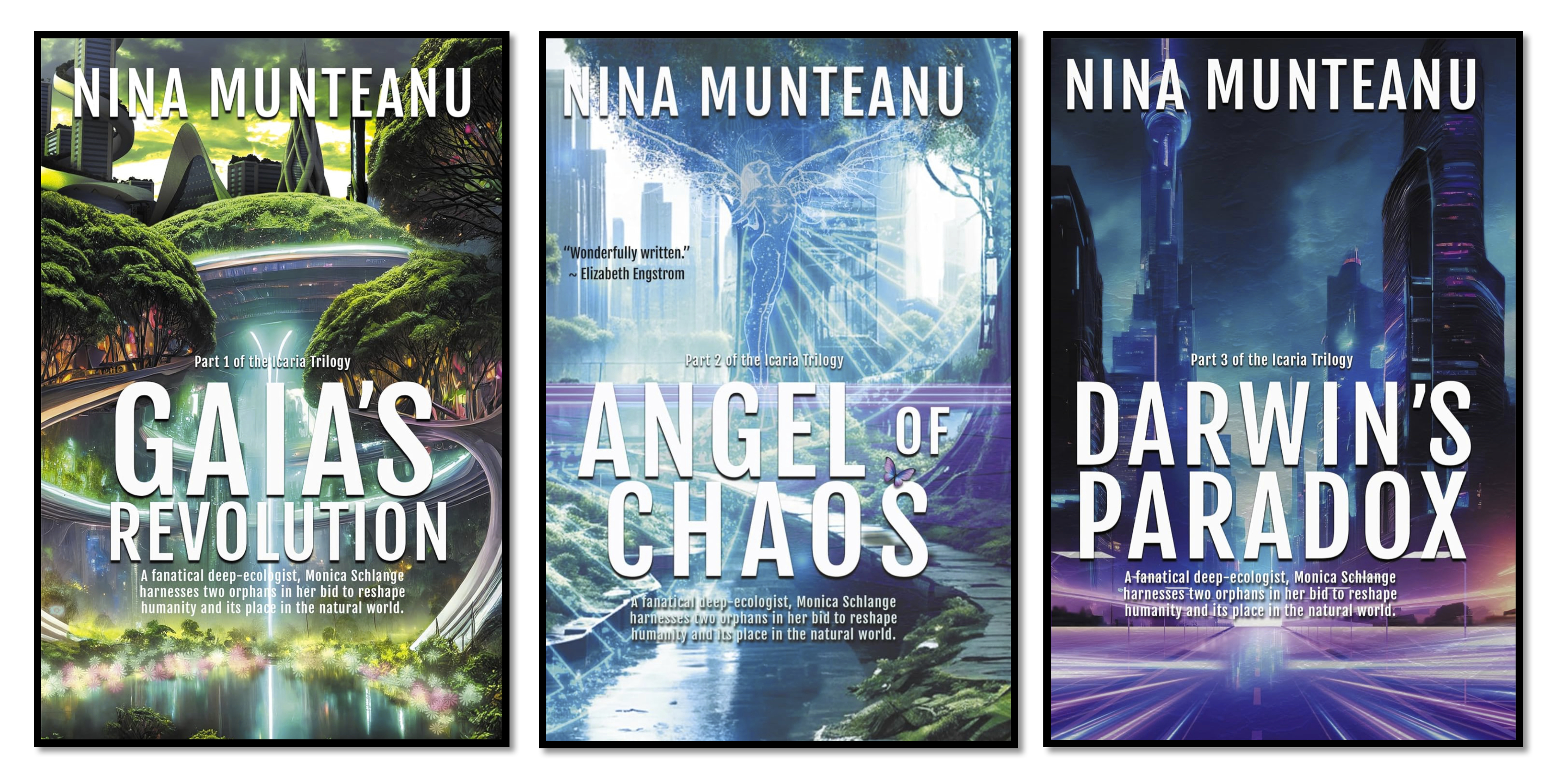
Darwin’s Paradox follows the complex dynamic of a brave mother and her willful teenage daughter, both ‘gifted’ by a virus living inside them. Accused of murder and deliberately spreading the virus that killed many, Julie fled the enclosed city and settled in the climate wastelands with her husband and their child. Years later, when their harsh refuge is threatened by city forces seeking mother and daughter for experimentation, Julie leaves her family and gives herself up to the city, hoping they will abandon pursuing her daughter. Still psychically connected to the city’s AI community (now evolving into an autonomous entity with the intelligent virus), Julie entangles with political intrigue while her daughter, who followed her to the city, stumbles into her mother’s violent past. 

A Diary in the Age of Water follows the climate-induced journey of Earth and humanity through four generations of women, each with a unique relationship to water. Centuries from now, in a dying boreal forest in what used to be northern Canada, Kyo, a young acolyte called to service in the Exodus, yearns for Earth’s past—the Age of Water—before the “Water Twins” destroyed humanity. Looking for answers and plagued by vivid dreams of this holocaust, Kyo discovers the diary of Lynna, a limnologist from that time of severe water scarcity just prior to the destruction. In her work for a global giant that controls Earth’s water, Lynna witnesses and records in her diary the disturbing events that will soon lead to humanity’s demise.

.

Path through a mixed forest in early winter, ON (photo and rendition by Nina Munteanu)

Nina Munteanu is a Canadian ecologist / limnologist and novelist. She is co-editor of Europa SF and currently teaches writing courses at George Brown College and the University of Toronto. Visit www.ninamunteanu.ca for the latest on her books. Nina’s bilingual “La natura dell’acqua / The Way of Water” was published by Mincione Edizioni in Rome. Her non-fiction book “Water Is…” by Pixl Press (Vancouver) was selected by Margaret Atwood in the New York Times ‘Year in Reading’ and was chosen as the 2017 Summer Read by Water Canada. Her novel “A Diary in the Age of Water” was released by Inanna Publications (Toronto) in June 2020.
Getting Lost in Paris

Montage of Paris (photos by Nina Munteanu)

On my third day in Paris, I got lost. I didn’t mean to; it just happened.

I’d started early and joined the morning crowd at the Musée d’Orsay. After a breathtaking journey through the visions of French Impressionists, I ventured by bus to the Champ du Mars and climbed the Eiffel Tower to see Paris from the perspective of the Gods: a wheeled mosaic of art, magic and scene. Then I decided to walk home from there. I thought my adventure was over; in truth, it had just begun…

One of my many stops for delightful sustenance in Paris (photo by Nina Munteanu)

As I wound my way down a tree-lined street, the flower blossoms rained down with the fragrant breeze, painting the cobblestones in pale shades of diaphanous pink. A young couple sat wrapped around each other on a bench, kissing.
It suddenly struck me that I was in Paris in the springtime; and I was alone. It was just an observation. It didn’t make me sad or uncomfortable; I’ve traveled a great deal on my own and have enjoyed the edgy play on my mind and soul that solitude in a strange place brings.

Montage of Paris (photos by Nina Munteanu)

Philosopher Mark Kingwell wrote, “travel is a drug, and not just because it can be addictive. More because it alters consciousness, dilates the mind and maybe even rewires the cerebral cortex…going somewhere different from home [is] the best way to challenge your habitual ways of thinking.”

I’d come to Paris to research the book I was writing—about a young girl (a medieval time-traveller) who can alter history (The Last Summoner). Paris, with its Neo-Classical architecture, quaint cobble streets, and stylish Parisians, lends itself to a wandering eye and finally to introspection. For Kingwell, “somewhere beyond the contrived, comfortable cityscapes, we’ll encounter a potentially more profound version of ourselves.”

Paris, like the Parisians, is a seductive dance. It is so attractive to view. But ultimately one must participate in it to fully experience it.

I don’t know when I finally noticed that I had no idea where I was. It just happened. Along one of Paris’s charming narrow cobble streets as the Hausmann-style buildings blushed in the sunset, I found myself utterly lost.

Montage of Paris (photos by Nina Munteanu)

The sky’s light shades of peach gave way to a deeper shade of ochre as I walked on, feeling more and more a stranger and more and more self-conscious that I was. I wasn’t dressed fashionably. Oh, I had the obligatory scarf and stylish leather jacket; but I lacked the finesse of these Parisians who glided confidently along the darkening streets that were familiar to them. The sounds, sights and smells of this foreign city heightened in a frisson of increasing tension. But I refused to let the darkness take me and let my feet lead me on, confident that I would find something. This was Paris, after all…

Display of one of the many patisseries in Paris (photo by Nina Munteanu)

“Not to find one’s way in a city may well be uninteresting and banal,” wrote Walter Benjamin. “It requires ignorance—nothing more. But to lose oneself in a city—as one loses oneself in a forest—that calls for quite a different schooling.” A school for questions, not answers, says Kingwell.

I’d come to Paris with questions, many questions; some of which I would not answer. Perhaps the most important ones. I’d come with the hubristic ambition of defining Paris. But I discovered that to define Paris is to define life…and oneself.

Montage of Paris (photos by Nina Munteanu)

Paris unfolds like an impressionist canvas, to be interpreted through experience. It is an aria, both exquisite and haunting. Like the lingering aftertaste in the back of my throat of a complex bitter-sweet Bordeaux. I lost myself willingly to its mystery. “Real travel,” says Kingwell, “means we must surrender expectations and submit to chance, to challenge our desires, not merely satisfy existing ones…Leaving home ought to be, above all…that plunge into otherness. Becoming strange to ourselves is the gateway to seeing how dependent on strangers we are for our identities…Getting lost to yourself might be the best way to find out who you are.”

Author sits with her novel manuscript for “The Last Summoner”, a cafe creme and Pastis in Place Saint-Michel, Latin Quarter of Paris

Nina Munteanu is a Canadian ecologist / limnologist and novelist. She is co-editor of Europa SF and currently teaches writing courses at George Brown College and the University of Toronto. Visit www.ninamunteanu.ca for the latest on her books. Nina’s bilingual “La natura dell’acqua / The Way of Water” was published by Mincione Edizioni in Rome. Her non-fiction book “Water Is…” by Pixl Press (Vancouver) was selected by Margaret Atwood in the New York Times ‘Year in Reading’ and was chosen as the 2017 Summer Read by Water Canada. Her novel “A Diary in the Age of Water” was released by Inanna Publications (Toronto) in June 2020.

When Water Speaks: quotes from A Diary in the Age of Water

“There is no depression more debilitating than knowing that you cannot go back home, even though you’re already there.”

Lynna Dresden

“This is a significant book for our times … creative, inventive, and possibly prescient.”

DAVID CAMERON, Amazon Review

“Profound and brilliant.  Scary and comforting at the same time. Life will go on. Water will go on.”

NINA DARRELL Amazon Review
Bridge over creek in Trent Nature Sanctuary during heavy snowfall, ON (photo and rendition by Nina Munteanu)

Losing Myself in the Forest Helps Me Find Myself

Rocky trail through ancient eastern hemlock forest, Catchacoma Park, ON (photo and rendition by Nina Munteanu)

I look forward to my daily walks. I find that walking helps me centre myself. Depending on the time I have, some walks last half an hour to an hour. Others walks will stretch from three hours to a day long. These aren’t city-walks.

Stream swells in a spring rain in Trent Nature Sanctuary, ON (photo and rendition by Nina Munteanu)

My favourite place to walk is in the forest, by a river.

Perhaps it is the solitude… or the negative ions, the fresh pungent scents of damp loam, moss and trees. The humbling magnificence of these stately trees. The fishy bog smell of algae. Or the unknown treasures hiding in plain sight for me to discover… Whatever the combination, I find it most pleasing. And freeing.

It is also here, wandering in the forest, that my creativity flourishes as I find expression through the joy of discovery.   

Old-growth forest surrounding Pierce Lake, BC (photo by Kevin Klassen)

The first step is to lose myself…

That’s the fun part: not knowing what’s beyond that hillside or down that ravine on the shores of the creek I barely see or around that bend in the root-gnarled trail among the swamp cedars. Like a moth to light, I’m drawn to the unknown. Ever the explorer.

Old-growth cedar forest in Jackson Creek forest, ON (photo and rendition by Nina Munteanu)
Gnarly cedar roots cross a path through morning fog in a swamp cedar forest, ON (photo by Nina Munteanu)

It is often here, as I walk along uneven trails or maneuver through undergrowth, up hills or down stream banks to explore and record with my camera, that I do my best thinking… Well, best in that it does not feel like thinking; more like simply ‘being.’ As my body responds to Nature’s sensual treasures, my ingenuous mind ‘walks away’ from restrictions of consciousness and roams in a kind of euphoric state of simple joy. Freed from thinking to feel and sense.

No need for a destination. The journey is my destination…

Gnarly roots of an old yellow birch snake across the old-growth cedar forest, ON (photo by Nina Munteanu)
Moss-covered boulder erratic (Nina’s Boulder) in old-growth cedar forest of Jackson Creek park, ON (photo by Nina Munteanu)

Walking in a forest unclutters my mind. The forest is simple in its natural complexity. Its beauty combs out the tangles of human encumbrance and grounds me in the simplicity of natural life.

Cookout in old-growth rainforest at Mamquam River near Squamish, BC (photo by Kevin Klassen)

I go prepared. Depending on the kind of walk, I’ll bring my clementine to snack on or a hearty lunch and fruit snacks that I carry in my backpack, along with a notebook and first aid kit. And, of course, I bring my camera. When I stop for lunch or snack, I choose my location thoughtfully, sometimes a place to sit, but mostly with a view of something worth studying. Lunch or snack stops are particularly alluring with unexpected experience.

Moss-covered rocks scatter along the banks of Jackson Creek, ON (photo by Nina Munteanu)

It is then, when I’ve stopped walking and have become quiet, when nature closes around me like a soft blanket and often gifts me with a precious sight or sound. A nearby red squirrel eating a nut. A bird flitting from berry to berry in a viburnum shrub. Oft times, I will be rewarded with the sight of a mushroom right at my feet or next to where I sit. That is often followed by the sight of many more.

As though the one had to be first seen to reveal the many.

Various mushrooms in Ontario forests (photos by Nina Munteanu)

Now lost, I open myself to possibility…

Like the propagules of Virginia creeper, my senses reach out to find the unexpected. I’m looking to be surprised. To discover something new that will draw me outside myself.

Various flowers and trees in southern Ontario (photos by Nina Munteanu)

The river trickles in the background as I step through dappled light and inhale the organic scents of the forest. The forest and the river help me re-align and focus—without trying. That’s the magic of it. It’s in the not trying.

Marcescent beech leaves drape over old road through swamp forest, ON (photo and rendition by Nina Munteanu)

I take my camera (and tripod) with me on most walks for those moments that I can never anticipate: like the time a deer stepped gracefully out from behind a tree not three metres from me in a moss-covered red pine forest. I was in the process of setting up my camera on its tripod to capture the trail through the pines when the deer moved gracefully into my sight. Startled, we both froze and stared at one another for a moment made eternity. The deer then sprang away and loped through the trees, disappearing within seconds. I stood, hands fixed on my camera shutter button, and smiled. I had not taken a picture. But I now basked in that frozen moment of fascination between two curious animals, a deer and a human.

I didn’t need a picture; I already had my prize, the enduring memory of that moment.

Pine trees loom tall at the location where I met the deer in Petroglyph National Park, ON (photo and rendition by Nina Munteanu)

In the April 2014 issue of the Journal of Experimental Pshychology: Learning, Memory and Cognition, Stanford researchers Marily Oppezzo and Daniel L. Schwartz demonstrated that walking boosts creative inspiration. Using the Guildford’s Alternative Uses Test they showed that the act of walking significantly increased creativity for 81% of the participants. Oppezzo and Schwartz were able to demonstrate that the creative ideas generated while walking were not irrelevant or far-fetched, but innovative and practical.

Moss-covered ancient hemlock in the Catchacoma old-growth forest, ON (photo by Nina Munteanu)

It begins with changes to our chemistry. In the September 3 2014 issue of The New Yorker, journalist Ferris Jabr describes why walking opens the mind to creativity:

“When we go for a walk, the heart pumps faster, circulating more blood and oxygen not just to the muscles but to all the organs—including the brain. Many experiments have shown that after or during exercise, even very mild exertion, people perform better on tests of memory and attention. Walking on a regular basis also promotes new connections between brain cells, staves off the usual withering of brain tissue that comes with age, increases the volume of the hippocampus [a brain region crucial to relational memory and contextual learning], and elevates levels of molecules that both stimulate the growth of new neurons and transmit messages between them.”

Beech tree with marcescent leaves in a mixed forest, ON (photo by Nina Munteanu)

So, I walk and I create in my mind and my heart as I prepare to write my next novel…

Payne Line road in the mists of an early morning rain, ON (photo and rendition by Nina Munteanu)

Nina Munteanu is a Canadian ecologist / limnologist and novelist. She is co-editor of Europa SF and currently teaches writing courses at George Brown College and the University of Toronto. Visit www.ninamunteanu.ca for the latest on her books. Nina’s bilingual “La natura dell’acqua / The Way of Water” was published by Mincione Edizioni in Rome. Her non-fiction book “Water Is…” by Pixl Press (Vancouver) was selected by Margaret Atwood in the New York Times ‘Year in Reading’ and was chosen as the 2017 Summer Read by Water Canada. Her novel “A Diary in the Age of Water” was released by Inanna Publications (Toronto) in June 2020.

When Water Speaks: quotes from A Diary in the Age of Water

“What if water doesn’t like being owned or ransomed? What if it doesn’t like being channelled into a harsh pipe system or into a smart cloud to go where it normally doesn’t want to go? What if those hurricanes and tornadoes and floods are water’s way of saying that it’s had enough?”

Hilde Dresden

“Thoroughly researched and cleverly executed, A Diary in the Age of Water is a must-read, especially for those who are longing for nature, and touch, while fearing both.”

CARA MOYNES, Amazon Review

“This novel made my heart clench…An extremely detailed and downright terrifying look into the future of our planet. A Diary in the Age of Water will appeal to lovers of eco-fiction and hard speculative fiction.”

GOODREADS REVIEW
Maple tree branches hover over shallows of Otonabee River, ON (photo and rendition by Nina Munteanu)

When a Walk in the Forest Makes My Heart Sing…

Beech trees stand with bronzed leaves as the snow falls in the mixed forest of South Drumlin park, ON (photo and rendition by Nina Munteanu)

Yesterday, it started snowing near the end of my work shift, and I kept glancing out the window as it turned into a heavy thick snow, the kind I just adore. Whenever this happens, I long for werifesteria

A pair of beech trees stand pale among hemlocks and poplar trees, South Drumlin park, ON (photo and rendition by Nina Munteanu)
Beech-hemlock forest after a light snow in South Drumlin park, ON (photo and rendition by Nina Munteanu)

As soon as the shift was over, I snatched my gear and rushed off with my camera and tripod and a pack of blueberries to the beech-maple-hemlock forest nearby. The place is called South Drumlin Park, because the forest runs up and down a hogsback with wonderful trails throughout.

Marcescent beech trees greet me along a trail in South Drumlin park, ON (photo and rendition by Nina Munteanu)

I was the only person there. I walked and crunched through snow and frost-hardened leaf litter and I let myself get lost in the labyrinth of trails through the open winter forest. The pale beech trees, because they keep their now copper-coloured marcescent leaves, stood out amid the bare maples, oaks, poplars and birch trees.

Pale bronze beech leaves light up the dark hemlock forest, South Drumlin park (photo and rendition by Nina Munteanu)

I wandered there for hours, inhaling the peaceful freshness and the quiet hush of gentle snowing in the forest. 

There were just a few rowdy red squirrels and one persistent bluejay, but all else lay quiet in the deep of the forest. I had found my magic and mystery … It felt sublime and my heart sang…

Trail through poplars, cedars and hemlocks toward the river, South Drumlin park, ON (photo and rendition by Nina Munteanu)

Nina Munteanu is a Canadian ecologist / limnologist and novelist. She is co-editor of Europa SF and currently teaches writing courses at George Brown College and the University of Toronto. Visit www.ninamunteanu.ca for the latest on her books. Nina’s bilingual “La natura dell’acqua / The Way of Water” was published by Mincione Edizioni in Rome. Her non-fiction book “Water Is…” by Pixl Press (Vancouver) was selected by Margaret Atwood in the New York Times ‘Year in Reading’ and was chosen as the 2017 Summer Read by Water Canada. Her novel “A Diary in the Age of Water” was released by Inanna Publications (Toronto) in June 2020.