Ecology of Story: The Difference Between Anecdotes and Stories—How to Tell a Good Story

Birds deer lake

Birds fly over Deer Lake, BC (photo by Nina Munteanu)

In her article in Quartz Magazine, Lila MacLellan suggests that “we’ve become masters of telling anecdotes, and terrible at telling our friends real stories.” Sometimes people think they are telling a story, but they are really just telling anecdotes, MacLellan reports after interviewing Maggie Cino, senior story producer for Moth storytelling series. While “anecdotes just relate facts,” Cino explains, stories are “about letting us know that things started one way and ended a different way.” Stories create space for movement.

Merriam-Webster defines an anecdote as a “short narrative of an interesting, amusing, or biographical incident.” Anecdotes serve to incite interest and to illustrate a point. They are often amusing, odd, sad or even tragic; if they are biographical, they often serve to reflect someone’s personality, attitude or philosophy. While anecdotes often provide a contextual jumping board to make a point—drawing you in with relevance—they lack the structure of stories. An anecdote is something that happens; a story has a structure that makes it memorable and provides a depth of meaning.

Stories move with direction; they have a beginning, middle and end. Stories evoke emotional truths. They compel with intrigue then fulfil us with awareness and, sometimes, understanding. The best stories are told through metaphor, those universal truths we all live by. And all good stories weave a premise, theme, plot, character and setting into a tapestry with meaning.

I teach new writers at the University of Toronto and George Brown College how to tell stories. I teach how stories can tell us who we are. Where we’ve been. And sometimes, where we are  going. The stories that stir our hearts come from deep inside, where the personal meets the universal, through symbols or archetypes and metaphor.

Depth psychologist Carl Jung described these shared symbols, metaphors and archetypes as pre-existing forms of the psyche. He drew parallels between synchronicity, relativity theory and quantum mechanics to describe life as an expression of a deeper order. He believed that we are both embedded in a framework of a whole and are the focus of that whole. Jung was describing a fractal whole, which reflects quantum scientist David Bohm’s quantum vision of holomovement.

Jung’s concept of embedded whole and a universal collective unconscious was embraced by Hero’s Journey author and scholar Joseph Campbell, who suggested that these mythic images lie at the depth of the unconscious where humans are no longer distinct individuals, where our minds widen and merge into the mind and memory of humankind—where we are all the same, in Unity. Carl Jung’s thesis of the “collective unconscious” in fact linked with what Freud called archaic remnants: mental forms whose presence cannot be explained by anything in the individual’s own life and which seem aboriginal, innate, and the inherited shapes of the human mind. Marie-Louise von Franz, in 1985, identified Jung’s hypothesis of the collective unconscious with the ancient idea of an all- extensive world-soul. Writer Sherry Healy suggested that Jung viewed the human mind as linked to “a body of unconscious energy that lives forever.”

What Makes a Good Story?

subway

Passengers on the Toronto subway (photo by Nina Munteanu)

A good story is about something important; attracted by gravity, it has purpose and seeks a destination. A good story goes somewhere; it flows like a river from one place to another. A good story has meaning; its undercurrents run deep across hidden substrates with intrigue. A good story resonates with place; it finds its way home. We’ve just touched upon the five main components of good story: premise, character on a journey & plot, theme and—what is ultimately at the heart of a story—setting or place.

Story Components

The premise of a story is like the anecdote, a starting point of interest. It is an idea that will be dramatized through plot, character and setting. In idea-driven stories, it can often be identified by asking the question: “What if?” For instance, what if time travel was possible?

A character on a journey propels the story through meaningful change. Characters provide dramatized meaning to premise through personal representation of global themes. A character takes an issue and through their actions and circumstance in story provide a fractal connection to a larger issue. Characters need to move. They need to “go somewhere.” Archetypes—ancient patterns of personality (symbols) shared by humanity and connected by our collective unconscious—are metaphoric characters (which includes place) in the universal language of storytelling that help carry the story forward.

The theme of a story takes the premise and gives it personal and metaphoric meaning by dramatizing through a character journey. It is often identified by asking the question: “What’s at stake?” In taking the time travel premise, a theme of forgiveness may be applied by choosing a character wishing to return to the past to right a wrong, when what they just need to do is forgive others and themselves, not travel to the past at all, and get on with their lives.

DS-2008-26

Cliff diving on BC coast (photo by Nina Munteanu)

In such a story, the plot would provide means and obstacles for the character in their journey toward enlightenment. Plot works together with theme to challenge and push a character toward their epiphany and meaningful change. Plot provides obstacles. Challenges. Emotional turning points. Opportunities for learning and change.

The role of setting or place is often not as clear to writers. Because of this, place and setting may often be neglected and haphazardly tacked on without addressing its role in story; in such a case the story will not resonate with what is often at the heart of the story: a sense of place. In stories where the setting changes (either itself changing such as in a story about the volcanic eruption of Vesuvius impacting Pompeii’s community; or by the character’s own movements from place to place) it appears easier to include how setting affects characters. However, the effect of place on character when the setting does not change can be equally compelling even if more subtle; the change is still there but lies in the POV character’s altered relationship to that place—a reflection of change within them.


MockUpEcology copyThis article is an excerpt from “The Ecology of Story: World as Character” due in June 2019 by Pixl Press.

From Habitats and Trophic Levels to Metaphor and Archetype…

Learn the fundamentals of ecology, insights of world-building, and how to master layering-in of metaphoric connections between setting and character. Ecology of Story: World as Character is the 3rd guidebook in Nina Munteanu’s acclaimed “how to write” series for novice to professional writers.


nina-2014aaa

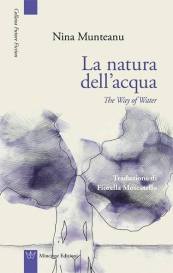
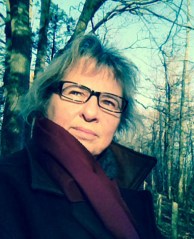
Nina Munteanu is a Canadian ecologist / limnologist and novelist. She is co-editor of Europa SF and currently teaches writing courses at George Brown College and the University of Toronto. Visit www.ninamunteanu.ca for the latest on her books. Nina’s bilingual “La natura dell’acqua / The Way of Water” was published by Mincione Edizioni in Rome. Her non-fiction book “Water Is…” by Pixl Press (Vancouver) was selected by Margaret Atwood in the New York Times ‘Year in Reading’ and was chosen as the 2017 Summer Read by Water Canada. A collection of Nina’s short eco-fiction can be found in “Natural Selection” by Pixl Press.  Her novel “A Diary in the Age of Water” will be released by Inanna Publications (Toronto) in 2020.
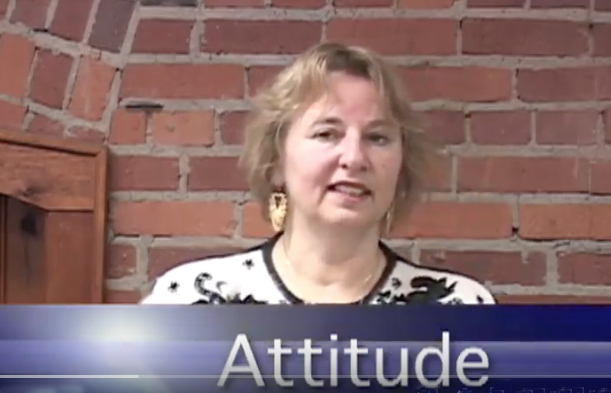


Write and Publish, Part 4: Adopt a Winning Attitude

Author and university writing instructor Nina Munteanu describes the attitude you need to successfully write, complete and market your works.

Nina-Attitude

The Write and Publish Series

You want to write but don’t know how to get started? The Write and Publish Series focuses on:

  • How to find time to write around your busy schedule
  • How to make the most of your present resources
  • How to get inspired and motivate yourself to write
  • How to write, finish and submit your work

The 7-part series of lectures consists of: 1) Nina’s 5-Ps to Success; 2) Redefine Yourself as an Author; 3) Time and Space to Write; 4) Adopt a Winning Attitude; 5) Write What Excites You; 6) How to Beat Writer’s Block; and 7) How to Keep Motivated.

The Writer’s Toolkit

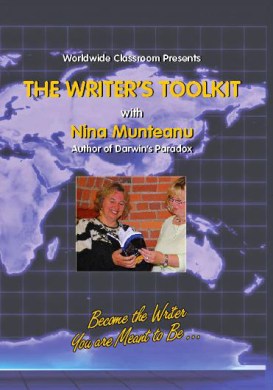
This series of lectures and workshops is part of Nina Munteanu’s “The Writer’s Toolkit”, available as three workshops and DVDs for writers wishing to get published. This 6-hour set of three discs contains lectures, examples and exercises on how to get started and finish, writing craft, marketing and promotion. Available through the author (nina.sfgirl@gmail.com).

the writers toolkit-front-WEBI was fascinated by Nina’s clear and extremely interesting lecture on the hero’s journey.  Maybe all writer’s have a novel in their heads they want to write one day, and the techniques Nina  shared with us will help me when I get to that point.  In fact, because of her, I may get there a lot sooner than I had planned.”— Zoe M. Hicks, Saint Simon’s Island, GA
Nina Munteanu’s command of the subject matter and her ability to explain in a way that the audience understood was excellent. As a hopeful author, I found her words inspiring.”—Amanda Lott, Scribblers Writers’ Retreat, GA

Rarely have I encountered someone of Nina’s considerable talent and intellect tied to such an extraordinary work ethic…A gifted and inventive writer, Nina is also an excellent speaker who is able to communicate complicated ideas in simple terms and generate creative thought in others. Her accessible, positive approach and delightful sense of humor set people at ease almost immediately.”–Heather Dugan, Ohio writer and voice artist

What you’ve done for me, Nina, is you’ve just opened up a whole new world. You’ve shown me how to put soul into my books.”–Hectorine Roy, Nova Scotia writer

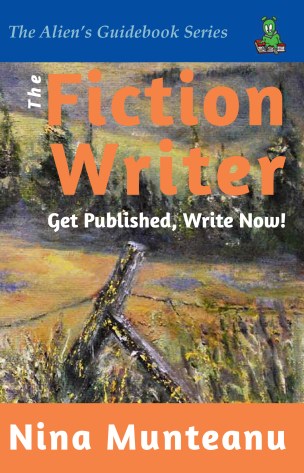
The Writer’s Toolkit workshops were based on my award-nominated fiction writing guide: The Fiction Writer: Get Published, Write Now!

“…Like the good Doctor’s Tardis, The Fiction Writer is larger than it appears… Get Get Published, Write Now! right now.”—David Merchant, Creative Writing Instructor

The Fiction Writer: Get Published, Write Now! (Starfire World Syndicate) is a digest of how-to’s in writing fiction and creative non-fiction by masters of the craft from over the last century. Packaged into 26 chapters of well-researched and easy to read instruction, novelist and teacher Nina Munteanu brings in entertaining real-life examples and practical exercises. The Fiction Writer will help you learn the basic, tried and true lessons of a professional writer: 1) how to craft a compelling story; 2) how to give editors and agents what they want and 3) how to maintain a winning attitude.

FictionWriter-front cover-2nd ed-webThe Fiction Writer is at the top of the required reading list for my Writer’s Workshop students. With its engagingly direct, conversational style and easily accessible format, it is a veritable cornucopia of hands-on help for aspiring writers of any age…the quintessential guidebook for the soon-to-be-published.”—Susan McLemore, Writing Instructor
As important a tool as your laptop or your pen.”—Cathi Urbonas, Halifax writer

Has become my writing bible.”—Carina Burns, author of The Syrian Jewelry Box

I highly recommend this book for any writer wishing to get published.”—Marie Bilodeau, acclaimed author of Destiny’s Blood

I’m thoroughly enjoying the book and even learning a thing or two!”—Robert J. Sawyer, Hugo and Nebula Award-winning author of Wake


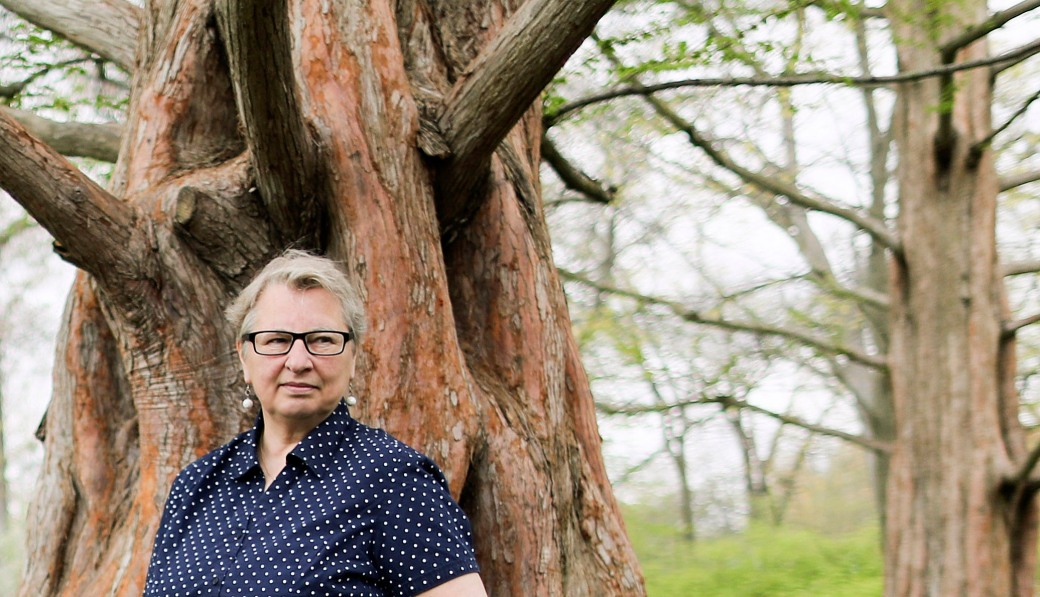
Nina Munteanu

Nina Munteanu next to a metasequoia tree in The Beach, Ontario (photo by Richard Lautens)


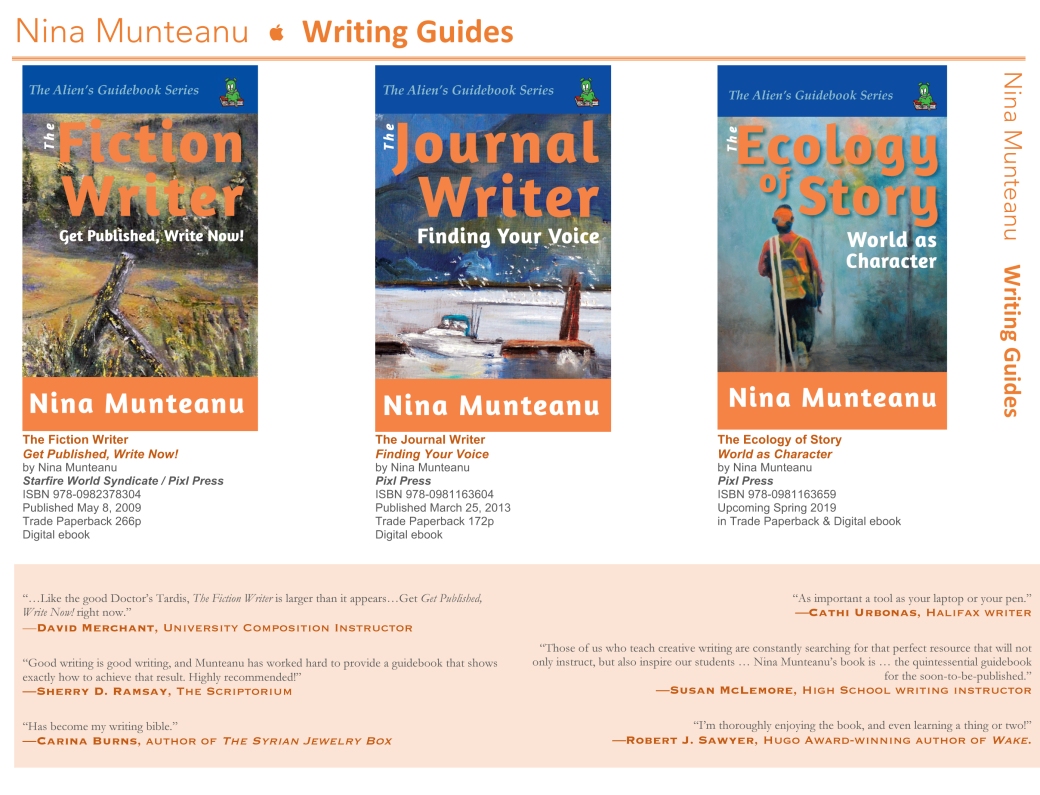
The Fiction Writer is the first of a series of writing guides, which consist so far of: The Journal Writer: Finding Your Voice; and The Ecology of Story: World as Character.

Microsoft Word - Three Writing Guides.docx


nina-2014aaaNina Munteanu is an ecologist and internationally published author of award-nominated speculative novels, short stories and non-fiction. She is co-editor of Europa SF and currently teaches writing courses at George Brown College and the University of Toronto. Visit www.ninamunteanu.ca for the latest on her books. Nina’s recent book is the bilingual “La natura dell’acqua / The Way of Water” (Mincione Edizioni, Rome). Her latest “Water Is…” is currently an Amazon Bestseller and NY Times ‘year in reading’ choice of Margaret Atwood.

Write and Publish, Part 3: Time and Space to Write

Author and university instructor Nina Munteanu talks about the importance of defining and respecting your time and space for a successful writing career.

Nina-SacredSpace

The Write and Publish Series

You want to write but don’t know how to get started? The Write and Publish Series focuses on:

  • How to find time to write around your busy schedule
  • How to make the most of your present resources
  • How to get inspired and motivate yourself to write
  • How to write, finish and submit your work

The 7-part series of lectures consists of: 1) Nina’s 5-Ps to Success; 2) Redefine Yourself as an Author; 3) Time and Space to Write; 4) Adopt a Winning Attitude; 5) Write What Excites You; 6) How to Beat Writer’s Block; and 7) How to Keep Motivated.

The Writer’s Toolkit

This series of lectures and workshops is part of Nina Munteanu’s “The Writer’s Toolkit”, available as three workshops and DVDs for writers wishing to get published. This 6-hour set of three discs contains lectures, examples and exercises on how to get started and finish, writing craft, marketing and promotion. Available through the author (nina.sfgirl@gmail.com).

the writers toolkit-front-WEBI was fascinated by Nina’s clear and extremely interesting lecture on the hero’s journey.  Maybe all writer’s have a novel in their heads they want to write one day, and the techniques Nina shared with us will help me when I get to that point.  In fact, because of her, I may get there a lot sooner than I had planned.”— Zoe M. Hicks, Saint Simon’s Island, GA

Nina Munteanu’s command of the subject matter and her ability to explain in a way that the audience understood was excellent. As a hopeful author, I found her words inspiring.”—Amanda Lott, Scribblers Writers’ Retreat, GA

Rarely have I encountered someone of Nina’s considerable talent and intellect tied to such an extraordinary work ethic…A gifted and inventive writer, Nina is also an excellent speaker who is able to communicate complicated ideas in simple terms and generate creative thought in others. Her accessible, positive approach and delightful sense of humor set people at ease almost immediately.”–Heather Dugan, Ohio writer and voice artist

What you’ve done for me, Nina, is you’ve just opened up a whole new world. You’ve shown me how to put soul into my books.”–Hectorine Roy, Nova Scotia writer

The Writer’s Toolkit workshops were based on my award-nominated fiction writing guide: The Fiction Writer: Get Published, Write Now!

“…Like the good Doctor’s Tardis, The Fiction Writer is larger than it appears… Get Get Published, Write Now! right now.”—David Merchant, Creative Writing Instructor

The Fiction Writer: Get Published, Write Now! (Starfire World Syndicate) is a digest of how-to’s in writing fiction and creative non-fiction by masters of the craft from over the last century. Packaged into 26 chapters of well-researched and easy to read instruction, novelist and teacher Nina Munteanu brings in entertaining real-life examples and practical exercises. The Fiction Writer will help you learn the basic, tried and true lessons of a professional writer: 1) how to craft a compelling story; 2) how to give editors and agents what they want’ and 3) how to maintain a winning attitude.

FictionWriter-front cover-2nd ed-webThe Fiction Writer is at the top of the required reading list for my Writer’s Workshop students. With its engagingly direct, conversational style and easily accessible format, it is a veritable cornucopia of hands-on help for aspiring writers of any age…the quintessential guidebook for the soon-to-be-published.”—Susan McLemore, Writing Instructor

As important a tool as your laptop or your pen.”—Cathi Urbonas, Halifax writer

Has become my writing bible.”—Carina Burns, author of The Syrian Jewelry Box

I highly recommend this book for any writer wishing to get published.”—Marie Bilodeau, acclaimed author of Destiny’s Blood

I’m thoroughly enjoying the book and even learning a thing or two!”—Robert J. Sawyer, Hugo and Nebula Award-winning author of Wake


Nina Munteanu

Nina Munteanu next to metasequoia tree in The Beach, ON (photo by Richard Lautens)


The Fiction Writer is the first of a series of writing guides, which consist so far of: The Journal Writer: Finding Your Voice; and The Ecology of Story: World as Character.

Microsoft Word - Three Writing Guides.docx


nina-2014aaaNina Munteanu is an ecologist and internationally published author of award-nominated speculative novels, short stories and non-fiction. She is co-editor of Europa SF and currently teaches writing courses at George Brown College and the University of Toronto. Visit www.ninamunteanu.ca for the latest on her books. Nina’s recent book is the bilingual “La natura dell’acqua / The Way of Water” (Mincione Edizioni, Rome). Her latest “Water Is…” is currently an Amazon Bestseller and NY Times ‘year in reading’ choice of Margaret Atwood.

Write and Publish, Part 2: Redefining Yourself

Author and university writing instructor Nina Munteanu shares how you can become successful as a writer: one of them is to redefine yourself as an author–to be successful you need to play the part.


Nina-RedefineYourself

The Write and Publish Series

You want to write but don’t know how to get started? The Write and Publish Series focuses on:

  • How to find time to write around your busy schedule
  • How to make the most of your present resources
  • How to get inspired and motivate yourself to write
  • How to write, finish and submit your work

The 7-part series of lectures consists of: 1) Nina’s 5-Ps to Success; 2) Redefine Yourself as an Author; 3) Time and Space to Write; 4) Adopt a Winning Attitude; 5) Write What Excites You; 6) How to Beat Writer’s Block; and 7) How to Keep Motivated.

The Writer’s Toolkit

This series of lectures and workshops is part of Nina Munteanu’s “The Writer’s Toolkit”, available as three workshops and DVDs for writers wishing to get published. This 6-hour set of three discs contains lectures, examples and exercises on how to get started and finish, writing craft, marketing and promotion. Available through the author (nina.sfgirl@gmail.com).

the writers toolkit-front-WEBI was fascinated by Nina’s clear and extremely interesting lecture on the hero’s journey.  Maybe all writer’s have a novel in their heads they want to write one day, and the techniques Nina  shared with us will help me when I get to that point.  In fact, because of her, I may get there a lot sooner than I had planned.”— Zoe M. Hicks, Saint Simon’s Island, GA

Nina Munteanu’s command of the subject matter and her ability to explain in a way that the audience understood was excellent. As a hopeful author, I found her words inspiring.”—Amanda Lott, Scribblers Writers’ Retreat, GA

Rarely have I encountered someone of Nina’s considerable talent and intellect tied to such an extraordinary work ethic…A gifted and inventive writer, Nina is also an excellent speaker who is able to communicate complicated ideas in simple terms and generate creative thought in others. Her accessible, positive approach and delightful sense of humor set people at ease almost immediately.”–Heather Dugan, Ohio writer and voice artist

What you’ve done for me, Nina, is you’ve just opened up a whole new world. You’ve shown me how to put soul into my books.”–Hectorine Roy, Nova Scotia writer

The Writer’s Toolkit workshops were based on my award-nominated fiction writing guide: The Fiction Writer: Get Published, Write Now!

“…Like the good Doctor’s Tardis, The Fiction Writer is larger than it appears… Get Get Published, Write Now! right now.”—David Merchant, Creative Writing Instructor

The Fiction Writer: Get Published, Write Now! (Starfire World Syndicate) is a digest of how-to’s in writing fiction and creative non-fiction by masters of the craft from over the last century. Packaged into 26 chapters of well-researched and easy to read instruction, novelist and teacher Nina Munteanu brings in entertaining real-life examples and practical exercises. The Fiction Writer will help you learn the basic, tried and true lessons of a professional writer: 1) how to craft a compelling story; 2) how to give editors and agents what they want’ and 3) how to maintain a winning attitude.

FictionWriter-front cover-2nd ed-webThe Fiction Writer is at the top of the required reading list for my Writer’s Workshop students. With its engagingly direct, conversational style and easily accessible format, it is a veritable cornucopia of hands-on help for aspiring writers of any age…the quintessential guidebook for the soon-to-be-published.”—Susan McLemore, Writing Instructor
As important a tool as your laptop or your pen.”—Cathi Urbonas, Halifax writer

Has become my writing bible.”—Carina Burns, author of The Syrian Jewelry Box

I highly recommend this book for any writer wishing to get published.”—Marie Bilodeau, acclaimed author of Destiny’s Blood

I’m thoroughly enjoying the book and even learning a thing or two!”—Robert J. Sawyer, Hugo and Nebula Award-winning author of Wake


Nina Munteanu

Nina Munteanu next to a metasequoia tree in The Beach, ON (photo by Richard Lautens)


The Fiction Writer is the first of a series of writing guides, which consist so far of: The Journal Writer: Finding Your Voice; and The Ecology of Story: World as Character.


Microsoft Word - Three Writing Guides.docx


nina-2014aaaNina Munteanu is an ecologist and internationally published author of award-nominated speculative novels, short stories and non-fiction. She is co-editor of Europa SF and currently teaches writing courses at George Brown College and the University of Toronto. Visit www.ninamunteanu.ca for the latest on her books. Nina’s recent book is the bilingual “La natura dell’acqua / The Way of Water” (Mincione Edizioni, Rome). Her latest “Water Is…” is currently an Amazon Bestseller and NY Times ‘year in reading’ choice of Margaret Atwood.

Write and Publish, Part 1: Nina’s 5-Ps to Success

Author and university instructor Nina Munteanu gives her “formula” for publishing success that she calls ‘the 5-Ps.’


Nina-5Ps of Publishing


The Write and Publish Series

You want to write but don’t know how to get started? The Write and Publish Series focus on:

  • How to find time to write around your busy schedule
  • How to make the most of your present resources
  • How to get inspired and motivate yourself to write
  • How to write, finish and submit your work

This 7-part series of lectures consists of: 1) Nina’s 5-Ps to Success; 2) Redefine Yourself as an Author; 3) Time and Space to Write; 4) Adopt a Winning Attitude; 5) Write What Excites You; 6) How to Beat Writer’s Block; and 7) How to Keep Motivated.

The Writer’s Toolkit

This series of lectures and workshops is part of Nina Munteanu’s “The Writer’s Toolkit”, available as three workshops and DVDs for writers wishing to get published. This 6-hour set of three discs contains lectures, examples and exercises on how to get started and finish, writing craft, marketing and promotion. Available through the author (nina.sfgirl@gmail.com).

the writers toolkit-front-WEBI was fascinated by Nina’s clear and extremely interesting lecture on the hero’s journey.  Maybe all writer’s have a novel in their heads they want to write one day, and the techniques Nina  shared with us will help me when I get to that point.  In fact, because of her, I may get there a lot sooner than I had planned.”— Zoe M. Hicks, Saint Simon’s Island, GA
Nina Munteanu’s command of the subject matter and her ability to explain in a way that the audience understood was excellent. As a hopeful author, I found her words inspiring.”—Amanda Lott, Scribblers Writers’ Retreat, GA

Rarely have I encountered someone of Nina’s considerable talent and intellect tied to such an extraordinary work ethic…A gifted and inventive writer, Nina is also an excellent speaker who is able to communicate complicated ideas in simple terms and generate creative thought in others. Her accessible, positive approach and delightful sense of humor set people at ease almost immediately.”–Heather Dugan, Ohio writer and voice artist

What you’ve done for me, Nina, is you’ve just opened up a whole new world. You’ve shown me how to put soul into my books.”–Hectorine Roy, Nova Scotia writer

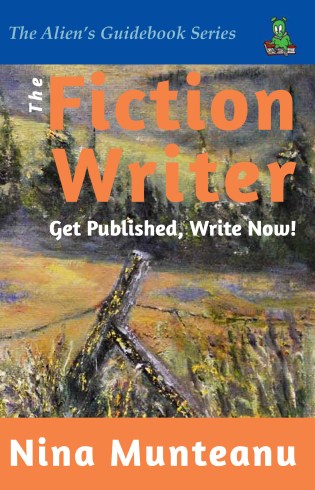
FictionWriter-front cover-2nd ed-webThe Writer’s Toolkit workshops were based on my award-nominated fiction writing guide: The Fiction Writer: Get Published, Write Now!

“…Like the good Doctor’s Tardis, The Fiction Writer is larger than it appears… Get Get Published, Write Now! right now.”—David Merchant, Creative Writing Instructor

The Fiction Writer: Get Published, Write Now! (Starfire World Syndicate) is a digest of how-to’s in writing fiction and creative non-fiction by masters of the craft from over the last century. Packaged into 26 chapters of well-researched and easy to read instruction, novelist and teacher Nina Munteanu brings in entertaining real-life examples and practical exercises. The Fiction Writer will help you learn the basic, tried and true lessons of a professional writer: 1) how to craft a compelling story; 2) how to give editors and agents what they want’ and 3) how to maintain a winning attitude.

The Fiction Writer is at the top of the required reading list for my Writer’s Workshop students. With its engagingly direct, conversational style and easily accessible format, it is a veritable cornucopia of hands-on help for aspiring writers of any age…the quintessential guidebook for the soon-to-be-published.”—Susan McLemore, Writing Instructor
As important a tool as your laptop or your pen.”—Cathi Urbonas, Halifax writer

Has become my writing bible.”—Carina Burns, author of The Syrian Jewelry Box

I highly recommend this book for any writer wishing to get published.”—Marie Bilodeau, acclaimed author of Destiny’s Blood

I’m thoroughly enjoying the book and even learning a thing or two!”—Robert J. Sawyer, Hugo and Nebula Award-winning author of Wake

Nina Munteanu

Nina next to a metasequoia tree in The Beach, ON (photo by Richard Lautens)


The Fiction Writer is the first of a series of writing guides, which consist so far of: The Journal Writer: Finding Your Voice; and The Ecology of Story: World as Character.


Microsoft Word - Three Writing Guides.docx

nina-2014aaaNina Munteanu is an ecologist and internationally published author of award-nominated speculative novels, short stories and non-fiction. She is co-editor of Europa SF and currently teaches writing courses at George Brown College and the University of Toronto. Visit www.ninamunteanu.ca for the latest on her books. Nina’s recent book is the bilingual “La natura dell’acqua / The Way of Water” (Mincione Edizioni, Rome). Her latest “Water Is…” is currently an Amazon Bestseller and NY Times ‘year in reading’ choice of Margaret Atwood.

What’s Your Voice and Is it the Right One?

tree water deer lake

Deer Lake, BC (photo by Nina Munteanu)

The term “Voice” describes various aspects of a writer’s expression in story; it includes your unique writing style and the style you’ve chosen to adopt for the particular story you’re telling. The voice of your story is influenced by your audience—youth, adults, crazy people, etc.—as well as the subject matter and general overall theme of the story.

Voice is the feel and tone that applies to: 1) the story or book (narrative voice); 2) to each character in that story; and 3) the author’s own voice (authorial voice; in business it’s called the brand), which you carry with you in every work. It is the combination of all these “voices” that make each of your works unique. Think of a fine artist, a painter like Vincent Van Gogh, whose unique painter’s “voice” was apparent in all his Impressionistic works. The wild swirls of light and texture characterized all his paintings; yet, each individual work expressed its own unique message in Van Gogh’s artistic journey.

Authorial Voice

You express your authorial voice and the voice of your story through tone, perspective, style, language and pace. All of these reflect your intent and are ultimately expressed in the story’s overarching theme. The overarching theme is ultimately the author’s theme, the “world view” — the “so what part” — of the story. The principal character and minor characters will carry variations of the main theme, each with his or her unique voice. Invariably, the voice of the story reflects the author’s philosophy, biases and message.

Writers generally struggle in the beginning to obtain their unique “voice”, often adopting the voice of a writer they admire. Although this can help a writer define their own voice (by illuminating what they like and strive for), it can also retard an author’s unique self-expression. It is so much easier to use another’s proven formula; the danger is that you may never escape from beneath the shadow of your hero. In the area of science fiction, which I write, the internet is rich with “fan fic” (an endearing term for works based on already established stories, worlds, characters, and styles.) Many fan fic writers will not emerge from the shadow of unoriginality to find their own voice.  So, take heed and be mindful of your own voice. Determine what is important to you and you will find your voice.

Narrative Voice

Narrative voice belongs to the persona telling the story. Which persona you adopt in narration depends on what kind of story you are telling, and the kind of emotional atmosphere you wish to achieve, says Crawford Kilian, Canadian author of over a dozen novels. The persona develops from the personality and attitude of the narrator, expressed through the narrator’s choice of words and depictions. Depending on your choice of POV (see my previous article on Viewpoint), the narrator of your story can be one or several main characters or you, the writer. More on this below.

Character Voice

It’s important to give each character a distinctive “voice” (including use of distinct vernacular, use of specific expressions or phrases, etc.). This is one way a reader can identify a character and find them likeable—or not.

In a manuscript I recently reviewed, I noticed that the characters spoke in a chaotic mixture of formal and casual speech. This confuses the reader and bumps them out of the story. Each person’s speech is typically consistent, reflecting their ethnic and regional background, who they hang around with, their education, history and biases. Consistency is critical; it helps readers identify with a character. They will abandon a story whose writing—and voice—is not consistent. So, my advice to this beginning writer was to pick one style for each character and stick to it.

Voice incorporates language (both speech and body movements), philosophy, and humor. How a character looks, walks, talks, laughs, is all part of this. Let’s take laughter for instance: does your character tend to giggle, titter, chortle, guffaw, belly-laugh? Does she usually put her hand over her mouth when she does? Does she do or say certain things when she’s nervous?  See my upcoming article on body language for more detail.

Who Should Tell the Story?

When telling a story through the eyes of a single viewpoint character, it makes most sense to tell it through the main character, the protagonist, around whom the story usually revolves. She is the one who’s going to be chiefly affected by the events of the story. Ansen Dibell, author of The Elements of Fiction: Plot, asks the question: “Who is really at the story’s heart?” If you’re having trouble with the story of Sally and Norman from Sally’s point of view, perhaps you should try telling it through Norman’s point of view. Or perhaps your main POV character is a third person, looking on and, in turn, changed.

Narrating a story from an outsider’s viewpoint (the hidden protagonist as observer-narrator) —sometimes called displaced narrative — can also add an element of complexity and depth to a story. The Illusionist is a good example of this. This story, about Eisenheim (the Illusionist) and his beloved, is told through the cynical eyes of the city’s chief inspector, who learns to believe again through his “experience” of their story. Other examples include J.P. Hartley’s The Go-Between, Scott Fitzgerald’s The Great Gatsby, Saving Private Ryan, My Beloved, Charlotte Bronte’s Wuthering Heights, and Joanne Harris’s Chocolat.

Using a displaced viewpoint character to narrate a story works particularly well if you want to keep your main character strange and mysterious. Having an “outside” character tell the story of one or two other characters, also gives the writer a chance to add another thematic element to a story (the one belonging to the narrator). A story told through the eyes of a dreamer will be very different than one told by a ponderous thinker.

Other kinds of narration include:

  • detached autobiography (narrator looks back on long-past events; e.g., To Kill a Mockingbird by Harper Lee)
  • letters or diary (narrative told through letters, also known as the epistolary novel; e.g. my short story, Arc of Time)
  • interior monologue (narrator recounts the story as a memory; stream of consciousness is an extreme form of this narrative, e.g., Ulysses by James Joyce)

How Many Should Tell the Story?

The use of multiple viewpoints is common among writers and adds an element of richness and breadth to a story. With each added character’s POV, readers are more enlightened to the thoughts and motivations of characters in a story. When you have several characters telling the story, this is called a rotating viewpoint. A few points to follow include:

  • Alternate or rotate your differing viewpoints clearly (scene by scene, chapter by chapter, or part by part)
  • Don’t change viewpoints within a scene
  • Separate different POV scenes within chapters with extra white space or some kind of graphic (e.g., ****)

References

Dibell, Ansen. 1999. Elements of Fiction Writing: Plot. Writer’s Digest Books. Cincinnati, Ohio. 170pp.
Killian, Crawford. 2003. “Narrative Voice”. In: Writing Fiction: http://crofsblogs.typepad.com/fiction/2003/07/narrative_ voice.html
Morrell, David. 2000. “First Blood, Third Person”. In: Fiction Writer. April, 2000.
Munteanu, Nina. 2009. The Fiction Writer: Get Published, Write Now! Starfire World Syndicate. Louisville, KY. 266pp.
 

nina-2014aaaNina Munteanu is an ecologist and internationally published author of award-nominated speculative novels, short stories and non-fiction. She is co-editor of Europa SF and currently teaches writing courses at George Brown College and the University of Toronto. Visit www.ninamunteanu.ca for the latest on her books. Nina’s recent book is the bilingual “La natura dell’acqua / The Way of Water” (Mincione Edizioni, Rome). Her latest “Water Is…” is currently an Amazon Bestseller and NY Times ‘year in reading’ choice of Margaret Atwood.

What POV are You Using and Why?

oldcedar-holes-LR

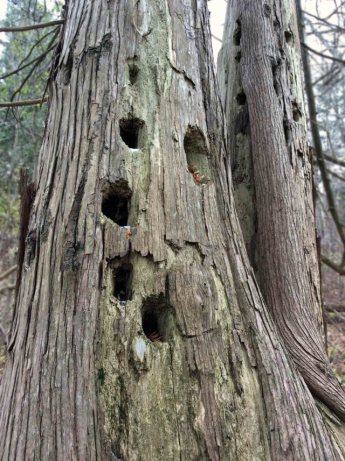
Cedars with woodpecker holes, Ontario (photo by Nina Munteanu)

The story’s viewpoint can be told from several perspectives and which one you choose can be critical to how your story comes across.

Different stories lend themselves to different narrative styles and point of views (POVs). In his April 2000 article in Fiction Writer entitled “First Blood, Third Person” David Morrell warns that some writers may “select a viewpoint merely because it feels natural, but if you…don’t consider the implications of your choice…your story might fight you until you abandon it, blaming the plot when actually the problem is how you’re telling it.”

The viewpoint choices include:

  • Omniscient
  • Third person limited
  • Second person
  • First person

Omniscient View

The omniscient view is the broadest view. Through this viewpoint the narrator describes everything and everyone and may drop into any character at any time, and — in the case of a beginning writer — all too confusingly in the same paragraph.

While this POV is the easiest one to use it is really the hardest to master. In the wrong hands, this viewpoint can be as intrusive as it is distancing. And it is prone to polemic. In the hands of a masterful writer, this viewpoint can make for the most powerful and rich storytelling. Epics of any kind, especially epic fantasies or historical epics, lend themselves to this style. The omniscient viewpoint is particularly suited to a story that is “large”, where ultimately the main character is not any particular protagonist but “the story” itself, or a society or world or time period. The writer must still somehow achieve connection and intimacy with the reader to succeed with this viewpoint. You can do this through lyrical and compelling narrative, poetic language and powerful imagery.

Limited Third Person Viewpoint

A story told through limited third person POV is narrated from one or a few key characters (though not at the same time) by revealing not only their movements but their thoughts and feelings (e.g., he struggled up to his feet, giddy with pain). When starting out, it is often best to adopt this style, which is generally more personal, appealing and least confusing. So long as you respect the readers’ need for clarity by keeping to one POV per scene, you can choose to enter into the heads of as many characters as you wish. It is the norm to use chapter, section or scene breaks when changing from one POV to another.

This style of narrative is the most common one used in contemporary books, particularly genre books, thrillers and action/adventure books. Through conflicting perspectives of your characters, you can swiftly paint a rich tapestry of tension for both characters and reader.

Second Person Viewpoint

This second person viewpoint (“you”) is not often used, mostly because it is both distancing and less easy to read. Although it is a narrative often used in conversation (e.g., “you never know what you’re gonna get with a box of chocolates, do you?”) this style of narrative is harder for readers to embrace and get close to the story’s characters. This viewpoint works effectively in certain artistic situations when you wish to purposefully impart a distance to the narrator, due to their own limitations, infirmity or situation.

First Person Viewpoint

The first person point of view is both the most limiting perspective (told only through one viewpoint) and most personal and revealing (of that viewpoint character). This viewpoint works well in literary fiction where the main character’s thoughts and issues are the key focus in the story. When the character who changes the most is the one telling the story, this makes for very compelling reading.

Cedar trunk base-LR

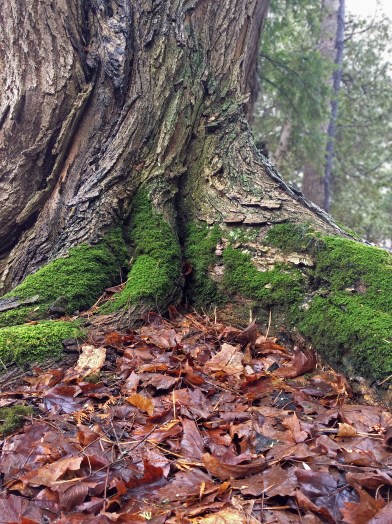
Base of cedar tree, Little Rouge woodland, Ontario (photo by Nina Munteanu)

Many detective stories are told in first person to great effect. The reader is right there with the detective, solving the mystery. The first person viewpoint is also the preferred POV for memoirs, for obvious reasons.

One thing to keep in mind, particularly when narrating through the first person POV, is the reliability of your character. You need to decide how reliable your first person POV character is in telling the story and how you will impart this to the reader.  Writing through a character’s faulty perception of the world (and of themselves) provides a writer with an incredible opportunity but also an incredible challenge. You can only go so far with an unreliable character before losing your own credibility as a writer — and losing the reader in the long run. Obviously, you need a balance.

If you are struggling with your story and can’t quite pinpoint what is bogging it down, try changing how you are telling it. Change the viewpoint and see what happens.

References

Munteanu, Nina. 2009. The Fiction Writer: Get Published, Write Now! Starfire World Syndicate. Louisville, KY. 266pp.
FictionWriter-front cover-2nd ed-webThe Fiction Writer “is the most practical book on publishing that I’ve ever read, and I’ve read them all! Not only is each chapter packed with advice for writers at every level of the publishing process, but the text is highly readable and even entertaining. The clear format, the direct style and the playful layout keep the large volume of information from ever becoming dry or boring.

This book is aimed at anyone interested in gaining entrance to the world of publishing, whether you want to write sci-fi novels, poetry, children’s books, how-to books, or magazine articles. If you want to publish with the big-name pros or even self-publish, this book will help you decide what would suit you best and how to achieve it.”

Lucia Gorea, English professor at the University of British Columbia, Vancouver

nina-2014aaaNina Munteanu is an ecologist and internationally published author of award-nominated speculative novels, short stories and non-fiction. She is co-editor of Europa SF and currently teaches writing courses at George Brown College and the University of Toronto. Visit www.ninamunteanu.ca for the latest on her books. Nina’s recent book is the bilingual “La natura dell’acqua / The Way of Water” (Mincione Edizioni, Rome). Her latest “Water Is…” is currently an Amazon Bestseller and NY Times ‘year in reading’ choice of Margaret Atwood.

Hybrid Publishing: Understanding the Writing and Publishing Landscape

Cafe on Baldwin-TorontoOn Friday evening of October 26th Nina will be giving the first in a series of 10 writing workshops through the Immigrant Writers Association Writing and Publishing workshop series for members and non-members. Workshops are free for Class A members, $10 for Class B members, and $15 for non-members.

WORKSHOP: Hybrid Publishing: Understanding the Landscape 

DESCRIPTION: The workshop is structured as an hour-long lecture followed by discussions pertinent to the topic, such as various publishing models, self-publishing, indie publishing, the traditional and the hybrid model with the pros and cons of each model.

The workshop will cover:

  • An overview of the publishing industry, spanning from traditional to indie and self-publishing and everything in-between.
  • Advantages and disadvantages of each option discussed based on needs and perspectives. These include marketing, distribution, creative control, revenue, timing, branding, and reputation.
  • An exploration of emerging directions, models, collaborations and structures in the publishing industry and what this means for the writer.

TIME: 7pm to 9pm

PLACE: Toronto City Hall, Committee Room #2
100 Queen Street West
Toronto, ON

COST: Free for IWA Member type A; $10 for IWA Member type B; $15 for non-members

REGISTER/PAY HERE

Learn with IWA is an initiative of the Immigrant Writers Association, which helps its members enhance their writing skills, gain knowledge about the Canadian publishing landscape, and advance their careers. IWA also encourages its members and other immigrants to share the expertise they brought along, their culture, and thoughts to enrich the society they live in.

Nina’s IWA Writing and Publishing workshops series include:
(C: on craft; P: on publishing, promotion, marketing)

1 (P): Hybrid Publishing: Understanding the Landscape (Oct 26, 2018)
2 (C): World as Character (Nov 30, 2018)
3 (P): How to Promote Your Book and Increase Your Visibility (Jan, 2019)
4 (C): Storyboarding: creating “story” from scenes to worlds
5 (P): Getting Started and Finishing
6 (C): Things to Consider in Fiction Writing
7 (C): Genre-Specific Writing
8 (P): Cover Design / Interior Layout
9 (C): Self-Editing: Ways to Improve Your Language in Writing
10 (P): Getting Feedback: what to do with it

NinaOct26

_________________________

To find out more about IWA’s membership type A and B, please visit immigrantwriters.com/join-us


nina-2014aaaNina Munteanu is an ecologist and internationally published author of award-nominated speculative novels, short stories and non-fiction. She is co-editor of Europa SF and currently teaches writing courses at George Brown College and the University of Toronto. Visit www.ninamunteanu.ca for the latest on her books. Nina’s recent book is the bilingual “La natura dell’acqua / The Way of Water” (Mincione Edizioni, Rome). Her latest “Water Is…” is currently an Amazon Bestseller and NY Times ‘year in reading’ choice of Margaret Atwood.


Nina Munteanu Interviewed in Canadian Romanian Newspaper “Observatorul”

Claudiu Murgan (author of “Water Entanglement”) recently interviewed me in the Canadian Romanian newspaper Observatorul.

gaudeamus-book-fair-crowd copy

Gaudeamus Book Fair in Bucharest, Romania

nina-paralela45-gaudeamus-web copy

Nina Munteanu at Gaudeamus

In the interview, I talked about my involvement with the Toronto Romanian community through the Immigrant Writers Association and my visit several years ago to Bucharest Romania to launch my two writing guidebooks with Editura Paralela 45 at the Gaudeamus Book Fair at the Rome Expo Exhibition Centre:

“In 2011 I attended the launch of my writing guide Manual de Scriere Creativa. Scriitorul de fictiune (The Fiction Writer) in Bucharest, hosted by Editura Paralela 45 at the Gaudeamus Book Fair. Dr. Florin Munteanu, respected scientist in Complexity Theory, kindly picked me up at the airport and took me to the Phoenicia Grand Hotel where we relaxed in the lounge and discussed fractal geometry and the Fibonacci Golden Ratio over café cremes. It was a very civilized introduction to this eclectic “city of joy” and I felt strangely at home.

It was a wonderful experience, which included drinking copious amounts of Tuica with my publisher and touring the Lipscani District with George Kudor, a student of Florin’s. Florin calls Romania “the corpus callosum of the world” where east and west converge, mingle and learn. It’s no wonder that Romania is one of the leading countries in the world on complexity theory, a science that embraces the “collision” of different “worlds” to create more than the sum of its parts.”

scriitorul_de_fictiune_Munteanu_coperta1 copyFictionWriter-front cover-2nd ed-webThe Fiction Writer (Scriitorul de fictiune) was very well received by the Romanian writing community. Romanian poet and English instructor Lucia Gorea calls The Fiction Writer “the most practical book on publishing that I’ve ever read, and I’ve read them all!”


In the Observatorul interview, Claudiu asked me if I was pursuing other projects in Romania. I am currently corresponding with a Romanian distributor to get some of my other books translated and published in Romania. I also co-edit Europa SF, a European ezine on speculative fiction from around the world, with a focus on European science fiction, fantasy and horror.

The Way of Water-COVER copyI hope to collaborate more with colleague and friend Cristian Tamas, who introduced me to editor/publisher Francesco Verso (of Future Fiction) and Mincione Edizioni, who published my short story “The Way of Water.” I later developed “The Way of Water” in novel form and I anticipate its release next year.

I hope to do more with Dr. Florin Munteanu and Claudiu Murgan on projects to do with water—particularly on entanglement, intention, subtle energies and memory. I would be delighted if a Romanian publisher chose to translate my book “Water Is…The Meaning of Water” and publish it for Romanians.

OLYMPUS DIGITAL CAMERA

Gaudeamus Book Fair in Rome Expo Exhibition Centre, Bucharest

bucharest-old-downtown01-web copy

Lipscani District in Bucharest

nina-gaudeamus-close-web copy

Nina enjoying the book fair

nina-2014aaaNina Munteanu is an ecologist and internationally published author of award-nominated speculative novels, short stories and non-fiction. She is co-editor of Europa SF and currently teaches writing courses at George Brown College and the University of Toronto. Visit www.ninamunteanu.ca for the latest on her books. Nina’s recent book is the bilingual “La natura dell’acqua / The Way of Water” (Mincione Edizioni, Rome). Her latest “Water Is…” is currently an Amazon Bestseller and NY Times ‘year in reading’ choice of Margaret Atwood.

Nina Munteanu Talks Writing and Water on “Liquid Lunch” on That Channel

Nina Munteanu discusses her eco-fiction and water’s strange properties with Hildegard Gmeiner and Hugh Reilly on Liquid Lunch.

Nina Munteanu

Nina Munteanu is an ecologist, limnologist and internationally published author of award-nominated speculative novels, short stories and non-fiction. She is co-editor of Europa SF and currently teaches writing courses at George Brown College and the University of Toronto. Visit www.ninamunteanu.ca for the latest on her books.