 This week is a wonderful time to reflect on the past year, 2019. It’s also a good time to be thankful for the things we have: loving family, meaningful friendships, pursuits that fulfill us and a place that nurtures our soul.
It’s been a very good year for my writing…and my soul…
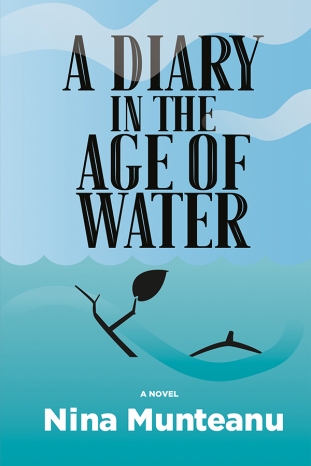
Last year I received a writer’s dream Christmas gift: a signed contract with Inanna Publications to publish my ninth novel: “A Diary in the Age of Water” about four generations of women and their relationship with water during a time of extreme climate change. The book will be released by Inanna in May 2020 with a launch in Toronto on May 26th at Queen Books as part of the Toronto International Festival of Authors. The book is now available on Amazon.ca for pre-order!
Publications
 2019 saw several of my publications come out. In January 2019 the reprint of my story “The Way of Water” was published by Little Blue Marble Magazine. It will reappear in a print and web anthology devoted to climate fiction called “Little Blue Marble 2019: Climate in Crisis” on December 27, 2019. That will be the sixth time “The Way of Water” has been published!
 Impakter Magazine also published my article “How Trees Can Save Us,” an essay on five writers’ perspectives on trees and humanity’s relationship with them.
In June, I published the 3rd guidebook in my Alien Writing Guidebook series—called “The Ecology of Story: Worlds as Character” with Pixl Press in Vancouver. The launch on July 4th at Type Books was well attended with presentations by several local writers and artists.
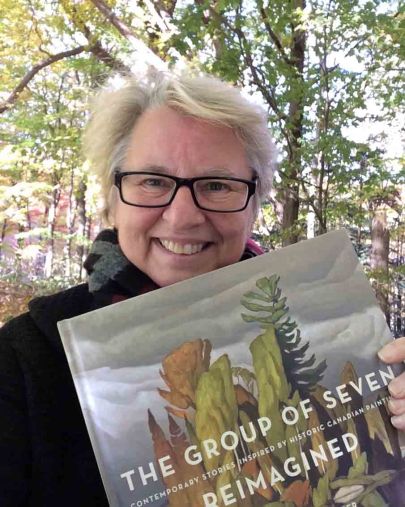
Nina Munteanu with The Group of Seven Reimagined
I was commissioned along with twenty other writers to write a piece of flash fiction for a commemorative anthology to the Group of Seven, entitled “The Group of Seven Reimagined,” with Heritage House in Vancouver.
I’d never written flash fiction before and it was both exciting and challenging to write. I was asked to pick an artist’s piece as inspiration for a flash fiction story. The beautiful hardcover book was released October 2019.
October also saw another of my pieces published. I was asked to contribute something to the Immigrant Writer’s Association’s first anthology, entitled “Building Bridges,” about the immigrant’s experience in Canada. While I’m not an immigrant, I did share my parents’ experience who had immigrated to Canada from France. I wrote a piece on the hero’s journey.
Age of Water Podcast

On November 22, 2019, co-host Claudiu Murgan and I launched the Age of Water podcast. The podcast covers anything of interest from breaking environmental news to evergreen material on water and the environment. We interview scientists, journalists, writers, academia and innovators who share their knowledge and opinions about the real state of the environment and what committed individuals and groups are doing to make a difference. We talk about the problems and we talk about the solutions.
Appearances & Media / News
On June 22, I traveled to Port McNicoll at Georgian Bay to help give a writing intensive, hosted by publisher Cheryl Antao-Xavier at IOWI. I was also invited to speak at The Word is Wild Literary Festival in October. The event took place in Cardiff, in the Highlands of Ontario. In late October, I traveled with friend and editor Merridy Cox to Vermont to give a presentation on water to the Lewis Creek Association. Entitled “Reflections: The Meaning of Water”, the talk focused on our individual connection with water. I will be reprising this talk at several venues this year.

Nina Munteanu with a metasequoia in the Beaches (photo by Richard Lautens)
I was also featured in the news a few times. The Toronto Star asked me to answer two questions about climate change and the Vancouver Sun published an Oped of mine entitled “Why Women Will Save the Planet.”
Research & Adventure

Giant red cedars in Lighthouse Park (photo by Nina Munteanu)
In Summer 2019 I travelled to British Columbia to visit friends and family in Vancouver and elsewhere. Following a dream of mine, I travelled with good friend Anne to Port Renfrew on Vancouver Island to see the ancient forests and the west coast. I had wanted to see these old-growth forests for some time since I’d been to Carmanah many years ago. The ancient forests were magnificent and breathtaking and so nourishing for the soul. Recognizing these forests as living cathedrals, I felt a deep reverence. The silent giants rose from wide buttressed bases into the mist like sentinels, piercing the heavens. A complex tangle of beauty instinct whispered in the breeze with the pungent freshness of pine, cedar and fir. Anne and I even had a chance to hug Big Lonely Doug, the second tallest Douglas fir tree in Canada.

Nina Munteanu stands, dwarfed, by a Douglas fir tree in Lighthouse Park (photo by Margaret Ross)
While in British Columbia, I also visited a small enclave of old-growth forest in the heart of Vancouver at Lighthouse Park (West Vancouver). I went with son Kevin and then again with good friend Margaret. This majestic forest of redcedar, Douglas fir, spruce and hemlock is deeply awesome and humbling. And a real gem for the city.

Nina Munteanu in Ladner, BC (photo by Anne Voute)
Then, with just a few days before my flight back to Toronto, I slipped and fell and broke my ankle. I got a “boot” and a cane then hobbled on the plane and went back to work at UofT.
It has been a wonderfully inspirational year for me in writing and teaching. I still actively teach at The University of Toronto in several writing centres and classes throughout the downtown campus. The students are bright and challenging. I also still coach writers to publication and have helped several finish their works in 2019.
I hope the beauty of the season has filled your heart with joy. Wishing you a wonderful 2020, filled with grace, good health, and sweet adventure!

Nina Munteanu is a Canadian ecologist / limnologist and novelist. She is co-editor of Europa SF and currently teaches writing courses at George Brown College and the University of Toronto. Visit www.ninamunteanu.ca for the latest on her books. Nina’s bilingual “La natura dell’acqua / The Way of Water” was published by Mincione Edizioni in Rome. Her non-fiction book “Water Is…” by Pixl Press (Vancouver) was selected by Margaret Atwood in the New York Times ‘Year in Reading’ and was chosen as the 2017 Summer Read by Water Canada. Her novel “A Diary in the Age of Water” will be released by Inanna Publications (Toronto) in June 2020.
 In Summer of 2016, I attended a talk given by Maude Barlow on water justice. The radical talk was based on her recent book “Boiling Point”, a comprehensive exploration of Canada’s water crisis—a crisis that most Canadians weren’t—and still aren’t—aware. Canada is steward to a fifth of the world’s fresh water, after all. It is a water-rich country. Of the dozen largest inland lakes in the world, Canada holds eight of them. So, why water crisis? Well, Maude explains. And you should read “Boiling Point.” It will open your eyes to the politics of water and how multinational corporations—like Nestlé—are already grabbing and funneling water away from Canadians and into the global profit machine.
 I named the story “
 The story first appeared in 2015 in
  After the success of this short story, I realized that I needed to tell the larger story—how did the world—Canada—get to where Hilda was? Her mysterious mother, the limnologist Lynna who was taken away by the RCMP in 2063, clamored for more attention. I remembered that four-year old girl and her mother in the gallery at Maude Barlow’s talk on water politics. And I thought of my characters: young Lynna and her mother Una. How does a daughter of an activist mother behave and think? How best to express her voice?
 I had earlier written a short story that was a mix of correspondence (emails) and third person narrative (“The Arc of Time” in
  I had a lot of material; I had already been researching water issues and climate change in my activism as a science reporter. I had recently published
  Like water itself, A Diary in the Age of Water expresses through many vessels and in many perspectives, spanning hundreds of years—and four generations of women—with a context wider than human life. Through its characters, A Diary in the Age of Water explores the big question of humanity’s deadlock with planetary wellness and whether one is worth saving at the expense of the other. One of the characters asks Lynna the hard question: “If you had the chance to save the planet [stop the mass extinctions, deforestation and pollution ravaging the planet], but it was at the expense of humanity, would you do it?”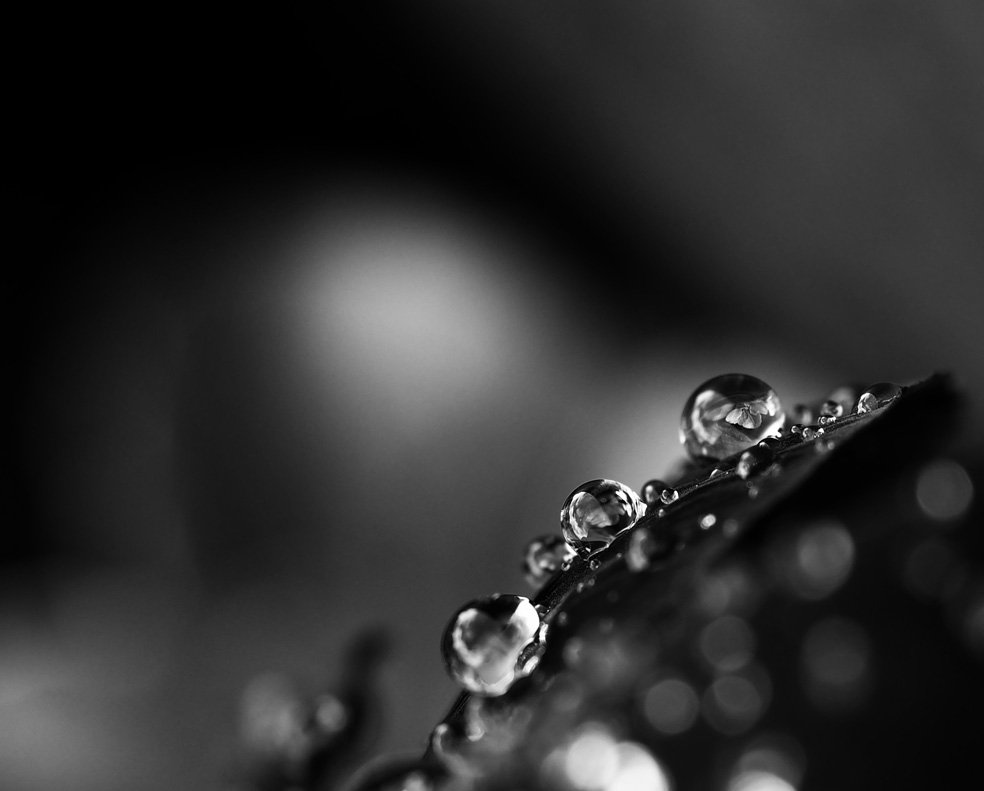
 She is inhumanly alone. And then, all at once, she isn’t. A beautiful animal stands on the other side of the water. They look up from their lives, woman and animal, amazed to find themselves in the same place. He freezes, inspecting her with his black-tipped ears. His back is purplish-brown in the dim light, sloping downward from the gentle hump of his shoulders. The forest’s shadows fall into lines across his white-striped flanks. His stiff forelegs play out to the sides like stilts, for he’s been caught in the act of reaching down for water. Without taking his eyes from her, he twitches a little at the knee, then the shoulder, where a fly devils him. Finally he surrenders his surprise, looks away, and drinks. She can feel the touch of his long, curled tongue on the water’s skin, as if he were lapping from her hand. His head bobs gently, nodding small, velvet horns lit white from behind like new leaves.
  An oligotrophic lake is basically a young lake. Still immature and undeveloped, an oligotrophic lake often displays a rugged untamed beauty. An oligotrophic lakes hungers for the stuff of life. Sediments from incoming rivers slowly feed it with dissolved nutrients and particulate organic matter. Detritus and associated microbes slowly seed the lake. Phytoplankton eventually flourish, food for zooplankton and fish. The shores then gradually slide and fill, as does the very bottom. Deltas form and macrophytes colonize the shallows. Birds bring in more creatures. And so on. Succession is the engine of destiny and trophic status its shibboleth.
 They met in the lobby of a shabby downtown Toronto hotel. Hilda barely knew what she looked like but when Hanna entered the lobby through the front doors, Hilda knew every bit of her. Hanna swept in like a stray summer rainstorm, beaming with the self- conscious optimism of someone who recognized a twin sister. She reminded Hilda of her first boyfriend, clutching flowers in one hand and chocolate in the other. When their eyes met, Hilda knew. For an instant, she knew all of Hanna. For an instant, she’d glimpsed eternity. What she didn’t know then was that it was love.
  This article is an excerpt from

 She imagines its coolness gliding down her throat. Wet with a lingering aftertaste of fish and mud. She imagines its deep voice resonating through her in primal notes; echoes from when the dinosaurs quenched their throats in the Triassic swamps.
 Emilie Moorhouse of
  “…In an interesting scarcity future in which we follow the fate of a character abandoned by her mother, water itself becomes a character. In the second paragraph we’re told that “Water is a shape shifter,” and in the next page we encounter the following description: “Water was paradox. Aggressive yet yielding. Life-giving yet dangerous. Floods. Droughts. Mudslides. Tsunamis. Water cut recursive patterns of creative destruction through the landscape, an ouroboros remembering.” These descriptive musings cleverly turn out to be more than metaphors and tie in directly to the tale’s surprising ending.”—Alvaro Zinos-Amaro,
 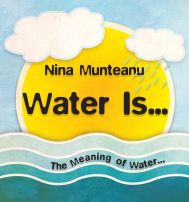 Water Is… The Meaning of Water


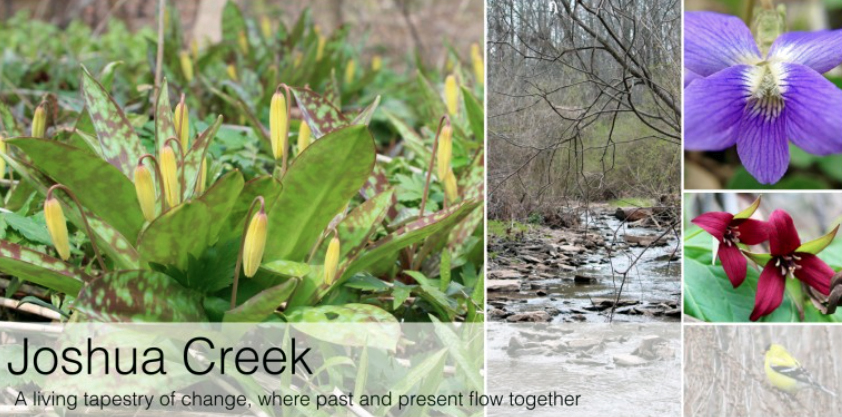
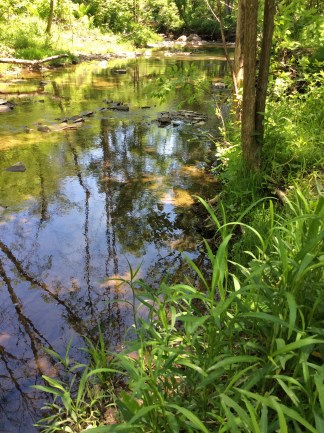
 But Joshua is a spirited creek – in spite of all it has been through, Joshua Creek is among the top two urban creeks for healthy water quality, and is still inhabited by a variety of aquatic animals like small fish and insects. Joshua Creek is home to forests, wetlands and thickets with around 150 plant species, and provides an important natural habitat corridor for the movement of birds and other animals, including migratory species. Rather than exclusively shrinking, there are also areas of Joshua Creek that are actually in the middle of regrowing their forests, and in spite of everything, Joshua still retains some beautiful gems of natural areas.”
 Nina Munteanu’s “The Way of Water” and the anthology in which it appears was recently praised by Emilie Moorhouse in Prism International Magazine, in a review entitled
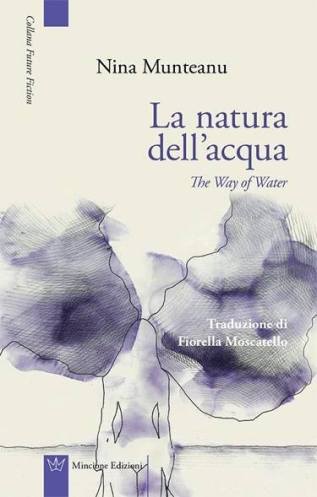
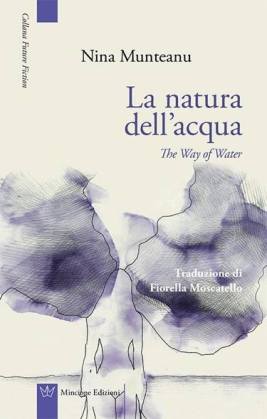
  “The Way of Water” (La natura dell’acqua) was translated by Fiorella Smoscatello for Mincione Edizioni. Simone Casavecchia of SoloLibri.net, describes “The Way of Water” in her review of the Italian version:
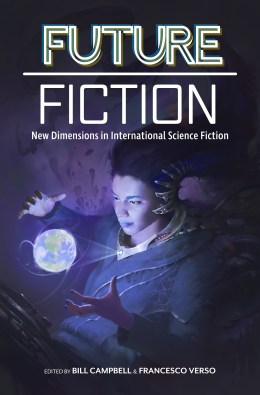
 “The Way of Water” will also appear alongside a collection of international works (including authors from Greece, Nigeria, China, India, Russia, Mexico, USA, UK, Italy, Canada (yours truly), Cuba, and Zimbabwe) in Bill Campbell and Francesco Verso’s
  Nina Munteanu is an ecologist, limnologist and internationally published author of award-nominated speculative novels, short stories and non-fiction. She is co-editor of Europa SF and currently teaches writing courses at George Brown College and the University of Toronto. Visit
  Nina Munteanu’s near-future speculative short story “The Way of Water” in Bruce Meyer’s (editor) “Cli Fi: Canadian Tales of Climate Change”, published by
 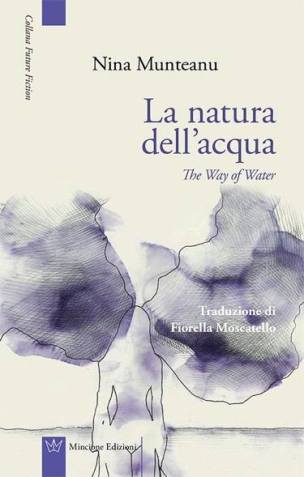 A bilingual print book by
  ” ‘The Way of Water’ is to be ‘a shapeshifter,’ says Nina Munteanu in her dystopian narrative, where she draws a dark scenario and, unfortunately, not too improbable in the near future. In the universe of the story water has become a very precious commodity: rationed consumption, credits (always of water) accounted for and debts collected…The Chinese multinationals have exchanged the public debt of other states with their water reserves with which, now, they can control the climate, deciding when and where it will rain. Who understands this dirty game has been silenced, like Hilda’s mother, a limnologist, inexplicably arrested and never returned; like the daughter of two water vendors, mysteriously disappeared, after having decided not to bow to economic powers: Hanna, who now prefers secure virtual identities to evanescent real appearances. Water. The two, like the covalent bond of a complex molecule, develop a relationship of attraction and repulsion that will first make them meet and then, little by little, will change into a tormented love but, at the same time, so pure as to cause Hilda at great risk, to make an extreme decision that will allow Hanna to realize the strange prophecy that the internal voice, perhaps the consciousness of water, had resonated in the two women for a long time.
 “The Way of Water” will also appear alongside a collection of international works (including authors from Greece, Nigeria, China, India, Russia, Mexico, USA, UK, Italy, Canada (yours truly), Cuba, and Zimbabwe) in Bill Campbell and Francesco Verso’s
  Nina Munteanu is an ecologist, limnologist and internationally published author of award-nominated speculative novels, short stories and non-fiction. She is co-editor of Europa SF and currently teaches writing courses at George Brown College and the University of Toronto. Visit
  “In his introduction to this all-original set of (at times barely) futuristic tales, Meyer warns readers, “[The] imaginings of today could well become the cold, hard facts of tomorrow.” Meyer (Testing the Elements) has gathered an eclectic variety of eco-fictions from some of Canada’s top genre writers, each of which, he writes, reminds readers that “the world is speaking to us and that it is our duty, if not a covenant, to listen to what it has to say.” In these pages, scientists work desperately against human ignorance, pockets of civilization fight to balance morality and survival, and corporations cruelly control access to basic needs such as water. The most affecting tale, Wendy Bone’s “Abdul,” is also the least futuristic, an emotional story that touchingly contrasts Western guilt against the life of a captive orangutan. The anthology may be inescapably dark, but it is a necessary read, a clarion call to take action rather than, as a character in Seán Virgo’s “My Atlantis” describes it, “waiting unknowingly for the plague, the hive collapse, the entropic thunderbolt.” Luckily, it’s also vastly entertaining. It appears there’s nothing like catastrophe to bring the best out in authors in describing the worst of humankind.”
 She imagines its coolness gliding down her throat. Wet with a lingering aftertaste of fish and mud. She imagines its deep voice resonating through her in primal notes; echoes from when the dinosaurs quenched their throats in the Triassic swamps.
 A limnologist (lake ecosystem biologist) by trade, Munteanu recognizes the incredible way that water shapes life and brings attention to the fact that water connects us to each other just as water connects with other water, forming bonds. She evokes in the reader a sense of reverence for water and an awareness that the same water that flows through our bodies have flowed through the bodies of our ancestors, cycling through life since the first life forms coalesced.
 “Water covers every aspect of this science fiction story that pits the vulnerable citizen against the evil multinational corporation in a dystopian Canada sometime in our future. Water is presented in its multiplicity of facets: in the science behind its composition, in its history, in it’s symbolic nature and different physical states; water is a giver and taker of life, and is the form in which the friendship of protagonists Hilda and Hanna functions. Water is also magic and the ultimate righter of wrongs committed to it and to a humanity it gives life to. Within this framework, Munteanu spins a thought-provoking tale that projects where our headlong pursuit of profit may one day lead us to, and how nature will ultimately, with a little human coaxing, be the only one to correct the balance.”—Shane Joseph, Canadian author of Fringe Dwellers
 love; a story to read, not only to deal with the possible but, above all, to understand that the time still available for “love” might be less than what you believe.”—Simone Casavecchia,
  Nina Munteanu is an ecologist and internationally published author of award-nominated speculative novels, short stories and non-fiction. She is co-editor of Europa SF and currently teaches writing courses at George Brown College and the University of Toronto. Visit
  She imagines its coolness gliding down her throat. Wet with a lingering aftertaste of fish and mud. She imagines its deep voice resonating through her in primal notes; echoes from when the dinosaurs quenched their throats in the Triassic swamps.
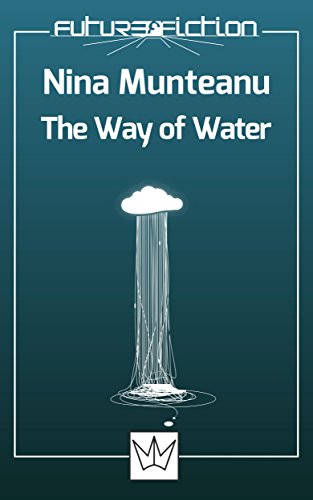
 After the release of the print book, Future Fiction released “The Way of Water” (“La natura dell’acqua”) in ebook format. The ebook contains the “Way of Water” story and another story, “Virtually Yours” (“Virtualmente tua”) alongside “The Story of Water” (non-fiction), which can be purchased in either Italian or Engish versions.
 Ebook (Italian OR English) with additional short story “Virtually Yours” through Future Fiction (Mincione Edizioni) for €1,99 at:
 Nina Munteanu Writing Coach