Ecologists, Deep Ecologists & Eco-Terrorists in Literature

I’m an ecologist. So, when I read books, particularly eco-fiction, I enjoy various authors’ representation of ecologists in literature. Portrayals have ranged quite a bit too. I’ve encountered ecologists, deep ecologists and eco-terrorists. Like real ecologists, these characters are often misunderstood, disrespected or even oppressed for their message of science. This is often by governments, organizations and individuals ruled by agendas of personal or institutional greed. These characters may become morally compromised, driven by righteous anger, on a terrible mission…   

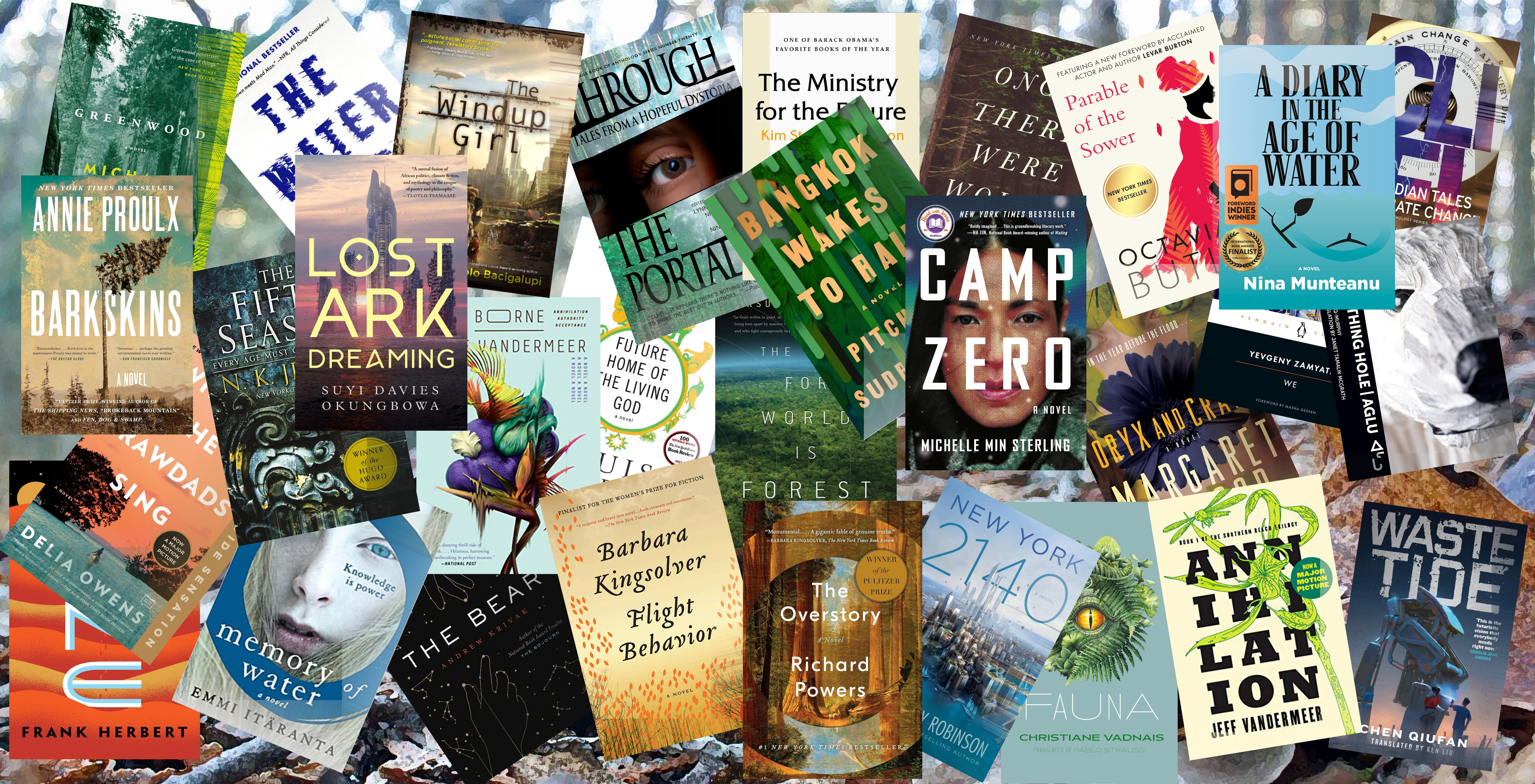
Below are six examples. Some have explored political representations such as environmental technocracy (aka: Rogue Harvest, Gaia’s Revolution). Others have featured radical environmentalists and eco-terrorists (e.g. The Overstory, A Diary in the Age of Water), and even anti-humanists (e.g.: Three Body Problem).

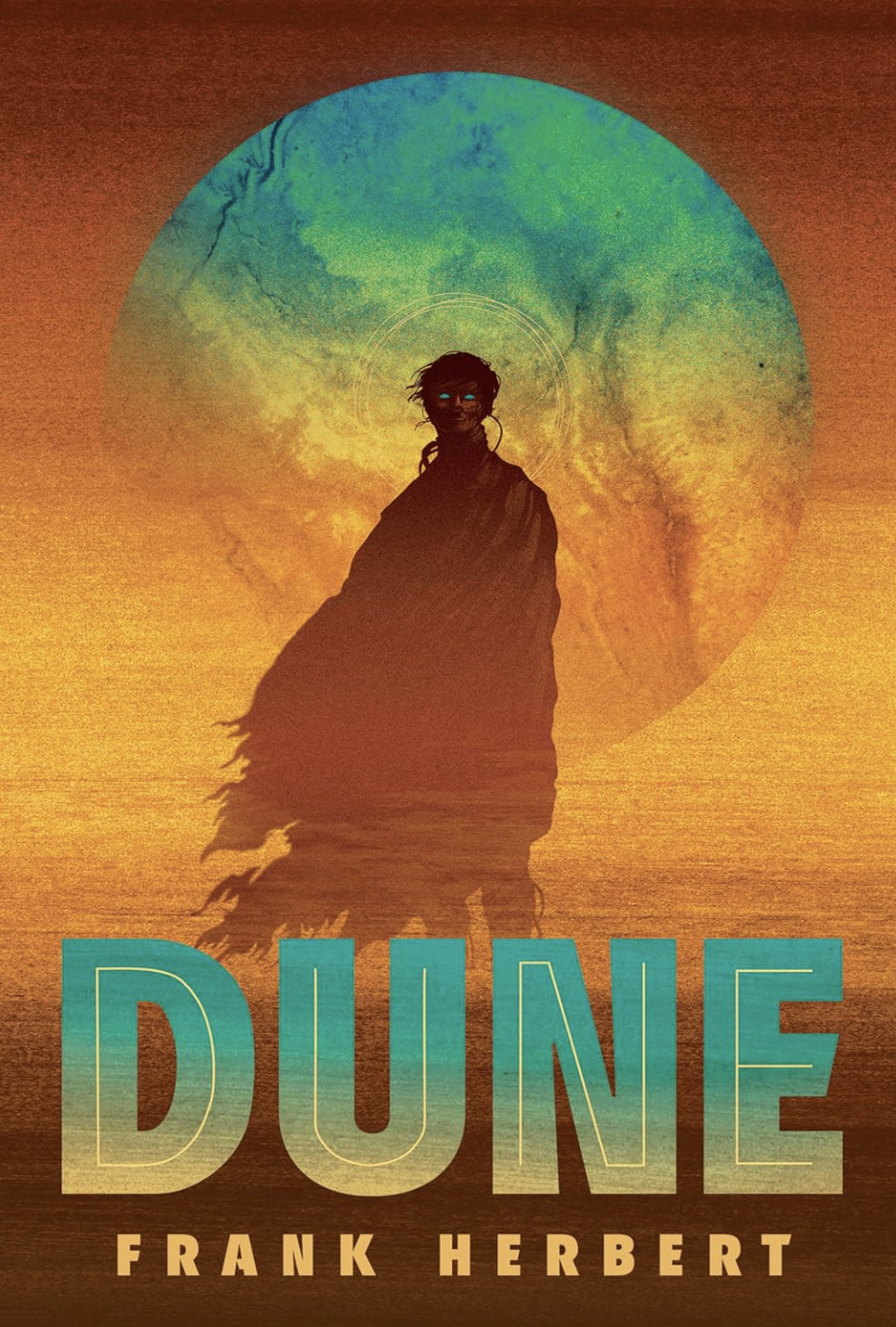
Dune (Chilton Books, 1965) by Frank Herbert:

Dune chronicles the journey of young Paul Atreides, who according to the indigenous Fremen prophesy will eventually bring them freedom from their enslavement by the colonialists—The Harkonens—and allow them to live in ecological harmony with the planet Arrakis, known as Dune. As the title of the book clearly reveals, this story is about place—a harsh desert planet whose 800 kph sandblasting winds could flay your flesh—and the power struggle between those who covet its arcane treasures and those who wish only to live free from slavery. Place—and its powerful symbols of desert, water and spice—lies at the heart of this epic story about taking, giving and sharing. This is nowhere more apparent than in the fate of the immense sandworms, strong archetypes of Nature—large and graceful creatures whose movements in the vast desert sands resemble the elegant whales of our oceans.

The subtle connections of the desert planet with the drama of Dune is most apparent in the actions, language and thoughts of the Imperial ecologist-planetologist, Kynes—who rejects his Imperial duties to “go native.” He is the voice of the desert and, by extension, the voice of its native people, the Fremen.

Quotes: (Kynes thinks to himself as he is dying in the desert, abandoned there without water or protection): The highest function of ecology is understanding consequences.

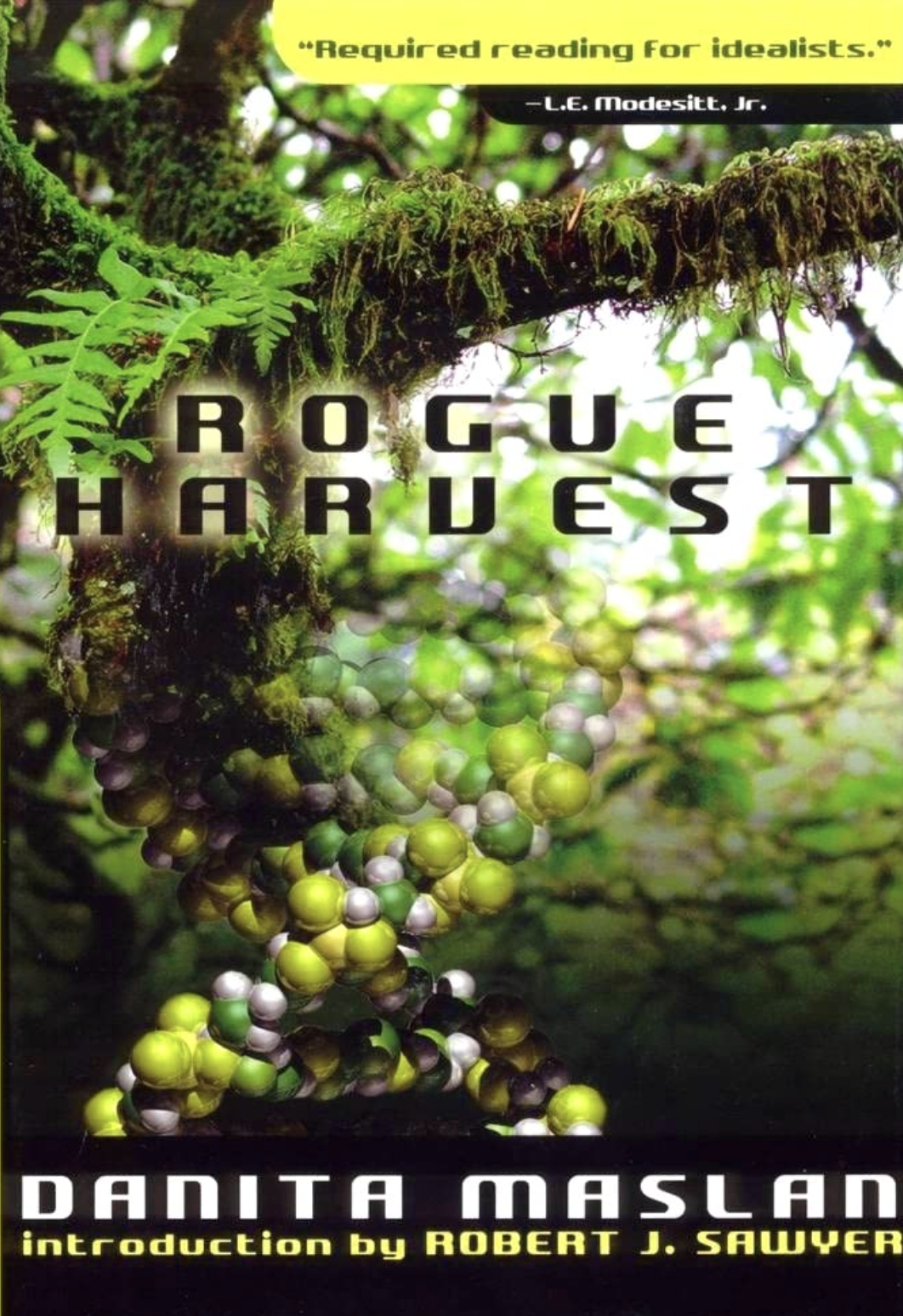
Rogue Harvest (Red Deer Press, 2005) by Danita Maslan:

Sometime in the future, Earth is recovering from a devastating 50-year plague that has destroyed most of its natural forests and grasslands and killed two out of every three people. Environmental technocrats now run the world under strict rule: while virgin ecosystems are re-created from original templates through genetic engineering, no human is permitted to set foot in these sanctuaries. As sanctuaries grow ever larger, humanity is pressed into over-crowded cities where boredom and strife dominate.

The preservationist organization Emerald Coalition is run by (deep) ecologists who hire reclamation company EcoTech to “recreate the world their great, great grandparents lost.” Main characters wish to open-up the protected nature preserves to regular folk—creating a long-standing conflict between preservation (wilderness not accessed by humans) and conservation (areas where humans extract resources with some environmental risk): demonstrating that, given responsibility for actions within an ecosystem, not all humans behave as they should.

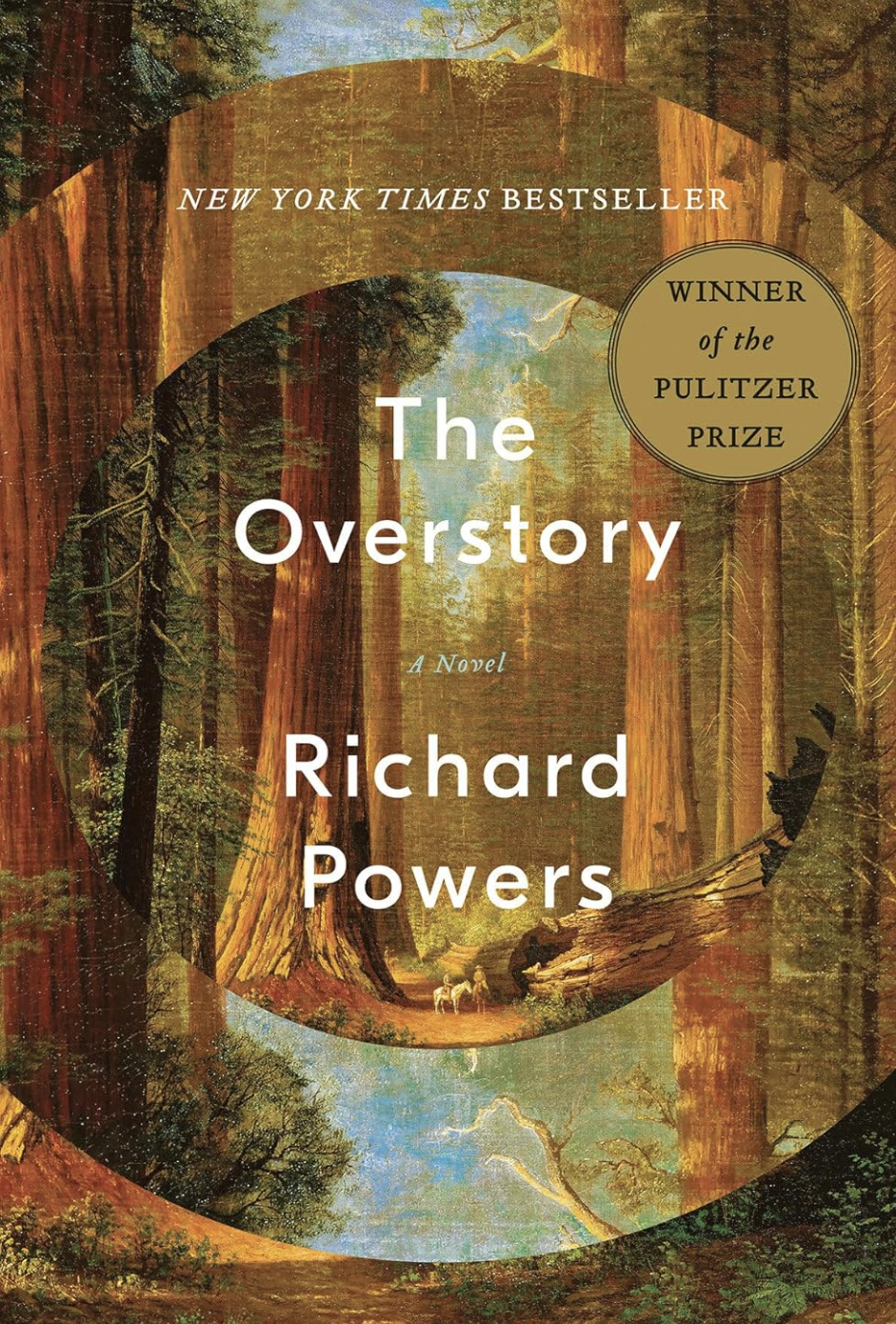
The Overstory (Vintage Canada, 2021) by Richard Powers:

The Overstory is a Pulitzer Prize winning work of literary fiction that follows the life-stories of nine characters and their journey with trees—and ultimately their shared conflict with corporate capitalist America. Like all functional ecosystems, these disparate characters—and their trees—weave into each other’s journey toward a terrible irony. Each in their own way battles humanity’s canon of self-serving utility—from shape-shifting Acer saccharum to selfless sacrificing Tachigali versicolor—toward a kind of creative destruction.

At the heart of The Overstory is the pivotal life of botanist/ecologist Patricia Westerford, who inspires a movement. Westerford—whose work resembles that of Diana Beresford-Kroeger (author of The Global Forest) and UBC’s Suzanne Simard— is a shy introvert who discovers that trees communicate, learn, trade goods and services—and have intelligence. When she shares her discovery, she is ridiculed by her peers and loses her position at the university. But, just as with Lynn Margulis and her theory of endosymbiosis, Westerford is finally validated. She is the archetypal ‘mother tree’, the metaphoric Tachigali versicolor, who ultimately brings the tangle of narratives together through meaning. What follows is a fractal story of trees with spirit, soul, and timeless societies—and their human avatars.

Quotes (Westerford writes in her book The Sacred Forest): There are no individuals in the forest, no separable events. The bird and the branch it sits on are a joint thing. A third or more of the food a big tree makes may go to feed other organisms. Even different kinds of trees form partnerships. Cut down a birch, and a nearby Douglas fir may suffer…Fungi mine stone to supply their trees with minerals. They hunt springtails, which they feed to their hosts. Trees, for their part, store extra sugar in their fungi’s synapses, to dole out to the sick and shaded and wounded. A forest takes care of itself, even as it builds the local climate it needs to survive…A tree is a wondrous thing that shelters, feeds, and protects all living things. It even offers shade to the axmen who destroy it.

Three Body Problem (Tor, 2014) by Liu Cixin:

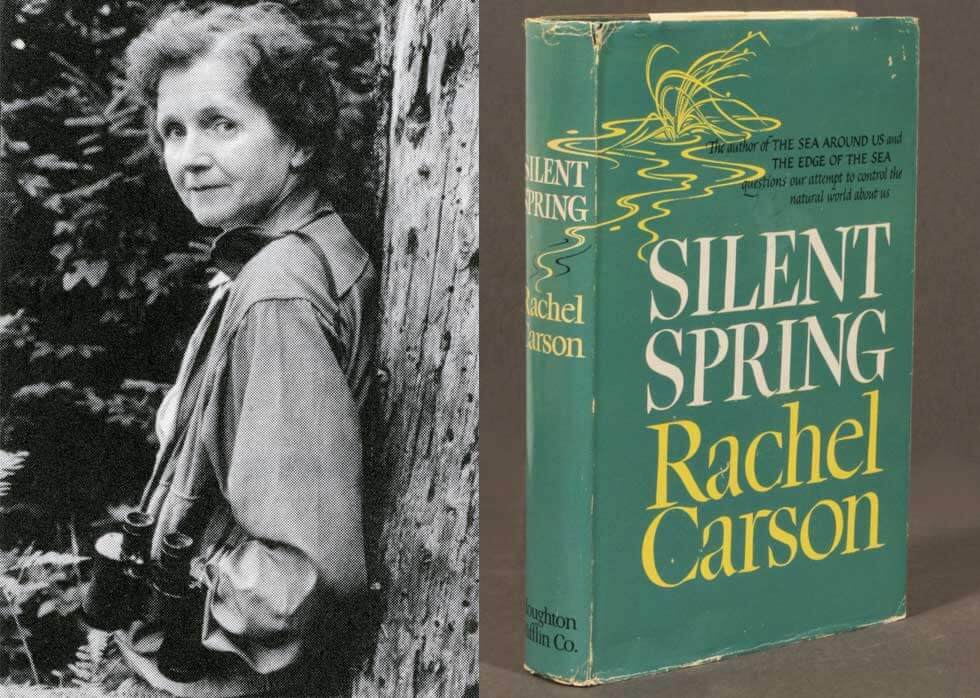
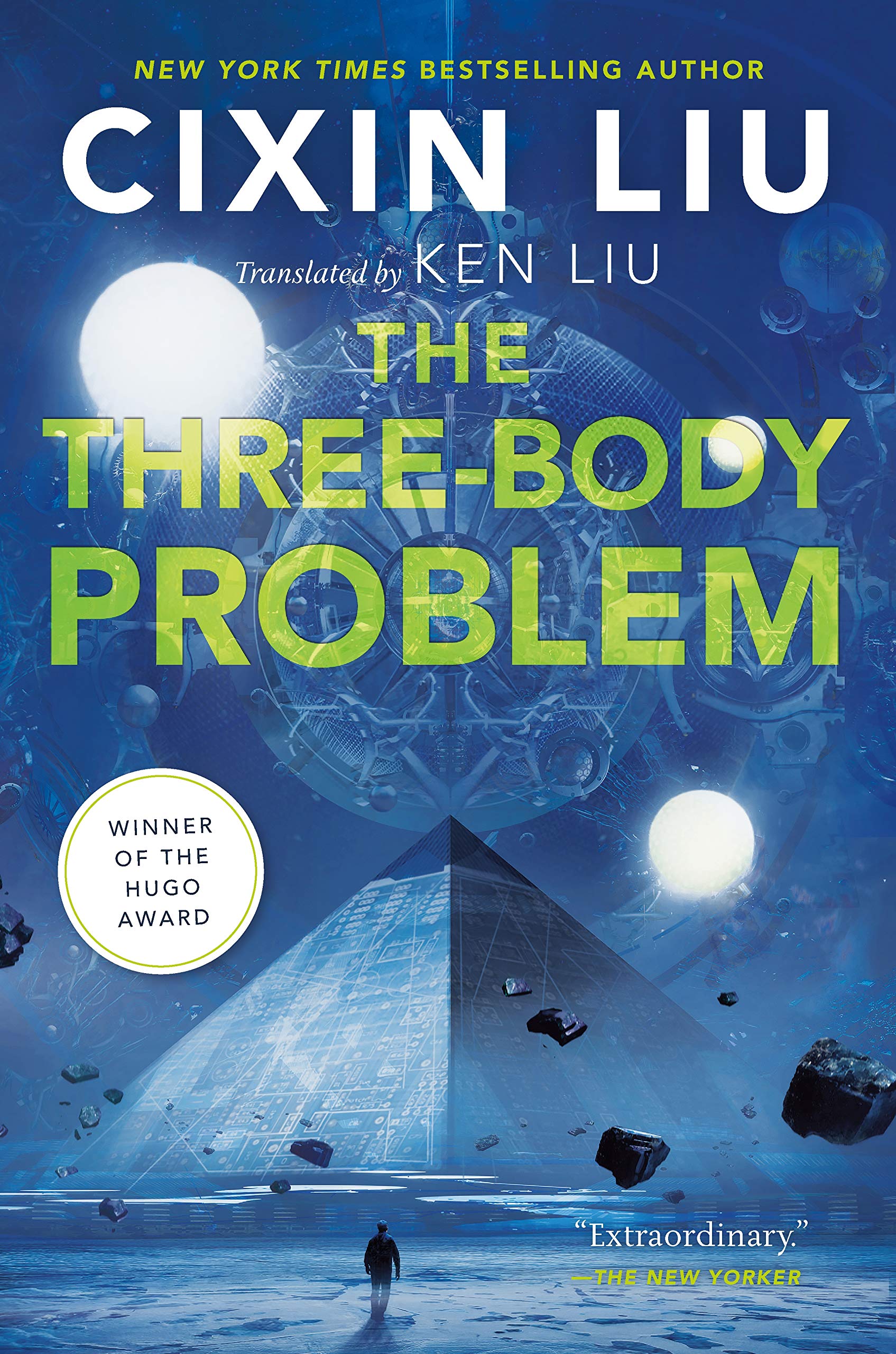
Cixin Liu’s The Three Body Problem—set against the backdrop of China’s Cultural Revolution—follows astrophysicist Ye Wenji, disillusioned by the massive environmental deforestation in the labour camps she is initially sent to work after witnessing the execution of her scientist father in a brutal cleansing at the height of the Cultural Revolution. Already cynical about humanity’s failed culture and science—Wenjie acquires a contraband copy of Rachel Carson’s Silent Spring. The book and revelation she experiences from it sets in motion a frightening notion linking the mindset behind the Cultural Revolution and destruction of the environment. Looking from Nature’s perspective, these were indistinguishable: Is it possible that the relationship between humanity and evil is similar to the relationship between the ocean and an iceberg floating on its surface? Both the ocean and the iceberg are made of the same material. That the iceberg seems separate is only because it is in a different form. In reality, it is but a part of the vast ocean.…It was impossible to expect a moral awakening from humankind itself, just like it was impossible to expect humans to lift off the earth by pulling up on their own hair. To achieve moral awakening required a force outside the human race.

Wenjie is sent to the Chinese version of SETI where a secret military project sends signals into space to establish contact with aliens. Wenjie succeeds in amplifying their message to aliens on the dying planet Trisolaris. Despite a warning that the Trisolarians mean only to invade, Wenjie invites them to Earth. To ensure the arrival of the Trisolaris aliens, she collaborates with radical environmentalist Michael Evans—an oil billionaire’s son who is disgusted with humanity’s destruction of Nature. Wenjie believes the aliens will somehow ensure humanity’s transcendence; Evans, however, applauds the coming invasion as the best route to achieve the eradication of humanity and the survival of the rest of the planet and finances the ETO (Earth-Trisolaris Organization) in eco-terrorist activities to protect non-human life—by essentially annihilating humanity.

Quotes: (Wenjie observes the deforestation of an Inner Mongolian labour camp where she was sent to work): Ye Wenjie could only describe the deforestation that she witnessed as madness… Whatever they laid eyes on, they cut down. Her company wielded hundreds of chain saws like a swarm of steel locusts, and after they passed, only stumps were left. The fallen Dahurian larch, now bereft of branches, was ready to be taken away by tractor. Ye gently caressed the freshly exposed cross section of the felled trunk. She did this often, as though such surfaces were giant wounds, as though she could feel the tree’s pain… The trunk was dragged away. Rocks and stumps in the ground broke the bark in more places, wounding the giant body further. In the spot where it once stood, the weight of the fallen tree being dragged left a deep channel in the layers of decomposing leaves that had accumulated over the years. Water quickly filled the ditch. The rotting leaves made the water appear crimson, like blood.

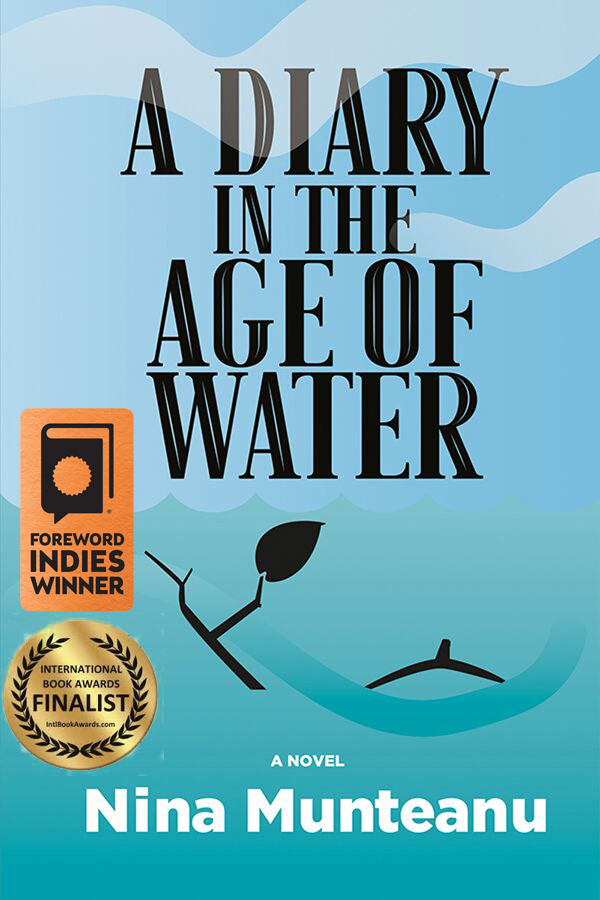
A Diary in the Age of Water (Inanna Publications, 2020) by Nina Munteanu:

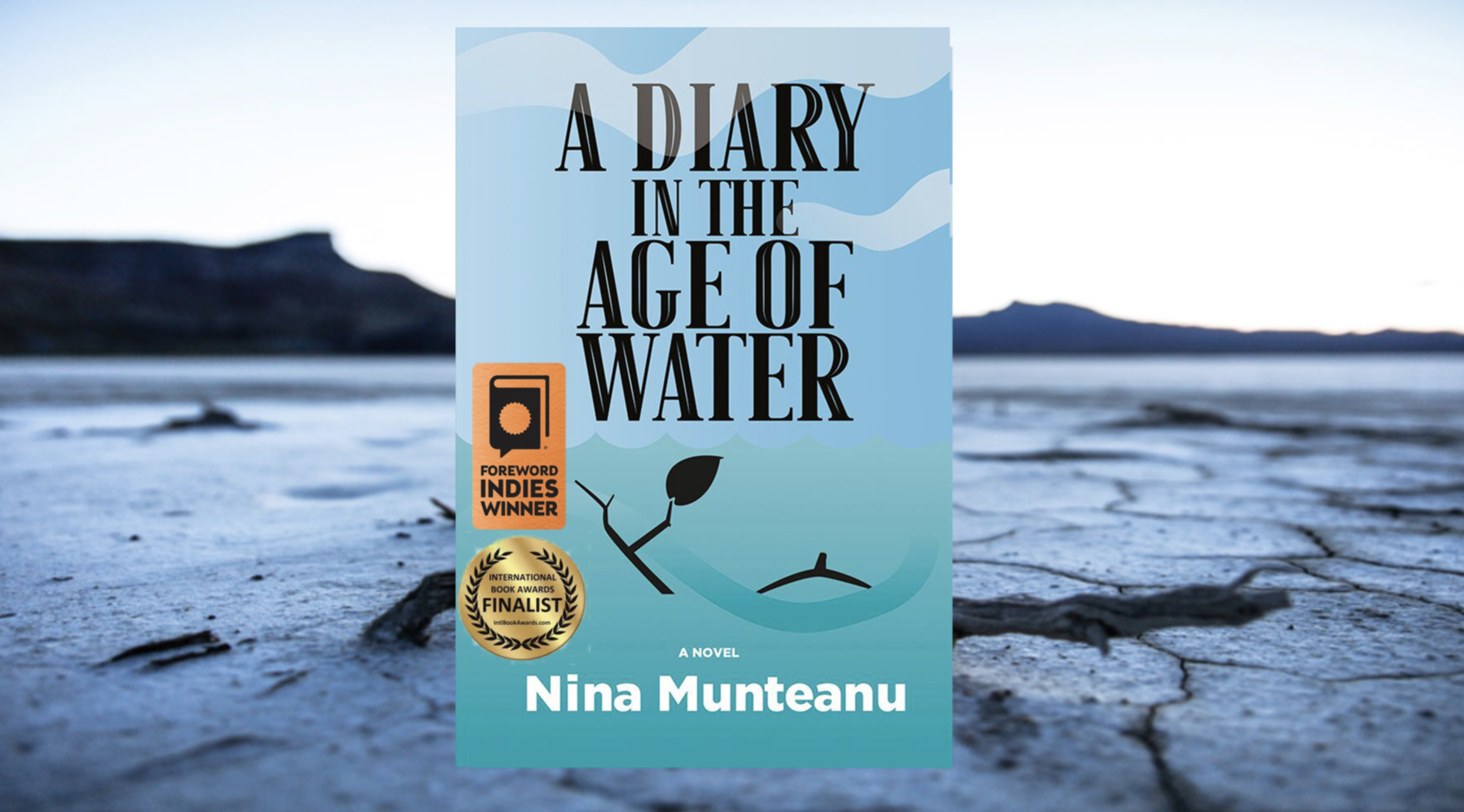
A Diary in the Age of Water follows the climate-induced journey of Earth and humanity through four generations of women, each with a unique relationship to water.

Centuries from now, in a dying boreal forest in what used to be northern Canada, Kyo, a young acolyte called to service in the Exodus, yearns for Earth’s past—the Age of Water, before the “Water Twins” destroyed humanity. Looking for answers and plagued by vivid dreams of this holocaust, Kyo discovers the diary of Lynna, a limnologist from a time just prior to the destruction. The diary spans a 40-year period in the mid-21st century and describes a planet in the grip of severe water scarcity. Lynna, in her work for an international utility that controls everything to do with water, witnesses and records the disturbing events that will soon lead to humanity’s demise.

Lynna Dresden is an aquatic ecologist (specifically a limnologist), who’s personal philosophy and world view overlaps with deep ecology. However, she demurs from activism through a fear for reprisals on her and her young daughter. This backfires for her as her daughter later embraces eco-terrorism in her radical behaviour.

Quotes: Lynna Dresden: “The slow violence of free-market capitalism isn’t so much the deliberate and focused actions of a few evil men as the accumulated negligence of an undiscriminating collective of unimaginative humans.” “When you look at a quiet deep pond, you don’t see the bottom, you see yourself reflected there. The calmer the pond the more you see of you; the less of the pond.” “Water—Nature’s herald—is talking loudly to us in the language of irony.”

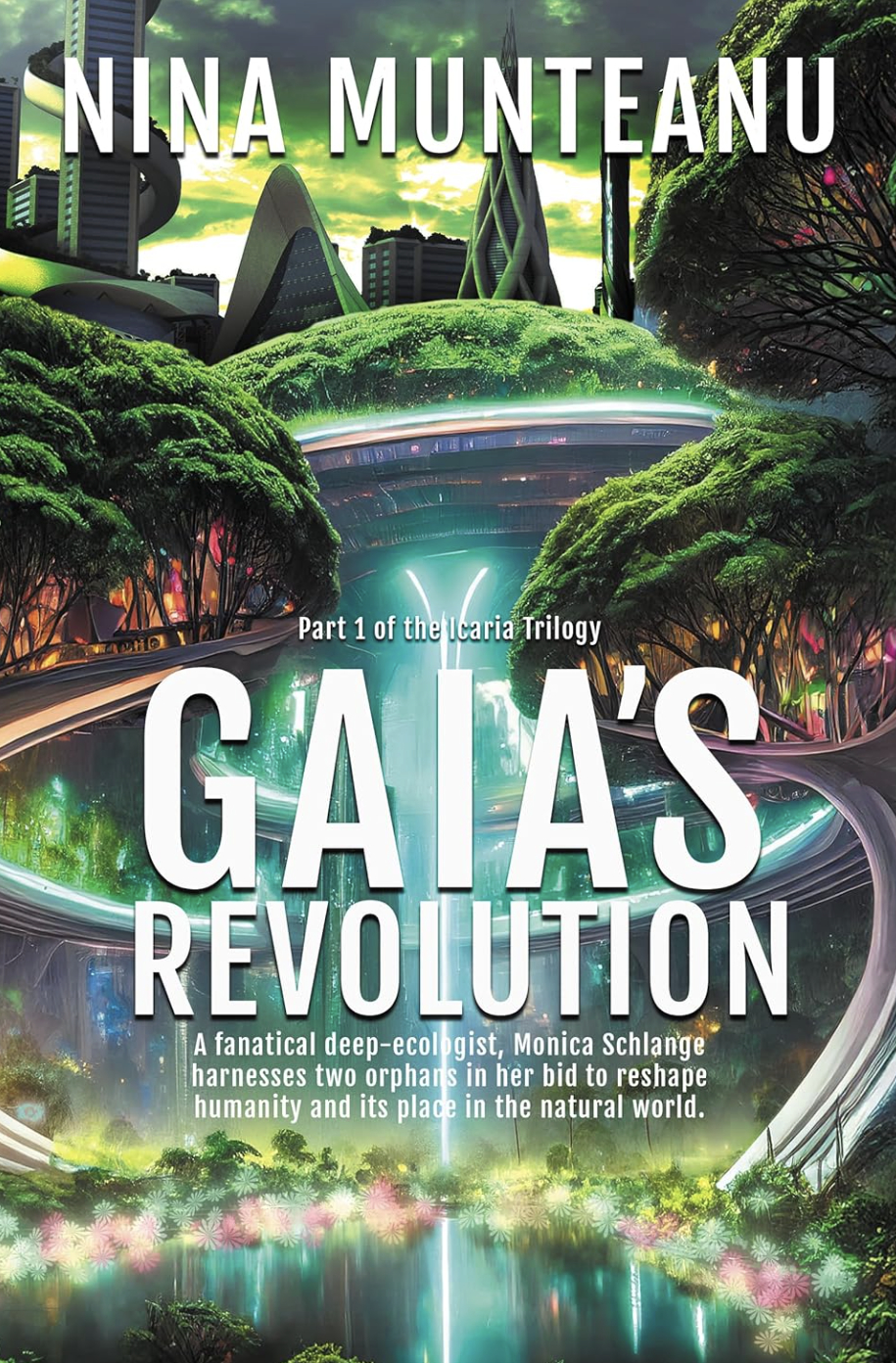
Gaia’s Revolution, Book 1 of The Icaria Trilogy (Dragon Moon Press, 2026) by Nina Munteanu:

Monica Schlange is orphaned by the technocratic corporation, and with a vengeful heart turns to deep ecology and eco-terrorism. A remaining relative helps put her through the University of Toronto, where she studies environmental ethics under Aisha Habib, herself a deep ecologist but also a powerful member of the Technocratic Party in Canada. Schlange’s thesis topic is entitled Ethical Considerations on the Ecological Impact of Corporation Farm Anthropocentrism on the Stability of Gaia Through Ten Metrics. A techno-wiz, Schlange orchestrates a viral social media fiasco that reveals very compromising intel on the Canadian prime minister. She also exposes the environmental minister’s role in a terrible fishing scandal on the central coast of British Columbia that causes the deaths of two Heiltsuk women. Intending covert mischief, Schlange shacks up with a corporate oligarch, looking to bring him and his biotechnology firm down. After the revolution, she garners a position in the governing triad in which she fanatically promotes a ruthless deep ecology agenda.

Quotes (After dispatching a fearsome techno-clone—cloned weaponized hybrid-human): Monica straightens, panting out sobbing breaths, and manages a predatory smile. Ambitious men are always underestimating her. Even Techno-clones … Especially Techno-clones.

(after putting down her oligarch-lover in a late-night skirmish when he catches her stealing documents): “Don’t get up…Next time I see you, I will kill you.”

Nina Munteanu is a Canadian ecologist / limnologist and novelist. She is co-editor of Europa SF and currently teaches writing courses at George Brown College and the University of Toronto. For the lates on her books, visit www.ninamunteanu.ca. Nina’s bilingual “La natura dell’acqua / The Way of Water” was published by Mincione Edizioni in Rome. Her non-fiction book “Water Is…” by Pixl Press (Vancouver) was selected by Margaret Atwood in the New York Times ‘Year in Reading’ and was chosen as the 2017 Summer Read by Water Canada. Her novel “A Diary in the Age of Water” was released by Inanna Publications (Toronto) in June 2020. Her most recent eco-fiction thriller Gaia’s Revolution (Dragon Moon Press) released March 2026.

Ecology of Story: Place as Metaphor

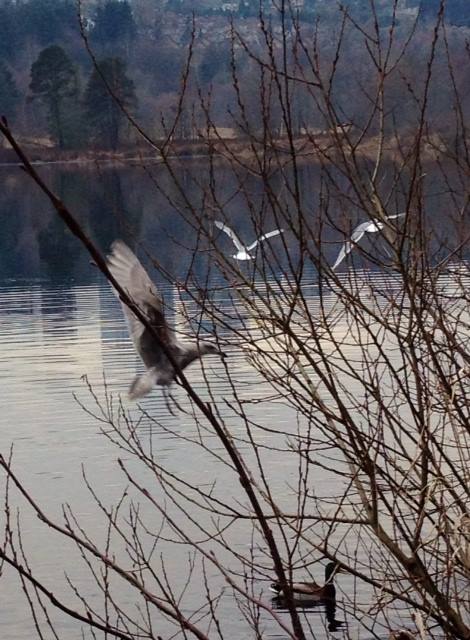
Birds deer lake

Birds flying over Deer Lake, BC (photo by Nina Munteanu)

Ray Bradbury once told me that everything in story is metaphor. That is no more apparent than in setting and place, in which a story is embedded and through which characters move and interact. Metaphor is the subtext that provides subtleties in story, subtleties that evoke mood, anticipation, and memorable scenes. Richard Russo says, “to know the rhythms, the textures, the feel of a place is to know more deeply and truly its people.” When you choose your setting, remember that its primary metaphoric role is to help depict theme. This is because place is destiny.

Metaphor provides similarity to two dissimilar things through meaning. In the metaphor “Love danced in her heart” or the simile “his love was like a slow dance”, love is equated with the joy of dance. By providing figurative rather than literal description to something, metaphor invites participation through interpretation.

When I write “John’s office was a prison,” I am efficiently and sparingly suggesting in five words—in what would normally take a paragraph—how John felt about his workplace. The reader would conjure imagery suggested by their knowledge of a prison cell: that John felt trapped, cramped, solitary, stifled, oppressed—even frightened and threatened. Metaphor relies on sub-text knowledge.

This is why metaphor is so powerful and universally relevant: the reader fully participates—the reader brings in relevance through their personal knowledge and experience and this creates the memorable aspect to the scene.

Russo tells us that place is crucial to human destiny and the formation of human personality. “The more specific and individual things become, the more universal they feel,” says Russo. This is not an oxymoron, but an example of the principle of a truism that primarily comes to us in the form of paradox (like all good truisms). Detail provides the color and texture of your story and helps it resonate with a sense of place. This does not necessarily translate into a lot of exposition; but it does require creative choice of words. So, instead of “He took a drag from his cigarette as he drove his sports car along a winding road in the country”; (twenty words) try something like “Vinnie sucked on a Camel as his red Corvette careered the hair-pinned curves of Hell’s Gate.” (seventeen words).

Place Personified

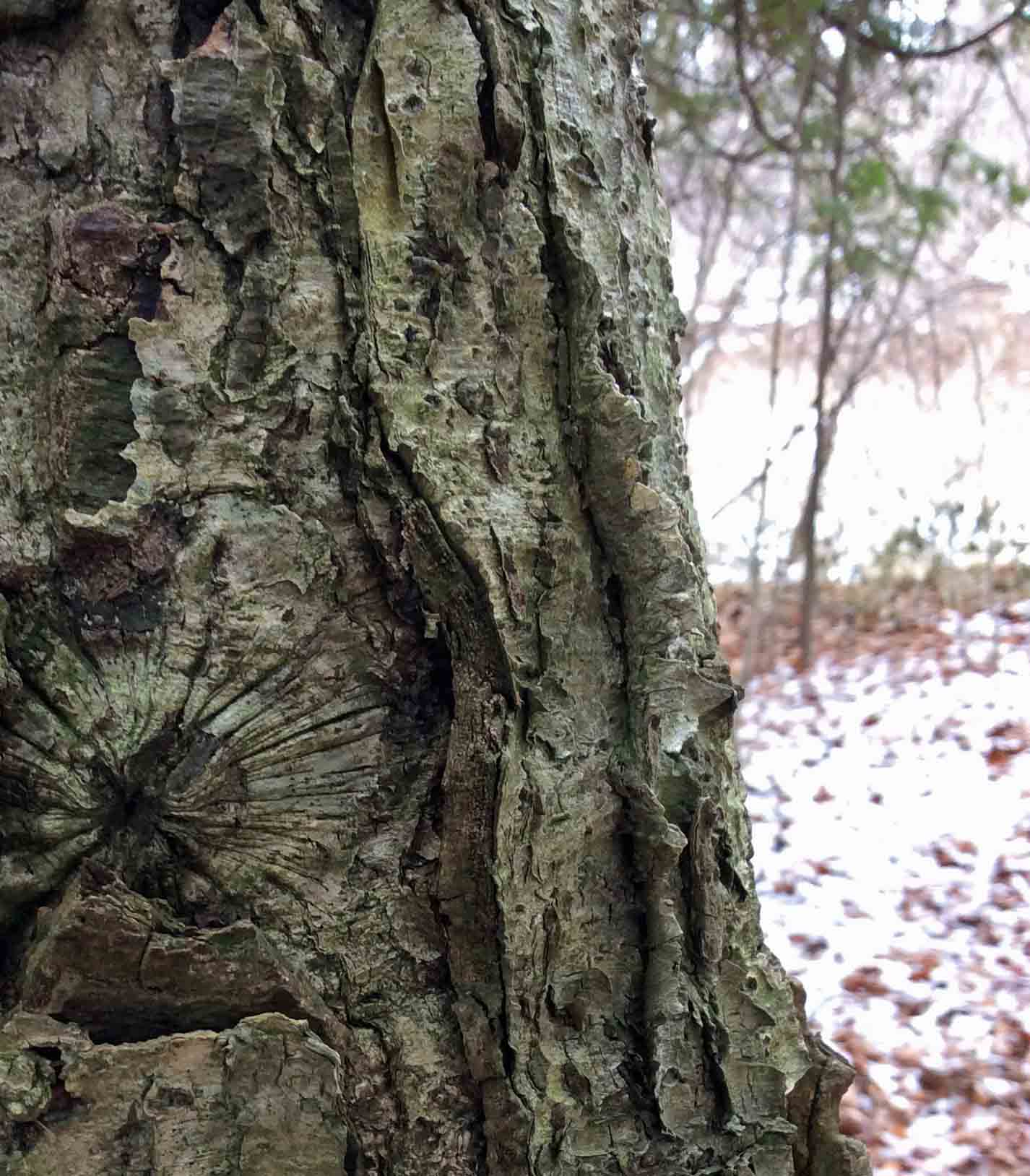
Tree-YellowBirch winter-LR

Old yellow birch tree in Little Rouge woodland (photo by Nina Munteanu)

Personification is powerful metaphor that gives nonhuman things human qualities. It personalizes, energizes and emotionalizes. Place described through personification can illuminate both characters and their environment in compelling ways. By giving an object, place, or animal the qualities of a person, personification provides subtle aspects of mood and links the reader to a cocktail subtext of human feelings and struggles. Personification can connect the reader to “lifeless” objects such as water, soil, rock, the sun, moon, planet, concrete, paper, etc., to map the larger meaning of the story. Putting a character’s feelings into the objects around her—as POV character—creates a subtle but deep connection with the reader: “The darkness embraced her”; “The open-throated roar of the river pulled her near.”

D.H. Lawrence’s creates strong personification of Thomas Hardy’s Egdon Heath in Return of the Native:

…Egdon, whose dark soil was strong and crude and organic as the body of a beast.

In The Handmaid’s Tale—a dystopian tale of oppression and intrigue—Margaret Atwood writes:

There is something subversive about this garden of Serena’s, a sense of buried things bursting upwards, wordlessly, into the light, as if to point, to say: Whatever is silenced will clamour to be heard, though silently … Light pours down upon it from the sun, true, but also heat rises, from the flowers themselves, you can feel it: like holding your hand an inch above an arm, a shoulder. It breathes, in the warmth, breathing itself in.

Martin Nolan’s Still Point creates powerful imagery of a storm aftermath through an abandoned old shed and contrasts its loneliness to the half-wild woods nearby:

A deserted shed by the road, buckling under its roof, kneels into the tall grass. The woods beyond it hide the river … I turn back to the half-wild woods. These trees speak to each other, are wild enough for that. They live together, holding the riverbanks in place.

Cixin Liu’s The Three Body Problem—set against the backdrop of China’s Cultural Revolution—follows Wenji Ye, disillusioned by the massive environmental deforestation in the labour camps she is sent to work:

Her company wielded hundreds of chain saws like a swarm of steel locusts, and after they passed, only stumps were left. The fallen Dahurian larch, now bereft of branches, was ready to be taken away by tractor. Ye gently caressed the freshly exposed cross section of the felled trunk. She did this often, as though such surfaces were giant wounds, as though she could feel the tree’s pain …

Clearcut gordon valley-BW

Clearcut in Gordon Valley, British Columbia (photo by T.J. Watts)

In Memory of Water, Emmi Itäranta personifies this life-giving substance whose very nature is tightly interwoven with her main character. As companion and harbinger, water is portrayed simultaneously as friend and enemy. As giver and taker of life.

Water is the most versatile of all elements … Water walks with the moon and embraces the earth, and it isn’t afraid to die in fire or live in air. When you step into it, it will be as close as your own skin, but if you hit it too hard, it will shatter you … Death is water’s close companion. The two cannot be separated, and neither can be separated from us, for they are what we are ultimately made of: the versatility of water, and the closeness of death. Water has no beginning and no end, but death has both. Death is both. Sometimes death travels hidden in water, and sometimes water will chase death away, but they go together always, in the world and in us.

Personification of natural things provides the reader with an image they can clearly and emotionally relate to and care about. When a point-of-view character does the describing, we get a powerful and intimate indication of their thoughts and feelings—mainly in how they connect to place (often as symbol). When this happens, place and perception entwine in powerful force.


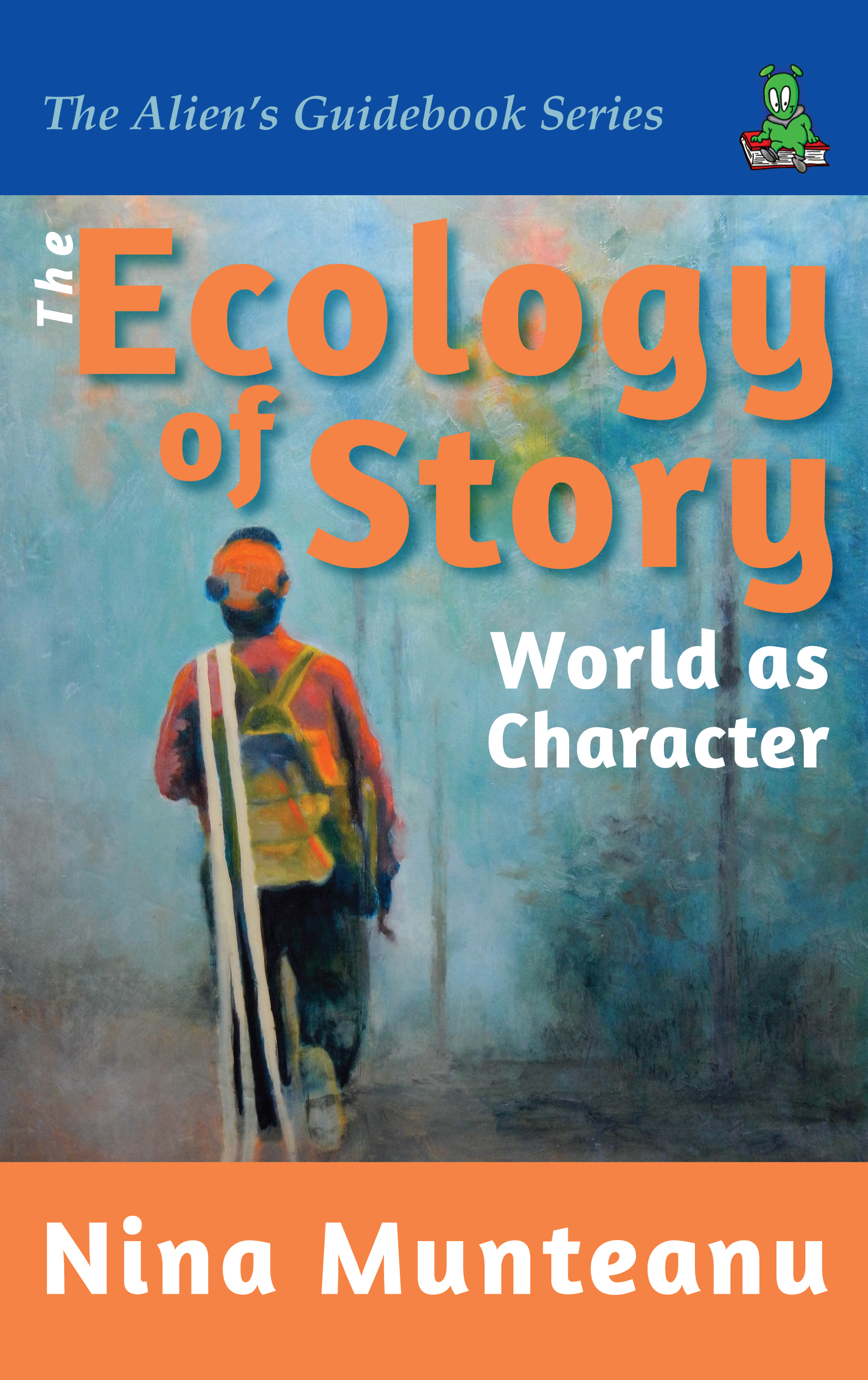
MockUpEcology copyThis article is an excerpt from “The Ecology of Story: World as Character” due in June 2019 by Pixl Press.


From Habitats and Trophic Levels to Metaphor and Archetype…

Learn the fundamentals of ecology, insights of world-building, and how to master layering-in of metaphoric connections between setting and character. Ecology of Story: World as Character is the 3rd guidebook in Nina Munteanu’s acclaimed “how to write” series for novice to professional writers.


Microsoft Word - Three Writing Guides.docx

nina-2014aaa

Nina Munteanu is a Canadian ecologist / limnologist and novelist. She is co-editor of Europa SF and currently teaches writing courses at George Brown College and the University of Toronto. Visit www.ninamunteanu.ca for the latest on her books. Nina’s bilingual “La natura dell’acqua / The Way of Water” was published by Mincione Edizioni in Rome. Her non-fiction book “Water Is…” by Pixl Press (Vancouver) was selected by Margaret Atwood in the New York Times ‘Year in Reading’ and was chosen as the 2017 Summer Read by Water Canada. Her novel “A Diary in the Age of Water” will be released by Inanna Publications (Toronto) in 2020.


Science Fiction Asks: Are We Worth Saving?

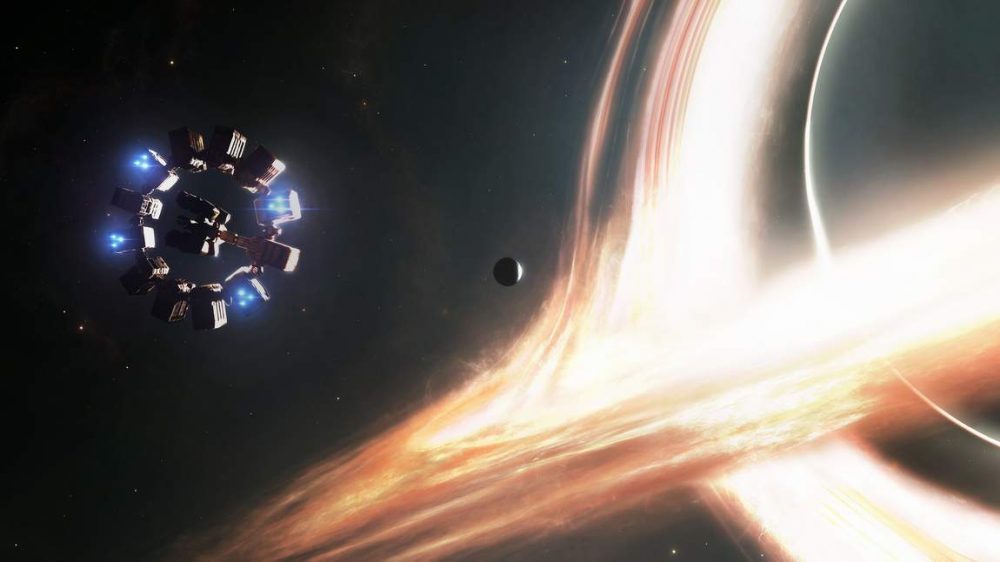
interstellar-GargantuanBlackHole

Gargantua Black Hole in “Interstellar)

Science fiction, which Ted Gioia of The San Francisco Chronicle calls “conceptual fiction” explores the interaction of humanity with some larger phenomenon that involves science. SF writer Robert J. Sawyer calls it the fiction of the large. Large ideas, large circumstance, large impact. Science fiction is a powerful literature of allegory and metaphor that is deeply embedded in culture. By capturing context, SF is a symbolic meditation on history itself and ultimately a literature of great vision.

Science fiction is the literature of consequence that, in exploring large issues faced by humankind, can provide an important vehicle in raising environmental awareness and a planetary consciousness. Much of science fiction is currently focused in that direction. Terms such as eco-fiction, climate fiction and its odd cousin “cli-fi”, have embedded themselves in science fiction terminology; this fiction has attracted a host of impressive authors who write to its calling: Margaret Atwood, Emmi Itäranta, Jeff VanderMeer, Richard Powers, Barbara Kingsolver, Upton Sinclair, Ursula Le Guin, JoeAnn Hart, Frank Herbert, John Yunker, Kim Stanley Robinson, James Bradley, Paolo Bacigalupi, Nathaniel Rich, David Mitchell, Junot Diaz, Claire Vaye Watkins, J.G. Ballard, Marcel Theroux, Thomas Wharton—just to name a few. The list seems endless. Of course, I’m one of them too. Many of these works explore and illuminate environmental degradation and ecosystem collapse at the hands of humanity.

Lately, science fiction is asking the question of whether humanity is worth saving and at what expense?

It’s a valid question.

As the first swell of the climate change tidal wave laps at our feet, we are beginning to see the planetary results of what humanity has created and exacerbated. Humanity has in many ways reached a planetary tipping point; a threshold that will be felt by all aspects of our planet, both animate and inanimate as the planet’s very identity shifts.

the great acceleration copyScientists have suggested that we have now slid from the relatively stable Holocene Epoch to the Anthropocene Epoch—the age of humanity. The term arose not from hubris, but in recognition of our ubiquitous and overwhelming influence on large systems and planetary cycles.

GreatDerangement climatechange copyTake water, for instance. Today, we control water on a massive scale. Reservoirs around the world hold 10,000 cubic kilometres of water; five times the water of all the rivers on Earth. Most of these great reservoirs lie in the northern hemisphere, and the extra weight has slightly changed how the Earth spins on its axis, speeding its rotation and shortening the day by eight millionths of a second in the last forty years. Ponder too, that an age has a beginning and an end. Is climate change the planet’s way of telling us that the  Anthropocene Epoch too shall end? Is that when we end … or transcend?
A tidal wave of TV shows and movies currently explore—or at least acknowledge—the devastation we are forcing on the planet. Every week Netflix puts out a new show that follows this premise of Earth’s devastation: 3%; The 100; The Titan; Orbiter 9; even Lost in Space.

Are we worth saving? Below are a few examples of movies, TV series I’ve lately watched and books I’ve lately read that address this key question to an irresponsible humanity that seems unconcerned that we are destroying our very home. In some the question is subtly implied; in others, not so subtle.

Battlestar Galactica (2004)

Battlestar-Galactica.jpg

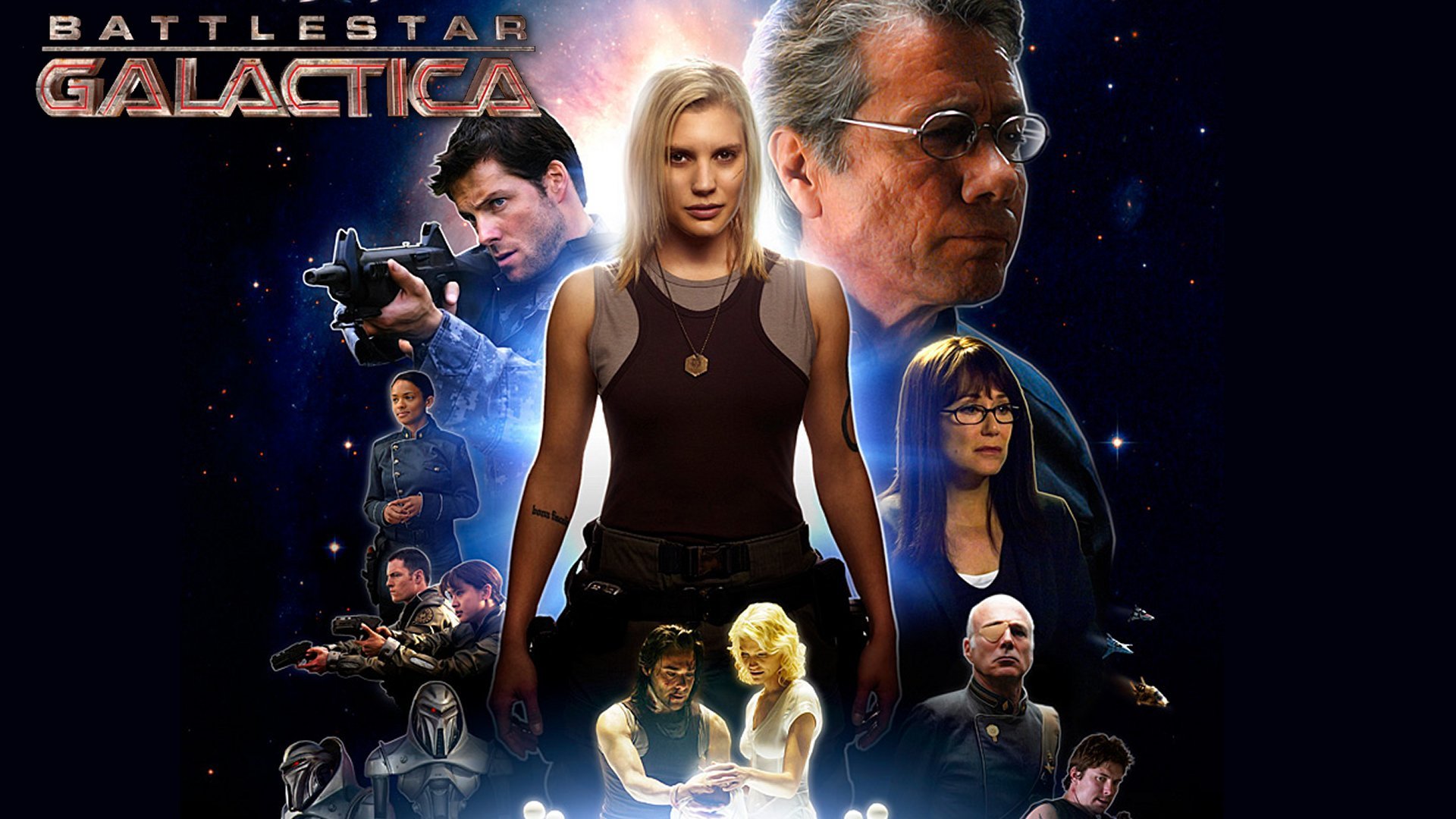
In the pilot of Battlestar Galactica, Commander Adama gives an impromptu speech (not the one he prepared; but one provoked by an argument with his son), which resonates throughout the entire series as cylon and human must refashion themselves and their relationship to each other while they discover the cyclical recursive nature of all things and that “all this has happened before and will again.”

The Galactica ship is about to be decommissioned and has now become a museum since the cylons have disappeared forty years ago. The great battle between the cylons and their human creators ended forty years ago with the cylons disappearing suddenly, never to be heard from again. But that is about to change; as Adama gives his speech, the first strike occurs, followed by a massive attack that almost wipes out the human race.

Adama

Commander Adama

In his speech Adama says:

“The cost of wearing the uniform can be high…but sometimes it’s too high. When we fought the cylons, we did it to save ourselves from extinction. But we never answered the question why. Why are we as a people worth saving. We still commit murder because of greed, spite and jealousy. And we still visit all of our sins upon our children. We refuse to accept the responsibility for anything that we’ve done. Like we did with the cylons. We decided to play God. Create life. When that life turned against us, we comforted ourselves in the knowledge that it really wasn’t our fault, not really. You cannot play God then wash your hands of the things you’ve created. Sooner or later the day comes when you can’t hide from the things that you’ve done anymore.”

Interstellar (2014)

interstellar-GargantuanBlackHole

Voyaging to Gargantua Black Hole

Interstellar

Cooper explores the ice planet

Early on in the science fiction movie Interstellar, NASA astronaut Cooper declares that “the world is a treasure, but it’s been telling us to leave for a while now. Mankind was born on Earth; it was never meant to die here.”

After showing Cooper how their last corn crops will eventually fail like the okra and wheat before them, NASA Professor Brand answers Cooper’s question of, “So, how do you plan on saving the world?” with: “We’re not meant to save the world…We’re meant to leave it.” The human-centred hubris in this colonialist mentality lies in what we have left behind—a planet suffocating from the effects of humanity’s careless and thoughtless activities. What Interstellar circles but does not address is the all-important question: is humanity even worth saving?

The suggestion during the movie’s final moments, is that we are worth saving because we will transcend into wiser benevolent beings: a hopeful gesture based on the power of love.

The Three Body Problem (2014)

ThreeBodyProblem-film

Cixin Liu’s The Three Body Problem was set against the backdrop of China’s Cultural Revolution, because, says Liu, “The Cultural Revolution provides the necessary background for the story. The tale I wanted to tell demanded a protagonist [Ye Wenjie] who gave up all hope in humanity and human nature. I think the only episode in modern Chinese history capable of generating such a response is the Cultural Revolution. It was such a dark and absurd time that even dystopias like 1984 seem lacking in imagination in comparison.” (I suppose Cixin did not experience the holocaust of Germany or Stalin’s purge in the Soviet Union).

ThreeBodyProblemIn the story, a secret military project sends signals into space to establish contact with aliens. An alien civilization on the brink of destruction captures the signal and plans to invade Earth. One of the main protagonists is Ye Wenjie, a young woman traumatized after witnessing the execution of her scientist father in a brutal cleansing at the height of the Cultural Revolution. Considered a traitor, young Wenjie is sent to a labour brigade in Inner Mongolia, where she witnesses further destruction by humans:
“Ye Wenjie could only describe the deforestation that she witnessed as madness. The tall Dahurian larch, the evergreen Scots pine, the slim and straight white birch, the cloud-piercing Korean aspen, the aromatic Siberian fir, along with black birch, oak, mountain elm, Chosenia arbutifolia—whatever they laid eyes on, they cut down. Her company wielded hundreds of chain saws like a swarm of steel locusts, and after they passed, only stumps were left.

The fallen Dahurian larch, now bereft of branches, was ready to be taken away by tractor. Ye gently caressed the freshly exposed cross section of the felled trunk. She did this often, as though such surfaces were giant wounds, as though she could feel the tree’s pain… The trunk was dragged away. Rocks and stumps in the ground broke the bark in more places, wounding the giant body further. In the spot where it once stood, the weight of the fallen tree being dragged left a deep channel in the layers of decomposing leaves that had accumulated over the years. Water quickly filled the ditch. The rotting leaves made the water appear crimson, like blood.”

Already cynical about humanity’s failed culture and science—Wenjie acquires a contraband copy of Rachel Carson’s Silent Spring. The book and revelation she experiences from it sets in motion her remaining trajectory.

“More than four decades later, in her last moments, Ye Wenjie would recall the influence Silent Spring had on her life. The book dealt only with a limited subject: the negative environmental effects of excessive pesticide use. But the perspective taken by the author shook Ye to the core. The use of pesticides had seemed to Ye just a normal, proper—or, at least, neutral—act, but Carson’s book allowed Ye to see that, from Nature’s perspective, their use was indistinguishable from the Cultural Revolution, and equally destructive to our world. If this was so, then how many other acts of humankind that had seemed normal or even righteous were, in reality, evil?

As she continued to mull over these thoughts, a deduction made her shudder: Is it possible that the relationship between humanity and evil is similar to the relationship between the ocean and an iceberg floating on its surface? Both the ocean and the iceberg are made of the same material. That the iceberg seems separate is only because it is in a different form. In reality, it is but a part of the vast ocean.…It was impossible to expect a moral awakening from humankind itself, just like it was impossible to expect humans to lift off the earth by pulling up on their own hair. To achieve moral awakening required a force outside the human race.

This thought determined the entire direction of Ye’s life.”

Ye is sent to the Chinese version of SETI and succeeds in sending a message to aliens on Trisolaris. Despite a warning that the Trisolarians mean only to invade, Wenjie invites them to Earth. To ensure the arrival of the Trisolaris aliens, she collaborates with Michael Evans—an oil billionaire’s son who is disgusted with human’s destruction of Nature. Despising humankind in its current state, Wenjie believes the aliens will somehow ensure humanity’s transcendence; Evans, however, applauds the coming invasion as the best route to achieve the eradication of humanity and the survival of the rest of the planet.

The Expanse (2015) 

TheExpanse-GanymedeStation

Bobby Draper and crew face an unknown enemy on Ganymede Station


TheExpanse-Holden-Naomi

Naomi and Holden

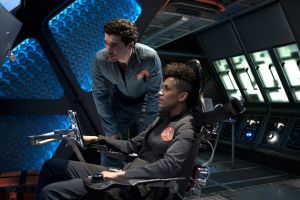
The Expanse is a stylish and intelligent science fiction (SF) TV series (on Syfy Channel) based on books by James S.A. Corey. It is set 200 years in the future when humanity has colonized the moon, Mars and the Asteroid Belt to mine minerals and water. This sophisticated SF film noir thriller elevates the space opera sub-genre with a meaningful metaphoric exploration of issues relevant in today’s world—issues of resource allocation, domination & power struggle, values, prejudice, and racism. Ever-expanding outward in a frantic search for resources as Earth’s own resources fester in pollution and Earthers languish on “the dole”, colonizing humans on Mars and the Belt have even changed their physiology, culture, language and identity.

The tag line of the first season poster for The Expanse reads: “We’ve gone too far.” The series begins on Ceres with a Belter activist inciting a crowd with talk about how Mars and Earth are squeezing Belters for all their water.

NUP_166219_0638.JPG

Avasarala and DeGraaf

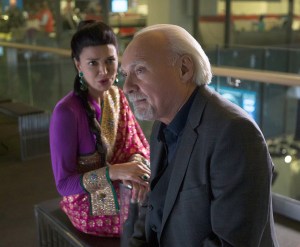
Not so subtle signs of our destructive jingoistic determination runs through this series (now in its third season). After Under Secretary Avasarala’s friend Degraaf (Earth ambassador to Mars) becomes a casualty of one of her intel games, Degraaf quietly shares: “You know what I love about Mars?… They still dream; we gave up. They are an entire culture dedicated to a common goal: working together as one to turn a lifeless rock into a garden. We had a garden and we paved it.”

miller and dawes copy 2

Miller and Dawes sparring

Ceres born militant activist Anderson Dawes confides to Detective Miller: “All we’ve ever known is low G and an atmosphere we can’t breathe. Earthers,” he continues, “get to walk outside into the light, breathe pure air, look up at a blue sky and see something that gives them hope. And what do they do? They look past that light, past that blue sky. They see the stars and they think ‘mine’… Earthers have a home; it’s time Belters had one too.”

The Martians hold Earth in contempt for their cavalier approach to their resources. Onboard the MCRN Donnager, Martian Lopez asks his prisoner Jim Holden if he misses Earth and Holden grumbles, “If I did, I’d go back.” Lopez then dreamily relates stories his uncle told him about Earth’s “endless blue sky and free air everywhere. Open water all the way to the horizon.” Then Lopez turns a cynical eye back on Holden. “I could never understand your people. Why, when the universe has bestowed so much upon you, you seem to care so little for it.” Holden admits, “Wrecking things is what Earthers do best…”

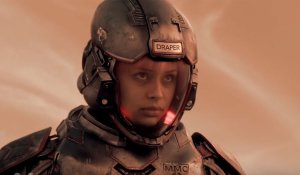
bobbie-draper-the-expanse

Martian marine Bobbie Draper

Then he churlishly adds, “Martians too, by the look of your ship.” Lopez retorts, “We are nothing like you. The only thing Earthers care about is government handouts. Free food, free water. Free drugs to forget the aimless lives you lead. You’re shortsighted. Selfish. It will destroy you. Earth is over, Mr. Holden. My only hope is that we can bring Mars to life before you destroy that too.” When a Ceres-born Detective Miller asks Holden why he left Earth, Holden responds: “everything I loved there was being destroyed.”

The show makes a few opportunities to point out what we are doing to our planet. Cherish what you have. Cherish your home and take care of it. We’re reminded that time and again, we aren’t doing a good job of that. When Martian marine Bobbie Draper travels to Earth for the first time and is compelled to find the ocean, she is met with the stench of sewage and garbage; yet, she looks longingly out to sea, seeing a dream…

Incorporated (2016)

 Incorporated-green-red zone copy

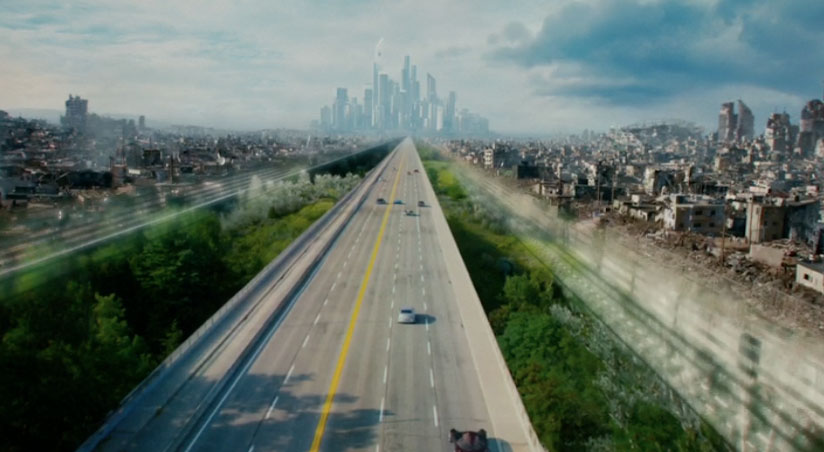
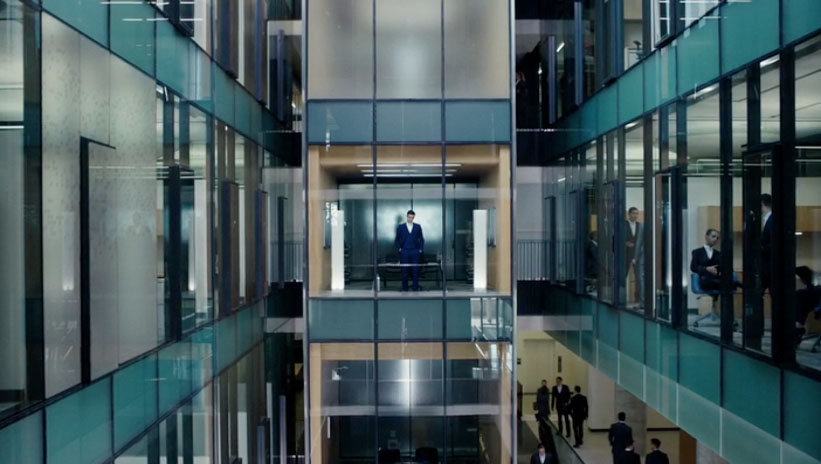
Incorporated is a science fiction thriller that provides a chilling glimpse of a post-climate change dystopia. Created by David and Alex Pastor and produced by Ben Affleck, Matt Damon, Ted Humphrey and Jennifer Todd, the TV show (filmed in Toronto, Canada) opens in 82 °F Milwaukee in November 2074 after environmental degradation, water level rise, widespread famine and mismanagement have bankrupted governments. We learn later that Milwaukee Airport served as a FEMA climate relocation centre that resembles an impoverished shantytown. In the wake of the governments demise, a tide of multinational corporations has swept in to control 90% of the globe and ratified the 29th amendment, granting them total sovereignty.

Ben- office copy

Corporations fight a brutal covert war for market share and dwindling natural resources. Like turkey vultures circling overhead, they position themselves for what’s left after short-sighted government regulations, lack of corporate check and FEMA mismanagement have ‘had their way’ with the planet. The world is now a very different place. There is no Spain or France. Everything south of the Loire is toxic desert; submerged New York City reduced to a punch line in a joke. Reykjavik and Anchorage are sandy beach destinations and Norway is the new France—at least where champagne vineyards are concerned. Asia and Canada are coveted for their less harsh climates.

Chad-alert copyIncorporated is less thriller than satire; it is less science fiction than cautionary tale.

 “You look to Incorporated for dystopian fiction that expresses our current anxieties,” writes Jeff Jensen of Entertainment Weekly. “What you get is fitful resonance that makes you realize it might be too soon for any show to meet that challenge.”

Or is it more that we may be too late… The question of whether we are worth saving is never asked—it is shown: and perhaps the real reason the show was cancelled after one season.

3% (2016)

3-percent-players copy

3% is set in the near future after the planet has fallen into a divided haves and have-nots through environmental calamity. Three percent of the population live well on an island in the Atlantic Ocean, called Offshore (Mar Alto). The remaining 97% struggle Inland with poverty and scarcity. A selection process lies between them.

3-poster-title copyEvery year the 97% send their 20-year olds to undergo The Process, a grueling Hunger Games-style contest run by the Offshore elite to replenish their numbers. Only 3% of the candidates will be considered worthy. They must pass psychological, emotional and physical tests to earn a place in Mar Alto.

By the time Season 1 is over, candidates will have committed a full range of desperate and unsavory acts to make the cut—the stakes are high, after all: secure a position in the 3% elite or die in squalor and poverty. After being eliminated during the interview process, one youth throws himself off a balcony of the testing centre.

3% examines the motivations and paradoxes of heroism and villainy, sometimes turning them on their sides until they touch with such intimacy you can’t tell them apart. At its deepest, 3% explores the nature of humanity—from its most glorious to its most heinous—under the stress of scarcity and uncertainty. How we behave under these polarizing challenges ultimately determines who we are. The question of whether we are worth saving is explored through the subtleties—or not so subtle aspects—of a fascist society that practices exterminism. 

Missions (2018) 

Missions-VladimirKomarov-Suyuz1 copy

Missions is a French TV series about the race by two ships—the Ulysses and Z1, representing two ambitious billionaires—to explore Mars. It opens in 1967 with the heroic sacrifice of Vladimir Komarov, the pilot of the faulty Soyuz 1, who knew he would not return and accepted his mission to save his best friend, Yuri Gagarin (his backup). This heroic act is mirrored in the last episode of Season 1 with a similar selfless act of heroism by Ulysses psychologist Jeanne Renoir to save her crewmembers who are trying to escape a fatal dust storm on Mars.

missions-posterAfter the 1967 opening scene with Komarov, we go to the present day with psychologist Jeanne Renoir, conducting an experiment on a child: giving them one marshmallow and leaving the room with the instruction that if they don’t eat the marshmallow but wait for her to return, they’ll get two. Jeanne correctly anticipates the child will eat the marshmallow.
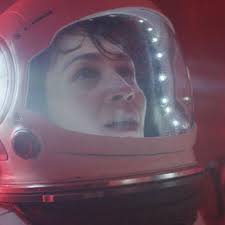
Amid developments between the two ship teams in which self-serving agendas, paranoias and blind ambition reign, Jeanne shares a vision with an entity that looks like Komarov, in which he tells her: “Yes, people dream of other places, while they can’t even look after their own planet…You must remember your past in order to think about your future. Do you think Earth has a future?” When Jeanne says she doesn’t know, Komarov challenges, “Yes, you do. They eat their marshmallow right away, when they could have two. Or a thousand. Do you think humanity can continue like that?” Of course she doesn’t think so. Komarov continues, “People have chosen a brief but exciting life. Your species burns the candle at both ends. You know this. And it terrifies you…”

jeanne renoir copy

Jeanne Renoir

From the beginning, we glimpse a surreal connection between Jeanne and Komarov and ultimately between Earth and Mars: from her childhood admiration for the Russian’s heroism on Earth to the “visions” they currently share that link key elements of her past to Mars and Komarov’s strange energy-giving powers, to Jeanne’s own final act of heroism on Mars.

As the storyline develops, linking Earth and Mars in startling ways, and as various agendas—personal missions—are revealed, we finally clue in on the main question that “Missions”—through Komarov and finally Jeanne—is asking: are we worth saving?

The Beyond (2018)

dark orb helicopters sunrise copy

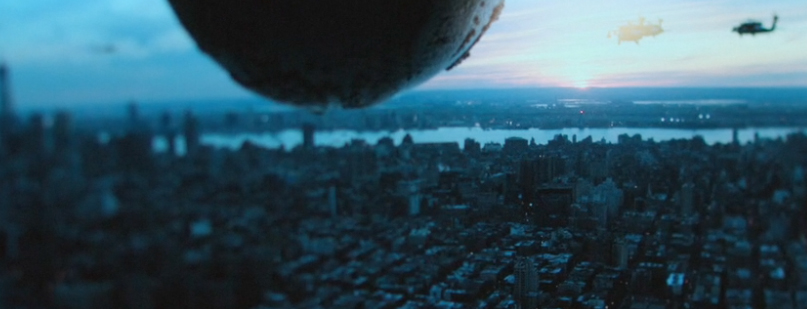
In The Beyond, the sudden appearance of a wormhole causes the disappearance of astronaut Jim Marcell during EVA on Earth’s orbiting space station, followed by associated calamitous phenomena on Earth. Giant dark spherical clouds then appear and settle all over the Earth, disrupting the world’s population, and setting in motion a series of fearful and aggressive reactions by various sectors of humanity.

The Beyond-poster copyThe Beyond’s climax, discovery and resolution is really more of a question. The movie doesn’t have a tidy end; its solution is veiled with more questions.

The film ends with a cautious hope, implicitly asking that big question: are we (humanity) worth saving? When Jessica asks why humanity was offered a second chance by benevolent beings way beyond our comprehension, the returned Jim Marcell (currently a spokesman for the aliens) shows her the GAD (Golden Archive Drive with video images of Earth and humanity—basically our “hello” message to extra-solar life like the one placed onboard NASA’s Pioneer missions) that had accompanied the ship into the wormhole. The message displayed scenes of mothers and their children, people laughing in joy; it also showed scenes of other aspects of this beautiful planet worth saving: the ocean surf, the forests and wildlife. In our hubris, we have lost our perspective about this planet. Perhaps, it wasn’t so much humanity the alien beings intended to save but the Earth itself; we just come along with it. The Earth is, after all, a beautiful, vital and unique world, rich with life-giving water, trees, animals, creatures of all kinds in a diverse network of flowing and evolving beauty. A planet worth saving and that, frankly, functions better without us.

So, the question remains: is humanity worth saving? For centuries we have hubristically and disrespectfully used, discarded and destroyed just about everything on this beautiful planet. According to the World Wildlife Federation, 10,000 species go extinct every year. That’s mostly on us. They are the casualty of our selfish actions. We’ve become estranged from our environment, lacking connection and compassion. That has translated into a lack of consideration—even for each other. In response to mass shootings of children in schools, the U.S. government does nothing to curb gun-related violence through gun-control measures; instead they suggest arming teachers. We light up our cigarettes in front of people who don’t smoke and blow cancer-causing second-hand smoke in each other’s faces. We litter our streets and we refuse to pick up after others even if it helps the environment and provides beauty for self and others. The garbage we thoughtlessly discard pollutes our oceans with plastic and junk, hurting sea creatures and the ocean ecosystem in unimaginable ways. We consume and discard without consideration.

We do not live lightly on this planet.

We tread with incredibly heavy feet. We behave like bullies and, as The Beyond points out, our inclination to self-interest makes us far too prone to suspicion and distrust: when we meet the unknown, we tend to respond with fear and aggression over curiosity, hope and kindness.

Something we need to work on if we are going to survive.

Science fiction—the highest form of metaphoric and visionary art—is telling us something. Are we paying attention?


References:

Carson, Rachel. 1962. “Silent Spring.” Houghton Mifflin. 336pp.

Corey, James S.A. “The Leviathan Wakes.” Orbit. 592 pp.

Liu, Cixin. 2014. “The Three Body Problem.” Tor Books. 400pp.