To Expose or Not to Expose…That is the Question

CreditRiverWalk-oct2018

Walking the path along the Credit River, Ontario (photo by Nina Munteanu)

In fiction, exposition breaks away from the ongoing action of a scene to give information. It can be a paragraph or go on for several pages. Exposition often provides contextual information critical for the reader to buy-in to character-motivation or the ideas promoted in the story. It gives a story its perspective and larger meaning by linking the reader with the thematic elements. If scene is action and plot, exposition feeds reflection and theme. Exposition can appear in the form of background, setting, back story, or overview. It is most often expressed through a POV character’s reflection and observation.

There are points in almost every story where exposition is necessary. Most stories would suffer without information that adds past, context and overview.

WardIsland wall in forest

Ward Island, Ontario (photo by Nina Munteanu)

Exposition in writing lets you:

  • Describe a person in detail
  • Describe a place for more than a phrase or two (important especially if a place serves as a “character”)
  • Skip over periods of time when nothing important or compelling is happening, without a jarring break in the narrative
  • Draw back from a close-focus action scene to give the reader a meaningful overview (and to say how things got that way)
  • Give some background and history of characters, location, event, etc.

You need to balance the show and tell part of your narrative and to maintain a rhythm in your pace and tone. This means doing several things, including:

  • Restrain yourself and keep your notes to yourself: I’ve seen excellent writers add too much exposition on a subject that obviously excited them but didn’t necessarily excite me. This often occurs when a writer feels impelled to share their invention or discovery at the expense of story-telling. Doing your “homework” in writing (e.g., research) also includes keeping it to yourself, no matter how much you want to share it. Doing your homework is the “iceberg” and the story is the “tip”. Many genre books (e.g., science fiction, thrillers, mysteries, etc.) must be supported by solid research. The writer takes what she needs for the story and keeps the rest.
  • Arouse then explain: introduce your character by letting her act and show herself and engage the reader’s curiosity and sympathy, then explain how and why she got there.
  • Build exposition into the scene: get creative and include expository information as props in a scene. This is a great way to add information seamlessly.
  • Put exposition in between scenes: instead of interrupting a scene in action, exposition can be used to give the reader a breather from a high paced scene to reflect along with the protagonist on what just happened. This is a more appropriate place to read exposition, when the reader has calmed down.
  • Let a character explain: have your characters provide the information by one questioning and the other replying. There is a danger in this kind of exposition, in that the dialogue can become encumbered by long stretches of explanation. Take care to make this realistic and enjoyable to the reader. If done well, this type of exposition can also reveal things about the characters.
  • Use interior monologue: use a character’s inner reflections to reveal information, which also reveals something of the character herself. Be careful not to turn this into polemic, however.

Now, go and have fun exposing!

For more writing tips on writing fiction (and non-fiction or memoir) check out “The Alien Guidebook Series” on writing.

nina-2014aaNina Munteanu is an ecologist and internationally published author of award-nominated speculative novels, short stories and non-fiction. She is co-editor of Europa SF and currently teaches writing courses at George Brown College and the University of Toronto. Visit www.ninamunteanu.ca for the latest on her books.

The Careful Writer: Some Notes on Composition

Log patterns 6

Spalted log (photo by Nina Munteanu)

During my recent reread of Strunk and White’s “The Elements of Style”, this little book yielded more good advice that I wish to share with you.

“The shape of our language is not rigid,” they tell us. “We have no lawgiver whose word is final.” This is because language is fluid and ever-evolving as the artist’s tool of communication. The artist interprets the world; the writer interprets the language to reflect it.

And yet, a basic structural design underlies every kind of writing. To be effective, Strunk and White assert, “writing must follow closely the thoughts of the writer, but not necessarily in the order in which those thoughts occur.”

In some cases the best design is no design at all (as in a love letter or a casual essay, which is an acceptable stream of conscious flow). But, in most cases—particularly in “storytelling”—planning helps. The first principle of composition is “to determine the shape of what is to come and pursue that shape.”

Jack Bickham, author of Elements of Writing Fiction: Scene and Structure reminds us that, “a thorough understanding and use of fiction’s classic structural patterns frees the writer from having to worry about the wrong things and allows her to concentrate her imagination on characters and events.” Structure, explains Bickham, is the internal part of the story, like the braces of your house; while form is external, what you do with the structure. Structure and form link to construct “story” in a series of scenes that “interconnect in a very clear way to form a long narrative with linear development form posing the story question at the outset to the answering of that question at the climax.”

Strunk and White discuss twenty-two elementary principles of basic composition. Here are a few choice ones.

The 14th Elementary Principle: Use the Active Voice

The active voice is often more direct and vigorous than the passive. Strunk and White note that activating a sentence not only makes it stronger but shorter. “Thus, brevity is a by-product of vigor,” they say. Here’s one of their examples:

Passive: My first visit to Boston will always be remembered by me.

Passive, indefinite: My first visit to Boston will always be remembered.

Active: I shall always remember my first visit to Boston.

Activating the verb breathes life into the sentence, gives it motion and direction, and empowers both subject and object.

The 15th Elementary Principle: Put Statements in Positive Form

Make definite assertions. Avoid tame, colorless, hesitating and noncommittal language. “Use the word ‘not’ as a means of denial or in antithesis, never as a means of evasion.” Here are a few examples:

Negative Positive
He was not very often on time. He usually came late.
She did not think that studying Latin was a sensible way to use one’s time. She thought the study of Latin a waste of time.

The 16th Elementary Principle: Use Definite, Specific, Concrete Language

Prefer “the specific to the general, the definite to the vague, the concrete to the abstract,” they say. The surest way to arouse and hold the reader’s attention is by being specific, definite and concrete. The greatest writers use words that call up pictures. The key is to know what details matter.

Author Jordan Rosenfeld describes your novel as a world in which your reader enters and wants to stay in for a while. You make it easy for the reader by adding concrete details for her to envision and relate to. Ground your readers in vivid setting, rich but unobtrusive detail. Don’t abandon your characters to a generic, vague and prosaic setting, drinking “beverages” and driving “vehicles” on “roads”; instead, brighten up their lives by having them speed along Highway 66 in a 1959 red Corvette, sipping a Pinot Noir.

The 17th Elementary Principle: Omit Needless Words

“Vigorous writing is concise,” Strunk and White tell us. Ray Bradbury once told me that “every word counts” in a story, from the name of your character to the verb you use to activate and give direction to your sentence. “A sentence should contain no unnecessary words for the same reason that a drawing should have no unnecessary lines and a machine no unnecessary parts,” say Strunk and White. Activating your verbs is one excellent way to invigorate your sentences. Strunk and White provide several common expressions that violate concise writing.

Original                                Just use…
The question as to whether Whether
There is no doubt but that No doubt
Used for fuel purposes Used for fuel
In a hasty manner Hastily
The reason why is that Because
Her story is a strange one Her story is strange

How about the term the fact that? Strunk and White go into some detail with this rather pesky term. Here are a few examples:

·       I was unaware of the fact that ·       I was unaware that
·       Call your attention to the fact that ·       Notify you
·       In spite of the fact that ·       Although
·       The fact that he had not succeeded ·       His failure

For more writing tips on writing fiction (and non-fiction or memoir) check out “The Alien Guidebook Series” on writing.

References:

Bickham, Jack. 1993. Elements of Fiction Writing: Scene and Structure. Writer’s Digest Books. Cincinnati, Ohio.

Strunk, William Jr. and E.B. White. 2000. The Elements of Style. Fourth ed. Longman. New York, NY. 105pp.

Munteanu, Nina. 2009. The Fiction Writer: Get Published, Write Now! Starfire World Syndicate. Louisville, KY. 166pp.

Rosenfeld, Jordan E. 2008. “Novel Revision for the Faint of Heart”. In: Writer’s Digest. February, 2008.

nina-2014aaNina Munteanu is an ecologist and internationally published author of award-nominated speculative novels, short stories and non-fiction. She is co-editor of Europa SF and currently teaches writing courses at George Brown College and the University of Toronto. Visit www.ninamunteanu.ca for the latest on her books.

Playing the Short Game & Other Short Stories

The seventh class of my 12-week Creating Science Fiction course that I teach at George Brown College is all about short story writing. I’m by nature a progressive—and an itinerant explorer; so, I am updating materials for my students and sharing them with you. Embedded in this “sharing” I promise a very cool deal too; just keep reading

One resource I’m eager to introduce to my students is Canadian SF short story writer Douglas Smith’s recent guidebook, Playing the Short Game: How to Market & Sell Short Fiction. Smith’s guidebook is a Tardis-style smallish yet comprehensive guide on what it takes to be a successful short story writer from starting & finishing to marketing & publishing to leveraging & promotion.

Smith is an accomplished short story writer and marketer, who has alwaysPlayingtheShortGame openly shared his treasures of acquired wisdom with others. His stories have appeared in thirty countries and 25 languages. He’s won three awards and has three acclaimed collections—so far. For years, his Foreign Market List has helped writers—including me—sell their work all over the world. To date, I have sold short stories (mostly reprints) to markets in Greece, Poland, Romania, Israel, and Italy—thanks to his list.

Why Short Fiction?

Smith gives seven excellent reasons for writing short fiction, even if you are ultimately a novel writer, like me. Writing short stories:

  1. Helps you learn your craft in easy, short-term, bite-sized amounts and over a reasonable time for you to learn, apply, and relearn
  2. Helps you test the waters of literature, to discover what excites you, provokes you and what ultimately you NEED to express
  3. Builds your resume, again more easily and quickly than a novel, toward that ultimate novel; publishers of magazines and publishing houses are more likely to take your work seriously if you have a publishing history
  4. Helps you explore ideas for your novel, by “pinging” certain premises you may wish to explore in further detail or take elsewhere in a novel
  5. Helps you build a backlist of published stories, which you own, once rights have reverted back to you
  6. Helps you build a network in your writing community of publishing houses, editors, other writers and so forth as you submit and exchange through your works and letters (including all those rejections!). Eventually, a pleased editor/publisher may invite you to submit to a “Best of” anthology or provide a collection. This has happened to me several times.
  7. Helps you learn the publishing business (well, sort of, says Smith…). Through exposure to the business side of publishing, you will gain an appreciation of how the publishing world works.

Know What You’re Writing

A short story only has 7,000 or less words to get your tale across while a novel has over ten times that many words to do the same. It follows then that the short story format is a simpler one. This does not necessarily mean easier.

Novels provide a sense of change, growth and solutions to problems and conflicts. “The short story doesn’t have the luxury of depicting change; the closest it can come is awareness,” writes Shelley Lowenkopf in her 2007 article “Telling Tales” in The Portable Writer’s Conference: Your Guide to Getting Published by Quill Driver Books.

She goes on to describe the short story as a close-up to a novel’s landscape. The short story is, therefore, often more intense and powerful. A short story, more than a novel, has the power to transport, disturb and enlighten.

Renowned short story authors like Edgar Allen Poe, Nathanial Hawthorne, and Somerset Maugham, emphasize the importance of striving for one effect when writing a short story: the single effect you wish to leave with the reader at the end. This is accomplished by selecting events or situations that build quickly into a combustible response. Even Alice Munro, who is known for cramming long timeframes into her short stories, focuses framing time through a single event: a meal, family gathering, wedding or funeral, for instance.

Jack Bickham, in his book, Elements of Fiction Writing: Scene and Structure by Writer’s Digest Books (1993) writes that, “story length, author intention, traditional expectations of the audience, and all sorts of things may affect the form a story may take.” Choosing the appropriate length to tell your story relies on the complexity of your premise and theme.

Understanding the Short Story Format

Here are seven tips toward writing a compelling and memorable short story:

  1. Open in the middle of something happening (e.g., action/in a “scene”)
  2. Make your opening provocative (raise the stakes as high as you can)
  3. Write scenes and write sparingly (avoid describing the obvious—use description to show something odd, memorable, exotic)
  4. Have characters define themselves and their goals through what they do and observe (e.g., show more than tell)
  5. Define characters with dialogue (a great way to reveal while keeping a high pace)
  6. Withhold vital information for as long as possible
  7. Don’t explain the ending (cut down on the denouement; let the reader make those conclusions—a key in the short story format)

Selling Your Short Story

Smith’s guidebook provides several chapters of excellent advice in logical steps toward a successful career.

Here are just a few gems that I will be sharing with my students.

First of all, remember that you are not selling your story; you’re licensing a particular set of rights for someone to do something with that story. Before you do anything else, do your homework: know the rights you’re selling; and which ones to keep. Smith describes five major types of rights: media; language; geography (less and less relevant); occurrence; and time.

Media rights include print rights, electronic rights and audio rights. Markets include magazines, anthologies and collections for short stories. Language and geography rights are pretty self-explanatory. Occurrence rights relate to whether the publisher is buying first or second and onward rights (otherwise known as reprints). Most publishers prefer to pay for the right to publish your work for the first time in that particular format (e.g., in print and in English, for instance). Having said that, I’ve had a lucrative history of selling reprints to some of my more popular short stories. I’ve furthered gone on to selling other rights, such as foreign language rights and audiobook and e-book rights. I’ve also sold two short story collections, one to an Italian publisher (coming out this year) and shorts in several anthologies. No movies yet… But I did have a serious discussion with a writer/producer on one of my shorts. Recall how many Philip K. Dick short stories have been adapted to movies (e.g., Total Recall, The Adjustment Bureau, Paycheck, Minority Report, and Blade Runner).

Heinlein’s Five Rules of Writing

Smith invokes SF writer Robert J Heinlein’s 5 rules of writing to succeed as a short story writer (as any kind of writer, actually). These are:

  1. You must write
  2. You must finish what you write
  3. You must refrain from rewriting, except to editorial order
  4. You must put the work on the market
  5. You must keep the work on the market until sold

I know… Number 3 sounds pretty suspicious, or arrogant at the very least. As Robert J. Sawyer concludes on his site in reference to the five rules, number 3 is open to reasonable interpretation. Of course, it must mean AFTER you’ve finished and edited the story with some level of confidence that you’re happy with it—never mind what other people think of it.

Nina’s Bus-Terminal Model

In my writing guide The Fiction Writer, Chapter L (for “Long or Short?”), I talk about how I launched my own successful short story writing career. I’d been writing short stories for a few years without much success (I was getting interesting rejection letters, so I knew I was getting close); then I settled into a kind of model/routine. I call it The Bus Terminal Approach. As Smith attests—several times—it’s a numbers game. That’s how I played it. It starts with one story and relies on you not waiting until you write the next, and the next and the next. Here’s how it works:

  1. You list at least 3 markets that you’ve researched for Story A and send it to the first of the three
  2. You start right away writing Story B, send it to the first of 3 markets you’ve researched and listed for it
  3. When Story A rejection arrives, you do not revise but send it right away to the second market
  4. Same thing for Story B
  5. Write Story C and treat similarly

FictionWriter-front cover-2nd ed-webRemember to keep track of what you send where and when and what happens to it. It can become a very confusing bus terminal otherwise, with someone ending up in Seattle when they are headed to Toronto! What happens with this approach is several things: you begin to treat the whole marketing/publishing process as a business (which it is) and because you have so many “buses” out there coming and going, the rejections don’t hurt quite as much and instead become part of the learning process, which they should be. You adopt a more business-like approach, which translates into your relationship with editors and publishers. A win-win situation results. Believe me; this works. Once I fell into this method, my sales increased by over 70%.

I mentioned a cool deal in the beginning. Here it is: you can purchase Smith’s e-guidebook, along with several other excellent writing guides on the Write Stuff StoryBundle as a promotional bundle. Here’s the Write Stuff StoryBundle Site. The offer runs until June 4th 2015.

My own guidebook, The Fiction Writer, can be purchased in various online and onsite bookstores, including Amazon, Kobo, Chapters Online, Barnes & Noble, and several others even I don’t know about.

Natural Selection, my short story collection published by Pixl Press in 2013 is also available at several bookstores.NaturalSelection-frontHR

Written with flare and a conscience…Munteanu shines a light on human evolution and how the choices we do or don’t make today, may impact our planet and future generations.”—J.P. McLean, author of The Gift Legacy

“Nina Munteanu is a gifted writer. Each story surprises and delights.”—Allan Stanleigh, co-author of USNA and The Caretakers

nina-2014aaNina Munteanu is an ecologist and internationally published author of award-nominated speculative novels, short stories and non-fiction. She is co-editor of Europa SF and currently teaches writing courses at George Brown College and the University of Toronto. Visit www.ninamunteanu.ca for the latest on her books.

Feeding the Muse: Going on a “Writer’s Date”

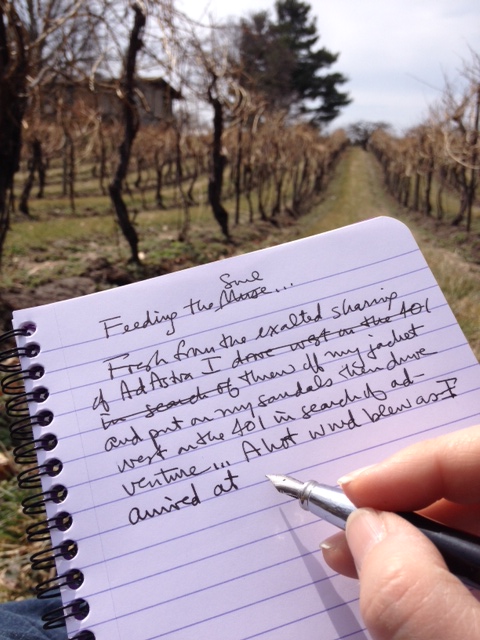
SONY DSCLate Sunday afternoon, minutes after my last panel and still exalted from stimulating sharing at Ad Astra 2015, I threw off my jacket and put on my sandals then drove west on the 401 in search of adventure. A playful wind blew as I reached my destination: Niagara on the Lake.

This was my first writer’s date this year. And, in truth, I’d almost forgotten to attend the SF con because I was so excited about my date. No, it wasn’t that kind of date; more like a mini-writer’s retreat. Julia Cameron coined the term “artist’s date” to define any kind of muse-feeding activity. The key is to do it ALONE. Basically an artist/writer date is a block of time you set aside to nurture your creative muse. In its primary form, says Cameron, “the artist date is an excursion, a play date that you preplan and defend against all interlopers…That means no lovers, friends, spouses, children—no taggers-on of any stripe.”

It’s just you and your inner-artist: your inner creative child.

My Writer’s Date started with Niagara on the Lake and La Toscana di Carlotta, possibly NOTL’s primo Bed and Breakfast (go check the rave reviews on Trip Advisor). Located close to King Street in the historic village, the B&B is a lovely heritage house with beautifully designed rooms. Carlotta passionately prepares an authentic Italian breakfast that includes freshly squeezed orange juice, yogurt and fresh fruit, bread, crostini, eggs created like a work of art and even dessert! But that’s not even the best part; both Carlotta and partner Kash are such beautiful people and wonderful hosts. You start out thinking they’re so interesting and end up embracing them as friends.

I stayed 2 days and my activities included a evening walks through the charming historic town (where Il Gelato di Carlotta is a must—considered a gem by actress Moya O’Connel), several ice-wine tastings, walks along the Niagara River and even a blitz look at Niagara Falls and Tesla’s statue.notebook01

It was a dizzying sensory intake, tempered with wonderful reflection to Nature’s awakening. Spring in southern Ontario lies just on the cusp of bursting into its full glory. I could smell its intent on the warm breeze and in the joyful excitement of birds and butterflies in the still-Spartan forest. At the edge of the wooded bluff I found a moss-covered log to sit on and listened to the water lapping below. I pulled out my new fountain pen and notepad and started to write. I’d left my computer behind and revelled in the pen flowing across the paper, forming words like a magician.

I had set no solid itinerary (except that I had to be back in Toronto to teach the next day). And, because of it, I experienced everything with the open wonder that comes with no expectation. I relaxed and explored. I poked around and smelled the dirt. I napped. I dawdled. I went in circles and changed my mind. I chased after butterflies and listened to the wind. I got a hazelnut gelato and licked it slowly. I wandered off the forest path and got lost. I discovered an obscure winery and tasted Cabernet Franc ice wine. I wept to Bocelli and Brightman’s “Time to Say Goodbye” … Mama Mia! I took my socks and shoes off and took pictures of my feet (No, I didn’t then put them on Facebook). I sat on a forest path bench and read a book. I drove down roads I’d never been on and let them take me somewhere… I found myself somehow back at Il Gelato di Carlotta and decided that fate had brought me there to try another ice cream flavour.

notebook02Think of doing a writer’s date from time to time. If not consciously to re-awaken your Muse, then to let it know you care. Every muse needs a bit of tender loving care. Spend time in solitude. A long country walk. A stroll along the beach. An exploration of your own area at night or at the break of dawn.

You don’t even need to leave the house. In a panel I sat on with Kelly Armstrong at Ad Astra, she shared what a colleague of hers did. From time to time the colleague disappeared into the bathroom of her house with a snorkel. The snorkel was the critical element. With it, she could completely immerse herself in a dark calm and block out the whole outside world, leaving her with her own infinite universe.

NoteTaking-NiagaraThe writer’s date is a gift you give yourself. It’s a gift of receiving, of opening yourself to discovery, wonder, and inspiration. It is ultimately a self-nurturing activity in which you let your child-self out to play. “The imagination-at-play is at the heart of all good work,” Cameron tells us. Cameron also warns that you may find yourself avoiding artist dates. “Recognize this resistance as a fear of intimacy—self-intimacy.”

It may be one of the hardest things to do. You (never mind others) will insist that it’s a selfish thing and you are shirking some duty you must be leaving behind with it. And you’ll find some reason to back out or include someone. Learn to guard against these invasions!

Keep it sacred. Let your imagination play and discover—or rediscover—what it loves.

As Carl Jung astutely observed, “The creation of something new is not accomplished by the intellect but by the play instinct acting from inner necessity. The creative mind plays with the objects it loves.”

Horseshoe falls-mist

Horseshoe Falls, Niagara Falls, ON (photo by Nina Munteanu)


nina-2014aaNina Munteanu is an ecologist and internationally published author of award-nominated speculative novels, short stories and non-fiction. She is co-editor of Europa SF and currently teaches writing courses at George Brown College and the University of Toronto. Visit www.ninamunteanu.ca for the latest on her books.

Why You Want to Go To A Writer’s Convention

IMG_0304A while ago I attended (and participated as panelist and guest author) at the World Fantasy Convention in Toronto. And I was all jazzed about it! Why?… Well, let me tell you why…

If you haven’t yet attended a writer’s conference or convention, it’s high time you did. Because, not only are you missing out on an education, you are missing out on a sub-culture that may change your life as a writer, help feed the hungry and align the universe. Seriously.

The last World Fantasy Convention I attended was several years ago in 2008. It was held in Calgary, Alberta, when I still lived in Vancouver, British Columbia. The ten-hour drive through some of the most glorious Canadian wilderness and mountains was bracing and we were lucky that the weather played fair. It was an auspicious start to a wonderful journey of self-discovery.

Hosted by toastmaster Tad Williams, this world-class convention featured guests of honor, David Morrell, Barbara Hambly, Tom Doherty and Todd Lockwood. The World Fantasy Convention promised great things and delivered them. And I’m not just talking about that white chocolate cranberry-date-nut dip that had me loitering at the hospitality suite. Or all those midnight parties that served savory wine with salted almonds, sharp cheese and colorful conversation with the likes of David Hartwell, Tor editor and impeccable dresser (gotta love those ties!). I’m not even talking about the hot tub that sprung a leak on the 18th floor at 1 am or the entertaining panels and readings, which rocked for both writer and reader.

What made the con great for me was seeing my writing community (both writing colleagues and readers who followed my writing) and meeting new people, all lovers of books and “story”.

I was rudely eyeballing someone’s nametag on his chest, when I collided with the Prince George crowd that included authors, Lynda Williams (herself responsible for some pretty nasty intergalactic wars), Nathalie Mallet (who cages princes) and publisher Virginia O’Dine of Bundoran Press (rumored to have been somehow responsible for the hot tub fiasco). I also chummed with Jennifer Rahn, author of The Longevity Thesis, who was charmed by my sly cat (she’s a softy at heart). My cat-colleague Toulouse just kept charming his way through the crowd right to the book fair. We wandered to the back where Anita Hades of Edge Books gave Toulouse her usual greeting (a feline move that was a cross between Sophie Marceau and Brigitte Helm; both she and Toulouse have French blood coursing through their veins, after all—c’est vrai!).

I’d come a long way from the first writer’s conference I went to as a budding writer of a few short stories and non-fiction articles…

Here’s what author Susan Denney says about her first writer’s conference: “Going to my first writers’ conference was an act of faith. I was just starting to make some freelance sales when the members of my writers’ group encouraged me to join them at a conference a few hundred miles away. The expense didn’t seem justified to me. The cost was far more than I had earned through writing that year. But they convinced me at last and it proved to be a great investment. The benefits of a writers’ conference are there for anyone who has a desire to be a better writer.”

Here are some reasons why you can’t afford NOT to go to a conference or convention:

Contacts: you will make contacts with people working in the industry, an extremely valuable asset; this industry is a social one, based on trust, respect and joyfulness. While there’s no guarantee that you will meet anyone famous or influential, you will definitely meet people who know more about writing than you do. Just hanging out with professional writers, editors and agents is educational. If nothing else, you will gain some confidence and ease with industry people, who are real people too. Some may become friends; some may become colleagues; some will become both.

Appointments: through agent/editor/author appointments, you will have a chance to have a quality private conversation with a professional on all aspects of writing and publishing. This is your chance to pitch your novel or ask that one burning question. You know you’ll get a candid and professional answer. That in itself is invaluable and may be enough reason to attend the con. Appointments are also your best chance of getting your manuscript read. This is because it bypasses the slush-pile and months of waiting for a response. More and more editors and agents look to conferences to meet potential authors. For them, meeting an author in person is a bonus to their gauging potential success in a relationship with them.

Education on Craft & Marketing: you will learn something about craft and marketing, no matter what stage you are in your writing career. Depending on the conference or convention, aside from good information from panels, you may also get personal mentoring, 1-page critiques, or attend small themed workshops. Feedback from an experienced writer can save you months of frustration and grief. Just hearing about what is currently going on in the industry is also valuable and conferences are a good way to get the skinny on what the current issues in the writing and publishing industry are. Getting it from those who are working inside avoids the idle and potentially harmful gossip.

Community: you will be exposed to a community of writers, hundreds of creative people in various stages of their careers. By interacting with both those you can help and those who can help you, you will gain a measure of both humility and confidence and satisfaction. We learn so much by helping others. Simply being with other writers can help hone your people-skills, the same ones you will need when approaching agents, editors, publishers and research sources during your career as a professional. Remember, if you aren’t having fun, you are missing one of the most important aspects of attending a writer’s conference, and you will lose your own effectiveness.

Energy: there is nothing more energizing than a common sharing among those of like-minded thought and vision. Writing is primarily an individual pursuit, often thought to belong to the introvert; but, to succeed in the writing/publishing industry a writer must display staying power, persistence, confidence and enduring energy. There is nothing quite as inspirational as hearing an accomplished writer provide their story of victory against odds. I will never forget the moving words of Ray Bradbury at a conference in Palm Springs years ago. I have repeated those words many times since. If you come to a conference with the right mind-set, I guarantee that you will leave with more energy than you came and with a burning need to write.

Exposure: depending on the kind of conference or convention you attend, you will have the opportunity to expose yourself to something different (e.g., different fiction genres and associated communities; fiction vs. non-fiction; different media; etc.). I attended a romance writers conference a few years back (I write mostly science fiction and fantasy—but often with romance elements in them) and found it bracingly educational.

New Markets & Ideas: conferences attract writers of all kinds. Conferences provide fertile ground for cross-pollination of ideas, markets and marketing ploys. Writers, like you, are generally a nice crowd; most are willing and eager to share their successes and failures. And contacts. Sharing is one of the great things that happens at conferences. There may be a common pin board set up for people to share. Most conferences are Twitter and Facebook enabled for quick and easy viral sharing. If you don’t come away from a conference with at least one new idea, contact or market, you haven’t done your job: talk to people.

Here are a few do’s and don’ts for when you go conferencing:

  1. Wear comfortable but not sloppy clothing and shoes (it’s likely that you will be doing a fair bit of standing and walking); you want to make a good impression. Be yourself and dress accordingly.
  2. Bring promotional material with you (e.g., business cards, flyers on your book, stories, etc.). Have something to share and exchange with other writers and professionals. Most conferences also have tables devoted to shareware. This is your chance to introduce you and your writing to others.
  3. Take something to write with (e.g., notebook and pen or iPad, etc.).
  4. Talk to people. Chances are that everyone there is interesting.
  5. Respect the time, particularly other people’s time, and keep your appointments and meetings.
  6. Don’t bring your heavy manuscript with you to the conference. Agents and editors don’t have the time or inclination or space in their suitcase for it. Use the conference to make an impression and get an invitation for something later in writing.
  7. Keep all of your interactions verbal and face-to-face. Don’t rely on memorized speeches or a folded up written pitch in your pocket. Keep it casually professional. Make eye contact and speak from the heart. Show your passion.
  8. Have fun. And don’t be afraid to show it; there’s nothing more infectious and attractive than someone having fun.


Some upcoming writing-artistic conferences/ conventions / festivals in the Toronto area include:IMG_0306


nina-2014aaNina Munteanu is an ecologist and internationally published author of award-nominated speculative novels, short stories and non-fiction. She is co-editor of Europa SF and currently teaches writing courses at George Brown College and the University of Toronto. Visit www.ninamunteanu.ca for the latest on her books.


Learn How to Write Science Fiction at George Brown College

For those in the Toronto area, I’m teaching a 12-week course on how to write science fiction at George Brown College this spring.

Called “Creating Science Fiction”, the course runs Wednesday nights from 6:15 to 9:15 starting April 8th through to June 24th and costs $278. The course is also part of George Brown’s Creative Writing Certificate.
.
Meant for both beginning writers and those already published, the 12-week course is run like a workshop with student input and feedback on student’s WIPs. I explore with students the essential tools used in the SF genre (including world building, research and plot approaches). Students will work toward a publishable original piece by learning to generate and follow through with premise, idea and theme.
Microsoft Word - GBC-SF course-APRIL2015 AD.docx
George Brown College is located on 200 King Street, Toronto, Canada.
.
.
.
.
nina-2014aaNina Munteanu is an ecologist and internationally published author of award-nominated speculative novels, short stories and non-fiction. She is co-editor of Europa SF and currently teaches writing courses at George Brown College and the University of Toronto. Visit www.ninamunteanu.ca for the latest on her books.

Walking the Tightrope Between Innocent and Cynical

jungfrau05

Jungfrau, Switzerland (photo by Nina Munteanu)

The writer’s journey from the passion and vulnerability of innocence to the wisdom of experience can be a dark and twisted road. In fact, if you are a writer of any merit, I guarantee you that yours will be too. Think Dante in the forest…

YellowCreek1

Yellow Creek, Ontario (photo by Nina Munteanu)

Let me tell you a story … It starts in the early 1990s. I was an eager young sprite entering the novel publishing world with my newly finished science fiction novel: “Escape from Utopia”. I’d published a few short stories and many articles by then. In addition, I’d published many scientific papers and reports. Confident and cocky, I was proud of my novel and eager to share it with the world. And I thought I knew my way through that dark forest…

I zealously sent the manuscript to a bazillion agents and editors. I was rewarded for my zealous efforts with a tidal wave of rejection letters. Mostly form letters (see my amusing account of the evolution of rejection letters in my fiction writing guidebook, The Fiction Writer) and an excerpt in a previous post here: “Rejection, Part 2: the Evolution of Rejection

Then it came: an enthusiastic letter from an agent (I can’t remember the name: Literary Bridge or something); they said my work had great promise and that with some help from an editing firm they would consider representing me if I had it edited and resubmitted.

They recommended Edit Ink.

Those of you in the know and with some history in the industry may recall the Edit Ink scandal of the 90s. In short, it was a bait-and-switch scam that Bill Appel and Denise Sterrs (of Edit Ink) and their associated literary agents ran for close to a decade. Edit Ink was a “book doctor” firm near Buffalo, New York. The State of New York eventually convicted Appel and Sterrs and associates for defrauding prospective writers of several million dollars.

I remember my heart swelling with gratitude and optimism. Finally, someone liked my book! I naively considered their recommendation. Soon after—within days—I got an invitational letter from the pro-active Edit Ink. I can’t remember the exact content, except that they assured me that only the most promising writers were recommended to them by this particular agent. I remember seriously considering their offer. Then I got two more letters, one from another agent who recommended Edit Ink and another invitational letter from Edit Ink. Alarm bells went off. I went from naively hopeful to cynically suspicious. I did some investigating (something I should have done initially); by then the buzz was already on the Internet on their questionable practices. The lawsuit by New York State had yet to happen.

The Science Fiction Writers Association (SFWA) runs a “writer Beware” page, where memorable cases are reviewed. It’s worthwhile perusing just for your general knowledge and edification.

Here’s what they said about Edit Ink:

Founded by the husband and wife team of Bill Appel and Denise Sterrs, Edit Ink was a New York State-based editing service that engaged in a kickback referral scheme with a wide network of literary agents. Here’s how the scheme worked.

  • Participating agents sent letters to writers who’d submitted manuscripts the agents didn’t want to represent, saying that the writer’s work showed “promise” but “wasn’t quite ready for publication.” A useful service was recommended: Edit Ink, which for a fee would polish the ms. to make it more salable. Once the ms. had been edited, the agent would then be glad to reconsider it.
  • The agent forwarded the writer’s name to Edit Ink, which sent off a solicitation letter claiming, among other things, that Edit Ink received referrals for only a “select few” manuscripts (false), and that most publishing houses insisted on receiving “professionally edited” work (falser).
  • If the writer took the bait and paid for an edit, the referring agent received a kickback of 15%.
  • Writers who resubmitted their edited manuscripts to referring agents, per the referring agents’ suggestions, were given the brushoff. Either the market had “changed in the interim”, or the agency was “no longer representing that genre.”

Edit Ink charged $5 per page–exorbitant at the time even for a qualified editorial service, which Edit Ink very definitely was not. Its staff mostly consisted of recent college graduates with no publishing experience, working long hours for minimum wage. The typical Edit Ink edit was slipshod and superficial, consisting mainly of basic copy editing suggestions, and omitting the kind of in-depth analysis of plot, theme, character, and structure that might make a professional edit worthwhile.

At its height, dozens of literary agencies participated in the scheme. Edit Ink even set up its own bogus agencies and publishers to funnel more manuscripts its way. It’s estimated that the company made in excess of $5 million.

Mounting complaints from writers, and efforts by writers’ advocacy groups, at last spurred New York State to take action. In January 1998 the NYS Attorney General announced a lawsuit against Edit Ink for deceptive business practices, false advertising, and fraud.

Throughout the appeals process, Edit Ink continued to operate. Many questionable agents continued to refer manuscripts, and Aardvark Literary Agents (one of Edit Ink’s original bogus agencies) was taken over by co-defendant Kelley Culmer so it could go on functioning as a conduit for Edit Ink referrals. Business was dwindling, however–in part as a result of media attention, but largely because of spreading word in the then relatively new environment of the Internet. Once the appeal was denied, the thrill was gone. In August 1999, Appel and Sterrs closed Edit Ink’s doors for good.

Shades of Edit Ink

Edit Ink is by no means unique in the publishing industry. “Book doctors”, associated kick-back agents and subsidy publishers are, in fact, on the rise. This is not surprising, in view of the current rise in self-publishing and associated models. The industry is currently inundated with a range of publishing models from straight printing-only firms to full service publishing houses and anything in-between.

Author Victoria Strauss on her blog “Writer Beware” shares this story:

Over the past couple of days, I’ve heard from several writers who queried agents at Objective Entertainment, a relatively new literary agency with a strong track record and experienced staff, and received the following response:

Dear [name retracted], 

Thank you so much for contacting us at Objective Entertainment. We have reviewed your material and we would like to refer you to one of our Publishers who we trust and believe will be able to serve you best. In order to do this I need your permission and the following information so they can either contact you via Phone or Email. The following information we need is if you would like to receive their newsletter and special offers. I think this is an amazing opportunity for you. 

Please reply with the information we asked so that we can get you that one step closer to getting your work published! 

Best 

Tracey Ravenelle
Objective Entertainment

When the writers, eager to know the name of the publisher, requested more information, they received this response from Ms. Ravenelle:

We work with Iuniverse and AuthorHouse. Iuniverse has the number 5 book this week on the NY Times Best Seller List!

The writers then asked why Objective was recommending a self-publishing service. As of this writing, only one has received a response, which Ms. Strauss reproduced below exactly as it was sent to her:

Because we believe they would be the most beneficial for you at this point in time. Then you would come back to us after the sales starting racking up and we go major! This is the best way for an author to get their work out their. One of their books is number 5 on this weeks upcoming NY Times Best Seller list. So we believe they can help our potential future clients immensely.

EEK… aside from their atrocious grammar, Objective made some questionable recommendations. The major one being that of referring rejected clients to a self-publishing service (of course, they got a fee for referring clients to the house).

Vanity and Subsidy Publishers

SFWA shares another story:

Thousands of writers worldwide entered into contracts with Commonwealth Publications of Canada, a vanity publisher founded in 1995 by fee-charging literary agent Donald Phelan. Phelan worked with a number of other fee-charging agents who, in exchange for a kickback, recommended Commonwealth’s vanity contracts to their clients. Phelan also advertised for manuscripts in magazines such as Writer’s Digest and Writer’s Journal. (Writers take note: this is just one example of why you shouldn’t trust the classified ads in writers’ magazines.)

Commonwealth, which identified itself as a “subsidy” publisher (the implication being that the writer was contributing only a portion of the cost) typically charged $4,500 for publication, with a promised print run of 10,000. Its glossy promotional material promised all kinds of support to its authors: editing, proofreading, marketing, international distribution. But few of these services were actually delivered–and there were many other problems. Publication dates were delayed. Authors didn’t receive the number of books they were promised. The quality of finished books was poor. Books never showed up in bookstores. Royalties from books supposedly sold were never paid.

Fee-Charging Agents

SWFA shares this recent story:

On January 7, 2010, UK literary agent/film producer Robin Price appeared in court, accused of stealing more than half a million pounds from clients.

Price is alleged to have encouraged authors to pay exaggerated literary fees and invest in non-existent film deals, and has been charged with six counts of theft, most committed over the course of several years.

Even successful established writers were taken in by this one.

Writer Brian Knight, who suffered a book doctor agent scam, shares this advice: “New writers need to know that these people are still out there, spewing false promises … patting us on the back with one hand and picking our pockets with the other.” He advises new writers to research every individual and business with which they intend to do business.

Reign in your excitement and enthusiasm. Breathe. Then do the research. “Google.com is your friend,” says Knight. “There are other online resources available to writers. In this era of the information super-highway, it has never been easier to arm yourself against the scumbags and swindlers who make their living off the trusting and naive.” Knight also suggests, www.duotrope.com.

A great site to check out anyone in the writing and publishing industry is “Preditors and Editors” (intentionally misspelled). A site I have come to rely on for excellent market advice is www.ralan.com.

The writer’s journey is a hero’s journey, fraught with obstacles, dangerous distractions, and great disappointments (see Christopher Vogel’s excellent book The Writers Journey: Mythic Structure for Writers for more). But it is a path illuminated by a beacon of passionate expression, great sharing and exquisite victory. Choose your hero archetype carefully: choose magician.

We are the shamans, the myth-makers of our community and society. The artist / writer carries her archetypal message through story to her tribe, her community, her society and her world. It is both fulfilling and a great responsibility.

After the Edit Ink debacle, I picked myself up—a little wiser and a little more careful—and went on to find a traditional publishing house who published my first and second novels. Escape from Utopia became Angel of Chaos published by Dragon Moon Press (Part 1 of the Darwin’s Paradox duology), and I went on to publish seven more novels through traditional, indie, and self-publishing models: a historical fantasy, an SF adventure trilogy, two romantic SF novels, a short story collection (Natural Selection) and two text books on writing.

I haven’t looked back since… except to write this article, that is.

 

nina-2014aaNina Munteanu is an ecologist and internationally published author of award-nominated speculative novels, short stories and non-fiction. She is co-editor of Europa SF and currently teaches writing courses at George Brown College and the University of Toronto. Visit www.ninamunteanu.ca for the latest on her books.

Women Heroes, Part 2: How Brienne of Tarth Saved “Game of Thrones”

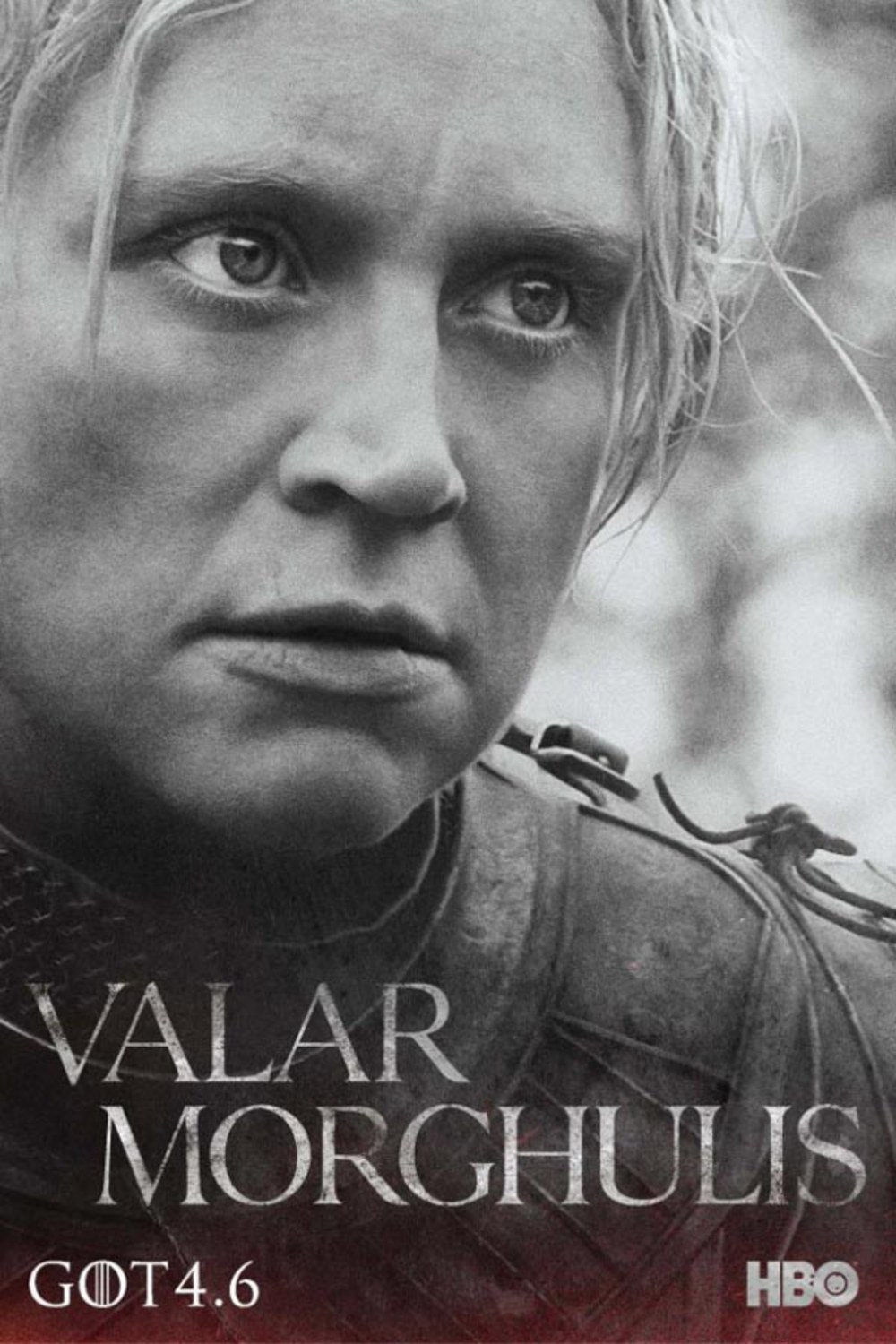
brienne of tarth-valar morghulisI’ve been following the insanely popular—yet excruciatingly brutal—Game of Thrones for several seasons now. I must confess, partly because I don’t own or watch TV, that I am a little behind. I’m currently watching Season Four, while still metaphorically shaking in the violent wake of the shocking and brutal Red Wedding episode of Season Three. As the Internet buzz revealed, this was an extremely difficult show to watch for everyone. What was the purpose of its graphical brutality? Who needs to see that level of violence? I am reminded of an introductory scene in the show in which character John Snow counsels his little brother Bran to not avert his eyes when his father executes a deserter, by chopping off his head—an act that foreshadows his own decapitation later in the series. It is as though the producers of the show are counselling us in the same way as they subject us to grisly scene after grisly scene. Many cheap and gratuitous, as far as I am concerned.

The Red Wedding scene, in which several beloved characters are brutally slaughtered set into play a new set of rules for audience engagement: that of total distrust. Distrust in the storytellers (primarily in the producers of the show, whose scripts, I’m told, have deviated from the novels in some important ways). Distrust that creates an uneasy tension. Distrust that precipitates a panicked wish for clairvoyance. This is because we have no concept of fairness in the story; yet we’ve so invested in the characters. That is the storyteller’s worst act of cruelty: to hold us hostage to the characters. The rules of fair play in story have been broken. We’re stuck in a kind of free fall, desperately hoping that our beloved characters will make it through the night intact, if not unscathed. And when they don’t, its like watching our children die, as we stand powerless by.

Good fiction—as opposed to reality—tells a purposeful story. A story with fictional characters, who play a purposeful role. All good stories make a promise in the beginning; a promise they keep in the end. They create a covenant with their audience to participate in a fulfilling journey. This doesn’t have to mean a happy ending, but it does include meaning and fulfillment—even if only for its audience. And that must involve victory of sorts—and hope—whether it is through redemption, acceptance, enlightenment, or some change that gives us “more”—not less; something that allows us to prevail alongside.

If I feel that I am simply witnessing a cesspool of meaningless chaos and brutality, dominated by ruthless and insane people, in which heroes are equally powerless victims as they are true agents of change—with no rhyme or reason to tell the difference—then I must ask myself the question: why am I watching this? What does this story mean to me? I start to feel like a misanthropic voyeur, as perverse as Joffrey or Littlefinger as I watch people get tortured, flayed alive, dismembered, and worse… with no recourse. This is NOT entertainment and it certainly isn’t of any value to me. For such an offence to the senses to have value, there must be an element of—or at least a grain of hope of—prevailing and movement.

By Season Three end, both the series and I are feeling a little tired. And for good reason; most of the characters—the women particularly—are trapped in an incessant pattern of simple endurance. That seems to be all they are able to do: endure. Certainly they manage to act and create within their limited sphere of influence; but mostly to colour their position, not change it. So, we endure alongside; and we can endure only so much.

Then enter Brienne of Tarth. Also known as Maid of Truth.

And with her, a breath of much needed fresh air.brienne of tarth-close

When Brienne was first introduced in “What is Dead May Never Die” in Season Two, she brought with her the anachronistic romanticism of a true knight. We first see her besting favored champion Ser Loras Tyrell (Knight of Flowers) in a tournament. When she presents herself to King Renly Baratheon and removes her helm, the crowd hushes in surprise. To his offer of prize, Brienne requests a place in his Kingsguard, which he gladly grants, despite her gender and lack of formal stature as a knight.

Brienne is the iconic knight of the chivalric sagas: noble, virtuous, compassionate and brave. Singularly honest and loyal. So much so that her contemporaries deride her as simple, naïve and stupid. As though embracing such virtues is outmoded, foolish and weak. That she is a woman—albeit tall, ungainly and considered unfeminine—makes her virtues all the more powerful and refreshing.

BrienneoftarthWhen King Renly is assassinated, Brienne swears fealty to Catelyn Stark and becomes her sworn sword. Catelyn charges Brienne to return her captive Jaime Lannister to King’s Landing to exchange him for her two daughters held hostage there. Their journey provides some of the best scenes of the TV series and some of the most fulfilling interactions. Throughout Jaime’s insufferable taunts about her appearance and likely dismal history with the opposite sex, Brienne remains stoically silent. Except when she speaks:

“All my life men like you’ve sneered at me, and all my life I’ve been knocking men like you into the dust.”—Brienne to Jaime Lannister, Game of Thrones

Essayist Brent Hartinger suggests that Brienne’s character is a well-written departure from fantasy novels where the main characters are commonly “the slender… average-heighted, the conventionally abled and traditionally gendered.”

Essayist Caroline Spector describes Brienne as a “study in heartbreaking contradictions. She embraces the romantic ideals of her culture, both emotionally and through her actions, but is continually betrayed by the real world simply because she cannot turn herself into the woman the Westerosi legends tell her she should be.”

By upholding her ideals of integrity, Brienne refuses to conform to the established cultural expectations. Her very nature—from physique to comportment to idealism—defies the notion in Westeros that women are to be taken or coerced, and meant to endure their lot; not be agents of their own change. Spector describes Brienne as a woman who has “taken for herself most of the attributes of male power.” She embodies “how women who dare to take male power for their own are judged and treated not only in Westeros but in all conventionally patriarchal societies.”brienne-jaime-GoT

The journey of Brienne and Jaime is a fine tale of initial antagonism, discovery, surprising tenderness and ultimate friendship, based on honour and mutual respect. Throughout, Brienne defends and encourages a flagging Jaime and he, in turn, saves her on several occasions, culminating in his return to rescue her from a brutal death in the bearpit.

What makes “The Bear and the Maiden Fair”—or any other scene in which Brienne and Jaime appear—so pleasing? We witness in the interactions between them an evolution in character, great opportunities for learning and redemption, and finally the development of an iconic friendship based on respect and equality—something normally reserved for individuals of the same sex—that neither had previously enjoyed. Like two souls missing something, each is a gift to the other. And though delivered differently, it is the same for both: honour, self-respect and faith in humanity. And neither is the same for their interaction.

brienne-jaime-swords“The bathhouse had been thick with the steam rising off the water, and Jaime had come walking through that mist naked as his name day, looking half a corpse and half a god.”—George R.R. Martin, A Feast for Crows

Brienne is the catalyst hero. She gives us hope. She gives us hope to save the world. She does this through her influence on others. By shear strength of her genuine goodness, Brienne transforms, challenges, and supports. She is über-strong, yet vulnerable; which Jaime recognizes and appreciates as something truly beautiful. The reason he returns to save her in the bear pit.

“I am grateful, but… you were well away. Why come back?”

A dozen quips came to mind, each crueler than the one before, but Jaime only shrugged. “I dreamed of you,” he said.—George R.R. Martin, A Storm of Swords

Jaime slides back to his scoundrel-self once returned safely to King’s Landing and out of Brienne’s sphere of influence—and beneath the shadow of his overbearing father. He is a chameleon, a shape shifter, who struggles to lift himself out from the shadow of his soulless father. Despite some continued reprehensible behavior (particularly to do with his sister, with whom he had formed a perverse relationship), Brienne’s light of honour appears to burn inside him in some form. His actions—tasking her to find and secure Sansa’s safety and giving her his own sword—maintains their honour-bond. When he gives her his longsword, forged of Valyrian steel, he asks her to name it; showing the cooperative respect between the two. She chooses the name Oathkeeper, fulfilling again her role in their story.

In fact, Brienne’s story follows a more traditionally male narrative. Her quest is to save the beautiful maiden (Sansa), but not to marry her or benefit from the quest; it is simply to secure her safety. Feminist writer Rihannon tells us that this is a storyline that “the mother, the young girl and the shieldmaiden are all given equal weight and worth…She uses her strength and her skill to respect and help other women in ways that most men in Westeros would never even think to attempt, because she understands, more than any other knight, that women are truly worth something as individuals.”

Are other women of Westeros poised to rise as true agents of change and takebrienne-of-tarth command not only of their lives but to save the world? Daenerys Targaryen, the dragon mother, liberates slaves; courage and a sense of justice animates the independent Arya. And we’ll see what becomes of Brienne…and Jaime.

I will continue to watch this series with uneasy anticipation.


nina-2014aaNina Munteanu is an ecologist and internationally published author of award-nominated speculative novels, short stories and non-fiction. She is co-editor of Europa SF and currently teaches writing courses at George Brown College and the University of Toronto. Visit www.ninamunteanu.ca for the latest on her books.

From Pocketbook to Tablet … What’s Next?

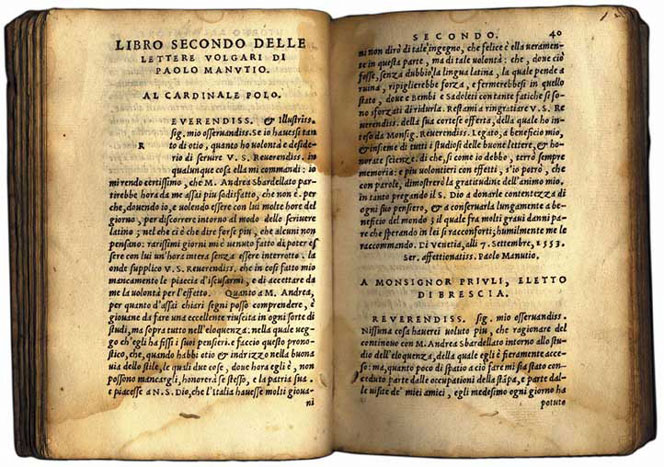
aldus manutius bookThe recent exhibition at the Grolier Club in Manhattan, “Aldus Manutius: A Legacy More Lasting Than Bronze” reminded me that the pocket-sized book was invented some five hundred years ago.

The pocket book revolutionized not only how we read but who and what we read.

In a recent talk I gave to the Editors Association of Canada about the changing face of publishing, I defined two milestones in the publishing industry.

First Milestone…

The first milestone came in two stages, beginning with the invention of the printing press by Johannes Guttenburg in 1452. Up to then,

…Books were a work of art… And part of an elite. Delicate, large and beautiful, they were created in the language of the church—Latin—and in turn copied entirely by hand by the monks. With the dimensions of a current newspaper, but much thicker, these large illuminated manuscripts sometimes weighed more than 50 pounds.

Readers were mostly scholars and the religious elite. In fact, reading was an elite occupation. The majority of people at the time couldn’t read and had no interest in books. Besides, books were not written in the commonly spoken language of the countryside such as English, French, German or Spanish.

In fact, the presses formed the very basis of the artistic Renaissance, the religious reformations and the scientific revolution, wrote Elizabeth Eisenstein in The Printing Press as an Agent of Change. “The printing press allowed the spread of information that couldn’t be controlled by the clergy, kings, politicians, or the religious elite,” adds New York Times technology reporter Nick Bilton in I Live in the Future and Here’s How It Works. Storytelling was no longer confined to an elite clergy; books could be created by anyone and shared in the spoken languages of the people.

The printing press had opened a gate of opportunity for secular expression to a greater audience. Whenever an opportunity is created, a corresponding need is identified. The need to connect a literate lay public with scholars and storytellers was resolved fifty years later by Aldus Manutius.

Until then, books, albeit printed in the language of the people, remained large, heavy and cumbersome. In 1502, Aldus Manutius invented the portable pocketsize book—the small format libelli portatiles (portable little books)—effectively creating “the mobile phone of his day,” according to Bilton.

Bound in vellum, these long, narrow libelli portatiles, easily transported in a pocket or a satchel, “could be held in the hand and learned by heart by everyone,” wrote Manutius. aldine press book

Manutius founded The Aldine Press in 1495 in Venice. His printing company proudly bore the logo of dolphin entwining an anchor—taken from the term festina lente (hasten slowly), a motto Manutius took from a Roman coin—and Aldine books quickly gained a reputation for their clean design, excellence in typography and inexpensive and accessible price. The Aldine press emphasized Greek and Latin lexicons and grammar manuals, with the first printed edition of Aristotle in 1495. Manutius was also the first to print Thucydides, Herodotus, Sophocles and other Greek philosophers. “He was possibly the first printer to compare manuscripts to arrive at the most reliable text,” adds Jennifer Schuessler of the New York Times (February 27, 2015).

Manutius was the first to use italic type, mimicking the handwriting of that time, and the first to use the semicolon in its modern sense. In 1501, Manutius released Virgil’s Opera as the first of his octavo editions of the classics and the first book to use italic print. It was produced in higher-than-normal print runs (1,000 rather than the usual 200 to 500 copies).

The octavo format book is created from one or more full sheets of paper on which 16 pages of text are printed; the sheet is folded three times to produce eight leaves. Each leaf of an octavo book represents one-eighth the size of the original sheet. The actual size of the book depends on the original size of the full sheet of paper on which it is printed. These varied according to place and time. A sixteenth century octavo printed in France or Italy was about the size of a modern paperback; an eighteenth-century octavo printed in England was larger, about the size of a modern hardcover novel.

Second Milestone…

The second milestone I talked about is, of course, the worldwide use of the Internet. Like the Guttenberg printing press, the Internet and associated World Wide Web has created a gate of opportunity that has identified a need. That need is currently being satisfied by ebook publishing, mobile phone communication and the Indie/self-publishing model.

In my September 6, 2014 article “How We Will Tell Stories in the Future” I describe the effect of the Internet and use of digital devices as agents of change and empowerment in storytelling and publishing.

The first email was delivered in 1971 and in 1989 Cern gave us the WorldWide Web. The Internet wasn’t commercialized until 1995. The first web log (blog) was published in the late 1990s and Facebook was launched in 2004. A few years later smart communication devices were created and mass marketed with multi-touch interface (e.g., the iPhone). By 2013, over 2 billion people were using the Internet and social media via computer, smartphones, tablets, game consoles, e-readers and music players. Over 156 million blogs were identified and over 1 billion files were uploaded daily to Dropbox.

While many people still read books and go to the cinema, watch pre-programmed TV or rent DVDs, many more enjoy their stories through other devices: computers, downloads, mobile phones and e-readers that provide material through other media and venues such as Indie and self-publishing, amateur YouTube videos, interactive games and social networks. We stand poised on the edge of a wonderful cliff that celebrates the expression — and consumer choice — of the individual. The music industry shows this the best, where people dismissed the prepackaged albums and CDs and opted to create their own unique playlists through individual song downloads. The publishing industry is currently struggling with its own painful yet thrilling metamorphosis as is the visual arts industry. In fact, they are all blurring into one large integrated amalgam of artistic expression.

The information you get today is coming “more and more through your friends and through your social network. It’s being distributed through channels of trust and the trust isn’t necessarily the BBCor The New York Times. It’s people,” says B.J. Fogg founder of the Persuasive Technology Lab at Stanford University.

WardIsland wall in forest

Ward Island, Ontario (photo by Nina Munteanu)

During the days of packaged content, leading storytellers were published authors, journalists and writers of newspapers and magazines. “Now distribution channels matter less and anyone with an appropriate device can be a storyteller,” says Bilton, who shares that on the Internet we tend to follow individuals we trust (e.g., Clive Thompson or David Carr) as much if not more than established organizations (like Wired Magazine or The New York Times). Accessible technology, platforms, free applications and software has totally enabled the individual.  No longer confined to the written word via paper books or visual expression through movies or TV shows, storytelling has embraced many forms. Amateur and professional have equally blurred.

From paperbacks to digital phones and tablets, we are embracing the shifting zeitgeist of an entire world. The future belongs to the storyteller, from pocketbook to tablet. What’s next?


nina-2014aaNina Munteanu is an ecologist and internationally published author of award-nominated speculative novels, short stories and non-fiction. She is co-editor of Europa SF and currently teaches writing courses at George Brown College and the University of Toronto. Visit www.ninamunteanu.ca for the latest on her books.

Who’s Your Audience and Why Should You Care?


Beaches-snow06

Winter in The Beach (photo by Nina Munteanu)

The artistic process, whether painting or prose, is admittedly the child of self-expression. The long-standing image of the cloistered artist in her studio — hunched over her writing desk or standing before her canvas to create from the depths of her soul — is surely a truism. Artists create from the heart; we dive deep inside our often tortured souls and closeted past to draw out the universal metaphors that speak to humanity and share—

Ay, there’s the rub. For to share is to have a dialogue and to have a meaningful dialogue is to demonstrate consideration of the other. Somewhere in that journey that began with self, others entered. It is, in fact, something of a paradox and a conundrum for many artists. One that has challenged the artistic community for centuries. It is also why many artists have relied on agents, benefactors, and advocates to effectively communicate, target — and even interpret — their often abstruse “message” to their appropriate audiences.

Purists will tell you that a true artist need not consider her audience; because her self-expression naturally finds relevance with the culture and zeitgeist from which she writes through universally understood metaphor: her story is their story.

But is that enough?

I suppose it finally comes back to whether you are interested in sharing. I don’t know any published authors who don’t wish their books to sell. Every storyteller needs an audience to connect with and engage. That is ultimately what good storytelling does: engage, connect, rouse emotions and evoke empathic feelings. Make an impact.

Beaches-snow03

Photo N. Munteanu

Does identifying and targeting a specific audience result in more satisfied readers and ultimately better sales? Of course it does. The more you—and whoever is helping you market your work—know about your audience, the more likely you are going to attract them to your book, convince them to buy it and ultimately connect with them. That’s the irony of art: it is a treasure that is created out of the depths of solitude but ultimately brought into the light and shared with the world. For your art to have impact, you must know and understand your world.

Knowing your audience will affect every aspect of your book project. It will help determine:

  • What your story is about and how you write it (from language, voice or personality, narrative style, tone or mood/attitude, characters, setting and theme)
  • What genre it lies under
  • the look and tone of the cover and blurb
  • all aspects of promotion

For instance, who are your intended readers? To what age group to they belong? What culture and sub-culture? What gender(s)? What education and intellectual capacity? Economic status? What regions? What political leanings? Prejudices and beliefs? What knowledge-base?

To know your audience is to know your story better.


nina-2014aaNina Munteanu is an ecologist and internationally published author of award-nominated speculative novels, short stories and non-fiction. She is co-editor of Europa SF and currently teaches writing courses at George Brown College and the University of Toronto. Visit www.ninamunteanu.ca for the latest on her books.