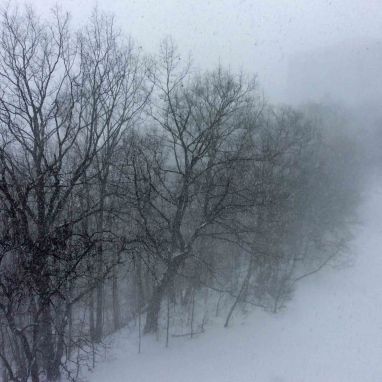
Trees in snow and fog, Ontario
When I first heard the writer’s edict “write what you know” I rejoined: but I write science fiction—I write about the unknown. What I still had to learn was that by describing “the other” SF really describes “us”. We explore ourselves through our relationship with the unknown. We do this by ensuring that all our plotlines reflect theme.
Write About What You Know
How many times have you been told to write about what you know? And how many times have you trusted that advice? Well, how interesting is that?!? We think our lives are dull, boring, and mundane. We write – and read – to get away from it, don’t we?

Nina Munteanu hikes along Highland Creek, Ontario (photo by Merridy Cox)
Well, yes…and no…
In the final analysis, even good “escapist” writing, like some science fiction, despite its alien settings and creatures of imagination, is grounded in the realities of our every-day lives, which form the basis of human nature. Love, ambition, trust, hate, envy, honor, courage. All these are universal human traits which the writer taps into and ultimately writes about.
“In the 19th century, John Keats wrote to a nightingale, an urn, a season. Simple, everyday things that he knew,” say Kim Addonizio and Dorianne Laux in The Writer’s Guide to Creativity. “Walt Whitman described the stars, a live oak, a field. They began with what they knew, what was at hand, what shimmered around them in the ordinary world.”
Writing about what you know isn’t about literal truths; it’s about what you know inside your heart. Write from the inside out. Write about what excites you; what frightens you; what angers you, makes you sad, happy. As SF author Marg Gilks says, “You know more than you think.”
Twisted Truths & Inner Knowledge
Writers can use our own knowledge and experiences in everyday life and translate them into something far from ordinary. You start with universal experiences.
Get Emotional
What excites you; what frightens you; what angers you, makes you sad, happy. These are emotions we all feel. When we give our characters experiences similar to our own, we breathe life into both character and experience and provide the reader an anchor for her heart.
Get Sensational
You know how it feels to have your knees shake with fatigue after a long climb or the hair-raising trepidation of walking into a dark place. Use these sensations to make your writing more sensual with added dimensions of reality.
Get People Around You
My neighbor has a funny way of focusing his gaze slightly off me when he talks, like he can’t look me directly in the eyes. When he approaches my house to deliver the paper, Dennis strides with a lilting gait as he listens to hip-hop on his ipod.
Drawing from what you observe and know of the people around you is one of a writer’s most treasured resources for character description. I always carry a notebook with me no matter where I go, even if it’s only to the grocery store.
The Magic of Storytelling

Deer Lake, Burnaby, BC (photo by Nina Munteanu)
A writer is like a magician. You play upon what readers all “know” then surprise them with the unexpected.
Unleashing your imagination and letting it soar while grounding yourself in the realities of universal truths is the stuff of which stories are made. This is what most of us mean when we say “write what you know.”
“Unless you are writing about a personal tragedy,” says Tina Morgan of Fiction Factor, “you will have to use your imagination. Use the creativity that drives you to write in the first place. Take those feelings you have every day and amplify them. Make them more intense, more vivid. Before you know it, you will be ‘writing what you know’.”
“Next time you hear ‘write what you know,’ ” says Gilks, “you’ll realize that you know an awful lot about what matters most in a story’s success. It’s waiting only to be shaped by your imagination.”
Write Real
Literary Agent, Rachelle Gardner, provided a great definition of “write what you know” on her blog. Here’s an excerpt:
Most people think “write what you know” means you have to put characters in situations you’re personally familiar with. If you’re a mom with five kids, you should write a mom story. If you’ve fought cancer and won, you should write about that. But in my opinion, that’s not what it means.
Write what you know means write with authenticity about thoughts, feelings, experiences of life. Be honest. Write from a deep place. Don’t write from the surface. Whether you’re writing about parenthood or cancer or anything else… be real.
—Rachell Gardner
Don’t reflect what you know from other people or the media… write what you know from your own inner life.
An excerpt of this article appeared in CBC’s Canada Writes.


 One resource I’m eager to introduce to my students is Canadian SF short story writer Douglas Smith’s recent guidebook, Playing the Short Game: How to Market & Sell Short Fiction. Smith’s guidebook is a Tardis-style smallish yet comprehensive guide on what it takes to be a successful short story writer from starting & finishing to marketing & publishing to leveraging & promotion.
 I’m a petite five foot-three height and purposely wear flat shoes. I love short. I prefer my espresso pulled in short shots—or ristretto—in my flat white. Described as bolder, fuller, with more body and less bitterness, the ristretto is like a burst of intense flavor with a lingering finish. Short is pretty cool.
 A short story only has 7,000 or less words to get your tale across while a novel has over ten times that many words to do the same. It follows then that the short story format is a simpler one. This does not necessarily mean easier.
 Renowned short story authors like Edgar Allen Poe, Nathanial Hawthorne, and Somerset Maugham, emphasize the importance of striving for one effect when writing a short story: the single effect you wish to leave with the reader at the end. This is accomplished by selecting events or situations that build quickly into a combustible response. Even Alice Munro, who is known for cramming long timeframes into her short stories, frames time through a single event: a meal, family gathering, wedding or funeral, for instance.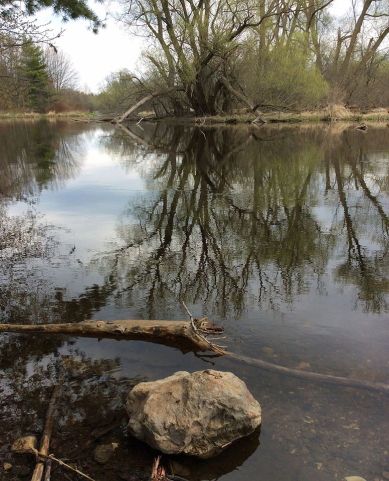
 Nina’s Bus-Terminal Model
 Remember to keep track of what you send where and when and what happens to it. It can become a very confusing bus terminal otherwise, with someone ending up in Seattle when they are headed to Toronto! What happens with this approach is several things: you begin to treat the whole marketing/publishing process as a business (which it is) and because you have so many “buses” out there coming and going, the rejections don’t hurt quite as much and instead become part of the learning process, which they should be. You adopt a more business-like approach, which translates into your relationship with editors and publishers. A win-win situation results. Believe me; this works. Once I fell into this method, my sales increased by over 70%.
 Nina Munteanu is an ecologist and internationally published author of award-nominated speculative novels, short stories and non-fiction. She is co-editor of Europa SF and currently teaches writing courses at George Brown College and the University of Toronto. Visit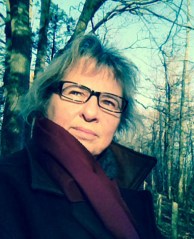
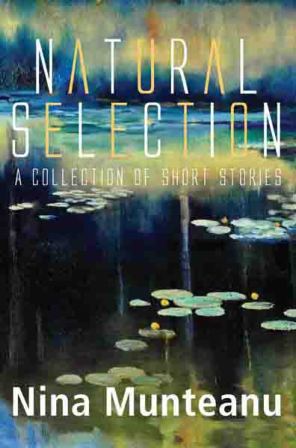 “I write SF about a near future ‘Gaian’ world too, and at times felt I was reading a prequel to my own novels, but that’s not why I rated this collection so highly. I did so for two reasons. First, because the science was so interesting, combining visionary metaphysical speculation with AI corporate tech in scenarios that often seemed chillingly possible. Second, because of the author’s focus on the effects of these developments on human beings with complex pasts and desires. Jealousy, lust, loneliness, grief and love are all drivers of these taut and fascinating narratives…”–Amazon Review
 Evolution is the language of destiny. What is destiny, after all, but self-actualization and synchronicity? If evolution is the language of destiny, then choice and selection are the words of evolution and “fractal ecology” is its plot.
 On the vertical argument, the French naturalist Jean-Baptiste Lamark developed a theory of biological evolution in the early 19th century considered so ridiculous that it spawned a name: Lamarkism. His notion—that acquired traits could be passed along to offspring—was ridiculed for over two hundred years. Until he was proven right. Evolutionary biologists at Tel Aviv University in Israel showed that all sorts of cellular machinery—an intelligence of sorts—played a vital role in how DNA sequences were inherited. When researchers inserted foreign genes into the DNA of lab animals and plants, something strange happened. The genes worked at first; then they were “silenced”. Generation after generation. The host cells had tagged the foreign genes with an “off switch” that made the gene inoperable. And although the new gene was passed onto offspring, so was the off switch. It was Larmarkism in action: the parent’s experience had influenced its offspring’s inheritance. Evolutionists gave it a new name. They called it soft inheritance.


 She imagines its coolness gliding down her throat. Wet with a lingering aftertaste of fish and mud. She imagines its deep voice resonating through her in primal notes; echoes from when the dinosaurs quenched their throats in the Triassic swamps.
 Emilie Moorhouse of
  “…In an interesting scarcity future in which we follow the fate of a character abandoned by her mother, water itself becomes a character. In the second paragraph we’re told that “Water is a shape shifter,” and in the next page we encounter the following description: “Water was paradox. Aggressive yet yielding. Life-giving yet dangerous. Floods. Droughts. Mudslides. Tsunamis. Water cut recursive patterns of creative destruction through the landscape, an ouroboros remembering.” These descriptive musings cleverly turn out to be more than metaphors and tie in directly to the tale’s surprising ending.”—Alvaro Zinos-Amaro,
 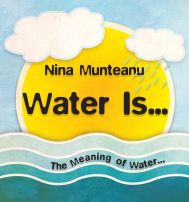 Water Is… The Meaning of Water


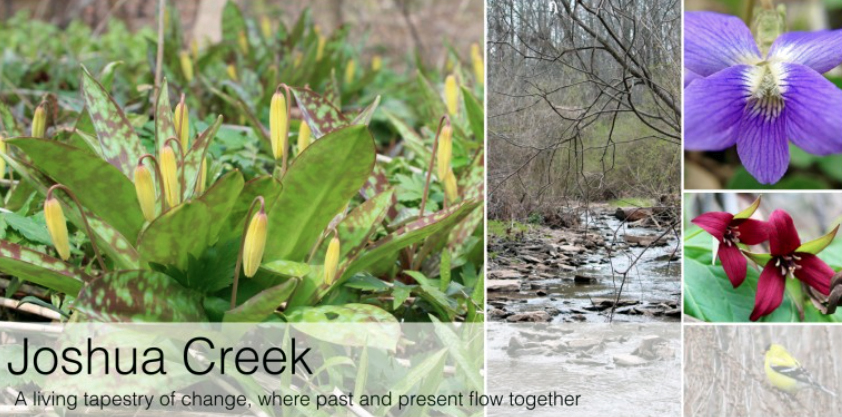
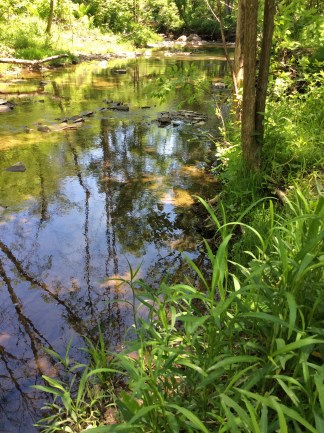
 But Joshua is a spirited creek – in spite of all it has been through, Joshua Creek is among the top two urban creeks for healthy water quality, and is still inhabited by a variety of aquatic animals like small fish and insects. Joshua Creek is home to forests, wetlands and thickets with around 150 plant species, and provides an important natural habitat corridor for the movement of birds and other animals, including migratory species. Rather than exclusively shrinking, there are also areas of Joshua Creek that are actually in the middle of regrowing their forests, and in spite of everything, Joshua still retains some beautiful gems of natural areas.”
 Nina Munteanu’s “The Way of Water” and the anthology in which it appears was recently praised by Emilie Moorhouse in Prism International Magazine, in a review entitled
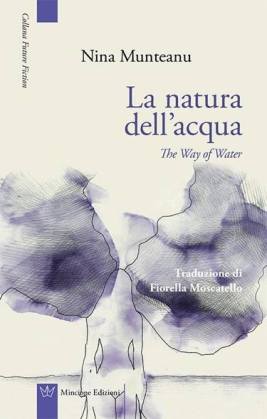
  “The Way of Water” (La natura dell’acqua) was translated by Fiorella Smoscatello for Mincione Edizioni. Simone Casavecchia of SoloLibri.net, describes “The Way of Water” in her review of the Italian version: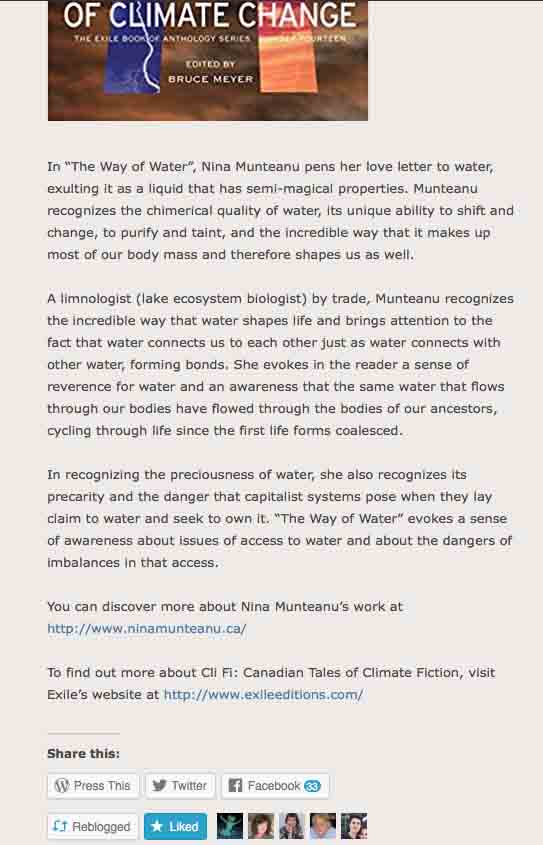
 “The Way of Water” will also appear alongside a collection of international works (including authors from Greece, Nigeria, China, India, Russia, Mexico, USA, UK, Italy, Canada (yours truly), Cuba, and Zimbabwe) in Bill Campbell and Francesco Verso’s
  Nina Munteanu is an ecologist, limnologist and internationally published author of award-nominated speculative novels, short stories and non-fiction. She is co-editor of Europa SF and currently teaches writing courses at George Brown College and the University of Toronto. Visit
  Nina Munteanu’s near-future speculative short story “The Way of Water” in Bruce Meyer’s (editor) “Cli Fi: Canadian Tales of Climate Change”, published by
 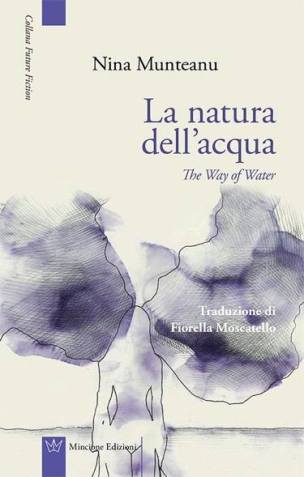 A bilingual print book by
 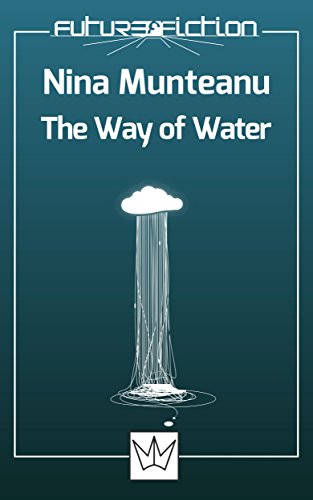 ” ‘The Way of Water’ is to be ‘a shapeshifter,’ says Nina Munteanu in her dystopian narrative, where she draws a dark scenario and, unfortunately, not too improbable in the near future. In the universe of the story water has become a very precious commodity: rationed consumption, credits (always of water) accounted for and debts collected…The Chinese multinationals have exchanged the public debt of other states with their water reserves with which, now, they can control the climate, deciding when and where it will rain. Who understands this dirty game has been silenced, like Hilda’s mother, a limnologist, inexplicably arrested and never returned; like the daughter of two water vendors, mysteriously disappeared, after having decided not to bow to economic powers: Hanna, who now prefers secure virtual identities to evanescent real appearances. Water. The two, like the covalent bond of a complex molecule, develop a relationship of attraction and repulsion that will first make them meet and then, little by little, will change into a tormented love but, at the same time, so pure as to cause Hilda at great risk, to make an extreme decision that will allow Hanna to realize the strange prophecy that the internal voice, perhaps the consciousness of water, had resonated in the two women for a long time.
 “The Way of Water” will also appear alongside a collection of international works (including authors from Greece, Nigeria, China, India, Russia, Mexico, USA, UK, Italy, Canada (yours truly), Cuba, and Zimbabwe) in Bill Campbell and Francesco Verso’s
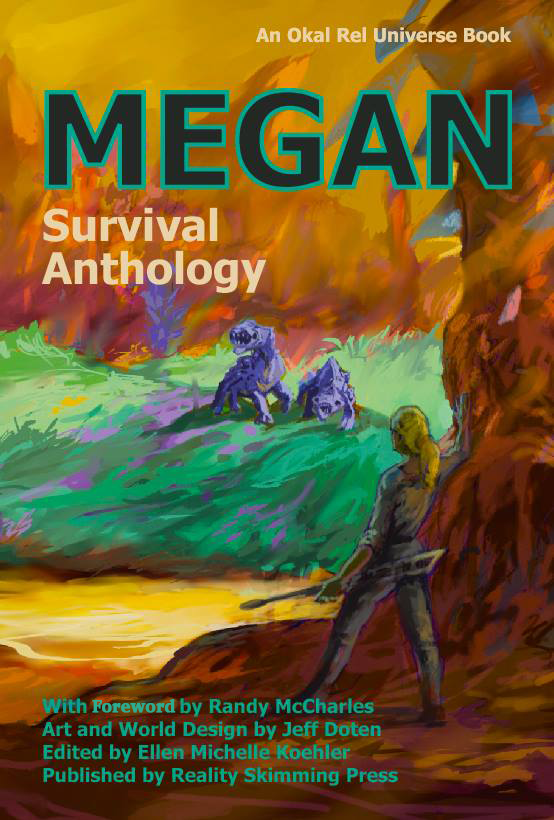
  After she and fellow colonists crash land on the hostile jungle planet of Mega, rebel-scientist Izumi, widower and hermit, boldly sets out against orders on a hunch that may ultimately save her fellow survivors—but may also risk all. As the other colonists take stock, Izumi—obsessed with discovery and the need to save lives—plunges into the dangerous forest, which harbors answers, not only to their freshwater problem, but ultimately to the nature of the universe itself. Mega was a goldilocks planet—it had saltwater and supported life—but the planet also possessed magnetic-electro-gravitational anomalies and a gravitational field that didn’t match its size and mass. The synchronous dance of its global electromagnetic field suggested self-organization to Izumi, who slowly pieced together Mega’s secrets: from its “honeycomb” pools to the six-legged uber-predators and jungle infrasounds—somehow all connected to the water. Still haunted by the meaningless death of her family back on Mars, Izumi’s intrepid search for life becomes a metaphoric and existential journey of the heart that explores how we connect and communicate—with one another and the universe—a journey intimately connected with water.
 Fingal’s Cave
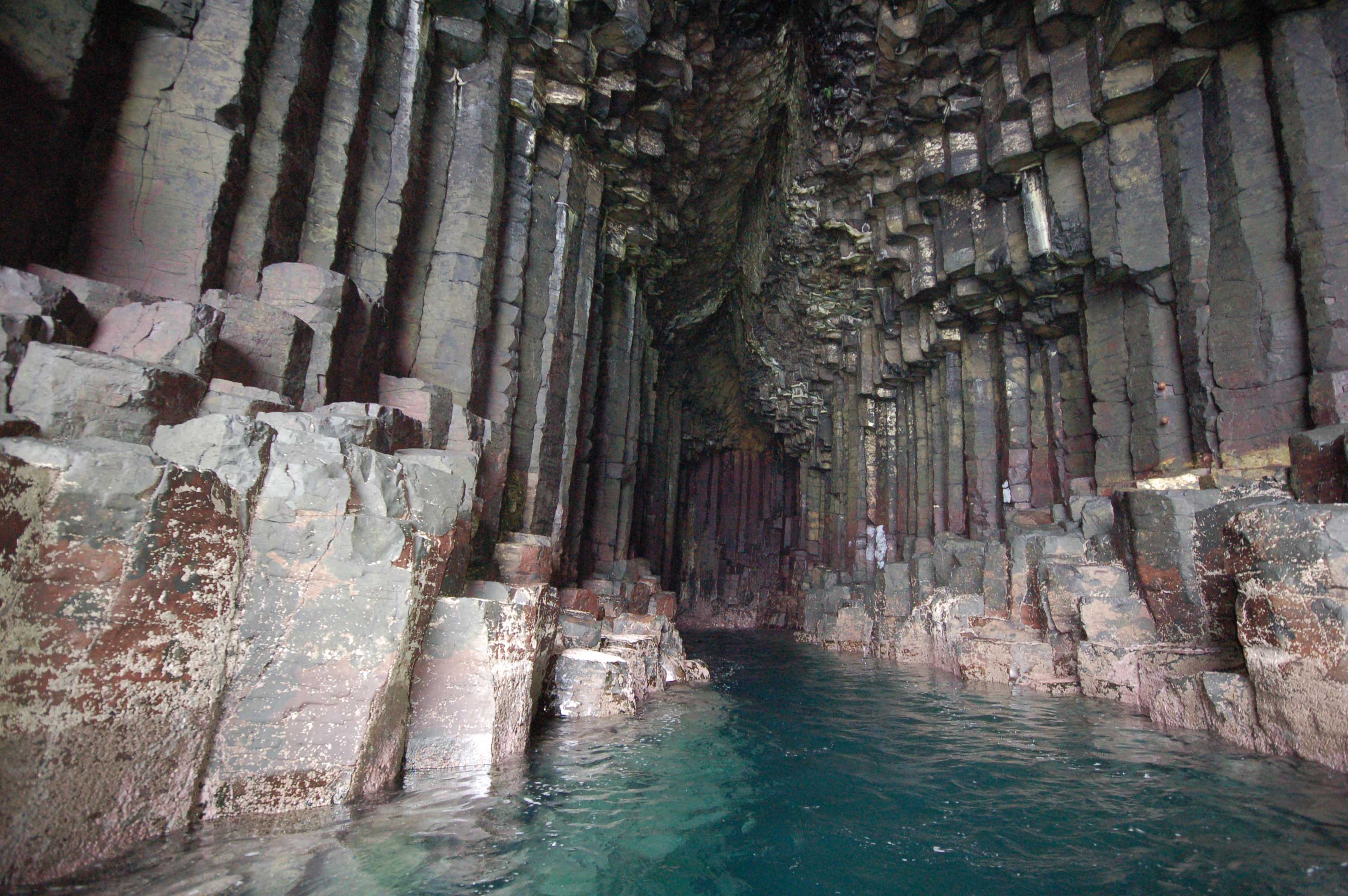 Fingal’s Cave is a sea cave on the uninhabited island of Staffa in the Inner Hebrides of Scotland. The cave is formed entirely from hexagonally jointed basalt columns in a Paleocene lava flow (similar to the Giant’s Causeway in Northern Ireland). Its entrance is a large archway filled by the sea. The eerie sounds made by the echoes of waves in the cave, give it the atmosphere of a natural cathedral. Known for its natural acoustics, the cave is named after the hero of an epic poem by 18th century Scots poet-historian James Macpherson. Fingal means “white stranger”.


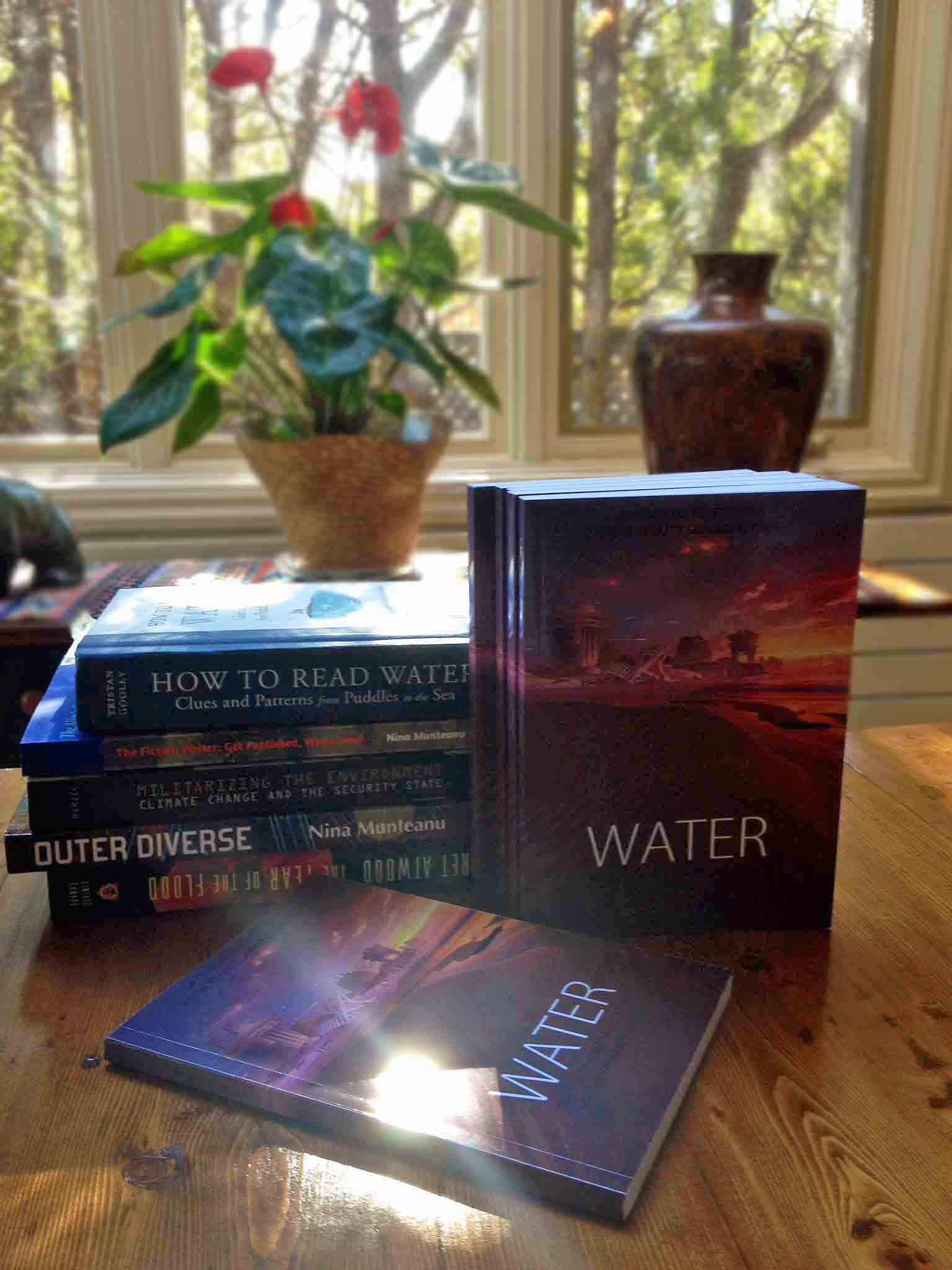
 In December 2017, “Water”, the first of Reality Skimming Press’s Optimistic Sci-Fi Series was released in Vancouver, BC. I was invited to be one of the editors for the anthology, given my passion for and experience with water.

 In the years that followed, Reality Skimming Press published several works, including the “Megan Survival” Anthology for which I wrote a short story, “
 Blika lived in Mossland with her clone sestras, gathering and sucking the delicious juices of detritus and algae. Never in a hurry, she lumbered from frond to frond on eight stubby legs in a gestalt of feasting and being. Blika led a microscopic life of bloated bliss—unaware of forests, human beings, quantum physics or the coming singularity…


 “Because we are ALL sestras! You are a Tardigrade, aren’t you?” She waved all eight arms at Blika. “Well, I am your queen!” She looked self-pleased. “You are in Tunland now! The land of awareness. And now that you are self-aware, you can do anything! We’re special,” the queen ended in smug delight. The folds of her body jiggled and shimmered.
 They entered a strange place of giant blocks and whining sounds beneath a dark swirling sky.
 As if she knew what Blika wanted, the queen quickly added, “But you can never go back home!”
 The water came in a giant wet wave of blue and silver and frothy green. Tunland sloshed then totally dissolved. Blika surfed the churning water. That green! She knew what it was! Blika reached out with her deft claws and snagged a tumbling moss frond. It finally settled and there were her sestras! So many of them clinging to the same green moss! She’d found her family! She was home! Yes, it was a different home and different sestras, but it was also the same. Love made it so…
 Tardigrades, also known as water bears or moss piglets, are plump, microscopic organisms with eight clawed legs. Fossils of tardigrades date to the Cambrian period over 500 million years ago. Over 900 species are known. Tardigrades were first described by the German pastor Johann August Ephraim Goeze in 1773 and given the name Tardigrada, meaning “slow stepper,” by the Italian biologist Lazzaro Spallanzani. Tardigrades reproduce asexually (parthenogenesis) or sexually. They mostly suck on the fluids of plant cells, animal cells, and bacteria.
 Tardigrades respond to adverse environmental stresses through “cryptobiosis”, a process that greatly slows their metabolism. Tardigrades survive dry periods by shriveling up into a little ball or tun and waiting it out. They make a protective sugar called trehalose, which moves into the cells to replace the lost water. You could say that the water bear turns into a gummy bear.
 My Book “Water Is…” by Pixl Press explores this creature and many other interesting things about water. Look for it on Amazon, Chapters, Kobo and in bookstores & libraries near you. If it’s not in your local library, ask for it.
 Nina Munteanu Writing Coach