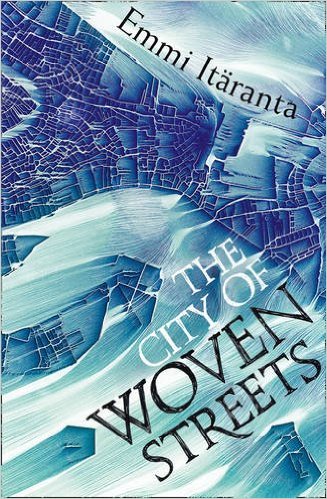
 “Water Is…” (Pixl Press) by Nina Munteanu was among several books recommended by Water Canada as a good summer read for 2017.
One of Canada’s premiere magazines on issues of water and water management, Water Canada suggested recharging this summer with “the latest selection of winning water management fiction and non-fiction.” The list comprised mostly of 2017 publications, but included a few late arrivals from 2016.
Recommendations included:
 “Water, Abundance, Scarcity, and Security in the Age of Humanity” (NYU Press) by Jeremy Schmidt is an intellectual history of America’s water management philosophy. Debates over how human impacts on the planet, writes Water Canada, are connected to a new geological epoch—“the Anthropocene”—tend to focus on either the social causes of environmental crises or scientific assessments of the Earth system. Schmidt shows how, when it comes to water, the two are one and the same. The very way we think about managing water resources validates putting ever more water to use for some human purposes at the expense of others.
 “A River Captured: The Columbia River Treaty and Catastrophic Change” (RMB Books) By Eileen Delehanty Pearkes reviews key historical events that preceded the Treaty, including the Depression-era construction of Grand Coulee Dam in central Washington, a project that resulted in the extirpation of prolific runs of chinook, coho and sockeye into B.C. Prompted by concerns over the 1948 flood, American and Canadian political leaders began to focus their policy energy on governing the flow of the snow-charged Columbia to suit agricultural and industrial interests. Water Canada writes, “Referring to national and provincial politics, First Nations history, and ecology, the narrative weaves from the present day to the past and back again in an engaging and unflinching examination of how and why Canada decided to sell water storage rights to American interests. The resulting Treaty flooded three major river valleys with four dams, all constructed in a single decade.”
 “Border Flows: A Century of the Canadian-American Water Relationship” (University of Calgary Press), Lynne Heasley and Daniel Macfarlane, editors, explore and discuss Canada-U.S. governance. Water Canada writes, “Ranging across the continent, from the Great Lakes to the Northwest Passage to the Salish Sea, the histories in Border Flows offer critical insights into the historical struggle to care for these vital waters. From multiple perspectives, the book reveals alternative paradigms in water history, law, and policy at scales from the local to the transnational. Students, concerned citizens, and policymakers alike will benefit from the lessons to be found along this critical international border.”
 “New York 2140” (Orbit) by Kim Stanley Robinson is a novel set in New York City following major sea level rises due to climate change. Water Canada writes, “The book explores a full eight separate narratives: the market trader, who finds opportunities where others find trouble; the detective, whose work will never disappear, along with the lawyers, of course; an Internet star; a building’s manager; and two boys who don’t live there, but have no other home—and who are more important to its future than anyone might imagine. Lastly there are the coders, temporary residents on the roof, whose disappearance triggers a sequence of events that threatens the existence of all– and even the long-hidden foundations on which the city rests.”
 “The Death and Life of the Great Lakes” (WW Norton & Company Inc. Press) by Dan Egan is a frank discussion of the threat under which the five Great Lakes currently suffer. This book, writes Water Canada is “prize-winning reporter Dan Egan’s compulsively readable portrait of an ecological catastrophe happening right before our eyes, blending the epic story of the lakes with an examination of the perils they face and the ways we can restore and preserve them for generations to come…Egan explores why outbreaks of toxic algae stemming from the over-application of farm fertilizer have left massive biological “dead zones” that threaten the supply of fresh water. He examines fluctuations in the levels of the lakes caused by manmade climate change and overzealous dredging of shipping channels. And he reports on the chronic threats to siphon off Great Lakes water to slake drier regions of America or to be sold abroad.”
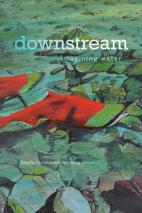 “Downstream: reimagining water” (Wilfred Laurier University Press) by Dorothy Christian & Rita Wong “brings together artists, writers, scientists, scholars, environmentalists, and activists who understand that our shared human need for clean water is crucial to building peace and good relationships with one another and the planet. This book explores the key roles that culture, arts, and the humanities play in supporting healthy water-based ecology and provides local, global, and Indigenous perspectives on water that help to guide our societies in a time of global warming. The contributions range from practical to visionary, and each of the four sections closes with a poem to encourage personal freedom along with collective care,” writes Water Canada.
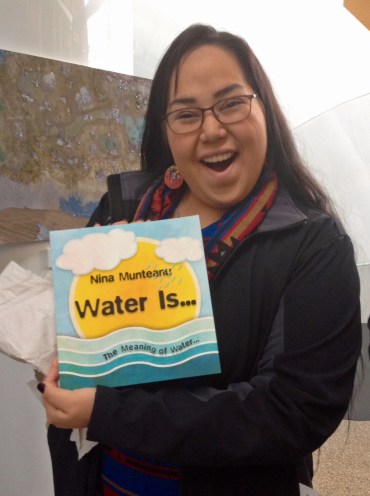
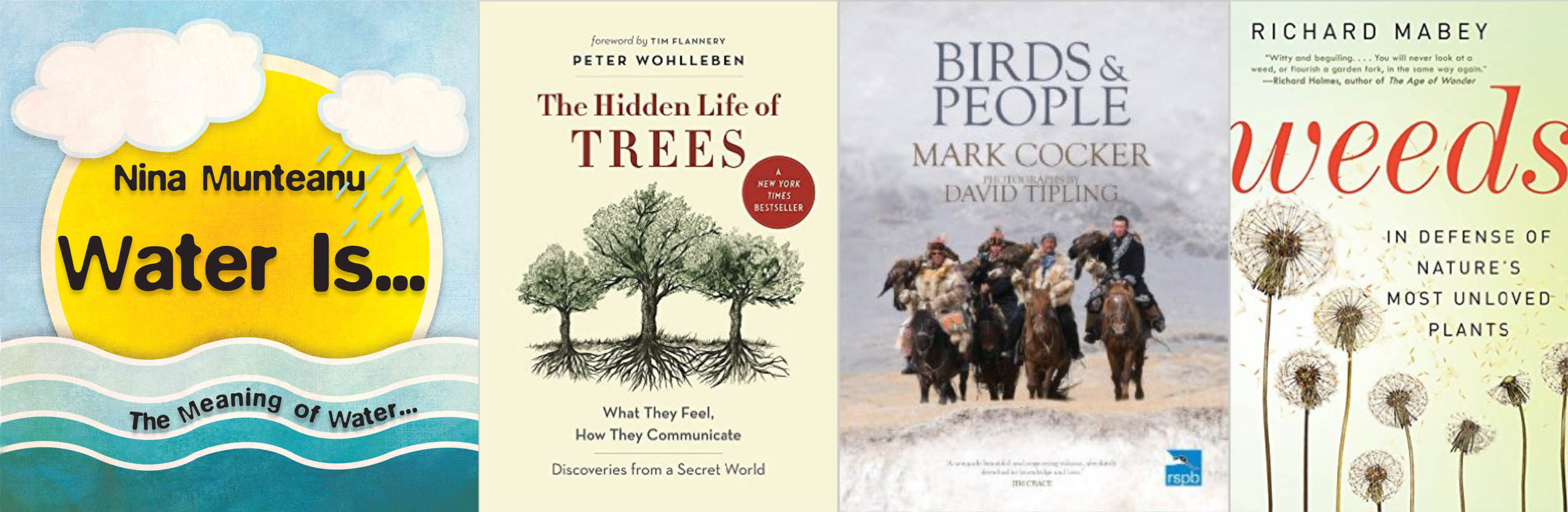
 “Water Is…The Meaning of Water” (Pixl Press) by Nina Munteanu “explores the many dimension of H2O—the practical, the physical, and the magical. Water Is… represents the culmination of over twenty-five years of her study of water. During her consulting career for industry and government, Munteanu discovered a great disparity between humanity’s use, appreciation, and understanding of water. This set in motion a quest to further explore our most incredible yet largely misunderstood and undervalued substance. Part history, part science and part philosophy and spirituality, Water Is… combines personal journey with scientific discovery that explores water’s many “identities” and ultimately our own,” writes Water Canada. Water Is… was recommended by Margaret Atwood as her premiere choice in the New York Times ‘The Year in Reading‘ for 2016.

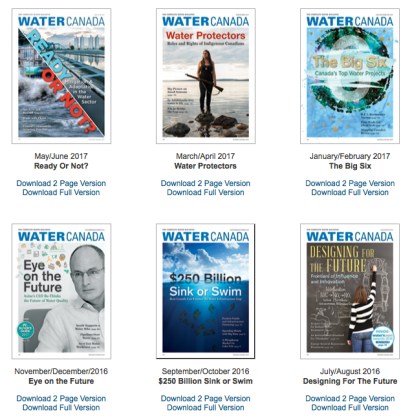 Water Canada is a Canadian magazine that provides news and feature articles on water and water management. They currently co-host the Canadian Water Summit, a gathering of professionals from the water industry including academia, NGOs, local communities, cleantech, industry associations, manufacturing and government. “Delegates will explore opportunities to collaborate on water technology and infrastructure finance, ‘blue economy’ growth and climate change resilience through progressive policies, smart business and bold investment leadership.” This year’s summit will occur June 22, 2017 at the Sheraton Centre Hotel in Toronto.

Nina Munteanu kayaking Desolation Sound on the west coast of British Columbia
#CanadaReads #Canada150 #WhatIsWATER #TheMeaningOfWater #WaterCanada
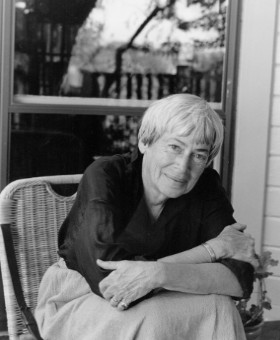
 Nina Munteanu is an ecologist and internationally published author of novels, short stories and essays. She coaches writers and teaches writing at George Brown College and the University of Toronto. For more about Nina’s coaching & workshops visit www.ninamunteanu.me. Visit www.ninamunteanu.ca for more about her writing.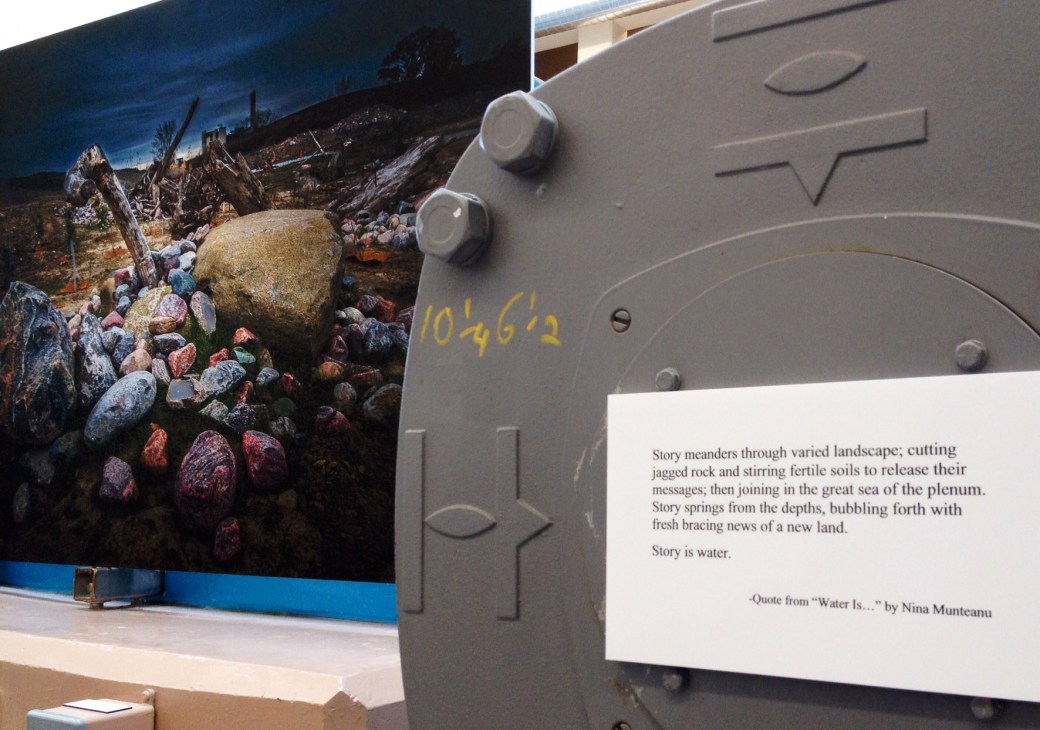

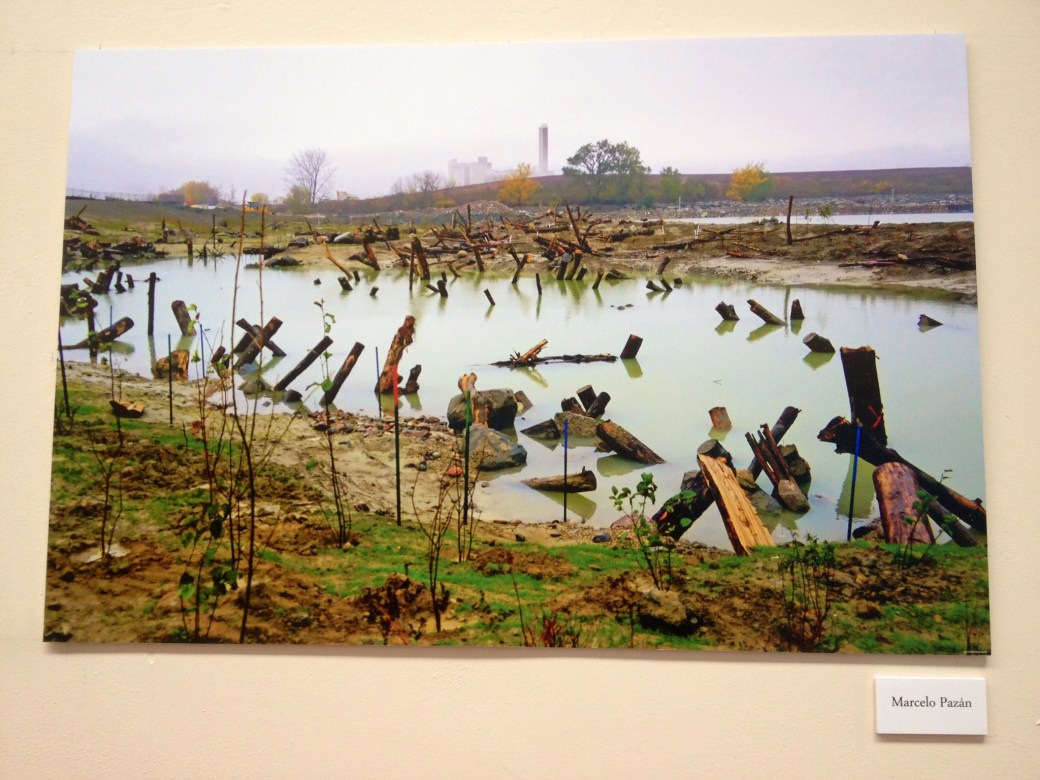
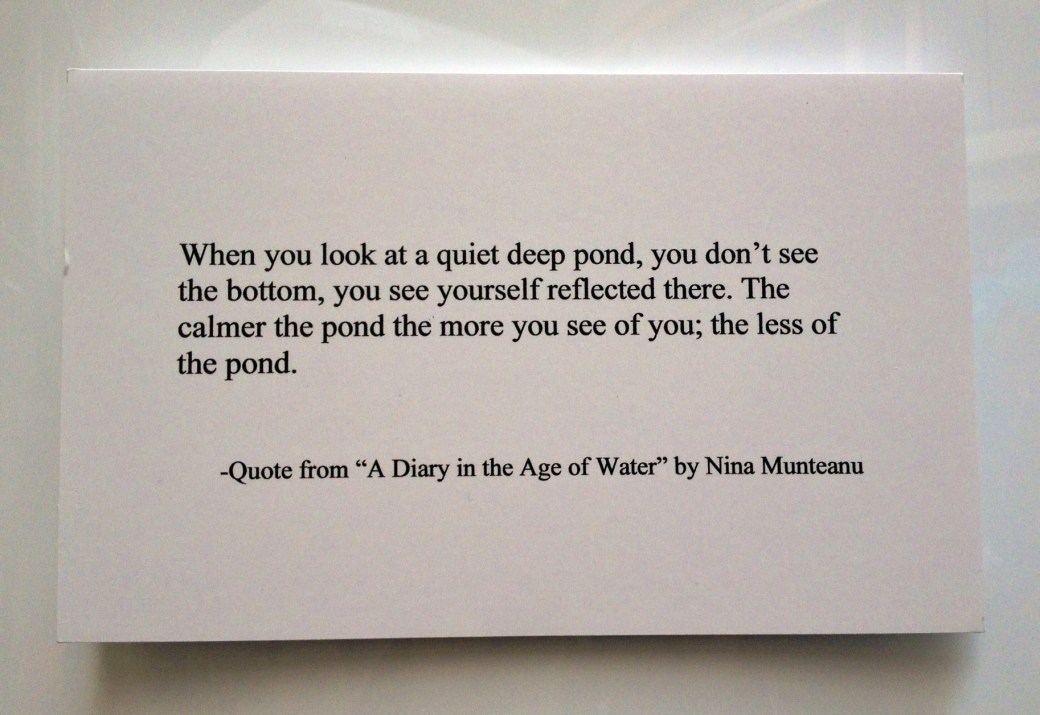 Reiterating Jim Tovey’s earlier comment on the water treatment plant as its own sculpture-art, Munteanu celebrated the location and the nature of the exhibit: “When technology, art and ecology are celebrated together, you get magic.”

 Nina Munteanu is an ecologist, limnologist and internationally published author of award-nominated speculative novels, short stories and non-fiction. She is co-editor of Europa SF and currently teaches writing courses at George Brown College and the University of Toronto. Visit
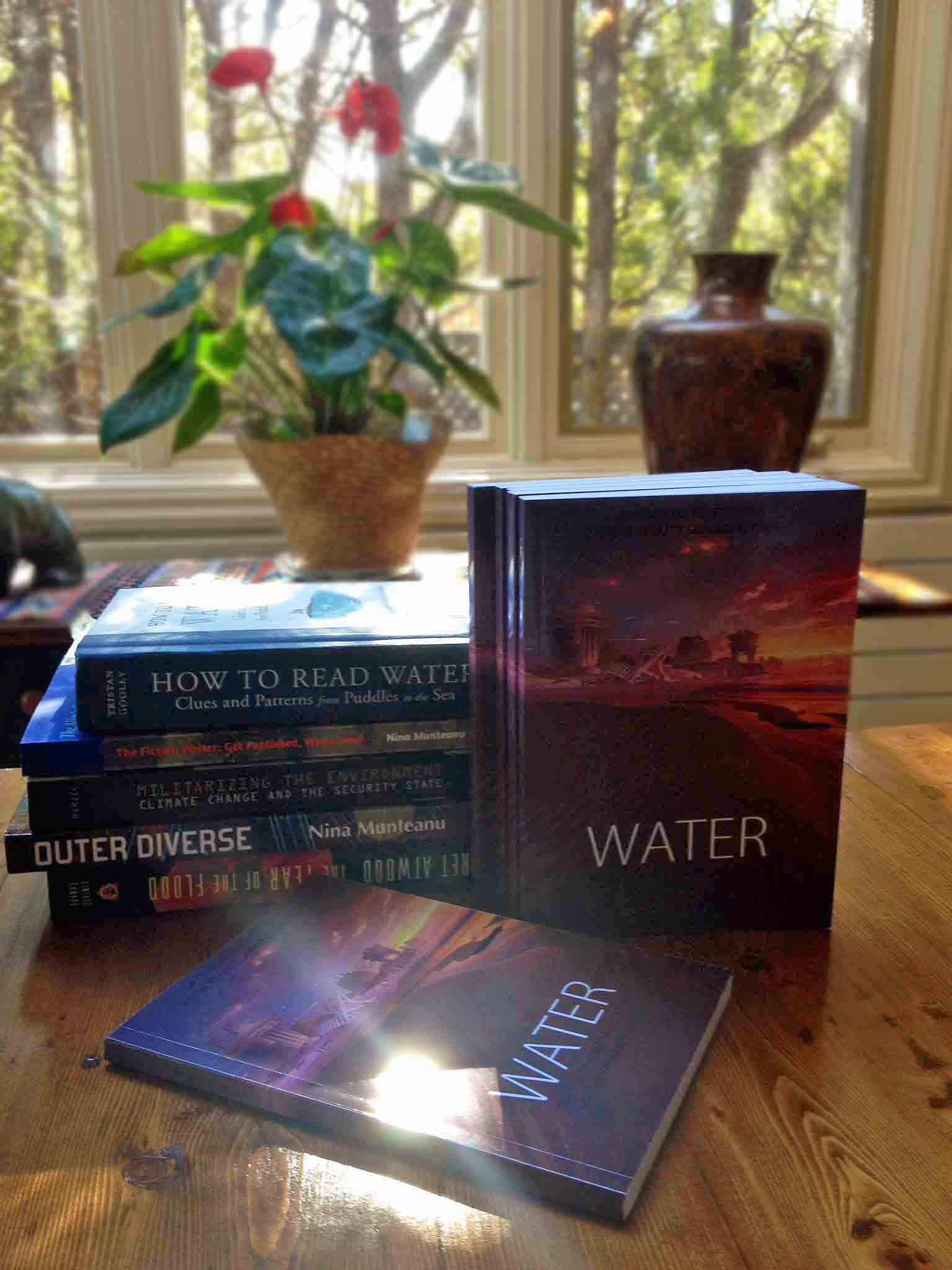
 In December 2017, “Water”, the first of Reality Skimming Press’s Optimistic Sci-Fi Series was released in Vancouver, BC. I was invited to be one of the editors for the anthology, given my passion for and experience with water.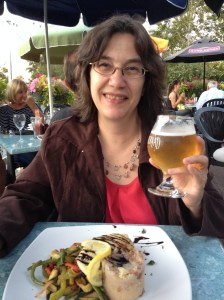

 In the years that followed, Reality Skimming Press published several works, including the “Megan Survival” Anthology for which I wrote a short story, “
 Hi-Sci-Fi Radio (a podcast radio show out of CJSF 90.1FM in Burnaby, British Columbia) interviewed Nina Munteanu about the paradoxes of her eco-thriller
  “In his introduction to this all-original set of (at times barely) futuristic tales, Meyer warns readers, “[The] imaginings of today could well become the cold, hard facts of tomorrow.” Meyer (Testing the Elements) has gathered an eclectic variety of eco-fictions from some of Canada’s top genre writers, each of which, he writes, reminds readers that “the world is speaking to us and that it is our duty, if not a covenant, to listen to what it has to say.” In these pages, scientists work desperately against human ignorance, pockets of civilization fight to balance morality and survival, and corporations cruelly control access to basic needs such as water. The most affecting tale, Wendy Bone’s “Abdul,” is also the least futuristic, an emotional story that touchingly contrasts Western guilt against the life of a captive orangutan. The anthology may be inescapably dark, but it is a necessary read, a clarion call to take action rather than, as a character in Seán Virgo’s “My Atlantis” describes it, “waiting unknowingly for the plague, the hive collapse, the entropic thunderbolt.” Luckily, it’s also vastly entertaining. It appears there’s nothing like catastrophe to bring the best out in authors in describing the worst of humankind.”
 She imagines its coolness gliding down her throat. Wet with a lingering aftertaste of fish and mud. She imagines its deep voice resonating through her in primal notes; echoes from when the dinosaurs quenched their throats in the Triassic swamps.
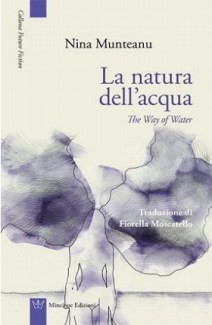
 A limnologist (lake ecosystem biologist) by trade, Munteanu recognizes the incredible way that water shapes life and brings attention to the fact that water connects us to each other just as water connects with other water, forming bonds. She evokes in the reader a sense of reverence for water and an awareness that the same water that flows through our bodies have flowed through the bodies of our ancestors, cycling through life since the first life forms coalesced.
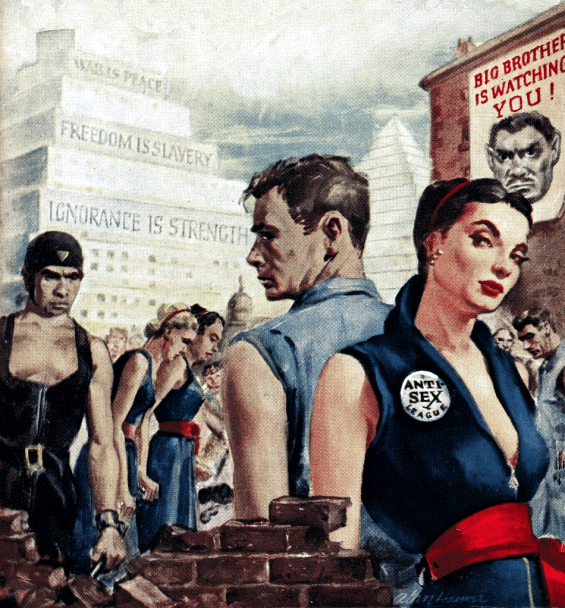
 “Water covers every aspect of this science fiction story that pits the vulnerable citizen against the evil multinational corporation in a dystopian Canada sometime in our future. Water is presented in its multiplicity of facets: in the science behind its composition, in its history, in it’s symbolic nature and different physical states; water is a giver and taker of life, and is the form in which the friendship of protagonists Hilda and Hanna functions. Water is also magic and the ultimate righter of wrongs committed to it and to a humanity it gives life to. Within this framework, Munteanu spins a thought-provoking tale that projects where our headlong pursuit of profit may one day lead us to, and how nature will ultimately, with a little human coaxing, be the only one to correct the balance.”—Shane Joseph, Canadian author of Fringe Dwellers
 love; a story to read, not only to deal with the possible but, above all, to understand that the time still available for “love” might be less than what you believe.”—Simone Casavecchia,
  Nina Munteanu is an ecologist and internationally published author of award-nominated speculative novels, short stories and non-fiction. She is co-editor of Europa SF and currently teaches writing courses at George Brown College and the University of Toronto. Visit



 Every year, near Christmas,
 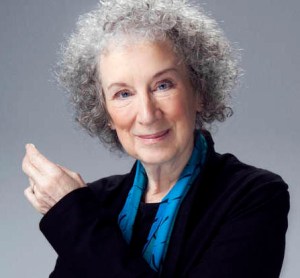 Margaret Atwood is a winner of the Arthur C. Clarke Award and the Prince of Asturias Award for Literature as well as the Booker Prize (several times) and the Governor General’s Award. Animals and the environment feature in many of her books, particularly her speculative fiction, which reflects a strong view on environmental issues.
 “
“ “The Hidden Life of Trees: What They Feel, How They Communicate—Discoveries From a Secret World” (Greystone Books) by Peter Wohlleben. In The Hidden Life of Trees, Peter Wohlleben shares his deep love of woods and forests and explains the amazing processes of life, death, and regeneration he has observed in the woodland and the amazing scientific processes behind the wonders of which we are blissfully unaware. Much like human families, tree parents live together with their children, communicate with them, and support them as they grow, sharing nutrients with those who are sick or struggling and creating an ecosystem that mitigates the impact of extremes of heat and cold for the whole group. As a result of such interactions, trees in a family or community are protected and can live to be very old. In contrast, solitary trees, like street kids, have a tough time of it and in most cases die much earlier than those in a group. Drawing on groundbreaking new discoveries, Wohlleben presents the science behind the secret and previously unknown life of trees and their communication abilities; he describes how these discoveries have informed his own practices in the forest around him. As he says, a happy forest is a healthy forest, and he believes that eco-friendly practices not only are economically sustainable but also benefit the health of our planet and the mental and physical health of all who live on Earth.
 “Weeds: In Defense of Nature’s Most Unloved Plants” (Ecco) by Richard Mabey. “They’re better for you than you think,” says Atwood. “They hold the waste spaces of the world in place, and you can eat some of them.” Ever since the first human settlements 10,000 years ago, weeds have dogged our footsteps. They are there as the punishment of ‘thorns and thistles’ in Genesis and , two millennia later, as a symbol of Flanders Field. They are civilisations’ familiars, invading farmland and building-sites, war-zones and flower-beds across the globe. Yet living so intimately with us, they have been a blessing too. Weeds were the first crops, the first medicines. Burdock was the inspiration for Velcro. Cow parsley has become the fashionable adornment of Spring weddings. Weaving together the insights of botanists, gardeners, artists and poets with his own life-long fascination, Richard Mabey examines how we have tried to define them, explain their persistence, and draw moral lessons from them. One persons weed is another’s wild beauty.
 “Birds and People” (Jonathan Cape) by Mark Cocker. “Vast, historical, contemporary, many-levelled,” says Atwood. “We’ve been inseparable from birds for millenniums. They’re crucial to our imaginative life and our human heritage, and part of our economic realities.” Vast in both scope and scale, the book draws upon Mark Cocker’s forty years of observing and thinking about birds. Part natural history and part cultural study, it describes and maps the entire spectrum of our engagements with birds, drawing in themes of history, literature, art, cuisine, language, lore, politics and the environment. In the end, this is a book as much about us as it is about birds.
 Nina Munteanu Writing Coach