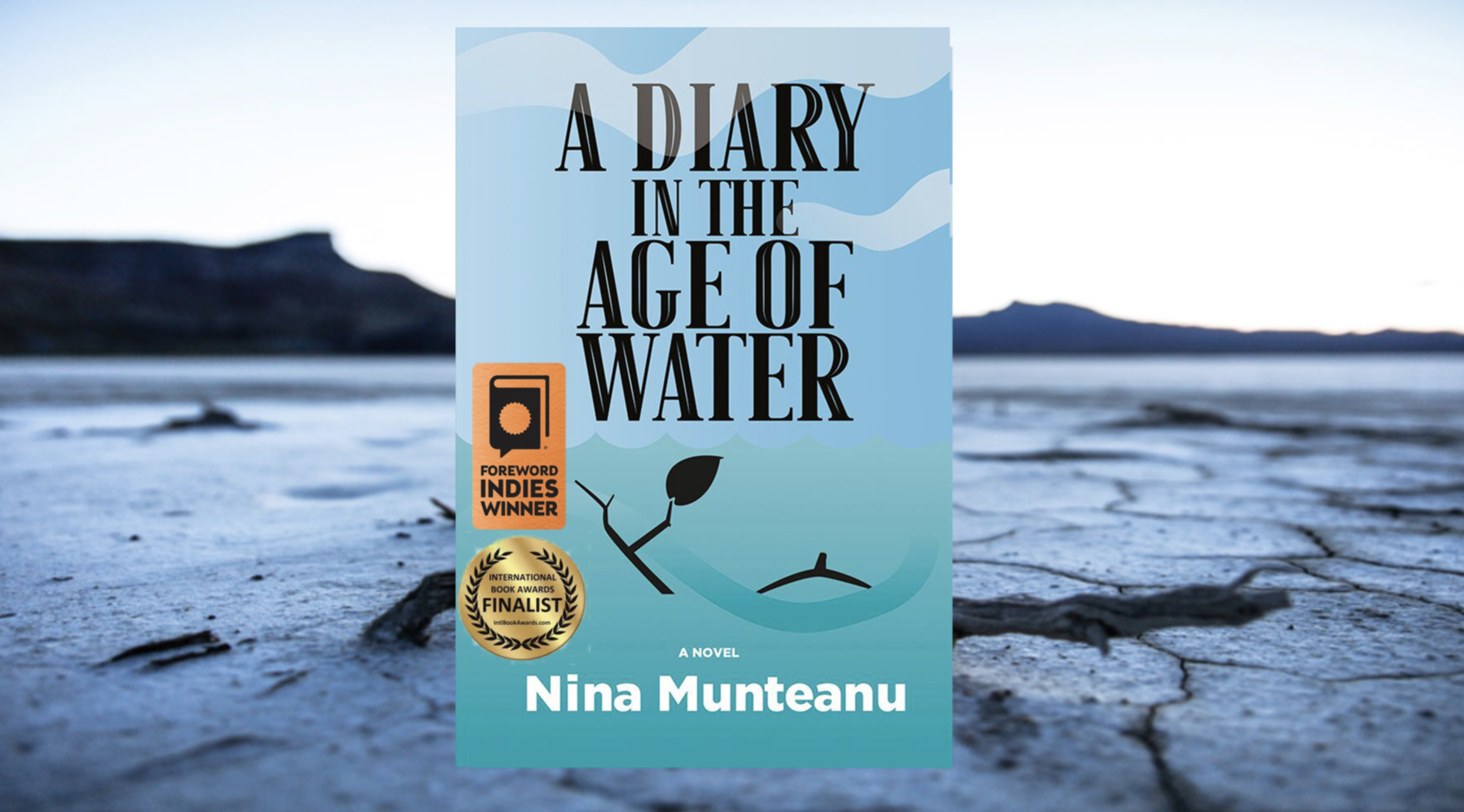
My eco-fiction novel A Diary in the Age of Water was recently discussed in a 2025 PhD thesis by Steven L. Ogden out of the University of Albany, State University of New York entitled: “Heterogenous Being: The Inhumanities and the Creative-Scientific Aesthetic.” I was fascinated by his stirring, well-researched dissertation that explored the dichotomous narrative separating human with non-human. A narrative that is changing—though very slowly.
Ogden’s PhD thesis advances a hybrid form of inquiry on “Heterogenous Being”1 that links the sciences with humanities to address the precarious realities of Earth’s ecological and environmental conditions; he does this by acknowledging the influences and agented potentialities of nonhuman subjects in narrative, both in fiction and nonfiction. “… these inhuman2 examinations not only provide the nonhuman with a comparable or more profound existence alongside our own; they also illustrate the immense and consequential scope of our collective realities,” writes Ogden.
Ogden is, of course, referring to the prevalent historic use of ‘othering’ vs. providing agency to environmental ‘characters’ in novel writing. I write about this in my two articles on character-coupling.
.
Othering in Literature
The rhetoric of ‘Otherness’ in most fiction is typically portrayed through the singular point of view (POV) and discourse of a protagonist on a journey.3 In most forms of literature the POV ‘voice’ represents the Self, the inclusive ‘us’ (worldview) in its encounter with the Other, which in turn is the ‘not us.’ In his book Orientalism: Western Conceptions of the Orient Edward W. Said contended that for there to even be an ‘us’, there has to be a ‘not-us’. The resulting power dynamic of “them and us,” of Other and Self, is created and controlled by perceptions of the singular POV voice.
In most genres of literature, the Other is often relegated to this dichotomous portrayal. In post-apocalyptic and metaphoric journey stories the Other may be the harsh environment or a calamity through which the protagonist must find their own strength to survive; in military stories it is clearly the enemy, seldom portrayed with compassion or understanding but there to test our hero; in coming-of-age stories it may be the oppressive rule or established world the hero must overcome; in science fiction it may be the hostile or unknowable aliens who must be defeated.
The irony of this way of thinking is made clear in Ogden’s introduction. Ogden writes that “like René Descartes, many today still consider the mind or “rational soul” of humanity to be entirely exceptional to and independent of animality, and believe no part of Man (as master and possessor of nature) could derive from the “potentiality of [nonhuman] matter.” He quotes Donna Haraway (author of When Species Meet) who said that “to exist as an individual is always to become with many.” She is talking about the thousands of species living symbiotically inside us and around us that keep us alive. This is what philosopher Levi Bryant refers to as a democracy of objects in which “humans are no longer monarchs of being, but are instead among beings … and implicated in other beings.” We are entangled in beings. We are implicated in other beings.
Through this new paradigm and approach, Ogden contends that “no longer can anthropogenic issues of climate change, trash vortices, deforestation, synthetic pollution, effluence, nuclear waste isolation, or species extinction be concealed from the majority of literary imaginings. Because as the trajectory of once passive, ancillary things and forces find an arena of greater articulation, the Anthropocene becomes an epoch whose hazards affect more than its namesake. Readers are afforded a larger moral and literary connectedness to a greater variety of relatable nonhuman subjects in the throes of this crisis, with that inhuman accordance likewise enlarging the terrains of their own ontological and epistemological perspectives as an ecomimetic strategy furthers the understanding of the nonhuman with each varied literary elaboration.” He adds that the “massive temporal and spatial persistence/distribution of anthropogenic nonhuman ‘hyperobjects’ like plastics, polychlorinated biphenyls (PCBs), per- and polyfluoroalkyl substances (PFAS), or nuclear waste expands the probable aesthetic and political/ethical dimensions of the creative arts.”
Ogden concludes that in such a space of consideration (an allied creative-scientific aesthetic), an intermediacy is established between the literary arts and sciences in which “principal methods, qualities, and philosophies are openly exchanged, and a multimodal expression links the realms of simplified rationalism with pure allegory into a compounded composition of metaphor and description, myth and science, characterization and cause-and-effect, and poetic reveries and empirical rationalism.” This greater perspective expand dynamic probabilities for the inhuman world to experience agency and greater and more meaningful presence, what Ogden calls “a necessary heterogenous representation of both humans and nonhumans within the collective scientific and literary imagination…towards a more meaningful and affective realization.”
.
How Eco-Fiction Empowers & Animates Nonhuman Subjects
While eco-literature overlaps with many genres, it appears to differ from SF and other genres portrayal of Other through its unique intention to give voice to otherwise voiceless characters, and it often does this through masterful use of character-coupling. Mary Woodbury defines eco-literature or eco-fiction as literature “made up of fictional tales that reflect important connections, dependencies, and interactions between people and their natural environments.” The environment—or an aspect of the environment—plays a major role in eco-literature, either as premise or as itself a character on a journey.
Eco-literature may go beyond raising awareness to link environmental abuse with concepts of jingoistic hubris; it may raise issues of human intersectionality, misogyny, marginalization, oppression of class, privilege, sexuality and race, and misuse of power. Violent acts perpetrated on environment—when environment is personified as ‘character’ and/or coupled directly to a character—elicit powerful emotion and clearly demonstrate how social/human injustice reflects environmental injustice.
Eco-literature is particularly poised to make meaningful character-couplings between mostly human protagonist and environmental characters or representatives. This is because the protagonist provides relatable qualities for easy reader empathy, while the Othered character is often less relatable—often an arcane aspect of the environment, such as water (Memory of Water) or a forest (The Overstory). The protagonist’s link to the Other—often as avatar—provides a readable map for the reader to follow and make their own connection.4 In Character Coupling Part 2, I provide examples from several works of eco-fiction, such as The Overstory, Barkskins, The Breathing Hole, The Wiindup Girl, The Bear, Memory of Water, and Dune.
.
A Changing Narrative
Acknowledging the early influences of animal studies rooted in biocentricity (e.g. Carl Safina, Ogden notes that non-fiction representation of nonhuman life has increased exponentially in the last ten years. Ogden includes the following notable examples: Merlin Sheldrake’s Entangled Life: How Fungi Make Our Worlds; Robin Wall Kimmerer’s Gathering Moss, and Peter Wohlleben’s The Hidden Life of Trees.
In fiction, Ogden focuses primarily on the narrative of Overstory by Richard Powers but touches on other works such as Jeff VanderMeer’s writing. Says Ogden: “What moves The Overstory’s utilization of personification (of trees) … beyond some simple allegorical misconception of dendrological and botanical being is that the provided anecdote of a tree’s agency in the development of soil, weather, and atmosphere is entirely factual.”
Ogden notes that “Nina Munteanu’s A Diary in the Age of Water brings the seemingly mundane and inconsequential (what Emanuele Coccia refers to as “residual” objects) to the imaginary forefront within creative-scientific writing…In Munteanu’s limnological characterization of freshwater bodies…[this] creative-scientific work of literature enlarges and redevelops the hierarchy of the taxaonomic ranks originally set out by animal studies. [It] increases the principal tenet of the discipline’s genealogy to include the greater part of all biological (and even inorganic) life in its inhuman narrative.”
.
Giving Voice to Plants ‘Othered’ to Silence
On looking more closely to the multiform agencies of plants, Ogden returns to Powers’ reference of a “gospel of new forestry”, and asserts that “whether it’s the writings of Suzanne Simard, Robin Wall Kimmerer, Emanuele Coccia, Michael Pollan, or Peter Wohlleben, the assumed contemporary bibliographic references in Powers’ novel alone illustrate the author’s appropriation of this gospel of new forestry. Ogden then adds: “These are creative-scientific hybrid forms and metamorphic figurations that have allowed the agency, narrative, and story of the plant world to become more meaningfully articulated, recognized, and appreciated in the modern moment. They are the informed meldings/hybridities (the issuances of comparative figurations, temporalities, and subjectivities of nonhuman agency) that stand as the antecedents of new and emergent metamorphic texts like The Overstory, and which “shift the terms of representation away from human subjectivity” by embedding new species into the storytelling process.”
Ogden argues that “Like Richard Powers and other creative-scientific writers, Westerford (Powers’s own character in The Overstory) understands climate and biodiversity are ‘failing precisely because no [story] can make the contest for the world seem as compelling as the struggles between a few lost people.’” She realizes that her peers believe plants live an inanimate existence, whose rooted immobility points to a kind of “unfreedom” that represents an “archetype of inert matter.” According to poet David Hinton, this devaluation of plant life relates to the human-nonhuman duality, “a Western dichotomy that relegates the vegetal world to a space of ‘linguistic silence.’”
This is the silence of ‘The Other.’
I further explore this specific narrative (of non-human agency, particularly of birds, plants, bryophytes and algae) in my upcoming novel (Re)Genesis. You’ll hear more about that book in later posts.
.
Footnotes:
- Ogden describes “Heterogenous Being” as a way of being that recognizes and incorporates humanity’s pluralized configurations with the nonhuman world by uniting the studies of science and humanities into an interdisciplinary hybrid creative-scientific aesthetic.
- Ogden explains the use of “inhuman” here by referring to Jeffrey Jerome Cohen’s notes in Stone: An Ecology of the Inhuman, which uses inhuman to “emphasize both difference (‘in-‘ as negative prefix) and intimacy (‘in-‘ as indicator of estranged interiority).” This is akin to the practice of “othering”.
- The Other has often been metaphorically portrayed in SF by aliens that lack a distinct voice or viewpoint; some portrayal has reflected a fearful imperialistic colonialism by representing Other as adversary such as an invading monster with no regard for humans (e.g. Robert Heinlein’s The Number of the Beast; H.G. Wells’s War of the Worlds). Kerslake argues that the traits of the Other “fall characteristically—and conveniently—into those spaces we choose not to recognize in ourselves, the ‘half-imagined, half-known: monsters, devils, heroes, terrors, pleasures, desires’ of Said’s ‘Orient’”. The Martians of Ray Bradbury’s Martian Chronicles—who also have no voice—reflect our indigenous peoples under the yoke of settler colonialism and an exploitive resource-extraction mindset. The monster of Mary Shelley’s Frankenstein —also with no voice—exemplifies the disabled/deformed unsavory departure from our ‘perfect’ self-image; to be chased, destroyed and nullified.
- In some stories the protagonist is Othered in some way, providing a more direct link to the experience of being the Other or being Othered. For instance, in Mishell Baker’s Borderline, disabled protagonist Millie provides the connection to the greater theme of Othering “lesser beings.” In Costi Gurgu’s Recipearium, the protagonists are not human; they are alien creatures that dwell inside the dead carcass of a monster, representing Other as main character.
.
References:
Descartes, Rene, et. al. 1998. “Discourse on the Method; and Meditations on First Philosophy.” Hacket Pub.
Haraway, Donna Jeanne. 2008. “When Species Meet.” University of Minnesota Press.
Hinton, David. 2012. “Hunger Mountain.” Shambhala.
Latour, Bruno. 2017. “Facing Gaia: Eight Lectures on the New Climatic Regime.” Polity.
Marder, Micheal. 2013. “Plant-Thinking: A Philosophy of Vegetal Life.” Columbia University Press.
Morton, Timothy. 2013. “Hyperobjects: Philosophy and Ecology after the End of the World.” University of Minnesota Press.
Munteanu, Nina. 2020. “A Diary in the Age of Water” Inanna Publications, Toronto. 328pp.
Munteanu, Nina. 2024. “The Use of Character-Coupling in Eco-Literature to Give Voice to the Other, Part 1: Introduction” February 18, 2024.
Munteanu, Nina. 2024. “The Use of Character-Coupling in Eco-Literature to Give Voice to the Other, Part 2: Types of Character-Coupling in Seven Examples of Eco-Literature” February 2024.
Ogden, Steven L. 2025. “Heterogenous Being: The Inhumanities and the Creative-Scientific Aesthetic.” A Dissertation submitted to the University at Albany, State University of New York in partial fulfillment of the requirements for the Degree of Doctor of Philosophy. 207pp.
Powers, Richard. “The Overstory.” W.W. Norton & Company, New York. 2018. 502pp.
Said, Edward W. “Orientalism: Western Conceptions of the Orient.” Vintage, London, 1978. 432pp.
Woodbury, Mary. “What is Eco-fiction?” Dragonfly.eco. 2016. https://dragonfly.eco/eco-fiction/ Accessed September 15, 2022.
.
.

.
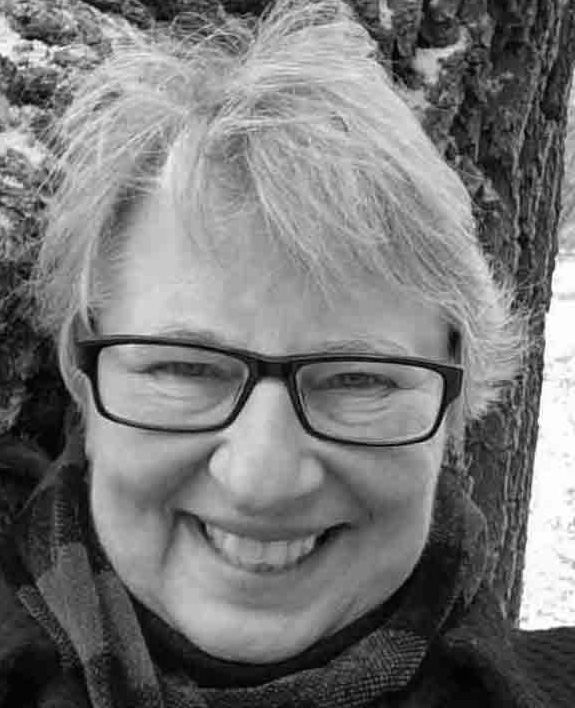
Nina Munteanu is a Canadian ecologist / limnologist and novelist. She is co-editor of Europa SF and currently teaches writing courses at George Brown College and the University of Toronto. For the lates on her books, visit www.ninamunteanu.ca. Nina’s bilingual “La natura dell’acqua / The Way of Water” was published by Mincione Edizioni in Rome. Her non-fiction book “Water Is…” by Pixl Press (Vancouver) was selected by Margaret Atwood in the New York Times ‘Year in Reading’ and was chosen as the 2017 Summer Read by Water Canada. Her novel “A Diary in the Age of Water” was released by Inanna Publications (Toronto) in June 2020. You can read her just released eco-fiction thriller Gaia’s Revolution by Dragon Moon Press.
.

 Scientists have suggested that we have now slid from the relatively stable Holocene Epoch to the
  Take water, for instance. Today, we control water on a massive scale. Reservoirs around the world hold 10,000 cubic kilometres of water; five times the water of all the rivers on Earth. Most of these great reservoirs lie in the northern hemisphere, and the extra weight has slightly changed how the Earth spins on its axis, speeding its rotation and shortening the day by eight millionths of a second in the last forty years. Ponder too, that an age has a beginning and an end. Is climate change the planet’s way of telling us that the


 In the story, a secret military project sends signals into space to establish contact with aliens. An alien civilization on the brink of destruction captures the signal and plans to invade Earth. One of the main protagonists is Ye Wenjie, a young woman traumatized after witnessing the execution of her scientist father in a brutal cleansing at the height of the Cultural Revolution. Considered a traitor, young Wenjie is sent to a labour brigade in Inner Mongolia, where she witnesses further destruction by humans:
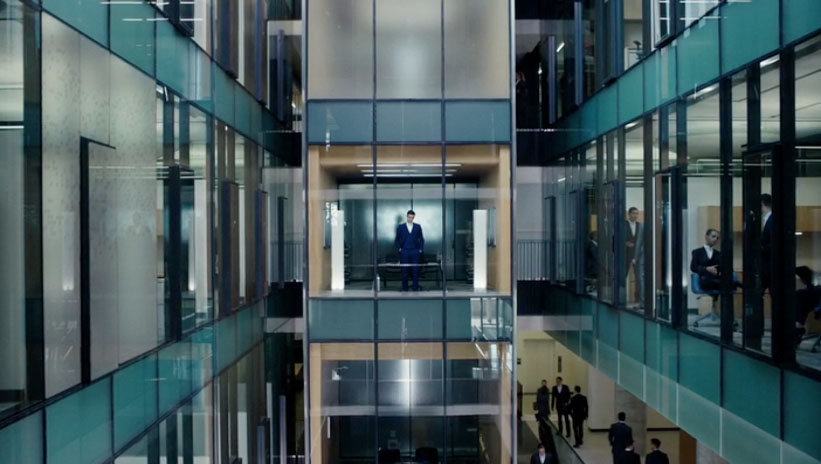
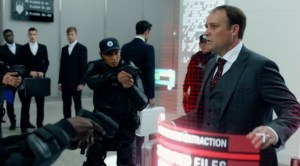 Incorporated is less thriller than satire; it is less science fiction than cautionary tale.
 Every year the 97% send their 20-year olds to undergo The Process, a grueling Hunger Games-style contest run by the Offshore elite to replenish their numbers. Only 3% of the candidates will be considered worthy. They must pass psychological, emotional and physical tests to earn a place in Mar Alto.
 After the 1967 opening scene with Komarov, we go to the present day with psychologist Jeanne Renoir, conducting an experiment on a child: giving them one marshmallow and leaving the room with the instruction that if they don’t eat the marshmallow but wait for her to return, they’ll get two. Jeanne correctly anticipates the child will eat the marshmallow.
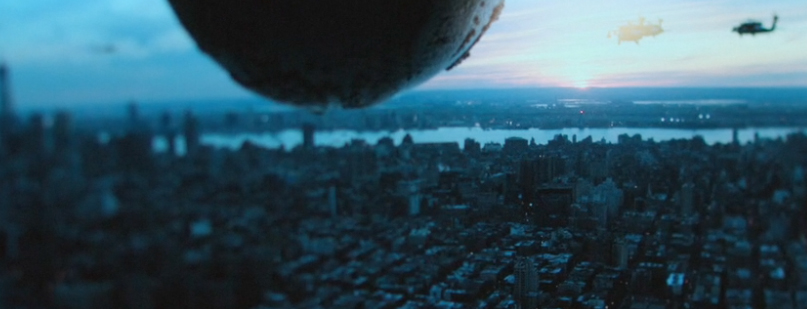
 The Beyond’s climax, discovery and resolution is really more of a question. The movie doesn’t have a tidy end; its solution is veiled with more questions.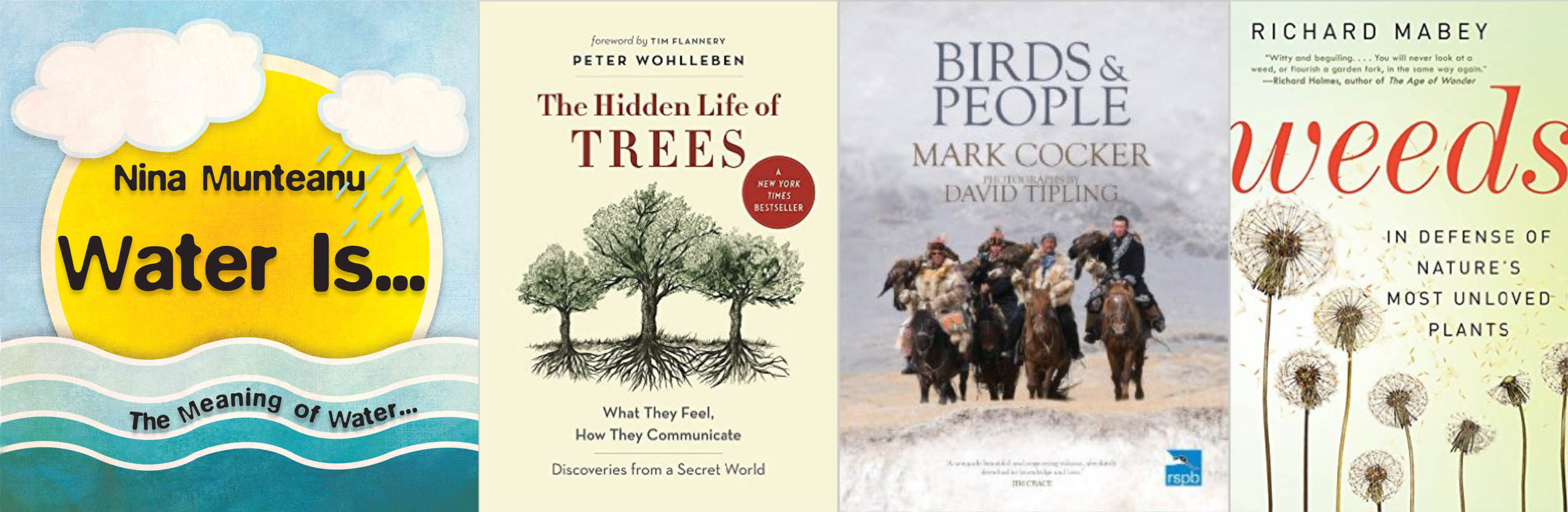
 Every year, near Christmas,
  Margaret Atwood is a winner of the Arthur C. Clarke Award and the Prince of Asturias Award for Literature as well as the Booker Prize (several times) and the Governor General’s Award. Animals and the environment feature in many of her books, particularly her speculative fiction, which reflects a strong view on environmental issues.
 “
“ “The Hidden Life of Trees: What They Feel, How They Communicate—Discoveries From a Secret World” (Greystone Books) by Peter Wohlleben. In The Hidden Life of Trees, Peter Wohlleben shares his deep love of woods and forests and explains the amazing processes of life, death, and regeneration he has observed in the woodland and the amazing scientific processes behind the wonders of which we are blissfully unaware. Much like human families, tree parents live together with their children, communicate with them, and support them as they grow, sharing nutrients with those who are sick or struggling and creating an ecosystem that mitigates the impact of extremes of heat and cold for the whole group. As a result of such interactions, trees in a family or community are protected and can live to be very old. In contrast, solitary trees, like street kids, have a tough time of it and in most cases die much earlier than those in a group. Drawing on groundbreaking new discoveries, Wohlleben presents the science behind the secret and previously unknown life of trees and their communication abilities; he describes how these discoveries have informed his own practices in the forest around him. As he says, a happy forest is a healthy forest, and he believes that eco-friendly practices not only are economically sustainable but also benefit the health of our planet and the mental and physical health of all who live on Earth.
 “Weeds: In Defense of Nature’s Most Unloved Plants” (Ecco) by Richard Mabey. “They’re better for you than you think,” says Atwood. “They hold the waste spaces of the world in place, and you can eat some of them.” Ever since the first human settlements 10,000 years ago, weeds have dogged our footsteps. They are there as the punishment of ‘thorns and thistles’ in Genesis and , two millennia later, as a symbol of Flanders Field. They are civilisations’ familiars, invading farmland and building-sites, war-zones and flower-beds across the globe. Yet living so intimately with us, they have been a blessing too. Weeds were the first crops, the first medicines. Burdock was the inspiration for Velcro. Cow parsley has become the fashionable adornment of Spring weddings. Weaving together the insights of botanists, gardeners, artists and poets with his own life-long fascination, Richard Mabey examines how we have tried to define them, explain their persistence, and draw moral lessons from them. One persons weed is another’s wild beauty.
 “Birds and People” (Jonathan Cape) by Mark Cocker. “Vast, historical, contemporary, many-levelled,” says Atwood. “We’ve been inseparable from birds for millenniums. They’re crucial to our imaginative life and our human heritage, and part of our economic realities.” Vast in both scope and scale, the book draws upon Mark Cocker’s forty years of observing and thinking about birds. Part natural history and part cultural study, it describes and maps the entire spectrum of our engagements with birds, drawing in themes of history, literature, art, cuisine, language, lore, politics and the environment. In the end, this is a book as much about us as it is about birds.