On the Successful Anatomy of a Short Story

2015-novel-short-story-market-WDSome time ago, I was invited by writer and editor Jennifer D. Foster to participate in an interview on how to create a successful short story. Jennifer knew my work as a short story writer and had heard me speak at the Editors Association of Canada. She also knew that I teach the short story form as part of my science fiction course at George Brown College.

Writer’s Digest had asked Jennifer to write two “writing tips” chapters in its highly popular “Novel and Short Story Writer’s Market” (34th Annual Edition, 2015). Years ago I got my start as an author using this helpful market guidebook. Not only did the guide provide hundreds of listings with submission guidelines and current contact information; the guide’s writing tips section was also very helpful. So, I was both pleased and thrilled to be inside the 2015 edition!

As with previous editions, the 2015 edition contained—in addition to current market listings—articles on “Craft and Technique”, “Getting Published”, and “Marketing and Promotion”.

Below, I provide some excerpts of the 8-page chapter in the Craft & Technique Section, entitled “Anatomy of a Successful Short Story.” You can read the whole thing if you get your own copy of the guide, which is very decently priced. While it’s a year old, the advice remains as germane now as it was then. And many of the markets remain relevant too. You can also find the guide in most libraries, which tend to carry the entire Writer’s Digest series of market guides for writers.

Defining the Short Story

“Short stories are perhaps one of the best places for novice writers to start their careers,” wrote Foster in the opening to her article. “They’re not too long and complicated, and they offer the writer a chance to intimately explore a plot, a character, and a theme. Short stories also offer writers the opportunity to hone their craft and actually finish a piece of fiction—a great confidence booster!” Foster was quick to add that you shouldn’t be fooled by their short length compared with a novel—or their assumed simplicity: “Short stories are not necessarily any easier to write than novels or novellas.” I talk more about the significance of short story length  in a previous article on this blog: “Know What You’re Writing: Short Story or Long Story?”

Madison Davis at the University of Oklahoma suggested that short stories are “more concentrated … and notable for what they leave out.”

I mentioned that the short story is “a metaphoric event, a moment in time. It’s a single place—a crossroad—compared with the landscape of a novel. Short stories are more about awareness … and have the potential to be far more memorable and disturbing, with the power to enlighten.” Best-selling Canadian author Andrew Pyper suggested that, “a novel is the result of lengthy mulling, while a short story is the rising of an event out of the subconscious.”

Starting the short story in the middle of things “is crucial,” said Davis. “The reader must be thrown into the water immediately. There simply isn’t time or space to wind up.” Steve Woodward, associate editor of Graywolf Press in Minneapolis, Minnesota argued that good first lines are vital: “they can tell you everything you need to know in an instant. Find that right first line, even if it means cutting several pages to get to it, and build outward from there.”

Theme

The message—or theme—of the short story is its raison d’être. In How to Write Short Stories, 4th Edition, Sharon Sorenson wrote that, “if you have no message, you have no story.”

I concurred: “Every good story explores a theme. In a short story, it is a single theme told as a ‘statement’ rather than a novel’s ‘argument.’ It’s a ‘close-up’ rather than a novel’s landscape. All story elements reflect the theme.” Susan Hesemeier, instructor at MacEwan University in Edmonton, Alberta, added that the theme must be “limited to one subject or overall message rather than [the] multiple, interconnected themes [found] in a novel.” Margot Livesey, fiction editor of Emerson College’s Ploughshares magazine in Boston, Massachusetts summed it up eloquently: “theme is probably the hardest element to define, but we recognize its absence when we call something an anecdote.”

Conflict

According to author Louise Boggess, conflict “is the heartbeat of a story.” Conflict expresses internally or externally. Hesemeier wrote that in a short story, “there are fewer conflicts that lead to one climax; in a novel, a series of smaller conflicts and climaxes lead to or connect with a larger overall conflict and climax.”

Plot

Publisher Kevin Watson suggested that a great short story, much like a novel, “is presented to the reader in layers, delivered using setting, character, conflict, and dialogue.” At the center of those layers, said Watson, lay the plot, the theme, and the heart of everything that was presented.

Award-winning author Kevin Barry cited William Trevor: “a short story doesn’t need a plot, it just needs a point.” Toronto-based editor and author Andrew J. Borkaowski agreed: “it’s usually a matter of a single word, gesture, or incident and a handful of actions leading up to it.”

Character

Sorenson wrote that, “Believable, motivated characters make or break a story. If readers cannot understand or accept them, nothing else you do matters.” This is because the actions of your characters convey theme.

Novelist and writing instructor at Western University, Terence M. Green concurred. “Character is most important. Make the long chord of understanding and involvement with a character the goal. This is the emotional resonance, the epiphany that is the goal of the best long-lasting fiction.”

Setting

snow-scene-road-to-Wolfville-stream3

river in Nova Scotia (photo by Nina Munteanu)

Characters and action should interact with the setting,” said Borkowski. She suggested that, “Setting is important as a conveyor of mood or atmosphere, and … has to be rendered succinctly, poetically almost.” Hesemeier added that, “Setting is usually limited to essentials that are necessary to describe the particular moment or that have symbolic significance for the reader’s understanding of the story.”

I further clarified: “A short story’s plot, setting, and character are often portrayed through strong metaphor, the short story writer’s major tool. Metaphor conveys so much more than the surface narrative might suggest; this is because metaphor by its very nature resonates with deeper truths, interpreted individually by members of a culture.”

Point of View

Foster wrote that for Borkowski, it was all about picking a side and sticking with it: “Once you start wanting to explore the inner lives of multiple characters, you’re on your way to something bigger than a short story.” Be mindful how many characters you provide agency and viewpoints to!

Woodward believed that once voice was established, everything else followed. Woodward preferred a solo voice in short story. “Stories are wonderful when concise and focused, often confined to a single narrative voice and to a single moment in time.”
Beaches-snow03

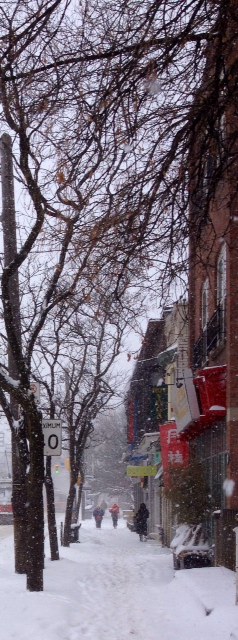
Winter in The Beach (photo by Nina Munteanu)

Andrew J. Borkowski suggested that an exceptional short story arose from the intensity of emotion that resonated with the reader: “A great short story leaves you feeling you’ve experienced ten times more than what’s actually described on the page.” I shared a similar view: “The best short story is an elegant thing. It draws you into a singular experience that resonates at a visceral level, like an arrow through the heart; no time to think—just feel. A bad short story misses the heart … and this is why writers who master the short story form are some of the very best authors in the world.”

Excerpted from “Anatomy of a Successful Short Story” by Jennifer D. Foster. In: “Novel and Short Story Writer’s Market” Writer’s Digest Books; 34th Edition (Rachel Randall, editor), 2015. 569 pp.

Available at: Amazon.comAmazon.ca, and Writer’s Digest Shop.

Douglas Smith’s “Playing the Short Game” is also valuable with great advice for those wishing to market their short stories.

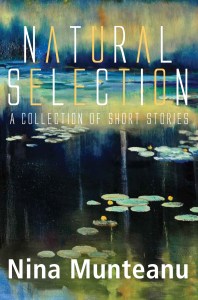
Natural Selection, my short story collection published by Pixl Press in 2013 is available at several bookstores.NaturalSelection-frontHR

Written with flare and a conscience…Munteanu shines a light on human evolution and how the choices we do or don’t make today, may impact our planet and future generations.”—J.P. McLean, author of The Gift Legacy

“Nina Munteanu is a gifted writer. Each story surprises and delights.”—Allan Stanleigh, co-author of USNA and The Caretakers


nina-2014aaNina Munteanu is an ecologist and internationally published author of award-nominated speculative novels, short stories and non-fiction. She is co-editor of Europa SF and currently teaches writing courses at George Brown College and the University of Toronto. Visit www.ninamunteanu.ca for the latest on her books.

Summoning the Slow Train To Find “The Last Summoner”

Atonement_(novel)In her book The Art of Slow Writing, Louise DeSalvo tells the story of how Ian McEwan composed his book Atonement.

McEwan had shared that the novel “grew out of many months of sketches and doodling.” Then one morning, he wrote “six hundred words or so describing a young woman entering a drawing room with some wild flowers in her hand, searching for a vase,” and “aware of a young man outside gardening whom she wishes both to see and avoid.”

He knew he had at last started a novel, says DeSalvo. But beyond that, he knew nothing. Slowly, McEwan pieced together a chapter, the one in which “Cecilia and Robbie go to the fountain, the vase breaks, she strips off and plunges into the water to retrieve the pieces, she walks away from him without a word.”

McEwan then languished for six weeks with questions: who was the woman? Who was the young man? What was their relationship? When and where did this event take place? And what was its significance to the story? What was the story about?

McEwan went on to write the chapter in which Briony attempts to put on a play with her cousins. Upon completing that chapter, he finally realized what the story was about. He realized that he would write about Dunkirk and St. Thomas’s hospital. He also knew that Briony was the main protagonist and POV character; that “she was going to commit a terrible error, and that writing…throughout her life would be her form of atonement.” Briony is in fact, what we call a displaced narrator. While the focus of the story is on the tragic journeys of Ceclia and Robbie—resulting largely from Briony’s eventful action—the deeper tragedy is Briony’s who must live the remainder of her life with what she has done.

“McEwan’s remarks illustrate how a successful writer sometimes begins without knowing the work’s subject,” writes DeSalvo. This process of creative problem solving can take on many forms. McEwan sketched and wrote what Diana Gabaldon calls “kernel scenes”, muse-inspired scenes—usually character-based—that represent major emotional turning points or events: important moments in forming a larger set piece toward a larger story. McEwan wrote a scene that required for him to solve some creative problems. Each solution provided him with another piece to the creative puzzle and the blurry meaning of the story slowly came into focus.

According to DeSalvo, McEwan swapped his first two chapters and rewrote them several times before he realized that the novel should begin with Briony. Once that watershed moment came to him, the rest of the process fell into place and practically wrote itself.

This type of “organic” writing can be very exciting and revealing to an author; it can also be chaotic and time-consuming. That’s OK. You need the time for the story to reveal itself to you. As DeSalvo says, “we can’t force a resolution too quickly.” She adds that “creative solutions often take us into unexpected territory—the introduction of Briony’s narrative, for example—and often these swerves take us into exciting solutions we hadn’t anticipated—Briony as narrator, for example—and push our work in an altogether different direction.”

If McEwan had kept the first narrative that emerged—Cecilia and Robbie at the fountain—and if he hadn’t been open to the potential in Briony’s narrative, he would no doubt have written a less complex but still successful novel about love, class, and war. But in deciding to give Briony a voice and combine both narratives, McEwan introduced another more metaphoric layer of meaning to the more literal one—that of personal betrayal and the impact of knowing you have destroyed two people’s lives.

The Last Summoner … Summoned

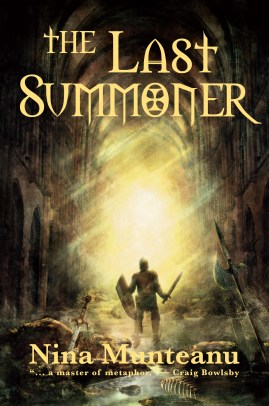
Cover1_LastSummoner-frontcover

cover art by Tomislav Tikulin

My historical fantasy The Last Summoner came to me in a single image. I’d run across a spectacular image by Croation artist Tomislav Tikulin (he’d done the cover art for Darwin’s Paradox, my previous book published by Dragon Moon Press). When I checked his website, there it was: this incredibly evocative image of a knight, standing in the war-littered mire of a drowned cathedral. The knight gazed up, questioning, at the vaulted ceiling from which shone streams of white gold. It sent my imagination soaring with thoughts of chivalry, adventure and intrigue.

Who was this knight? Where was he and why? What were the circumstances?

At that point I only had an image and many questions. I knew I wanted to write about this knight and this setting. Since I can remember, I’ve been fascinated by Europe during the medieval ages and I had been thinking of writing outside the science fiction genre for a while.

The image remained imprinted inside me for weeks, months, until the next nexus moment came. I stumbled across a significant but little-known battle in the medieval Baltic, the Battle of Grunwald. It would turn out to be the defining battle for what are now the countries of Poland and Lithuania. On June 14th 1410, they were still part of Prussia and tyrannized by the Teutonic Order, who were Christianizing the pagan Baltic on behalf of the Pope. In truth, the Order had been for centuries gathering wealth and land for colonizing Germans in their drang nach osten; they built sturdy castles (many of which still stand today) and a force of monk warriors, feared for their cunning strategy and treacherous combat abilities.

chateau-chillon-lake-geneva

Chilean castle, Switzerland (photo by Nina Munteanu)

The Battle of Grunwald was, in fact, an upset in history. The Teutonic Order was powerful, intimidating and extremely capable. They should have won; but the peasant armies of Prussia slaughtered the Order, killing most of its knights. Historians debate that the hochmeister’s arrogance—indeed, the arrogance of the entire Order—precipitated their downfall. They underestimated their adversaries and got sloppy. After the Polish and Lithuanian armies outsmarted the Order and slayed their hochmeister, along with most of their knights, the Order’s own peasant slaves finished the job using clubs, pitchforks and stones.

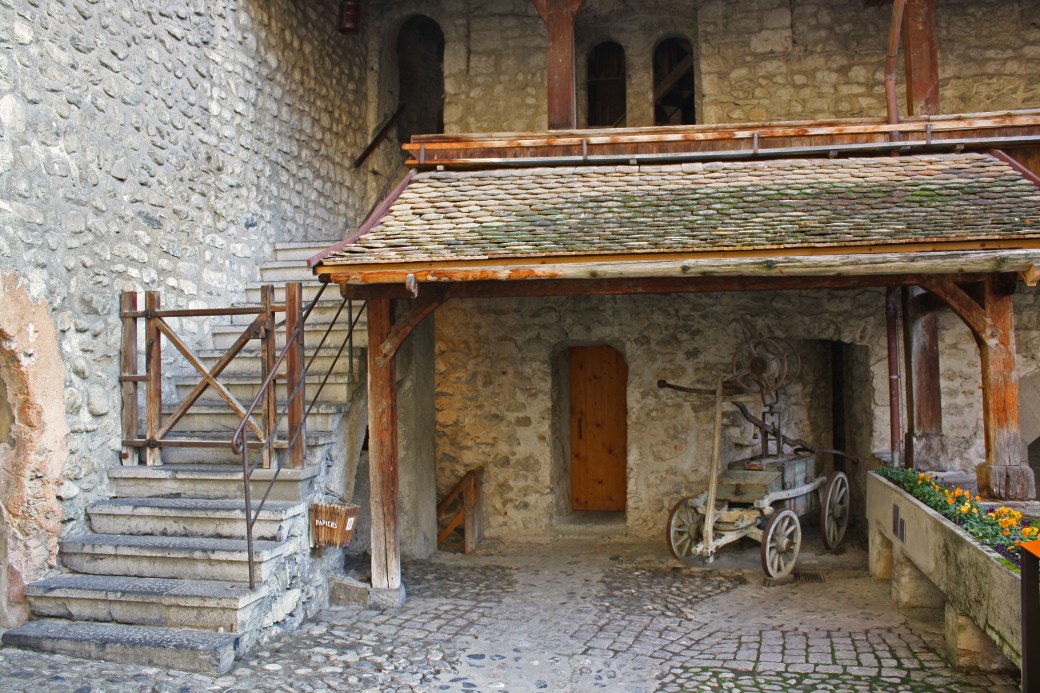
chillon-inner courtyard

Courtyard at Chillon Castle, Switzerland (photo by Nina Munteanu)

Intrigued by this lessor known order of religious crusaders, I pursued the premise of an alternative consequence: what if the Teutonic Knights had NOT underestimated their enemy and won the Battle of Grunwald? Would they have continued their catastrophic sweep of Northeast Europe into Russia and beyond? Would they have claimed the whole for Germany’s expansionist lebensraum movement, fueled by its sonderweg, a dialectic that would ultimately lead to the killing fields of the Holocaust? What if the success of the Teutonic Order helped consolidate a united fascist elite, ambitious to conquer the world?

And what if, as a result, Nazism sprang up 100 years earlier? The Last Summoner, arose from this premise.

I’d already conceived a heroine: a self-centered romantic noblewoman who has a vision of a knight in a drowned cathedral. Fourteen-year old Vivianne Schoen, Baroness von Grunwald, dreams that her ritter will rescue her from the drudgeries of her duties and an arranged marriage to some foreign warrior. When she discovers that her intended is a cruel and abusive mercenary, Vivianne makes a bold and impetuous choice that results in a startling discovery that she can alter history—but not before she’s branded a witch and must flee through a time-space tear into a alternate present-day Paris, now ruled by fascists. There, in present-day Paris she learns that every choice has its price. She meets François, a self-serving street kid who tries to monetize her and her gear but then falls for her anachronistic charm.

knight-cameoI originally wrote the Paris section in Vivianne’s point of view, but it seemed flat with too obvious fish-out-of-water observations. I let the book sit, while I conducted more research on Paris, and then it came to me: give the narrative to François. This part of the book was his story. By giving François the only POV, I also gave his character agency to react and change to Vivianne’s role as “catalyst hero.” I rewrote this section, starting with François fleeing from a street crime he’d committed, when Vivianne literally appears and knocks him down. She then sweeps him up in a high-stakes chase that will change his worldview. When Vivianne returns to 1410 Poland in the last section of the book, her great journey of self-discovery and atonement begins.

Spanning from medieval Poland to present day Paris, France, The Last Summoner explores the sweeping consequences of our “subtle” choices. From the smallest grab to the most sweeping gesture, we are accountable for the world we’ve made. During her 600-year journey to save the world and undo the history she authored, Vivianne learns wisdom and humility. Through the paradox of history, she learns that what might have seemed the right choice for an immediate future, turns out to be disastrous for a distant future. To win is also to lose; to save oneself one must surrender oneself; and to save the world one need only save a single soul.

The knight standing in the drowned cathedral is Vivianne.


 The Last Summoner, published by Starfire World Syndicate, was released in Cover1_LastSummoner-frontcover2012 and remained a Canadian bestseller on Amazon for several months. It represents my first historical fantasy in an otherwise repertoire of hard science fiction. The cover of the book is indeed the original image that had inspired the book in the first place; and was kindly acquired by my publisher. The Polish and Lithuanians celebrate June 14th with pride, erecting mock-ups of the battle annually. Some day I hope to participate.


References:

DeSalvo, Louise. 2014.”The Art of Slow Writing”. St. Martin’s Griffin. New York, NY. 306pp.

Munteanu, Nina. 2012. “The Last Summoner”. Starfire World Syndicate.

nina-2014aaNina Munteanu is a Canadian ecologist and internationally published author of award-nominated speculative novels, short stories and non-fiction. She is co-editor of Europa SF and currently teaches writing courses at George Brown College and the University of Toronto. Visit www.ninamunteanu.ca for the latest on her books.

Finding Focus at Christmas-Reprise

Beaches-snow03

The Beach in winter (photo by Nina Munteanu)

How many of you are still running around

preparing for the Christmas celebration or secular family festivity? Buying that last minute gift you’d forgotten or were chasing down since a bazillion days ago? Or making last minute changes to your travel plans, house-cleaning for guests, mailing of cards or parcels or meal preparations?

Well, you’re reading this blog post … That means you’re sitting down and taking a minute to relax and regroup. That’s good. Remember to breathe… while I tell you a story…

I’d just finished a three-day drive through snow and rain storms from

Sammy

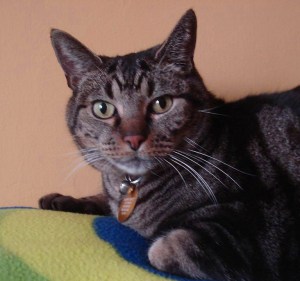
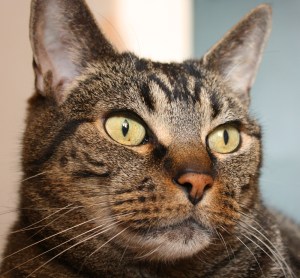
Sammy, my cat

Mahone Bay, Nova Scotia, to Toronto, Ontario, where I’m staying for two days before catching a flight to Vancouver to spend Christmas with my son and good friends on the west coast. Talk about fast living.

I move around a lot these days. It helps me to appreciate some of the most simple things in life and reminds me of what I love most about Christmas: how it focuses my heart and reconnects me. I don’t mean just with relatives and friends either, although the season certainly does that. I’m talking about my soul and the universe itself.

Before I became an itinerant, Christmas bustled with my responsibilities as primary caregiver, social coordinator and hostess of major parties.

sammy-2010-01_edited-1 copyAfter I’d said goodbye to our visiting friends and done the dishes and tidied the house, and my husband and son had gone to bed, I sat in the dark living room lit only with the Christmas Tree lights and the flickering candle. Listening to soft Christmas music, I was primed to write. My male cat, smelling fresh from outside, found his rightful place on my lap and settled there. He then trapped my hand with his paws, pinning me down with love. And there, as I breathed in the scent of wax and fir and cat I found myself again.
Most of us think of Christmas as a busy time, of getting together (often dutifully) with family and friends, exchanging presents and feasting. Christmas is certainly this, but that is only a shallow view of a far deeper event; and I don’t mean only Christians.sammy-2010-03_edited-1 copy

Whether celebrating the holy light of Hannukah or the birth of Jesus, or the winter solstice, this season provides us with the opportunity to meditate on far more than the surficial nature of the symbols we have come to associate with the season: the Christmas tree, presents, turkey dinner, Santa Claus or Saint Nicholas—most of which originate from pagan tradition, by the way.

sammy-close02 copySays Lama Christie McNally (author of The Tibetan Book of Meditation), “once you dive below the surface, you will discover a beautiful clear place—like a diamond hidden beneath the rubble. It is your own mind, uncovered … Tibetans say we have only just begun the process of awakening—that we still have quite a way to go in our evolutionary process. And it has nothing to do with building spaceships or computers. The next step in our evolution takes place within.”

Christmas is, more than anything, a time of embracing paradox. It is an opportunity to still oneself amid the bustle; to find joy in duty; to give of one’s precious time when others have none, to embrace selflessness when surrounded by promoted selfishness, and to be genuine in a commercial and dishonest world. If one were to look beyond the rhetoric and imposed tradition, the Christmas season represents a time of focus, a time to snow-christmas2008-sammyreflect on one’s genuine nature and altruistic destiny. A time to reconnect with the harmony and balance in our lives.

A time to sit with our cat, pinned with love, and write our next novel.


nina-2014aaNina Munteanu is a Canadian ecologist and internationally published author of award-nominated speculative novels, short stories and non-fiction. She is co-editor of Europa SF and currently teaches writing courses at George Brown College and the University of Toronto. Visit www.ninamunteanu.ca for the latest on her books.

Revising: Improve Your Story Using Paragraphs

Enhance Reader Ease by Addressing Paragraphs in Your Revision.

patterns-Spalting log and blu-green stain fungus LR

Spalted maple log (photo by Nina Munteanu)

Ever so often I get a story from a student that reads like one long run-on sentence… A James Joyce special of stream-of-conscious… In fact, what the writer had done is write many sentences without breaking up the narrative into paragraphs. You might be laughing at this point. “I don’t do that,” you might be saying to yourself. “I haven’t done that since high school!” But go take a look at that first draft you’re working on; there it will be: a page-long paragraph. Oops.

We can’t help ourselves. When immersed in the creative process, we often don’t think about structure. That’s OK; that kind of thinking is more appropriate during the second draft revision process, when you are more objectively assessing the “storytelling”. That’s when you want to pay attention to storytelling devices like paragraph breaks.

Paragraphs are defined by a main point or expression or an idea, not by any specific length. Strong paragraphs contain a sentence or several sentences that are unified around one central, controlling idea. A paragraph may be a single sentence or occupy half a page of sentences.

What a Paragraph Does

Paragraphs do several jobs in stories. They: 1) provide a break from long stretches of text both in content and in space on the page, and 2) they help clue the reader in to key changes in your story. The second point is often subtle and can be assigned almost arbitrarily if the need of the first point must be met. This is because the rules are not hard and fast and, ultimately in fiction, an author can “break” them according to their judgment of style and flavor.

Before you start “breaking” rules, you need to understand what paragraphs are meant to do. They:

  • Introduce something new
  • Define a shift in something already there
  • Mark a movement in a sequence

Each of the above is definable and interpretable in many ways from very subtle alterations to very obvious changes. Because of this, it is important to pay attention to the visual role of paragraphs; that is, how they create a more attractive and easeful text for readers. There’s nothing more “slowing” than seeing a page of narrative without any breaks.

Fiction writers use paragraphs much like punctuation to create a visual flow of narrative that varies in cadence, tone and flavor for readers. This is accomplished in several ways.

Vary Paragraph Lengths

Varying paragraph lengths in text provides diversity in the narrative that adds interest for the reader. Long paragraphs unify a more ponderous and serious mood in a reader. Interspersing these with short paragraphs will break up the reader’s tendency for complacent reading and livens the narrative. The short paragraphs, by default, provide areas of emphasis within a sea of longer text. The fiction writer may use these to make a subtle point.

Using Dialogue

Dialogue effectively breaks up paragraphs and provides a lot of open white space that is attractive to readers and increases pace of narrative. However, even dialogue requires variation. Variation can take on the form of 1) dialogue interspersed with descriptive narrative vs. the use of straight back and forth dialogue, and 2) one-line dialogue vs. dialogue containing several sentences (the one line dialogue serves to punctuate).

Paragraph Checklist

In their 2008 book, The Little Brown Handbook by Pearson Longman (Toronto), H. Ramsey Fowler, Jane E. Aaron, Murray McArthur, Deane E.D. Downey, and Barbara H. Pell provide a general checklist for revising paragraphs that is adapted here for fiction writing. This consists of asking the following questions:

  • Is the paragraph unified? Is it tied to one general idea or narrative direction?
  • Is the paragraph coherent? Are the sentences linked and do they follow a clear and consistent sequence?
  • Is the paragraph developed? Is there a logical beginning and end that “frames” a whole idea or thought?

Hope this helps. Don’t forget the one line paragraph.

Very effective.


nina-2014aaNina Munteanu is a Canadian ecologist and internationally published author of award-nominated speculative novels, short stories and non-fiction. She is co-editor of Europa SF and currently teaches writing courses at George Brown College and the University of Toronto. Visit www.ninamunteanu.ca for the latest on her books.


How to End Your Story

Sunset 3

Sunset in Niagara-on-the-Lake (photo by Nina Munteanu)

Have you ever seen the movie The Party with Peter Sellers? The first scene is priceless. Sellers plays an actor who is shot in a war scene; he subverts the script by refusing to die. His endless death struggles get so annoying that even the men on his side turn and shoot him.

The last thing you want to do is create an ending or dénouement that struggles in its conclusions. Ultimately, a story’s ending should conclude the story’s plot and theme satisfactorily to the reader.

According to Ansen Dibell, author of Elements of Fiction Writing: Plot, successful endings come in two basic shapes: 1) circular and 2) linear. In a writing workshop I recently participated in, Patrick Rothfuss, author of The Name of the Wind, demonstrated two kinds of endings using his hands: for the first kind he clenched his fists in front of him; for the second kind, he opened his hands airily toward his audience.

The kind of ending you choose for your story will depend on the kind of story you are telling: one that rises to a climax or one that returns home.

Circular Endings

Beginning and ending connect in a circular story. In such a story, the end and the beginning are much more alike than they are to the middle. This is because the end reflects the promise of the beginning. Framed stories use the same technique, except the beginning and end “frame” are more like bookends, supporting the story from the outside and made of a visibly different structure (e.g., often portrayed in prologue and epilogue fashion and often in different POV, tense, style, etc.).

Circular endings, and their circular stories, are often the shape that quest-adventure stories take on. The main character sets out on a quest to find or learn or accomplish something, passes through trials, and finally succeeds in his mission and returns home with his prize to share (often insight or wisdom). Ultimately, the protagonist grows/changes/achieves then brings that wealth back home to alter his pre-existing everyday life. Full circle. Beginning and end mirror and contrast one another.

Circular endings must do the job of showing the hero’s “homecoming”, how she is changed through the turning point in the middle of the story, and what she has brought to the ordinary world to change it.

Linear Endings

Linear stories and their endings run more like a marathon up a hill, with slides, diversions and hard climbs, until they reach the summit and climax (the highest point of conflict—and resolution). Once the result of the conflict is achieved, the story is at an end. Most straight adventure stories are of this type.

Reflective vs. Narrative Ending

Roy Peter Clark, author of Writing Tools: 50 Essential Strategies for Every Writer, reflects that “great endings bring back the whole story.” He cites the “reflective ending” of The Great Gatsby, in which the narrator reflects back, pulling together the important narrative threads like a master weaver, to make meaningful conclusions.

“A powerful alternative,” adds Clark, “is the ‘narrative ending’, a final scene that crowns the action.” Both types of ending work when masterfully handled. The former is essentially “telling” and the latter is essentially “showing”. You choose. Both work.


nina-2014aaNina Munteanu is an ecologist and internationally published author of award-nominated speculative novels, short stories and non-fiction. She is co-editor of Europa SF and currently teaches writing courses at George Brown College and the University of Toronto. Visit www.ninamunteanu.ca for the latest on her books.

Discovering the Ecotones of “When Words Collide”

If you have an apple and I have an apple and we exchange apples then you and I will still each have one apple. But if you have an idea and I have an idea and we exchange these ideas, then each of us will have two ideas.” —George Bernard Shaw


WWC-venue

The venue

In August 2015, as part of my sojourn in my homeland of British Columbia, I participated in When Words Collide, one of Canada’s premiere writing and reading festivals in Calgary, Alberta. This is one writing conference I make a point of attending every year.

Held at the Delta Calgary South Hotel, and run by the super team of Randy McCharles, Susan Forest, Sarah Kades, and Mahrie G. Reid—among other awesome volunteers—this multi-genre writing festival initially modeled itself after the International Surrey Writer’s Conference—flavoured and spiced with the joie de vivre energy of a science fiction writer’s convention. The integration of multi-genres, professional interactions (e.g., editors, publishers, writers and readers) and the festivity of costuming, song and dance, is a truly winning combination.

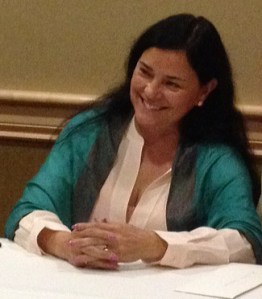
diana gabaldon01

Diana Gabaldon

Guest presenters included best-selling authors Diana Gabaldon, Brandon Mull, Faith Hunter, Daniel Abraham, C.J. Carmichael and agent Sally Harding. The festival included a diversity of panels and workshops, author readings, book launches and parties (including an absinthe-tasting party), an autograph session and a merchant’s corner.

I gave three workshops: one on writing fiction called “Five Things to Consider”; one on narrative voice and POV called “Mastering ‘Voice’ and Narration”; and one on setting called “Mastering Setting.”

Highlights were many: trading stories with my colleagues and writing friends over a drink or signing or loitering in the hallway is always a highlight. Meeting interesting people in a crowd of interesting people is another. Briefly visiting with Diana Gabaldon—an incredibly gracious and entertaining artist—is certainly another.

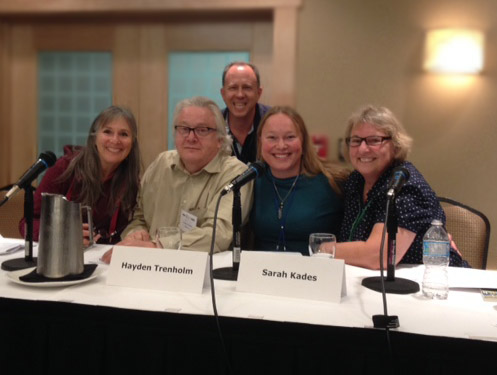
eco-fiction panel-WWC

Eco Panelists

An important highlight for me was moderating a panel on Eco-Fiction. Joining me on the panel were publisher/writer Hayden Trenholm, and writers Michael J. Martineck, Sarah Kades, and Susan Forest. The panel was well attended; panelists and audience discussed and argued what eco-fiction was, its role in literature and storytelling generally, and even some of the risks of identifying a work as eco-fiction.

Someone in the audience brought up the notion that “awareness-guided perception” may suggest an increase of ecological awareness in literature when it is more that readers are just noticing what was always there. Authors agreed and pointed out that environmental fiction has been written for years and it is only now—partly with the genesis of the term eco-fiction—that the “character” and significance of environment is being acknowledged beyond its metaphor; for its actual value. It may also be that the metaphoric symbols of environment in certain classics are being “retooled” through our current awareness much in the same way that Aldous Huxley’s Brave New World or George Orwell’s Nineteen Eighty Four are being re-interpreted—and newly appreciated— in today’s world of pervasive surveillance and bio-engineering. I would submit that if we are noticing it more, we are also writing it more. Artists are cultural leaders and reporters, after all. I shared my own experience in the science fiction classes I teach at UofT and George Brown College, in which I have noted a trend of increasing “eco-fiction” in the works in progress that students are bringing in to workshop in class. Students were not aware that they were writing eco-fiction, but they were indeed writing it.

NaturalSelection-frontHRI started branding my writing as eco-fiction a few years ago. Prior to that—even though my stories were strongly driven by an ecological premise and strong environmental setting—I described them as science fiction and many as technological thrillers. Environment’s role remained subtle and—at times—insidious. Climate change. Water shortage. Environmental disease. A city’s collapse. War. I’ve used these as backdrops to explore relationships, values (such as honour and loyalty), philosophies, moralities, ethics, and agencies of action. The stuff of storytelling.
Environment, and ecological characteristics were less “theme” than “character,” with which the protagonist and major characters related in important ways.Snowpiercer-french

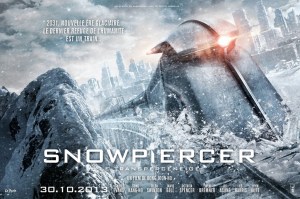
Just as Bong Joon-Ho’s 2014 science fiction movie Snowpiercer wasn’t so much about climate change as it was about exploring class struggle, the capitalist decadence of entitlement, disrespect and prejudice through the premise of climate catastrophe. Though, one could argue that these form a closed loop of cause and effect (and responsibility).

The self-contained closed ecosystem of the Snowpiercer train is maintained by an ordered social system, imposed by a stony militia. Those at the front of the train enjoy privileges and luxurious living conditions, though most drown in a debauched drug stupor; those at the back live on next to nothing and must resort to savage means to survive. Revolution brews from the back, lead by Curtis Everett (Chris Evans), a man whose two intact arms suggest he hasn’t done his part to serve the community yet.

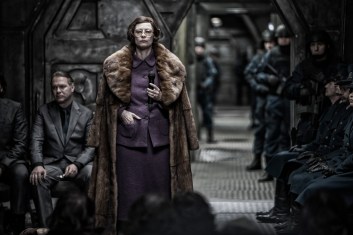
Minister Mason (Tilda Swinton), an imperious yet simpering figure who serves the ruling class without quite being part of it, reminds the lower class that: snowpiercer-mason

We must all of us on this train of life remain in our allotted station. We must each of us occupy our preordained particular position. Would you wear a shoe on your head? Of course you wouldn’t wear a shoe on your head. A shoe doesn’t belong on your head. A shoe belongs on your foot. A hat belongs on your head. I am a hat. You are a shoe. I belong on the head. You belong on the foot. Yes? So it is. 

In the beginning, order was prescribed by your ticket: First Class, Economy, and freeloaders like you…Now, as in the beginning, I belong to the front. You belong to the tail. When the foot seeks the place of the head, the sacred line is crossed. Know your place. Keep your place. Be a shoe.”

Ecotones are places where “lines are crossed,” where barriers are breached, where “words collide” and new opportunities arise. Sometimes from calamity. Sometimes from tragedy. Sometimes from serendipity.

When environment shapes a story as archetype—hero, victim, trickster, shadow or shape shifter—we get strong eco-fiction. Good eco-fiction, like any good story, explores the choices we make and the consequences of those choices. Good eco-fiction ventures into the ecotone of overlap, collision, exchange and ultimate change.

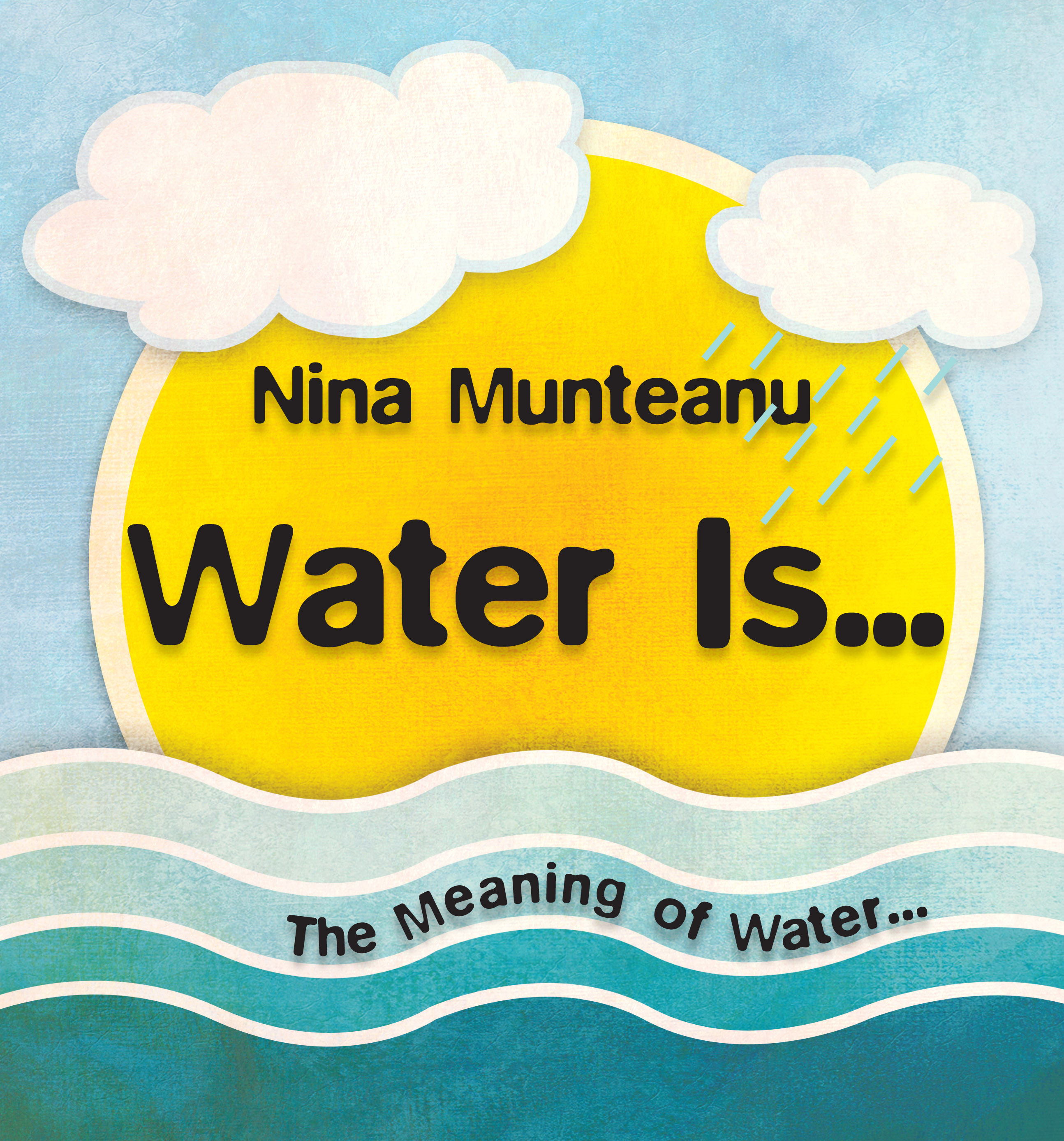
Water Is-cover01In my latest book Water Is… I define an ecotone as the transition zone between two overlapping systems. It is essentially where two communities exchange information and integrate. Ecotones typically support varied and rich communities, representing a boiling pot of two colliding worlds. An estuary—where fresh water meets salt water. The edge of a forest with a meadow. The shoreline of a lake or pond.

For me, this is a fitting metaphor for life, given that the big choices we must face usually involve a collision of ideas, beliefs, lifestyles or worldviews: these often prove to enrich our lives the most for having gone through them. Evolution (any significant change) doesn’t happen within a stable system; adaptation and growth occurs only when stable systems come together, disturb the equilibrium, and create opportunity. Good social examples include a close friendship or a marriage in which the process of “I” and “you” becomes a dynamic “we” (the ecotone) through exchange and reciprocation. Another version of Bernard Shaw’s quote, above, by the Missouri Pacific Agriculture Development Bulletin reads: “You have an idea. I have an idea. We swap. Now, you have two ideas and so do I. Both are richer. What you gave you have. What you got I did not lose. This is cooperation.” This is ecotone.

botanical beach tidal pools copy

Tidal pools in Botanical Beach, BC (photo by Nina Munteanu)

I think we are seeing more eco-fiction out there because ecosystems, ecology and environment are becoming more integral to story: as characters in their own right. I think we are seeing more eco-fiction out there because we are ready to see it. Just as quantum physics emerged when it did and not sooner, an idea—a thought—crystalizes when we are ready for it.

Don’t stay a shoe … go find an ecotone. Then write about it.

Hope to see you at When Words Collide next year.


For my complete critique of Snowpiercer in The Alien Next Door, go here.


nina-2014aaNina Munteanu is an ecologist and internationally published author of award-nominated speculative novels, short stories and non-fiction. She is co-editor of Europa SF and currently teaches writing courses at George Brown College and the University of Toronto. Visit www.ninamunteanu.ca for the latest on her books.

The Meaning of Writing and Water with Nina Munteanu

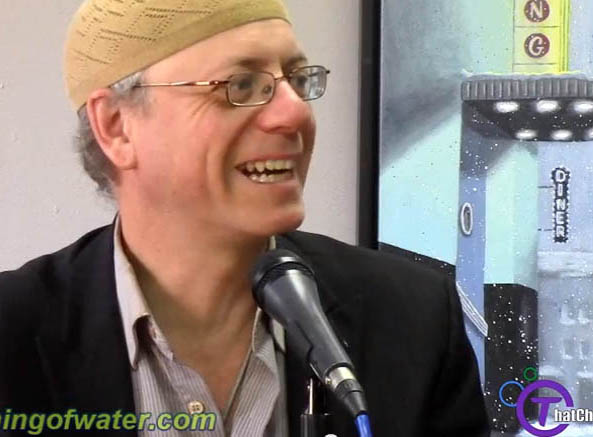
I was recently invited to “Liquid Lunch” a program on That Channel in Toronto, Ontario, to discuss the writing process and my new book on water, “Water Is…” with Hugh Reilly and Hildegard Gmeiner:

hugh-LL

Hugh Reilly

hildegard-LL

Hildegard Gmeiner

nina-LL-interview

Nina Munteanu

“Water Is…” is due for release early 2016. Below is the final cover by Aurora finalist Costi Gurgu (more on the book and the cover later):

Water Is-cover01

The Ecology of Print Books: Niche Partitioning by Young Readers

Anne-walking-Cedars

Friend Anne walks boardwalk in giant cedar forest, BC (photo by Nina Munteanu)

A while ago, I wrote about the S-curve in publishing, an ecological phenomenon applied to the book industry. Today I’d like to talk about another ecological phenomenon: niche partitioning.

Earlier this year, SF author and fellow Canadian Cory Doctorow cited several reports on his blog BoingBoing suggesting that “young readers generally prefer to read books from paper, not screens.” More than that, he adds, “they find ebooks and printed books complementary.”

I’m an ecologist and this makes sense to me. It comes down to niche-partitioning. Every organism occupies a niche, which can be defined as that organism’s “job” in its ecosystem; so niche-partitioning is a way for organisms to co-exist cooperatively—rather than competitively and exclusively—by apportioning or segregating various jobs or roles in an ecosystem. It’s a bit like syndicalism vs. capitalism, in which functional, rather than territorial precepts are used.

“The future composts the past,” says Doctorow. “The advent of films made it possible for performances that couldn’t work onstage to be born and it moved all the plays that were uncomfortable fits onstage to the screen. What it left behind were plays that were more like plays—and a theater industry that’s still going strong, even if it’s dwarfed by the screen.” He’s talking about niche-partitioning here.

I generally find that ebooks are convenient for my mobile lifestyle. I’ve recently adopted an itinerant, gypsy life from my former “nesting” days. My family has grown up and left the nest and I’ve gone “walkabout”. My giant library of print books had to find good homes, rather than travel with me to all parts of the world. I keep a collection of virtual books on my device for reference (like a dictionary). I also find ebooks a good option for a one-off read—something I can get cheap and read without needing to “befriend” and keep.

I treasure my few printed books, both reference and story. My reference print books are underlined and marked and worn from being used over and over again. Printed books are best for protracted reading and comprehension. You want a print book when you wish to delve deep into “story” and relax.

As with the theatre becoming more theatre-like, Doctorow adds that, “books are becoming more book-like. Books that work best as e-books—for example, big reference books; but also short works that are too slight to rest comfortably on their own between covers—are moving to e-book-land. Things that are produced as printed books have passed a test in which someone has asked, Is there an important reason for this to exist in print, instead of exclusively onscreen?

I talked about this in my previous article The Future of Books on this blog: “print books will become the epitome of publishing value and worth. Already coveted by collectors whose libraries will represent the best of the best in the literary world, print books will come to represent the highest status in literature. Only the best stories will endure as print books; perhaps only the ‘best book’ will even be published in print form. Its existence in print form will define its literary value.” Niche-partitioning, like I said…

In an article called Why Digital Natives Prefer Reading in Print. Yes, You Read That Right, Washington Post reporter Michael S. Rosenwald reported that, “Textbook makers, bookstore owners and college student surveys all say millennials still strongly prefer print for pleasure and learning, a bias that surprises reading experts given the same group’s proclivity to consume most other content digitally.”

students-print-online2014Rosenwald adds, “The preference for print over digital can be found at independent bookstores such as the Curious Iguana in downtown Frederick, Md., where owner Marlene England said millennials regularly tell her they prefer print because it’s “easier to follow stories.” Pew studies show the highest print readership rates are among those ages 18 to 29, and the same age group is still using public libraries in large numbers.” Rosenwald adds, “And it can be seen most prominently on college campuses, where students still lug backpacks stuffed with books, even as they increasingly take notes (or check Facebook) on laptops during class. At American, Cooper Nordquist, a junior studying political science, is even willing to schlep around Alexis de Tocqueville’s 900-plus-page “Democracy in America.”

I’ve noticed the same phenomenon at the University of Toronto campus where I teach. Rosenwald writes about Frank Schembary, a young student who loves books—printed books. He loves how they smell. He loves scribbling in the margins, underlining interesting sentences, folding a page corner to mark his place. “I like the feeling of it,” says Schembary, reading under natural light in a campus atrium, his smartphone next to him. “I like holding it. It’s not going off. It’s not making sounds.”

Cedar trunk base-LR

Cedar tree, Little Rouge woodland (photo by Nina Munteanu)

Naomi S. Baron, an American University linguist who studies digital communication, wrote a book Words Onscreen that reported her studies of students’ reading patterns. She found, along with other studies, that readers tend to skim on screens. Her favourite response to her question of what students disliked the most about reading in print was: “It takes me longer because I read more carefully.”

Students prefer digital for science and math subjects, where they also have access to online portals and resources linked to their subject matter and assignments.

Niche partitioning makes the world go round. Now, if we can only use its logic in economic systems.

nina-2014aaNina Munteanu is an ecologist and internationally published author of award-nominated speculative novels, short stories and non-fiction. She is co-editor of Europa SF and currently teaches writing courses at George Brown College and the University of Toronto. Visit www.ninamunteanu.ca for the latest on her books.

Why You Want to Go To A Writer’s Convention

IMG_0304A while ago I attended (and participated as panelist and guest author) at the World Fantasy Convention in Toronto. And I was all jazzed about it! Why?… Well, let me tell you why…

If you haven’t yet attended a writer’s conference or convention, it’s high time you did. Because, not only are you missing out on an education, you are missing out on a sub-culture that may change your life as a writer, help feed the hungry and align the universe. Seriously.

The last World Fantasy Convention I attended was several years ago in 2008. It was held in Calgary, Alberta, when I still lived in Vancouver, British Columbia. The ten-hour drive through some of the most glorious Canadian wilderness and mountains was bracing and we were lucky that the weather played fair. It was an auspicious start to a wonderful journey of self-discovery.

Hosted by toastmaster Tad Williams, this world-class convention featured guests of honor, David Morrell, Barbara Hambly, Tom Doherty and Todd Lockwood. The World Fantasy Convention promised great things and delivered them. And I’m not just talking about that white chocolate cranberry-date-nut dip that had me loitering at the hospitality suite. Or all those midnight parties that served savory wine with salted almonds, sharp cheese and colorful conversation with the likes of David Hartwell, Tor editor and impeccable dresser (gotta love those ties!). I’m not even talking about the hot tub that sprung a leak on the 18th floor at 1 am or the entertaining panels and readings, which rocked for both writer and reader.

What made the con great for me was seeing my writing community (both writing colleagues and readers who followed my writing) and meeting new people, all lovers of books and “story”.

I was rudely eyeballing someone’s nametag on his chest, when I collided with the Prince George crowd that included authors, Lynda Williams (herself responsible for some pretty nasty intergalactic wars), Nathalie Mallet (who cages princes) and publisher Virginia O’Dine of Bundoran Press (rumored to have been somehow responsible for the hot tub fiasco). I also chummed with Jennifer Rahn, author of The Longevity Thesis, who was charmed by my sly cat (she’s a softy at heart). My cat-colleague Toulouse just kept charming his way through the crowd right to the book fair. We wandered to the back where Anita Hades of Edge Books gave Toulouse her usual greeting (a feline move that was a cross between Sophie Marceau and Brigitte Helm; both she and Toulouse have French blood coursing through their veins, after all—c’est vrai!).

I’d come a long way from the first writer’s conference I went to as a budding writer of a few short stories and non-fiction articles…

Here’s what author Susan Denney says about her first writer’s conference: “Going to my first writers’ conference was an act of faith. I was just starting to make some freelance sales when the members of my writers’ group encouraged me to join them at a conference a few hundred miles away. The expense didn’t seem justified to me. The cost was far more than I had earned through writing that year. But they convinced me at last and it proved to be a great investment. The benefits of a writers’ conference are there for anyone who has a desire to be a better writer.”

Here are some reasons why you can’t afford NOT to go to a conference or convention:

Contacts: you will make contacts with people working in the industry, an extremely valuable asset; this industry is a social one, based on trust, respect and joyfulness. While there’s no guarantee that you will meet anyone famous or influential, you will definitely meet people who know more about writing than you do. Just hanging out with professional writers, editors and agents is educational. If nothing else, you will gain some confidence and ease with industry people, who are real people too. Some may become friends; some may become colleagues; some will become both.

Appointments: through agent/editor/author appointments, you will have a chance to have a quality private conversation with a professional on all aspects of writing and publishing. This is your chance to pitch your novel or ask that one burning question. You know you’ll get a candid and professional answer. That in itself is invaluable and may be enough reason to attend the con. Appointments are also your best chance of getting your manuscript read. This is because it bypasses the slush-pile and months of waiting for a response. More and more editors and agents look to conferences to meet potential authors. For them, meeting an author in person is a bonus to their gauging potential success in a relationship with them.

Education on Craft & Marketing: you will learn something about craft and marketing, no matter what stage you are in your writing career. Depending on the conference or convention, aside from good information from panels, you may also get personal mentoring, 1-page critiques, or attend small themed workshops. Feedback from an experienced writer can save you months of frustration and grief. Just hearing about what is currently going on in the industry is also valuable and conferences are a good way to get the skinny on what the current issues in the writing and publishing industry are. Getting it from those who are working inside avoids the idle and potentially harmful gossip.

Community: you will be exposed to a community of writers, hundreds of creative people in various stages of their careers. By interacting with both those you can help and those who can help you, you will gain a measure of both humility and confidence and satisfaction. We learn so much by helping others. Simply being with other writers can help hone your people-skills, the same ones you will need when approaching agents, editors, publishers and research sources during your career as a professional. Remember, if you aren’t having fun, you are missing one of the most important aspects of attending a writer’s conference, and you will lose your own effectiveness.

Energy: there is nothing more energizing than a common sharing among those of like-minded thought and vision. Writing is primarily an individual pursuit, often thought to belong to the introvert; but, to succeed in the writing/publishing industry a writer must display staying power, persistence, confidence and enduring energy. There is nothing quite as inspirational as hearing an accomplished writer provide their story of victory against odds. I will never forget the moving words of Ray Bradbury at a conference in Palm Springs years ago. I have repeated those words many times since. If you come to a conference with the right mind-set, I guarantee that you will leave with more energy than you came and with a burning need to write.

Exposure: depending on the kind of conference or convention you attend, you will have the opportunity to expose yourself to something different (e.g., different fiction genres and associated communities; fiction vs. non-fiction; different media; etc.). I attended a romance writers conference a few years back (I write mostly science fiction and fantasy—but often with romance elements in them) and found it bracingly educational.

New Markets & Ideas: conferences attract writers of all kinds. Conferences provide fertile ground for cross-pollination of ideas, markets and marketing ploys. Writers, like you, are generally a nice crowd; most are willing and eager to share their successes and failures. And contacts. Sharing is one of the great things that happens at conferences. There may be a common pin board set up for people to share. Most conferences are Twitter and Facebook enabled for quick and easy viral sharing. If you don’t come away from a conference with at least one new idea, contact or market, you haven’t done your job: talk to people.

Here are a few do’s and don’ts for when you go conferencing:

  1. Wear comfortable but not sloppy clothing and shoes (it’s likely that you will be doing a fair bit of standing and walking); you want to make a good impression. Be yourself and dress accordingly.
  2. Bring promotional material with you (e.g., business cards, flyers on your book, stories, etc.). Have something to share and exchange with other writers and professionals. Most conferences also have tables devoted to shareware. This is your chance to introduce you and your writing to others.
  3. Take something to write with (e.g., notebook and pen or iPad, etc.).
  4. Talk to people. Chances are that everyone there is interesting.
  5. Respect the time, particularly other people’s time, and keep your appointments and meetings.
  6. Don’t bring your heavy manuscript with you to the conference. Agents and editors don’t have the time or inclination or space in their suitcase for it. Use the conference to make an impression and get an invitation for something later in writing.
  7. Keep all of your interactions verbal and face-to-face. Don’t rely on memorized speeches or a folded up written pitch in your pocket. Keep it casually professional. Make eye contact and speak from the heart. Show your passion.
  8. Have fun. And don’t be afraid to show it; there’s nothing more infectious and attractive than someone having fun.


Some upcoming writing-artistic conferences/ conventions / festivals in the Toronto area include:IMG_0306


nina-2014aaNina Munteanu is an ecologist and internationally published author of award-nominated speculative novels, short stories and non-fiction. She is co-editor of Europa SF and currently teaches writing courses at George Brown College and the University of Toronto. Visit www.ninamunteanu.ca for the latest on her books.


Know What You’re Writing: Short Story or Long Story?

freighter-rowers-sailboat-web

Freighter off Toronto Harbour, Lake Ontario (photo by Nina Munteanu)

How to Decide on the Length of Your Story 

Figuring out what you are writing isn’t always as easy as you think. Many writers, when they begin, may think they are writing a short story when they are actually writing a novel; or vice versa. When I first started, in fact this is what occurred.

Some time ago, when I was a budding novelist working on my second unpublished novel, I decided to write short stories. I’d been told time and again that it was easier to publish short stories (the market is far more diverse) and they provided excellent qualifications for when it came time to market my novel. It wasn’t as easy as I thought. I kept getting rejections with comments that my short story ought to be a novel! It took some time to master the art of short story telling. But when I did, I realized that I’d learned a lot about storytelling that I could apply to my novel. And by the time I was ready to publish my novel, I had several short story publications behind me to prove the salability of my work.

So, what are you really writing? Or, more to the point, what should you be writing?

A short story only has 7,500 words or less to get your tale across while a novel has over ten times that many words to do the same. It follows then that the short story format is a simpler one. This does not necessarily mean easier.

Short Vs. Long—What’s Your Focus?

Novels provide a sense of change, growth and solutions to problems and conflicts. Short stories must be more succinct, contain fewer characters and subplots, have less complicated story arcs and a single theme. You could say that a short story is a poem to a novel’s prose. “The short story doesn’t have the luxury of depicting change; the closest it can come is awareness,” writes Shelley Lowenkopf in her 2007 article “Telling Tales” in The Portable Writer’s Conference: Your Guide to Getting Published by Quill Driver Books. She goes on to describe the short story as a close-up to a novel’s landscape. The short story is, therefore, often more intense and powerful. A short story, more than a novel, has the power to transport, disturb and enlighten.

Renowned short story authors like Edgar Allen Poe, Nathanial Hawthorne, and Somerset Maugham emphasize the importance of striving for one effect when writing a short story: the single effect you wish to leave with the reader at the end. This is accomplished by selecting events or situations that build quickly into a combustible response.

Jack Bickham, in his book, Elements of Fiction Writing: Scene and Structure by Writer’s Digest Books (1993) writes that, “story length, author intention, traditional expectations of the audience, and all sorts of things may affect the form a story may take.” Choosing the appropriate length to tell your story relies on the complexity of your premise and theme.

Pick Your Length Checklist

The following short checklist will help you determine whether you should be writing a short story or something longer like a novel:

  • does your story have several main characters and minor characters?
  • is your story full of subplots?
  • does your story contain multilayered themes and story arcs?
  • do your characters learn and change notably?
  • is there significant change in your story?
  • does your story contain several settings and sub-stories?
  • does your story explore several ideas as opposed to one main idea?
  • does your story investigate several issues rather than making a single point?

If you answered “yes” to most of the above, then you should be writing a novel.

Defining Story Length

The Science Fiction & Fantasy Writers of America defined story length forms in the table below. Definitions vary among other sources but remain close to these.

Table 1: Terminology of Story Lengths
Name Description
Drabble (Flash Fiction) Exactly 100 words
Flash Fiction Less than 500 words
Short short Fiction 500-1,000 words
Short Story Less than 7,500 words
Novelette 7,500 to 17,500 words
Novella 17,500 to 40,000 words
Novel More than 40,000 words


Creative Options & Market Tips

During my early “salad” writing years as a short story writer, I discovered a system that helped me send out material and publish with more ease and efficiency. It helped that I was rather prolific with short story telling and that I was simultaneously working on a few novels. Here are some creative things you can do with both your short stories and novels (in the works or already published) to increase your productivity and publishing opportunities:

  • Use Novel Excerpts: Here’s something I did to save time, hone my craft, and receive early recognition: I took “aha” excerpts from my ongoing novel and adapted them into stand alone short stories—altering at least 20% of the content and other elements like setting, names, etc. In each case, I ensured a powerful story by focusing on the single thematic element. I sold at least five short stories to good magazines this way. The short stories went on to receive recognition, awards and a place in some “Best of” anthologies, long before my novels received similar recognition. In each case, the short story became an equally—if not more—powerful version of its sister work in my novel, much like a poem is to a piece of prose. Try it; you might really like it.
  • Adapt A Short Story into a Novel or Novella: you may find that a powerful thought expressed in your short story engenders interest in a larger plot with more depth, such as a novel. Nancy Kress and Ray Bradbury are two short story/Novella writers who adapted some of their works into longer forms to create something both new and compelling.
  • FictionWriter-front cover-2nd ed-webRun Your Novel and Short Story Submissions Like a Bus Depot: When I was writing a lot of short stories, I kept a list of what and where I submitted, along with the most important item: where to submit NEXT. At any given time, I made sure that I had at least x-number of submissions out there and each story had a designated place to go if it returned. As soon as a story came back from magazine A, I simply re-packaged it and sent it to magazine B. The critical part of the list was to have a contingency for each story: the next place where I would send the story once it returned. I was planning on the story being rejected with the hope that it would be accepted; that way, a rejection became part of a story’s journey rather than a final comment. I ran my submissions like a bus terminal. A story was in and out so fast it never had a chance to cool off. And, since I had five other pieces out there, I could do this with little emotion. I was running a fast-paced “story depot”, after all. All my stories had to be out there as soon as possible; if they were sitting in the terminal, they were doing nothing for me.
  • Reprint Your Published Short Stories: You can only do this if you ensure that you initially only sell First Rights with your story’s first publication. My short story “Virtually Yours” has been reprinted five times and is continuing its journey still. It has appeared in “Best of” anthologies, several collections (e.g., Natural Selection); it has been translated into several languages and published all over the planet. Don’t let your story languish on its first success. See where else it can go. Foreign markets are a largely untapped area.
  • Do Foreign Translations and Reprints: Thankfully, Douglas Smith, a colleague of mine and celebrated short story writer has compiled a list for short story foreign markets. He also recently put out a book on marketing your short story, called “Playing the Short Game”.


References:

Smith, Douglas. 2014. “Playing the Short Game: How to Market and Sell Short Fiction”. Lucky Bat Books. 230pp

Munteanu, Nina. 2009. The Fiction Writer: Get Published, Write Now! Starfire World Syndicate. 266pp.

NaturalSelection-frontHRMunteanu, Nina. 2013. “Virtually Yours” in Natural Selection: a Collection of Short Stories. Pixl Press. 120pp.


This article is an excerpt from Chapter R of The Fiction Writer: Get Published, Write Now! (Starfire, 2009).


nina-2014aaNina Munteanu is an ecologist and internationally published author of award-nominated speculative novels, short stories and non-fiction. She is co-editor of Europa SF and currently teaches writing courses at George Brown College and the University of Toronto. Visit www.ninamunteanu.ca for the latest on her books.