The Aggressive Symbiosis of SARS-CoV-2: Seeking Balance in an Unbalanced World

SARS-CoV-2

SARS-CoV-2

In the following scene of my upcoming speculative novel “Thalweg” (set in 2053 Toronto) one of my characters, Daniel–who is a bit of a conspiracy theorist–is trapped in an old abandoned garage, about to fight off a pack of stray dogs. His feverish mind thinks back to the COVID-19 pandemic:

“The official story was that SARS-CoV-2, which caused the COVID-19 pandemic of the early ‘20s resulted from the recombination of two previous viruses in some host—supposedly a bat or pangolin—which then ended up in a Wuhun wet market; there, the recombined virus gleefully jumped species to humans, who, in turn, gleefully spread it worldwide. But, according to the study at the Wuhun hospital, patient zero hadn’t been anywhere near the wet market. So, where did the virus really come from?…”

Daniel then recalls a conversation he had–when he still had a job–with colleague Lynna in which he  suggested that the chimera virus–and the others that followed–were developed as a bioweapon through Gain-of-Function research and they somehow leaked into the public. To her scoff, he reminded her that the aim of GOF research is to induce an increase in the transmissibility and/or virulence of pathogens. He then provided numerous examples involving Influenza, SARS, and MERS.

Influenza virus

Influenza virus

Did she know, for instance, that in 2014 Obama put a funding moratorium on all GOFR experiments that might enhance virus pathogenicity or transmissibility in mammals via the respiratory route. Then in 2017, under the Trump administration, the NIH turned it all back on.

squirrel monkey

Squirrel monkey

Lynna responded calmly with a convincing argument, based on science and ecology. “Sure, they could be that,” she acknowledged thoughtfully. “Or they could simply be more cases of co-evolution and aggressive symbiosis…” Then she informed Daniel that viruses commonly form aggressive relationships with their hosts. Every monkey, baboon, chimpanzee and gorilla is carrying at least ten different species of symbiotic viruses, she said. The herpes-B virus that chums with the squirrel monkey is one example. The virus and an immunity to it passes harmlessly from mother to baby monkey. If a rival species like the marmoset monkey invades their territory, the virus jumps species and wipes out the challenger by inducing cancer in the competing marmoset monkey. Ebola and hantavirus outbreaks follow a similar pattern of “aggressive symbiosis.”

This community-symbiosis functions like an ecosystem’s “immune system” that protects its own from the encroachment of invading species—even when that invading species is us.

—excerpt from Nina Munteanu’s “Thalweg” (upcoming)


Aggressive Symbiosis & Virus X

Virus X FrankRyanIn his book Virus X, Dr. Frank Ryan coined the term aggressive symbiosis to explain a common form of symbiosis where one or both symbiotic partners demonstrates an aggressive and potentially harmful effect on the other’s competitor or potential predator. Examples abound, but a few are worth mentioning. In South American forests, a species of acacia tree produces a waxy berry of protein at the ends of its leaves that provides nourishment for the growing infants of the ant colony residing in the tree. The ants, in turn, not only keep the foliage clear of herbivores and preying insects through a stinging assault, but they make hunting forays into the wilderness of the tree, destroying the growing shoots of potential rivals to the acacia.

bamboo rising copy

Bamboo forest near Kyoto, Japan (photo by Nina Munteanu)

In Borneo, a species of rattan cane has developed a symbiotic relationship with a species of ants. The ants make a nest around the cane and drink its sweet sap. The ants, in turn, protect the cane. When a herbivore approaches to feed on the leaves, the ants attack.

Ryan draws an analogy between this aggressive symbiotic partnership and that of new zoonotic agents of disease. He argues that when it comes to emerging viruses, animals are the cane and ants are the virus.

Viruses & Zoonotic Agents of Disease

Ryan suggests that Ebola and hantavirus outbreaks follow a pattern of aggressive symbiosis. This may explain why Ebola is so virulent. The Ebola virus is so fierce that victims don’t make it very far to infect others, suggesting that the virus is an evolutionary failure. However, if the virus is acting as an aggressive symbiont, it may be fulfilling its evolutionary purpose by protecting a host species we haven’t yet identified.

Aztecs and Spaniards

Azteks meet Spaniards who bring smallpox

Historian William H. McNeill suggested that a form of aggressive symbiosis played a key role in the history of human civilization. “At every level of organization—molecular, cellular, organismic, and social—one confronts equilibrium [symbiotic] patterns. Within such equilibria, any alteration from ‘outside’ tends to provoke compensatory changes [aggressive symbiosis] throughout the system to minimize overall upheaval.”

One of a legacy of examples of aggressive symbiosis in history includes smallpox: the Europeans introduced smallpox (symbiotically co-evolved with them) to the Aztecs with devastating results. Other examples of aggressive symbiosis include measles, malaria, and yellow fever.


Wet Markets & Factory Farming

CHINESE MAN DOG RABBIT

Inhumane and unsafe treatment of animals in wet market in China

The National Observer gives a vivid description of the potential for zoonotic viral spread in the world’s wet markets, particularly in Wuhun:

“Dozens of species that rarely, if ever, come in contact with one another in the wild ― fish, turtles, snakes, bamboo rats, bats, even foxes and wolf cubs ― are confined in close quarters, waiting to be butchered and sold. The animals are often stressed, dehydrated and shedding live viruses; the floors, stalls and tables are covered in blood, feces and other bodily fluids.

This is the scene at many of China’s so-called “wet markets,” where a poorly regulated wildlife trade thrives and creates conditions that experts say are ideal for spawning new diseases.

“You could not design a better way of creating pandemics,” said Joe Walston, head of global conservation at the nonprofit Wildlife Conservation Society. “It’s really the perfect mechanism, not just for the Wuhan coronavirus but for the next ones that will undoubtedly emerge sooner rather than later.”

Zoonotic diseases, or diseases that can leap from animals to humans, are not uncommon and they don’t always come from exotic animals, writes Ari Solomon of Veganista. “Many come from the animals we regularly farm and eat. The 1918 influenza pandemic, or the Spanish flu, infected more than 500 million people and killed between 40-50 million worldwide. It is now commonly believed that the disease originated in birds. When the H1N1 virus, the same strain that caused the Spanish flu, showed up again in 2009, it first emerged in pigs. Tuberculosis, mad cow disease, and pig MRSA also came from animals exploited for food.”

cows-seelisberg02

Happy cows in Seelisberg, Switzerland (photo by Nina Munteanu)

In 2004, Linda Saif, with the Department of Food Animal Health Research Program at the Ohio Agricultural Research and Development Center summarizes a number of farm and domestic animal reservoirs of zoonotic corona viruses that have caused human diseases historically and many that may still do so through recombinations. Animals have included cows (BCoV), pigs (PEDV and PRCV), chickens (IBV, turkeys, cats (FCoV and FIPV), ferrets and macaques. Saif cautions that, given an estimated 75% of newly emerging human diseases arise as zoonoses (from wild or farm animals), interspecies transmission poses a continued threat to human health.

Wet markets aren’t the only places where animals are kept under and treated with cruelty and lack of any compassion or kindness:

“Thanks to the advent of factory farming, billions of animals are routinely kept in crammed, filthy conditions that cause them extreme stress. This abhorrent practice creates the perfect breeding ground for new diseases to thrive. Add to that the fact that we regularly feed factory farmed animals low-doses of antibiotics and we really have a recipe for disaster.”—Ari Solomon, Veganista

It comes down to balance. Something about which the human species has much to learn.

costa-maya-09-close

Buttressed fig tree in Costa Maya (photo by Nina Munteanu)

It is clear to me that these pandemics are exacerbated—if not outright caused by—our dense over-population and an exploitation mentality: our encroachment and defilement of natural habitats and the life that inhabits them. Gaia is suggesting that we live more lightly on this planet. Her ecosystems are responding to our aggression with equal aggression. And, make no mistake, we won’t win that battle. Just as we won’t win the battle with changing climate. It’s time to learn humility as a species in a diverse world. Time to cultivate respect for our life-giving environment. Time to learn the power of  kindness.

The National Observer recently ran an article stating that: “COVID-19 and other health endemics are directly connected to climate change and deforestation, according to Indigenous leaders from around the world who gathered on March 13, in New York City, for a panel on Indigenous rights, deforestation and related health endemics.” The virus is telling the world what Indigenous Peoples have been saying for thousands of years: that “if we do not help protect biodiversity and nature, we will face this and even worse threats,” said Levi Sucre Romero, a BriBri Indigenous person from Costa Rica and co-ordinator of the Mesoamerican Alliance of Peoples and Forests (AMPB).

Many environmental experts agree that the novel coronavirus will only be the first in waves of pandemics we can expect if we ignore links between infectious diseases and the destruction of the natural world.

bamboo-close01 copy

Bamboo, Japan (photo by Nina Munteanu)

“I’m absolutely sure that there are going to be more diseases like this in future if we continue with our practices of destroying the natural world,” said marine ecologist Dr Enric Sala to the Independent.


Reiterating the work of Dr. Frank Ryan, David Quammen, author of 2012 Spillover: Animal Infections and the Next Human Pandemic told the Independent: “Our highly diverse ecosystems are filled with many species of wild animals, plants, fungi and bacteria. All of that biological diversity contains unique viruses.” This unique community has developed over many many years into a functional community symbiosis in which viruses play an important part.

“There’s misapprehension among scientists and the public that natural ecosystems are the source of threats to ourselves. It’s a mistake. Nature poses threats, it is true, but it’s human activities that do the real damage. The health risks in a natural environment can be made much worse when we interfere with it,” says Richard Ostfeld, senior scientist at the Cary Institute of Ecosystem Studies in Millbrook, New York.

He and others are developing the emerging discipline of planetary health, which looks at the links between human and ecosystem health.

The disruption of pristine forests driven by logging, mining, road building through remote places, rapid urbanisation and population growth is bringing people into closer contact with animal species they may never have been near before, said Kate Jones, chair of ecology and biodiversity at UCL to The Guardian.

“We are researching how species in degraded habitats are likely to carry more viruses which can infect humans,” says Jones. “Simpler systems get an amplification effect. Destroy landscapes, and the species you are left with are the ones humans get the diseases from…We are going into largely undisturbed places and being exposed more and more. We are creating habitats where viruses are transmitted more easily, and then we are surprised that we have new ones.”

“It’s like if you demolish an old barn then dust flies. When you demolish a tropical forest, viruses fly. Those moments of destruction represent opportunity for unfamiliar viruses to get into humans and take hold.”–David Quammen

It’s aggression meeting aggression.

“Community-symbiosis functions like an ecosystem’s ‘immune system’ that protects its own from the encroachment of invading species—even when that invading species is us.”–Lynna Dresden, in Nina Munteanu’s Thalweg


EcologyOfStoryFor more on “ecology” and a good summary and description of environmental factors like aggressive symbiosis and other ecological relationships, read my book “The Ecology of Story: World as Character” (Pixl Press, 2019).

Glossary of Terms: 

Aggressive Symbiosis: a common form of symbiosis where one or both symbiotic partners demonstrates an aggressive and potentially harmful effect on the other’s competitor or potential predator (Ryan, 1997).

Co-evolution: when two or more species reciprocally affect each other’s evolution through the process of natural selection and other processes. 

Gain-of-Function Research (GOFR): involves experimentation that aims or is expected to (and/or, perhaps, actually does) increase the transmissibility and/or virulence of pathogens (Selgelid, 2016). 

Patient Zero: the person identified as the first carrier of a communicable disease in an outbreak of related cases. 

Recombination: the process by which pieces of DNA are broken and recombined to produce new combinations of alleles. This recombination process creates genetic diversity at the level of genes that reflects differences in the DNA sequences of different organisms.

Symbiosis: Greek for “companionship” describes a close and long term interaction between two organisms that may be beneficial (mutualism), beneficial to one with no effect on the other (commensalism), or beneficial to one at the expense of the other (parasitism). (Munteanu, 2019).

Zoonosis: a zoonotic disease, or zoonosis, is one that can be transmitted from animals, either wild or domesticated, to humans (Haenan et al., 2013).

Virus: a sub-microscopic infectious agent that replicates only inside the living cells of an organism. The virus directs the cell machinery to produce more viruses. Most have either RNA or DNA as their genetic material.


References:

Frazer, Jennifer. 2015. “Root Fungi Can Turn Pine Trees Into Carnivores—or at Least Accomplices.” Scientific American, May 12, 2015. Online: https://blogs. scientificamerican.com/artful-amoeba/root-fungi-can-turn-pine-trees-into- carnivores-8212-or-at-least-accomplices/

Munteanu, N. 2019. “The Ecology of Story: World as Character.” Pixl Press, Vancouver, BC. 198pp. (Section 2.7 Evolutionary Strategies)

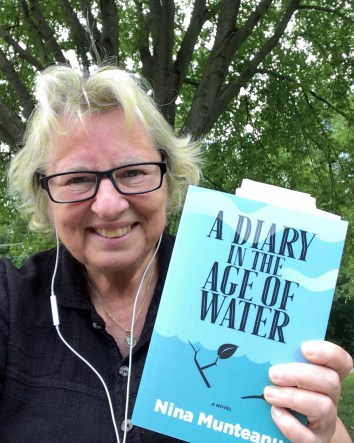
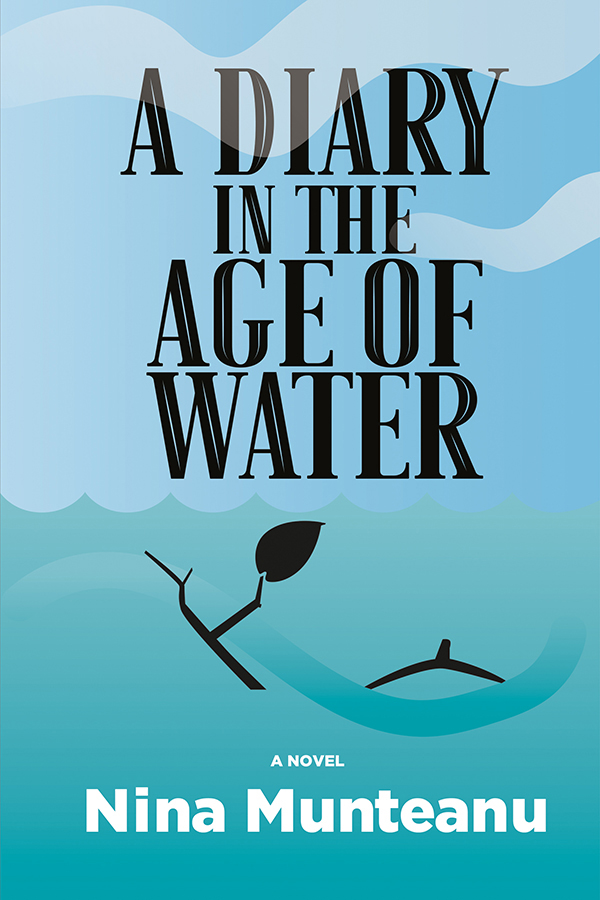
Munteanu, N. 2020. “A Diary in the Age of Water.” Inanna Publications, Toronto.

Ryan, Frank, M.D. 1997. “Virus X: Tracking the New Killer Plagues.” Little, Brown and Company, New York, N.Y. 430pp.

Ryan, Frank, M.D. 2009. “Virolution.” Harper Collins, London, UK. 390pp.

Saif, Linda J. 2004. “Animal Coronaviruses: lessons for SARS.” In: “Learning from SARS: Preparing for the Next Disease Outbreak: Workshop Summary.” National Academies Press (US), Kobler S., Mahmoud A., Lemon S., et. al. editors. Washington (DC).

Selgelid, Michael J. 2016. “Gain-of-Function Research: Ethical Analysis.” Sci Eng Ethics 22(4): 923-964.

VanLoon, J. 2000. “Parasite politics: on the significance of symbiosis and assemblage in theorizing community formations.” In: Pierson C and Tormey S (eds.), Politics at the Edge (London, UK: Political Studies Association)

Villarreal LP, Defilippis VR, and Gottlieb KA. 2000. “Acute and persistent viral life strategies and their relationship to emerging diseases.” Virology 272:1-6. Online: http://bird uexposed.com/resources/Villarreal1.pdf

Wohlleben, Peter. 2015. “The Hidden Life of Trees.” Greystone Books, Vancouver, BC. 272pp.


nina-2014aaa

Nina Munteanu is a Canadian ecologist / limnologist and novelist. She is co-editor of Europa SF and currently teaches writing courses at George Brown College and the University of Toronto. Visit www.ninamunteanu.ca for the latest on her books. Nina’s bilingual “La natura dell’acqua / The Way of Water” was published by Mincione Edizioni in Rome. Her non-fiction book “Water Is…” by Pixl Press (Vancouver) was selected by Margaret Atwood in the New York Times ‘Year in Reading’ and was chosen as the 2017 Summer Read by Water Canada. Her novel “A Diary in the Age of Waterwill be released by Inanna Publications (Toronto) in June 2020.

Age of Water Podcast: Nina Reads from “Water Is…”

AoW Logo-smallWe are now living in the Age of Water. Water is the new “gold”, with individuals, corporations and countries positioning themselves around this precious resource. Water is changing everything. The Age of Water Podcast covers anything of interest from breaking environmental news to evergreen material. This also includes human interest stories, readings of eco-literature, discussion of film and other media productions of interest.

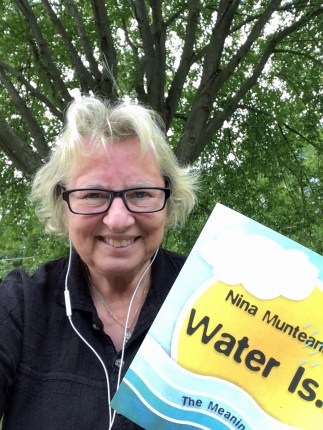
In this episode of Age of Water, Nina reads from her book “Water Is…The Meaning of Water”, a celebration of the varied faces of water and what they mean to us.


Water is emerging as one of the single most important resources of Planet Earth. Already scarce in some areas, it has become the new “gold” to be bought, traded, coveted, cherished, hoarded, and abused worldwide. It is currently traded on the Stock Exchange…

Water Is-COVER-webNina Munteanu’s Water Is…”represents the culmination of over twenty-five years of dedication as limnologist and aquatic ecologist in the study of water. As a research scientist and environmental consultant, Nina studied water’s role in energizing and maintaining the biomes, ecosystems, and communities of our precious planet.

During her consulting career for industry and government, Nina discovered a great disparity between humanity’s use, appreciation and understanding of water. This set in motion a quest to further explore our most incredible yet largely misunderstood and undervalued substance. Part history, part science and part philosophy and spirituality, Water Is…” combines personal journey with scientific discovery that explores water’s many “identities” and ultimately our own.


DS-2008-16 copy

Nina Munteanu kayaks in Desolation Sound off coast of British Columbia (photo by H. Klassen)

nina-2014aaa

Nina Munteanu is a Canadian ecologist / limnologist and novelist. She is co-editor of Europa SF and currently teaches writing courses at George Brown College and the University of Toronto. Visit www.ninamunteanu.ca for the latest on her books. Nina’s bilingual “La natura dell’acqua / The Way of Water” was published by Mincione Edizioni in Rome. Her non-fiction book “Water Is…” by Pixl Press (Vancouver) was selected by Margaret Atwood in the New York Times ‘Year in Reading’ and was chosen as the 2017 Summer Read by Water Canada. Her novel “A Diary in the Age of Waterwill be released by Inanna Publications (Toronto) in June 2020.

The Group of Seven Reimagined: An Ekphrastic Celebration

Shimmering Water by Lawren Harris

2020 marks the centenary of the formation of the Canadian iconic Group of Seven artists. The Group of Seven movement “dragged Canadian art into the modern age,” writes Christine Sismondo of The Toronto Star in her review of “The Group of Seven Reimagined,” an ekphrastic celebration of the Group of Seven by twenty-one flash fiction authors (including my own “Alien Landscape” inspired by J.E.H. MacDonald’s Lake O’Hara). Sismondo astutely identifies and encapsulates the resonant meaning of the Group of Seven, then and now:

“A hundred years ago, seven Canadian painters got together and decided to start a movement. It was born out of the horrors of war. Now, the potential horrors of climate change are giving the movement an unexpected new life and meaning.”

Jack Pine by Tom Thomson

Sismondo goes on to describe how the movement itself took form:

“At the time, people were trying to put the horrors and sacrifices of the Great War behind them and look to the future to reimagine and redefine Canada itself. It was a pivotal moment, given the role the country had recently played in international affairs and the challenges it faced in becoming an increasingly modern nation. These seven artists—friends and colleagues, many of whom worked together in a Toronto design firm—felt they could help shape this conversation with bold strokes and bright colours to bring out the beauty of the Canadian landscape.”

But in those early days—and more than thirty years after Van Gogh painted Starry Night, Canada still wasn’t ready for Impressionism, or any other art form whose roots came from that movement. Canadian critics disliked the Group of Seven. They were too modern, too experimental. The Group were dismissed as “the Hot Mush School” “a horrible bunch of junk” “the figments of a drunkard’s dream” and “daubing by immature children.”

Mirror Lake by Franklin Carmichael

In his article on the Group of Seven’s reception in England vs Canada, Adam Bunch writes about the reception of the Group of Seven shortly after their formation after the First World War:

The Entrance to Halifax Harbour by A.Y. Jackson

“The reviews by Canadian critics were harsh. The Toronto Daily Star compared Jackson’s work to “a spilt can of paint.” But the English critics loved it. The Morning Post called the Group of Seven “the foundation of what may become one of the greatest schools of landscape painting.” One piece of Canadian art was even sold during the British Empire Exhibition — and it was Jackson’s. Entrance To Halifax Harbour was bought by the Tate Gallery. It’s still part of their collection today.”

“And despite the poor Canadian reviews, the show in London helped to establish the Group of Seven’s reputation back home. Now that the British took the Group seriously, Canadian collectors started taking them seriously, too. The Group even used the bad press to promote their upcoming shows: they printed posters with the angry Canadian reviews side by side with the glowing English ones.”

The Group of Seven Reimagined, published by Heritage House, was elegantly edited by flash fiction author Karen Schauber. Karen had invited me to contribute a piece of flash fiction (a piece of less than 500 words), inspired by a Group of Seven piece I would chose to inspire me. I took my time; this would be the first flash fiction piece I would write. It was an art form I was not familiar with, but was happy to experiment with. But I waited too long to decide and when I finally submitted my first choice for a painting, Karen informed me that it had already been selected by another writer. To my great frustration, this went on for a few pieces.

Shore Pattern by A.J. Casson

I finally took a short trip to the McMichael Gallery in Kleinburg to find my piece. In the main hall, I passed the pieces already claimed by my twenty colleagues; I sighed that I had waited so long. By chance, a large selection of artwork by J.E.H. MacDonald—one of the founders of the group—was currently on exhibit on the second floor. That was where I first saw the original oil sketch called Lake O’Hara by MacDonald. It was perfect! My story “Alien Landscape” emerged from the sketch like they had always belonged together.

Lake O’Hara by JEH MacDonald

The Star wrote: “while you might expect a lot of peaceful communing with nature on the page, a surprising number of the written pieces are actually dark tales of conflict and danger—forest fires, mining accidents, boat thieves and murderous plots in the woods. Nina Munteanu, a Canadian ecologist and science-fiction writer, takes J.E.H. MacDonald’s Lake O’Hara in a novel direction in ‘Alien Landscape’ by reimagining it as a refuge for a space heroine fleeing a world that had destroyed nature in pursuit of progress and ended in post-apocalyptic chaos.”

Gift shop at McMichael Gallery

The anthology has found itself gracing the gift shop shelves of several art galleries and museums such as the Royal BC Museum in Victoria, BC, and the McMichael Gallery in Kleinburg. It has likewise received much praise and accolades and appears on several ‘best of’ lists for ekphrastic works, art books, and more.

The anthology was long-listed for The Miramichi Reader’s “The Very Best” Book Award for 2020. The Miramichi Reader writes:

Sunset in the Bush by Frank Johnston

“There’s a very good reason that as I write this, The Group of Seven Reimagined, Contemporary Stories Inspired by Historic Canadian Paintings is sitting at, or near the top of bestseller lists in Canada (currently #3 on the Canadian Art bestseller list at Amazon.ca).  The result is a most attractive book that any lover of art and literature would enjoy, even if they already have more than a passing familiarity with the iconic Group of Seven. All the stories that accompany each image are in the “flash fiction” style, just a page or two in length, a little story that the authors were inspired to write after choosing a particular G7 painting.”


Jules Torti of Cottage Life  describd the book this way:

“Seeking equilibrium? This book is like a yoga session without the scheduling logistics and hustle to class. Balance is found in The Group of Seven Reimagined both as an intelligent coffee table book and tangible source of meditation.

Authors of the anthology

Twenty-five writers with notable street cred contributed “flash fiction” to colour iconic paintings by the Group of Seven (and their tagalongs). Flash fiction are stories categorized by length—they are 500 words or less which means they allow for one decent, undistracted cup of dark roast or whisky on ice. For writers or artists, the temptation to reimagine these works will be irresistible. And, what an intriguing resolution to make! Fiction and paintings both rely on interpretation and consideration. Fill in the gaps and colours with your chosen or perhaps newly discovered medium (watercolour?). As Jim and Sue Waddington suggest in the foreword, an art gallery visit becomes suspended in time. We keep returning to certain paintings that resonate and haunt and inadvertently, ‘Your mind sets off on a journey.’”

Author and reviewer Patricia Sandberg describes the anthology through metaphor: “Like a fine wine with dinner, some things cry out to be paired. In Reimagined, the nearly hundred-year-old brandy that was the Group of Seven is introduced to a fresh vibrant cuisine that is flash fiction, and both are the richer for it.”

Stormy Weather by Frederick H. Varley

“As a disciple of the Group of Seven and an aficionado of Canadian wilderness, every page gives me a little leap of pleasure.”—Robert Bateman

“These sharp, imaginative evocations of the world of the Group of Seven are both a joy in themselves and a welcome prompt to make us look at the paintings again. It’s refreshing to find that, a century later, they still speak to us about our lives and our country.”—Ross King, author of Defiant Spirits: The Modernist Revolution of the Group of Seven

Nina Munteanu with the anthology

“Words, the writer’s paint, are artfully chosen and applied, not one wasted. The stories all compel the reader to dive beneath their surface and linger long after the reading is complete…In 1920 The Group of Seven introduced a new vision for the Canadian landscape. One hundred years later, twenty-one writers in the Group of Seven Reimagined offer a new lens for appreciating their art.”—Ottawa Review of Books

“From one region of Canada to another, a national identity is captured and shared with writers all over the world who, in turn, have crafted beautiful flash fiction pieces that accompany and extend the meaning of the art.”—Niles Reddick, Literary Heist


nina-2014aaa

Nina Munteanu is a Canadian ecologist / limnologist and novelist. She is co-editor of Europa SF and currently teaches writing courses at George Brown College and the University of Toronto. Visit www.ninamunteanu.ca for the latest on her books. Nina’s bilingual “La natura dell’acqua / The Way of Water” was published by Mincione Edizioni in Rome. Her non-fiction book “Water Is…” by Pixl Press (Vancouver) was selected by Margaret Atwood in the New York Times ‘Year in Reading’ and was chosen as the 2017 Summer Read by Water Canada. Her novel “A Diary in the Age of Waterwill be released by Inanna Publications (Toronto) in May 2020.


Nina Munteanu Shares Her Journey With Water

Nina’s recent presentation at the Don Heights Unitarian Congregation on water—”Reflections: the Meaning of Water“—explores the many dimensions of water. She describes how its life-giving anomalous properties can lead us to connect with water and nature to help us be the caretakers we need to be during these changing times.

Based on her celebrated book “Water Is… The Meaning of Water”, Nina shares her personal journey with water—as mother, teacher, environmentalist, traveler and scientist—to explore water’s many “identities” and, ultimately, our own.


Fallen log stream-2012

stream in Westcoast rainforest of BC (photo by Kevin Klassen)

nina-2014aaa

Nina Munteanu is a Canadian ecologist / limnologist and novelist. She is co-editor of Europa SF and currently teaches writing courses at George Brown College and the University of Toronto. Visit www.ninamunteanu.ca for the latest on her books. Nina’s bilingual “La natura dell’acqua / The Way of Water” was published by Mincione Edizioni in Rome. Her non-fiction book “Water Is…” by Pixl Press (Vancouver) was selected by Margaret Atwood in the New York Times ‘Year in Reading’ and was chosen as the 2017 Summer Read by Water Canada. Her novel “A Diary in the Age of Waterwill be released by Inanna Publications (Toronto) in June 2020.

The Invasion of Giant Crayfish Clones & A Diary in the Age of Water

OLYMPUS DIGITAL CAMERA

Marmorkrebs, giant marbled crayfish

In 2018, scientists reported that the giant marbled crayfish (Marmorkrebs [German]: Procambarus fallax f. virginalis) recently developed the strategy of being entirely female and cloning itself via parthenogenesis1; the female doesn’t require a male crayfish to fertilize its eggs. Despite the cloning procedure that makes them virtually identical genetically, the crayfish vary in size and pattern—no doubt due to epigenetics.2

First discovered by a German aquarium in the mid-1990s, these crayfish that developed from Florida-Native crayfish have migrated into the wild and are aggressively spreading in Europe, at the expense of the native European crayfish. The 8 to 12 cm long Marmorkrebs has been observed in Germany, Italy, Slovakia, Sweden, Japan, and Madagascar. The marbled crayfish prefers a warm and humid climate, suggesting that climate change may influence its distribution and success. The clones also thrive in a wide range of habitats—from abandoned coal fields in Germany to rice paddies in Madagascar, writes Carl Zimmer of the New York Times.

Given that every individual Marmorkrebs can reproduce (the advantage of parthenogenesis is that the female crayfish doesn’t need to find a mate—it just gives birth), one European scientist has dramatically suggested that, “we’re being invaded by an army of clones.” Zimmer shares the results of Dr Lyko and his team on how the all-female Marbokrebs came to be:

“Scientists concluded that the new species got its start when two slough crayfish mated. One of them had a mutation in a sex cell — whether it was an egg or sperm, the scientists can’t tell. Normal sex cells contain a single copy of each chromosome. But the mutant crayfish sex cell had two. Somehow the two sex cells fused and produced a female crayfish embryo with three copies of each chromosome instead of the normal two. Somehow, too, the new crayfish didn’t suffer any deformities as a result of all that extra DNA.” 

In its first couple decades, [Marmorkrebs] is doing extremely well, writes Zimmer. But sooner or later, the marbled crayfish’s fortunes may well turn, he adds. “Maybe they just survive for 100,000 years,” Dr. Lyko speculated. “That would be a long time for me personally, but in evolution it would just be a blip on the radar.”

marbled-crayfish2

Marmorkrebs

But what if this speculation isn’t the whole scenario? What if Marmorkrebs is just another example of climate change-induced adaptation and change through epigenetics? While climate forcing and habitat destruction is causing the extinction of many species; other species are, no doubt, adapting and exploiting the change. These generalists (born with change inside them) are poised to take over in Nature’s successional march.3

Bdelloid-rotifer-Philodina-gregaria

Bdelloid rotifer

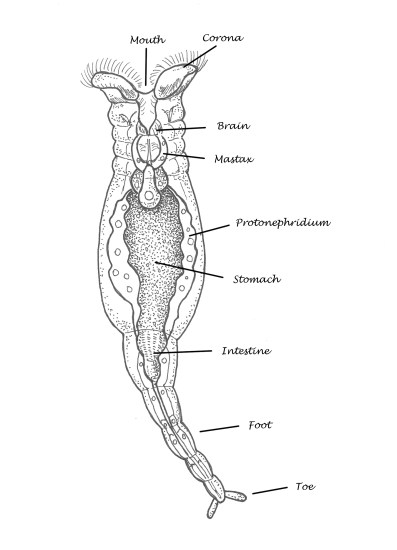
Parthenogenesis and epigenetic change isn’t new. In fact, it’s very old … All-female bdelloid rotifers have been cloning a sisterhood for millions of years and using incorporated foreign genes through horizontal gene transfer4 (essentially stealing genetic material from their environment) to maintain a healthy diverse population. What’s new and weird is that this crayfish “suddenly” developed this ability—probably through epigenetic means (given this entire group is versatile in reproductive strategies in general). The real question none of the articles that covered this phenonemon ask is: WHY? Why is it happening NOW?

In my latest book A Diary in the Age of Water (due for release in May 2020 by Inanna Publications) I explore this “change” in a unique way:

Diary Water cover finalKyo finds a copy of Robert Wetzel’s Limnology on a lower shelf of the “L” section. It stands tall with a thick green-coloured spine. This is the book that Hilda, one of the Water Twins, had saved from the book burnings of the Water Age. A present from her limnologist mother. Hilda kept it hidden under her mattress. When CanadaCorp police burst into their home and dragged her mother away, Hilda was left alone with Wetzel. The limnology textbook was forbidden reading because its facts were no longer facts. 

After some coaxing, Myo shared a most bizarre tale of that time which led to the catastrophic storms and flood. What the governments hadn’t told their citizens—but what each citizen felt and knew—was that humans had lost the ability to reproduce. Then a spate of “virgin births” throughout the world spawned what seemed a new race of girls—‘deformed’, blue and often with strange abilities. Many considered them abominations, a terrible sign of what was in store for humanity—a punishment for their evil ways. Then, as quickly as they’d populated the world, these strange blue girls all disappeared without a trace. They simply vanished and became the Disappeared. Myo told her that some people called it a Rapture, a portent of the end times. Others suggested that the girls had all been murdered—a genocide, organized by what was left of the world government. 

Then … the storms … changed the world.

–“A Diary in the Age of Water” 

  1. Spontaneous Parthenogenesis: From the Greek Parthenon “virgin” and genesis “creation”, parthenogenesis is a natural form of asexual reproduction in which growth and development of embryos occur without fertilization. In animals it involves development of an embryo from an unfertilized egg; in plants it proceeds through apomixis. The production of only female offspring by parthenogenesis (such as with bdelloid rotifers) is called thelytoky.
  2. Epigenetics is the study of changes in organisms caused by the modification of gene expression (such as environmental triggers) rather than alteration of the genetic code itself. If genetics represents the hardrive of a computer, epigenetics is its software.
  3. Niche (the role or job of an organism or population) can be broad (for generalists) or narrow (for specialists). A specialist has superior abilities to exploit the narrow environmental conditions it lives in and is splendidly adapted to a fixed stable environment; generalists, less successful at exploiting than the specialist but more widely adaptive, can thrive in less stable environments that present a wider range of conditions.
  4. Horizontal gene transfer is the movement of genetic material between organisms other than by the vertical transmission of DNA from parent to offspring through reproduction. HGT is an important factor in the evolution of many organisms.

A Diary in the Age of Water will be released in May 2020 by Inanna Publications, Toronto, Canada.


nina-2014aaa

Nina Munteanu is a Canadian ecologist / limnologist and novelist. She is co-editor of Europa SF and currently teaches writing courses at George Brown College and the University of Toronto. Visit www.ninamunteanu.ca for the latest on her books. Nina’s bilingual “La natura dell’acqua / The Way of Water” was published by Mincione Edizioni in Rome. Her non-fiction book “Water Is…” by Pixl Press (Vancouver) was selected by Margaret Atwood in the New York Times ‘Year in Reading’ and was chosen as the 2017 Summer Read by Water Canada. Her novel “A Diary in the Age of Waterwill be released by Inanna Publications (Toronto) in June 2020.

Reminiscing on 2019…

Diary Water cover finalThis week is a wonderful time to reflect on the past year, 2019. It’s also a good time to be thankful for the things we have: loving family, meaningful friendships, pursuits that fulfill us and a place that nurtures our soul.

It’s been a very good year for my writing…and my soul…

Last year I received a writer’s dream Christmas gift: a signed contract with Inanna Publications to publish my ninth novel: “A Diary in the Age of Water” about four generations of women and their relationship with water during a time of extreme climate change. The book will be released by Inanna in May 2020 with a launch in Toronto on May 26th at Queen Books as part of the Toronto International Festival of Authors. The book is now available on Amazon.ca for pre-order!

Publications   

LBM 2019 ClimateInCrisis2019 saw several of my publications come out. In January 2019 the reprint of my story “The Way of Water” was published by Little Blue Marble Magazine. It will reappear in a print and web anthology devoted to climate fiction called “Little Blue Marble 2019: Climate in Crisis” on December 27, 2019. That will be the sixth time “The Way of Water” has been published!

EcologyOfStoryImpakter Magazine also published my article “How Trees Can Save Us,” an essay on five writers’ perspectives on trees and humanity’s relationship with them.

In June, I published the 3rd guidebook in my Alien Writing Guidebook series—called “The Ecology of Story: Worlds as Character” with Pixl Press in Vancouver. The launch on July 4th at Type Books was well attended with presentations by several local writers and artists.

Nina GroupOfSevenReimagined

Nina Munteanu with The Group of Seven Reimagined

I was commissioned along with twenty other writers to write a piece of flash fiction for a commemorative anthology to the Group of Seven, entitled “The Group of Seven Reimagined,” with Heritage House in Vancouver.

I’d never written flash fiction before and it was both exciting and challenging to write. I was asked to pick an artist’s piece as inspiration for a flash fiction story. The beautiful hardcover book was released October 2019.

October also saw another of my pieces published. I was asked to contribute something to the Immigrant Writer’s Association’s first anthology, entitled “Building Bridges,” about the immigrant’s experience in Canada. While I’m not an immigrant, I did share my parents’ experience who had immigrated to Canada from France. I wrote a piece on the hero’s journey.


Age of Water Podcast 

AgeOfWater-HomePage

On November 22, 2019, co-host Claudiu Murgan and I launched the Age of Water podcast.  The podcast covers anything of interest from breaking environmental news to evergreen material on water and the environment. We interview scientists, journalists, writers, academia and innovators who share their knowledge and opinions about the real state of the environment and what committed individuals and groups are doing to make a difference. We talk about the problems and we talk about the solutions.

Appearances & Media / News

On June 22, I traveled to Port McNicoll at Georgian Bay to help give a writing intensive, hosted by publisher Cheryl Antao-Xavier at IOWI. I was also invited to speak at The Word is Wild Literary Festival in October. The event took place in Cardiff, in the Highlands of Ontario. In late October, I traveled with friend and editor Merridy Cox to Vermont to give a presentation on water to the Lewis Creek Association. Entitled “Reflections: The Meaning of Water”, the talk focused on our individual connection with water. I will be reprising this talk at several venues this year.

Nina Munteanu

Nina Munteanu with a metasequoia in the Beaches (photo by Richard Lautens)

I was also featured in the news a few times. The Toronto Star asked me to answer two questions about climate change and the Vancouver Sun published an Oped of mine entitled “Why Women Will Save the Planet.”

Research & Adventure

Cedar Giants copy

Giant red cedars in Lighthouse Park (photo by Nina Munteanu)

In Summer 2019 I travelled to British Columbia to visit friends and family in Vancouver and elsewhere. Following a dream of mine, I travelled with good friend Anne to Port Renfrew on Vancouver Island to see the ancient forests and the west coast. I had wanted to see these old-growth forests for some time since I’d been to Carmanah many years ago. The ancient forests were magnificent and breathtaking and so nourishing for the soul. Recognizing these forests as living cathedrals, I felt a deep reverence. The silent giants rose from wide buttressed bases into the mist like sentinels, piercing the heavens. A complex tangle of beauty instinct whispered in the breeze with the pungent freshness of pine, cedar and fir. Anne and I even had a chance to hug Big Lonely Doug, the second tallest Douglas fir tree in Canada.

Nina looking up dougfir copy 3

Nina Munteanu stands, dwarfed, by a Douglas fir tree in Lighthouse Park (photo by Margaret Ross)

While in British Columbia, I also visited a small enclave of old-growth forest in the heart of Vancouver at Lighthouse Park (West Vancouver). I went with son Kevin and then again with good friend Margaret. This majestic forest of redcedar, Douglas fir, spruce and hemlock is deeply awesome and humbling. And a real gem for the city.

Nina boot

Nina Munteanu in Ladner, BC (photo by Anne Voute)

Then, with just a few days before my flight back to Toronto, I slipped and fell and broke my ankle. I got a “boot” and a cane then hobbled on the plane and went back to work at UofT.

It has been a wonderfully inspirational year for me in writing and teaching. I still actively teach at The University of Toronto in several writing centres and classes throughout the downtown campus. The students are bright and challenging. I also still coach writers to publication and have helped several finish their works in 2019.


I hope the beauty of the season has filled your heart with joy. Wishing you a wonderful 2020, filled with grace, good health, and sweet adventure!


nina-2014aaa

Nina Munteanu is a Canadian ecologist / limnologist and novelist. She is co-editor of Europa SF and currently teaches writing courses at George Brown College and the University of Toronto. Visit www.ninamunteanu.ca for the latest on her books. Nina’s bilingual “La natura dell’acqua / The Way of Water” was published by Mincione Edizioni in Rome. Her non-fiction book “Water Is…” by Pixl Press (Vancouver) was selected by Margaret Atwood in the New York Times ‘Year in Reading’ and was chosen as the 2017 Summer Read by Water Canada. Her novel “A Diary in the Age of Waterwill be released by Inanna Publications (Toronto) in June 2020.

Nina Munteanu Talks about The Splintered Universe with Simon Rose

Author, writer, coach and consultant Simon Rose interviews Nina Munteanu about The Splintered Universe Trilogy, now out in three formats: print, ebook, and audiobook. Listen to a sample from each of the trilogy audiobooks on Audible:

audible listen

Here’s Simon’s interview with me:

SimonRose site

nina interview 3

Nina interview 2

nina interview 4

nina interview 5

nina interview 6

In Metaverse, the third and last book of The Splintered Universe Trilogy, Detective Rhea Hawke travels back to Earth, hoping to convince an eccentric mystic to help her defend humanity from an impending Vos attack—only to find herself trapped in a deception that promises to change her and her two worlds forever.

You can listen to a sample recording of Outer Diverse, Inner Diverse, and Metaverse through Audible. Read The Splintered Universe reviews on Goodreads.

Microsoft Word - trilogy-poster03.docx

Nina Highland Cr 1

Nina checks her photos, Highland Creek, ON (photo by Merridy Cox)

nina-2014aaa

Nina Munteanu is a Canadian ecologist / limnologist and novelist. She is co-editor of Europa SF and currently teaches writing courses at George Brown College and the University of Toronto. Visit www.ninamunteanu.ca for the latest on her books. Nina’s bilingual “La natura dell’acqua / The Way of Water” was published by Mincione Edizioni in Rome. Her non-fiction book “Water Is…” by Pixl Press (Vancouver) was selected by Margaret Atwood in the New York Times ‘Year in Reading’ and was chosen as the 2017 Summer Read by Water Canada. Her novel “A Diary in the Age of Water” will be released by Inanna Publications (Toronto) in 2020.

The Splintered Universe, Book 3: “Metaverse” Audiobook

Metaverse-FRONT-web copyIn Metaverse, the third and last book of The Splintered Universe Trilogy, Detective Rhea Hawke travels back to Earth, hoping to convince an eccentric mystic to help her defend humanity from an impending Vos attack—only to find herself trapped in a deception that promises to change her and her two worlds forever.

Lilly’s Book World summarizes the audiobook:

Oh, Yes! An explosive ending indeed! This was such a great series, with such great world development and great characters, full of action and with an amazing narration! I am sorry it’s over! (but I still have the books!)

“Metaverse” concludes so many open points from the previous books.  Some may say the blurb is evasive, but with so much going on, it’s great we have no spoilers in there. However, I can tell you that our main character Rhea is in for a treat! The same goes to her amazing companions.

Rhea develops even more; she manages to discover so much about her heritage and her role in this war that has enveloped the universe. Her story transcends planets and she becomes so much more than a simple presence. I like her and I admire her power.  I’m sorry, I’m being cryptic here. But if you have read or listened to books 1 and 2, you are compelled to see how it all ends. And you already know how great the story is.

Rhea mountain 06

Rhea Hawke (Vali Gurgu)

The narration is as amazing as in the other two books. Dawn Harvey has done an amazing job giving life to Rhea, making all this action real and palpable. At times, I was listening to her breathlessly. Everything was enhanced due to the narration!

I have little else to add, except that maybe one day I will see this series in our Romanian libraries, so that my fellow countrymen can enjoy Nina Munteanu’s writing. 5 stars!

SplinteredUniverseTrilogy-Amazon

This episode of the space trilogy is everything I wanted and more… Rhea and her helpers are running out of time to save the outer verse from war. There is so much happening in this book it keeps you listening far into the night—Book Addict

Dawn Harvey continues to bring a great performance to this series. Her narration is so well done. She’s got the perfect voice for Rhea Hawke. I love how she manages all the different alien voices. Truly, I don’t know how she pulled some of them off, and with such consistency across all three books. 5/5 stars—Dab of Darkness

The trilogy consists of Outer Diverse, Inner Diverse, and Metaverse. and is available in ALL THREE FORMATS: print, ebook, and audiobook. You can listen to a sample recording of all three audiobooks through Audible.

audible listen

Microsoft Word - trilogy-poster03.docx

nina-2014aaa

Nina Munteanu is a Canadian ecologist / limnologist and novelist. She is co-editor of Europa SF and currently teaches writing courses at George Brown College and the University of Toronto. Visit www.ninamunteanu.ca for the latest on her books. Nina’s bilingual “La natura dell’acqua / The Way of Water” was published by Mincione Edizioni in Rome. Her non-fiction book “Water Is…” by Pixl Press (Vancouver) was selected by Margaret Atwood in the New York Times ‘Year in Reading’ and was chosen as the 2017 Summer Read by Water Canada. Her novel “A Diary in the Age of Water” will be released by Inanna Publications (Toronto) in 2020.

The Splintered Universe, Book 2: “Inner Diverse” Audiobook

Inner-diverse-front-cover-WEBIn Inner Diverse, the second book of The Splintered Universe Trilogy, Detective Rhea Hawke continues her quest for truth and justice in a world that is not what it seems. Rhea’s search takes her to the far reaches of the known universe from the Weeping Mountains of Horus to the blistering deserts of Upsilon 3. Amidst the turmoil of an imminent extra-galactic war, Rhea holds the key even as those she trusts betray her. No one is what they seem…

Lilly’s Book World summarizes the audiobook:

A great follow up to Book 1 of this series; we see Rhea more and more involved in the politics of the world. Again, I liked how much she developed from Book 1 and her search for the truth leads her to unexpected discoveries.

What I mostly enjoyed about “Inner Diverse” was seeing our main character face the true personalities of the people she thought she could trust. Her reactions were very believable and her character is shaped by them in more ways than one. The plot intensifies and the war is even more complex than what we thought initially. Faced with protecting humans from extinction, is Rhea capable of using her abilities to the fullest?

The narration was exceptional. We have incredible voice acting and even if this was expected, since Book 1 was narrated by the same person, I loved discovering Dawn Harvey’s new voices. She managed to bring sound and life into a story that was already great. She transformed it into an amazing audiobook.

To quickly summarize, I loved Book 2 even more than Book 1. “Inner Diverse” is exactly as the title says – a deeper and deeper immersion into a universe so complicated and complex. The ending left me yearning for Book 3, so excuse me while I do some more reading, or listening!

SplinteredUniverseTrilogy-Amazon

iota-hor-rhea_edited-1 copyThere’s so much I have enjoyed about this series so far. Rhea is a fascinating character from the start and she continues to grow throughout the tale. There’s her AI ship, Benny, her sentient great coat, her special made gun, and her own hidden shapeshifting abilities. Then there’s a cast of interesting characters, good guys and bad guys. I love that I don’t know how things will turn out; the plot keeps me guessing—Dab of Darkness

A great amount of action to keep me interested the whole time—Book Addict

The trilogy consists of Outer Diverse, Inner Diverse, and Metaverse. and is available in ALL THREE FORMATS: print, ebook, and audiobook. You can listen to a sample recording of all three audiobooks through Audible. Read the Splintered Universe reviews on Goodreads.

audible listen

Microsoft Word - trilogy-poster03.docx

nina-2014aaa

Nina Munteanu is a Canadian ecologist / limnologist and novelist. She is co-editor of Europa SF and currently teaches writing courses at George Brown College and the University of Toronto. Visit www.ninamunteanu.ca for the latest on her books. Nina’s bilingual “La natura dell’acqua / The Way of Water” was published by Mincione Edizioni in Rome. Her non-fiction book “Water Is…” by Pixl Press (Vancouver) was selected by Margaret Atwood in the New York Times ‘Year in Reading’ and was chosen as the 2017 Summer Read by Water Canada. Her novel “A Diary in the Age of Water” will be released by Inanna Publications (Toronto) in 2020.

What Kind of Hero is Rhea Hawke?

OuterDiverse-front cover

Rhea Hawke on the cover of Outer Diverse

“Rhea Hawke…I want to be her when I grow up.”—Amazon Review

Something is changing for women—and for men too. I’m talking about storytelling—and what makes a hero. Only a few years ago, no one would have predicted the success of Wonder Woman, which portrays a well-rounded female hero as both “badass” warrior (strong, determined and violent) and kind (compassionate, nurturing, empathetic and inclusive).

The male hero stereotype of western neoliberal-corporate culture—and science fiction particularly—has often been characterized by strength, courage, honor, intelligence, and assertive single-mindedness. He is the altruist warrior, often acting alone against an unfair society: all traits honored, respected and esteemed in men. In a woman, these Boadicean qualities often taint her as “bitch”, “bossy”, “cold” or even heartless. She may be considered unwomanly, unlady-like, intimidating, and untouchable (as in lesbian).

In the patriarchal model, a woman “hero” must shed her feminine nurturing qualities of kindness, tenderness, and inclusion, to express those hero-defining qualities that are typically considered male. I have seen too many 2-dimensional female characters limited by their own stereotype in the science fiction genre—particularly in the adventure/thriller sub-genre. If they aren’t untouchable goddesses or “witches”, they are often delegated to enabling the “real hero” on his journey through their belief in him: as Trinity enables Neo; Hermione enables Harry; and Lois enables Superman. In so many of these storylines, the female—no matter how complex, interesting and tough she starts out being—demures to the male lead to support his hero’s journey—without considering her own. And this often means serving as the prize for his chivalry. There’s even a name for it: the Trinity Syndrome.

edge-of-tomorrow-emily-blunt

Rita Vratasky (Emily Blunt) in Edge of Tomorrow

chrisjenavasarala-theexpanse

Avasarala (Shohreh Aghdashloo) in The Expanse

A different kind of hero is gaining momentum in science fiction and action-thrillers in which the heroic gifts of altruism, compassion, faith, courage, passion, and endurance drive the female lead. We see her in movies and TV shows like Edge of Tomorrow, Hunger Games, Divergence, Orphan Black, Farscape, Battlestar Galactica and The Expanse. Even Game of Thrones.

She fights the dragons of prejudice, ignorance, cruelty, greed and intolerance–either in partnership with her male counterpart or alone.

****

Enter Rhea Hawke, Galactic Guardian: wounded hero with a massive grudge. She’s the only human in a galactic police force of giant alien Eosians (who she despises). In the early scenes of Outer Diverse, Rhea is a “badass”; but she’s also far from heroic—displaying cynicism, open racism and even cruelty to her own colleagues. And yet, in her stubborn resolve to solve the massacre of a spiritual sect—even after she’s fired for killing her suspect—and to solve the mystery of the alien spectre of the Vos (who destroyed her home planet Earth), Rhea betrays a humane need to right all wrongs, including her own.

rhea-contemplative01

Rhea Hawke (Vali Gurgu)

Rhea’s journey is large—epic, even. It’s a journey of transformation, both literally and figuratively. Her journey of self-discovery will take her across the galaxy, only to find that compassion and forgiveness were with her all along. She just needed to uncover them to find her whole self. Her sometimes foil and love-interest, Serge, continually bates her, challenges her and even betrays her. By turns a foil and an ally, Serge is Rhea’s perfect counterpart; not weaker or stronger, he is an equal to her. A true partner. And their banter is some of the most rewarding writing I’ve done in my career.

When Galactic Guardian Rhea Hawke investigates the genocide of an entire spiritual sect, she collides not only with dark intrigue but with her own tarnished past. Her quest for justice catapults Rhea into the heart of a universal struggle across alien landscapes of cruel beauty and toward an unbearable truth she’s hidden from herself since she murdered an innocent man.

Get the complete Splintered Universe Trilogy. Available in ALL THREE FORMATS: print, ebook, and audiobook. Read the Splintered Universe reviews on Goodreads.

audible listen

Microsoft Word - trilogy-poster03.docx

nina-2014aaa

Nina Munteanu is a Canadian ecologist / limnologist and novelist. She is co-editor of Europa SF and currently teaches writing courses at George Brown College and the University of Toronto. Visit www.ninamunteanu.ca for the latest on her books. Nina’s bilingual “La natura dell’acqua / The Way of Water” was published by Mincione Edizioni in Rome. Her non-fiction book “Water Is…” by Pixl Press (Vancouver) was selected by Margaret Atwood in the New York Times ‘Year in Reading’ and was chosen as the 2017 Summer Read by Water Canada. Her novel “A Diary in the Age of Water” will be released by Inanna Publications (Toronto) in 2020.