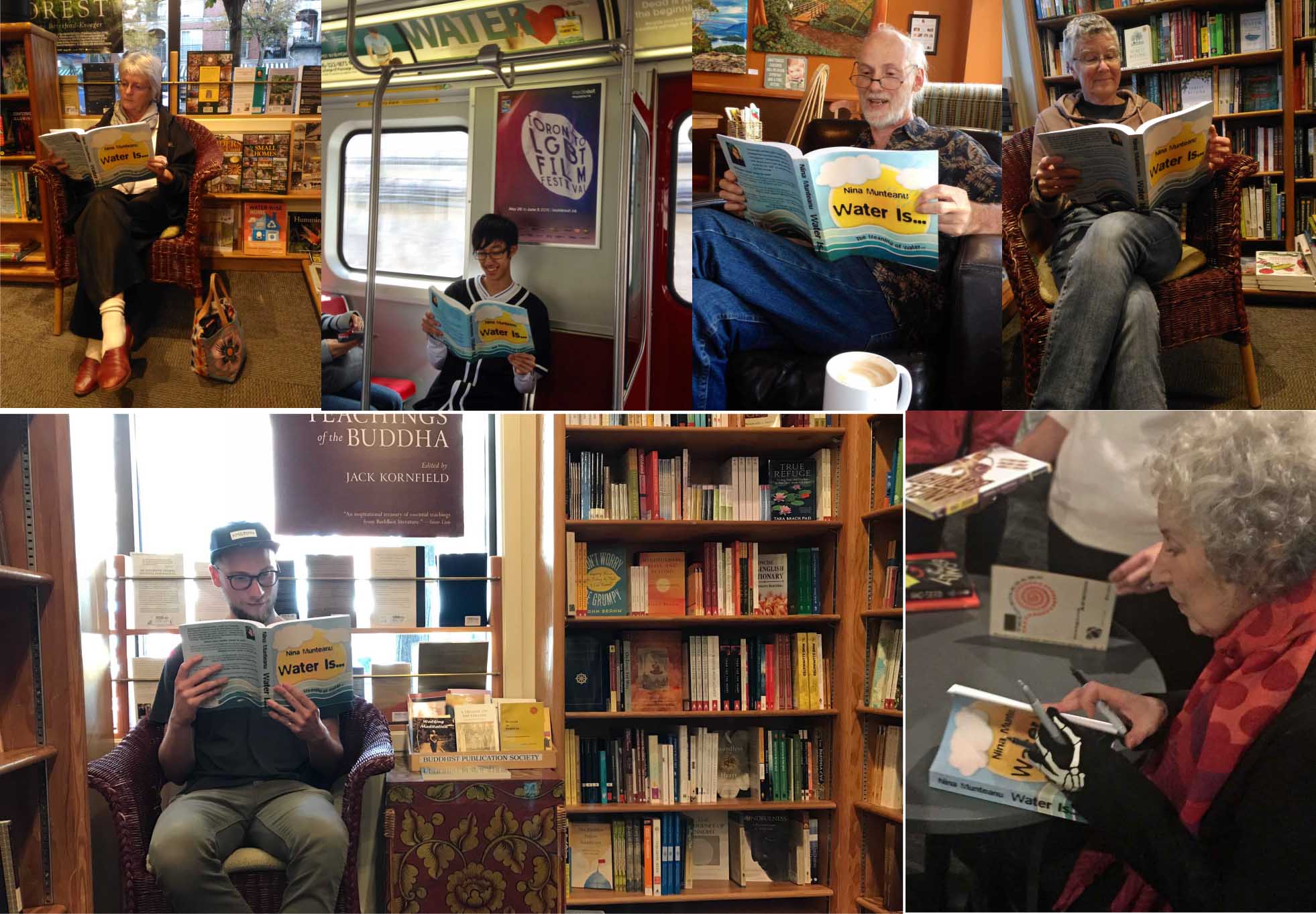
People reading “Water Is…”in Vancouver and Toronto
Margaret McCaffery, chair of the PROBUS Toronto Speakers Committee invited me some time ago to speak to their club in June of 2024 on my experience with water: as scientist, mother, and environmentalist. The audience was mostly retired professional and business people with enquiring minds. I gave my Powerpoint talk in the Holy Rosary Parish Hall on St. Clair West and then enjoyed a vigorous session of challenging and interesting questions to which I responded with equal vigour.
Here is the blurb for the presentation:
Canadian limnologist Nina Munteanu explores the many dimensions of water through her journey with water as mother, educator, and scientist. She describes an emotional connection with nature that compels us to take care of our environment with love versus a sense of duty.
Nina’s talk draws on her book Water Is… The Meaning of Water, part history, part science and part philosophy and spirituality. The book examines water’s many anomalous properties and what these meant to us. In sharing her personal journey with this mysterious elixir, Nina explores water’s many ‘identities’ and, ultimately, our own. Water Is… was Margaret Atwood’s first choice in the 2016 New York Times ‘Year in Reading.’ Water is… will be available for sale at the talk.
I started with my story as a child, growing up in the Eastern Townships of Canada
I defined “limnology” and talked about my career as a limnologistand environmental consultant
I discussed some of water’s anomalous properties, all life-giving
I brought in some interesting things about water…
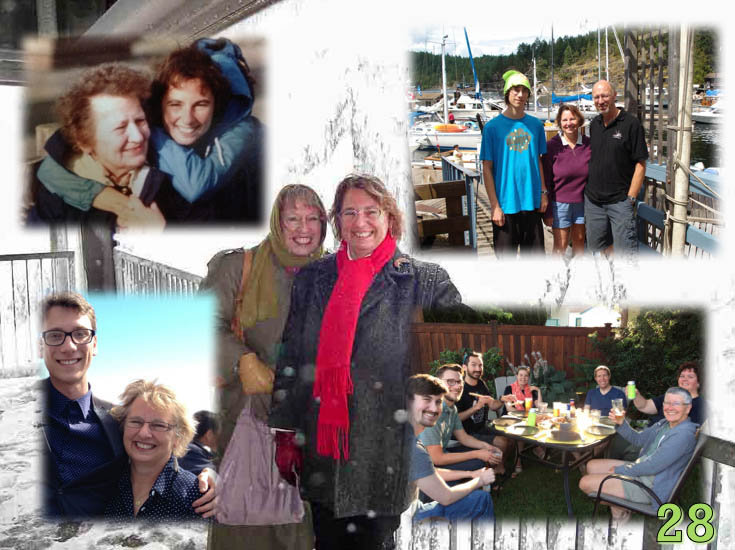
I tied my journey with water to family and friends and my watershed
I ended my talk with a discussion of the Watermark Project to catalogue significant stories to water bodies all over the world
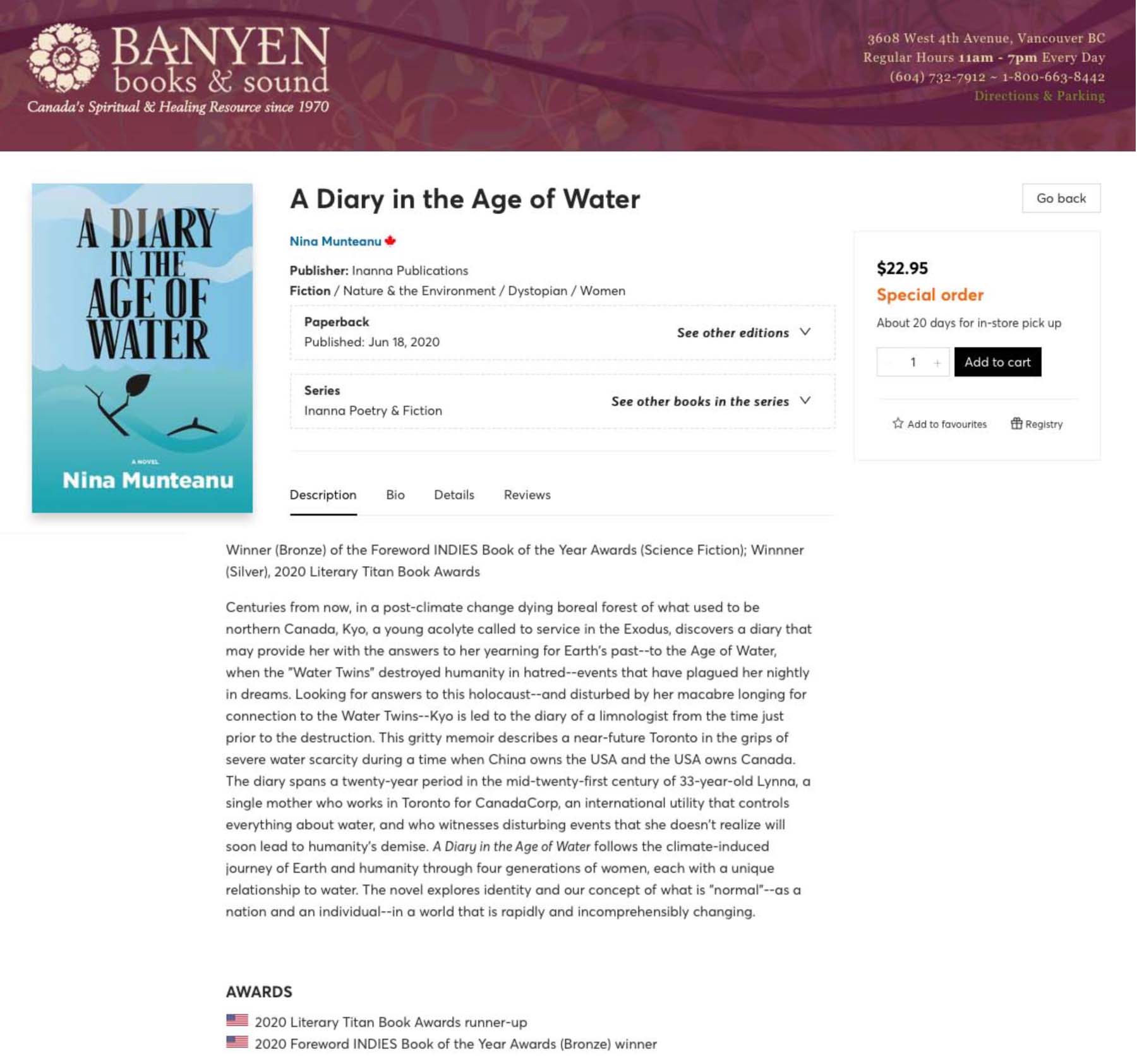
I also brought my latest eco-clifi novel A Diary in the Age of Water for sale. It interested quite a few people and generated several wonderful discussions.
Nina Munteanu and her latest eco-novel
Nina Munteanu is a Canadian ecologist / limnologist and novelist. She is co-editor of Europa SF and currently teaches writing courses at George Brown College and the University of Toronto. Visit www.ninamunteanu.ca for the latest on her books. Nina’s bilingual “La natura dell’acqua / The Way of Water” was published by Mincione Edizioni in Rome. Her non-fiction book “Water Is…” by Pixl Press (Vancouver) was selected by Margaret Atwood in the New York Times ‘Year in Reading’ and was chosen as the 2017 Summer Read by Water Canada. Her novel “A Diary in the Age of Water” was released by Inanna Publications (Toronto) in June 2020.
No writer works alone. Sure, we may work alone when writing, but all other aspects of getting our writing out to you, the reader, involves a team of other people. Like all good things, writing is a collaborative affair. All professional writers enter a contract with their publisher to work with editors, marketers, and also with cover artists, designers and interior artists. All together create the final artistic expression shared with the reading audience.
I want to focus on the latter here and celebrate how art and design help create more than what the writer alone produces. When my writing career started in earnest in 1995 with my first publication in a professional magazine, I was involved in collaborations with artists, who all improved my work.
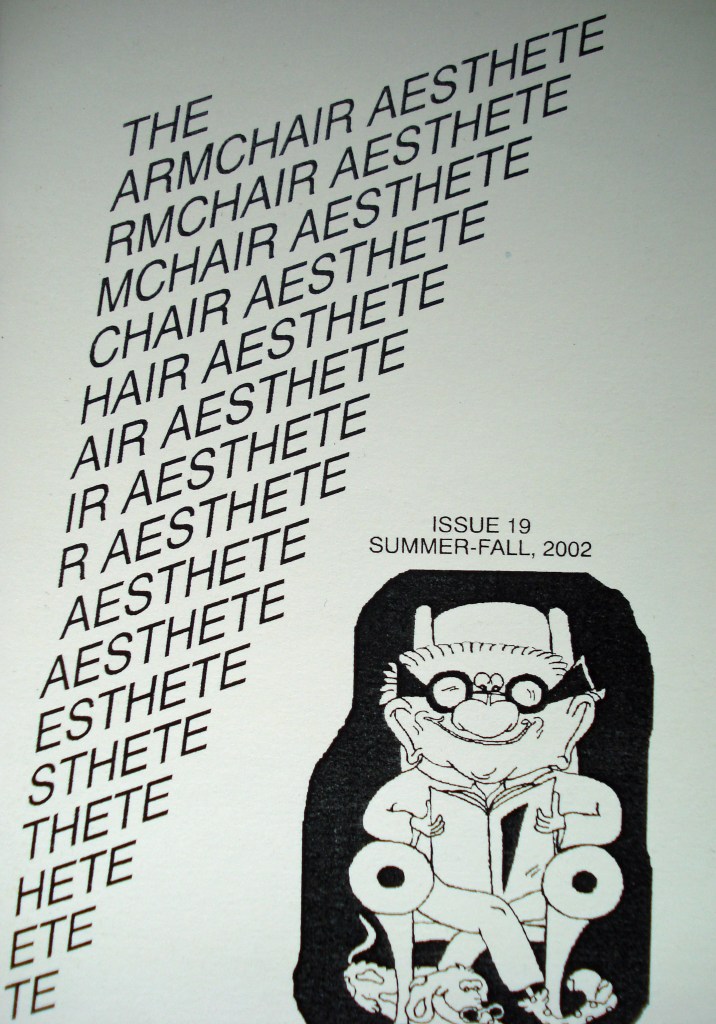
Arc of Time was my first short story publication, appearing in Armchair Aesthete in the Summer/Fall issue of 2002. Armchair Aesthete is a small literary magazine in the United States and features funky cover art.
Magazine cover for Ultra! and interior design for “Arc of Time”
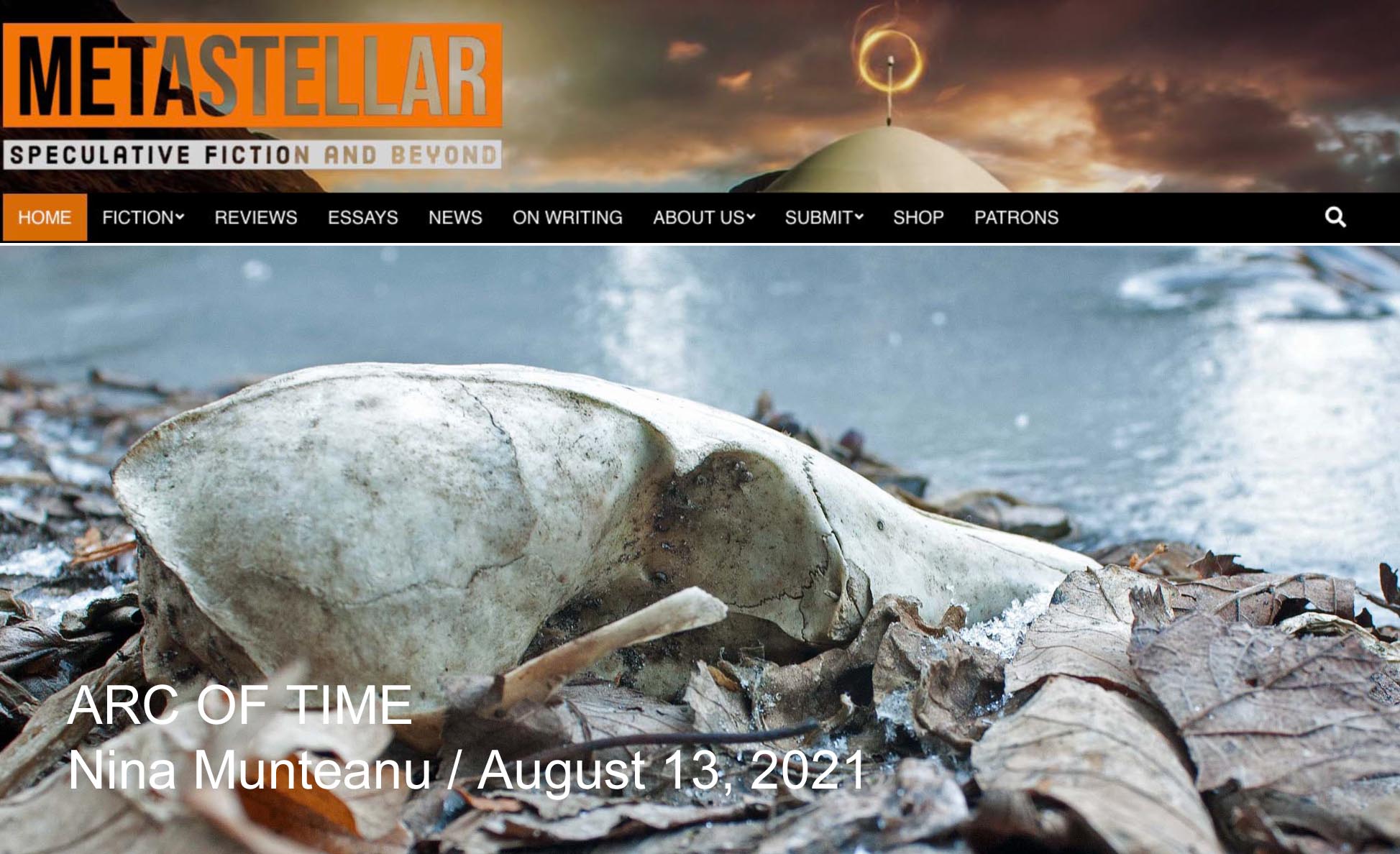
Arc of Time was then accepted in the premiere issue of Ultra! (Aardwolf Publications) in 2004. That issue contained a fully illustrated and designed interior, which really set off the story—an epistemological exchange of emails linked with narrative. In 2013, MetaStellar Speculative Fiction and Beyond, which provides illustrations for each story it carries, used one of my own photographs to illustrate Arc of Time.
Feature cover illustration for “Arc of Time” on MetaStellar site
Virtually Yours first appeared in Hadrosaur Tales in Issue #15 in December 2002. Hadrosaur Tales is a small but vibrant literary magazine out of Las Cruces, New Mexico and featured interesting covers.
Cover and story illustrations in Nowa Fantastyka for “Virtually Yours”
Virtually Yours was republished all over the world and is up to its tenth publication this year. Several publications included artwork specifically for the story. Nowa Fantastyka, out of Poland, is a slick magazine that boasts a lot of images, colour interiors and illustrations. My story was introduced with illustrations that enhanced its impact.
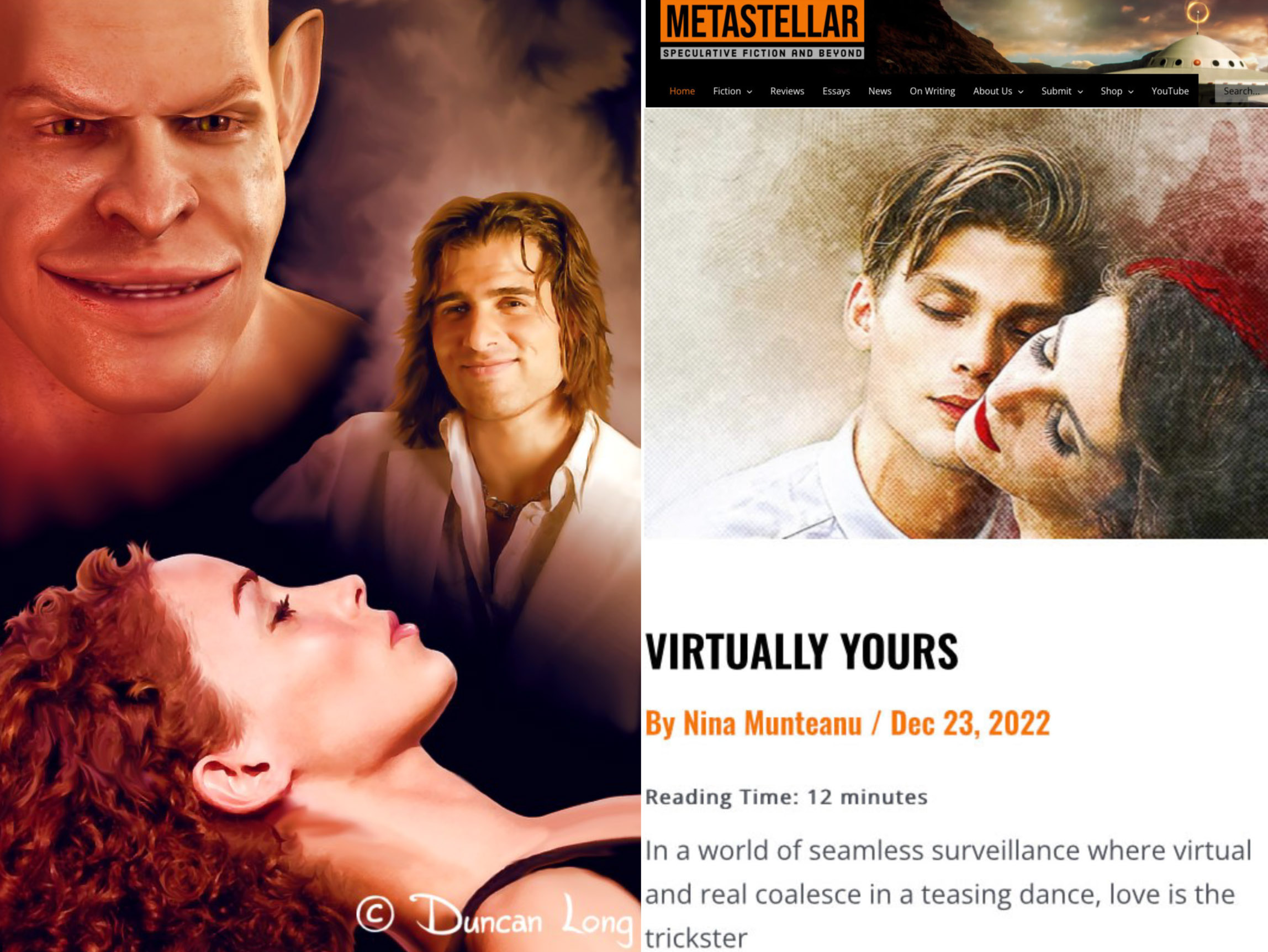
Interior illustrations for “Virtually Yours” in Amazing Stories and MetaStellar, respectively
Its reprint in Amazing Stories was illustrated evocatively by Duncan Long. In the story’s later reprint in MetaStellarSpeculative Fiction and Beyond, Brigitte Werner created a beautiful illustration for the story.
Nowa Fantastyka cover art and story artfor “A Butterfly in Peking”
A Butterfly in Peking first appeared in Issue #17 of Chiaroscuro in 2003. Its reprint in the Polish magazine Nowa Fantastyka in 2005 included interior art that introduced the tone and feel of the story.
Megan Survival Anthology cover art and story artfor “Fingal’s Cave”
Fingal’s Cave was first published in The Megan Survival Anthology (Reality Skimming Press) in December 2016. The publication included art by Jeff Doten specific to each story in the anthology and I found his artwork for Fingal’s Cave wonderfully intriguing.
Artwork for “The Way of Water” in various publications
The Way of Water was first published in Future Fiction then in a smart print publication by Mincione Edizioni in Rome, Italy in May 2016. The story was reprinted several times and artwork associated with it included in some of the publications. One is Little Blue Marble, an online magazine that features artwork for each story it runs.
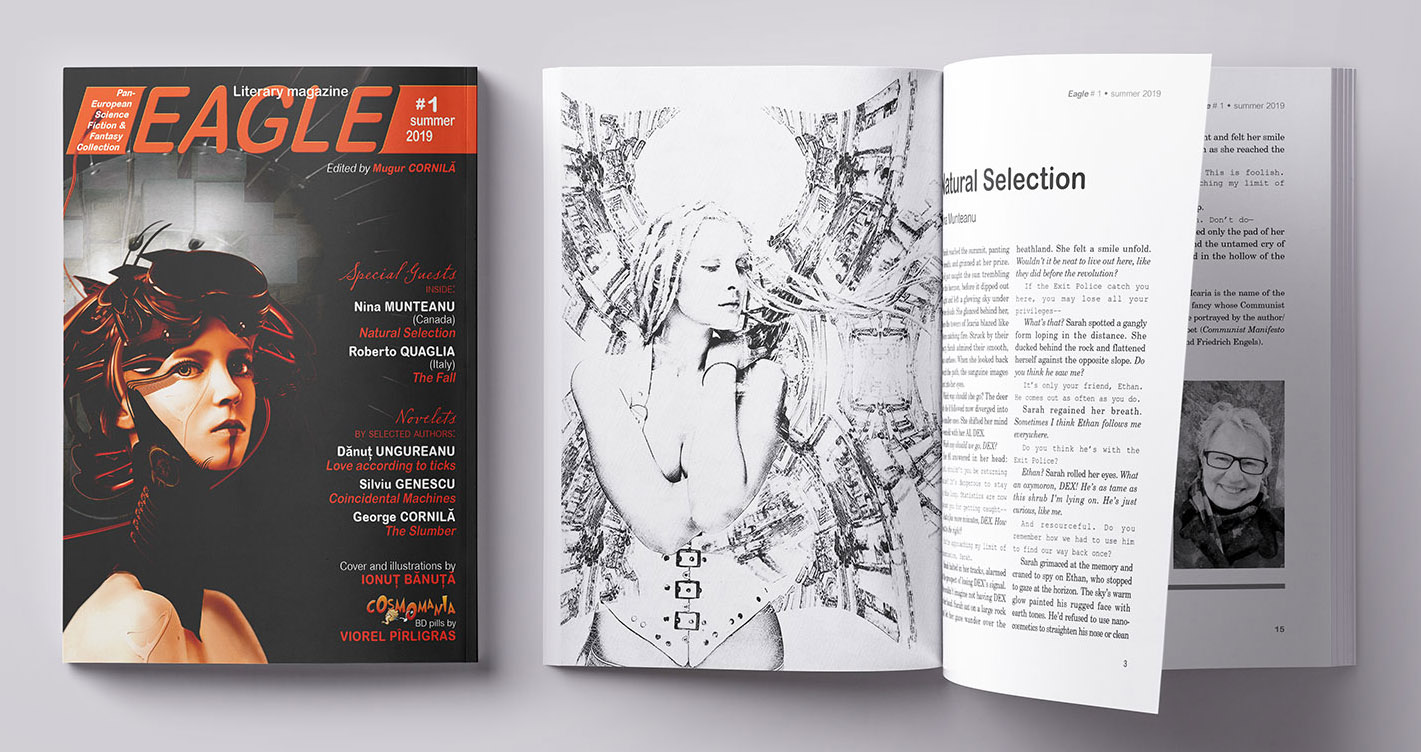
Cover art of Eagle Magazine and story art for “Natural Selection”
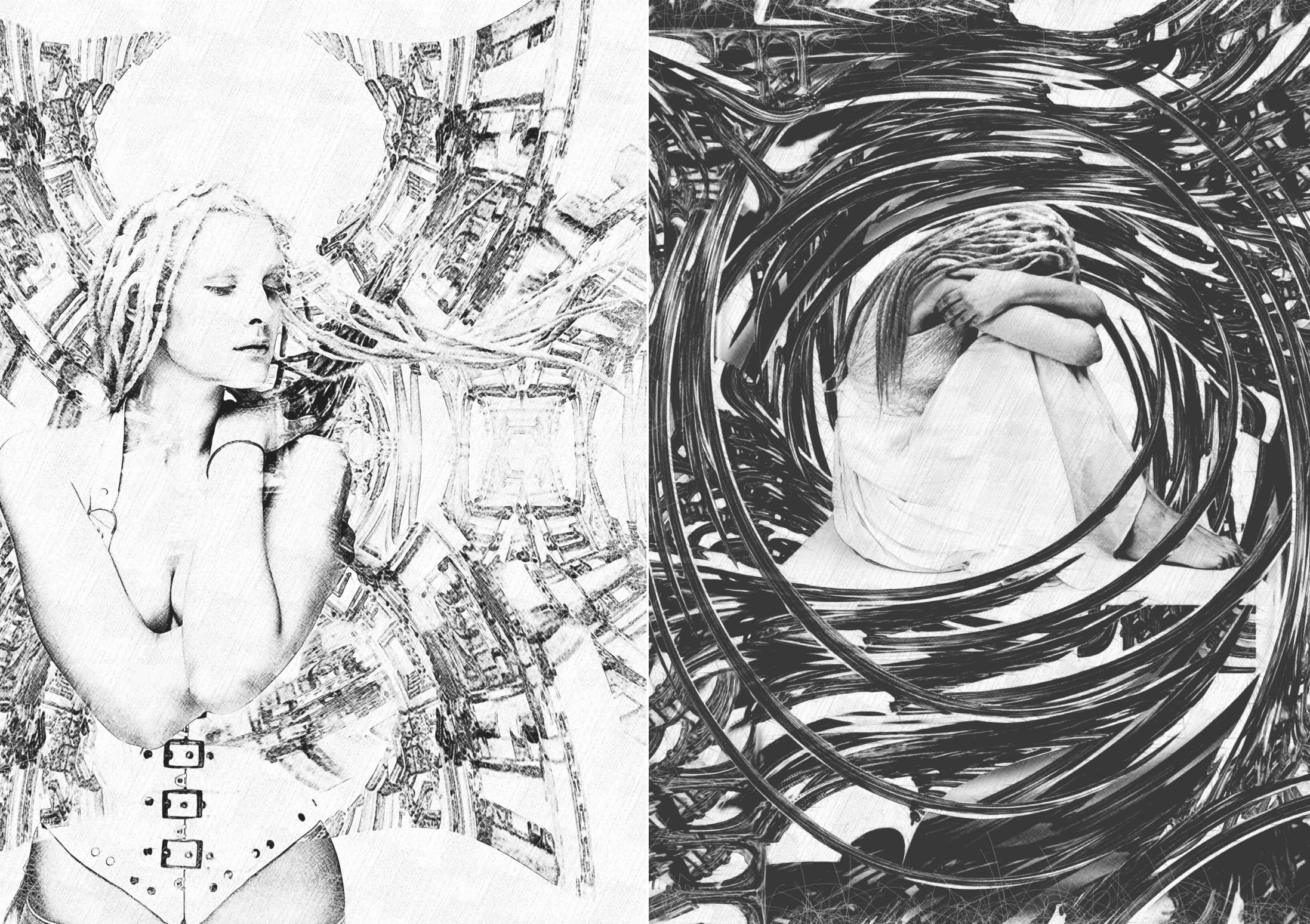
Natural Selection first came out in my short story collection of the same name in 2013. It was then reprinted in the premiere issue of Eagle Magazine and featured stellar and evocative interior illustrations by Ionuț Bănuță.
Interior story art for “Natural Selection”
Out of the Silence first appeared in Issue #85 of subTerrain Magazine in May 2020 and featured diverse and rich interior art and design (not pictured here). Its reprint in A House of Dawn in 2021 received its own artwork, which enhanced the tone and subject of the story.
Cover art for subTerrain Magazine and story art for “Out of the Silence” in A House of Dawn
I’d be remiss if I didn’t add the important artwork of artists on the covers of several of my novels and collections. As a reader, I can attest that cover art plays an important role in introducing a book to a potential reader. Whether we pick up a new author’s book to peruse depends upon the image, title and design of the cover. I have been very fortunate with my publishers and their artists.
Book covers for “Collision with Paradise” and “The Cypol”
My first published novel (Collision with Paradise) and novella (The Cypol)—both SF erotica—were designed to intrigue and titillate.
Costi Gurgu illustrated and designed the covers of my space detective thriller The Splintered Universe Trilogy for Starfire. The three books and their covers, formed a tryptic that reflected the journey of the lead character—a badass galactic detective—and her evolution.
Cover art for books of “The Splintered Universe” Trilogy
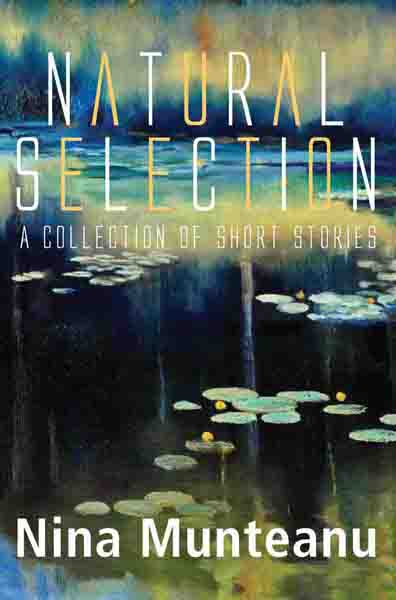
Costi Gurgu also designed the cover of my short story collection Natural Selection for Pixl Press in 2013 using an illustration by West Coast artist Anne Moody that showed the fluidity of nature.
Tikulin-illustrated covers for “Darwin’s Paradox” and “The Last Summoner”
Tomislav Tikulin illustrated the cover of my novel Darwin’s Paradox for Dragon Moon Press in 2007. The cover image ostensibly represented a work of hard science fiction and attracted much attention from SF fans. Tikulin’s evocative illustration of a knight in a drowning cathedral was then used for the cover of The LastSummoner for Starfire, with attractive typology design by Costi Gurgu. As with all of Tikulin’s work, this mysterious cover attracted the attention of many readers with many questions.
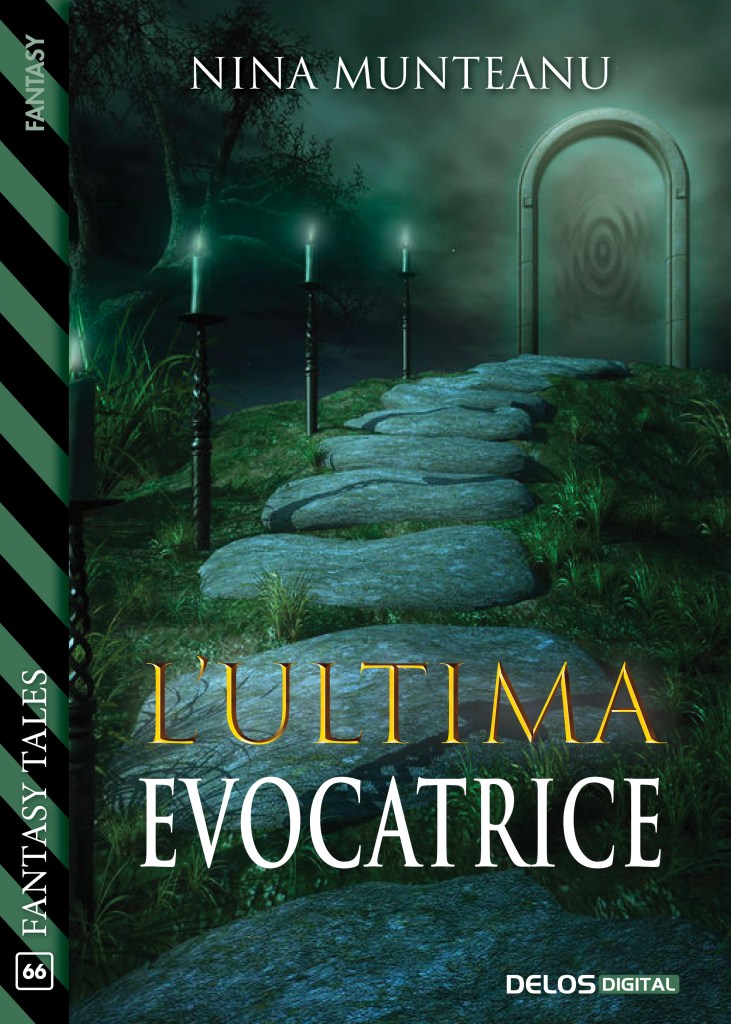
L’Ultima Evocatrice, a novella version of The Last Summoner in Italian was illustrated and designed for Delos Digital Publications in 2021 and draws the reader into the intrigue of the story.
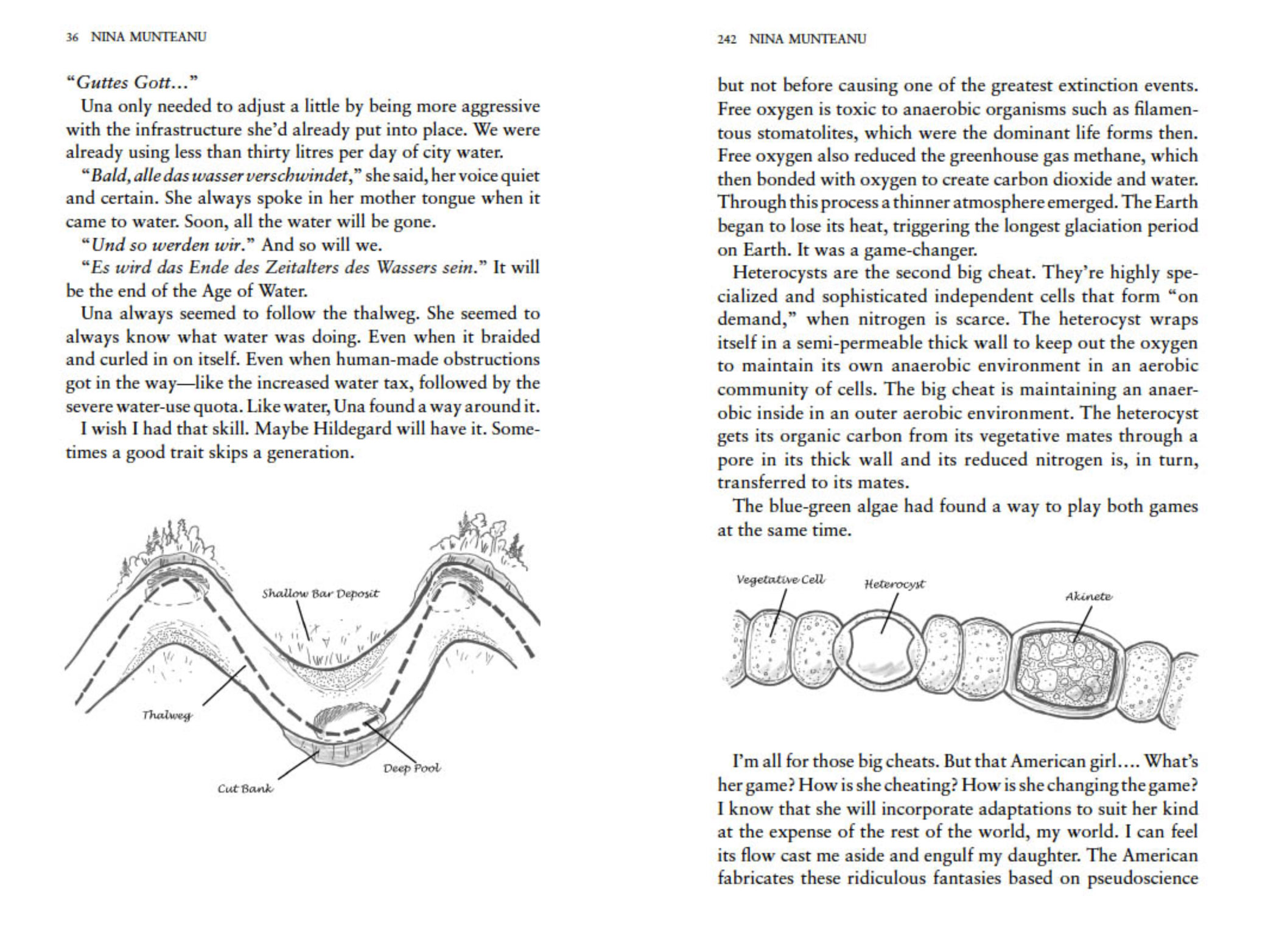
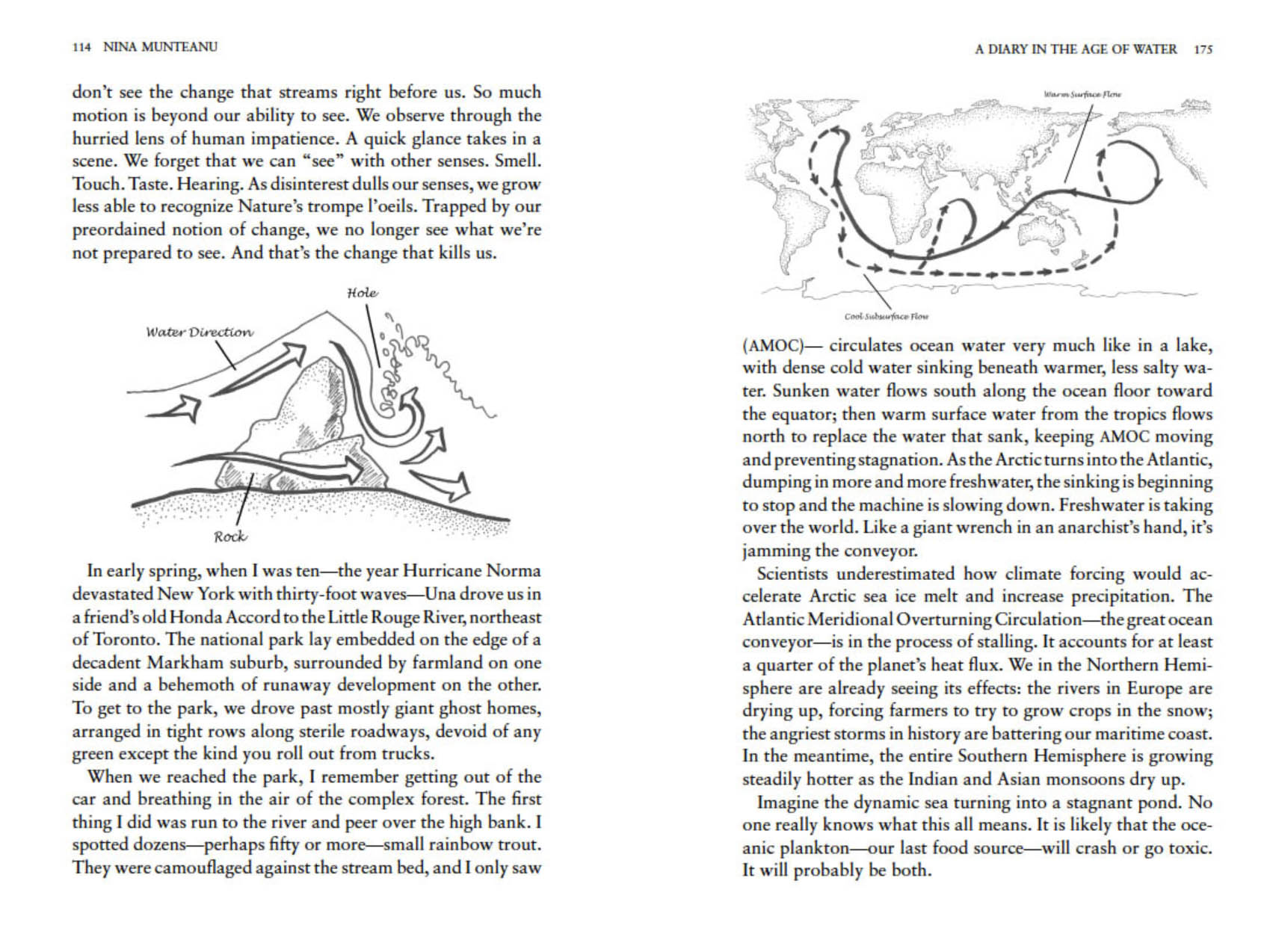
My most recent novel, A Diary in the Age of Water, published by Inanna Publications in 2020, features elegant cover art by Val Fullard and over thirty pieces of interior art work by my own hand.
Interior art representing the diarist’s sketches in “A Diary in the Age of Water
I wasn’t sure if the publisher would agree to use my sketches, but she did, to my surprised delight. She agreed with me that the interior illustrations, which represent sketches by the scientist diarist, lend a tangible reality to the story and a further focus of interest.
Interior art representing the diarist’s sketches in “A Diary in the Age of Water
Interior art representing the diarist’s sketches in “A Diary in the Age of Water”
The excitement never ends for me as a writer … With the newest installation to the Icaria Series imminent, Dragon Moon Press will be re-issuing Darwin’s Paradox and Angel of Chaos, along with the newest addition Gaia’s Revolution along with new covers and interiors. I can’t wait to see what Dragon Moon Press comes up with! …
Cover art of print publications my work has appeared in up to 2021-end
Nina Munteanu is a Canadian ecologist / limnologist and novelist. She is co-editor of Europa SF and currently teaches writing courses at George Brown College and the University of Toronto. Visit www.ninamunteanu.ca for the latest on her books. Nina’s bilingual “La natura dell’acqua / The Way of Water” was published by Mincione Edizioni in Rome. Her non-fiction book “Water Is…” by Pixl Press (Vancouver) was selected by Margaret Atwood in the New York Times ‘Year in Reading’ and was chosen as the 2017 Summer Read by Water Canada. Her novel “A Diary in the Age of Water” was released by Inanna Publications (Toronto) in June 2020.
The knight in Vivianne’s dream (illustration by Tomislav Tikulin)
If you want to find the secrets of the universe, think in terms of energy, frequency and vibration
Nikola Tesla
In my historical fantasy The Last Summoner, Vivianne Schön, the Baroness Von Grunwald, travels through time from the 1400s to 1905 to meet Nikola Tesla and make a deal with the eccentric scientist in a bid to make the world a better place:
The Story (excerpt of The Last Summoner)
New York, 1905
VIVIANNE straightened when she glimpsed the elegantly dressed Serbian as he entered Bryant Park. From her bench in the shade of a sycamore tree, she watched him saunter to his favourite bench then sit down and cross his legs. He emitted a somber sigh, pulled out a small notebook from his jacket pocket and began to write. Vivianne studied his long face, straight nose and well groomed mustache. It was an intense face, though worn with reserve. He quelled the fire that burned inside him beneath a shell of enigmatic reflection. He brushed a hand over his thick hair, then set his mouth in a thin line of determined concentration as he hastily sketched something inside the notebook. He didn’t look terribly heartbroken for a man who had just lost his dream, she reflected. But she did recognize disappointment on his furrowed brow. He was used to that, she decided, reviewing his personal history, which had been plagued by rivalry and betrayal for nearly all his life. A visionary of his genius quality was easy fodder for bullying, whether it was schoolmates or the scientific community.
After adjusting her brimmed hat and flowing blue lace gown, Vivianne rose and approached the forty-eight year old Serbian visionary, musing how he would later be called the “Father of the 20th Century”.
She was barely a metre away from him before he looked up, ready to express annoyance at being interrupted. She took pleasure in seeing his expression change from a glower to a startled look of curiosity. She knew she was beautiful, but it was rather delightful to see that she could divert this intense scientist.
“Hello, Mister Tesla,” Vivianne greeted him with a curtsy. “I am the Comptesse d’Anjou at your service. May I join you and sit down?”
He frowned at first then nodded politely with not quite a smile. He was not known for his smiles, she recalled. Tesla rose to his feet and bowed to her but did not offer his hand. She did not press him, knowing of his particular compulsion for avoiding human contact. “Of course you may,” he said with a mild accent and nodded to her in invitation. They both sat down in unison and he added, “To what do I owe this pleasure, Comptesse? Do I know you?”
“No, Mister Tesla.” She smiled with irony. “We have never met—not in person, anyway. But I believe you may be interested in what I have to say.” She paused to take in his curiosity and continued, “Pardon me for what I am about to reveal of your affairs, but I represent the interests of La Banque Internationale du Monde in Geneva, Switzerland—perhaps you know of us—and the law offices of Frankl & Frankl. We are one of the five largest investment banks in the world, dating back to the late 1400s with offices in Amsterdam and Hamburg. We are a private bank who screen for altruistic and environmentally conscious investors. In short, we help finance only those projects that will help make the world a better world.” She paused.
Tesla studied her inquisitively but said nothing.
She smiled internally at his puzzled expression then continued, “We are very interested in your Wardenclyffe Tower in Shoreham, Long Island, and associated global wireless power transmission.”
Tesla slid his notebook back into his jacket pocket and now gave her his full attention. She knew that he’d been trying for years to gain backing for his enigmatic projects with little to no success.
She continued, “You theorized that electrical energy can be transmitted through the earth and the atmosphere…without power lines.”
“Yes, I can light lamps at moderate distances and can detect the transmitted energy at much greater distances. The Wardenclyffe Tower uses a rapidly alternating electrostatic field and was a proof-of-concept for global wireless power trans-mission.”
“Yes, I know.”
He frowned. “But my funding—“
“Yes, I know. Your backers don’t like the idea of unmetered power consumption.”
His face hardened with dark thoughts. “Free electricity isn’t profitable.”
“Least of all to greedy bankers with no vision or faith like J.P. Morgan or John Jacob Astor,” she added. “I know you’ve been in financial trouble with high construction costs since Morgan pulled out last year and encouraged other investors to do the same.”
Her last remark made him stiffen. She was hitting a painful nerve.
“I know about your expired patents and the resulting lack of royalty payments,” she continued. “Within another five to ten years your projects will all be defunk and you will be totally broke. And no one will listen to the ideas that come to you fully formed through visions and dreams.”
He straightened and looked her directly in the eyes. “What do you want of me, Comptesse? Who are you?”
“An ally,” she answered. “I am well aware of your humanitarian pursuits and altruistic nature. I know that you wish simply to make the world a better world. That is my wish also. Energy is and will continue to be one of the most important forces on this earth. Like water, it should be free and available to each and everyone of us. I think you can provide us with that gift and would be happy to as well. Mister Tesla, I want to offer you financial backing at zero percent interest.”
He let loose a humourless laugh. He had finally learned to be cynical about bankers, she thought.
“Make no mistake, Mister Tesla; I expect to become one of the wealthiest people on this planet because of you. But I will gain that wealth only as you gain yours, through a partnership, and not at the expense of others; rather, for the benefit of others. Your wireless technology will help in areas you have yet to imagine: instant global communications and the personal computer; clean energy for homes and industry; laser medicine; robotics; interstellar travel; instant matter transference; even time travel and so much more.”
He was staring at her now. “Who are you, really?”
An angel, she thought to herself. “I’m part of the future, Mister Tesla. A future of your making.” Then without thinking, she held out her hand. “You can call me Vivianne.”
To her delighted surprise, he smiled for the first time. He took her hand then lightly kissed it, as was the custom of most eastern Europeans. “And you can call me Nikola.”
The Man
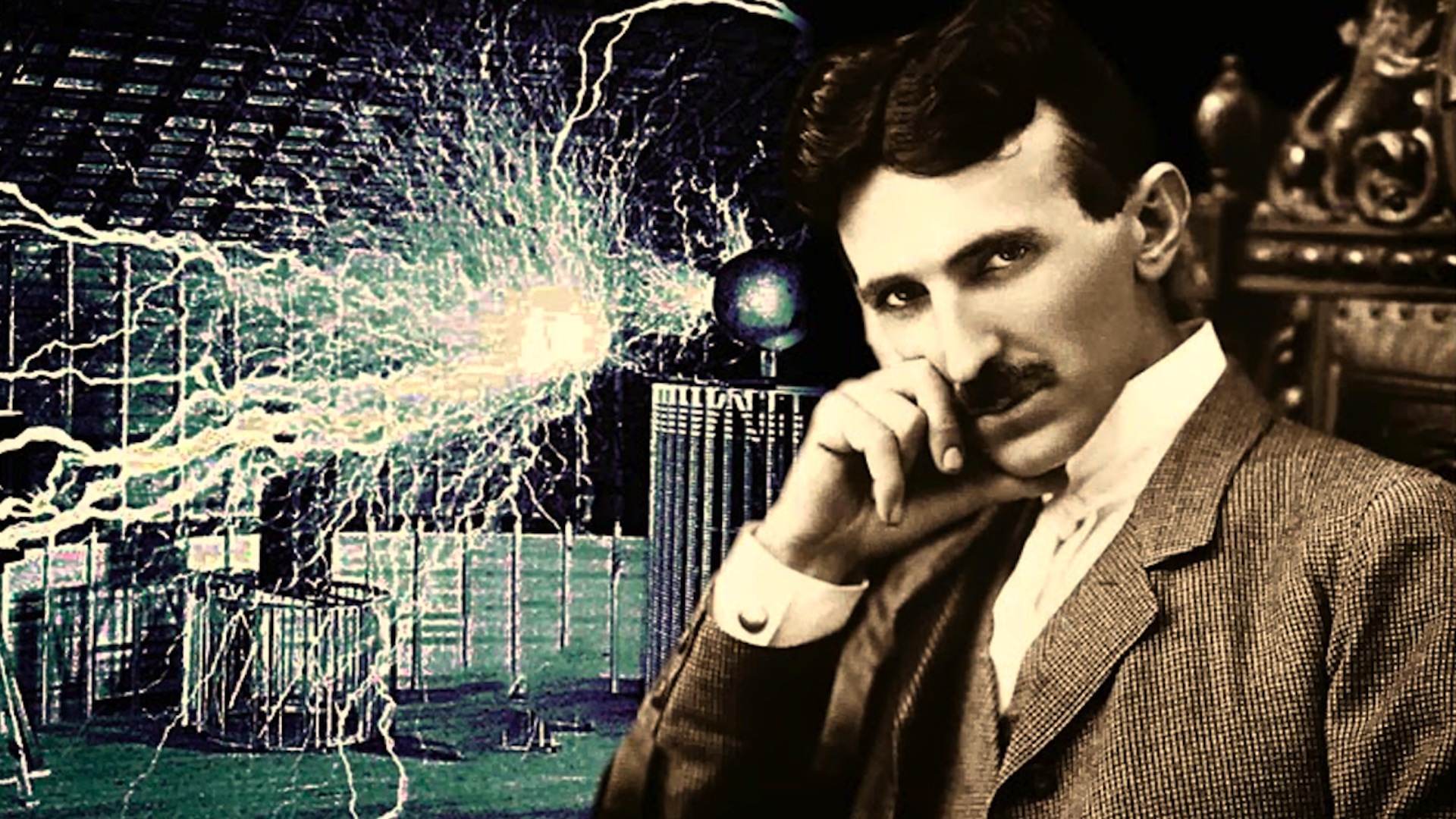
Nikola Tesla and his experiments with electricity
Nikola Tesla intuited that energy waves in the earth and the atmosphere could be used to transmit power to any point on the globe. He understood that the surface of the Earth, the ionosphere and the atmosphere together form one gigantic electrical circuit—an electrified Gaia, so to speak—and this formed the basis for his work on wireless energy transmission. Tesla was able to transmit power and energy wirelessly over long distances (via transverse waves and longitudinal waves). He transmitted extremely low frequencies (ELF) through the ground and between the Earth’s surface and the Kennelly-Heaviside layer of the ionosphere. Tesla patented wireless transceivers that developed standing waves and it was he who discovered that the resonant frequency of the Earth was about 8 Hz and in the range of the Schumann Resonance or Cavity.
Tesla in his Colorado Springs lab
Modern technology appears to be threatening humanity’s connection with earth’s fundamental frequency and the natural vibrations of Schumann Resonance. Threats include artificial man-made EMF radiation, wireless technology, and high frequency heating microwaves pulsed at 2.45 GHz. Whether we co-evolved with Earth’s natural electromagnetic environment or were created with Divine Intelligence to live in harmony with it, many experts believe that artificial man-made EMF radiation masks the natural beneficial frequency of the Earth and may create an environment that is literally `out of tune’ with Nature itself.
The Book
The Last Summonerby Nina Munteanu is a fresh twist on chaos theory and observer-induced collapse of quantum entanglement. It’s June 14th, 1410, on the eve of the Battle of Grunwald when history records that a ragtag peasant army will slaughter the arrogant monk knights of the imperialistic Teutonic Order … or will they? Because of an impetuous choice, 14-year old Vivianne Schoen, Baroness von Grunwald, makes the startling discovery that she can alter history—but not before she’s branded a witch and must flee through a time-space tear. Now in an alternate present-day France ruled by fascist Black Knights of the ancient Teutonic Order, she must decide how to remake history.
Detail of ‘The Battle of Grunwald’ (painting by Jan Matejko)
“For those in love with science fiction at its best, The Last Summoner is a complex story of ignored responsibilities and their dire consequences, of love and betrayal that span centuries and multiple worlds. Time travel, multiverse travel, immortality, alternate history in which the Nazis have won, not in the twentieth century but way earlier, in the Teutonic age. Angels and mutants, utopias and dystopias, even a Tesla occurrence— everything a science fiction reader could ever desire in a book. A masterfully told story with great characters. Nina Munteanu moves flawlessly from a medieval story to a modern one and everything in between.”
Depiction of fierce Teutonic Knights crusading in the Baltic north during the 13th Century (illustration by Mariusz Kozik)
Nina Munteanu is a Canadian ecologist / limnologist and novelist. She is co-editor of Europa SF and currently teaches writing courses at George Brown College and the University of Toronto. Visit www.ninamunteanu.ca for the latest on her books. Nina’s bilingual “La natura dell’acqua / The Way of Water” was published by Mincione Edizioni in Rome. Her non-fiction book “Water Is…” by Pixl Press (Vancouver) was selected by Margaret Atwood in the New York Times ‘Year in Reading’ and was chosen as the 2017 Summer Read by Water Canada. Her novel “A Diary in the Age of Water” was released by Inanna Publications (Toronto) in June 2020.
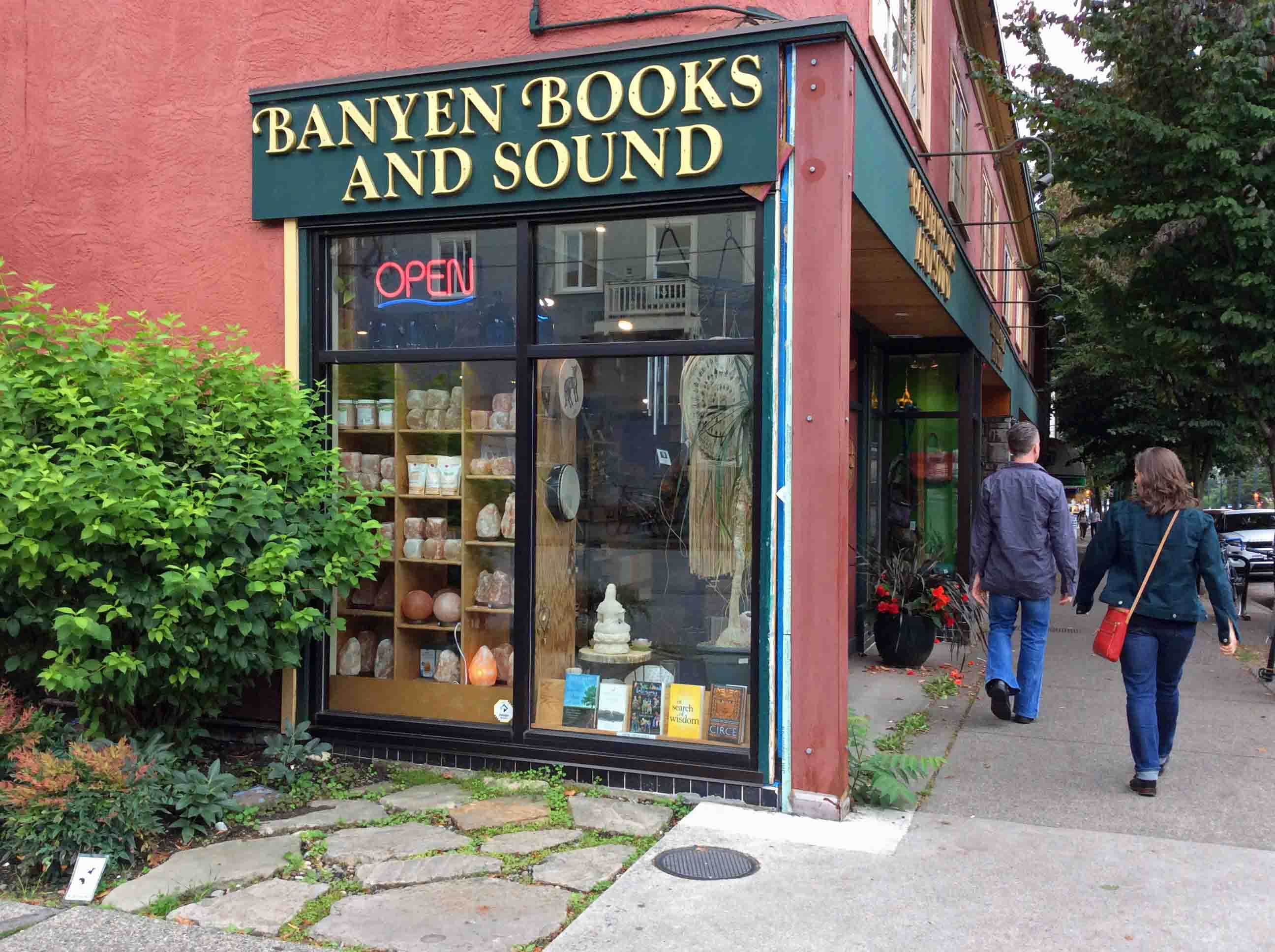
Banyen Books & Sound on corner of Dunbar and W 4th Avenue, Vancouver (photo by Nina Munteanu)
One of my favourite bookstores in Vancouver is Banyen Books & Sound on the southwest corner of W 4th Avenue and Dunbar. So, whenever I go back to my home town to visit family and friends, I stop there to linger amid the shelves of wonder and erudite adventure. Then I usually cross Dunbar to Aphrodite’s Organic Pie Shop for a delicious fresh pie—usually peach, if it is available. So good! Two things I love: books and pie!
Aphrodite’s Organic Pies, next door to Banyen’s, Vancouver (photos by Nina Munteanu)
Pacific Spirit Regional Park, Vancouver, BC (photo by Nina Munteanu)
During my recent visit this year to Vancouver, my friends and I had a fulfilling walk one morning through the big tree forest of Pacific Spirit Park near UBC. Margaret suggested we go to Aphrodite’s Organic Café for lunch, located across 4th Avenue from Banyen Books (the sister restaurant to the pie shop). After a delicious lunch, we wandered into Banyen, like desert nomads looking for water, and lost ourselves in a treasure of books, magazines, crystals, cards, singing bowls and other spiritual/healing items. Like a braided river, we dispersed according to our wayward interests.
Water Is… at Banyen Books, Vancouver (photos by Nina Munteanu)
Then friend Anne soon found me and pulled my sleeve. “Your book is here!” She led me to where my book Water Is… stood, face out, on the top shelf marked ‘Water: Life Force & Resource.’ In truth, I already knew through Pixl Press that the book was selling there. But here it was, showcased so nicely! It sat rather stately amid Emoto’s Secret Life of Water and Ryrie’s Healing Energies of Water.
Banyen customers find Water Is… and find a chair to take a look
One of the perks of Banyen Books are the comfortable seats for easy browsing. When I teasingly asked one of the clerks if they noticed people lingering for the day, they said, “yeah! They might leave for lunch then come back for the afternoon!” I can see why; Banyen is an entire world to discover. It is called Canada’s most comprehensive Body-Mind-Spirit bookstore, “offering a broad spectrum of resources from humanity’s spiritual, healing, and earth wisdom traditions…Our service is to offer life-giving nourishment for the body (resilient, vital), the mind (trained, open), and the soul (resonant, connected, in-formed). Think of us as your open source bookstore for the ‘University of Life’.”
“Banyen is an oasis, a crossroads, a meeting place…for East and West, the ‘old ways’ and current discoveries and syntheses.”
“The Golden Lotus Restaurant and Natural Food Store on Fourth Avenue at Bayswater was a hothouse for spiritual seekers, new vegetarians and spaced-out hippies grounding through good work. Banyen was born in a tiny book corner of the Golden Lotus. That lovely place was a connection to India, meditation and spiritual growth from 1967 to 1970. As its sun set, what was to become the Naam restaurant, Lifestream, Woodlands, Nature’s Path, and Banyen Books arose.”
Nina Munteanu is a Canadian ecologist / limnologist and novelist. She is co-editor of Europa SF and currently teaches writing courses at George Brown College and the University of Toronto. Visit www.ninamunteanu.ca for the latest on her books. Nina’s bilingual “La natura dell’acqua / The Way of Water” was published by Mincione Edizioni in Rome. Her non-fiction book “Water Is…” by Pixl Press (Vancouver) was selected by Margaret Atwood in the New York Times ‘Year in Reading’ and was chosen as the 2017 Summer Read by Water Canada. Her novel “A Diary in the Age of Water” was released by Inanna Publications (Toronto) in June 2020.
“We hold ourselves apart from our profligate nature. But we aren’t unique. We are more part of Nature than we admit. Using the thread of epigenetics and horizontal gene transfer, Nature stitches in us a moving tapestry of terrible irony. The irony lies in our conviction that we were made in the inimitable divine image of God. That we are special. Water flows endlessly through us, whether we are devout Catholics or empty vessels with no purpose. Water makes no distinction. It flows through us even after we bury ourselves.”
Lynna Dresden
A Diary in the Age of Water is “Unsettling and yet deliciously readable … Brilliant.”
THE PRAIRIE BOOK REVIEW
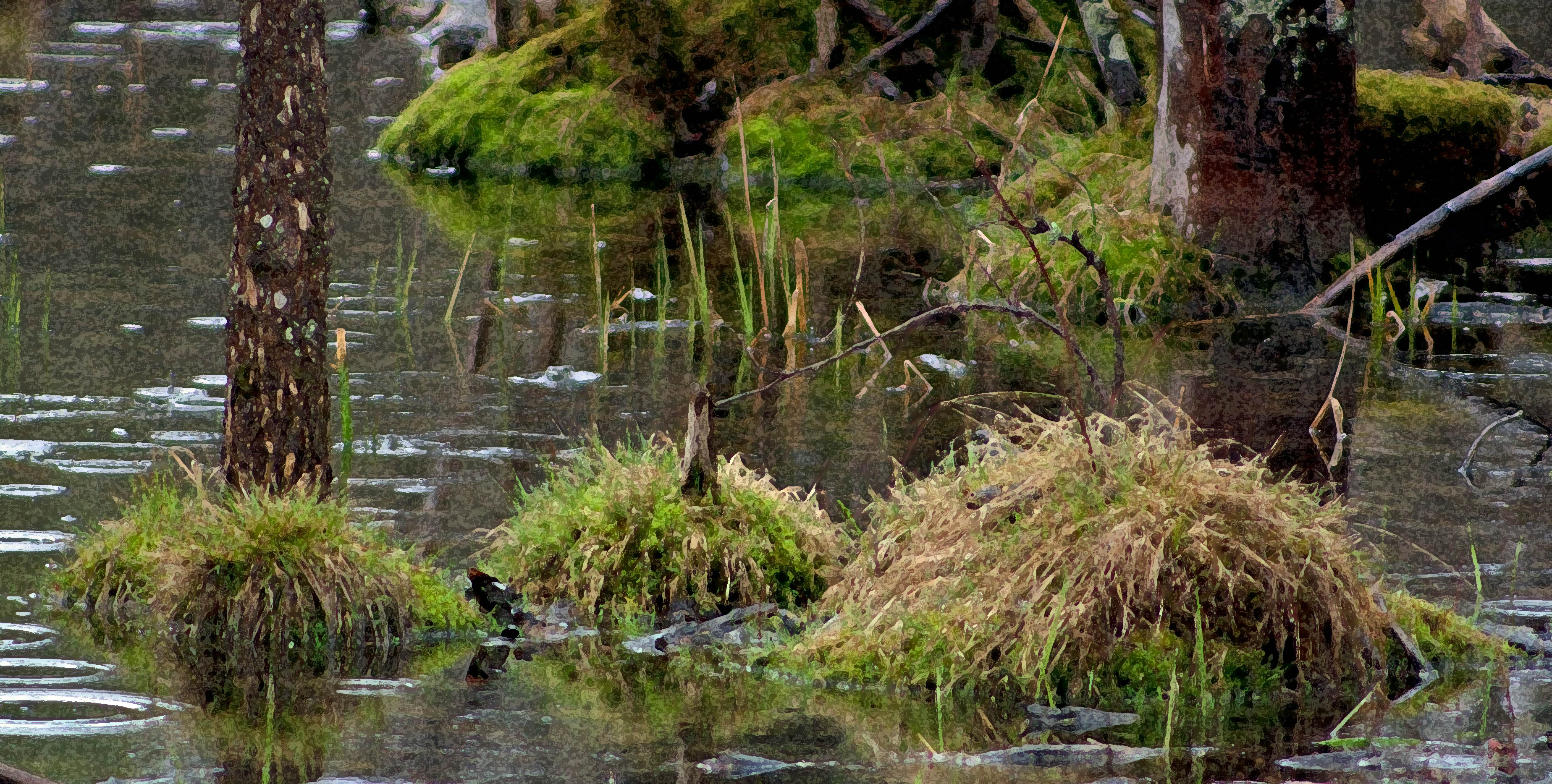
Swamp forest by country road, Kawarthas, ON (photo and rendition by Nina Munteanu)
“As Nature tames a lake over time, one thing replaces another. As it undergoes a natural succession from oligotrophic to highly productive eutrophic, a lake’s beauty mellows and it surrenders to the complexities of destiny. Minimalism yields to a baroque richness that, in turn, heralds extinction. The lake shrinks to a swamp then buries itself under a meadow.”
Lynna Dresden
’A Diary’ is a brilliant story…Munteanu writes with fresh, stimulating style.”
CRAIG H. BOWLSBY, author of The Knights of Winter
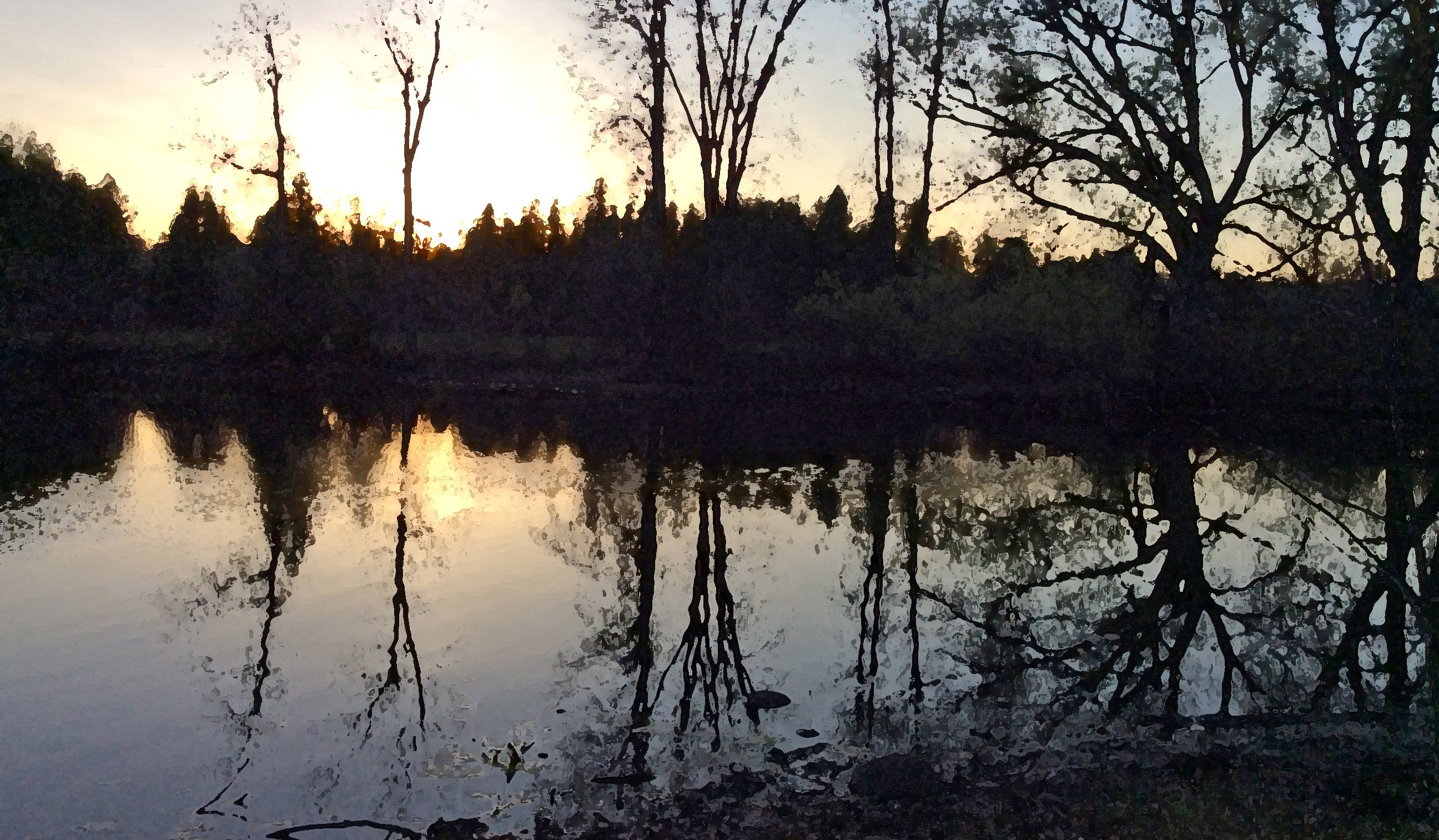
Outlet of Thompson Creek at sunset, ON (photo and rendition by Nina Munteanu)
Ice and snow cover the Otonabee River in winter, ON (photo and rendition by Nina Munteanu)
In my upcoming novel “Gaia’s Revolution,” one of the protagonists, Damien Vogel, contemplates in 2022 a key event from 2020 that only a few seem to take seriously:
In Siberia in June 2020, record heat of thirty degrees Centigrade, over the average of 11 degrees, collapsed permafrost and caused oil tanks in Norilsk to rupture. Over twenty thousand tonnes of diesel spilled into the Pyasina lake and river system. Damien remembers looking at the veins of red on satellite images from space. That disaster is just the beginning of what the ‘sleeping bear’ of methane hydrates promise to unleash when the permafrost reaches a critical thaw and those hydrates awaken. Melting permafrost is a quiet sleeper in the climate change procession, he considers. At a microscopic level, in the chemistry of the water and in the change in the atmosphere, a time bomb is ticking.
A decade later, Damien’s twin brother, Eric, notes that:
“Back in the ‘20s scientists started noticing major permafrost melt on the Siberian Shelf,” Eric goes on. “The melting released hydrates, which set the oil and gas companies frothing at the mouth with joy and the climate scientists spinning in a panic because of what they knew it meant for the planet. It was the harbinger of the largest methane ‘burp’ ever.”
Eric then adds:
“Permafrost thaw kicked us into this devastating global warming, Dame, and everyone—even the climate modellers—ignored it, because they didn’t have enough data. Gottverdammt! They’re all still asleep, Dame!”
In his book The Treeline, Ben Rawlence writes about the ongoing extinction of indigenous peoples in the north as the treeline migrates northward into tundra and the permafrost and sea ice change and go extinct themselves.
Ice fragments on the Otonabee River, ON (photo by Nina Munteanu)
Because methane is present in much smaller concentrations many scientists have mistakenly deemed it as important as carbon dioxide in the climate change equation; however, it is becoming obvious that methane poses a real and largely unacknowledged danger. Methane is twenty times more efficient in trapping heat than carbon dioxide. Permafrost—which is currently melting rapidly in the north—contains almost twice as much carbon as is currently in the atmosphere. In the rapidly warming Arctic (warming twice as fast as the globe as a whole), the upper layers of this frozen soil are thawing, allowing deposited organic material to decompose and release methane.
.
The clathrate gun hypothesis is the notion that sea temperature rises (and/or drops in sea levels) may trigger a catastrophic positive feedback on climate: warming would cause a sudden release of methane from methane clathrate (hydrate) compounds buried in seabeds, in the permafrost, and under ice sheets.
Something of this nature has already occurred in Siberia in 2020. In his book The Treeline Ben Rawlence reports the following warning by Dutch scientist Dr. Ko van Huissteden, a leading authority on permafrost:
“It is hard to measure methane release … [but] some studies have suggested that an unstable seabed could release a methane ‘burp’ of 500-5000 gigatonnes, equivalent to decades of greenhouse gas emissions, contributing to an abrupt jump in temperature that humans will be powerless to arrest.” (Wadhams, 2015)
Creation of gas hydrates requires high pressure; water; gas—mainly methane—and low temperatures. Three environments considered suitable for this process to occur include: sub-seabed along the world’s continental margins; permafrost areas on land and off shore; and a process for storing methane hydrates: ice sheets. As long as the climate is cold and the ice sheet stable, the gas hydrate zone remains stable. As the ice sheets melt, the pressure on the ground decreases; hydrates destabilize and release methane into rising seawater and finally into the atmosphere.
A recent study in Science revealed that hundreds of massive, kilometer-wide craters on the ocean floor in the Arctic were formed by substantial methane expulsions. Because methane is a powerful greenhouse gas, temperatures would rise exponentially. Once started, this runaway process could be as irreversible as the firing of a gun—and on a time scale less than a human lifetime.
The sudden release of large amounts of natural warming gas from methane clathrate deposits in runaway climate change could be a cause of past, future, and present climate changes.
Latest research on the Greenland ice sheet and elsewhere throughout the Arctic has revealed major methane discharges in Arctic lakes in areas of permafrost thaw. Scientists are exploring areas where methane is bubbling to the surface and releasing to the atmosphere.
If human emissions continue at their current rate, rapidly changing ocean currents and retreating ice sheets may uncork methane from under ice caps, ocean sediments and Arctic permafrost, causing a jump in radiative forcing. Even if rapid ice sheet disintegration were to scatter large amounts of ice into the oceans, the net cooling effect would be strongly countered and likely overwhelmed. The areas that did cool would likely trigger severe weather outbreaks.
As I write, we are pumping out CO2 into the atmosphere at a rate 10 times faster than at any point in the past 66 m years, with the resulting sea level rises, extreme weather events, heat waves, droughts, unseasonal storms, and stress on biodiversity around the globe. Research published in the journal Nature Geoscience demonstrates that “the world has entered ‘uncharted territory’ and that the consequences for life on land and in the oceans may be more severe than at any time since the extinction of the dinosaurs,” writes Damian Carrington of The Guardian.
In an interview with Guardian reporter John Abraham, Woods Hole expert Robert Max Holmes, exhorted:
It’s essential that policymakers begin to seriously consider the possibility of a substantial permafrost carbon feedback to global warming. If they don’t, I suspect that down the road we’ll all be looking at the 2°C threshold in our rear-view mirror.
Ice break up on the Otonabee River in early spring, ON (photo by Nina Munteanu)
Wadhams, Peter. 2015. “A Farewell to Ice.” Penguin.
Flowing water in a river, ON (photo by Nina Munteanu)
Nina Munteanu is a Canadian ecologist / limnologist and novelist. She is co-editor of Europa SF and currently teaches writing courses at George Brown College and the University of Toronto. Visit www.ninamunteanu.ca for the latest on her books. Nina’s bilingual “La natura dell’acqua / The Way of Water” was published by Mincione Edizioni in Rome. Her non-fiction book “Water Is…” by Pixl Press (Vancouver) was selected by Margaret Atwood in the New York Times ‘Year in Reading’ and was chosen as the 2017 Summer Read by Water Canada. Her novel “A Diary in the Age of Water” was released by Inanna Publications (Toronto) in June 2020.
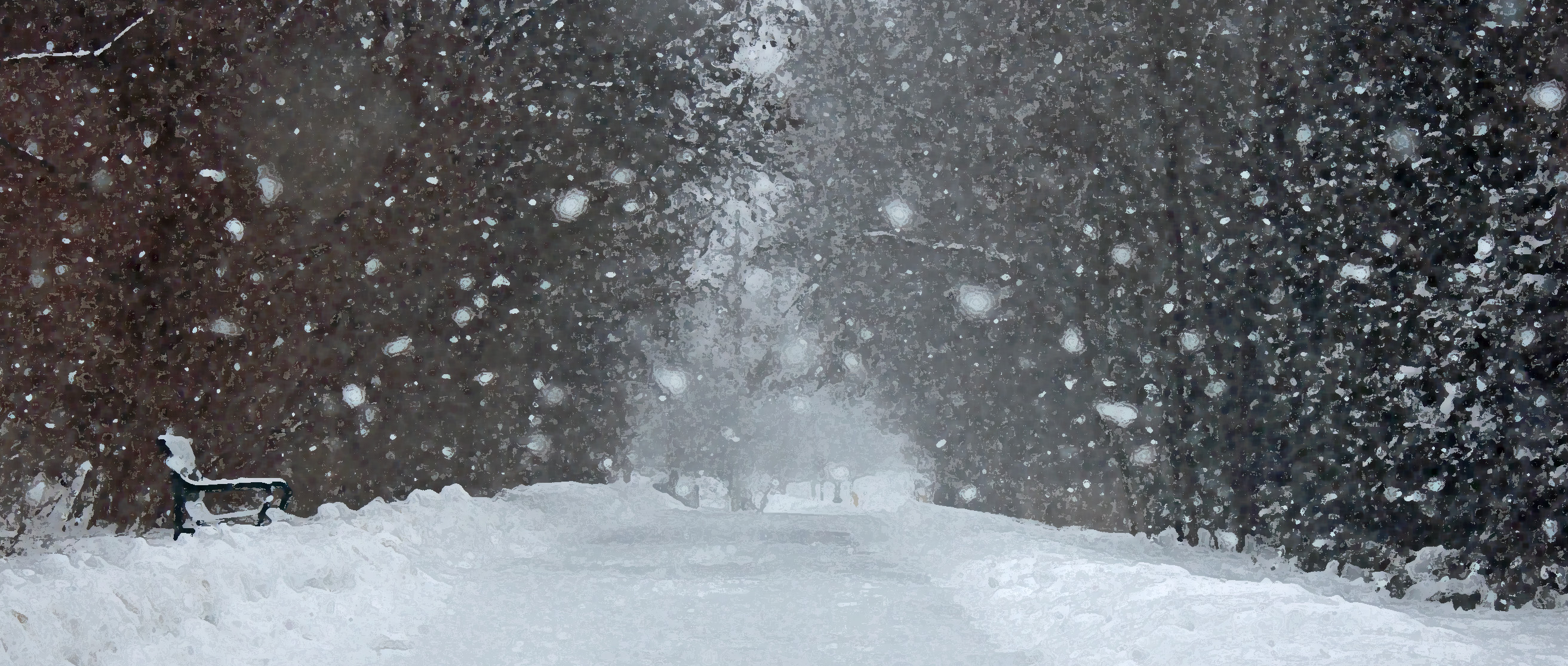
Heavy snowfall where I live in Ontario (photo by Nina Munteanu)
I currently live in Ontario, Canada, where the four seasons are still distinct and winter comes with signature cold temperature well below zero degrees Centigrade along with lots and lots of snow. I grew up in Quebec, where the snow often piled up higher than I stood tall. Temperatures often went into the minus zero teens and twenties with wind chills reaching minus thirty degrees. This called for the right equipment. Insulated coat or jacket, snow pants, wool toque and mittens and/or gloves that are also well insulated. And, of course, warm snow boots.
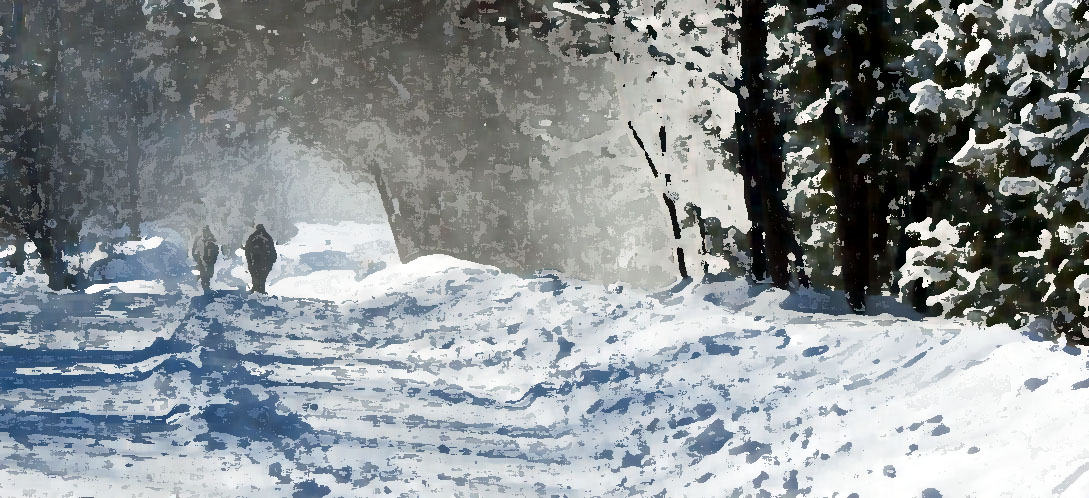
Nina on a walk during a snowstorm, ON (photo by Merridy Cox)
Country road in the Kawarthas, ON (photo and rendition by Nina Munteanu)
Nina’s car on ‘walkabout’ through Kawartha country after a fresh snowfall, ON (photo and rendition by Nina Munteanu)
Farm in the Kawarthas, ON (photo and rendition by Nina Munteanu)
Cows on a farm in the Kawarthas, ON (photo and rendition by Nina Munteanu)
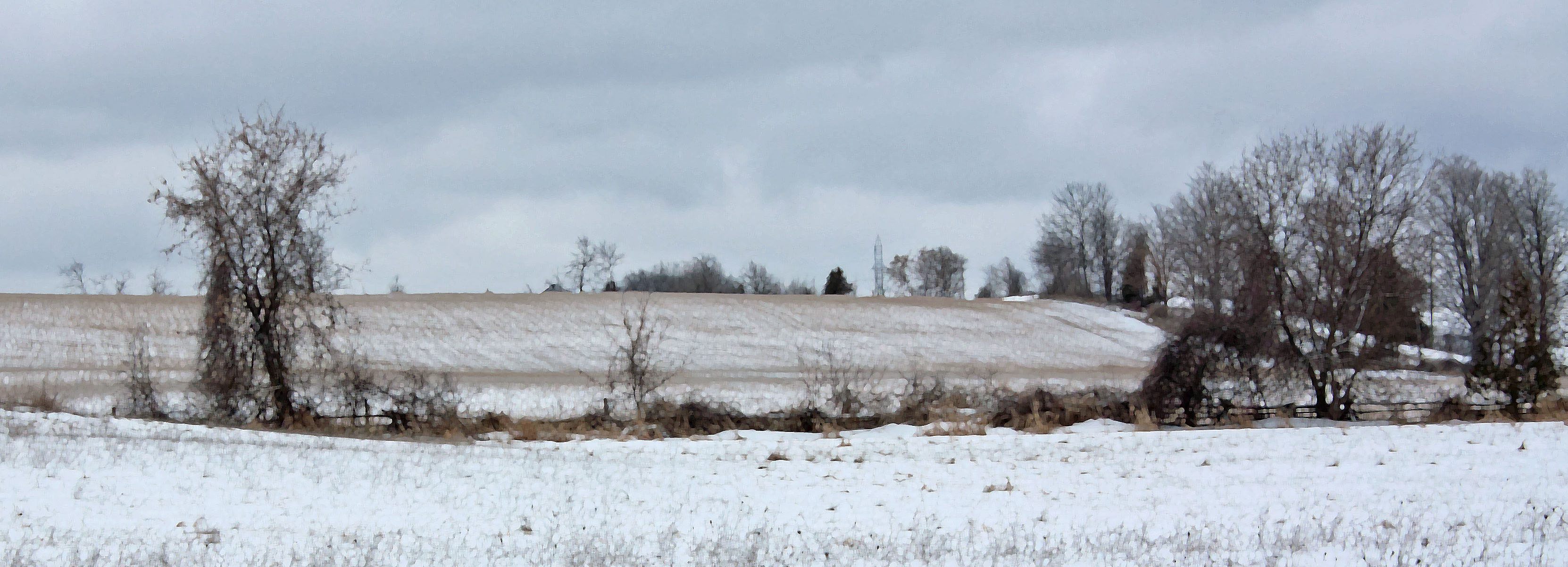
Country field in Kawarthas, ON (photo and rendition by Nina Munteanu)
School kids heading to class after a fresh snow, ON (photo by Nina Munteanu)
The Rotary Trail after a fresh snowfall, ON (photo and rendition by Nina Munteanu)
Heavy snow falls on a trail in the Kawarthas, ON (photo and rendition by Nina Munteanu)
Since moving to the West Coast then back east to Ontario, I’ve come to realize that I love winters. I love how snow covers everything, how it quiets the landscape and changes it in subtle ways. I love the frigid wind, how it bites the face with invigorating energy, reminding me that I am so alive. I love the sounds of winter, of walking on snow, crunching and squeaking, of the howl of the wind and the creaking and groaning of the trees, or the cracking and booming of the ice forming and reforming on the river.
Bridge over creek in Trent Nature Sanctuary during heavy snowfall, ON (photo and rendition by Nina Munteanu)
Jackson Creek after a fresh snowfall, ON (photo and rendition by Nina Munteanu)
Woman and her dog walk through cedar swamp forest after a fresh snowfall, ON (photo and rendition by Nina Munteanu)
Riparian forest clothed in fresh snow, ON (photo and rendition by Nina Munteanu)
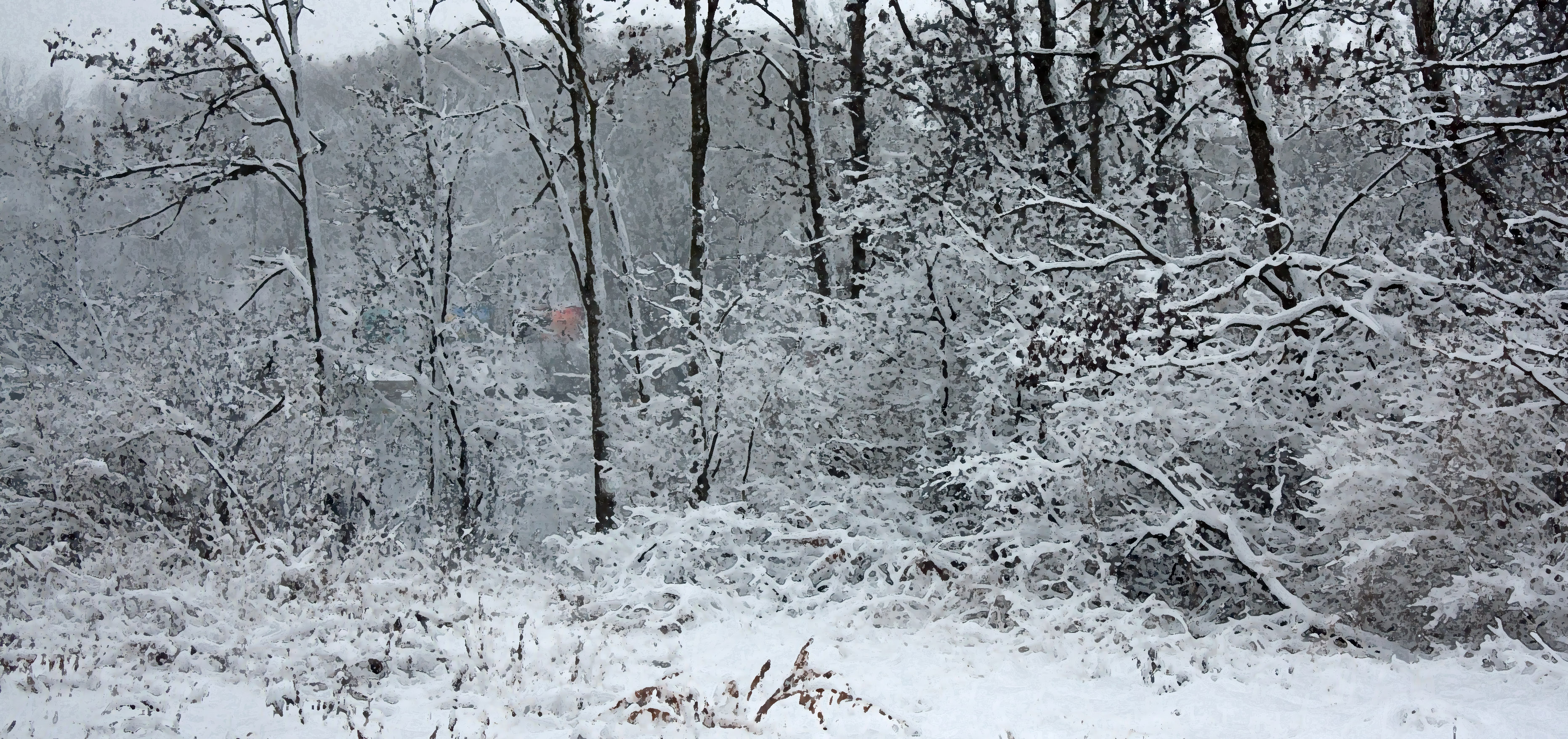
Riparian forest after a fresh snowfall, ON (photo and rendition by Nina Munteanu)
I am currently finishing my fiction book Thalweg, which takes place throughout Canada, but predominantly in northern British Columbia and the arctic of the Northwest Territories. My main character, a Gwich’in scientist, explores the land during a time of climate change, and much of it involves the expansive vast snowfields of northern Canada in which she describes the look, smell, feel, and sounds of snow. She thinks with great fondness of home in the Arctic where snow prominently features and, bringing in all her senses, of course, includes sound:
There are many different kinds of snow, and any native of the north can recognize them. We can not only tell something of the quality of weather from it, but also its history. Without having experienced the day or history of the place, we will know simply from walking through it. For instance, on a minus twenty-degree Centigrade day, when the cold bites your face and your breath coils out of your mouth like steam, old snow shines under a raking sun like an ice sheet. As though clear plastic was stretched over it. Sometimes, a hoar frost will form on the glassy thin layer, adding more glitter. Walking through it creates a symphony of crunch, pop and skittle sounds as each step breaks through the thin brittle layer into soft snow underneath. The scattering flat shards tingle like glass across the glistening ice-snow sheet.
Fresh snow that has fallen on a frigid night of minus fifteen degrees in a drier climate is fluffy, individual snowflakes glinting like jewels in the sun, and emits a high-pitched squeak and crunch as your boots press down on it. The colder the temperature, the higher the squeak. I just made that up. I’m not sure if it’s true. But considering the relationship of harmonics with temperature, it’s plausible.
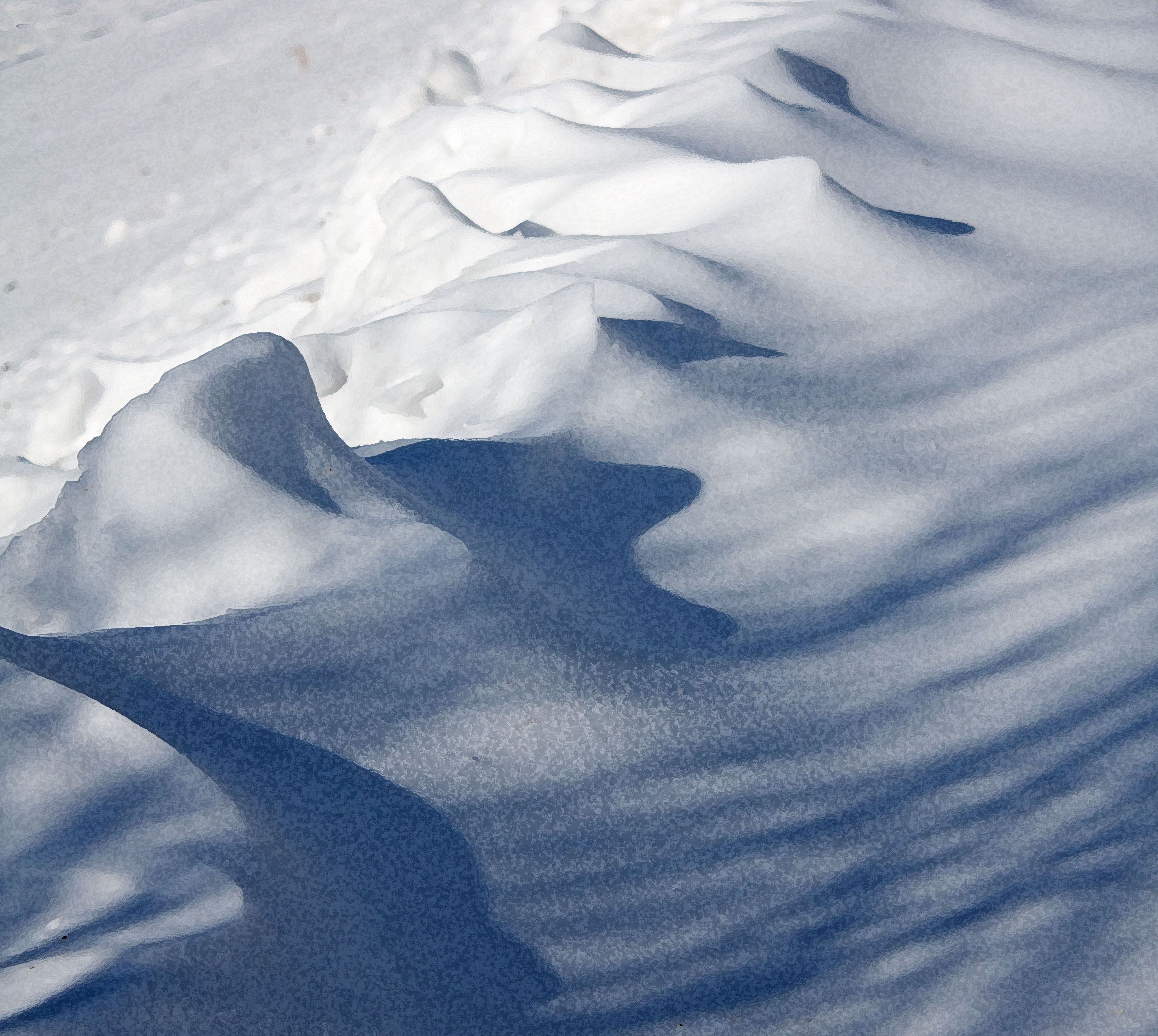
Squeaky snow is the snow of my home up north, where it arrives in a thick passion in October with the winter darkness, and where a constant minus 16°C to minus 30°C pervades until spring, six months later. The snow resembles powdered sugar, glittering like millions of tiny mica flakes under the moonlight of an arctic winter night. It covers everything, the ground, the trees and tiniest vegetation with a white blanket of snow. And when the wind teases the trees, they rain glitter-dust. In places where the north wind freely drifts across open landscape, sastrugi form; frozen wavelets, mini-barchans and dune chains that resemble the wave ripples of a sandy white beach. In some vast open areas, the wind will sculpt a frozen sea of irregular ridges and grooves up to a metre high. Mary’s friend Jem from Igloolik calls these snowdrifts qimugruk, whose distinctive shapes become permanent features of the snowscape, with tips always pointing west-northwest. Igloolik hunters use these uqalurait to set their bearings when travelling across the expansive tundra, particularly during poor visibility from storms or darkness.
Tracks through a small path by the river, ON (photo and rendition by Nina Munteanu)
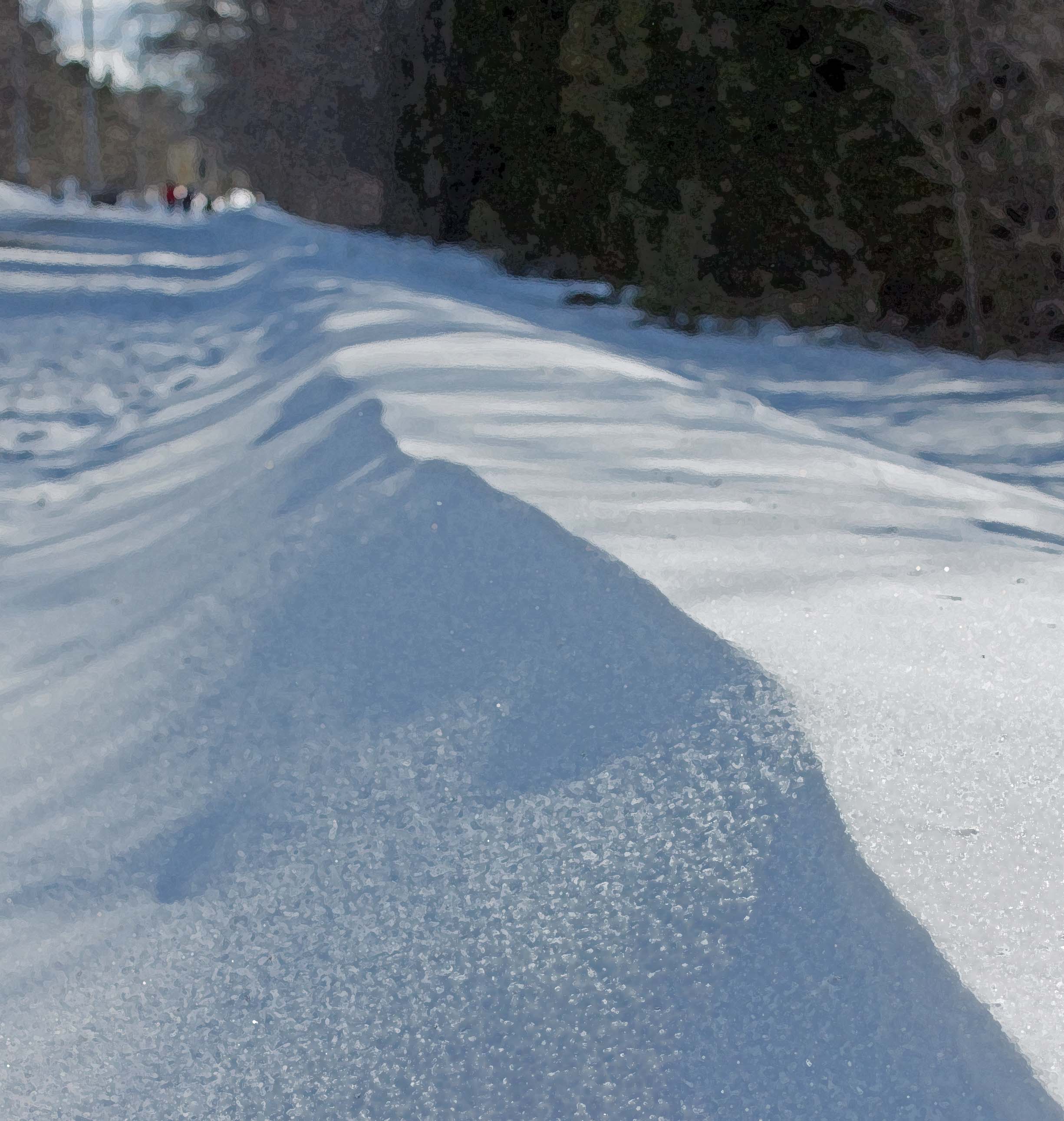
Snow drift on a trail by the river, ON (photo and rendition by Nina Munteanu)
One of the sensitivity readers for Thalweg, anthropologist and Gwich’in scholar Ingrid Kritsch, related to me an interesting account during attempts to open up to oil and gas development the Arctic National Wildlife Refuge–a critical area where the Porcupine Caribou herd calve. “To many Americans, it was just a big, white, barren expanse of unused lands,” said Ingrid. “She recalled a Senator speaking for development on these lands. The Senator held up a blank sheet of white paper and claimed ‘this is what the area looks like!’
The vast snowfields look nothing like that…
Snow drifts in Ontario (photo and rendition by Nina Munteanu)
…Now, don’t forget to play in the snow…
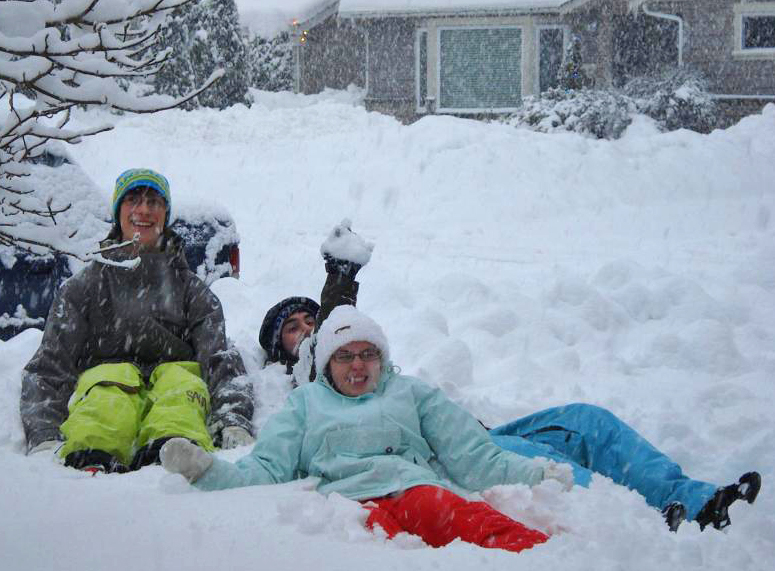
Author’s son and friends play in fresh snow on Christmas in BC (photo by Nina Munteanu)
Nina Munteanu reads a book with her cup of tea in +8 degree C, ON (photo by Merridy Cox)
Nina Munteanu is a Canadian ecologist / limnologist and novelist. She is co-editor of Europa SF and currently teaches writing courses at George Brown College and the University of Toronto. Visit www.ninamunteanu.ca for the latest on her books. Nina’s bilingual “La natura dell’acqua / The Way of Water” was published by Mincione Edizioni in Rome. Her non-fiction book “Water Is…” by Pixl Press(Vancouver) was selected by Margaret Atwood in the New York Times‘Year in Reading’ and was chosen as the 2017 Summer Read by Water Canada. Her novel “A Diary in the Age of Water” was released by Inanna Publications (Toronto) in June 2020.
Rod and Kim, owners of The Paper Hound Bookshop, Vancouver
It was a warmish sunny Friday in the deep of summer and I was in Vancouver for the first time in three years since COVID-19 stopped me from travelling. I found myself wandering Gastown, retracing the steps of the indomitable character in my upcoming thriller Thalweg. My wanderings took me along Water Street, past the Steam Clock, south on Cambie, then east on Blood Alley where my character has a sketchy scene with two enforcers involving Gaoler’s Mews, a solid red brick wall, a scurrying rat, and a 9 mm Glock…
Gastown steam clock about to steam out 6 pm, Vancouver, BC (photo by Nina Munteanu)
.
But I was in the general area for another reason: to meet my son and his lady for a wonderful meal in the exquisite Italian restaurant Autostrada Osteria; a Christmas present he’d owed me since COVID hit. Located on the corner of Homer and Pender streets, Autostrada Osteria nestles comfortably in an eclectic mix of old and slightly dilapidated next to trendy and posh chic. Something Vancouver seems to do well.
.
The Paper Hound Bookshop on Pender Street, Vancouver
.
I was a little early for our reservation at 7:15 pm, so I wandered down the street. Immediately east of the restaurant was a character bookstore selling new and used books, The Paper Hound Bookshop. It’s located in the Victoria Block, a 1908 addition to the old boutique Victorian Hotel.
Always curious about books and wishing to kill some time, I wandered in, blissfully unaware that I was entering another dimension…
I nodded to the young woman at the front desk who exuded friendly intelligence through kind but impish eyes. I ventured deeper, perusing the shelves, high and low. I noted that the books were arranged with lots of front covers on display in tiny category-labeled alcoves that literally covered the walls from floor to ceiling. Several sliding ladders were judiciously placed to provide reach. The categories were odd, bizarre, somewhat arcane, and peculiarly amusing. There was one that proclaimed “Rodent as Hero.” Another read “Indomitable Orphans,” (populated with several Harry Potter books, of course, as well as other lesser known orphans).
Whoever had created these categories—was it the woman at the front?—was either strange or had purposefully flouted the norm to draw attention to a more whimsical, curious way of seeing the world and the books that described it. No mundane alphabetizing within broad normative categories for these people!
.
Inside the Paper Hound Bookshop, Vancouver (image by On the Grid)
.
As I wandered the labyrinthine rows of books, the place felt like a roadmap to another world. The narratives from the categories alone were worth studying from “Hot Adventure”, “Cold Adventure,” and “Wet Adventure” to “Books with Bears,” “Detection / Deduction,” and “Wanderlust.” Each category was a ‘book’ and each book ‘a chapter’ of a larger funky narrative that depicted one person’s intriguing interpretation of the world.
Keagan Perlette of Sad Mag describes the store this way: “The Paper Hound stocks both used and new books and features an impressive collection of poetry and philosophy. Space is limited, so there is an evident focus on literature, but there are surprises hidden in the shelves: an excellent selection of beautiful children’s books, art books, drawers full of zines and chapbooks, and even a section for unique vintage cookbooks. The store is full of little wonders.”
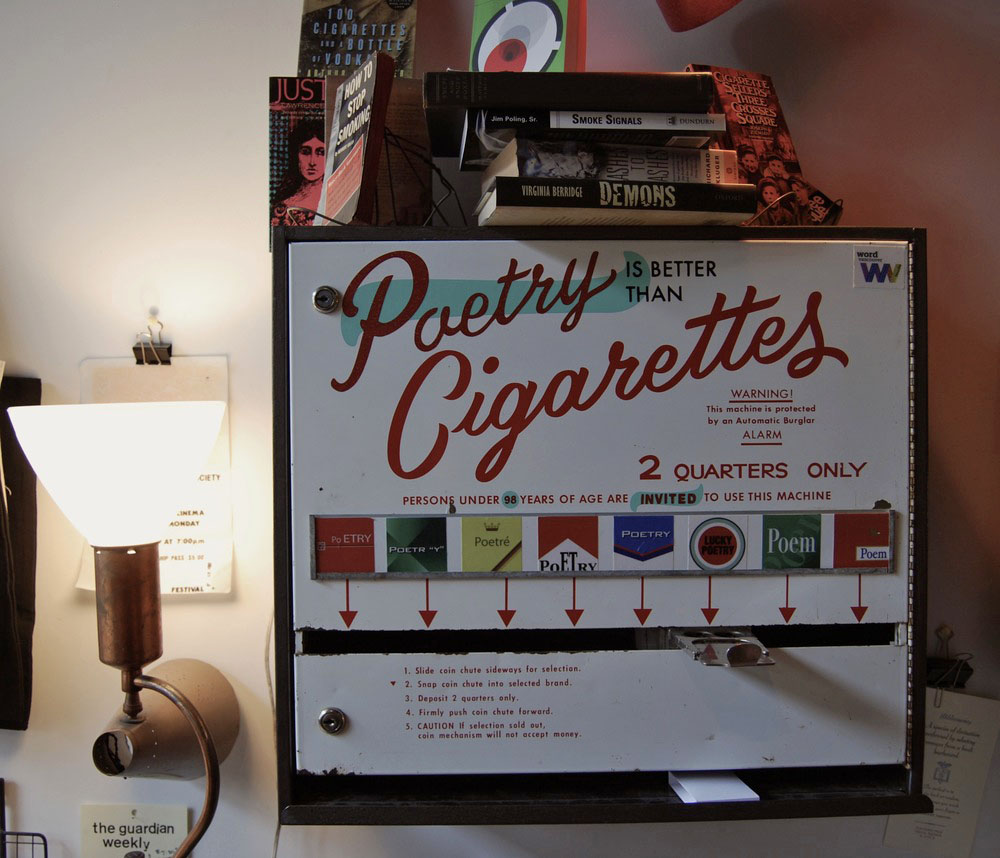
There is even a funky machine that dispenses poetry like cigarettes for two quarters at the front of the store. Even on its surface books were stacked. The owners had stacked books literally everywhere. On chairs, on tables, on each other. Little books on larger books, balanced wonderfully in a kind of fanciful ordered chaos.
.
Poetry dispenser at The Paper Hound (image by Keagan Perlette)
.
The Paper Hound website accurately describes the bookstore as “a new, used and rare book store” that doesn’t specialize “in one particular kind of book, but we favour the classic, curious, odd, beautiful, visually arresting, scholarly, bizarre, and whimsical.” In addition to their collection of used books, the Paper Hound carries titles from local small publishers Anvil Press, Arsenal Pulp Press, Talon Books and New Star Books.
Owners Kim Koch and Rod Clarke are veterans of the bookstore world in Vancouver, having worked at several before opening Paper Hound. They set up The Paper Hound in the old boutique hotel in 2013 on what my book collector friend calls ‘book row.’ Located on Pender Street, between Richards and Hamilton, ‘book row’ is apparently expanding according to On the Grid. According to the Vancouver Sun: “in this digital age many people think bookstores are on the verge of extinction. People are buying fewer paper books, and websites like Amazon offer almost anything ever printed, often for cheap.” While the Internet and digital devices appear to be ravaging large chain bookstores (some like Borders closed and others like Indigo have added household goods to bring people into the store), small niche independent bookstores are flourishing.
“Setting up a bookstore in the post-online and big book retailer age is sort of liberating,” says Kim. “We know we can’t carry everything or nearly as many titles as they do, so that liberates us to instead focus on creating the experience we want the customer to have.” Kim describes the perfect bookstore as: “a place that offers people a space where they can explore, get guidance from the proprietors and, when they want to, be left alone amongst the shelves to daydream.”
That’s exactly what I did.
When I left the store at shortly after 7pm, Kim pulled in the book trolley from outside in preparation to close and I apologized if I’d held her up a few minutes. She then informed me that they usually close at six but she had kept the store open for goodness knows why. I smiled and said rather cheekily with sudden inspiration, “I know; because I needed to experience it.” She laughed and those impish eyes twinkled.
And before you ask, yes, I did walk away with something: “Water Babies” by Charles Kingsley, a moral fable that explores the closed-minded approaches of many scientists of the day in their response to Charles Darwin’s ideas on evolution.
.
1935 edition of Ward, Lock & Co. publication of “Water Babies” by Charles Kingsley (originally published in 1863 by London Macmillan and Company) with illustrations by Harry G. Theaker
.
After he is chased from the home of an upper-class young girl, chimney-sweep Tom falls asleep and tumbles into a river. There he is transformed into a ‘water-baby’ and his adventures truly begin. Beneath the surface, he enters a magical world full of strange and wonderful creatures, where he must prove his moral worth in order to earn what he truly desires.
Macmillan describes The Water Babies this way:
“One of the most unusual children’s books ever written, The Water-Babies, subtitled ‘A Fairy Tale for a Land-Baby’, was originally intended as a satire in support of Charles Darwin’s On the Origin of Species, and explores the issues at the forefront of biologists’ minds at the time. First published as a complete novel in 1863 [originally illustrated by Linley Sambourne], Charles Kingsley’s classic tale also explores ideas about religion, the Victorian education system and the working conditions of children and the poor.”
The vintage version I picked up at The Paper Hound was illustrated by Harry G. Theaker and published in 1935 by Ward, Lock & Co. Ltd. with 24 colour plates.
For a great taste of Kim and Rod’s unique vision of the world of literature and their pithy humour and wit, go to their blog The Paper Hound. Here’s a taste:
.
Vancouver street lined with plane trees (photo by Nina Munteanu)
.
NINA MUNTEANU is a Canadian ecologist / limnologist and novelist. She is co-editor of Europa SF and currently teaches writing courses at George Brown College and the University of Toronto. Visit www.ninamunteanu.ca for the latest on her books. Nina’s bilingual “La natura dell’acqua / The Way of Water” was published by Mincione Edizioni in Rome. Her non-fiction book “Water Is…” by Pixl Press(Vancouver) was selected by Margaret Atwood in the New York Times ‘Year in Reading’ and was chosen as the 2017 Summer Read by Water Canada. Her novel “A Diary in the Age of Water” was released by Inanna Publications (Toronto) in June 2020.


































 Nina Munteanu Writing Coach