When the Permafrost Thaws…

Ice and snow cover the Otonabee River in winter, ON (photo and rendition by Nina Munteanu)

In my upcoming novel “Gaia’s Revolution,” one of the protagonists, Damien Vogel, contemplates in 2022 a key event from 2020 that only a few seem to take seriously:

In Siberia in June 2020, record heat of thirty degrees Centigrade, over the average of 11 degrees, collapsed permafrost and caused oil tanks in Norilsk to rupture. Over twenty thousand tonnes of diesel spilled into the Pyasina lake and river system. Damien remembers looking at the veins of red on satellite images from space. That disaster is just the beginning of what the ‘sleeping bear’ of methane hydrates promise to unleash when the permafrost reaches a critical thaw and those hydrates awaken. Melting permafrost is a quiet sleeper in the climate change procession, he considers. At a microscopic level, in the chemistry of the water and in the change in the atmosphere, a time bomb is ticking.

A decade later, Damien’s twin brother, Eric, notes that:

“Back in the ‘20s scientists started noticing major permafrost melt on the Siberian Shelf,” Eric goes on. “The melting released hydrates, which set the oil and gas companies frothing at the mouth with joy and the climate scientists spinning in a panic because of what they knew it meant for the planet. It was the harbinger of the largest methane ‘burp’ ever.”

Eric then adds:

“Permafrost thaw kicked us into this devastating global warming, Dame, and everyone—even the climate modellers—ignored it, because they didn’t have enough data. Gott verdammt! They’re all still asleep, Dame!”

In his book The Treeline, Ben Rawlence writes about the ongoing extinction of indigenous peoples in the north as the treeline migrates northward into tundra and the permafrost and sea ice change and go extinct themselves.

Ice fragments on the Otonabee River, ON (photo by Nina Munteanu)

Methane & The Clathrate Gun Hypothesis 

Because methane is present in much smaller concentrations many scientists have mistakenly deemed it as important as carbon dioxide in the climate change equation; however, it is becoming obvious that methane poses a real and largely unacknowledged danger. Methane is twenty times more efficient in trapping heat than carbon dioxide. Permafrost—which is currently melting rapidly in the north—contains almost twice as much carbon as is currently in the atmosphere. In the rapidly warming Arctic (warming twice as fast as the globe as a whole), the upper layers of this frozen soil are thawing, allowing deposited organic material to decompose and release methane.

.

The clathrate gun hypothesis is the notion that sea temperature rises (and/or drops in sea levels) may trigger a catastrophic positive feedback on climate:  warming would cause a sudden release of methane from methane clathrate (hydrate) compounds buried in seabeds, in the permafrost, and under ice sheets.

Something of this nature has already occurred in Siberia in 2020. In his book The Treeline Ben Rawlence reports the following warning by Dutch scientist Dr. Ko van Huissteden, a leading authority on permafrost:

“It is hard to measure methane release … [but] some studies have suggested that an unstable seabed could release a methane ‘burp’ of 500-5000 gigatonnes, equivalent to decades of greenhouse gas emissions, contributing to an abrupt jump in temperature that humans will be powerless to arrest.” (Wadhams, 2015)

Creation of gas hydrates requires high pressure; water; gas—mainly methane—and low temperatures. Three environments considered suitable for this process to occur include: sub-seabed along the world’s continental margins; permafrost areas on land and off shore; and a process for storing methane hydrates: ice sheets. As long as the climate is cold and the ice sheet stable, the gas hydrate zone remains stable. As the ice sheets melt, the pressure on the ground decreases; hydrates destabilize and release methane into rising seawater and finally into the atmosphere.

A recent study in Science revealed that hundreds of massive, kilometer-wide craters on the ocean floor in the Arctic were formed by substantial methane expulsions. Because methane is a powerful greenhouse gas, temperatures would rise exponentially. Once started, this runaway process could be as irreversible as the firing of a gun—and on a time scale less than a human lifetime.

The sudden release of large amounts of natural warming gas from methane clathrate deposits in runaway climate change could be a cause of past, future, and present climate changes.

Latest research on the Greenland ice sheet and elsewhere throughout the Arctic has revealed major methane discharges in Arctic lakes in areas of permafrost thaw. Scientists are exploring areas where methane is bubbling to the surface and releasing to the atmosphere.

If human emissions continue at their current rate, rapidly changing ocean currents and retreating ice sheets may uncork methane from under ice caps, ocean sediments and Arctic permafrost, causing a jump in radiative forcing. Even if rapid ice sheet disintegration were to scatter large amounts of ice into the oceans, the net cooling effect would be strongly countered and likely overwhelmed. The areas that did cool would likely trigger severe weather outbreaks.

As I write, we are pumping out CO2 into the atmosphere at a rate 10 times faster than at any point in the past 66 m years, with the resulting sea level rises, extreme weather events, heat waves, droughts, unseasonal storms, and stress on biodiversity around the globe.  Research published in the journal Nature Geoscience demonstrates that “the world has entered ‘uncharted territory’ and that the consequences for life on land and in the oceans may be more severe than at any time since the extinction of the dinosaurs,” writes Damian Carrington of The Guardian.

In an interview with Guardian reporter John Abraham, Woods Hole expert Robert Max Holmes, exhorted:

It’s essential that policymakers begin to seriously consider the possibility of a substantial permafrost carbon feedback to global warming. If they don’t, I suspect that down the road we’ll all be looking at the 2°C threshold in our rear-view mirror.

Ice break up on the Otonabee River in early spring, ON (photo by Nina Munteanu)

References:

Hansen, James and Sato, Makiko; Update of Greenland ice sheet mass loss: Exponential?; (26 December 2012).

Adams, J., M.A. Maslin and E. Thomas Sudden climate transitions during the Quaternary; Progress in Physical Geography, 23, 1, 1-36 (1999)

Andreassen et al. 2017. “Massive blow-out craters formed by hydrate-controlled methane expulsion from the Arctic seafloor,” Sciencescience.sciencemag.org/cgi/doi … 1126/science.aal4500


Carrington, Damian. 2016. “Carbon emission release rate ‘unprecedented’ in past 66 m years.” The Guardian, March 21, 2016.

Hansen, James and Sato, Makiko. 2012. Update of Greenland ice sheet mass loss: Exponential?; (26 December 2012).

Portnov et al. 2016. Ice-sheet-driven methane storage and release in the ArcticNature Communications 7

Rawlence, Ben. 2022. “The Treeline.” Jonathan Cape, London. 342pp.

Sachs, Julian and Anderson, Robert. 2005. Increased productivity in the subantarctic ocean during Heinrich events; Nature 434, 1118-1121;(28 April 2005).

Sojtaric, Maja. 2016. Ice Sheets May be Hiding Vast Reservoirs of Powerful Greenhouse GasCAGE.

Wadhams, Peter. 2015. “A Farewell to Ice.” Penguin.

Flowing water in a river, ON (photo by Nina Munteanu)

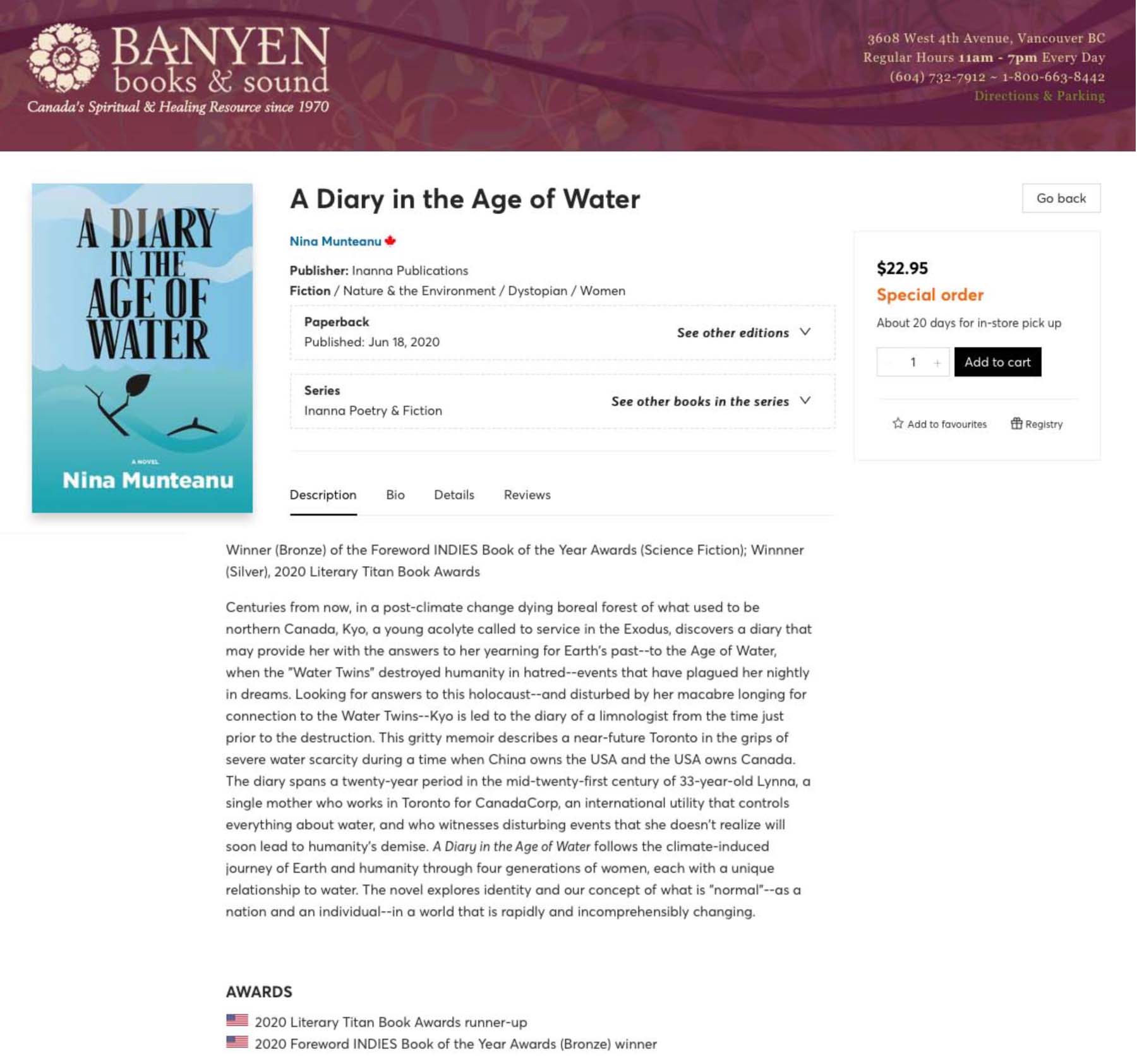
Nina Munteanu is a Canadian ecologist / limnologist and novelist. She is co-editor of Europa SF and currently teaches writing courses at George Brown College and the University of Toronto. Visit www.ninamunteanu.ca for the latest on her books. Nina’s bilingual “La natura dell’acqua / The Way of Water” was published by Mincione Edizioni in Rome. Her non-fiction book “Water Is…” by Pixl Press (Vancouver) was selected by Margaret Atwood in the New York Times ‘Year in Reading’ and was chosen as the 2017 Summer Read by Water Canada. Her novel “A Diary in the Age of Water” was released by Inanna Publications (Toronto) in June 2020.

This entry was posted in booksCanadaChoices for WaterClimate Changeeco-fictionecologyenvironmentSciencesustainabilityThe FutureWater Is and tagged arctic ice meltArctic OceanBen Rawlenceclathrate gun hypothesisClimate Changeeco-fictionecologyenvironmentGaia’s Revolutionglobal warmingice sheetsmelting permafrostmethanemethane clathratesmethane hydratespermafrostpermafrost thawrunaway climate changeScienceThe Treelinewater. Bookmark the permalinkEdit

Cymatics: How Frequency Changes the Very Nature of Matter and Energy

Water rain reeds4 Pb

Reeds in Otonabee River (photo by Nina Munteanu)

Music can help recover damaged brain function by activating parts of the brain that are nearby—Oliver Sacks

If, indeed God moves us to express that within us which is divine, then poetry is the language of the heart and music is the language of the soul—Nina Munteanu

We are creatures of rhythm; circadian, diurnal, seasonal. Let’s face it; our environment—light especially—affects our behavior, psychologically, physiologically and even socially. For instance, mood-altering chemicals generated in the pineal gland in our brain, are partially affected by the light received from our retina. In an earlier post, entitled “The Mozart Effect: The Power of Music” I discussed how music can heal the body, strengthen the mind and unlock the creative spirit. For instance, music with a pulse of about sixty beats per minute can shift consciousness from the beta wave (ordinary consciousness at 14-20 Hz) toward the alpha range (heightened awareness at 8-13 Hz), enhancing alertness and general well-being.

Our world is composed of energy, light, sound and matter, all expressed at different frequencies.

The study of cymatics, coined by Hans Jenny from the Greek word kyma (wave), explores how sound affects gases, liquids, plasmas and solids and how vibrations, in the broad sense, generate and influence patterns, shapes and moving processes. When sound travels through non-solids it moves in longitudinal waves called compression waves. In matter, the medium is displaced by sound waves, causing it to oscillate at a frequency relative to the sound, and visible patterns emerge.
Water rain reeds 10 Pb

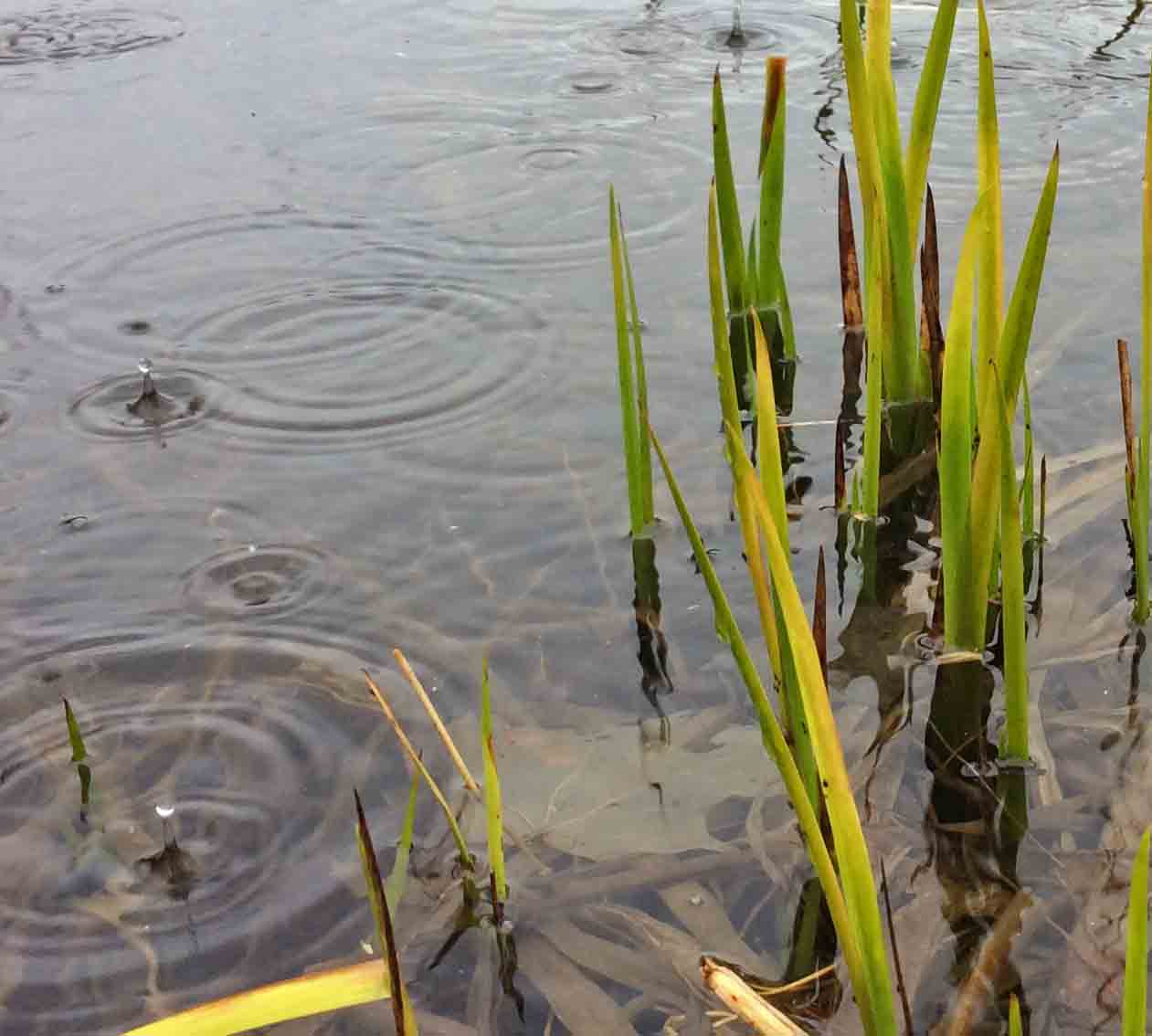
Water drops in rainfall on Otanabee River, ON (photo by Nina Munteanu)

Leonardo da Vinci, Galileo Galilei, Robert Hooke, and Ernst Chladni investigated this phenomenon in the 1400s, 1500s, 1700s, and 1800s, respectively. In 1967, Hans Jenny, a Swiss doctor, artist, and researcher, published Kymatik-Wellen und Schwingungen mit ihrer Struktur und Dynamik/ Cymatics (The Structure and Dynamics of Waves and Vibrations). Like Chladni two hundred years earlier, Jenny showed what happened when one took various materials like sand, spores, iron filings, water, and viscous substances, and placed them on vibrating metal plates and membranes. What then appeared were shapes and motion-patterns which varied from the nearly perfectly ordered and stationary to those that were turbulently developing, organic, and constantly in motion.

Using crystal oscillators and his invention called a “tonoscope” to set plates and membranes vibrating, Jenny controlled frequency and amplitude/volume to demonstrate that simple frequencies and songs could rearrange the essential molecular structure of water and other materials.
water rain reeds 9 Pb

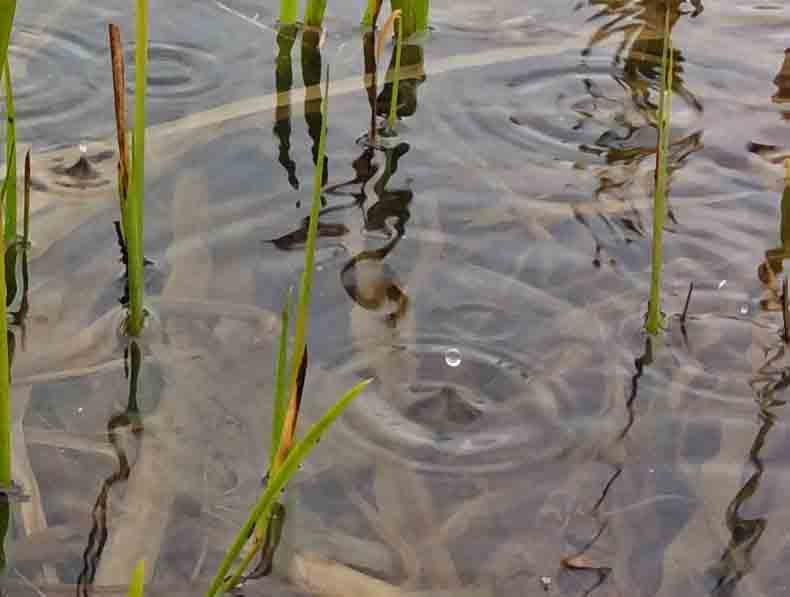
Raindrops falling among reeds in Otonabee River, ON (photo by Nina Munteanu)

Jenny was convinced that biological evolution was a result of vibrations, and that their nature determined the ultimate outcome. He speculated that every cell has its own frequency and that a number of cells with the same frequency create a new frequency which is harmonious with the original, which in its turn possibly formed an organ that also created a new frequency in harmony with the two preceding ones. Jenny was saying that the key to understanding how we can heal the body with the help of tones lies in our understanding of how different frequencies influence genes, cells and various structures in the body.

Boldly extended his tonoscope research into voice and language, Jenny discovered that when the vowels of ancient Hebrew and Sanskrit were pronounced, the sand took the shape of the written symbols for these vowels, while modern languages didn’t generate the same result. This has led spiritual philosophers to ponder if “sacred languages” (including Tibetan and Egyptian) have the power to influence and transform physical reality, to create things through their inherent power, or through the recitation or singing of sacred texts, to heal a person who has gone “out of tune”?

Cymatics photographer and author Alexander Lauterwasser showed that:

  • Higher frequencies created more intricate and complex patterns
  • Typical line types were radial and spherical or elliptical lines that repeated the outer form of the perimeter
  • When asymmetrical shapes developed at certain frequencies, symmetrical shapes always formed in between

In a controversial movie called “Water”, Rustum Roy, professor at the State University of Pennsylvania and Member of the International Academy of Sciences, suggested that water has “memory”, based on the structure it takes on as a result of electromagnetic fields and various frequencies to which it is exposed.

Water rain reeds 2

Rain falling among reeds in Otonabee River, ON (photo by Nina Munteanu)

I’m a practicing aquatic scientist and this is what I find fascinating: noting that the human brain is 75% water, it is not surprising that we can be affected by the shape and form of water itself—and, in turn, may shape water with our minds. This is in itself a startling admission and opens up a myriad of controversial topics, which many scientists find hard to reconcile and refuse to investigate, let alone entertain. And, yes, I am edging into the area of metaphysics, of “science fiction”, of “fanciful thinking”. A place populated by heretics who do “questionable science”, those rogue mavericks who dare step outside the realm of traditional science to imagine, to dare ask the unaskable, to dare pursue a truth using unconventional means.

Here’s my point: water is important to us in ways science can’t even begin to explain. Because science can’t yet explain it, should we abandon the potential and its investigation? All good science was once perceived as magic before it was understood.

Let me take it one step further:

I posit that our entire bodies are sending and receiving vibrations at different frequencies with our environment, other people, other animals around us, inanimate objects, even the seemingly ‘empty’ space. Our intimate relationship with frequency and waves has permeated our culture more than you may realize, including the metaphors we have seamlessly adopted in our common language: terms like “bad vibes”, “making waves”, “you can feel the tension”, and “you could cut the air in here with a knife”.
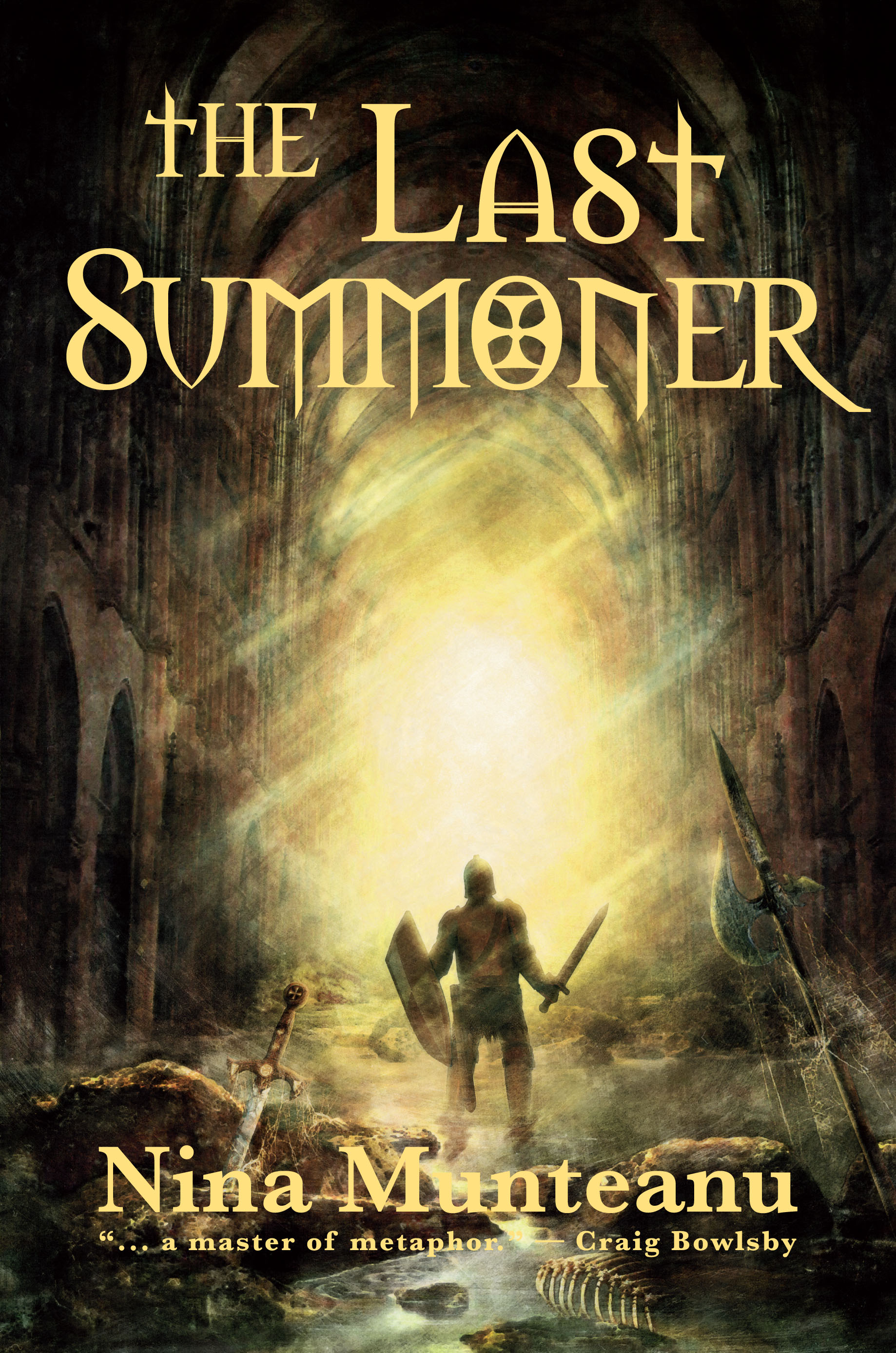
LastSummoner-coverIf you think this is all too weird, consider the weirdness of quantum mechanics, which shows us that not only is “solid” matter made up mostly of energy and “empty” space but what makes a solid a chair vs. you sitting on it is the vibration of its energy. Quantum science has demonstrated that light and matter are made of both particles and waves (New Scientist, May 6, 2010) and can exist in two simultaneous states. Let’s consider, for instance, “entanglement” (quantum non-local connection), the notion that particles can be linked in such a way that changing the quantum state of one instantaneously affects the other, even if they are light years apart. And what does it mean when solid flows, ghost-like, through itself under certain conditions? Or parallel universes created by splitting realities? Check out my historical fantasy novel The Last Summoner for a unique take on this popular notion.

Nobel prize-winning physicist Richard Feyman says of the paradoxes presented by quantum mechanics, “the ‘paradox’ is only a conflict between reality and your feeling of what reality ought to be.”

Magic, again… The mind is powerful and graceful in its unanswerable and infinite beauty.

Water rocks Otonabee R Pb

Near shore of Otonabee River early evening, ON (photo by Nina Munteanu)

nina-2014aaa

Nina Munteanu is a Canadian ecologist / limnologist and novelist. She is co-editor of Europa SF and currently teaches writing courses at George Brown College and the University of Toronto. Visit www.ninamunteanu.ca for the latest on her books. Nina’s bilingual “La natura dell’acqua / The Way of Water” was published by Mincione Edizioni in Rome. Her non-fiction book “Water Is…” by Pixl Press(Vancouver) was selected by Margaret Atwood in the New York Times ‘Year in Reading’ and was chosen as the 2017 Summer Read by Water Canada. Her novel “A Diary in the Age of Waterwas released by Inanna Publications (Toronto) in June 2020.
Nina Munteanu Interviewed in Canadian Romanian Newspaper “Observatorul”

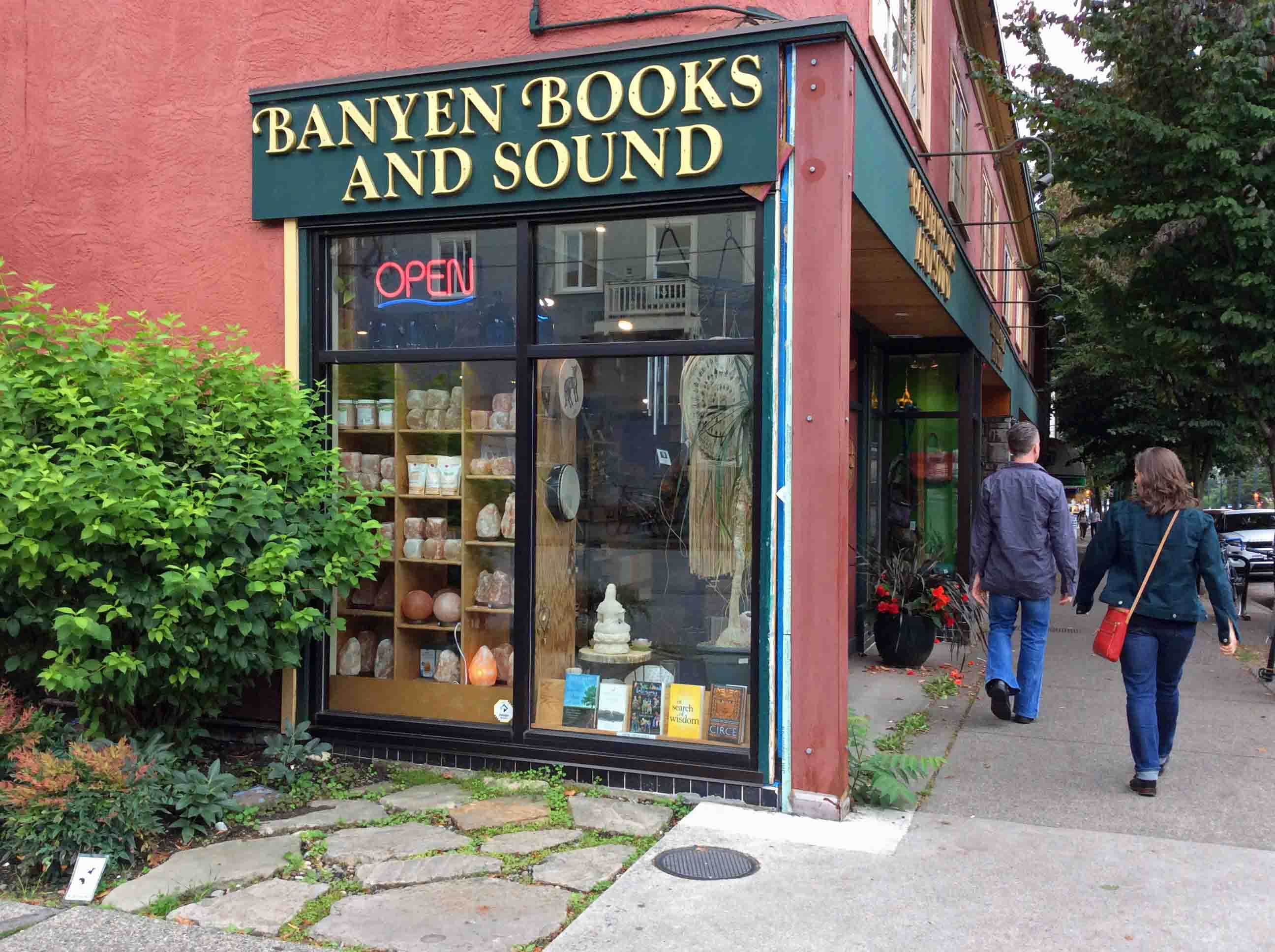
Claudiu Murgan (author of “Water Entanglement”) recently interviewed me in the Canadian Romanian newspaper Observatorul.

gaudeamus-book-fair-crowd copy

Gaudeamus Book Fair in Bucharest, Romania

nina-paralela45-gaudeamus-web copy

Nina Munteanu at Gaudeamus

In the interview, I talked about my involvement with the Toronto Romanian community through the Immigrant Writers Association and my visit several years ago to Bucharest Romania to launch my two writing guidebooks with Editura Paralela 45 at the Gaudeamus Book Fair at the Rome Expo Exhibition Centre:

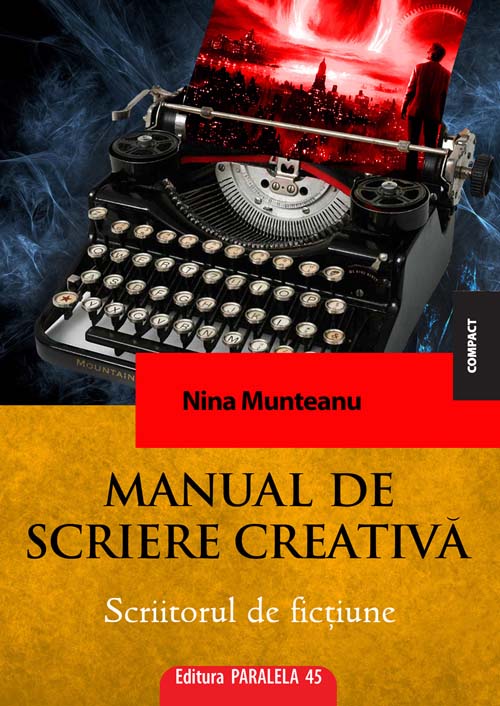
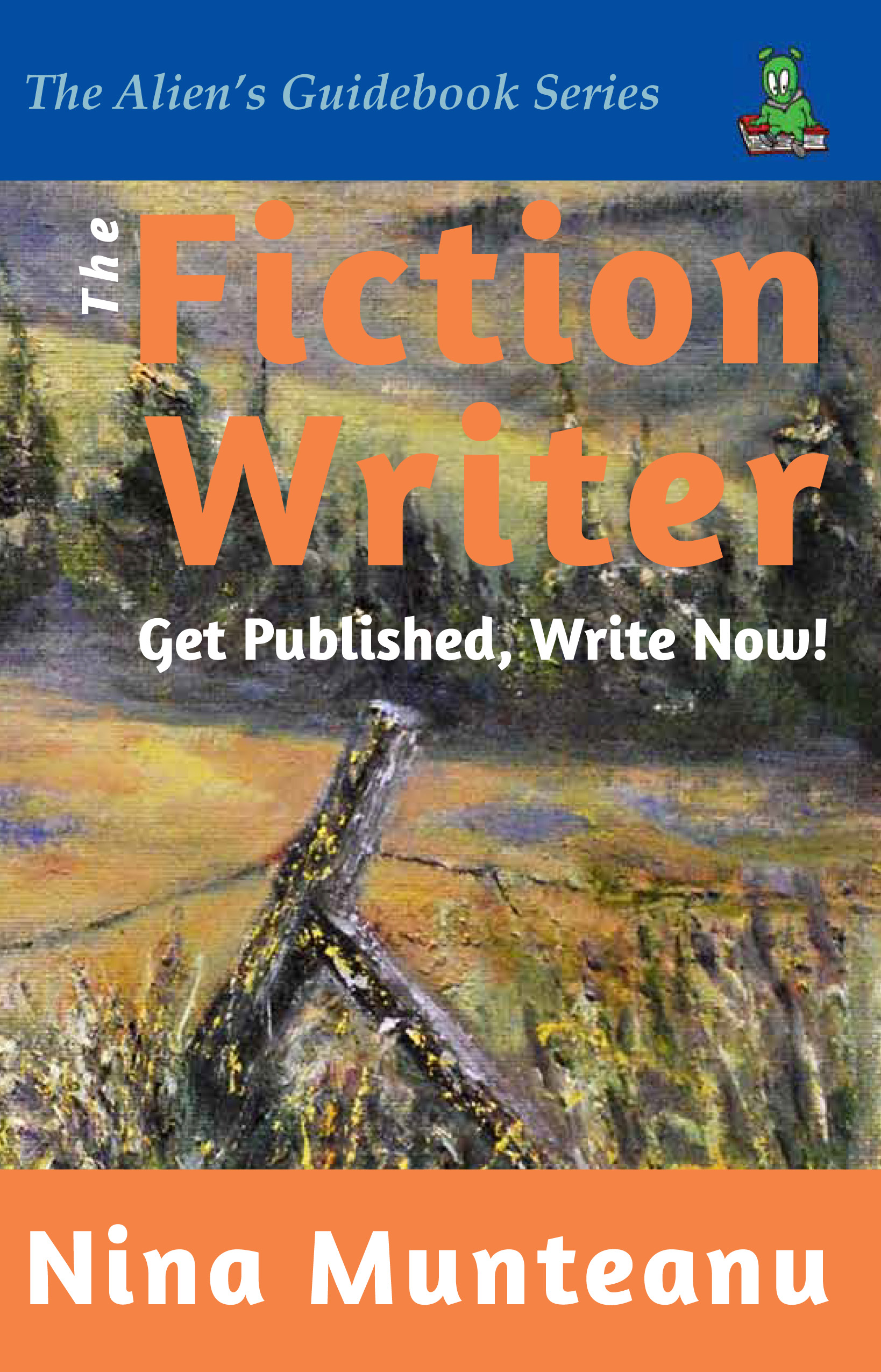
“In 2011 I attended the launch of my writing guide Manual de Scriere Creativa. Scriitorul de fictiune (The Fiction Writer) in Bucharest, hosted by Editura Paralela 45 at the Gaudeamus Book Fair. Dr. Florin Munteanu, respected scientist in Complexity Theory, kindly picked me up at the airport and took me to the Phoenicia Grand Hotel where we relaxed in the lounge and discussed fractal geometry and the Fibonacci Golden Ratio over café cremes. It was a very civilized introduction to this eclectic “city of joy” and I felt strangely at home.

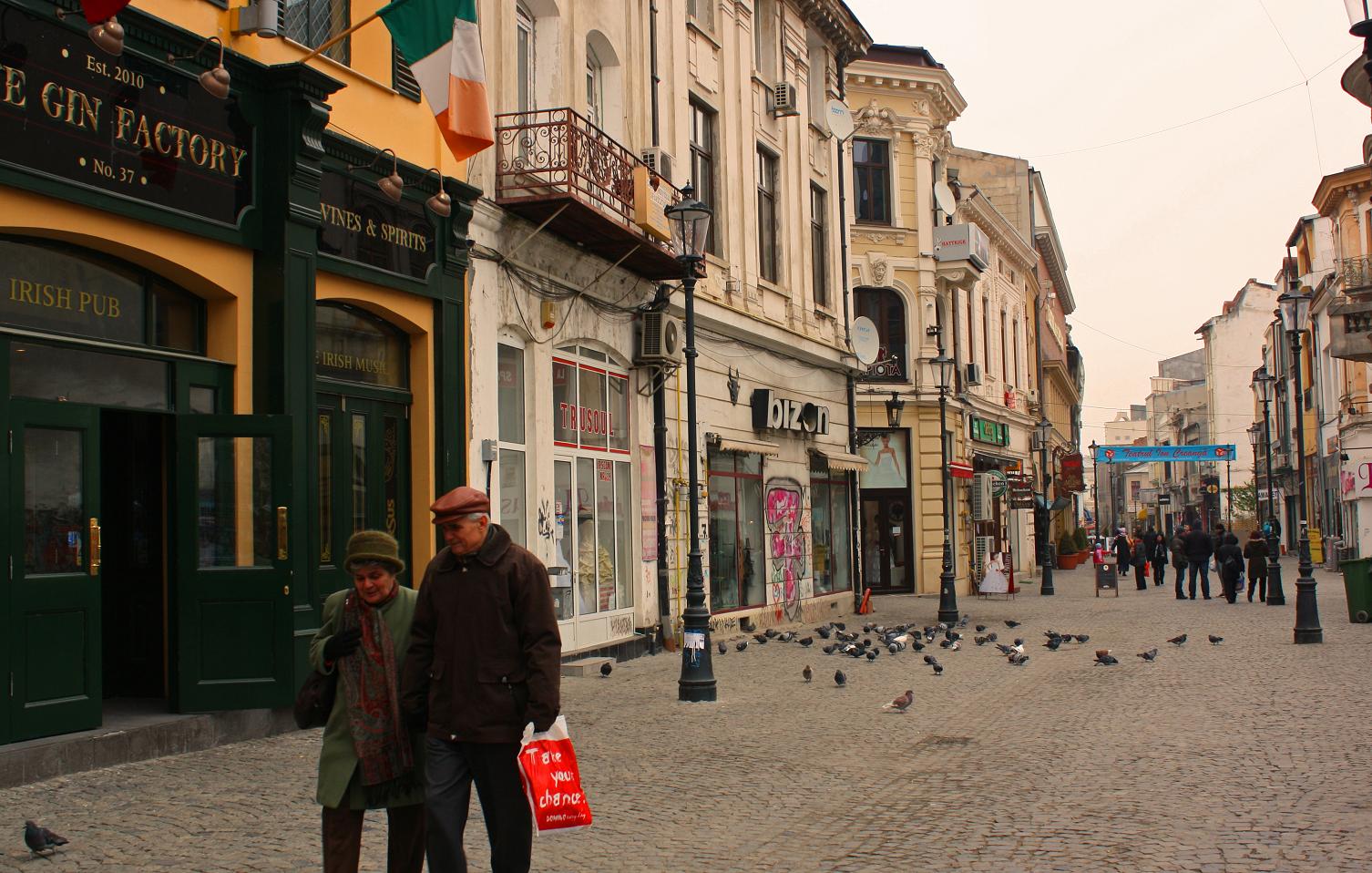
It was a wonderful experience, which included drinking copious amounts of Tuica with my publisher and touring the Lipscani District with George Kudor, a student of Florin’s. Florin calls Romania “the corpus callosum of the world” where east and west converge, mingle and learn. It’s no wonder that Romania is one of the leading countries in the world on complexity theory, a science that embraces the “collision” of different “worlds” to create more than the sum of its parts.”

scriitorul_de_fictiune_Munteanu_coperta1 copyFictionWriter-front cover-2nd ed-webThe Fiction Writer (Scriitorul de fictiune) was very well received by the Romanian writing community. Romanian poet and English instructor Lucia Gorea calls The Fiction Writer “the most practical book on publishing that I’ve ever read, and I’ve read them all!”


In the Observatorul interview, Claudiu asked me if I was pursuing other projects in Romania. I am currently corresponding with a Romanian distributor to get some of my other books translated and published in Romania. I also co-edit Europa SF, a European ezine on speculative fiction from around the world, with a focus on European science fiction, fantasy and horror.

The Way of Water-COVER copyI hope to collaborate more with colleague and friend Cristian Tamas, who introduced me to editor/publisher Francesco Verso (of Future Fiction) and Mincione Edizioni, who published my short story “The Way of Water.” I later developed “The Way of Water” in novel form and I anticipate its release next year.
I hope to do more with Dr. Florin Munteanu and Claudiu Murgan on projects to do with water—particularly on entanglement, intention, subtle energies and memory. I would be delighted if a Romanian publisher chose to translate my book “Water Is…The Meaning of Water” and publish it for Romanians.

OLYMPUS DIGITAL CAMERA

Gaudeamus Book Fair in Rome Expo Exhibition Centre, Bucharest

bucharest-old-downtown01-web copy

Lipscani District in Bucharest

nina-gaudeamus-close-web copy

Nina enjoying the book fair

nina-2014aaaNina Munteanu is an ecologist and internationally published author of award-nominated speculative novels, short stories and non-fiction. She is co-editor of Europa SF and currently teaches writing courses at George Brown College and the University of Toronto. Visit www.ninamunteanu.ca for the latest on her books. Nina’s recent book is the bilingual “La natura dell’acqua / The Way of Water” (Mincione Edizioni, Rome). Her latest “Water Is…” is currently an Amazon Bestseller and NY Times ‘year in reading’ choice of Margaret Atwood.