“A Diary in the Age of Water” Receives Literary Titan Award

Nina Munteanu’s cli-fi eco-novel “A Diary in the Age of Water” was awarded a Silver Literary Titan Award for a book that:

expertly delivers complex characters, intricate worlds, and thought provoking themes. The ease with which the story is told is a reflection of the author’s talent in exercising fluent, powerful, and appropriate language.”–Literary Titan

“A Diary in the Age of Water” received a 4-star review by Literary Titan:

While bringing attention to the current politicization of climate change, the story maintains important underlying themes like family, love, forgiveness, and the complexity of the human soul. The author has gone to great lengths to show that there are different layers to each character, none fully evil nor fully good. A Diary in the Age of Water is an exceptional and thought-provoking dystopian fiction.
—LITERARY TITAN (4-star)

Atlantykron Summer Academy—2020

Because of the COVID19 pandemic, The 31st annual summer academy for learning was held virtually this year by New Horizons (of the World Genesis Foundation and United Nations Educational, Scientific and Cultural Organization).

Because of this, I was finally able to participate. Virtually and all the way from Canada.

Atlantykron island

Atlantykron on the Danube

The international event is normally held on an island on the Danube River near the village and ancient Roman ruins of Capidava, Romania. First held in the summer of 1989, the event has attracted hundreds of youth and teachers from around the world to learn with scientists, artists, writers and other professionals in a wilderness setting.

Coordinated by Sorin Repanovici of the World Genesis Foundation and run by Dr. Florin Munteanu, Heather Caton-Anderson and Constantin D. Pavel, Atlantykron promotes UNESCO core goals of promoting sustainable development and creating dialogue and collaboration among nations in the areas of education, science, culture and communications.

Key presentations in the 2020 Atlantykron included:

  • “New Horizons of Animal-Human Relationships” by Chan Chow Wah in China
  • “Mars 2020 Mission Perseverance” by Ravi Prakash and Erisa K. Stilley in USA
  • “Planning and Scripting a Time-Lapse Movie” by Stan Jiman in USA
  • “Generating & Solving Crisis to Avoid Imbalance and Catastrophe” by Dr. Florin Colceag in Romania
  • “The Science and Meaning of Water” by Nina Munteanu in Canada
  • “Who’s Afraid of Autonomous Cars” by Pompilian Tofilescu in USA

Atlantykron pg2 copy

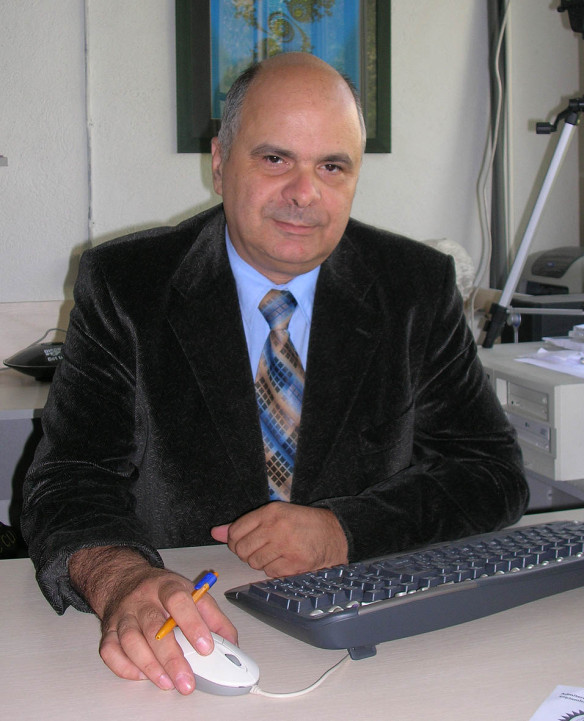
Florin Munteanu

Dr. Florin Munteanu

I’d met Florin Munteanu in 2012, when I went to Bucharest, Romania to participate in the launch of the Romanian translation of my book The Fiction Writer (Manual de Scriere Creativa: scriitorul de fictiune) with Editura Paralela 45 at the Gaudeamus Book Fair. Florin met me at the airport and took me to the Phoenicia Grand Hotel where I was staying. We had some coffee and pastries over a wonderful chat and he then coordinated a tour of the city for me with one of his students at the Centre of Complexity Studies where he taught.

When Florin invited me to speak at Atlantykron 2020, I was more than pleased.

Nina WaterIs book

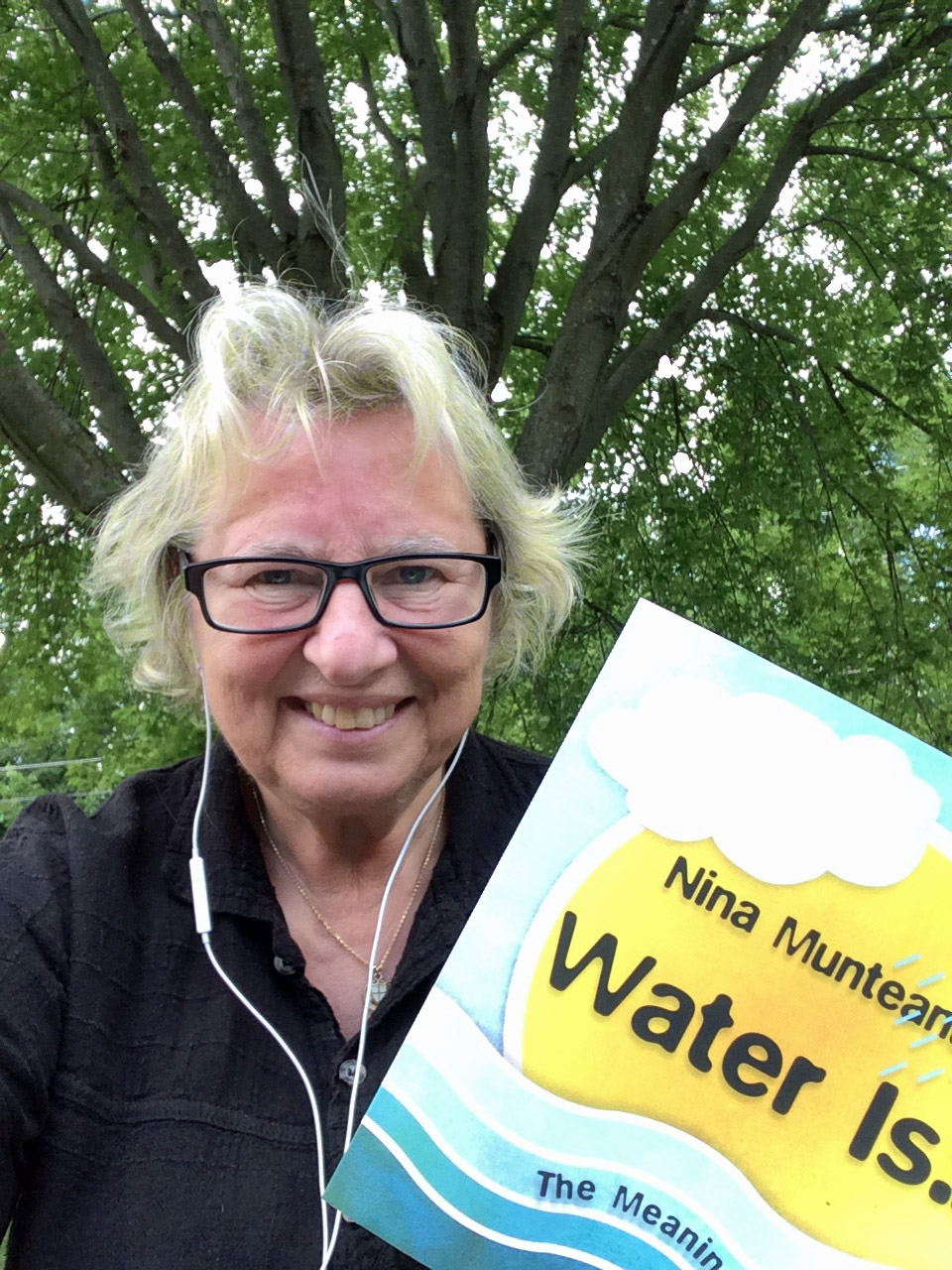
Nina with “Water Is…”

As a limnologist and with two major books on water published, I gave a talk on the science and meaning of water. Much of what I shared is in my book Water Is… The Meaning of Water, which provides 12 different angles on what water means—to different people from scientists and technologists to politicians, spiritualists and lay folk.

Water is so much more than the sum of its parts…

“Ultimately, water and our relationship with it is a curious gestalt of magic and paradox. Like the Suntelia Aion described by the Greeks, water cuts recursive patterns of creative destruction through the landscape, an ouroborous remembering. It changes, yet stays the same, shifting its face with the climate. It wanders the earth like a gypsy, stealing from where it is needed and giving whimsically where it isn’t wanted; aggressive yet yielding. Life-giving yet dangerous. Water is the well-spring of life. Yet it is the River Styx that leads the dead to Hades… Water is a shape shifter.”—Water Is…The Meaning of Water

Nina A Diary book

Nina with “A Diary in the Age of Water”

I overviewed some of water’s many anomalous qualities such as its unique density, cohesive, and adhesive properties—all life-giving. I discussed the water bridge, demonstrated by Dr. Elmar C. Fuchs and Professor Jakob Woisetchlager in 2007. I explored why water—particularly moving water—makes us feel so good (all those negative ions!). I went over the water cycle, water’s role in most natural cycles, and how it contributes to climate.

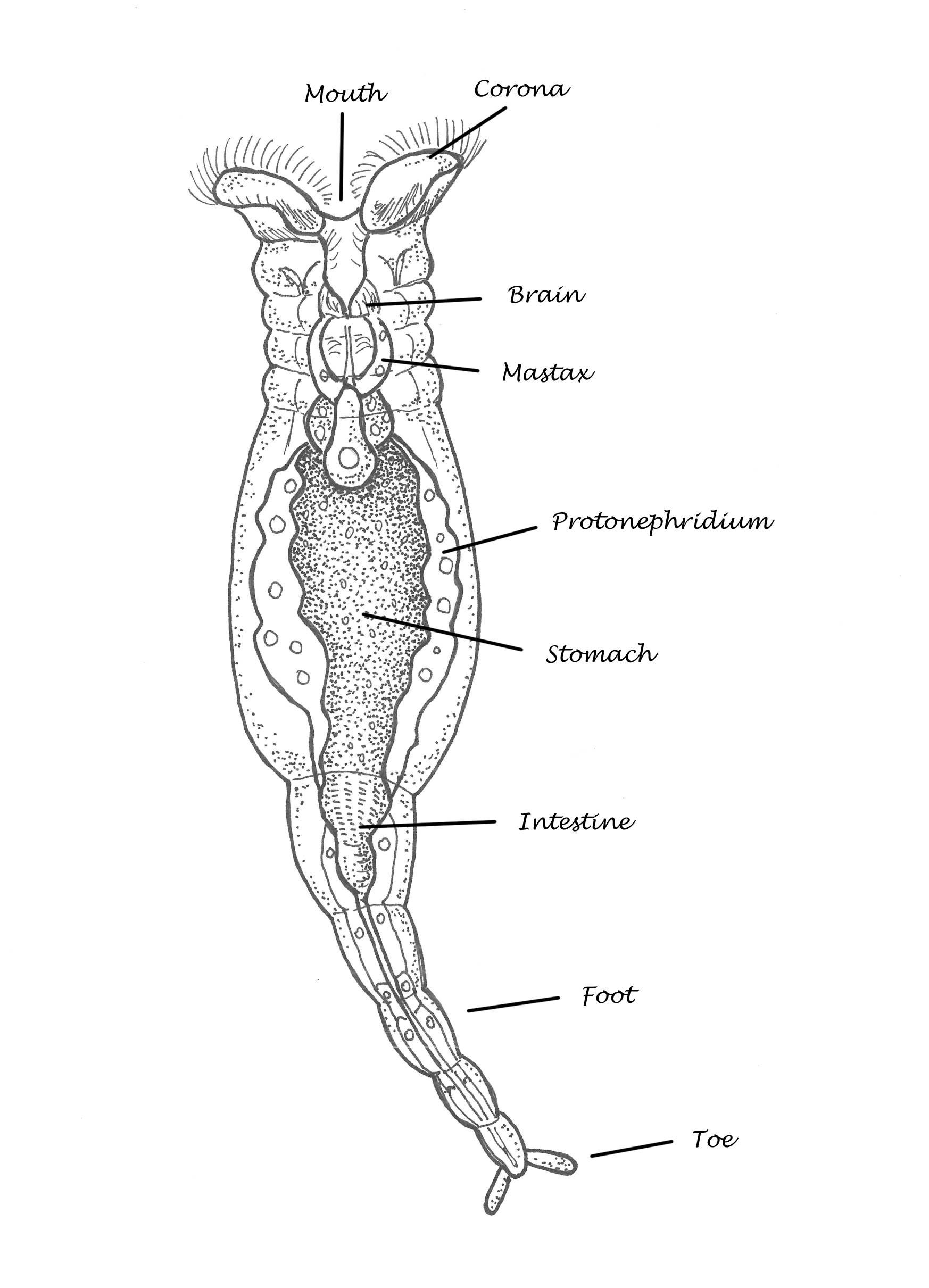
I then explored some of the oddest but most common tiny water residents. One example is the bdelloid rotifer—featured in my latest novel A Diary in the Age of Water—which is smaller than a millimeter, ubiquitous, lives wherever there is some water and can withstand desiccation, drying up into a dormant stage called a tun. Bdelloids create protective proteins, such as LEA, which act as a molecular shield.

Illustration 11 Rotifer copy 2

Sketch of a bdelloid rotifer (illustration by Nina Munteanu)

The bdelloid rotifer has existed for over forty million years. It reproduces through obligate parthenogenesis to produce all females, called thelytoky. Their long-term survival and evolutionary success in the absence of sex is largely a function of ecological adaptation that involves horizontal gene transfer through DNA repair. While they are patching up their broken genes from desiccation, they stitch in foreign DNA from the environment through horizontal gene transfer.

I ended the talk with some notes about conservation and stewardship of water. Using twelve-year old Rachel Parent and Greta Thunberg as examples, I stressed that no one is too young or too alone to make a difference; we then explored several activities that anyone could do.

Microsoft Word - What You Can Do.docx

Did you know slide

nina-2014aaa

Nina Munteanu is a Canadian ecologist / limnologist and novelist. She is co-editor of Europa SF and currently teaches writing courses at George Brown College and the University of Toronto. Visit www.ninamunteanu.ca for the latest on her books. Nina’s bilingual “La natura dell’acqua / The Way of Water” was published by Mincione Edizioni in Rome. Her non-fiction book “Water Is…” by Pixl Press(Vancouver) was selected by Margaret Atwood in the New York Times ‘Year in Reading’ and was chosen as the 2017 Summer Read by Water Canada. Her novel “A Diary in the Age of Waterwas released by Inanna Publications (Toronto) in June 2020.

Launch of “A Diary in the Age of Water” by Nina Munteanu

june 18 launch evite1

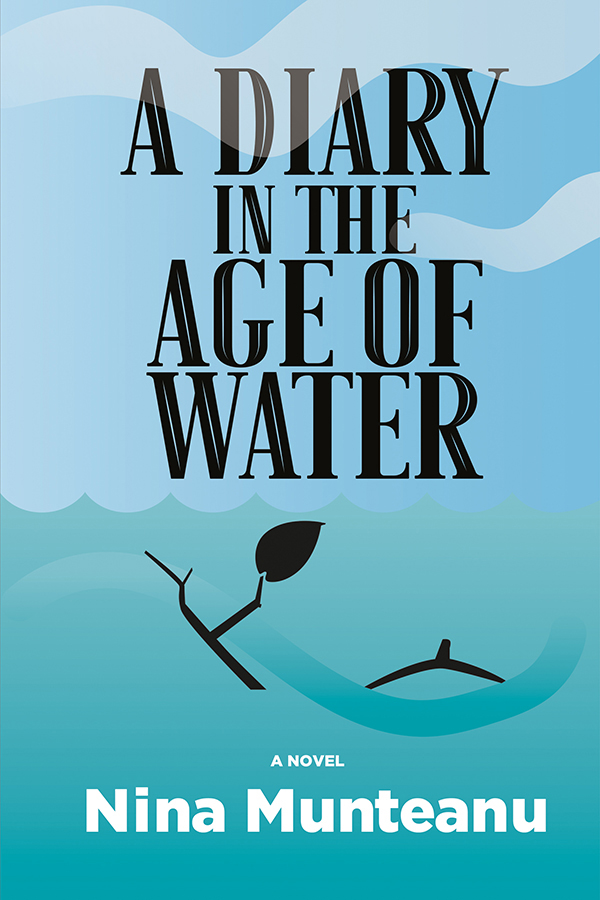
Diary Water cover finalOn June 18th, Toronto book publishing house Inanna Publications launched its second spring series and A Diary in the Age of Water, my near-future/far-future speculative fiction book was among them.

A Diary in the Age of Water follows the climate-induced journey of Earth and humanity through four generations of women, each with a unique relationship to water.

Evoking Ursula LeGuin’s unflinching humane and moral authority, Nina Munteanu takes us into the lives of four generations of women and their battles against a global giant that controls and manipulates Earth’s water. In a diary that entwines acute scientific observation with poignant personal reflection, Lynna’s story unfolds incrementally, like climate change itself. Particularly harrowing are the neighbourhood water betrayals, along with Lynna’s deliberately dehydrated appearance meant to deflect attention from her own clandestine water collection. Her estrangement from her beloved daughter, her “dark cascade” who embarks upon a deadly path of her own, is heartwrenching. Munteanu elegantly transports us between Lynna’s exuberant youth and her tormented present, between microcosm and macrocosm, linking her story and struggles – and those of her mother, daughter and granddaughter – to the life force manifest in water itself. In language both gritty and hauntingly poetic, Munteanu delivers an uncompromising warning of our future.

—Lynn Hutchinson Lee
 

NINA-RENEE-TOAST2a

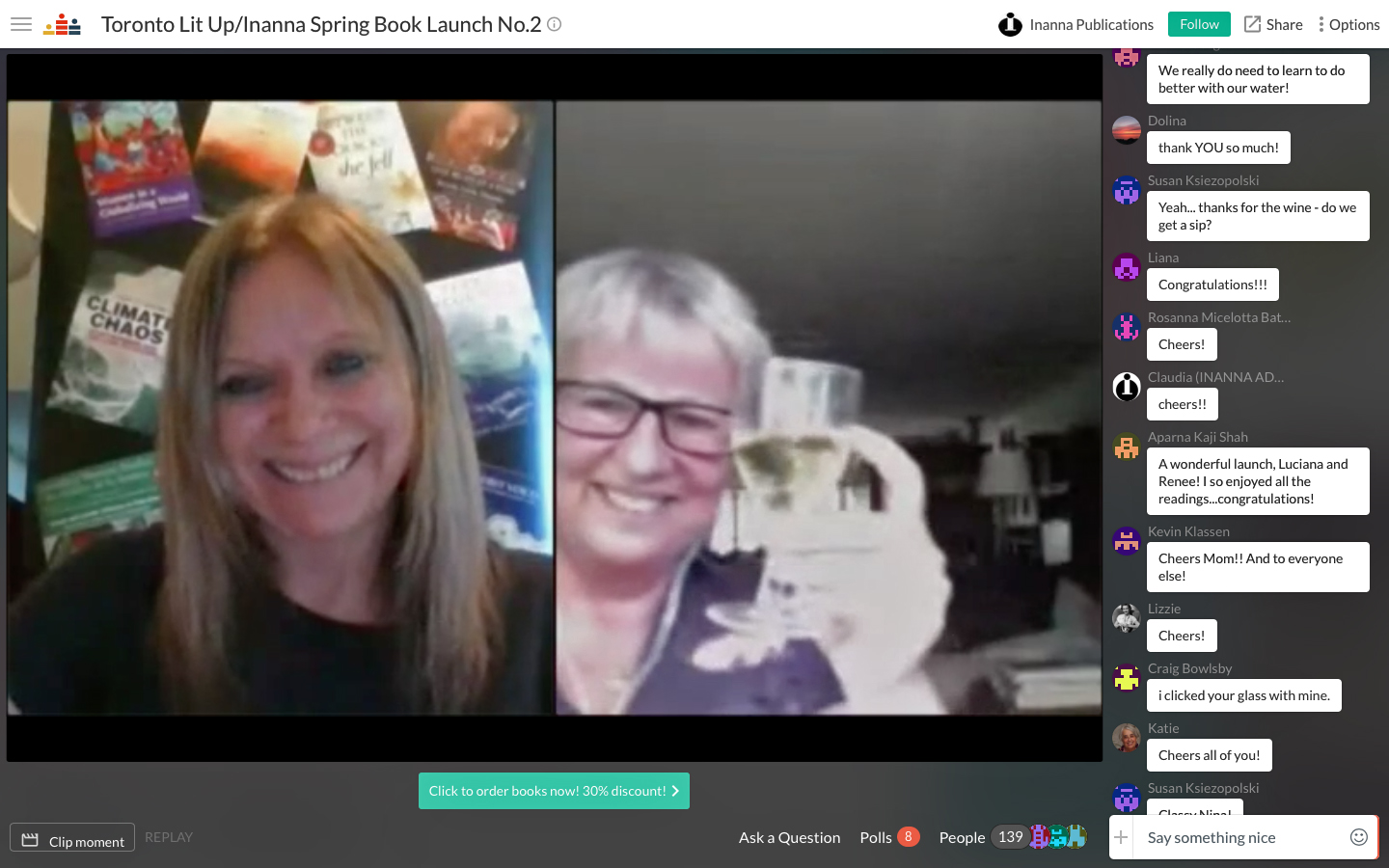
Renee Knapp and Nina Munteanu toast Inanna and all participants at the launch

A Diary in the Age of Water starts with young Kyo in the dying boreal forest of what used to be northern Canada. Kyo yearns inordinately for the Age of Water, a turbulent time of great change, before the “Water Twins” destroyed humanity. Looking for answers and plagued by vivid dreams of this holocaust, Kyo discovers the diary of Lynna, a limnologist from a time just prior to the destruction.

At the book launch, I read from Lynna’s first diary entry—in 2045. I then answered questions from audience members who came from Canada’s coast to coast:


What inspired you to write this book?
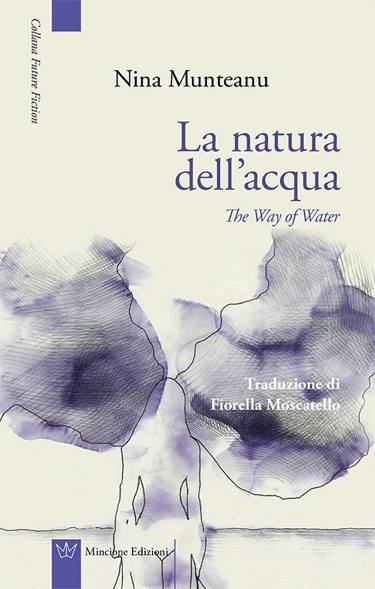
The Way of Water-COVERWho really… My publisher in Rome (Mincione Edizioni) had asked me for a short story on water and politics. I wanted to write about Canada and I wanted something ironic… so I chose water scarcity in Canada, a nation rich in water. “The Way of Water” (“La natura dell’acqua”) resulted, which has been reprinted in several magazines and anthologies, including Cli-Fi: Canadian Tales of Climate Change (Exile Editions), Future Fiction: New Dimensions in International Science Fiction (Future Fiction/Rosarium Publishing), Little Blue Marble Magazine, and Climate Crisis Anthology (Little Blue Marble). The story was about young Hilde—the daughter of the diarist—dying of thirst in Toronto… It begged for more … so the novel came from it…


Why did you choose to write your novel as a diary?

I was writing about both the far and the near future and much of it was based—like Margaret Atwood and her books—on real events and even real people. I wanted personal relevance to what’s going on, particularly with climate change.  I also wanted to achieve a gritty realism of the mundane and a diary felt right. The diarist—Lynna—is also a reclusive inexpressive character, so I thought a personal diary would help bring out her thoughts and feelings. There’s nothing like eves-dropping to make the mundane exciting.


If the oceans are rising because the ice caps are melting, is the ocean actually getting less salty?

The short answer is “yes.” As glaciers melt and introduce fresh water to the ocean—contributing to the rise in sea level—salinity is reduced in the surrounding sea. This has far-reaching consequences that lie beyond just rising sea levels and promise to affect all ocean life. Because freshwater is less dense than seawater—hence the saltwater wedge we experience on the lower Fraser River in Vancouver—freshwater increase in seawater will interfere with the pattern, mixing, and movement of ocean currents; this could be devastating to ocean life. The overall movement of ocean currents throughout the planet is called the Great Ocean Conveyor—or Atlantic Meridional Overturning Circulation (AMOC)—which circulates ocean water very much like in a lake, with dense water sinking beneath warmer, less salty water. As my diarist in the book writes, dumping in more and more freshwater into the ocean has slowed the sinking (and mixing) and the whole machine is slowing down. Freshwater is jamming the conveyor. If it stalls, this would unbalance the heat flux of the planet with more climate devastation.

Illustration 17 AMOC

Sketch of Atlantic Meridional Overturning Circulation (AMOC) from “A Diary in the Age of Water” Inanna Publications (sketch by Nina Munteanu)

The main protagonist is a limnologist; so are you; is there any resemblance?

Oh yes! Well, apart from the obvious—we both chose the same scientific discipline, we have similar views on the environment and humanity’s place in it. I might even have some of her foibles…hopefully not ALL of them… But, I’d say that all good characters have a piece of ourselves in them. Some dark and some light. The resemblance is heightened because she is depicted through her diary, which adds a gritty realism and a highly personal aspect to the fiction. In truth there’s a piece of me in each of the four women depicted in the story.


What is happening to the water in Ontario?

Water quality in Ontario waterways has not improved in the last decade and this can be placed squarely on the shoulders of local, regional and provincial governments and their failure to legislate and act. Inaction varies from lack of regulations and policing of industry to lack of city infrastructure and lack of ecological foresight.

SONY DSC

Cladophora alga in Lake Ontario

Lake Ontario itself receives pollution from Chicago, Sarnia, Detroit, Cleveland, Buffalo, Hamilton and Toronto. Pollution includes agricultural runoff (such as excess nutrients and cancer-causing pesticides and herbicides), disease-carrying sewage, and hormone-disrupting storm water runoff. Nine million people rely on the lake for drinking water. Greatest threats to the lake’s health come from urban development, electricity generation, sewage, and storm water contamination. In cities with large amounts of impervious surfaces, storm water runs over pavement and parking lots, picking up oil and other pollutants before flowing into a nearby river or stream. Flash floods are often accompanied by sewage overflow, which carries numerous pathogens. In addition, storm water picks up toxic heavy metals, endocrine disrupting chemicals and pharmaceuticals. All with devastating consequences to humans, never mind aquatic life and other wildlife.

Every five years the Conservation Authority Watershed Report Cards provide an assessment of ground and surface water quality in various watersheds of Ontario. The latest one by the TRCA (Toronto and Region Conservation Authority) in 2018 gave an overall grade of “D” (unchanged from 2013). They cited storm water runoff and lack of its management improvement as the chief reason for the poor grade. Increasing chloride concentrations in the Toronto region (mostly from liberal use of road salt) poses a real problem to aquatic life.
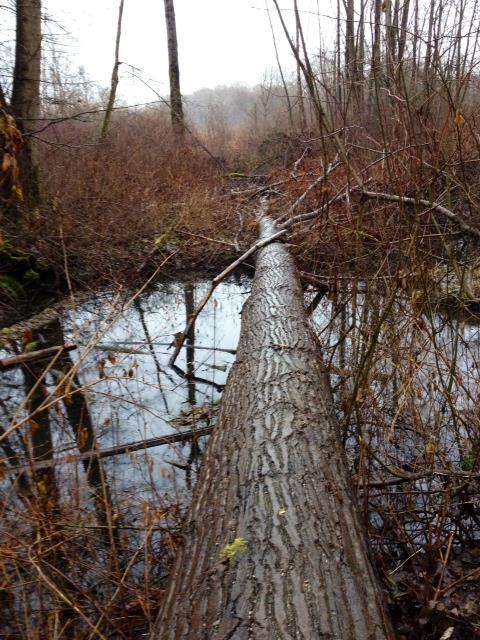
 

Log over water forest-DeasPark copy

Forest swamp in Deas Park, BC (photo by Nina Munteanu)

You mentioned that each of the four generations of women have a singular relationship with water. What role does water play in the book?

Well, in some important way, water is the fifth character. You could say even the main character. Water is the theme that carries each woman on her personal journey with climate change and the devastation that occurs—through water, I might add. Climate change is a water phenomenon, after all… So, water—like place and setting—plays a subtle yet powerful role in the story, influencing each character in her own way and bringing them together in the overall journey of humanity during a time of great and catastrophic change.


Are there other ages/epochs?

Yes. The story begins in the far future with young Kyo during the Age of Trees, after the end of the Age of Water. It is, in fact, the end of that age as well and that is why she prepares for the Exodus to “humanity’s” new home.

All Inanna titles are 30% off with coupon code: summer20. Please also consider purchasing “A Diary in the Age of Water” from an independent bookstore this summer. Find your local bookstore: http://open-book.ca/News/Your-Community-Your-Bookstore. And here is the current map of independent bookstores that are doing curbside pick up and delivery across Canada.


Beach stones foam HB-NS drybrush

Surf on Hirtle Beach, NS (photo and illustration by Nina Munteanu)

nina-2014aaa

Nina Munteanu is a Canadian ecologist / limnologist and novelist. She is co-editor of Europa SF and currently teaches writing courses at George Brown College and the University of Toronto. Visit www.ninamunteanu.ca for the latest on her books. Nina’s bilingual “La natura dell’acqua / The Way of Water” was published by Mincione Edizioni in Rome. Her non-fiction book “Water Is…” by Pixl Press(Vancouver) was selected by Margaret Atwood in the New York Times‘Year in Reading’ and was chosen as the 2017 Summer Read by Water Canada. Her novel “A Diary in the Age of Waterwas released by Inanna Publications (Toronto) in June 2020.


Petrichor—The Smell of Rain…

Diary Water cover finalIn my novel A Diary in the Age of Water, the diarist, Lynna Dresden, writes in her entry for September 9, 2048:

Petrichor: A pleasant smell that frequently accompanies the first rain after a long period of warm, dry weather. The rain helps release plant oils into the air and chemicals produced by soil-dwelling bacteria called actinomycetes. The term arose from the Greek petra (“stone”) and ichor, the fluid that flows in the veins of the gods.

I know that musty, barky aroma of fresh rain on the dry earth. I know it well. It was the scent in the air when I gave birth to Hildegard seven years ago. She was born on the first rain in forty days. It wouldn’t rain for another forty.

Despite the nurses at the hospital discouraging me, I took my baby girl outside and let the fresh rain spatter our faces and soak us through. Little Hilde loved it. She cooed and watched with the awe of innocence. She’s still so innocent and still loves water.

She’s in Grade Two now and doesn’t comprehend that it isn’t God who controls the weather and the rain; it’s CanadaCorp.

raindrops creek03

Raindrops in a creek, ON (photo by Nina Munteanu)

Rich Hardy of New Atlas adds that a recent study in Nature Microbiology demonstrates that the bacteria evolved to release this chemical to attract a particular arthropod as a way to spread their spores. “The smell is a 500-million-year-old example of chemical communication, evolved to help a particular type of bacteria spread,” writes Hardy.

The term petrichor was created by Isabel Joy Bear and Richard G. Thomas, two Australian researchers after an article in Nature, in which authors described how the smell originates from an oil produced by plants during dry periods. The oil is released into the air along with geosmin, a metabolic by-product of certain actinobacteria when it rains.

One major component of petrichor is an organic compound called geosmin. Scientists already knew that a common genus of bacteria, known as Streptomyces, produce geosmin. Virtually all species of Streptomyces release geosmin when they die; but until now it was unclear why they generated this distinctive scent.

“The fact that they all make geosmin suggested that it confers a selective advantage on the bacteria, otherwise they wouldn’t do it,” says Mark Buttner, one of the researchers. “We suspected they were signaling to something and the most obvious thing would be some animal or insect that might help distribute the Streptomyces spores.”

Researchers discovered that geosmin specifically attracts springtails—a type of tiny arthropod—that use their antennae to sense chemical. The Streptomyces serve as food for the springtails; the springtails in turn help spread the bacterial spores. This suggests that the two organisms co-evolved in a symbiotic relationship. “This is analogous to birds eating the fruits of plants; they get food but they also distribute the seeds, which benefits the plants,” said Buttner.

Streptomyces—one of the most important sources of antibiotics to humans—relies on the springtail, given that its antibiotic compounds make it toxic to other potential distributors such as fruit flies or nematodes. Springtails generate a number of enzymes that can detoxify the antibiotics produced by Streptomyces. This suggests a form of aggressive symbiosis in a co-evolution between these two organisms—an interaction that is more common in Nature than previously thought.

The earthy scent of rain on dry soil evokes wonderful memories of playful childhood, freedom and awestruck wonder. Why not? Petrichor is, after all, the fluid that flows in the veins of the gods…

EcologyOfStoryFor more on “ecology” and a good summary and description of environmental factors like aggressive symbiosis, co-evolution, and other ecological relationships, read my book “The Ecology of Story: World as Character” (Pixl Press, 2019).


Glossary of Terms: 

Aggressive Symbiosis: a common form of symbiosis where one or both symbiotic partners demonstrates an aggressive and potentially harmful effect on the other’s competitor or potential predator (Ryan, 1997). 

Co-evolution: when two or more species reciprocally affect each other’s evolution through the process of natural selection and other processes. 

Petrichor: A pleasant smell that frequently accompanies the first rain after a long period of warm, dry weather. The rain helps release plant oils into the air and chemicals produced by soil-dwelling bacteria called actinomycetes. The term arose from the Greek petra (“stone”) and ichor, the fluid that flows in the veins of the gods. 

Symbiosis: Greek for “companionship” describes a close and long term interaction between two organisms that may be beneficial (mutualism), beneficial to one with no effect on the other (commensalism), or beneficial to one at the expense of the other (parasitism). (Munteanu, 2019).


References:

Frazer, Jennifer. 2015. “Root Fungi Can Turn Pine Trees Into Carnivores—or at Least Accomplices.” Scientific American, May 12, 2015. Online: https://blogs. scientificamerican.com/artful-amoeba/root-fungi-can-turn-pine-trees-into- carnivores-8212-or-at-least-accomplices/

Hardy, Rich. 2020. “The 500-million-year-old reason behind the unique scent of rain” New Atlas.

Munteanu, N. 2019. “The Ecology of Story: World as Character.” Pixl Press, Vancouver, BC. 198pp. (Section 2.7 Evolutionary Strategies)

Munteanu, N. 2020. “A Diary in the Age of Water.” Inanna Publications, Toronto. 300pp.


nina-2014aaa

Nina Munteanu is a Canadian ecologist / limnologist and novelist. She is co-editor of Europa SF and currently teaches writing courses at George Brown College and the University of Toronto. Visit www.ninamunteanu.ca for the latest on her books. Nina’s bilingual “La natura dell’acqua / The Way of Water” was published by Mincione Edizioni in Rome. Her non-fiction book “Water Is…” by Pixl Press (Vancouver) was selected by Margaret Atwood in the New York Times ‘Year in Reading’ and was chosen as the 2017 Summer Read by Water Canada. Her novel “A Diary in the Age of Waterwill be released by Inanna Publications (Toronto) in June 2020.


Age of Water Podcast: Nina Reads from “Water Is…”

AoW Logo-smallWe are now living in the Age of Water. Water is the new “gold”, with individuals, corporations and countries positioning themselves around this precious resource. Water is changing everything. The Age of Water Podcast covers anything of interest from breaking environmental news to evergreen material. This also includes human interest stories, readings of eco-literature, discussion of film and other media productions of interest.

In this episode of Age of Water, Nina reads from her book “Water Is…The Meaning of Water”, a celebration of the varied faces of water and what they mean to us.


Water is emerging as one of the single most important resources of Planet Earth. Already scarce in some areas, it has become the new “gold” to be bought, traded, coveted, cherished, hoarded, and abused worldwide. It is currently traded on the Stock Exchange…

Water Is-COVER-webNina Munteanu’s Water Is…”represents the culmination of over twenty-five years of dedication as limnologist and aquatic ecologist in the study of water. As a research scientist and environmental consultant, Nina studied water’s role in energizing and maintaining the biomes, ecosystems, and communities of our precious planet.

During her consulting career for industry and government, Nina discovered a great disparity between humanity’s use, appreciation and understanding of water. This set in motion a quest to further explore our most incredible yet largely misunderstood and undervalued substance. Part history, part science and part philosophy and spirituality, Water Is…” combines personal journey with scientific discovery that explores water’s many “identities” and ultimately our own.


DS-2008-16 copy

Nina Munteanu kayaks in Desolation Sound off coast of British Columbia (photo by H. Klassen)

nina-2014aaa

Nina Munteanu is a Canadian ecologist / limnologist and novelist. She is co-editor of Europa SF and currently teaches writing courses at George Brown College and the University of Toronto. Visit www.ninamunteanu.ca for the latest on her books. Nina’s bilingual “La natura dell’acqua / The Way of Water” was published by Mincione Edizioni in Rome. Her non-fiction book “Water Is…” by Pixl Press (Vancouver) was selected by Margaret Atwood in the New York Times ‘Year in Reading’ and was chosen as the 2017 Summer Read by Water Canada. Her novel “A Diary in the Age of Waterwill be released by Inanna Publications (Toronto) in June 2020.

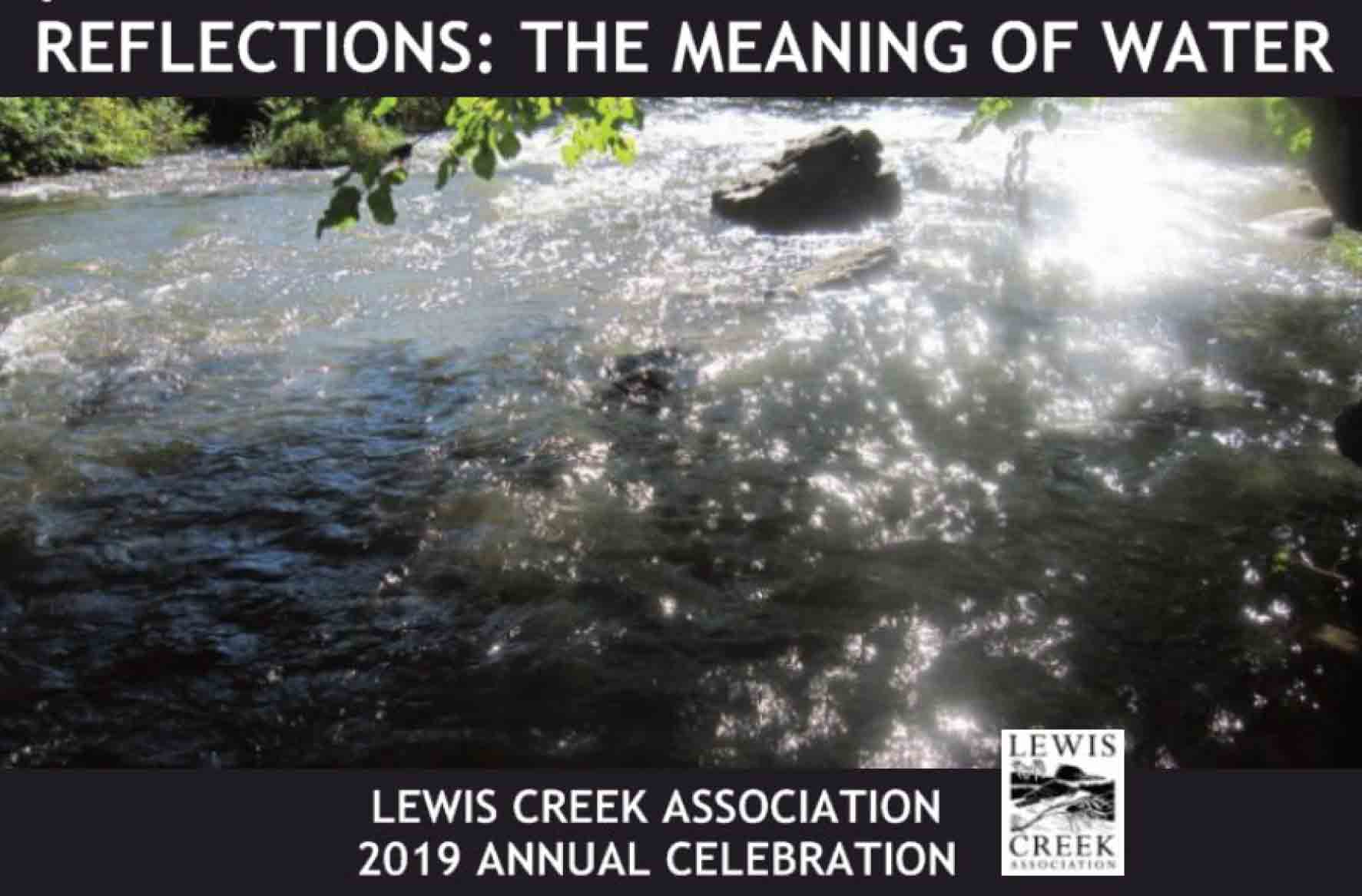
Reflections: The Meaning of Water (a talk for the Lewis Creek Association)

Nina Louis Merridy

Nina Munteanu with Louis DuPont and Merridy Cox with Lewis Creek behind

A short time ago, I was invited to give a talk on water to the Lewis Creek Association during their annual meeting for 2019 to help celebrate their recent accomplishments. Here is their write up:

Join our special guest, Canadian ecologist and author Nina Munteanu, who will discuss the many dimensions of water. She describes personally the curiosity and emotional connection with nature that compels us to caretake our environment with love versus a sense of duty. Her book “Water Is…The Meaning of Water” is an ode to and discourse about water, the indispensable and mysterious element that is the foundation of life here on our blue planet. The book is a fascinating catalogue of the many amazing and anomalous qualities of water, and has become a favorite of several Board members. She trained in limnology, the study of lakes, and has consulted in the aquatic sciences for many years. The author of over a dozen fiction and non-fiction books, she currently teaches writing at the University of Toronto and George Brown College in Toronto, Canada. We are delighted to have Nina join us and share her insights and concerns about this substance we have been concerned with over the last 30 or so years.

Microsoft Word - Nina map Barrio cafe.docx

At Cafe Barrio in Burlington, Vermont, Nina checks the map for directions…and finds her way…

I chose to drive to Vermont from Toronto with good friend and editor Merridy Cox. We crossed into USA near Cornwall and drove through New York state to Rousse’s Point, then into Vermont over the Vermont Bridge over Lake Champlain. We took the scenic route along the islands to the village of Charlotte, where we met with some of the Lewis Creek Board members and enjoyed a wonderful home-cooked supper at executive director Marty Illick’s country home along with Board president Andrea Morgante, board member Louis DuPont, and several other guests.

Merridy-LakeChamplain marsh

Merridy Cox photographing Lake Champlain just east of the Vermont Bridge

The event took place in the large converted barn of Philo Ridge Farm, a 400-acre historic dairy farm now also running as an educational institution of sustainable practices and store and restaurant. The barn is now a state-of-the-art sustainably built facility with a combination of rustic and sophisticated in its design of rich wood walls, large windows and beams with high vaulted ceiling; ideal for a presentation.

I spoke about my roots in the Eastern Townships of Quebec…and where they led me:

I was born in a small town in the Eastern Townships of Quebec, a gently rolling and verdant farming community, where water—l’eau—bubbles and gurgles in at least two languages.

I spent a lot of my childhood days close to the ground, observing, poking, catching, prodding, destroying and creating. Perhaps it was this early induction to the organic fragrances of soil, rotting leaves and moss that set my path in later life as a limnologist, environmental consultant and writer of eco-fiction.

Nina EasternTownships

I followed my older brother and sister to the nearby forest and local stream. We stirred soil, flower petals and other interesting things with water to fuel “magic potions” that we inflicted on some poor insect. Yes, I was a bit destructive as a child—and I took a lot for granted. Like water. There was so much of it, after all. It was clean and easily accessed, fresh from the tap.

When I gave birth to my son, Kevin, I felt a miracle pass through me. Kevin became my doorway back to wonder. His curiosity was boundless and lured me into a special world of transformation.

Nina-Kevin playing

Nina Munteanu and her son hiking in B.C.

I took time off work to spend with Kevin when he was young. We went on great trips, from the local mall, where we had a hot chocolate and played with Lego, to the local beach on the Fraser River, where we explored the rocks. When he was no more than three, I took him on endless adventures in the city and its surroundings. We didn’t have to go far. The mud puddles of a new subdivision after a rain were enough to keep our attention for dozens of minutes. We became connoisseurs of mud. The best kind was “chocolate mud,” with a consistency and viscosity that created the best crater when a rock was thrown into it.

Kevin and I often explored the little woodland near our house. We made “magic potions” out of nightshade flowers, fir needles, loam and moss; we fueled our concoctions with the elixir of water from a stagnant pool. This time the little insects weren’t molested.

Travelling the world has helped me realize that I was blessed with an abundance of water. I lived my entire life in a country of plentiful and healthy water. And for most of that time I didn’t even realize it. Canada holds one fifth of the world’s fresh water in lakes, rivers, and wetlands, as well as in our underground aquifers and glaciers. Canada’s wetlands, which cover more than 1.2 million square kilometres, makes Canada the largest wetland area in the world.*

The folks who attended my presentation were wonderfully receptive, gracious and kind. They bought all my books too! I felt so welcomed by this community concerned about the land and their water. I was also impressed with the dedication, organization and knowledge of this non-profit conservation initiative.

Presentation venue

Venue

Lewis Creek Association

The Lewis Creek Association (LCA) started in 1990, when a group of concerned citizens and the Hinesburg Land Trust came together to conserve a critical stretch of wetland habitat bordering Lewis Creek in Hinesburg, Vermont. Lewis Creek is one of Vermont’s most ecologically diverse streams and suffers from increasing habitat degradation due to river encroachment by development and roads, land use change, and more extreme weather events.

LCA’s mission is to protect, maintain and restore ecological health while promoting social values that support sustainable community development in the Lewis Creek and LaPlatte watershed regions and Vermont generally. Through education and action, LCA works to:

  • Restore water quality, stream stability, and native wildlife habitat
  • Protect and restore important and diverse natural areas
  • Conserve productive and scenic lands that contribute to rural character and economy
  • Support growth compatible with important natural systems and working landscapes
  • Strengthen and support local conservation initiatives and opportunities
  • Model active participation and respect for differences

With a hard-working volunteer board and a part-time paid consultant, LCA facilitates educational, planning, and field work programs involving dozens of volunteers. This work assists town planning and facilitates the restoration and conservation of important Champlain Valley natural areas of high public value.

LCA Annual Party 2019

Their track record has been impressive. Since forming their organization, the LCA has spearheaded and conducted numerous initiatives. Highlights include: annual water quality sampling in six streams and rivers; biodiversity studies of stream corridors, conservation and restoration work in watershed towns; invasive aquatic plant control in local areas; helped educate citizens on ecological improvements; actively participated in implementing VT’s Water Quality Law, Act 64; generated Water Quality Scorecard Maps to track pollution problems; and designed the “Ahead of the Storm” education program used throughout the watershed region.

LakeChamplainBasin

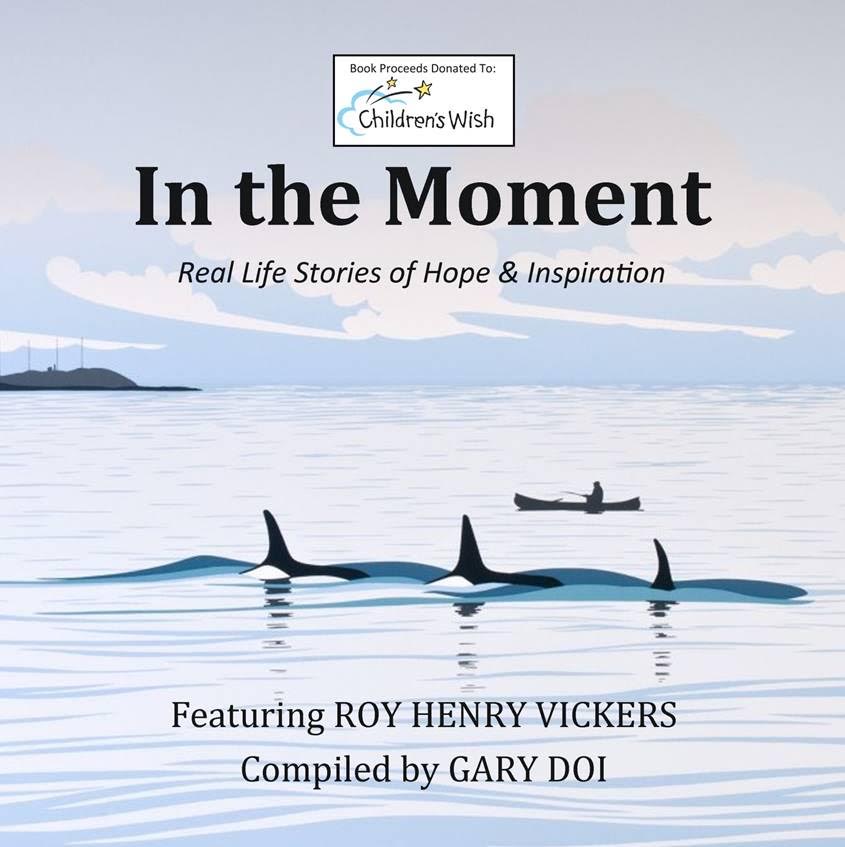
In the Moment-anthology copy*A version of this talk is available in an article I wrote called “Coming Home to Water,” which first appeared in the 2016 anthology In the Moment (A Hopeful Sign) edited by Gary Doi. It was reprinted in 2018 The Earth We Love (Mississauga Writers) edited by Elizabeth Banfalvi; and again in 2019 in The Literary Connection IV: Then and Now (IOWI) edited by Cheryl Antao Xavier.
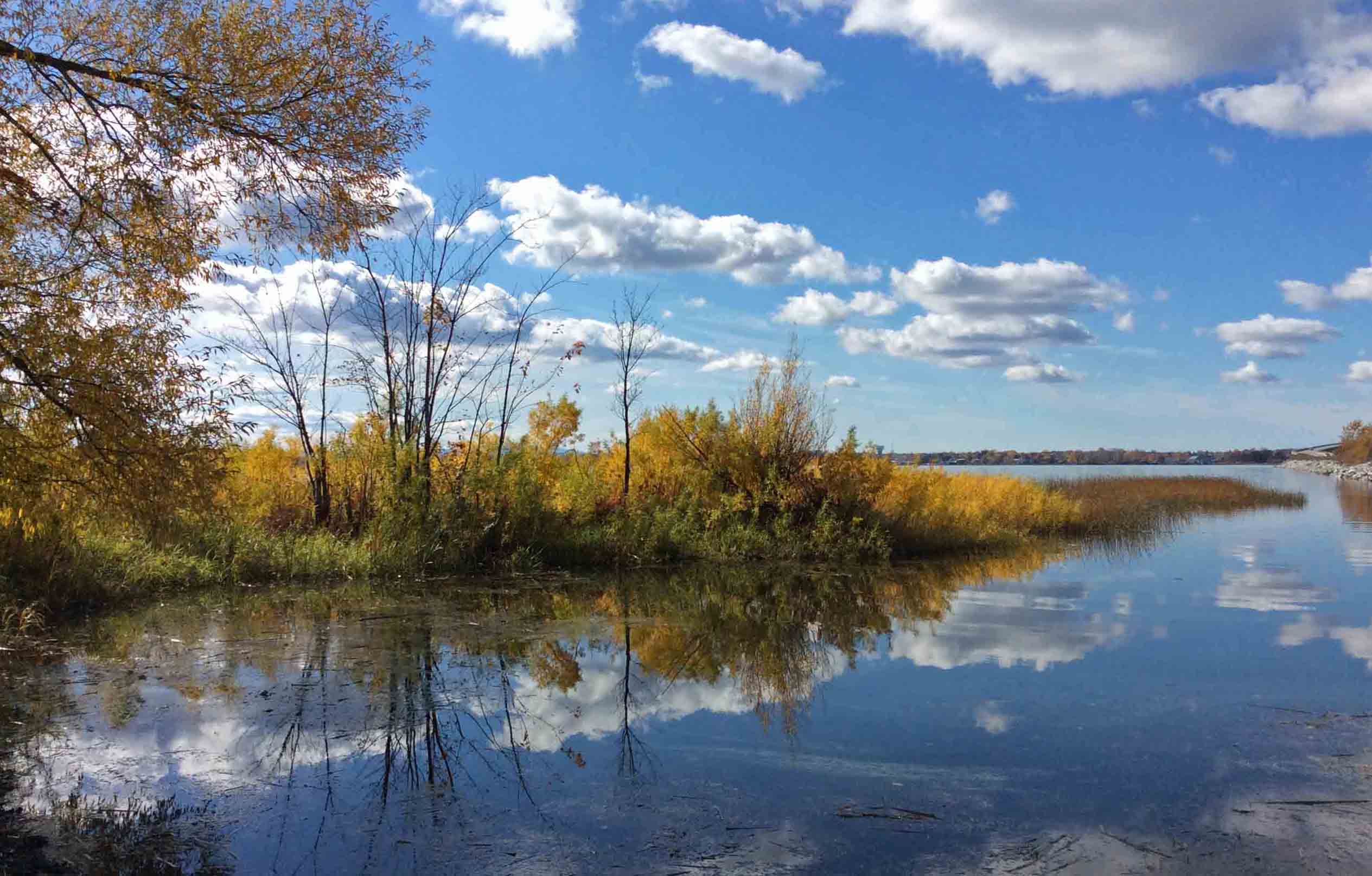


LakeChamplain-VT-NY bridge

Lake Champlain, looking west from Vermont to New York at Vermont Bridge (right) (photo by Nina Munteanu)


nina-2014aaa

Nina Munteanu is a Canadian ecologist / limnologist and novelist. She is co-editor of Europa SF and currently teaches writing courses at George Brown College and the University of Toronto. Visit www.ninamunteanu.ca for the latest on her books. Nina’s bilingual “La natura dell’acqua / The Way of Water” was published by Mincione Edizioni in Rome. Her non-fiction book “Water Is…” by Pixl Press (Vancouver) was selected by Margaret Atwood in the New York Times ‘Year in Reading’ and was chosen as the 2017 Summer Read by Water Canada. Her novel “A Diary in the Age of Water” will be released by Inanna Publications (Toronto) in 2020.

Coming Home to Water at Stir Coffee House

Nina-LadnerPier copy

Nina on Ladner pier

For several years I’ve been returning from Toronto—where I teach at The University of Toronto and George Brown College—to Ladner, BC to spend my summers.

I cherish the time as a chance to see family and friends and to enjoy a different pace of life—one I enjoyed when I used to live and work here and where I brought up my family. We lived in a comfortable house on a quiet street and our back yard faced one of Ladner’s sloughs and beyond that a vast tract of farmland, most often scored with rows of potato plants. My son Kevin had grown up swimming in the slough and jumping off the rope swing his dad had constructed. Pilgrims from close and far came to use that swing and enjoy the murky waters of our back slough.

Rope swing copy

Kevin on the rope swing

Parties at our place always involved water and getting wet. We even had a fleet of kayaks and canoes that we took on paddling adventures through farmland and under highways, with the occasional siting of muskrat, carp, heron, or eagle. Coyotes whined and barked at night as bats dipped through the night air, foraging for food. My female cat poised for the hunt and sometimes brought in her “catch of the day.”

Cathleen-Nina-Ladner1 copy

Cathleen and Nina at Stir

This summer, good friend and writer Cathleen Chance Vecchiato decided I should give a talk to my old community on Water Is… my recent bestselling book on water. With that, she immediately made it happen. The venue was already decided: the best café in Ladner, Stir Coffee House. I’d taken Cathleen there the previous year as part of a tour of the old farming and fishing village. Cathleen was charmed by the village atmosphere.

Stir Coffee House was happy to host a talk and Robert and Cathleen proceeded to plan it. Ian Jacques at The Delta Optimist wrote a wonderful piece on my journey, the talk and the book.

Nina-WaterIs-OPTIMIST2018 copy

On the evening of August 16th a growing crowd of people, eager for more on this precious substance flowed into the café until there was hardly a seat left in the cozy venue. I recognized some locals as well as colleagues from my environmental consulting days in Vancouver. It was a good crowd.

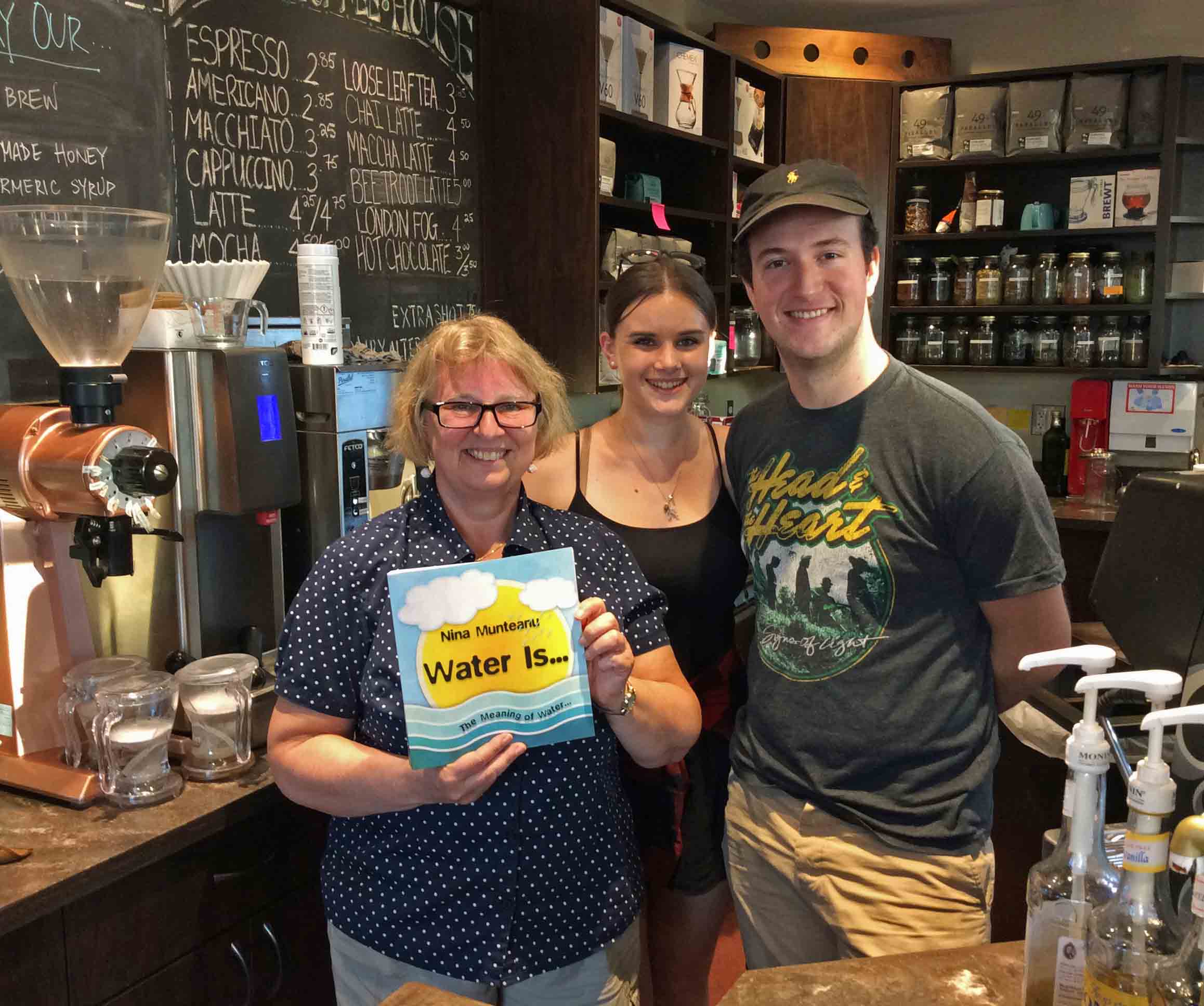
Coffee-Water-StirCoffeeHouse copy

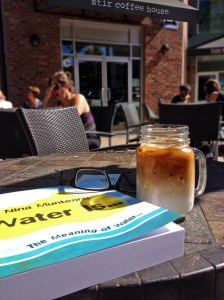
Water Is… snug against an iced latte

I shared the story of how I came to write this book—not a limnology book for non-scientists, as I thought I was going to write—but something that was more than science. Something that encompassed so much more about water: what it means to each of us and how we still don’t understand its many magical anomalous properties. I confided my discovery that the synchronicity of important moments in my life were all connected to water, which compelled the book to evolve into a study of “what water means to us.” Good friend Emmi Itäranta, author of Memory of Water, called Water Is… a biography of water.

Travelling the world has helped me realize that I was blessed with an abundance of water. I lived my entire life in a country of plentiful and healthy water. And for most of that time I didn’t even realize it. Canada holds one fifth of the world’s fresh water in lakes, rivers, and wetlands, as well as in our underground aquifers and glaciers. Canada’s wetlands, which cover more than 1.2 million square kilometres, makes Canada the largest wetland area in the world.

Nina-Hope-Trevor Stir copy

Nina with hosts Hope and Trevor

Perhaps it is no coincidence that Canada is steward of the world’s largest wetlands. Wetlands include marshes, swamps, fens, and bogs, all irreplaceable habitat for a huge diversity of nesting, feeding and staging waterfowl, reptiles, amphibians and mammals—many at risk. Wetlands provide a major filtration system, removing contaminants, improving water quality and renewing water’s vitality; wetlands serve as reservoirs, controlling and reducing flooding toward a more balanced hydrological cycle. Wetlands are a source of oxygen and water vapour, serving a vital role in our global atmospheric and climatic cycles. As ecotones— transitional areas—wetlands protect coasts from erosion and provide exceptional opportunity for boundary interaction and the emergence of vitality. Like a good metaphor, wetlands “recognize” and encompass similarities between dissimilarities. Wetlands powerfully connect. Canada’s strong multi-cultural policies and its open tolerance in embracing and celebrating diversity makes it the “wetland” of the world.

When I turn on the water tap in my house in Canada, it is pure drinking water. I don’t need to boil it or filter it or test it for impurities and toxins. I am confident that it will nourish and hydrate me like water should. I can bathe without restriction. I can play with it.

My water hasn’t changed; but I have. I do not take it for granted. I know that I am blessed.

I am home and I am so grateful.


In the Moment-anthology copyPart of this article is an excerpt from Nina Munteanu’s “Coming Home to Water” first published in “In the Moment” (A Hopeful Sign) edited by Gary Doi, September 2016; reprinted in “The Earth We Love” (Mississauga Writers) edited by Elizabeth Banfalvi, September 2018; and “The Literary Connection IV: Then and Now” (IOWI) edited by Cheryl Antao Xavier, upcoming 2018.


nina-munteanuNina Munteanu is an ecologist, limnologist and internationally published author of award-nominated speculative novels, short stories and non-fiction. She is co-editor of Europa SF and currently teaches writing courses at George Brown College and the University of Toronto. Visit www.ninamunteanu.ca for the latest on her books.
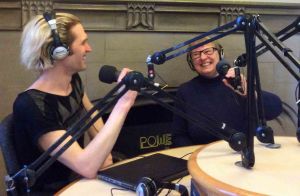


Nina Munteanu Talks About “Water Is…” on Green Majority CIUT Radio

Nina-Saryn-CIUT booth

Nina with Saryn Caister of Green Majority CIUT Radio

Host Saryn Caister of The Green Majority CIUT Radio 89.5 FM discusses “Water Is…” with Nina Munteanu and her philosophy to learning and knowledge.

The interview covers some of water’s anomalous properties and why Nina decided to write a book that spans and integrates such a wide variety of angles and subjects from traditional science to spirituality.

CIUT-radioLOGOSaryn and Nina discuss some of water’s controversial properties and the claims about water and how geopolitics plays a role in this. She brings in her own career as a limnologist and how she broke away from her traditional role of scientist to create a biography of water that anyone can understand—at the risk of being ostracized by her own scientific community (just as Carl Sagan and David Suzuki were in the past).

Saryn shared how Ray John Jr., an Indigenous teacher, on a previous show reminded us why these things matter.

Water Is-COVER-webNina responded with, “The why of things and hence the subtitle: the Meaning of Water. What does it mean to you… That’s what’s missing a lot of the time. We are bombarded with information, knowledge and prescriptions but the subliminal argument underneath—the why—why should it matter to me—is often missing. That becomes the sub-text. And it’s nice when it comes to the surface.”


HartHouse-CIUT Radio

Hart House, University of Toronto


nina-2014aaaNina Munteanu is an ecologist, limnologist and internationally published author of award-nominated speculative novels, short stories and non-fiction. She is co-editor of Europa SF and currently teaches writing courses at George Brown College and the University of Toronto. Visit www.ninamunteanu.ca for the latest on her books.


Nina Talks Water with Grade 8 Students on World Water Day

Nina-Grade 8 on Water-March22-2018 copy

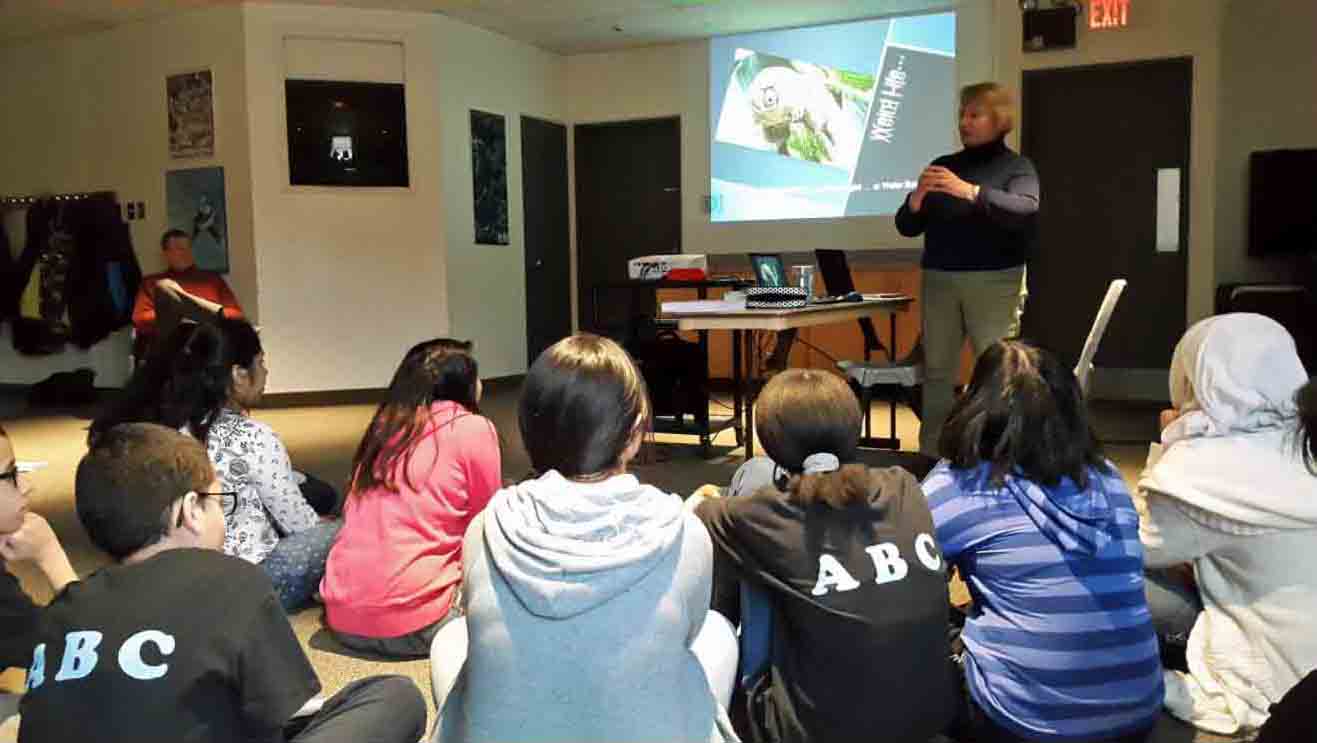
Nina talks with Valleys Senior Public School Grade 8 students about water

On World Water Day, at the kind invitation of Alene Sen (supervisor and coordinator for the City of Mississauga at the Mississauga Valley Library) I talked to some 100 Grade 8 students of Valleys Senior Public School about water. Several classes, in groups of about fifty students each, came at tandem to the library to learn something about water.

I had about half an hour to prime them with something that would spark their interest and which they could take home and think about—and possibly apply in stewardship.

carboniferous-paleozoic eraI started the talk by explaining that I’m a limnologist—someone who studies freshwater—and that water is still a mysterious substance, even for those who make it their profession to study.  After informing them of water’s ubiquity in the universe—it’s virtually everywhere from quasars to planets in our solar system—I reminded them that the water that dinosaurs drank during the Paleozoic Era is the same water that you and I are drinking.

We briefly reviewed some of water’s most interesting anomalous and life-giving properties such as cohesion and adhesion—responsible for surface tension and water’s capillary movement up trees. Below is an excellent 4-minute YouTube video “The Properties of Water” that describes these properties well.

I reviewed the circle of life and energy in an aquatic ecosystem and used the grey whale as an example to study trophic cascades and the balanced trophic cycle—with an endnote on the whale’s significant role in influencing climate.

I introduced each class to the incredible and very tiny Tardigrade, also known as the water bear or moss piglet, with magical properties of its own. The 4-minute TED video by Thomas Boothby is particularly instructive and entertaining.

I then showed the class an image of the Three Gorges Dam in China and reported how as a result of so much dam-building and retention of water—and because most dams are located in the northern hemisphere—we have slightly changed how the Earth spins on its axis. We’ve sped its rotation and shortened the day by 8 millionths of a second in the last forty years.

3-gorges dam

Water needs to constantly move. The Water cycle moves through the planet in all three forms (vapour, liquid and ice), over land and sea and through the earth, but also through all life. We are part of that cycle. We drink it and get immersed in it; we also breathe water in with every breath we take and breathe it out with every breath we exhale.

We are water; what we do to water, we do to ourselves.

I invited the class to discuss things we could do to help water as it moves through the planet. We talked about things we could do at home, with our friends, in our school and community to help water. Things like planting a tree in your back yard; adopting a nearby stream and taking care of it; organizing a beach clean-up; deciding to do something at home to waste water less.

Each action is a small thing. But that is how large things happen, through the accumulation of small things. And with every “small” action is a small shift in thinking, which leads to the kind of leadership that will change the world and make it a better place—for water and everything that depends on it.

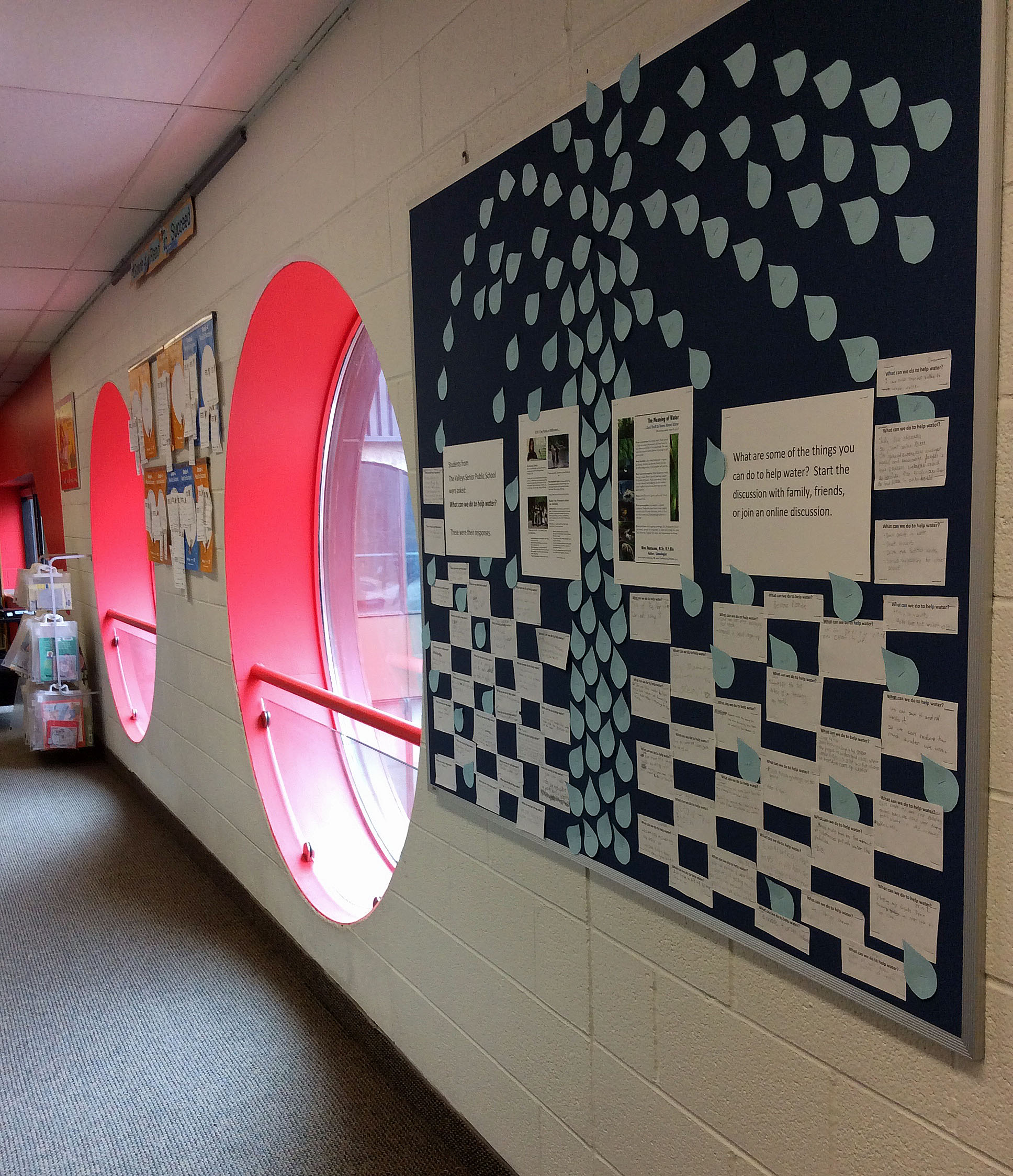
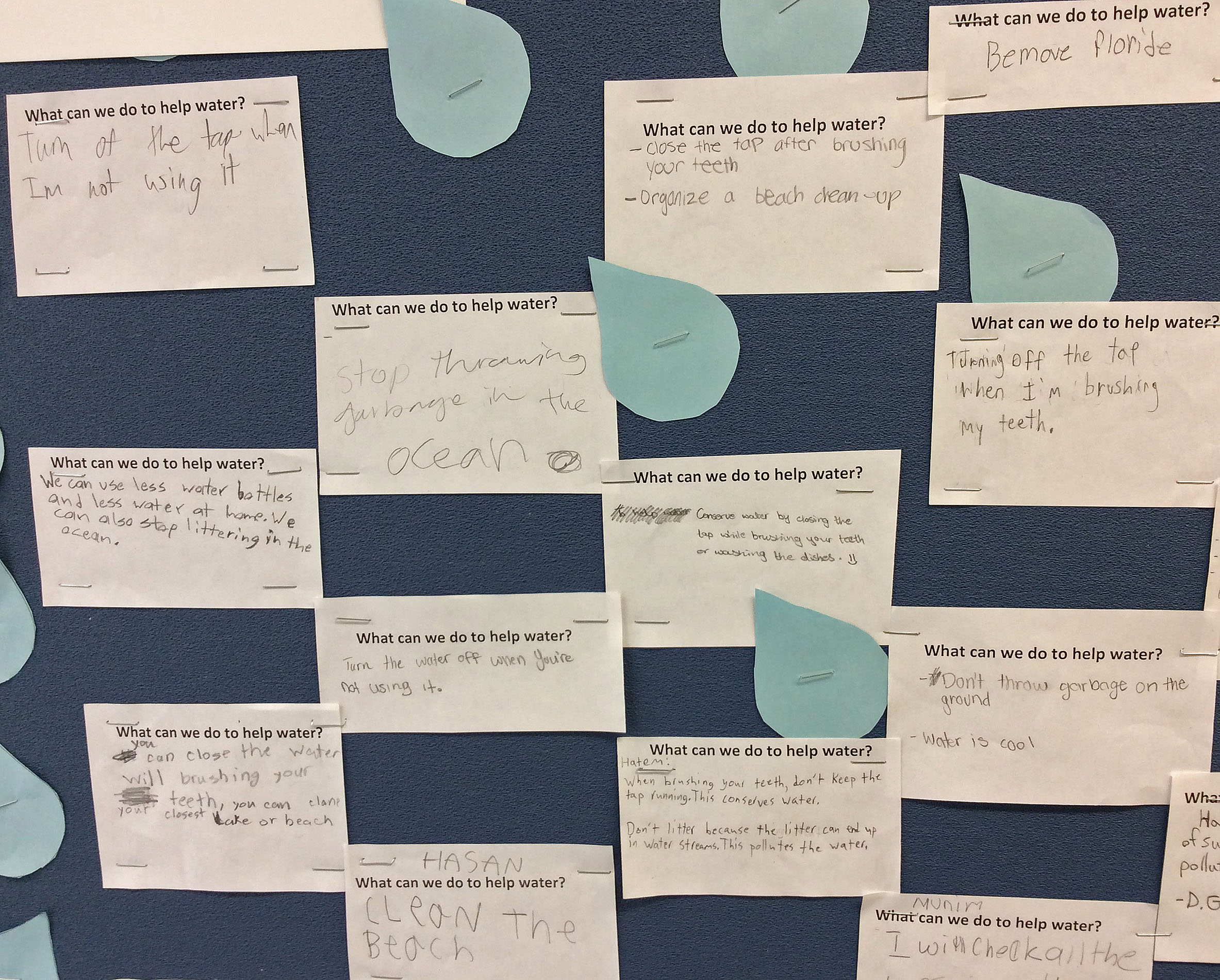
After a discussion of the problems now facing water on the planet, we asked the students from The Valleys Senior Public School to answer the question “What can we do to help water?” on a small sheet of paper, which we then collected. Their responses showed great thought and a willingness to do something concrete. Alene created a billboard at the Mississauga Valley Library with the Valleys Senior Public School student responses to the question.

Water-students-13

Water Tree Display with student responses to the question: “What can we do to help water?”

Below are some examples of responses by students…

Water-students-11

Water-students06

Water-students-Alenelibrary

Alene Sen and co-worker at the Mississauga Valley Library

Water Is-COVER-webYou can read so much more about water in my book “Water Is…”. Go see what people are saying about “Water Is…”


nina-2014aaaNina Munteanu is an ecologist, limnologist and internationally published author of award-nominated speculative novels, short stories and non-fiction. She is co-editor of Europa SF and currently teaches writing courses at George Brown College and the University of Toronto. Visit www.ninamunteanu.ca for the latest on her books.